A STUDY ON THE EFFECT OF HAEMOGLOBIN CONCENTRATION ON AUDIO
*Dr. Rashmi,
1
Post graduate student (MD Physiology),
Hospital
2
Professor, Department of Physiology,
ARTICLE INFO ABSTRACT
The present Time haemoglobin haemoglobin Hb≥12g% house version prolonged and Hb; the ART
Copyright©2017, Dr. Rashmi and Dr. Prashanth Kumar.
permits unrestricted use, distribution, and reproduction in any medium, provided the original work is properly cited.
INTRODUCTION
The World Health Organization defines anemia as the level of haemoglobin less than 13g% in males and less than 12g% in females (Johnston, 1975). Anemia is a condition characterized by the deficiency of haemoglobin or decreased level of red blood cells associated with decreased oxygen carrying capacity of the blood (Guyton, 2006). In many low and middle income countries including India, anemia is one of the commonest and severe public health issues leading to morbidity in children and reproductive age women (Beard, 2001). The World Health Organization statistics states that about 1.6
are anaemic worldwide (Benoist, 2014).
National Family Health Survey (NFHS)-(III), more than 50% of the women in India have anemia amongst wh
mildly anemic, 15 % moderately anemic and 2% severely anemic (National Family Health Survey, 2014
girls, who constitute a considerable segment of Indian population form a vulnerable group and are at a greater risk. Adolescence is the shaping period of life when maximum amount of physical, psychological and behavioural changes take place.
*Corresponding author: Dr. Rashmi, S.,
Post graduate student (MD Physiology), Department Rajarajeswari Medical College & Hospital Kumbalgodu, Karnataka, India
ISSN: 0975-833X
Article History:
Received 17th March, 2017
Received in revised form 06th April, 2017
Accepted 09th May, 2017 Published online 30th June, 2017
Citation: Dr. Rashmi, S. and Dr. Prashanth Kumar,
International Journal of Current Research, 9, (06), 53072
Key words:
Reaction time,
Haemoglobin concentration, Anemia, ART, VRT.
RESEARCH ARTICLE
A STUDY ON THE EFFECT OF HAEMOGLOBIN CONCENTRATION ON AUDIO
Rashmi, S. and Dr. Prashanth Kumar, M.
Physiology), Department of Physiology, Rajarajeswari
Hospital Kumbalgodu, Bangalore, Karnataka, India
Physiology, Rajarajeswari Medical College & Hospital
Bangalore, Karnataka, India
ABSTRACT
present study was conducted to compare Auditory Reaction (VRT) in normal and anemic female subjects and also haemoglobin (Hb) concentration. Female students of age group haemoglobin estimation subjects with Hb<12g% were assigned as
≥12g% were assigned as group II (n=30). ART and VRT were built device PC 1000. Data was analysed employing unpaired version 16 and significance value was fixed at p <0.05. The prolonged ART and VRT in anemic individuals (p =0.001) and a
Hb; also VRT and Hb. Thus it can be concluded that with decreased ART and VRT are prolonged and that early correction of anemia
Dr. Prashanth Kumar.This is an open access article distributed under the Creative Commons Att use, distribution, and reproduction in any medium, provided the original work is properly cited.
The World Health Organization defines anemia as the level of haemoglobin less than 13g% in males and less than 12g% in Anemia is a condition characterized by the deficiency of haemoglobin or decreased level of red ciated with decreased oxygen carrying capacity . In many low and middle income countries including India, anemia is one of the commonest and severe public health issues leading to morbidity in children and The World Health Organization statistics states that about 1.6 - 2 billion people According to the (III), more than 50% of the women in India have anemia amongst which 39 % are mildly anemic, 15 % moderately anemic and 2% severely , 2014). Adolescent girls, who constitute a considerable segment of Indian population form a vulnerable group and are at a greater risk. the shaping period of life when maximum amount of physical, psychological and behavioural changes
Department of Physiology, Kumbalgodu, Bangalore,
Thus this is a vulnerable phase for the development of nutritional anemia (Chaudhary
prone to iron deficiency anemia because of increased demand of iron for synthesis of haemoglobin. This is to make up the loss of iron during menstruation
there is also a mismatch between their high metabolic demands and poor dietary intake (Agarwal
Biruni, a Persian scientist was the first p
concept of reaction time (RT) and the first scientist to measure reaction time (RT) in the laboratory was Donders in the year 1868 (Chandra, 2010). Reaction time is the time interval between the presentation of a stimulus and the
appropriate swift voluntary response by the subject
1954). It involves stimulus processing, decision making, attention and response programming
auditory reaction time is 100 reaction time is 200-400 msec
beingcollege-age individuals mean RT is about
160 milliseconds to detect an auditory stimulus, and approximately 190 milliseconds to detect visual stimulus (Kosinski, 2008 and Taoka, 1989
processing speed of central nervous system (CNS) and assesses the coordination between the sensory and motor systems. Its measurement includes 1) the latency in sensory neural code traversing peripheral and central pathways, 2)
cognitive processing, and 3) a motor signal traversing both International Journal of Current Research
Vol. 9, Issue, 06, pp.53072-53076, June, 2017
Kumar, M. 2017. “A Study on the effect of Haemoglobin concentration
53072-53076.
A STUDY ON THE EFFECT OF HAEMOGLOBIN CONCENTRATION ON AUDIO-VISUAL REACTION
Rajarajeswari Medical College &
Hospital, Kumbalgodu,
Reaction Time (ART) and Visual Reaction also to correlate the same with the group 18-20 years were recruited. After as group I (n=30) and subjects with were assessed by making use of an in-unpaired student’s “t” test using SPSS
results showed highly significant a negative correlation between ART decreased haemoglobin concentration anemia can prevent ill effects.
is an open access article distributed under the Creative Commons Attribution License, which
Thus this is a vulnerable phase for the development of Chaudhary, 2008). They are particularly prone to iron deficiency anemia because of increased demand haemoglobin. This is to make up the loss of iron during menstruation (Beard, 2000). In addition there is also a mismatch between their high metabolic demands Agarwal, 2003). Abu Rayhan al-Biruni, a Persian scientist was the first person to explain the concept of reaction time (RT) and the first scientist to measure reaction time (RT) in the laboratory was Donders in the year Reaction time is the time interval between the presentation of a stimulus and the appearance of appropriate swift voluntary response by the subject (Teichner, It involves stimulus processing, decision making, attention and response programming (Asmita, 2010). Normal auditory reaction time is 100-200 msec and normal visual 400 msec (Jain, 2012).Our study group
age individuals mean RT is about
to detect an auditory stimulus, and approximately 190 milliseconds to detect visual stimulus Taoka, 1989). Reaction time evaluates the processing speed of central nervous system (CNS) and assesses the coordination between the sensory and motor systems. Its measurement includes 1) the latency in sensory neural code traversing peripheral and central pathways, 2) perceptive and cognitive processing, and 3) a motor signal traversing both INTERNATIONAL JOURNAL
OF CURRENT RESEARCH
central and peripheral neuronal structures. The motor signal also includes the latency in the end effectors activation (muscle activation) (Botwinik, 1966). Reaction time has physiological significance and is a simple and non - invasive test for peripheral as well as central neural structures. It is a measure of function of sensorimotor association (Shenvi, 1994). The audio-visual reaction time is found to be prolonged with decreasing haemoglobin levels and the reason has been attributed to the decreased neuronal conduction caused due to reduced levels of iron in anemia (Mishra, 2012).Iron has been implicated in the myelination and the development of various
neurotransmitter systems in the brain (Beard, 2003). Iron
deficiency is one of the commonest causes for developing
anemia amongst other causes (WHO, 2007). Reaction
timeplays a significant role in everyday activities like driving, operating machines, various forms of sports etc. The purpose of this study is to find if there is any relation between haemoglobin levels and audio-visual reaction time. Since such studies are very few in India, this study will help to fill the lacuna in this regard.
MATERIALS AND METHODS
Subjects: Sixty healthy female students in the age group of
18-20 years of Rajarajeswari Medical College and Hospital, Bangalore, meeting the requisite inclusion and exclusion parameters were enrolled in the study. Haemoglobin estimation was done by Haemocue Hb 301+ analyser. After haemoglobin estimation subjects with Hb<12g% were assigned as group I (N=30) forming study group and subjects with Hb≥12g% were assigned as group II (N=30) forming the control group. Exclusion criteria were female students who have neural disease, muscle disease, uncorrected hearing impairment, visual impairment, alcohol abuse, psychiatric disorders, sleep disorders, and girls receiving iron supplementation or blood transfusion in the past 1 month, interfering medication, thyroid disorders.
Methodology
The study was done in the department of Physiology, Rajarejeswari Medical College between January 2015 and June 2015 after obtaining ethical approval from the Institutional Ethical committee. Individual consents were obtained from all the participants. A detailed history was taken to rule out other comorbid conditions if any. Anthropometric variables included measurements of weight, height and BMI. Height was measured without shoes using stadiometer (Prestige Ltd, India) and weight was recorded with light clothes using a standard weighing machine (Krups Ltd India) to the nearest 0.1Kg. Body mass index was calculated by Quetelet's index that is BMI = weight (Kg)/ height (m2). Haemoglobin estimation was done by Haemocue Hb 301+ analyser using standard procedure protocol (Morris, 2007). After haemoglobin estimation subjects with Hb<12g% were assigned as group I (N=30) forming study group and subjects with Hb≥12g% were assigned as group II (N=30) forming the control group.
The study was conducted between 10am and 12 noon in a quiet secluded room with good ambience. The subject was made to feel relaxed and comfortable and was instructed to use her dominant hand for response. In both, the subjects and controls auditory and visual reaction time was assessed by making use of an in-house built add on device called PC 1000. PC 1000 is a thousand Hz square wave oscillator with least count of
1/1000 second which has a soft key for start and stop function (Niruba, 2011). This instrument has two components (A&B) connected to each other. The A component has a START button and is used by the investigator. The B component has a STOP button and given to the subject to record their response. This B component also has a RED LED light for recording visual reaction time which glows every time when the stimulus is given. Red light has a long time representation in retina and hence red light was used. The component B is also connected to a headphone which gives the stimulus of a high frequency (1000Hz) beep sound for recording auditory reaction time. These two components are connected to a Personal computer which has audacity software installed in it. Audacity software records the reaction time in 0.001sec accuracy in wave format. Visual reaction time: After giving proper instructions to the individual, the examiner presses the start button in component A. This component is not seen by the subject as they are separated by a cardboard placed between component A and B, when the stimulus is given. Red LED light in component B glows when the stimulus is given and the subject is asked to give response as quickly as possible by pressing the stop button when they see this.
Auditory reaction time
Examiner presses the start button (A) which will be out of the view of the subject, and the subject is instructed to press the stop button (B) as soon as she hears the high frequency beep sound (1000 hertz’s tone) through the headphone connected to it. The subject was asked to respond by pressing the response switch by index finger of the dominant hand. For each subject the lowest reading was taken as the value for the reaction time task. The recording was taken five times consecutively and the least value among the five was taken as the final value. This recorded data was stored in separate files and analysed using audacity software version 1.3 Beta (Devanand, 2014).
Statistical Analysis
The data collected was analysed and expressed as Mean±SD. Student’s t test was applied for the statistical analysis using SPSS software version 16.0 and significance value was set at p<0.05. Correlation between haemoglobin and reaction time was done using Pearson’s correlation.
RESULTS
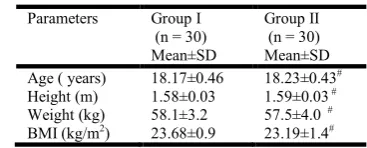
[image:2.595.337.521.659.733.2]There was no statistically significant difference in the anthropometric parameters between group I and group II. Hence they were comparable for the study (Table 1).
Table 1. Age and anthropometric parameters between Group I and Group II
Parameters Group I (n = 30) Mean±SD
Group II (n = 30) Mean±SD Age ( years) 18.17±0.46 18.23±0.43#
Height (m) 1.58±0.03 1.59±0.03 #
Weight (kg) 58.1±3.2 57.5±4.0 #
BMI (kg/m2) 23.68±0.9 23.19±1.4#
# - Statistically not significant (p >0.05), * - statistically significant (p<0.05), ** - highly significant
The mean haemoglobin level was 10.80 ±0.72 g% in group I (Hb<12) and was 12.97 ± 0.60 g% in group II (Hb≥12).Observation shows delayed auditory and visual
reaction time in Group II. We found a negative between the levels of haemoglobin and the visual reaction time.
Table 2. Comparing the Hb levels(g%) with and ART (msec)
Parameters GROUP I
(Hb < 12g%) (n = 30)
GROUP II (Hb ≥ 12g%) (n = 30) Hb (g%) 10.8 ± 0.7 12.9 ± 0.6 ** Visual Reaction
Time ± SD (msec)
0.254 ± 0.22 0.237 ± 0.14
Auditory Reaction Time ± SD (msec)
0.250 ± 0.13 0. 236 ± 0.18
# - Statistically not significant (p >0.05), * - statistically (p<0.05), ** - highly significant
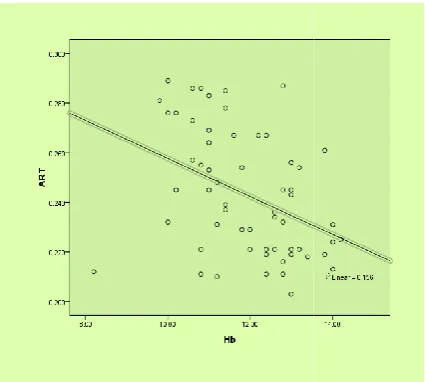
Graph 1. Showing negative correlation between
As seen in the above graph as the Haemoglobin decrease there is a rise in the Visual Reaction indicating that lower Hb levels cause prolonged
Graph 2. Showing negative correlation between
The above graph shows a negative correlation Haemoglobin levels and Auditory Reaction the levels of Hb decreases the ART gets prolonged.
DISCUSSION
Anemia is defined as a decrease in blood haemoglobin concentration and has shown to be a major public health issue that affects low and middle income countries. Although the negative correlation both auditory and
with VRT (msec)
12g%)
Statistical significance (p Value) ** 0.001 0.14 ** 0.001
0.18 ** 0.001
statistically significant
between Hb and VRT
Haemoglobin (Hb) levels Reaction Time(VRT) prolonged VRT.
between Hb and ART
correlation between Reaction Time (ART), as
prolonged.
Anemia is defined as a decrease in blood haemoglobin concentration and has shown to be a major public health issue that affects low and middle income countries. Although the
most unswerving indicator of anemia at the population level is blood haemoglobin concentration, measurements of this alone do not determine the cause of anemia. Anemia may result from a variable number of causes like nutritional deficiencies (folate, vitamin A and vitamin B12), parasitic infections, acute and chronic inflammation, inherited or acquired disorders that have an effect on haemoglobin synthesis, red blood cell production or red blood cell survival, but the most significant contributor globally is iron deficiency
Stevens et al., 2013). Studies done on adolescent girls have shown that decreased concentration of haemoglobin results in a number of symptoms such as weakness, general fatigue and also has adverse effects on immune system
Anemia resulting from iron deficiency has adverse effects on cognitive and motor development, associated with fatigue and low productivity (Stoltzfus, 2004;
2007). The finding of this study indicates that the d haemoglobin levels have a significant impact on the audio visual reaction time; this is in accordance with the results of Mishra et al study (Mishra, 2012
profound in anaemic individuals compared to their normal counterparts. Longitudinal studies have shown that iron deficiency in infancy is related to poorer cognition in early childhood and if uncorrected continues to adulthood as well (Grantham, 2001). A detailed review written by Sachdev HPS and Gera T on iron suppleme
aged less than 5 years states that supplementation of iron in these children led to improvements in their cognition and motor development (Sachdev, 2006
determining growing phase in life is more pron
nutritional deficiency. Many factors contribute to anemia in adolescent girls like low iron intake, poor iron absorption, high metabolic demands for iron during menstruation and growth spurts. And due to this the pubescent girls are at a higher of developing anemia (Mishra, 2012
Infants having iron deficiency anemia show lower cognitive, motor, social, emotional and neurophysiologic development when compared to infants with normal haemoglobin concentration. Human and monkey infants with neonatal iron deficiency have shown poorer outcome with respect to physical and mental growth in their early developmental years. With respect to CNS iron deficiency is associated with 1) hypomyelination of neurons, 2) effects on the dopaminergic system and 3) deficiency of enzymes involved in the development of parts of the brain important for cognitive function and memory (Lozoff
time specifically, the central conduction time was
prolonged in infants with anemia when compared with non anaemic children. The Katasaras E
prolonged central conduction time might be due to changes in myelination that have been reported in iron deficient infants. Thus in anaemic children central conduction time was prolonged and also longer latencies in visual evoked potentials were recorded (Katasaras, 2004
mechanisms for delayed reaction time in anaemic individuals are the effects on the dopaminergic system and effects on myelination (Grantham, 2001
indicate that signalling
pathways originating in the ventral tegmental area positively correlated with improvements in reaction time. Dopaminergic
been shown to expedite responses during interval timing, while dopamine antagonists (specifically, for D2
produce the opposite effect (Parker
most unswerving indicator of anemia at the population level is blood haemoglobin concentration, measurements of this alone do not determine the cause of anemia. Anemia may result from a variable number of causes like nutritional deficiencies in A and vitamin B12), parasitic infections, acute and chronic inflammation, inherited or acquired disorders that have an effect on haemoglobin synthesis, red blood cell production or red blood cell survival, but the most significant s iron deficiency (WHO, 2007 and Studies done on adolescent girls have shown that decreased concentration of haemoglobin results in a number of symptoms such as weakness, general fatigue and also has adverse effects on immune system (Agarwal, 2003). Anemia resulting from iron deficiency has adverse effects on cognitive and motor development, associated with fatigue and , 2004; Balarajan, 2011; Tolentino, The finding of this study indicates that the decreased haemoglobin levels have a significant impact on the audio-visual reaction time; this is in accordance with the results of
, 2012). The delay in response is profound in anaemic individuals compared to their normal arts. Longitudinal studies have shown that iron deficiency in infancy is related to poorer cognition in early childhood and if uncorrected continues to adulthood as well A detailed review written by Sachdev HPS and Gera T on iron supplementation in infants and children aged less than 5 years states that supplementation of iron in these children led to improvements in their cognition and , 2006). Adolescence, being the determining growing phase in life is more prone to major nutritional deficiency. Many factors contribute to anemia in adolescent girls like low iron intake, poor iron absorption, high metabolic demands for iron during menstruation and growth spurts. And due to this the pubescent girls are at a higher risk
, 2012).
Infants having iron deficiency anemia show lower cognitive, motor, social, emotional and neurophysiologic development when compared to infants with normal haemoglobin concentration. Human and monkey infants with neonatal iron deficiency have shown poorer outcome with respect to physical and mental growth in their early developmental years. With respect to CNS iron deficiency is associated with 1) rons, 2) effects on the dopaminergic system and 3) deficiency of enzymes involved in the development of parts of the brain important for cognitive Lozoff, 2006). In context to reaction time specifically, the central conduction time was found to be prolonged in infants with anemia when compared with non anaemic children. The Katasaras E et al study states that the prolonged central conduction time might be due to changes in myelination that have been reported in iron deficient infants. hus in anaemic children central conduction time was prolonged and also longer latencies in visual evoked potentials , 2004). Two commonly reasoned mechanisms for delayed reaction time in anaemic individuals paminergic system and effects on , 2001). Current medical reviews
signalling through the dopamine
prominent role in neuronal functioning and it is also noted that the dopaminergic system is sensitive to serum iron concentration (Beard, 2001). Mechanism behind the attention to environmental information is dependent on rate of dopamine clearance from the interstitial space and that this proposes that iron status may affect behaviour and response through dopamine metabolism (Breitmeyer, 1994).
Conclusion and Summary
From the above discussion it is evident that, iron deficiency causing changes in the Central Nervous System (CNS) which results in a prolonged audiovisual reaction time. The important implication of the study is that the deficiency of iron could be correctable cause of delayed reaction time. And it can be concluded saying, it is advisable to detect and correct anemia at the early stages is a must and awareness in this regard is mandatory. Limitations of the study include the limited sample size and assessment of serum iron levels. Further studies however, with a bigger sample size and assessment of serum iron levels will help to prove the above point. A follow up of the anemic individuals and recording audiovisual reaction time after correcting anemia will prove to be more efficient.
REFERENCES
Agarwal KN, Gomber S. Anemia prophylaxis in adolescent school girls by weekly or daily iron folate supplementation. Indian Pediatrics 2003;40:296-301.
Agarwal, K.N., Gomber, S. 2003. Anemia prophylaxis in adolescent school girls by weekly or daily iron folate supplementation. Indian Pediatrics, 40:296-301.
Asmita, S.N., Pushpa, A.P. 2010. A study of auditory reaction time in different phases of normal menstrual cycle. Indian J
Physiol Pharmacol, 54:386-390.
Balarajan Y, Ramakrishnan U, Ozaltin E, Shankar AH, Subramanian SV. Anaemia in low-income and middle-income countries. Lancet 2011;378:2123–35.
Beard J, Stoltzfus R. Iron-deficiency anemia: reexamining the nature and magnitude of the public health problem J Nutr. 2001;131:563S–703S.
Beard J. Iron biology in immune function, muscle metabolism and neuronal function. J Nutr 2001;131:568-580.
Beard J. Iron Deficiency Alters Brain Development and Functioning. J Nutr 2003;133:1468S–1472S.
Beard, J.L. Iron requirements in adolescent females. J Nutr 2000;130(2S Suppl):440S-442S.
Benoist BD, McLean E, Egli I, Cogswell M. Eds. WHO, WHO
global database on anaemia 2008.
http://whqlibdoc.who.int/publications/2008/978924159665 7_eng.pdf. Retrieved on July February 6th,2014.
Botwinik J, Thompson LW. Premotor and motor components of reaction time. J Exp Psychol 1966;71:9–15.
Breitmeyer BG, Breier JI. Effects of background colour on reaction time to stimuli varying in size and contrast: inferences about human M channels. Vision research 1994; 34(8): 1039-1045.
Chandra AM, Ghosh S, Barman S, Iqbal R, Sadhu N. Effect of exercise and heat- load on simple reaction time of university students. Int J Occup Saf Ergon 2010; 16(4):497-505.
Chaudhary, S.M., Dhage, V.R. A Study of Anemia Among Adolescent Females in the Urban Area of Nagpur. Indian J
Community Med 2008;33(4):243-245.
Devanand V, Balasubramanian K, Chithrapavai SU. Effect of Visual Reaction Time on Refractive Errors- A Comparative Study. Research Journal of Pharmaceutical, Biological and Chemical Sciences. 2014;5(4):951-954.
Grantham S, Mcgregor S, Ani C. A review of studies on the effects of iron deficiency anemia on cognitive development in children. J Nutr 2001;131:649-668.
Guyton AC, Hall JE. Textbook of Medical Physiology. 11th ed. Philadelphia, Pennsylvania: Elsevier; 2006:426-427. Jain, A.K. 2012. Manual of practical physiology for MBBS.
In: Ch. 23. Reaction Time (Visual and Auditory) and Reflex Time. 4th ed. New Delhi: Avichal Publishing
Company. 2012;277-9.
Johnston JB, Gibson SB, Seftel MD. Chronic lymphocytic leukemia In: Greer JP, Foerster J, Lukens JN, Paraskevas F, Rodgers GM, Glader B, (eds). Wintrobe Clinical Hematology.7th edition, Philadelphia, LEA and Febiger, 1975;114-115.
Katasaras E, Adam E, Dewey KG. Effect of iron supplementation on cognition in Greek preschoolers. Europ J Clin Nutr 2004;58:1532-1542.
Kosinski, R.J. A literature review on reaction time, Clemson University 2008.
Lozoff B, Georgieff MK. Iron deficiency and brain
development. Seminars in Pediatric Neurology
2006;13:158-165.
Mishra NV, Sonwade TD. A Comparative study Of Audio-Visual Reaction Time in Anemic and Non-Anemic Adolescent Girls. International Journal of Basic and Applied Physiology. 2012;1(1):79-82.
Morris LD, Osei-Bimpong A, McKeown D, Roper D, Lewis SM. Evaluation of the utility of the HemoCue 301 haemoglobinometer for blood donor screening. Vox Sanguinis, 2007;93:64–69.
National Family Health Survey (NFHS-3), 2005-2006, http://www.nfhsindia.org/pdf/India.pdf, last accessed on February 4th, 2014.
Niruba R, Maruthy KN .Assessment of Auditory and Visual Reaction Time in Type 2 Diabetics –A Case Control Study.Al Ameen J Med Sci. 2011;4(3):274 -279.
Parker KL, Lamichhane D, Caetano MS, Narayanan NS. Executive dysfunction in Parkinson's disease and timing deficits. Front. Integr. Neurosci 2013;7:75.
Sachdev HPS, Gera T. Effect of iron supplementation on physical growth in children: systemic review of randomized control trial. Public health nutrition 2006; 9:904-920.
Shenvi D, Balasubramanian P. A comparative study of visual and auditory reaction times in males and females. Indian J Physiol Pharmacol. 1994;38:229–31.
Stevens GA et al. Global, regional, and national trends in haemoglobin concentration and prevalence of total and severe anaemia in children and pregnant and non-pregnant women for 1995–2011: a systematic analysis of population-representative data. Lancet Glob Health 2013;1(1):e16–25.
Stoltzfus RJ, Mullany L, Black RE. Iron deficiency anaemia. In: Ezzati M, Lopez Ad, Rodgers A, Murray CJL, eds. Comparative quantification of health risks: global and regional burden of disease attributable to selected major risk factors. Geneva, World Health Organization 2004;163– 210 (http://www.who.int/publications/cra/ chapters/volume1/0163-0210.pdf?ua=1; accessed 20 May 2015).
Taoka, George T. Brake Reaction Times of Unalerted Drivers. ITE Journal 1989;59(3):19–21.
Teichner WH. Recent studies of simple reaction time. Psychol
Bull. 1954;51:128–49.
Tolentino K, Friedman JF. An update on anemia in less developed countries. Am J Trop Med Hyg 2007;77:44–51.
WHO. Assessing the iron status of populations: report of a joint World Health Organization/ Centers for Disease Control and Prevention technical consultation on the assessment of iron status at the population level, 2nd ed. Geneva, World Health Organization, 2007. Available at http://www.who.int/nutrition/publications/micronutrients/a naemia_iron_deficiency/9789241596107.pdf.