Effect of cementation level on performance of rubberized cement-stabilized aggregate mixtures
Ahmed Hilal Farhan, Andrew Robert Dawson, Nicholas Howard Thom PII: S0264-1275(16)30205-2
DOI: doi:10.1016/j.matdes.2016.02.059
Reference: JMADE 1409 To appear in:
Received date: 8 September 2015 Revised date: 12 February 2016 Accepted date: 16 February 2016
Please cite this article as: Ahmed Hilal Farhan, Andrew Robert Dawson, Nicholas Howard Thom, Effect of cementation level on performance of rubberized cement-stabilized aggregate mixtures, (2016), doi: 10.1016/j.matdes.2016.02.059
ACCEPTED MANUSCRIPT
1
Effect of cementation level on performance of rubberized cement-stabilized
aggregate mixtures
Ahmed Hilal Farhan1, 2,*, Andrew Robert Dawson1, Nicholas Howard Thom1
1
School of Civil Engineering, Faculty of Engineering, University of Nottingham, University Park,
Nottingham NG7 2RD, UK, Tel: +44 (0) 7448461314, E-mail: [email protected].
2
Civil Engineering Department, College of Engineering, Al-Anbar University, Iraq.
*corresponding author
Abstract
An investigation and comparison is made of the effect of cement content on the performance
of rubberized cement-stabilized aggregate mixtures and on cement-stabilized aggregate
mixtures containing no rubber (RCSAMs and CSAMs). These materials are intended to be
used as a base course for pavement structures. Three cement contents (3%, 5%, and 7% by
dry weight of aggregate) were investigated. Rubberized mixtures were manufactured by
replacing 30% of one aggregate fraction that has a similar gradation of crumb rubber.
Performance was evaluated under static and dynamic testing. The investigated properties are
unconfined compressive strength, indirect tensile strength, indirect tensile static modulus,
toughness, dynamic modulus of elasticity, dynamic modulus of rigidity and dynamic
Poisson’s ratio. Increasing cement content increases strength of both types of mixtures,
especially in the CSAMs. It is found that using crumb rubber at low cement content is more
feasible than with high cement contents. Stiffnesses increased for both types of mixture as
cement content increased but decreased on incorporation of crumb rubber. Energy absorption
capacity was inversely related to stiffness. Mesostructural investigation revealed that the
ACCEPTED MANUSCRIPT
2
Keywords: Cement-stabilized aggregate; unconfined compressive strength; indirect tensile
testing; rubberized cement-stabilized mixture; resonant frequency; static modulus of elasticity.
1. Introduction
Due to the expansion of the modern world, the number of waste tires stockpiled every year is
increasing alarmingly. This has negative impact on both humans and the environment since
these stockpiles can harbour vermin and represent possible combustion sites (Zheng et al.
2008). Over thirty years ago, different investigations have been conducted to evaluate the
possibility of using rubber from waste tires as an aggregate in concrete mixtures. This would
help protect the environment by reducing disposal impacts and save costs since using these
tires as a replacement of aggregate will save natural resources. Researchers (Khatib and
Bayomy 1999; Güneyisi et al. 2004; Papakonstantinou and Tobolski 2006; Balaha et al. 2007;
Zheng et al. 2007; Khaloo et al. 2008; Taha et al. 2008; Zheng et al. 2008; Topçu and Bilir
2009; Nguyen et al. 2010; Pelisser et al. 2011; Najim and Hall 2012; Eiras et al. 2014) have
studied the use of waste tire materials in different types of concrete mixtures as an aggregate
replacement in the form of fine, coarse or fine and coarse fractions simultaneously. The
results of their assessment indicated, in general, a reduction in mechanical properties,
improvement in the energy absorption capacity, reduction in stiffness and enhancement in
impact toughness. The degree of decline or improvement of the mentioned properties was
different depending on the size of rubber and whether coarse or fine fractions or both were
replaced. Based on their findings and justifications, others (Güneyisi et al. 2004; Pelisser et al.
2011; Najim and Hall 2013) attempted treating the rubber particles with sodium hydroxide or
using silica fume to enhance their interaction with the other constituents of the mixtures. Their
investigations claimed better performance because these treatments improved the bond
ACCEPTED MANUSCRIPT
3
However, very little has been documented about the effect of cement content on the
performance of the mixtures in which rubber particles were used. In addition, limited research
was found in the literature regarding use of crumb rubber in cement stabilized mixtures
typically used as a base course or subbase course in the pavement structure in spite of a long
history of investigation for these waste materials in civil engineering applications. These
layers’ potential to consume large quantities of natural resources as compared with other civil
engineering applications (Cao 2007; Barišić et al. 2014). To fill these gaps in the literature,
the authors investigated the effect of cement content on the performance of cement-bound
aggregate mixtures (CSAMs) and rubberized cement-bound aggregate mixtures (RCSAMs).
This paper reports this investigation and develops an understanding of the interaction between
cement and rubber i.e., investigating of the effect of the relative stiffness of the rubber and the
surrounding matrix on the overall performance of the mixture. This, in turn, can be considered
as an exploratory step for studying the effect of other sizes and proportions of rubber so as to
validate its use in a more sustainable “green” pavement structure.
2. Cement-stabilized materials
Cement-stabilized mixtures are normally used as base or subbases course within pavement
structures so as to improve the structural capacity of pavement structure in terms of strength
and stiffness. (Lim and Zollinger 2003) described cement-stabilized mixtures as a mixture of
aggregate and Portland cement moisturized with small quantities of water for compaction and
cement hydration purposes. Additionally, the Portland Concrete Association (PCA 2005) has
classified cementitious materials into four types depending on their water and cement
contents. Roller-compacted concrete and normal concrete are the mixtures in which high
cement levels are normally used. However, the method of construction is different due to low
water content in the first type as compared with the latter. Flowable fill and cement stabilized
ACCEPTED MANUSCRIPT
4 3. Objectives and motivations
The motivation of this research is to understand the behaviour of cement-stabilized aggregate
modified with crumb rubber extracted from post-consumer tires under different degrees of
stabilization. This will help to make beneficial reuse of the tire rubber which, in turn, may
ensure conservation of natural resources as well as reducing the environmental problems of
disposal. Another motivation is to achieve cement-stabilization of granular materials that have
less sensitivity to cracking than the stiff mixtures conventionally obtained, thereby reducing
fatigue failure (Wu et al. 2015). Furthermore, reflection cracks in overlying pavement layers
may be reduced. So, studying how the cement may affect the performance of rubberized
mixtures might lead to improve stabilized aggregates from economic and practice points of
view. Thus, the purpose of this paper is to study the effect of cement content on the properties
of rubberized cement stabilized mixtures, mainly in terms of tensile performance, and to
compare this with conventional stabilized mixtures. It also seeks to develop an understanding
of the mechanisms of their failure. Tensile performance was selected because the stabilized
pavement layers are normally designed based on critical tensile stress at their bottom. Limited
information, even for rubberized concrete, could be found regarding the investigation of the
mesostructure, of the failed samples to reveal how the cracks propagated
4. Experimental methodology
4.1 Materials
In this study, a crushed limestone aggregate with maximum size of 20 mm was used. This was
collected, dried and stored at different fraction sizes (i.e., 20mm, 14mm, 10mm, 6mm and less
than 6mm (dust)). The gradations of both natural aggregate and crumb rubber were performed
based on BS EN 933-1:2012.The gradation of the different fraction sizes is presented in
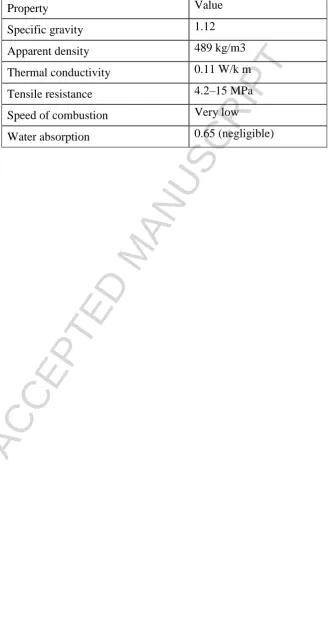
Figure 1. The physical properties of the crumb rubber are shown in Table 1.There were
ACCEPTED MANUSCRIPT
5
removed by the processing. Portland cement CEM I 52.5 N confirming to BS EN 197-1:200
was used to stabilize the aggregate mixtures. Tap water was used to hydrate the mixtures.
4.2 Mixture design
Different aggregate fractions were combined together in different proportions in order to
secure the [CBGM2-0/20] gradation as stated in BS EN 14227-1:2013 and hence to eliminate
any variability in aggregate gradation. This was necessary so as to produce comparable
mixtures due to the high dependency of strength on mixture density (Williams 1986) which is
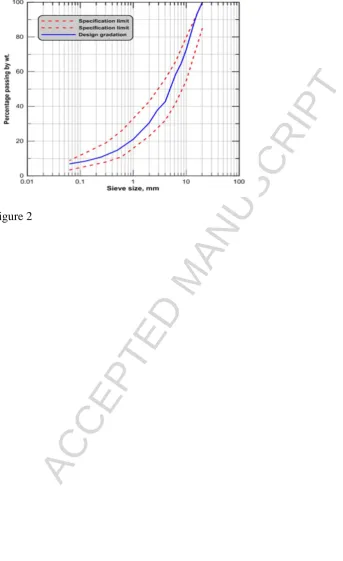
governed, to large extent, by the aggregate gradation. The proportions used were 11%, 20%,
11%, 13% and 45% for 20mm, 14mm, 10mm, 6mm and dust, respectively. The final
gradation after blending the above five sizes is illustrated in Figure 2 with appropriate
specification limits.
Three cement contents were used in this investigation. These are 3%, 5% and 7% of the dry
weight of aggregate. These were selected based on previous studies (Thompson 2001).
((Drnevich et al. 2007) and (Chilukwa 2013) recommend vibratory compaction for granular
material as the method most simulative of field compaction. Consequently, the optimum
water content for each aggregate-cement mixture was estimated in accordance with BS EN
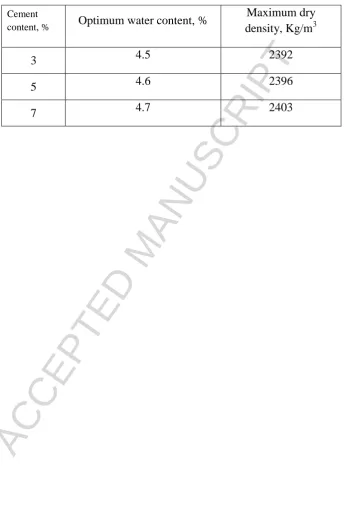
13286-4:2003 utilizing the vibratory compaction procedure. The optimum water content for
each cement content is shown in Table 2. Given the small volume of rubber in overall mixture
and the low water absorption of both rubber and natural aggregate, difference in water
absorbability after natural aggregate replacement make no significant difference to water
demand for compaction or cement hydration.
Cement-bound aggregate mixtures have a similarity with normal concrete where both of them
are cementitious materials and also a similarity with asphaltic mixtures since both of them are
ACCEPTED MANUSCRIPT
6
replacement as used in asphaltic mixtures (Hassan 2012) to avoid affecting compaction
characteristics. To constitute the rubberized mixtures, 30% of the 6 mm fraction size was
replaced by the same volumetric percentage. This size was selected due to the similarity
between the gradations of crumb rubber and the 6 mm fraction size which, in turn, should
secure the same packing skeleton. Owing to the considerable differences between specific
gravities of natural aggregate and crumb rubber, proportioning on a weight basis was ruled
out. To do so would add a significantly extra volume of 6 mm size particles, meaning that the
packing in the CSAMs and RCSAMs were no longer comparable. Cement is normally added
by the dry weight of aggregate but this would reduce after replacing the natural aggregate by
the same volume of crumb rubber due to the low specific gravity of the latter. Similarly, the
water required for compaction would also reduce, since this is normally expressed as a
percentage of the weight of aggregate and cement. Accordingly, volumetric proportioning of
rubber, water and cement was practiced for the rubberized mixtures. Thus, volumetric
proportions were kept constant, as used in the control mixture. The easiest way to do so is to
keep the quantities (per unit volume of mix) of water and cement in the rubberized mixtures
the same as to that used in their corresponding reference mixtures.
Different mixtures are designated by two letters, to indicate cement and rubber, and each one
is followed by a number to indicate corresponding percentage. For example, C7R30 describes
a mixture stabilized with 7% cement and with a rubber replacement level of 30%.
4.3 Samples preparation and curing
The mixing process was performed as follows: dry granular material, with particle size of less
than 6 mm, was mixed with cement first until, subjectively, a uniform colour was achieved.
This was added to the rest of aggregate (including the crumbed rubber in those mixtures so
designated) and mixed thoroughly for one minute. Then, followed adding the designed water
ACCEPTED MANUSCRIPT
7
Two different samples sizes were used: 100 mm x 100 mm cylindrical sample and prisms of
100mm x 100mm x 500mm dimensions, manufactured in split steel moulds and standard
prismatic steel moulds, respectively. On completion of mixing, the mixture was compacted in
three layers inside the lubricated moulds using a vibrating hammer. In accordance with BS
EN 13286-51:2004, the compaction time was 60s per layer. Initial investigations revealed
difficulty in achieving smooth and level surfaces, which are necessary for testing and fixing
instrumentation. To deal with this problem, samples were manufactured in such a way as to
achieve a slightly greater height which was then trimmed by saw to obtain the required
dimensions. For prismatic moulds, a removable mould extension was fabricated in order to
manufacture prisms of higher than 100 mm. Three samples were manufactured for each mix.
Once the compaction was completed, samples inside their moulds were covered with wet
paper and polythene sheets to prevent moisture loss. After 24 hours, the specimens were
demoulded and wrapped with nylon film and placed in wet polythene bags and closed tightly
and cured in the humid room at 20° C and relative humidity of 90% for 28 days.
4.4 Procedures and analysis approach
4.4.1 Unconfined compressive strength and indirect tensile strength
Although cement-stabilized base courses within pavement structure are normally designed
based on tensile stress at the bottom of this layer, unconfined compressive strength (UCS) is
one of the widely adopted methods to characterize cement-stabilized mixtures due to its
simplicity and their established correlations with other properties (Piratheepan et al. 2009;
Jitsangiam and Nikraz 2011). Moreover, this test has been adopted by European specification
BS EN 14227-1:2013 as one of the primary means by which to classify cement-bound
mixtures. In this study, the test was conducted in accordance with BS EN 13268-41:2003
using a 2500 KN testing machine. Three cylindrical samples of dimensions 100 mm dia. x
ACCEPTED MANUSCRIPT
8
Strength (ITS) was performed in accordance with BS EN 13286-42:2003. A 200 KN capacity
Instron universal testing machine was used. ITS, in MPa, was estimated using the following
equation:
Where P is the ultimate load (N), h is the sample thickness (mm) and D is the diameter of the
sample (mm). To study the effects of curing age on both UCS and ITS, both tests were
conducted at 7, 28 and 365 days.
4.4.2 Static modulus of elasticity
The modulus of elasticity, E, was determined in parallel with the ITS test at 28 days. In order
to obtain load-deformation relationships and hence estimate the static modulus of elasticity,
two linear variable differential transducers (LVDTs) were glued on both sides of samples to
measure the lateral deformation. These were mounted using manufactured LVDT blocks. The
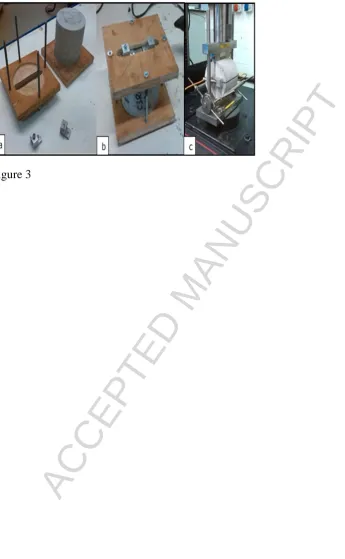
test set-up is depicted in Figure 3. Each test was conducted under deformation control of 0.5
mm/min. Due to low strain levels developed in cement-stabilized mixtures during the test,
accurate instrumentation is recommended by (Scullion et al. 2008). So a gluing jig was
manufactured and used as reported by (Wen et al. 2014) to ensure accurate alignment of
LVDTs blocks on both faces of the sample as shown in the latter figure. The readings from
the two LVDTs were averaged to represent lateral displacement for each load application. The
static elastic modulus was estimated from load-deformation relationships based on 30% of the
maximum load and corresponding lateral displacement according to BS EN 13286-43:2003.
However, because of the difference between LVDT arrangements (gauge distance) employed
compared to the arrangement specified in BS EN 13286-43:2003, the formula recommended
by (Solanki and Zaman 2013), as shown in Equation below, was used in lieu of the equation
ACCEPTED MANUSCRIPT
9 (2)Where Eit= indirect tensile static modulus of elasticity, P= 30% of ultimate load; D=diameter
of sample; t= sample thickness; =lateral deformation corresponding to 30% of ultimate
load; Dg=LVDT gauge distance and = Poisson’s ratio.
4.4.3 Load-deformation relationships and toughness
To evaluate the post-peak bearing capacity, energy absorption capacity or toughness of the
mixture, the area under the load-deformation curve was calculated. The estimation of
toughness in this manner may include the improvement in strength and ductility due to rubber
incorporation as stated by (Sobhan and Mashnad 2000). However, as a result of rubber
inclusion, a reduction in the mixture strength is expected which makes it necessary to
normalize the tensile load relative to its ultimate value so as to evaluate the toughness
improvement due to enhanced stress at break. This is also logical since, in mechanistic
pavement design, the stress is usually normalized and the stress ratio is principally used in the
appropriate transfer function to calculate the number of permissible load applications. The
methodology used by (Huang et al. 2005; Modarres 2013) was adopted to calculate toughness
indices from the indirect tensile normalized load-deformation curves as follows
where and is area under normalized load-deformation curve up to a specific
deformation ( ) and deformation at peak load (Dp), respectively. and are the specific
deformation at which the toughness index was calculated and the deformation at peak load,
respectively. The former deformation is larger than the latter one. For comparable results,
toughness indices for all mixtures were calculated at same deformation (Huang et al. 2005).
ACCEPTED MANUSCRIPT
10
value after their failure and hence permit to compare between load-carrying capacities after
failure. However, the C7R0 showed a very slight defamation after failure i.e., much less than
1.2 mm which make it incomparable with other mixture and considered as a brittle mixture.
4.4.4 Dynamic properties through resonant frequency testing
Dynamic modulus of elasticity, measured by resonant frequency, can be used for pavement
analysis and design (Nunn 2004; Lav et al. 2006). Dynamic properties were measured
nondestructively in accordance with (ASTM C215-02) using a resonant frequency tester. In
this investigation, dynamic properties were evaluated in terms of dynamic modulus of
elasticity (Ed), dynamic modulus of rigidity (Gd) and dynamic Poison’s ratio (υd). In this test,
the sample was supported at its centre on the equipment bench and clamped using the
available clamping arrangement. Depending on the property to be measured, the driver and
pick up parts were placed at different locations. Dynamic modulus of elasticity and dynamic
modulus of rigidity are measured repeatedly then the dynamic Poisson’s ratio is computed
from these two moduli. Using the manufacturer’s recommended frequency range and starting
from a low frequency, frequency was increased gradually until the output meter showed the
maximum value which indicates the fundamental resonant frequency of the mixture. Based on
this frequency, dynamic modulus of elasticity (Ed) and dynamic modulus of rigidity (Gd) were
computed. The dynamic Poisson’s ratio ( ) was estimated as:
4.5 Failure patterns
In an attempt to understand how the cement content affects the failure mechanism and to
provide some explanation of the macroscale behaviour, the internal structure at mesoscale
level of a failed ITS samples was scanned utilizing an X-ray CT machine with a mini focus
ACCEPTED MANUSCRIPT
11
sample at the top and bottom of the middle third of sample. The resolution of the current scan
is 0.065 mm/pixel.
5. Findings and discussion
5.1 Effect of cement content on UCS and ITS
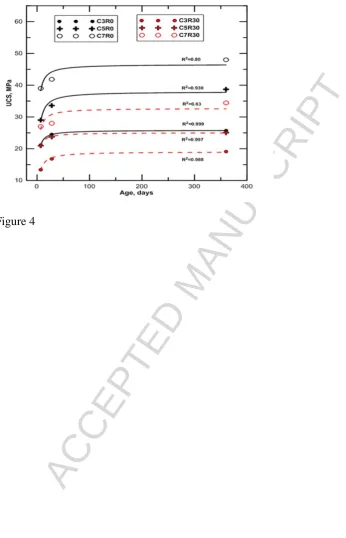
Figure 4 illustrates the effect of cement, rubber and time on the UCS of the investigated
mixtures. As can be seen from that figure, the general trend is an increase in UCS value as
cement content increase which is expected since cement will increase the strength of
material’s matrix and the bond between particles due to increase in the hydration products. In
addition, there was an improvement in this parameter with curing time, since hydration is a
time-dependent process. The development rate of UCS, in general, is proportional to the
amount of cement because the more cement in the mixture the more the hydration products
(Barišić et al. 2015) and hence the more the strengthening and binding effect.
Regarding the combined effect of cement and rubber on the UCS, it was observed from the
same figure that the UCS declined due to the partial replacement of natural aggregate with
crumb rubber. Furthermore, interestingly, the decline in the UCS value due to rubber
incorporation increased as cement content increased, although the increase was less marked as
the cement content increased from 5% to7%. The latter behaviour can be explained as follows:
the aggregates in compacted cement aggregate mixture are interlocked and bonded by the
cement matrix to each other which make them resist the applied loading like an indeterminate
structure, i.e. the “structure” carries the applied load in such a way that each element in the
“structural system” carries part of that load in proportion to its relative stiffness. As cement
content increases, the stiffness of the surrounding materials must increase while the stiffness
of the rubber particles must remain unchanged. Hence, stresses will be shed from the
compliant rubber particles toward the stiffer surrounding materials which will thus absorb
ACCEPTED MANUSCRIPT
12
surrounding matrix become large, the rubber inclusion will act similarly to a void- which is,
in effect, as inclusion having zero stiffness. This will result in greater stress concentrations in
the matrix surrounding the rubber. On the other hand, in the case of low cement content this
stiffness difference is lower, which will maximize the role of rubber particles in this structural
system. This leads to the conclusion that the void-like behaviour depends, to large extent, on
the relative stiffness between rubber particles and surrounding matrix.
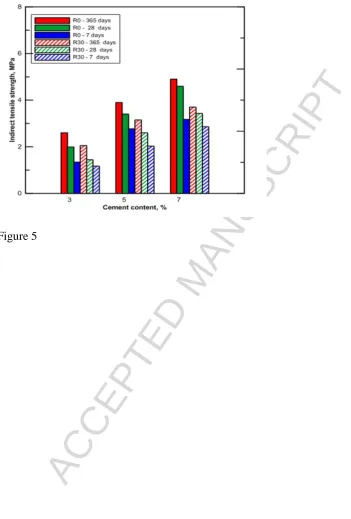
In terms of indirect tensile strength, it was observed, as shown in Figure 5, that the ITS value
increased proportionally with higher amounts of cement and/or long curing period. Similar to
the UCS, the reduction in ITS is more obvious at higher cement level than at low contents for
the same reasons as stated above.
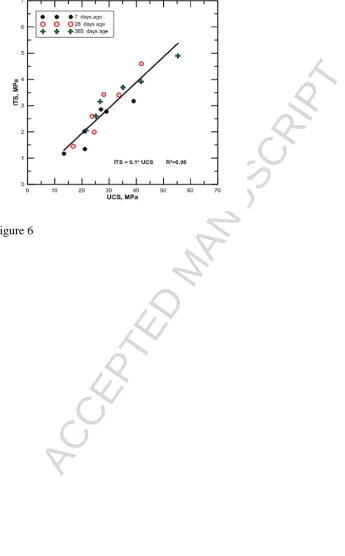
Figure 6 shows the relationship between UCS and ITS values for different mixtures at
different ages. From this figure, we can infer that the ITS value is around 10% of the UCS
applicable for all investigated mixtures at all curing age. This means that the relationship
between UCS and ITS is a unique relation regardless of mixture composition (aggregate type,
degree of cementation and curing period). (Ji et al. 2015) in their study, for different natural
aggregate/recycled asphalt pavement aggregate (RAP), recycled cement base aggregate
blends stabilized with different cement contents concluded that there was a linear relationship
in which the UCS=9.786 x ITS. (Arellano and Thompson 1998) reported a ratio of between
10-15%. Thus the current results confirm these earlier findings.
5.2 Effect of cement content on static modulus of elasticity
The effect of cement content on the static modulus of elasticity of virgin and
cement-stabilized mixtures is illustrated in Figure 9. It can be said, based on the results depicted in
this figure that the greater the cement content the greater the stiffness of the mixture. It can be
ACCEPTED MANUSCRIPT
13
mixtures having different cement contents, the stiffness of mixtures is controlled, to a large
extent by the stiffness of the matrix (fines plus cement) and its bond with aggregate particles.
On the other hand, a drop of the stiffness was observed due to rubber inclusion which can be
attributed to the replacement of stiff particles (natural aggregate) by soft particles (rubber). As
the stiffness of mixtures depends on the stiffness of their individual components, it is logical
for decrease to occur when the natural aggregate is replaced by the crumb rubber.
5.3 Effect of cement content on load-deformation relationship and toughness
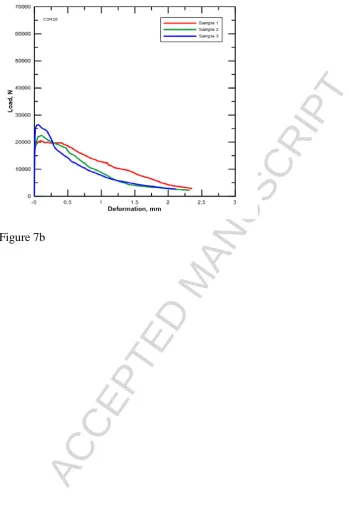
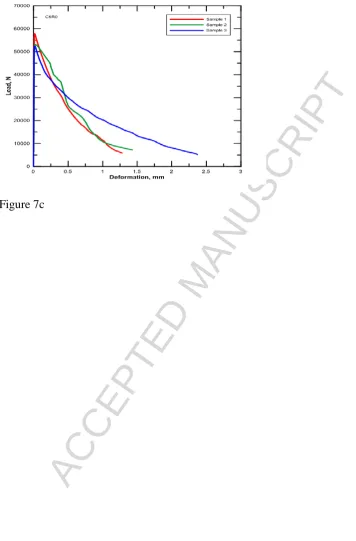
Figure 7 demonstrates the load-deformation relationships for different investigated mixtures.
From these curves, toughness indices were estimated (Section 4.4.3) as presented in Figure 8.
It is clearly seen that inclusion of more cement caused a reduction in the toughness or energy
absorption capacity. However, an improvement occurred in the toughness value after
modification with crumb rubber at all cement levels. Improved enhancement was observed at
higher cement contents. This leads to the conclusion that as far as the toughness of the
materials is of concern, incorporating rubber in the cemented mixture at high cement content
will be beneficial for improving the energy absorption capacity of the material. However, in
spite of this, both conventional and rubberized mixtures of low cement content are still
tougher than those with high cement contents.
It is suggested that the mechanism of toughness increase is by lengthening the crack
propagation path for both virgin and rubberized mixtures. If an assumption (which will be
checked later in this paper) is made that the crack always propagates through the weak points,
then this may explain the toughness changes. In addition, this propagation through these
rubber particles is also improve the toughness by stress relaxation at the tip of cracks. At low
cementation levels, the bond between the aggregate particles and cement mortar (fines and
ACCEPTED MANUSCRIPT
14
through weak points (primarily around the aggregate particles) will lengthen the crack path
and enhanced the toughness of the mixture.
5.4 Effect of cement content on dynamic properties
Similar to the static modulus of elasticity results, there was an increase in both dynamic
modulus of elasticity and that of rigidity due to increase in mixture cement content, as
depicted in Figure 10. This demonstrates the ability of the nondestructive testing to
distinguish between different modified mixtures containing different amounts of cement and
their high sensitivity to the small change in the aggregate structure due to incorporation of
small amounts of rubber. Figure 11 demonstrates the effect of cementation on the Poisson’s
ratio of both virgin and rubberized mixtures. A decline in Poisson’s ratio occurred for both
mixtures because the higher stiffness due to high cement content is usually accompanied by
less deformable behaviour.
5.6 Effect of cement content on failure patterns
Figure 12 illustrates the failure pattern in ITS and UCS specimens. In terms of ITS, virgin
samples tend to fail in a brittle manner resulting in a complete separation of sample halves.
The latter failure mode is more obvious in mixtures of high cement content. In contrast, the
rubber modified mixtures at all cement contents did not experience such a failure pattern.
Instead, these, after testing, looked intact with a narrow crack opening. Regarding the failure
pattern of UCS samples, similar behaviour was observed where the reference mixtures at all
cement contents tended to show severe crushing. In contrast, rubberized mixtures show less
crack width and seem to be intact. This might be because the cracks propagated as a 3
dimensional network through rubber particles since these represent cracking initiation sites.
These findings, in turn, explain the ductile behaviour due to rubber incorporation at all cement
contents. The practical implication for use of the material as a base course in a pavement
ACCEPTED MANUSCRIPT
15
same time this may reduce the possibility of reflection of these cracks into the surface course
of the pavement which is due to stress concentration in the upper layer where it rests layer on
a cement-stabilized base course having wide cracks. Similar behaviour was also reported by
(Duarte et al. 2015) when they investigated the failure pattern of normal concrete samples.
5.7 Overall discussion regarding fracture mechanism
Theoretical studies conducted by (Duarte et al. 2015) and (Eldin and Senouci 1993) for
rubberized concrete revealed that the cracks initiated near the rubber particles due to the stress
concentration at these locations. Furthermore, (Duarte et al. 2015) findings revealed that
damage and cracking is more concentrated in the concrete mixtures containing no rubber, but
that is not the case for the rubberized concrete. There the damage is more widely distributed.
In the present paper, examining the failure pattern and observing the internal structure through
the X-ray images of the failed specimens reveals that regardless of the cement content, the
cracks tend to propagate through or adjacent to the rubber particles (Figure 13). They tend not
to run through the surrounding matrix when there is a rubber aggregate nearby. It is believed
that this behaviour is related strongly to the void-like behaviour (mentioned earlier) of the
rubber particles. Therefore, rubber particles embedded inside a stiff matrix behave like a void
which attracts the crack to propagate across or adjacent to it. Another explanation of the crack
routing could be the denser structure and lower heterogeneity (since the difference between
the stiffness of the conventional aggregates and the surrounding cementitious matrix will be
minimized as cement content increases) of highly cemented mixtures. This would means that
the rubber particles were then the most significant defect inside such a mixture and hence
stress would be concentrated more adjacent these particles. When this happens, cracks will
tend to propagate between rubber particles and the latter will try to absorb and relieve the
stress at the crack tip. Such an understanding explains why more toughness was observed at
higher cement contents. At moderate cement level, toughness was also improved for the same
ACCEPTED MANUSCRIPT
16
cement contents reveals the degree of toughness improvement is higher at 7% cement content
as compared that at 5% cement. This is probably because, at 5% cement content, the less
dense matrix may already contain voids that delay crack propagation since these
micro-cracks consumes a part from energy due to the micro-crack shielding phenomenon defined by
Shah (1995) as cited in (Löfgren 2005). Furthermore, the weaker bond between aggregate and
surrounding matrix contributes to deflection of the crack and its propagation through the
conventional aggregate-cement matrix interface. The latter process also consumes some
energy.
6. Conclusions
The influence of cement content on the mechanical properties of virgin and cement-stabilized
aggregate was investigated in this paper. The following conclusions can be drawn:
1. Indirect tensile strength increased as cement content increases. Furthermore, an
improvement in this property also occurred as curing age increased. However, the
reduction in the ITS of mixtures due to rubber replacement is more obvious for mixtures
of high cement contents (7%) than these of low cement contents (3%). Therefore, from a
strength point of view, using crumb rubber in mixtures of low cement content is the most
sustainable solution since this will ensure saving of natural aggregate while maintaining
better strength.
2. As expected, unconfined compressive strength is found to improve with cement content
and curing age for both types of investigated mixes.
3. There was a reduction in the toughness of the investigated mixtures when more cement
is used. However, an improvement due to rubber inclusion was observed. Greater
ACCEPTED MANUSCRIPT
17
4. Non-destructive investigation confirmed that rubber replacement of some aggregate
produce less stiff materials. The same behaviour was seen in static modulus of elasticity
measurement, proving the ability of this test method to characterize the
cement-stabilized materials containing different amount of cements and small changes in
aggregate composition.
5. It is recommended to use low cement contents to stabilize rubberized mixtures since the
reduction in the material strength is lower than at high cement content. This is
considered as the more economical option.
6. Evaluation of the performance of the rubberized mixtures, especially under dynamic
loading, is essential to validate their use.
Acknowledgements
The authors would like to acknowledge the support of the Higher Committee of Education
Development in Iraq (HCED) for providing a scholarship to conduct this research. Thanks are
also due to Mr. Chris Fox, the Senior Experimental Officer at the University of Nottingham,
ACCEPTED MANUSCRIPT
18 Figure Captions
Fig.1. Gradation of different fraction sizes including crumb rubber.
Fig.2. Final gradation of cement-stabilized mixtures.
Fig.3.Indirect tensile testing details: a. manufactured gluing jig; b. gluing LVDTs holders and
c. test set-up.
Fig.4. Unconfined compressive strength for different mixtures at 7, 28 and 365 days.
Fig.5. Indirect tensile strength for examined mixtures at 7, 28 and 365 days.
Fig.6. UCS and ITS correlation for examined mixtures at indicated curing periods.
Fig.7. Load-diametrical deformation curves for different replacement levels: a. C3R0;
b.C3R30; c. C5R0; d.C5R30; e. C7R0 and d. C7R30.
Fig.8. Effect of replacement on toughness indices.
Fig.9. Effect of cement content on static modulus of elasticity.
Fig.10. Effect of rubber replacement on dynamic elasticity and rigidity moduli.
Fig.11. Effect of rubber replacement on dynamic Poisson’s ratio.
Fig.12. Failure patterns due to UCS (a) and ITS (b) testing for different mixtures.
Fig.13. Mesostructural illustration for different mixtures: a. C3R30, b. C5R30 and c. C7R30
ACCEPTED MANUSCRIPT
19
Property Value
Specific gravity 1.12
Apparent density 489 kg/m3
Thermal conductivity 0.11 W/k m
Tensile resistance 4.2–15 MPa
Speed of combustion Very low
[image:20.595.147.479.95.733.2]Water absorption 0.65 (negligible)
ACCEPTED MANUSCRIPT
20
Cement
content, % Optimum water content, %
Maximum dry density, Kg/m3
3 4.5 2392
5 4.6 2396
[image:21.595.140.485.98.620.2]7 4.7 2403
ACCEPTED MANUSCRIPT
21 References
Arellano, D. and M. R. Thompson (1998). Stabilized Base Properties (Strength, Modulus, Fatigue) for Mechanistic-Based Airport Pavement Design, Final Report,Technical Report of Research, Department of Civil Engineering University of Illinois at Urbana-Champaign, Illinois.
ASTM (C215-02). Standard Test Method for Fundamental Transverse, Longitudinal, and Torsional Frequencies of Concrete Specimens, ASTM International, West Conshohocken, PA, 2002, www.astm.org.
Balaha, M. M., A. A. M. Badawy and M. Hashish (2007). "effect of using ground waste tire rubber on the behavior of concrete mixes." Indian journal of Engineering and Materials Science 14: 427-435.
Barišić, I., S. Dimter and T. Rukavina (2014). "Strength properties of steel slag stabilized
mixes." Composites Part B: Engineering 58: 386-391.
Barišić, I., T. Dokšanović and H. Draganić (2015). "Characterization of hydraulically
bound base materials through digital image correlation." Construction and Building Materials 83: 299-307.
Cao, W. (2007). "Study on properties of recycled tire rubber modified asphalt mixtures using dry process." Construction and Building Materials 21(5): 1011-1015.
Chilukwa, N. N. (2013). Vibratory hammer compaction of granular materials, Stellenbosch: Stellenbosch University.
Drnevich, V. P., A. C. Evans and A. B. Prochaska (2007). "A Study of Effective Soil Compaction Control of Granular Soils."
Duarte, A., B. Silva, N. Silvestre, J. de Brito and E. Júlio (2015). "Mechanical characterization of rubberized concrete using an image-processing/XFEM coupled procedure." Composites Part B: Engineering 78: 214-226.
Eiras, J., F. Segovia, M. Borrachero, J. Monzó, M. Bonilla and J. Payá (2014). "Physical and mechanical properties of foamed Portland cement composite containing crumb rubber from worn tires." Materials & Design 59: 550-557.
Eldin, N. N. and A. B. Senouci (1993). "Rubber-tire particles as concrete aggregate." Journal of Materials in Civil Engineering 5(4): 478-496.
Güneyisi, E., M. Gesoğlu and T. Özturan (2004). "Properties of rubberized concretes
containing silica fume." Cement and Concrete Research 34(12): 2309-2317. Hassan, N. A. (2012). Microstructural characterization of rubber modified asphalt
mixtures PhD thesis, The university of Nottingham.
Huang, B., X. Shu and G. Li (2005). "Laboratory investigation of portland cement concrete containing recycled asphalt pavements." Cement and Concrete Research 35(10): 2008-2013.
Ji, X., Y. Jiang and Y. Liu (2015). "Evaluation of the mechanical behaviors of cement-stabilized cold recycled mixtures produced by vertical vibration compaction method." Materials and Structures: 1-14.
Jitsangiam, P. and H. Nikraz (2011). "Mix Design of Cementitious Basecourse."
Khaloo, A. R., M. Dehestani and P. Rahmatabadi (2008). "Mechanical properties of concrete containing a high volume of tire-rubber particles." Waste Management 28(12): 2472-2482.
Khatib, Z. K. and F. M. Bayomy (1999). "Rubberized Portland cement concrete." Journals of Materials in Civil Engineering, ASCE 11: 206-213.
Lav, A. H., M. A. Lav and A. B. Goktepe (2006). "Analysis and design of a stabilized fly ash as pavement base material." Fuel 85(16): 2359-2370.
Lim, S. and D. G. Zollinger (2003). "Estimation of the compressive strength and modulus of elasticity of cement-treated aggregate base materials." Transportation Research Record: Journal of the Transportation Research Board 1837(1): 30-38. Löfgren, I. (2005). Fibre-reinforced Concrete for Industrial Construction--a fracture
mechanics approach to material testing and structural analysis, PhD thesis, Chalmers University of Technology.
ACCEPTED MANUSCRIPT
22
Najim, K. B. and M. R. Hall (2012). "Mechanical and dynamic properties of self-compacting crumb rubber modified concrete." Construction and Building Materials 27(1): 521-530.
Najim, K. B. and M. R. Hall (2013). "Crumb rubber aggregate coatings/pre-treatments and their effects on interfacial bonding, air entrapment and fracture toughness in self-compacting rubberised concrete (SCRC)." Materials and Structures.
Nguyen, T., A. Toumi and A. Turatsinze (2010). "Mechanical properties of steel fibre reinforced and rubberised cement-based mortars." Materials & Design 31(1): 641-647.
Nunn, M. (2004). Development of a more versatile approach to flexible and flexible composite pavement design : prepared for highways agency, TRL report.
Papakonstantinou, C. G. and M. J. Tobolski (2006). "Use of waste tire steel beads in Portland cement concrete." Cement and Concrete Research 36(9): 1686-1691. PCA (2005). "soil cement technology for pavement different products for different
applications." Portland Concrete Association(illinois).
Pelisser, F., N. Zavarise, T. A. Longo and A. M. Bernardin (2011). "Concrete made with recycled tire rubber: Effect of alkaline activation and silica fume addition." Journal of Cleaner Production 19(6-7): 757-763.
Piratheepan, J., C. Gnanendran and S.-C. Lo (2009). "Characterization of cementitiously stabilized granular materials for pavement design using unconfined compression and IDT testings with internal displacement measurements." Journal of Materials in Civil Engineering 22(5): 495-505.
Scullion, T., J. Uzan, S. Hilbrich and P. Chen (2008). "Thickness Design Systems for Pavements Containing Soil-Cement Bases." PCA R&D Serial(2863).
Sobhan, K. and M. Mashnad (2000). "Fatigue durability of stabilized recycled aggregate base course containing fly ash and waste-plastic strip reinforcement." Final Rep. Submitted to the Recycled Materials Resource Centre, Univ. of New Hampshire. Solanki, P. and M. Zaman (2013). "Behavior of Stabilized Subgrade Soils under Indirect
Tension and Flexure." Journal of Materials in Civil Engineering 26(5): 833-844. Taha, M. M. R., A. S. El-Dieb, M. A. Abd El-Wahab and M. E. Abdel-Hameed (2008).
"Mechanical, Fracture, and Microstructural Investigations of Rubber Concrete." Jounal of Materials in Civil Engineering, ASCE 20: 640-649.
Thompson, I. (2001). "Use of Steel Fibers to Reinforce Cement Bound Roadbase." PhD Thesis, University of Nottingham.
Topçu, İ. B. and T. Bilir (2009). "Experimental investigation of some fresh and hardened
properties of rubberized self-compacting concrete." Materials & Design 30(8): 3056-3065.
Wen , H., B. Muhunthan, J. Wang, X. Li, T. Edil and J. M. Tinjum (2014). Characterization of Cementitiously Stabilized Layers for Use in Pavement Design and Analysis. Williams, R. I. T. (1986). "Cement-treated pavements : materials, design and
construction " Elsevier Applied Science.
Wu, P., L. Houben, A. Scarpas, C. Egyed and R. de La Roij (2015). "Stiffness modulus and fatigue peoperties of cement-stabil;ized sand with use of a synthetic modified-zeolite additive." 2015 Annual meeting of transportation research board. Zheng, L., X. Sharon Huo and Y. Yuan (2007). "Experimental investigation on dynamic
properties of rubberized concrete." Construction and Building Materials 22(5): 939-947.
ACCEPTED MANUSCRIPT
ACCEPTED MANUSCRIPT
[image:25.595.93.437.70.632.2]ACCEPTED MANUSCRIPT
[image:26.595.94.440.55.615.2]ACCEPTED MANUSCRIPT
[image:27.595.90.437.65.604.2]ACCEPTED MANUSCRIPT
[image:28.595.88.440.69.589.2]ACCEPTED MANUSCRIPT
[image:29.595.92.438.79.636.2]ACCEPTED MANUSCRIPT
[image:30.595.86.435.65.620.2]ACCEPTED MANUSCRIPT
[image:31.595.86.436.67.599.2]ACCEPTED MANUSCRIPT
[image:32.595.86.443.67.609.2]ACCEPTED MANUSCRIPT
[image:33.595.88.437.70.599.2]ACCEPTED MANUSCRIPT
[image:34.595.91.439.72.603.2]ACCEPTED MANUSCRIPT
[image:35.595.89.443.64.606.2]ACCEPTED MANUSCRIPT
[image:36.595.89.438.63.594.2]ACCEPTED MANUSCRIPT
[image:37.595.86.438.60.591.2]ACCEPTED MANUSCRIPT
[image:38.595.88.436.66.584.2]ACCEPTED MANUSCRIPT
[image:39.595.89.439.73.594.2]ACCEPTED MANUSCRIPT
[image:40.595.91.439.54.608.2]ACCEPTED MANUSCRIPT
[image:41.595.91.438.54.604.2]ACCEPTED MANUSCRIPT
[image:42.595.94.436.66.603.2]ACCEPTED MANUSCRIPT
[image:43.595.90.434.69.610.2]ACCEPTED MANUSCRIPT
[image:44.595.90.439.67.609.2]ACCEPTED MANUSCRIPT
ACCEPTED MANUSCRIPT
45 Research Highlights
Increasing cement content in cement-stabilized mixtures containing crumbed rubber
generates greater tensile strength.
Reduction in cement-stabilized mixtures strength due to rubber inclusion is more
obvious at high cement content.
Toughness improvement and stiffness reduction confirm more ductile behaviour due
to rubber incorporation at all cement contents.
Cracks in rubberized cemented mixtures propagate through the rubber particles at all
cementation levels.
Overall performance of rubberized cement-stabilized mixes depends on the relative