ScholarWorks @ Georgia State University
ScholarWorks @ Georgia State University
Nutrition Theses Department of Nutrition
Fall 11-2-2012
Sociocultural Barriers to Breast Feeding in African American
Sociocultural Barriers to Breast Feeding in African American
Women with Focused Intervention to Increased Prevalence
Women with Focused Intervention to Increased Prevalence
Alicia C. Simpson
Follow this and additional works at: https://scholarworks.gsu.edu/nutrition_theses
Recommended Citation Recommended Citation
Simpson, Alicia C., "Sociocultural Barriers to Breast Feeding in African American Women with Focused Intervention to Increased Prevalence." Thesis, Georgia State University, 2012.
https://scholarworks.gsu.edu/nutrition_theses/41
This Thesis is brought to you for free and open access by the Department of Nutrition at ScholarWorks @ Georgia State University. It has been accepted for inclusion in Nutrition Theses by an authorized administrator of
ACCEPTANCE
This thesis, SOCIOCULTURAL BARRIERS TO BREAST FEEDING IN AFRICAN AMERICAN WOMEN WITH FOCUSED INTERVENTION TO INCREASE
PREVALENCE, by Alicia C. Simpson was prepared under the direction of the Master’s Thesis Advisory Committee. It is accepted by the committee members in partial
fulfillment of the requirements for the degree Master of Science in the Byrdine F. Lewis School of Nursing and Health Professions, Georgia State University. The Master’s Thesis Advisory Committee, as representatives of the faculty, certify that this thesis has met all standards of excellence and scholarship as determined by the faculty.
_____________________ ________________________ Anita M. Nucci, PhD, MPH, RD, LD Sarah T. Henes, PhD, RD, LDN Committee Chair Committee Member
______________________ Murugi Ndirangu, PhD
Committee Member
In presenting this thesis as a partial fulfillment of the requirements for the advanced degree from Georgia State University, I agree that the library of Georgia State University shall make it available for inspection and circulation in accordance with its regulations governing materials of this type. I agree that permission to quote, to copy from, or to publish this thesis may be granted by the professor under whose direction it was written, by the Byrdine F. Lewis School of Nursing and Health Professions director of graduate studies and research, or by me. Such quoting, copying, or publishing must be solely for scholarly purposes and will not involve potential financial gain. It is understood that any copying from or publication of this thesis which involves potential financial gain will not be allowed without my written permission.
NOTICE TO BORROWERS
All theses deposited in the Georgia State University library must be used in accordance with the stipulations prescribed by the author in the preceding statement. The author of this thesis is:
Alicia C. Simpson Atlanta, GA 30349
The director of this thesis is:
Anita M. Nucci, PhD, MPH, RD, LD Assistant Professor and Department Head
Department of Nutrition
Byrdine F. Lewis School of Nursing and Health Professions Georgia State University
ALICIA C. SIMPSON
EDUCATION Georgia State University Atlanta, GA
M.S. Health Sciences, Coordinated Program
Areas of Concentration: Nutrition
Thesis: “sociocultural barriers to breast feeding in African
American women with focused intervention to increase prevalence”
2012
Georgia State University Atlanta, GA
B.A. Anthropology 2012
Honors Thesis: “Socioeconomic and cultural aspects of overweight and obesity in Georgia’s African American Community”
Hampton University, Hampton, VA
B.S. Marketing with Honors 2002
CERTIFICATES AND AWARDS University of California San Diego Extension
Lactation Consultant Certificate 2012
RELATED EXPERIENCE
Touchpoint Selling Solutions, Atlanta, GA
Flex-Time Professional Sales Representative 2010- Present
Abbott Immunology, Atlanta, GA
Pricara (formerly Janssen Pharmaceutica)
Pharmaceutical Sales Representative 2002-2006
BOOKS AND MONOGRAPHS
2012 Simpson, A.C., Quick and Easy Low-Cal Vegan Comort: 150 Down-Home Recipes Packed with Flavor, Not Calories. New York: The Experiment
2010 Simpson, A.C., Quick And Easy Vegan Celebrations: 150 Great-Tasting Recipes Plus Festive Menus For Vegantastic Holidays And Get-Togethers All
Through The Year. New York: The Experiment
2009 Simpson, A.C., Quick and Easy Vegan Comfort Food: 65 Everyda y Meal Ideas for Breakfast, Lunch and Dinner with Over 150 Great -Tasting
Down Home Recipes. New York: The Experiment
MEMBERSHIPS
Academy of Nutrition and Dietetics
Vegetarian Nutrition Dietary Practice Group State Coordinator (Georgia)
SOCIOCULTURAL BARRIERS TO BREAST FEEDING IN AFRICAN AMERICAN WOMEN WITH FOCUSED INTERVENTION TO INCREASE PREVALENCE
by
Alicia C. Simpson
Objective: The goal of this study is to uncover sociocultural barriers to breastfeeding
among African American women in the Atlanta metropolitan area and provide an
educational intervention based on identified barriers to increase the willingness to
breastfeed. Methods: Non-Hispanic African American women, 6 to 9 months pregnant,
between the ages of 18 and 45, of varying socioeconomic status were recruited from
multiple Obstetrics and Gynecology clinics throughout the Atlanta-metropolitan area.
Participants completed a self-administered pre-test survey that questioned their intention
to breastfeed and anticipated barriers associated with breastfeeding. Those who were
unsure of breastfeeding or did not plan to breastfeed were asked to participate in an
educational intervention that provided information about breastfeeding, the benefits to
mother and baby and managing commonly perceived barriers. Immediately after the
intervention a post-test was provided. A second post-test was conducted after all
participants delivered their baby. Chi-square analysis was performed to examine the
distribution of actual breastfeeding initiation rates by initial intention as well as by age,
income and education. Results: Forty-nine women participated in the study. 18 of 20
women (90%) who intended to exclusively breastfeed initiated breastfeeding. Sixteen
women reported that they did not intend to breastfeed. After receiving the intervention,
56.3% (n=9) initiated breastfeeding. Thirteen women reported they were unsure of their
reported their primary barriers to breastfeeding were fear of pain, difficulty breastfeeding
once they returned to work and lack of support from family, friends and their
partner/spouse/father of the child. A significant association was observed between ages
25-29 years old and initiation of breastfeeding in women who were unsure of their
breastfeeding plans (p=0.005). No association was found between income or education
and initiation of breastfeeding. Conclusion: Education about breastfeeding was a
significant barrier to breastfeeding in the African-American women in our study
population. Women who participated in the intervention were more likely to initiate
breastfeeding. Employment status, income, and education were not significant factors in a
SOCIOCULTURAL BARRIERS TO BREAST FEEDING IN AFRICAN AMERICAN WOMEN WITH FOCUSED INTERVENTION TO INCREASE PREVALENCE
by
Alicia C. Simpson
A Thesis
Presented in Partial Fulfillment of Requirements for the Degree of
Master of Science in Health Sciences
Byrdine F. Lewis School of Nursing and Health Professions
Department of Nutrition
Georgia State University
ii
ACKNOWLEDGMENTS
I offer my sincerest gratitude to my thesis advisor, Dr. Anita Nucci, for guiding me
through this process. Thank you for supporting my research idea and teaching me
invaluable lessons along the way. I have learned lessons that will stay with me
throughout my career and that I can, with hope, one day pass to others. Thank you to my
committee Dr. Sarah Henes and Dr. Murugi Ndirangu for your support and guidance.
Thank you to my parents John and Linda Simpson for your unwavering support
throughout my professional and academic career. Without your support, guidance and
love I would not have made it this far. I hope to continue to make you proud. Thank you
to my daughter, Bradley C.S. Lamar, for being a constant source of inspiration and the
TABLE OF CONTENTS
List of Tables... iv
Abbreviations ... v
Chapter I. INTRODUCTION... 1
II. LITERATURE REVIEW ... 5
Perceptions ... 5
Behaviors ... 7
Interventions ... 14
III. METHODS ... 17
IV. RESULTS ... 21
Demographics ... 21
Pre-Test Results ... 21
Post-Test A ... 23
Post-Test B... 23
V. DISCUSSION AND CONCLUSIONS ... 25
Appendix A. Modified Infant Feeding Intentions Scale ... 40
B. Your Guide to Breast Feeding For African American Women ... 44
C. Post-Test Part A Interview Questions ... 45
D. Post-Test Part B Interview Questions ... 48
iv
LIST OF TABLES
Table Page
1. Annual Household Income of Study Participants ... 32
2. Education Level of Study Participants ... 32
3. Pre-Intervention Infant Feeding Plans of Participants ... 33
4. Participant Perceived Barriers to Breastfeeding ... 34
5. Post-Intervention Infant Feeding Plans ... 35
6. Perceived Barriers to Breastfeeding Post Educational Intervention ... 36
7. Breastfeeding initiation rates across entire study population by Pre-Test Reported Intention to Breastfeed ... 36
8. Age distribution of mothers who did and did not initiate breastfeeding ... 37
9. Income distribution of mothers who did and did not initiate breastfeeding ... 37
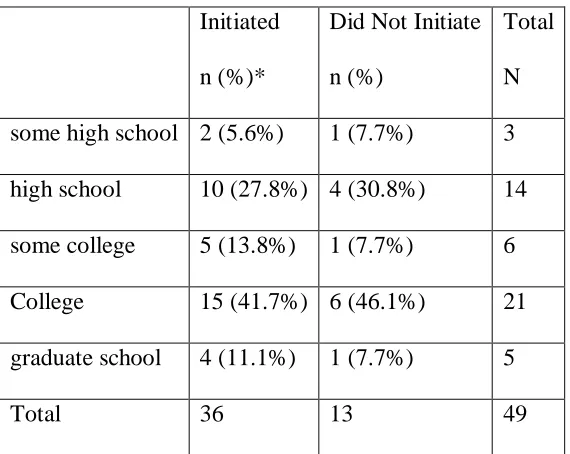
10.Level of education distribution of mothers who did and did not initiate breastfeeding ... 38
11.Anticipated duration of breastfeeding based on age in women who identified as intending to breastfeed exclusively ... 38
ABBREVIATIONS
AAP American Academy of Pediatrics
GA Georgia
OBGYN Obstetrics and Gynecology
NHANES National Health and Nutrition Examination Survey
SGA Small for Gestational Age
WIC Women Infant and Children Program
NICU Neonatal Intensive Care Unit
US United States
1 CHAPTER I
SOCIOCULTURAL BARRIERS TO BREAST FEEDING IN AFRICAN AMERICAN WOMEN WITH FOCUSED INTERVENTION TO INCREASE PREVALENCE
Introduction
Breast milk is the optimal form of nourishment for infants as it is designed
specifically by the mother to meet the evolving nutritional needs of her infant from birth
through early childhood. Recent studies have shown that breast milk is not only
nutritionally beneficial for the child but breastfeeding also offers short and long-term
protective health benefits for the mother and child 1, 2. Short-term benefits to the infant
include reducing the risk of gastroenteritis and a risk reduction of 72 percent in
hospitalization for lower respiratory tract infections in the first year3, 4. Exclusive
breastfeeding for at least 3 months reduces the risk of otitis media by 50 percent4.
Additionally, colds, ear and throat infections were reduced by 63 percent in infants who
are exclusively breastfed for at least 6 months4. In the long-term, breastfeeding reduces
the risk of childhood and adult obesity, more favorable plasma lipid profile, blood
pressure, and improves cognitive development5,3.
The breastfeeding mother enjoys an increase of oxytocin levels post-partum that
result in less postpartum bleeding and hastens the involution of the uterus
post-partum4. Research has demonstrated that lactating women are able to return to their
pre-pregnancy weight faster than women who formula feed their infant. Breastfeeding
fractures in postmenopausal women who breastfed. There is also a reduced risk of
ovarian cancer and premenopausal breast cancer4. This risk reduction is cumulative,
therefore the longer a women breastfeeds the greater her risk reduction of ovarian and
breast cancer. For all these reasons, and more, in 2012 the American Academy of
Pediatrics (AAP) reaffirmed their position that children should be breastfed exclusively
until 6 months of age and then concurrently with the introduction of solid foods from 6
months to at least a year of age4.
In the United States the percentage of women who initiate breastfeeding is nearly
75 percen6t. Although initiation rates are high, very few infants are exclusively breastfed
for the first 6 months of life6. The percentage of women who continue to breastfeed
exclusively after 3 months falls to 35 percent and by 6 months drops dramatically to 14.8
percent7. In the state of Georgia 71.6 percent of woman initiated breastfeeding while only
27.1 percent continued to breastfeed exclusively at 3 months and 10.1 percent were still
exclusively breastfeeding at 6 months7. Nationally, only 54 percent of African American
mothers try breastfeeding which is 21 percent below the overall national average8, 9. In
Georgia 53.2 percent of African American mothers initiate breastfeeding and 27.3
percent exclusively breastfeed through 6 months of age7. Additionally, the rate of
non-exclusive breastfeeding at 6 months is merely 20 percent among African Americans,
which is less than half of the national average of non-exclusive breastfeeding which is
44.3 percent1. Consistently, non-Hispanic blacks are less likely to initiate or sustain
breastfeeding than their white counterparts6. One of the women’s health and pediatric
3
percent nationwide, increase the rate of non-exclusive breastfeeding at 6 months to 60.6
percent and increase the rate of exclusive breastfeeding through 6 months to 25.5
percent7. Breastfeeding rates are undoubtedly associated with ethnicity as well as factors
such as maternal age and family income. Breastfeeding rates are the lowest among
African-Americans, women under 20 years old (including non-Hispanic blacks, white
and Hispanics) and among low-income non-Hispanic blacks and whites1 Therefore, it is
imperative to find intervention programs that target the disparities among ethnic groups
to not only increase the health of the mothers and children in these minority populations
but to also increase the overall health and well-being of the nation’s women and children
as outlined in the Health People 2020 goals.
The majority of research and data available for African-American women has
been done with low-income participants or individuals in the Women, Infants and
Children (WIC) program. This population has reported that they are less likely to receive
breastfeeding advice from WIC counselors and more likely to be advised to bottle-feed
by WIC counselors than white women. Beal (2003) concluded that the lack of
breastfeeding advice to African-American women puts them at greatest risk for not
initiating breastfeeding10. Currently there are no significant data that identifies barriers to
breastfeeding among African American women of various socioeconomic backgrounds.
This research had two aims: 1) to collect ethnographic data about the barriers to
breastfeeding in African American women, of all economic groups, in Atlanta
common barriers to breastfeeding among African-American women and examine its
efficacy in addressing the barriers identified by study participants. The goal was to
uncover sociocultural barriers to breastfeeding among African American women in the
Atlanta metropolitan area and provide an educational intervention based on identified
barriers to increase the initiation rates of breastfeeding and willingness to breastfeed
among study participants.
Based on the literature review it was anticipated that the greatest perceived
barriers to breastfeeding in African American women would be the perceived
convenience of using formula when they returned to work, insecurity about the ability of
breast milk to meet the complete nutritional needs of an infant, as well as a lack of
community and/or family support for breastfeeding. It was hypothesized that of the
women who showed ambivalence about breastfeeding or who showed no interest in
breast feeding, that a significant number would initiate breastfeeding and sustain
5 CHAPTER II
Literature Review
Perceptions
Cricco-Lizza, et al. (2006) examined the perceptions that black, non-Hispanic
mothers had of infant-feeding promotion methods by nurses and physicians. Study
participants were part of a Special Supplemental Nutrition Program for the WIC clinic in
the New York metropolitan area. Ethnographic research was conducted using 11
informants who were followed during pregnancy and the first year postpartum. The
informants reported limited breastfeeding education and support during pregnancy, child
birth, stay in neonatal intensive care unit postpartum, and recovery. They also expressed
trust/distrust concerns and varying degrees of anxiety about the ways they were treated
by nurses and physicians11. The results of this study mirror that of an earlier study
conducted by Beal et al. (2003) where the participants reported receiving less advice from
WIC counselors on breastfeeding than white women in the same program10. There is also
a pervasive theme in the literature of new mothers feeling unsupported by nurses in their
efforts to breastfeed in the hospital with reports that nurses were unenthusiastic about
breastfeeding, did not support a mother’s efforts to breastfeed and encouraged bottle
Kaufman et al. (2009) studied low income African-American and Puerto Rican
women in North and Central Brooklyn New York using ethnographic research methods.
The investigators found that while women in this study felt that breastfeeding was the
best way to feed their infants, their commitment turned to ambivalence in the face of their
perceptions about the dangers of breast milk (concerns about contamination of the breast
milk by the mother), the perceived virtues of formula, and the practical and sociocultural
challenges of breastfeeding. Women’s ambivalence resulted in a widespread
complementary feeding pattern that included breast milk and formula, and resulted in
short breastfeeding durations13.
Deborah McCarter-Spaulding (2007) studied the experience of breastfeeding from
a black woman’s perspective via a focus group composed of 8 African-American women
between the ages of 31 and 35, six of which had college degrees with an income range of
$61,000 to $70,000 a year. In contrast to the negative perceptions of breastfeeding by low
income mothers in studies that have looked at perceptions and behaviors about
breastfeeding, the women in this study made more firm decisions to breastfeed prior to
the birth of their child. The women discussed having a family history of breastfeeding,
role models for breastfeeding in their family and community, and the importance of the
health benefits of breast-feeding as reasons why making the decision to breastfeed was
not difficult for them. Many of the women had initial concerns about milk supply
specifically after trying to pump in the hospital with low-volume results and some
blamed themselves for the poor milk supply, but all the women stuck with it. Others
7
community about the duration of time they decided to breastfeed which in turn caused
them to second guess themselves. Participants had a positive outlook on breastfeeding
and saw breastfeeding as convenient, easy and inexpensive as well as enjoyable. The
women in this study also sited that they had a great deal of support from female relatives,
friends and the father of the baby. The author concluded that ethnicity alone may not be
an effective or useful tool in understanding breastfeeding behavior. Factors such as age,
education and income all positively influenced the rates of breastfeeding among the
women in this study14.
Behaviors
An expectant mother’s intent to breastfeed is strongly correlated with initiation of
breastfeeding post-partum, however, the intent to breastfeed is correlated with societal
norms and a woman’s environment. If a woman feels that society will accept and endorse
her decision to breastfeed she is more likely to do so. Additionally, if a woman feels that
she has support in her decision from not only society as a whole but from her friends and
family she is more likely to initiate breastfeeding15. Hurley et al. (2008) examined how
breastfeeding behaviors, perceptions and experiences vary by race/ethnicity among a
low-income sample in the USA. The study participants were part of the Special
Supplemental Nutrition Program for WIC. The study found that African-Americans were
less likely than whites to initiate breast-feeding. Among mothers who did not initiate
breastfeeding, African American and white mothers were more likely than Hispanic
mothers were more likely than white mothers to report cessation of breastfeeding upon
return to work16.
Brand et al. (2011) found that, among women who ceased breastfeeding 2-weeks
post-partum the greatest proportion were African-Americans as well as women who had
Medicaid insurance. Additionally the authors found that women older than 30 breastfed
their baby’s longer. The most common reason for cessation of breastfeeding was the
perception that milk did not come in, perception by the mother that the baby preferred the
bottle and sore breast or nipples. The authors sited that with individual breastfeeding
education women might be able to overcome reasons for cessation like milk supply or
sore nipples15.
There appears to be an overall lack of confidence in one’s ability to breastfeed
and commitment to breastfeeding among African-American women for a variety of
sociocultural and personal reasons. No matter the perceptions of potential breastfeeding
issues, when a mother makes the decision to initiate breastfeeding she relies on not only
breastfeeding experts such as nurses and lactation consultants to provide assistance but,
possibly to a larger extent, those closest to her (friends, family and her partner). Often
times when mothers run into challenges with initiating breastfeeding they internalize this
as a failure in their roles as a mother and without proper support they lose confidence in
their ability to breastfeed and yield more easily to formula feeding their baby when
support is lacking17. Avery et al. (2009) examined the process that contributes to the
9
by analyzing data from 24 focus groups conducted in 2002 by the U.S. Department of
Health and Humans Services and the National Ad Council. The aim was to increase
breastfeeding rates among all U.S. women but specifically African-American women
because of the low prevalence of breast-feeding within this ethnic group. The focus
groups consisted of women from varying socioeconomic status (salary range from less
than $20,000 to more than $50,000 a year), as well as multiple levels of education from
some high school through a college degree or more. Participants were first time mothers
of infants less than 18 months old or women who were pregnant or expecting to become
pregnant within the year. Confidence was defined as women who expected a positive
breastfeeding experience while also trusting her own judgment about her baby’s
well-being. Commitment was defined as women who made a significant investment in
pursuing breastfeeding despite obstacles and barriers, while also accepting the potential
negative aspects of breastfeeding and working through them.
Pregnant women in the study had an overall lack of confidence in their ability to
breastfeed. The women doubted their ability to make the quality of milk and the amount
of milk that their baby would need, questioned whether their babies would be able to
latch properly, and expressed doubt in their ability to handle their perceived notions about
the discomfort and inconvenience they associated with breastfeeding. Most pregnant
women voiced an intention to try breastfeeding but very few participants firmly stated
Among women who had children and were formula feeding them, common
reasons to formula feed included: feelings that they were not producing enough milk or
that the milk they produced didn’t satisfy their baby and reports that the baby would not
properly latch. Another reason provided for formula feeding was that the baby preferred
formula and bottles, often times because they were given formula and bottles at the
hospital. Those who initiated breastfeeding but then switched to formula feeding reported
anxiety during their pregnancy and in the early postpartum period about their ability to
produce enough breast milk. However, women who initiated and maintained
breastfeeding also reported this same anxiety but displayed a confidence and commitment
to breastfeed despite their initial fears. Breastfeeding mothers also reported receiving
negative pressure from their partners, significant others and family about maintaining
breastfeeding. Some women reported other family members didn’t want their children
“exposed” to breastfeeding or being told that they would never be able to leave the house
because of the demands of breastfeeding. The key difference between the mothers who
maintained breastfeeding and those who formula fed was their commitment to
breastfeeding even when confronted with common breast-feeding problems like latching
and sociocultural or familial pressures to not breastfeed. Women who formula fed also
reported that they felt unsupported in the hospital with breastfeeding. The authors
concluded that successful breastfeeding appeared to be dependent in part on one’s
attitude toward breastfeeding coupled with their commitment to breastfeed and
11
Lee et al. (2009) explored that racial and ethnic differences in breastfeeding
initiation and duration among low-income, inner-city mothers in Philadelphia, PA. The
authors investigated the effect of socio-demographic and infant characteristic, household
environment, and health behaviors related to initiation of breastfeeding. The study
population was predominantly young (18-24 years of age), non-Hispanic,
African-American women in which less than 18.9 percent had education beyond high school, 33.6
percent had less than a high school education, 18 percent had been homeless or moved
frequently within the year prior to their first prenatal visit. Additionally, 80 percent of
participants reported receiving WIC however only 20 percent reported receiving other
public assistance. Forty-eight percent of the women initiated breastfeeding for at least a
week however breastfeeding was weaned at an average duration of 2.6 months. Women
who received public assistance after their child’s birth, gave birth to babies with low birth
weight or who required transfer to the NICU, reported not having enough privacy or
space at home or who smoked after the child was born were at an increased risk of early
weaning. Conversely, women who cohabitated with the father of the baby (married or
unmarried), showed intention to breastfeed prior to the birth of their child, and who did
not receive WIC services after their child was born were more likely to breastfeed and for
a longer duration of time than other mothers. The majority of studies exploring the ethnic
differences between breastfeeding initiation among non-Hispanic white and non-Hispanic
African Americans show a higher rate of breastfeeding initiation among non-Hispanic
white women. However, Lee et al found that non-Hispanic African-American women
were significantly more likely to initiate breastfeeding than non-Hispanic white women,
attributed this to the fact that both groups of women had similar socioeconomic status,
education and underprivileged environment and therefore poverty and environment might
have more to do with the breastfeeding initiation rates than ethnicity19.
Breastfeeding self-efficacy tends to be predictive of the duration of time a mother
breastfeeds as well as how she breastfeeds, that is whether she breastfeeds exclusively or
in combination with formula. Self-efficacy is defined as the “mother’s belief that she will
be able to organize and carry out the actions necessary to breastfeed her infant20.”
Spaulding et al. (2009) sought to examine self-efficacy among African American
mothers. Of the 155 women enrolled in the study 79 percent had at least some college
education. The authors found that the intended duration of time to breastfed at 1 week
postpartum was not a predictor of the actual duration at 1 or 6 months postpartum. Fifty
three percent of participants reported a plan to exclusively breastfeed 1 week post-partum
however at 1 month post-partum only 37 percent of these women were exclusively
breastfeeding. Approximately 17 percent of women in this study weaned their babies
from breast milk and changed to formula within 2 weeks with the most frequent reason
being nipple soreness and perceived insufficient milk20.
In her doctoral dissertation Karen Robinson (2010) examined prenatal
breastfeeding self-efficacy and confidence through the narratives of African American
women. Prenatal self-efficacy scores showed a preference toward breastfeeding rather
than formula feeding for the 59 women studied. The author found that prenatal
13
many of the women did change from their original feeding plan. Seventy-one percent of
breastfeeding mothers reported combination breastfeeding and formula feeding with at
least 1 bottle of formula a day21.
Mothers who choose to combine breastfeeding with formula feeding also have a
shorter duration of overall breastfeeding than women who exclusively breastfeed, which
is the preference of the American Academy of Pediatrics (AAP) and part of the Health
People 2020 goals. Holmes et al. (2011) analyzed NHANES data from 1999 to 2006 and
found that ethnicity played a strong role in combination breast milk and formula feeding.
Nearly 18 percent of black infants were fed a combination of breast milk and formula
from the first week of life as compared to only 7.2 percent of white infants (p<0.0001).
Additionally infants from low-income families were more likely to be on combination
breast milk and formula as well infants enrolled in WIC’s Supplemental Nutrition
Program (p<0.0001). Combination breast and formula feeding was found to be an
independent predictor of breastfeeding duration in the entire sample population with a 40
percent risk of significantly decreasing breastfeeding duration22.
There is much discussion in the literature of the barriers to breastfeeding in
African-American women however, Lewallen et al. (2010) examined the reasons that
African-American women initiate and sustain breastfeeding by conducting a focus group
of 15 women who breastfed their babies for a minimum of 6 months. The women
revealed that one of the major reasons they initiated breastfeeding was because it was the
their infants. When this group of women did stop breastfeeding it was often not by
choice but in response to a perceived necessity to do so – most often anticipated problems
with returning to work or school. Although the women in this study initiated and
sustained breastfeeding for at least 6 months they expressed a desire to have more advice
from their peers about breastfeeding. They expressed that they had access to a wealth of
written information on breastfeeding but desired a more personal and practical education
in breastfeeding. The women expressed that their decision to breastfeed was not always
met with support from their families. Many of the women reported that they had to
continually defend their decision to breastfeed. Women reported being told that
breastfeeding is “…what white people do” or that breastmilk would rot an infant’s teeth
because it was too sweet. There was also the assertion that if you breastfed a boy it would
make him “soft.” Women reported that in the hospital nurse continually undermined their
decision to breastfeed and, in some cases, encouraged the mothers to use formula and put
baby rice cereal in the bottle to help the baby sleep. The women stated the majority of
negative comments they received about breastfeeding came from fellow
African-Americans.23 In the U.S., overall, support of the father of the baby is the biggest factor in
breastfeeding for whites and support of friends is one of the most influential factors for
blacks24.
Interventions
Mickens et al. (2009) identified what factors impact low-income women’s infant
feeding decisions. A cross-sectional convenience sample of 109 black pregnant women
15
Region of California were recruited as study participants. Results indicate that women
who attended support groups were more than twice as likely to intend to breastfeed
compared with women who did not. These results highlight the importance of social
influences on the decision to breastfeed, and indicate the need for broadened
community-based education for the promotion of breastfeeding25.
Education is one of the cornerstones to increasing the prevalence of women who
initiate and sustain breastfeeding. Jon P. Weimer’s (1998) research on breastfeeding
promotion through the WIC Nutrition Education Initiative revealed that educating
expectant mothers before they delivered increased initiation of breastfeeding among
low-income women26. Pugh et al. (2010) sought to assess whether providing a breastfeeding
support team results in higher breast-feeding rates at 6, 12 and 24 weeks postpartum in
urban low-income mothers. Eighty-seven percent of study participants were African
American and all study participants were part of the Special Supplemental Nutrition
Program for WIC. The 24-week intervention included hospital visits by a breast-feeding
support team, home visits, telephone support, and 24-hour pager access. At the
conclusion of the study the intervention group was more likely to be breastfeeding at 6
weeks postpartum compared to the control or usual-care group.9
Murimi et al. (2010) examined the factors that influence breastfeeding decisions
among women in the Special Supplemental Nutrition Program for WIC in central
Louisiana. Nearly 31 percent of African-American’s in the study did not breastfeed their
interventions developed by the WIC program to encourage breastfeeding appeared to
have no effect on the participant’s decision to breastfeed. Eighty-eight percent of study
participants reported that the availability of free formula through WIC did not affect their
decision to breastfeed or formula feed. Additionally, 59 percent of participants stated that
the additional food package provided to breastfeeding women did not affect their decision
to breastfeed either. Positive attributes of breastfeeding were identified by the study
participants such as the belief that breastfeeding would aid in faster weight loss, and
nearly 46 percent of participants believed that breastfeeding was beneficial to the mother
and convenient. Participants who did not breastfeed reported a lack of motivation and
having to return to school or work as the main reasons why they chose not to initiate
breastfeeding. Those who initiated breast feeding but stopped cited the following three
specific reasons including not having enough milk: sore nipples and the need to return to
17 CHAPTER III
Methods
This study was a therapeutic trial in which research was conducted in the
framework of a one-group pretest-posttest design preceded by a recruitment survey. The
target population was non-Hispanic African American women, 6 to 9 months pregnant,
between the ages of 18 and 45 and of varying socioeconomic status. Participants were
recruited from multiple Obstetrics and Gynecology (OBGYN) clinics and doctor’s offices
throughout the Atlanta-metropolitan area. Case-control sample methods were used to
identify participants that fit the research criteria within each OBGYN clinic or doctor’s
office. Based on the demographic population and the OBGYN clinics utilized for this
study a sample size of 50 or more participants was preferred for the pre-test, and the
preferred sample size for the intervention and post-test was 15 or more participants.
Subjects initially completed a brief self-administered survey, which served as the pre-test.
The goal of the pre-test was to collect demographic information such as age, income and
education; uncover the participant’s perceptions of breastfeeding and to discuss their
feeding plans once their child was born. A modified version of the Infant Feeding
Intentions Scale, originally created by Laurie Nommsen Rivers PhD, RD, IBCLC, was
developed by Alicia Simpson28. The Modified Infant Feeding Scale was used to assess
participant’s willingness or plans to breastfeed. The Infant Feeding Intentions Scale is a
validated tool used to quantify breastfeeding intentions, however it does not leave room
and a qualitative component has been added (Appendix A). The objective of the modified
Infant Feed Intentions Scale was to uncover potential perceived barriers to breastfeeding
with a list of common objections including: fear of pain/being uncomfortable, concerns
about milk supply, lack of family/community support, concern about the physical
appearance of breast after breast-feeding, and desire to return to work, as well as leaving
space for the participant to write in her own response. At the end of each pre-test
interview and survey the participant will have the option of participating in the
intervention and post-test. Because this research study was focused on behavioral
changes based on the intervention, women who expressed ambivalence about
breastfeeding or who did not plan on breastfeeding at all were asked to participate in the
intervention phase of the study. Pre-test results were coded so that no identifying
information was connected with the pre-test or post-test.
The intervention, Your Guide to Breastfeeding for African American Women2 by
the U.S. Department of Health and Human Services, Office of Women’s Health, is an
evidenced-based educational booklet that focuses on commonly identified barriers to
breastfeeding initiation and sustainability in the African American population (Appendix
B). Your Guide to Breastfeeding for African American Women is an educational tool that
is often used in hospital and outpatient settings by lactation consultants and educators as
well as obstetricians and midwives to educate African American women about
breastfeeding. It is a free educational booklet that is available in print and online and
therefore accessible to the general population as well. However, the impact of using this
19
Participants in the intervention and post-test phase of the study were given the
intervention to read on their own. Immediately after the reading the intervention
participants took the first half of the post-test (Post-Test A, Appendix C) to gauge their
feelings about breastfeeding after reading through the educational booklet, to assess if
they now feel comfortable breastfeeding despite previous identified barriers and to
uncover what information in the packet led to the participants either changing their mind
about breastfeeding or sticking with their previous choice to not breastfeed. Participants
had the choice of whether to complete the post-test by telephonic one-on-one interview or
by email. Email post-test were conducted using online survey tool, Survey Monkey. No
identifying information about subjects was included on the post-test. The pre-test and
post-test were coded to keep track of the data coming from an individual subject without
identifying the participant.
The second half of the post-test (Post-Test B, Appendix D) was conducted after
study participants delivered their baby to determine if the mother’s decided to initiate
breastfeeding. If participants did not decide to initiate breastfeeding, barriers that kept
them from breastfeeding – social, cultural, and economic barriers were assessed. The
second half of the post-test was conducted by email or phone calls, to allow new mothers
the flexibility to stay at home with their newborns and answer the study questions on
their own time in the same manner as the first half of the post-test.
Univariate analysis including frequency statistics were used to describe data
analysis was used to examine the relationship between the independent variables.
Socioeconomic status, age and educational background are the independent variables
while propensity to breastfeed before and after the intervention are dependent variables.
21 CHAPTER IV
Results
Demographics
A total of 49 non-Hispanic African American women, 6-9 months pregnant were
enrolled and participated in this study. Participants ranged in age from 18 to 42 years
with a mean age of 28 years. The annual income and education level of the population are
summarized in Tables 1 and 2. Approximately one third of participants were
unemployed (30.6%, n=15) and had an annual household income of $22,500 to $69,300
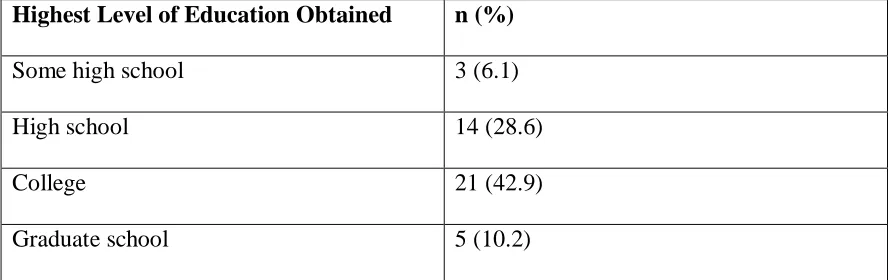
(32.7%, n=16). Almost half of participants (42.9%, n=21) were college graduates.
Pre-Test Results
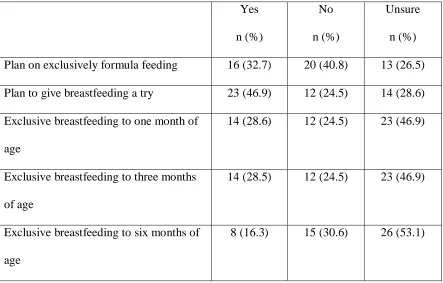
The feeding plans of all participants in the pre-test are summarized in Table 3. Of
the 49 participants, 40.8% (n=20), planned to give breastfeeding a try while 32.7%
(n=16) planned on exclusively formula feeding their infant and 26.5% (n=13) were
unsure if they would exclusively formula feed. Originally, a total of 23 women identified
as planning to give breastfeeding a try. Of these, three also reported that they planned on
exclusively formula feeding. However, when probed further, these women stated that
they did not plan to feed their child from the breast but were curious about what
breastfeeding would feel like. For the remainder of the study the three women were
placed in the exclusive formula feeding group. Another woman expressed uncertainty of
the analysis, she remained in the unsure group. The majority of women were unsure of
how long they would breastfeed their infant. Only 16.3% (n=8) planned to exclusively
breastfeed for 6 months.
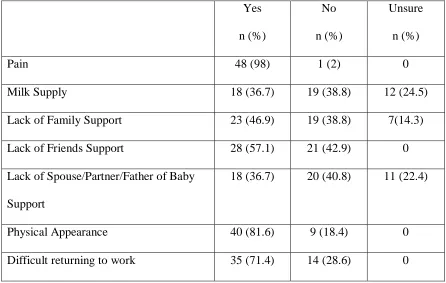
The participants’ perceived barriers to breastfeeding are summarized in Table 4.
The primary barriers to breastfeeding noted were fear that breastfeeding would be
painful, physical appearance of the breast after breastfeeding and how to maintain
breastfeeding their infant once they returned to work. The participants were not as
concerned about their potential milk supply. The majority of women who reported
barriers to breastfeeding (n=49) felt their family and friends were not supportive of
breastfeeding (46.9% and 57.1%, respectively). Most women were either unsure how
their spouse/partner/father of their baby felt about breastfeeding or felt that their partner
was not supportive of breastfeeding (63.2%).
Sixteen women identified as not intending to breastfed based on pre-test results.
The greatest percentage of women who identified themselves as intending not to
breastfeed were between the ages of 18-24 (43.8%, n=7), were unemployed (43.8%, n=7)
and had a college education (50%, n=8). Thirteen women indicated that they were unsure
if they would exclusively formula feed. Of these, the highest percentage were between
the ages of 25-29 (38.5%, n=5), were either unemployed or had an income range of
$22,500-$69,300 (30.8%, n=4 each) and had a high school education (38.5%, n=5).
23
percentage were between the ages of 25-29 years (30%, n=6), had an income of
$22,500-$69,300 (35%, n=7), and were college graduates (45%, n=9).
Post-Test A
Participants that identified as intending to exclusively formula feed or who were
unsure of their infant feeding plans (n = 29) were given the educational intervention Your
Guide to Breastfeeding for African American Women. Following the intervention,
participants were interviewed for a post-test with similar questions to the pre-test to see
if there was any change in their breastfeeding intentions or concerns. Table 5
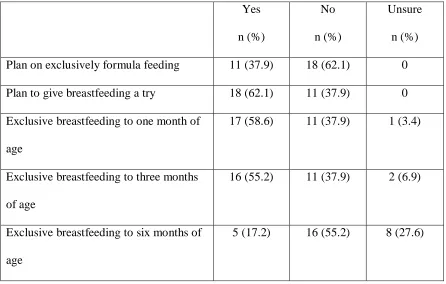
summarizes the post-intervention infant feeding plans of participants. The majority of
women (62.1%, n=18) reported that they would try to initiate breastfeeding. Of these, the
majority (n=16) reported that they would breastfeed their child through at least 3 months
of age. However, most did not anticipate breastfeeding to 6 months. Although the
primary barriers to breastfeeding remained pain and difficulty returning to work, rates
were lower than that from before the intervention. The women still felt, overwhelmingly,
that breastfeeding would not be supported by their family, friends or the
spouse/partner/father of the baby (Table 6).
Post-Test B
The second post-test was administered after the birth of the participant’s baby.
The posttest was given to all 49 study participants regardless of their original infant
feeding plans. Participants were divided into 3 groups based on their pre-test response:
(n=13). The majority of participants initiated breastfeeding regardless of their original
infant feeding plans (Table 7). Ninety percent (n=18) of the women who reported that
they would exclusively breastfeed initiated breastfeeding. Of these, 27.8% (n=5)
anticipated breastfeeding for greater than 6 months. Thirteen women reported that they
were unsure of their infant feeding plans. Post-intervention, 69.2% (n=9) initiated
breastfeeding. Of these, 33.3% (n=3) anticipated breastfeeding for greater than 6 months.
Of the 16 participants who planned to formula feed, 27.3% (n=2) anticipated
breastfeeding for greater than 6 months.
Chi-square analysis was performed to examine the distribution of breastfeeding
initiation rates by age, income and education (Tables 8 - 10). The analysis showed no
relationship between initiation of breastfeeding and income or education. However, a
significant association between initiation of breastfeeding and age in women who
originally reported that they were unsure of their feeding plans was observed (P=0.005;
Table 11). Women under 25, in this group, were less likely to initiate breastfeeding. No
association between post-intervention rates of initiation of breastfeeding and income or
education level was found within any group. Table 12 shows the anticipated duration of
breastfeeding (in months) by age in women who identified as intending to breastfeed
exclusively. In this group most women, regardless of age, did not anticipate exclusively
25 CHAPTER V
Discussions and Conclusions
During the pre-test of this study, the majority of participants were either unsure of
their infant feeding plans or planned on exclusively formula feeding. For many of the
women in this study this was the first time that they had given serious thought to
breastfeeding at all. Even so, 47% (n=23) of the women showed a willingness to give
breastfeeding a try in the pre-test although there was variability on how long they
anticipated breastfeeding. Additionally, 4 of the 23 women who expressed a willingness
to try breastfeeding also expressed the desire to only formula feed their infants. These 4
respondents stated that they were curious about what breastfeeding would feel like and
therefore believed they might physically put the baby to breast once to see what it felt
like but not for the purpose of nourishment. They intended all nourishment for the child
to come from formula feeding.
Generations of formula feeding in the African American community has made
formula the most efficacious and reliable choice among African American women13.
Breastfeeding is often seen as unreliable, more difficult, problematic to do so in public
because of societal norms, and was also tied to a mothers ability (or inability) to parent
with some believing that breastfeeding makes children too dependent upon their mothers,
especially male children.13, 23 In contrast to the women in this study there is a pervasive
to feed their infant and a fear that their own health problems will be transferred into the
breastmilk13, 17, 23, 27, 30.
In this study, whether a woman intended to breastfeed, was unsure about
breastfeeding or had no plans of breastfeeding her concerns about breastfeeding were
similar. The women concerned about pain, physical appearance of the breast and
returning to work. These are common concerns echoed in the studies by Murimi et al,
Hurley et al, Mondal et al and Rojjanasrirat et al where not having enough milk, returning
to work or school, and sore nipples were all principle reasons women did not initiate
breastfeeding or terminated breastfeeding shortly after initiation (within 1-2 weeks)16, 27,
30, 31
.
In the intervention phase of the study women who identified as planning to only
formula feed their infant or those who were unsure of their feeding plans were given an
educational intervention that was tailored specifically to the African-American
population. After the intervention 62.1% believed they would give breastfeeding a try and
17.2% believed they would still be breastfeeding their infants at 6 months of age. Of the
29 women who were unsure of their feeding plans or who had no intentions of
breastfeeding 18 initiated breastfeeding post-intervention which is comparable to the
initiation rates among women who identified as intending to exclusively breastfeed and
did not participate in the intervention (n=18). In total, 73.4% of participants initiated
27
of initial barriers to breastfeeding and give the participants the opportunity to be more
open to initiating breastfeeding despite perceived barriers.
In terms of sustainability of breastfeeding, the intervention did not appear to have
a lasting impact. Only one of the participants who identified as unwilling to breastfeed in
the pre-test anticipated breastfeeding her infant once he/she reached 6 months of age. In
total, only 33.3% (n=4) of the women who were unsure of their feeding plans or were
unwilling to breastfeed in the pre-test and were still breastfeeding when the study ended
anticipated breastfeeding their infant at 6 months of age. In contrast, 71.4% (n=5) of the
women who identified as intending to breastfeed and were still breastfeeding at the end of
the study anticipated breastfeeding their infants at 6 months of age. Although, initially,
the intervention helped to reduce the impact of barriers to breastfeeding of the women
who were still breastfeeding at the conclusion of this study it appears that the intention to
breastfeed, even without education, was more important in ensuring a long-term
breastfeeding plan. This coincides with the belief that a mother’s confidence about
breastfeeding during pregnancy plays a significant role in her choice to initiate and
sustain breastfeeding6, 17, 20.
It appears that education about breastfeeding is a major barrier to breastfeeding in
the African-American community. Once African-American women are given the facts
about breastfeeding, understand the benefits to both mother and baby and are reassured
that they can manage the perceived barriers they are more likely to initiate breastfeeding.
American woman sustain breastfeeding. Even when the educational gap is closed cultural
influences still remain strong. Peer counselors that are available on an ongoing basis to
provide education and support can improve not only the prevalence of initiation but the
duration of breastfeeding, especially among low-income women26 Mickens et al. found
that support from other breastfeeding mothers was paramount to sustained breastfeeding
among African American mothers. Women who attend breastfeeding support groups
were twice as likely to show intention to breastfeed than those who did not25. Pugh et al
utilized hospital visits by a breastfeeding support team, home visits, telephone support
and 24-hour pager access to improve the outcomes of breastfeeding in low-income
(pre-dominantly African-American) women and found that more women in the intervention
group reported breastfeeding at 6 weeks than those who received the current standard of
care9.
The impact that cultural norms and community support have on the feeding plans
of an African American woman cannot be diminished. The compounding factors of
culture in terms of ethnicity and socioeconomic status are very difficult to penetrate as
they are multilayered and overlapping. Whether or not they intended to breastfeed from
the start of the study, the majority of the women in this study did not feel supported by
their friends, family and partners about breastfeeding. Once their children were born
many women who initiated breastfeeding but stopped shortly afterwards said they
stopped because of pressure of family and friends. One woman who initially intended to
only formula feed but changed her mind post-intervention was pressured by family to
29
would not be enough to sustain him. Another mother who delivered a full-term baby also
said that her child was very small for this gestational age and her partner encouraged her
to formula feed rather than breastfeed because of the birth weight of the child. When
mothers complained of pain to their family members (particularly their own mothers) and
friends they were encouraged to stop breastfeeding and switch to formula as well.
Cessation of breastfeeding is most often spurred by pressure from families and friends23.
A mother who is not confident about her breastfeeding plans during her pregnancy can be
more easily swayed to switch to formula under mounting pressure from not only people
close to her but often times from medical staff as well, re-emphasizing the need for
ongoing peer to peer and community support for African American breastfeeding
mothers15, 17, 23.
Avery et al. (2009) discussed how a woman’s commitment to breastfeeding prior
to the birth of her child was the key to sustained breastfeeding even when faced with lack
of support from family, friends and their partners as well a common barriers and
challenges to breastfeeding. This commitment to breastfeeding prior to birth is rooted in
education about breastfeeding. The mother must feel confident about the process of
breastfeeding, her ability to breastfeed and how to make breastfeeding work despite
potential obstacles18.
Limitations to the study included inadequate assessment of annual household
income based on the number of persons in the home. Participants were also not asked
about the number of children they had or their relationship status. Additionally, the
participants to express an interest in trying breastfeeding when, in fact, they had no
intention of nourishing their child through breastmilk but were curious about what
breastfeeding felt like because of the many stories they heard about it. A larger sample
size would have allowed better assessment of relationships between breastfeeding
initiation and age, education and income of the participants. A limitation of the
intervention is that it did not adequately cover what to do in cases where a baby is born
prematurely or small for gestational age (SGA). The women in this study who had babies
born that were premature or SGA did not feel empowered with enough information to
continue breastfeeding their small babies and switched to formula within weeks of
initiating breastfeeding. Women with SGA or premature babies did not express that they
received any education in the hospital or from pediatrician’s post-partum about how to
properly nourish their child with breastmilk alone or fortified breastmilk.
There is an overwhelming lack of research on the effects educational
interventions have on women across different socioeconomic groups. Research is
primarily centered on WIC participants and low-income women. This study serves to
show a cross section of African American women from various socioeconomic
backgrounds. Overall, employment status, age, income, and education did not play a
major role in a woman’s decision to initiate breastfeeding or the sustainability of
breastfeeding. Although some studies have shown that, regardless of race, poverty is a
positive indicator of the preference to formula feed19, it appears the initial intention to
31
about breastfeeding can raise the rates of initiation in those who initially did not intend to
breastfeed.
Because initial intention to breastfeed appears to be one of the major factors in
breastfeeding initiation and sustainability future research should focus on educational
interventions starting in the first trimester of pregnancy and continuing throughout.
Additionally, support from family, friends and the father of the baby appear to be
important factors in a woman’s decision to initiate or continue breastfeeding. Therefore,
including a woman’s support system in the intervention would be beneficial. Educational
interventions do play a role in initiation rates of breastfeeding however, there are cultural
concerns within the African-American community that have been highlighted throughout
the literature14 and in this study that point to a multi-factorial issue. Because the
reasoning for breastfeeding or formula feeding is multi-factorial utilizing focus groups to
TABLES
Table 1: Annual Household Income of Study Participants
Annual Income n (%)
Unemployed 15 (30.6)
$10,501 to$22,500 7 (14.3)
$22,500 to $69,300 16 (32.7)
$69,300 to $139,850 10 (20.4)
$139,850 to $235, 550 1 (2)
Table 2: Education Level of Study Participants
Highest Level of Education Obtained n (%)
Some high school 3 (6.1)
High school 14 (28.6)
College 21 (42.9)
[image:45.612.102.548.421.561.2]33
Table 3: Pre-Intervention Infant Feeding Plans of Participants
Yes
n (%)
No
n (%)
Unsure
n (%)
Plan on exclusively formula feeding 16 (32.7) 20 (40.8) 13 (26.5)
Plan to give breastfeeding a try 23 (46.9) 12 (24.5) 14 (28.6)
Exclusive breastfeeding to one month of
age
14 (28.6) 12 (24.5) 23 (46.9)
Exclusive breastfeeding to three months
of age
14 (28.5) 12 (24.5) 23 (46.9)
Exclusive breastfeeding to six months of
age
Table 4: Participant Perceived Barriers to Breastfeeding (n=49)
Yes
n (%)
No
n (%)
Unsure
n (%)
Pain 48 (98) 1 (2) 0
Milk Supply 18 (36.7) 19 (38.8) 12 (24.5)
Lack of Family Support 23 (46.9) 19 (38.8) 7(14.3)
Lack of Friends Support 28 (57.1) 21 (42.9) 0
Lack of Spouse/Partner/Father of Baby
Support
18 (36.7) 20 (40.8) 11 (22.4)
Physical Appearance 40 (81.6) 9 (18.4) 0
35
Table 5: Post-Intervention Infant Feeding Plans
Yes
n (%)
No
n (%)
Unsure
n (%)
Plan on exclusively formula feeding 11 (37.9) 18 (62.1) 0
Plan to give breastfeeding a try 18 (62.1) 11 (37.9) 0
Exclusive breastfeeding to one month of
age
17 (58.6) 11 (37.9) 1 (3.4)
Exclusive breastfeeding to three months
of age
16 (55.2) 11 (37.9) 2 (6.9)
Exclusive breastfeeding to six months of
age
Table 6: Perceived Barriers to Breastfeeding Post Educational Intervention (Post-Test A;
n=29)
Yes
n (%)
No
n (%)
Unsure
n (%)
Pain 17 (58.6) 12 (41.4) 0
Milk Supply 10 (34.5) 19 (65.5) 0
Lack of Family Support 20 (69) 9 (31) 0
Lack of Friends Support 16 (55.2) 13 (44.8) 0
Lack of Spouse/Partner/Father of Baby
Support
15 (51.7) 14 (48.3) 0
Physical Appearance 13 (44.8) 16 (55.2) 0
Difficult returning to work 16 (55.2) 13 (44.8) 0
Table 7: Breastfeeding initiation rates across entire study population by Pre-test Reported
Intention to Breastfeed
Initiated
n (%)
Did Not Initiate
n (%)
Total
n
Intend to Breastfeed 18 (90%) 2 (10%) 20
Do not intend to breastfeed 9 (56.3%) 7 (43.7%) 16
Unsure of Feeding Plans 9 (69.2%) 4 (30.8%) 13
[image:49.612.103.492.489.658.2]37
Table 8: Age distribution of mothers who did and did not initiate breastfeeding
Age
Initiated
n (%)*
Did Not Initiate
n (%)
Total
N
18-24 8 (22.2%) 7 (53.8%) 15
25-29 14 (38.9%) 1 (7.7%) 15
30-34 9 (25%) 3 (23.1%) 12
35-39 2 (5.6%) 2 (15.4%) 4
40-45 3 (8.3%) 0 3
Total 36 13 49
[image:50.612.105.398.408.631.2]*percentage based on age by initiation, within initiation group
Table 9: Income distribution of mothers who did and did not initiate breastfeeding
Income
Initiated
n (%)*
Did Not Initiate
n (%)
Total
N
Unemployed 9 (25%) 6 (46.1%) 15
10,501 to 22,500 6 (16.7%) 1 (7.7%) 7
22,500 to 69,300 12 (33.3%) 4 (30.8%) 16
69,300 to 139,850 9 (25%) 1 (7.7%) 10
139,850 to 235, 000 0 1 (7.7%) 1
Total 36 13 49
Table 10: Level of education distribution of mothers who did and did not initiate
breastfeeding
Initiated
n (%)*
Did Not Initiate
n (%)
Total
N
some high school 2 (5.6%) 1 (7.7%) 3
high school 10 (27.8%) 4 (30.8%) 14
some college 5 (13.8%) 1 (7.7%) 6
College 15 (41.7%) 6 (46.1%) 21
graduate school 4 (11.1%) 1 (7.7%) 5
Total 36 13 49
*percentage based on education by initiation, within initiation group
Table 11: Age distribution of breastfeeding initiation rates post-intervention in
participants who were unsure of their feeding plans
18-24 years
n (%)
25-29 years
n (%)
30-34 years
n (%)
35-39 years
n (%)
Initiated Breastfeeding 0 5 (55.6%) 4 (44.4%) 0
[image:51.612.101.532.461.577.2]39
Table 12: Anticipated duration of breastfeeding by age in women who identified as
intending to breastfeed exclusively
18-24 years
n (%)
25-29 years
n (%)
30-34 years
n (%)
35-39 years
n (%)
40-45 years
n (%)
Less than 3
months
1 (11.1%)1 4 (44.5%) 2 (22.2%) 1 (11.1%) 1 (11.1%)
3 to 6 months 1 (100%) 0 0 0 0
Greater than
6 months
1 (20%) 0 2 (40%) 1 (20%) 1 (20%)
Unsure 1 (33.3%) 2 (66.7%) 0 0 0
Total 4 6 4 2 2
The Chi-Square test carried out on the data with a 0.688 level of significance. (χ2 =
9.172, df = 12)
1
40
Appendix A
Modified Infant Feeding Intentions Scale
Pre-Test
Demographic Information:
As a reminder, all information that is collected from this survey will be kept completely confidential
Age:
How many months pregnant are you?
What is your anticipated due date?
Income (Circle one): Currently unemployed $0 to $10,500
$10,501 to $22,500 $22,500 to 69,300 $69,300 to $139,850 $139,850 to $235,550 $235,550 to $380,500 $380,500 +
Highest level of education (Circle One): Some High school
High school Some College
College (undergraduate degree)
41
Breastfeeding Intentions:
I am planning to only formula feed my baby (I will
not breastfeed at all)
Agree Disagree Unsure
I am planning to at least give breastfeeding a try Agree Disagree Unsure
When my baby is 1 month old, I will be
breastfeeding without using any formula or other
milk
Agree Disagree Unsure
When my baby is 3 months old, I will be
breastfeeding without using any formula or other
milk
Agree Disagree Unsure
When my baby is 6 months old, I will be
breastfeeding without using any formula or other
milk
Agree Disagree Unsure
Concerns:
I am worried that breastfeeding will be painful or
uncomfortable
Agree Disagree Unsure
I am concerned that I will not be able to supply
enough milk to feed my baby
Agree Disagree Unsure
My family is not supportive of breastfeeding Agree Disagree Unsure
My spouse/partner/father of the baby is not
supportive of breastfeeding
Agree Disagree Unsure
I am concerned about the physical appearance of my
breast after breastfeeding
Agree Disagree Unsure
I am worried that it will be difficult to breastfeed my
baby once I return to work
Agree Disagree Unsure N/A
Please write in any other concerns you have about
43
Separate document that will be filled out by participant, stored in a secure,
password protected electronic format and the hard paper copy will be destroyed:
You may be chosen in the second phase of this research study in which you will be given a
brief pamphlet to read about breast feeding and will then be asked to fill out a brief
questionnaire about your views of breast feeding. You have the choice to complete this
questionnaire by phone or email. After the birth of your child you will be contacted via
phone or email, whichever you prefer, and will be asked a final set of brief questions about
breast feeding. If you would like to be considered for participation please fill out the
information below:
Name:
Phone Number:
Email Address:
Preferred method of contact (circle one):
44
Appendix B
Your Guide to Breastfeeding for African American Women
45
Appendix C
Post-Test Part A Interview Questions
Please read the following brochure entitled Your Guide to Breastfeeding for African
American Women and answer the following questions:
Breastfeeding Intentions:
I am planning to only formula feed my baby (I will
not breastfeed at all)
Agree Disagree Unsure
I am planning to at least give breastfeeding a try Agree Disagree Unsure
When my baby is 1 month old, I will be
breastfeeding without using any formula or other
milk
Agree Disagree Unsure
When my baby is 3 months old, I will be
breastfeeding without using any formula or other
milk
Agree Disagree Unsure
When my baby is 6 months old, I will be
breastfeeding without using any formula or other
milk
Agree Disagree Unsure
Concerns:
I am worried that breastfeeding will be painful or
uncomfortable