Runnig head: AUTOMATICITY OF ATTENTIONAL BIAS
Testing the automaticity of an attentional bias towards predictive cues in human
associative learning
David Luque1,2,4, Sara Molinero2,4, Mina Jevtović1 & Tom Beesley3,4
1Universidad Autónoma de Madrid, Spain 2Universidad de Málaga, Spain
3Lancaster University, UK 4UNSW Sydney, Australia
ACCEPTED at Quarterly Journal of Experimental Psychology (15/11/2019)
Author note: Correspondence should be addressed to David Luque, School of
Abstract
It is well established that associative learning, such as learning new cue-outcome pairings, produces changes in attention: cues that are good predictors of relevant outcomes become prioritized compared to those that are non-predictive or redundant. However, there is controversy about whether such a learnt attentional bias results from a controlled
orientation of attention, or whether it can be involuntary in nature. In three experiments, participants learned that cues of certain colours were predictive or non-predictive, and we assessed attention to cues using a dot-probe task. On dot-probe trials, participants were instructed to control attention by orienting towards a cue of a certain shape (target), while trying to ignore another cue (distractor). Although the colours of the cues were critical for the associative learning task, they were irrelevant for the dot-probe task. The results show that, even though participants’ controlled attention was focused on the target shape (as evident in response times and accuracy data), response times to the probe were slower (Experiments 1 and 2) and error rates were higher (Experiment 2 and 3) when the distractor was of a (previously) predictive colour. These data suggest that attention was captured involuntarily by the predictive value of the distractor, despite this being counterproductive to the task goal.
One of the most important tasks for humans and other animals is to learn to predict relevant upcoming events (outcomes) using the ongoing flow of perceived information (cues) (Mackintosh, 1983; Shanks, 1995). With hundreds of potential cues available in our environment, learning cue-outcome relationships is necessarily selective to constrain the cognitive processing that takes place. Attentional models of associative learning propose that our attention system filters information in order to focus the learning mechanism on those cues that will assist in making accurate predictions in the future (Esber &
Haselgrove, 2011; Le Pelley, 2004; Mackintosh, 1975). It is now well established that the process of cue-outcome learning leads to changes in attention, favouring the processing of predictive cues over those that are not predictive (Feldmann-Wüstefeld, Uengoer, & Schubö, 2015; Kruschke, Kappenman, & Hetrick, 2005; Le Pelley, Vadillo, & Luque, 2013; Livesey, Harris, & Harris, 2009; Luque, Morís, Rushby, & Le Pelley, 2015; Luque, Vadillo, Gutiérrez-Cobo, & Le Pelley, 2018; Luque, Vadillo, Le Pelley, & Beesley, 2017; O’Brien & Raymond, 2012;Rehder & Hoffman, 2005;Wills, Lavric, Croft, & Hodgson, 2007).
The “learned predictive design” (Le Pelley & McLaren, 2003; Lochmann & Wills, 2003) has been a widely used tool for examining the formation of attentional biases in associative learning. In this task, participants are presented with compounds of two cues (e.g., two foods) and must predict which outcome will occur (e.g., one of two allergic reactions). Using corrective feedback, participants learn about the cue-outcome
relationships in the task. In this design, only one cue from each pair (the predictive cue) is informative as to the outcome that will occur, while the other cue is non-predictive. Analysis of eye-gaze dwell time reveals that people typically spend more time looking at predictive cues compared to non-predictive cues. This suggests the formation of a
predictive cues (Kruschke et al., 2005; Le Pelley & McLaren, 2003; Le Pelley, Pearson, Porter, Yee, & Luque, 2019; Lochmann & Wills, 2003; Rehder & Hoffman, 2005; Wills et al., 2007)
Despite the evidence that predictive cues are prioritized compared to those that are non-predictive, there is controversy about whether this attentional bias is controlled or automatic in nature. Indeed, the few studies investigating this issue have reached very different conclusions. For example, Mitchell, Griffiths, Seetoo, & Lovibond (2012) suggested that a predictiveness-driven bias of attention might be the consequence of people drawing inferences about which stimuli will be useful for making predictions. Mitchell et al. (Experiment 2) found evidence supporting this hypothesis using a two-phase learned predictiveness design. In the first phase, participants learned that half of the cues were predictive and the other half non-predictive. In this phase, Mitchell et al. demonstrated a predictiveness-driven bias of attention, as evident in greater eye-gaze dwell time to predictive cues over
non-predictive cues. In the second phase, all cues were trained as non-predictive of a new set of outcomes and were equally good predictors of these new outcomes.
Importantly, participants received instructions regarding the effectiveness of the two sets of cues. In the “change” condition, participants were instructed that those cues which were used to predict the outcomes in the first phase were unlikely to be useful for
predicting outcomes in the second phase of the experiment. Participants in the
strategically directed towards whichever cue is deemed to be most useful in the task. In this sense, the predictiveness-driven bias of attention can be characterized as the result of a volitional and controlled orientation of attention in accordance with the task goals.
In a series of recent studies, Livesey and colleagues (Don & Livesey, 2015; Shone, Harris, & Livesey, 2015) have failed to replicate Mitchell et al.’s instructed reversal of the learned predictiveness effect, consistently observing an attenuation but not a complete reversal of the effect following reversal instructions. These data place doubt on the claim that the predictiveness-driven bias of attention is entirely the result of controlled
processes. Instead, they are more compatible with a view that a predictiveness-driven bias of attention can be (at least partly) automatic in nature, and that this may act in
competition against controlled processes to weaken any attempt to reverse the attentional bias.
Further evidence for an automatic component to the predictiveness-driven bias of attention comes from Le Pelley et al. (2013). They used a procedure in which the
stimulus-onset-asynchrony (SOA) of the probe was increased to 1000 ms, there was no effect of cue predictiveness on attention (see also Luque, Vadillo et al., 2017). This pattern of results suggests that the predictiveness-driven bias of attention is activated automatically: given the presentation of a predictive cue, attention is oriented towards that cue regardless of the participants’ effort to keep their attentional focus on the centre of the screen. This automatic guidance of attention took place rapidly (the 250 ms condition), but as long as ample time is provided (the 1000 ms condition), controlled attention can be engaged in order to override the initial automatic response.
While the results obtained by Le Pelley et al. (2013) are certainly suggestive of the operation of an automatic predictiveness-driven bias of attention, it is still possible to provide a plausible account of this effect in terms of controlled attention. One could argue that Le Pelley et al.’s instructions (i.e., fixate centrally; do not look at the cues) did not provide a strong enough incentive for participants to change their controlled attentional set on the dot-probe trials of the task (that is, to ignore the colours of the cues). Indeed, one could argue that remembering and applying this instruction would have a significant cognitive cost. Moreover, there was no clear benefit for participants in following the instruction. This is because the probe stimulus appeared equally often over predictive and non-predictive cues, and so attending to predictive cues (i.e., maintaining the attentional set from the associative learning task) would lead to faster responses when the probe appeared over a predictive cue and slower responses when the probe appeared over a non-predictive cue. One could imagine that the net effect of adopting this attentional set would be equivalent to attending centrally on all trials (which would result in matched response times to probes on predictive and non-predictive cues).
a feature of the task that has a meaningful benefit to performance. We argue that such an explicit direction of controlled attention would counteract any strategy that might exist to continue attending the predictive features of the stimuli (that is, those features that are predictive in the associative learning task). Our aim in the current experiments is therefore to examine whether a predictiveness-driven bias of attention is still detected even when participants’ controlled attention is focused on another stimulus feature in the task. Importantly, this instruction was designed to offer a clear benefit to the participants. If participants follow the instruction, they can make faster responses to the probe on the majority of trials. In contrast, failure to follow the instruction has a consequence of poorer performance on dot-probe trials. This aspect of the dot-probe trials was made explicit in the instructions and was evident at the outset of the experiments. Therefore, a
predictiveness-driven bias of attention in dot-probe trials was directly counterproductive to the participants’ goals of making fast and accurate responses to the probe. As a result, an effect of cue-predictiveness on dot-probe trials under these circumstances would provide strong evidence for the operation of an automatic attentional process, and would be difficult to reconcile with a purely strategic, controlled allocation of attention.
Experiment 1
equally often over predictive and non-predictive cues. Thus, the colours of the two shapes were irrelevant for accurate responses on the dot-probe task. Participants were, however, informed that the shape of the cues would be informative as to the most probable location of the probe. Specifically, for majority of the trials (~80%), the probe appeared on the location of one particular shape. Participants were instructed to attend to this shape during the dot-probe trials in order to respond more quickly on the majority of those trials. Given the presence of this clear advantage to direct attention to one feature of the cues – that is, its shape – on the dot-probe trials, we can examine whether the irrelevant feature of colour continues to have a lasting impact on performance.
Method
Participants
Apparatus and Materials
[image:9.596.79.532.291.579.2]Each participant was tested in an individual enclosed cubicle, housing a standard PC with a 58.4 cm monitor (1920 × 1080-pixel resolution, 120 Hz), at a viewing distance of approximately 60 cm. Stimulus presentation was controlled by MATLAB using the Psychophysics Toolbox extension (Brainard, 1997; Kleiner, Brainard, Pelli, Ingling, Murray, & Broussard, 2007). Participants made all responses using the keys of custom keyboards, which provide average response latencies of around 1 millisecond (DirectIN keyboard, Empirisoft, New York).
four trial types in the dot-probe task. Error bars depict the 95% Cousineau–Morey confidence interval for repeated measures (Cousineau, 2005; Morey, 2008). To view this figure in colour, please visit the online version of this journal.
Cues were eight distinctly coloured shapes, four circles and four squares (squares sides and circles diameter of length equal to 57 mm) RGB and relative luminance (0-255 scale) values were: red (R255, G0, B0; L54), yellow (R230, G230, B51; L217), green (R0, G204, B51; L150), turquoise (R51, G255, B255; L212), blue (R0, G128, B255; L110), magenta (R255, G51, B255; L109), brown (R153, G102, B0; L105), and salmon (R255, G128, B128; L155). The probe was a small white square (sides of 12 mm).
Design
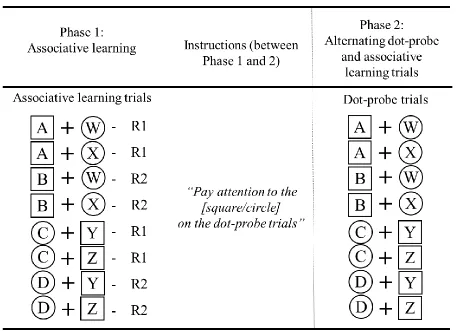
The experiment contained two phases. In Phase 1, participants learned the cue– response contingencies through the associative learning task. In Phase 2, participants continued training with these cue–response contingencies in the associative learning task for half of the trials, with attention measured through the dot-probe task in the other half of the trials. The two tasks took place on alternate trials (associative learning, dot probe, associative learning, dot probe, and so on).
R1. Thus, once the contingencies were learned, the participants could make these responses accurately using only the information provided by the predictive cues. In
contrast, non-predictive cues provided no information regarding the correct response (e.g., for half of the trials on which W was presented, the correct response was R1, while for the other half it was R2), and therefore the correct response could not be anticipated using these non-predictive cues alone.
Cue stimuli could be either circles or squares. For the subsets of predictive and non-predictive cues, two out of the four cues were circles and two were squares (determined by a Latin square design). This assignment orthogonally manipulated the factors of predictiveness (colour) and instruction (shape). That is, participants were instructed to pay attention to one particular shape on the dot probe trials, and half of the cues appearing in that shape werepresented in a predictive colour and half were presented in a non-predictive colour (with respect to the outcomes of the associative learning task). Similarly, for those cues appearing in the shape that participants were instructed to ignore, half were predictive and half were non-predictive. Note that we used the same stimuli for the two tasks.
The probe appeared equally often on either the left or right cue, and also equally often over predictive and non-predictive cues; neither the predictive value (colour) nor the position (right/left) of the cues was predictive of the probe position. Importantly, the probability that the probe appeared over the instructed shape was .8, while the probability that it appeared over the non-instructed shape was .2. We analysed separately the
measure the impact of the learned predictive value of these colours on the allocation of attention in dot-probe trials.
For clarity, we can consider an example of how stimuli might be assigned to these different trial types. Let’s say that a participant receives the instruction that probes are more likely to appear over squares on dot-probe trials, and that the associative learning task has established that the colours yellow and green were predictive, and that the colours red and blue were non-predictive (note that for the real participants there were eight colours in total). As such, for this participant, the probe might appear on a yellow square for predictive-congruent trials, on a green circle for predictive-incongruent trials, on a red square for congruent trials and on a blue circle for
non-predictive-incongruent trials. If the predictiveness-driven bias of attention in this task is fully
Table 1. Design of Experiment 1.
Note: The letters A, B, C and D are used to represent the four predictive cues; the letters W, X, Y and Z represent the four non-predictive cues, as determined by their role in the associative learning task. Each cue was of a different colour (counterbalanced between participants). Half of the cues were circles and half squares, as indicated by the
surrounding circles and squares for each cue. R1 and R2 were the two responses in the associative learning task (keys A and Z, counterbalanced between participants).
Participants read instructions prior to Phase 2 (see online supplemental material #1 for full instructions), indicating that the probe was more likely to appear over one particular shape. In Phase 2, associative learning and dot-probe trials were presented in an alternating order.
Procedure
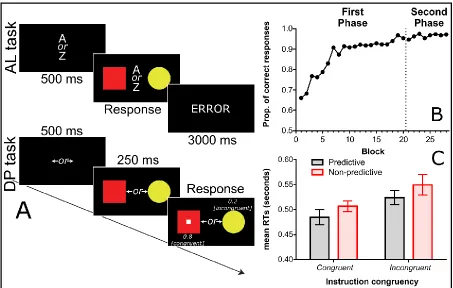
associative learning trial began with the presentation of a prompt, with the text “A or Z” in the centre of the screen (30-point Arial font for the words “A” and “Z”, 20-point for the word “or”) for 500ms (see Figure 1A), followed by the two cue stimuli. The prompt remained on the screen with the cues. Participants then made a response using the ‘A’ or ‘Z’ keys. If the response was correct, no explicit feedback was provided, and the next trial began after an inter-trial interval (ITI) of 1s. If the response was incorrect, then the
message “incorrect” appeared for 3 s (white 30-point Arial font), followed by the ITI. Participants could take as long as they liked to make their responses in all phases.
Trials were presented in blocks of 16 trials. Each block contained two
presentations of each compound, once with the predictive cue on the left and once on the right. Following the strategy of Mitchell et al. (2012), we reduced the cognitive load of learning all eight compounds by having some blocks in Phase 1 in which the compounds were divided into two sets of four compounds. Thus in block 1.1, the first set of four compounds were presented for 8 trials, before the second set of compounds were
presented for the next 8 trials. This alternating method of presenting compounds occurred in blocks 1, 2, 5, and 6. All other blocks in Phase 1 presented trials in a fully randomized fashion. Phase 1 comprised 320 associative learning trials; Phase 2 comprised 128
associative learning trials and 128 dot-probe trials presented pseudo-randomly (see online supplemental material #2 for more details).
Instructions prior to Phase 2 stated that participants would now have to perform an additional task in separate trials, which was to respond as rapidly as possible to the
presented in full in the online supplemental material #1.
Each dot-probe trial began with a prompt, in which two arrows were presented in the centre of the screen, one pointing to the left and the other to the right, with the word “or” (font Arial 20- point) written between them. This prompt appeared for 500 ms (see Figure 1A) and was followed by the presentation of the two cue stimuli. The orders of associative learning and dot-probe trials were independently randomized; hence,
participants could not anticipate which cues would appear on an upcoming dot-probe trial from the cues on the previous associative learning trial (and vice versa). The prompt was visible on the screen with the cues. After 250 ms, the probe was superimposed centrally on one of the cues. Probe position was determined randomly on each trial, with a .8 probability of the probe appearing over the instructed shape (congruent trial) and a .2 probability of the probe appearing over the non-instructed shape (incongruent trial). When the probe appeared on the screen, participants made a localization response using the arrow keys. Anticipatory responses were not allowed; participants could only respond when the probe stimulus was on the screen. If the response was correct, no explicit feedback was provided and the next trial began after an ITI of 1s. If the response was incorrect, then the message “incorrect” appeared for 3 s (white 30-point Arial font), followed by the ITI. Participants could take as long as they liked to respond to the localization of the probe.
Results and Discussion
Data pre-processing
The trial-level raw data for all the experiments, along with the scripts used for data pre-processing, are publicly archived at https://osf.io/g53fk/.
cues with respect to the associative learning task. Following Le Pelley and McLaren (2003, see also Le Pelley et al., 2013), the data from those participants with less than 60% accuracy on the associative learning task were not analysed further. Twelve participants were excluded on this basis. Since we were interested in the relatively rapid deployment of attention, we also excluded from the analysis those participants whose average response times on the dot-probe trials were more than 2.5 standard deviations above or below the group mean response time. One participant was excluded on this basis. The data from 35 participants contributed to the final analysis.
Statistical analyses
All tests were performed at the α = .05 significance level. For repeated measures analysis of variance (ANOVA), Greenhouse–Geisser alpha correction was applied when necessary.
Associative learning task
The accuracy data are presented in Figure 1B, averaged across the trials in each block. Participants rapidly learned the programmed contingencies and accuracy remained at a high level when the dot-probe task was introduced in Phase 2 (see Figure 1B).
Dot-probe task
Accuracy on the dot-probe task was very high (mean accuracy > 99%, SEM = 0.011); trials on which incorrect responses were made were not included in the response time (RTs) analysis.
data). RTs that were more than 2.5 SD above or below the participant’s mean RT were also not included in the analyses (3.1% of the remaining data).
Figure 1C shows RTs to the probe averaged across Phase 2 trials for each of the experimental conditions. A 2 (instruction congruency: congruent [probe on the instructed shape] vs. incongruent [probe on the uninstructed shape]) × 2 (predictiveness: probe on the predictive cue vs. probe on the non-predictive cue) ANOVA yielded a main effect of instruction congruency, F(1, 34) = 23.94, p < .001, ηp2 = 0.413 (a consequence of faster RTs for congruent [M = 496 ms] than incongruent trials [M = 537 ms]), and a main effect of predictiveness, F(1, 34) = 10.23, p = .003, ηp2 = 0.231 (a consequence of faster RTs for probes on predictive [M = 504 ms] than non-predictive cues [M = 528 ms]). The instruction congruency × predictiveness interaction was not significant, F < 1.
In Experiment 1, participants were given an associative learning task in which coloured cues were paired with one of two responses. Only half of the colours were predictive of the correct response, while the other half were non-predictive. Attentional orientation towards each cue was measured using the dot-probe task on separate trials. Importantly, on dot-probe trials, participants were provided with an instruction to attend to a particular shape and ignore the colour of the cues, which was irrelevant on these trials. The shape-instruction was indeed informative for the dot-probe task, since the probe was more likely to occur over that shape (with a probability of .8). These conditions were designed to establish an attentional set for attending only to the shape of the cues, ignoring the colours.
directing their attention towards the instructed shape. Importantly, however, the predictive value of the colours also modulated RTs, as revealed by the main effect of predictiveness. These results are difficult to reconcile with accounts that assume the predictiveness-driven bias of attention is only the result of a controlled attentional process (Mitchell et al., 2012). Instead, we argue that these results provide evidence for an automatic component to the predictiveness-driven bias of attention, operating in parallel with the controlled allocation of attention.
Experiment 2
One potential criticism of Experiment 1 is that erroneously attending to the colour of the stimuli on dot-probe trials, while providing no benefit, was also not detrimental to performance on these trials in any meaningful way. Participants could take as long as they liked to respond to probe stimuli in Experiment 1, and so ignoring the instruction to attend to the shape would slow reaction times marginally. As such, this change in behaviour would be fairly inconsequential for the participant. Compelling evidence for the
automaticity of behaviour comes from situations in which that behaviour is initiated even when it is counterproductive to the goal of the participant, since counterproductive behaviour is seldom intentional and usually reflects a lack of control, hallmarks of automatic processing (Moors & De Houwer, 2006). Experiment 2 therefore sought procedures that would provide such a test.
very similar distractor arrow was also presented over the distractor cue1 on the opposite side of the screen (see Figure 2A). We also restricted presentation of the probe to just 100 ms, and we changed the probability of the probe position, such that it appeared over the instructed shape on 100% of the trials during the first (and longer) part of Phase 2 (Phase 2.1, see above). Finally, we replaced the prompt at the beginning of the dot-probe trials with a representation of the instructed shape (see Figure 2A), providing a continual reminder of the shape that needed to be detected to enable accurate responses to the probe.
These changes to the task increased both the need to follow closely the instructions to attend to the particular shape as well as the ease with which that instruction could be maintained. Because the dot-probe task was very demanding, if participants failed to follow the instruction on dot-probe trials (i.e., by maintaining an attentional set towards colour), participants risked making more errors in the task, which led to an increase in the number of “Error!” screens they experienced (with each one lasting 3 seconds). Under these circumstances, it is difficult to imagine that any effect of predictive value on dot-probe trials would be produced by the strategic allocation of controlled attention towards the predictive colour of the cue.
Method
Participants, Apparatus and Materials
As in Experiment 1, we aimed for a final sample size of at least 44 participants. Our scheduled recruitment sessions resulted in the collection of a total of 52 UNSW Sydney students. All participants signed an informed consent form approved by the Human Research Ethics Advisory Panel of UNSW Sydney (Psychology) and were treated
1 Note that we often use the terms “distractor cue” and “target cue” to refer to the cues in which the distractor or
in accordance with the Helsinki declaration. All participants reported normal or corrected-to-normal vision. The apparatus was identical to Experiment 1.
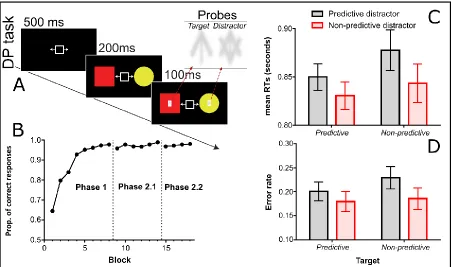
Figure 2. Panel A shows the trial structure for the dot-probe (DP) task used in Experiment 2. Participants responded to the orientation of the probe stimulus (the “target arrow”; up or down), presented over one cue, as fast as possible. The probe was presented 200 ms after cue onset and was on screen for 100 ms. A “distractor arrow” was simultaneously
displayed over the other cue. Panel B shows mean proportion of correct responses in the associative learning task. Panels C and D show the mean response times (RTs) and error rates, respectively, for the four trial types in the dot-probe task. Data in Panels C and D are the result of collapsing data on congruent trials from Phases 2.1 and 2.2 (note that the facto phase did not yield any significant interaction, see the main text for more details). Error bars depict the 95% Cousineau–Morey confidence interval for repeated measures (Cousineau, 2005; Morey, 2008). To view this figure in colour, please visit the online version of this journal.
“target arrow” and a “distractor arrow”, were used for the dot-probe task (see Figure 2A). The arrows were of light grey colour (R214, G214, B215), framed on a white square (R255, G255, B255; 12 mm). The distractor arrow comprised two arrows superimposed, with one pointing up and one pointing down. The target arrow pointed either up or down (randomly determined on each trial).
Design
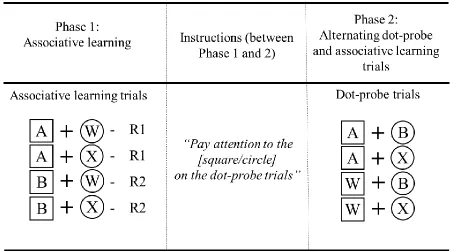
[image:21.596.81.531.431.683.2]Experiment 2 used a simplified version of the design from Experiment 1 (see Table 2). Participants experienced four compound cues. Cue colour was again the relevant feature for the associative learning task, with half of the colours predictive (A or B) and half non-predictive (W or X).
Table 2. Design of Experiment 2.
supplemental material #1 for full instructions), indicating that the target would appear over one particular shape. In Phase 2, associative learning and dot-probe trials were presented in an alternating order.
Given the simplified design, we trained all four compounds concurrently in the associative learning task. In Phase 1 the four cue-response relationships shown in Table 2 were presented across 128 associative learning trials. Phase 2 was divided into two sub-phases: Phase 2.1 and Phase 2.2. These sub-phases differed in terms of the dot-probe trials. Phase 2.1 contained only congruent dot-probe trials, such that the target probe always appeared in the same location as the instructed shape. In Phase 2.2, 25% of the trials were incongruent, such that the target probe appeared in the opposite location to that of the instructed shape. We included incongruent trials in Phase 2.2 in order to perform a manipulation check for controlled attention: if participants were paying attention to the instructed shape, we would expect longer RTs on incongruent trials compared to congruent trials. Phase 2.1 contained 96 associative learning trials and 96 dot-probe trials. Phase 2.2 contained 64 associative learning trials and 64 dot-probe trials. Each block contained 16 trials presented in a randomized order.
design leads to combinations of two predictive cues on 25% of all dot-probe trials, and two non-predictive cues on 25% of all dot-probe trials.
Procedure
The following changes were made to the procedure of the dot-probe task used in Experiment 1 (the associative learning task was identical). Participants were given 10 practice dot-probe trials between Phases 1 and 2. For these trials, we used two cues that were not presented in the main experiment (see Participants, Apparatus and Materials). The target probe was presented on the instructed shape in all practice trials; at the end of practice trials, the error rate was displayed on the screen. Participants could not pass this screen until the experimenter checked their performance. If the error rate was higher than 50%, the experimenter provided further instructions regarding the dot-probe trials.
The prompt message shown at the beginning of each dot probe trial was now a shape, either a circle or a square, surrounded by two arrows, one pointing to the left and the other pointing to the right (see Figure 2). This fixation stimulus was designed to remind participants on each trial of the instruction to attend to that specific shape. The fixation stimulus was presented for 500 ms, followed by the two cues. After another 200 ms, two probe stimuli appeared on the screen (the target and the distractor). Participants had to respond to the direction of the target probe, up or down, using the keys. The probes were displayed on screen for 100 ms before they were removed (the cues remained on the screen).
Results and Discussion
Data pre-processing
Trial exclusion criteria were identical to Experiment 1. Participants made inaccurate responses on 21% of all dot-probe trials and these were removed from the RT analysis. This large number of errors indicates that, as expected, the task posed a greater demand on attentional resources. As in Experiment 1, probe responses that were very fast (less than 200 ms) or very slow (over 5000 ms) were also removed from the analysis (0.3% of the remaining trials). Dot-probe trials with outlier RTs (greater or less than 2.5 standard deviations from the participant’s mean RT) were also excluded from analysis (3.6% of the remaining trials).
Associative learning task
Figure 2B shows the accuracy data for each learning block across Phases 1, 2.1 and 2.2 (see the online supplemental material #2 for more details about the formation of these blocks). It is evident that participants learned to make correct responses in Phase 1. The introduction of the dot-probe task had very little impact on the associative learning task performance in the second phase.
Dot-probe task
Manipulation check. The inclusion of incongruent trials during Phase 2.2 allowed us to check whether the participants were orientating their attention in a controlled manner to the instructed shape. If this was the case, we would expect slower and less accurate responses for incongruent trials, in which the probe was positioned over the non-instructed shape, compared to congruent trials, in which the probe was positioned over the instructed shape. This was true for RTs (congruent = 857 ms; incongruent = 1096 ms), t(46) = 7.48, p
< .001, dz = 1.091, and accuracy (congruent = 78%; incongruent = 65%), t(46) = 5.29, p < .001, dz = 0.771.
only analysed congruent trials, in which the probe appeared over the instructed (or target) shape. Dot-probe trials formed a 2 (target predictiveness: predictive vs. non-predictive) × 2 (distractor predictiveness: predictive vs. non-predictive) design. Target predictiveness indicates whether the instructed shape was presented in a predictive or non-predictive colour. Distractor predictiveness indicates whether the non-instructed shape was presented in a predictive or non-predictive colour (see Figure 2). The effect of predictiveness, if any, should be evident in faster and/or more accurate responses for target predictive conditions, and in slower and/or less accurate responses for distractor predictive conditions.
Figure 2C shows mean RTs of probe responses on congruent trials in the dot-probe task (collapsed over Phases 2.1 and 2.2). A 2 (phase: Phase 2.1 vs. Phase 2.2) × 2 (target predictiveness: predictive vs. non-predictive) × 2 (distractor predictiveness: predictive vs. non-predictive) ANOVA yielded a main effect of target predictiveness, F(1, 46) = 9.47, p
= .004, ηp2 = 0.171 (faster RTs when the instructed shape was presented in a predictive colour [M = 840 ms] than when it was presented in a non-predictive colour [M = 864 ms]), and a main effect of distractor predictiveness, F(1, 46) = 6.28, p = .016, ηp2 = 0.120
(slower RTs for predictive [M = 864 ms] than non-predictive distractor colours [M = 841 ms]). None of the remaining effects were significant (largest F < 1).
non-predictive colour [M = 78.5%]), and a main effect of distractor predictiveness, F(1, 46) = 4.44, p = .040, ηp2 = 0.088 (less accurate responses when the distractor was of a predictive colour [M = 78.5%] than when it was of a non-predictive colour [M = 80.9%]). None of the remaining effects were significant (larger F < 1).
In summary, predictive cues (colours) modulated attention even when participants’ controlled attention was set for attending to the shape of the stimuli. This predictiveness-driven bias of attention was clearly counterproductive for the participants, producing slower and less accurate responses (and therefore incurring more “Error!” penalty screens) on those trials in which the non-instructed distractor shape was of a predictive colour. It is highly unlikely that participants were voluntarily orientating their controlled attention towards the predictive colour, since any residual attention to colour in dot-probe trials would lead to a clear disadvantage. Therefore, the most likely account of these results is that the attentional bias is elicited automatically by the predictive features of the stimuli.
Experiment 3
save cognitive resources: to attend to the two predictive colours and to the instructed shape. It could be argued that the cost of maintaining the attentional set for the predictive colours (an increase in errors), might had been balanced out by a significant reduction in the overall cognitive cost of the task.
If that was the case, the predictiveness-driven bias of attention detected in Experiment 1 and 2 would be due to participants’ unwillingness or incapacity (because of insufficient cognitive resources) to change their attentional set, and not due to the automatic capture of attention. To test this alternative hypothesis, we grouped associative learning and dot-probe trials in runs of eight trials (eight associative learning trials, then eight dot-probe trials, and so on) in the 8-trial run group of participants. We compared this group with a group completing the same task as in the Experiment 2, that is, with associative learning and dot-probe tasks alternating between each other on every trial (i.e., the 1-trial run group). The rationale for this manipulation was that it should be less cognitively demanding for our participants to change their attentional set when trials are arranged in runs of eight, because this condition has fewer task alternations and allows more time for adapting to the ongoing task. Therefore, any reluctance to change attentional sets from associative learning to dot-probe trials should be reduced in the 8-trial run group as compared to the 1-8-trial run group. If the predictiveness-driven bias of attention detected in Experiments 1 and 2 was due to the participants being unwilling (or unable) to change their attentional set, then we should find weaker predictiveness effects for the 8-trial run group than for the 1-trial run group in Experiment 3. On the other hand, if the predictive value of the cues automatically captures attention, as we contend, then predictiveness-driven effects should be relatively resistant, even for long runs of dot-probe trials (Jiang, Swallow, & Rosenbaum, 2012).
learning and dot-probe trials into two entirely separate stages. While such a separation would provide the optimum conditions for engaging with each attentional set in turn, this method of presentation would ultimately lead to extinction of the associations acquired through the associative learning task. Thus, the predictive colours would soon become non-predictive, given a sufficient number of dot-probe trials in a row. In this situation, the absence of a predictiveness-driven attentional bias in dot-probe trials would not be informative with respect to learnt biases of attention. The use of the 8-trial run condition, in contrast, provides a procedure in which extinction effects would be minimal, but a reasonable length of trials is provided on each task, saving cognitive resources and, hence, favouring the engagement of the appropriate attentional set for each task.
Method
Participants, Apparatus and Materials
We estimated sample size for each group using the effect size of the mean effect of distractor predictiveness on dot-probe accuracy in order to achieve at least an 80% power for obtaining that effect. Because this effect size was ηp2 = 0.088 in Experiment 2, the sample size should be 52 participants per group. A total of 104 participants from the Autonomous University of Madrid took part in Experiment 3 for course credit.
Participants were randomly assigned to the two conditions (51 in the 1-trial run group; 53 in the 8-trial run group). All participants signed an informed consent form approved by the Human Research Ethics Advisory Panel of the Autonomous University of Madrid
(Psychology) and were treated in accordance with the Helsinki declaration. All reported normal or corrected-to-normal vision. The apparatus and stimuli were identical to Experiment 2.
Design and procedure
the 8-trial run group, the only difference was that the associative learning and dot-probe trials were presented in runs of 8 trials. That is, for each block of 16 intermixed
associative learning and dot-probe trials for the 1-trial run group, the 8-trial run group received all 8 associative learning trials and then all 8 dot-probe trials. For all
participants in the 8-trial run condition, the first run (starting just after the instruction between Phase 1 and 2) consisted of associative learning trials.
Results and Discussion
Data pre-processing
Using the same exclusion criteria as in Experiments 1 and 2, seven participants were removed from the final sample (six participants due to poor accuracy in the
Figure 3. Mean proportion of correct responses in the associative learning task in both groups of participants from Experiment 3 (solid line: 1-trial run group; dashed line: 8-trial run group). Each block represents the proportion of correct responses for 16 associative learning trials.
Associative learning task
Figure 3 shows the accuracy data for each learning block from Experiment 3. It is evident that participants learned to make correct responses in both groups. A 2 (run length: 1-trial run vs. 8-trial run) × 18 (block) ANOVA on these data yielded a main effect of block, F(4.48, 420.39) = 75.76, p < .001, ηp2 = 0.444. None of the remaining effects were significant; the largest F was for the non-significant main effect of run length (F = 2.04, p = .156). If we consider only the data from Phase 2, a 2 (run length: 1-trial run vs. 8-1-trial run) × 10 (block) ANOVA yielded a main effect of run length, F(1, 95) = 4.11, p = .046, ηp2 = 0.041. None of the remaining effects were significant (largest
F = 1.45, p = .185). The main effect of run length is explained by poorer performance in the 1-trial run group (95% of correct responses) than in the 8-trial run group (97%). This effect is likely to reflect greater between-task interference in the 1-trial run group (c.f. Forrest et al., 2014).
Dot-probe task
Main analysis: RTs. As in Experiment 2, we only analysed congruent trials, in which the probe appeared over the instructed (or target) shape. Considering that the factor of phase is not crucial for testing our hypotheses, we decided to include all congruent trials from Phase 2.1 and 2.2 without including phase as a factor. This way we made the analyses more straightforward by avoiding 4-factor ANOVAs2.
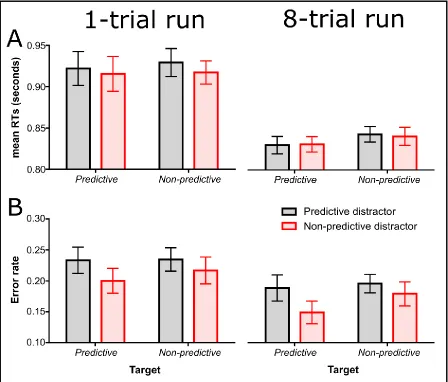
Figure 4A shows mean RTs of probe responses on congruent trials in the dot-probe task. These RT data were submitted to a 2 (run length: 1-trial run vs. 8-trial run) × 2 (target predictiveness: predictive vs. non-predictive) × 2 (distractor predictiveness:
predictive vs. non-predictive) ANOVA which yielded a main effect of run length, F(1, 95) = 17.87, p < .001, ηp2 = 0.158 (faster RTs for the 8-trial run [M = 836 ms] than for the 1-trial run group [M = 921 ms]). None of the remaining effects or interactions were significant (larger F = 2.18, p = .143).
2 For the ANOVAs that included phase as a factor, all the significant effects reported in the main text were also
Figure 4. Panels A and B show the mean response times (RTs) and error rates on dot-probe trials from Experiment 3. Graphs on the left side of the figure show data from the 1-trial run group of participants (i.e., associative learning and dot-probe trials alternated every trial in Phase 2); graphs at the right show data from the 8-trial run group of
participants (i.e., associative learning and dot-probe trials were grouped in runs of 8 trials of each type). Error bars depict the 95% Cousineau–Morey confidence interval for repeated measures (Cousineau, 2005; Morey, 2008). To view this figure in colour, please visit the online version of this journal.
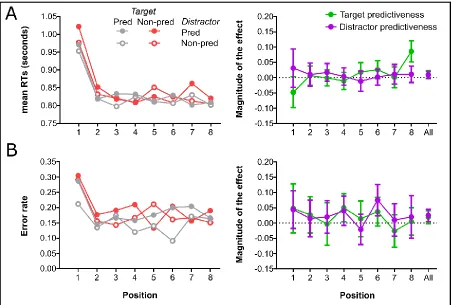
(1-8). There were a few cases in which a participant did not have any data in one of these positions (i.e., the 10 trials were either inaccurate, or were removed by the exclusion criteria). In these rare cases (1.8%), we replaced the empty cell with the group mean for that position. These RT data from the 8-trial run group were submitted to a 2 (target predictiveness: predictive vs. non-predictive) × 2 (distractor predictiveness: predictive vs. non-predictive) × 8 (position: 1-8) ANOVA which yielded a main effect of position,
F(3.19, 162.49) = 30.74, p < .001, ηp2 = 0.376 (slower RTs for the first positions in each run, see Figure 5A), a marginally significant main effect of target predictiveness, F(1, 51) = 3.20, p = .080, ηp2 = 0.059 (faster RTs when the instructed shape was presented in a predictive colour [M = 834 ms] than when it was presented in a non-predictive colour [M
= 847 ms]), and a marginally significant main effect of distractor predictiveness, F(1, 51) = 3.16, p = .081, ηp2 = 0.058 (slower RTs when the distractor shape was presented in a predictive colour [M = 845 ms] than when it was presented in a non-predictive colour [M
= 836 ms]). None of the remaining effects or interactions were significant (larger F = 1.24,
p = .279).
of a predictive colour [M = 78.7%] than when it was of a non-predictive colour [M = 81.4%]). For the remaining effects or interactions, the larger F was 1.82, p = .181.
We conducted a Bayesian t-test for quantifying the (null) effect of run length on the magnitude of the distractor predictiveness effect. We used the default Cauchy distribution prior centred on the null with a width of 0.707 which is the default in JASP. The BF10 for obtaining a larger distractor predictiveness effect in the 1-trial run group was 0.189, which is considered substantial evidence favouring the null (Wetzels et al., 2011).
We also analysed whether there was evidence for a change in the attentional bias during the run of 8 dot-probe trials in the accuracy data. As in the case of RT, accuracy data from the 8-trial run group were submitted to a 2 (target predictiveness: predictive vs. non-predictive) × 2 (distractor predictiveness: predictive vs. non-predictive) × 8 (position: 1-8) ANOVA which yielded a main effect of position, F(7, 357) = 8.18, p < .001, ηp2 = 0.138 (less accurate responses for the first trials of each run, see Figure 5B), a marginally significant main effect of target predictiveness, F(1, 51) = 3.26, p = .077, ηp2 = 0.060 (more accurate responses when the instructed shape was presented in a predictive colour [M = 83.1%] than when it was presented in a non-predictive colour [M = 81.2%]) and a main effect of distractor predictiveness, F(1, 51) = 6.60, p = .013, ηp2 = 0.115 (less accurate responses when the distractor shape was presented in a predictive colour [M = 80.8%] than when it was presented in a non-predictive colour [M = 83.4%]). None of the remaining effects were significant (larger F = 1.10, p = .299).
1-trial run condition. Given the considerable extra time and cognitive resources available in the 8-trial run condition to change their attentional set from attending to the predictive colours to the instructed shape (compared to the 1-trial run condition), it seems unlikely that the predictiveness-driven bias of attention in this condition would result from a conscious decision to maintain attention to the predictive colours on dot-probe trials in order to minimise the impact on cognitive resources. Furthermore, we found that the magnitude of the cue-predictiveness effect was consistent across the run of 8 dot-probe trials, which demonstrates that the irrelevant cues (the colours, which were relevant only in the associative learning task) continued to exert an influence on attention, even when participants had been given extended time to adjust their attentional set with successive dot-probe trials (see Figure 5).
left side are shown the data divided by their target and distractorpredictiveness. On the right, target and distractorpredictiveness main effects are shown. These effects were calculated by subtracting the condition in which are expected smaller values to the condition with larger values, so “magnitude” values tend to be positive. For instance, for the magnitude of the target predictiveness effect in RTs, we subtracted the RTs of trials featuring non-predictive targets to the RTs from trials with predictive targets. At the right end of these bars we represent the values when we collapsed by trial (marked in the X-axis as ‘All’). Error bars (only for the main effect graphs) depict the 95% confidence interval for repeated measures. To view this figure in colour, please visit the online version of this journal.
General Discussion
Across three experiments, we assessed the automaticity of learned attentional biases towards predictive cues. In a simple associative learning task, participants made responses to compounds of two cues. The colour of the cues was relevant for the response in this task, with one cue being predictive of the correct response, and the other one non-predictive. On separate trials, we assessed attention to cues using a dot-probe task. In this task, participants were instructed that the goal was to direct their attention to a particular shape. In Experiment 1, participants were told that the probe was more likely to appear over one particular stimulus shape. Indeed, the probe did appear over the instructed shape on ~80% of all dot-probe trials. Despite this, response times to probes revealed that participants continued to pay attention to the predictive colours over the non-predictive colours, even though shape was the only relevant feature in the dot-probe task.
attention is automatically allocated to stimuli with predictive value, despite the presence of an ongoing goal of searching for a different feature.
In Experiment 3, we included a condition in which associative learning and dot-probe trials were separated into runs of eight consecutive trials of each type. We argued that this condition would reduce cognitive demands and therefore increase the opportunity for participants to successfully adopt the relevant attentional set for each task. Despite this, we observed a predictiveness effect in the dot-probe trials for this condition, and there was no difference in the predictiveness effect observed in this condition compared to a
condition in which the trials alternated. These data suggest that the effect of predictive value on performance during dot-probe trials is unlikely to be due to an inability to maintain an effective attentional set. The claim that the predictiveness effect on dot-probe trials is driven by an automatic allocation of attention is further supported by the finding that the effect did not diminish across the run of 8 dot-probe trials, and is thus not simply a result of participants failing to engage controlled attention on the first few dot-probe trials.
It is noteworthy that the pattern of effects in Experiment 3 was not identical to that observed in Experiment 2. Notably there was no overall effect of cue predictiveness on RTs in Experiment 3, while there was an effect in Experiment 2. It is possible that this inconsistency reflects a Type I or Type II error (in Experiments 2 and 3, respectively). Importantly, in both Experiments 2 and 3, the predictiveness of the cues influenced responses on dot-probe trials in the accuracy measure. In both experiments, the predictive value of the distractor affected participants’ accuracy responding to the probe (located on the target), most likely because (previously) predictive distractors captured their attention more than (previously) non-predictive distractors.
particularly true in Experiments 2 and 3, since in these experiments the target probe was always positioned over the instructed shape during Phase 2.1, and participants received a reminder of the instructed shape at the beginning of every trial. Also, in this task
participants were required to locate the target within 100 ms of it appearing, ensuring attention would need to be rapidly allocated to the instructed shape on each trial. Failure to do so would increase the risk of making errors, which would result in a significant timeout penalty, such as looking at a screen with the message “Error!” written on it. This effect was apparent regardless of whether participants experienced one or eight
consecutive dot-probe trials, suggesting that the effect was not due to the lack of cognitive resources, necessary for changing between attentional sets. We are arguing that it is therefore improbable that participants chose to strategically allocate attention towards the predictive colours of the cues on dot-probe trials. The results are, therefore, hard to reconcile with a purely controlled-attention account of a predictiveness-driven bias of attention (e.g., Mitchell et al., 2012). In contrast, this pattern of results is consistent with the view that, once developed, a predictiveness-driven bias of attention is not fully controllable (Don & Livesey, 2013; Shone et al., 2015) and may be triggered
automatically by the perception of a predictive feature, even when controlled processing is focused on other perceptual features.
The current findings provide further support to the recent literature suggesting that attentional biases to predictive cues might be automatically elicited by stimuli (e.g., Cobos, Vadillo, Luque, & Le Pelley, 2018; Feldmann-Wüstefeld et al., 2015; Le Pelley et al., 2013). For example, Feldmann-Wüstefeld et al. (2015) used ERPs and RT
Participants were instructed to ignore these cues and focus on the target of the visual search task. However, ERP and RT data showed that a (previously) predictive distractor was attended more and caused a greater disruption to target localisation than a
(previously) non-predictive distractor.
Cobos et al. (2018) used a procedure similar to the one used in the current study to examine whether an attentional bias towards a predictive cue has to result necessarily from a trial-by-trial learning procedure, or can instead result from explicit instructions. In their experiment, participants first learned that cues were either predictive or non-predictive of a response in an associative learning task, before receiving instructions stating that the predictiveness of some cues would change in a second stage. Some of the previously non-predictive cues became non-predictive, and vice versa. For other cues, their non-predictive value remained the same in this second stage. Attention to cues in this second stage was
measured through a dot-probe task. Results revealed a rapid attentional bias towards those cues trained as predictive in the initial associative learning task in Stage 1. Furthermore, this bias was unaffected by verbal instructions. This result suggests that an attentional bias to predictive cues is more strongly influenced by our prior experience during training than by explicit knowledge acquired via instruction, and is therefore compatible with an
automatic allocation of attention to predictive cues.
distractor and those trials with a non-predictive distractor are small (~30 ms), and lead to negligible effects on the experience of the participant. Thus, when these participants were faced with the visual search task, it might be argued that there was very little motivation to avoid looking at the distracting stimuli. In contrast, in our second and third experiment, looking at the distractor increased the chance of missing the target, and this had a real consequence in the form of making more errors, resulting in significant timeout penalties. Even under these circumstances, participants demonstrated a counterproductive attentional bias towards the distractor, implying that this attentional bias was generated automatically.
In addition to the predictiveness-driven bias of attention, recent data suggest that attention can also be modulated by the incentive value of the predicted outcome. For instance, if participants experience that cue A is consistently paired with gaining $1 (a high-value outcome), and cue B is consistently paired with gaining $0.01 (a low-value outcome), then cue A will receive prioritization for processing by the attentional system (compared to cue B). This value-driven bias of attention has been obtained with a variety of attentional measurements, such as eye-gaze dwell time (Le Pelley et al., 2019),
response time for visual search (Le Pelley, Pearson, Griffiths, & Beesley, 2015), and the activity of neural mechanisms reflecting attention (Luque et al., 2015).
would be small. Response times and eye-gaze analyses revealed that participants cannot avoid looking at the coloured distractor on some trials. Notably, attentional capture by the distractor was more frequent when the high-value cue was present (which signalled large reward) than when the low-value cue was present. It was argued that this value-driven bias of attention was counterproductive for participants, since greater distraction by high-value cues meant forgoing larger rewards overall. As such, the attentional bias is likely to be automatic in nature and unlikely to be a result of participants’ top-down attentional set, which should focus attention towards ignoring the distractors, regardless of their colour.
Le Pelley et al.’s (2015) results (see also Pearson et al., 2015) suggest that a value-driven bias of attention can be elicited automatically. Consistent with these
findings, the results from the current study indicate that the predictiveness-driven bias of attention can also take place automatically. Together they suggest that the attention devoted to a cue is determined by its acquired value: regardless of whether the cue signals an upcoming high-value reward, or whether it is useful in predicting a valid response, the more the cue is valuable for the organism the more automatic attention it will receive. While this generality is true, there are some notable differences between the present effects and those observed in some value-driven studies that should be further explored before concluding that both effects represent different sides of the same coin. Importantly, for the value-driven effect, it has been shown that value still captures attention when participants are actively trying to avoid the valuable distractor (e.g., Pearson et al., 2015). This was achieved by monitoring eye-movements in real-time during visual search; using those data, researchers programmed the task so that
aware that they were missing rewards because of this behaviour. In order to further explore the similarities of these two attentional biases, future experiments could combine the present procedure with the eye-tracking procedure from Pearson et al. (2015) and examine how these changes in the procedure might affect the present results.
Our data stand in contrast to those of Mitchell et al. (2012), who found evidence supporting a purely controlled account for the predictiveness-driven bias of attention. Mitchell et al. examined attention to cues by assessing the total dwell time to cues over a period of 1.25 seconds, observing that over that period of time, participants were able to direct their attention strategically, in line with the instructions they had been given. Mitchell et al. suggested in their analysis that one could argue that “…the automatic component of the eye-gaze response occurs earlier than this … Perhaps people fixate on the previously predictive [non-instructed] stimuli before they fixate on the previously nonpredictive [instructed] stimuli. The data did not support this prediction.” (p. 199) However, we argue that the use of a global dwell-time measure may be insensitive to detect a potentially transient automatic bias of attention. Thus, the data from Mitchell et al. can be reconciled with the current results if we make the reasonable assumption that the automatic component reflects a transient allocation of processing resources and that controlled processes override this allocation at longer durations. Indeed, when a dot-probe task is used, a predictiveness-driven bias of attention is observed when dot-probes appear relatively soon after the presentation of the cue on the screen (SOAs of 200-350 ms), but is not observed when longer SOAs are used (e.g., Le Pelley et al., 2013; Luque, Vadillo et al., 2017).
attended in the past will be attended in the future. It can be argued that a predictiveness-driven bias of attention is part of the family of effects produced by differences in selection history (Awh et al., 2012). According to this characterisation, since predictive cues are probably attended more often than non-predictive cues during the associative learning task, they will also be prioritised in the dot-probe task. Although this is an interesting possibility, more research is needed in order to be sure if a predictiveness-driven bias of attention is merely a result of selection history. To be noted, the aim of the current study was to test to what extent the predictiveness-driven bias of attention is beyond participants’ voluntary control. Whether the learned predictiveness-driven bias of attention is part of the selection historyfamily of attentional effects, or it constitutes an independent source of bias, is a different question. To investigate whether selection history and predictive value can independently affect attention would need a different experimental design in which these two factorsare uncoupled.
Finally, it is worth noting that it is also possible that the predictiveness-driven bias of attention observed in the current dot-probe task was a result of biases in covert
saccades during dot-probe trials.
Conclusions
Consistent with the predictions derived from attentional theories of learning (e.g., Mackintosh, 1975) and previous data (Le Pelley et al., 2013), our study shows that cue– response learning can bias our attention towards predictive cues. For the first time, we show that this predictiveness-driven bias of attention occurs even when the attention paid to the predictive cue was evidently counterproductive to the main goal of the
Acknowledgements and Declaration of Conflicting Interests
The authors thank Evan Livesey for reviewing an early version of this article and Mike Le Pelley for fruitful discussion of the results. The authors declare that there is no conflict of interest.
Funding
References
Amir, N., Najmi, S., & Morrison, A. S. (2009). Attenuation of attention bias in
obsessive– compulsive disorder. Behaviour Research and Therapy, 47, 153–157. doi: 10.1016/J.BRAT.2008.10.020
Awh, E., Belopolsky, A. V., & Theeuwes, J. (2012). Top-down versus bottom-up attentional control: A failed theoretical dichotomy. Trends in Cognitive Sciences, 16, 437–443.doi: 10.1016/j.tics.2012.06.010
Brainard, D. H. (1997). The Psychophysics Toolbox. Spatial Vision, 10, 433–436. doi: 10.1163/156856897X00357
Cobos, P. L., Vadillo, M. A., Luque, D., & Le Pelley, M. E. (2018). Learned
predictiveness acquired through experience prevails over the influence of conflicting verbal instructions in rapid selective attention. PloS ONE, 13, e0200051. doi:
10.1371/journal.pone.0200051
Cousineau, D. (2005). Confidence intervals in within-subject designs: A simpler solution to Loftus and Masson’s method. Tutorials in Quantitative Methods for
Psychology, 1, 42–45.
Don, H. J., & Livesey, E. J. (2015). Resistance to instructed reversal of the learned predictiveness effect. Quarterly Journal of Experimental Psychology, 68, 1327– 1347. doi: 10.1080/17470218.2014.979212
Deubel, H., & Schneider, W. X. (1996). Saccade target selection and object recognition: Evidence for a common attentional mechanism. Vision Research, 36, 1827–1837. doi: 10.1016/0042-6989(95)00294-4
and uncertainty on stimulus salience: a model of attention in associative learning. Proceedings of the Royal Society B: Biological Sciences, 278, 2553– 2561. doi: 10.1098/rspb.2011.0836
Failing, M., Nissens, T., Pearson, D., Le Pelley, M., & Theeuwes, J. (2015). Oculomotor capture by stimuli that signal the availability of reward. Journal of Neurophysiology,
114, 2316–2327. doi:10.1152/jn.00441.2015
Feldmann-Wüstefeld, T., Uengoer, M., & Schubö, A. (2015). You see what you have learned. Evidence for an interrelation of associative learning and visual selective attention. Psychophysiology, 52, 1483–1497. doi: 10.1111/psyp.12514
Forrest, C. L., Monsell, S., & McLaren, I. P. (2014). Is performance in task-cuing experiments mediated by task set selection or associative compound
retrieval?. Journal of Experimental Psychology: Learning, Memory, and Cognition, 40, 1002–1024. doi: 10.1037/a0035981
JASP Team (2019). JASP (Version 0.10.1)[Computer software]
Jiang, Y. V., Swallow, K. M., & Rosenbaum, G. M. (2012). Rapid acquisition but slow extinction of an attentional bias in space. Journal of Vision, 12, 392–392.
doi:10.1167/12.9.392
Kleiner, M., Brainard, D., Pelli, D., Ingling, A., Murray, R., & Broussard, C. (2007). What’s new in psychtoolbox-3? Perception, 36, 1–16.
Koster, E. H. W., Crombez, G., Verschuere, B., & De Houwer, J. (2004). Selective attention to threat in the dot probe paradigm: differentiating vigilance and difficulty to disengage. Behaviour Research and Therapy, 42, 1183–1192. doi:
Kruschke, J. K., Kappenman, E. S., & Hetrick, W. P. (2005). Eye gaze and individual differences consistent with learned attention in associative blocking and
highlighting. Journal of Experimental Psychology: Learning, Memory, and Cognition, 31, 830–845. doi: 10.1037/0278-7393.31.5.830
Le Pelley, M. (2004). The role of associative history in models of associative learning: A selective review and a hybrid model. Quarterly Journal of Experimental Psychology, 57B, 193–243. doi: 10.1080/02724990344000141
Le Pelley, M. E., & McLaren, I. P. L. (2003). Learned associability and associative change in human causal learning. The Quarterly Journal of Experimental Psychology, 56B, 68–79. doi: 10.1080/02724990244000179
Le Pelley, M. E, Pearson, D., Griffiths, O., & Beesley, T. (2015). When goals conflict with values: Counterproductive attentional and oculomotor capture by reward-related stimuli. Journal of Experimental Psychology: General, 144, 158–171. doi: 10.1037/xge0000037
Le Pelley, M. E., Pearson, D., Porter, A., Yee, H., & Luque, D. (2019). Oculomotor capture is influenced by expected reward value but (maybe) not
predictiveness. Quarterly Journal of Experimental Psychology, 72, 168–181. doi: 10.1080/17470218.2017.1313874
Le Pelley, M E, Vadillo, M. A., & Luque, D. (2013). Learned predictiveness influences rapid attentional capture: Evidence from the dot probe task. Journal of Experimental Psychology: Learning Memory and Cognition, 39, 1888–1900. doi:
10.1037/a0033700
of Experimental Psychology: Learning, Memory, and Cognition, 35, 408–422. doi: 10.1037/a0014525
Lochmann, T., & Wills, A. J. (2003). Predictive history in an allergy prediction task. In F. Schmalhofer, R. M. Young, & G. Katz (Eds.), Proceedings of EuroCogSci 03: The European Cognitive Science Conference (pp. 217–222). New Jersey: Lawrence Erlbaum Associates.
Luque, D., Beesley, T., Morris, R. W., Jack, B. N., Griffiths, O., Whitford, T. J., & Le Pelley, M. (2017). Goal-directed and habit-like modulations of stimulus processing during reinforcement learning. Journal of Neuroscience, 37, 3009–3017. doi: 10.1523/JNEUROSCI.3205-16.2017
Luque, D., Morís, J., Rushby, J. A., & Le Pelley, M. (2015). Goal-directed EEG activity evoked by discriminative stimuli in reinforcement learning. Psychophysiology, 52, 238–248. doi:10.1111/psyp.12302
Luque, D., Vadillo, M. A., Gutiérrez-Cobo, M. J., & Le Pelley, M. E. (2018). The blocking effect in associative learning involves learned biases in rapid attentional capture. Quarterly Journal of Experimental Psychology, 71, 522–544. doi: 10.1080/17470218.2016.1262435
Luque, D., Vadillo, M. A., Le Pelley, M. E, & Beesley, T. (2017). Prediction and
uncertainty in associative learning: examining controlled and automatic components of learned attentional biases. Quarterly Journal of Experimental Psychology, 70, 1485–1503. doi: 10.1080/17470218.2016.1188407
Mackintosh, N. J. (1983). Conditioning and associative learning. Oxford: Clarendon Press. Mitchell, C. J., Griffiths, O., Seetoo, J., & Lovibond, P. F. (2012). Attentional mechanisms
in learned predictiveness. Journal of Experimental Psychology: Animal Behavior Processes, 38, 191–202. doi: 10.1037/a0027385
Moors, A., & De Houwer, J. (2006). Automaticity: A theoretical and conceptual analysis.
Psychological Bulletin, 132, 297–326. doi: 10.1037/0033-2909.132.2.297
Morey, R. D. (2008). Confidence intervals from normalized data: A correction to Cousineau (2005). Tutorials in Quantitative Methods in Psychology, 4, 61–64.
Munneke, J., Hoppenbrouwers, S. S., & Theeuwes, J. (2015). Reward can modulate attentional capture, independent of top-down set. Attention, Perception, & Psychophysics, 77, 2540–2548. doi: 10.3758/s13414-015-0958-6
O’Brien, J. L., & Raymond, J. E. (2012). Learned predictiveness speeds visual processing
Psychological Science, 23, 359–363. doi: 10.1177/0956797611429800
Pearson, D., Donkin, C., Tran, S. C., Most, S. B., & Le Pelley, M. E. (2015). Cognitive control and counterproductive oculomotor capture by reward-related stimuli. Visual Cognition, 23, 41–66. doi: 10.1080/13506285.2014.994252
Peterson, M. S., Kramer, A. F., & Irwin, D. E. (2004). Covert shifts of attention precede involuntary eye movements. Perception & Psychophysics, 66, 398–405. doi: 10.3758/BF03194888
Rehder, B., & Hoffman, A. B. (2005). Eyetracking and selective attention in category learning. Cognitive Psychology, 51, 1–41. doi:10.1016/j.cogpsych.2004.11.001 Rieger, E., Schotte, D. E., Touyz, S. W., Beumont, P. J. V., Griffiths, R., &