ISSN Online: 2161-7627 ISSN Print: 2161-7597
DOI: 10.4236/ojas.2019.92014 Mar. 20, 2019 163 Open Journal of Animal Sciences
Methionine and Threonine Requirements of
Dutch Rabbits Fed under a Cecotrophy
Prevention Program
Yumi Abe, Hitoshi Muramatsu, Seizi Sukemori
Graduate School of Agriculture, Tokyo University of Agriculture, Atsugi, Japan
Abstract
It is suggested that the difference in body size between domestic-type rabbits and small pet-type rabbits results in different nutrient requirements. The nu-tritional requirements of pet rabbits have been assessed, although such as-sessments require evaluation throughout the rabbit life span. The present study was conducted under a cecotrophy prevention program with young and adult rabbits. Six male Dutch rabbits were housed individually in a dormito-ry-type cage, and they were randomly fed graded levels of dietary methionine and threonine, at ratios of 4:0, 3:1, 2:2, 1:3, and 0:4 mixed with two types of feed, 4:0 and 0:4. Four days after switching diets and 4 hrs after starting morning feeding, approximately one milliliter of blood was collected from the vein of the ear. Free amino acid concentrations in the plasma were deter-mined with a high-speed amino acid analyzer. Plasma concentrations of me-thionine and threonine compared to dietary meme-thionine and threonine levels are shown in young rabbits. The plasma concentration of methionine re-mained constant at a low level and then increased linearly. The intersection was estimated as 0.16 g/d. In the same manner, the intersection of the plasma threonine value was estimated as 0.27 g/d. These values were calculated as 0.27% and 0.47% of the diets, respectively. In the case of adult rabbits, the baseline was not obtained for dietary methionine and threonine levels. The methionine requirement was estimated as 0.11 g/d. The threonine require-ment was estimated as 0.22 g/d. These values were calculated as 0.15% and 0.30% of the diets, respectively. In comparison with young and adult rabbits, both methionine and threonine showed a low baseline level in young rabbits, while their variations in plasma levels of adult rabbits were not determined. The requirement of both amino acids in young rabbits is higher than that in adult rabbits. The dietary values of both amino acids in young rabbits were also higher than those in adult rabbits. Small pet-type adult rabbits required lower amino acid levels than domestic-type rabbits.
How to cite this paper: Abe, Y., Muramatsu, H. and Sukemori, S. (2019) Methionine and Threonine Requirements of Dutch Rabbits Fed under a Cecotrophy Prevention Program. Open Journal of Animal Sciences, 9, 163-172. https://doi.org/10.4236/ojas.2019.92014
Received: January 10, 2019 Accepted: March 17, 2019 Published: March 20, 2019
Copyright © 2019 by author(s) and Scientific Research Publishing Inc. This work is licensed under the Creative Commons Attribution International License (CC BY 4.0).
DOI: 10.4236/ojas.2019.92014 164 Open Journal of Animal Sciences
Keywords
Dutch Rabbit, Methionine, Threonine, Requirement, Plasma Level
1. Introduction
Detailed information on the nutritional requirements of rabbits has been derived from studies with strains that produce meat and/or fur. Currently, there are more than 50 breeds of rabbits in the world, and feeding objectives do not con-sider rabbits for production of meat and fur and/or for research. Rabbits, as a pet animal have a very important status in the life of humans. It has been suggested that the difference in body size between the domestic-type rabbits and the small pet-type rabbits causes different nutrient requirements for maintenance [1]. Therefore, assessment of the nutritional requirements of pet rabbits has in-creased their life span. However, nutritional requirement data for pet rabbits are not sufficient. In this study, the free amino acid levels in the plasma of rabbits fed various dietary amino acid levels were used to determine amino acid re-quirements. This method has been reported for several animal strains and the authors previously reported the lysine, valine, methionine and threonine re-quirements of domestic rabbits [2] [3]. Hoover and Heitmann [4] suggested that free amino acids were synthesized with non-protein nitrogen in the digestive tract and were supplied by cecotrophy. Our previous study [5] also showed that rabbits can use amino acids synthesized by microorganisms in their digestive tracts. Moughan et al. [6] proposed that the whole-body amino acid pattern can be used to approximate an ideal balance of dietary amino acids, and their data indicate discrepancies in the recommended essential amino acid requirements for growth in rabbits. Furthermore, in our earlier study [3], it was suggested that methionine and threonine were supplied by cecotrophy of the soft feces pro-duced by cecum microorganisms; therefore, the present study was conducted under a cecotrophy prevention practice with young and adult Dutch rabbits as pet rabbits. In this study, methionine and threonine were chosen, because no report has indicated metabolic interaction between these amino acids.
2. Materials and Methods
The present study was conducted with consideration for animal welfare estab-lished in the guidelines for animal experiments at Tokyo University of Agricul-ture.
2.1. Animals and Feeding Environmental Conditions
con-DOI: 10.4236/ojas.2019.92014 165 Open Journal of Animal Sciences trolled at 24˚C ± 1˚C and 60%, respectively.
2.2. Diets and Time Schedule of the Study
After the preliminary feeding of the rabbits with cecotrophy prevention methods utilizing color, the first study with the young stage was conducted at 7 weeks of age for 20 days to observe the amino acid requirements.
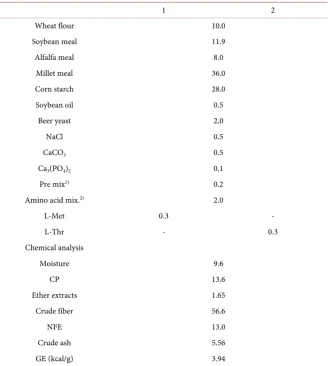
[image:3.595.210.539.237.604.2]The experimental diets contained 14% of CP (Table 1). Two diets were pre-pared with methionine (0.3%) and threonine (0.3%). Methionine: threonine was 4:0 and 0:4 (Table 2). To formulate the graded levels of dietary methionine and
Table 1. Ingredients and chemical composition of the experimental diets (%).
1 2
Wheat flour 10.0
Soybean meal 11.9
Alfalfa meal 8.0
Millet meal 36.0
Corn starch 28.0
Soybean oil 0.5
Beer yeast 2.0
NaCl 0.5
CaCO3 0.5
Ca3(PO4)2 0.1
Pre mix1) 0.2
Amino acid mix.2) 2.0
L-Met 0.3 -
L-Thr - 0.3
Chemical analysis
Moisture 9.6
CP 13.6
Ether extracts 1.65
Crude fiber 56.6
NFE 13.0
Crude ash 5.56
GE (kcal/g) 3.94
1)Contains vitamin A, D, E, B
1, B2, B6, B12, C, niacin, pantothenic acid, biotin, folic acid, choline chloride,
inositol, FeSO4, MnSO4, CoSO4, and KIO3. 2)Contains essential amino acids (leucine, lysine, arginine,
phe-nylalanine, isoleucine, histidine, tryptophan and valine) and glutamic acid.
Table 2. Dietary level of methionine and threonine (%).
Mix ratio of Met:Thr 4:0 3:1 2:2 1:3 0:4
Met 0.44 0.36 0.29 0.22 0.14
[image:3.595.209.539.672.726.2]DOI: 10.4236/ojas.2019.92014 166 Open Journal of Animal Sciences threonine, the two prepared diets were mixed at ratios of 4:0, 3:1, 2:2, 1:3, and 0:4. The diet was administered using a time-controlled feeding method for 1 hr (9:00 - 10:00) and 3 hrs (16:00 - 19:00) in a day. The rabbits were fed ad libitum. Each experimental diet was provided for 4 days in the following order: 1, 4, 2, 5, 3. It was recognized that the plasma free amino acid concentration responded to the new amino acid dietary levels by 3 days after the dietary changes. In addi-tion, the changes in dietary amino acid levels were reflected in the plasma amino acid levels within 2 hr after eating began. Therefore, in the fourth day after switching diets and 4 hr after starting morning feeding, approximately one mL of blood was collected from the vein of the ear. Body weight was determined be-fore switching diets, and diet intake was recorded everyday.
2.3. Sample Preparation
Collected blood was centrifuged at 6.93 g for 5 min, and plasma was obtained. This plasma was thoroughly mixed with the same volume of 8% sulfosalicylic acid solution. After 10 min of decantation, the mixture was centrifuged at 6.93 g for 5 min under 5˚C. Supernatant fluid was filtered with a 0.45 μm filter (Ad-vantec, Dismic-25) as reported previously [2] [3] and kept in a −40˚C freezer until the determination of free amino acids.
After the first study, the rabbits were fed a commercial diet until they grew up to the adult stage at 35 weeks of age. The second study was conducted with 35-weeks-old rabbits in the same manner as the first study.
Free amino acid concentrations in the plasma kept at −40˚C were determined with a high-speed amino acid analyzer (Hitachi L-8500).
2.4. Statistical Treatment
Statistical treatment was carried out by one-way analysis of variance. When a significant difference (P < 0.05) was recognized, the means were analyzed by Tukey’s multiple range test. The requirements of methionine and threonine were estimated by the broken line model.
3. Results and Discussion
DOI: 10.4236/ojas.2019.92014 167 Open Journal of Animal Sciences
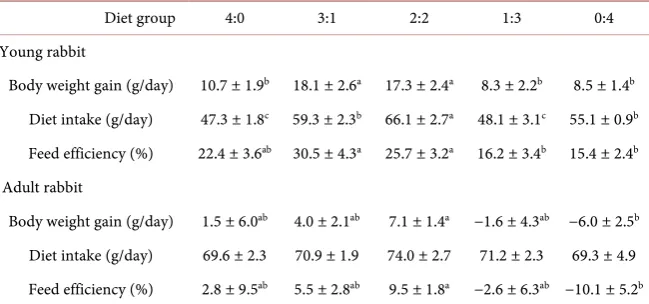
Table 3. Body weight gain, diet intake and feed efficiency.
Diet group 4:0 3:1 2:2 1:3 0:4
Young rabbit
Body weight gain (g/day) 10.7 ± 1.9b 18.1 ± 2.6a 17.3 ± 2.4a 8.3 ± 2.2b 8.5 ± 1.4b Diet intake (g/day) 47.3 ± 1.8c 59.3 ± 2.3b 66.1 ± 2.7a 48.1 ± 3.1c 55.1 ± 0.9b Feed efficiency (%) 22.4 ± 3.6ab 30.5 ± 4.3a 25.7 ± 3.2a 16.2 ± 3.4b 15.4 ± 2.4b Adult rabbit
Body weight gain (g/day) 1.5 ± 6.0ab 4.0 ± 2.1ab 7.1 ± 1.4a −1.6 ± 4.3ab −6.0 ± 2.5b Diet intake (g/day) 69.6 ± 2.3 70.9 ± 1.9 74.0 ± 2.7 71.2 ± 2.3 69.3 ± 4.9 Feed efficiency (%) 2.8 ± 9.5ab 5.5 ± 2.8ab 9.5 ± 1.8a −2.6 ± 6.3ab −10.1 ± 5.2b
Each value is means for 6 rabbits. a-cmeans with different superscripts in the same row are significantly
dif-ferent (P < 0.05).
(P = 0.047 - 0.032) with a quadratic effect among the tested threonine levels; the present data showed the same trend.
DOI: 10.4236/ojas.2019.92014 168 Open Journal of Animal Sciences
Table 4. Plasma free amino acid concentrations of young rabbits (nmol/ml).
Diet group (Met:Thr) Pooled
P < 0.05
Amino acid 4:0 3:1 2:2 1:3 0:4 SD
Tau 68 48 45 41 67 19 NS
Asp* 7 - 10 7 13
Thr 37d 71cd 91bc 125b 191a 55
Ser 189b 218ab 187b 208ab 278a 52
Glu 47 57 36 46 53 13 NS
Gly 692 695 759 772 896 165 NS
Ala 704b 1116a 1106a 821ab 975ab 213
Cys 21ab 24a 23ab 15ab 13b 7
Val 115 149 146 129 174 41 NS
Met 113a 107a 69b 11c 13c 45
Ile 101 133 130 118 115 38 NS
Leu 67 97 86 72 110 29 NS
Tyr 45b 65ab 61b 41b 92a 23
Phe 35 47 38 27 45 13 NS
Lys 157 197 210 173 222 69 NS
His 77 84 85 61 107 27 NS
3-Mehis* - 2 - 5 -
Arg 159 180 175 108 176 45 NS
Pro 277 371 356 309 388 78 NS
*: Statistical analysis could not be conducted because of value deletions.
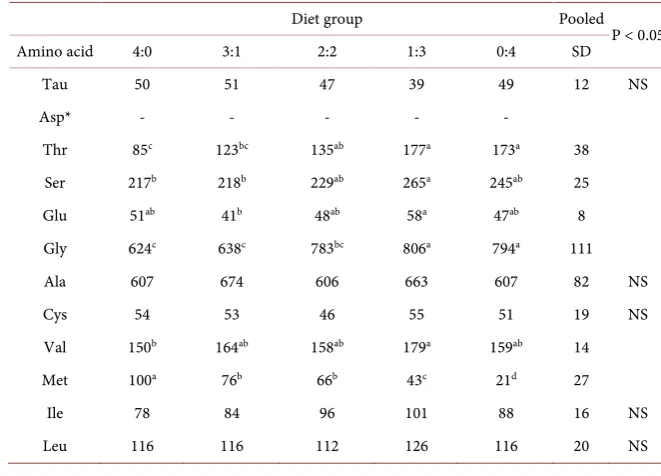
Table 5. Plasma free amino acid concentrations of adult rabbits (nmol/ml).
Diet group Pooled
P < 0.05
Amino acid 4:0 3:1 2:2 1:3 0:4 SD
Tau 50 51 47 39 49 12 NS
Asp* - - - - -
Thr 85c 123bc 135ab 177a 173a 38
Ser 217b 218b 229ab 265a 245ab 25
Glu 51ab 41b 48ab 58a 47ab 8
Gly 624c 638c 783bc 806a 794a 111
Ala 607 674 606 663 607 82 NS
Cys 54 53 46 55 51 19 NS
Val 150b 164ab 158ab 179a 159ab 14
Met 100a 76b 66b 43c 21d 27
Ile 78 84 96 101 88 16 NS
[image:6.595.205.536.492.730.2]DOI: 10.4236/ojas.2019.92014 169 Open Journal of Animal Sciences
Continued
Tyr 97 87 89 98 96 17 NS
Phe 57 54 52 59 55 8 NS
Lys 157 158 165 178 165 13 NS
His 89 82 83 86 89 8 NS
3-Mehis 9 7 9 9 9 2 NS
Arg 141 121 154 144 133 30 NS
Pro 226 245 258 272 245 27 NS
[image:7.595.248.494.235.425.2]*: Aspartic acid was not detected in the serum from adult rabbits.
Figure 1. Relationship of methionine intake amount and plasma methionine
concentra-tion in young rabbits. Values used are the means of 6 rabbits.
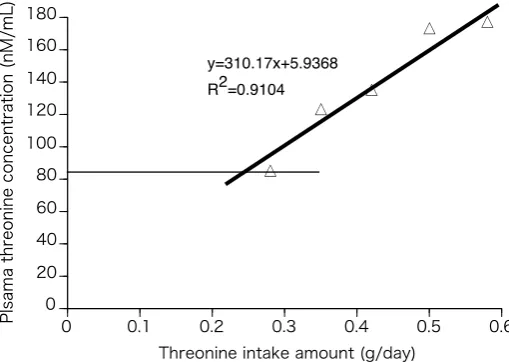
Figure 2. Relationship of threonine intake amount and plasma threonine concentration
in young rabbits. Values used are the means of 6 rabbits.
[image:7.595.249.496.472.650.2]require-DOI: 10.4236/ojas.2019.92014 170 Open Journal of Animal Sciences ment level. The current intersection of methionine was estimated as 0.16 g/d. In the same manner, the intersection of plasma threonine value was estimated as 0.27 g/d. These values were calculated as 0.27% and 0.47% of the diets.
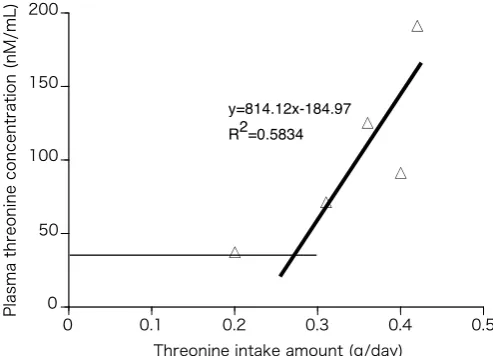
In Figure 3 and Figure 4, plasma concentrations of methionine and threonine against dietary amino acid supply levels are shown in adult rabbits. In the case of adult rabbits, the baseline was not obtained from dietary methionine and nine levels. The methionine requirement was estimated as 0.11 g/d. The threo-nine requirement was estimated as 0.22 g/d. These values were calculated as 0.15% and 0.30% of the diets.
[image:8.595.244.499.281.463.2]In a previous study [3] of adult Japanese white rabbits, the methionine and threonine requirement values were 0.23 g/d and 0.42 g/d, and their dietary in-gredients were 0.28% and 0.52% of the diets, respectively. The requirements of both amino acids by young rabbits in this study were approximate values. With
Figure 3. Relationship of methionine intake amount and plasma methionine
concentra-tion in adult rabbits. Values used are the means of 6 rabbits.
Figure 4. Relationship of threonine intake amount and plasma threonine concentration
[image:8.595.245.500.512.693.2]DOI: 10.4236/ojas.2019.92014 171 Open Journal of Animal Sciences our data suggesting a methionine requirement of 0.28% of the diet [3] and the present data suggesting that of 0.27%, it seems that the methionine requirement is not as large as claimed in comparison with the earlier reports [7] [8] [10] [11] [12] which proposed methionine requirements at 0.45% - 0.62% of the diet; this range could be affected by the unknown cysteine levels. On the other hand, the requirement level of threonine in earlier studies [9] [10] [12] [13] [14] was 0.50% - 0.64% of the diet. Therefore, the level of threonine required by young animals, i.e., the active growth stage of small pet-type rabbits, does not differ from the requirement level of domestic-type rabbits.
The present data of both amino acids from adult Dutch rabbits are half the values of previous data [3]. In this study, the plasma concentration of methio-nine showed a constant low level as a baseline, but the plasma concentration of threonine did not show a constant low level, i.e., the minimum supply from the present diet was sufficient for the requirement of adult Dutch rabbits. The diet used was the same as that used in the previous study. In a previous study [3], the plasma concentration of both amino acids showed a constant low level, i.e., the minimum supply from the diet was insufficient for the requirement of adult Dutch rabbits. Therefore, small pet-type rabbits required lower amino acid val-ues than do domestic-type rabbits.
In comparison with young and adult rabbits in the present study, both me-thionine and threonine showed a low baseline level in young rabbits, while their variations in plasma levels of adult rabbits was not determined. Furthermore, the requirement of both amino acids in young rabbits is higher than that in adult rabbits. The dietary values of both amino acids in young rabbits were also higher than those in adult rabbits. Maertens et al. [15] proposed that protein and amino acid requirements decrease with increasing age, and our data agree with their proposal.
Acknowledgements
The authors wish to thank Mr. T. Sakoda, and Mr. H. Goto, for the determina-tion of amino acids and Ms. S. Hashimoto and Ms. Y. Umehara for their help in the maintenance of rabbits, preparation of samples, and statistical analysis of data in this study.
Conflicts of Interest
The authors declare no conflicts of interest regarding the publication of this pa-per.
References
[1] Lowe, J.A. (1998) Pet Rabbit Feeding and Nutrition. In: de Blas, J.C. and Wiseman, J., Eds., The Nutrition of the Rabbit, CABI Publishing, London, UK.
DOI: 10.4236/ojas.2019.92014 172 Open Journal of Animal Sciences Journal of Pet Animal Nutrition, 11, 61-66.
[3] Abe, Y., Sakoda, T., Goto, H., Ikeda, S. and Sukemori, S. (2014) Cecotrophy Con-tribute Methionine and Threonine Requirements of Rabbits. Journal of Pet Animal Nutrition, 17, 6-12.
[4] Hoover, W.H. and Heitmann, R.N. (1975) Cecal Nitrogen Metabolism and Amino Acid Absorption in the Rabbit. Journal of Nutrition, 105, 245-252.
https://doi.org/10.1093/jn/105.2.245
[5] Sukemori, S. and Odo, S. (2017) L-Carnitine Contents in the Tissues of Rabbits Feed Urea as an Alternative of Dietary Protein. Open Journal of Animal Science, 7, 1-7. https://doi.org/10.4236/ojas.2017.71001
[6] Moughan, P.J., Schltze, W.H. and Smith, W.C. (1988) Amino Acid Requirements of the Growing Meat Rabbit 1. The Amino Acid Composition of Rabbit Whole-Body Tissue—A Theoretical Estimate of Ideal Amino Acid Balance. Animal Science, 47, 297-301.
[7] Spreadbury, D. (1978) A Study of the Protein and Amino Acid Requirements of the Growing New Zealand White Rabbits with Emphasis on Lysine and the Sul-phur-Containing Amino Acids. British Journal of Nutrition, 39, 601-613.
https://doi.org/10.1079/BJN19780075
[8] Taboada, E., Mendez, J. and de Blas, J.C. (1996) The Response of Highly Productive Rabbits to Dietary Sulphuramino Acid Content for Reproduction and Growth. Re-production Nutrition Development, 36, 191-203.
https://doi.org/10.1051/rnd:19960204
[9] Colin, M. and Ghezal-Triki, N. (2001) Threonine: An Essential Amino Acid Not Frequently Used Till Now in Rabbit Feeds Formulation. A Review. World Rabbit Science, 9, 109-115.
[10] Fisher, H. (1976) Protein and Amino Acid Requirements of the Laboratory Rabbit.
Laboratory Animal Science, 26, 659-663.
[11] Monteiro-Motta, A.C., Scapinello, C., Oliveira, A.F.G., Figueira, J.L., Catelan, F., Sato, J. and Stanquevis, C.E. (2013) Levels of Lysine and Methionine + Cysteine for Growing New Zealand White Rabbits. Revista Brasileira de Zootecnia, 42.
[12] Adamson, I. and Fisher, H. (1973) Amino Acid Requirement of the Growing Rab-bit: An Estimate of Quantitative Needs. Journal of Nutrition, 103, 1306-1310.
https://doi.org/10.1093/jn/103.9.1306
[13] Briens, C. (1996) Threonine Requirement of Growing Rabbits. 6th World Rabbit Congress, 1, 117-120. https://doi.org/10.1016/S0377-8401(97)00063-1
[14] de Blas, J.C., Tboada, E., Nicodemus, N., Campos, R., Piquer, J. and Mendez, J. (1998) Performance Response of Lactating and Growing Rabbits to Dietary Threo-nine Content. Animal Feed Science Technology, 70, 151-160.