Accepted Manuscript
Title: Preparation and characterisation of novel chlorothiazide potassium solid-state salt forms: intermolecular self assembly suprastructures.
Authors: Krzysztof J. Paluch, Lidia Tajber, Thomas McCabe, John E. O’Brien, Owen I. Corrigan, Anne Marie Healy
PII: S0928-0987(10)00388-X
DOI: doi:10.1016/j.ejps.2010.11.012
Reference: PHASCI 2171
To appear in: European Journal of Pharmaceutical Sciences Received date: 22-9-2010
Revised date: 9-11-2010 Accepted date: 22-11-2010
Please cite this article as: Paluch, K.J., Tajber, L., McCabe, T., O’Brien, J.E., Corrigan, O.I., Healy, A.M., Preparation and characterisation of novel chlorothiazide potassium solid-state salt forms: intermolecular self assembly suprastructures.,European Journal of Pharmaceutical Sciences(2010), doi:10.1016/j.ejps.2010.11.012
Accepted Manuscript
Preparation and characterisation of novel chlorothiazide potassium solid-state salt forms: intermolecular self assembly suprastructures.
Krzysztof J. Paluch a, Lidia Tajber a, Thomas McCabe b, John E. O’Brien b, Owen I. Corrigan a, Anne Marie Healy a*
a) School of Pharmacy and Pharmaceutical Sciences, b) School of Chemistry
Trinity College Dublin, College Green, Dublin 2, Ireland.
Accepted Manuscript
Abstract:
Chlorothiazide (CTZ) is a poorly soluble diuretic agent. The aim of the present work was to produce and
characterise a potassium salt form of chlorothiazide which has the potential advantages of improved
aqueous solubility and potassium supplementation. A number of novel potassium salt forms of CTZ
(CTZK) were prepared: CTZK monohydrate (form I), CTZK dihydrate (form II), anhydrous CTZK
(form III), CTZK monohydrate hemiethanolate (form IV) and a desolvate of CTZK monohydrate
hemiethanolate (form V). These salt forms were characterised by thermal analysis, PXRD, NMR,
elemental analysis, FTIR, Karl Fisher titrimetry, ICP-MS and GC-MS. The ethanol-free CTZK forms
were also characterised by dynamic vapour sorption analysis (DVS). CTZK form I was stable (in the
DVS) over the range 0% to 60% RH. The dihydrate form of the salt was stable (in the DVS) over a
broader range of relative humidities, 10 to 90%RH at 25˚C. CTZK form II was less hygroscopic at high humidities (70-90% RH) than the previously reported CTZNa dihydrate. Single crystal X-ray analysis
indicated that chlorothiazide potassium, crystallised from water or water/acetone mixture, formed a
dihydrated polymeric-like intermolecular self-assembly (ISA) suprastructure. The ISA coordination was
determined to be: (CTZ)3∙K∙(H2O)2(CTZ)2∙(H2O)2∙K∙(CTZ)3 (monoclinic, space group: C2/c, single
crystal cell parameters: a = 18.328(4) Å, b = 7.3662(16) Å, c = 19.993(5) Å, α= 90°, β= 99.729(3)°, γ = 90°). When CTZK was crystallised from ethanol, a monohydrate hemiethanolate ISA was formed,
described as (CTZ)3∙K∙CTZ∙(H2O)2∙CTZ∙K∙(CTZ)2 (triclinic, space group: P-1, single crystal cell
parameters: a = 7.078(3) Å, b = 9.842(5) Å, c = 21.994(11) Å, α = 87.522(13)°, β= 84.064(14)°, γ= 78.822(12)°). The aqueous solubility of CTZK dihydrate, was determined to be 78.71±1.82 mg/ml,
approximately 400-fold higher than chlorothiazide, indicating a biopharmaceutical advantage associated
with the potassium salt form.
Key words
Chlorothiazide potassium, Calorimetry (DSC), Crystal structure, Solvate, Moisture sorption, NMR
Accepted Manuscript
1. Introduction
Approximately 40% of active pharmaceutical ingredients (API) are described as having poor
aqueous solubility (Wu and Benet, 2005) and therefore are classified as classes II and IV of the
Biopharmaceutics Classification System. There is great interest in the optimisation of the
physicochemical properties of APIs, leading to an improved solubility of material and therefore
improved bioavailability (Blagden et al., 2007). One of the main solubility enhancement approaches
employed for ionisable drugs is salt formation (Stahl and Wermuth, 2008).
It is known that increasing hydrophilicity and decreasing melting point can result in the
formation of a salt with increased aqueous solubility. Other desirable physicochemical properties
include low hygroscopicity, physical stability of the crystal form under different storage conditions and
chemical stability.
The salt formers (counterions) may be chosen from a few classes. The first class of salt-formers
have unrestricted use for this purpose because they form physiologically ubiquitous ions (e.g. Cl-, Na+,
K+) or because they occur as intermediate metabolites in biochemical pathways (e.g. citrate,
glucuronate). Nearly 90% of the reported pharmaceutical salts are with sodium, calcium, potassium,
magnesium, meglumine or ammonia with more than 55% made with sodium cations (Stahl and
Wermuth, 2008). Pharmaceutical salts of potassium are less frequent in comparison to sodium salts.
However, there are reports outlining several advantages of potassium over sodium salts. Sodium forms
hydrated salts more readily than the potassium cation and the latter are less deliquescent than the sodium
counterparts (Remington, 2005), e.g. the potassium salt of penicillin G is preferred to the sodium salt
because it is less hygroscopic (Swarbrick, 2007). Potassium salts may have better aqueous solubility
than the corresponding sodium salts (Derry et al., 2009, Adams et al., 2000, Antoncic and Copar, 2009).
Chlorothiazide (CTZ) is a thiazide diuretic which is administered orally in the crystalline form as
tablets or as an oral suspension (Brunton et al., 1996). CTZ has a particularly high melting point (~350
Accepted Manuscript
aqueous alkali solutions (European Pharmacopoeia, 2007), which is as a result of its acidic properties,
allowing salt formation due to its salt-forming properties and taking into account the drug’s poor
solubility, it is considered advantageous to prepare a more soluble form. CTZ is available as a sodium
salt, marketed as Diuril Sodium®, however the solid-state properties of chlorothiazide sodium have only
recently been presented (Paluch et al., 2010). Thiazides are considered to be effective antihypertensives,
used as front-line drugs to treat hypertension (Appel, 2002). As with other thiazides, one limitation of
the therapeutic use of CTZ is the risk of hypokalemia and the requirement for potassium
supplementation (Ellison and Loffing, 2009). Thus the delivery of a potassium salt of CTZ may, first of
all, have clinical advantages and furthermore, an improved solubility leading to an enhanced dissolution
and potentially bioavailability. Therefore the main aim of this paper was to establish the conditions of
Accepted Manuscript
2. Materials and methods
2.1. Materials
Materials used in experiments were chlorothiazide (CTZ) obtained from Sigma (Ireland),
potassium hydroxide (KOH) from Merck (Germany) and potassium bromide (KBr, FT-IR grade) from
Sigma (Ireland). The following solvents and other reagents were also used including deionised water
obtained from Purite Prestige Analyst HP water purification system, acetone (analytical grade) from
Corcoran Chemicals, ethanol (H2O<0.1%) from Corcoran Chemicals, methanol HPLC grade from
Sigma (Ireland), deuterated dimethyl sulphoxide (DMSO-D6) from Apollo Scientific Limited (UK),
hydrogen peroxide (H2O2, Ph. Eur., B.P. 30%) from Riedel de Haën (Germany), formic acid (HPLC
grade) from Sigma (Ireland), nitric acid (HNO3, 69%, Aristar) from BDH (UK), hydrochloric acid 32%
(HCl, extra pure) from Riedel de Haën (Germany) and Hydranal-Composite from Riedel de Haën
(Germany).
2.2. Methods
2.2.1. Sample preparation
Chlorothiazide potassium (CTZK) was prepared by mixing chlorothiazide powder with 1M
KOH aqueous solution. The product was then treated as described earlier (Paluch et al. 2010). This gave
a white powder (hereafter referred to as form I). The crystals subsequently used for single crystal X-ray
and other analyses were prepared by solvent evaporation from saturated solutions under constant
nitrogen flow at room temperature (20˚C-23˚C). CTZK crystals were obtained by evaporation of water or 1:1 acetone/water mixture (both referred to as form II) or ethanol (referred to as form IV). A
desolvated form IV was obtained by additional drying of crystals at 80˚C for 24 hours and this material is referred to as form V. The anhydrous form III of CTZK was prepared by additional drying in the
Accepted Manuscript
2.2.2. Analytical methods
Prepared materials were subsequently characterised using: powder X-ray diffraction (PXRD),
differential scanning calorimetry (DSC), thermogravimetric analysis (TGA), Karl Fischer titrimetry,
solid state Fourier transform infrared spectroscopy (FTIR), elemental analysis, dynamic vapour sorption
(DVS), nuclear magnetic resonance (1HNMR, 13CNMR), inductively coupled plasma–mass
spectrometry (ICP-MS) and solubility studies as described earlier (Paluch et al. 2010).
Scanning electron microscopy (SEM) was performed using a Tescan Mira Variable Pressure
Field Emission Scanning Electron Microscope. Resolution: 3 nm at 30 kV, accelerating voltage: 5 kV,
specimen stage: 300 mm by 330 mm (Compucentric), detector: secondary electron. Samples were glued
onto aluminium stubs and sputter-coated with gold under vacuum prior to analysis.
Gas chromatography – mass spectrometry (GC-MS) was performed on a Varian 3800 Gas
Chromatograph coupled with the Varian Saturn 2200 Ion Trap Mass Spectrometer (GC-MS). Ethanol
eluted at 8.1 minutes and acetone at 8.7 minutes. The column used for the analysis was a WCOT fused
Silica 60m x 0.32mm ID coating CP-SELECT 624 CB DF=1.8.
The data sets for crystals of CTZK were collected on a Rigaku Saturn 724 CCD diffractometer
(Paluch et al. 2010).Suitable crystals of each compound were selected and mounted using inert oil on a
0.30 mm quartz fibre tip and immediately placed on the goniometer head in a 108-118K nitrogen gas
stream.
The crystallographic data was analysed using: Mercury 2.2 (Blessing, 1995), Ortep-3 (Faruggia,
1997) and Platon (Spek, 2003) whereas the program Crystal Explorer 2.1 (McKinnon et al., 2004) was
used to visualise and analyse Hirshfeld surfaces of molecules (Hirshfeld, 1977). The enhancement factor
Accepted Manuscript
3. Results and discussion
3.1. Physicochemical analysis
Chlorothiazide potassium monohydrate, crystallised from water (form I), was a white crystalline
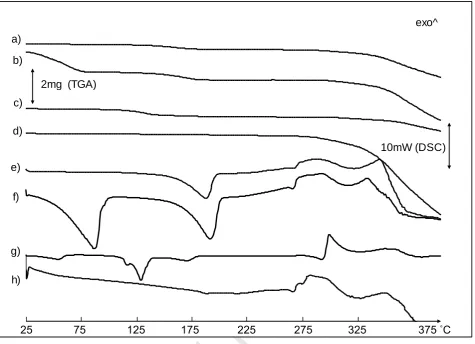
powder. The DSC thermogram (Fig. 1e) of form I shows a small endotherm with an onset at around
58.0±2.0 ˚C which corresponds to a loss of around 1.0±0.4% of residual moisture by TGA (Fig. 1a), the second endotherm is related to the loss of hydrated water and has an onset at 160.6±0.5 ˚C. The first event can be assigned to evaporation of loosely bound water and the second to liberation of water more
tightly attached to the molecule of CTZK. The overall water loss corresponds to a 4.9±0.2% mass loss
(TGA) which, when converted to the molar ratio, indicates that 1 mole of CTZK contains one mole of
water; thus form I is CTZ monohydrate. The theoretical calculation of water content in CTZK
monohydrate is 5.1% w/w. This result was consistent with Karl Fischer titration which determined the
water content to be 5.3±0.6%. Results of elemental analysis for CTZK form I were as follows:
23.58±0.1% of carbon 1.86±0.05% of hydrogen and 11.69±0.06% of nitrogen, consistent with
theoretical calculations for the monohydrate of: 23.90% of carbon, 2.01% of hydrogen and 11.94% of
nitrogen.
The results of DSC/TGA analysis of CTZK form II (Fig. 1: b and f) differ from the results
obtained for form I, as well as those for CTZK form IV (Fig. 1: c and g). CTZK form II (Fig. 1: b and f)
presents two strong endotherms in the DSC scan, the first one starting immediately at the beginning of
the scan (at 25 ˚C), corresponding to a TGA mass loss of 6.6±0.4% detected between 25-100 ˚C and the second endotherm with an onset at 159.6±0.5 ˚C corresponding to a TGA mass loss of 4.6±0.2% (temperature range of 100-200 ˚C).
DSC and TGA analysis is consistent with CTZK form II being a dihydrate (theoretical water
content of 9.7%), possibly containing interstitial/channel water molecule(s). For this sample the KF
titrimetry indicated 13.4%±0.3% of water content. This was higher than the mass loss determined by
Accepted Manuscript
sample handling conditions pertaining to the two techniques. Dehydration of this sample, occurring in
two steps, was different to that of the sodium salt (CTZNa) dihydrate, which dehydrated in a single step
(Paluch et al., 2010). Also, the onset of CTZNa dihydrate desolvation was 83.7 ± 0.5 ˚C, higher than that of the first endothermal event for CTZK form II indicating lower thermal stability of CTZK
dihydrate. CTZK form II starts to melt at 263±0.5 ˚C and this is immediately followed by decomposition. The potassium content was determined to be 12.5±0.6% w/w, consistent with a 1:1
molar ratio of potassium to CTZ, where the theoretical content of potassium is 11.7%. The acetone
content for the sample recrystallised from the acetone/water 1:1 (v/v) mixture was determined to be 3.0
± 0.6 ppm.
The DSC scan of CTZ form IV (crystallised from ethanol) presents three endotherms with onsets
at 35.4±1.5 ˚C, 120.3±1.2 ˚C (double endotherm) and 154.4±0.6 ˚C. TGA showed a two step mass loss, one being 2.1±0.2% (25-100 ˚C) and the other 11.3±1.0% (100-200 ˚C). The ethanol content in the sample was 6.1±0.2% as determined by GC-MS and consistent with the ethanol content of a
monohydrate hemiethanolate of CTZ (i.e. CTZ:H2O:ethanol of 1:1:0.5). The theoretical molar ratio
corresponds to 6.1% w/w of ethanol and 4.8% w/w of water. This gives 10.9% total solvent content in
the crystallised material, slightly lower than the total 13.4±2.0% mass loss observed between 25-200 ˚C by TGA. The melting point of CTZK form IV is 272.0±1.0 ˚C and the process of melting is followed by exothermic decomposition.
The pXRD pattern of CTZK form I and that of CTZK form IV (Fig. 2) are different in terms of
peak positions indicating the different crystal form, which is not surprising considering the presence of
ethanol in the latter material. Drying the crystals of CTZK form IV for 24 hours at 80 ˚C allowed the ethanol content to be reduced to 1.4±0.4 ppm indicating that the ethanol molecules could easily be
removed. It was confirmed by pXRD that the pattern of the dried sample showed a major change
indicating modifications of the original crystal lattice. The diffraction peaks were reduced in intensity
and the peak pattern was considered to be different to that of CTZK form IV (Fig. 2. a).
Accepted Manuscript
very fragile and formed a powder. Therefore the new form V is a desolvate originating from CTZK
form IV and due to its distinctive X-ray powder pattern (Fig. 2 e), also different to that of the
monohydrate form I (Fig. 2 b), it may be an alternative polymorphic form of the CTZK monohydrate.
The diffraction pattern for CTZK form II (Fig. 2 c) was different to that of CTZK form I (Fig. 2 b).
Additional drying of form I converted the monohydrate to an anhydrous form III. The pXRD pattern of
the anhydrate (Fig. 2 d) is characterised by peaks having very low intensities with only one prominent
peak at 19.85 2θ suggesting major damage to the original crystal structure.
Investigations of the solid-state behaviour of CTZK imply that form II (dihydrate) is
preferentially crystallised from an aqueous environment (water and water/acetone mixture studied). At
ambient conditions over approximately 2-3 days, large crystals of this form were observed to loose their
transparency and break apart from one another, converting to the form I (monohydrate), followed by the
formation of the anhydrous form III when exposed to higher temperatures (over 160 ˚C). The latter is very sensitive to moisture and in humid conditions tends to recrystallise towards a mono and dihydrated
form. Form IV (hemiethanolate) is recrystallised from ethanol, however at ambient conditions ethanol is
progressively liberated and, depending on the environmental humidity and temperature, the desolvated
CTZK forms a dihydrate, monohydrate or the anhydrous form III at a higher temperature.
To specify more precisely the humidity conditions which stabilise or induce transformation of
the hydrate forms, CTZK form I (monohydrate) was subjected to dynamic vapour sorption analysis. An
isothermal experiment of sorption and desorption at 25˚C (Fig. 3) established that even ~ 0% RH (0.5-0.7% RH actual % RH) transformation of the monohydrate (I) towards an anhydrous form was not
observed.
A sample of form I equilibrated at 0% RH remained stable as the monohydrate, in contrast to
CTZNa, where the same conditions resulted in an anhydrous form (Paluch at al. 2010). CTZK recovered
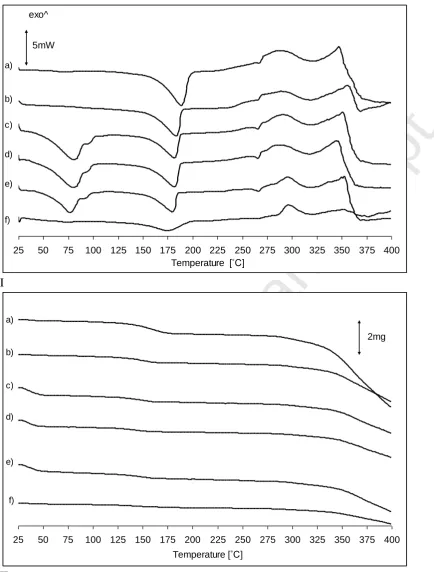
from the DVS experiment (after equilibration at 0% target RH) was analysed by PXRD (Fig. 4 f, g), and
by thermal methods (Fig. 5.1a, 2a). The PXRD pattern was consistent with the pattern of CTZK
Accepted Manuscript
A sample of form I equilibrated up to 60% RH in 10% RH steps adsorbed less than 1% of water
relative to the initial sample mass (CTZK monohydrate), indicating better moisture-related stability in
comparison to CTZNa monohydrate, which was found to form in situ by DVS at 30-40% RH, rapidly
absorbed water above 40% RH and recrystallised to a dihydrate (Paluch et al., 2010). The sample of
CTZK recovered from the DVS instrument and subjected to thermal analysis presented a two stage mass
loss, by TGA (Fig. 5. 2 f), the first of 3.44% and second of 5.47%, which correlated with two respective
endothermal events on the DSC with onsets at 57.7˚C and 142.5˚C (Fig. 5 1 f). PXRD analysis of the sample equilibrated during sorption at 60% RH (Fig. 4 e) had a Bragg peaks pattern which was very
similar to that of the monohydrate form I but with the appearance of additional peaks, in particular at
~17.05 and ~20.20 2θ degrees, which were weak in intensity, and which can be assigned to the dihydrate form. The PXRD pattern of this sample may be described as a combination of the mono and
dihydrate forms.
Between 60 and 70% RH the sample adsorbed nearly 6% of water relative to the initial mass of
monohydrate. PXRD of the recovered and analysed material (Fig. 4 d) indicated the presence of a
dihydrate, with the peak pattern corresponding with the material which was subjected to single crystal
analysis (section 3.2) (Fig. 2 a). Overall TGA mass loss in the range from 25-200˚C was ~12%, divided into two steps of 7.4% and 4.9% (Fig. 5. 2 e), corresponding with respective onsets of peaks on the DSC
at 57.0˚C and 157.8˚C, due to the first and second stages of water evaporation (Fig. 5. 1 e). Further conditioning of CTZK dihydrate form II, at 80 and 90% RH did not result in additional changes (Fig. 4
c) to the PXRD pattern, nor to DSC and TGA profiles of the dihydrated material (Fig. 5. 1 d and 5. 2 d).
Comparison of water vapour intake by CTZK form II to that of CTZNa dihydrate suggests that the
former is less hygroscopic than the latter at high humidities (70-90% RH).
After equilibration at 90% RH the sample of CTZK form II (dihydrate) was subjected to
desorption. As shown in figure 3, the sample in the range from 90 to 10% RH lost just 1.6% mass
relative to the starting mass. The pattern of mass loss of CTZK dihydrate on desorption shows two
Accepted Manuscript
mass loss was ~1%, and the second in the range from 70% to 10% RH where the sample lost a further
0.6% of water, relative to the starting mass of the monohydrate, ending up at 6.8% total water uptake.
We hypothesise that the water loss in the first range (90%-70% RH) is related to adsorbed surface
moisture, the second mass loss (70%-10% RH) is related to the loss of what we have described as
interstitial water in form II, however it is difficult to distinguish between surface-adsorbed and
interstitially captured water.
Supporting analyses by PXRD, DSC and TGA confirmed that the sample equilibrated at 10%
RH remained as a dihydrate. The PXRD pattern (Fig. 4 b) remained consistent with materials
equilibrated at 70% and 90% RH respectively (Fig. 4 c, d) and with raw material of form II (Fig. 4 a).
DSC and TGA scans are the same for all three materials conditioned at 70%, 90% and 10% RH (after
desorption) (Fig. 5. 1 c-e and 5. 2 c-e).
Below 10% RH on the desorption curve (Fig. 3), the dihydrated form collapsed and transformed
to the monohydrate (form I). The change was verified by PXRD analysis (Fig. 4 f, g) and the Bragg
peaks pattern was consistent with the PXRD analysis of the monohydrated raw material, form I (Fig. 2
b). DSC analysis showed a significant reduction in the size of the starting endothermal peak (Fig. 5. 1b).
TGA analysis recorded mass loss in two steps. The first detectable mass loss of 1.5% may be attributed
to loss of surface moisture, and the second, of 5.2%, to dehydration of the monohydrate form (Fig. 5. 2
b).
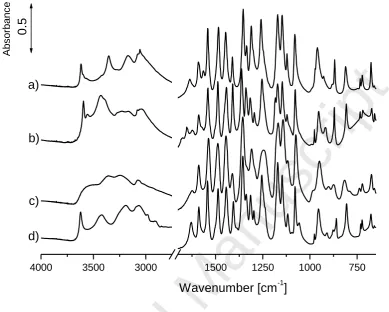
FTIR patterns of CTZK recrystallised from water and from acetone/water 1:1 mixture are similar
to each other and represent the FTIR pattern of form I (Fig. 6). The bands of -CH3 and –CH2 groups
were clearly visible in the range of 3000 cm-1 to 2700 cm-1 of CTZK form IV in contrast to the other
forms of CTZK. A sharp OH stretching peak (crystallisation, bound water) was seen at around 3600 cm
-1 for all the hydrated forms. Closer analysis of the water band revealed that this peak appeared at 3618
cm-1 for form I, 3595 cm-1 for form II and 3623 cm-1 for form IV indicating that this solvent was bonded
most strongly in the dihydrate and most weakly in the ethanol-containing compound. A small, but
Accepted Manuscript
water band, but broadening of the peaks was seen, consistent with a decreased crystallinity of this form
which was supported by the pXRD pattern shown above (Fig. 2 d). The N-H stretching vibrations for
this form appeared at 3357 and 3243 cm-1. One of the N-H bands displayed a relatively steady position
for all the three solvated forms.
It appeared at 3171, 3169 and 3191 cm-1and for form I, II and IV, respectively. The other N-H peak was
observed at 3354, 3428 (with a further vibration at 3359 cm-1) and 3420 cm-1 for form I, II and IV,
respectively showing greater shifts in peak positions, most likely depending on the bound solvent. This
N-H peak was therefore ascribed as the N-H fragment attached to the benzene ring as it is the only N-H
group in the structure directly interacting with the solvent. FTIR spectrum of form IV also differed from
the di- and mono-hydrates by the presence of an extra band at 1057 cm-1 due to the O-CH2 stretch
vibrations from ethanol. Other characteristic bands include NH2 deformation at 1636 cm-1, asymmetric
S=O stretching at 1354 cm-1, symmetric S=O stretching at 1147 cm-1 aromatic C-H ring deformations at
1080 cm-1 and a bending peak associated with the NH2SO2 group at 961 cm-1 (peak positions for Form
I).
The aqueous solubility of CTZK form II (dihydrate) was determined. This form was chosen due to the
greatest expected stability in solution. The solubility was determined to be 78.71±1.82 mg/ml (pH
8.5±0.1) indicating that CTZK has an aqueous solubility ~400-fold higher compared to
0.2 mg/ml for CTZ reported previously by Charnicki and co-workers (1959).
Both, form II and IV, pseudopolymorphic structures of CTZK tend to crystallise as colourless
Accepted Manuscript
3.2. Crystal structure
Single crystal X-ray analysis resulted in the determination of the molecular structures of CTZK
forms II and IV. Experimental data images are reported in Fig. 8.
Chlorothiazide potassium dihydrate, form II, can be classified as an intermolecular coordinate
consisting of chlorothiazide molecules bonded together with potassium. Single crystal X-ray diffraction
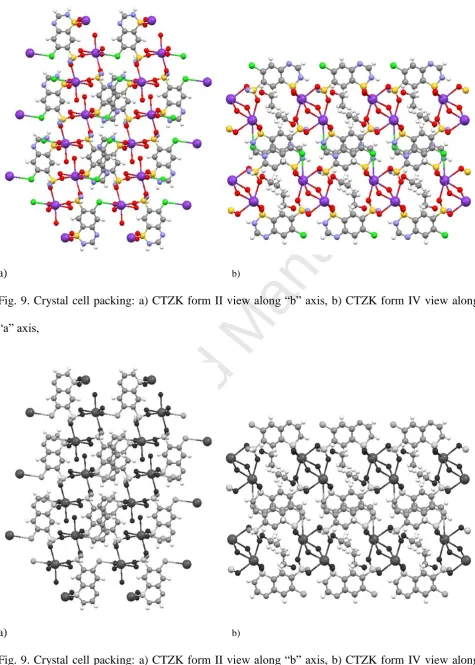
studies (Fig. 9a) show that the structure obtained can be described as follows:
(CTZ)3∙K∙(H2O)2(CTZ)2∙(H2O)2∙K∙(CTZ)3 (CTZK form II). The structure is of a supramolecular
self-assembly type formed by several molecules of CTZ.
CTZK form II intermolecular self-assembly consists of two cations of potassium bridged by the oxygens
of the sulphonyl group (O1 and O2) attached to the phenyl groups of CTZ (Fig. 9a). The bond length
between the potassium and each of the oxygens is similar and is 2.67 Å and 2.75 Å for O1 and
K1-O2, respectively. Each of the potassium cations coordinates five molecules of chlorothiazide, four of
them through the oxygens of the sulphonyl groups (O1, O2, O3 and O4) and one through the chlorine
atom (Cl1). Two of the coordinated chlorothiazide molecules are bridged to the potassium through the
oxygen atoms of the SO2 group (O3 and O4) attached to the heterocyclic ring of CTZ. The bond
distances between oxygen and potassium are: 2.71 Å for K1-O4 and 2.79 Å for K1-O3. The unique
feature of molecular coordination observed in CTZK form II is that the potassium cation is able to
coordinate the chlorine atom (Cl1-K1distance of 3.33 Å). The distance between a chlorine atom and a
potassium cation of 3.33 Å determined here is not unusual. Ellison and Levy (1964) stated for potassium
hydrogen chloromaleate that: “three of the four oxygen atoms and the chlorine atom have potassium ion
neighbours at significant contact distances”. The distance between the chlorine and potassium in their
structure was 3.583(3). Sporer et al. (2005) reported that in K+(18-Crown-6) salt of triphenylmethide
each potassium cation coordinated up to four chlorine atoms of the aromatic groups with average
Accepted Manuscript
Unfortunately, information on the interatomic distances between a chlorine atom and a potassium cation
is scarce as such contacts are unusual, but it appears that the distances determined in this work and
referred to as “coordination” bonds fall within the values reported earlier.
To our knowledge, no reports of K-Cl coordination in salts of APIs have been published to date.
Apart from interacting with CTZ, each of the potassium cations coordinates two molecules of water
with the K1-O5 and K1-O6 distances of 2.86 Å and 2.65 Å, respectively. None of these water molecules
is shared and/or bridged between the two cations of potassium. Additionally, a molecule of water,
appearing as an interstitial/channel type, is also present in the neighbourhood of two of the potassium
cations in CTZK form II. The oxygen of water is present at an equal distance of 5.39 Å from each of
potassium atoms (K1-O7-K1) in the assembly. A summary of the key crystallographic information is
given in supplementary data file (Table 1).
CTZK recrystallised from ethanol (form IV) presents a different crystal structure compared to
CTZK form II (Fig. 9b). In CTZK form IV the two potassium cations are bridged by two oxygens of
water and additionally by the oxygens of the sulphonyl group (O1, O2, O5 and O6) attached to the
phenyls of two molecules of chlorothiazide (Fig. 9b). The distances between the oxygens of water (O9
and O10) and the potassium cations are 2.74 Å and 2.85 Å for K1-O9 and K1-O10, respectively and
2.88 Å and 2.71 Å for K2-O9 and K2-O10, respectively. The distances between the potassium cation
and CTZ oxygens are of a similar range as those between K1/K2 and O9/O10 and are 2.80 Å and 2.76 Å
for K1-O2 and K1-O6, respectively and 2.77 Å and 2.80 Å for K2-O1 and K2-O5, respectively.
CTZK form IV is composed of two types of CTZ molecules that are crystallographically
independent (Fig. 8). The two potassium cations in CTZK form IV coordinate a different number of
atoms each. They both coordinate six oxygens, but one of them additionally coordinates one chlorine
atom of CTZ (Cl2-K2) with a distance of 3.57 Å. The distance between the potassium and chlorine in
CTZK form II described above was shorter i.e. was 3.33 Å. In CTZK form IV one of potassium ions
(K1) coordinates four molecules of chlorothiazide through oxygens of the sulphonyl groups: two from
Accepted Manuscript
heterocyclic ring of chlorothiazide (O2 and O1). The distances between the potassium atom and
oxygens of the sulphonyl group of the heterocyclic ring of CTZ are: K1-O3: 2.75 Å and K1-O4: 2.71 Å.
The other potassium (K2) coordinates five molecules of chlorothiazide: four of them are coordinated by
the oxygens of the sulphonyl group: three from the benzene ring (O3, O5 and O7) plus the fourth
oxygen of the heterocyclic ring (O30). The fifth chlorothiazide molecule is coordinated to the potassium
ion through the chlorine atom of the CTZ molecule.
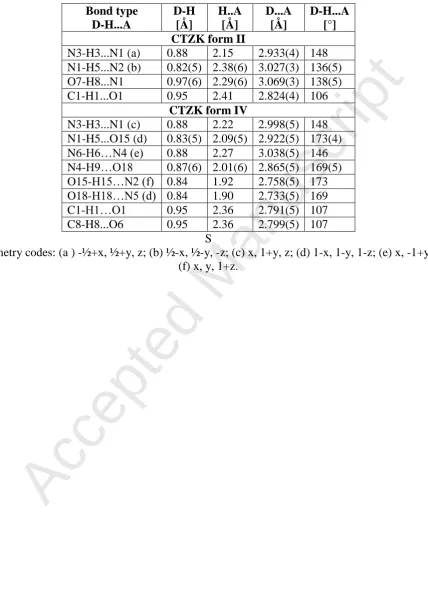
Extensive network of hydrogen bonds were determined in both of the pseudopolymorphic forms
(II and IV) of CTZK and are presented in Table 1.
CTZK from IV occurs as a monohydrate additionally containing molecules of ethanol with the
molar ratio of H2O: ethanol: CTZ of 2:1:2 based on the single crystal X-ray analysis, in excellent
agreement with the ratio determined by thermal analysis and GC-MS (section 3.1). It has a different
crystal unit cell than CTZK form II (Supplementary data file Table 1). While CTZK form II is
monoclinic with a space group of C2/c, CTZK form IV has a triclinic crystal structure and a space group
of P-1.
To date only a limited number of APIs containing similar coordinates formed by potassium
cation have been described and reported, suggesting that crystal structures of pharmaceutically relevant
potassium salts have not been widely investigated. Geddes et al. (1974) reported a crystal structure of
nigericin potassium salt and compared it with a nigericin silver salt. In nigericin, the potassium cation
coordinates seven oxygen atoms with distances between the oxygens and potassium between 2.58 Å and
3.09 Å. All the coordinated oxygens come from the same molecule of nigericin i.e. the structure of the
complex is 1 molecule of K+ to 1 molecule of nigericin. On the other hand, Tauvel et al. (2009)
described crystal structures of a potassium salt of tenatoprazole. Depending on the solvent used, the
mono-potassium salt of tenatoprazole presented the following forms: a monoclinic- diethanolate, a
monoclinic-(x)methanolate,-(2-x)ethanolate, where (0≤x<1), diethanolate and an orthorhombic structure of ethylenglycolate (EG). Similarly to CTZK, a hydrated form of potassium tenatoprazole recrystallised
Accepted Manuscript
forms of the API, therefore showing that a supramolecular organisation for potassium salts is possible,
however CTZK (especially form IV) exhibits a complex crystal structure compared to those previously
described.
Bekdemir et al. (2002) published the crystal structure of potassium p-nitrobenzoxasulfamate
monohydrate. This orthorhombic structure is based on two cations of potassium which, as in the CTZK
form III structure, are crystallographically independent. One of the potassium cations coordinated six
oxygens in the range 2.6538-3.0916 Å and one atom of nitrogen (2.9236 Å) while the second potassium
cation coordinated seven atoms of oxygens in the range 2.7502-3.0468 Å and one nitrogen (2.7942 Å).
1HNMR and 13CNMR analyses of CTZK form II and IV confirmed the chemical structure of the
API molecule, supporting the single crystal X-ray diffraction results. The primary amine group of CTZ
was found to be deprotonated, as reported for CTZNa (Paluch et al, 2010). The full NMR
characterisation of CTZK form II and IV can be found in Supplementary Content.
3.3. Hirshfeld surfaces
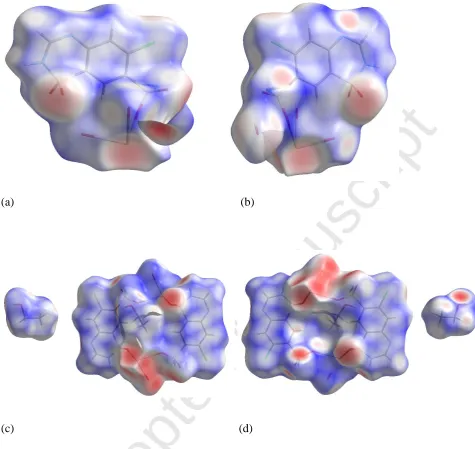
Hirshfeld surfaces analysis allowed for visualisation and comparison of reciprocal interactions
among atoms in crystal lattices of CTZK form II and form IV. The visualisation is based on a 3-D
surface surrounding a single molecule of CTZK. Parameters describing this surface are di and de, where
di corresponds to the distance between the surface and atom placed the closest internally to the surface.
de corresponds to the distance between the surface and atom placed the closest externally to the surface.
Presented surfaces by dnorm are the sum of di and de where each of them is normalised to the van der
Waals radius of the involved atom. 3-D images of surfaces of molecules are partially coloured and
partially gray. The colour spectrum ranges from blue to white to red. If the surface is coloured blue, it
means, that reciprocal interactions between two molecules placed internally and externally to the
Hirshfeld surface are longer (weaker) on a relative scale than van der Waals forces. White planes are
Accepted Manuscript
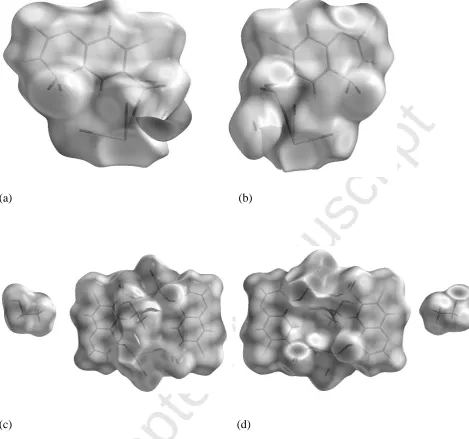
forces. The surfaces presented in Fig. 10 reveal the close contacts between the atoms highlighting
hydrogen bond donors and acceptors and interactions of the potassium ions.
The 3-D surface (Fig. 10) surrounding the molecule can be depicted by a D-2 fingerprint plot
(Fig. 11) where de=f(di). The fingerprint plot is pseudo-mirrored along de=di which reflects the
reciprocated interactions between selected atoms. The fingerprint plot depicts the percentage of overall
Hirshfeld surface covered by a particular type of bond. This is important as red strong interactions, so
called hot-spots, can be crucial in the formation of a particular crystal structure, but will not cover a
large percentage of the Hirshfeld surface, so the overall stabilising effect on the crystal structure can be
weaker than the less intensive blue interaction, but which covers a larger percentage of the Hirshfeld
surface.
Figures 11 and 12 illustrate decomposition of the fingerprint plots for CTZ II and IV. This
detailed analysis allows one to discern that the largest contribution to the overall Hirshfeld surface in
CTZK form II are O…H, O…O and O…K (Fig. 11) and in form III are H…H, O…H and O…O (Fig.
12) contacts, suggesting that weak but repulsive H…H contacts contribute to the stability of CTZK form
IV.
Both fingerprints presented the appearance of spikes characteristic of hydrogen bonds involving
O…H and N…H contacts. The fingerprint plot of CTZK form II is quite asymmetric and this
asymmetry is due to the presence of the channel water molecule. The fingerprint plots can also be
considered in terms of hydrogen bond donors/acceptors, where de>di contacts correspond to the
hydrogen bond donors and de<di contacts indicate the hydrogen bond acceptors. This examination
indicates that the O…H contacts are more sensitive to the inclusion or exclusion of the solvated water
molecules compared to contacts of other types. The hydrated CTZK form II, inclusive of the channel
and coordinated by the K+ water molecules, has 17.1% O…H bond acceptors), 11.3% H…O
(H-bond donors) as well as 5.4% O…K, 7.1% K…O and 16.7% O…O contacts contributing towards
stability of the crystal structure of this form. Exclusion of the channel water only slightly changed these
Accepted Manuscript
Removal of all water molecules hydrating the CTZK altered the contributions of H…O and H…O
contacts to 9.9% and 12.9%, respectively and changed the balance of H-bond donors and acceptors able
to interact with the groups participating in such contacts. This suggests that the water molecules bound
by the potassium ions are essential for maintaining of the crystal lattice integrity of form II, whereas
exclusion of the channel water impacts on the stability to a much lesser degree. The proportions of the
O…K, K…O and O…O contacts in the fully water deprived structure are 5.9%, 12.7% and 9.6%,
respectively.
In form IV, the mixed ethanolate/hydrate form, the O…H/H…O contributions change as
follows: 10.9%/8.9%, 15.5%/5.8%, 9.1%/9.0% and 13.5%/6.5% for the fully solvated form IV, the
structure with ethanol excluded but water molecules left in, the structure with water excluded but
ethanol left in and the desolvated form (water and ethanol excluded), respectively. This, in contrast to
form II, indicates that both of the solvents may be important in maintaining the integrity of form IV.
Omission of water of solvation results in a change of the O…K and K...O contacts from approximately
5% and 6% to approximately 4% and 9%, respectively, not surprisingly as the water interacts with the
potassium ions directly. Form II and form IV also display a significant difference in the contribution of
H…H weak contacts, 5.2% and 24.2%, respectively showing a greater contribution of these weak
interactions arising from interaction of hydrogen atoms of the ethanol molecules with adjacent aromatic
Accepted Manuscript
4. Conclusions:
Chlorothiazide formed a range of intermolecular self-assemblies (ISA) with potassium cations
when crystallised from different liquid environment by solvent evaporation.
Potassium cations of CTZK can coordinate up to seven atoms (oxygens of water, oxygens of
sulphonyl groups and the chlorine of CTZ molecule). The potassium cations are not bridged by water in
CTZK recrystallised from water, whereas a more complex coordinate with two types of
crystallographically independent CTZ molecules, is formed in CTZK ISA recrystallised from ethanol
(form IV). In the latter, the potassium cations do not coordinate an equal number of atoms (K1
coordinates seven and K2 coordinates six). Potassium cations deprotonate the primary amine groups of
CTZ and shift the proton of the secondary amine group in the heterocyclic ring of CTZ, analogous to
results reported for CTZNa (Paluch at al. 2010).
The different CTZK forms have different physical stabilities when temperature and/or humidity
is changed. Drying form IV leads to evaporation of ethanol present in the crystal lattice, but not water,
and transforms the original crystals to a desolvated material (CTZK form V) that has a different Bragg
peak pattern compared to CTZK form I (monohydrate). The latter can be obtained by crystallisation
from water but is also found to form by direct drying of CTZK form II. DVS analysis showed that
CTZK form I had better moisture-related stability than CTZNa monohydrate and was stable up to 60%
RH (at 25 ˚C). The dihydrate (form II) existed over a broad range of relative humidities, 10-90%RH, at 25˚C. Extensive drying of form I results in an anhydrous material (form III) which was seen to be exceptionally moisture sensitive and converted to form I even at a very low humidity of 0.5-0.7% RH in
the DVS at 25˚C. This contrasted with the behaviour of CTZNa anhydrous form which was stable up to 20% RH (Paluch et al., 2010). The rich solvatomorphism of CTZK presented here is in contrast to some
reports that the potassium cation forms hydrated salts less readily than the sodium cation (Remington,
2005). However, the solvates of CTZK seem to be less hygroscopic compared with the hydrated
Accepted Manuscript
The aqueous solubility of CTZK dihydrate was estimated to be 78.71±1.82 mg/ml, 400-fold
higher than that of CTZ (Charnicki et al. 1959), thus indicating a biopharmaceutical advantage for the
Accepted Manuscript
Acknowledgements
The authors wish to acknowledge funding for this research from the Irish Research Council for Science
and Engineering Technology (IRCSET) and the Solid State Pharmaceutical Cluster (SSPC), supported
by Science Foundation Ireland under grant number [07/SRC/B1158].
Authors would like to thank Professor Brian McMurry for scientific consultation of single crystal data
Accepted Manuscript
References:
Adams, M.E., Subhash, D., Aziz, K., Kalidas, P., Douglas, J.S., Zold, D.J., 2000. Potassium, sodium
and tris oxaprozin salt pharmaceutical formulations, US Patent 6030643.
Antoncic, L., Copar, A., 2009. Preparation of telmisartan salts with improved solubility. US Patent
Application: 20090012140.
Appel, L.J., 2002. The verdict from ALLHAT-thiazide diuretics are the preferred initial therapy for
hypertension. JAMA, 18, 3039-3042.
Bekdemir, Y., Kutuk, H., Celik, S., Yilmaz, V.T., Thoene, C., 2002. Trans-Tetraaquabis
(p-nitrobenzoxasulfamato)cobalt(II), J. Mol. Struct., 604, 239-244.
Blagden, N., de Matas, M.P.T., York, G.P., 2007, Crystal engineering of active pharmaceutical
ingredients to improve solubility and dissolution rates, Adv. Drug Deliv. Rev. 59, 617-630.
Blessing, R.H., 1995. An empirical correction for absorption anisotropy. Acta Cryst. A51, 33-38.
Brunton, L.L., Lazo, J.S., Parker, K.L., (Eds.), 1996. Goodman and Gilman's The Pharmacological
Basis of Therapeutics. The McGraw-Hill, New York.
Charnicki, W.F., Bacher, F.A., Freeman, S.A., Decesare, D.H., 1959. The pharmacy of chlorothiazide
(6-chloro-7-sulfamyl-1,2,4-benzothiadiazine-1,1-dioxide) - a new orally effective diuretic agent. J. Am.
Pharm. Assoc. 48, 656-659.
Derry, P., Derry, S., Moore, R.A., McQuay, H.J., 2009. Single dose oral diclofenac for acute
postoperative pain in adults, Cochrane Database Syst. Rev., 2, CD004768.
Ellison, D.H., Loffing, J., 2009. Thiazide effect and adverse effects: Insights from molecular genetics.
Hypertension, 54, 196-202.
Ellison, R.D., Levy, H., A., 1965, A Centered Hydrogen Bond in Potassium Hydrogen Chloromaleate:
A Neutron Diffraction Structure Determination, Acta Cryst., 19, 260- 268.
Accepted Manuscript
Farrugia, L.J., 1997. ORTEP-3 for Windows - a version of ORTEP-III with a Graphical User Interface
(GUI). J. Appl. Crystallogr. 30, 565.
Geddes, A.J., Sheldrick, B., Stevenson, W.T.J., Steinrauf, L.K., 1974. The crystal structure of the
potassium salt of nigericin, Biochem. Biophys. Res Commun., 60,1245-1251.
Healy, A.M., McDonald, B.F., Tajber, L., Corrigan, O.I., 2008. Characterisation of excipient-free
nanoporous microparticles (NPMPs) of bendroflumethiazide. Eur. J. Pharm. Biopharm. 69, 1182-1186.
Hirshfeld, F.L., 1977. Bonded-Atom Fragments for Describing Molecular Charge-Densities Theor.
Chim. Acta, 44, 129-138
Jakobsen, P., Treppendahl, S., 1979. Structure of 1,2,4-benzothiadiazine-1,1-dioxides. Tetrahedron 35,
2151-2153.
McKinnon, J.J., Spackman, M.A., Mitchell, A.S., 2004. Novel tools for visualizing and exploring
intermolecular interactions in molecular crystals, Acta Cryst. B, 60, 627-668.
Paluch, K.J., Tajber, L., McCabe, T., O’Brien, J.E., Corrigan, O.I., Healy, A.M., 2010. Preparation and
solid state characterisation of chlorothiazide sodium intermolecular self assembly suprastructure,
European Journal of Pharmaceutical Sciences, EJPS-D-10-00480
Remington: the science and practice of pharmacy, 2005. 21st Edition, Lippincott Williams & Wilkins.
Scholz, E., 1987. Reagents for Karl Fischer Titration. Riedel-de Haën Aktiengesellschaft.
Spek, A.L., 2003. Single-crystal structure validation with the program PLATON. J. Appl. Crystallogr.
36, 7-13.
Sporer, C., Ratera, I., Wurst, K., Vidal-Gancedo, J., Ruiz-Molina, D., Rovira, C., Veciana, J., 2005.
Ferrocene triphenylmethyl radical donor–acceptor compounds. Towards the development of
multifunctional molecular switches, ARKIVOC, 2005, (IX), 104-114.
Stahl, P.H., Wermuth, C.G., 2008. Handbook of pharmaceutical salts properties, selection and use,
Wiley-VCH.
Accepted Manuscript
Tajber, L., Corrigan, D.O., Corrigan, O.I., Healy, A.M., 2009. Spray drying of budesonide, formoterol
fumarate and their composites-I. Physicochemical characterisation. Int. J. Pharm. 367, 79-85.
Tajber, L., Corrigan, O.I., Healy, A.M., 2005. Physicochemical evaluation of PVP-thiazide diuretic
interactions in co-spray-dried composites - analysis of glass transition composition relationships. Eur. J.
Pharm. Sci. 24, 553-563.
Tauvel, G., Sanselme, M., Coste-Leconte, S., Petit, S., Coquerel, G., 2009. Structural studies of several
solvated potassium salts of tenatoprazole crystallizing as conglomerates, J. Mol. Struct. 936, 60-66.
Wu, C.Y., Benet, L.Z., 2005. Predicting drug disposition via application of BCS: transport/absorption/
elimination interplay and development of a biopharmaceutics drug disposition classification system,
Pharm. Res., 22, 11-23.
CCDC 761198 and 761199 contains the supplementary crystallographic data for this paper. These data
can be obtained free of charge from The Cambridge Crystallographic Data Centre via
Accepted Manuscript
-8 -3 2 7 12 17 -36 -26 -16 -6 4 14 242mg (TGA)
10mW (DSC) a) b) d) e) f) exo^
25 75 125 175 225 275 325 375 ˚C c)
g)
h)
Fig. 1. Thermal analysis of CTZK: a) TGA scan of CTZK form I, b) TGA scan of CTZK form II, c)
TGA scan of CTZK form IV, d) TGA scan of CTZK form III (anhydrous), e) DSC scan of CTZK
form I, f) DSC scan of CTZK form II, g) DSC scan of CTZK form IV, h) DSC scan of CTZK form
[image:26.595.76.552.74.418.2]Accepted Manuscript
-10001000 3000 5000 7000 9000 11000
5 10 15 20 25 30 35 40
3000au
a)
b)
c)
2 θ degrees d)
e)
Fig. 2. PXRD pattern of CTZK: a) form IV (monohydrate hemiethanolate) , b) form I
(monohydrate), c) form II (dihydrate), d) form III (anhydrous), e) form V (desolvated monohydrate
Accepted Manuscript
0 1 2 3 4 5 6 7 8 90 10 20 30 40 50 60 70 80 90
Target % P/Po
C h a n g e I n M a ss (% )
Fig. 3. Isothermal (25˚C) plot of sorption (triangle) and desorption (square) of water vapour for
Accepted Manuscript
Fig 4. PXRD results of CTZK: a) dihydrate raw material, b) dihydrate, equilibrated at 10%RH, c)
dihydrate equilibrated at 90%RH, d) dihydrate equilibrated at 70%RH, e) monohydrate equilibrated
at 60%RH, f) monohydrate equilibrated at 0%RH (starting material: monohydrate), g) monohydrate
Accepted Manuscript
25 50 75 100 125 150 175 200 225 250 275 300 325 350 375 400
5mW exo^
a)
b)
c)
d)
e)
f)
Temperature [˚C]
I
25 50 75 100 125 150 175 200 225 250 275 300 325 350 375 400
2mg
Temperature [˚C]
a)
b)
c)
d)
e)
f)
II
Fig. 5. DSC (I) and TGA (II) analysis of CTZK: a) monohydrate starting material equilibrated at
0% RH, b) monohydrate equilibrated at 0% RH after desorption, c) dihydrate equilibrated at 10%
RH, d) dihydrate equilibrated at 90% RH, e) dihydrate equilibrated at 70% RH, f) monohydrate
[image:30.595.71.506.70.643.2]Accepted Manuscript
4000 3500 3000 1500 1250 1000 750
d) c) b) a)
Wavenumber [cm-1]
Ab
s
o
rb
a
n
c
e
0
.5
Fig. 6. FTIR analysis of CTZK: a) form I, b) form II, c) anhydrous form III, d) form IV.
[image:31.595.118.508.114.426.2]
a) b)
Accepted Manuscript
a) b)Fig. 8. View of chlorothiazide potassium: a) dihydrate (CTZK form II), b) monohydrate
hemiethanolate (CTZK form IV) by Ortep visualisation.
a) b)
Fig. 8. View of chlorothiazide potassium: a) dihydrate (CTZK form II), b) monohydrate
Accepted Manuscript
a) b)Fig. 9. Crystal cell packing: a) CTZK form II view along “b” axis, b) CTZK form IV view along “a” axis,
a) b)
Accepted Manuscript
(a) (b)
(c) (d)
Fig. 10. (a) Front, (b) back view of dnorm mapped on the Hirshfeld surface of Form II, (c) front and
[image:34.595.70.546.74.523.2]Accepted Manuscript
(a) (b)
(c) (d)
Fig. 10. (a) Front, (b) back view of dnorm mapped on the Hirshfeld surface of Form II, (c) front and
[image:35.595.72.542.78.517.2]Accepted Manuscript
(a) (b) (c)
(d) (e) (f)
Fig. 11. Full (a) and partial fingerprint plots for CTZK form II: b) O…O contacts (16.7%), c) O…H reciprocal contacts (28.4%), d) O…K reciprocal contacts (12.5%), e) H…H contacts (5.2%),
Accepted Manuscript
(a) (b) (c)
(d) (e) (f)
Fig. 11. Full (a) and partial fingerprint plots for CTZK form II: b) O…O contacts (16.7%), c) O…H reciprocal contacts (28.4%), d) O…K reciprocal contacts (12.5%), e) H…H contacts (5.2%),
Accepted Manuscript
(a) (b) (c)
(d) (e) (f)
Fig. 12. Full (a) and partial fingerprint plots for CTZK form IV: b) O…O contacts (9.8%), c) O…H
Accepted Manuscript
(a) (b) (c)
(d) (e) (f)
Fig. 12. Full (a) and partial fingerprint plots for CTZK form IV: b) O…O contacts (9.8%), c) O…H
Accepted Manuscript
Table 1. Bond lengths and dihedral angles for hydrogen bonding interactions in CTZK form II and
CTZK form IV.
Bond type D-H...A D-H [Å] H..A [Å] D...A [Å] D-H...A [°] CTZK form II
N3-H3...N1 (a) 0.88 2.15 2.933(4) 148 N1-H5...N2 (b) 0.82(5) 2.38(6) 3.027(3) 136(5) O7-H8...N1 0.97(6) 2.29(6) 3.069(3) 138(5) C1-H1...O1 0.95 2.41 2.824(4) 106
CTZK form IV
N3-H3...N1 (c) 0.88 2.22 2.998(5) 148 N1-H5...O15 (d) 0.83(5) 2.09(5) 2.922(5) 173(4) N6-H6…N4 (e) 0.88 2.27 3.038(5) 146 N4-H9…O18 0.87(6) 2.01(6) 2.865(5) 169(5) O15-H15…N2 (f) 0.84 1.92 2.758(5) 173 O18-H18…N5 (d) 0.84 1.90 2.733(5) 169 C1-H1…O1 0.95 2.36 2.791(5) 107 C8-H8...O6 0.95 2.36 2.799(5) 107
S
Symmetry codes: (a ) -½+x, ½+y, z; (b) ½-x, ½-y, -z; (c) x, 1+y, z; (d) 1-x, 1-y, 1-z; (e) x, -1+y, z; (f) x, y, 1+z.
[image:40.595.164.508.128.371.2]