http://www.ijmedicine.com pISSN 2349-3925 | eISSN 2349-3933
Original Research Article
Role of educational intervention with practical demonstration in
improving inhaler technique
Bharat Bhushan
1, Kulbir Singh
1, Jebin Abraham
1*, Deepak Goyal
1, Arjun Bhatnager
1,
Jain Thomas Chungath
1, Heena Bharti
2, Karan Sharma
1INTRODUCTION
Although the knowledge regarding pathophysiology of asthma and COPD disorders had tremendously expanded and a number of therapeutic interventions had developed in the recent past, inhalation therapy forms the mainstay of treatment of them. Inhaled bronchodilators and corticosteroids of different type and strength have emerged so far with variable degree of success in the treatment of COPD and asthma. Research is ongoing in
view of developing newer molecules with better efficacy around the world. However, the efficacy of currently available medications is largely limited by the low fraction of drugs delivered to the airways due to faulty technique of inhaler use. Studies has shown that flaws in inhaler technique are highly prevalent in various communities.1-3 A faulty inhaler technique incapacitates the patient from delivering adequate amount of medications to airways, leading to a low drug dose
ABSTRACT
Background: Chronic respiratory diseases are among the leading causes of morbidity and mortality worldwide with chronic obstructive pulmonary disease (COPD) and asthma being the most common. There is under-utilization of the basic tools of inhalation therapy technique(s) in their management. Implementation of a personalized educational and demonstrational intervention by the attending physician during regular follow-up visits of these patients will substantially improve the treatment outcome.
Methods: This prospective interventional study was conducted on 239 diagnosed cases of asthma and COPD. Inhaler technique was assessed in accordance to standard checklist and errors were corrected by a practical demonstration. A follow-up assessment was conducted for the same after 2 weeks. Data thus collected was evaluated.
Results: Out of 239 patients, 47.6% (n=114) reported for follow-up assessment. Average reporting time for follow-up assessment was 27.4 days. Amongst them, an improvement of at least one step was found in 86.8% (n= 99) and about 28% (n=32) patients performed all steps correctly. Average number of steps improved was 2.1.
Conclusions: Majority of the patients showed an improvement in the inhaler technique during follow-up assessment after an educational intervention and practical demonstration. Near perfection was achieved by about more than quarter of the patients. Regular practical demonstration of the inhalation technique during subsequent follow-up sessions unequivocally improves results.
Keywords: Asthma, COPD, Education, Inhaler technique, Practical demonstration 1Department ofPulmonary Medicine, Government Medical College, Patiala, Punjab, India 2Department of Health and Family Welfare, Punjab Civil Medical Services, Punjab, India
Received: 07 March 2019 Accepted: 30 March 2019
*Correspondence: Dr. Jebin Abraham,
E-mail: [email protected]
Copyright: © the author(s), publisher and licensee Medip Academy. This is an open-access article distributed under the terms of the Creative Commons Attribution Non-Commercial License, which permits unrestricted non-commercial use, distribution, and reproduction in any medium, provided the original work is properly cited.
available for effective receptor binding, resulting in suboptimal treatment outcome.
Improper inhaler technique has been attributed to various factors including age of the patient, education status, socioeconomic class, quality of training imparted, type of device used etc.4-8 Presence of comorbidities including obesity, heart disease, cognitive impairment or neuropathy etc. also were found to be associated with improper inhaler use.8-10
Correcting inhaler technique has shown to improve treatment outcome among such patients.11 Furthermore, it can reduce the disease morbidity and financial burden of the patient which are largely contributed by frequent exacerbations. With higher number of patients and low doctor-patient ratio especially in rural settings of the country, the treating physician often fails to spend adequate time in explaining the technique of inhaler use during initiation and its reassessment during subsequent follow-up visits. Moreover, patients often fail to realize the mistakes they commit while using inhalers. Patients having poor education status, lack of awareness, tobacco-smoking habits and especially those with rural background have been found plagued with such faulty techniques. Thus, many a times, they rely on oral medications as they fail to obtain symptomatic relief from inhaler use. This study aimed to assess the impact of a personalized educational intervention by practical demonstration of inhaler technique among asthmatic and COPD patients.
METHODS
This prospective interventional study was conducted in the Department of Pulmonary Medicine, Government Medical College, Patiala, Punjab, India. The study population consisted of known cases of asthma or COPD, attending the out-patient section. Study was approved by the institutional ethics committee. Subjects fulfilling the laid down inclusion criteria were initially screened for errors in inhaler technique. A total of 239 patients who committed one more error(s) while performing their inhaler technique were enrolled from January to December 2018. Informed written consent was taken from all participants. Screening was performed by asking patients to demonstrate their inhaler technique with their own device (dry powder inhaler, metered dose inhaler or metered dose inhaler with spacer). Errors were marked in a predesigned proforma containing standard inhaler technique steps (Annexture-1).12-14 Afterwards, the correct inhaler technique was imparted by step-wise practical demonstration using placebo devices, followed by its reassessment. Mistakes, if detected were again corrected. The procedure was repeated till all steps were found to be performed correctly. Patient was impressed upon and counseled for strict adherence to inhaler’s use and were then advised for follow-up assessment after 2 weeks period. The inhaler technique was reassessed on subsequent visit. The data collected was compiled using
Microsoft excel and stratified into tables and graphs and systematically analyzed.
Inclusion Criteria
Known cases of asthma or COPD, using any type of inhalers: DPI or MDI (with or without spacer) within the age group of 18-60 years, with at least one error while performing inhaler technique.
Exclusion Criteria
Patients who refused to give consent for the study and those who performed all steps of inhaler technique correctly.
RESULTS
Table 1 showing that out of 239 patients included in the study, 64.8% (n=155) were males and 35.14% (n=84) females (Table 1). Average age was 44.5 years. Most of the patients (54%, n=129) were in age group 46-60 years. Majority of patient were using DPI (49%, n=117) and most common medication was combination of bronchodilator and inhaled corticosteroid (74.1%, n=177).
Table 1: Demographic parameters of patients enrolled in study (n=239).
Parameter Group Frequency Percentage
Gender Male 155 64.8
Female 84 35.2
Age
18-30 44 18.4
31-45 66 27.6
46-60 129 54
Residence Rural 156 65.3
Urban 83 34.7
Type of Device
DPI 117 49
MDI 78 32.6
MDI + Spacer 44 18.4
Type of Medication
Bronchodilato
r 62 25.9
Bronchodilato
r + ICS 177 74.1
Figure 1: Education status of patients.
31%
44% 17%
8%
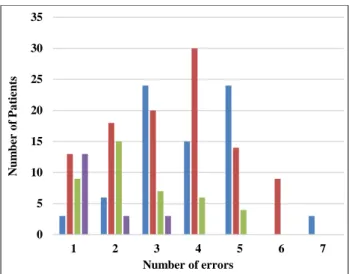
Figure 2: Distribution of number errors among patients of different education status.
Figure 3: Number of steps improved on follow-up visit among patients having different education status.
As mentioned in Figure 1, about 44% (n=104) patients were educated below secondary school level. Educational status of rest of enrolled patients were 31% (n=75) illiterate, 17% (n=41) above secondary school level and 8% (n=19) graduate respectively.
Figure 2 is showing distribution of number of errors made among patients of different education status. Among 239 patients enrolled, the average number of wrongly done steps was 3.2. Majority were educated about the device by doctors (56.1%, n=134).
Of the total 239 patients, 47.6% (n=114) reported for follow-up assessment as depicted in Figure 3. Average reporting time of follow-up assessment was 27.4 days. An improvement for at least one step was found in 86.8% (n= 99) patients. About 10.5% (n=12) showed no improvement while 2.6% (n=3) paradoxically showed a
worse technique after intervention. Two out of three patients who had a deterioration of inhaler technique were found to be illiterate. About 28% (n=32) patients performed all steps correctly. Average number of steps improved was 2.1. Patients with above secondary education status had maximum benefit from the intervention resulting in improvement of 2.53 steps. Illiterate patients had an improvement of 2.12 steps.
DISCUSSION
Improving the technique of inhaler-device use is of paramount importance in managing obstructive airway diseases including asthma and COPD. With hiking costs of medications and other treatment options day by day, the majority of population with low socio-economic and education level remain particularly vulnerable. Asthma generally affects a younger population and it leads to reduction in nation’s productivity. On the other hand, COPD mostly prevails among older population, who are usually dependent for their monetary needs upon other family members. Any step to reduce the disease burden of either type in the community should thus be welcomed.
Inhalation therapy, the primary treatment modality of managing asthma and COPD is often offered to the patient without proper counseling and training. When the patient is unaware of the importance of inhalers and using it in correct manner, he/she might not receive the benefit of the same prudently. The present study which aimed to assess the impact of a simple, personalized counseling and educational intervention by practical demonstration conceptualized in this context has shown to have a significant impact among these patients, with achievement of near perfect technique in about a quarter of patients after a single training session itself.
Average age of patients enrolled in our study was 44.5 years, which is far lower when we compare with average age of COPD patients in our society. Old age has been shown to affect inhaler technique of patients in past studies.4,5 Hence, it could be expected that frequency of errors at the community level, especially among COPD patients of older age group would be much higher, and such interventions when repeatedly done will improve their overall treatment outcome.
Large proportion of study population comprised of patients with low education level and number of errors documented during initial screening was high among them. After current intervention, this group of patients was found to be significantly benefitted.
An individualized educational intervention by practical demonstration has evidently shown to improve the inhaler technique of the patients, in current study. The findings being consistent with the earlier study done by Fernandez F which showed significant improvement in asthma control among patients receiving therapeutic 0
5 10 15 20 25 30 35
1 2 3 4 5 6 7
N
u
m
b
er
o
f
Pa
ti
en
ts
Number of errors
Illiterate Below secondary Above secondary Graduate
0 2 4 6 8 10 12 14 16 18
1 2 3 4 5 6
N
u
m
b
er
o
f
p
a
ti
en
ts
Number of steps improved during follow-up
Illiterate Below secondary
education intervention.15 Similarly, Dabrowska M et al, also had shown a reduction in number of errors in inhaler technique after a short single training.16 In the present study, 28% (n=32) patients were able to perform all the steps correctly after just a single time intervention, which further points towards the importance of repeated assessments and training during subsequent follow-up visits as well.
Technological developments taken place in the recent past have contributed to improved inhaler device technology, resulting in advanced delivery systems. Patient friendly devices have come up with a low learning curve, as in case of diskhaler or breath actuated MDI, usage of dose counters etc. However, prevalence of faulty inhaler technique has not changed much in the past, as it is a patient related (subjective) factor, implicating the necessity of patient education and demonstration interventions in this regard.
CONCLUSION
Flaws in inhaler technique remains as an important area of concern while dealing with asthmatic and COPD management issues. This study emphasizes the impact of an educational intervention by practical demonstration in improving the efficacy of inhaler use by the patients. Reinforcing the proper inhaler technique should be an unavoidable step while dealing with patients of COPD and asthma. Thus, the acknowledged fact remains that time spent by the physician or healthcare worker in this regard will amount to health earned for the patient, as small correction made will bring big results. No single study can be considered complete, comprehensive and absolute; and the same stands true for the present study too- so more such studies will help.
Funding: No funding sources Conflict of interest: None declared
Ethical approval: The study was approved by the Institutional Ethics Committee
REFERENCES
1. van Beerendonk I, Mesters I, Mudde AN, Tan TD. Assessment of the inhalation technique in outpatients with asthma or chronic obstructive pulmonary disease using a metered dose inhaler or dry powder device. J Asthma.1998;35:273-9. 2. Molimard M, Raherison C, Lignot S, Depont F,
Abouelfath A, Moore N. Assessment of handling of inhaler devices in real life: an observational study in 3811 patients in primary care. J Aerosol Med. 2003 Sep 1;16(3):249-54.
3. Khassawneh BY, Al-Ali MK, Alzoubi KH, Batarseh MZ, Al-Safi SA, Sharara AM, et al. Handling of inhaler devices in actual pulmonary practice:
metered-dose inhaler versus dry powder inhalers. Respir Care. 2008;53:324-28.
4. Rootmensen G, Van Keimpema AR, Jansen HM, De Haan RJ. Predictors of incorrect inhalation technique in patients with asthma or COPD. Am J Respir Crit Care Med. 2010;181:A3812.
5. Melani AS, Bonavia M, Cilenti V, Cinti C, Lodi M, Martucci P et al. Inhaler mishandling remains common in real life and is associated with reduced disease control. Respir Med. 2011;105:930-8. 6. Dalcin PTR, Grutcki DM, Laporte PP, de Lima PB,
Menegotto SM, Pereira RP. Factors related to the incorrect use of inhalers by asthma patients. J Bras Pneumol. 2014;40:13-20.
7. Capanoglu M, Dibek Misirlioglu E, Toyran M, Civelek E, Kocabas CN. Evaluation of inhaler technique, adherence to therapy and their effect on disease control among children with asthma using metered dose or dry powder inhalers. J Asthma. 2015;52:838-45.
8. Westerik JA, Carter V, Chrystyn H, Burden A, Thompson SL, Ryan D, et al. Characteristics of patients making serious inhaler errors with a dry powder inhaler and association with asthma-related events in a primary care setting. J Asthma. 2016;53:321-9.
9. Camilleri K, Balzan M, Bardon MP, Schembri E, Sullivan M, Mifsud S et al. Predictors of good inhaler technique in asthma and COPD. Eur Respir J. 2015;46:A-P3928.
10. Sadowski C, Banh H, Cor K, Cave A. Inhaler device technique in community dwelling older adults. Canadian J Hosp Pharm. 2013;66(4):269.
11. Basheti IA, Reddel HK, Armour CL, Bosnic-Anticevich SZ. Improved asthma outcomes with a simple inhaler technique intervention by community pharmacists. J Allergy Clin Immunol. 2007 Jun;119(6):1537-8.
12. Rubin BK and Fink JB. Optimizing aerosol delivery by pressurized metered-dose inhalers. Respir Care. 2005;50:1191-200.
13. Newman SP. Inhaler treatment options in COPD. Eur Respir Rev. 2005;14:102-8.
14. Sanchis J, Gich I, Pedersen S. Systematic Review of Errors in Inhaler Use: Has Patient Technique Improved Over Time? Chest. 2016;150(2):394-406. 15. Fernandes L, Mesquita A. Improving asthma control
with therapeutic education intervention. Eur Respir J. 2011;38(55):4997.
16. Dąbrowska M, Łuczak K, Miszczuk M, Domagała I, Lubański W, Leszczyński A, et al. Impact of short training of inhalation technique on the course of asthma and COPD. Eur Respir J. 2017;50(61):536.
Annexure-1: Checklist of steps of DPI, MDI and MDI with spacer.
Checklist of steps of inhaler technique among various devices
DPI MDI MDI + Spacer
Remove the cap Remove the cap Assemble the spacer
Load dose (device specific) Shake the inhaler Remove the cap of inhaler
Pierce the capsule Hold the inhaler upright Hold the inhaler upright and shake well
Breath out gently away from mouthpiece
Breath out gently away from
mouthpiece Insert the inhaler upright into spacer
Place mouthpiece between teeth without biting it and close lips to form a good seal
Place mouthpiece between teeth without biting it and close lips to form a good seal
Breath out gently away from mouthpiece
Breath in strongly and deeply
Press down the canister once while breathing in slowly and deeply and continue breathing after firing the device
Place mouthpiece between teeth without biting it and close lips to form a good seal
Hold breath for 10 seconds Hold the breath at least for 10 seconds
Press down the canister once and breathing in slowly and deeply
Breath out gently away from mouthpiece
Breath out gently away from
the mouthpiece Hold breath for at least 10 seconds Replace the cap Replace the cap Breath out gently
Rinse the mouth with water or mouthwash (only for steroid containing inhalers)
Rinse the mouth with water or mouthwash (only for steroid containing inhalers)
Replace the cap and disassemble the spacer