GREEN CHEMICAL SYNTHESIS OF DIVERSE
IMINOSACCHARIDES OF SUBSTITUTED PYRAZOLE USING
IONIC LIQUID
Arpit Kumar Pathak,
[a]Chetna Ameta,
[a]Manish Kumar Rawal,
[b]Rakshit
Ameta
[c]and Pinki B. Punjabi
*[a]Keywords: [bbim][BF4], iminosaccharides, ionic liquid, microwave irradiation, green chemistry
An efficient and mild synthesis of some diverse iminosaccharides of pyrazole has been carried out. Compounds (8a-b) have been synthesized by the treatment of isoniazide with chalcones (6a-b) using [bbim][BF4] ionic liquid as a solvent under microwave irradiation. Compounds (8a-b) on reaction with various aldoses afforded corresponding iminosaccharides compounds containing pyrazole moiety (9a-l) in presence of ionic liquid under microwaves. The products have been isolated, purified and characterized by different spectral methods i.e. IR, 1H NMR, 13C NMR and Mass spectra. The potent antimicrobial effects (MIC) of the synthesized compounds were investigated.
* Corresponding Authors
E-Mail: [email protected]
[a] Department of Chemistry, University College of Science, Udaipur (Rajasthan), India
[b] Department of Chemistry, Vidya Bhawan Rural Institute, Udaipur (Raj.), India
[c] Department of Chemistry, Pacific College of Basic and Applied sciences, Udaipur (Raj.), India.
Introduction
To improve chemical process and to reduce environmental pollution has become an urgent task for chemical researchers these days. Microwave-assisted synthesis using ionic liquid as a solvent and catalyst shows distinct advantages over the traditional process, such as energy conservation, short reaction time and elimination of volatile organic solvent. Ionic liquids, the molten salts with melting points at or below ambient temperature, have attracted intense focus due to their remarkable chemical and physical properties such as high thermal stability,1,2 negligible vapor pressure3 and high ionic conductivity.4 They have been used as an alternative to volatile organic solvents for organic synthesis in homogeneous as well as biphasic processes.5
Pyrazoles and its derivatives have been found to possess biological activities such as antimicrobial,6 antihistamatic,7 anticancer,8 anticonvulsant9 and antiinflammatory10 activity. Schiff base (also known as imine and azomethine) is a nitrogen analogue of an aldehyde or ketone in which the carbonyl group (C=O) has been replaced by an imine or azomethine group. They are used as a pigments, dyes, catalyst, intermediate in organic synthesis and polymer stabilizer.11 Schiff bases also show a broad range of biological activities, including anti-inflammatory, antiviral, antimalarial, antipyretic and antimicrobial properties.12
Recently, carbohydrates and their derivatives have emerged as an important tool for stereoselective synthesis and as a chiral pool for the design of chiral ligands. They are used as chiral building blocks, precursors for drug synthesis
and chiral catalysts in asymmetric catalysis.13 Carbohydrates also possess antibacterial, antiviral, antineoplastic, antiprotozoal and antifungal activities.14,15 In carbohydrate chemistry, a large number of imines have been reported, both by reaction of sugar aldehydes with amines and by reaction of aminosugars with aldehydes.16-18 Rawal et al.19 reported the synthesis of quinozoline and its iminosugars derivatives by using sodium zeolite catalyst under microwave irradiation.
Looking at the role of pyrazole, Schiff base and carbohydrate in medicinal chemistry and the impact of ionic liquid and microwave irradiation in green chemistry, it was planned to synthesis some diverse iminosaccharide of pyrazole using ionic liquid under microwave irradiation.
Experimental
All the reactions were carried out in a domestic microwave oven (Kenstar, Model No. OM-26 EGO). TLC was carried out on silica plates precoated with silica (0.2 mm), and visualization was accomplished by iodine vapours. NMR spectra were taken on a Bruker Avance II 400 NMR Spectrometer using TMS as internal standard and chemical shift were expressed in δ ppm. The FT-IR spectra were recorded on Bruker FT-IR spectrometer. Melting points were determined in open capillaries and are uncorrected. Solvents and reagents were obtained from commercial sources and were used without further purification.
Synthesis of ionic liquid 1,3-dibutylimidazolium tetrafluoroborate [bbim][BF4] (3)
was added. Then it was again stirred for 2-3 hours. Filtration of the solution by silica filter 8-10 times afforded a viscous yellow liquid as a final product. Progress of the reaction was monitored by silver nitrate test.
IR (KBr cm-1): 1645 (C=C str.), 3049 (C-H str. in olefin), 1070 (C-N str.), 2960 (C-H str. in CH3-CH2) and 1600 (C=N str.); 1H NMR: ppm: 0.5 ( t, 6H, CH
3), 1.20-1.30 ( m, 4H, CH2), 1.95 (m, 4H, CH2), 2.5 (t, 2H, CH2), 3.40 (t, 2H, CH2), 4.6-4.7 (d, 2H, CH) and 10.41 (s, 1H, CH); 13C NMR: ppm: 12.5, 20.0, 30.1, 57.6, 132, 121.2 and 124.
Synthesis of substituted 1-(4-aminophenyl)-3-phenylprop-2-en-1-one (6a-b)
p-Aminoactophenone (0.01 mol), (4) was dissolved in ethanol and benzaldehyde/p-chlorobenzaldehyde (0.01 mol),
(5a/5b) and 10% NaOH was added to it. The reaction mixture was irradiated under microwave irradiation for 6 to 8 min at 300 W. After completion of reaction, the viscous mass formed was poured into ice cold water with vigorous stirring and left for complete precipitation. The crude product was dried and purified by recrystallization from ethanol.
1-(4-Aminophenyl)-3-phenylprop-2-en-1-one (6a)
Yield 70 %, M.P. 160-165 ˚C; C15H13NO; IR (KBr) cm-1: 1630 (C=C str.), 3450 (N-H str.), 1680 (α,β-unsaturated C=O str.), 1600, 1550 and 1450 (C-C str. in aromatic ring), 3000 (=C-H str.); 1H NMR (ppm): 6.55-7.40 (Ar-H, 5H, m), 7.90 (CH, d, 1H), 7.60 (CH, d, 1H) and 4.00 (NH, 2H); 13 C-NMR (ppm): 115.4 (2C), 122.0, 125.5 (2C), 126.7, 127.2, 129.4 (2C), 130.0 (2C), 134.5, 142.5, 151.5 and 184.5 (unsaturated C=O); Mass (m/z): 223 [M] ˙+
1-(4-Aminophenyl)-3-(4-chlorophenyl)prop-2-en-1-one (6b)
Yield 70 %, M.P. 140-142˚C; C15H12ClNO; IR (KBr) cm -1: 1630 (C=C str.), 3400 (N-H str.), 1685 (α,β-unsaturated
C=O str.), 1600, 1550 and 1450 (C-C str. in aromatic ring), 3040 (=C-H str.) and 840 (p-substituent in aromatic ring); 1H NMR (ppm): 6.50-7.55 (Ar-H, 8H, m), 8.05 (CH, d, 1H),
7.60 (CH, d, 1H) and 4.10 (NH, 2H); 13C-NMR (ppm): 115.0 (2C), 123.5, 125.5 (2C), 126.7, 127.6 (2C), 129.5 (2C), 131.4, 133.0 (Ar-Cl), 142.5, 151.5 and 180.5 (unsaturated C=O); Mass (m/z): 257 [M] ˙+ ,259 [M+2]
Synthesis of substituted [5-(4-aminophenyl)-3-phenyl-4,5-dihydro-1H-pyrazol-1-yl](pyridin-4-yl)methanone (8a-b)
Compound (6a/6b) (0.01 mol), isoniazide (0.01 mol), (7)
and few drops of acetic acid were dissolved in ionic liquid. (10 mL) (3).The reaction mixture was irradiated under microwave irradiation for 10-12 min. The reaction mixture was poured into ice cold water and stirred for few minutes to afford final product. The solid product was filtered and it was purified by recrystallization from ethanol.
[5-(4-Aminophenyl)-3-phenyl-4,5-dihydro-1H-pyrazol-1-yl](pyridin-4-yl)methanone (8a)
Yield 75 %, M.P. 120-122 ˚C; C21H18N4O; IR (KBr) cm-1: 3450 (N-H str.), 1650 (C=O str. amide), 1600, 1500 and 1450 (C-C str. in aromatic ring); 1H NMR (ppm): 6.0-9.06 (Ar-H, 13H, m), 2.00 (CH2, d, 2H) and 4.00 (CH, t, 1H, weak); 13C-NMR (ppm): 38.5, 42.5, 114.5 (2C), 122.5 (2C), 126.5 (2C), 128.5 (2C), 130.0, 129.6 (2C), 131.0, 132.5, 142.5, 146.5, 150.5 (2C), 154.5 and 160.0 (C=O).
[5-(4-Aminophenyl)-3-(4-chlorophenyl)-4,5-dihydro-1H-pyrazol-1-yl](pyridin-4-yl)methanone (8b)
Yield 65 %, M.P. 110-112 ˚C; C21H17ClN4O; IR (KBr) cm-1: 3400 (N-H str.), 1690 (C=O str. amide), 1600, 1550, 1450 (C-C str. in aromatic ring) and 840 (p-substituent in aromatic ring); 1H NMR (ppm): 6.0-9.06 (Ar-H, 12H, m), 2.5 (CH2, d, 2H) and 4.0 (CH, t, 1H, weak); 13C-NMR (ppm): 38.0, 44.5, 115.5 (2C), 123.5 (2C), 127.5 (2C), 129.0, 129.6 (2C), 130.0 (2C), 132.5, 136.6 (C-Cl), 142.5, 146.5, 150.5 (2C), 154.5 and 167.0 (C=O); Mass (m/z): 376 [M] ˙+ ,378 [M+2]
Synthesis of iminosaccharides (9a-l)
Compound (7) (0.01 mol) and sugar was dissolved in ionic liquid (10 mL), (3). Few drops of acetic acid were added to it. The reaction mixture was irradiated under microwave irradiation for 12 min at 720 W. On completion of reaction, the resultant mass was poured into ice cold water with vigorous stirring. The solid product was filtered, washed and dried. The product was recrystallized by ethanol.
IR (KBr) cm-1: 1590 (cyclic C=N str.), 1070 (C-N str.), 1680 (C=O str.), 1620, 1550, 1450 (C-C str. in aromatic ring), 1640 (open C=N str.) and 3400 (OH str.); 1H NMR (ppm): 7.5 (d, 1H, CH=N), 6.0-9.06 (Ar-H, 12H, m), 2.5 (CH2, doublet, 2H), 4.0 (CH, triplet, 1H), 4.44 – 3.67 (sugar proton) and 5.04 (OH, 1H, s). 13C-NMR (ppm): 38.5, 41.5, 114.5 (2C), 122.8 (2C), 127.5 (2C), 128.5 (2C), 129.6 (2C), 130.5, 131.0, 132.5, 141.5, 146.9, 150.8 (2C), 154.6, 160.0 (C=O), 163.7 (C=N), 70.5, 73.0, 72.5, 74.0 and 65.0. Mass (m/z): 504 (9a), 474 (9b), 474 (9c), 504 (9d), 444 (9e), 474
(9f), 538 (9g), 508 (9h), 508 (9i), 538 (9j), 478 (9k) and 508
(9l).
N N
Bu N
+
N Bu
Bu Br
-1,3 -dibutylimidazolium bromide
N+
N Bu
Bu BF4
-1,3-dibutylimidazolium tetrafluoroborate
dry Acetone, NaBF4
48 hours reflux with stirring Butyl bromide
MW, 10 - 12 min.
1 2
Results and Discussion
Reaction between p-aminoacetophenone with benzaldehyde/p-chlorobenzaldehyde afforded chalcones (6a
and 6b). The structures of the chalcones were established on the basis of their spectral data. Appearance of IR bands at 1644 cm-1 for C=C, 1685 cm-1 for α,β-unsaturated carbonyl group and 3050 cm-1 for =C-H bond confirms the synthesis of chalcone. Appearance of a doublet for =C-H at δ 7.9 ppm further confirms the structure of product. The products 6a or
6b were confirmed by a signal at 184.5 for unsaturated carbonyl group in 13C NMR. These compounds showed molecular ion (m/z) peaks at 233 and 257 and 259 (M+2).
Scheme 2a. Synthesis of chalcone 6a-b
Scheme 2b. Synthesis of pyrazole derivative 8a-b
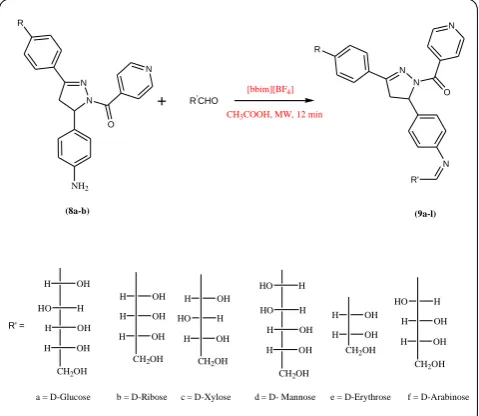
Scheme 2c. Synthesis of iminosaccharide derivative 9a-l
The structures of compound (8a-b) were confirmed by the appearance of IR band at 2220 and 1650 cm-1 for C=N and C-N stretching frequency, respectively and disappearance of a band due to α,β-unsaturated C=O stretching frequency at 1685 cm-1. In proton NMR a doublet for CH
2 and a triplet for C-H at δ 2.5 and δ 4.0 ppm, respectively also support the
formation of product. In 13C NMR, signals for cyclic C=N at 155.5 ppm and cyclic C-N at 46.0 ppm also support the formation of product (8a-b). According to mass spectral data compounds (8a-b) showed molecular ion peaks at 342 and 376 and 378 (M+2) respectively, supporting the formation of product.
Reaction of substituted pyrazole derivatives (8a-b) with various aldoses sugars in ethanol using acetic acid as a catalyst afforded iminosaccharide (Schiff bases) with azomethine linkage (9a-l). 10-12 hours of reflux was required for this process. When the same reaction was carried out in microwaves the reaction time was reduced from hours to minutes and the yield of products was also increased. But in this process, ethanol is still used, which is a pollutant and difficult to use. When imino sugars were synthesized using ionic liquid as a solvent under microwave irradiation, reaction time was reduced and the yield of product was also increased.
The structures of the final products were established on the basis of their spectral data. Disappearance of two bands at 3400 and 3250 cm-1 due to –NH
2 stretching (symmetric and asymmetric ) and appearance of bands in the region of 3400-3450 cm-1 for OH stretching and 1630-1640 cm-1 corresponding to C=N stretching confirmed the assigned structure of iminosaccharides. In 1H NMR spectrum, the absence of signal at δ 5.80-5.86 due to proton of NH2 and presence of a doublet for imino protons (CH=N) at δ 8.52 and a singlet for OH proton at δ 5.04 favoured the formation of final product (9a-l). Signal of proton of sugar chain were congregated with the solvent absorption in a broad signal at δ 4.45-3.64. The final products were also confirmed by 13C NMR, where appearance of signal at 163.5 ppm for imine and 65-72.0 ppm for C-OH supported the proposed structures. Further, mass spectrum also in favour of the structure of iminosaccharides by the molecular ion peak (m/z) at 504, 474, 444, 538 and 508. Physical data of all synthesized compound have been given in Table 1.
Table 1. Physical data of synthesized compounds
Com-pounds Molecular formula Molecular weight Yield, % Melting point, ˚C
6a C15H13NO 233 70 160-165
6b C15H12ClNO 257 70 140-142
8a C21H18N4O 342 75 120-122
8b C21H17N4OCl 376 65 110-112
9a C27H28N4O6 504 80 100-102 9b C26H26N4O5 474 75 150-152 9c C26H26N4O5 474 82 140-142 9d C27H28N4O6 504 70 165-168 9e C25H24N4O4 444 82 200-210 9f C26H26N4O5 474 75 185-188 9g C27H27N4O6Cl 538 80 170-172 9h C26H25N4O5Cl 508 75 180-182 9i C26H25N4O5Cl 508 79 130-132 9j C27H27N4O6Cl 538 85 260-262 9k C25H23N4O4Cl 478 80 120-122 9l C26H25N4O5Cl 508 80 190-192
NH2
O CH3
O
R
+ KOH, EtOH
MW, 6-8 min
O
R H2N
(4) (5a-b) R = H, Cl (6a-b)
O
R
H2N
(6a-b)
+ N O
NH H2N
MW,CH3COOH
[bbim][BF4],10-12min
N R
NH2
N O N (7) (8a-b) N R NH2 N O N
R'CHO
+ N R N N O N R' [bbim][BF4]
CH3COOH, MW, 12 min
(8a-b) (9a-l)
R' =
CH2OH
H OH
HO H
H OH
H OH
a = D-Glucose
CH2OH
HO H
HO H
H OH
H OH
d = D- Mannose
H OH
H OH
H OH
b = D-Ribose e = D-Erythrose f = D-Arabinose
CH2OH
H OH
HO H
H OH
c = D-Xylose CH2OH
H OH
H OH
CH2OH
HO H
H OH
H OH
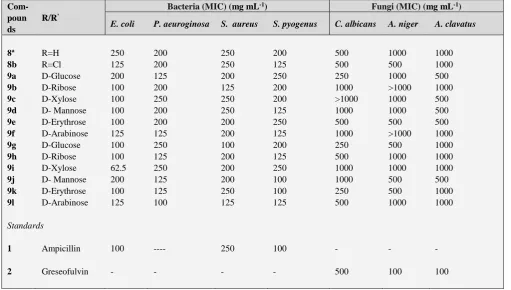
Table 2. Microbial activity of synthesized compound (minimum inhibition concentration) (mg mL-1)
Biological activities
Representative synthesized compounds were screened in vitro for their antimicrobial activities against Gram-negative bacteria E. coli and P. aeruginosa and Gram-positive bacteria S. aureus and S. pyogenus. The synthesized compounds were also screened against three strains of fungi (A. niger, C. albicans and A. clavatus). Antibacterial activity was evaluated by agar cup plate method and antifungal assay was carried out by disc diffusion method using Ampicillin (antibacterial) and Greseofulvin (antifungal) as standard drugs respectively.
The synthesized iminosugars have excellent antibacterial, but relatively poor antifungal activity. Compound (9i) shows excellent antimicrobial activity against E.coli bacteria strain and also good activity against other bacteria strain. Compounds (9a), (9g) and (9k) show good fungicidal activities against C. albicans. Compounds (9j), (9d) and (9e)
show moderate activity against all the three fungi strain. Almost all the titled compounds exhibited weak, moderate or high antimicrobial activity and moderate to weak antifungal activity (Table 2)
Acknowledgement
We are thankful to Prof. Suresh C. Ameta for giving valuable suggestions during the progress of the work and Head, Department of Chemistry, M.L. Sukhadia University, Udaipur for providing laboratory facilities. Our thanks are
also due to the Director, SAIF Chandigarh, India for providing spectral data and Micro Care Laboratory Surat (Guj.) for providing antimicrobial activity (MICs).
References
1Rogers, R. D., Seddon, K. R., Science, 2003, 302, 792.
2Sheldon, R., Green Chem.,2005, 7, 267.
3Earle, M. J., Esperanc, J. M. S. S., Gilea, M. A., Lopes, J. N. C., Rebelo, L. P. N., Magee, J. W., Seddon, K. R., Widegren, J. A., Nature, 2006, 439, 831.
4Sakaebe, H., Matsumoto, H., Electrochem. Commun., 2003,5, 594.
5Plechkova, N. V., Seddon, K. R., Chem. Soc. Rev.,2008, 37, 123.
6Pimerova, E. V., Voronina, E. V., Pharm. Chem. J.,2001, 35, 18.
7Michon, V., Du Penhoat, C. H., Tombret, F., Gillardin, J. M., Lepagez, F., Berthon, L., Eur. J. Med. Chem.,1995,30, 147.
8Park, H. J., Lee, K., Park, S., Ahn, B., Lee, J. C., Cho, H. Y., Lee, K. I., Bioorg. Med. Chem. Lett., 2005,15, 3307.
9Bouabdallah, I., Barret, L. A., Zyad, A., Ramadan, A., Zidane, I., Melhaoui, A., Nat. Prod. Res.,2006,20, 1024.
10Tewari, A. K., Mishra, A., Bioorg. Med. Chem.,2001, 9, 715.
11Dhar, D. N., Taploo, C. L., J. Sci. Ind. Res., 1982, 41, 501.
12da Silva, C. M., da Silva, D. L., Modolo, L. V., Alves, R. B., de Resende, M. A., Martins, C. V. B., de Fatima, A., J. Adv. Res.,2011, 2, 1.
13Dieguez, M., Pamies, O., Ruiz, A., Diaz, Y., Castillon, S., Claver, C., Coord. Chem. Rev.,2004,248, 2165.
Com-poun ds
R/R’
Bacteria (MIC) (mg mL-1) Fungi (MIC) (mg mL-1)
E. coli P. aeuroginosa S. aureus S. pyogenus C. albicans A. niger A. clavatus
8ª R=H 250 200 250 200 500 1000 1000
8b R=Cl 125 200 250 125 500 500 1000
9a D-Glucose 200 125 200 250 250 1000 500
9b D-Ribose 100 200 125 200 1000 >1000 1000
9c D-Xylose 100 250 250 200 >1000 1000 500
9d D- Mannose 100 200 250 125 1000 1000 500
9e D-Erythrose 100 200 200 250 500 500 500
9f D-Arabinose 125 125 200 125 1000 >1000 1000
9g D-Glucose 100 250 100 200 250 500 1000
9h D-Ribose 100 125 200 125 500 1000 1000
9i D-Xylose 62.5 250 200 250 1000 1000 1000
9j D- Mannose 200 125 200 100 1000 500 500
9k D-Erythrose 100 125 250 100 250 500 1000
9l D-Arabinose 125 100 125 125 500 1000 1000
Standards
1 Ampicillin 100 ---- 250 100 - - -
14Nogueira, C. M., Parmanhan, B. R., Farias, P. P., Correa, A. G., Rev. Virtual Quim.,2009, 1(2), 149.
15Wong, C. H., Ed., Carbohydrate-based Drug Discovery, Wiley VCH, Weinheim, Germany,2003.
16Costamagna, J., Barroso, N. P., Matsuhiro, B., Villagran, M., Inorg. Chim. Acta., 1998, 273, 191.
17Costamagna, J., Lillo, L. E., Matsuhiro, B., Noseda, M. D., Villagran, M., Carbohydr. Res., 2003, 338, 1535.
18Perez, E. M. S., Ávalos, M., Babiano, R., Carbohydr. Res., 2010, 345, 23.
19Rawal, M. K., Tiwari, U., Parashar, B., Ameta, R., Punjabi, P. B., Indian J. Chem., 2011, 50B, 734.