Eur. Chem. Bull. 2013, 2(4), 226-230 DOI: 10.17628/ECB.2013.2.226
226
ASSESSMENT OF ABILITY OF THREE CHEMICAL OXIDANTS
TO REMOVE HYDROCARBONS FROM SOILS POLLUTED BY
BONNY LIGHT CRUDE OIL.
Ozioma Achugasim
[a], Chukwunonye Ojinnaka
[a], Leo Osuji
[a]Keywords: Permanganates; Persulfates; Fenton’s reagent; Bonnylight crude oil; Soil remediation; Chemical oxidants.
Three prominent hydrocarbon groups found in crude oil- Polycyclic Aromatic Hydrocarbon (PAH); Benzene, Toluene, Ethylbenzene and Xylene (BTEX) and Total Petroleum hydrocarbon (TPH) were used to study the ability of three chemical oxidants-Fenton’s reagent, potassium permanganate, and potassium persulfate to degrade hydrocarbons in crude oil inundated soils. This was done by spiking soil samples with Bonny light crude oil and subsequently treating the mixture with the different chemical oxidants at acidic, neutral and basic pH media for each of the oxidants. Oil extracts from the treated and untreated soil samples were later analyzed for the three hydrocarbon groups using a gas chromatograph (GC). Treatment with Fenton’s reagent proved very efficient in the removal of the hydrocarbons especially at the acidic pH with some components of TPH experiencing complete disappearance. Also the four ringed-PAHs were depleted more than the three ringed- ones at the indicated pHs. For the treatment with potassium persulfate, while the oxidant was good in the removal of BTEX at the different pHs, it was found to be very inefficient for the removal of PAHs. Generally, Four and five ringed–PAHs were degraded more than the three and two ringed-PAHs, an indication that degradation of PAHs by oxidants may be a function of hydrocarbon structure. Treatment with potassium permanganate was found to be pH dependent with most of the depletions occurring at acidic pH. Even though potassium permanganate was not as good as the other oxidants in the removal of aliphatic hydrocarbons(TPH), it was found to be effective in the removal of aromatic hydrocarbon (BTEX and PAH). Also the four ringed-PAHs such as pyrene, benzoanthracene, and chrysene were seriously attacked at all pHs. BTEX was also attacked more at acidic pH with above 90% removal at the acidic pH.
*Corresponding Authors Tel.: +2348033770425.
E-mail: [email protected]
[a] Department of Pure and Industrial Chemistry, University of Port Harcourt.
Introduction
The most serious environmental problem facing oil producing provinces especially in the Niger Delta is soil pollution by crude oil. Whenever crude oil is released on the terrestrial environment, it usually overwhelms the soil ecosystem leading to soil contamination/pollution that kills plants and animals giving rise to serious imbalance in the ecosystem.1 Closely following any incidence of oil spillage
are settlement of the affected stakeholders and remediation of the polluted site.2 Several methods are used in the
remediation of crude oil polluted soils. These methods may be physical, biological or chemical.3 The physical and
biological methods have been in use for years while the chemical methods have received attention in the last decade or so.4 The chemical method of remediation involves the use
of chemicals to convert the contaminants (hydrocarbons) into harmless substances. The chemicals normally used are oxidants. These includes peroxides, ozone, persulfate, Fenton’s reagent (hydrogen peroxide plus iron(II) salts), permanganates, perchlorates etc, which act to generate reactive species e.g free radicals that converts the hydrocarbons into innocuous substances. The advantage of chemical methods over other methods mentioned above is that it is very fast and highly efficient. Also it can be bench or pilot tested to determine its applicability for a particular contaminant.5-7
In this research, the ability of Fenton’s reagent, Potassium permanganate and potassium persulfate to act as chemical oxidants in the removal of hydrocarbons from crude oil polluted soils is evaluated. Gas chromatography (GC), a time tested method of hydrocarbon determination is employed to monitor the depletion of three broad hydrocarbon groups: BTEX, PAH and TPH providing evidence of remediation or otherwise.8,9
Experimental
Six hundred grams (600 g) of the sieved soil samples were weighed into each of three 1L glass beakers with their pHs adjusted to acidic (pH 5-6.5), basic (pH 7.5-9), and neutral (pH 6.9-7.5) using NaOH and HCl. Each of the soil samples in the three 1 L glass beakers were then spiked with 20 ml of Bonny light crude oil from the Bomu oil field in Rivers state Nigeria. The soil-crude oil mixture in each of the containers were stirred to achieve homogeneity, allowed to stand for one week, and subsequently analyzed for their hydrocarbon contents.
Instrumentation
Eur. Chem. Bull. 2013, 2(4), 226-230 DOI: 10.17628/ECB.2013.2.226
227
TPH was analyzed at a column temperature of 60 oC for 2minutes to 300 oC programmed at 12 oC min-1 with nitrogen
as the carrier gas. Hydrogen and air flow rate were 9 psi and 13 psi respectively. PAH was analyzed at a column temperature of 98oC for 1minute to 300 oC programmed at
80 oC min-1 and air flow rates were 12 psi and 15 psi
respectively. BTEX was analysed at the initial temperature of 30 oC for 1 minute then increased to 180 oC at 50 oC min-1
and to 230 oC at 20 oC min-1. Helium was used as the carrier
gas.
Results and discussion
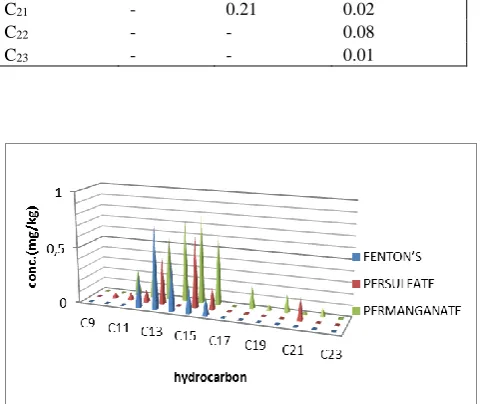
The removal of TPH by the three oxidants at acidic soil was encouraging. The striking thing about all the three oxidants is that they are not effective in the removal of the C12-C16 hydrocarbons. The C9-C11 and the C17-C23
hydrocarbons were almost completely removed especially by Fenton’s reagent and potassium persulfate. There was an increased concentration of the C12-C16 hydrocarbons which
could be as a result of the oxidative breakdown of the longer chain hydrocarbons to the short chain ones. This is shown in Table 1 and Figure 1.
Table 1. TPH concentration of the acidic soil samples in mg kg-1
after treatment with the different oxidants
Hydrocarbon Fenton’s reagent
Potassium persulphate
Potassium permanganate
C9 - - -
C10 - 0.05 -
C11 - 0.07 0.25
C12 0.28 0.11 0.39
C13 0.75 0.42 0.63
C14 0.46 - 0.74
C15 0.24 0.65 0.82
C16 0.16 0.21 0.67
C17 - 0.01 -
C18 - 0.01 0.20
C19 - 0.01 0.05
C20 - - 0.16
C21 - 0.21 0.02
C22 - - 0.08
C23 - - 0.01
Figure 1. Chart showing the removal of the TPH from the acidic soil sample by the different oxidants
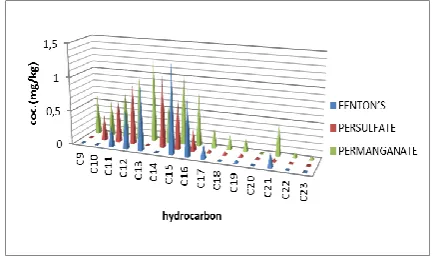
Table 2. TPH concentration of the basic soil samples in mg kg-1
after treatment with the different oxidants
Hydrocarbon Fenton’s reagent
Potassium persulphate
Potassium Permanganate
C9 - 0.08 -
C10 - 0.32 -
C11 0.29 0.54 0.77
C12 0.45 0.79 1.66
C13 0.88 1.23 1.32
C14 1.04 - 0.88
C15 0.79 0.98 0.97
C16 0.24 0.62 0.84
C17 - 0.11 0.38
C18 - - 0.23
C19 0.01 - 0.16
C20 - - 0.11
C21 0.01 - 0.35
C22 - - 0.10
C23 0.01 - 0.02
This trend is seen in acidic and basic soils but was not pronounced at the neutral soil. It may be suggested that the removal of crude oil aliphatic hydrocarbons from polluted soils using any of the three oxidants may not be pH dependent (Figure 1-3 and Table 1-3).
The removal of PAH by the three oxidants at different pH proved to be interesting. Fenton,s reagent and potassium permanganate were found to be very effective in the removal of PAHs at the acidic, neutral and basic pHs (Figures 4 and 5; table 4 and 4and 5) It is very clear that potassium persulfate is not a very good oxidant for the removal of PAHs from soils at all pHs. From the charts, this work shows that Fenton’s reagent was the best oxidant for the removal of PAHs at the different pHs (probably due to the different mechanisms at work at the acidic and basic pHs). The removal of BTEX by the three oxidants at the different pHs gave mixed results. At acidic pH, Fenton’s reagent proved to be effective for all the components except o-xylene. Potassium permanganate and persulfate were good for all except ethylbenzene (Figure 8).
At the neutral pH, efficiency of hydrocarbon (BTEX) removal by the three oxidants were reduced as only persulfate gave any reasonable removal as can be deduced from the chart. The removal at basic pH was good for Fenton’s reagent and persulfate. This may be an indication that potassium permanganate may not be a good oxidant for the removal of BTEX from crude oil polluted soils. Other much stronger oxidizing permanganates like aluminum permanganate10 may be studied.
Eur. Chem. Bull. 2013, 2(4), 226-230 DOI: 10.17628/ECB.2013.2.226
228
Table 3. TPH concentration of the neutral soil samples in mg kg-1after treatment with the different oxidants
Hydrocarbon Fenton’s reagent
Persulphate Permanganate
C9 - - 0.59
C10 - 0.38 0.54
C11 0.32 0.66 0.72
C12 0.57 0.89 0.94
C13 0.96 - 1.21
C14 - 1.08 0.60
C15 1.33 0.75 1.06
C16 0.84 0.32 0.79
C17 0.21 0.05 0.27
C18 0.01 0.05 0.21
C19 0.05 0.05 0.19
C20 - 0.03 -
C21 0.22 0.04 0.48
C22 0.01 0.02 0.07
C23 0.02 0.01 0.05
Table 4. PAH concentration of the acidic soil samples in mg kg-1
after treatment with the different oxidants
Table 5. PAH concentration of the neutral soil samples in mg kg-1
after treatment with the different oxidant
PAH Fenton’s reagent
Persulfate Perman-ganate
Acenaphthene 0.19 17.85 1.65
Phenanthrene - 6.25 0.87
Anthracene 0.13 4.87 -
Fluoranthene 0.18 1.55 -
Pyrene - 0.89 -
Benzanthracene - 18.47 -
Naphthalene - - -
Chrysene - - -
Fluorene - 11.17 0.62
Dibenzothiophene - - 1.43
Acenaphthylene 0.11 1.93 0.74
PAH Fenton’s reagent
Persul-fate
Perman-ganate
Acenaphthene 0.32 33.18 2.87
Phenanthrene 0.59 6.4 0.36
Anthracene 0.73 11.87 0.54
Fluoranthene - 3.06 0.22
Pyrene - 1.53 -
Benzanthracene - 4.29 -
Naphthalene - 2.23 0.99
Chrysene - - -
Fluorene - 19.99 0.73
Dibenzothiophene - - 2.03
Acenaphthylene 0.11 3.5 1.92
Figure 3. Chart showing the removal of the TPH from the neutral soil sample by the different oxidants
Figure 4. Chart showing the removal of the PAH from the acidic soil sample by the different oxidants
Figure 5. Chart showing the removal of the PAH from the neutral soil sample by the different oxidants
Eur. Chem. Bull. 2013, 2(4), 226-230 DOI: 10.17628/ECB.2013.2.226
229
Table 6. PAH concentration of the basic soil samples in mg kg-1after treatment with the different oxidants
Table 7. BTEX concentration of the acidic soil samples in mg kg-1
after treatment with the different oxidants
BTEX (mg kg-1)
Fenton’s reagent
Persulfate Permanga-nate
Benzene 0.022 0.320 0.006
TolueneE 0.021 0.109 0.009
Ethylbenzene 0.034 1.237 1.022
p-Xylene - - -
m-Xylene - - -
o-Xylene 0.854 0.101 0.244
Table 8. BTEX concentration of the neutral soil samples in mg kg -1 after treatment with the different oxidants
BTEX
(mg kg-1)
Fenton’s reagent
Persulfate Permanganate
Benzene 0.887 1.072 1.773
Toluene 1.230 0.516 0.956
Ethylbenzene 0.762 1.262 1.422 p- and
m-Xylene
0.699 0.009 1.209
o-Xylene 0.763 0.102 2.902
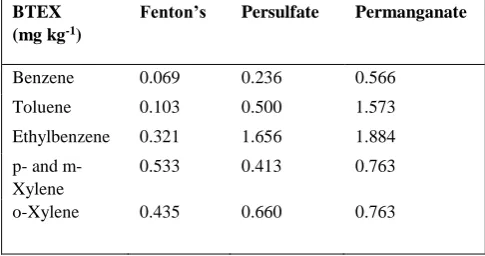
Table 9. BTEX concentration of the basic soil sample in mg kg-1
after treatment with the different oxidants
BTEX (mg kg-1)
Fenton’s Persulfate Permanganate
Benzene 0.069 0.236 0.566
Toluene 0.103 0.500 1.573
Ethylbenzene 0.321 1.656 1.884
p- and m-Xylene
0.533 0.413 0.763
o-Xylene 0.435 0.660 0.763
Conclusion
This work has shown that Fenton’s reagent, Potassium permanganate and potassium persulfate are good oxidants for management of Bonny light crude oil polluted soils. The results show that the oxidants especially Fenton’s reagent and potassium persulfate will work well in sites polluted by light crudes that are dominated by aliphatic hydrocarbons and one-ring aromatics. The research also highlighted that potassium persulfate may not be well suited for the remediation of sites polluted by heavy crudes or ashphaltic crudes that are dominated by polycyclic aromatic hydrocarbons . Potassium permanganate was found to be effective in the removal of aromatic hydrocarbon at acidic pH. Fenton’s reagent was shown to be very effective in the
PAH Fenton’s reagent
Persulfate Permanga-nate
Acenaphthene 0.28 24.09 1.97 Phenanthrene 0.65 7.30 0.79
Anthracene - 6.91 1.10
Fluoranthene - 2.43 0.44
Pyrene 0.09 1.12 0.13
Benzanthracene - 48.12 -
Naphthalene 0.47 1.87 -
Chrysene - - 0.05
Fluorene 0.88 14.21 1.63
Dibenzothiophene - - -
Acenaphthylene 1.33 2.76 1.67
Figure 7. Chart showing the removal of the BTEX from the acidic soil sample by the different oxidants
Figure 8. Chart showing the removal of the BTEX from the neutral soil sample by the different oxidants
Eur. Chem. Bull. 2013, 2(4), 226-230 DOI: 10.17628/ECB.2013.2.226
230
removal of all hydrocarbons from Bonny light crude oilpolluted soils especially at acidic pH medium.
Acknowledgements
The authors are thankful to Amni International Petroleum company for the GC analysis of the many soil samples.
References
1Osuji, L. C., Egbuson, E. J. and Ojinnaka, C. M. Chem. Ecol. 2005, 21(1), 1.
2Osuji, L. C. Afr. J. Interdiscip. Stud.,.2002, 3, 11.
3Environmental Business, 2010. http://www.environbusines.com
4Karpenko, O., Lubenets, V., Karpenko, E. and Novikov, V. Chem.
Chem. Technol., 2009, 3(1), 41
5Liang, C., Bruell, C. J and Sperry, K. L. Soil and Sediment
Contam., 2003, 12(2), 207
6Watts, R. J., Remediation A, 1992, 413.
7Scullion, J., J. Plant Natural Soil Sci., 2006, 164, 631.
8Osuji, L. C. and Achugasim, O., Chem. Biodiversity, 2007, 4, 424. 9Osuji, L. C. and Achugasim, O. J. Appl. Sci. Environ. Manag.
2010, 14(2), 17.
10Kótai, L., Keszler, A., Pato, J., Holly, S., Banerji, K. K., Ind. J.
Chem. Sect. A. Inorg. Bio-Inorg. Phys. Theor. Anal. Chem.
1999, 38(9), 966., Kó tai, L., Banerji, K. K. Synth. React. Inorg. Metal-Org. Chem. 2001, 31(3), 491., Kó tai, L., Sajó, I. E., Gács, I., Sharma, P. K., Banerji, K. K., Z. Anorg. Allgem. Chem. 2007, 633(8), 1257., Kótai, L., Gács, I., Sajó, I. E., Sharma, P. K., Banerji, K. K., Trends Inorg. Chem., 2009, 11, 25-104.