i
The Effect of Knowledge of Concussion and Aggression
on Head Impact Biomechanics in Youth Male and Female Ice Hockey Players
Alice Frances Pierce
A thesis submitted to the faculty of the University of North Carolina at Chapel Hill in partial fulfillment of the requirements for the degree of Master of Arts in the Department of Exercise and Sport Science (Athletic Training) in the College of Arts & Sciences.
Chapel Hill 2013
Approved by:
iii
The purpose of this study was to evaluate the influence of safe play knowledge and level of aggression on head impact biomechanics across ice hockey players. Forty-one youth ice hockey players, 29 males and 12 females, participated in this study. The Safe Play Questionnaire (SPQ) and the Competitive Aggressiveness and Anger Scale (CAAS) were administered at the mid-point of the season. Aggressive penalty minutes were recorded throughout the season. Helmets were equipped with accelerometer systems to measure head impact biomechanics during practices and games. Impacts were
compared to grouped results of the SPQ, CAAS, and aggressive penalty minutes across sexes. Less aggressive players sustained significantly less severe rotational head impacts in practice compared to games and compared to players with high aggression. Female and male hockey players do not differ in levels of knowledge of safe play or aggression. Players with low aggression sustain less severe head impacts during practice.
ABSTRACT
ALICE FRANCES PIERCE: The Effect of Knowledge of Concussion and Aggression on Head Impact Biomechanics in Youth Male and Female Ice Hockey Players
iv
ACKNOWLEDGEMENTS
v
TABLE OF CONTENTS
ACKNOWLEDGEMENTS ... IV
LIST OF FIGURES ... IX
LIST OF TABLES ... 0
CHAPTER I ... 1
KNOWLEDGE OF SAFE PLAY ... 1
AGGRESSION ... 2
Variables ... 3
Research Questions ... 4
Research Hypotheses ... 6
Null Hypotheses ... 7
Alternate Hypotheses ... 8
Operational definitions ... 9
Assumptions ... 11
Delimitations ... 11
Limitations ... 12
CHAPTER II ... 13
INTRODUCTION ... 13
CONCUSSION EPIDEMIOLOGY ... 13
vi
RECURRENT CONCUSSION ... 16
PATHOPHYSIOLOGY OF CONCUSSION ... 16
LONG-TERM CONSEQUENCES OF CONCUSSION ... 17
KNOWLEDGE OF SAFE PLAY ... 18
AGGRESSION IN ICE HOCKEY ... 19
HEAD IMPACT BIOMECHANICS ... 20
BEHAVIOR MODIFICATION ... 22
METHODOLOGICAL CONSIDERATIONS ... 23
SUBJECT POPULATION ... 23
KNOWLEDGE OF SAFE PLAY ... 24
COMPETITIVE AGGRESSIVENESS AND ANGER SCALE AND APIM ... 25
HITSYSTEM ... 27
RATIONALE AND SUMMARY ... 27
CHAPTER III ... 28
INTRODUCTION ... 28
SUBJECTS ... 28
MEASUREMENT AND INSTRUMENTATION ... 29
Knowledge of Safe Play ... 29
Head Impact Telemetry System (HIT System) ... 30
PROCEDURES ... 31
Knowledge of Safe Play ... 31
Aggression ... 31
Head Impact Biomechanics ... 32
vii
DATA REDUCTION ... 33
Knowledge of Safe Play ... 33
Aggression ... 34
Head Impact Biomechanics ... 34
DATA ANALYSIS ... 35
CHAPTER IV... 36
INRODUCTION ... 36
KNOWLEDGE OF SAFE PLAY ... 36
AGGRESSION ... 37
SUBJECTS ... 38
MEASUREMENT AND INSTRUMENTATION ... 39
Knowledge of Safe Play ... 39
Aggression ... 39
Head Impact Telemetry System (HIT System) ... 40
PROCEDURES ... 41
Knowledge of Safe Play ... 41
Aggression ... 41
Head Impact Biomechanics ... 42
DATA REDUCTION ... 42
Knowledge of Safe Play ... 42
Aggression ... 43
DATA ANALYSIS ... 43
RESULTS ... 44
viii
Aggression ... 44
DISCUSSION ... 46
Knowledge of Safe Play ... 46
Aggression ... 47
Head Impact Biomechanics ... 49
CONCLUSION ... 51
BEHAVIOR MODIFICATION INTERVENTION ... 53
Procedures ... 53
Data Analysis ... 54
Results ... 54
Discussion/Conclusion ... 54
FIGURES ... 57
... 58
APPENDICES ... 68
APPENDIX 1:SAFE PLAY QUESTIONNAIRE ... 68
APPENDIX 2:COMPETITIVE AGGRESSIVENESS AND ANGER SCALE ... 70
ix
LIST OF FIGURES
Figure 1: Categories of Impact Locations ... 57
Figure 2: Interaction Effect for rotational acceleration between
players with high and low aggression across practices and games. ... 58
Figure 3: Linear Acceleration Changes for the Behavior Modification Intervention ... 59
Figure 4: Rotational Acceleration Changes for the Behavior
Modification Invervention ... 60
0
LIST OF TABLES
Table 1: Reliablity results for Safe Play Questionnaire ... 62
Table 2: Data analysis table ... 63
Table 2-1: Demographic Information for subject population ... 64
Table 3: Descriptive and statistical results for between team
comparisons of SPQ and aggression. ... 65
Table 4: Head Impact Magnitude - Descritve and Statistical
Results for group and event type interaction and main effects ... 66
Table 5: Behavior Modification Intervention Profiles ... 67
1 CHAPTER I
INTRODUCTION
Concussion has been defined as a complex pathophysiologic process affecting the brain, induced by traumatic biomechanical forces that typically result in an impairment of neurologic function and clinical symptoms such as disturbances of vision and equilibrium (McCrory, Meeuwisse et al. 2009). Concussions are common in sport, with an estimated 1.6 million to 3.8 million sport-related traumatic brain injuries occurring in the United States each year (Langlois, Rutland-Brown et al. 2006). The direct and indirect medical costs of traumatic brain injury or TBI total an estimated $76.5 billion in the United States in 2000 (Finkelstein, Corso et al. 2006). Concussions are a potentially serious issue and need to be managed appropriately to prevent life-long complications (Tegner and Lorentzon 1996). Among high school male sports, ice hockey athletes have the highest incidence of concussion (Tommasone and Valovich McLeod 2006). This high incidence of concussion may be because ice hockey players have a “win at all costs” mentality towards their sport (Cusimano, Chipman et al. 2009).
KNOWLEDGE OF SAFE PLAY
2
legal body checking is allowed, the incidence of injury to the head and neck increases (Cusimano, Taback et al. 2011). Checking in ice hockey accounts for 86% of all injuries and is associated with increased concussion risk (Marchie and Cusimano 2003; Daneshvar, Nowinski et al. 2011). Despite the possible dangers of illegal body contact, checking from behind is a common occurrence in any league that allows contact between players (Cusimano, Taback et al. 2011). However, specific places on the ice and poor skating techniques put a player at increased risk of injury (Mihalik, Greenwald et al. 2010; Mihalik, Blackburn et al. 2010). It seems possible that athletes that are more knowledgeable about safe playing techniques in ice hockey may refrain from illegal checking and unnecessary head contact as well as be better prepared to take a hit during physical play.
AGGRESSION
3
regulations influence the impacts that the youth ice hockey players sustain. However, a player’s aggression is policed on the ice by game officials and should be controllable.
The purpose of this study was multi-faceted. Our primary purpose was to compare safe play knowledge and aggression between male and female youth ice hockey players. Our secondary purpose was to compare head impact biomechanical measures of severity between ice hockey players with high and low levels of safe play knowledge and
aggression. As a pilot study, we also examined the feasibility and efficacy of a behavior modification program using augmented feedback to decrease potentially injurious behaviors.
Variables
RQ1: Safe Play Knowledge a. Independent
i. Sex 1. Male 2. Female b. Dependent
i. Safe Play Questionnaire (SPQ) total score (Appendix #1) RQ2: Aggression
a. Independent i. Sex
4
ii. Level of Aggression as measured by the Competitive Aggressiveness and Anger Scale (CAAS) (Appendix #2) 1. High
2. Low
iii. Level of Aggression as measured by aggressive penalty minutes 1. High
2. Low b. Dependent
i. CAAS Total Score
ii. Aggressive penalty minutes iii. Head impact frequency iv. Head impact magnitude RQ3: Behavior Modification
a. Independent i. Group
1. Intervention 2. Control b. Dependent
i. Head impact frequency ii. Head impact magnitude Research Questions
5
Is there a significant difference in Safe Play Questionnaire total scores between male and female youth ice hockey athletes? RQ2: Aggression
a: Is there a significant difference in aggression between male and female youth ice hockey athletes as measured by the Competitive Aggressiveness and Anger Scale?
b: Is there a significant difference in aggression between male and female youth ice hockey athletes as measured by aggressive penalty minutes?
c: Is there a significant interaction between level of aggression, as measured by the CAAS, and event type with respect to head impact frequency in male youth hockey players?
d: Is there a significant interaction between level of aggression, as measured by the aggressive penalty minutes, and event type with respect to head impact frequency in male youth hockey players? e: Is there a significant interaction between level of aggression, as measured by the CAAS, and event type with respect to head impact magnitude in male youth hockey players?
f: Is there a significant interaction between level of aggression, as measured by aggressive penalty minutes, and event type with respect to head impact magnitude in male youth hockey players?
6
a: Is there a difference between the frequency of head impacts in individual players in six games before and six games following a behavior modification intervention?
b: Is there a difference between the magnitude of head impact in individual players in six games and six games following a behavior modification intervention?
Research Hypotheses
RH1: Knowledge of safe play technique:
Females will score significantly higher on the SPQ than males. RH2: Aggression
a: Males will have a significantly higher level of aggression than females as measured by the Competitive Aggressiveness and Anger Scale.
b: Males will have a significantly higher level of aggression than females as measured by the aggressive penalty minutes.
c: Players with a higher score on the CAAS sustain a significantly greater number of head impacts during games.
7 RH3: Behavior Modification
a: The behavior modification intervention will significantly reduce the frequency of head impacts in the six games before compared to the following six games.
b: The behavior modification intervention will significantly reduce the frequency of head impacts in the six games before compared to the following six games.
Null Hypotheses
NH1: Knowledge of safe play:
There will not be a significant difference between males and females in scores on the SPQ.
NH2: Aggression
a: There will not be a significant difference in level of aggression between males and females as measured by the Competitive Aggressiveness and Anger Scale.
b: There will not be a significant difference in level of aggression between males and females as measured by aggressive penalty minutes.
8
e: There will not be a significant difference in head impact magnitude compared to athletes with higher scores on the CAAS. f: There will not be a significant difference in head impact magnitude compared to athletes with a greater number of aggressive penalty minutes.
NH3: Behavior Modification
a: There will not be a significant difference in the reduction of the frequency of head impacts between the six games before compared to the following six games following an intervention.
b: There will not be a significant difference in the reduction of the frequency of head impacts between the six games before compared to the following six games following an intervention.
Alternate Hypotheses
AH1: Knowledge of safe play:
Females will have significantly higher scores on the SPQ. AH2: Aggression
a: Males will have a significantly higher level of aggression than females as measured by the Competitive Aggressiveness and Anger Scale.
b: Males will have a significantly higher level of aggression than females as measured by the aggressive penalty minutes.
9
d: Players with a higher number of aggressive penalties will have a significantly higher head impact frequency.
e: Players with a higher score on the CAAS will have a significantly higher head impact magnitude.
f: Players with a higher number of aggressive penalties will have a significantly higher head impact magnitude.
AH3: Behavior Modification
a: A behavior modification intervention will significantly reduce the frequency of head impacts in the later six games compared to the pre-modification games.
b: A behavior modification intervention will significantly reduce the frequency of head impacts in the later six games compared to the pre-modification games.
Operational definitions
a. Youth ice hockey player: registered participant in Raleigh Youth Ice Hockey Association (RYHA). The teams competed in one of the most elite levels of youth ice hockey
i. Midget: male youth ice hockey players ages 15-18 years old ii. Bantam: male youth ice hockey players ages 13-14 years old
10
b. Concussion/mild traumatic brain injury (mTBI): a mild brain injury resulting from a direct blow to the head resulting in physiological changes in brain function (Rosenbaum and Arnett 2010)
c. Aggression: a combination of mean scores on the CAAS and compared to teammates, and a higher quantity of aggressive penalty minutes (PIM) per game
d. Competitive Aggressiveness and Anger Scale (CAAS): similar to the Buss Perry Aggression Questionnaire, it is a self-reporting questionnaire developed to measure trait aggression and anger in competitive athletes e. Penalty in minutes (PIM): resulting from illegal body-checking or other
illegal conduct resulting in a player being removed from play for a pre-specified amount of time (Emery, Kang et al. 2011)
i. Aggressive penalty: a penalty intended to harm another person (fighting, spearing, butt-ending, high sticking, slashing, cross-checking, instigating, roughing, boarding, charging, kneeing,
elbowing, checking from behind, head butting, attempt to injure, and unsportsmanlike conduct) (Gee and Leith 2007). Due to the evolution of the game, also considered aggressive penalties are hits to the head for both sexes and body checking for females. Aggressive penalty in minutes will be referred to aPIM.
f. Head Impact Telemetry System (HIT System): 6 single-axis
11
impact biomechanics in helmeted athletes. The system consists of encoders embedded with the helmet, a radio antenna, and a sideline response system.
i. Linear acceleration- change in velocity of the estimated center of gravity of the head attributed to an impact and the associated direction of motion of the head (Greenwald, Gwin et al. 2008)
ii. Rotational acceleration- change in angular velocity of the head due to an impact and its direction in a coordinate system (Greenwald, Gwin et al. 2008)
iii. Head Impact Technology severity profile (HITsp)- a weighted composite score including linear and rotational accelerations, impact duration, and impact location (Greenwald, Gwin et al. 2008)
Assumptions
a. Participants will be truthful when filling out the Safe Play Questionnaire. b. Participants will be truthful when filling out the aggression questionnaire. c. Athletes will not change hitting technique because of the presence of the
instrumented helmet; unless instructed to do so with the implementation of a behavior modification intervention.
Delimitations
a. Participants are youth ice hockey players willing to participate regardless of previous history of playing technique or ability.
12 Limitations
a. The SPQ was derived by the authors. The validity of this instrument is unknown.
13 CHAPTER II
REVIEW OF THE LITERATURE
INTRODUCTION
Ice hockey is a fast and physical sport combining skill, speed, and aggression involving high levels of body contact and has been associated with high rates of injury, specifically concussion (2000). A concussion is defined as “a mild brain injury resulting from a direct blow to the head resulting in physiological changes in brain function” (Tommasone and Valovich McLeod 2006; Rosenbaum and Arnett 2010). Increased attention towards sport-related concussion risk and negative outcomes following injury has led to an increase in concussion knowledge and therefore a resultant increase in concussion diagnoses among youth athletes (Daneshvar, Nowinski et al. 2011). Youth organizations are implementing policies that require players, coaches, and parents to receive concussion education in an effort to keep young athletes safe. However,
physicality and aggression is an integral part of contact sports such as ice hockey. Youth players often mimic actions of professional players and it is unclear if it is safe to do so. The purpose of this review is to discuss relevant literature regarding the epidemiology, biomechanics, long term consequences, knowledge, and aggression on effects of aggression.
CONCUSSION EPIDEMIOLOGY
14
15
concussion incidence, it was shown that in gender-matched sports, females have a higher rate of concussions than males. The mechanism of contact with another player was a significantly higher cause of concussion in football, boy’s and girls’ soccer, wresting, and boy’s and girls’ basketball (Gessel, Fields et al. 2007).
In a study of high school and college football players, it was seen that football players who sustained one concussion were three times more likely to sustain a second concussion during the same season than those players who had not sustained a previous injury (Guskiewicz, Weaver et al. 2000). In a 2009 PubMed literary review, a total of ten studies were found comparing gender-matched sports (four in soccer, four in basketball, and two in ice hockey). The populations included high school, college, and professional athletes and nine of the studies showed a higher injury rate for females due to
concussions with four reaching statistical significance (Dick 2009).
CONCUSSION EPIDEMIOLOGY AMONG ICE HOCKEY PLAYERS
16
Schick and colleagues compared ice hockey injuries between six male and six female team and revealed that 96% of injuries in female players and 79% in male players were related to contact mechanisms, even though intentional body checking is not allowed in any level of female ice hockey (Schick and Meeuwisse 2003).
RECURRENT CONCUSSION
A review of the literature suggests that previous concussion can increase a
player’s susceptibility of future concussive injury in all sports (Guskiewicz, Weaver et al. 2000; Gessel, Fields et al. 2007; Marar, McIlvain et al. 2012). In a retrospective study of high school and college football players, athletes who sustained one concussion in a season were three times more likely to sustain a second concussion in the same season compared with uninjured players (Guskiewicz, Weaver et al. 2000). Also, a study by Benson and colleagues (2011) found that lost time due to concussion increased 2.25 times for every recurrent concussion during a 7 year study (Benson, Meeuwisse et al. 2011). Therefore, multiple concussions may take more time to heal. Castile and colleagues’ five year study of recurrent concussions revealed that a greater proportion of recurrent
concussion symptoms took 1 week to 1 month to resolve (20.9%) compared with new concussion symptoms (13.8%). Similarly, while 0.6% of new concussion symptoms took >1 month to resolve, 6.5% of recurrent concussion symptoms took >1 month to resolve (Castile, Collins et al. 2011). These studies support the argument that repeated
concussions cause lingering symptoms and increased symptom severity. PATHOPHYSIOLOGY OF CONCUSSION
17
ionic shifts, changes in glucose metabolism, altered cerebral blood flow, and impaired axonal function (Giza and Hovda 2001).
The changes in brain function may be responsible for periods of postconcussion vulnerability and with neurobehavioral abnormalities (Giza and Hovda 2001). Behavioral abnormalities include restlessness, aggression, and depression. The increase in excitatory neurotransmitters can lead to loss of neurons and cell death eventually leading to lifelong depression due to repeated concussive events (Prins and Giza 2012).
LONG-TERM CONSEQUENCES OF CONCUSSION
It has been speculated that concussions cause long-term problems. Retired professional football players with a history of three or more reported concussions have been reported to have a fivefold prevalence of mild cognitive impairment, a precursor to dementia, and a threefold prevalence of reported significant memory problems compared with retirees without a history of concussion (Guskiewicz, Marshall et al. 2005;
Guskiewicz, Marshall et al. 2007). In 1999, Collins and colleagues described that a history of concussion in collegiate football players results in decreased baseline neuropsychological performance (Collins, Grindel et al. 1999).
18
Neuropathologically, CTE is characterized by atrophy of the cerebral hemispheres, medial temporal lobe, thalamus, mammillary bodies, and brainstem, with ventricular dilatation. (McKee, Cantu et al. 2009). Single-photon emission computed tomography scanning may reveal defects in the frontal and temporal lobes, regions associated with cognitive functions such as attention, impulse control, and memory (Gowda, Agrawal et al. 2006). Retired professional football players with a history of three or more
concussions are five times more likely to demonstrate mild cognitive impairment, earlier onset of Alzheimer disease, and clinical depression (Guskiewicz, Marshall et al. 2005; Guskiewicz, Marshall et al. 2007). Autopsies of former professional football players have demonstrated evidence of chronic TBI with tau deposition in neurofibrillary tangles and neuropil threads (McKee, Cantu et al. 2009). Furthermore, one-year estimates of
irritability and temper following severe TBI reportedly increase up to 70% compared to TBI groups (Silver, McAllister et al. 2011).
KNOWLEDGE OF SAFE PLAY
19
parents, and players on how to increase on ice safety (Hockey 2011). Such techniques include skating into the boards at an angle; taking a check by keeping skates parallel to the boards, knees bent, having a low center of gravity; and not checking opponents from behind (Hockey 2011). Proper technique should be utilized in all sports, especially contact sports such as football and ice hockey to decrease injuries (Heck, Clarke et al. 2004).
AGGRESSION IN ICE HOCKEY
20
bigger, faster, and stronger which may allow them to adopt a more aggressive playing style (Montgomery 2006). Additionally, larger and faster players can apply more force on an opponent involved in collisions thus increasing injury (Biasca, Wirth et al. 2002). Nearly eighteen percent of ice hockey collisions had penalties and penalties resulted in higher measures of head impact severity (Mihalik, Greenwald et al. 2010). Additionally, aggressive penalties like elbowing, head contact, and high sticking resulted in greater linear acceleration and head impact telemetry severity profile measures than collisions with no infraction (Mihalik, Greenwald et al. 2010). Furthermore, in a sample of 12- and 13-yr-old players, fighting was considered a natural consequence of the game (Gerberich, Finke et al. 1987). Literature shows that aggression as a part of the natural flow of the game of hockey increased likelihood of injury.
HEAD IMPACT BIOMECHANICS
21
accelerations lead to brain injuries but the specific contributions have not been conclusively established (Guskiewicz and Mihalik 2011).
Real-time accelerometer data collection is an up and coming concept. Naunheim and colleagues in 2000 attempted to investigate the linear accelerations sustained by high school student-athletes -specifically, an ice hockey defenseman, football offensive lineman, football defensive lineman, and a soccer player with a triaxial accelerometer. The mean linear acceleration measured in the football and ice hockey players was 29.2g and 35.0g, respectively, and the soccer player’s data was negated as soccer athletes do not wear helmets (Naunheim, Standeven et al. 2000). Duma and colleagues used this technology for a large number of athletes in practices and games and found a magnitude of head impacts to be 32g (Duma, Manoogian et al. 2005) compared to a similar study by Mihalik et al. finding means of 20g to 23g (Mihalik, Bell et al. 2007).
The Head Impact Telemetry System (HIT System) is a system which equips helmets with single-axis accelerometers is designed to measure real time head
22
Council. The accelerometers maintain contact with the head during an impact in order to measure head-not helmet-motion. These accelerometers are positioned tangentially to the head to measure linear acceleration of the center of gravity of the head via a least-squares regression algorithm (Crisco, Chu et al. 2004). Data from the six accelerometers is collected at 1 kHz for a period of 40ms (8ms pretrigger and 32ms post-trigger) following a trigger caused by the acceleration of any individual accelerometer exceeding 10 g. The data is time stamped, encoded, stored locally, and then transmitted in real time via a radiofrequency telemetry link to a sideline controller incorporated within the Sideline Response System (Riddell; Elyria, OH) positioned along the playing surface side boards. (Mihalik, Guskiewicz et al. 2008).
BEHAVIOR MODIFICATION
23
theory. For example, in 1989, a study of runners determined verbal and visual feedback are effective means of eliciting modifications in running style in 22 female novice runners (Messier and Cirillo 1989). More recently, Onate and colleagues measured ground reaction force in non-impaired college students from a jumping task then repeated 2-minutes and 1-week post-test following either augmented or sensory feedback. Each of the feedback groups decreased their peak vertical ground reaction forces resulting in a decreased propensity of injury (Onate, Guskiewicz et al. 2001). Similarly, in a study of Division I volleyball athletes to decrease ground reaction forces on the knee after a spike jump, athletes received visual and aural feedback to correct jumping motion. The
feedback decreased the athletes’ pre-test/post-test vertical ground reaction force but did not significantly change the medial/lateral or anterior/posterior motions so augmented feedback may be effective in altering biomechanics (Cronin, Bressel et al. 2008). In 2005, Onate and colleagues expanded their work by exploring the use of video footage to decrease vertical ground reaction force during a basketball jump-landing task. After reviewing video, self or combination of self and expert videotape feedback is most useful for increasing knee angular displacement flexion angles and reducing peak vertical forces during landing (Onate, Guskiewicz et al. 2005).
METHODOLOGICAL CONSIDERATIONS
The current study will utilize measures of knowledge safe play techniques,
aggression, and head impacts biomechanics collected from youth ice hockey participants. SUBJECT POPULATION
24
concentration, establishing memory patterns, reasoning, problem solving, and other cognitive skills (Fischer 1987) . Each child matures at a different rate but growth curves demonstrate that recovery from concussion is decreased in younger populations (Fischer 1987). Compared with the adult brain, the growing and developing brain of a child or adolescent may respond differently to both the initial impact and how it recovers from that impact (Guskiewicz and Valovich McLeod 2011). The developing brain differs from the adult brain in such factors as brain water content, degree of myelination, blood volume, blood-brain barrier, cerebral metabolic rate of glucose, increased blood flow, greater number of synapses, and geometry and elasticity of the skull's sutures (Thibault and Margulies 1998; Goldsmith and Plunkett 2004). Any of these could be a factor in modifying the threshold of injury to the child's head (Goldsmith and Plunkett 2004). KNOWLEDGE OF SAFE PLAY
25
2011). Using these tools, which are essential to USA Hockey’s coaching education courses, the researchers designed a short survey to observe what safety techniques players are learning and implementing in their play. Such techniques include skating into the boards at an angle; taking a check by keeping skates parallel to the boards, knees bent, having a low center of gravity; and not checking opponents from behind (Hockey 2011).
COMPETITIVE AGGRESSIVENESS AND ANGER SCALE AND APIM
26
During validity testing, the CAAS had a test-retest correlation of .88 and a significant correlation to each the anger, verbal, and physical subsets of the Buss-Perry Aggression Questionnaire (Maxwell 2007).
Gee and Leith looked at aggression in the National Hockey League. This study used penalty records as an indication for aggression which has been criticized in the literature by Kirker and colleagues in 2000. Their concern was regarding missed calls by officials and the accumulation of penalties that are not considered aggressive (Kirker, Tenenbaum et al. 2000). In 1992, however, Katorji and Cahoon recorded by two
independent observers that only 4.8% of aggressive acts went uncalled by game officials (Katorji and Cahoon 1992). Consequently, according to a 1997 study by Widmeyer and McGuier, the 4.8% should not impact the integrity of the study (Widmeyer and McGuire 1997). Regarding the lumping of all penalties, regardless of aggression intention, Gee and Leith used guidelines set by previous studies which included fourteen behaviors reported by athletes which are used with the intent to harm the opponent either physically or mentally at least 80% of the time (Widmeyer and Birch 1978; Widmeyer and McGuire 1997). These penalties are fighting, spearing, butt-ending, high sticking, slashing, cross-checking, instigating, roughing, boarding, charging, kneeing, elbowing, checking from behind, and head butting and two additional behaviors of attempt to injure and
27 HIT SYSTEM
The HIT System will be used in this study to measure head impact biomechanics. The system is the only commercially available system on the market at this time which has undergone laboratory validation for the detection of both impact magnitude,
frequency, and location and has been used in the investigation of ice hockey concussions (Gwin, Chu et al. 2009). Also, the instrumentation is built into the helmet so the
equipment is not obtrusive and should not influence mechanics or playing style (Mihalik, Blackburn et al. 2010). The HIT System is capable of transmitting accelerometry data via radiofrequency from as many as 100 players over a distance well in excess of the length of a standard international ice surface (Mihalik, Blackburn et al. 2010). The system is transportable and user-friendly and has been used in multiple youth hockey and football studies (Mihalik, Greenwald et al. 2010; Mihalik, Blackburn et al. 2010; Mihalik, Guskiewcz et al. 2011).
RATIONALE AND SUMMARY
28 CHAPTER III
METHODOLOGY
INTRODUCTION
Concussion has been defined as a complex pathophysiologic process affecting the brain, induced by traumatic biomechanical forces that typically result in an impairment of neurologic function and clinical symptoms such as disturbances of vision and equilibrium (McCrory, Meeuwisse et al. 2013). Concussions are common in sport, with an estimated 1.6 million to 3.8 million sport-related traumatic brain injuries occurring in the United States each year (Langlois, Rutland-Brown et al. 2006). The direct and indirect medical costs of traumatic brain injury or TBI total an estimated $76.5 billion in the United States in 2000 (Finkelstein, Corso et al. 2006). Concussions are a potentially serious issue and need to be managed appropriately to prevent life-long complications (Tegner and Lorentzon 1996). Among high school male sports, ice hockey athletes have the highest incidence of concussion (Tommasone and Valovich McLeod 2006). This high incidence of concussion may be because ice hockey players have a “win at all costs” mentality towards their sport (Cusimano, Chipman et al. 2009). The purpose of this study is to determine if male and female youth ice hockey athletes differ in knowledge of safe play techniques, aggression values, and severity of head impacts.
SUBJECTS
29
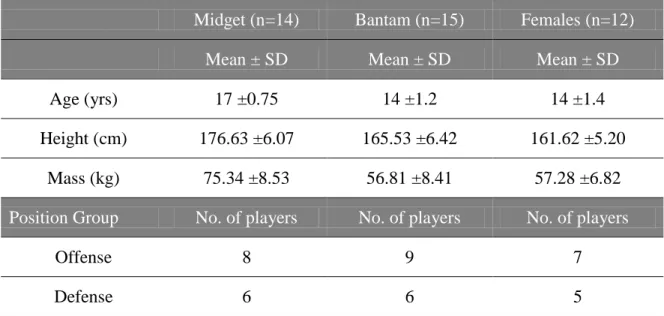
female players were recruited from the following levels of play: Midgets - males ages 15-18 (n=14), Bantams - males ages 13-14 (n=15), and a female team- ages 16 and under (n=12). All youth athletes and at least one parent/legal custodian per participant read and signed an informed consent form approved by the university’s Internal Review Board committee. Goalies were excluded from this study because goaltenders use different helmets than on ice players and instrumented goalie helmets are not yet available. Subjects were excluded if they were unable to complete the season due to extrinsic factors such as injury.
MEASUREMENT AND INSTRUMENTATION
Knowledge of Safe Play
The Safe Play Questionnaire (Appendix 1) was administered to assess each player’s knowledge of safe playing techniques specific to ice hockey. The Safe Play Questionnaire (SPQ) is a seven-item questionnaire based on USA Hockey’s rules,
regulations, and guidelines of skating and body checking. The SPQ was developed by our research team as there was not a hockey-specific, age-appropriate questionnaire to gauge the athlete’s knowledge of appropriate playing techniques to prevent injury to both him/herself and the opposing player. The questionnaire encompasses questions ranging from the purpose to body checking to the proper position to receive a check in a multiple choice format.
Aggression
Competitive Aggressiveness and Anger Scale
30
assesses 12 items of athlete self-reported trait aggression and anger. The CAAS is divided into six items measuring aggressiveness and six items to measure anger. Each item is measured by asking the athlete how the statement relates to him or her using a five point Likert scale ranging from one (“almost never”) and five (“almost always”). The CAAS has been previously validated among collegiate competitive athletes across both genders in a variety of sports including ice hockey, football, and basketball. In order to make it more age appropriate, the CAAS was reworded to be understood by the younger audience.
Aggressive Penalty Minutes
Each player’s penalty minutes for the season were recorded as an objective measure of aggression. We chose to focus on the aggressive penalty minutes as to be consistent with previous research in this area (Gee and Leith 2007). These penalties consist of fighting, spearing, butt-ending, high sticking, slashing, cross-checking,
instigating, roughing, boarding, charging, kneeing, elbowing, checking from behind, head butting, attempt to injure, and unsportsmanlike conduct, with the additions by the
researchers of head contact, and body checking (for females) (Gee and Leith 2007). Head Impact Telemetry System (HIT System)
31
accelerometers is triggered and collects accelerations at a rate of 40 ms of data at 1000 Hz (Funk, Rowson et al. 2012). The impact data recorded by HIT System were time-stamped, encoded, stored locally, and then transmitted in real time to a sideline controller via antenna incorporated within the Sideline Response System (Riddell Corp., Elyria, OH) (Mihalik, Guskiewcz et al. 2011). The telemetry system reported linear
acceleration, rotational acceleration, and HIT severity profile. Head Impact Telemetry severity profile is calculated as a weighted composite score encompassing linear and rotational accelerations, Gadd Severity Index, Head Injury Criterion, and impact location (Greenwald, Gwin et al. 2008).
PROCEDURES
Knowledge of Safe Play
The SPQ was administered prior to practice on two occasions approximately one week apart during the midpoint of the season. The second administration was used for determining reliability only (Table 1). Athletes were instructed to put forth their best effort and answer each question to the best of their ability, without the help from teammates. Athletes were given as much time as needed to complete the questionnaire and access to the researcher to ask questions, if needed.
Aggression
Competitive Aggressiveness and Anger Scale
The CAAS was administered with the SPQ prior to practice on two occasions approximately one week apart at the midpoint of the season. The CAAS was
32
as needed to complete the questionnaire and access to the researcher to ask questions, if needed.
Aggressive Penalty Minutes
Each participant’s aggressive penalty minutes for the season were tallied during each game by the official game scorekeeper. The primary investigator obtained a copy of the official score sheet with the each game’s penalties recorded. Non-aggressive penalty minutes were recorded, but not used as part of this study.
Head Impact Biomechanics
Prior to the start of the season, selected teams were fitted with HIT System instrumented helmets as part of ongoing university sponsored research. The researchers ensured proper sizing and fit of the helmets on each player. Each participant was
instructed to wet his or her hair to simulate sweating. Facemasks used by the players were secured to the new helmet if they were determined by the researcher to be in good
condition. If not, an appropriate facemask was provided. The facemask chinstrap was fitted tightly under the chin and securely fastened to the helmet. To test the fit,
33 Behavior Modification
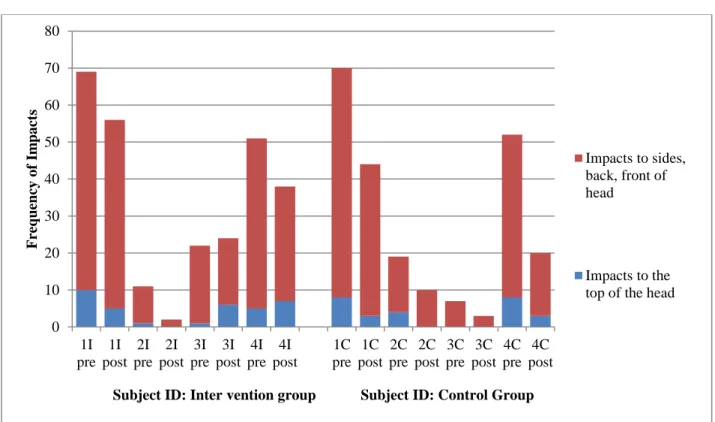
Playing technique across all teams was analyzed during the first half of the season. Head impact biomechanical data were analyzed to identify players that either exhibited a high percentage of top of the head impacts and/or a high percentage of high magnitude impacts. After the first half of the season was complete, the HIT system data was exported and analyzed to identify players that exhibited “risky” behavior. Risky behavior was defined as any player who (1) sustained over 20% or greater head impacts to the top of the head (Figure 1) or (2) sustained 7% or more impacts that exceeded two standard deviations above the mean. Once athletes were identified, the primary
investigator and team coach met with the player to discuss how to change his playing technique. The player was shown HIT System data and game video to depict the behavior leading to the risky profile. The coach verbally cued the athlete on the ice for the week following the intervention as to better playing technique (keeping his head up) during practice with the goal of this repeated behavior transferring into real-time game situations.
DATA REDUCTION
Knowledge of Safe Play
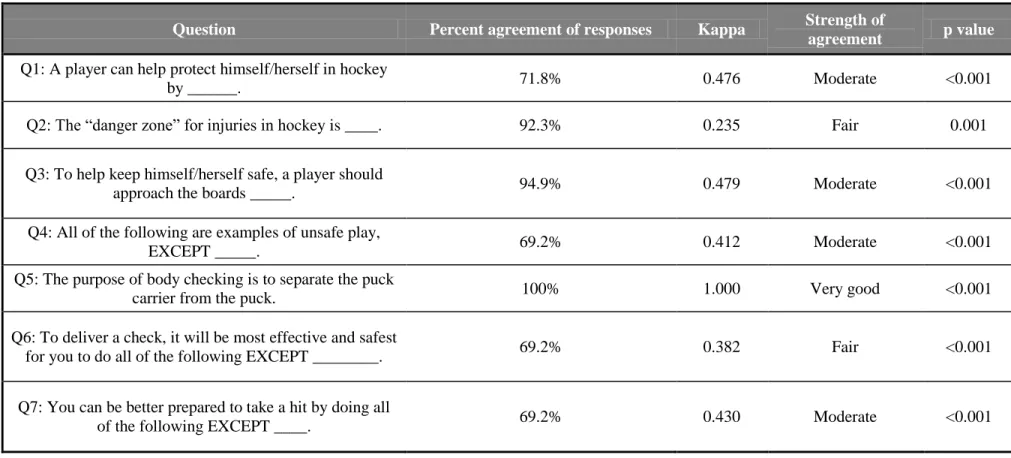
Correct responses for the multiple-choice SPQ were scored as value of one, and all incorrect responses earn a value of zero. The values were summed to produce the SPQ total score. Higher scores indicated a higher level of safe play knowledge. Cohen’s Kappa was calculated to measure the agreement between SPQ administrations. Reliability results are presented in Table 1. For each question of the Safe Play
34
good reliability (ICC3,1 = 0.60) of the SPQ total score between the first and second
administrations. To address research question 1, we split players into groups of high and low safe play knowledge using a median split.
Aggression
Competitive Aggressiveness and Anger Scale
Responses from the CAAS were summed to obtain the CAAS total score ranging from 12 (low aggression) to 60 (very high aggression). We observed very good reliability (ICC3,1 = 0.932) of the CAAS total score between the first and second administrations.
To address research question 2a, we split players into groups of high and low aggression as measured by the CAAS using a median split.
Aggressive Penalty Minutes
Information regarding aggressive penalty minutes was compiled throughout the season by the primary investigator. Occasionally, players did not obtain any aggressive penalty minutes throughout a season based on individual playing demeanors, so those players recorded no aggressive penalty minutes. We divided aggressive penalty minutes by play exposure to account for each player’s penalty minutes per 100 shifts (which equal approximately 1 minute per shift). To address research question 2b, we split players into groups of high and low aggression as measured by aggressive penalty minutes using a median split.
Head Impact Biomechanics
35
Manoogian et al. 2005; Guskiewicz, Mihalik et al. 2007; Mihalik, Bell et al. 2007; Greenwald, Gwin et al. 2008; Mihalik, Guskiewicz et al. 2008). Data obtained erroneously, such as a dropped helmet, was negated by the researcher screening and eliminating the data (Broglio, Surma et al. 2012). The linear acceleration, rotational acceleration, and HITsp of each individual impact were recorded for each impact for each player through the season.
DATA ANALYSIS
Data were analyzed using SPSS (SPSS, Inc.; Chicago, IL) and SAS 9.3 (SAS Institute, Inc.; Cary, NC) with an a priori alpha level of 0.05. Research question 1 comparing response to the Safe Play Questionnaire between sexes was answered with a one-way ANOVA. Research question 2a comparing the CAAS scores and penalty minutes between sexes was addressed with two separate one-way ANOVAs. We examined differences in head impact frequency between levels of aggression for the CAAS and the aggressive penalty measures across event (practices, games) using two separate mixed model repeated measures ANOVAs. We chose to exclude females from these analyses because our research team did not consistently capture practice data using the Head Impact Telemetry System. The remainder of research question two regarding aggression, comparing the measures of aggression to measures magnitude were addressed using random intercept general linear models. Finally, the behavior modification
intervention was compared in the beginning of the season and during the last half of the season using descriptive statistics. A frequency count was used to compare the frequency of head impacts between pre and post behavior modification. Means were used to
36 CHAPTER IV
MANUSCRIPT AND BEHAVIOR MODIFICATION INTERVENTION1
INRODUCTION
Concussion has been defined as a complex pathophysiologic process affecting the brain, induced by traumatic biomechanical forces that typically result in an impairment of neurologic function and clinical symptoms such as disturbances of vision and equilibrium (McCrory, Meeuwisse et al. 2013). Brain injuries are a potentially serious issue and need to be managed appropriately to prevent life-long complications (Tegner and Lorentzon 1996). Among high school male sports, ice hockey athletes have the highest incidence of concussion (Tommasone and Valovich McLeod 2006). This high incidence of concussion may be because ice hockey players have a “win at all costs” mentality towards their sport (Cusimano, Chipman et al. 2009).
KNOWLEDGE OF SAFE PLAY
The culture among ice hockey athletes is concerning because previous research suggests that when legal body checking is allowed, the incidence of injury to the head and neck increases (Cusimano, Taback et al. 2011). In a recent study, twenty-six percent of youth ice hockey players ages 12-15 years old who knew that checking from behind could result in serious injury or death said that they would continue to do so if they were angry or wanted “to get even” (Marchie and Cusimano 2003). Checking in ice hockey accounts for 86% of all injuries and is associated with increased concussion risk (Marchie and Cusimano 2003; Daneshvar, Nowinski et al. 2011). Despite the possible dangers of illegal checking, checking from behind is a common occurrence in any league that allows contact between players (Cusimano, Taback et al. 2011). However, specific places on the
1
37
ice and poor skating techniques put a player at increased risk of injury (Mihalik, Greenwald et al. 2010; Mihalik, Blackburn et al. 2010). It seems possible that athletes that are more knowledgeable about safe playing techniques in ice hockey may refrain from illegal checking and unnecessary head contact as well as be better prepared to take a hit during physical play.
AGGRESSION
38
severity, magnitude, or frequency of head impacts, actions can be made to change such factors to mitigate the impacts.
The purpose of this study was multi-faceted. Our primary purpose was to compare safe play knowledge and aggression between male and female youth ice hockey players. Our secondary purpose was to compare head impact biomechanical measures of severity between ice hockey players with high and low levels of safe play knowledge and
aggression. SUBJECTS
We used a convenience sample of three teams from the Raleigh Youth Hockey Association (two male teams and one female team totaling 41 players). Both male and female players were recruited from the following levels of play: Midgets - males ages 15-18 (n=14), Bantams - males ages 13-14 (n=15), and a female team- ages 16 and under (n=12). Based on attrition, specific research questions used fewer athletes than others. Those limitations are reported in the results. All youth athletes and at least one
parent/legal custodian per participant read and signed an informed consent form approved by the university’s Internal Review Board committee.
39 MEASUREMENT AND INSTRUMENTATION
Knowledge of Safe Play
We distributed the Safe Play Questionnaire (Appendix 1) to measure each player’s knowledge of safe playing techniques specific to ice hockey. The Safe Play Questionnaire (SPQ) is a seven-item questionnaire based on USA Hockey’s rules,
regulations, and guidelines of skating and body checking. The SPQ was developed by our research team for the purpose of the study as there was not a hockey-specific,
age-appropriate questionnaire to gauge the athlete’s knowledge of age-appropriate playing techniques to prevent injury to both him/herself and the opposing player. It is presented in multiple choice format and ask questions such as the purpose to body checking and the proper position to receive a check.
Aggression
Competitive Aggressiveness and Anger Scale
40
Aggressive Penalty Minutes
Each player’s penalty minutes for the season were recorded as an objective measure of aggression. We chose to focus on the aggressive penalty minutes as to be consistent with previous research in this area (Gee and Leith 2007). These penalties consist of fighting, spearing, butt-ending, high sticking, slashing, cross-checking,
instigating, roughing, boarding, charging, kneeing, elbowing, checking from behind, head butting, attempt to injure, and unsportsmanlike conduct, with the additions by the
researchers of head contact, and body checking (for females) (Gee and Leith 2007). Head Impact Telemetry System (HIT System)
Head impact biomechanical measures of severity, frequency, and location were measured via the Head Impact Telemetry System (HIT System; Simbex, Lebanon, NH). The HIT System consists of the following components: an encoder unit located in the helmet, antenna, and a laptop. The encoder consists of six single-axis accelerometers, a telemetry unit, a data storage device, and an onboard battery pack fitted within the padding of the helmet. Data collection occurred when one of the six spring-loaded accelerometers is triggered and collects accelerations at a rate of 40 ms of data at 1000 Hz (Funk, Rowson et al. 2012). The impact data recorded by HIT System were time-stamped, encoded, stored locally, and then transmitted in real time to a sideline controller via antenna incorporated within the Sideline Response System (Riddell Corp., Elyria, OH) (Crisco, Chu et al. 2004). The telemetry system reported linear acceleration,
41
accelerations, Gadd Severity Index, Head Injury Criterion, and impact location (Greenwald, Gwin et al. 2008).
PROCEDURES
Knowledge of Safe Play
The SPQ was administered prior to practice on two occasions approximately one week apart during the midpoint of the season. The second administration was used for determining reliability only. Athletes were instructed to put forth their best effort and answer each question to the best of their ability, without the help from teammates. Athletes were given as much time as needed to complete the questionnaire and access to the researcher to ask questions, if needed.
Aggression
Competitive Aggressiveness and Anger Scale
The CAAS was administered with the SPQ prior to practice on two occasions approximately one week apart at the midpoint of the season. The CAAS was
administered prior to and following a bye week, as to eliminate game bias. Players were asked to answer the questionnaire as honestly and completely as possible.
Aggressive Penalty Minutes
42 Head Impact Biomechanics
Prior to the start of the season, selected teams were fitted with HIT System instrumented helmets as part of ongoing university sponsored research. The researchers ensured proper sizing and fit of the helmets on each player. Each participant was
instructed to wet his or her hair to simulate sweating. Facemasks used by the players were secured to the new helmet if they were determined by the researcher to be in good
condition. If not, an appropriate facemask was provided. The facemask chinstrap was fitted tightly under the chin and securely fastened to the helmet. To test the fit,
participants were asked to hold their head still while the researcher attempted to move the helmet. If the helmet moved with no movement of the head, the fitting procedure was repeated (Mihalik 2009). Helmet fitting was reassessed as needed when the researcher observed helmets moving on the head rather than moving with the head and/or loose chinstraps but at a minimum, fit was checked monthly to ensure a safe and proper fit (Mihalik, Guskiewcz et al. 2011).
DATA REDUCTION
Knowledge of Safe Play
Correct responses for the multiple-choice SPQ were scored as value of one, and all incorrect responses earn a value of zero. The values were summed to produce
quantifiable value with higher scores indicating the highest level of safe play knowledge. Cohen’s Kappa was calculated to measure the agreement between testing session of the SPQ. For each question of the Safe Play Questionnaire, the kappa ranged from 0.235 to 1.00 (very good) and can be viewed in Table 1. We observed moderate reliability (ICC3,1
43
research question 1, we split players into groups of high and low safe play knowledge using a median split.
Aggression
Competitive Aggressiveness and Anger Scale
Responses from the CAAS were summed to result in a quantifiable total score ranging from 12 (low aggression) to 60 (very high aggression). We observed very good reliability (ICC3,1 = 0.932) of the CAAS total score between the first and second
administrations. To address research question 2a, we split players into groups of high and low aggression as measured by the CAAS using a median split.
Aggressive Penalty Minutes
Information regarding aggressive penalty minutes was compiled throughout the season by the primary investigator. Occasionally, players did not obtain any aggressive penalty minutes throughout a season based on individual playing demeanors, so those players recorded zero aggressive penalty minutes (n=2). We divided aggressive penalty minutes by play exposure to account for each player’s penalty minutes per 100 shifts (which equal approximately 1 minute per shift). We controlled for exposure to account for differences in game time as Midgets play longer games than the female and Bantam teams. To address research question 2b, we split players into groups of high and low aggression as measured by aggressive penalty minutes using a median split.
DATA ANALYSIS
44
Research question 1 comparing response to the Safe Play Questionnaire between sexes was answered with a one-way ANOVA. Research question 2a comparing the CAAS scores and penalty minutes between sexes was addressed with two separate one-way ANOVAs. We examined differences in head impact frequency between levels of aggression for the CAAS and the aggressive penalty measures across event types (practices, games) using two separate mixed model repeated measures ANOVAs. We chose to exclude females from these analyses because our research team did not consistently capture practice data using the Head Impact Telemetry System. The remainder of research question two regarding aggression, comparing the measures of aggression to measures magnitude were addressed using random intercept general linear models.
RESULTS
Knowledge of Safe Play
We did not observe a significant difference in safe play knowledge between males and females. However, when we analyzed safe play knowledge by team, rather than collapsing the Midget and Bantam teams into one group (males), Midget players presented with significantly higher safe play knowledge compared to females, but not Bantam players (Midgets: 7.36±0.65, Females: 5.50±0.56) (F2,35 = 3.853, p = 0.031).
However, Bantam players did not significantly differ from Midget players or females (Bantam: 6.13±0.48).
Aggression
45 Head Impact Biomechanics
To address the research questions regarding the frequency of impacts regarding head impact biomechanics, we chose to exclude data from the female team because the research team was unable to capture head impact biomechanical data at majority of the team’s practice and the players were not as compliant with wearing the instrumented helmets. Inclusion of female head impact biomechanical data from games only, would have likely biased our results.
For our analysis regarding frequency of impacts, we did not observe a significant interaction effect between event type and levels of aggression as measured by either the CAAS or aggressive penalty minutes. However, there was a significant main effect for event type, such that practice impacts were less frequent than game impacts (F26,1=
54.248; p < 0.001; practice: 20.79±15.85; games: 138.29±101.45). There was not a significant main effect for level of aggression or aggressive penalty minutes.
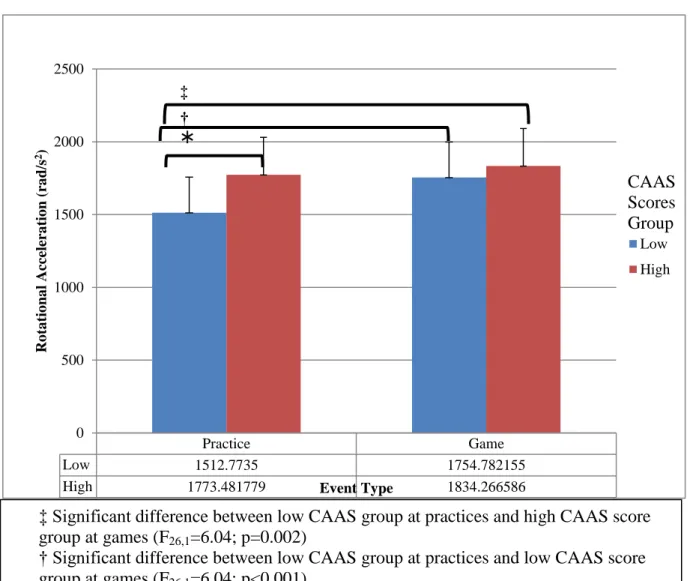
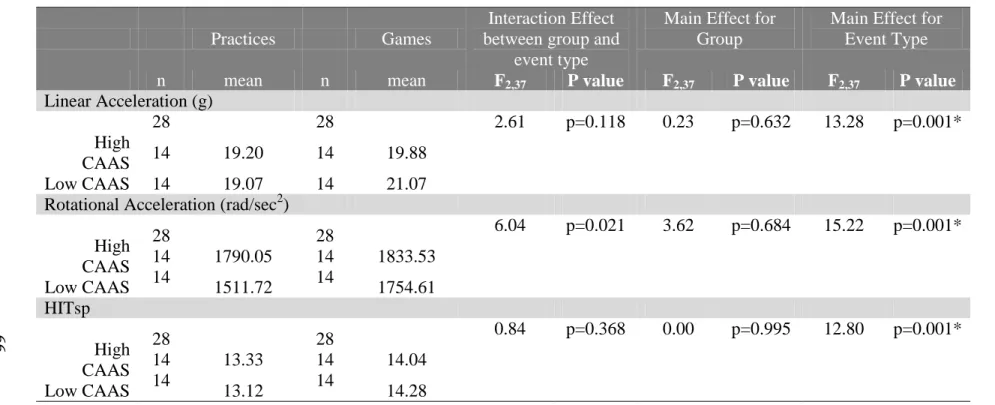
We then analyzed head impact magnitude and determined that there was no interaction effect between event type and level of aggression for measures of linear acceleration and HITsp. We observed a significant interaction effect for rotational acceleration between event types and CAAS group (F1,26=6.04; p=0.02) presented in
Figure 2. Players categorized as low aggression, as measured by the CAAS, sustained significantly lower rotational acceleration head impacts during practices compared to during games (F26,1= 6.04; p < 0.001). Players categorized as low aggression, as
measured by the CAAS, also sustained significantly lower rotational acceleration head impacts compared the high aggression group during practices (F26,1= 6.04; p = 0.016).
46
rotational acceleration head impacts during practices compared to the high aggression group during games (F26,1= 6.04; p = 0.002). We observed a main effect for event type,
such that practices resulted in lower head impact linear acceleration (F26,1= 13.28; p <
0.001), rotational acceleration (F26,1= 15.22; p < 0.001), and HITsp (F26,1= 12.80; p =
0.001) compared to games. We did not observe a significant main effect for group. There were no significant interaction effects between event type and levels of aggression as measured by aggressive penalty minutes. Similar to our previous analyses, we observed a main effect for event type such that practices resulted in lower head impact linear
acceleration, rotational acceleration, and HITsp compared to games (Linear: F27,2=10.90;
P=0.003; Rotational: F27,2=11.02; P=0.003; HITsp F27,2=13.96l P=0.001). There was no
main effect for the high aggression group compared to low aggression group. Descriptive and statistical results can be found in Table 5.
DISCUSSION
The most important finding of our study was less aggressive players sustain less severe head impacts during practice compared to games and compared to highly
aggressive players. Ice hockey players are prone to head impacts due to the rigid boards, hard ice, and playing with sticks and a hard, rubber puck, but impact severity can be altered by aggression. Players who display less aggressive tendencies during practices are able to increase their aggression to meet that of teammates during competition. Also, practices result in fewer and less severe head impacts compared to games.
Knowledge of Safe Play
47
age (mid- to upper teen years). Previous studies suggest that females strive for increase classroom education during the teenage years while males are more focused on leadership and sport advancements (Elias and Kinsbourne 1974). The teenage male desire for sport advancement could lead to the athletes to focus on the changes of the sport’s rules and follow the media’s recent emphasis on head injury in sport. Inadvertently, youth male athletes may be more exposed to concussion education and safe playing techniques, through the media. Although not directly measured in this study, the Midget team had an average of two additional years of hockey-playing experience than the female and Bantam teams. With increased exposure comes increased experience and teaching
opportunity by the coaching staff to ensure that the players know the safe way to give and take a hit. The Midget team also requires a higher level of USA Hockey Coaching
Certification so the coach is more qualified and has undergone more training on how to properly instruct proper hitting (Hockey 2011). However, the Midget team could be biased towards having increased safe play knowledge as members of the team and the coach have participated in concussion research previously. Also, it should be noted many of the questions in the SPQ encompassed hitting and checking rules and techniques. Females may have scored more poorly on these questions compared to their male counterparts due to the illegality of body contact in the female game. But, body contact does ensue so females should be aware of how to play as safely and effectively as possible.
Aggression
48
penalty minutes. Our results contradict previous research that suggests that males are more aggressive (Strauss 2011). As a whole, ice hockey is an innately physical and fast paced game so all players, regardless of sex, must rise to such a skill level and mentality to succeed (Cusimano, Chipman et al. 2009), which may lead to an increase in aggression from players across all teams.
49
Coaches would most likely resist these findings as teams strive for aggression. It should be noted that players can be physical and play hard without the potential for further injury. Furthermore, coaches should encourage players to skate aggressively but not hit so hard as to remove himself/herself from the play. There is a fine line between a skillful and physical hockey players but this line is one that can be balanced upon with appropriate practice and coaching.
It should also be noted that the results of this study could be due to a limited sample size as well as a low effect size. These aspects could have influenced the significance of our results and should be considered as a limitation for future research. Head Impact Biomechanics
50
2010). Because most practices do not involve collisions that occur in the open ice, the frequency and severity of practice head impacts should be less than games.
Similarly, there was also a main effect for event type regarding magnitude of impacts which agrees with previous youth ice hockey research (Mihalik, Guskiewcz et al. 2011). Previous literature in youth and collegiate football head impact biomechanical studies has observed similar results (Mihalik, Bell et al. 2007; Broglio, Sosnoff et al. 2009; Crisco, Fiore et al. 2010; Mihalik, Guskiewicz et al. 2012). Ice hockey infractions result in greater rotational accelerations of the head (Mihalik, Greenwald et al. 2010). Players do not usually commit infractions during practice. The increase in infractions or penalties during games would lead to the increase in rotational acceleration for players from event to event. Athletes increase their level of play against opponents compared to teammates as players do not wish to impose unnecessary harm to their teammates. With the increase in injuries during ice hockey games as compared to practices (Cusimano, Nastis et al. 2013), it can be concluded that the players increase their tenacity in more competitive scenarios.
51
itself on a particularly aggressive form of physicality, one in which it is "dominate or lose" (Whitson 1994).
Based on our findings, future research studies should examine the influence of aggression on concussion risk, which was not an aspect of this study. Anecdotally, the Midget team had a greater mean of CAAS and aggressive penalty minutes and also sustained the most concussions out of the three teams for the season. Future research should consider if there is a link between aggression and concussion risk. The CAAS was a successful tool to measure aggression and can be used to monitor overly aggressive players before the season starts to hopefully eliminate unnecessary penalties for a team. Other research has implemented aggression interventions through decreasing body checking in minor hockey leagues which has decreased injuries. Aggression has not been measured quantitatively to observe if interventions decrease a player’s aggression or purely decrease the effects of one’s aggression (Cusimano, Nastis et al. 2013).
This study is not without limitations. We had a fairly small sample size and short data collection time period. Attrition occurred for all three teams due to injury, joining other teams closer to players’ home towns, and personal family reasons. Further areas of research should include analyzing head impact biomechanics with a greater sample size and/or for multiple seasons.
CONCLUSION
The most important finding of our study was less aggressive players sustain less severe head impacts during practice compared to games and compared to highly
52
53
BEHAVIOR MODIFICATION INTERVENTION
Procedures
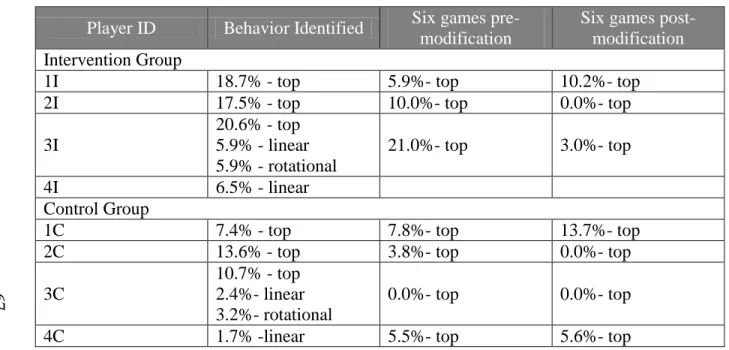
Head impact biomechanical measures for the Midget team were analyzed during the first half of the season to identify players that either exhibited a high percentage of top of the head impacts and/or a high percentage of high magnitude impacts. After the first half of the season was complete, HIT system data were exported and analyzed to identify players that exhibited “risky” behavior. Risky behavior was defined as any player who (1) sustained over 20% or greater head impacts to the top of the head (Figure 1) or (2) sustained 5.0% or more impacts that exceeded two standard deviations above the mean of linear acceleration impacts or (3) sustained 5.7% or more impacts that
exceeded two standard deviations above the mean of rotational acceleration impacts. Four athletes met one or more of the risky biomechanics criteria (players 1I, 2I, 3I, and 4I). Each of the four players were identified based on their linear acceleration values while one of the players also fit the risky criteria for hits to the top of the head and high levels of rotational acceleration. Each player met individually with the primary investigator and team coach to discuss how to change his playing technique. Each player was shown HIT System data and game video to depict the behavior leading to the risky profile. The coach verbally cued the athlete on the ice for the week following the intervention as to better playing technique (keeping his head up). Each identified player was matched with a control subject from the same team (players 1C, 2C, 3C, and 4C). The controls were matched to the identified players based on playing position, height, and weight. The head impact biomechanical data were recorded for the controls and no intervention was
54 Data Analysis
Head impact biomechanical measures were compared for the six games prior to and six games following the behavior modification intervention. This was not the original research design but due to a delay in behavior modification intervention and the team disbanding and ending the season early, modifications were made. Head impact biomechanical data for both intervention and control groups were compared pre- and post-intervention using descriptive statistics. A frequency count was used to compare the frequency of head impacts between pre and post behavior modification.
Results
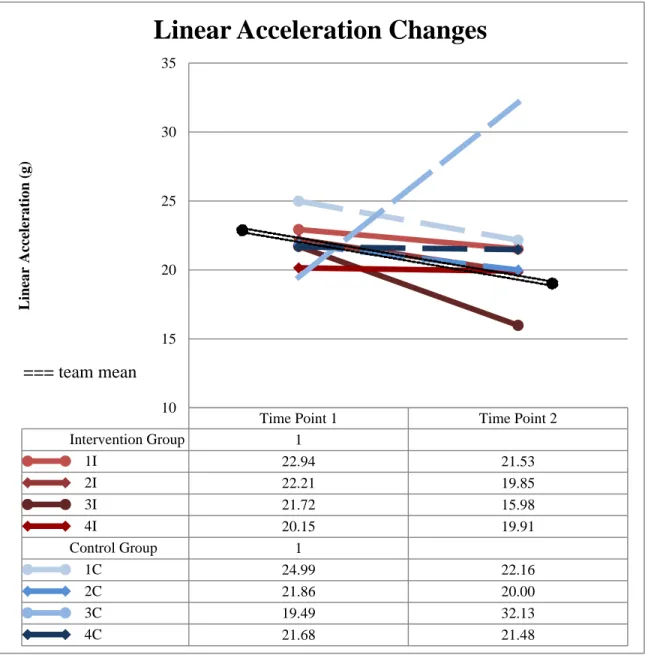
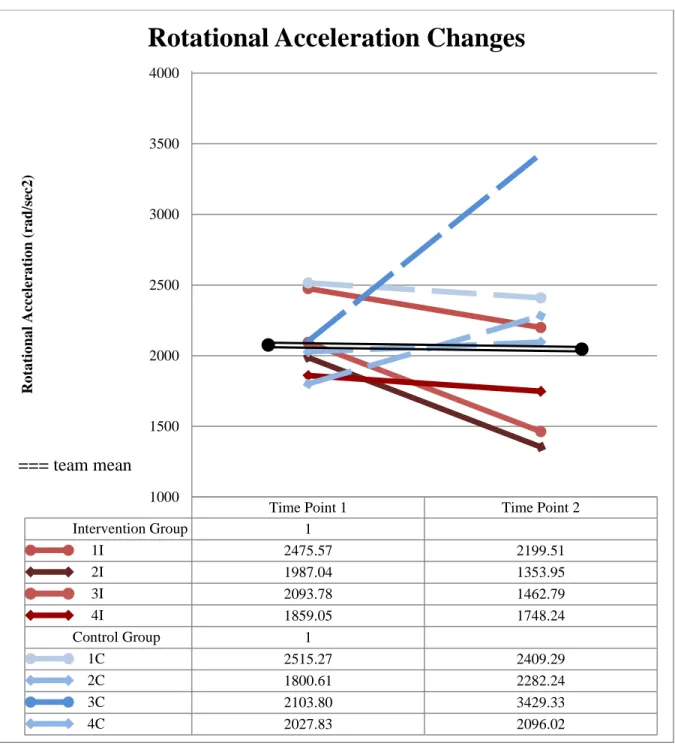
The four players who were identified with risky biomechanics presented with less severe linear and rotational acceleration following the behavior modification intervention. Players 1I, 2I, and 3I each had a decrease in frequency of top of the head impacts by 8.5%, 17.5%, and 17.6%, respectively. However, similar trends were observed among the control group. Descriptive results can be viewed in Table 5 and Figures 2, 3, and 4.
Discussion/Conclusion
The identified players and controls both presented with improved head impact biomechanics. Improvements in head impact biomechanical measures may have been due to differences between the six games prior to and the six games following the
intervention. Most notably, a majority of the participants decreased their total top of the head impacts. Decreasing the top of the head impacts is beneficial as to reduce chances of further injury and prepare oneself for an incoming hit (Mihalik, Guskiewicz et al. 2012).
55
growing as a hockey player with a different set of coaching principles. He was a very dedicated player who treated the coaching staff with a great deal of respect. Once his behavior modification meeting took place; he consciously worked to improve his biomechanics. He, on his own accord, checked in with the researcher to see how his technique was improving throughout the remainder of the season which most likely led to his decrease in risky biomechanics. If all players displayed such dedication and respect, we would most likely see a similar change in the profiles of the other players.
There is merit to this pilot study of behavior modification intervention. We observed reductions in both frequency and magnitude of head impacts among the involved participants. These results are consistent with the positive changes that were found with visual and verbal feedback in other sporting tasks (Messier and Cirillo 1989; Onate, Guskiewicz et al. 2001; Onate, Guskiewicz et al. 2005; Cronin, Bressel et al. 2008).
Numerous limitations were present with this study design. The behavior
modification intervention was not implemented as early in the season as desired due to researcher limitations. We utilized very skilled ice hockey players whose individual playing styles were likely very practiced. Changes in biomechanical profiles following behavior modification intervention may be more pronounced in younger and less
experienced athletes. The behavior profiles were obtained using data from the first half of the season yet the data that were analyzed pre-modification and post-modification
56
over. Also, shortly after the interventions, the team disbanded. Leading up to this point, the team was on the brink of folding which led to a decrease in morale and desire by the players to listen to the coach and perform in competitions whole heartedly. Out of the three teams that we researched, the Midget team was the only team willing to implement the behavior modifications with the researchers, which led to a small sample size.
57 FIGURES