DETERMINANTS OF PARASITE CLEARANCE TIME AND RECRUDESCENCE IN PATIENTS TREATED FOR UNCOMPLICATED PLASMODIUM FALCIPARUM MALARIA
IN SUB-SAHARAN AFRICA
Mary A. Woessner
A dissertation submitted to the faculty of the University of North Carolina at Chapel Hill in partial fulfilment of the requirements for the degree of Doctor of Philosophy in the Department
of Epidemiology in the Gillings School of Global Public Health.
Chapel Hill 2015
ABSTRACT
Mary A. Woessner: Determinants of Parasite Clearance Time and Recrudescence in Patients Treated for Uncomplicated Plasmodium falciparum Malaria in Sub-Saharan Africa
(Under the direction of Steven R. Meshnick)
Drug-resistant P.falciparum malaria is an increasing concern in sub-Saharan Africa (SSA), where previously effective monotherapy treatments were replaced by artemisinin combination therapies (ACT) because of resistance. ACTs typically have a good safety profile and high efficacy responses (>95%). Resistance to ACTs has been documented in Asia, but has not been observed in SSA. However, there are now signs artemisinin-resistance may be
spreading to the African continent.
An indication of artemisinin resistance is delayed parasite clearance time (PCT), defined as a slope half-life >5 hours (time to clear 50% of parasites). Artemisinin resistance may also cause ACT treatment failure (recrudescence). It is not clear though if delayed PCT or
recrudescence is consistently explained by parasite factors such as resistance or host factors such as immunity. Exploring the determinants of both delayed PCT and recrudescence is the aim of this dissertation.
In Aim 1, we found 24 cases with delayed PCT. Since the study occurred prior to the widespread introduction of ACTs in Africa, our data suggests that resistant parasite strains pre-existed the introduction of ACTs. Site (p<0.001) and baseline parasitemia (p<0.001) were significantly associated with delayed PCT.
In Aim 2, slope half-life (p<0.001), treatment (p=0.004), seasonality (p=0.008) and endemicity (p=0.018) were significant factors in explaining recrudescence, with age (p=0.076) and sex (p=0.106) also having marginal contributions.
ACKNOWLEDGEMENTS
I would like to acknowledge and thank Dr. Meshnick, the chair of my dissertation committee. Throughout my program, he has been an exceptional advisor and mentor. He has always been supportive and encouraging and I am extremely appreciative of his willingness to work with me throughout this exploration and research. His knowledge of malaria both the science and current landscape was unprecedented, and I appreciate the opportunity to have worked with him and benefitted from his insight and direction. I am also especially grateful for his patience and understanding with my competing priorities of work and family during this research program.
I would also like to recognize and thank the members of my dissertation committee - Dr. Juliano, Dr. Miller, Dr. Pettifor and Dr. Weir for their time, expertise, guidance, helpful
suggestions and comments, and support throughout this research program. I would like also to include a special thank you to Dr. Juliano for his review and contributions regarding the current research defining artemisinin resistance.
TABLE OF CONTENTS
LIST OF TABLES ... ix
LIST OF FIGURES ... x
CHAPTER 1: SPECIFIC AIMS ... 1
CHAPTER 2: BACKGROUND ... 3
1. Malaria burden in Sub-Saharan Africa ... 3
2. Artemisinin Resistance ... 4
2.1. History and Indication of Artemisinin Resistance ... 4
2.2. Detection of Artemisinin Resistance ... 5
2.3. Artemisinin Resistance in Asia ... 9
2.4. Artemisinin Resistance in Sub-Saharan Africa ... 11
2.5. Assessment of Parasite Clearance Time ... 15
2.6. Assessment of Recrudescence ... 18
2.7. Influence of Host Factors vs. Parasite Factors ... 21
2.8. Summary ... 22
3. Limitations of the current study data ... 23
4. Parent Study Data ... 24
CHAPTER 3: RESEARCH DESIGN AND METHODS ... 30
1. Study Aim 1 - Determinants of Parasite Clearance Time ... 30
1.1. Outcome of interest ... 31
1.2. Covariates of interest ... 31
1.4. Data analysis methods... 33
2. Study Aim 2 - Determinants of Recrudescence ... 33
2.1. Outcome of interest ... 34
2.2. Covariates of interest ... 35
2.3. Data collection methods ... 35
2.4. Data analysis methods... 36
3. Sample Size considerations ... 36
CHAPTER 4: RISK FACTORS FOR DELAYED PARASITE CLEARANCE TIME... 38
1. Introduction ... 38
2. Methods... 39
2.1. Objectives ... 39
2.2. Participants ... 39
2.3. Procedures ... 40
2.4. Statistical methods ... 41
3. Results ... 42
3.1. Patients ... 42
3.2. Parasite Clearance ... 43
3.3. Risk Factors for Delayed Parasite Clearance ... 43
3.4. Correlates and Risk Factors for Delayed Parasite Clearance ... 46
4. Discussion ... 47
5. Conclusions ... 49
6. Tables and Figures ... 50
CHAPTER 5: RISK FACTORS FOR RECRUDESCENCE ... 62
2. Methods... 64
2.1. Assessment of Recrudescence ... 64
2.2. Statistical methods ... 64
3. Results ... 66
3.1. Patients ... 66
3.2. Recurrence of Parasitemia ... 66
3.3. Risk Factors for Recrudescence ... 67
3.4. Correlates and Risk Factors for Recrudescence ... 70
4. Discussion ... 71
5. Conclusions ... 74
6. Tables and Figures ... 75
CHAPTER 6: SUMMARY... 83
1. Summary of Findings ... 83
2. Strengths and Limitations ... 84
3. Public Health Implications ... 86
4. Future Research Directions ... 86
LIST OF TABLES
Table 2.1. K-13 Mutations which Correlate with Delayed Parasite Clearance ...6
Table 2.2. Definition of Artemisinin Resistance ...8
Table 3.1. Sample size and Power ...37
Table 4.2. Summary Statistics for Parasite Clearance ...55
Table 4.3. Risk Factors for Delayed Parasite Clearance ...57
Table 4.4. Logistic Regression Analysis - Univariate Analysis ...60
Table 4.5. Logistic Regression Analysis - Multivariate Analysis ...61
Table 5.1. Baseline Characteristics ...77
Table 5.2. Classification and Timing of Recurrence ...78
Table 5.3. Risk Factors for Recrudescence ...79
Table 5.4. Logistic Regression Analysis - Univariate Analysis ...81
LIST OF FIGURES
Figure 2.1. Parasite Clearance Curve ...16
Figure 2.2. Sources of Variance in the Parasite Clearance Curve ...17
Figure 3.1. Determinants of Parasite Clearance Time ...31
Figure 3.2. Determinants of Recrudescence ...34
Figure 4.1. Consort Diagram ...50
Figure 4.2. Distribution of Slope Half Life...51
Figure 4.3. Percentage of Subjects with Slope Half Life >5, by Risk Factor ...52
Figure 4.4. Baseline Parasitemia (ln), by Country and Site ...53
Figure 5.1. Consort Diagram ...75
CHAPTER 1: SPECIFIC AIMS
The spread of artemisinin resistance to sub-Saharan Africa (SSA) is of great concern since there currently are no other treatment options available for widespread use for Plasmodium falciparum malaria and 90% of the world’s malaria deaths occur in Africa - the majority in SSA [113]. It is of interest to understand if there is an increased risk of artemisinin-resistance in malaria patients in SSA. Research has been conducted in Asia where resistance to artemisinins or
artemisinin containing therapies (ACTs) has been documented after patients have experienced slower clearance of parasites or failure of the treatment, but this assessment has been very limited in SSA where resistance was not thought to have occurred yet [16, 61, 62]. But recent studies have shown that mutations associated with artemisinin resistance can now be found in SSA [3]. But were they pre-existing or recently selected? Therefore any information on delayed parasite clearance or response failure due to recrudescence (return of the original parasite) pre-dating the widespread use of ACTs in SSA would be useful.
The goal of this research is to investigate if there are any clinical indicators which may explain why some patients experience slowed clearance after treatment and separately to assess why some patients may experience an initial response followed by a return of the initial parasite infestation (defined as recrudescence). In the absence of clinical indicators tied to host factors such as immunity or insufficient treatment, the possibility of artemisinin-resistance may be indicated.
Data collected in clinical practice is not often sufficient to provide this type of
order to explore this, retrospective analyses utilizing study data from a large, multi-center, randomized controlled trial of ACTs, where patients were monitored in-clinic every 8 hours to adequately assess parasite clearance and then followed for 42 days to assess if recurrence of the infection occurred were planned.
The specific aims of these analyses were to:
1) Assess if there are clinical determinants of Parasite Clearance Time (PCT) in patients treated with ACTs for P.falciparum malaria in SSA.
2) Assess if there are clinical determinants of Recrudescence in patients treated with ACTs for P.falciparum malaria in SSA.
CHAPTER 2: BACKGROUND
1. Malaria burden in Sub-Saharan Africa
The World Health Organization estimates there are 198 million malaria cases annually, causing over half a million deaths and 453,000 deaths in children under 5 years, with 90% of all malaria deaths occurring in Africa. Malaria is the leading cause of death in young children in Africa, where a child dies every minute [113]. Hundreds of millions of African children and adults are chronically infected with malaria. Between 30 and 50 percent of inpatient admissions and half of all outpatient visits are attributed to malaria each year [85]. Beyond the human toll, malaria has significant economic impacts in the endemic countries - costing Africa US$12 billion in lost GDP every year and consuming 40 percent of all public health spending [32, 75].
P. falciparum malaria (the most deadly species of the parasite and the predominant form in Africa) is a common cause of mortality in young children throughout sub-Saharan Africaand leads to significant morbidity across all age groups. However, many of the previous first line
monotherapy drugs for treating uncomplicated malaria are compromised by parasite resistance. The World Health Organization (WHO) currently advocates ‘artemisinin combination therapies’ (ACTs) such as: artemether plus lumefantrine, artesunate plus amodiaquine, artesunate plus mefloquine, and artesunate plus sulfadoxine-pyrimehtamine as first-line therapy to forestall resistance. The selection of a particular treatment for a country or region is based on the level of resistance to the partner drug used in combination with the artemisinin [110]. Any sign of
2. Artemisinin Resistance
2.1. History and Indication of Artemisinin Resistance
ACTs are currently the first-line treatment recommended by the WHO for the treatment of uncomplicated Plasmodium falciparum. In the past monotherapy treatments offered successful treatment, but one by one became less effective due to the development of resistance [42, 79, 116]. Artemisinins (derived from the leaves of the Artemisia annua shrub from China) were initially used as a Chinese herbal medicine with a long history and used to treat fever for many years. In 1967 it was screened and found to have malarial properties and was purified for use as an anti-malarial treatment in the 1970s with widespread use in China in the 1980s [51]. Artemisinins are well-tolerated, offer a good safety profile, and rapid reduction in parasites [50, 85, 101]. They have fast clearance - so an artemisinin monotherapy treatment is not a preferred treatment option as it would require an extended treatment period to remain active and a longer treatment period could promote non-compliance and also allow an increased risk of developing resistance. Creating a combination of artemisinin with another slow-eliminating anti-malarial monotherapy would offer faster clearance of the parasites, extended protection time and therefore a reduced ability for
mutation leading to resistance to occur [50, 100, 101]. Also, testing in the laboratory settings to try to introduce resistance in ACTs showed no stable patterns which could be developed [59, 102]. This initially seemed to provide a comprehensive and effective approach to forestall resistance. However, relying on one key component therapy for Plasmodium falciparum elimination world-wide could be risky if resistance were discovered; and the potential for resistant strains spreading across regions and continents would be a real fear [67, 102].
2.2. Detection of Artemisinin Resistance
Resistance has been an issue for anti-malarial treatments in the past, especially with monotherapy and even in combination therapies [7, 67, 116]. Multidrug resistance has been documented where a protein mediating the resistance can confer resistance or cross-resistance to multiple even structurally unrelated drugs. This is the case for the pfmdr1 (Plasmodium
falciparum multi-drug resistant) transport – which was often detected at some level when
resistance occurred in the past [20, 21, 44]. This however has not been detected with the current cases where artemisinin resistance has been suspected [25].
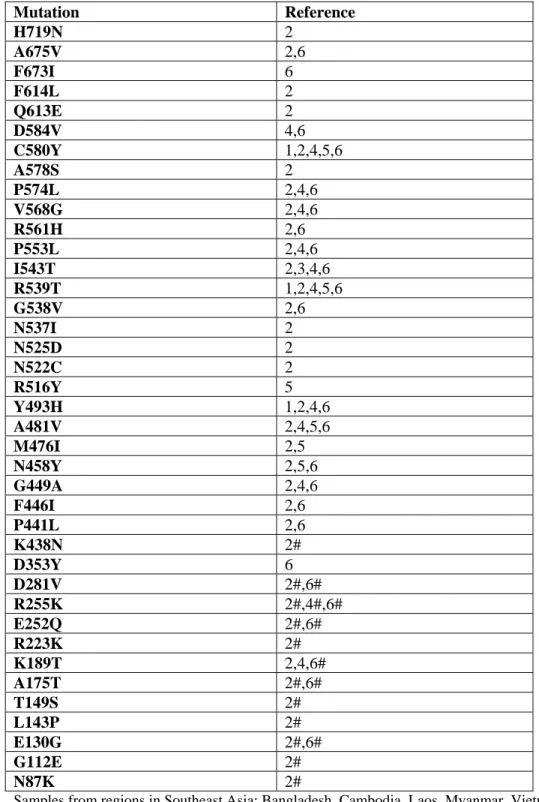
Table 2.1. K-13 Mutations which Correlate with Delayed Parasite Clearance
Mutation Reference
H719N 2
A675V 2,6
F673I 6
F614L 2
Q613E 2
D584V 4,6
C580Y 1,2,4,5,6
A578S 2
P574L 2,4,6
V568G 2,4,6
R561H 2,6
P553L 2,4,6
I543T 2,3,4,6
R539T 1,2,4,5,6
G538V 2,6
N537I 2
N525D 2
N522C 2
R516Y 5
Y493H 1,2,4,6
A481V 2,4,5,6
M476I 2,5
N458Y 2,5,6
G449A 2,4,6
F446I 2,6
P441L 2,6
K438N 2#
D353Y 6
D281V 2#,6#
R255K 2#,4#,6#
E252Q 2#,6#
R223K 2#
K189T 2,4,6#
A175T 2#,6#
T149S 2#
L143P 2#
E130G 2#,6#
G112E 2#
N87K 2#
Samples from regions in Southeast Asia: Bangladesh, Cambodia, Laos, Myanmar, Vietnam. 1-Ariey, 2014: Delayed PCT defined as slope half life >5 hour.
2-Ashley, 2014: Delayed PCT defined as slope half life >5 hours (# indicates all results with half-life <5 hours).
3-Thriemer, 2014: Delayed PCT defined as Parasite Clearance Time > 72 hours.
4-Takala-Harrison, 2015: Delayed PCT defined as slope half life >5 hours (# indicates half-life <5 hours). 5-Nyunt, 2015: Delayed PCT defined as parasitemia present on Day 3.
The mutations cover a 700 amino acid code region of the K-13 propeller gene, with the mutations most likely correlated with resistance appearing to be those above amino acid position number 440 [3]. The most prevalent mutation in Southeast Asia (Greater Mekong sub-region) appears to be C580Y. Other common mutations also include Y493H, R539T, and I543T [2].
These K-13 mutations have been found in both Asia and Africa. The mutations in Africa, however, have not been associated with delayed parasite clearance at this time – as the ACTs are still highly effective in Africa [3, 13, 90, 95].
Historically, mutations initiated in areas of Southeast Asia and then migrated across continents to Africa [3, 54, 55, 76]. It is not clear if artemisinin resistance will follow the same pattern migrating from Asia to Africa or if mutations or new foci are developing independently in different regions - or possibly a combination of both scenarios [77, 83]. A recent study has mapped the spread of K13 mutations across Southeast Asia and to the border of India. Though it has not been identified within India yet, this is the same historical path observed with the spread of resistance previously - and once through India on to the African continent [97].
Currently there are no validated molecular markers for artemisinin resistance and no
In the absence of a validated test for resistance, clinical assessment of signs of resistance consisting of clinical observation or case reports were the initial types of evidence being reported and will continue to be monitored across these regions.
Drug resistance is often initially indicated by a delay in parasite clearance time (the time from starting treatment until no parasites can be detected); a higher treatment failure rate (anti-malarial drugs typically have only around a 5% failure rate, so an observed increase in patients failing to respond to treatment would be a cause for concern); or successful clearance followed by a return of the initial parasites (recrudescence). The latter however is more difficult to assess on a routine basis though as it may be difficult to determine if the initial parasites have returned or if a new infection has occurred without performing a more advanced molecular genotyping or PCR analysis [86].
The WHO has provided the following definition of artemisinin-resistance in their Global Report on Antimalarial Drug Efficacy and Drug Resistance: 2000-2010 shown in Table 2.2.
Table 2.2. Definition of Artemisinin Resistance
Box 6. Definition of artemisinin resistance
Only patients who meet the following criteria are classified as having an artemisinin-resistant infection:
persistence of parasites 7 days after treatment or recrudescence within 28 days after the start of treatment (artemisinin-based monotherapy),
adequate plasma concentration of dihydroartemisinin,
prolonged time to parasite clearance and
reduced in vitro susceptibility to dihydroartemisinin (Noedl, 2005).
Markedly prolonged parasite clearance time (Dondorp et al., 2009).
In the remainder of the document, the term ‘artemisinin resistance’ is a working definition used to refer to:
an increase in parasite clearance time, as evidenced by 10% of cases with parasites detectable on day 3 after treatment with an ACT (suspected resistance); or
treatment failure after treatment with an oral artemisinin-based monotherapy with adequate antimalarial blood concentration, as evidenced by the persistence of parasites for 7 days, or the presence of parasites at day 3 and recrudescence within 28/42 days (confirmed resistance).* * This definition may be prone to confounding factors (known and unknown) such as splenectomy, haemoglobin abnormalities and reduced immunity.
Included in the report is the following observation that failure to clear parasites by Day 3 is likely indicative of the development of artemisinin resistance [16, 89]. The definition also allows for a determination of resistance based on ‘markedly prolonged parasite clearance time’ [111].
Assessing ‘prolonged’ or ‘delayed’ parasite clearance time allowed considerable variation in interpretation. Fortunately, more recently Genome-wide association studies (GWAS) used for phenotyping have been able to better define resistance from prolonged or delayed parasite
clearance to a more reliable and consistent measurement of “slope half-life >5 hours” - where the slope half-life represents the time required to reduce parasites by 50% [11, 57, 65, 91, 115]. This is the current clinical definition of resistance and is the definition used for the analyses in this dissertation.
2.3. Artemisinin Resistance in Asia
High failure rates have been reported when using ACTs in areas of Asia, in particular along the Thai-Cambodian border. This is an area where drug resistant Plasmodium falciparum has been recorded in the past. As there have been no validated markers or tests for artemisinin resistance in the past, the confirmation of resistance was often made through clinical observation as noted above.
One of the initial studies detecting probable artemisinin resistance in the region was conducted by Noedl, et. al. in 2008 which looked at parasite clearance times along with plasma concentrations and in vivo and in vitro susceptibility to a metabolite of artemisinin
susceptibility to dihydroartemisinin indicated the resistance appeared to be concentrated in Cambodia and had not spread across Thailand as feared. [62]
In a later study to assess if the artemisinin-resistance may be spreading, a study conducted by Phyo, et al. in 2012 also looked at the distribution of parasite clearance times over a 10-year period in patients on the western border of Thailand (Thailand-Myanmar/Burma border) to assess if there was a prolongation in clearance times with the use of artemisinin therapies over time. The study provided evidence of slowing of parasite clearance responses indicative of resistance and was consistent with that expected from a parasite population under drug selection. The genotypes were also compared between the parasites from the Cambodian region to those of the Myanmar region and were not found to be in common. However, when comparing the pair-wise allele sharing of the slow-clearing parasites vs. the fast-clearing parasites to the ‘resistant’ parasites in the Cambodian region, a relationship was found in the slow-clearing parasites – indicating a spreading of the resistant parasites from region to region [73].
These initial studies signalled the alarm for the possible development of artemisinin resistance. Later studies using the more advanced and reliable clinical definition of delayed parasite clearance based on slope half-life >5 hours have found consistent evidence of delayed clearance; and the supporting evidence mentioned with the recent discovery of the k-13 mutation findings have lead to the conclusion that artemisinin resistance is present in the regions of
southeast Asia [2, 3, 53, 63, 92, 96].
Artemisinin resistance defined as delayed parasite clearance time following an ACT does not however necessarily lead to overall treatment failure or recrudescence. The partner drug may still confer benefit and allow successful outcome [114].
studied artemisinin monotherapy. ACT/combination therapy was not included. The study concluded the recrudescence or treatment failure in this setting was not due to parasite resistance and was dependent on parasite burden at baseline [38]. This was consistent with an earlier finding by Price et al. showing parasitemia at baseline as a significant risk factor for
recrudescence/treatment failure [72].
Stepniewska, et. al. investigated in vivo parasitological measures of artemisinin susceptibility. Using pooled data from ACT containing anti-malarial drug studies in
uncomplicated falciparum malaria, the objective was to determine the effects of various covariates on therapeutic response. The covariates included: transmission intensity, age, and parasite density. The study found that assessing parasitemia at 72 hours (day 3) was a good predictor of whether or not a patient would have recrudescence. In addition, this research appeared to support the earlier conclusions from Ittarat that the main factor affecting initial parasite clearance time in this data was baseline parasite burden [89].
Vijaykadga et al. investigated the use of artesunate-mefloquine therapy in the treatment of uncomplicated Plasmodium falciparum in Thailand from 1997-2007. A retrospective study was conducted to compare parasite clearance times over time to assess prevalence of parasitemia following treatment and to investigate if delays in parasite clearance may indicate artesunate resistance. The study did find delayed parasite clearance times over this period indicating early artesunate susceptibility. The study also found the inability to clear parasites by day 2 or day 3 was not a good indicator of overall treatment failure or recrudescence (e.g. at Day 28) [99].
2.4. Artemisinin Resistance in Sub-Saharan Africa
other parts of the world may be tolerable, if ACT resistant malaria reaches the African continent it could be a dire situation [67].
Even though slowed parasite clearance time can be an indicator of resistance, it is not the only cause. It could be due to inadequate drug levels or exposure – which may be due to
inadequate dosing or even the possibility of non-potent or fake/fraudulent medication [3, 6, 7, 17]. It is also possible that slowed clearance may appear not due to resistance, but due to natural
immunity that may have decreased in a region due to effective malaria control in the past [9, 31]. Other possible determinants of parasite clearance time in this region include age, previous
exposure/episodes of malaria or transmission as surrogates for the development of immunity [19, 29, 33, 60].
Some studies have been conducted to investigate whether artemisinin resistance appears to be spreading to SSA. These studies are often limited to a small number of patients or data for a single country or center for investigation. Also, they often have not used standard methods to assess PCT. Data from combined studies have also been presented, but they often include studies with differing designs, collection methods and timepoints which hinder the assessment of PCT.
To date the study research has not indicated the spread of resistance in this region. However, clinical reports of treatment failure continue to arise. Also, with the history of the spread of resistance from Asia to SSA for previous therapies, this is still a concern of utmost importance to keep in the forefront [67].
Sowunmi et al. investigated the factors contributing to the delay in parasite clearance by combining data from Randomized Controlled Trials (RCT) studies in Nigeria from 1996 to 2008 to investigate any changes in parasite clearance over time. ACT and non-ACT regimens were
in PCT were associated with increased gametocyte carriage and the possibility of transmission of drug resistant phenotypes, and this finding was applicable to both the non-ACT and the ACT therapies [88].
Maiga et al. investigated the use of artesunate monotherapy in the treatment of uncomplicated Plasmodium falciparum in Mali. A prospective study was conducted in 100 children to assess PCT and treatment failure in 2010-2011 with results compared to a similar population at the same clinic in 2004. Though there were limitations to the study, there was no indication of decreased PCT or the development of artemisinin resistance in this population had developed over time [46].
Gbotosho et al. combined data from 6 randomized controlled trials and one open-label trial in Nigeria to assess changes in efficacy and parasite clearance times over a 5 year period for patients treated with two ACTs (AA=amodiaquine artesunate and AL=artemethur lumefantrine). Data for 811 subjects were assessed for clinical measures (n=210, 2005; n=206 in 2008; n=285 in 2009; n=110 in 2010). However, serial measures to assess parasite clearance time half-lives were only available for less than half the subjects. Parasitological efficacy remained unchanged over the 5 year period and no concern for drug resistance was noted. As noted with other studies, parasite clearance was associated with baseline parasitemia. The half-life was 1.09 hours with no difference based on age or treatment. Recrudescence was rare (n=18, 2.2%) and was not associated with treatment or age [30].
Borrmann et al. compared PCT data for 474 children in an out-patient RCT of two ACTs (DHA-PPQ - dihydroartemisinin-piperaquine and AM-LM – artemether-lumefantrine) conducted in 2005-2008 in Kenya to assess if subjects enrolled in the later two years of the study had delayed PCT compared to those enrolled in the first two years. A small but significant decrease in
immunity due to decreased transmission levels in the study area, and not likely due to resistance [9]. Similar findings were reported by Greenhouse et al. from an earlier study of n=129 subjects in Kenya [31].
Dorsey et al. investigated age, temperature, and parasite density on treatment outcomes in anti-malarial studies in Uganda (prior to the introduction of ACTs), by combining data from 6 previous trials of 7 standard therapies. They found patterns of decreasing age, increasing temperature and parasite density predicted decreasing treatment response suggesting the failures can be explained by factors other than resistance [19]. Similar findings for age, temperature, and parasite density were noted by Hamer et al. in a multi-center study of Chloroquine treated subjects in countries in central Africa and Ecuador [33].
Francis et al. investigated whether differences in treatment response and treatment failures in Uganda were due to anti-malarial drug resistance. Molecular markers of drug resistance were available for the therapies under study (non-ACT therapies). This was conducted prior to the use of ACTs and with reliable molecular markers of resistance for the current therapies available. Their findings suggested geographical differences (transmission intensity / endemicity) not parasite factors explained the differences in response [29].
It is not clear if artemisinin resistance is developing in SSA and if so if it will follow the patterns observed in Asia or if it will emerge as something slightly or entirely different.
2.5. Assessment of Parasite Clearance Time
Parasite clearance time (defined as the time from dosing to the clearance of all asexual parasites from the blood) was often used to assess the effectiveness of anti-malarial drugs; and a slowing of the time to clearance used as a signal to confer resistance. It is a useful measure
however, an understanding of the issues inherent in the measure and the implications is important. For example, it can be an imprecise measure due to random and systematic errors in measurement [105]. The time to clearance is also often directly impacted by the initial parasitemia which may have more or less of an impact depending on the stage of disease – e.g. uncomplicated
P.falciparum malaria is more stable, however, severe malaria where parasitemia is at very high levels would likely be more impacted by the baseline or starting parasitemia. The frequency of assessments or sample collection (multiple times per day vs. daily) may also impact the precision of the measurement [28, 39]. In regions where clearance is typically fast, an initial delay between 24-48 hours may be an indication of reduced susceptibility or resistance; however only assessing whether full clearance has occurred at 72 hours (3 days) may not detect this important delay or change [25].
A preferred measure of anti-malarial effect as noted by Flegg, et. al. in the discussion for standardizing the measure of parasite clearance is the slope of the log-linear portion of the
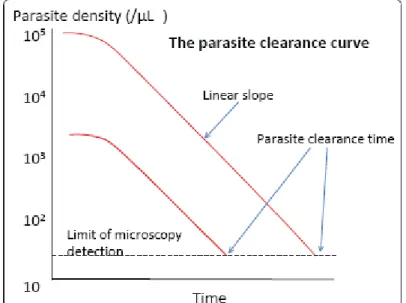
Nick White in his paper ‘The parasite clearance curve’, describes the traditional parasite clearance time measurement as a useful measure of anti-malarial drug-effect, however, with limitations due to the issues with imprecision and the dependency on the baseline parasite level. A visualization of the dependency on the baseline parasite level is shown in Figure 2.1 from White, 2011 – where two patients with different baseline parasite counts (shown on the y-axis),
experiencing the same therapeutic benefit from an anti-malarial treatment could have very
different parasite clearance times (shown on the x-axis) based on the traditional calculation of time from dosing to clearance of all parasites (below the limit of detection) [105].
Figure 2.1. Parasite Clearance Curve
Source: The Parasite Clearance Curve – N. White, 2011
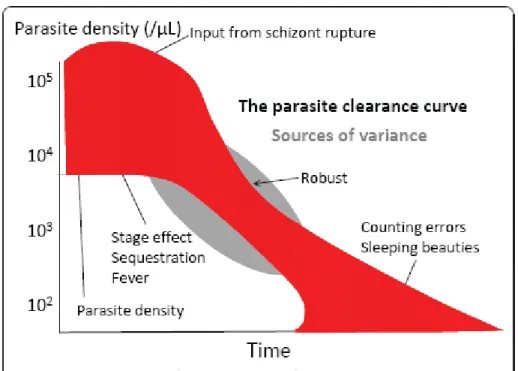
initial fever outbreak occurs and a patient seeks treatment, e.g. the disease stage effect seen early on (the early part of the curve); and the counting errors which may occur at the later stage of assessment when parasitemia is very low and there is a need to move from thin to thick blood slides to obtain a more accurate assessment of clearance or values going below a limit of detection (the later part of the curve) [105].
Figure 2.2. Sources of Variance in the Parasite Clearance Curve
Source: The Parasite Clearance Curve – N. White, 2011
In order to address differences in measures and to standardize and obtain a consistent approach to identifying potential resistance, a parasite clearance estimator (PCE) tool was developed by the Worldwide Antimalarial Resistance Network (WWARN) [119]. It provides a consistent algorithm for removing the lag portions and tail portions of the curve and calculations for the slope. This would also allow a consistent approach for all malaria studies to use and
reliable, and accurate method to estimate malaria parasite clearance based on the linear portion of the slope of the log-parasitemia versus time relationship. This standardized approach will facilitate routine monitoring of ACT efficacy and allow comparisons over time and space” [119].
The discussion in the literature to move to this new standard measure of slope half-life to assess parasite clearance and the new PCE tool have only recently been made available since 2011, so studies conducted previously would typically not have had access to this measure for reporting. However, the standardized approach will offer an advantage for comparability of future studies and a more precise way to assess changes in PCT which may be indicative of resistance going forward [82, 118].
In addition to providing measurements of the Parasite Clearance Time and the slope half-life, the parasite clearance estimator tool also provides traditional measures of PC50, PC95, PC99 (time when 50%, 90%, 95%, 99% of the parasites have cleared and estimates of the lag time [119].
All of these measurements together are useful to build a profile to assess parasite clearance and look for changes or prolongation of clearance time which is a critical way to assess
artemisinin-resistance in the current environment.
2.6. Assessment of Recrudescence
Recrudescence is an indication of treatment failure and possibly resistance. This arises when a return of the original parasite infection occurs after treatment with an anti-malarial therapy. One of the difficulties in assessing recrudescence is determining if a recurrence or return of a positive parasite count after treatment is due to a return of the original parasites (recrudescence) or a new infection (re-infection due to a new mosquito bite) or possibly a combination of both (mixed infection) [86].
used to assess if the genes from the parasites in the original infection at baseline are also observed when the parasite count becomes detectable again after treatment. In the past, the number of genes assessed and methods varied leading to inconsistencies in reporting across studies. Now standardized approaches based on WHO protocol are used across anti-malarial studies which include the testing for polymorphisms in three particular genes: merozoite surface protein 1 (msp-1), merozoite surface protein 2 (msp-2), and glutamate-rich protein (glurp) [12, 109]. If a
subsequent sample contains identical alleles or a subset of alleles present in the baseline sample the infection is considered to be a recrudescence. If the sample contains only new alleles it is
considered to be a new infection (re-infection). If a sample contains both it is considered to be both a recrudescence and a new infection (mixed infection). Results which contain both (mixed
infection) are typically classified as treatment failures since any recrudescence would indicate all of the original parasites were not eliminated; however, differing summary or analysis methods may be have been used [10, 111].
In addition to the molecular genotyping, the timing of assessments has also now been standardized for studies conducted with the WHO protocol [107]. In the past, testing typically started on Day 7 and did not go beyond Day 14 – so any recurrence beyond this point was assumed to be a new infection and not indicative of a failure of the previous treatment. With the use of ACT therapy, a longer follow-up period was needed to assess the possibility of recrudescence occurring. The length of testing has been standardized so testing typically starts at Day 7 and now continues beyond day 14 to day 28 or day 42 depending on the half-life of the drugs to ensure an adequate follow-up period has been assessed. [110]
assessing for identical alleles or subsets of alleles. This variability could cause differences in the classification or misclassification due to false positive or false negative detection of recrudescence. It is possible that a new infection may have occurred but with a parasite possessing similar genetic makeup to the baseline parasite. In this case it may have been erroneously misclassified as a recrudescence (false positive). Similarly, it is possible a genotype may have been present in the baseline sample, but at an undetectable level. When comparing the post-treatment sample it may appear that a new infection has occurred, when it actually is a recrudescence of a previously low-level or infrequent variant (false negative) [14, 69].
In the analysis stage, different approaches may also be used which could cause the failure rate (recrudescence rate) to appear to vary as well. For example, cases with recrudescence plus new infection (mixed cases), could be classified as indeterminate and excluded from the analysis rather than being considered as treatment failures or could even be classified a non-recrudescence (technically including them as a new infection) [86]. The analysis method could have a dramatic impact on the reported recrudescence rate and it is important to look closely at the method used for summarizing the mixed cases when comparing results in the literature.
Though these issues do exist, the movement toward standard protocols based on WHO guidelines is improving and the assessment of recrudescence is more consistent in studies
2.7. Influence of Host Factors vs. Parasite Factors
A delay in parasite clearance time (slope half-life >5 hours) is an indicator of resistance. In the absence of an assessment of validated genetic markers to confirm parasite factors, delayed clearance times are attributed to resistance and are used to define resistance.
For uncomplicated Plasmodium falciparum, parasite clearance can typically be influenced by baseline parasitemia, natural and/or acquired immunity, frequency of measurements, drug exposure, and resistance [1, 25, 82]. Erythrocytic polymorphisms have also recently been found to influence parasite clearance [1]. It is important to also understand factors that influence parasite clearance may not be the same in all regions. For example the influence of age on immunity and clearance occurs in SSA where acquired immunity is common, but age is not a significant factor in southeast Asia where malaria is less frequent [1, 25].
Host (human) factors, immunity in particular, may contribute and influence the ability to clear parasites [1, 15, 22, 25, 41, 45, 82]. Humans with a first exposure to malaria will most likely become ill. Older children and adults in endemic areas develop protection from illness and death [26, 103]. Immunity does wane if leaving and then returning to an endemic area. However, the immunity does appear to quickly return [43]. This acquired immunity from multiple malaria exposures enables individuals to clear infection without drug treatment. This acquired immunity also adds a complexity when attempting to assess drug resistance in these cases - since these individuals when treated with anti-malarial therapy may clear the parasites including the drug-resistant parasites. In these cases the ability to clear the parasite would likely be attributed to the drug therapy.
resistant parasites [41]. Of note, very young infants also appear to have initial protective immunity conveyed from their mothers, but this appears to last less than 6 months. [24, 74]
In addition to acquired immunity and age-related immunity, transmission intensity (or endemicity level) also enhances immunity – with higher transmission intensity hastening the development of immunity, due to more frequent exposure to malaria parasites. Treatment failure is also less common in high transmission areas [5, 24, 29, 74, 93].
Immune responses from malnutrition, co-infection with HIV, and pregnancy all pose similar relationships with the susceptibility to malaria increased – although patterns are not as conclusive for these cases [58, 74]. A higher temperature at presentation may also be a surrogate for a less effective host immune system response to infection [33]. However, this has been difficult to study due to limited data and limited range of temperature data at presentation [19].
2.8. Summary
The efficacy and safety of malaria treatments have been studied in depth, with thousands of patient exposures reviewed for regulatory applications and research. Most therapies have very high efficacy rates (>95%) and safety profiles that are acceptable in the benefit:risk setting for malaria.
The possibility of resistance remains a concern; and control will be difficult without knowing which areas may have failures due to changes in immunity and which areas may have true artemisinin resistance [4, 52].
With very few treatment options on the horizon, any spread of artemisinin resistance to SSA would be a devastating situation. Now is the time for diligence in monitoring for any potential spread of artemisinin-resistant strains to SSA.
3. Limitations of the current study data
As shown above, data on the exploration of artemisinin resistance in SSA is very limited. Resistance in Asia was only recently confirmed [61, 73] and until very recently there were no biomarkers or laboratory tests to confirm artemisinin resistance. Investigation until just recently (2013/2014), has often been limited to the guidance as noted in the WHO documentation to assess the potential for artemisinin resistance based on prolonged parasite clearance times and increased treatment failure rates and recrudescence [106, 108, 110, 112, 114].
Though many studies have been conducted in Asia and a clearer understanding of the
profile of resistance in this region is available, similar research in SSA is very limited. Where
studies have been conducted in SSA, they are often small studies or are limited to a single country
or center.
Meta-analyses and investigations conducted comparing parasite clearance times across
studies conducted at different times are notably subject to differences in data collection methods,
differences in sample collection times, and differences in analytical approach which may lessen the
strength or interpretation of the comparison.
for a more formal clinical definition of slope half-life > 5 hours. Since this was only made available in 2014, however, the previous studies would not have used this more robust definition.
Very few studies have also used the Parasite Clearance Estimator tool available from WWARN, as this was only recently made available for widespread use. It will be interesting to see how the implementation of the standards for parasite clearance estimation will impact the assessment of changes in PCT and comparability across studies in the future.
Several limitations have been noted regarding the previous study data available for SSA. The current analyses in this dissertation offered a unique opportunity to better understand parasite clearance data and recrudescence data for ACTs in SSA by utilizing data previously collected from a large multi-center and multi-national study in SSA and to explore determinants of PCT and recrudescence while applying current definitions and tools which may be helpful to better assess the determinants of PCT and recrudescence.
4. Parent Study Data
One of the established gold-standard ACTs for treating malaria in SSA is Coartem
The study was a multi-center and multi-national randomized controlled trial (RCT) conducted in SSA and following Good Clinical Practice (GCP) and Good Laboratory Practice (GLP) standards. Patients and/or guardians were consented prior to the study and Disease History and Baseline Results were documented. The study collected parasite count data for 3 days, with measurements every 8 hours. The study also included a follow-up period with genotyping of any recurrences using the more comprehensive genotyping of MSP1, MSP2 and GLURP to assess recrudescence vs. new infections. The study was also setup and followed the WHO Protocol and utilized the WHO definitions for assessing response outcomes [107].
The study was conducted with full enrolment; ran to completion; and was reported. The study met the efficacy and safety objectives. However, due to a safety concern in a subset of patients with G6PD-deficiency (glucose-6-phosphate dehydrogenase) which exposes these patients to a greater risk of having a hematologic event, the registration of this product did not go forward.
The study collected extensive treatment data on ACTs in a large center,
multi-national setting in SSA. It provides a unique opportunity for additional data exploration which may offer useful insight into possible determinants of parasite clearance time and recrudescence or treatment failure with ACTs in regions in SSA.
Design of the Parent Study
The parent study is a double-blind, multi-center RCT designed to assess efficacy in patients treated with chlorproguanil-dapsone-artesunate (CDA) vs. the artemether-lumefantrine (AL). 1372 patients, age 1 to 14 years, were randomized in a 2:1 ratio (914 CDA : 458 AL), to allow
Patients eligible for the trial had: uncomplicated P.falciparum malaria infection of 2,000 – 200,000 parasites / uL and were aged 12 months to 14 years old. Patients were not eligible if they had severe/complicated malaria; or had a known history of G6PD deficiency. The specific study inclusion/exclusion criteria are shown below:
Inclusion Criteria:
Acute, uncomplicated P. falciparum malaria, microscopically confirmed
Temperature at screening 37.5oC or more or confirmed history of fever within the previous 24 hours
Weigh 7.5kg or over
Screening hemoglobin (Hb) of 7g/dl or over, or hematocrit of 25% or more (if Hb not available at screening)
Willingness to comply with the study visits and procedures, as outlined in the informed consent form
Written or oral witnessed consent has been obtained from parent or guardian
Assent is given by a child aged 12 years or over, in addition to the consent of their parent or guardian
Exclusion Criteria:
Features of severe/complicated malaria
Hypersensitivity to active substances (chlorproguanil, dapsone, artesunate, artemether lumefantrine)
Known allergy to biguanides, sulphones, sulphonomides, artemesinin derived products or aminoalcohol drugs
Known history of G6PD deficiency
Use of concomitant medications that may induce hemolysis or hemolytic anemia from the WHO (World Health Organization) list of essential drugs
Evidence of any concomitant infection at the time of presentation (including P. vivax, P. ovale, and P. malariae)
Any other underlying disease that may compromise the diagnosis and the evaluation of the response to the study medication (including clinical symptoms of
immunosuppression, tuberculosis, bacterial infection; cardiac or pulmonary disease)
Malnutrition, defined as a child whose weight-for-height is below -3 standard deviations or less than 70% of the median of the NCHS/WHO normalized reference values
Treatment within the past three months with mefloquine or mefloquine-sulfadoxine-pyrimethamine; twenty-eight days with sulphadoxine/mefloquine-sulfadoxine-pyrimethamine;
sulfalene/pyrimethamine, lumefantrine or artemether/lumefantrine, amodiaquine, atovaquone or atovoquone/proguanil, halofantrine; 14-days with chorproguanil-dapsone, or 7-days with quinine (full course), proguanil, artemesinins, tetracycline doxycyline or clindaycin
Positive sulphadoxine/pyrimethamine urine screen for ‘unknown’ antimalarial drug use in prior 28 days
Use of an investigational drug within 30 days or 5 half-lives whichever is the longer
Previous participation in this study
Female subjects of child-bearing age, who have had a positive pregnancy test at screening, or do not give their consent to take a pregnancy test
Baseline assessments included: temperature, age, height (or length); prior and current medical history; current medications; history of previous malaria episodes in children <= 2 years; and a baseline sample for assessment of G6PD status. Hematologic testing included hemoglobin, hematocrit, methemoglobin (when available), and counts of red blood cells (RBCs), reticulocytes (expressed as proportion of total RBCs), white blood cells (WBCs), and platelets. Clinical chemistry parameters included serum creatinine, total and indirect bilirubin, aspartate aminotransferase (AST), and alanine aminotransferase (ALT).
Patients were treated in-clinic for 3 days and then followed-up at visits on day 7, 14, 28 and 42. At each visit, samples were taken to assess parasite type and counts and to perform laboratory evaluations for clinical chemistry and hematology. Assessments for adverse events occurred at each visit and also were updated if reports were made between visits. Further details of the study are available in the US-NIH Clinical Trials Registry [98].
Parasite Clearance Time
Asexual parasite and gametocyte counts were performed at screening, at pre-dose, every 8 hours during the in-patient stay until discharge on Day 3 and at follow-up visits on Days 7, 14, 28 and 42. At each time point, two thick and one thin film were prepared and parasite densities determined by examination of a thick blood slide (10 ML thumb prick), according to WHO methods [107].
Parasite clearance time was assessed as the time needed to clear asexual parasite forms from the blood; parasite numbers fall below the limit of detection in a thick blood smear and remain undetectable for at least 48 hours.
Recrudescence
For the Parasite DNA analysis - two drops of peripheral blood were collected onto pre-printed filter papers, for subsequent DNA extraction and PCR analysis of P.falciparum DNA, on all subjects at screening and any day on or after day 7 when a blood slide is prepared. PCR of the P.falciparum genes MSP-1, MSP-2 and GLURP were used to distinguish between the initial infection reappearing (recrudescence) and a new infection occurring on any day on or after day 7 in the 42-day follow-up period.
CHAPTER 3: RESEARCH DESIGN AND METHODS
The current research proposal is an ancillary analysis of the parent Randomized Controlled Trial (RCT) described above. The parent RCT was designed to assess efficacy and safety of a new ACT. The ancillary analyses described in this dissertation were conducted to investigate the
potential determinants of parasite clearance time [Study Aim 1] and determinants of recrudescence [Study Aim 2] that may be useful in addressing if treatment failure is due to host factors such as immunity; or parasite factors which might convey signs of the development of artemisinin resistance in SSA.
1. Study Aim 1 - Determinants of Parasite Clearance Time
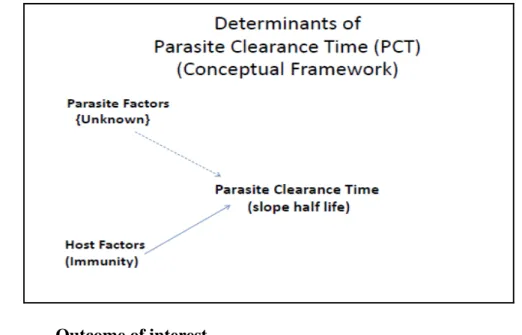
A slowing of parasite clearance time is potentially an indicator of resistance, but could also be a sign of individual or population changes due to natural or acquired immunity or some other explanation.
An exploratory analysis of determinants of parasite clearance time was planned to assess if there are other factors which might predict a slow or elongated parasite clearance time.
Figure 3.1. Determinants of Parasite Clearance Time
1.1. Outcome of interest
The primary outcome for this analysis is parasite clearance time assessed by the slope half life of the parasite clearance curve. The slope half life represents the estimated time in hours for parasitemia to decrease by half. The calculation utilized the Parasite Clearance Estimator (PCE) software available from the WWARN website to allow consistency in reporting and assessing potential malaria resistance [119].
1.2. Covariates of interest
The following covariates were considered for evaluation as surrogates for host immunity: Age – based on natural immunity patterns over age range
<5 years
>=5 years
Presence of Previous Malaria Episode and Number of previous malaria episodes Seasonality
Rainy
Dry
Estimated Endemicity
<60%
Geographic Location (Study Center or Region to assess transmission intensity)
Burkina Faso
Ghana
Kenya
Nigeria
Tanzania
The selection of covariates is based on factors associated with host immunity in the literature. Other covariates included baseline parasitemia, sex, and treatment group.
1.3. Data collection methods
Data collection and validation for the parent study was conducted under SOPs for Good Clinical Practice (GCP) and to Good Laboratory Practice (GLP) standards. Data were collected on a Case Report Form (CRF) that was pre-tested for readability and accuracy in capturing planned data. Data from the CRF were then entered into the sponsor’s database where additional validation and consistency checks were run. Missing data points were queried as well as any results that were inconsistent across the CRF. Consistency checks included both a manual clinical review of the CRF information as well as programmed validation checks.
Once the data quality assessments were complete the study database was authorized for analysis.
1.4. Data analysis methods
The statistical models used to estimate the parasite clearance measures and lag phase duration were fitted using the Parasite Clearance Estimator (PCE) developed by the World Wide Antimalarial Resistance Network (WWARN) [119].
The analysis for Parasite Clearance Time with outcome assessed as the slope of the parasite clearance estimator is calculated as:
Slope half life = T½ = loge 2 / K = 0.692/K,
where K is the clearance rate constant.
Clearance rate constant is calculated from the subset of data
after the tail and lag phase are removed, and utilizes the formula: loge(Pt)=loge(P0) – Kt
Logistic regression was used to assess the outcome, parasite clearance time assessed by the slope half life (<= 5 hours vs. > 5 hours) and the covariates: baseline parasitemia, sex, treatment and the surrogates for immunity (age, seasonality, estimated endemicity, number of previous malaria episodes, and geographic region).
Univariate analyses were conducted to assess the association between parasite clearance time and each of the covariates individually. A multivariate logistic regression analysis was also conducted which included the full set of candidate variables with a stepwise approach using a generous selection criterion of 0.20 for entry and 0.25 to retain the variable in the model.
Sensitivity analyses were also undertaken to explore the missing data for the slope half-life assessment from the Parasite Clearance Estimator (PCE).
2. Study Aim 2 - Determinants of Recrudescence
parasites after initial parasite clearance) could be a concern that artemisinin-resistance may be spreading to SSA.
The aim of this analysis was to explore the determinants of recrudescence and better understand if they may be related to host factors (such as changes in immunity) or parasite factors (which could indicate resistance).
The following Conceptual Framework shown in Figure 3.2 describes the relationship being explored.
Figure 3.2. Determinants of Recrudescence
2.1. Outcome of interest
Analyses of any recurrence of parasitemia (recrudescence only, recrudescence plus new infection, and new infection only) and the time to recurrence were also explored.
2.2. Covariates of interest
The following covariates were considered for evaluation as surrogates for host immunity: Age – based on natural immunity patterns over age range
<5 years
>=5 years
Presence of Previous Malaria Episode and Number of previous malaria episodes Seasonality
Rainy
Dry
Estimated Endemicity
<60%
>=60%
Geographic Location (Study Center or Region to assess transmission intensity)
Burkina Faso
Ghana
Kenya
Nigeria
Tanzania
The selection of covariates is based on factors associated with host immunity in the literature. Other covariates included baseline parasitemia, sex, and treatment group. In order to explore if there was an association between parasite clearance time and recrudescence, slope half life was also included in the analyses.
2.3. Data collection methods
2.4. Data analysis methods
Logistic regression was used to assess the outcome (recrudescent vs. non-recrudescent) with Parasite Clearance Time (Slope half-life), baseline parasitemia, sex, treatment, and the covariates which are surrogates for immunity (age, seasonality, estimated endemicity, number of previous malaria episodes, and geographic region).
Univariate analyses were conducted to assess the association between recrudescence and each of the covariates individually. A multivariate logistic regression analysis was also conducted which included the full set of candidate variables with a stepwise approach using a generous selection criterion of 0.20 for entry and 0.25 to retain the variable in the model.
In addition, analyses to describe the occurrence and timing of any recurrence
(recrudescence only; recrudescence plus new infection; and new infection only) were summarized.
3. Sample Size considerations
Since the study is based on ancillary analyses of an RCT, the proposed analyses are limited by the sample size of the parent study (n=1372).
All statistical analyses for this dissertation are performed post-hoc. No formal sample size calculations were considered for the analyses. The sample size was planned based on the original clinical trial objectives and reported previously [70].
Table 3.1. Sample size and Power
N %N (X=1)
P0 P1 Odds Ratio
Alpha Power
1372 2 0.05 0.1 2.11 0.05 0.28
1372 5 0.05 0.1 2.11 0.05 0.46
1372 10 0.05 0.1 2.11 0.05 0.64
1372 20 0.05 0.1 2.11 0.05 0.83
1372 40 0.05 0.1 2.11 0.05 0.93
1372 2 0.05 0.15 3.53 0.05 0.59
1372 5 0.05 0.15 3.53 0.05 0.84
1372 10 0.05 0.15 3.53 0.05 0.97
1372 20 0.05 0.15 3.53 0.05 >0.99
1372 40 0.05 0.15 3.53 0.05 >0.99
1372 2 0.05 0.20 4.75 0.05 0.80
1372 5 0.05 0.20 4.75 0.05 0.97
1372 10 0.05 0.20 4.75 0.05 >0.99
1372 20 0.05 0.20 4.75 0.05 >0.99
1372 40 0.05 0.20 4.75 0.05 >0.99
CHAPTER 4: RISK FACTORS FOR DELAYED PARASITE CLEARANCE TIME
1. Introduction
The World Health Organization estimates there are 198 million malaria cases annually, causing over half a million deaths and 453,000 deaths in children under 5 years in 2013, with 90% of all malaria deaths occurring in Africa [113].
P. falciparum malaria is a common cause of mortality in young children throughout sub-Saharan Africa (SSA)and leads to significant morbidity across all age groups. However, many of the previous first line monotherapy drugs for treating uncomplicated malaria are compromised by parasite resistance. In 2005, the World Health Organization (WHO) advocated artemisinin
combination therapies (ACT) as first-line therapy to forestall resistance. Any sign of resistance to artemisinin in SSA would be an immediate cause for concern due to a lack of other viable
treatment options
Artemisinins are well-tolerated, offer a good safety profile, and rapid reduction in parasites. However, they also have fast clearance - so an artemisinin monotherapy treatment requires an extended treatment-period. Non-compliance by patients could lead to treatment failures and the development of resistance. ACTs are effective because they combine artemisinin with a slow-eliminating anti-malarial and are curative with only 3 days of treatment [102].
Artemisinin resistance is defined by a delay in parasite clearance time (the time from starting treatment until no parasites can be detected) with a slope-half-life greater than 5 hours [65, 115]. Delays in parasite clearance times have also been associated with host immunity and
The use of the slope half life allows an assessment of the clearance time which is independent of the baseline count [27, 105]. In addition, the standardized Parasite Clearance Estimator (PCE) software offered through WWARN, allows a standardized approach for measuring parasite clearance time and the slope half life which will facilitate comparisons with other studies and with data over time [71, 81, 119].
The aim of this research is to retrospectively analyze the data from a large multi-center study in SSA to explore if there are cases which meet the definition of artemisinin resistance and to characterize risk factors for such cases.
Importantly, this study occurred prior to the large scale implementation of ACT therapy in Africa, providing insight into the nature of “artemisnin resistance” prior to drug implementation.
2. Methods
The clinical data from this trial has been published separately and contains a more comprehensive description of the conduct of the individual trial, objectives and results from the original study design [70].
2.1. Objectives
The current analysis seeks to explore the parasite count data from the original clinical trial using the recently available Parasite Clearance Estimator (PCE) from WWARN - to provide consistent methodology for calculating the parasite clearance time and associated slope half life. This measure is used to assess the presence of artemisinin resistance and to explore the factors associated with impact of host immunity.
2.2. Participants
The initial study was conducted between June 2006 and August 2007 in five countries and 11 sites in sub-Saharan Africa: Burkina-Faso (1 center: Bobo-Dioulasso), Ghana (1 center:
Jos, and Calabar), and Tanzania (2 centers: Bagamoyo and Kiwangwa). Patients were treated with one of two artemisinin-combination therapies: chlorproguanil-dapsone-artesunate (CDA) or artemether-lumefantrine (AL). Both therapies utilized a 4mg dose of artemisinin.
Patients eligible for the trial had: uncomplicated P.falciparum malaria infection of 2,000 – 200,000 parasites/uL; were aged 12 months to 14 years old; and did not have morbidities or co-infection. Further details of the study entry criteria are included in the original publication [70].
2.3. Procedures
Baseline assessments included: temperature, age, height (or length); prior and current medical history; current medications; history of previous malaria episodes; and a baseline sample for assessment of G6PD status and hematologic and clinical chemistry laboratory data.
Patients were treated in-clinic for 3 days. A home visit occurred on days 4, 5, and 6. Then in-clinic follow-up visits occurred on days 7, 14, 28 and 42. At each clinic visit, samples were taken to assess parasite type and counts and to perform laboratory evaluations for clinical chemistry and hematology. Assessments for adverse events occurred at each visit and also were updated if reports were made between visits.
Parasite assessment
Asexual parasite and gametocyte counts were performed at screening, at pre-dose, every 8 hours during the in-patient stay until discharge on Day 3 and at follow-up visits on Days 7, 14, 28 and 42. At each time point, two thick and one thin film were prepared and parasite densities determined by examination of a thick blood slide (10 ML thumb prick), according to WHO
Parasite clearance time was assessed as the time needed to clear asexual parasite forms from the blood; with parasite numbers falling below the limit of detection in a thick blood smear and remaining undetectable for at least 48 hours.
2.4. Statistical methods
The slope half-life was calculated using the WWARN Parasite Clearance Estimator (PCE) to provide standardized calculations [119].
SAS version 9.3 was used for all analyses [78]. Descriptive statistics were used to report demographic and clinical characteristics for patients grouped by slope half life <= 5 hours and >5 hours. Categorical data is summarized as frequency and percent with p-values based on the chi-square test. Continuous data is presented with summary statistics: mean (standard deviation), median, minimum and maximum, with p-values based on analysis of variance (ANOVA). P-values are provided for descriptive purposes.
All statistical analyses were performed post-hoc. No formal sample size calculations were considered for the analyses reported in this paper. The sample size was planned based on the original clinical trial objectives and reported previously [70].
Correlations (using Spearman non-parametric correlations) among risk factors; and among risk factors and outcome were explored for continuous variables.
A logistic model was developed to investigate the influence of the following surrogates for host immunity (age, seasonality, estimated endemicity, geographic location – country and study site, and occurrence of previous malaria episodes), treatment and baseline parasitemia on parasite clearance time assessed as slope half life <=5 hours and > 5 hours.
population that are infected with P. falciparum at any one time - averaged over the 12 months of 2010 (also referenced as PfPR – P. falciparum Parasite Rate). Estimated endemicity was explored as a continuous variable and categorized as <60% vs. >=60% [35]. Seasonality was assessed as ‘Rainy’ or ‘Dry’ based on the start date of the treatment and whether this corresponded to the rainy season for the geographic location of the center. The number of previous episodes was explored based on total number of episodes in the past 12 months and as a categorical variable: ever
experiencing a previous episode (yes or no). Country-level and site-level investigations were also conducted. For modeling purposes, small sites were combined with sites in close geographic proximity.
Univariate logistic regression analyses were conducted to assess the influence of each individual parameter. A multivariate logistic regression analysis was also conducted which included the full set of candidate variables with a stepwise approach using a generous selection criterion of 0.20 for entry and 0.25 to retain the variable in the model.
A large number of patient profiles were excluded from the original analysis based on the threshold limits of the online WWARN PCE tool - in particular the requirement for the last detectable parasite count to be <1000. An additional sensitivity analysis was undertaken to assess these subjects by utilizing a higher threshold cut-off value of 10,000 allowing a slope half-life to be calculated for these subjects.
3. Results
3.1. Patients
A summary of the patient population available for analysis is shown in Figure 4.1. 1372 malaria patients were enrolled and all data was included for analysis in the PCE tool. Only
subjects) were excluded due to parasitemia too low at baseline; 10% (148/1372 subjects) were excluded due to last positive parasitemia value exceeding 1,000.
Table 4.1 shows the demography summary for the analysis set (N=1079). Patients had a mean age of 4.2 years with a range of 1 to 14 years with 65% of subjects <5 years of age and 35% of subjects 5-15 years. Gender was similarly represented with 48% female and 52% male subjects.
Subjects were represented in 5 countries and 11 sites with the majority of subjects in Nigeria (42%, n=457), then Kenya (22%, n=239), Tanzania (20%, n=212), Ghana (15%, n=166) and Burkina Faso (<1%, n=5). Subjects were more commonly enrolled during the Rainy season (65%) than the Dry season (35%); and from moderate to highly endemic regions (Median: 50%, Range: 30%-60%).
Entry criteria for the study required subjects to have uncomplicated malaria with baseline parasitemia: 2,000 – 200,000 parasites/uL. Median baseline parasite count (ln) was 10.2, with range 7.0-13.5.
3.2. Parasite Clearance
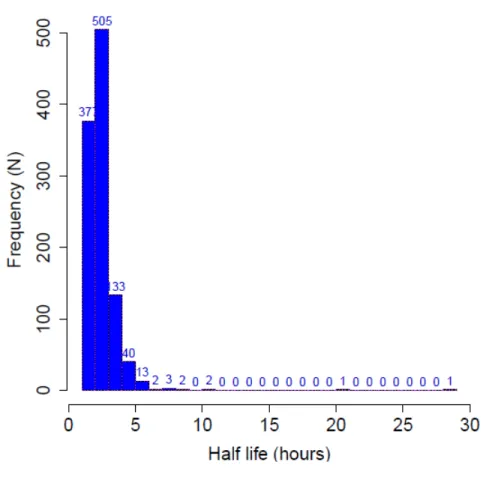
Table 4.2 shows the summary statistics for the parasite clearance time for the set of patients analyzed with the PCE tool (N=1079). The median slope half life was 2.26 hours with range 1.16 to 28.03 hours; and inter-quartile range (25th and 75th percentiles) 1.84 to 2.76 hours. Twenty-four subjects (2%, 24 of the 1079 analyzed) had a slope half life >5 hours (13 occurring in 5-6 hours; 9 occurring in 6-12 hours; 1 occurring at 20-21 hours; and 1 occurring at 28-29 hours). Figure 4.2 shows the histogram for the slope half-life for the study.
3.3. Risk Factors for Delayed Parasite Clearance