GENDER AND HEADEDNESS IN SPANISH BLENDS
Metta Crouse
A thesis submitted to the faculty of the University of North Carolina at Chapel Hill in partial fulfillment of the requirements for the degree of Master of Arts in the Department of Linguistics
in the College of Arts and Sciences.
Chapel Hill 2016
© 2016 Metta Crouse
ABSTRACT
Metta Crouse: Gender and headedness in Spanish blends (Under the direction of Katya Pertsova)
This thesis builds on previous experiments on English lexical blends (Shaw 2013, Moreton et al. forthcoming) that argued that semantic heads, nouns, and proper nouns are positions privileged by universal phonological constraints. Using novel Spanish blends as stimuli, I conduct three experiments with native Spanish speakers. The first, a survey, revealed significant predictors of blend gender, including the inflection, gender, and headedness of the source words. These results contribute to the study of blend formation as a morphological process by providing valuable information to compare with the formation of Spanish
ACKNOWLEDGEMENTS
Thanks are due first to my advisor, Katya Pertsova, for her guidance throughout this project. I would also like to thank the other members of my thesis committee, Elliott Moreton and Jen Smith. Many of my conclusions stem directly from discussions in our meetings, without which this thesis would be much less insightful. Comments from members of the P-side
TABLE OF CONTENTS
LIST OF FIGURES ... vii
CHAPTER 1: INTRODUCTION ... 1
1.1 Previous experiments ... 4
1.2 Grammatical gender in Spanish ... 8
1.3 Headedness in Spanish ... 11
CHAPTER 2: PREDICTIONS ... 15
2.1 Gender experiment predictions ... 15
2.2 Headedness experiment predictions ... 20
CHAPTER 3: EXPERIMENTS ... 22
3.1 Blends survey ... 22
3.1.1 Stimuli ... 23
3.1.2 Participants ... 25
3.1.3 Results ... 25
3.1.4 Discussion ... 28
3.2 Gender experiment ... 28
3.2.1 Stimuli ... 28
3.2.2 Participants ... 31
3.2.3 Results ... 31
3.2.4 Discussion ... 36
3.3.1 Stimuli ... 38
3.3.2 Participants ... 40
3.3.3 Results ... 40
3.3.4 Discussion ... 43
CHAPTER 4: CONCLUSION ... 44
APPENDIX A: Stimuli for experiments ... 46
APPENDIX B: Sample stimulus pages ... 51
LIST OF FIGURES
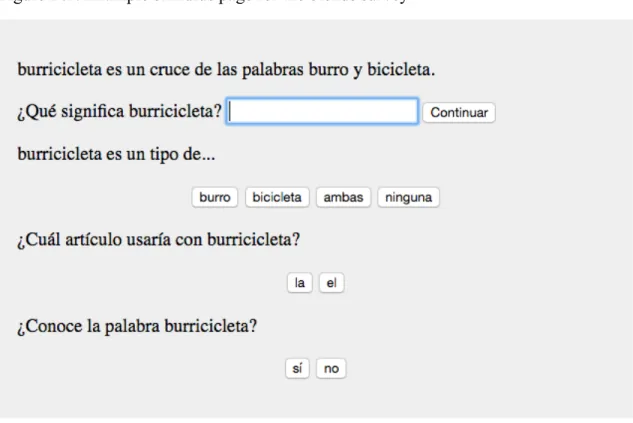
Figure 3.1: Example stimulus from the blends survey (English translation) ... 24
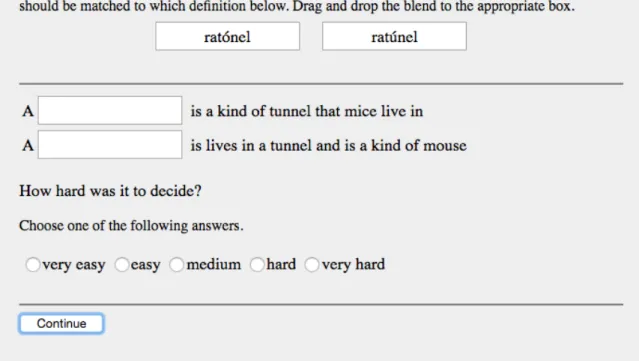
Figure 3.2: Example stimulus page for the gender experiment (English translation) ... 31
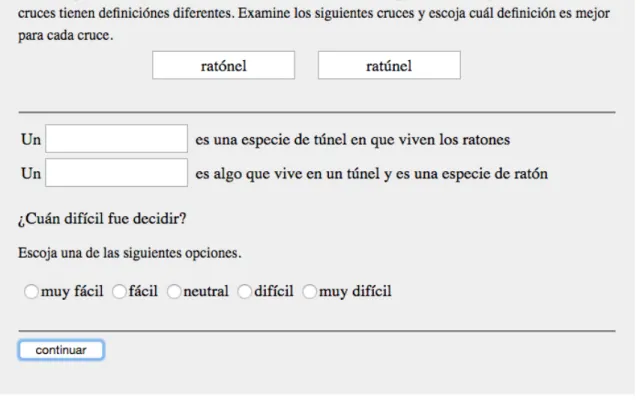
Figure 3.3: Example stimulus page for the headedness experiment (English translation) ... 39
Figure B.1: Example stimulus page for the blends survey ... 51
Figure B.2: Example stimulus page for the gender experiment ... 51
CHAPTER 1:INTRODUCTION
Lexical blending is an intentional word formation process that is attested in Spanish (Casado Velarde 1985, Piñeros 2004, Rodríguez González 1989). It involves concatenation of two or more source words to form a single blend. When a blend is formed from two source words, segmental material is overlapped or truncated from at least one of the source words. An example of a blend in Spanish is shown in Example 1.
Example 1 - Spanish blend
cantante (‘singer’) + autor (‘author’) = cantautor (‘singer-songwriter’)
In Example 1, the initial portion of the first source word (cantante ‘singer’) is combined with the final portion of the second source word (autor ‘author’) to yield the blend (cantautor
‘singer-songwriter’). The process of blending is similar to compounding but crucially differs in that compounds retain all segmental material from both source words. In Example 2, the source words boca (‘mouth’) and calle (‘street’) are combined sequentially to yield the compound bocacalle (‘street intersection’) without the truncation or overlap of segmental material. Example 2 - Spanish compound (from Piñeros 2004)
boca (‘mouth’) + calle (‘street’) = bocacalle (‘street intersection’)
preserves a small portion of the first source word. Beyond recoverability and abiding by the phonological rules of the language there may still be multiple ways to combine two source words into a blend. One hypothesis is that some concept of prominence determines how much
information is retained from each source word in the final blend. While this notion of
prominence could be conceived of in different ways -- semantic, structural, or some other type of prominence -- the more relatively prominent source word would preserve more information in the blend. Shaw (2013) developed several experiments that tested whether manipulating certain properties of source words would determine how speakers combine those source words into a blend. The results of Shaw’s experiments showed that the status of source words as semantic heads or non-heads affects both stress placement and the preservation of segmental content in novel blend formation in English. From this finding, she concluded that “semantic head” is a prominent position that is privileged by the constraint set of English. Moreton et al.
(forthcoming) extended Shaw’s methodology to nouns and proper nouns, providing evidence for these morphological positions as privileged.
There are several reasons that the Spanish language provides an excellent opportunity to further this research program. First, nouns in Spanish receive inherent grammatical gender. The relationship between masculine and feminine gender in Spanish shows a morphological
similar previous experiments, as the limitations of English did not allow left-headed blends to be tested. Finally, on a practical level, it is easy to access judgments from a large number of native Spanish speakers.
The experiments described in this thesis test two questions: Do nouns of one grammatical gender enjoy greater privilege than nouns of the opposite grammatical gender in Spanish -- that is, is segmental material better preserved in a blend if it comes from a noun of a particular gender?; and does a language with both left- and right-headed blends, like Spanish, show a greater effect of head faithfulness in blend experiments similar to those that have been conducted with English speakers? Beyond the specific results of these experiments, I am interested in considering the requirements for a position to be considered “strong” in the theory of positional faithfulness (Beckman 1997). I consider whether masculine gender noun is one of these strong positions, and the arguments for this hypothesis are compared with the arguments for other positions that have been considered strong within positional faithfulness.
After running the experiments described in this thesis, I found no evidence for
preferential faithfulness in blend formation to nouns of one grammatical gender over the other, although I show that Spanish speakers have strong intuitions about the gender that individual blends should receive and that there may be several different factors influencing this judgment. I found evidence for head faithfulness in a blend experiment modeled on Shaw (2013), and the implications of these findings are discussed. In addition to the goals mentioned above, this thesis aims to validate the results of previous experiments run with English speakers.
I will first provide some background on previous experiments that have laid the
that were run in this thesis, and predictions for the experiments will be made. In Chapter 3, I present the design and results for a blends survey, an experiment on blend gender, and an experiment on blend headedness. Chapter 4 will discuss the implications of these results and suggest possible directions for future research.
1.1 Previous experiments
In this thesis, “source word 1” or “first source word” will always refer to the left-most source word (in Example 1, cantante) and “source word 2” or “second source word” will always refer to the right-most source word (in Example 1, autor). All blends considered in this thesis will be of the type that start like the first source word and end like the second source word, with some truncation and overlap of at least one of the source words. Italics and bolding will be used to represent the respective contributions of the source words to the blend, as in Example 1. If a segment in a blend corresponds to input segments from both source words, it will be both italicized and bolded.
Example 3 - Attested Spanish blends (Piñeros 2004)
Blend Source Word 1 Source Word 2 Definition Headedness cristañola cristalería (glassware) española (Spanish) Spanish
glassware Left-headed brujeres bruja (witch) mujeres (women) Mean
women Right-headed amigovio amigo (friend) novio (boyfriend) Friend and
boyfriend Coordinating inteliburro inteligente (intelligent) burro (donkey) Stupid
person Exocentric
Cristañola is left-headed because the blend as a whole refers to a type of glassware and the left-most source word refers to glassware. Brujeres refers to a type a women, not a type of witches, and therefore is right-headed: the blend is a hyponym of the right-most source word . Amigovio is defined as a friend who is also a boyfriend. In this case, both the first source word and the second source word are semantic heads, making the blend coordinating. Finally, inteliburro does not refer to a type of donkey or a type of intelligence, but rather to a type of person. Because the blend is not a hyponym of either of the source words, this blend is exocentric.
While blend formation is subject to phonological constraints, there are pairs of words that could reasonably be blended in two different ways, therefore forcing the speaker to choose between preserving more segmental material from one source word or the other. Shaw (2013) calls these “ambiblendable word pairs.” This fact about blending has been exploited to perform experiments that test for preferential faithfulness to one type of source word over another. While the experiments in Shaw (2013) dealt with faithfulness to the stress of the source words as well as segmental faithfulness, this thesis focuses solely on segmental faithfulness.
source word 2. The participant is forced to match each of these two blend options with
definitions that manipulate the status of one of the source words. An example of this is shown in Example 4, using one of the stimuli created by Shaw (2013) and also used in Moreton et al. (forthcoming).
Example 4 - Forced-choice novel blend experiment stimulus a. Source words:
i. flamingo ii. mongoose
b. Blends:
i. flamingoose
ii. flamongoose
c. Definitions:
i. A hybrid of a mongoose and a flamingo (coordinating) ii. A mongoose that preys on flamingos (right-headed)
Definition (4ci) is coordinating because it has two heads: it is both a type of mongoose and a type of flamingo. Definition (4cii), however, is only a type of mongoose and not a type of flamingo: it is semantically right-headed. If participants consistently attribute blend (4bii), which preserves more of “mongoose,” to the right-headed definition (4cii) at a rate significantly above chance, this is evidence of faithfulness to a noun that has the status of a semantic head.
The experimental results of Shaw (2013) and Moreton et al. (forthcoming) were modeled in Optimality Theory (Prince & Smolensky 1993/2004) using relativized faithfulness constraints. For example, the privilege of heads over non-heads can be formalized with a faithfulness
Example 5 - Constraints for novel blend head faithfulness experiment
a) Max: Assign one violation for each segment in the input that does not have a corresponding segment in the output (McCarthy & Prince 1995)
b) Max-Head: Assign one violation for each segment in the input of the head that does not have a corresponding segment in the output
Example 6 - Predictions of Max-Head in a novel blend experiment
The blends in both cases are composed of flamingo (fləmɪnɡo) + mongoose (manɡus)
Candidate Max-Head Max
☞ a.
(1) fləmɪngus (coordinating) *** (o, m, a)
*** (o, m, a) flamingo: o mongoose: m, a (2) fləmangus (right-headed) ✓ **** (ɪ, n, g, o) flamingo: ɪ, n, g, o
mongoose: ✓
b.
(1) fləmɪngus (right-headed) ** (m, a) *** (o, m, a) flamingo: o mongoose: m, a (2) fləmangus (coordinating) ****! (ɪ, n, g, o)
**** (ɪ, n, g, o) flamingo: ɪ, n, g, o mongoose: ✓
In order to determine the correct number of violations incurred by a given constraint, some assumptions have to be made about correspondence relationships between source word inputs and blend outputs. I assume, following Moreton et al. (forthcoming), that it is possible for an output segment to be simultaneously faithful to identical input segments from both source words. Violations are not assigned when the segment in question is contiguous with the remainder of the source word. For instance, in (6a1), fləmɪngus, the /n/ and /g/ are
a correspondent of any segment from source word 2. Therefore, a violation is incurred for /mangus/ having an input segment /m/ with no corresponding output segment. This practice is followed for all tableaus in this thesis. The specific segments incurring these violations are listed in the Max column in Example 6.
Using relativized constraints to model the behavior of strong positions is based on the proposal of positional faithfulness (Beckman 1997). Beckman proposes universal constraints that are specifically indexed to strong positions to explain why these positions resist neutralization cross-linguistically. When predictions are made based on these relativized constraints, as in Example 6, the strong position in question will be more faithful than other positions not
protected by that constraint. The general Max constraint does not distinguish between candidate (6a) and candidate (6b), as the candidates do not differ at all in their violations.
The strong positions tested in the novel blend experiments of Moreton et al.
(forthcoming) were shown to be psycholinguistically, morphosyntactically, or semantically prominent cross-linguistically in order to motivate the original hypotheses that they would show greater faithfulness in the type of novel blend experiment just described. In the following
sections, an overview of grammatical gender in Spanish will lay out the rationale for
hypothesizing a difference in faithfulness between nouns of different genders by showing that they differ in psycholinguistic and morphosyntactic prominence. Then, an overview of
headedness in Spanish will explain why significant results are expected for the head faithfulness experiment.
1.2 Grammatical gender in Spanish
In Spanish, all nouns have grammatical gender. Articles, adjectives, and other
determines the agreement of the other words in the sentence in (7a). In (7b), changing zapato to a feminine noun like camisa ‘shirt (fem)’ affects the agreement of the other words in the sentence. Example 7 - Gender agreement in Spanish
a.
Este zapato hermoso es mío. This.M shoe.M beautiful.M is mine.M “This beautiful shoe is mine.”
b.
Esta camisa hermosa es mía. This.F shirt.F beautiful.F is mine.F “This beautiful shirt is mine.”
Masculine gender is the default, or unmarked, gender in Spanish for several reasons. When using a pronoun to refer to a group of people, groups made up of a mix of males and females receive the masculine pronoun. Only when a group is entirely composed of females is the feminine pronoun used. Because masculine is used as the default in this situation, it is arguably less morphologically marked than feminine.
Example 8 - Masculine as the morphologically unmarked gender
Spanish English Composition of group Inflection
Ellos están aquí. ‘They (m) are here.’ All males Masculine Ellas están aquí. ‘They (f) are here.’ All females Feminine Ellos están aquí. ‘They (m) are here.’ At least one male Masculine
Example 9 - Nominalization of words without inherent grammatical gender (Hualde et al. 2009) a) Dio un ‘sí’ entusiasmado.
Give a.M yes enthusiastic.M “He gave an enthusiastic ‘yes.’ ”
b) El fumar tanto no es muy bueno. The.M smoking so much.M not is very good.M “Smoking so much is not very good”
c) Quita ese ‘con’ y pon un ‘sin.’ Remove that.M with and put a.M without “Take out that ‘with’ and put a ‘without’ ”
Further evidence for a difference in morphological markedness between grammatical genders comes from noun suffixes. Masculine is most often marked by the suffix -o whereas feminine is marked by -a. Neither of these is more complex than the other. However, while there are exceptions to this -o/-a pattern, there are only a finite number of ways that
masculine/feminine noun pairs can be realized. These different possibilities are summarized in Example 10.
Example 10 - Possible masculine-feminine pairs (Hualde et al. 2009)
Masculine Feminine Example (masc. / fem.) English translation
-o -a (el) amigo / (la) amiga the friend
-o -o (el) modelo / (la) modelo the model
-a -a (el) artista / (la) artista the artist
-e -e (el) cantante / (la) cantante the singer
-e -a (el) monje / (la) monja the monk/nun
-Ø -Ø (el) juez / (la) juez the judge
-Ø -a (el) profesor / (la) profesora the professor
considered relatively unmarked when compared to feminine in Spanish, including the inventory of sounds that indicate masculine and a strong tendency of words borrowed into Spanish to receive masculine gender.
In addition to the morphosyntactic evidence, masculine gender is arguably more
psycholinguistically prominent than feminine gender. There is evidence that masculine gender is acquired earlier than feminine gender and that children will often indiscriminately attribute masculine gender to all words before learning how to properly attribute gender (Pérez-Pereira 1991). Experimental results from Italian, a closely related language, also show psycholinguistic differences between its two grammatical genders. In a task where subjects were asked to touch one of two buttons corresponding to masculine and feminine after hearing a word, masculine words were identified with significantly more accuracy than feminine words (Bates et al. 1995).
The behavior of masculine gender in Spanish as the default gender, along with the psycholinguistic evidence from Italian that shows that words of differing grammatical genders show differences in language processing, gives good reason to hypothesize that the more morphologically prominent of the grammatical genders, masculine, would enjoy greater faithfulness comparable to the privilege of morphosyntactically prominent positions tested in previous experiments. Chapter 2 will discuss more specific predictions of the gender experiment.
1.3 Headedness in Spanish
While evidence for preferential segmental faithfulness in nouns of a particular
grammatical gender has not been found previously, effects of head faithfulness have been seen in English (Shaw 2013) and Japanese (Broad 2015) blend experiments, showing that lexical
al. (forthcoming) reviews various proposals for head faithfulness in the literature, such as the position of morphological head affecting stress in Greek and Russian (Revithiadou 1999) and segmental content in Hebrew (Ussishkin 1999) in derived words. The growing body of evidence supporting the privileged behavior of heads provides strong motivation for a similar experiment in Spanish.
Beyond simply replicating the same effect of head faithfulness in Spanish, there is some reason to believe that the Spanish results should show a stronger effect than previous English results. The English novel blend experiments that were run on heads versus non-heads forced participants to choose between two blend options: one which preserved more of the first source word and one that preserved more of the second source word. In Example 11, from Moreton et al. (forthcoming), this choice is between baboondit, which preserves more of the first source word, and babandit, which preserves more of the second source word. Participants were asked to match these blends with definitions that manipulate the headedness of the source words. The blends are matched with the choice of definition that participants were expected to make under the hypothesis that semantic heads will preserve more segmental material. Because a baboon-stealing bandit is a type of bandit and not a type of baboon, it is expected that participants would match this definition to the blend that preserves more of the source word bandit. The other blend, by contrast, is both a type of baboon and a type of bandit.
Example 11 - Coordinating vs. right-headed forced choice (from Moreton et al. forthcoming) Source words Blend Definitions
baboon bandit baboondit Coordinating a baboon who steals like a bandit babandit Right-headed a baboon-stealing bandit
language that allows both left- and right-headed blends, a fact that was confirmed in the blends survey described in Chapter 3.
Example 12 shows exactly how a positional faithfulness constraint relativized to semantic heads predicts that substituting coordinating definitions with left-headed definitions should create a stronger effect. (12a) shows a forced choice blend experiment using left-headed and right-headed definitions, while (12b) shows the same ambiblendable pair but with coordinating instead of left-headed interpretations. In (12a), the best candidate pair (12aii) is better than the best candidate pair in (12b): (12bii). (12aii) has only one total violation of Max-Head, while (12bii) has three violations of that constraint. Max has an equal number of violations for both pairs and therefore would have no effect on the outcome even if ranked above Max-Head. The worst candidate pairs -- (12ai) and (12bi) -- have the same amount of violations in both (12a) and (12b). The participants should be able to make a more informed choice if the winning pair has the least amount of violations possible. In other words, a stronger effect is expected from the Spanish headedness experiment over the English headedness experiments in Moreton et al. (forthcoming) and Shaw (2013) if head faithfulness is represented in a universal constraint set. Example 12 - Coordinating versus left-headed blends as stimuli
a. Choice between left-headed and right-headed
Source words Candidate Max-Head Max
i (1) saxófono + fantasma (hd) saxofontasma ** *** (2) saxófono (hd) + fantasma saxofantasma *** ***
☞ ii (1) saxófono (hd) + fantasma saxofontasma * *** (2) saxófono + fantasma (hd) saxofantasma ✓ *** b. Choice between right-headed and coordinating
Source words Candidate Max-Head Max
CHAPTER 2: PREDICTIONS
2.1 Gender experiment predictions
Based on the relative morphological and psycholinguistic prominence of masculine over feminine gender in Spanish discussed in Chapter 1, my hypothesis for a forced-choice novel blend experiment on grammatical gender is that nouns with masculine gender should be subject to greater faithfulness than nouns with feminine gender. This can be tested by presenting participants with an ambiblendable word pair where one of the source words is ambiguous for grammatical gender. Common gender nouns in Spanish vary in gender agreement based on the semantic gender of the referent. However, unlike most nouns, they do not change in
phonological form when the gender agreement is changed. Without any context or evidence from agreement, speakers have only the phonological form to rely on, which is indistinguishable between masculine and feminine. In a case without sufficient context, masculine is assigned to these types of nouns as the default gender.
Example 13 - Spanish common gender nouns el artista / la artista ‘the (male/female) artist’ el dirigente / la dirigente ‘the (male/female) leader’ el testigo / la testigo ‘the (male/female) witness’
survey, is that the gender of a blend is determined by the gender of the second source word. In other words, when a speaker chooses which article to assign to a blend with a second source word that is common gender, the common gender noun should also be interpreted as that gender. In Example 14, the novel blend ardorigente is formed from the source words ardor (‘zeal’ masc.) and dirigente (‘leader’ common gender). The gender of the first source word is masculine in both cases, but the gender of the second source word is ambiguous. I assume that the
participants will interpret the second source word as masculine in (14a) and as feminine in (14b). Example 14 - Blend interpretation in gender experiment
ardor (‘zeal’ masc.) + dirigente (‘leader’ common gender) a. el ardorigente = interpretation of dirigente as masculine b. la ardorigente = interpretation of dirigente as feminine
By supplying another blend option where more of the second source word is preserved (ardirigente as opposed to ardorigente), the participant will be forced to interpret one instance of dirigente as masculine and the other as feminine. If masculine gender is indeed subject to greater faithfulness, the blend that preserves a greater portion of source word 2 would be attributed masculine gender by subjects, who would be preferring to preserve the common gender noun with a masculine interpretation over the common gender noun with a feminine interpretation. This can be modeled with a positional faithfulness constraint relativized to
masculine gender. Example 15 introduces the constraints that are needed to model this constraint ranking in Optimality Theory, and Example 16 shows how a ranking of Max-Masc >> Max-Fem leads to a clear prediction of one blend pair candidate over the other.
Example 15 - Constraints for gender experiment
a) Max-Masc: Assign one violation for each segment in the input of a masculine word that does not have a corresponding segment in the output
Example 16 - Gender experiment predictions
ardor (‘zeal’ masc.) + dirigente (‘leader’ common gender) Definition (right-headed): A leader who is overzealous
Candidate Max-Masc Max-Fem Max-Hd
a (1) el ardorixente **! ✓ **
(2) la ardirixente ** ✓ ✓
☞ b (1) la ardorixente ✓ ** **
(2) el ardirixente ** ✓ ✓
In Example 16, ardor incurs the same number of violations in both (16a) and (16b), because the only change between these two candidate pairs is which gender is attributed to which blend. Similarly, the headedness status of the source words does not change between the
candidate pairs, so there is no difference in violations of a Max-Head constraint. This will be true for any candidate pair that follows this design. The source word 2, dirigente, will incur different violations depending on which gender it is attributed.
Example 17 - Stress related constraints
Max-Stress (Masc): Assign a violation for every stress in the input of a masculine word that does not have an output correspondent
Max-Stress (Fem): Assign a violation for every stress in the input of a feminine word that does not have an output correspondent
Example 18 - Gender experiment stress predictions
ardór (‘zeal’ masc.) + dirigénte (‘leader’ common gender) Tableau showing that stress is not a factor in the decision
Candidate Max-Stress (Masc) Max-Stress (Fem) ☞ a (1) el ardorixénte * ✓
(2) la ardirixénte * ✓
☞ b (1) la ardorixénte * ✓
(2) el ardirixénte * ✓
In Example 18, above, the stress from the second syllable of ardor is lost in each case, incurring one violation of Max-Stress (Masc) in each blend of both candidate pairs. The stress of this blend will fall on the penultimate syllable in each blend, making stress related constraints a non-factor for determining the winning candidate.
It is possible that there is a constraint penalizing the attribution of the non-default feminine gender to a common gender noun. However, this would not affect the results of the gender experiment, as both candidate pairs assign the default masculine gender once and the non-default feminine gender once, incurring the same amount of violations per pair.
Example 19 - Default violation constraint
Assign-Default: Assign one violation for each word that is not assigned the default (masculine) gender
Example 20 - Assign-Default predictions
ardor (‘zeal’ masc.) + dirigente (‘leader’ common gender)
Candidate Assign-Default
I have put forward the argument that masculine gender, being the more prominent gender morphosyntactically, will be assigned to the blend that preserves more of the second source word. This prediction rests on the evidence discussed in Section 1.2 that masculine is the less morphologically marked gender in Spanish. However, Iscrulescu (2006) gives several case studies that show that more morphologically marked categories are licensed in more marked phonological structure. For example, in Old Saxon, the less marked Nominative-Accusative case marker is deleted in certain marked phonological structures while the more marked Dative-Instrumental case marker is preserved in those same structures. In this case, the more marked category behaves as we would expect from a “strong” position. I have argued that this behavior should be expected from the less marked category rather than the more marked category, which would make the opposite predictions in the examples that Iscrulescu cites.
2.2 Headedness experiment predictions
A experiment that manipulates the headedness of the source words similar to experiments run in Shaw (2013) and Moreton et al. (forthcoming) is expected to show a significant effect of head faithfulness. This experiment will provide the participant with two blend options and two definitions to match them with, as in Example 21.
Example 21 - Sample headedness blend experiment stimulus saxófono (‘saxophone’) + fantasma (‘ghost’)
Blend Option 1 (preserves more of source word 1): saxofontasma
Blend Option 2 (preserves more of source word 2): saxofantasma
Definition 1 (left-headed): A type of saxophone that sounds like a ghost Definition 2 (right-headed): A type of ghost that plays the saxophone
The expected outcome is for Blend Option 1 to be matched with Definition 1 and for Blend Option 2 to be matched with Definition 2 -- this is the equivalent of saying that the blend that preserves more of the first (left-most) source word should be matched with the left-headed definition, while the blend that preserves more of the second (right-most) source word should be matched with the right-headed definition. While all of the information concerning the blend options and source words is available in Example 21, this is not how participants would be presented with the information. A detailed explanation of the headedness design, including a screenshot of a sample stimulus page, can be found in Section 3.3.1.
Example 22 - Max-Head >> Max
saxófono (‘saxophone’) + fantasma (‘ghost’)
Source words Candidate Max-Head Max
a (1) saksófono + fantasma (hd) saksofontasma ** *** (2) saksófono (hd) + fantasma saksofantasma *** ***
☞ b (1) saksófono (hd) + fantasma saksofontasma * *** (2) saksófono + fantasma (hd) saksofantasma ✓ ***
blend that preserves the entire second source word, no violations are incurred for the Max-Head constraint, which is the decisive constraint in this case since Max incurs equal violations for all candidates. In previous experiments, the second source word was a head in all candidates, and the first source word was a head in one candidate. In this experiment, the second source word will be a head in only one candidate, and the first source word will be a head in the other. In other words, the two candidates are more distinguishable in a language with left- and right-headed blends than in a language where a left-right-headed interpretation is not possible or natural. This fact suggests the possibility of a stronger effect for head faithfulness in Spanish than has been seen in previous experiments.
The headedness experiment also serves as a check for the gender experiment; the methodology used has yielded significant results in other languages, and the headedness
CHAPTER 3:EXPERIMENTS
Several web experiments were run to gather the necessary data for this project. The intuitions of native Spanish speakers were solicited on an online labor exchange called Amazon Mechanical Turk. Mechanical Turk has been shown to be effective in collecting judgments for linguistic experiments (Sprouse 2011). Furthermore, in a survey of language demographics on Mechanical Turk, Spanish was included in the top 13 languages out of 100 rated for availability of workers as well as quality and speed of work (Pavlick et al. 2014). Requirements on all experiments run for this thesis were set so that workers must have completed 100 tasks
previously with an approval rating of at least 95%. This was done both to increase the likelihood that all workers would give reliable judgments as well as to replicate the conditions set on workers in Moreton et al. (forthcoming).
While Mechanical Turk was used to recruit subjects, Experigen (Becker and Levine 2013), an online experiment platform developed for linguistic experiments, was used to present the stimuli to the participants. In the following sections I will describe the rationale and design of a blends survey, an experiment on blend gender, and an experiment on blend headedness.
3.1 Blends survey
information. Gender information was missing for the majority of blends in the corpus, and it was not clear that all speakers would necessarily agree in headedness and meaning with whoever coined the word originally; with a few exceptions, the blends in the corpus are not in widespread usage. Once the corpus was assembled, there were several outstanding questions:
Example 23 - Questions concerning the blends corpus
a) Do Spanish speakers have consistent intuitions about the headedness and gender of blends that they have not been exposed to previously?
b) How is gender determined in Spanish blends?
c) To what extent are Spanish blends left- or right-headed?
These questions formed the basis for the design of an online blends survey, which sought to provide answers using evidence from native speaker intuitions. (23b) was especially of interest to this project, as it affected the design of the stimuli for the gender experiment described in 3.2.
3.1.1 Stimuli
Example 24 - Tasks in blends survey a) Give a definition for the blend
b) Choose the semantic head of the blend by choosing whether the blend was a “type of” the first source word (left-headed), the second source word (right-headed), both
(coordinating), or neither (exocentric)
c) Assign an article to the blend -- either the masculine article ‘el’ or the feminine article ‘la’
d) Answer whether or not the blend is familiar to the participant Figure 3.1: Example stimulus from the blends survey (English translation)
The free-response definitions were coded manually for headedness and checked against the answers for the multiple choice headedness question. Because these two headedness
judgments did not line up reliably across the responses, the coded definitions were used as the final criterion for interpreting participants’ headedness judgments. It was not clear that the multiple choice headedness question was delivering reliable results, and these responses were disregarded.
3.1.2 Participants
64 participants were included in the analysis after excluding those subjects that listed a language other than Spanish as their native language or consistently failed to provide coherent Spanish answers to the free definition portion of the survey. Some individual responses were excluded from analysis due to the difficulty of coding that particular definition for headedness, but this did not necessarily entail the complete exclusion of all of that participant’s answers. Overall, 1023 responses were included in the final analysis. Subjects were compensated $4.00 each upon completion of the survey.
3.1.3 Results
The results of the blends survey found that the attribution of gender to blends by native speakers follows certain principles. Three variables were investigated as predictors of the
a subset of the responses were considered. For inflection, responses that did not have the typical Spanish inflectional ending for masculine (-o) or feminine (-a) were excluded. For headedness, coordinating and exocentric blends were excluded from the analysis.
Example 25 - Gender experiment raw results
a) Blend Gender
Masculine Feminine Total
Source Word 2 Gender
Masculine 407 (78.57%) 111 (21.43%) 518 Feminine 87 (17.23%) 418 (82.77%) 505
Total 494 529 1023
b) Blend Gender
Masculine Feminine Total
Inflection Masculine 217 (91.56%) 20 (8.44%) 237 Feminine 61 (14.77%) 352 (85.23%) 413
Total 278 372 650
c) Blend Gender
Masculine Feminine Total
Head Gender
Masculine 263 (67.78%) 125 (32.22%) 388 Feminine 142 (36.22%) 250 (63.78%) 392
Total 405 375 780
Example 26 - Logistic regression results for blends survey a) Source word 2 gender as predictor of masculine blend gender
SW2 gender Intercept Standard error z value p
feminine -1.57 0.17 -9.22 <.0001
masculine 1.299 0.124 10.51 <.0001
b) Inflectional ending of source word 2 as predictor of masculine blend gender
Inflection Intercept Standard error z value p
feminine -1.753 0.19 -9.24 <.0001
masculine 2.384 0.229 10.43 <.0001
c) Head gender as predictor of masculine blend gender
Head gender Intercept Standard error z value p
feminine -0.566 0.117 -4.83 <.0001
masculine 0.744 0.118 6.31 <.0001
Apart from inflectional endings, which overlap with source word 2 gender and only apply to blends that have inflectional endings, the source word 2 gender is the strongest single
predictor of blend gender. Source word 2 gender predicts the outcome variable of blend gender above chance in all cases, not just in the subset of the data where inflection or headedness is relevant. The fact that inflection can only make predictions about blend gender in a subset of all cases makes source word 2 gender a more valuable predictor -- in 373 out of 1023 responses (36% of all responses), inflection cannot make any prediction at all about the outcome.
3.1.4 Discussion
The responses of participants in the blends survey provide an opportunity for future research, especially regarding how the behavior of blends differs from compounds in Spanish. A more sophisticated statistical analysis of the blends survey could investigate the interaction of headedness and gender. Guevara (2012) makes claims about the way that compounds behave with regard to gender and headedness, separating different kinds of compounds into different groups. Comparing Guevara’s results to a similar analysis of the blends survey could provide some insight into blend formation and the differences that exist between blends and compounds. Additional data on compounds could also be gathered by conducting a similar survey that asks native Spanish speakers for their intuitions on compounds that have source words of opposing grammatical genders. The survey stimuli were not selected with inflection in mind, and it may be illuminating to get more native speaker judgments on how gender is attributed to blends where the second source word does not have explicit inflection.
3.2 Gender experiment
3.2.1 Stimuli
The results of the blends survey found a significant correlation between blend gender and source word two gender. This result forms the basis for the design of the gender experiment. When two nouns differ in the gender of the referent, this fact is usually indicated by the inflection, as in Example 27:
Example 27 - Masculine/feminine word pair
el hermano (‘the brother’ masc.) vs. la hermana (‘the sister’ fem.)
nouns can only be distinguished by the context or the agreement of other elements of the sentence and, as mentioned earlier, are called common gender nouns:
Example 28 - Masculine/feminine word pairs for common gender nouns el estudiante (‘the student’ masc.) vs. la estudiante (‘the student’ fem.) el artista (‘the artist’ masc.) vs. la artista (‘the artist’ fem.)
el mártir (‘the martyr’ masc.) vs. la mártir (‘the martyr’ fem.)
Common gender nouns were used in the gender experiment because it is possible for these words to be ambiguous for gender, just as in previous experiments one of the source words of each blend was ambiguous for some characteristic (noun/verb, common noun/proper noun, head/non-head). The stimuli for the gender experiment were pairs of words that could be blended in two different ways:
Example 29 - Example ambiblendable pair for gender experiment
ardor (‘zeal’ masc.) + dirigente (‘leader’ common gender) = ardorigente / ardirigente
Potential stimuli were found using a computer program that searched for word pairs with the following criteria:
Example 30 - Criteria for gender experiment stimuli a) All source words were singular nouns b) The first source word was masculine gender c) The second source word was common gender d) The second source word ended with “-e”
e) The two words had a string of two identical consonants separated by a distinct vowel f) None of the source words were proper nouns
g) The blend could be attributed a plausible right-headed definition
The participants were given a short introduction to the concept of lexical blending, a warm-up that explained the drag-and-drop interface of the experiment, and 11 stimuli to complete. Each stimulus page supplied both source words and a right-headed definition. The participants were told that the two blend options were different ways of blending the source words, and that both blends had the same definition. The main task of the experiment was to drag a box that contained a definite article -- either the masculine “el” or the feminine “la” -- to one of two boxes that appeared before the two blend options. This setup can be seen in Figure 3.2. When one article was assigned to one blend, the other article was automatically assigned to the opposite blend by the Experigen software. The participant had the option of switching the placement of the articles as many times as desired before submitting a response.
While the blends survey showed that participants should be looking to the second source word when assigning gender to a blend regardless of whether the blend is right-headed or not, a right-headed definition was provided to further ensure that the second source word was the focus of the task. Varying the article associated with the blend would in turn vary the gender of the second source word, whereas the first source word stayed constant for gender across blend candidate pairs.
Figure 3.2: Example stimulus page for the gender experiment (English translation)
3.2.2 Participants
72 participants were run on Amazon Mechanical Turk. All participants were told at the beginning of the experiment that only native Spanish speakers should take part. All directions and stimuli were in Spanish, and a demographic survey at the end of the experiment asked for each speaker’s native language as well as other language experience. 2 participants who listed a language other than Spanish as their native language were excluded, leaving 70 subjects for the analysis. Participants were paid $2.50 for their participation in the experiment.
3.2.3 Results
subjects and items was used to analyze the data. The results of this analysis are reported in (31a). The results of the experiment did not find that participants were more likely to assign masculine gender to blends preserving more of source word 2, nor were participants more likely to assign feminine gender to blends preserving more of source word 2; in other words, these results are consistent with the participants arbitrarily assigning gender to blends.
An analysis was also done “by-participant,” following Shaw (2013) and Moreton et al. (forthcoming). Participants with 6 or more responses that supported a Max-Masc >> Max-Fem constraint ranking were coded as a “1,” and participants with 5 or fewer of these responses were coded as a “0.” This proportion was compared to the chance level of 0.5 with an exact binomial test using the statistical software R (R Core Team 2015). The results are reported in (31b). Example 31 - Gender experiment results
a. Logistic regression analysis of total responses in gender experiment Mean Estimate Confidence Limits Standard Error p
0.5268 0.3852 0.6642 0.2580 0.6862
b. Exact binomial test “by-participant” in gender experiment Max-Masc >> Max-Fem
Responses 95% Confidence Interval
6 or more 5 or fewer Min. Est. Max. p
Example 32 - Results by blend for the gender experiment
Ordered from most strongly supporting the Max-Masc >> Max-Fem constraint ranking to least strongly supporting that ranking
Blend Option 1 (preserves more of source word 1)
Blend Option 2 (preserves more of source word 2) Responses supporting Max-Masc >> Max-Fem Responses supporting Max-Fem >> Max-Masc
1 vandalincuente vandelincuente 56 14
2 jarabelde jarebelde 54 16
3 tomatante tomutante 51 19
4 volcanvaleciente volconvaleciente 47 23
5 acantilevidente acantelevidente 41 29
6 animalitante animilitante 37 33
7 uniformante unifirmante 27 43
8 vampirticipante vamparticipante 23 47
9 ratoniente rateniente 23 47
10 ardorigente ardirigente 22 48
11 simposeante simpaseante 21 49
The results by blend for the gender experiment are shown in Example 32. While I did not find support for my hypothesis in my analysis of the total responses, some individual stimuli behaved in the way that I hypothesized across most participants. In Example 32, stimuli 1 through 5 numerically support the Max-Masc >> Max-Fem hypothesis. However, stimuli 7 through 11 support Max-Fem >> Max-Masc, the opposite hypothesis. One stimulus, 6, showed only a slight inclination towards Max-Masc >> Max-Fem.
Several explanations were considered for the behavior of the blends in this experiment. Only after the experiment was run was it realized that many of the stimuli had possible phrasal interpretations, where the second source word could be ambiguous between a noun and an adjective. For example, instead of “militant who fights for the rights of animals,” animal +
militante (adjective) as opposed to the intended animal (noun) + militante (noun), the phrasal interpretation would have implied a left-headed reading of the blend -- in this case, the blend as a whole would be a type of animal and not a type of militant. The possible ambiguity in
headedness in those blends that were amenable to a phrasal interpretation interferes with one of the factors that I tried to control for in the experiment: all blends were intended to be interpreted as right-headed.
This phrasal interpretation was not available for all blends, and for the blends that
supporting a phrasal interpretation, the expected result was not always seen. For example, animal + militante was nearly equally divided between responses that favored Max-Masc >> Max-Fem and responses that favored Max-Fem >> Max-Masc. This factor would have been controlled for if the possibility of a phrasal interpretation had been considered prior to the experiment.
However, further information would be required in order to be confident about the effect of a phrasal interpretation on gender assignment in Spanish blends. As a complete explanation of the blends separating into two groups with clear differences, the phrasal interpretation explanation does not suffice.
crucial vowel is “a” received a majority of feminine responses, while blend options where the crucial vowel is “o” received a majority of masculine responses. This is summarized in Example 33. The vowels in question are bolded in the table. Four out of five blend pairs that support the Max-Masc >> Max-Fem hypothesis (stimuli 1-5) have an “a” as the crucial vowel in Blend Option 1 and assign feminine to that blend option; five out of five blend pairs that support the Max-Fem >> Max-Masc hypothesis (stimuli 7-11) have an “o” as the crucial vowel in Blend Option 1 and assign masculine to that blend option OR have an “a” as the crucial vowel in Blend Option 2 and assign feminine to that blend option (or both).
Example 33 - Phonological cue explanation
Blend Option 1 (preserves more of source word 1)
Blend Option 2 (preserves more of source word 2) Responses supporting Max-Masc >> Max-Fem Responses supporting Max-Fem >> Max-Masc
1 vandalincuente vandelincuente 56 14
2 jarabelde jarebelde 54 16
3 tomatante tomutante 51 19
4 volcanvaleciente volconvaleciente 47 23
5 acantilevidente acantelevidente 41 29
6 animalitante animilitante 37 33
7 uniformante unifirmante 27 43
8 vampirticipante vamparticipante 23 47
9 ratoniente rateniente 23 47
10 ardorigente ardirigente 22 48
11 simposeante simpaseante 21 49
faithfulness over nouns of the other gender. However, understanding the bimodal distribution of these data could be applied to controlling for confounding factors in any future experiments on this topic. Without subjecting the data to further analysis, the phonological cue explanation does a better job of explaining the results than the phrasal interpretation explanation. It would take further controlled experiments to draw any definitive conclusions regarding the behavior of these stimuli.
Whether or not the explanations discussed here are valid, separately or in some combination, the results of the experiment were clear: there was no evidence supporting the hypothesis that masculine gender nouns preserve more segmental material than feminine gender nouns.
3.2.4 Discussion
The results of the gender experiment did not provide evidence for positional faithfulness constraints relativized to either gender. It may be that there is no such hierarchical relationship between the grammatical genders in the phonology of Spanish despite the differences that are seen in the morphology and in some psycholinguistic experiments. However, it is also possible that the task that subjects were asked to perform did not adequately test the hypothesis. While the experiment was modeled after Shaw (2013) and Moreton et al. (forthcoming), there were
necessarily differences in the design. The participants were asked to match an article with a blend, rather than to match a definition with a blend. The article was dragged to the blend, whereas in previous experiments the blend was dragged to a definition and not the other way around.
gender noun; that the participant would assign masculine to the blend that preserved more of the second source word; that testing common gender nouns, which change in gender based on the real world semantics of the referent, is no different than testing nouns that always carry the same, inherent grammatical gender. Participants were required to make several steps in logic in order to arrive at the interpretation that would favor the hypothesis of Max-Masc >> Max-Fem. The headedness experiment, in comparison, did not require such a complicated analysis of each stimulus in order to interpret each blend option according to some definition. If the explanation put forth in Chapter 3 is correct -- that participants were using the differing vowel in each stimulus as a phonological cue for gender rather than considering the common gender source word 2 to make their decisions -- then the task tested something else entirely than the original intention of the experiment.
confounds and retained semantic plausibility in the definitions -- which is why this design was not initially pursued -- it would be worth exploring this direction for future research in an attempt to further approximate the experimental design of Shaw (2013) and Moreton et al. (forthcoming).
3.3 Headedness experiment
3.3.1 Stimuli
The stimuli for the headedness experiment were also novel, ambiblendable pairs, but the conditions that stimuli needed to meet were different from the gender experiment. The stimuli had the following conditions:
Example 34 - Criteria for headedness experiment stimuli a) All source words were nouns.
b) The blends were either made up of a feminine source word one and a feminine source word two, or a masculine source word one and a masculine source word two. No blends were composed of source words with differing genders.
c) All blends could be attributed plausible left- and right-headed definitions. d) Blends that could be attributed a phrasal (N+A) interpretation were avoided.
e) The two words had a string of two identical consonants separated by a distinct vowel. Again, LEXESP (Sebastián-Gallés et. al. 2000) was searched by a computer program to find stimuli that complied with the above criteria. The results of this search were inspected manually to find semantically and phonologically plausible blend pair candidates. A native speaker inspected the definitions and experiment instructions before the experiment was run. The word order of the definitions was kept constant, with the second source word appearing before the first source word in order to resemble the blends less and hopefully encourage the
participants to focus on the meanings of the definitions. This resulted in one of the definitions in each blend pair to have slightly less natural syntax than the other.
One of the definitions was left-headed and the other was right-headed. It was possible to switch the answer before submitting the response. Each stimulus page also asked the participant to rate the difficulty of their decision on a scale of 1 (very easy) to 5 (very difficult). The stimulus pages looked like the example in Figure 3.3. The design did not allow participants to skip any
questions. Following completion of all the stimuli, participants were asked to fill out the same demographic survey as in the gender experiment. They were then given a unique code to enter on the Mechanical Turk page.
Figure 3.3: Example stimulus page for the headedness experiment (English translation)
the definitions. These variations were distributed among participants so that each participant saw a set of stimuli balanced for blend and definition order.
3.3.2 Participants
80 participants took part in the experiment online through Amazon Mechanical Turk. 8 subjects were excluded from the analysis; 5 people listed languages other than Spanish as their native language in the demographic survey, 1 person gave incoherent answers to the
demographic survey suggesting a lack of understanding, 1 person had responses that did not record correctly to the server, and 1 person answered each question identically without any indication of effort. This left data from 72 subjects in the final analysis. Participants were paid $2.00 each.
3.3.3 Results
Upon analyzing the results, one of the blend options for one stimulus was found to have been misspelled. The results for this blend (hospital + telegram, misspelled as ‘hospiteligrama’ instead of the correct ‘hospitelegrama’ for the blend option preserving more of the second source word) are included in the table of stimuli for reference but excluded from all other analysis.
The responses were coded as either “conforming,” which means that they showed evidence for the head faithfulness hypothesis, or “non-conforming,” which means they did not support that hypothesis. Participants were coded as “conforming” if they supplied more
Example 35 - Conforming vs. non-conforming responses in the headedness experiment Conforming responses Non-conforming responses Total responses
513 (71%) 207 (29%) 720
Example 36 - Conforming vs. non-conforming participants in the headedness experiment Conforming participants Non-conforming participants Tied Total participants
54 (75%) 13 (18%) 5 (7%) 72
As with the gender experiment, an analysis was done both response” and “by-participant.” For the by-response analysis, a mixed logistic regression with random effects for subjects and items, fit with the GLIMMIX procedure in SAS, was used to analyze the data. The results of this analysis can be seen in (37a). The analysis found a significant effect of head faithfulness in the total responses. (37b) details the “by-participant” analysis. Participants with 4 or less head faithful responses were coded as a “0”. Participants with 6 or more head faithfulness responses were coded as a “1.” Participants whose responses were “tied” were excluded from the by-participant analysis. An exact binomial test was run using R (R Core Team 2015), as in the analysis for the gender experiment. The results for this test show that the number of conforming participants was statistically significantly greater than the number of non-conforming
participants.
Example 37 - Headedness experiment results
a. Logistic regression analysis of total responses in headedness experiment Mean Estimate Confidence Limits Standard Error p
0.7341 0.6548 0.8007 0.1659 <0.001
b. Exact binomial test of all participants in headedness experiment Head Faithfulness
Responses 95% Confidence Interval
6 or more 4 or less Min. Est. Max. p
Example 38 - By-blend results of the headedness experiment
# Blend Conforming Non-conforming
1 sepultura + tortuga 58 14
tomb + turtle
2 mariposa + pesadilla 57 15
butterfly + nightmare
3 vitamina + manzana 56 16
vitamin + apple
4 hipopótamo + tomate 54 18
hippopotamus + tomato
5 pergamino + monasterio 53 19
parchment + monastery
6 ratón + túnel 50 22
rat + tunnel
7 pirámide + medicina 50 22
pyramid + medicine
8 saxófono + fantasma 48 24
saxophone + ghost
9 pimentón + tenedor 44 28
pepper + fork
10 chimpangüíno + pingüíno 43 29
chimpanzee + penguin
11 hospital + telegrama 39 33
hospital + telegram
3.3.4 Discussion
The results of the experiments in this thesis show that segmental content from semantic heads is preferentially preserved in blend formation by Spanish speakers, which bolsters the findings of previous experiments (Shaw 2013, Moreton et al. forthcoming). Evidence of
semantic heads acting as a strong position in English implied that similar results should be found cross-linguistically. Because Spanish is a language with left-headed blends, it was hypothesized that the strength of the experimental results might differ. Specifically, the greater difference between left- and right-headed blends, in comparison to the difference between right-headed and coordinating blends, was hypothesized to yield a stronger effect in a comparable task. Indeed, the results from the headedness experiment reported in this thesis show a stronger effect than the results from English in Moreton et al. (forthcoming).
English speakers were given right-headed and coordinating definitions to assign to blends, while Spanish speakers were given left-headed and right-headed definitions. As an extension of this experiment, it would be interesting to give Spanish speakers left-headed, right-headed, and coordinating definitions all in the same experiment. If the design forced a choice between left-headed and right-headed definitions in some trials, between left-headed and
CHAPTER 4:CONCLUSION
This thesis found significant effects of head faithfulness in a novel blend experiment conducted with native speakers of Spanish. No effects of faithfulness to one grammatical gender over the other was found. A blends survey found that gender of a blend is significantly predicted by the gender and inflection of the second source word, and less strongly by the gender of the head. These types of experiments had not been previously run on Spanish or any other language with the characteristics of Spanish: grammatical gender and left-headed blends in addition to right-headed blends. Further studies on positional faithfulness or blend formation, including the attribution of grammatical gender to blends in Spanish, could benefit from these results. The blends corpus is a combination of all sources of Spanish blends that could be found from various sources, and is therefore the largest collection of Spanish blends that I am aware of. This corpus could be further analyzed in a number of ways to learn more about blending as a word formation process and could also be used to create stimuli for new surveys or experiments. The results from the blends survey were only analyzed enough to motivate crucial assumptions for the design of the gender experiment due to time constraints. These results provide another opportunity for further study, as analyzing the interaction of different factors, such as headedness and gender, could yield interesting results, especially in comparison to how these factors behave in Spanish compounds.
Spanish support the claim that a positional faithfulness constraint relativized to heads is available in all languages. Moreton et al. do not, however, make any conclusions regarding the origins of this universal availability. One possibility that is discussed is some sort of semantic salience that heads, nouns, and proper nouns have that non-heads, verbs, and common nouns lack. While the results of the Spanish headedness experiment may not shed much light on this issue, the gender experiment is a more interesting case. Masculine gender was hypothesized to be a strong
position, but as the default gender and the less morphologically marked gender it is arguably less semantically salient than feminine.
APPENDIX A: Stimuli for experiments
(A1) Stimuli for blends survey
Blend Source Word 1 Source Word 2
Source Word 1 (English)
Source Word 2 (English)
Source Word Gender afonanza aforismo adivinanza aphorism riddle mf burricicleta burro bicicleta donkey bicycle mf burrocracia burro burocracia donkey bureaucracy mf centrocracia centro democracia center democracy mf credicasa crédito casa credit house mf credimoda crédito moda credit style, fashion mf criticotilleo crítica cotilleo criticism gossip fm dedocracia dedo democracia finger democracy mf demoplagia democracia plagio democracy plagiarism fm desemplearidad desempleo seguridad unemployment security mf diabliposa diablo mariposa devil butterfly mf dibuteca dibujo teca drawing teak mf dictatoriado dictadura proletariado dictatorship proletariat fm dimicese dimisión cese resignation cessation fm estupidiario estupidez diario stupidity daily newspaper fm expoarte exposición arte exposition art fm galiarte galería arte gallery art fm gobiernocracia gobierno democracia government democracy mf interterror internacional terror international terror fm jetabulario jeta vocabulario face vocabulary fm liberchondeo libertad cachondeo liberty partying fm manipuléndum manipulación referéndum manipulation referendum fm merensalsa merengue salsa merengue salsa mf olipasta oligarca pasta oligarchy pasta mf
orotelia oro filatelia gold
stamp
televisano televisión castellano television Spaniard fm universicato universidad sindicato university union fm urnasmo urna orgasmo urn / ballot box orgasm fm veranidad verano banalidad summer banality mf
(A2) Stimuli for gender experiment
Blend 1 Blend 2 Source Word 1 Source Word 2
vampirticipante vamparticipante
vampiro (vampire)
participante (participant)
tomatante tomutante
tomate (tomato)
mutante (mutant)
ratoniente rateniente
ratón (mouse)
teniente (lieutenant)
ardorigente ardirigente
ardor (zeal)
dirigente (leader)
uniformante unifirmante
uniforme (uniform)
firmante (signatory)
vandalincuente vandelincuente
vandalismo (vandalism)
delincuente (delinquent)
animalitante animilitante
animal (animal)
militante (militant)
simposeante simpaseante
simposio (symposium)
paseante (passerby)
jarabelde jarebelde
jarabe (cough syrup)
rebelde (rebel)
acantilevidente acantelevidente
acantilado (cliff)
televidente (television viewer)
volcanvaleciente volconvaleciente
volcán (volcano)
(A3) Stimuli for headedness experiment
1
blend1 blend2 sw1 sw2
vitaminzana vitamanzana vitamina manzana
vitamin apple
Definition type Definition
Left-headed algo con sabor a manzana y es una especie de vitamina something with apple flavor and is a type of vitamin
Right-headed una especie de manzana que contiene muchas vitaminas a type of apple that contains many vitamins
2
blend1 blend2 sw1 sw2
ratónel ratúnel ratón túnel
mouse tunnel
Definition type Definition
Left-headed algo que vive en un túnel y es una especie de ratón something that lives in a tunnel and is a kind of mouse
Right-headed una especie de túnel en que viven los ratones a type of tunnel that mice live in
3
blend1 blend2 sw1 sw2
sepulturtuga sepultortuga sepultura tortuga
tomb turtle
Definition type Definition
Left-headed hecho para una tortuga y es un tipo de sepultura made for a turtle and is a type of tomb
Right-headed un tipo de tortuga que sólo vive en sepulturas a type of turtle that only lives in tombs
4
blend1 blend2 sw1 sw2
pimentonedor pimentenedor pimentón tenedor
pepper fork
Definition type Definition
Left-headed algo que tiene la forma de un tenedor y es una especie de pimentón something that is in the shape of a fork and is a type of pepper
5
blend1 blend2 sw1 sw2
pergaminasterio pergamonasterio pergamino monasterio
parchment monastery
Definition type Definition
Left-headed algo hecho por un monasterio y es un tipo de pergamino
something that is made in a monastery and is a type of parchment
Right-headed un tipo de monasterio que hace pergamino a type of monastery that manufactures parchment
6
blend1 blend2 sw1 sw2
saxofontasma saxofantasma saxófono fantasma
saxophone ghost
Definition type Definition
Left-headed algo que suena a fantasmas y es un tipo de saxófono
something that sounds like a ghost and is a type of saxophone
Right-headed un tipo de fantasma que toca el saxófono a type of ghost that plays the saxophone
7
blend1 blend2 sw1 sw2
hospitalegrama hospitelegrama hospital telegrama
hospital telegram
Definition type Definition
Left-headed algo que envia telegramas y es un tipo de hospital something that sends telegrams and is a type of hospital
Right-headed un tipo de telegrama y es enviado por un hospital a type of telegram and is sent by a hospital
8
blend1 blend2 sw1 sw2
piramidicina piramedicina pirámide medicina
pyramid medicine
Definition type Definition
Left-headed donde los egipcios ejercían la medicina y es un tipo de pirámide where the Egyptians practiced medicine and is a type of pyramid