IMPROVING PSYCHOSOCIAL DISTRESS SCREENING: A QUALITY IMPROVEMENT PROJECT USING STAFF EDUCATION
Melissa Butcher Holt
A project submitted to the faculty at the University of North Carolina at Chapel Hill in partial fulfillment of the requirements for the degree of Doctor of Nursing Practice in the Psychiatric
Mental Health Nurse Practitioner program in the School of Nursing.
Chapel Hill 2018
Approved by: Victoria Soltis-Jarrett Ashley Leak Bryant
ABSTRACT
Melissa Butcher Holt: Improving Psychosocial Distress Screening: A Quality Improvement Project Using Staff Education
(Under the direction of Victoria Soltis-Jarrett)
Background/Purpose: Evidence shows that psychosocial care can improve cancer outcomes. Distress screening (DS), Standard 3.2 of the American College of Surgeons Commission on Cancer, provides oncology practices with a method of identifying their patient’s psychosocial needs. This Quality Improvement (QI) project was implemented at an academic cancer center in the southeastern US. Planning meetings with administration identified problems impacting DS implementation, one of which was a need for education. The purpose of this project was to educate clinic staff on engagement strategies and the importance of DS to promote improved psychosocial care.
Methods: The Institute for Healthcare Improvement’s Model for Improvement guided this project, which was focused on the staff employed in the Adult Oncology Clinic. Staff members were surveyed pre- and post-intervention. The intervention used education and coaching sessions that focused on how to engage with patients, the value of DS, and the importance of psychosocial care. A patient educational handout was created for staff to use as a tool when engaging patients in screening. A chi-square test was used to analyze responses reported from pre- and post-intervention surveys.
Results: A significant difference was found in 2 survey areas: the staff’s perception of the
in DS on the first visit, the patient handout helped make engagement go more smoothly, and the training helped improve their ability to talk with patients about distress.
To the hundreds of people with cancer that I have had the privilege to work with, your courage has inspired me to work towards improving your journey. I will be forever grateful for the
ACKNOWLEDGEMENTS
I would like to express my gratitude to my advisor and DNP committee chair, Dr.
Victoria Soltis-Jarrett. She encouraged, educated, and defended me. Her belief in my ability and her unwavering support has provided me with the necessary confidence to complete this process. I would also like to thank my other committee members, Dr. Ashley Leak Bryant and Meghan McCann. Dr. Bryant has always been an encouraging force throughout my nursing career. It’s very special to have her on this committee after learning from her for the past 10 years as a former co-worker and now a professor. Meghan McCann, the former director of Cancer Services and current associate vice president of operations, provided significant support in this project; without it, this project would not have been possible. The three of my committee members will always have a special place in my heart, and I will be forever grateful.
Thank you Dr. George Knafl and Dr. Brenda Denzler. Dr. Knafl provided much needed statistical support and I will never forget his generosity and wisdom. Dr. Denzler provided editing and further inspiration to this project. Your contributions will never be forgotten.
To my husband, Tom, I would like to express my deepest gratitude. When times were difficult, your love and support pulled me through. You provide a calm and stable force in my life that strengthens my resolve, challenges me, and allows me to grow in multiple ways. We can get through anything together.
To my mother, thank you for always supporting me and making me feel like I can accomplish anything that I put my mind to. I’m lucky to have you as my biggest cheerleader. Grandma would be proud of both of us for this.
To my sons, Tommy and David, I want to thank you for keeping me grounded
throughout this challenging process. You give me so much strength by always being honest
and supportive. It’s been fun watching you grow into fine young men while I have been
TABLE OF CONTENTS
LIST OF TABLES ... x
LIST OF FIGURES ... xi
LIST OF ABBREVIATIONS ... xii
CHAPTER 1: INTRODUCTION ... 1
Problem Statement ... 2
Purpose of Project ... 2
Clinical/Practice Question ... 3
CHAPTER 2: LITERATURE REVIEW ... 4
Understanding Distress ... 4
The Financial Impact of Distress ... 5
Benefits to Screening for Distress ... 6
Understanding Standard 3.2 for Distress Screening Protocols ... 7
Distress Screening Implementation in the United States ... 8
Barriers to a Successful Distress Screening Protocol ... 9
Education on Engagement ... 10
CHAPTER 3: THEORETICAL FRAMEWORK ... 11
CHAPTER 4: METHODOLOGY ... 12
Design ... 12
Setting and Resources ... 13
Sample ... 15
Ethical Approval and Consent ... 15
Model for Improvement: Part One ... 16
Model for Improvement: Part Two ... 16
CHAPTER 5: DATA ANALYSIS ... 21
CHAPTER 6: DISCUSSION ... 30
Key Findings ... 30
Understanding the Findings ... 32
Implications for Practice ... 33
Limitations ... 34
Conclusion ... 35
APPENDIX 1: INSTITUTE FOR HEALTHCARE IMPROVEMENT’S MODEL FOR IMPROVEMENT ... 36
APPENDIX 2: DISTRESS SCREENING TOOL ... 37
APPENDIX 3: PRE-INTERVENTION SURVEY ... 38
APPENDIX 4: PRE-INTERVENTION RECRUITMENT EMAIL ... 39
APPENDIX 5: PATIENT EDUCATION HANDOUT ... 40
APPENDIX 6: POST-INTERVENTION RECRUITMENT EMAIL ... 41
APPENDIX 7: POST-INTERVENTION SURVEY ... 42
LIST OF TABLES
LIST OF FIGURES
LIST OF ABBREVIATIONS ACSCoC American College of Surgeons Commission on Cancer AOC Adult Oncology Clinic
AOSW Association of Oncology Social Work APOS American Psychosocial Oncology Society CCSP Comprehensive Cancer Support Program CMA Certified Medical Assistant
ICU Intensive care unit
IHI Institute for Healthcare Improvement IOM Institute of Medicine
MEPS Medical Expenditure Panel Survey MFI Model for Improvement
NCCN National Comprehensive Cancer Network ONS Oncology Nursing Society
QI Quality improvement
QOL Quality of life
PDSA Plan-Do-Study-Act
PFRC Patient Family Resource Center RN Registered nurse
CHAPTER 1: INTRODUCTION
A diagnosis of cancer can bring challenges to patients emotionally, psychologically, spiritually, socially, and financially. All patients with cancer experience some degree of distress over their diagnosis and the unwelcome life changes that follow. Distress is an unpleasant emotional experience that inhibits coping effectively with cancer, its symptoms, and its treatments, leaving some patients to experience greater distress than others (National
Comprehensive Cancer Network [NCCN], 2016). Approximately 33% to 50% of patients with cancer will have at least one of the following problems that can be classified as distress:
clinically significant anxiety or depression, pain, fatigue, and/or insomnia (Fann, Ell, & Sharpe, 2012). Distress from having cancer can also contribute to non-adherence to cancer treatments, difficulty making treatment decisions, frequent emergency department and clinic visits, poor quality of life (QOL), decreased chance of survival, and decreased compliance with surveillance screenings (NCCN, 2016). Evidence indicates that distress screening and addressing
psychosocial issues enhances quality of life (QOL) and may improve cancer outcomes (Pirl et al., 2014).
The Institute of Medicine (IOM) published a landmark report in 2007, Cancer Care for the Whole Patient, which stated that despite advances in cancer care, the management of the psychosocial sequelae of cancer has not kept pace and that adequate psychosocial care needed to be considered standard care for all patients (Pearman et al., 2015). Following this report,
2015). The American College of Surgeons Commission on Cancer (ACSCoC) developed a new standard for accreditation (Standard 3.2) that took effect in 2015 requiring oncology clinics to screen all patients (not families) for distress of psychosocial health needs and provide further assessment, referral or treatment, and follow-up when moderate or severe distress is identified (American College of Surgeons Commission on Cancer [ACSCoC], 2012).
Problem Statement
Though there is evidence that psychosocial care can improve the lives of patients with cancer and the ACSCoC now requires distress screening to identify patients with psychosocial needs, there is little research focusing on distress screening education to best prepare oncology staff to provide adequate screening and engage patients in this process. After attending planning meetings with administration at a local adult oncology clinic, problems impacting distress screening implementation and ensuring that the process was meaningful and effective were identified. The team felt strongly that they needed staff education. Therefore, I designed a quality improvement (QI) project providing education to oncology clinic staff on the benefits of
psychosocial care, distress screening, and how to engage patients in distress screening. The goal was to see if this improved the comfort level of staff in providing screening. This QI project was implemented at a southeastern United States academic medical center that was struggling with distress screening implementation issues.
Purpose of Project
Clinical/Practice Question
CHAPTER 2: LITERATURE REVIEW
Chapter two, “Literature Review,” provides a review of the literature on distress screening of patients with cancer. This review is divided into the following sections: a)
Understanding Distress, b) the Financial Impact of Distress, c) Benefits to Screening for Distress, d) Understanding Standard 3.2 for Distress Screening Protocols, e) Distress Screening in the United States, f) Barriers to a Successful Distress Screening Protocol, and g) Education on Engagement.
Understanding Distress
Distress can be profound and destructive. “Distress results when patients possess insufficient internal and external coping resources to mediate the accumulation of stressors derived from the disease, treatment side effects, lifestyle changes, and other factors that are directly and indirectly related to living with cancer” (Allen, Zebrack, Wittmann, Hammelef, & Morris, 2014, p. 274). Some common psychosocial reactions to a cancer diagnosis and treatment are dependency, anxiety, postoperative depression, hypochondriac response,
(Loscalzo, Clark, Pal, & Pirl, 2013). Pre-existing psychological problems, substance abuse, stigma, and shame can interfere with patients requesting assistance (Loscalzo et al., 2013).
Some studies are exploring and identifying health outcomes potentially caused by distress in patients with cancer. Preliminary results of a study at the University of Iowa indicate that there is a statistically significant relationship between distress and survival of patients with advanced cancer, with high levels of distress resulting in a decreased life expectancy (Gilbertson-White, Sherwood, Donovan, & King, 2016). The City of Hope Comprehensive Cancer Center connected physical symptoms, social problems, and emotional problems in a study, and found that when there is a physical symptom, there is an emotional response, and when there is an emotional response, there is a physiological reaction (Loscalzo et al., 2013). “Educating patients about the negative impact of untreated [psychological] symptoms on quality of life and the potential benefits of available services may encourage patients to accept referrals” (Waller, Williams, Groff, Bultz, & Carlson, 2013, p. 393). A Canadian study of patients with lung cancer found that those who were screened for distress and triaged for follow-up psychosocial care showed
significantly less cancer pain, breathlessness, coping issues, and family conflict at a 3-month follow-up than those patients who were not triaged for follow-up care. The reductions in pain are especially significant, because pain is extremely distressful for patients and interferes with sleep, QOL, and daily activities (Carlson, Waller, Groff, Zhong, & Bultz, 2013).
The Financial Impact of Distress
that addressing the psychosocial needs of patients with cancer may reduce the over-all economic and service burden of cancer to society (Han et al., 2015). Distress can cause longer inpatient stays and higher overall costs of health care (Allen et al., 2014). Screening, brief interventions, and referrals for treatment have demonstrated significant cost savings and reductions in risky and problematic health, mental health, and behavioral conditions (Zebrack et al., 2015).
Benefits to Screening for Distress
Distress screening benefits patients and families, the health care team, and health care delivery systems. The distress screening tool can start the conversation that the health care team is here to support patients with their psychosocial concerns by enhancing trust and teamwork, helping patients experience a sense of control and predictability, and helping organize conflicted patients/families to make coordinated and appropriate decisions. Psychosocial care provides patients the benefit of improving adherence to medical care, decreasing physical and emotional symptoms, decreasing substance abuse, increasing compliance with medical appointments, enhancing emotional regulation, enhancing problem-solving skills, and increasing longevity. The nursing staff and oncology providers benefit from having psychosocial team members help manage complex situations that physicians and many nurses do not have the training or time to adequately address, as they are focused on the cancer treatment of increasing numbers of individuals throughout the day. The health care team also benefits from enhanced team
communication, enhanced clinical operations, and increased patient satisfaction and gratitude, all of which contribute to a calmer work environment, improved overall efficiency, decreased patient “no-shows,” the ability to see more patients and thus increase revenue, and staff
“no-shows,” decreased litigation risk, reduced intensive care unit (ICU) use, fewer non-beneficial interventions and readmissions, and a more efficient over-all use of resources. Institutions can also benefit by witnessing balanced budgets and increased revenues, decreased disruption to the health care team’s workflow with increased efficiency, and a calmer, more confident institutional environment that exceeds community satisfaction and health care standards (Loscalzo & Clark, 2017).
Understanding Standard 3.2 for Distress Screening Protocols
In order to maintain high standards of care, thoughtful and systematic screening, management, and referral is essential. However, in order to plan for effective and efficient distress screening, the American College of Surgeons’ Commission on Cancer standards are vague in that they lack a standardized model or process that could be adapted in each health care setting. Currently, Standard 3.2 states that distress screening needs to take place at “a pivotal medical visit” and that each cancer center can select its own distress screening tool as well as determine how to best link patients to psychosocial services if the tool is positive for distress (BrintzenhofeSzoc et al., 2015). The American Psychosocial Oncology Society (APOS), the Association of Oncology Social Work (AOSW), and Oncology Nursing Society (ONS) joined together to create a task force to develop consensus-based recommendations to guide the implementation of this mandate by the ACSCoC. It is the belief of the joint task force that integration of distress screening programs should be routine, focused on reducing the stigma often associated with mental health services (Pirl et al., 2014). Screening can normalize thinking about and discussing coping issues and help providers communicate and collaborate with
endemic to cancer” (Loscalzo et al., 2013, p. 414). Distress screening protocols can provide health care professionals with a brief method to prospectively identify, triage, and educate patients with cancer and their families on the need for psychosocial screening and commonality of cancer patients’ need for psychosocial support to enable them to fully benefit from the medical care they receive (Loscalzo et al., 2013).
When designing and implementing a successful distress-screening program, one needs to be mindful that this implementation is usually a culture change for the cancer center. Changes in the ways that a system works and delivers health care will take time, perseverance, and vision to integrate into existing systems and practices. Understanding how key stakeholders, patients, and families perceive the direct benefits of distress screening is also essential to successful
implementation of a distress screening protocol (Loscalzo, Clark, & Holland, 2011). Stakeholder buy-in is important because successful distress screening implementation is dependent on the extent to which oncology team members/providers accept distress screening as clinically useful and can be oriented to its value and application (Zebrack et al., 2015).
Distress Screening Implementation in the United States
Distress screening has not proceeded smoothly in the United States. Preliminary studies of cancer centers that have implemented distress screening protocols show that screening is not occurring consistently with all eligible patients and that documentation of psychosocial contact or referral has not occurred reliably with all patients who are screened and shown to be
administering the screening tool, reviewing screening results, conducting follow up assessments for patients identified as distressed, and referring for further evaluation, support, and treatment as needed (Pirl et al., 2014).
Barriers to a Successful Distress Screening Protocol
The assumption that distress screening will result in an uptake of supportive care services is not necessarily true. Evidence shows that despite the findings that there is a significant need for supportive care services for patients with cancer, many patients are not accepting this assistance. It is suggested that further work needs to focus on facilitating engagement and reducing barriers for this population to accept supportive care interventions (Funk, Cisneros, Williams, Kendall, & Hamann, 2016). Patients may not be open with their health care providers because they may feel that the provider is too busy, that it’s not the provider’s role, or they may feel that what they are experiencing is normal for someone with cancer and therefore something they need to deal with on their own (Waller et al., 2013). Each patient has their own unique belief system about health and cancer, and these beliefs can influence decision-making, treatment adherence, psychological distress, and clinical outcomes. Personal and cultural beliefs are
influential in determining whether patients and/or their families believe they need support or psychosocial counseling, as well as whether these resources are acceptable to them (Allen et al., 2014).
Barriers to the health care team successfully implementing distress screening and follow-up include: (a) a lack of knowledge about the value of screening, (b) time pressures due to other duties, (c) a lack of training in managing others’ emotional distress, (d) fears of not being able to respond to identified needs, (e) concerns about disrupting clinic processes, (f) a lack of
uncertainty about the receipt of appropriate aftercare, and (i) resistance to patient- and family-centered culture change (Loscalzo et al., 2013).
Education on Engagement
Facilitating patient engagement and reducing barriers is a priority in addressing psycho-supportive care (Funk et al., 2016). It is critical that the staff members providing the screening are appropriately trained and receive ongoing support (Carlson, Waller, & Mitchell, 2012). Staff may find that talking with patients about highly emotionally charged topics may not be in their skill set and therefore fear that they will create more anxiety for the patient or the other staff members (Loscalzo et al., 2011).
Patient engagement necessitates adopting an empathic, shared, collaborative interaction style when talking with patients. Engaging patients in a conversation does not necessarily mean that the time with the patient will be longer; it only means that the staff member is behaving differently (Fisher, Polonsky, Hessler, & Potter, 2017). A patient’s knowledge, attitudes, beliefs, experiences with the health care system, self-efficacy, and
CHAPTER 3: THEORETICAL FRAMEWORK
The Neuman Systems Model was selected for this project because it is grounded in strategies to attain optimal wellness through prevention. Distress screening is a preventive strategy in psychosocial care. This middle-range nursing model is dynamic and considers the patient’s continuous relationship to environmental stress factors, which potentially can change the patient system (Neuman, 2011). The purpose of healthcare practice is to assist individuals in retaining, attaining, or maintaining stability among five patient system variables: 1)
physiological; 2) psychological; 3) sociocultural; 4) developmental, and 5) spiritual. Practice problems of interest can be actual or potential reactions to stressors, which can be intrapersonal, interpersonal, or extrapersonal. The patient’s perception of and reaction to stress determines the extent of stability of the patient system. The goal of the professional relationship that patients have with nurses is to help them achieve the highest possible level of system stability. Practice goals are negotiated between the patient and the health care worker, with the patient being a full participant in determining the desired outcomes. Practice must be directed by evidence-based research findings (Freese, Russell, Neuman, & Fawcett, 2011). This project coalesces well with this model by considering the three prevention strategies (primary, secondary, and tertiary) with the implementation of distress screening protocols. The Neuman Systems Model
CHAPTER 4: METHODOLOGY
In order for staff to effectively learn how to engage with patients, they need both classroom education and hands-on training to develop these skills. Therefore, this project focused on both of these learning modes to assure effective application of these specific skills (Fisher et al., 2017). The education took place during a mandatory, scheduled staff meeting, and the training was in the form of supportive assistance with the presence of the investigator for a period of time after the staff meeting to assure the nurses that assistance was immediately available if any problems occurred (Loscalzo et al., 2011).
Design
This quality improvement project was grounded in the Institute for Healthcare
Improvement’s (IHI) Model for Improvement (MFI). The MFI provides a template for learning over time and “adjusting as we go” (Institute for Healthcare Improvement [IHI], 2016). This model has two parts: answering three fundamental questions and using the Plan-Do-Study-Act (PDSA) cycle. The MFI was chosen because it helped clarify the direction of the project and the PDSA cycle provided a way to quickly test changes on a small scale, observe what happened, make changes as necessary, and then test again. The MFI goes through clear steps of setting an aim statement that is time-specific and measurable, establishing measures, identifying
Setting and Resources
The project was implemented in the Adult Oncology Clinic (AOC) in a southeastern US academic medical center with a cancer hospital and a dedicated comprehensive cancer support program. The AOC is located in the only public cancer hospital in the state, treats patients from every county in the state, and assesses and treats adult patients with various cancer diagnoses. The staff is composed of registered nurses (RNs) and certified medical assistants (CMAs) and is managed by one nurse manager with one assistant nurse manager. The nurse manager was instrumental in staff recruitment for the project and required that all nurses and CMAs receive the education intervention. The university that this investigator attends provides free access to Qualtrics for survey implementation; therefore, no financial resources were required to complete this project. Also, the cancer hospital employs an oncology patient education coordinator to approve all patient education materials, make certain that all handouts are written at a 5th grade reading level, and use a template to maintain consistency in the appearance of all handouts.
History of Distress Screening at the AOC
In 2015, during the initial rollout of distress screening, nurses did receive education on the new ACSCoC requirement, the chosen distress screening tool, and the policy of accessing the Patient and Family Resource Center (PFRC) for patients with a screening score between 4 and 7 and the Comprehensive Cancer Support Program (CCSP) for those with a score of 8 or above. The staff did not receive education on how to engage patients in talking about distress or why distress screening is important. The clinic management chose to implement distress screening by having patients complete the NCCN Distress Thermometer in the waiting room while waiting for their appointment. The receptionist provided each patient with a laminated screening tool form and a dry erase marker to complete the tool at every clinic visit. No education was provided to the patients on why they were being asked to complete the distress screening tool. Patients would give a staff member the screening tool prior to meeting with their oncology provider. The nurse would enter the data from the laminated form into the hospital’s electronic health record and follow the protocol of encouraging the patient to go to the PFRC or access the CCSP, depending on the patient’s score. The policy was to screen all patients at every clinic visit.
In 2016, the AOC underwent major personnel restructuring to improve clinic efficiency and patient support through the addition of medical assistants, increasing the clinical
responsibilities of the nursing staff, and discontinuing the use of nursing assistants because the abilities of this role are limited in the outpatient setting. Formal distress screening education was not provided to any new staff after the clinic went through this significant personnel change. Compliance with the distress screening protocol was not carefully monitored. The clinic did receive feedback that the patients were experiencing screening fatigue by being asked to
do so. There was a sense from the staff that the clinic’s current practices lacked meaning and were not helpful to patients.
In 2017, the AOC nurse manager, the care access and navigation manager, and the quality/organizational excellence leader identified the need to improve distress screening practices and composed a team of professionals from the cancer hospital to address this need. This team of professionals made the decision to change the screening to only once per year, focusing on screening patients during their first visit to the clinic. This policy change took effect on July 3, 2017. From this point forward, all distress screening was expected to be provided by the RN or CMA who was preparing a patient for the oncology provider in the examination room at the beginning of a clinic visit. According to the ACSCoC, patients need to be screened at least once per year at a pivotal visit, and the AOC decided to make this change at the first patient visit in order to catch all patients, provide consistency, eliminate screening fatigue, and identify psychosocial issues early.
Sample
A convenience sample of the nurses and CMAs working in the AOC was used in this project. The nurse manager required all of the nurses and CMAs to participate in the education intervention and agreed to recruit subjects to complete the pre-intervention surveys. All nurses and CMAs on the unit were included, regardless of experience. There were no exclusion criteria. Ethical Approval and Consent
Model for Improvement: Part One
The planning phase started by first considering the Model for Improvement’s three fundamental questions:
1. What are we trying to accomplish? The clinic staff will increase their understanding of distress, psychosocial care, and comfort in engaging patients in distress screening within six weeks (2 weeks to educate all staff, followed by 4 weeks of the investigator visiting the clinic to provide support and coaching).
2. How will we know that a change is an improvement? By surveying the staff pre- and post-intervention, we can learn whether their attitudes and comfort level toward distress screening has changed. The desired outcome was an increased comfort level with engaging patients in distress screening and a perceived improved knowledge about distress screening and psychosocial care.
3. What change can we make that will result in improvement? Prior to implementation, change concepts were explored to come up with a possible change that would result in improvement. The change concept chosen was to conduct training. This idea was discussed openly with the administrative team working to improve distress screening practices in the AOC. This team had independently recognized the need for education prior to working with this investigator and welcomed this education and QI project. Model for Improvement: Part Two
Plan. The plan included the following:
• Survey the staff using Qualtrics before providing the education intervention;
• Educate the AOC staff during their mandatory staff meeting and provide a make-up education session if needed to make certain all staff members receive the education; • Provide follow-up clinic visits to troubleshoot any issues, provide further education,
gather informal data from staff on the new distress screening process, and encourage or coach staff members when using the new engagement strategies;
• Survey the staff post-intervention using Qualtrics; and,
• Meet with a statistician to determine whether the survey results were significant. Do. The nurse manager was instrumental in recruiting staff to complete the
pre-intervention survey. Refer to Appendix 3 to see this document. The pre-pre-intervention survey was reviewed prior to the education session to assess staff knowledge of distress screening. On 7/20/2017 (prior to the education session scheduled for 7/26/2017), the nurse manager sent a link to the Qualtric survey to each staff member via email, with a message explaining that his or her participation would be anonymous. Refer to Appendix 4 for a copy of the recruitment email.
The investigator developed a patient education handout that was edited, approved, and field-tested by the Oncology Patient Education Coordinator at the cancer hospital. The
investigator provided this handout to the staff to help guide them when engaging patients in distress screening and provide additional information for patients to refer to over time, as patients’ needs may change during the course of treatment. See Appendix 5 for a copy of the patient education handout.
Positive feedback was received about the patient education handout and the staff
those who were unable to attend the original education session. All staff members were educated within those two sessions. The education sessions covered the following material:
• Basic information about the various psychosocial needs of patients with cancer (3 minutes).
• The importance of addressing psychosocial needs and why screening is important (3 minutes).
• Understanding the screening process and the role of the staff completing the screening. Explain the American College of Surgeons Commission on Cancer standards for accreditation (3 minutes).
• Barriers to screening and how to address them (3 minutes). • Understanding your resources (3 minutes).
• Engaging patients in screening. Nonverbal strategies: sitting at eye level, making eye contact, talking with the patient instead of to the patient, and listening to the patient. Words and ways of talking with patients were suggested via a script. Here is a sample of the script taught to the staff:
“Dr. ___________ has asked that you complete this distress screening tool. By
completing this tool, you will help us to learn more about you and how we can best work with you as a team to provide you with the best care possible. We are here to support you with any of these items, because we know that cancer can cause many difficulties that can affect all areas of your life. Here is a handout that will provide you with more information about distress and cancer” (Loscalzo & Clark, 2017, p. 47) (10 minutes).
After the 2-week educational period, the clinic implemented their new strategies by engaging patients in distress screening. The investigator attended clinic randomly throughout the next 4 weeks to troubleshoot any issues, provide further education, and coach staff on using engagement strategies.
A problem did arise during this time, which led the investigator to meet with the nurse manager to strategize steps to resolve the problem and make necessary adjustments to the plan. The problem was that the staff was expressing discomfort in screening patients during the patient’s first clinic visit. The nurse manager invited the investigator to the next scheduled mandatory staff meeting to openly discuss solutions to their concerns as a group. The staff freely expressed their concerns at the meeting, and the investigator provided suggestions on how to engage in distress screening when establishing rapport with a patient and how to use this as an opportunity to educate the patient about normal and abnormal distress reactions.
On 9/11/2017 (after completion of the education and follow-up coaching sessions), the investigator sent an email to all staff requesting anonymous participation in the post-intervention survey using Qualtrics. Refer to Appendix 6 for a copy of the recruitment email to complete the post-intervention survey and Appendix 7 for the post-intervention survey.
Study. The investigator worked with a statistician and a Chi-square test was used to analyze the data. The data was presented at the next administrative meeting in the presence of the quality/organizational excellence leader, the director of the Comprehensive
Cancer Support Program, and the care management manager. The results were shared via email with other team members who were unable to be present for this meeting.
CHAPTER 5: DATA ANALYSIS
This chapter presents the results of the data analysis, including the quantitative survey results; answers to the open-ended qualitative questions, and feedback provided by the staff during investigator clinic visits. Demographics and key findings are presented.
The pre-intervention survey was available for staff to complete from 7/20/17 up until the education intervention on 7/26/17 at the AOC staff meeting. Implementation started with the education intervention on 7/26/17 and a make-up session on 8/2/17 for those unable to attend the previous week’s staff meeting. The staff was instructed to start using the skills learned during the education intervention on 8/14/17. The patient handout to be used while staff members were engaging in distress screening was made available to the staff on 8/14/17. The investigator visited the AOC intermittently for 4 weeks to provide coaching to staff members who were expressing concerns or challenges and to collect data on staff perception of the practice change. The post-intervention survey was provided for staff to complete from 9/11/17 through 9/18/17. A total of 21 staff members (9 CMAs and 12 nurses) responded to the pre-intervention survey, for a response rate of 77.8%. CMAs represented the highest proportion of respondents (9 out of 11, or 82%), while nursing was close in representation (12 out of 16, or 75%). The post-intervention survey was distributed to the 11 CMAs and 11 nurses who participated in distress screening during the intervention period. A total of 17 staff members (9 CMAs and 8 nurses) responded to the post-intervention survey, for a response rate of 77.3%. Again, CMAs
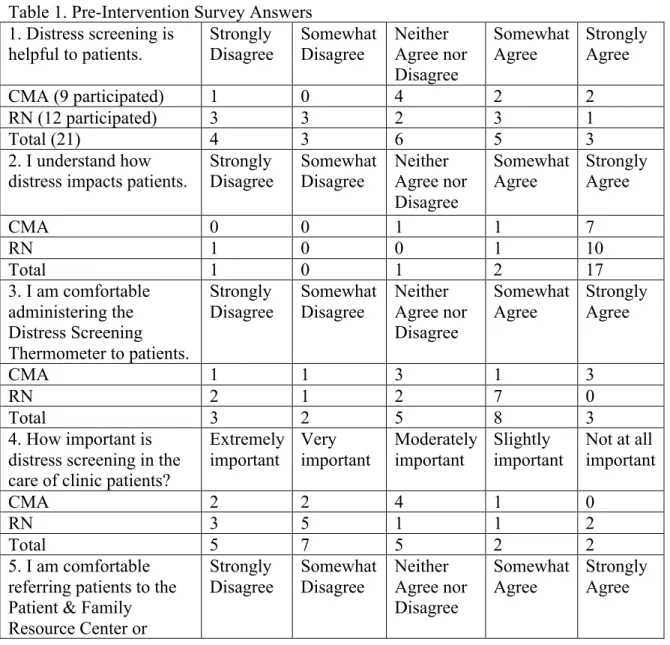
The pre-intervention survey measured attitudes and beliefs with 5-point Likert scale questions ranging from strongly disagree to strongly agree for four of the questions and ranging from extremely important to not at all important for one of the questions. The post-intervention survey included the same five questions as before, with the addition of two 5-point Likert scale questions ranging from strongly disagree to strongly agree. These additional questions assessed the attitudes and beliefs about the patient handout provided and the distress screening training that had been provided. Both the pre- and post-intervention surveys ended with an opportunity for the staff member to provide additional comments about distress screening.
Table 1. Pre-Intervention Survey Answers 1. Distress screening is
helpful to patients.
Strongly Disagree Somewhat Disagree Neither Agree nor Disagree Somewhat Agree Strongly Agree
CMA (9 participated) 1 0 4 2 2
RN (12 participated) 3 3 2 3 1
Total (21) 4 3 6 5 3
2. I understand how distress impacts patients.
Strongly Disagree Somewhat Disagree Neither Agree nor Disagree Somewhat Agree Strongly Agree
CMA 0 0 1 1 7
RN 1 0 0 1 10
Total 1 0 1 2 17
3. I am comfortable administering the Distress Screening Thermometer to patients.
Strongly Disagree Somewhat Disagree Neither Agree nor Disagree Somewhat Agree Strongly Agree
CMA 1 1 3 1 3
RN 2 1 2 7 0
Total 3 2 5 8 3
4. How important is distress screening in the care of clinic patients?
Extremely important Very important Moderately important Slightly important
Not at all important
CMA 2 2 4 1 0
RN 3 5 1 1 2
Total 5 7 5 2 2
5. I am comfortable referring patients to the Patient & Family Resource Center or
paging the
Comprehensive Cancer Support Program when patients score 4 or above.
CMA 0 3 0 2 4
RN 1 3 0 1 7
Total 1 6 0 3 11
6. Please provide additional comments about distress screening.
“I can usually feel when a patient is stressed, and when I ask patients who don't seem to be stressed, I get funny
expressions as to why I asked them.”
“I don't know what the Patient and Family Resource Center is or how it relates to distress screening.”
“In our clinic we have built a relationship with our patients that they feel free to let us know they need to see some one or maybe in life this is just a rough week. They are dealing with a tough disease and not all days are going to be great but many people do not need to talk to someone they just need someone to listen and I think this is addressed on a clinic level. Just some of my thoughts.”
“I will page CCSP if patient requires it due to being upset or in distress, but not always do they need it if its over 5 or a 10. I make patients upset by asking the Distress Screening. I don’t think is necessary for everyone, we should use it if a patient is in Distress only. Some patients refuse to answer, they don't like it. I do it since its required on new patients now, but don't think is necessary or useful. Another thing, if they don't have a cancer diagnosis if in distress, we can't page CCSP.”
“Patients have a difficult time differentiating between ‘stress’ and ‘distress’ even after lengthy explanations. Also, many patients decline intervention with CCSP. I think it should be at the discretion of the RN during or based upon the patient assessment whether or not to administer the screening tool as if someone is distressed, there are often signs that can be picked up during triage.”
Table 2. Post-Intervention Survey Answers 1. Distress screening is
helpful to patients. Strongly Disagree Somewhat Disagree Neither Agree nor Disagree
Somewhat
Agree Strongly Agree
CMA (9 participated) 0 0 1 4 4
RN (8 participated) 0 1 0 5 2
Total (17) 0 1 1 9 6
2. I understand how
distress impacts patients. Strongly Disagree Somewhat Disagree Neither Agree nor Disagree
Somewhat
Agree Strongly Agree
CMA 0 1 0 2 6
RN 0 0 0 1 7
Total 0 1 0 3 13
3. I am comfortable administering the Distress Screening Thermometer to patients.
Strongly Disagree Somewhat Disagree Neither Agree nor Disagree Somewhat Agree Strongly Agree
CMA 0 0 0 2 7
RN 1 0 1 3 3
Total 1 0 1 5 10
4. How important is distress screening in the care of clinic patients?
Extremely
important Very important Moderately important Slightly important Not at all important
CMA 4 3 2 0 0
RN 2 5 1 0 0
Total 6 8 3 0 0
5. I am comfortable referring patients to the Patient & Family Resource Center or paging the
Comprehensive Cancer Support Program when patients score 4 or above.
Strongly Disagree Somewhat Disagree Neither Agree nor Disagree Somewhat Agree Strongly Agree
CMA 0 1 1 0 7
RN 2 1 0 1 4
Total 2 2 1 1 11
6. The new handout is helpful when engaging patients in distress screening. Strongly Disagree Somewhat Disagree Neither Agree nor Disagree Somewhat Agree Strongly Agree
CMA 0 0 2 4 3
RN 0 0 0 3 5
Total 0 0 2 7 8
7. The Distress Screening
my ability to talk with patients about distress.
Disagree
CMA 0 0 2 4 3
RN 0 0 0 6 2
Total 0 0 2 10 5
8. Feel free to provide additional comments about Distress Screening or the recent training.
“I understand why distress screening is done on the first visit but believe this is probably not the best time because patients are unclear of their plan. I do think the training re: the distress screening was very helpful and helped me feel much more comfortable speaking with patients about it.”
The investigator attended clinic intermittently to assist the staff with any questions or concerns and address challenges that they were experiencing. Also, the new patient handout was field-tested during this time. The staff and nurse manager provided excellent feedback to
improve the handout, and the investigator took these suggestions to the nurse educator at the cancer hospital, who made the changes. Several staff members said that the handout was helpful when educating patients about distress. One staff member struggled with it because it wasn’t readily available in each patient room, but the majority of the staff members felt like it did not need to be kept in the patient rooms. A copy of the Distress Screening Thermometer was provided outside of each patient room for staff to have readily available. The common theme from the nurses and CMAs was that they did not feel comfortable providing distress screening on the first visit, which was a clinic policy change that took effect on 7/3/17. Here are a few of the comments made:
• “It doesn’t feel right to ask people about distress when we don’t have a relationship with the patient yet.”
• “How do I know if the patient knows she has cancer? I don’t want to screen if she doesn’t know.”
• “Some people come to our clinic for benign reasons, and this isn’t appropriate.” The investigator took these concerns to the nurse manager, and a decision was made for the investigator to attend the next staff meeting on 8/23/17. The staff confirmed that their biggest concern was that they found it challenging to screen on the first visit for the same reasons mentioned above. The investigator provided suggestions on how to combat the uneasiness of providing distress screening on the first visit by considering this as an opportunity to educate new patients about normal and abnormal distress along with letting them know that the clinic has resources available to patients if help is needed. The nurse manager and investigator agreed with the staff that distress screening should not take place if the patient is visiting the clinic for a benign issue and does not have a cancer diagnosis, but that documentation is needed explaining why the screening did not occur.
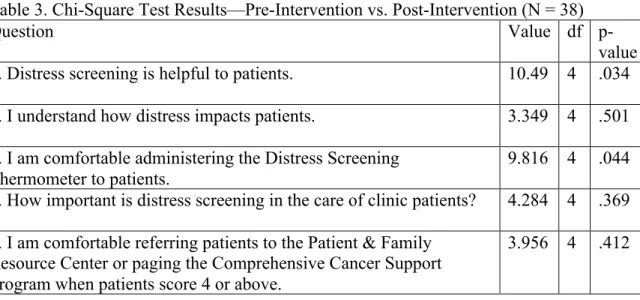
Due to a small sample size, a Chi-square test was used to see if there was a statistically significant difference between the answers from the pre-intervention survey and the post-intervention survey. Table 3 displays the results, derived from the Statistical Package for the Social Sciences (SPSS).
Table 3. Chi-Square Test Results—Pre-Intervention vs. Post-Intervention (N = 38)
Question Value df
p-value 1. Distress screening is helpful to patients.
10.49 4 .034
2. I understand how distress impacts patients. 3.349 4 .501 3. I am comfortable administering the Distress Screening
Thermometer to patients.
9.816 4 .044 4. How important is distress screening in the care of clinic patients? 4.284 4 .369 5. I am comfortable referring patients to the Patient & Family
Resource Center or paging the Comprehensive Cancer Support Program when patients score 4 or above.
A significant difference was found in 2 survey areas: the staff’s perception of distress
screening being helpful to patients, χ2 (4, N = 38) = 10.41, p = .034, and the comfort level of
staff in administering the distress screening tool, χ2 (4, N = 38) = 9.82, p = .044. This
significance is illustrated in Figure 1 and Figure 2, below.
Figure 2.
the July 2017 data, there is no way of knowing whether the education intervention provided an improvement in compliance regarding screening. Regardless, these compliance rates are low and not acceptable to clinic management.
CHAPTER 6: DISCUSSION
Distress from a cancer diagnosis or side effects from cancer treatment can bring
emotional, psychological, spiritual, social, or financial challenges that, left unaddressed, can lead to serious coping difficulties, poor QOL, and possibly poor physiologic cancer outcomes.
Distress screening provides a method of identifying when distress might need further assessment or a referral and treatment for psychosocial care. With the requirement from the ACSCoC to provide distress screening and follow-up psychosocial care, cancer centers are trying to
successfully integrate this screening into clinic workflow. Education is often overlooked due to oncology providers and nursing staff perceiving themselves as compassionate experts already, but talking with patients about highly emotionally charged topics may not be in their skill set and can create personal distress for themselves and possibly lead to burnout (Loscalzo et al., 2011). This QI project’s intention was to determine whether a staff education program that focused on how to engage patients in distress screening, why distress screening is important, and the importance of psychosocial care improved the comfort level of front-line staff (nurses and CMAs) who are charged with providing distress screening in the clinic.
Key Findings
patients, but these results were not significant. The staff was open with the investigator about their belief that they have a strong understanding of their patients’ struggles and that they have little difficulty connecting with patients, so there is little surprise that the education did not change their perception of their understanding of how distress impacts patients or their ability to access in-house resources to get assistance for patients.
The individual comments on the anonymous surveys reiterated this feeling that they develop strong relationships with these patients, know when a patient is struggling, and that distress screening and referrals may not be necessary. One person felt that the nurse should be able to use his or her own clinical judgment whether or not to pursue distress screening. A lack of understanding on why they were being asked to complete the screening and a lack of
knowledge of in-house resources was evident in the pre-intervention survey. Discomfort with screening on the first visit prior to establishing rapport with the patient was a common theme throughout the training, and it was reported on the post-intervention survey. Also, the staff reported a concern that patients without cancer are seen in their clinic, and sometimes patients are not aware that they have cancer when they arrive at the clinic. This leaves the staff feeling vulnerable, feeling that screening all new patients for distress puts them in a position that is inappropriate for their role. Staff did share with the investigator that the training improved their ability to talk with patients about distress and that the patient education handout helped make engagement in distress screening go more smoothly.
and October of 2017, instead of July 2017 vs. September 2017. With August showing 21.25% compliance, September showing 20.84% compliance, and October 18.07% compliance in screening patients during their first visit to the clinic, nurses were not screening at an acceptable rate and the trend was worsening the further they were removed from the July education
intervention. Without the July pre-intervention data, there is no way of knowing whether the education actually improved compliance; but regardless, the screening rates were not acceptable to clinic management and the team is taking further steps to improve practice.
Understanding the Findings
With cancer and the side effects of cancer treatment causing differing levels of distress unique to each patient, distress screening clearly falls within the Neuman Systems Model and provides a prevention strategy to help avoid challenges that can negatively affect a patient’s QOL. The Neuman Systems Model looks at each patient as a system with physiological, psychological, sociocultural, developmental, and spiritual variables, and with stressors that can be intrapersonal, interpersonal, or extra-personal. Neuman’s theory tells us that how a patient perceives and reacts to stress plays a huge factor in each patient’s stability (Freese et al., 2011). The practice of engaging patients in distress screening in a meaningful way that helps educate them in understanding their reactions to distress can suggest both primary and secondary
prevention strategies. The hope is that providing the screening and education about when to seek help, and the knowledge that resources are available, can lead to a tertiary prevention strategy for those patients agreeing to and seeking further assistance (Hammonds, 2012).
requirement to staff in the education session, it was not a motivating force to change their practice. “The group culture may need to be changed and this takes time, effort, persuasiveness, and patience” (Morelli, 2016, p. 1220). Group culture is most likely a key barrier in the AOC, and the cultural elements of resistance to change need to be identified in order to establish a plan to overcome these barriers (Morelli, 2016). Improvements have been seen in other clinic settings where there was a culture shift allowing distress screening to become more integrated into care processes and where providers also gained a deeper appreciation of screening and psychosocial care (Riblet et al., 2014). Provider (physician, nurse practitioner, and physician assistant) buy-in should not be difficult to obtain, given that providers frequently find that patient psychosocial issues can slow down clinic work flow, whereas connecting patients with early psychosocial care can increase productivity. If oncology providers fully understood that screening can
prospectively improve clinic efficiency and manage psychosocial issues that typically slow down clinical encounters, their influence on staff could help to create a culture where everyone was more comfortable with distress screening (Loscalzo et al., 2011). All key stakeholders need to understand how the practice change directly benefits them, as well as how it benefits patients and families (Loscalzo et al., 2011). “Culture change takes time, perseverance, vision and
responsibility for any fallout to be anticipated and managed” (Loscalzo et al., 2011, p. 457). Implications for Practice
incentives are needed to change staff behavior beyond providing education, but this does not take away from the importance of providing education. The need for incentives further justifies the inclusion of staff in the planning phase of the PDSA. It is also possible that the education needs to expand to oncology providers so that all clinic personnel understand the importance of recognizing distress and connecting patients with psychosocial care resources.
Limitations
The investigator was fortunate to have previously worked in the AOC as a nurse navigator and had forged valuable relationships with numerous administrative personnel and staff members prior to starting this project. However, the investigator had not been employed by the cancer center since 2015, was a guest in the clinic, and had limited access to day-to-day decision-making there. There was no one designated as a nursing or CMA champion of distress screening, and while numerous oncology providers were supportive of the project, there was no designated provider champion to help work toward a culture change.
There was also the risk of response bias since the sample was a small convenience sample wherein the nurse manager recruited the staff members. They may have been concerned about their ability to be truthful in their responses, knowing that their manager would eventually see the results. The results of the analyses are limited by the fact that pre and post-test responses from the same participants were not matched. A chi square analysis assumes independence of pre and post measurement, which is unlikely to hold given the same participants may have
investigator worked to establish rapport with the staff, and the staff did share their triumphs and concerns with the investigator. Finally, the generalizability of the findings is challenging, considering that the sample size was small and was gathered in a unique context and setting. Conclusion
Cancer centers should not assume that oncology nurses and medical assistants understand
the importance of psychosocial care or are comfortable with how to engage patients in distress
screening. Medical staff that work with patients with cancer on a daily basis often are very good
at compassionate care and recognize their strengths in developing rapport with patients, but this
doesn’t necessarily mean that they cannot learn how to improve their engagement skills and
increase their understanding of distress and psychosocial care.
Providing distress screening seems to be uncomfortable for staff to engage in on the
patient’s first visit to an oncology clinic, and it may be wise to reconsider which visit makes the
most sense in providing distress screening annually for all patients with cancer. Now that all
cancer centers are required to provide distress screening for accreditation, QI initiatives are
needed to help find a way to make it work in individual clinics to best match the culture of the
staff and providers. Even so, one cannot assume that implementing distress screening will
automatically result in more effective care processes and better outcomes. Effective strategies to
facilitate best practices in psychosocial care and distress management are essential for a quality
response (Howell, Hack, Green, & Fitch, 2014). A QI process can identify staff learning needs to
APPENDIX 1: INSTITUTE FOR HEALTHCARE IMPROVEMENT’S MODEL FOR IMPROVEMENT
APPENDIX 2: DISTRESS SCREENING TOOL
APPENDIX 3: PRE-INTERVENTION SURVEY 1. Distress screening is
helpful to patients.
Strongly Disagree Somewhat Disagree Neither Agree nor Disagree Somewhat Agree Strongly Agree 2. I understand how
distress impacts patients.
Strongly Disagree Somewhat Disagree Neither Agree nor Disagree Somewhat Agree Strongly Agree 3. I am comfortable
administering the Distress Screening Thermometer to patients.
Strongly Disagree Somewhat Disagree Neither Agree nor Disagree Somewhat Agree Strongly Agree
4. How important is distress screening in the care of clinic patients?
Extremely important Very important Moderately important Slightly important
Not at all important 5. I am comfortable
referring patients to the Patient & Family Resource Center or paging the
Comprehensive Cancer Support Program when patients score 4 or above.
Strongly Disagree Somewhat Disagree Neither Agree nor Disagree Somewhat Agree Strongly Agree
APPENDIX 4: PRE-INTERVENTION RECRUITMENT EMAIL Email sent from nurse manager to clinic staff on 7/20/2017:
Good Afternoon,
Melissa Holt, a former Nurse Navigator and 4 Oncology nurse at UNC Cancer Hospital, is working on her DNP at UNC Chapel Hill. Her DNP project is looking at how to improve Distress Screening in the Adult Oncology Clinic. She will be attending your staff meeting next week on Wednesday, 7/26, and needs to collect information via a short survey prior to the staff meeting. Please follow this link to complete the survey. It should only take a couple of minutes. All responses are anonymous.
https://unc.az1.qualtrics.com/jfe/form/SV_8ukMeFqXDOCqPKl
Thanks! Stephanie
Stephanie Duncan BSN, RN, CCRN | PSM III Adult Oncology Clinics
UNC Hospitals
101 Manning Drive CB 7218 Chapel Hill, NC 27599-7218 p (984) 974-8203
APPENDIX 5: PATIENT EDUCATION HANDOUT
APPENDIX 6: POST-INTERVENTION RECRUITMENT EMAIL Email sent from investigator to clinic staff on 9/12/2017:
Hello everyone,
I want to thank each of you for working with me the past few months. I have enjoyed spending time with you, learning about your challenges, and trying to help make distress screening go more smoothly.
Please follow the link below and complete one final survey. It should only take a couple of minutes. I left room at the end for comments, but that is optional. All of your responses are anonymous and I will never know who wrote which response.
https://unc.az1.qualtrics.com/jfe/form/SV_espJLsBNMnnZtNr
Thank you and best of luck with everything!
Melissa Holt, RN, DNP Student
The University of North Carolina at Chapel Hill
APPENDIX 7: POST-INTERVENTION SURVEY 1. Distress screening is
helpful to patients.
Strongly Disagree Somewhat Disagree Neither Agree nor Disagree Somewhat Agree Strongly Agree 2. I understand how
distress impacts patients.
Strongly Disagree Somewhat Disagree Neither Agree nor Disagree Somewhat Agree Strongly Agree 3. I am comfortable
administering the Distress Screening Thermometer to patients.
Strongly Disagree Somewhat Disagree Neither Agree nor Disagree Somewhat Agree Strongly Agree
4. How important is distress screening in the care of clinic patients?
Extremely
important Very important Moderately important Slightly important Not at all important 5. I am comfortable
referring p
patients to the Patient & Family Resource Center or paging the
Comprehensive Cancer Support Program when patients score 4 or above.
Strongly
Disagree Somewhat Disagree Neither Agree nor Disagree
Somewhat
Agree Strongly Agree
6. The new handout is helpful when engaging patients in distress screening.
Strongly
Disagree Somewhat Disagree Neither Agree nor Disagree
Somewhat
Agree Strongly Agree
7. The distress screening training helped improve my ability to talk with patients about distress.
Strongly Disagree Somewhat Disagree Neither Agree nor Disagree Somewhat Agree Strongly Agree
REFERENCES
Allen, J. O., Zebrack, B., Wittmann, D., Hammelef, K., & Morris, A. M. (2014). Expanding the NCCN guidelines for distress management: A model of barriers to the use of coping resources. The Journal of Community and Supportive Oncology, 12(8), 271-277. http://dx.doi.org/10.12788/jcso.0064
American College of Surgeons Commission on Cancer. (2012). Cancer program standards 2012: Ensuring patient-centered care. Retrieved from
https://www.facs.org/~/media/files/quality%20programs/cancer/coc/programstandards20 12.ashx
Annunziata, M. A., Muzzatti, B., Giovannini, L., Mella, S., Bomben, F., Flaiban, C., & Veronesi, A. (2013). Facilitating the integration of emotional states in patients' personal disease experience with cancer: A new brief intervention for managing psychological distress. Supportive Care in Cancer, 21(7), 1815-1819. http://dx.doi.org/10.1007/s00520-013-1735-5
BrintzenhofeSzoc, K., Davis, C., Kayser, K., Lee, H. Y., Nedjat-Haiem, F., Oktay, J. S., ... Zebrack, B. J. (2015). Screening for psychosocial distress: A national survey of oncology social workers. Journal of Psychosocial Oncology, 33(1), 34-47.
http://dx.doi.org/10.1080/07347332.2014.977416
Carlson, L. E., Waller, A., & Mitchell, A. J. (2012, April 10). Screening for distress and unmet needs in patients with cancer: Review and recommendations. Journal of Clinical Oncology, 30(11), 1160-1177. http://dx.doi.org/10.1200/JCO.2011.39.5509
Carlson, L. E., Waller, A., Groff, S. L., Zhong, L., & Bultz, B. D. (2013). Reply: Benefits of screening cancer patients for distress still not demonstrated. British Journal of Cancer, 108, 738-739. http://dx.doi.org/10.1038/bjc.2013.17
Carman, K. L., Dardess, P., Maurer, M., Sofaer, S., Adams, K., Bechtel, C., & Sweeney, J. (2013). Patient and family engagement: A framework for understanding the elements and developing interventions and policies. Health Affairs, 32(2), 223-231.
http://dx.doi.org/10.1377/hlthaff.2012.1133
Fann, J. R., Ell, K., & Sharpe, M. (2012, April 10). Integrating psychosocial care into cancer services. Journal of Clinical Oncology, 30(11), 1178-1185.
http://dx.doi.org/10.1200/JCO.2011.39.7398
Fisher, L., Polonsky, W. H., Hessler, D., & Potter, M. B. (2017, June 21). A practical framework for encouraging and supporting positive behaviour change in diabetes. Diabetic
Medicine. http://dx.doi.org/
Funk, R., Cisneros, C., Williams, R. C., Kendall, J., & Hamann, H. A. (2016). What happens after distress screening? Patterns of supportive care service utilization among oncology patients identified through a systematic screening protocol. Supportive Care in Cancer, 24(7), 2861-2868. http://dx.doi.org/10.1007/s00520-016-3099-0
Gilbertson-White, S., Sherwood, P., Donovan, H., & King, L. (2016). Use of distress screening to identify shorter life expectancy in patients with advanced cancer newly referred to palliative care. Journal of Palliative Medicine, 19(8), 800-801.
http://dx.doi.org/10.1089/jpm.2016.0142
Grassi, L., Caruso, R., Sabato, S., Massarenti, S., Nanni, M. G., & UniFe Psychiatry Working Group (2014). Psychosocial screening and assessment in oncology and palliative care settings. Frontiers in Psychology, 5(1485), 1-6.
http://dx.doi.org/10.3389/fpsyg.2014.01485
Hammonds, L. S. (2012). Implementing a distress screening instrument in a university breast cancer clinic. Clinical Journal of Oncology Nursing, 16(5), 491-494.
http://dx.doi.org/10.1188/12.CJON.491-494
Han, X., Lin, C. C., Li, C., de Moor, J. S., Rodriguez, J. L., Kent, E. E., & Forsythe, L. P. (2015, February 15). Association between serious psychological distress and health care use and expenditures by cancer history. Cancer, 121(4), 614-622.
http://dx.doi.org/10.1002/cncr.29102
Institute for Healthcare Improvement. (2016). How to improve with the Model for Improvement. Retrieved from
http://app.ihi.org/lmsspa/#/6cb1c614-884b-43ef-9abd-d90849f183d4/41b3d74d-f418-4193-86a4-ac29c9565ff1
Loscalzo, M., & Clark, K. (2017, March). Your guide to implementing comprehensive biopsychosocial screening. In M. Loscalzo, & K. Clark (Chair), Implementing
comprehensive biopsychosocial screening. Symposium conducted at the City of Hope Medical Center, Duarte, CA.
Loscalzo, M., Clark, K. L., & Holland, J. (2011). Successful strategies for implementing biopsychosocial screening. Psycho-Oncology, 20, 455-462.
http://dx.doi.org/10.1002/pon.1930
Loscalzo, M., Clark, K., Pal, S., & Pirl, W. F. (2013). Role of biopsychosocial screening in cancer care. The Cancer Journal, 19(5), 414-420.
http://dx.doi.org/10.1097/PPO.0b013e3182a5bce2
Morelli, M. S. (2016). Using the plan, do, study, act model to implement a quality improvement program in your practice. The American Journal of Gastroenterology, 111(9), 1220-1222. http://dx.doi.org/10.1038/ajg.2016.321
NCCN Distress Thermometer for Patients [Measurement instrument]. (2013). Published instrument. Retrieved from
http://www.nccn.org/patients/resources/life_with_cancer/pdf/nccn_distress_thermometer. pdf
Neuman, B. (2011). The Neuman systems model. In B. Neuman & J. Fawcett (Eds.), The Neuman Systems Model (5th ed.) (pp. 3-33). Upper Saddle River, NJ: Pearson.
Pearman, T., Garcia, S., Penedo, F., Yanez, B., Wagner, L., & Cella, D. (2015). Implementation of distress screening in an oncology setting. The Journal of Community and Supportive Oncology, 13(12), 423-428. http://dx.doi.org/10.12788/jcso.0198
Pirl, W. F., Fann, J. R., Greer, J. A., Braun, I., Deshields, T., Fulcher, C., ... Bardwell, W. A. (2014, October 1). Recommendations for the implementation of distress screening programs in cancer centers: Report from the American Psychosocial Oncology Society (APOS), Association of Oncology Social Work (AOSW), and Oncology Nursing Society (ONS) joint task force. Cancer, 120(19), 2946-2954.
http://dx.doi.org/10.1002/cncr.28750
Redmond, M. (2015). Screening for distress in patients with cancer. Journal of Continuing Education in Nursing, 46(5), 201-202. http://dx.doi.org/10.3928/00220124-20150420-12
Riblet, N., Skalla, K., McClure, A., Homa, K., Luciano, A., & Davis, T. H. (2014). Addressing distress in patients with head and neck cancers: A mental health quality improvement project. Journal of the National Comprehensive Cancer Network, 12(7), 1005-1013. http://dx.doi.org/10.6004/jnccn.2014.0097
Speroff, T., & O'Connor, G. T. (2004). Study designs for PDSA quality improvement research. Quality Management in Health Care, 13, 17-32.
Tavernier, S. S., Beck, S. L., & Dudley, W. N. (2013). Diffusion of a distress management guideline into practice. Psycho-Oncology, 22, 2332-2338.
http://dx.doi.org/10.1002/pon.3295
Waller, A., Williams, A., Groff, S. L., Bultz, B. D., & Carlson, L. E. (2013). Screening for distress, the sixth vital sign: Examining self-referral in people with cancer over a one-year period. Psycho-Oncology, 22(2), 388-395. http://dx.doi.org/10.1002/pon.2102 Zebrack, B., Kayser, K., Sundstrom, L., Savas, S. A., Henrickson, C., Acquati, C., & Tamas, R.