Edward M.
Bergman
Local
Economic Development
Planning
in
an
Era
of
Capital
Mobility
EXTERNAL FORCES AND LOCAL PERSPECTIVE
Capital mobility is the technical term used
by policy analysts to describe the movement of
industry from one place to another, often
be-tween declining and growing local economies.
This subject has recently become a topic of
con-siderable research and policy interest at two
levels. First, researchers have been concerned
with a tendency of corporate forces and national
policies to foster a polarization of local
eco-nomic conditions: disinvestment and plant
shut-downs in declining areas simultaneous with
rein-vestment and plant relocation in growing areas.
Second, the accelerated pace of
disinvestment-reinvestment since the mid-seventies has begun
to be identified as a serious problem for both
declining and growing areas.
Indeed, one could argue that local economic
development planning as a field has become newly
prominent during this period of rapid economic
dislocation. The burgeoning literature on local
economic development planning during the
seven-ties era of stagflation, recessions and
muni-cipal fiscal crisis attests to a strongly felt
need by planners to help guide the development
of their local economies. The American
Plan-ning Association's recently established Economic
Development Division has become notable for its
rapid growth and for overflow crowds attending
its sessions at recent APA conferences.
Still absent, however, is a coherent sense
of how a planner undertakes economic development
from the perspective of the local community and
its well-being rather than in response to
national or corporate imperatives. The
extra-ordinary displacement of local for federal
per-spectives has been argued by Yin (1980) in terms
of local program agency structure, and by
Bergman (1981) in terms of forfeiting areawide
planning for piecemeal grantsmanship. The
im-mutability of national corporate relocation
pat-terns was argued by the President's Commission
(1980), which identified the role of local
econ-omies as an obliging accommodation to the
national trends. Even within states, local
gov-ernments seem to play negligible
—
or at bestresponsive
—
roles in state level industrialde-velopment programs (Redmond. 1978; Luebke,
McMahon and Risberg 1979).
Yet the need for local economic planning
has never been greater. Local planners may be
the only force willing to come to grips with the
rapid and wrenching changes in their local
economies brought about by external forces. The
time has come to identify approaches to economic
development planning from a truly local
perspec-tive.
The remainder of this article will sketch
the disparate patterns of economic change in
North Carolina communities and then outline the
options available to local economic development
planners.
SOUTHERN ECONOMIC GROWTH AND CAPITAL MOBILITY:
THE CASE OF NORTH CAROLINA
Economic vitality in North Carolina is so
widely assumed that future expectations of
growth go undisputed. For example, the North
Carolina State Division of Policy Development
recently released its workbook for local
eco-nomic planners. The document's familiar
pro-jections of economic growth from 1980-2000
in-clude 948,000 jobs and and a 3% annual rise in
per capita income (N.C. Division of Policy
De-velopment 1981, pp. 11-14). The workbook
esti-mates that 90% of all new jobs will be formed
outside the traditional agriculture and
manu-facturing industries; fully three-fourths of
growth in North Carolina is to be found in the
population-serving industries of urban areas.
Each of the expected growth rates exceeds
national averages, but growth will not occur
uniformly in all industrial sectors.
Manu-facturing will employ 28% of all workers by the
year 2000 (down from 34% in 1980) and some
in-dustries will reduce employment by substantial
amounts (particularly tobacco, food, textiles,
apparel and wood products). After reviewing
these projections, an observant columnist
of-fered the following comments.
...The problem is current, and it
doesn't hold implications just for the
coming generation, but for today's Tar
Heels.
Edward M. Bergman is Associate Professor in the
UNC Department of City and Regional Planning,
The newspaper stories continue to
startle as they filter in from
loca-tions across the state: a hundred or
so jobs lost here; a thousand there.
Those are not temporary layoffs, but
signs of a basic change in North
Caro-lina's economy.
The headlines out of Laurinberg,
Shel-by, Salisbury and elsewhere as
long-established textile firms change plans
and methods are not about the future.
They tell of today's North Carolinians
who are finding their lives disrupted
by change they are not prepared to
cope with (Noblitt, October 1981).
These comments give local meaning to the
re-search evidence which analysts studying
"Sunbelt-Snowbelt" capital mobility have
pro-duced.1 More
specifically, Bluestone and
Harri-son (1980) have observed in the Dun S Bradstreet
data a tendency for some southern states to
be-have like northern states in terms of net
em-ployment loss. North Carolina seemed
parti-cularly susceptible to net job losses during key
periods in the 1970s. Heavy industrial
concen-tration in textiles, apparel and furniture
places the state in a vulnerable position during
periods of inflation, business cycle decline and
stagflation since these markets are highly
de-pendent on the health of the homebuilding and
automobile industries. The state's economy is
also affected by the secular trend toward "off
shore" operations as textile and apparel
manu-facturers seek lower labor costs in developing
countries.2
These trends of capital mobility and plant
shutdowns in North Carolina industries
illus-trate the range of circumstances which local
economic development planners must deal with:
industrial growth in some areas, industrial
de-cline in others. The logical questions focus on
the amount of growth, the amount of decline, and
specific locations.
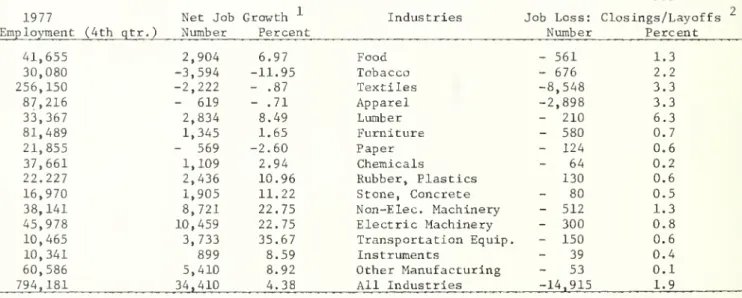
Table 1 presents evidence of manufacturing
employment changes for the 1977-79 period. Two
points are particularly noteworthy. First, at
least 14,915 manufacturing jobs in 42 counties
were lost over a two-year period3
, 77 percent of
which are in textiles and apparel, the two most
The current literature of capital mobility and
public policies is primarily focused on northern
U.S. cities and regions where industry loss is
greatest. The understandable attention paid to
these areas tends to reinforce the familiar but
essentially misleading view that planning for
industry loss is solely a problem for Snowbelt
areas and that planning for industry gain is the
sole preoccupation of Sunbelt regions. That
regional dichotomy is useful to the extent that
it reflects very general tendencies toward
un-even development, but it uncritically leads one
to simplistic policies and avoidable
"sectional-ist" division (Shaul 1981). It ignores the
reality of substantially sound local economies
which can be found in the heart of the Snowbelt
(Goldstein, Bergman and Paulson 1981) and the
extraordinary flux of growth and loss in Sunbelt
economies.
Some loss trends in textiles may stabilize due
to reindustrialization of that industry with new
technology from textile-related capital goods
industries (the latter principally instances of
foreign direct investment; Leigh-Preston 1979).
TABLE 1: JOB GROWTH AND JOB LOSS IN SELECTED MANUFACTURING INDUSTRIES 197 7-1979
1
1977
Employment (4th qtr.)
Net Job Growth
Number Percent
Industries Job Loss: Closings/Layoffs
Number Percent
41,655 30,080 256,150 87,216 33,367
81,489
21,855
37,661 22.227
16,970 38,141
45,978
10,465 10,341
60,586 794,181
2,904 6.97 Food
-3,594 -11.95 Tobacco
-2,222 - .87 Textiles
- 619 - .71 Apparel
2,834 8.49 Lumber
1,345 1.65 Furniture
- 569 -2.60 Paper
1,109 2.94 Chemicals
2,436 10.96 Rubber, Plastics
1,905 11.22 Stone, Concrete
8,721 22.75 Non-Elec. Machinery
10,459 22.75 Electric Machinery
3,733 35.67 Transportation Equip
899 8.59 Instruments
5,410 8.92 Other Manufacturing
34,410 4.38 All Industries
- 561
- 676
-8,548 -2,898
- 210 - 580
- 124
64 130
80
- 512
- 300 - 150 39 53
-14,915
1.3 2.2 3.3 3.3
6.3 0.7 0.6 0.2 0.6
0.5 1.3 0.8 0.6
0.4 0.1
1.9
Source: N.C. Bureau of Employment Security Research
Payments Annual Summary. Raleigh: Employment Security Commission o
Source: N.C. Business Assistance Division. 1978-1981. Plant Closings
in North Carolina. Raleigh: N.C. Department of Commerce.
1977, 1979. Insured Employment and Wage
f North Carolina.
vulnerable industries. Second, to overcome the
loss of 14,915 jobs and also register a net
statewide gain of 34,300 manufacturing jobs, the
state's other manufacturing industries had to
grow by at least 49,215 jobs.
Thus, on average, job growth in the state
outpaced job loss by a three-to-one margin. As
Table 1 clearly shows, the fastest growing
in-dustries in real and in percentage terms are
non-electrical machinery (SIC 35), electrical
machinery (SIC 36), and transportation equipment
(SIC 37); together, they accounted for 65% of
net job growth.
The tasks facing economic development
plan-ners would be far simpler if three jobs were
gained in the same communities where each job
was lost, particularly if the actual job losers
--and not inmigrants--were hired for the new job
openings. However, growing industries are not
necessarily locating in the places with
declin-ing industries. To help visualize the potential
for areas to experience various mixes of loss
and growth, Table 2 presents summary statistics
by general types of area in the state.
Recent manufacturing losses are clearly
con-centrated in small towns and nonmetropolitan
counties of the mountain and coastal regions,
while maufacturing job gains occur predominantly
in metropolitan counties of the Piedmont.
Metropolitan Piedmont gains are particularly
heavy for SICs 35, 36 and 37, which are the
state's fastest growing industries. These
dif-ferences illustrate the unevenness of job loss
and job gain at general levels of area
defini-tion. This in turn points to the likelihood
that particular communities across the state
will experience a wide range of economic
cir-cumstances in the near future. Different
cir-TABLE 2: RECENT MANUFACTURING JOB LOSS
AND JOB GROWTH BY AREA 1977-1979
SIC 35-37
Loss Gain Gain
Region (Total)
Mountain Counties Piedmont Counties Coastal Counties
Metropolitan (Total)
Metro Counties Non-Metro Counties
Urbanized Areas (Total) 100% 100% 100%
50,000 and over 18% -*
10-50,000 34%
Under 10,000 48%
100% 100% 100%
18% 18% 9%
49% 64% 79%
33% 18% 12%
100% 100% 100%
35% 60% 70%
65% 40% 30%
cumstances call for different approaches, even
in a "Sunbelt" state. Planners in areas likely
to experience rapid economic growth will have to
deal with development issues similar to those
which may accompany rapid expansion of the
microelectronics industry (Whittington, ed.
1981; NC INSIGHT, Vol. 4, No. 3). On the other
hand, planners in major job loss areas of the
state must consider an entirely different range
of options and stategies (Robinson 1981;
Trem-oulet 1981)
.
STYLES OF LOCAL ECONOMIC
DEVELOPMENT PLANNING
The earlier part of this article takes note
of two conditions which affect local economic
development planners. First are pressures
exerted by federal policy and corporate mobility
to substitute external needs for local needs in
the process of developing local economies.
Second is the realization that local economies
across the state are affected differently, i.e.,
some have growing industrial sectors while
others are experiencing industrial decline.
What, then, are the effects of these conditions
on possible styles of economic development
plan-ning?
Before this question is explored more fully,
a style of planning will be said to consist of
several essential features grouped under the
broad headings of planning, policy and
develop-ment. These features are:
A. Planning
1. Model of Planning practice
(orienta-tion of planner)
2. Auspices for planning (agency or
institutional setting)
B. Policy
1. Industrial Policy in locality
2. Labor Policy in locality
3. Enterprise Policy in locality
C. Development
1. Intervention model of
implementation
2. Illustrative development projects
If these essential features are now
elab-orated for both growing and declining
locali-ties we are able to isolate stylistic
varia-tions which are due to differences in local
eco-nomic conditions. To complete our examination,
we will assume further that localities may adopt
Total Jobs 14,925 34,751 29,061
*Statistics unavailable on place of work
basis for urbanized areas.
Sources: U.S. Bureau of the Census. 1977,
1979. County Business Patterns
—
N.C.J These estimated losses are undercounted. Not
counted are the small plant shutdowns or job
losses in remote parts of the state which escape
the attention of newspapers or the clipping
one of two perspectives: responsiveness to
ex-ternal needs or responsiveness to local public
needs. For reasons mentioned earlier,
re-sponsiveness to external needs characterizes
much of prevailing practice, and local
re-sponsiveness is identified with an emerging (or
latent) practice. This sets the stage for
pos-ing a typology of four distinct planning
styles:5 two prevailing styles (I and II) and
two emerging styles (III and IV) for local
economies which are growing or declining. The
four styles are laid out in Table 3 in clockwise
order of their emergence.
Style I: Recruitment Planning
Recruitment planning is the traditional
basis for economic development used in growing
areas
—
suburbs and regions—
to attract corporateexpansion. Public involvement in this style of
economic development planning is quite limited.
In the words of one observer,
"For the most part, responsibility
for guiding new investment to a
locality has been perceived
histori-cally as being in the hands of the
private sector--the province of the
local chamber of commerce and the area
development offices of the utility
companies, the major railroads, and
banking institutions. For the local
government to intervene overtly in
those decisions that determine the
nature and level of jobs or the mix of
economic activity in the community
would have been viewed as an unwelcome
intrusion." (Nathanson 1980, p.3)
Private sector vitality and initiative tend
to displace expressions of local concern for
explicit planning or policy making."
policies associated with this style of
eco-nomic development tend to function at the level
of operating assumptions. Industrialization of
the area is taken for granted as obvious policy.
Most of the following discussion assumes the
existence of a local economy which is either
growing or declining; but many undeveloped areas
tend to behave much like developed economies
experiencing severe or rapid decline.
A variant of these styles is discussed in
Bergman (1981b) and.was also presented at the
American Planning Association Conference in
Boston, April 1981.
° Whether this displacement of concern results
from business influence on local politics is a
question posed and discussed by Lindblom and
o-thers in Siegfried, 1980, pp. 239-324. For
ad-vice about ways of gaining local public control
over industrial recruitment, see Redmond 1978.
This is generally linked with a tacit
under-standing that industrialization results from
a corporate enterprise calculus which reveals
the relative advantages of adjusting investments
in plants from one area to another. Finally,
the implicit labor policy expects workers who
receive lower wages and social benefits for
their families to subsidize economic development
by reducing corporate labor and tax bills
(Malizia 1976). A recent editorial posed the
effects of this policy clearly:
"In response to an inquiry from a
business prospect, the state (North
Car-olina) Department of Commerce recently
compared the pay of computer operators
in the banking industry in Minnesota and
North Carolina. Computer operators in
Minnesota earn an average of $9.13 an
hour, those in North Carolina $6.40...
The difference, the department told its
business prospect, amounts to a "savings
in North Carolina of $5678 per computer
operator per year." (Guillory 1981)
Typical development models include a wide
array of industrial inducements and efforts to
enhance the image of the area's "business
cli-mate" (Harrison and Kanter 1978; Schmenner
1980). Because it is the most familiar style of
local economic development planning, variants of
it can be found in nearly every locality, even
in declining economies which have been badly
af-fected by industrial losses (NCUED 1977; Nathan
Barnes 1976).
Style II: Impact Planning
Impact planning is a more recent model of
practice which is focused on efforts to mitigate
or reduce the worst effects of industrial losses
in a local economy. Although episodic
ex-periences during the Depression and again in the
recessions of the 1950s established a concern
for the effects of plant shutdowns in some
com-munities, formal economic development efforts
were not conducted by localities until the
re-cessionary slide of the 1970s. What has since
become known as "The Standard Policy Response"
(Bluestone and Harrison 1980, pp. 14-15) now
constitutes the most recognizable public sector
planning approach to economic development. The
approach is based heavily on the continued
availability of federal programs (CETA, EDA,
CDBG, UDAG, FmHA) and it operates out of the
local program offices that Yin (1980) has
suggested come to mirror the organizational
structure and policy concerns of their patron
federal agencies.
The main assumption underlying federal and
local impact policies is that they reflect a
basic responsiveness to external rather than
local needs. While federal policies are usually
Table 3
LOCAL ECONOMIC DEVELOPMENT PLANNING:
PREVAILING AND EMERGING STYLES
Prevailing Perspective: Responsive to External Needs
Growing Areas Declining Areas
Planning
. Model of Practice
. Auspices
Policy
. Industry
. Labor
. Enterprise
Development
. Intervention Model
. Illustrative Project
(I)
Recruitment planning
Business/industry development commission
(ID
Impact planning
Program agencies(CETA,EDA,UDAG)
Industrialization Deindustrialization
Money/social wage subsidy Money, psychic, community costs
Corporate adjustment assistance Corporate immunity
Industrial Inducements
Kel ley-Springfield
(Fayetteville, NC)1
Impact program expenditures
ILC Steinthal (Roxboro, NC)2
Emerging Perspective: Responsive to Local Needs
Growing Areas Declining Areas
Planning
. Model of Practice
. Auspices
Policy
. Industry
. Labor
. Enterprise
Development
. Intervention Model
. Illustrative Project
(IV)
Strategic planning
Economic planning staff
Industrial integration
Labor integration
Neutrality
Public-initiated development Unknown
(III)
Contingency planning
Economic Development Department
Industrial stabilization
Producer resources Community based
Community-initiated development
Rath Meatpacking (Waterloo,IA)
^
1 See Moriarty
See Region K Council
3 See Gunn 1980.
of Governments; Carlisle, et al 1978; Stein 1980.
implicitly as background assumptions. Still,
few planners would have difficulty in
recogni-zing local industrial, labor and enterprise
policies if stated explicitly. First,
"dein-dustrialization" is the industrial policy in
these declining areas. A firm's need to close
or gradually reduce operations in older, less
profitable plants means that it will withdraw
production in certain areas, i.e.,
deindustrial-ize. This policy is, of course, the
mirror-image of industrialization policies for growing
areas and merely restates the obvious. Second,
enterprise policy is based on the locality's
im-plied acceptance of risks associated with
corpo-rate modes of decision making and investment
be-havior. This acceptance of risk probably
ex-tends back to a tacit acknowledgment that a
corporation will not necessarily keep its plants
in places where it earlier relocated them. By
extension--although it is increasingly contested
in most localities--this acceptance of risk also
implies that corporations can later remove such
plants and reinvest elsewhere without implied
community obligations. Third, labor policy is
based on the assumption that costs of absorbing
local impacts will be borne primarily by
re-leased workers, their families and, indirectly,
by other workers in businesses whose employment
depends upon local wage purchasing power. Loss
of wages, psychic and physiological distress,
higher tax burdens, greater social program
ex-penditures and continued obligations to amortize
industrial infrastructure are included in the
costs which all workers in the community
ulti-mately bear (Carlisle and Redmond 1978).
Development activities are clearly implied
by the term "impact planning". The typical model
is a program "triggered" by sudden, unexpected
losses of employment and economic activity.
Earlier experiences with impact programs were
limited to effects caused by uncontrollable acts
of God (declared disaster areas) or the military
(base closing). National urban policy has since
included a concern for reducing the local
im-pacts of necessary--but equally
uncontrolled--acts of corporate mobility.
The programs associated with such policies
are generally targeted on particulars of the
episode which trigger a program: a specific
plant, workforce or impact area. The
con-sequences of planning solely for impact effects
are twofold. First, in complying with the
national policy mandates and program
regula-tions, planners are distracted from efforts to
plan for the coherent development of their local
economies. Directives which specify criteria
for triggers, targets and related aspects of
plan-ning. Second, the planner's role in redeveloping
a local economy is placed in jeopardy when
fed-eral funds are withdrawn (as they appear to be),
when localities can no longer afford the costs
of standard impact program models, or when
plan-ners have no alternative style of planning to
guide them.
There are many impact program efforts which
localities have attempted that illustrate this
stage of planning. One instance in particular
concerns the well-chronicled efforts of an
economically distressed small town in the North
Carolina Piedmont to deal over a four year
period with the estimated impacts of an expected
plant shutdown (Kerr-Tar Regional Council of
Government 1977), an unsuccessful attempt to use
EDA Title IX funds to finance an employee stock
option plan buy-out of the plant (Carlisle, et
al. 1978) and the consequences of an eventual
plant shutdown (Stein 1980).
Style III: Contingency Planning
Contingency planning is an emerging style
which grows out of the ineffectiveness of impact
planning in declining areas, and from an
aware-ness that planning must anticipate impacts
rather than react to them. As plant shutdowns
and adverse economic impacts grow more frequent
and as economic development officials come to
recognize the scale of the problem, some
questioning of the assumptions which lie behind
the reactive posture of the impact planning
model is inevitable. Since impact planning
re-sponds to episodes of economic distress only
after they happen, actions taken seldom fit into
an overall plan for the area. Moreover, efforts
undertaken to mitigate these impacts are
pri-marily devised to reduce the effects of
corp-orate relocation. Some local officials have
begun to question their past responsiveness to
corporate needs. Faced with the sudden shutdown
of two of three J. P. Stevens plants in Great
Falls, S.C., the mayor declared:
It's a first class shaft; there
wouldn't be no J. P. Stevens without
Great Falls and no Great Falls without
J. P. Stevens. One's indebted to the
other. They've kept all the industry
out of here, owned all the land,
mon-opolized the labor force and
con-trolled this town lock, stock and
bar-rel. (Allee 1981)
Repeated instances of impacts and many second
thoughts by municipal officials are quite likely
to lead to changes in perspective which favor
economic development that is responsive to local
needs. (See Carlisle 1978 for early proposal.)
Since it too is carried out in areas
susceptible to plant closings and economic
dis-tress, contingency planning must expect future
dislocations from external forces which the
local area cannot predict or control (Malizia
1981b). Because local planners can not control
such forces, they must adopt an anticipatory
stance, and begin to make advance plans for
future highly probable events.7 Contingency
planning can help mobilize an area's resources
and inherent capabilities to deflect or
accom-modate impacts brought on by external forces.
Contingency planning appraises in advance the
strength of all economic sectors and anticipates
prospects for plant shutdowns (Tremoulet and
Walker 1980), plans potential economic
re-development projects (Malizia 1981a), and
pro-vides community organizations and leaders with
the information necessary to initiate local
actions (Bergman 1981c).
To carry these tasks out effectively,
con-tingency planning will probably be conducted out
of a local economic development department or
attached permanently to existing municipal
plan-ning and development departments. The change of
emphasis expects impact program planners to move
beyond their "grantsmanship" skills. They must
now apply theoretical and practical knowledge of
how their local economy actually operates,
ana-lyze key elements of that economy, and design
economic redevelopment projects and policies
which can be effectively implemented.
(Bendavid-Val 1980; Malizia 1981a)
Under the contingency planning model, local
policies toward industry, labor and enterprises
would respond to local need. Industrial policy
would attempt to stabilize industrial sectors
with the long-term goal of protecting the
locality's economic base. Economic development
planning is responsible for estimating what a
"sustainable" level of industrial activity would
be in that local economy. Knowing the structure
and linkages among the full complement of
re-maining industries, their likely tenure, new
in-dustrial investment potential and the total need
for local resources which can realistically be
provided, planners would be expected to help
local officials devise industrial stabilization
policies geared to the realities of the 1980s
and beyond.
The unavoidable loss of firms in declining
areas generally frees up employees who aren't
willing or able to relocate, including many at
the managerial level. A local labor policy
should go beyond typical measures of employee
resettlement or the marketing of unemployed
labor power to a consideration of other
possi-bilities. Unemployed workers are also skilled
people who possess first-hand knowledge of work
' Another view of contingency planning poses
the central issue as an inability to predict
contingent events, and stresses the need to
develop plans which take maximum advantage of
the opportunities which accompany any crisis
processes, who often know how to improve methods
of production and distribution, and who
occa-sionally are potential suppliers of investment
capital (savings, pension funds, foregone
earn-ings, etc). The relation of labor policy to
this store of productive resources isn't likely
to be overlooked if local enterprise policy is
also considered simultaneously. If a policy for
the stimulation of new enterprises is developed
which takes explicit account of the producer
re-sources held by labor, it is quite possible to
stabilize vulnerable sectors in the local
econo-my. Worker-buy outs, employee stock option
plans, producer cooperatives, worker-community
enterprises, community development corporations,
and other innovative examples of efforts over
the past decade to stabilize job-loss economies
are worthy of close examination (Center for
Com-munity Self-Help 1981; Kelly 1976; Mahmood and
Ghosh 1979; Zwerdling 1978).
Since many of these approaches require early
public involvement in the planning, financing
and implementation phases, local labor and
en-terprise policies should be established before
the need arises. Here again, economic
develop-ment planners are expected to study the
condi-tions and circumstances which account for
efforts that have successfully stabilized local
economies, and prepare contingency plans for
planners' active involvement in each of the
phases.
The development activities associated with
contingency planning include many of those
discussed previously for Styles I and II, but
these activities tend to be community-initiated.
It might be said that contingency planning as a
style began to emerge only after
community-initiated efforts demonstrated a clear need for
it. Established first as a device for minority
groups to exercise economic power in otherwise
strong local economies, community economic
de-velopment has gone beyond its early concerns to
include worker-community initiated responses to
plant shut-downs in the local economy.
The establishment of UDI-CDC's industrial
park in Durham, N.C. is one example of a
fed-erally funded effort," and the extraordinary
efforts of all concerned with the Workers Owned
Sewing Company in Windsor, North Carolina
demon-strates a broad based effort to help stabilize
the local economy with a minority worker-owned
firm (Bergman, Carlisle and Redmond 1979;
Miller 1980). One of the most ambitious and far
reaching attempts to stabilize a local economy
involves union members, corporate stockholders
and managers, and public officials in Waterloo,
Iowa. This remarkable community- initiated
ef-UDI-CDC has perhaps had greater success in
developing its park than in assuring that
em-ployers treat workers fairly. See Triangle
Com-mittee for Economic Justice n.d.
fort involves local planning of feasibility
studies and of two public revolving loan funds,
workers' planned purchase of majority shares in
Rath Meat Packing Company, workers' decision to
forego scheduled benefit increases, and major
reinvestments of labor-based funds in modern
equipment and production processes under
worker-manager control (Gunn, 1980).
Style IV: Strategic Planning
This style of planning would be the logical
consequence of a growing area that adopts a
local perspective toward its economic
develop-ment planning. Since growing areas by
defini-tion do not experience serious job loss they
needn't settle for more limited approaches
of-fered by contingency planning. And since these
local areas have adopted a local needs
perspec-tive, they aren't restricted to planning the
re-cruitment of corporations which wish to relocate
now (and perhaps again later). As used here,
the dictionary definition of strategic, minus
its military sense, provides all the essential
elements
:
Utilization of all of a [locality's]
forces, through large-scale,
long-range planning and development to
ensure [success]." (Random House 1966)
To help ensure the successful development of
a stable and prosperous economy, localities
adopt a long-range view of economic development.
This posture avoids the problems occasioned by
rapid, almost haphazard growth so prevalent in
growing areas. It also allows the locality time
to organize its capacity to plan for economic
development and to properly accommodate
desir-able expansion of the economic base. Studying
lessons learned the hard way in other places is
well worth the time it takes, even if local
business leaders become a bit impatient with the
deliberate approach. A long-term view fosters
open discussion and full consideration of plans
and policies which affect all segments of the
community.
Strategic planning also necessarily entails
a large-scale effort to deploy available
re-sources. This does not mean heavy doses of
municipal expenditure or large federal
subsi-dies; in fact, it could reduce current
expendi-tures from all sources and lower the risks of
heavy long-term public and individual costs.
Instead, large-scale effort is a term which
im-plies that economic development be considered an
objective for all ongoing municipal functions.
The full set of regulations, tax policies,
pub-lic works and municipal program expenditures
should be framed with long-term economic
de-velopment objectives firmly in mind. A
strategic view of planning would put planners in
particularly close touch with budgets, tax
poli-cies, public procurement, expenditure patterns
now essentially managed with conflicting or no
explicit policy direction, strategic
considera-tions would call forth a form of local economic
planning. The institutional setting for this
strategic guidance consists of a local economic
planning unit that is placed close to these
on-going municipal functions. A large scale,
comp-rehensive approach boils down to doing the
everyday business of local government with one
additional long-term objective firmly in mind:
economic development.
A policy of industrial integration falls
logically into place with this style of economic
development. Integration refers first to an
in-herently logical and desirable mix of industrial
sectors, given local resources and other
deter-mining factors which economic development
plan-ners and officials routinely appraise. The full
powers of local government would also be
in-tegrated to provide essential public support,
assistance, and incentives to preferred
in-dustrial sectors, and to do so with dispatch and
timely cooperation. Finally, the inherent
strengths and vitality of business or industry
groups (chambers of commerce, private industry
councils, industrial development commissions)
which comprise the area's private sector would
be harnessed as propulsive forces in local
eco-nomic development activities. To draw on this
strength without also succumbing to its
tradi-tional influence, localities must be prepared to
negotiate openly with private sector interests
on matters where business or industry
involve-ment is critical, but also be prepared to know
where such involvement properly ends.
How a growing locality preserves its public
perspective on the area's long-term needs and
reflects more than the pressing concerns of the
private sector is a question of central
import-ance. A moment's reflection on the passive--but
often determining--role played by labor in
traditional styles of economic development
suggests that labor policy may provide the
an-swer. Labor integration as a local policy would
expect workers and their organizations (unions,
professions, consumer groups, etc.) to represent
long-run interests in desirable types of
benefi-cial work and wage income available in a
locali-ty, and to do so from a direct understanding of
the everyday realities of working in modern
business enterprises. This representation might
be "integrated" with that of business groups and
public officials in an economic development
council or some other tri-partite advisory
framework.
Labor policy should also establish explicit
positions concerning the traditional aspects of
local employment planning, i.e., the
availabili-ty of labor, job placement, job mobility,
oc-cupational safety and training. These are
poli-cy concerns which supercede any particular
pro-grammatic vehicle (eg. CETA) or prevailing
pro-gram model (eg. human capital), particularly for
localities which adopt a local needs
perspec-tive. For many reasons
—
including the rolesplayed by local secondary schools and colleges
—
training policies deserve careful attention. A
work force must of course hold requisite labor
skills, but training might also provide worker
awareness of labor interests in economic
de-velopment issues, in productivity enhancement
and innovation, and in opportunities for worker
initiated enterprises. Thus, labor policy
anti-cipates more active and direct involvement of
the work force in economic development.
Finally, localities would be expected to
adopt a neutral position with respect to
enter-prise type. Neutrality would mean that local
government policies, taxes, regulations
—
nearlyall acts subject to local decision making
—
wouldfavor no enterprise form in particular. Thus,
corporations, franchise business, small
busi-nesses, cooperatives, community-worker
enter-prises and all other potential forms of economic
enterprise would find themselves on equal
foot-ing with respect to local economic development.
Such a policy will doubtless require actions by
localities to reduce favored treatment to some
enterprises and to increase it for others.
Recent congressional mandates to the Small
Business Administration are a case-in-point at
the federal level. Congress now requires the
SBA to explicitly allow cooperative forms of
enterprise to benefit from its programs; this is
a simple example of the changes which localities
might need to adopt.
The intervention model proposed here is one
of publicly initiated development. A very
active public role is envisioned, one which
orients many public actions toward economic
de-velopment, which attaches a sophisticated
strategic planning function to appropriate
de-partments and agencies, and which promotes
in-tegrated policy positions on the part of major
actors. There is evidence that localities are
considering the adoption of some of these
features, but no place has adopted a fully
de-veloped version of Style IV economic
develop-ment.
Elaboration of Styles in the 1980s
The four styles were discussed in the
historical order in which they appear. Their
evolution has resulted in large part from the
increased velocity of capital mobility and the
attempts of localities to gain control over
their fate. The collective experience of many
hundreds of local areas which work to develop
their economies will become more widely known to
economic development officials and planners
throughout the coming decade. That experience
will probably not resemble the pure stylistic
forms presented above. It is unavoidable that
perspectives which favor corporate and local
needs will exist side by side in the same
com-prised of some industrial sectors which are ago. The careful planner will want to sort
growing and others which are declining. Thus, through emerging trends and experiences of
most areas will exhibit simultaneously two or others to identify the styles which seem to work
more styles of economic development. most effectively in different situations or
circumstances. Indeed, the main task facing
It is quite unlikely that planners can re- planners in the 1980's will be one of assisting
main as complacent or indifferent to questions localities to purposely guide the rush of
eco-of economic development as they did a decade nomic events for maximum public advantage.
REFERENCES
Allee, Sheila. September 1381. "Small Town in S.C. (South Carolina) HasTriple Setback," Associated Press. BendavId-Val, Avrom. 1980. Local Economic Development Planning: From Goals toProjects
. Planning Advisory Service Report Ho. 353- Chicago: APA-PAS, 1980. Bergman, Edward. April I98l, in press. "Review of JobMarket Futurity: Planning and Managing Local Manpower Program, and Evaluating thePerformance of
Employment and Training Programs at theLocal Level," Journal of American Planning Association, Vol. 1*7, No. 2.
1981 (forthcoming). "Planning for Community EconomicDevelopment," in Redburn and Buss (eds.). Public Policy for Distressed Communities.
1981 (forthcoming). Citizen Guide to Economic Development in Job Loss Communities. Chapel Hill: Center for Urban and Regional Studies.
Bergman, EdwardM., Rick Carlisleand Hichael Redmond. 1979- Employee Ownership and Enterprise Feasibility: A Case Studyof Bertie Industries.
Chapel Hill: UHC Department of City and Regional Planning Occasional Paper.
Bluestone, Harry and Bennett Harrison. 1980. Capitol andCommunities: The Causes and Consequences of Private Disinvestment. Washington: ProgressiveAllianff.
Carlisle, Rick. Fall 1978. "New Strategies for Local Economic Development," Carolina Planning, Vol. 2, No. k, pp. 1^-18.
Carlisle, Rick and Michael Redmond. 1978. 3 Unpublished reports prepared for theFederal Trade Commission: Community Costs of Plant Closings: Bibliography and Survey of the Literature; Indicators for Measuring the Community Costs of Plant Closings; Measuring the Community Costs
of" Plant Closings: Overviewof Methods and Data Sources.
Carlisle, Rick, et al. 1978. Community Involvementon Selecting Worker Ownership as a Local Development Strategy. Final Report Submitted to theNSF-SOS Program. Chapel Hill: UNC Department of Cityand Regional Planning.
Goldstein, Harvey, Edward Bergman and Nancy Paulson. 1981. Models of Employment Change for Labor Market Areas and States. Interim Report Submitted to
U.S. Department of Labor. New York: Columbia University Center for the Social Sciences.
Guillory, Ferrel. 1981. "Why AreTar Heels Paid Less? NorthCarolina Caught inWage-Gap Cycle," Raleigh News and Observer, Sept. II, p. k. Gunn, Christopher. June I98O. "Toward Worker Control," Working Papers, Vol. 7, No. 3,
pp.W-Harrison, Bennett and Sandra Kanter. Nov. 1978. "The Political Economy of State Job Creation Business Incentives," Journal of Am. Institute of Planners.
Kelly, Rita Hae. 1976- Community Participation in Directing Economic Development. Cambridge: Center for Community Economic Development. Kerr-Tar Reg ional Counc11 of Governments. Economic Development Adjustment Plan, Person County, North Carolina. Henderson, N.C
.
Leigh-Preston, Nancy. 1979- "Foreign-Owned Industry: Implications for Economic Development," Departmental Paper. Chapel Hill: UNC Department of City andRegional Planning.
Luebke, Paul, Bob McHahon and Jeff Rlsberg. 1979- "SelectiveRecruitment in NorthCarolina," Working Papers, March-April, pp. 17-20.
Mahmood, Syyed T. andAmlt K. Ghosh, (eds.J. 1979- Handbook forCommunity Economic Development. Washington: Economic Development Administration.
Maii2 ia, EmiI. I98I. AGuide to Planning Economic Development in Small Communities and Rural Areas- Raleigh: N.C. Div. ofCommunity Assistance.
I98l. "Contingency PIanning for Local EconomicDevelopment," Working Paper Draft. Chapel Hill: UNCDept. of City and Regional PIanni ng
.
Miller, Marc. Winter I98O. "Workers Owned," Southern Exposure, Vol. 7, No. It, pp. 12-21.
Horiarty, BarryH. (ed.). IndustriaI Location and Community Development. Chapel Hill: University of North Carolina Press.
Nathan Barnes and Associates. 1976. Strategies for an Effective Public-Private Relationship In In-City Industrial Development. Prepared for the Societyof Industrial Realtors. Washington: Economic Development Administration (NTIS).
Nathanson, Josef. 1980. EarlyWarning
J"/p.
1*"^tion Systems for BusinessRelocation. Washington: Urban Consortiurn, U.S. Dept. ofCommerce.
Nat iona1 Counci1 forUrban Economic Developments (NCUEDJ. 1977 Strengthening the Economic Development Capaci11es of Urban Governments. Washington: NCUED. Noblitt, Bill. October 1981. "More Job Losses areon Way," Chapel Hill Newspaper.
HCINSIGHT. "Microelectronics--the New Wave," Vol. *», No. 3.
Redmond, Michael. Fall 1978. "Roles for Local Planners in Industrial Recruitment," Carol ina Planning, Vol. 2, No. A.
Robinson, Carla. 1981. Planning inAreas Susceptible toJob Loss: Suggestions for Local Economic Development Planners. Departmental Paper.
Chapel Hill: UNCDepartment of City andRegional Planning.
Schmenner, RogerW. 1980. "How Corporations Select Communities for New Hanufactur ing Plants," in Siegfried (ed.) .
Shaul, Mamie. August I98I. "Prospects fora New Definition of Regionalism." Working Paper, Kettering Foundation. Siegfried, John S. (ed.). 1980. Firm Size, Market Structure and Socia1 Perf ormance. Washington: GPO.
Stein, James I. 1980. "Corporate Failure and theCommunity: A Case Study of the ILC Steinthal Corporation," UNC Dept. of City and Regional Planning. Tremoulet, Andree. 198l. Patterns of Job Loss in aSunbelt State: TheResponse of Local Economic
_Development Practitioners
in North Carolina. Chapel Hill: UNCDepartment of City and Regional Planning.
Tremoulet,Andree and Ellen Walker. I98O. "Predicting Corporate Failure and Plant Closings: Resources for Local Employment Planners," Unpublished Working Paper. Chapel Hill: UNC Department of Cityand Regional Planning.
Triangle Committee for Economic Justice. Cabletronlcs: The WorkersSpeak Out. Documented Statements. Durham, N.C.
Whittington, Dale (ed.). I98I. Planning for the MIcroelectronics Industry in North Carolina. Chapel Hill: UNC Dept. of City andRegional Planning.
Yin, Robert K. 1980. "Creeping Federalism: The Federal Impact on theStructure and Functionof Local Government," in Norman Glickman (ed.), TheUrban Impact ofFederal Policies. Baltimore: Johns Hopkins University.
Zwerdling, Daniel. 1978. Democracy at Work: AGuide toWorkplace Ownership^Participat ionand Sel
f-Mangement Experiments in the U.S. and Europe.