INTRODUCTION
Irritable bowel syndrome (IBS) is the most commonly recognized gastrointestinal diagnosis worldwide.1,2 IBS is part of a set of gastrointestinal disorders previously called functional gastrointestinal
disorders (FGIDs) and now referred to as disorders of gut-brain interaction (DGBIs) by the Rome Foundation, referring to their proposed pathophysiology.2,3 IBS affects roughly 11% of the population
and has a large financial impact, with estimates of the US burden of indirect costs totaling at up to $20 billion, or over $7,000 per year per patient with IBS.4
IBS not only has an economic burden but also has a significant impact on quality of life on the people it affects.5,6 Patients with diarrhea-predominant and mixed subtypes (IBS-D and IBS-M, discussed
in further detail below) tend to report poorer quality of life than patients with constipation-predominant IBS (IBS-C) due to increased food avoidance and urgency of bowel movements affecting social
situations.6 In one cross-sectional survey, respondents with IBS-D reported their work productivity being
affected for nine days per month, on average, and missing two work days per month due to their symptoms. Additionally, respondents with IBS-D experienced more impact on daily activities.4 This
impact on quality of life and productivity can be managed with effective treatment methods that address the underlying cause of symptoms.
Given the abundance of studies related to IBS, its multi-factorial pathogenesis, and its various treatment modalities, a comprehensive analysis of all subtypes of IBS is beyond the scope of this review. Therefore, focus will be largely given to the IBS-D subtype with brief mentions of IBS-C as a comparison method. IBS-D presents the largest clinical challenges with a lack of consensus on the pathophysiology of the condition and thus more possibilities in treatment modalities. This paper will review the clinical presentation of IBS-D, describe the proposed pathophysiology of the condition, and discuss current treatment modalities, questioning whether these treatments address the underlying cause of the disease and whether the course of treatment will improve quality of life in the patient. The goal of treatment in any condition is to improve quality of life in the patient, and historic methods of substantial food restriction and polypharmacy in IBS patients may not be the best approach. Finally, this paper will present recommendations for the best approach for IBS from a dietetics perspective.
EPIDEMIOLOGY
Estimating the incidence and prevalence of IBS and its subtypes is challenging due to the nature of the disease and the fact that it can spontaneously resolve or switch subtypes.7 The population
prevalence of IBS has been estimated by many studies, but the generally agreed upon prevalence is around 11% of the North American population.6,8 The worldwide prevalence varies between 9-23%.5
Though incidence of IBS is not widely reported worldwide, there are some long-term studies in the US that have estimated an incidence rate of 1-2%.6 The IBS-D subtype represents about one-third of the
population with IBS according to current estimates6, but better classification of subtypes would improve
IBS has been added to the most recent edition of the Diagnostic and Statistical Manual of Mental Disorders (DSM-IV) as a somatic symptom disorder, in which the patient has a large mental focus on their physical symptoms that cause severe emotional or mental distress. Prior to its inclusion into the fifth version of the DSM, patients seeing psychiatrists with symptoms of IBS commonly remained
undiagnosed.6 IBS is sorted into its subtypes for diagnosis: IBS-D (IBS with diarrhea predominating), IBS-C
(IBS with constipation predominating), and IBS-M or IBS-A (IBS with mixed or alternating bowel patterns).5
IBS is more frequent in women than men, estimated at an odds ratio of 1.67 (95% CI: 1.53-1.82) by one meta-analysis of 56 studies.9 However, the ratio of gender across subtypes is not evenly
distributed. The same meta-analysis found that women are more likely to develop IBS-C (OR 2.38, 95% CI: 1.45-3.92) than IBS-D (OR 0.45, 95% CI: 0.32-0.65). The pooled prevalence of IBS-C in women in this study was 40% (95% CI: 30-51%) while the pooled prevalence of IBS-D in women was 31% (95% CI: 22-41%).9
One proposed theory for the etiology of IBS, discussed in further detail in the Pathophysiology section, is development of symptoms after an enteric or non-enteric infection that required the use of antibiotics. Indeed, the risk of IBS post-infection is high according to a meta-analysis, with an estimated pooled odds ratio of 7.3 (95% CI: 4.7-11.1) for the development of IBS after gastroenteritis.6
DIAGNOSIS
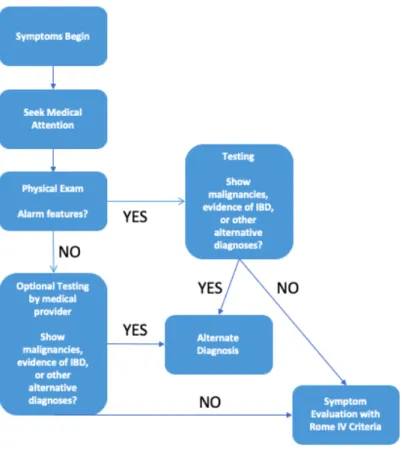
The diagnosis of irritable bowel syndrome follows a systematic process (Figure 1) when properly addressed and recognized by health care providers. Due to the wide ranging symptoms, that are not all enteric in nature, and the variance of symptom severity between patients, many patients will seek out treatment from a variety of providers with specialties other than gastroenterology and thus, the condition may be treated with symptom management rather than addressed as a whole.5 Additionally,
there is a lack of consensus amongst physicians of varying specialties that IBS is a true diagnosis rather than a combination of other diseases that create this particular set of symptoms.1 Some clinicians
Figure 1. The process of diagnosing IBS and other FGIDs includes ruling out other possible diagnoses through physical exams, potential blood or procedural testing, and a careful review of symptoms against a validated set of criteria.
Symptoms
Irritable bowel syndrome is a heterogenous condition that is characterized by wide-ranging symptoms that can present differently in each patient. The severity of symptoms varies between patients and can even shift over time in a single patient, contributing to the difficulty in diagnosis. The impact on quality of life and the type of symptoms may prompt patients to initially seek out various types of health care providers, but IBS is the most common reason for referrals to gastroenterology clinics.1
A physical examination is part of the recommended protocol for diagnosing IBS. A lack of significant findings, such as an abdominal mass or enlarged lymph nodes, on physical examination supports the diagnosis for IBS and can rule out other possible disease states.6 An exam or history that
Gastrointestinal and other symptoms are collected and judged against a set of criteria
developed by the Rome Foundation for diagnosis of IBS or other functional bowel disorders. The Rome IV criteria, discussed in further detail below, uses a defined set of GI symptoms to differentiate between DBGIs. The multifactorial pathogenesis of IBS is complex and not completely understood. The factors that are considered contributory to symptom presentation and severity are: motility disturbance, visceral hypersensitivity, altered mucosal and immune function, altered gut microbiota, and altered central nervous system (CNS) processing.10 Keeping in consideration the underlying cause(s) of IBS could
lead to safe and effective treatment of this disease and improve the quality of life in those that it affects.
Alarm Features
A thorough history of the patient should be collected by the health care provider to ascertain if any symptoms exist that may be indicative of a more severe disease. Symptoms such as iron-deficiency anemia, unexplained weight loss, bloody stool, rectal bleeding, diarrhea in large volumes, nocturnal diarrhea, and greasy stools are not associated with IBS and should elicit further testing before considering IBS as a potential diagnosis.1,8 Additionally, family history of colorectal cancer or
Inflammatory Bowel Diseases (IBD), such as Crohn’s Disease or Ulcerative Colitis, or the presence of ascites, hepatomegaly, splenomegaly, or any abdominal mass, warrants further investigation.8
If any alarm symptoms exist, a colonoscopy may be warranted to exclude IBD or malignancy as a possible explanation.1,6 Additionally, if the patient is older than 50 years, a colonoscopy is suggested per
national recommendations, even in the absence of any alarm features.8
Rome Criteria for Diagnosis of IBS
There are currently no validated biomarkers for the diagnosis of IBS.1,6 Thus, a set of criteria for
diagnosis of IBS and distinguishing between subsets of IBS have been developed and updated over the past several decades. Diagnosis of IBS is comprised entirely by symptoms – no laboratory or other physical findings are required to fulfill diagnostic criteria for IBS.2 The first set of IBS diagnostic criteria
was developed by Manning, et al, in 1979. Symptoms were described but no duration or timing of symptoms were specified by this criteria.5 The current gold standard is the Rome criteria, which was first
described in 1989 and is now on its fourth version, released in 2016.2,5
Previous versions of the Rome criteria (versions I – III) differentiated between IBS-D and functional diarrhea as separate entities, depending on the level of pain experienced by the patient. Functional diarrhea has many of the same diagnostic criteria as IBS-D (Figure 2), but patients may not experience abdominal pain/bloating or it may be not be a predominant symptom as it is in IBS-D.11 In
the most recent update, the model describes functional bowel disorders as a continuum rather than independent disease states (Figure 3). The most recent version of the Rome criteria8 (Figure 2)
eliminates the word ‘discomfort’ from the set of symptoms, as this is not a universally recognized term in all cultures and languages and was difficult to define.2,3 Additionally, the frequency threshold of
Rome IV Diagnostic Criteria for Irritable Bowel Syndrome8
Recurrent abdominal pain, on average, at least one day per week over the last three months, with at least two of the following:
• Related to defecation
• Associated with a change in frequency of stool
• Associated with a change in form (appearance) of stool
Criteria must be fulfilled over the last three months with symptom onset at least six months prior to diagnosis.
Figure 2. Diagnostic criteria for IBS. Information adapted from Lacy, et al, 2016.
Figure 3. The most recent Rome IV criteria have changed their definition of DBGIs from discrete conditions to a set of symptoms that exist on a continuum. IBS is just one of these disorders and the range of symptoms of can shift an IBS diagnosis to the less-severe Functional Constipation (FC) or Functional Diarrhea (FD) with a reduction in pain symptoms.2 Image taken from Schmulson, et al, 2017.
Figure 4. Bristol Stool Chart. Stool forms are characterized by their texture and shape and used to classify bowel habits in IBS subtype diagnosis. Image originally published in Lewis, 1997.12
The Rome IV criteria also utilizes the Bristol Stool Scale (Figure 4) to classify bowel function and differentiate between subsets of IBS, with bowel habit definition based upon the days when there is at least one abnormal bowel movement. The criteria for the IBS-D subtype8 is as follows:
- More than one-fourth (25%) of bowel movements with Bristol stool form types 6 or 7 and less than one-fourth (25%) of bowel movements with Bristol stool form types 1 or 2.
- Alternative verbiage: “Patient reports that abnormal bowel movements are usually diarrhea”
Though there is no consensus on the specificity and sensitivity of the Rome IV criteria, studies have shown that there is no significant difference in these measures between the Manning, Rome I, and Rome II criteria and all are validated to diagnose IBS and its subsets.5 However, the first
specificity. Another validation study found that the specificity of the Rome IV criteria was 97.1%.3
Further population-based studies across varying cultures will provide better information on the accuracy of the Rome IV criteria.
Differential Diagnoses
The diagnostic criteria for IBS should be used carefully and systematically to avoid misdiagnosing or over-diagnosing IBS. There is some overlap of symptoms between IBS and inflammatory bowel diseases, and many patients with IBD may fulfill the criteria for IBS.6,7 However, one prospective study
with 900 subjects found that less than 1% of IBS patients without constipation, and none of the controls, had a positive diagnosis of IBD, and thus routine colonoscopy in IBS patients is not suggested.7 Instead,
biomarkers such as C-reactive protein and fecal calprotectin may be used to exclude inflammation as a possible source of symptoms.7 A CRP level <0.5 mg/dl or fecal calprotectin levels <40 ug/g can be used
to exclude IBD in patients with IBS symptoms.6,7
The literature does suggest that patients with IBS symptoms are four times more likely to have a positive diagnosis for celiac disease. Testing for celiac disease should be considered in patients with the IBS-D subtype especially.
Routine laboratory tests may be preferred by some providers, but patients with diagnosed IBS tend to have normal lab results as compared to patients with other diseases, such as Celiac or IBD, so a laboratory test may be more useful in excluding other diseases rather than diagnosing IBS.6 Results such
as anemia or an elevated white blood cell count may indicate the presence of other conditions.8 Some
other tests that may be indicated include: a basic metabolic panel (BMP) or complete metabolic panel (CMP), C-reactive protein (CRP), fecal calprotectin, thyroid panels, and stool analyses for bacterial infections.6 Testing for parasites should be considered only if the patient resides in or has recently
visited developing countries.1 The literature recommends against testing for Small Intestinal Bacterial
Overgrowth (SIBO) in IBS patients as a routine test, as there is not enough evidence to suggest a link between IBS and SIBO.1,5,6
When the Rome criteria for diagnosis of IBS is met without additional alarm features in the patient, the overall recommendation is not to pursue further invasive testing.5,6 The risk of invasive
testing, such as colonoscopy, does not outweigh the benefits, as the literature shows that the majority of patients do not have IBD or other conditions that would be detected by further workup.1
Common Comorbidities
The diagnosis of IBS-D often coincides with other comorbidities as the pathophysiology of these disorders can be similar to that of IBS.1,7 Gastrointestinal disorders such as gastroesophageal reflux
disease (GERD) and functional dyspepsia, pelvic/urinary disorders such as prostatitis and hyperactive bladder, psychiatric disorders such as depression and anxiety, and somatic disorders such as
Some studies exist that suggest a link between SIBO and IBS, considering whether an
overgrowth of bacteria into the small intestine may elicit some of the symptoms of IBS. However, there is insufficient evidence in the literature about SIBO being a causative factor in IBS, as mentioned above. There are other explanations for IBS symptoms that extend beyond bacterial overgrowth, such as food sensitivities, alterations in neurotransmitter function, and infection- or antibiotic-related dysbiosis, which will all be described below. Treatments that are often successful at addressing IBS symptoms do not always address SIBO, which contradicts the evidence that SIBO is a causative factor of IBS
symptoms.5 Thus, consideration and testing for SIBO in the process of diagnosis of IBS should be
approached with caution by the health care provider.
PATHOPHYSIOLOGY
Post-Infectious IBS
Post-infectious IBS (PI-IBS) refers to the development of IBS symptoms after an occurrence of gastroenteritis, or an infection within the GI tract. Infections can be viral or bacterial in nature but a prior episode of GI infection seems to be associated with increased risk for the development of IBS.13
One study found a pooled odds ratio of 7.3 (95% CI: 4.7-11.1) for the development of IBS after an episode of gastroenteritis.6 Risk factors for PI-IBS include younger age, psychological conditions, and
severity of the infection.1,6 PI-IBS has been known to spontaneously resolve or reduce in severity after a
time period of about 6-8 years post-infection.7
Clostridium difficile (C. diff) infection (CDI) incidence has grown over the last decade. Risk factors for CDI include older age (>65 years), antibiotics, and inpatient hospitalization. Community acquired CDI represents about 20-40% of C. diff infections. Wadhwa, et al, conducted a cross-sectional study in which 205 patients with past CDI but no IBS completed a symptoms survey and found that, six months after infection, 25% of patients met Rome criteria for IBS.14 Of these patients, 52% met criteria for IBS-M,
40% met criteria for IBS-D, and 4% met criteria for each IBS-C and IBS-U (IBS-Undifferentiated, a subtype that is used when bowel habits do not meet other subtype criteria but all other diagnostic criteria are met15).14 Risk for development of PI-IBS in this population included CDI lasting greater than 7 days,
reaching statistical significance in this study for correlation with development of PI-IBS. Post-infectious IBS can present similarly to a recurrence of CDI, which could lead to an unnecessary course of antibiotic treatment. Frequent use of antibiotics then worsens the risk for recurrent C. diff infections.14
Antibiotic Use
The gut microbiota is a complex community of microorganisms in the small and large intestines that, with a healthy diversity and concentration of microbes, exist in a symbiotic relationship with the patient to create normal gut function. Antibiotic use may alter the gut microbiota or alter the release of cytokines, leading to an inflammatory response and development of IBS symptoms. The gut microbiota is typically abnormal in IBS patients (discussed in further detail below) and antibiotic use may contribute to one source of alteration of the microbiota.16 The effect of absorbable, broad-spectrum antibiotics on
rifaximin that only act locally within the GI tract, which will be discussed in the following section on treatment of IBS.16
Patients who have taken absorbable antibiotics for nonenteric infections may be more at risk for development of IBS and other FGIDs, according to a study by Paula, et al.16 This case-control study found
that patients who have taken antibiotics are more likely to develop FGIDs than those who have not taken systemic antibiotics (OR 1.90, 95% CI: 1.21-2.98). In this study, 83% of cases (those that developed a FGID) had experienced a non-enteric infection that was treated with an antibiotic. One limitation of this study is the long period of time between the initial and follow-up surveys, making it impossible to establish a temporal relationship between antibiotics and development of IBS, but there still may be some connection between systemic antibiotic use and post-infection IBS.16
Nutrient Sensitivities
Food allergies or sensitivities have been one commonly implicated cause of IBS symptoms and have been the subject of many studies in describing the pathophysiology of IBS. True food allergies are immune-modulated reactions that involve activation of immune cells (T cells) and release of
immunoglobulins (IgE-mediated reactions). There is also a difference between a food intolerance and a food sensitivity. An intolerance refers to the body’s inability to digest, absorb, or metabolize a specific nutrient, such as lactose intolerance secondary to a deficiency in the enzyme lactase, or overreaction to fermentable carbohydrates. The symptoms of intolerances are mostly GI in nature and are likely
secondary to the fermentation of these nutrients and development of excess gas by gut microbes. Alternatively, a sensitivity has both GI and non-GI symptoms that are immune modulated and operate on a dose-response relationship.17 Though food allergies are uncommon in IBS patients, many
experience intolerances that respond to dietary exclusion with an improvement in symptoms.7
Wheat allergy and celiac disease are immune responses versus autoimmune reactions, respectively. A wheat allergy is an immune (IgE, IgA, or IgG) reaction to the proteins in wheat, namely gluten and gliadin, while celiac disease is characterized by the presence of anti-tissue transglutaminase (TG2) antibodies in response to ingestion of gluten, specifically.13 In contrast, a new term has been
created to describe a non-immune response to wheat-containing foods, called nonceliac gluten sensitivity (NCGS).17 NCGS is unlike celiac disease or wheat allergy in that patients do not develop the
same antibodies as patients with celiac disease or have the same immune response as patients with wheat allergy, but still respond symptomatically to a wheat- or gluten-free diet.13,17
The symptoms of NCGS have both GI and non-GI presentations.13,17 GI symptoms of nonceliac
gluten sensitivity are very similar to IBS symptoms, especially those in the IBS-D subtype. These include abdominal pain, bloating, and abnormal bowel function consisting of frequent, liquid stools. Thus, some have suggested that IBS symptomology can be attributed to a sensitivity to wheat or gluten. However, the extraintestinal symptoms of NCGS are unlike IBS, in that patients also have reported experiencing headaches, fatigue, joint pain, anemia, or depression.13 The most likely explanation for the overlap in
NCGS is not the cause of IBS. An exclusion diet, as detailed in a following section, to determine the specific triggers of IBS symptoms would benefit patients with IBS to avoid over-restriction of foods and improve food-related quality of life.
Carbohydrate intake, in some patients, can exacerbate IBS symptoms of abdominal pain, bloating, and excess gas.5 Some carbohydrates are fermented by gut bacteria to produce short chain
fatty acids (SCFAs), which provide a source of energy to the gut epithelium and contribute to anti-inflammatory and metabolic pathways. These carbohydrates are fermentable oligo-, di-, and
monosaccharides and polyols (FODMAPs). IBS patients may be more sensitive to FODMAPs and may experience an increase in flatulence, leading to abdominal pain or potential increase in motility. One proposed mechanism for this sensitivity may be to an excess of gas-producing bacteria and/or a deficiency of gas-utilizing bacteria.6
Self-reported lactose intolerance is seen in higher rates in patients with IBS than the general population. However, studies have shown that many patients with IBS will not have a positive result from hydrogen breath tests for lactose intolerance.1,5,6 One proposed mechanism behind the
commonality of lactose intolerance symptoms among IBS patients is the increased fermentation of lactose by gut bacteria in an altered microbiota.
Epithelial Barrier
The gut epithelium acts as a barrier between the gut lumen and the underlying tissue and circulatory system. The single-cell thick layer has tight junctions, held together by proteins, between cells to maintain the integrity of the barrier. Enlarged spaces between the epithelial cells of the gut mucosa may contribute to early symptomatic responses in IBS. It has been shown that IBS patients, regardless of the subtype, often have defects in epithelial permeability and an increase in immune responses to food ingestion.18
The increase in permeability between epithelial cells allows immune cells to enter the gut mucosa, as well as macromolecules to exit the lumen before being properly digested. Tight junction changes have been found in biopsies in PI-IBS and especially in IBS-D. These degradations may occur due to infection by pathogens, as a reaction to alterations in the gut microbiota, or may be secondary to inflammatory processes.6
Inflammatory response to immune cell infiltration of the epithelium could stimulate afferent nerves and contribute to visceral pain.1 One study performed food challenges in patients that reported
Inflammation and Immune Reactions
The gut microbiota has a wide variety of functions, including digestion of food and important regulatory functions for the enteric immune system.11,19,20 The production of short chain fatty acids as a
byproduct of the fermentation of nondigestible carbohydrates by the gut microbiota has many uses, but one of them is the stimulation of T cell differentiation and modulating pro- and anti-inflammatory mechanisms.6 Low levels of SCFAs can contribute to inflammatory processes through a lack of adequate
activation of anti-inflammatory mechanisms.20
PI-IBS has also been discussed as a contributor to persistent inflammation in the GI tract, even after the resolution of the initial infection. The ongoing inflammation elicits an immune response, characterized by activation of immune cells and cytokines.5
Psychosocial Factors & Brain-Gut Interactions
Serotonin is an integral regulator of GI function that is produced and released by
enteroendocrine cells in the intestinal epithelium.5,6 It acts as a signaling molecule to neurons to target
enterocytes, smooth muscle, and neurons to perform functions in secretions, peristalsis, and sensation. IBS has been associated with irregular serotonin signaling, leading to the GI symptoms that are
commonly experienced by patients with IBS. The literature suggests that IBS-D patients have reduced serotonin reuptake, leading to increased circulating levels of serotonin,5 resulting in the overactive
motility and visceral hypersensitivity that is characteristic of the disease.1
Altered serotonin signaling pathways also provide an explanation for the psychiatric
abnormalities that are commonly seen as comorbidities with IBS. It is unclear in the literature whether it is abnormal serotonin levels that directly alter gut functioning and motility, or if altered serotonin leads to altered brain-gut interactions that increase visceral sensitivity and the feeling of ‘something being wrong’, but there is agreement that targeted therapies to address serotonin release and reuptake can improve symptoms.5
Altered Gut Microbiota
A growing area of research has highlighted the possibly of the gut microbiota as a major contributor to the pathogenesis of IBS. Dysbiosis is an alteration in the gut microbiota, characterized by an over- or underabundance of the typical classes of bacteria or archaea that typically inhabit the intestinal tract or other areas of the body.21 Commonly suggested factors in the pathogenesis of IBS
include altered motility, inflammation, and altered gut epithelium permeability, all of which can be explained through dysbiosis in the gut microbiota of the small and large intestine. It is unclear whether it is an altered microbiota that specifically produce these enteric responses, but the research does show that patients with IBS tend to have a different microbiota than healthy controls.11,19–21
assessed by the transplantation of the gut microbiota from a host subject (human or animal) to the germ-free animal, typically through a fecal transplant method. Animal studies investigating the role of the microbiota in IBS have shown that a microbiota transplant to germ-free animals from patients with IBS results in visceral hypersensitivity, defects in the epithelial barrier, and altered colonic transit time, further suggesting that the microbiota plays a large role in the pathogenesis of IBS.6,19
The high rate of development of IBS symptoms after enteric infections and/or after the use of antibiotics supports the hypothesis of an altered gut microbiota being a central cause of IBS, through to the alteration of the microbiota through infection or suppression by antibiotics.1,14,19,20
A reduction in bacterial diversity in the small bowel in patients with IBS-D has been shown in the literature.22 The healthy GI tract typically has a population of microorganisms that gradually increase in
concentration. The stomach and duodenum have the lowest concentration of microbes, at around 101 –
103 cells per gram, and the colon has the highest concentration of bacteria at around 1011 – 1012 cells per
gram.11 Bacteria can populate backwards from the colon through the ileocecal valve into the ileum and
further into the small intestine, referred to as small intestinal bacterial overgrowth.
Dysbiosis in the small bowel is often considered SIBO, with many SIBO patients also meeting diagnostic criteria for IBS-D. In one study of 567 patients that met criteria for upper GI endoscopy, 58.1% of the patients diagnosed with SIBO met Rome II criteria for IBS.22 Patients with IBS-D often have an
excess concentration of Escherichia and Aeromonas species in the small bowel when compared to healthy controls, which is a shared colonization characteristic to patients with SIBO.22 It can be
theorized, then, that many IBS patients may have SIBO, but SIBO is not a central cause of IBS symptoms, especially considering that IBS patients also experience dysbiosis of the colon.
IBS patients commonly have a decrease in Bifidobacterium and Lactobacillus genera in the colon.11,19 These genera are considered beneficial, having roles in digestion, water reabsorption,
regulation of the epithelial barrier, inflammation, immunity, and motility, so the alteration of these important microbe communities could lead to the development of IBS symptoms. Additionally, many probiotics are part of these genera, which will be discussed in a following section as a targeted treatment method.
Members of the anaerobic Bifidobacterium and Lactobacillus genera are usually present in relatively small numbers compared to other bacteria that commonly populate the large intestine. The depletion of these anaerobic species may reduce the important production of SCFAs, as anaerobes are predominantly responsible for the digestion of fermentable carbohydrates. SCFA pathways include colonic salt and water reabsorption, suggesting that the symptoms of diarrhea and other IBS symptoms (including bloating, pain, and excess flatulence) may arise from this altered pathway.11 Gut bacteria also
play a role in the integrity of the gut epithelium, through the creation of SCFAs which provide fuel for the epithelial cells of the gut. A decrease in SCFA production through a reduction in the prevalence of
colon, and gut immunity.6,19 Thus, a reduction in SCFA production can alter the homeostasis of these
pathways and potentially lead to many of the commonly described etiological pathways of IBS.
Lactobacillus appears to play roles in visceral pain sensation in animal studies, with a reduction in these bacterium inducing pain and sensitivity.11Bifidobacterium also produce proteases, which are
responsible for protein degradation in the gut prior to absorption. A reduced level of Bifidobacteria, as is seen in many IBS patients, may contribute to reduced protein degradation and the subsequent
fermentation of protein products, which produce toxic byproducts that can harm the epithelial barrier and contribute to inflammation.6
PHARMACOLOGIC TREATMENT METHODS
Pharmacologic treatment of IBS is a traditional method that addresses the symptoms that reduce quality of life in patients but does not have lasting effects on the underlying causes of IBS. The treatment methods discussed here may cause relief in the severity in symptoms, but do not cause lasting improvements upon discontinuation of the treatment. Medications used in an off-label fashion also carry other risks of side effects that are not related to IBS.
Anti-Diarrheal Medications
Loperamide, known by the brand name Imodium, is an anti-diarrheal that is often used in the treatment of IBS-D. It has limited effects on other IBS symptoms, such as abdominal pain and bloating.23
Loperamide functions by increasing transit time by slowing the contraction of intestinal muscle, allowing more time for water absorption.5 Though its risk of side effects are minimal due to loperamide not
crossing the blood-brain barrier6, one major side effect is constipation if overused by IBS-D patients, or if
used by patients with IBS-M (IBS with mixed diarrhea and constipation).1
Cholestyramine is a cholesterol-lowering medication that works by binding to bile acids in the intestine and preventing their absorption, inducing the liver to create bile by breaking down cholesterol in the body. However, it has been used in an off-label fashion to treat bile acid malabsorption-related diarrhea and has been used successfully in some IBS-D patients to reduce bowel movement frequency. The risk of constipation should be considered in the use of this drug, as well as the intended effects of reducing bile acid absorption and serum cholesterol.5
Antidepressants and 5-HT
3Antagonists
Antidepressants and serotonin receptor antagonists have been used in an off-label fashion to address the global IBS symptoms that, in part, result from the impaired serotonin signaling in IBS patients. Of the antidepressants, SSRIs (selective serotonin reuptake inhibitors) are not recommended for use in patients with IBS-D, as their mechanism of action increases the action of serotonin by blocking reuptake, which would exacerbate symptoms in IBS-D patients who already have an excess of circulating serotonin.7 TCAs (tricyclic antidepressants), rather, decrease bowel movement frequency and decrease
the visceral hypersensitivity that leads to elevated pain in IBS-D patients.5,6 Side effect risks of TCAs
recommended to begin at the lowest end of dosing and titrating upwards to find the lowest possible effective dose to avoid side effects and reduce psychological impact on the patient.7
5-HT3 receptor antagonists are frequently used in IBS-D patients to reduce the mechanism of
action of serotonin and to decrease diarrhea and abdominal pain. This class of drugs slows transit time and reduces visceral hypersensitivity.5,6 Alosetron, approved for women with IBS-D, is one such drug
that is commonly a target of research studies due to its action of modulating visceral sensitivity through its interference with the serotonin receptor.5 It also slows motility and secretions in the colon, reducing
the fluidity of bowel movements and thus reducing the frequency of diarrhea.1 The therapeutic effect on
symptoms is approximately a 15% improvement over placebo.7 It has shown the most benefit in women
with IBS-D, with the most common side effect being constipation, but more serious risks documented in the literature include ischemic colitis.6,8 Ondansetron is another 5-HT
3 receptor antagonist that is less
potent than alosetron, but may improve stool consistency, frequency, and pain, but not bloating.7
Rifaximin
Rifaximin is a non-absorbable broad-spectrum antibiotic that was approved in 2015 for the treatment of IBS-D. It is unlike other traditional treatment methods in that the effects of treatment can last after discontinuation of the medication22, but is still a wide-lens approach to the treatment of IBS.
The modulation of the gut microbiota by rifaximin is one of the proposed mechanisms of action of the antibiotic. A downstream effect is the reduction of inflammation through reduction in pro-inflammatory bacteria and a reduction of immune response through inhibition of bacteria-host interactions.
Rifaximin is commonly used in patients with SIBO that also meet diagnostic criteria for IBS-D as it is effective to reduce the species that are typically increased in SIBO, such as Escherichia coli,
Enterobacter, and Enterococcus faecalis.22The effects of rifaximin on IBS symptoms has been
documented in many studies. The TARGET 1 and TARGET 2 trials evaluated the long-term success rate of rifaximin on reducing IBS symptoms, finding global IBS symptom reduction rates ranging from 40.7% to 42.2% with continued symptom improvement after culmination of the course of treatment, but the post-study observation only lasted 12-14 weeks.22 In another study with patients with so-called
SIBO-related IBS (confirmed by breath test and positive diagnosis using Rome criteria), a 14-day course of rifaximin resulted in 83-86% of patients having a negative follow-up breath test22, suggesting that
rifaximin is effective at treating symptom-inducing dysbiosis in the small intestine.
The use of rifaximin is a nontargeted approach to treat IBS, SIBO, and other GI disorders due to the wide-ranging effects on the microbiota. Its efficacy in treating IBS, specifically, is still undergoing trial testing. Symptom reoccurrence after the use of rifaximin has been documented in the literature. Lembo, et al, conducted a study that evaluated the efficacy and safety of repeat courses of rifaximin treatment in patients with IBS-D.23 After a single course of rifaximin treatment, 64.4% (692 of 1074 responders to
specific symptom relief, a statistically significant response was seen in abdominal pain (50.6% vs 42.2%, p=0.018) but not in bowel movement consistency (51.8% vs 50.0%, p=0.42). A third treatment course with rifaximin was used in all patients who met criteria for the second course, to evaluate the safety of repeat treatments with the antibiotic.23 Adverse events were rare, and serious side effects (experienced
by 4 patients in each treatment group) were concluded to be unrelated to the study. The takeaway from this study is that repeat courses of rifaximin are safe in patients with IBS-D, and may be effective in reducing symptoms, but relapse in IBS symptoms is likely.
Though the efficacy of rifaximin in improving IBS symptoms, including pain, bloating, and stool consistency, has been documented in several clinical trials, the use of rifaximin is one approach to IBS symptom management but is not a long-term solution to increase quality of life in patients. There is not a consensus on its true mechanism of action, whether it is treating small intestinal bacterial overgrowth or altering the microbiota in the large intestine.5 Rifaximin may also confound the effects of other
simultaneous treatments that are more targeted approaches. Thus, it is not currently recommended to use rifaximin as a first-line intervention, but instead to only utilize antibiotic treatments in IBS patients without constipation that have failed other treatment attempts.1,5
TARGETED TREATMENT METHODS
Pharmacologic interventions for IBS manage the symptoms, rather than the pathophysiology of the disease. However, more targeted treatment methods have begun to address the underlying etiology of the symptoms to produce better outcomes.5 Using lifestyle and environmental approaches is a more
targeted solution to create long-term relief and hopefully lead to remission of symptoms.
Prebiotics and Probiotics
Patients with IBS-D specifically have been characterized in the literature with a decreased concentration of Lactobacillus and Bifidobacterium.27 Recent research has explored the treatment of IBS
with pre- and probiotics, attempting to restore healthy microbiota concentration in order to improve symptoms of IBS. Prebiotics are nutrients that provide fuel to the microbiota while probiotics are live strains of microorganisms. Synbiotics are a combination treatment of pre- and probiotics that work synergistically together.19 Products of carbohydrate digestion by the microbiota have effects on the
contractility of the intestine and can affect motility and visceral sensitivity. A targeted increase in
Bifidobacterium, Lactobacillus, and Veillonella species in patients with IBS have been shown to result in increased production of SCFAs27, which improves epithelial tight junctions, motility, inflammation, and
immunity.
Probiotics, when taken properly, can improve the integrity of the epithelial barrier, promote better tolerance of foods, prevent pathogenic adhesion to the gut mucosa and thus reduce
inflammation, modulate immune responses, and reduce symptoms of GI distress by promoting proper digestion.28 A systematic review in 2008 evaluated the efficacy of probiotics in treating symptoms of IBS,
symptoms.21 However, it is important to consider the individual actions of each specific strain of
bacteria, in order to target the symptoms present in each patient.21 Thus, patients with IBS-D should be
treated differently than those with IBS-C, as bacterial strains have different effects and could either worsen or improve symptoms, depending on the subtype of IBS.
Prebiotics are carbohydrates that are poorly digested in the small intestine and are fermented by the colonic microbiota. Prebiotics in the diet promote production of metabolic end-products, namely SCFAs, that then have a variety of beneficial effects. It should be considered that many prebiotics are FODMAP foods, so the FODMAP diet restricts much of the fuel for the beneficial intestinal microbiota that probiotics are supplementing.29 Some early research has indicated that a diet low in FODMAPs may
further decrease concentrations of healthy microbiota, especially Bifidobacterium6, so combination of
exclusion diets with probiotic supplements is an area of research that may further clarify this relationship.
Over-the-counter probiotic strains commonly contain a variety of species in the Bifidobacterium
and Lactobacillus genera, both of which have been extensively studied and shown to reduce
inflammation, bloating, diarrhea, and abdominal pain.11,21 While the dosing amounts and specific species
considerations of probiotic use are outside the scope of this review, the conclusion to be taken from this is that the use of probiotics can be beneficial for IBS patients, either in isolation or in combination with other targeted treatment modalities that address dysbiosis, one of the major underlying causes of IBS.
Fecal Microbiota Transplants
Fecal microbiota transplant (FMT) is one treatment method that has received more attention in research and the media. FMT is used to modulate the gut microbiota and restore proper balance to the concentration of healthy bacteria through the transplantation of microbiota samples from a healthy donor to the patient. FMT is currently used as a curative treatment for CDI and is being further explored in research trials for its potential use in FGIDs.27
FMT donors should be carefully screened and selected. Though FMT in IBS patients is still undergoing trials, a systematic review found that outcomes were slightly better in patients with CDI who received FMT from closely related donors, such as spouses or first-degree relatives.27 Donors, whether
for CDI or IBS-related transplants, should be screened for recent C. diff infection, any antibiotic use in the prior three months, immunosuppression medications, drug use, recent incarceration, recent travel to areas known for diarrheal illnesses, metabolic syndrome or diabetes, or any history of IBD, IBS, or GI malignancy.27
One trial by Borody, et al, in 1989, before the large increase in research on microbiota and FMT occurred, administered FMT to 55 patients with IBS and IBD. The study followed the subjects for 1-12 months, finding a 36% (20/55 patients) cure rate, 16% (9/55) with symptom relief but not total remission, and 47% (26/55) with no change in symptoms.27,30 One limitation of this trial is that the
A more recent clinical trial by Pinn, et al, in 2015, claiming to be the first randomized trial on FMT in IBS patients, found that FMT was more effective than placebo in decreasing symptom severity in patients with IBS-D or IBS-M at three months post-transplant, but not at 12 months. This study found that 65% of participants receiving the treatment had a decrease in symptom severity, while only 43% of placebo recipients showed the same change (p=0.049).24
A systematic review by Halkjaer, et al, compiled results from these two studies as well as seven others. The meta-analysis, after exclusions, was comprised of 48 patients, of whom 58% experienced symptom improvement after FMT with no serious side effects.30
The route of FMT administration needs to be further studied to determine the most efficient and effective way to deliver the FMT to IBS patients.27,30 Since IBS affects the whole GI tract and not just
the colon, it is reasonable to consider that NG tube or EGD delivery may be more effective than colonoscopy or enema administration, since it may modulate the microbiota of the small intestine in addition to the colon.
The temporal relationship between FMT and IBS symptom relief is another factor that requires further study; using knowledge from the treatment of CDI, FMT can take several months to show effect, during which time the modulation of the microbiota is sensitive and can be affected by other
environmental factors.30 CDI infections have been shown to have higher cure rates with repeat FMT
from different donors, suggesting that IBS may be similarly treated with one or more FMT over a period of time, to increase the effectiveness of the beneficial shift in the microbiota.24
Gluten Restriction
Gluten restriction is used by some patients that experience a reduction in symptoms when gluten is excluded from the diet. While this may be one way to improve quality of life and reduce the severity of the disease, this is not a treatment method that addresses the underlying cause of symptoms. Since NCGS is a food sensitivity and does not have immune or inflammatory responses within the GI tract, it cannot explain the reason for the symptoms of IBS and cannot be considered a ‘curative’ treatment.
Another explanation for the reduction in symptoms that occur when gluten is excluded is that wheat-based foods, such as pasta and bread, contain fructans, which, as described below, is a
fermentable carbohydrate and can increase the production of gas and lead to bloating and pain.6,7 These
foods in large quantities can elicit a symptomatic response through the fermentation of the
The FODMAP Diet
FODMAP is an acronym for fermentable oligo-, di-, and monosaccharides and polyols. It is a diet that has gained more attention over the recent decade as being effective for the reduction of GI
symptoms in IBS patients, and occasionally for IBD, due to these fermentable carbohydrates being digested by gut bacteria to create gas which can lead to excess bloating. The FODMAP diet has shown success in reducing symptoms in IBS patients, but it is difficult to test in clinical trials due to the complex nature of creating a control group or placebo in randomized trials.1 As FODMAP restriction has been
shown in the literature to reduce the symptoms of IBS, it can be hypothesized that the excessive fermentation of FODMAPs by an altered gut microbiota is an evidence for the strong role of dysbiosis in IBS.24,25 Some patients, especially those with dysbiosis, may symptomatically respond to a diet low in
FODMAPs.1,25 Many foods that are restricted on the FODMAP diet are actually prebiotics, or foods that
provide fuel for the microbiota. These foods, or the restriction of them, can theoretically alter the microbiota but more research is needed on the direct impact on FODMAPs on the microbiota.11
The FODMAP diet is a three-phase diet plan that eliminates all fermentable carbohydrates (Figure 5) from a patient’s diet and then reintroduces them to determine the patient’s unique, individual response to specific fermentable carbohydrates. Prior to beginning the elimination diet, the patient should meet with a registered dietitian to discuss typical eating habits, lifestyle, and address any challenges to beginning such a restrictive diet, such as financial or logistical factors. They should consider challenges, such as dining out, attending meals at friend’s or family’s homes, and preparing food for others. Finally, they should understand the importance of keeping careful records of symptoms throughout this process and be committed to adhering to the recommendations, for the purpose of gleaning the most benefit from the FODMAP diet plan.
The first stage is the elimination phase, in which the patient eliminates all foods from the FODMAP list from their diet and maintains this strict diet for six to eight weeks.25 The second stage is a
gradual reintroduction phase, when patients slowly and methodically reintroduce FODMAP foods into their diet and keep careful records of symptomatic responses. Finally, the final stage is a maintenance phase, when the patient and their dietitian have identified their individual triggers and avoid these foods as a long-term, less restrictive diet plan to help control their IBS symptoms.26
Oligosaccharides (Fructans/Galactans) Disaccharides (Lactose) Monosaccharides (Fructose) Polyols
Vegetables: artichokes, asparagus, beetroot, brussels sprouts, broccoli, cabbage, fennel, garlic, leeks, okra, onions, peas, shallots
Fruits: watermelon, custard apple, white peaches, rambutan, persimmon
Cereals: wheat and rye (in large amounts – bread, pasta, crackers, biscuits)
Legumes: chickpeas, lentils, kidney beans, baked beans
Cow milk, goat milk, and sheep milk, and products made from it (yogurt, ice cream, custard, dairy-containing coffee creamer)
Soft and fresh cheeses (ricotta, cottage)
Vegetables: asparagus, artichokes, sugar snap peas
Fruits: apples, pears, nashi pears, clingstone peaches, mango, sugar snap peas, watermelon, cherries, canned fruit in juice
Sweeteners: honey, fructose, high-fructose corn syrup
Other sources: concentrated fruit sources (such as fruit juice), large servings of fruit, dried fruit
Vegetables: avocado, cauliflower,
mushrooms, snow peas Fruits: apples, apricots,
cherries, lychee, nashi pears, nectarines, pears, peaches, plums, prunes, watermelon Sweeteners: sorbitol,
mannitol, xylitol, maltitol, isomalt, and others ending in -ol
Figure 5. A list of FODMAP-containing foods to be excluded in the first phase of the FODMAP diet.
OUTCOMES AND IMPLICATIONS FOR CLINICAL DIETETIC PRACTICE
Clinical implications of the proposed mechanisms of pathogenesis of IBS and the associated treatment methods should be considered prior to developing a care plan for the patient. It is an important note that there is currently no validated method to evaluating the makeup of the gut
microbiota of the patient11, and thus the targeted treatment methods of IBS through diet, probiotics, or
fecal transplants are still in early phases. Dietitians and other health care providers that encounter IBS-D should keep a holistic view of the patient, considering not just GI symptoms but the underlying causes.
The use of carefully tailored exclusion diets, probiotics, and FMT address the underlying causes of IBS rather than only controlling the symptoms. Modulating the gut microbiota is an approach that can have impacts on symptoms and quality of life in patients with IBS and can lead to lasting relief and improvements in quality of life. The composition of the microbiota seems to be the underlying concern in the treatment of IBS-D, and manipulation of the concentration of specific genera and careful
attention to the diet can lead to large improvements in symptoms of IBS. As discussed by Simren, et al, it appears that probiotic supplementation directly affects the composition of the gut microbiota while the FODMAP diet affects the interaction between the gut microbiota and foods.29
One recent randomized, double-blind study compared the use of a prebiotic supplement with a placebo diet (Mediterranean-like) against a placebo supplement with the FODMAP diet and evaluated the composition of the gut microbiota, as well as gas production and abdominal pain.31 They found that
showed an initial improvement in IBS symptoms, the symptoms immediately returned when patients discontinued the FODMAP diet, while the prebiotic group had symptom relief that lasted for two weeks after the discontinuation of supplementation.31 The implications of this trial are that the FODMAP diet,
as a heavily restrictive diet, may not have beneficial long-term outcomes, and instead a less restrictive diet with the combination of pre- or probiotic supplementation may be more effective in treating the symptoms of IBS.
While restrictive diets are never the goal of treatment when a dietitian counsels a patient, as they can lead to a poor relationship with food and possible disordered eating behaviors, following an individually tailored diet plan that has been formulated with the help of a registered dietitian can help to improve the patient’s quality of life. By only excluding the foods that exacerbate symptoms, the patient can have an overall better relationship with food with less overall food avoidance and more enjoyment of social eating occasions.
REFERENCES
1. Soares RLS. Irritable bowel syndrome: A clinical review. World J Gastroenterol. 2014;20(34):12144-12160. doi:10.3748/wjg.v20.i34.12144
2. Schmulson MJ, Drossman DA, De Hígado L, Motilidad PY. What Is New in Rome IV Journal of Neurogastroenterology and Motility. J Neurogastroenterol Motil. 2017;23(2):2093-2879. doi:10.5056/jnm16214
3. Simren M, Palsson OS, Whitehead WE. Update on Rome IV Criteria for Colorectal Disorders: Implications for Clinical Practice. Curr Gastroenterol Rep. 2017;19(4). doi:10.1007/s11894-017-0554-0
4. Buono JL, Carson RT, Flores NM. Health-related quality of life, work productivity, and indirect costs among patients with irritable bowel syndrome with diarrhea. Health Qual Life Outcomes. 2017;15(1):1-8. doi:10.1186/s12955-017-0611-2
5. Saha L. Irritable bowel syndrome: Pathogenesis, diagnosis, treatment, and evidence-based medicine. World J Gastroenterol. 2014;20(22):6759-6773. doi:10.3748/wjg.v20.i22.6759
6. Enck P, Aziz Q, Barbara G, et al. Irritable bowel syndrome. Nat Rev Dis Prim. 2016;2(16014):1-60. doi:10.1038/nrdp.2016.14.Irritable
7. Chey WD, Kurlander J, Eswaran S. Irritable bowel syndrome: A clinical review. JAMA - J Am Med Assoc. 2015;313(9):949-958. doi:10.1001/jama.2015.0954
8. Lacy BE, Mearin F, Chang L, et al. Bowel disorders. Gastroenterology. 2016;150(6):1393-1407e5. doi:10.1053/j.gastro.2016.02.031
9. Lovell RM, Ford AC. Effect of gender on prevalence of irritable bowel syndrome in the
community: Systematic review and meta-analysis. Am J Gastroenterol. 2012;107(7):991-1000. doi:10.1038/ajg.2012.131
10. Rome Foundation. What’s New for Rome IV - Rome Foundation.
https://theromefoundation.org/rome-iv/whats-new-for-rome-iv/. Published 2017. Accessed October 31, 2018.
11. Simreń M, Barbara G, Flint HJ, et al. Intestinal microbiota in functional bowel disorders: A Rome foundation report. Gut. 2013;62(1):159-176. doi:10.1136/gutjnl-2012-302167
12. Lewis SJ HK. Bristol Stool Chart. Scand Jorunal Gastroenterol 32 920 – 4. 1997:1997.
13. Mansueto P, D’Alcamo A, Seidita A, Carroccio A. Food allergy in irritable bowel syndrome: The case of non-celiac wheat sensitivity. World J Gastroenterol. 2015;21(23):7089-7109.
doi:10.3748/wjg.v21.i23.7089
14. Wadhwa A, Ainahhas M, Dierkhising R, et al. High risk of post-infectious irritable bowel syndrome in patients with Clostridium difficile infection. Aliment Pharmacol Ther. 2016;44(6):576-582. doi:10.1002/anie.201602763.Digital
15. Ford AC, Bercik P, Morgan DG, Bolino C, Pintos-Sanchez MI, Moayyedi P. Characteristics of functional bowel disorder patients: A cross-sectional survey using the Rome III criteria. Aliment Pharmacol Ther. 2014;39(3):312-321. doi:10.1111/apt.12573
16. Paula H, Grover M, Halder SL, et al. Non-enteric Infections, Antibiotic Use, and Risk of Development of Functional Gastrointestinal Disorders. Neurogastroenterol Motil. 2015;27(11):1580-1586. doi:10.1111/nmo.12655.Non-enteric
17. Fasano A, Sapone A, Zevallos V, Schuppan D. Nonceliac gluten sensitivity. Gastroenterology. 2015;148(6):1195-1204. doi:10.1053/j.gastro.2014.12.049
19. Rodiño-Janeiro BK, Vicario M, Alonso-Cotoner C, Pascua-García R, Santos J. A Review of Microbiota and Irritable Bowel Syndrome: Future in Therapies. Adv Ther. 2018;35(3):289-310. doi:10.1007/s12325-018-0673-5
20. MORAES-FILHO JP, QUIGLEY EMM. THE INTESTINAL MICROBIOTA AND THE ROLE OF PROBIOTICS IN IRRITABLE BOWEL SYNDROME: a review. Arq Gastroenterol. 2015;52(4):331-338.
doi:10.1590/S0004-28032015000400015
21. Moayyedi P, Ford AC, Talley NJ, et al. The efficacy of probiotics in the treatment of irritable bowel syndrome: A systematic review. Gut. 2010;59(3):325-332. doi:10.1136/gut.2008.167270
22. Pimentel M. Review article: Potential mechanisms of action of rifaximin in the management of irritable bowel syndrome with diarrhoea. Aliment Pharmacol Ther. 2016;43(Suppl 1):37-49. doi:10.1111/apt.13437
23. Lembo A, Pimentel M, Rao SS, et al. Repeat Treatment With Rifaximin Is Safe and Effective in Patients With Diarrhea-Predominant Irritable Bowel Syndrome. Gastroenterology.
2016;151(6):1113-1121. doi:10.1053/j.gastro.2016.08.003
24. Johnsen PH, Hilpüsch F, Cavanagh JP, et al. Faecal microbiota transplantation versus placebo for moderate-to-severe irritable bowel syndrome: a double-blind, randomised, placebo-controlled, parallel-group, single-centre trial. Lancet Gastroenterol Hepatol. 2018;3(1):17-24.
doi:10.1016/S2468-1253(17)30338-2
25. Mansueto P, Seidita A, D’alcamo A, Carroccio A. Role of FODMAPs in Patients With Irritable Bowel Syndrome. Nutr Clin Pract. 2015;30(5):665-682. doi:10.1177/0884533615569886 26. Eswaran S, Chey WD, Jackson K, Pillai S, Chey SW, Han-Markey T. A Diet Low in Fermentable
Oligo-, Di-, and Monosaccharides and Polyols Improves Quality of Life and Reduces Activity Impairment in Patients With Irritable Bowel Syndrome and Diarrhea. Clin Gastroenterol Hepatol. 2017;15(12):1890-1899.e3. doi:10.1016/j.cgh.2017.06.044
27. Pinn DM, Aroniadis OC, Brandt LJ. Is fecal microbiota transplantation (FMT) an effective treatment for patients with functional gastrointestinal disorders (FGID)? Neurogastroenterol Motil. 2015;27(1):19-29. doi:10.1111/nmo.12479
28. Bermudez-Brito M, Plaza-Díaz J, Muñoz-Quezada S, Gómez-Llorente C, Gil A. Probiotic mechanisms of action. Ann Nutr Metab. 2012;61(2):160-174. doi:10.1159/000342079 29. Simrén M. Manipulating the Gut Microbiome as a Treatment Strategy for Functional
Gastrointestinal Disorders. Gastroenterology. 2018;155(4):960-962. doi:10.1053/j.gastro.2018.09.008
30. Halkjær SI, Boolsen AW, Günther S, Christensen AH, Petersen AM. Can fecal microbiota
transplantation cure irritable bowel syndrome? World J Gastroenterol. 2017;23(22):4112-4120. doi:10.3748/wjg.v23.i22.4112