Insight into the adsorption mechanisms of
methylene blue and chromium(
III
) from aqueous
solution onto pomelo fruit peel
Van-Phuc Dinh, *a
Thuy-Diem-Thuy Huynh,bHung M. Le, cVan-Dong Nguyen,d Vinh-Ai Dao,aN. Quang Hung,aL. Anh Tuyen,eSunhwa Lee,fJunsin Yi,f
Trinh Duy Nguyen gand L. V. Tanb
In this study, the biosorption mechanisms of methylene blue (MB) and Cr(III) onto pomelo peel collected from our local fruits are investigated by combining experimental analysis with ab initio simulations. Factors that affect the adsorption such as pH, adsorption time, adsorbent dosage and initial adsorbate concentration, are fully considered. Five isotherm models—Langmuir, Freundlich, Sips, Temkin, and Dubinin–Radushkevich—are employed to estimate the capacity of pomelo peel adsorption, whereas four kinetic models—pseudo-first-order, pseudo-second-order, Elovich and intra-diffusion models—are also used to investigate the mechanisms of the uptake of MB and Cr(III) onto the pomelo fruit peel. The maximum biosorption capacities calculated from the Langmuir models for MB and Cr(III) at 303 K are, 218.5 mg g1 and 11.3 mg g1, respectively. In particular, by combining, for the first time, the experimental FT-IR spectra with those obtained fromab initiocalculations, we are able to demonstrate that the primary adsorption mechanisms of the uptake of MB onto pomelo fruit peel are electrostatic attraction and hydrogen-bond formations, whereas the adsorption mechanisms for Cr(III) are electrostatic attraction and n–d interactions.
1.
Introduction
Environmental pollution has become a challenging problem in the lives of humans and other creatures in developing nations and some other regions in the world.1Currently, government sectors in
developing nations and other geographic regions are facing envi-ronmental problems, especially the release of organic compounds and heavy metal pollution from plating and textile dyeing indus-tries, that lead to human health problems. Among the chemicals exhausted from these factories, methylene blue (MB) is responsible
for fast heart rate, vomiting (spitting), shock, Heinz body formation, cyanosis, jaundice (icterus), quadriplegia and tissue necrosis in humans,2–5 whereas chromium compounds cause nausea,
diar-rhoea, liver failure, dermatitis (eczema), internal haemorrhage (bleeding) and respiratory troubles.6–9Various chemical and
phys-ical methods have been employed to remove the MB and chromium compounds from aqueous solution, such as solvent extraction,8
adsorption,10–13 coagulation,14–16 membrane separation,17,18 ion
exchange,19,20electrodeposition,21and reverse osmosis.22It is
well-known that, adsorption is a promising method to remove these compounds from waste water since this method has high enrich-ment efficiency and can be easily used to separate the phases.23–26
In recent years, the use of agricultural waste as a biosorbent to remove MB and Cr(III) has been widely applied. The reason is that
biosorbent has many signicant advantages such as simple imple-mentation, very low cost, no or minimal use of chemicals and high efficiency, as compared to other materials. Several biosorbents have been used to treat MB and Cr(III) in waste solution such as oak
banana peels,11 sawdust,27 lawn grass,28 de-oiled algae,29 mango
leaves,30corn cobs, sunower31and grapefruit.32
Pomelo, orCitrus maxima, has been popularly planted in Dong Nai Province, Vietnam. Among the tropical fruits, pomelo is known as one of special fruits with a thick peel and a large amount of pomelo peel waste is generated every year. Although pomelo has been widely used in food industry and pharmacy, its usages as well as products made from its peel as a biosorbent to remove toxic aInstitute of Fundamental and Applied Sciences, Duy Tan University, 10C Tran Nhat
Duat Street, District 1, Ho Chi Minh City 700000, Vietnam. E-mail: dinhvanphuc@ duytan.edu.vn
bIndustrial University of Ho Chi Minh City, 12 Nguyen Van Bao, Ward 4, Go Vap Disc.,
HCM City, Vietnam
cCenter for Innovative Materials and Architectures (INOMAR), Vietnam National
University (VNUHCM), Ho Chi Minh City, 721337, Vietnam
dVNUHCM-University of Science, 227 Nguyen Van Cu Street, District 5, Ho Chi Minh
City, Vietnam
eCenter for Nuclear Techniques, Vietnam Atomic Energy Institute, Ho Chi Minh City,
700000, Vietnam
fSchool of Information and Communication Engineering, Sungkyunkwan University,
Suwon 16419, Korea
gCenter of Excellence for Green Energy and Environmental Nanomaterials
(CE@GrEEN), Nguyen Tat Thanh University, 300A Nguyen Tat Thanh, District 4, Ho Chi Minh City, Vietnam
Cite this:RSC Adv., 2019,9, 25847
Received 7th June 2019 Accepted 6th August 2019
DOI: 10.1039/c9ra04296b
rsc.li/rsc-advances
RSC Advances
organic compounds and heavy metals from waste water have still been insignicant.33–36 However, the adequate insights into the
adsorption mechanisms using the pomelo peel have been lacked so far.37–39In addition, despite of the fact that the Fourier-transform
infrared spectroscopy (FTIR) plays a crucial role in studying the adsorption characteristics of pomelo fruit peel,38,39this method was
unable to provide an accurate analysis for the interaction of adsor-bates with lignin, cellulose, and pectin in pomelo fruit peel. Recently, the computer simulation using theab initiomodelling has been extensively applied to simulate the IR spectra of adsorbents, based on which one can exactly understand the relationships between the internal interactions and the shis inside the experi-mental FT-IR spectra.40,41It is therefore our hope that by combing
the FT-IR measurement with theab initiosimulation, we will be, for the rst time, able to deeply understand the adsorption mecha-nisms of removing MB and Cr(III) from wastewater solution using
pomelo fruit peel. This is the goal of the present study.
2.
Materials and methods
2.1. Chemicals
MB (C16H18ClN3S), which was used as an adsorbate in the present study, was prepared by dissolving the methylene blue (solid phase) in double-distilled water. The chemical structure and UV-Vis absorption spectrum of MB in the solution are shown in Fig. 1. Four characteristic peaks (246, 292, 613 and 664 nm) of MB are observed and they are similar to those reported previously.42
Another adsorbate, Cr(III) (Cr(NO3)3) ions, was prepared by
dissolving Cr(III) (1000 mg L1) in double-distilled water.
All the chemicals, which are purchased from Merck, are in the analytical grade.
2.2. Preparation of biosorbent
Pomelo fruit peel, which was collected from Dong Nai province, Vietnam, was cleaned in double-distilled water and then dried at 80C in 24 hours. In the next step, the product was crushed to pieces of approximately 0.5–1 mm each and washed 2–3 times with double-distilled water prior to be dried in the oven.
2.3. Characterisation of biosorbent
The Ultra-high resolution scanning electron microscopy S-4800 (Hitachi) and Energy-dispersive X-ray Spectroscopy (JSM-6490LA) have been used to investigate the surface properties and elemental composition of pomelo fruit peels, whereas the Spectrum GX-FTIR (PerkinElmer, USA) has been applied to record their IR spectra before and aer the adsorption over the wave-number range from 4000 to 400 cm1.
The pH at the potential of zero-point charge (pHPZC), which describes the condition when the electrical charge density on a surface becomes zero, is an important instru-ment. In the present work, the pHPZCof the materials was determined by using the salt addition method.43Here, 0.2 g
of each pomelo fruit peel is placed in ten 100 mL plastic beakers including 50.0 mL of 0.1 M KNO3. The pH values are adjusted using a pH-meter (MARTINI Instruments Mi-150, Romania) from 2 to 11 (0.1) with 0.1 M HNO3 or 0.1 M NaOH as required in each beaker. The prepared solutions are then shaken for 24 h until the equilibrium is reached. Aer that, each solution containing the typical pH is measured. By plotting the initial pH (pHo) versus the difference between the initial andnal pH values (DpH), the pHPZCis chosen at the point where pH¼0.
The UV-Vis spectrum of MB was determined by using a spectrophotometer (Jasco-V630) with a measurement range from 800 to 200 nm and a data interval of 0.1 nm.
2.4. Batch adsorption experiments
In this work, the batch technique was utilised to investigate the uptake of MB and Cr(III) from aqueous solution onto pomelo
fruit peel. Initially, we placed 0.2 g of the material into a 100 mL conicalask with 50 mL MB or Cr(III). The inuence of pH on the solution (within a range of 2–11 for MB and 2–6 for Cr(III)), adsorption time (from 5 min to 240 min), and ionic strength was examined by varying the KCl concentration from 0 to 0.5 M, and initial concentrations of MB (from 5 to 1000 mg L1) and Cr(III) (from 5 to 50 mg L1). Each experiment was conducted
with three replications. Next, the concentrations of MB and Cr(III) in the ltrate before and aer the adsorption were
measured using the UV-Vis and atomic absorption (AAS) spec-trophotometers, respectively. For every 10 samples, the cali-bration, verication and standardisation were continuously applied during the measurement.
To calculate the percentage of removal (% removal) and adsorption capacity (qe), we have used the following mass-balance equations
% removal¼ ðCoCCeÞ100% o
; (1)
and
qe¼ ðComCeÞV; (2)
whereCo(mg L1) is the initial concentration, whereasCe(mg L1) is the concentration at the equilibrium.
2.5. Adsorption isotherm
In order to describe the interactions between the adsorbate molecules and biosorbent surface as well as their distribution between the liquid and solid phases in an equilibrium state, many different well-known models with two or three tting
parameters can be used. In the present study, ve models including Langmuir, Freundlich, Sips, Temkin and Dubinin– Radushkevich were chosen.
2.5.1. Two-parameter models.The Langmuir model is used to describe the adsorption of MB and Cr(III) by assuming that
the monolayer adsorption occurs on a homogenous surface without any interaction between the adsorbed ions.44Two key
parameters,Qm, related to the monolayer adsorption capacity andKL, being the Langmuir constant, were determined based on a nonlinear form of Langmuir isotherm equation as45
qe¼ QmKLCe 1þKLCe
; (3)
whereqe(mg g1) is the amount of adsorbed MB or Cr(III) per
unit of mass of the adsorbent, whereas Ce (mg L1) is the concentration of MB or Cr(III) remaining in the solution.
The Freundlich model is utilised to estimate the adsorption of MB and Cr(III) by considering the multilayer adsorption, which occurs on a heterogeneous surface and contains a adsorbate–adsorbent interaction.44Two main parameters,K
F (L g1) and n, corresponding, respectively, to the Freundlich constant and heterogeneity of the adsorption surface, were estimated by using a nonlinear form of the Freundlich isotherm equation given as46
qe¼KFCe1/n. (4)
Unlike the Langmuir and Freundlich models, the Temkin model proposes that the adsorption heat of all the molecules in the layers should linearly decrease with the coverage due to the adsorbent–adsorbate interactions. In addition, within the Tempkin model, the adsorption is characterised by a uniform distribution of the bonding energy up to some maximum values of the binding energy.44The Temkin isotherm equation is oen
expressed in terms of the following nonlinear form47
qe¼ RTb T
lnðKTCeÞ; (5)
Fig. 3 UV-Vis spectra of MB after the uptake at different pH values (a) and effects of pH on the adsorption of MB and Cr(III) onto pomelo fruit peel (b).
Fig. 2 Plot of the point of zero charge of pomelo fruit peel.
whereKT(L mol1) is the binding constant at the equilibrium, which relates to the maximum binding energy, whereasbT(kJ mol1) is associated with the adsorption heat.R(8.314103 kJ K1mol1) andT(K) in eqn (5) are the universal gas constant and temperature, respectively.
In addition, to determine the physical/chemical nature of the adsorption, the Dubinin–Radushkevich model was also used. The isotherm equation of the Dubinin–Radushkevich model is given as44
qe¼qme(b3
2)
, (6)
whereb (mol2 J2) and 3 ¼ RTln(1 + 1/Ce) (J mol1) are the Dubinin–Radushkevich isotherm constant and Polanyi poten-tial (J mol1), respectively. The mean adsorption energy E(kJ mol1), a parameter which is used to determine whether the adsorption is physical or chemical, can be then calculated from the following equation
E¼ ffiffiffiffiffiffiffiffi1
2b
p : (7)
For instance, ifEis smaller than 8 kJ mol1, the adsorption is physical. IfEis in the range of 8–16 kJ mol1, the adsorption is ion-exchange, whereas the adsorption is chemical ifEis higher than 16 kJ mol1.48
2.5.2 Three-parameter models. In addition to the two-parameter models, different three-parameter models have also been widely considered for the description of adsorption isotherms. Among them, the Sips model, which is a combination of the Langmuir and Freundlich models, was selected. This model was proposed to describe the heterogeneous adsorption systems and to overcome the limitation on the increase of adsorbate concentration within the Freundlich model. This model has the form as44
qe¼
QSCebS 1þasCebS
; (8)
whereaS(L mg1) andbSare, respectively, the Sips isotherm constant and exponent, whereasQS is the Sips constant. The Sips model reduces to the Freundlich isotherm when the adsorbate concentration is low, whereas it becomes the Lang-muir isotherm in the region of high concentration.
Fig. 5 UV-Vis spectra of MB before and after the adsorption at different times (a) and effects of time on the adsorption of MB and Cr(III) onto pomelo fruit peel (b) (shaking speed¼240 rpm, pH¼10 of MB and pH¼5 of Cr(III), error bar¼SD,n¼3).
Fig. 6 Effects of initial concentration on the adsorption of MB onto pomelo fruit peels.
2.6. Data analysis
In order to identify the best tted model for the adsorption process, the values of the chi-square (c2), root mean square error (RMSE) and coefficient of determination (R2) of the nonlinear optimisation methods are calculated by using the following equations
R2¼ 1
Pn n¼1
qe;measqe;calc 2
Pn n¼1
qe;measqe;calc
2; (9)
RMSE¼
ffiffiffiffiffiffiffiffiffiffiffiffiffiffiffiffiffiffiffiffiffiffiffiffiffiffiffiffiffiffiffiffiffiffiffiffiffiffiffiffiffiffiffiffiffiffiffiffiffiffiffiffiffiffi 1
n1
Xn
n¼1
qe;measqe;calc 2 s
; (10)
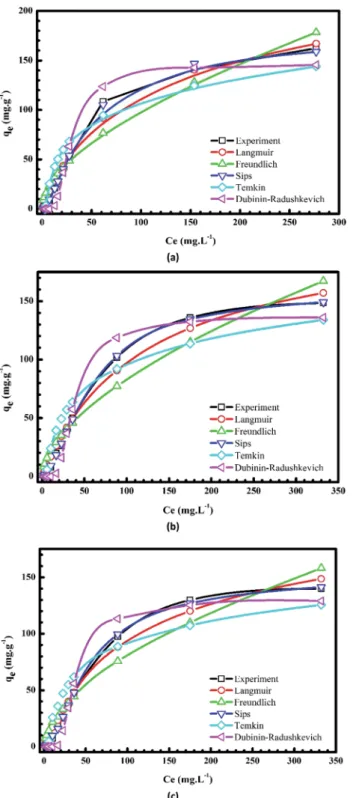
Fig. 8 Plots of nonlinear isotherm models of the adsorption of MB onto pomelo fruit peels at 303 K (a), 313 K (b) and 323 K (c).
and
c2¼Xn n¼1
qe;measqe;calc
qe;calc 2
: (11)
The smallest values of RMSE andc2indicate which model is besttted to the experimental data.
3.
Results and discussion
3.1. Factors affecting the adsorption of MB and Cr(III)
3.1.1. pH.pH is one of the essential factors affecting the adsorption of adsorbates onto the surface of materials based on the electrostatic interaction. When pH of a solution is smaller than its pHPZC value (pH < pHPZC), the adsorption sites will be positively charged, which is thus available for the uptake of anions. By
Table 1 Nonlinear isotherm parameters
Isotherm models
Parameters
Temperature
MB Cr(III)
303 K 313 K 323 K 303 K 313 K 323 K
Langmuir KL 0.01168 0.00833 0.00693 0.0700 0.0725 0.0792
qm(mg g1) 218.5 213.9 207.4 11.3 11.4 12.4
RMSE 7.464 7.336 6.950 0.3238 0.4088 0.2851
R2 0.9838 0.9821 0.9822 0.9749 0.9616 0.9837
c2 39.71 47.78 45.72 0.3754 0.3493 0.2759
Freundlich n 1.78 1.71 1.68 1.58 1.58 1.59
KF 7.51 5.65 4.69 1.03 1.06 1.23
RMSE 14.76 14.41 13.33 0.3655 0.3789 0.3482
R2 0.9366 0.9309 0.9345 0.9680 0.9670 0.9757
c2 203.9 209.8 187.3 0.7751 0.5716 0.6704
Sips Qs 0.42 0.23 0.18 0.83 1.04 1.03
as 0.0025 0.0015 0.0012 0.06704 0.02045 0.07574
bs 1.581 1.594 1.583 0.9455 0.6874 0.9475
RMSE 2.515 1.176 1.974 0.3226 0.3778 0.2834
R2 0.9982 0.9995 0.9986 0.9751 0.9672 0.9839
c2 0.8380 0.8374 2.083 0.4154 0.5210 0.3077
Temkin KT(L mg1) 0.2901 0.2077 0.1820 1.149 1.23 1.15
bT(kJ mol1) 0.07675 0.08225 0.08981 0.8818 1.019 1.0603
RMSE 20.00 19.20 18.74 0.3342 0.4619 0.3608
R2 0.8835 0.8774 0.8704 0.9732 0.9509 0.9739
c2 1206 1271 1283 0.2185 0.3298 0.2530
Dubinin–Radushkevich QD–R(mol g1) 146.9 137.5 130.6 5.757 5.78 6.37
b 104.9 172.2 226.9 2.201 1.856 1.704
E(kJ mol1) 0.06905 0.05389 0.04694 0.4766 0.5190 0.5418
RMSE 11.28 9.899 9.927 0.7383 0.8732 0.8362
R2 0.9630 0.9674 0.9636 0.8694 0.8246 0.8600
c2 44.28 37.28 39.39 1.347 1.856 1.950
Table 2 Comparison the monolayer maximum adsorption capacity with other materials
Biosorbents Adsorbents pH Qmax(mg g1) Ref.
Meranti sawdust Cr(III) 6.0 37.9 50
Banana peel Cr(III) — 6.9 31
Corn cob Cr(III) — 18.8 31
Sunower Cr(III) — 12.2 31
Banana peel MB 7.2 20.8 69
Orange peel MB 7.2 18.6 69
Rice husk MB 8.0 40.6 2
White pine (Pinus durangensis) sawdust MB 10.0 102.0 3
Breadfruit (Artocarpus altilis) peel MB 5.8 183.0 70
Breadfruit (Artocarpus altilis) core MB 5.8 200.0 70
Artocarpus odoratissimusskin MB 4.6 184.6 71
Dragon fruit skin MB 4.7 640.0 72
Breadnut peel MB 6.0 409.0 73
Pomelo fruit peel Cr(III) 5.0 11.3 This study
contrast, the adsorption sites will be negatively charged if pH is higher than its pHPZCvalue and consequently the adsorption of cations is favourable. In this work, the pHPZCvalue of pomelo fruit peels is determined to be approximately 4.5 (Fig. 2).
Fig. 3a shows that the absorbance intensity of MB aer the adsorptionversusthe wavelength decreases dramatically with the pH values from 2 to 3. It slightly falls when pH increases 4 to 9 and reaches maximum at pH ¼ 10 (see the black line in Fig. 3b). At the same time, the uptake of Cr(III) onto pomelo fruit
peel rises dramatically with the pH values from 2 to 4 and then attains the maximum value at pH¼ 5.0, before falling mini-mally at the end of the experiment (see the red line in Fig. 3b). These results show that the changes in the pH values signi -cantly affect the adsorption of MB and Cr(III) because of the
transition of the surface charge from the positive to negative regions that facilitates the adsorption of cation.
3.1.2. Ion strength.Fig. 4 shows the inuence of the ionic strength on the uptake of MB and Cr(III) onto pomelo fruit peel. In thisgure, the percentage of MB being removed from the solution signicantly drops from roughly 90% to about 20% with the slight increase of KCl concentration or ionic strength from 0.0 to 0.1 mol L1. Increasing the ionic strength further does no change much the percentage of removal of MB. For the
removal percentage of Cr(III), one can clearly see a slight fall
from approximately 70% to about 40% with increasing the ionic strength. Obviously, the presence of electrolytes leads to the above reduction of the adsorption of MB and Cr(III) onto pomelo
fruit peel. One explanation is that there is a screening effect (known as the electrostatic screening) existed between the positively charged surface of pomelo fruit peel and MB mole-cules or Cr(III) ions. Thisnding is consistent with the those
reported by Salazar-Rabagoet al.and Tranet al.3,49 Moreover,
these data might suggest that the electrostatic force plays an instrumental role in the adsorption mechanism considered in the present study.
3.1.3. Adsorption time. Fig. 5a depicts the spectra of MB aer the adsorption at different times. It can be seen that there is a downward trend in the intensity of absorbance aer the adsorption without any shis of the wavelength, indicating clearly that the adsorption is unique. The inuence of time on the uptake of MB and Cr(III) onto pomelo fruit peel is presented in Fig. 5b, in which the adsorption increases with increasing the adsorption time and reaches an equilibrium aer about 120 min for both MB and Cr(III). The percentage of removal at
which the adsorption reaches the equilibrium are roughly 90% and 60% for MB and Cr(III), respectively.
Fig. 10 Plots of kinetic models of the adsorption of MB (a) and Cr(III) (b) onto pomelo fruit peel.
3.1.4. Adsorbate initial concentration.In Fig. 6 and 7, we plot the inuence of initial concentration on the adsorption of MB and Cr(III) onto pomelo fruit peel. Several noteworthy results
are seen, namely the adsorption capacity increases with increasing the initial MB and Cr(III) concentrations at different temperatures. These results can be explained by the fact that the number of adsorption sites is higher (smaller) than that of the adsorbate molecules at low (high) concentrations, leading to the increase of the adsorption capacity.31 Notably, the numbers
show a steady decrease in the MB adsorption capacity, which is inversely proportional to the increase of temperature from 303 K to 323 K, whereas there is a reverse trend for the adsorption of Cr(III).
3.2. Isotherm studies
Plots of the nonlinear isotherm models for the biosorption of MB and Cr(III) onto pomelo fruit peels are shown in Fig. 8 and 9,
whereas the calculated isotherm parameters are listed in Table 1. Based on the obtained RMSE andc2values given in Table 1, one can easily recognize that among four isothermal models, the Sips model gives the bestt to experimental data because it is a three-parameter model, which combines the Langmuir and Freundlich isotherms and works well in all the region of adsorbate concentrations.44 In addition, the n values
deter-mined from the Freundlich model are in the range of 1 to 10, conrming that the surface of this material is indeed hetero-geneous.26,44,50 Besides, the monolayer maximum adsorption
capacities calculated from the Langmuir models at 303 K for
Cr(III) and MB are 11.29 mg g1and 218.5 mg g1, respectively. By comparing with other studies shown in Table 2, it is obvious that although pomelo fruit peel is better at removing MB from aqueous solution than most of the biosorbents, it is not favourable for the removal of Cr(III) in the effluents.
Furthermore, the free energy values of the adsorption of MB and Cr(III) estimated from the Dubinin–Radushkevich are
less than 8 kJ mol1, demonstrating that the uptake of MB and Cr(III) onto pomelo fruit peel should follow the physical
processes.51
3.3. Kinetic studies
Fig. 10 and 11 show the plots of pseudo-rst-order, pseudo-second-order, Elovich and intra-particle diffusion kinetic models, which are used to describe the adsorption rates of Cr(III) and MB onto pomelo fruit peels. The kinetic parameters of these models are listed in Table 3.
Equation of the pseudo-rst-order equation is given as52
qt¼qe(1ek1t), (12)
whereas that of the pseudo-second-order equation reads53
qt¼ qe2k2t 1þk2qet
: (13)
Hereqe(mg g1) andqt(mg g1) are, respectively, the amount of solute adsorbed per unit weight of adsorbent at equilibrium
Table 3 Kinetic parameters
Kinetics models
Parameters
MB Cr(III)
Co(mg L1) 100 50
qe(exp)(mg g1) 20.82 6.76
Pseudo-rst-order kinetic qe(cal)(mg g1) 19.90 6.44
k1(min1) 0.2323 0.1465
RMSE 1.137 0.4185
R2 0.6183 0.7605
c2 0.8768 0.4160
Pseudo-second-order kinetic qe(cal)(mg g1) 20.68 6.75
k2(g mg1min1) 0.02210 0.0391
RMSE 0.4931 0.2140
R2 0.9282 0.9374
c2 0.1669 0.1100
Elovich kinetic a 16 409 111.1
b 0.6944 1.517
RMSE 0.3340 0.2112
R2 0.9671 0.9390
c2 0.07164 0.0974
Intra-particle diffusion KP 0.3765 0.1716
C 15.95 4.531
RMSE 0.7313 0.3722
R2 0.8422 0.8105
c2 0.3589 0.3139
Fig. 12 SEM images of pomelo fruit peel. Table 4 Thermodynamic parameters
Adsorbate T KC
DG
(kJ mol1) DH
(kJ mol1) DS(J mol1)
MB 303 11 683 23.54 21.29 7.41
313 8330 23.61
323 6932 23.69
Cr(III) 303 69 998 28.08 4.98 109.13
313 72 537 29.17
and the amount of solute adsorbed at any time, whereask1and
k2are the adsorption constants.
The Elovich model assumes that the adsorption sites increase exponentially with adsorption and this model is mainly applicable for the chemo-adsorption kinetics. It has the form as54
qt¼ 1
b lnð1þabtÞ: (14)
where b (mg g1) and a (mg g1 min1) are the desorption constant during any one experiment and the rate constants, respectively.
Results listed in Table 3 indicate that among the three models above, the Elovich model gives the best agreement with the experimental data at different initial concentration as it produces the highestR2and lowestc2values. Moreover, one can also see from Table 3 that the pseudo-second-order equation is in a better agreement with the experimental data than the pseudo-rst-order one and theqe(cal)values obtained within this model are very close to the experimental data for both MB and Cr(III).
However, the diffusion mechanisms cannot be identiedvia
the pseudo-rst-order and pseudo-second-order models; hence, Weber and Morris55have developed the intraparticle-diffusion
model, whose equation is given as
qt¼kdt1/2+C, (15)
whereCcharacterises the effects caused by the boundary layer and
kd is the diffusion constant. The results of the present study demonstrate that the uptakes of Cr(III) and MB onto the pomelo fruit
peel surface are likely to occurviathree stages. In therst stage [blue lines in Fig. 11a and b], there is a bulk diffusion process within about 40 min at which Cr(III) and MB have a quick transfer from the
solution to the boundary lm of the particles. Next, there is a gradual adsorption occurring during the time interval from 40 to 120 min in the second stage (red lines in Fig. 11a and b). This stage is known as the sole rate-determining step. Moreover, one can also easily see that within this second stage theqtplot does not cross the origin and the presence of the boundary layer effect is characterised by the nonzero value ofC. These results indicate that the adsorption follows not only the intraparticle diffusion but also two or more different mechanisms of the diffusion.56In the last stage (violet lines
in Fig. 11a and b), the equilibrium is reached because of two factors,
Fig. 13 EDX spectrum of pomelo fruit peel before (a) and after (b) the adsorption of Cr(III).
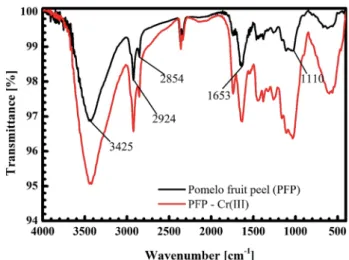
Fig. 14 FT-IR spectra of pomelo fruit peels before and after the adsorption MB.
namely the extremely low concentration of Cr(III) and MB in the
solution and the decrease in the number of adsorption sites.26,57
3.4. Thermodynamics
The thermodynamic parameters such as the Gibbs free energy (DG) and the enthalpy (DH) and entropy (DS) differences are computed by using the MB or Cr(III) adsorption data at
temperatures of 303 K, 313 K, and 323 K. These parameters follow the Gibbs isotherm as58
DG¼DHTDS. (16) The quantityDG, which is a function of temperature, can be calculated from the following van't Hoffequation59
DG¼ RTlnKC, (17)
whereT(K) is the absolute temperature andKC(L mol1) is the equilibrium constant. Meanwhile, the values ofDHandDScan be determined from the intercept and slope of the plots of ln(Kc)
versus1/T, that is49
lnKC¼ DS
R
DH
RT: (18)
Table 4 presents the values of thermodynamic parameters obtained within the present study for MB and Cr(III). It should
be noted that the negative values ofDGindicate a spontaneous process taking place between MB or Cr(III) and pomelo fruit
peel, that is, the increase in the negative value of the Gibbs free energy with temperature is associated with a much more stable and energetically favourable adsorption of MB and Cr(III) at high
temperatures. In addition, the values of the adsorption heatDH
Fig. 16 Possible adsorption mechanisms of MB (pH¼10 > pHPZC): electrostatic attraction (a), hydrogen bonding (b), and n–pinteractions (c).
obtained within the present study are 21.29 kJ mol1 and 4.98 kJ mol1for MB and Cr(III), respectively, which are both
less than 40 kJ mol1. We are therefore able to conclude that the adsorptions of MB or Cr(III) onto pomelo fruit peel are
essen-tially following the physical adsorption processes.
3.5. SEM-EDX analysis
The morphology of pomelo fruit peel is investigated by using the ultra high-resolution scanning electron microscopy (SEM). The SEM image presented in Fig. 12 suggests that this adsorbent has a rugged surface and some cavities in its structure that are favourable for the uptake of MB and heavy metal ions. In addition, the elemental composition of pomelo fruit peel before the uptake of Cr(III) and MB is examined by using the energy-dispersive X-ray spectroscopy (EDX) and the results are depicted in Fig. 13a. The
gure reveals that the main composition of the material includes C and O with 43.73 wt% and 56.27 wt%, respectively. Moreover, the appearance of the main characteristic peaks of Cr at 0.573, 5.415 and 5.947 keV in the EDX spectrum of pomelo fruit peel aer the Cr(III) adsorption (Fig. 13b) indicates that Cr(III) ions have been
successfully absorbed by pomelo fruit peel. Similar studies have also been reported.26,60
3.6. FT-IR analysis
The black curves in Fig. 14 and 15 present the FT-IR spectrum of pomelo fruit peel. This spectrum exhibits a specic band at 3425 cm1, which is related to the stretching vibration of–O–H groups (alcohols, phenols, and carboxylic acids) as in pectin, cellulose and lignin on the surface of the biosorbent.61 The
spectrum peaks at around 2924 and 2855 cm1can be assigned to the stretching vibrations of C–H, whereas the peak observed at 1653 cm1can be attributed to the stretching vibration of C]O bond.61,62The band at 1110 cm1conrms the stretching vibration of C–O in the lignin structure of grapefruit peel.63
Furthermore, the FT-IR spectra of pomelo fruit peel aer the adsorption of MB and Cr(III) are plotted in Fig. 14 (black curve)
and Fig. 15 (read curve). In Fig. 14, in comparison with the results obtained for pomelo fruit peel, that is, without MB, the intensity of all the specic peaks of pomelo fruit peel, which characterise the –O–H groups, C]O and –C–O bonds, is increased. These results indicate that the adsorption of MB onto pomelo fruit peel occurs via the above-named functional groups. Similarly, the change in the intensity of these specic peaks aer the adsorption of Cr(III), depicted by the red curve in
Fig. 15, demonstrates the interaction between Cr(III) and
pomelo fruit peel surface.
3.7. Proposal of the possible adsorption mechanisms
The possible mechanisms of cationic MB adsorption onto pomelo fruit peel are as follows: (1) electrostatic attraction, (2) hydrogen bonding and (3) n–pinteractions;49whereas those of
Cr(III) uptake onto this material are: (1) electrostatic attraction
and (2) n–pinteractions.
The electrostatic attraction mechanisms can be explained based on the interaction between cationic MB and Cr(III) and
negatively charged sites on the surface of pomelo fruit peel when pHsolution> pHPZC. Obviously, the pH values of solution
used in the present work, which are approximately 5.0 for Cr(III)
and roughly 10 for MB, are higher than the pHPZCvalues, thus, the carboxylic groups are deprotonated and negatively charged carboxylate ligands (–COO) binding the charged MB and Cr(III)
molecules as shown in Fig. 16a and 17a. These results are related to the studies of Tranet al.49and Salazar-Rabagoet al.3
In addition, the hydrogen bonding interactions, which can be formed between the surface hydrogens of the hydroxyl groups (H-donors) on the pomelo fruit peel's surface and the nitrogen atoms (H-acceptors) of MB. This phenomenon is also known as the dipole–dipole hydrogen bonding (Fig. 16b). It can be seen from the FT-IR spectrum of the MB adsorbed sample (blue curve in Fig. 14) that the intensity of the –OH groups at around 3400 cm1
dramatically decreases and shis toward the minimally higher wavenumbers, conrming the existence of the dipole–dipole bonding interaction.49 The n–p or n–d interactions are formed
between the electron donor atoms including pairs of electrons, such as oxygen or nitrogen, and acceptors that are aromatic rings or free d orbitals in metal ions. In this study, oxygen in the carbonyl groups on the surface of the adsorbent acts as an electron donor and the aromatic rings of MB and free d orbitals of Cr(III) act
as electron acceptors (Fig. 16c and 17b).
In order to understand deeply which interactions are domi-nant in the present experiment, a computer simulation within the ab initio calculations has been carried out. Within the optimization, the interactions between MB and pectin, the primary recipe of pomelo fruit peel, are calculated using the Gaussian suite of program64with the B3LYP functional65and
the 6-31g*and LANL2dz (for Cr) basis sets.66–68Aer structural
optimisations, the obtained vibrational infrared results indicate that MB mainly interacts with pectin through the weak elec-trostatic forces and hydrogen bonding. This results in a slight shiof the vibrational modes and their corresponding change in the IR intensity (Fig. 18b). Moreover, it can be conrmed through the quantum mechanical calculations that there exist no n–pinteractions between MB and pectin. Such modelling results are in good accordance with the FT-IR spectra of this material aer the adsorption of MB shown in Fig. 14. We should be therefore able to state again that the interacting mechanism here is mainly constituted by the electrostatic force and weak hydrogen bonding.
For the case of Cr(III) interacting with pectin, besides the
weak electrostatic interaction, Cr(III) tends to exhibit a bonding
distance of 2.097˚A to oxygen on the–C]O group. This results in a shiof 20 cm1for the–C]O vibration from 1781 cm1 (Fig. 19b), as conrmed by our previous experimental data (from 1655 cm1to 1633 cm1, as shown in Fig. 15). Therefore, we predict that the adsorption of Cr(III) is produced as a result of
both electrostatics and n–d mechanism.
4.
Conclusions
In the present study, the phenomenon and biosorption mech-anisms of MB and Cr(III) onto pomelo fruit peel are investigated.
It has been found that pH plays an important role in removing MB and Cr(III) from aqueous solution. Moreover, based on the
kinetic studies, we have demonstrated that the adsorption of MB and Cr(III) onto pomelo fruit peel has occurred in three
distinguished stages, namely the bulk diffusion process, the gradual adsorption and the adsorption equilibrium. By combining the experimental data with theab initocalculations, we have indicated, for therst time, that the uptake of MB can be occurred due to two adsorption mechanisms: electrostatic attraction and hydrogen bonding, whereas the biosorption of Cr(III) can be happenedviathe electrostatic attraction and n–
d interaction mechanisms. This is the most important result of the present study. Finally, the maximum monolayer adsorption capacity of MB is found to be 218.5 mg g1at 303 K, which is higher than other popular biosorbents. This result
demonstrates that pomelo fruit peel shall be a low-cost, envi-ronmentally friendly material for the removal of MB from effluents.
Con
fl
icts of interest
There are no conicts to declare.
References
1 V. Geissen, H. Mol, E. Klumpp, G. Umlauf, M. Nadal, M. van der Ploeg, S. E. A. T. M. van de Zee and C. J. Ritsema,International Soil and Water Conservation Research, 2015,3, 57–65.
2 V. Vadivelan and K. V. Kumar,J. Colloid Interface Sci., 2005, 286, 90–100.
3 J. J. Salazar-Rabago, R. Leyva-Ramos, J. Rivera-Utrilla, R. Ocampo-Perez and F. J. Cerino-Cordova, Sustainable Environ. Res., 2017,27, 32–40.
4 D. Pathania, S. Sharma and P. Singh,Arabian J. Chem., 2017, 10, S1445–S1451.
5 K. V. Kumar, V. Ramamurthi and S. Sivanesan, J. Colloid Interface Sci., 2005,284, 14–21.
6 W.-S. Zhong, T. Ren and L.-J. Zhao,J. Food Drug Anal., 2016, 24, 46–55.
7 A.-L. Alanne, M. Tuikka, K. T˜onsuaadu, M. Ylisirni¨o, L. H¨am¨al¨ainen, P. Turhanen, J. Veps¨al¨ainen and S. Per¨aniemi,RSC Adv., 2013,3, 14132–14138.
8 J. H. Luo, J. Li, Y. B. Qi and Y. Q. Cao,Desalin. Water Treat., 2013,51, 2130–2134.
9 D. Mohan, K. P. Singh and V. K. Singh,J. Hazard. Mater., 2006,135, 280–295.
10 S. O. Owalude and A. C. Tella,Beni-Seuf Univ. J. Appl. Sci., 2016,5, 377–388.
11 A. Ali, K. Saeed and F. Mabood,Alexandria Eng. J., 2016,55, 2933–2942.
12 M. A. Khan, Z. A. Alothman, M. Naushad, M. R. Khan and M. Luqman,Desalin. Water Treat., 2015,53, 515–523. 13 E. Altintig, H. Altundag, M. Tuzen and A. Sarı,Chem. Eng.
Res. Des., 2017,122, 151–163.
14 G. Qin, M. J. McGuire, N. K. Blute, C. Seidel and L. Fong,
Environ. Sci. Technol., 2005,39, 6321–6327.
15 A. Esmaeili, E. Hejazi and A. H. Hassani, Water, Air, Soil Pollut., 2014,225, 2140.
16 N. W. Zainon Najib, F. M. Ridwan, A. M. Syakirah and B. S. Lim,Study of Methylene Blue color removal effectiveness by moringa oleifera and alum, 2012.
17 S. K. Mondal and P. Saha,Chem. Eng. Res. Des., 2018,132, 564–583.
18 J. Wang, Z. Wu, T. Li, J. Ye, L. Shen, Z. She and F. Liu,Chem. Eng. J., 2018,334, 579–586.
19 S. Rengaraj, K.-H. Yeon and S.-H. Moon,J. Hazard. Mater., 2001,87, 273–287.
20 L. Rafati, A. H. Mahvi, A. R. Asgari and S. S. Hosseini,Int. J. Environ. Sci. Technol., 2010,7, 147–156.
21 R. Giovanardi and G. Orlando, Surf. Coat. Technol., 2011, 205, 3947–3955.
23 V.-P. Dinh, N.-C. Le, T.-P.-T. Nguyen and N.-T. Nguyen, J. Chem., 2016,2016, 9.
24 V.-P. Dinh, N.-C. Le, V.-D. Nguyen and N.-T. Nguyen,Desalin. Water Treat., 2017,58, 427–434.
25 V.-P. Dinh, N.-C. Le, T.-D. Le, T.-A. Bui and N.-T. Nguyen,J. Electron. Mater., 2017,46, 3681–3688.
26 V.-P. Dinh, N.-C. Le, L. A. Tuyen, N. Q. Hung, V.-D. Nguyen and N.-T. Nguyen,Mater. Chem. Phys., 2018,207, 294–302. 27 M. E. Argun, S. Dursun, C. Ozdemir and M. Karatas, J.
Hazard. Mater., 2007,141, 77–85.
28 L. Chen, A. Ramadan, L. L¨u, W. Shao, F. Luo and J. Chen,J. Chem. Eng. Data, 2011,56, 3392–3399.
29 R. Maurya, T. Ghosh, C. Paliwal, A. Shrivastav, K. Chokshi, I. Pancha, A. Ghosh and S. Mishra,PLoS One, 2014,9, e109545. 30 R. Saha and B. Saha,Desalin. Water Treat., 2014,52, 1928–
1936.
31 M. Mahmood-ul-Hassan, V. Suthor, E. Raque and Y. Muhammad,Environ. Monit. Assess., 2015,187, 8. 32 E. Rosales, J. Meijide, T. Tavares, M. Pazos and
M. Sanrom´an,Process Saf. Environ. Prot., 2016, 101. 33 J. Liu, G. Huang, J. Deng, K. Liu and Y. Xie,J. Ecol. Rural
Environ., 2012,28, 187–191.
34 M. K. Dahri, M. R. R. Kooh and L. B. L. Lim,J. Environ. Biotechnol. Res., 2017,6, 238–247.
35 M. E. Argun, D. G¨ucl¨u and M. Karatas,J. Ind. Eng. Chem., 2014,20, 1079–1084.
36 H. Li, Z. Sun, L. Zhang, Y. Tian, G. Cui and S. Yan,Colloids Surf., A, 2016,489, 191–199.
37 P. Tasaso,J. Clean Energy Technol., 2014,2, 154–157. 38 Y. Wu, L. Cha, Y. Fan, P. Fang, Z. Ming and H. Sha,Water,
Air, Soil Pollut., 2017,228, 405.
39 S. X. Hou, inAdvanced Materials Research, Trans Tech Publ, 2013, pp. 178–181.
40 M. Thomas, M. Brehm, R. Fligg, P. V¨ohringer and B. Kirchner,Phys. Chem. Chem. Phys., 2013,15, 6608–6622. 41 M. Gastegger, J. Behler and P. Marquetand,Chem. Sci., 2017,
8, 6924–6935.
42 X. Yu, L. Huang, Y. Wei, J. Zhang, Z. Zhao, W. Dai and B. Yao,
Mater. Res. Bull., 2015,64, 410–417.
43 A. M. Cardenas-Pena, J. G. Ibanez and R. Vasquez-Medrano,˜
Int. J. Electrochem. Sci., 2012,7, 6142–6153.
44 K. Y. Foo and B. H. Hameed,Chem. Eng. J., 2010,156, 2–10. 45 I. Langmuir,J. Am. Chem. Soc., 1918,40, 1361–1403. 46 H. M. F. Freundlich,J. Phys. Chem., 1906,57, 385–471. 47 M. J. Temkin and V. Pyzhev,Acta Physicochim. URSS, 1940,
12, 217–225.
48 R. R. Bhatt and B. A. Shah,Arabian J. Chem., 2015,8, 414– 426.
49 H. Tran, S.-J. You, T. V. Nguyen and H.-P. Chao,Chem. Eng. Commun., 2017,204, 1020–1036.
50 M. Rafatullah, O. Sulaiman, R. Hashim and A. Ahmad, J. Hazard. Mater., 2009,170, 969–977.
51 J. Anwar, U. Shaque, Z. Waheed uz, M. Salman, A. Dar and S. Anwar,Bioresour. Technol., 2010,101, 1752–1755. 52 R.-L. Tseng, F.-C. Wu and R.-S. Juang,J. Taiwan Inst. Chem.
Eng., 2010,41, 661–669.
53 Y. S. Ho and G. McKay,Process Biochem., 1999,34, 451–465.
54 A. M. Aljeboree, A. N. Alshiriand A. F. Alkaim,Arabian J. Chem., 2017,10, S3381–S3393.
55 W. J. Weber and J. C. Morris,J. Sanit. Eng. Div., Am. Soc. Civ. Eng., 1963,89, 31–60.
56 S. Vasiliu, I. Bunia, S. Racovita and V. Neagu,Carbohydr. Polym., 2011,85, 376–387.
57 F.-C. Wu, R.-L. Tseng and R.-S. Juang,J. Hazard. Mater., 2000, 73, 63–75.
58 V. J. Inglezakis and A. A. Zorpas,Desalin. Water Treat., 2012, 39, 149–157.
59 A. B. Albadarin, C. Mangwandi, A. a. H. Al-Muhtaseb, G. M. Walker, S. J. Allen and M. N. M. Ahmad,Chem. Eng. J., 2012,179, 193–202.
60 T. A. Saleh, A. Sarıand M. Tuzen, J. Environ. Chem. Eng., 2017,5, 1079–1088.
61 M. Torab-Mostaedi, M. Asadollahzadeh, A. Hemmati and A. Khosravi,J. Taiwan Inst. Chem. Eng., 2013,44, 295–302. 62 G. Zhang, Y. Sun, Y. Guo, J. Liu, L. Wu and J. Lin,J. Sci. Food
Agric., 2018,98, 4135–4141.
63 N. V. Farinella, G. D. Matos and M. A. Z. Arruda,Bioresour. Technol., 2007,98, 1940–1946.
64 M. J. Frisch, G. W. Trucks, H. B. Schlegel, G. E. Scuseria, M. A. Robb, J. R. Cheeseman, G. Scalmani, V. Barone, B. Mennucci, G. A. Petersson, H. Nakatsuji, M. Caricato, X. Li, H. P. Hratchian, A. F. Izmaylov, J. Bloino, G. Zheng, J. L. Sonnenberg, M. Hada, M. Ehara, K. Toyota, R. Fukuda, J. Hasegawa, M. Ishida, T. Nakajima, Y. Honda, O. Kitao, H. Nakai, T. Vreven, J. A. Montgomery, J. E. Peralta, F. Ogliaro, M. Bearpark, J. J. Heyd, E. Brothers, K. N. Kudin, V. N. Staroverov, R. Kobayashi, J. Normand, K. Raghavachari, A. Rendell, J. C. Burant, S. S. Iyengar, J. Tomasi, M. Cossi, N. Rega, J. M. Millam, M. Klene, J. E. Knox, J. B. Cross, V. Bakken, C. Adamo, J. Jaramillo, R. Gomperts, R. E. Stratmann, O. Yazyev, A. J. Austin, R. Cammi, C. Pomelli, J. W. Ochterski, R. L. Martin, K. Morokuma, V. G. Zakrzewski, G. A. Voth, P. Salvador, J. J. Dannenberg, S. Dapprich, A. D. Daniels, ¨O Farkas, J. B. Foresman, J. V. Ortiz, J. Cioslowski and D. J. Fox,
Gaussian 09, Revision D.01, Wallingford CT, USA, 2009. 65 A. D. Becke,J. Chem. Phys., 1993,98, 5648–5652.
66 V. A. Rassolov, J. A. Pople, M. A. Ratner and T. L. Windus,J. Chem. Phys., 1998,109, 1223–1229.
67 V. A. Rassolov, M. A. Ratner, J. A. Pople, P. C. Redfern and L. A. Curtiss,J. Comput. Chem., 2001,22, 976–984.
68 P. J. Hay and W. R. Wadt,J. Chem. Phys., 1985,82, 270–283. 69 G. Annadurai, R.-S. Juang and D.-J. Lee,J. Hazard. Mater.,
2002,92, 263–274.
70 N. Priyantha, L. B. L. Lim, D. T. B. Tennakoon, E. T. Z. Liaw, C. H. Ing and A. B. Liyandeniya,Appl. Water Sci., 2018,8, 37. 71 L. B. L. Lim, N. Priyantha, C. Hei Ing, M. Khairud Dahri, D. T. B. Tennakoon, T. Zehra and M. Suklueng, Desalin. Water Treat., 2015,53, 964–975.
72 N. Priyantha, L. Lim and M. Dahri,Int. Food Res. J., 2015,22, 2141–2148.