EXAMINING LANGUAGE AND LITERACY PROFILES OF ADOLESCENT STRUGGLING READERS
Joy Elizabeth Diamond
A dissertation submitted to the faculty at the University of North Carolina at Chapel Hill in partial fulfillment of the requirements for the degree of Doctor of Philosophy in the Department
of Allied Health Sciences in the School of Medicine.
Chapel Hill 2015
Approved by: Karen Erickson Elizabeth Crais
Lynne Vernon-Feagans Lori Geist
©2015
ABSTRACT
Joy Elizabeth Diamond: Examining Language and Literacy Profiles of Adolescent Struggling Readers
(Under the direction of Karen Erickson)
As societal demands for literacy increase, many adolescents continue to exhibit weak reading skills, but little is known about the language and literacy profiles of adolescent struggling readers. The purpose of this study was to identify language- and literacy- related profiles of adolescents who struggle with reading. Participants between the ages of 11 and 15 (N=105) were assessed using measures of phonological awareness, morphological awareness, orthographic awareness, listening comprehension, word reading, and vocabulary. Examination of mean scores for participants in this study indicated overall average abilities across the assessment battery, but the individual profiles indicated clear strengths and weaknesses with some median scores within factors falling well below average.
using silhouette width and model-based approaches. The four-cluster solution was theoretically sound and provided information that was clinically valid.
ACKNOWLEDGEMENTS
I am extremely grateful to many people who have supported me over the past several years as I navigated through graduate school and the completion of this dissertation.
I would especially like to thank my mentor, Dr. Karen Erickson, who provided me with multiple research and writing opportunities at the Center for Literacy and Disability Studies. In addition to providing meticulous writing support and impartial counsel, Dr. Erickson offered her expertise and challenged me with thought-provoking inquiry that helped me to reason like a researcher and extend my knowledge of struggling readers. It was often Dr. Erickson’s
confidence in my abilities that kept me on track and kept me believing that I could achieve my goals. I would also like to thank the members of my dissertation committee. Drs. Betsy Crais, Lynne Vernon-Feagans, Lori Geist and Penny Hatch all provided support, counsel, and
encouraging words throughout my graduate education.
TABLE OF CONTENTS
LIST OF TABLES ... VIII LIST OF FIGURES ... IX
CHAPTER 1: INTRODUCTION ... 1
Introduction ... 1
Adolescent Struggling Readers ... 2
Components of Successful Reading... 3
Reading Profiles of Adolescents ... 7
Statement of Problem ... 8
CHAPTER 2: LITERATURE REVIEW ... 10
Theoretical Underpinning ... 10
Word Identification ... 13
Metalinguistic Components of Reading... 16
Summary of Decoding and Metalinguistic Factors ... 28
Language Comprehension ... 29
What Do We Know about the Profiles of Adolescent Struggling Readers? ... 32
Summary of Literature Review ... 34
CHAPTER 3: METHODS ... 36
Participants & Setting ... 37
Procedures ... 38
Measures ... 38
CHAPTER 4: RESULTS ... 45
Descriptive Statistics ... 45
Latent Variables Underlying Observed Variables ... 47
Results of the Factor Analysis ... 49
The Language and Literacy Profiles of Adolescent Struggling Readers ... 56
Relative Strengths and Weaknesses within Groups of Struggling Readers ... 62
Differences Across Groups ... 62
Summary ... 66
CHAPTER 5: DISCUSSION ... 67
Cluster Evaluations and Implications for Instruction ... 67
Summary of Cluster Descriptions ... 71
Importance of Language ... 72
Importance of Metalinguistic Skills ... 72
Importance of Word Identification ... 75
Similarities and Differences to other Studies of Adolescent Struggling Readers ... 77
Limitations ... 78
Future Directions ... 79
Conclusion ... 80
APPENDIX A: FIDELITY CHECKLIST ... 81
APPENDIX B: SUB LEXICAL ASSESSMENT ... 85
APPENDIX C: TABLES AND FIGURES... 86
LIST OF TABLES
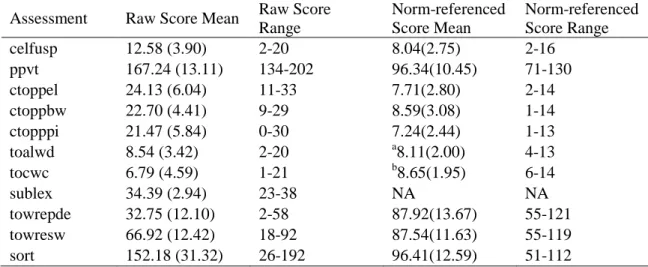
Table 4. 1 Variable Means, Standard Deviations, and Ranges ... 47
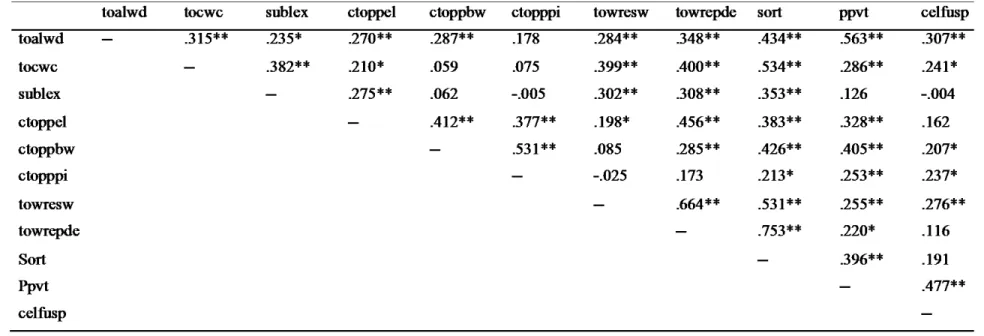
Table 4. 2 Spearman correlations among language and literacy measures (N=105) ... 50
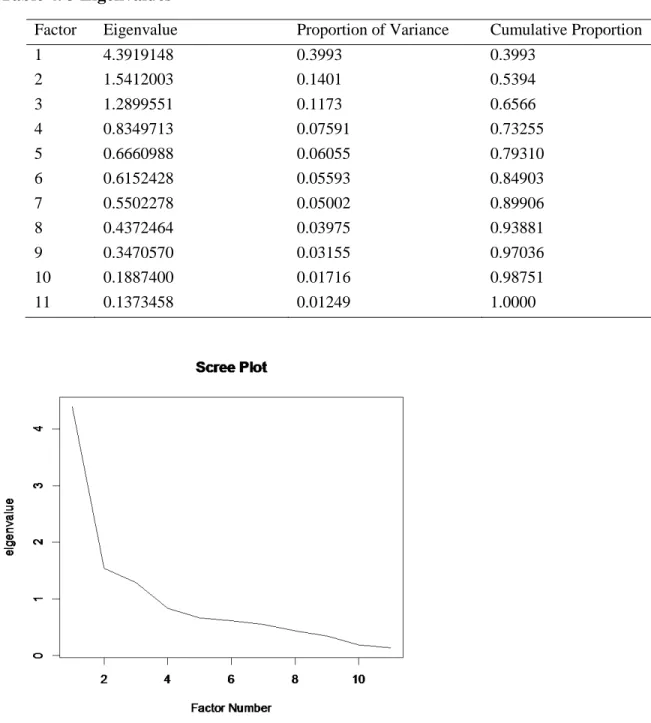
Table 4. 3 Eigenvalues ... 51
Table 4. 4 Parallel Analysis Using Horn's Technique ... 52
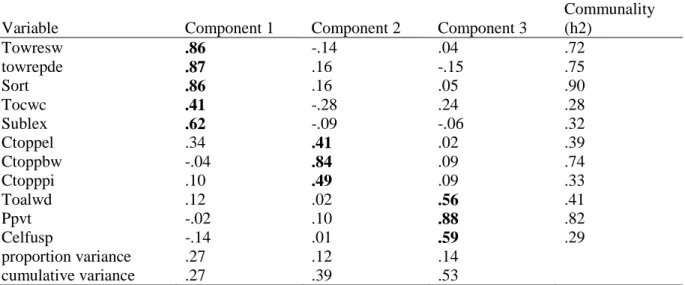
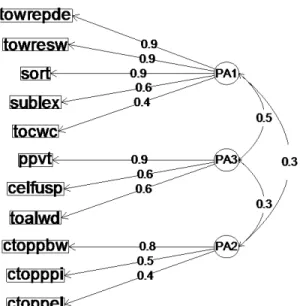
Table 4. 5 Factor Loadings and Communalities (h2) for Exploratory Factor Analysis with Promax Rotation: Three Factor Solution ... 55
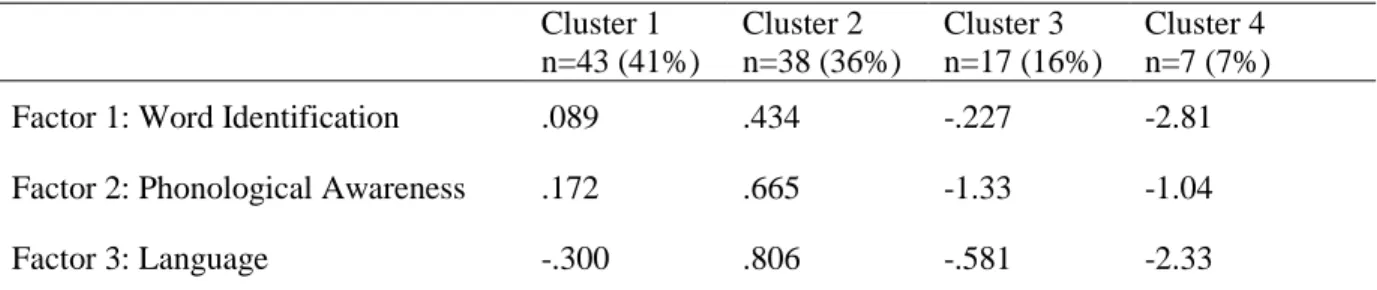
Table 4.6 Factor Scores for Medoid Cases in Each Cluster ... 60
LIST OF FIGURES
Figure 4.1 Scree Plot of Eigenvalues ... 51
Figure 4.2 Parallel Analysis Scree Plot... 52
Figure 4.3 Diagram of the Three-Factor Model ... 56
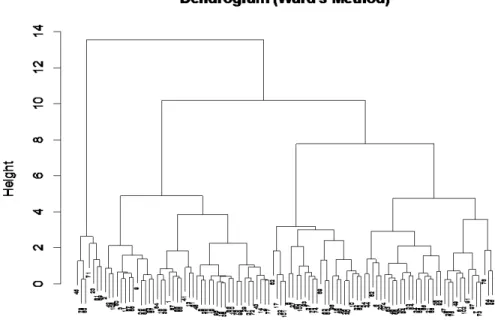
Figure 4.4 Tree diagram of Hierarchical Agglomerative Clustering (Ward's Method) ... 58
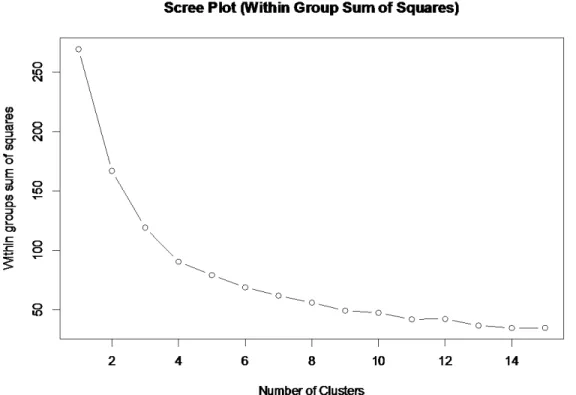
Figure 4.5 Plot of Within-cluster Sum of Squares ... 59
Figure 4.6 Three-dimensional Image of the Four Clusters ... 61
Figure 4.7 Three-dimensional Image of the Four Clusters ... 61
Figure 4.8 Two-dimensional Plot of the Four-cluster Solution (PAM) ... 64
Figure 4.9 Two-dimensional Plot of the Four-cluster Solution (k-means) ... 65
CHAPTER 1: INTRODUCTION
Introduction
Learning to read is a critically important skill in modern society and is foundational for academic and career success. With fewer blue-collar jobs and more service-related and
information-based jobs, employment increasingly requires the use of computers and the Internet, which place large demands on individuals’ literacy skills (Snow, 2002). Additionally, most new jobs require post-secondary education and many jobs that were previously held by individuals without college degrees have been automated or outsourced (Wise, 2009). Success in modern society also requires critical literacy skills, including the ability to understand complex
information from different sources. Unfortunately, as societal demands for literacy are increasing, many students are failing to become proficient readers (National Center for
Educational Statistics [NCES], 2013). In fact, adolescents in the United States exhibit extremely weak literacy skills in international comparisons with other developed nations (NCES, 2014). Difficulty in becoming a proficient reader is especially alarming for adolescents because they have minimal time left in school before they enter the work force. Though the statistics regarding the number of adolescents who struggle to read are abundant (e.g., see reports from Alliance for Excellent Education, 2014; National Center for Educational Statistics, 2014), little is known about the characteristics of these struggling readers. Yet, understanding the
Adolescent Struggling Readers
The term adolescent refers broadly to students in fourth through twelfth grades (Kamil, 2003). Like elementary students, adolescents may struggle in reading due to word level decoding difficulties or reading comprehension difficulties or a combination of both (Snow & Biancarosa, 2003). Though some struggling students may be diagnosed with dyslexia, a specific weakness in word reading that is strongly associated with poor phonological abilities (Stanovich, 1996), many adolescents are undiagnosed with a specific disability, but exhibit reading
difficulties. This may be due to the fact that literacy development beyond fourth grade is
considered more challenging than in earlier elementary years, as text becomes more complex and adolescents are expected to comprehend text across multiple disciplines. These changes mean that readers who had success in the early grades may struggle with reading in adolescence due to the increased complexity of the words, text structures, and comprehension tasks they encounter. For this study, adolescent struggling readers were defined as students who exhibited weaknesses in any area of reading, including (but not limited to) reading comprehension, word reading, fluency, vocabulary, or phonological awareness.
In recent years, the quantity of research focused on adolescent reading has increased considerably, but there continues to remain a shortage of research specifically focused on characteristics of adolescent struggling readers. Research regarding the characteristics of younger struggling readers has led to improved interventions that help to place elementary students in the U.S. near the top in international comparisons (National Assessment of
adolescents improved from 2011, 64% of students in eighth grade continue to perform at or below basic levels in reading, which means these students have only partial mastery of the expected skills. Biancarosa and Snow (2004) note that one of the most commonly cited reasons that students drop out of high school at a rate of thousands each day is that students simply do not have the literacy skills to keep up with the high school curriculum, which has become increasingly complex. Though the United States has experienced an improvement in the percentage of adolescents at or below basic levels in reading over the past few years (NAEP, 2013), the continued high percentage of students who exhibit no more than partial mastery of expected reading skills combined with increasing literacy demands of modern society, indicates a significant need to improve our understanding of adolescent struggling readers so that
appropriate curriculums or interventions can be developed. Components of Successful Reading
The language and literacy skills that correlate with success in reading are similar for early elementary and adolescent readers, but the influence of the variables appears to change as text becomes more complex (Carlisle, 2000; Kirby, Parrila, & Pfeiffer, 2003). Both word
identification and language comprehension skills are required for successful reading with comprehension (Gough & Tunmer, 1986). Word identification is required to decode text into language and language comprehension is required to assign meaning to the text. Metalinguistic skills underpin word identification. It is well established that the metalinguistic skill of
in learning to decode and comprehend text (Nagy, Berninger, & Abbott, 2006; Richards et al., 2006)
Word identification. The influence of word identification skills to reading outcomes
appears to change with age. Specifically, the ability to decode pseudo-words has less of an impact on reading comprehension in adolescence than with younger students (Savage, 2006). The terms word identification, word recognition, and decoding, are often used interchangeably and refer to reading of both pseudo- and real-words. Pseudo-word reading refers to reading nonsense words that conform to the orthographic and phonological structure of English (e.g., trisp, gospen, sloam). Word identification skills are related to reading comprehension for both child (Leach, Scarborough, & Rescorla, 2003) and adolescent readers (Dennis, 2013; Hock et al., 2009); however, proficient word identification skills in the early elementary grades are quite different than proficient word reading skills in adolescence. For students in the early elementary grades, proficient word reading ability is marked by the ability to decode novel, single-syllable words and decode other more common one- and two-syllable words, but proficient real-word reading in adolescence is marked by the ability to read complex, multi-syllabic novel words. Therefore early good real-word readers may struggle with reading comprehension in adolescence due to the increased difficulty of decoding multi-syllabic words.
less direct (Savage, 2006) and a significant proportion of adolescent struggling readers continue to exhibit word identification difficulties (Buly & Valencia, 2002; Dennis, 2013; Hock et al., 2009).
Metalinguistic skills. Phonological awareness, morphological awareness and
orthographic awareness are metalinguistic skills that have been shown to directly influence word reading in both early elementary and adolescent readers (Berninger, Abbott, Nagy, & Carlisle, 2010). Phonological awareness refers to the ability to manipulate the sound structure of language, including the understanding that sentences are made of words, words are made of syllables, and syllables are made of sounds. The specific knowledge of sounds in words is called phoneme awareness and is a part of overall phonological awareness (Wagner, Torgesen, & Rashotte, 1994). Researchers have found that poor phoneme awareness is associated with poor real-word reading and poor pseudo-word reading at all ages, but is less predictive of word reading in adolescence than during the early elementary years (Apel, Wilson-Fowler, Brimo, & Perrin, 2011; Badian, 2001; Wagner et al., 1994).
Morphological awareness refers to the understanding that words can be made of smaller components that hold meaning, called morphemes, and that different words can share
and reading comprehension (Carlisle, 2000), and the importance of morphological awareness to reading development increases with age (Kuo & Anderson, 2006),
Orthographic awareness is the implicit understanding of permissible letter patterns and the stored mental graphemic representations of specific written words (Apel, 2011).
Orthographic awareness accounts for significant variance in word reading for students in first through third grade (Cunningham, Perry, & Stanovich, 2001), and orthographic awareness measures in preschool have been found to be more predictive of later reading than phonological awareness measures in preschool (Badian, 1994). Importantly, older struggling readers often exhibit weak orthographic awareness (Badian, 2001; Hultquist, 1997).
Phonological awareness, morphological awareness, and orthographic awareness skills and their relationship to reading have been studied extensively for early elementary students, but only recently with adolescents. It appears that these correlations change from early childhood to adolescence. Phonological awareness is strongly related to decoding in early elementary
(Hogan, Catts, & Little, 2005), especially to decoding of pseudo-words, but the importance of phonological awareness to decoding seems to decrease as words become morphologically
complex and orthographic and morphological awareness skills improve. It has been reported that metalinguistic and linguistic skills contribute simultaneously to success in beginning readers (Apel et al., 2011), but similar studies have not been conducted with adolescent readers.
Language comprehension. In addition to metalinguistic skills and word reading,
language comprehension abilities are related to reading success in elementary-aged children and adolescents. Oral language comprehension, linguistic comprehension, and listening
allows listeners to understand written language, and each is required to derive meaning from print in reading comprehension. Longitudinal studies have indicated that preschool students with language comprehension difficulties are more likely to have reading comprehension difficulties in later years (Snowling, Bishop, & Stothard, 2000). Moreover, retrospective studies have suggested that adolescents who struggle with reading, exhibited early (often unidentified) difficulties with listening comprehension (Leach et al., 2003).
Receptive vocabulary is a critical component of language comprehension. Most children enter school with vocabulary and grammar knowledge that exceeds what is needed to understand early reading materials (Catts et al., 2006); however, as text and word reading demands become more complex, receptive vocabulary skills begin to have a greater impact on reading
comprehension and word reading (Bhattacharya & Ehri, 2004). Thus, adolescents with weak reading skills may exhibit language comprehension difficulties, including weak vocabulary, and these difficulties are often evident in measures of listening comprehension.
Reading Profiles of Adolescents
Two known studies examined foundational skill profiles of adolescents with weak
reading comprehension (i.e., Buly & Valencia, 2002; Dennis, 2013). Both studies identified that struggling adolescent readers performed poorly on measures related to meaning, rate, and
elementary students indicated that students with different reading profiles responded differently to interventions (Berninger et al., 2002), thus suggesting the importance of identifying the profiles of strengths and weaknesses for adolescent struggling readers so that interventions that will effectively target areas of need can be implemented.
Statement of Problem
It is clear that word identification, metalinguistic, and language comprehension skills are essential for proficient reading with comprehension in the early elementary grades and in
adolescence, but we do not understand how these factors, and particularly the underlying
metalinguistic skills, cluster and interact in adolescents who exhibit poor reading comprehension. The recent research on metalinguistic skills indicates the importance of including these measures in studies of adolescent readers. This study was designed to determine if adolescent struggling readers exhibit distinguishing patterns of strengths and weaknesses in their word reading, meta-linguistic, and language comprehension skills.
Understanding the factors responsible for reading difficulties and defining how these factors relate to each other is required in order to properly identify, diagnose and treat adolescent struggling readers. The need to provide adolescents with differentiated literacy instruction specific to their individual needs is supported by a position statement on adolescent literacy from the International Reading Association (2012). The current investigation adds to our collective understanding of adolescent struggling readers so that the demand for differentiated instruction can be met, and is the first known study to examine the relationship of metalinguistic skills, word reading, and language comprehension for adolescent readers with poor reading skills.
CHAPTER 2: LITERATURE REVIEW
The connections between word reading, metalinguistic skills, language comprehension, and reading success have been widely studied in early elementary school-aged populations (e.g., Garcia & Cain, 2014; Kendeou, van den Broek, White, & Lynch, 2009) and more recently with adolescents (Barth, Catts, & Anthony, 2009; Goodwin & Gilbert, 2013). Furthermore,
theoretical models have postulated the connection between these skills and reading success (Perfetti, 2007; Richards et al., 2006). Understanding the existing literature about each of these areas is important to understanding why they have been selected in the current investigation. This chapter will: (a) describe the theoretical underpinning of the study; (b) examine the literature on word identification; (c) summarize research on metalinguistic skills and their connection to reading; (d) explain the connection between oral language comprehension and reading success; and (e) summarize what we know about adolescent reading profiles.
Theoretical Underpinning
This research is based on the simple view of reading (Gough & Tunmer, 1986) as well as recent theories that consider metalinguistic skills as foundational to reading (see e.g., Berninger et al., 2006; C. Perfetti, 2007). The simple view asserts that both decoding and language
own because print must be translated into language in order to comprehend text. Gough and Tunmer explained reading as the product of decoding and linguistic comprehension; and therefore, if a child is unable to decode, there is no reading even if linguistic comprehension is strong. The reverse is also true. Strong word reading skills in the absence of linguistic
comprehension precludes successful reading with comprehension: both word reading and linguistic comprehension skills are required for long term reading success.
The lexical quality hypothesis (LQH) (Perfetti, 2007) and triple word form theory (TWF) (Berninger et al., 2006) focus on the component skills necessary for successful decoding, and each has proposed that metalinguistic skills are essential for solid decoding skills to develop. The LQH proposes that successful word identification relies on the efficiency of one’s strengths and skills in orthography, phonology, morpho-syntax, and meaning as well as the ability to bind these constituents successfully. According to the LQH, weaknesses in any of these sub lexical elements negatively affect both word reading and reading comprehension.
Additional evidence for the simultaneous contribution of metalinguistic skills to real and pseudo-word reading was demonstrated for fourth-, sixth-, and eighth-grade students (Roman, Kirby, Parrila, Wade-Woolley, & Deacon, 2009). Multiple regression analyses indicated that all three metalinguistic skills contributed uniquely to real word reading (73%) and pseudo-word reading (40%) and did not change over time. Furthermore, brain-imaging studies have found distinct brain “signatures” for the phonological, morphological, and orthographic word forms and crossover effects of these metalinguistic skills that supports the interrelationships among these metalinguistic word forms. Specifically, brain scans indicated changes in both phoneme and morphological mapping for students who received either phonological or morphological treatments (Richards et al., 2006).
TWF theory also posits that adolescent readers’ needs are different than those of early elementary readers. Nagy et al. (2003) claimed that adolescent readers focused less on the grapheme-phoneme correspondences and more on the grapheme-morpheme correspondences in order to efficiently decode complex multisyllabic words. Furthermore, the three word forms contributed uniquely to several word-level or text-level reading outcomes (Berninger et al., 2006). Likewise, in an article that reviewed the historical trends in adolescent literacy, Jacobs (2008) argued that the needs of adolescent readers were different than those of primary students.
Consistent with TWF theory and the LQH, the current study considers metalinguistic skills as important variables in overall reading success. However, because the current
the language and literacy profiles of adolescent struggling readers relative to the simple view. In the following sections, the literature regarding each of the component skills will be reviewed. Word Identification
According to the simple view of reading (Gough & Tunmer, 1986), decoding is one of two variables that directly affect reading comprehension. A large body of research supports this strong relationship, but the decoding skills required for successful reading comprehension change as students progress from early elementary age to adolescence. The words encountered in text for beginning readers are often single syllable words with a close spelling-to-sound relationship. Thus, successful decoding of early text requires attention to individual letters and their corresponding sounds and then more broadly to spelling patterns. On the other hand, adolescents must learn to read and understand large numbers of new, multisyllabic words across domains (Archer, Gleason, & Vachon, 2003). The multisyllabic words adolescents encounter are more complex in comparison to early elementary because many of the word forms are new, occur at a much lower frequency, are more domain-specific (Beck, McKeown, & Kucan, 2008), and have less obvious spelling-to-sound relationships. Consequently as text becomes more complex, students must also attend to the morphological structure of words and complex syllable patterns (Green, 2008) in order to decode multisyllabic words across domains.
As the decoding demands change from childhood to adolescence, the relationship
correctly read pseudo-words, one must apply spelling-to-sound rules or use analogies to decode the words (Hogan et al., 2005). As such, a pseudo-word reading task is thought to provide information on a participants’ ability to read novel words while controlling for possible exposure to the word in the past. Though adolescent struggling readers exhibit more difficulty decoding pseudo-words than their non-struggling peers (Elbro & Jensen, 2005), this difficulty is not necessarily reflected in the reading comprehension skills of adolescents. In fact, it has been shown that strong pseudo-word reading does not necessarily predict strong reading performance and weak pseudo-word reading does not necessarily predict weak reading performance in adolescents (Lesaux & Kieffer, 2010; Savage, 2006).
Savage (2006) noted that many adolescents with weak pseudo-word reading exhibit solid reading comprehension. He surmised that adolescents with weak pseudo-word reading skills were compensating for these difficulties in a way that early elementary students were not
(Savage, 2006). Lesaux and Kiefer (2010) suggest that a minority of students who struggle with reading comprehension also struggle with pseudo- word reading. In fact, they revealed that nearly 80% of their sample of sixth graders who struggled with reading comprehension exhibited strengths in word reading skills. Paris (2005) argued that this inconsistency in pseudo-word reading and reading comprehension for adolescents was due to the non-normal distribution of pseudo-word reading skills for older students. He claimed that pseudo-word reading was a skill mastered in childhood and thus its use to predict reading was problematic, especially as students aged. Despite these complications, pseudo-word reading measures continue to provide insight into a students’ ability to purely decode words either relying on letter-to-sound
measures are as effective at predicting reading comprehension as real-word reading measures (Savage, 2006).
Real-word reading tasks offer another way to view word identification. Typically, assessments of real-word reading require reading lists of frequently occurring words of increasing difficulty and/or reading exception words (i.e., real words that do not conform to phonics rules words, such as yacht). The ability to read real words becomes more predictive of overall reading ability with age, especially for students making expected progress in reading (Scarborough, 1998). One study of adolescent struggling readers (Compton, 2002) demonstrated that the students who were better at reading exception words did better on overall word reading, than the group who did better on pseudo-word reading.
Though the relationship between decoding and reading comprehension appears to change in adolescence, solid decoding skills continue to be necessary for reading success.
Unfortunately, a significant proportion of adolescents’ reading problems can be explained by poor word decoding. For example, in a study of adolescent struggling readers, Dennis (2013) found that nearly one third of the total variance in weak standardized reading scores was
accounted for by weak decoding. Similarly, Buly and Valencia (2002) demonstrated that 40% of fourth graders who struggled with reading comprehension also struggled with decoding; and Hock et al. (2009) found that 87% of adolescents with weak reading comprehension struggled with decoding.
metalinguistic factors including phonological sensitivity, morphological awareness, and orthographic awareness. Each has a unique relationship with reading ability across the school-aged years. As such, each may be found to have a differential role in the profiles of struggling adolescent readers. Recently, research has focused on these underlying metalinguistic factors and their affect on decoding.
Metalinguistic Components of Reading
Mounting evidence indicates that phonological awareness, morphological awareness, and orthographic awareness are underlying metalinguistic skills that affect word identification and reading comprehension. These metalinguistic skills exhibit a predictable course of development that begins in early elementary and continues through adolescence. However, struggling readers exhibit weaker metalinguistic skills than non-struggling readers.
Phonological awareness. Phonological processing is an umbrella term that includes
Stahl, & Willows, 2001), and is a better predictor of adolescent reading (Adlof, Catts, & Lee, 2010) than word and syllable level phonological awareness skills (Badian, 2001).
The development of phonological awareness follows a predictable pattern that should be well established before adolescence (Pufpaff, 2009). Longitudinal studies and growth curve analyses indicate that most growth in phonological awareness skills occurs before grade three, and syllable and rime awareness are stable by grade three (Berninger et al., 2010). However, the age of stable attainment of phoneme awareness, the most difficult phonological awareness task, is less clear. It appears that the skill of counting phonemes typically develops by the end of first grade (Pufpaff, 2009), but phoneme deletion abilities continue to be varied in third grade
(Berninger et al., 2010). Though some phoneme awareness skills are not fully mastered by third grade, the developmental progression suggests that with typical development the attainment of phonological awareness skills should be well established before adolescence (Anthony & Francis, 2005).
Phonological awareness is a necessary skill for early reading success and is predictive of adolescent reading achievement (Schatschneider, Fletcher, Francis, Carlson, & Foorman, 2004). In fact, phoneme deletion skills measured in kindergarten were one of the most important
It is hypothesized that this strong connection between phoneme awareness and reading success is due to the fact that knowledge of phonemes underpins the learning of phonics
(Torgesen, 2002) as well as orthographic word representations (Ehri, 1998) that are essential for learning to decode fluently. Though phoneme awareness is necessary for early reading success and should be well established before adolescence, many adolescent struggling readers exhibit persistent weaknesses in this area (Fawcett & Nicolson, 1995).
Phonological sensitivity in adolescents. There is evidence that weaknesses in
phonological awareness persist into adolescence, even as word recognition improves. In fact the attained level of phonological awareness for adolescent struggling readers rarely matches non-struggling readers’ abilities (Bruck, 1992; Fawcett & Nicolson, 1995). Bruck (1992) examined the phonological awareness skills of adolescent struggling readers as compared to age- and reading-level matched peers. Results indicated that the adolescent struggling readers made more errors on all phonological awareness tasks (i.e., syllable and phoneme level) than their age matched and reading-level matched peers. The results of this study suggested that many
adolescent struggling readers show little development of phoneme awareness as a function of age or reading level and some never attain age-appropriate levels of phonological awareness.
Fawcett and Nicholson (1995) replicated the previous findings in a similar study of struggling readers ages 8, 13, and 17. Whether compared by age or reading level, the struggling readers performed worse on the phonological awareness tasks than the non-struggling readers.
of fMRIs comparing adolescent struggling readers to non-impaired readers on phonological processing showed that the adolescent struggling readers exhibited reduced activation relative to non-impaired controls in left-hemisphere reading-related regions (Landi, Mencl, Frost, Sandak, & Pugh, 2010).
In summary, phonological awareness skills are critical for early reading success and non-struggling readers typically develop these skills before adolescence. Like pseudo-word
decoding, phonological awareness skills are considered constrained skills that are mastered in childhood with short growth curves (Berninger et al., 2010). However, many adolescent
struggling readers continue to exhibit weak phoneme awareness skills, despite improvements in decoding and overall reading ability. Adolescents appear to develop compensation strategies to counteract weaknesses in these areas. Thus, some argue against their use for prediction of later reading (e.g., Paris, 2005). Nonetheless, the strong relationship between phoneme awareness and decoding in early reading and the persistent difficulties of these skills in some adolescent
struggling readers, suggest that measures of phoneme awareness may help define clinically relevant subgroups of adolescent struggling readers.
Morphological awareness. Like phonological awareness, morphological awareness is
a set of metalinguistic skills that develops in a predictable manner and is linked to reading success beginning in early reading development. Morphological awareness differs from phonological awareness in that it refers to the understanding that words can be composed of smaller units of meaning, called morphemes, rather than sounds. Included in morphological awareness is knowledge of the concepts of base words and affixes and the ability to manipulate morphemes and employ word formation rules (Kuo & Anderson, 2006). Morphological
comprehending text. Morphological awareness and phonological awareness skills are highly correlated (Nagy et al., 2006), but morphological awareness skills have been shown to uniquely contribute to word reading and reading comprehension above and beyond phonological
awareness. As with phonological awareness, adolescent struggling readers exhibit weaker morphological awareness than non-struggling readers and have difficulty reading
morphologically complex words (Mann & Singson, 2003).
Morphological awareness develops in a predictable sequence that starts before formal schooling (Kuo & Anderson, 2006) and continues through high school (Nagy et al., 2006) with the understanding and use of inflectional morphemes preceding the understanding and use of derivational morphemes. Inflectional morphemes refer to morphemes that mark the grammatical function of a word stem without altering the meaning or part of speech of the stem (e.g., jumped, jumping, jumps). Derivational morphemes change the part of speech or meaning of a base morpheme (e.g., adaption, adaptable) (Kuo & Anderson, 2006). Though acquisition of major inflectional rules is generally not completed until early elementary, preschool children
demonstrate some knowledge of inflectional morphemes and first graders are capable of generating morphologically related words and applying morphological knowledge in their spelling in the absence of explicit instruction in morphological awareness (Wolter et al., 2009). In contrast, derivational morphological awareness typically begins to develop in third or fourth grade and involves a longer developmental course. This later development is often attributed to the lower frequency of derivational suffixes in oral language when compared to inflectional suffixes (Berninger et al., 2010; Kuo & Anderson, 2006).
containing two morphemes (e.g., shady) more easily than reading words of similar length and structure with only one morpheme (e.g., lady). Moreover, across grade levels derived words with phonologically stable pronunciations are read with higher speed and accuracy than derived words that exhibit a change in base word pronunciation with the addition of an affix (Carlisle & Stone, 2005).
Morphological awareness skills predict unique variance in word reading and reading comprehension for beginning readers through adolescence (Apel, et al., 2011; Foorman,
Petscher, & Bishop, 2012; Goodwin & Gilbert, 2013); however, it appears that this relationship strengthens with age. Mann and Singson (2003) demonstrated that by fifth grade, the best predictor of decoding morphologically complex words was morphological awareness, not phonological awareness. Furthermore, Singson, Mahony, and Mann (2000) concluded that as grade level increases, the contribution of phonological awareness skills to word reading
decreases but the contribution of morphological awareness to word reading increases. Moreover, morphological awareness uniquely contributes to reading comprehension for fourth through ninth grade students above the contribution of vocabulary (Nagy et al., 2006) and prior reading comprehension skills in grades three through ten (Foorman et al., 2012).
Morphological awareness and struggling adolescent readers. Though there is
growing evidence of the significance of morphological awareness in decoding and reading comprehension for typical readers, there are few studies that have examined this relationship for adolescent struggling readers. However, Casalis, Cole, and Sopo, (2004) found that
appears that struggling adolescent readers have less difficulty reading words with a semantically transparent morphological structure (e.g., sunburn) than words that are semantically opaque (e.g., window) (Elbro & Arnbak, 1996).
Interestingly, Elbro and Arnbak (1996) conducted a follow-up study to the latter study and found that, although struggling readers exhibited weak morphological awareness, many used morphemes rather than the syllable structure to support their word reading. In this study, the researchers devised a computer-driven system that displayed text either one word at a time, one morpheme at a time, or one syllable at a time. The study participants were able to advance or reverse the computer screen to show the next (or previous) unit in order to decode the passage. The participants were asked to read 90 short texts that were approximately one sentence in length. Each participant decoded texts in all three-presentation modes (word, syllable,
morpheme), and their reading efficiency (i.e., words read correctly per minute) was calculated. The results showed that struggling adolescent readers read the words presented in a morpheme-by-morpheme context faster than those presented in a syllable-by-syllable context. The authors proposed that perhaps struggling adolescent readers rely more on morphemes to compensate for persistent weaknesses in phonological awareness, which is typically employed to decode words that are truncated at the syllable level. Thus the results of these three studies indicate that struggling adolescent readers exhibit overall weak morphological awareness skills, but appear to use morphemes rather than syllable structure to support their word reading.
Adolescent struggling readers exhibit morphological awareness weaknesses and these skills are predictive of reading comprehension for adolescent struggling readers (Schiff,
students with and without reading disabilities and found that, though different patterns of relationships emerged, morphological awareness skills uniquely predicted reading
comprehension for both groups. The results of a step-wise hierarchical regression analysis in this study indicated that morphological awareness skills uniquely contributed to reading comprehension after phonological awareness and word reading skills were considered. In contrast, the same step-wise regression indicated that morphological awareness did not uniquely contribute to reading comprehension for seventh grade students with reading disabilities. However, when morphological awareness was entered before phonological awareness in the regression equation, morphological awareness contributed significantly to the prediction of reading comprehension for these students with reading disabilities. Thus is appears that the interrelationship between phonological awareness and morphological awareness for students with reading difficulties affects the unique contribution of these skills to reading comprehension for students with reading disabilities, but both morphological awareness and phonological awareness uniquely contribute to reading comprehension.
Orthographic awareness. Orthographic awareness is an umbrella term that refers to
an individuals’ implicit or explicit attention to the lexical representation of letter patterns in specific words and sub lexical understanding of permissible letter patterns in a given written language. Examples of orthographic knowledge include understanding of the patterns that operate within a language’s orthography (e.g., jr is not a legal letter combination in English), knowledge of positional and contextual constraints on the use of letters (e.g., tch does not appear at the beginning of words in English), and the stored mental representations of specific written words (i.e., recognition of the correct spelling for real words) (Apel, et. al, 2011). Assessment of orthographic awareness skills is conducted using real-word and pseudo-word tasks that typically involve a forced choice activity in which a participant chooses which real or pseudo-word is a legal representation of letter patterns in English. For example, to evaluate the orthographic awareness or stored mental representation of words, a real word task may require the participant to identify the correct spelling for train (train vs. trane). Similarly, a pseudo-word task,
assessing sub lexical knowledge regarding permissible letter patterns, may ask the participant to identify the option that most resembles a real word (e.g., tilk vs. tilv).
Like the metalinguistic skills of phonological awareness and morphological awareness, orthographic awareness has been connected to reading success (Cunningham et al., 2001; Georgiou, Parrila, & Papadopoulos, 2008). However, the direction of the relationship is unclear (Deacon, Commissaire, Chen, & Pasquarella, 2012), and the tasks used to measure orthographic awareness have not been consistent in the literature. Thus it is difficult to draw general
However, Cunningham, Perry, and Stanovich (2001) conducted a principal components analysis of six orthographic processing tasks, including three letter string tasks that assessed sub lexical knowledge of orthographic rules, two lexical forced choice tasks that assessed stored mental representations of words, and one spelling task in which participants chose the correct spelling of a word given four alternative choices. The results of this principal components analysis
indicated that one component including all six tasks best represented the data and accounted for over 60% of the variance in the orthographic processing tasks. Despite the use of inconsistent orthographic awareness measures, studies are beginning to reveal that orthographic awareness follows a course of development and is important to the development of word reading and perhaps reading comprehension (e.g., Badian, 1994; Berninger et al., 2010; Georgiou et al., 2008).
There is evidence that orthographic awareness begins developing as early as kindergarten (Cassar & Treiman, 1997) and is not directly dependent on decoding ability (Cunningham et al., 2001). Cassar and Treiman (1997) conducted three studies with students from kindergarten through college age to investigate the development of sub lexical orthographic knowledge regarding allowable consonant and vowel doubling. The findings showed that orthographic knowledge played a role in early spelling even when invented spelling was encouraged. The researchers demonstrated that as early as kindergarten, children showed some knowledge of the allowable positions of doubled consonants and double vowel constraints (e.g., geed vs. gaad). Moreover, as early as second grade, sub lexical orthographic awareness (knowledge of
The relationship between orthographic awareness and reading has been demonstrated in several studies, but the direction of the relationship and the association with reading
comprehension is debatable. Several studies have indicated a predictive relationship between orthographic processing and later word reading. In fact measures of orthographic processing skills in preschool have been shown to be predictive of later word reading and reading
comprehension (Badian, 2001), and measures of orthographic processing skills in second grade predicted unique variance in word reading in third grade, after controlling for phonological awareness and earlier measures of pseudo-word reading (Cunningham et al., 2001). Similarly, Roman et al. (2009) found that orthographic awareness was the strongest predictor of real word reading for fourth, sixth, and eighth grade students. However, a longitudinal study of first through third grade students indicated that orthographic awareness did not contribute to real word reading after controlling for age, vocabulary, non-verbal reasoning, phonological
awareness and earlier word reading (Deacon, Benere, & Castles, 2012). This same study found a relationship between orthographic awareness and reading in the opposite direction: early word reading predicted later orthographic awareness skills. Moreover, a recent study examining the concurrent relationship between orthographic awareness and reading skills failed to find a significant correlation between orthographic awareness and reading comprehension for typically developing readers in second and third grade (Apel et al., 2011). Thus, it appears that
Orthographic awareness and struggling readers. A few studies have examined the
orthographic awareness skills of adolescent struggling readers compared to non-struggling, age-matched readers and younger, reading-level age-matched students. In general these studies have indicated that struggling readers exhibit weaker overall orthographic awareness skills. Two studies demonstrated that students who struggled to read pseudo-words exhibited weak orthographic processing (Castles & Coltheart, 1993; Compton, 2002), and Hultquist (1997) found that the struggling readers displayed greater difficulty than age-matched and reading-level matched students on nearly all of the orthographic awareness measures. Similarly, Bekebrede et al. (2007) found that adolescent struggling readers exhibited weak orthographic awareness skills that independently contributed to reading outcomes. The disparity continues with college-age readers. Highly skilled college-age readers exhibited quality orthographic word representations, whereas less skilled readers exhibited more disconnect between orthography and word reading (Perfetti, 2007). Overall results consistently indicate that struggling readers exhibit weaker orthographic awareness skills than non-struggling readers, which is consistent with the lexical quality hypothesis that emphasized the importance of quality orthographic representations to efficient word reading (Perfetti, 2007).
The development of orthographic awareness begins in early elementary and is closely tied to print exposure (Stanovich & West, 1989) and reading experience (Rayner, Foorman, Perfetti, Pesetsky, & Seidenberg, 2001). In fact, print exposure explained variance in
orthographic processing independent of phonological processing for young adults (Stanovich & West, 1989). It is believed that the aspect of print exposure that builds orthographic awareness is the requirement to repeatedly decode novel words (Rayner et al., 2001). Unfortunately,
patterns (Ehri & Saltmarsh, 1995). Given that orthographic awareness is acquired through successful decoding and print exposure, it is not surprising that adolescent struggling readers would have weaker orthographic awareness skills than non-struggling readers. What is
surprising is the fact that there are differences within groups of struggling readers regarding their orthographic knowledge that is not related purely to reading experience (e.g., Perfetti & Hart, 2002). As such, efforts to determine profiles of adolescent struggling readers should include measures of orthographic knowledge to define clinically relevant subgroups.
Summary of Decoding and Metalinguistic Factors
In summary, adolescent struggling readers exhibit persistent difficulties in word reading and the metalinguistic skills that support word reading. These difficulties ultimately affect reading comprehension. The metalinguistic skill of phonological awareness is critical to beginning reading success, but exhibits a short growth curve and demonstrates a weaker relationship to word identification than morphological awareness for adolescent readers.
Language Comprehension
According to the simple view (Gough & Tunmer, 1986), reading is the product of decoding and linguistic comprehension. Linguistic comprehension skills allow the reader to understand print once the individual words have been decoded. Poor linguistic comprehension skills in the presence of good decoding will result in poor reading comprehension. In other words, poor reading comprehension can arise from general language comprehension problems even when word decoding appears to be adequate (Perfetti, Landi, & Oakhill, 2005). It is
therefore important to consider linguistic comprehension skills as an essential element of reading whether investigating the skills of elementary school-aged or adolescent readers.
Likewise, oral receptive vocabulary skills are strongly correlated to both real-word reading and reading comprehension throughout development (Stahl, 2003). The relationship between vocabulary development and reading is likely reciprocal with non-struggling readers developing the majority of their receptive vocabulary knowledge through wide, independent reading; unfortunately, struggling readers tend to read less and thus have fewer opportunities to build their receptive vocabulary through reading (Nagy & Anderson, 1984). The research on linguistic comprehension, typically assessed through written language listening comprehension tasks in the domain of reading, and oral receptive vocabulary consistently indicate that they are important components of reading success for readers of all ages.
Listening comprehension. Longitudinal studies have helped to establish the
identified as language impaired in preschool. Additionally, many of the children who are identified with language impairments in preschool develop basic decoding skills in early
elementary, but exhibit a decline in their word recognition skills in later elementary. Snowling et al. (2000) concluded that children with a history of language impairment remain at risk for reading problems, even if they start with good decoding skills, due to the significant
contributions of linguistic skills including syntactic, semantic, and pragmatic language skills to the development of solid reading comprehension.
Further evidence that early language comprehension difficulties affect later reading comprehension was established in the following two retrospective studies. The first study confirmed the importance of measuring listening comprehension early as an indicator of later reading difficulties (Leach et al., 2003). In this study, Leach et al. examined the early reading profiles of struggling readers who were not identified until fourth grade (i.e., late-identified). Most of these late-identified students exhibited reading comprehension difficulties and weak listening comprehension in fourth grade. A very low percentage of these late-identified students exhibited reading comprehension difficulties in early elementary when early-identified students were exhibiting word-level difficulties. Thus, the late-identified students either developed reading difficulties after early elementary, or listening comprehension, a critical component in the identification of reading comprehension difficulties, was not administered in early
elementary. Given that late identified students exhibited weaknesses in listening comprehension and reading comprehension, it appears that listening comprehension is an important measure to include in reading assessments. The second retrospective study demonstrated that eighth grade students who were identified as poor comprehenders, with good decoding skills, exhibited
kindergarten than students making expected progress (Catts et al., 2006). Moreover, the listening comprehension scores for the poor comprehenders in eighth grade were also low in second and fourth grades indicating the importance of listening comprehension to reading comprehension across the grade levels.
Finally, a comparative study of poor comprehenders (students whose reading
comprehension was more than 12 months lower than their chronological age and word reading accuracy) to good comprehenders (children whose reading comprehension was better than their word reading accuracy) demonstrated that poor comprehenders exhibited weaker listening comprehension (Cain & Oakhill, 2006). Thus, evidence from longitudinal, retrospective, and comparative studies indicate that struggling readers exhibit early language comprehension difficulties that are persistent. Furthermore, these studies support the importance of oral
language comprehension measures for identifying reading difficulties and classifying groups of adolescent struggling readers.
Vocabulary. In addition to listening comprehension, oral vocabulary is an important
of semantic relationships among words (Perfetti, 2007). Thus vocabulary affects both decoding and language comprehension and contributes unique variance to reading comprehension above decoding and language comprehension.
Like orthographic awareness, experience with print is a reliable predictor of vocabulary knowledge (Stanovich, West, & Harrison, 1995), and learning vocabulary is essential to
becoming an independent learner (Snow, 2010). Unfortunately, struggling readers often have weaker vocabulary skills than non-struggling readers and fewer successful experiences with print, which results in fewer opportunities to strengthen their vocabulary skills (Hock et al., 2009). Because language comprehension and oral vocabulary skills are often weak within adolescent struggling readers and vocabulary independently contributes to reading
comprehension, it is important that vocabulary skills are evaluated and used to define reading profiles.
What Do We Know about the Profiles of Adolescent Struggling Readers?
included reading comprehension and vocabulary measures. Following the factor analysis, a cluster analysis was completed using the three factors. Results of the cluster analysis indicated six profiles. Cluster 1 was named automatic word callers (18%) and included students who were relatively stronger in word identification and fluency than meaning. These students read quickly and accurately, but not for meaning. Cluster 2 was named struggling word callers (15%) and was similar to cluster 1 but these students exhibited more difficulty in word identification. Cluster 3 was named word stumblers (18%) and these students exhibited relative strengths with meaning, but had word identification weaknesses. Cluster 4 was named slow and steady comprehenders (24%) and these students exhibited weak reading fluency, but solid word identification and meaning. Cluster 5 was named slow word callers (17%) and these students exhibited weak fluency and meaning. Cluster 6 was named disabled readers (9%) and these students exhibited weak scores in all three factors, with especially weak word identification.
In a similar investigation, Dennis (2013) conducted a multivariate correlational study of 94 middle school students, who were mostly from minority backgrounds and poor families and met criteria for below proficient on the state standards-based assessment. Similar to Buly and Valencia (2002), the participants were assessed on phonemic awareness, phonics, decoding, fluency, spelling, vocabulary, and reading comprehension. Results of exploratory factor analysis indicated that the same three factors identified by Buly and Valencia- word identification,
but required additional instructional support developing fluency, vocabulary, and comprehension.
The information gleaned from the latter two studies provided evidence that adolescent struggling readers are not a homogeneous group. Though overall, the students exhibited generally weak scores on all of the measures, each of the clusters exhibited different profiles of strengths and weaknesses. However, these studies did not include measures of morphological awareness, orthographic awareness, or listening comprehension: skills that are critical
components to success in reading as described above. Given evidence that metalinguistic skills are increasingly important to word reading in adolescence and listening comprehension is a measure that can identify struggling readers in the absence of word reading difficulties, it is important that a study examining the reading profiles of adolescent readers include these measures.
Summary of Literature Review
In summary, word reading and language comprehension skills are critical components of reading in adolescence. In line with the triple word form theory (Richards et al., 2006) and lexical quality hypothesis (Perfetti, 2007), phonological awareness, morphological awareness, and orthographic awareness are principal metalinguistic skills that underpin word reading in adolescence and are related to reading comprehension. Struggling adolescent readers exhibit weaker skills in word reading, language comprehension, and metalinguistic skills, but evidence suggests that struggling adolescent readers are not a homogeneous group. While some
Two studies examined the profiles of adolescent struggling readers related to the component skills of word reading, reading comprehension, and fluency. However, the critical foundational components of listening comprehension, morphological awareness, and
CHAPTER 3: METHODS
The purpose of this descriptive multivariate study was to better understand the factors related to adolescent struggling readers and identify homogeneous groups of students that share similar profiles of strengths and weaknesses across reading and language-related measures. Understanding the factors related to adolescent struggling reading and the profiles of these students is required in order to improve our understanding of the nature of adolescent struggling readers so that we can properly identify, diagnose and remediate the challenges these students face.
The research questions guiding this study were:
1. What are the language and literacy profiles of adolescent struggling readers? 2. What are the underlying latent variables that are reflected in the observed variables? 3. What reading strengths and weaknesses are present for each identified profile? 4. On which variables do the groups differ?
To answer the research questions, factor analysis procedures were conducted to identify latent variables. Then, hierarchical agglomerative cluster analysis procedures were used in order to identify groups that shared similar characteristics with the intention of minimizing within cluster variation and maximizing between cluster variations. Post-hoc analyses were conducted to identify the meanings of the clusters and determine how they might be used to inform
Participants & Setting
In this study, adolescent struggling readers were defined as students who exhibited weaknesses in any area of reading, including (but not limited to) reading comprehension, word reading, fluency, vocabulary, or phonological awareness. Participants in this study were identified as struggling readers based on a combination of teacher opinion, classroom assessments, and/or standardized assessments. Previous studies have indicated that teacher judgment of reading difficulties exhibit high levels of agreement with individual standardized measures (Hoge & Coladarci, 1989) and teacher rating of reading problems is a significant predictor of reading difficulties (Speece et al., 2010). Furthermore, studies have indicated little to no correlation between labeled-performance on state standardized assessments of reading and reading profiles (see Leach, Scarborough, & Rescorla, 2003; Rupp & Lesaux, 2006). Thus for this study, teachers and administrators identified adolescent struggling readers and no specific assessment guidelines were given for choosing these students.
Participation criteria included an age range of 11 years 0 months to 14 years 11 months and a score between 70 and 130 on the Peabody Picture Vocabulary Test – 4 (PPVT-4, Dunn & Dunn, 2007). A total of 108 participants were recruited and screened for participation in this study. Of the 108, three students were excluded from participation because they scored below 70 on the PPVT-4. The final 105 students were from three different schools in the central Piedmont region of North Carolina. One school was a small, independent, privately funded middle school for boys who come from low-income families. In this school, 80% of the families qualified for
the free or reduced price lunch. A second school was a public middle school with 47% of
students eligible for free or reduced price lunch and 44% of the student population performing
public charter-school serving adolescents in a non-traditional school setting. Recent
end-of-grade reading tests indicated that 68% of the students in this school performed below end-of-grade level
in the English II proficiency assessment.
Rules of thumb for sample sizes required for exploratory factor analysis indicate that at least 100 participants are necessary with a total sample size of at least five times the number of variables. Thus this study meets both criteria with 105 participants and nearly 10 times the number of participants per variable. For cluster analysis the sample size must be sufficiently large to represent all relevant groups, and the findings suggest the sample was sufficient. Procedures
After receiving consent from parents and assent from participants, a battery of 11
assessments measuring language and literacy skills were administered to participating students. The complete battery required approximately 60 to 90 minutes of testing and was administered in two or three separate sessions. All of the assessments were administered individually in a quiet setting within the school and the test order was randomized across participants.
The principal investigator and graduate students in speech-language pathology, who were trained by the principal investigator, administered all assessments. Training included detailed information of test administration and hands-on practice. Fidelity checklists were used during the training and during observations of test administration (see example in Appendix A) to ensure all assessments were administered with maximum fidelity. All assessments were scored by at least one assessor with all scores double-checked by the principal investigator.
Measures
All participants were administered 11 assessments that measured language
were chosen based on theory and research outlined in chapter two. Each is described in detail below.
Language comprehension. To measure listening comprehension, the Understanding
Spoken Paragraphs subtest of the Clinical Evaluation of Language Fundamentals-Fifth Edition (CELF-5; Semel, Wiig, Secord, 2013) was administered. The CELF-5 is an individually administered, standardized test for students’ ages 5 to 21 years. The Understanding Spoken Paragraphs subtest is designed to evaluate the student’s ability to create meaning from oral narratives and text, as well as answer questions about the content and use critical thinking. Students are presented with a few short stories read aloud to them and then asked questions related to the story. The reported reliability for this subtest is 0.85.
The Peabody Picture Vocabulary Test – 4 (PPVT-4, Dunn & Dunn, 2007) is an
assessment of oral receptive single-word vocabulary. This assessment requires the participant to identify the picture that represents a spoken word. Reliability and validity coefficients for the PPVT-4 are reported at .90 and above.
Metalinguistic skills. Growing evidence indicates the importance of metalinguistic
skills to reading achievement throughout adolescence. Metalinguistic skills require awareness of linguistic components of language. This ability to think about language appears to directly affect reading skills. As such, several measures of metalinguistic skills were included in the battery. Each is described below.
Phonological awareness. Three subtests from The Comprehensive Test of
Blending Words subtest measures the ability to synthesize sounds to form words, and the Phoneme Isolation subtest measures the ability to isolate individual sounds within words.
The CTOPP-2 is a norm-referenced assessment measure with reported internal consistency coefficients for all of the subtests used exceeding 0.80. The selected subtests exhibited concurrent validity with the Test of Phonological Awareness (Robertson & Salter, 2007), Dynamic Indicators of Basic Early Literacy Skills (initial sound fluency and phoneme segmentation fluency) (Kaminski & Good, 2008), and Lindamood Auditory Conceptualization Test-3 (Lindamood & Lindamood, 2004) ranging from 0.64-0.78. The CTOPP-2 was normed on over 1900 students in six states. Thirty-eight percent of the norming population was between the ages of 12 and 17.
Morphological awareness. The Word Derivations subtest from the Test of Adolescent
and Adult Language (TOAL 4, Hammill, Brown, Larsen, Wiederholt, 2007) was administered as a measure of morphological awareness. This is an assessment of an individual’s ability to formulate a derived word form that taps an individuals’ awareness of both the meaning and function of affixes. For example, given the base word farm and the sentence, My uncle is a _____, the participant must provide the derived word farmer. The TOAL 4 was normed on 1,671 individuals in 35 states. Concurrent validity with the WISC III Verbal measure is reported to be 0.83.
Orthographic awareness. The Word Choice subtest from the Test of Orthographic
Competence (TOC, Mather, Roberts, Hammill, Allen, 2008) is a lexical assessment that
he or she thinks is the correct spelling of the word. This is an untimed measure that was
administered individually. The TOC was normed on over 1400 students in 27 states. Nearly 50 percent of the norming population was between the ages of 12 and 17.
An experimenter-adapted Sub Lexical Orthographic Awareness Task was also
administered (see Appendix B). This task was originally adapted from Cunningham, Perry, and Stanovich’s (2001) Pseudo-word Pairs measure and Cassar and Treiman’s (1997) word lists. This task requires the participant to identify legal spelling patterns in English words by circling the word from a pair (e.g., noop, niip) that most resembles a real word. The principal
investigator of the current study adapted the task in order to shorten the overall length from 60 word pairs to 38. Decisions regarding the removal of non-word pairs were based on the number of times the pattern had been included in the task with a goal of including two assessments of each pattern. Cronbach’s alpha (0.69) for the adapted version of the Sub Lexical Orthographic Awareness Task was computed using the responses for the 105 participants in the current study. The alpha falls at the high-end of the acceptable range for internal consistency reliability for measures such as this (Kline, 2000).
Word identification. The Phonemic Decoding Efficiency and Sight Word Efficiency
sampling) for the subtests exceed .90. The average test–retest (time sampling) coefficients for the same form exceed .90. The average test–retest (time sampling) coefficients for different forms of the subtests are .87.
The Slosson Oral Reading Test Revised (SORT-R3, Slosson, 1990) is a norm-referenced assessment of word recognition. This test consists of words selected from a variety of reading lists and textbooks for each grade level without reference to their phonemic characteristics. Students are asked to read progressively harder lists of words. This test was nationally normed on over 1300 people including approximately 600 students ages 10 through 18. Spearman-Brown split half reliability and KR21 were both reported at 0.98. Concurrent validity with Woodcock Johnson Letter-Word Identification (Woodcock, McGrew & Mather, 2001) and Peabody Individual Achievement Test (Markwardt, 1989) reading recognition was 0.90. Data Analyses
Prior to each analysis, the characteristics of the data set were evaluated to determine whether assumptions were met. The following is a description of each analysis conducted to answer each research question.
heterogeneity (i.e., objects within clusters should be close, but the clusters should be far apart). After reducing the 11 variables to three factors, the clusters were derived by hierarchical
agglomerative clustering procedures using the scores on each factor for each observation. As applied in this study, the hierarchical agglomerative clustering procedure began with every case (i.e., participant factor scores) representing an individual cluster and at each step the two most similar clusters were combined until the last two clusters were combined into a single cluster with all students. Then, pairs of cases that are most similar were combined with existing similar clusters. This iterative process continues until the last step when there is only one cluster. In the current study, similarity between cases was determined through Euclidean distances. Ward’s Method was used as the clustering algorithm to assign cases to clusters. Ward’s method
minimizes the total within cluster variance by choosing pairs of cases to add to a cluster that lead to the lowest increase in total within-cluster variance after the pairs are added. Ward’s method then chooses which pair of clusters to combine by merging the pair of clusters that minimizes the sum of square errors, or sum of squared deviations from the cluster mean, across all clusters (Gore, 2000). Thus, at each step the pair of clusters with minimum between cluster variance was merged. Once the number of clusters was determined, they were evaluated for stability using different clustering procedures on the same data. Additionally, the grouping results were evaluated regarding how the results aligned with theory and whether the results matched expectations.
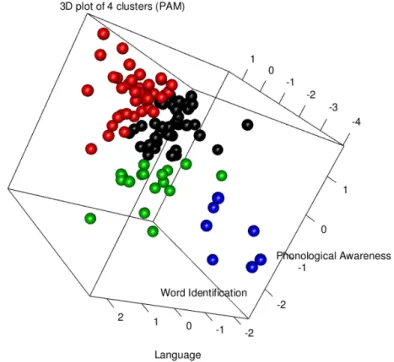
partition the data set into groups. The PAM algorithm finds the median case in each cluster with the goal of minimizing the average dissimilarity of objects to their closest selected object