1
PSYCHOLOGICAL HEALTH AND SMOKING IN YOUNG ADULTHOOD: SMOKING TRAJECTORIES AND RESPONSIVENESS TO STATE CIGARETTE EXCISE TAXES
Allison M. Schmidt
A dissertation submitted to the faculty at the University of North Carolina at Chapel Hill in partial fulfillment of the requirements for the degree of Doctor of Philosophy in the Department
of Health Behavior in the Gillings School of Global Public Health.
Chapel Hill 2017
Approved by:
Shelley D. Golden
Allison E. Aiello
Susan T. Ennett
Nisha C. Gottfredson
ii
iii ABSTRACT
Allison M. Schmidt: Psychological Health and Smoking in Young Adulthood: Smoking Trajectories and Responsiveness to State Cigarette Excise Taxes
(Under the direction of Shelley D. Golden)
While smoking rates have significantly decreased among the general population in the
past several decades, they have not significantly decreased among those with poorer
psychological health. As posited by theories such as the Transactional Model of Stress and
Coping, smoking may represent an important coping mechanism for individuals who experience
stress or unpleasant feelings related to poorer psychological health. If poorer psychological
health is experienced during young adulthood, a critical time for tobacco use experimentation
and uptake, individuals may be particularly likely to become dependent on nicotine and develop
longer term smoking habits. In addition, tobacco control policies that have reduced tobacco use
in the general population, like raising the price of cigarettes, may be less effective among people
with poorer psychological health. Using two indicators of psychological health, a continuum of
psychological distress and ever diagnosis of a mental illness, this dissertation explored first, how
psychological health accounts for variability within and between individuals in trajectories of
smoking (status and amount) across the ages of 18 to 30, and second, whether psychological
health moderates the effectiveness of cigarette excise taxes in preventing and reducing smoking.
Using a longitudinal national sample across years 2007 to 2013, between-individual effects were
found such that individuals with poorer psychological health were more likely to be smokers and
iv
psychological health (Aim 1 and Aim 2). Additionally, the positive effect of having a diagnosed
mental illness on smoking amount increased with age, suggesting older young adults may be
important targets for intervention (Aim 1). While the effect of cigarette excise taxes
encouragingly was not shown to differ by psychological health, cigarette excise taxes showed
little effect on smoking at all, perhaps suggesting taxes need to be raised higher than they have
been to meaningfully impact smoking (Aim 2). Interventions should aim to target high-risk
young adults with poorer psychological health to treat unpleasant psychological symptoms
simultaneously with smoking prevention and cessation programs. Overall, this work helps us
understand the relationships between psychological health, smoking, and tobacco control policy,
with implications for interventions.
v
ACKNOWLEDGEMENTS
I would like to gratefully acknowledge some of the many individuals that have supported
me in completing this work. First and foremost, Dr. Shelley Golden, thank you for all of your
time and energy invested in this project, your dedicated mentorship, your unfailing
encouragement, and especially your friendship.
To my committee, thank you Dr. Nisha Gottfredson, Dr. Susan Ennett, Dr. Kurt Ribisl,
and Dr. Allison Aiello for your thoughtful feedback and guidance, and for pushing me to make
this the best project it can be. Thank you for consistently being there to answer my questions, for
your inspiration to always continue learn more, and for keeping me at the forefront of the
literature and science in tobacco use, tobacco control policy, and mental health.
To Dr. Adam Goldstein and Dr. Leah Ranney, thank you for your support of my
professional development and growth as a researcher and public health practitioner, and support
of me in pursuing my interests in tobacco control and mental health.
To my cohort, thank you so much for your friendship and camaraderie, and for letting me
learn from each of you.
To my parents, Robin and Jerry Schmidt, and my boyfriend, Troy Robbins, thank you for
all your love and support of me in this journey.
vi
TABLE OF CONTENTS
LIST OF TABLES ... viii
LIST OF FIGURES ... ix
LIST OF ABBREVIATIONS ... x
CHAPTER 1: INTRODUCTION AND RESEARCH QUESTIONS ... 1
Cigarette Smoking and Psychological Health ... 1
Young Adulthood as a Critical Period ... 4
State Cigarette Excise Taxes ... 5
Research Questions and Aims ... 6
Implications for Tobacco Regulatory Science and Intervention ... 8
CHAPTER 2: THEORY AND CONCEPTUAL MODEL ... 12
Transactional Model of Stress and Coping ... 12
Psychological Health and Smoking Development in Young Adulthood ... 15
State Cigarette Excise Taxes, Economic Theory, and Smoking in Young Adulthood ... 16
Conceptual Model and Hypotheses ... 17
CHAPTER 3: STUDY 1 – TRAJECTORIES OF YOUNG ADULT SMOKING BY PSYCHOLOGICAL HEALTH ... 20
Introduction ... 20
Methods ... 26
Results ... 37
vii
CHAPTER 4: STUDY 2 – RESPONSIVENESS OF YOUNG ADULTS TO STATE
CIGARETTE EXCISE TAXES BY PSYCHOLOGICAL HEALTH... 49
Introduction ... 49
Methods ... 53
Results ... 64
Discussion ... 72
CHAPTER 5: SYNTHESIS AND DISCUSSION ... 78
Aim 1 and Aim 2: Summary, Implications, and Integration ... 78
Strengths and Weaknesses ... 80
Future Directions ... 83
viii
LIST OF TABLES
Table 1.Aim 1 Sample Characteristics... 30
Table 2. Odds of Being a Current Smoker (N=2,348) ... 40
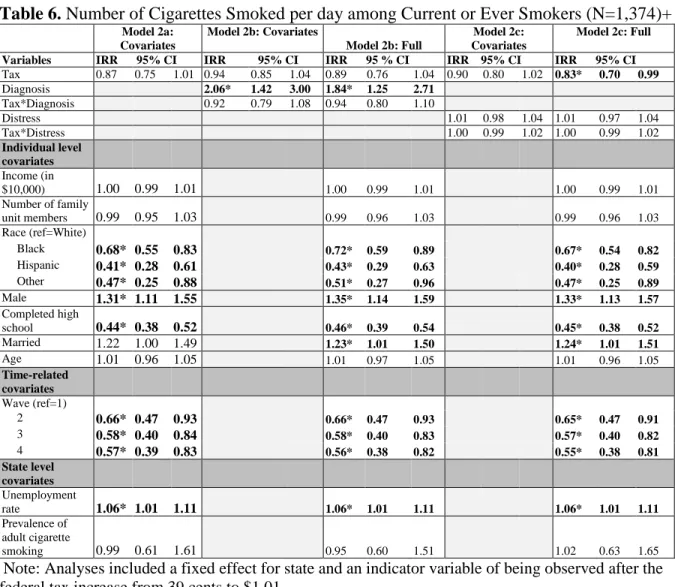
Table 3. Number of Cigarettes Smoked per day among Current or Ever Smokers (N=1,383) .... 43
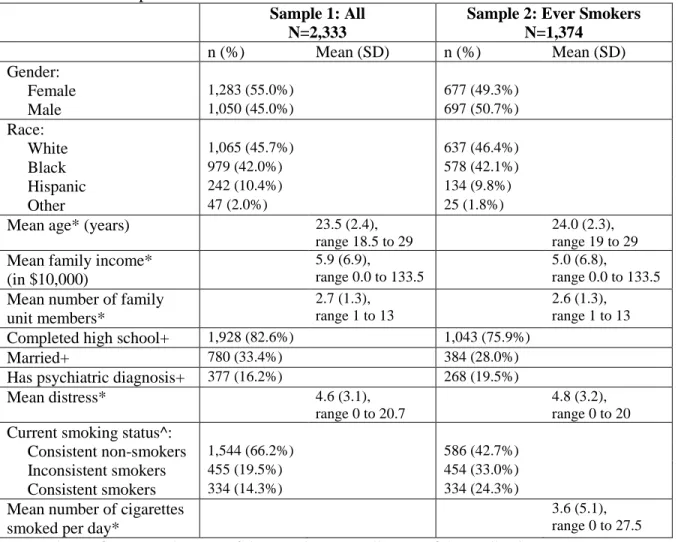
Table 4.Aim 2 Sample Characteristics... 60
Table 5.Odds of Being a Current Smoker (N=2,330) ... 68
ix
LIST OF FIGURES
Figure 1. Full Conceptual Model ... 19
Figure 2. Aim 1 Conceptual Model ... 26
Figure 3.Expected Counts of the Number of Cigarettes Smoked by Diagnosis ... 43
x
LIST OF ABBREVIATIONS
CI Confidence interval
ICC Intraclass correlation coefficient
N Sample size, entire sample
n Sample size, subset of entire sample
OR Odds ratio
PSID Panel Study of Income Dynamics
SD Standard deviation
SES Socioeconomic status
TA Transition to Adulthood Supplement
1
CHAPTER 1: INTRODUCTION AND RESEARCH QUESTIONS
Cigarette Smoking and Psychological Health
Tobacco use continues to be the leading cause of preventable death in the U.S.,
responsible for theloss of 440,000 lives each year.1 While the prevalence of tobacco use has
declined in the general population in the past several decades, it has not significantly declined
among those with symptoms of poorer psychological health.2 Individuals with indications of
poorer psychological health, including both diagnosable mental health conditions (such as
depression or anxiety disorders) and high levels of psychological distress, are more likely to
smoke and to experience nicotine dependence than those without any indications of poorer
psychological health.1,3-8 Currently, the prevalence of smoking is about 18% in the general
population,9 but is 36.1% among adults with any mental health condition.10 While those with any
mental health condition comprise 28.3% of the U.S. population, they make up 41% of current
smokers and nearly 60% of ever daily smokers.11 Thus, there is a significant disparity in tobacco
use by psychological health among adults in the U.S.
The positive relationship between psychological health and smoking persists across
different types of psychological health constructs, including varying levels of psychological
distress,12 as well as several clinically diagnosed mental illnesses, such as Post-Traumatic Stress
Disorder (PTSD),13 depression,14 and anxiety.3 In addition to being at greater risk of smoking,
people with indications of poorer psychological health are less likely to successfully quit
2
with poorer psychological health increase their susceptibility to and the severity of
tobacco-related diseases, like lung cancer and cardiovascular disease.15 Thus, understanding the
relationships between smoking and psychological health are important to address a critical public
health disparity.
While smoking is often conceptualized in the theoretical and empirical literature as a
coping response to deal with unpleasant symptoms of poorer psychological health (an
explanation developed further in Chapter 2), there is some mixed research on the directionality
of this relationship. Some studies suggest that smoking and its resultant withdrawal symptoms
may actually exacerbate symptoms of poorer psychological health in the long term, while
providing temporary relief, promoting strong nicotine addiction among those using cigarettes to
avoid unpleasant withdrawal symptoms.5,16,17 Specifically, smokers report experiences of
improvements in mood and reduced irritability and tension after smoking;16 however, while
symptoms such as anxiety or depressed mood may be somewhat alleviated immediately after
smoking, these symptoms may be heightened by nicotine withdrawal as an individual craves
their next cigarette. Some longitudinal (although not prospective) studies have found smoking or
nicotine dependence to predict depression,18-20 while others have found the reverse.21
In reality, this relationship is likely bidirectional;22,23 for example, a 5-year longitudinal
study of young adults found both that a history of major depression at baseline predicted daily
smoking, and that a history of daily smoking at baseline predicted major depression.24 Other
research suggests that smoking initiation prior to the onset of a mental health condition may be in
response to genetic predisposition that exists before recognizable symptoms of mental illness
develop.25 In other words, the effect of psychological health on smoking is likely due to both
3
factors. Overall, while smoking cigarettes, or adapting the body to the intake of nicotine, is more
damaging than therapeutic over time,26 it is still often used as a coping mechanism to temporarily
manage symptoms of poorer psychological health.
Defining Psychological Health
One challenge to understanding the relationships between psychological health and
smoking is that across studies, psychological health is defined in different ways. Two important
conceptualizations of psychological health include diagnoses of particular mental health
conditions that fit clinical definitions, and levels of psychological distress experienced at a
particular point in time.
Psychiatric diagnosis. Perhaps most commonly, psychological health is thought of as
mental health or illness, or specifically the presence or absence of a particular diagnosable
condition. Conditions most commonly measured in the smoking literature include emotional
disorders, such as schizophrenia,25 nervous conditions, including anxiety,27 and other psychiatric
conditions, such as depression.24 Several prior studies have demonstrated the strong link between
many different types of psychiatric conditions and smoking.11
Psychological distress. Separate from clinical diagnoses of mental health conditions,
other often less severe indications of poorer psychological health, such as psychological distress,
may also affect behavioral outcomes such as smoking.28,29 Psychological distress reflects a range
of felt symptoms of anxiety, depression, worry, fatigue, and thoughts of death, among others,
whether or not such symptoms are present at clinically significant levels.28 Psychological distress
further reflects both distress experienced in response to life events, such as traumatic events, and
trait neuroticism, or one’s proneness to experience psychological distress.30 In a study of
4
diagnosis), trait neuroticism was shown to be associated with avoidant coping, lack of
confidence in self-restraint to use substances, and reported triggers of substance use including
negative emotional states, social rejection, and tension.30 It has also been argued that proneness
to psychological distress reflects a biological predisposition towards both depression and
smoking.31
This concept of psychological distress, while not reflective of a clear, specific
diagnosable condition, is important because it is not only severe mental illnesses that predict
smoking; on a continuum, psychological distress has been shown to be positively associated with
both likelihood of smoking and the number of cigarettes smoked per day.12 Thus, distress is an
important component of psychological health in the context of smoking, distinct from mental
health or illness. In two separate studies, this dissertation investigated the links between
psychological health, conceptualized both as the presence or absence of a mental health
condition and level of psychological distress, on smoking.
Young Adulthood as a Critical Period
Smoking behaviors and symptoms of poorer psychological health often develop as
adolescents transition into young adulthood, suggesting this is a critical period that shapes
smoking over the life course. Approximately 80% of regular smokers initiate smoking before age
18,32 and nearly 100% before age 26.1 Further, those who continue smoking into young
adulthood are at greatest risk of being a regular smoker in later adulthood and experiencing
lifetime tobacco-related diseases and premature death.33,34 Young adulthood is also a critical
period for the emergence of indications of poorer psychological health; three quarters of all
lifetime cases of mental health conditions start by age 24,35 and young adults have been shown to
5
of poorer psychological health from adolescence to young adulthood has been shown to predict
continued smoking in young adulthood.36 Furthermore, poorer psychological health in young
adulthood has been linked to both current and lifetime nicotine dependence.37 Overall, young
adulthood is a critical period during which to study both smoking and psychological health.
Furthermore, the impact of psychological health on smoking may not be consistent across
all of young adulthood; influences on smoking may change as individuals age from 18 to 30
years over this period. For example, one study of smoking trajectories from adolescence to
adulthood found that among those who sharply increased their smoking after age 18, previously
protective factors (such as having a stable nuclear family and high levels of parental education)
seemed to lose their effectiveness by young adulthood.38 Thus, examining smoking levels at the
outset of young adulthood and smoking growth rates throughout young adulthood are important
to understanding the progression of smoking, also called smoking development or growth in this
dissertation, and the impact of psychological health on this smoking development.
State Cigarette Excise Taxes
In tobacco control, one of the most successful and well-researched strategies to reduce
smoking on a population level is to increase taxes, and therefore prices, of cigarettes.39-41 Over
the past several decades, state and federal taxes have increased; between 2002 and October 2015,
47 states and DC enacted more than 120 separate increases in state cigarette excise taxes.42 Since
2005, the federal cigarette excise tax has increased 3 times, including a jump from 39 cents per
pack to its current rate of $1.01 in 2009,43 with a resulting decrease in smoking.44 Cigarette
taxation as a tobacco control strategy is regarded as being particularly effective among young
people, who are often more price sensitive consumers than older adults.44,45 Studies have shown
6
smoking cessation,48 and reducing the number of cigarettes smoked among smokers1,41 (although
not all studies have found this49,50). Overall, raising the price of cigarettes through state and
federal cigarette excise taxes is seen as an effective approach to reducing smoking, despite some
mixed results in the literature. However, based on continuously high rates of smoking among
those with poorer psychological health, it is possible that raising state cigarette excise taxes has
not been as effective among this sub-population of young adults. If individuals with poorer
psychological health view cigarettes as necessary for self-medication to relieve unpleasant
symptoms of poorer psychological health, they may be less sensitive to price changes than their
peers with better psychological health.
Research Questions and Aims
This dissertation tests how psychological health impacts smoking development, and the
effect of state cigarette excise taxes on smoking behavior, in young adulthood, using longitudinal
data from a national sample. Specifically, Aim 1 examined how psychological health explained
variability between individuals around a mean smoking trajectory as individuals age through
young adulthood, and how perturbations in psychological health within individuals over time
change individual smoking trajectories as well. Aim 2 investigated the impact of state cigarette
excise tax rates on young adult smoking behavior, and how psychological health moderates this
relationship. In both aims, two facets of psychological health were examined: a dichotomous
indicator of self-reported psychiatric diagnosis and a continuous measure of psychological
7 Research Question 1
What is the form of the average smoking trajectory among young adults as they age from
18 to 30 years of age, and to what extent does psychological health explain differences in
smoking between and within individuals over time?
Aim 1: To determine the nature of the average trajectory of smoking among young
adults, and the degree to which psychological health explains differences in smoking between
and within individuals throughout young adulthood.
Aim 1a: To determine the nature of change (linear or quadratic) in smoking over
time on average among young adults, and whether there is random variability
around the intercept and slope of this trajectory.
Aim 1b: To examine between-individual effects of self-reported diagnosis on
smoking by determining whether self-reported diagnosis predicts variability
between individuals in the intercept and slopes of a mean smoking trajectory over
young adulthood.
Aim 1c: To examine between-individual effects of personal average
psychological distress on smoking by determining whether personal average
psychological distress predicts variability between individuals in the intercept and
slopes around the mean smoking trajectory over young adulthood.
Aim 1d: To examine within-individual effects of distress changes on smoking by
determining whether perturbations in distress from a person’s average distress
8 Research Question 2
To what extent do state cigarette excise tax rates differentially impact smoking for young
adults based on their psychological health?
Aim 2: To determine whether psychological health moderates the relationship between
state cigarette excise tax rates and smoking among young adults.
Aim 2a: To determine whether state cigarette excise tax rates impact smoking
among young adults in a national sample between 2007 and 2013.
Aim 2b: To determine whether having a self-reported psychiatric diagnosis (e.g.
anxiety, depression) moderates the expected inverse relationship between state
cigarette excise tax rates and smoking among young adults.
Aim 2c: To determine whether psychological distress (as measured by the Kessler
6 scale of Nonspecific Psychological Distress)51 moderates the expected inverse
relationship between state cigarette excise tax rates and smoking among young
adults.
Implications for Tobacco Regulatory Science and Intervention
The purpose of this research is to better understand first, how psychological health
influences the trajectory of smoking behavior in young adults, and second, whether
psychological health impacts the responsiveness of young adults to changes in prices of
cigarettes. Both of these research questions have clear implications for tobacco regulatory
science and interventions.
Despite tobacco control successes in reducing smoking among the general population
over the past several decades,40 disparities persist such that those with symptoms of poorer
9
psychological health.8 Much is left to be understood in terms of how psychological health
impacts the development of smoking over young adulthood, a critical period for determining
continued regular smoking. Understanding how psychological health affects smoking trajectories
as young adults age may suggest times (for example, towards early or late young adulthood) at
which psychological health and smoking cessation services may be especially needed to limit
smoking over the lifetime. Furthermore, teasing apart how psychological health affects
variability between individuals around a mean smoking trajectory, as well as within individuals
over time, may help identify different audiences for and types of intervention strategies.
Specifically, if one’s average psychological health during young adulthood affects variability
between individuals in smoking at the outset of young adulthood and over time, this would
indicate that some individuals are predisposed to smoke more, given their generally lower levels
of psychological health. This finding could suggest, for example, that guidelines for mental
health practitioners include counseling for smoking prevention or cessation services as part of
initial mental health diagnoses. On the other hand, if changes to individuals’ smoking trajectories
are observed in response to perturbations in psychological health over young adulthood, perhaps
indicative of going through a particularly challenging event or situation, this suggests that
individuals are reactive to changes in psychological health, independent of their overall “normal”
or average level of psychological health. Smoking prevention and cessation programs could then
be developed and tailored for groups or communities experiencing stressful events, such as mass
layoffs or natural disasters, or in the context of stressful life transitions, like failing coursework
or losing a job. Both of these results therefore point to distinct strategies for intervention
10
With respect to one potential tobacco control intervention strategy, state cigarette excise
taxes, while prior research has established that taxing cigarettes effectively reduces population
levels of smoking, it is unclear if this strategy is exacerbating disparities in smoking among
young adults with poorer psychological health. If young adults are less responsive to state
cigarette excise taxes when they show symptoms of poorer psychological health, it would appear
that existing state tax policies are not adequately reaching this population. In fact, by raising
prices on a product that people in poorer psychological health continue to purchase, such policies
could unintentionally create financial hardships, a stressor that could trigger additional
consumption and dependence among an already vulnerable population. Thus, understanding if
the effectiveness of state taxes in reducing smoking is moderated by psychological health is key
to reducing the smoking disparity by psychological health. Such results would provide evidence
that additional policy approaches, and/or interventions to help young adults cope with symptoms
of poor psychological health and stop smoking, are needed to protect susceptible individuals
from tobacco-related disease and a lifetime of nicotine dependence. If, contrary to expectations,
young adults with poor psychological health do not appear to respond differentially to state
taxes, increasing state cigarette taxes may be shown as a feasible and effective strategy to reduce
tobacco use in this population.
Overall, this research will address serious gaps in the literature about the relationships
among smoking, psychological health, and state tobacco control policy. This research provides
crucial information about the nature of the relationship between psychological health and
smoking development, as well as concrete evidence of the need to pursue additional and new
approaches to reduce smoking among young adults with poorer psychological health. This
11
policies and programs to prevent addiction, tobacco-related disease, and premature death among
12
CHAPTER 2: THEORY AND CONCEPTUAL MODEL
Transactional Model of Stress and Coping
A possible explanation for the higher rates of smoking among those with poorer
psychological health is posited by the Transactional Model of Stress and Coping.52 In this model,
feelings of stress, stemming from stressful experiences, distress, or symptoms of a mental health
condition, lead to healthy or unhealthy coping responses, which may include smoking.52 This
theory posits that stress disrupts homeostasis, or the balance within the body, affecting physical
and psychological states, such as mood or emotion.52 The impact of a source of stress is mediated
by an individual-level appraisal of the significance of the stressor (in the primary appraisal
process), and next, his/her coping resources, such as social support, and perceived ability to
change the situation (in the secondary appraisal process). Actual coping efforts deployed in
response to these appraisals may include problem management strategies to change the stressful
situation, and emotional regulation strategies to change the way one thinks or feels.52 Further,
coping responses may be adaptive, such as seeking instrumental social support or engaging in
relaxation techniques, or maladaptive, such as avoidance of the source of stress and denial.53
Smoking may emerge as a maladaptive emotion regulation coping response, leading to
(temporary) relief or improved mood.52 In this process, those with poorer psychological health
are likely both to have higher exposures to significant stressors and fewer resources to change
their situations, affecting the primary and secondary appraisal processes and resulting coping
13
With respect to types of stress, exposure to stressful events is linked to both smoking and
poorer mental health.54 One study found that reporting exposure to five or more adverse
childhood experiences (e.g., emotional, physical, and sexual abuse, a battered mother, parental
separation or divorce, and growing up with a substance-abusing, mentally ill, or an incarcerated
household member) was associated with earlier smoking initiation, and higher risks of current
and ever smoking. Further, the relationship between exposure to stressful events and smoking
was strong and positive with each added negative life event experienced. Additionally, current
smokers showed more problems with past-year depression than nonsmokers for any number of
experienced adverse childhood events, showing positive relationships among stress exposure,
poorer psychological health, and likelihood of smoking.54
In addition to being more likely to have experienced stressful events, those with poor
psychological health are further likely to be disadvantaged in other ways, increasing experiences
of chronic stress. These include disproportionately living in poverty,55 experiencing
discrimination, victimization, and social exclusion, and having higher risk of premature mortality
from other health conditions.56 Overall, those with poorer psychological health are exposed to
greater stress than those without mental illness, stemming either from psychiatric symptoms of
the illness itself (such as anxiety or depressive symptoms), or from conditions (such as
stigmatization or job loss) that may coexist with it.11 Thus, these higher levels of stress increase
the need for coping responses among those with poorer psychological health.
While experiencing higher levels of stress, those with poorer psychological health further
may be less able to cope with unpleasant symptoms than those with better psychological health,
as their perceived (and actual) ability to access resources and change a situation are diminished.
14
them, including social support and financial security,57 thus affecting the secondary appraisal
process of the Transactional Model of Stress and Coping where resources and perceived ability
to change a situation are assessed. As a result, those with indications of poorer psychological
health are likely to engage in less adaptive coping strategies, increasing their risk of smoking as a
coping response.53
Young adults with poorer psychological health are thus more likely to have more stress,
to have fewer coping skills and resources, and, as shown by empirical evidence, to turn to
smoking for relief from unpleasant symptoms, than are young adults with better psychological
health. Maladaptive coping strategies (e.g., avoidance, self-blame, denial) as compared to
adaptive coping strategies (e.g., seeking social support) are more common among young adult
smokers,58 predictive of continued smoking among young people,59 and repeatedly associated
with depressive symptoms.53,60 Similarly, with respect to diagnosed mental health conditions,
adaptive coping responses were less likely among people with schizophrenia with increasing
symptoms severity,53 and among those with a history of Major Depressive Disorder.61 Overall,
this theoretical and empirical literature shows a complex relationship between stress,
psychological health, and smoking.
The Transactional Model of Stress and Coping is also closely related to the tension
reduction hypothesis in the substance use literature, which posits that those with indications of
poorer psychological health may smoke to reduce tension and negative affect or mood.62 The
tension reduction hypothesis is useful as it does not presuppose an external source of stress, but
rather focuses on an individual’s responses to experiencing unpleasant symptoms of poorer
psychological health. In support of this model, negative affect has been linked to both greater
15
experience psychological distress have also been shown to smoke more to control negative
affect.64 Young adults specifically have been shown to use substances to regulate negative affect
as well.62 A study of college students found that the link between higher depressive symptoms
and higher smoking was fully mediated by expectations that smoking would reduce nervousness,
improve mood, and help cope with feelings of being upset.65 Thus coping with stress by lowering
feelings of tension and improving mood have been shown to be important motivations for
smoking behavior, particularly among those with poorer psychological health.
The empirical literature showing higher exposure to stress, fewer coping resources, and
the use of smoking as a coping response by those with poorer psychological health supports the
Transactional Model of Stress and Coping and tension reduction hypothesis as potential
explanatory models of higher smoking in this population. Research framed by both of these
models shows that those with poorer psychological health are exposed to greater stress, have
fewer coping resources, and are often less able to effectively regulate their negative affective
experiences or unpleasant feelings in healthy ways, compared to their peers with better
psychological health, and thus are more prone to smoke as a coping response.
Psychological Health and Smoking Development in Young Adulthood
Poorer psychological health may affect the development of young adult smoking in
several ways, as explained by theoretical models, such as the Transactional Model of Stress and
Coping and tension reduction hypothesis, and supported by empirical evidence. Smoking in
general increases as individuals age through young adulthood, and tends to decrease slightly by
the mid to late twenties.66 However, among those with poorer psychological health, a leveling off
or decrease may not occur, given the higher levels of stress, lower ability to cope in adaptive
16
addition to levels of psychological health and smoking being associated, increases in indications
of poorer psychological health may be associated with increases in smoking. Thus, psychological
health may explain individual variability in smoking over young adulthood, such that those with
indications of poorer psychological health, whether averaged or reflected by perturbations during
young adulthood, may smoke more and increase smoking at higher rates than those without such
indications. These relationships will be tested using growth curve models in Aim 1 of this
dissertation (Chapter 3).
State Cigarette Excise Taxes, Economic Theory, and Smoking in Young Adulthood
One of the most well documented and effective tobacco control policies to reduce
smoking in the population is taxation of cigarettes.39-41 To explain the empirical finding of higher
taxes lowering smoking among young adults, traditional economic theory posits that consumer
demand for cigarettes is elastic, meaning that as prices go up, demand for cigarettes goes down.67
Specifically, the price elasticity, or percent change in consumption from a 1 percent increase in
the price, is generally found to be around 0.4 for cigarettes, indicating that for every 10%
increase in the cost of cigarettes, consumption of cigarettes decreases by about 4%.45 Overall,
economic theory assumes a rational individual who makes conscious decisions about where to
spend his or her financial resources to account for the inverse relationship between states excise
cigarette taxes and smoking among young adults.
Economic theory explains too how young adults, compared to older adults, will be
especially responsive to changes in cigarette prices,44,45,68 as they have fewer financial resources,
and may be less addicted to cigarettes having smoked for a shorter period of time.67 As a result,
the value of money to them is high, and the value of cigarettes relatively low, compared to some
17
Yet the Transactional Model of Stress and Coping and tension reduction hypothesis
indicate that motives for smoking are often not purely rational or driven by financial
calculations; they are instead complex, involving a range of biological, cognitive, and behavioral
factors.69 Behaviorally, emotional arousal, including symptoms of mental health conditions and
distress, limit one’s capacity to act rationally.70 Biologically, nicotine withdrawal symptoms
promote addiction to cigarettes and prompt continued smoking, as do expectations that cigarettes
will help one to cope with everyday challenges by improving mood, reducing stress and anxiety,
and improving concentration and performance.69 Thus, smoking is an addictive behavior, both
physically through the effects of nicotine, and behaviorally, through its positive effects of
reducing feelings of stress and negative affect.
Those with poorer psychological health may be especially prone to continued smoking,
as they have been shown to be biologically predisposed to be nicotine dependent,3 have fewer
cognitive and social resources to effectively cope with unpleasant mood or emotions, leading to
smoking as a coping strategy,57 and may lack the capacity to make fully rational decisions.70
Thus the decision to continue buying cigarettes, despite price increases as a result of state
cigarette excise taxes, is likely to be a biologically and emotionally driven one, more so than a
rational choice about where to best spend one’s resources. The impact of psychological health on
the usually negative relationship between state cigarette excise taxes and young adult smoking
was tested in Aim 2 of this research (see Chapter 4).
Conceptual Model and Hypotheses
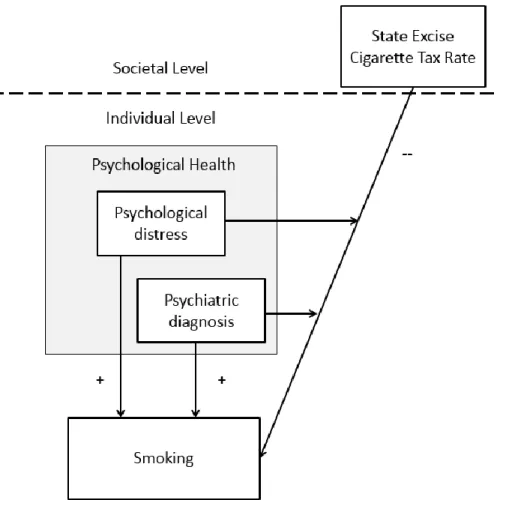
Figure 1 represents a depiction of the key relationships hypothesized in this dissertation.
On a societal level, state cigarette excise taxes have been shown to reduce population smoking,
18
general, poorer psychological health is likely to have a positive relationship with smoking status
and amount. Hypotheses for each sub-aim are below; based on past research, some of these
hypotheses are more specific than others.
Hypotheses: Aim 1
Aim 1a. Consistent with previous literature, the average smoking trajectory will show
general increases in smoking amount over time from age 18 until the mid to late 20s, then
decrease through the end of young adulthood at age 30.
Aims 1b and 1c. Psychological health (conceptualized separately as self-reported
diagnosis of a mental health condition and average personal distress) will account for variability
between individuals in the intercept and slope around a mean smoking trajectory, such that those
with indications of poorer psychological health will smoke more at the outset of young adulthood
and at higher rates over time.
Aim 1d. Perturbations in psychological health (measured by distress changes relative to
personal average distress) will alter individual smoking trajectories, such that smokers will
smoke more in response to “dips” in psychological health relative to their personal mean
psychological health in young adulthood.
Hypotheses: Aim 2
Aim 2a. There will be an inverse relationship between state cigarette excise tax amount
and smoking over young adulthood.
Aims 2b and 2c. The negative relationship of state cigarette excise tax rates and smoking
will be moderated by psychological health, such that those with poorer psychological health
(measured by self-reported psychiatric diagnosis and distress) will reduce their smoking behavior
19
20
CHAPTER 3: STUDY 1 – TRAJECTORIES OF YOUNG ADULT SMOKING BY PSYCHOLOGICAL HEALTH
Introduction
Young adulthood is a critical time for determining smoking over the life course, given
that individuals who continue to smoke throughout this period are likely to remain regular
smokers throughout their lives, and be more susceptible to a host of tobacco-related
diseases.15,33,34 There are striking disparities in smoking by psychological health, such that
individuals with any mental health condition comprise nearly 60% of ever smokers, yet make up
only 28.3% of the U.S. population.11 If poorer psychological health (i.e., distress or mental
illness) is experienced during young adulthood, a critical time for tobacco use experimentation
and uptake, individuals may be particularly likely to become dependent on tobacco and develop
longer term smoking habits. The current research investigates how psychological health affects
smoking status and consumption across young adulthood using two important conceptualizations
of psychological health: having a diagnosis of a particular mental health condition and level of
psychological distress.
Theories such as the Transactional Model of Stress and Coping,52 and the tension
reduction theory71,72 from the substance abuse literature, explain how smoking can be used as a
coping response to reduce unpleasant feelings. In these models, feelings of stress, stemming from
stressful experiences, distress, or symptoms of a mental health condition, lead to healthy or
unhealthy coping responses, which may include smoking.52 Empirical research framed by both of
21
stress,54 have fewer coping resources,57 and are often less able to effectively regulate their
negative affective experiences or unpleasant feelings in healthy ways, compared to their peers
with better psychological health, and thus are more prone to smoke as a coping response.53
Overall, those with poorer psychological health are exposed to greater stress than those
with better psychological health, stemming either from unpleasant symptoms (such as anxiety or
depressive symptoms), or from situations (such as stigmatization or job loss) that may coexist
with such symptoms.11 Those with poorer psychological health are likely to have experienced
more stressful events,54 and to be disadvantaged in other ways, increasing experiences of chronic
stress, such as disproportionately living in poverty,55 experiencing discrimination, victimization,
and social exclusion, and having higher risk of premature mortality from other health
conditions.56 Thus, these higher levels of stress increase the need for coping responses among
those with poorer psychological health.
While experiencing higher levels of stress, young adults with poorer psychological health
also may be less able to cope with unpleasant symptoms than those with better psychological
health, as their perceived (and actual) ability to access resources and change a situation are
diminished,57 making them more likely to engage in less adaptive coping strategies, including
smoking.53 Maladaptive coping strategies (e.g., avoidance, self-blame, denial) as compared to
adaptive coping strategies (e.g., seeking social support) are more common among young adult
smokers,58 predictive of continued smoking among young people,59 and repeatedly associated
with depressive symptoms53,60 and mental health conditions.53,61
With respect to age, while many regular smokers start smoking before the age of 18,
smoking prevalence continues to increase in young adulthood.34 When modeled linearly,
22
to generally increase over young adulthood as well.15 Research that has modeled smoking over
young adulthood in quadratic, not linear form, shows general patterns of increasing smoking, but
also a leveling off and decreasing in smoking by the later years of young adulthood.66,73
While general patterns of increasing and later decreasing smoking are observed at a
population level, existing research further suggests differences in smoking progression
throughout young adulthood by indicators of psychological health. Studies using growth mixture
models to group individuals into a set of homogenous smoking trajectories have found different
patterns of smoking among different groups of young adults. One study identified six distinct
trajectories of smoking among young adults aged 13 to 23: calling the prototypical trajectory
groups “nonsmokers”, “stable highs,” “early increasers,” “late increasers,” “decreasers,” and
“triers.”38 This work and similar studies have shown that participants who reported symptoms of
poorer psychological health were disproportionately found among groups that smoked (at all) at
higher rates and increase their smoking amount over young adulthood38,74,75 and those that
initiate smoking during young adulthood.76 From these growth mixture modeling studies, it is
clear that there are distinct patterns of smoking development among different groups of
individuals, and that poorer psychological health increases the likelihood of being in a group that
smokes more over time.
Distinct from growth mixture modeling studies, growth curve model studies show
individual differences in smoking development around a mean smoking trajectory. One previous
study has used a growth curve model approach to track smoking from adolescence to young
adulthood in a manner similar to was done in the current study. In this work, Fuemmeler and
colleagues (2013) found that psychological health explained individual variability in the
23
trajectory, such that having indications of lower psychological health, in this case, the presence
of depressive symptoms, were associated with greater probability of being a smoker at age 13
and reduced deceleration in the likelihood of smoking towards the end of young adulthood.66
However, having depressive symptoms at baseline did not explain any individual variability in
the intercept and slope of the mean smoking amount trajectory, measured by number of
cigarettes smoked per day.66 Overall, this study showed that having indications of poorer
psychological health predicted smoking status at the outset of young adulthood and over time
throughout young adulthood, both with distinct intervention implications.
While providing important evidence that psychological health explains individual
differences in current smoking over young adulthood, this research leaves some limitations to be
addressed in the current study. Fuemmeler and colleagues (2013) used only a dichotomous
measure of the presence or absence of baseline depressive symptoms at age 13 to test whether
psychological health explains individual variability around an average smoking trajectory.77 As a
result, the study failed to capture a full range of levels and types of psychological health. If other
aspects of psychological health, like levels of distress, have additional incremental impacts on
smoking status and amount, as previous research has found,12 this study may have
underestimated its effects. Furthermore, the one-time measurement of depressive symptoms does
not allow for the assessment of changes in psychological health over time, especially important
during the key developmental period of young adulthood. In contrast, longitudinal data on
psychological health allows for more accurate assessment of average psychological health over
young adulthood with multiple measures over time, as well as analyses of within-individual
24
The current study builds on and addresses limitations of this past research by using two
measures of psychological health, including one that varies (and is assessed at multiple points)
over time. Examining the effects of two types of psychological health allow for a more robust
understanding of the types of, and extent to which, psychological health affects smoking in
young adulthood. The inclusion of a time-varying measure helps distinguish effects between
young adults and within young adults in smoking over time. Specifically, to assess the nature of
this relationship between psychological health and smoking, psychological health was parsed
into its stable, between-person component, to account for lower average levels of psychological
health observed in some individuals compared to others, and its short-term, within-person
component, capturing perturbations in psychological health within individuals over young
adulthood. The overall research question investigated, followed by specific aims below, is: What
is the form of the average smoking trajectory among young adults as they age from 18 to 30
years of age, and to what extent does psychological health explain differences in smoking
between and within individuals over time?
Aim 1: To determine the nature of the average trajectory of smoking among young
adults, and the degree to which psychological health explains differences in smoking between
and within individuals throughout young adulthood.
Aim 1a: To determine the nature of change (linear or quadratic) in smoking over
time on average among young adults, and whether there is random variability
25
Aim 1b: To examine between-individual effects of self-reported diagnosis on
smoking by determining whether self-reported diagnosis predicts variability
between individuals in the intercept and slopes of a mean smoking trajectory over
young adulthood.
Aim 1c: To examine between-individual effects of personal average
psychological distress on smoking by determining whether personal average
psychological distress predicts variability between individuals in the intercept and
slopes around the mean smoking trajectory over young adulthood.
Aim 1d: To examine within-individual effects of distress changes on smoking by
determining whether perturbations in distress from a person’s average distress
predict time-specific deviations from an individual’s smoking trajectory.
Conceptual Model
Synthesizing the theoretical and empirical literatures, self-reported diagnosis of a
psychiatric condition and/or psychological distress can lead to smoking as a coping strategy.
From past research, smoking is expected in general to increase across most of young adulthood,
and to decrease in later years. Further, for those that use smoking as a coping mechanism,
psychological health may explain some variability between and within individuals in smoking
status and amount over young adulthood. These relationships were tested using a growth curve
26
Figure 2. Aim 1 Conceptual Model
Methods
Data Source
The Panel Study of Income Dynamics (PSID) is a longitudinal panel survey that has
tracked a probability sample of US families since 1968.78 Surveys are now conducted every other
year, and the sample continues to be reasonably representative of the US population today.79
Children of the original families that form their own households are tracked as well, increasing
the sample size each year, from about 5,000 families in 1968 to over 9,000 in 2013. In 1999,
health behavior questions, including cigarette smoking, were added. To account for the changing
demographic nature of the country, immigrant samples were added in 1990 (a Latino-only
sample, dropped after 1995), 1997 (a more representative sample of 441 post-1968 immigrant
families), and 1999 (an additional 70 families). In each household, only one respondent is
27
range of family data as well as more extensive information on financial, employment, mental
health, behavioral, and other variables on the respondent. In households with a head and partner,
the respondent is asked to speak for his/her spouse’s smoking status, but only respondents are
asked about their own mental health. Thus, only respondents each year were tracked, whether
they were designated as a head or partner in the PSID main interview.
The current research used data both from the PSID main interview and from a special
supplement focused on young adults. The main interview tracks information about heads of
households and their partners; the Transition to Adulthood (TA) supplement tracks information
about young adults aged 18 to 24 years who are not yet heads of or partners in their own
households. The TA supplement was added to the PSID in 2005 and has been conducted via
telephone interview in parallel with the PSID every other year shortly after completion of the
main interview. The main interview and TA supplement collect some of the same types of
information, including smoking behavior and psychological health, although differ in several
ways as well; the main interview collects data on areas such as education, income, employment,
health, fertility, and household expenditures of the heads of household. Topics covered in the TA
supplement include psychological functioning, marriage, family, responsibilities, employment
and income, education and career goals, health, social environment, religiosity, and outlook on
life (Panel Study of Income Dynamics, 2014). This study used smoking and psychological health
data from all available waves of the PSID main interview and TA supplement beginning in 2007
(i.e., 2007, 2009, 2011 and 2013). Prior to 2007, psychological health data was not consistently
28 Analytical Sample
To model the impact of psychological health on two distinct smoking outcomes, current
smoking status and number of cigarettes smoked, two analytical samples were created. Models
of smoking amount included all eligible observations of young adults, and models of the number
of cigarettes smoked included those who had reported currently smoking or ever being a smoker,
before or during the study period. As most smoking initiation occurs before age 18,1 these ever
smoker individuals were thought to be most susceptible to using smoking as a coping
mechanism; subsetting our sample in this way allowed us to test the impact of psychological
health on smoking amount among this important subgroup.
The analytical sample includes the 2007 cohort of young adults aged 18 to 24 years, as
well as any new individuals aged 18 or 19 who enter the PSID (TA or main interview) in 2009.
This group was followed across years 2007, 2009, 2011, and 2013 until they were aged 22-30 by
2013. In this sample, 2,490 were respondents (i.e. heads, partners, or TA respondents) that had
more than one age-eligible observation to assess change over time. To keep the sample
consistent across models, observations missing on key variables were dropped (N=35, 1.4% of
eligible respondents), as were any cases that did not have two or more age-eligible responses as a
result (N=107, 4.3% of eligible respondents). Multiple imputation was not performed as less than
6% of eligible respondents had missing data and were dropped from analyses.
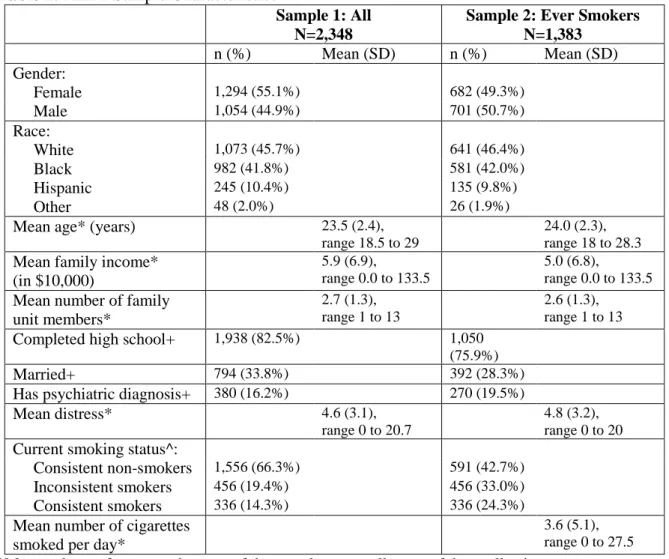
The final analytical sample size was 2,348 people who were observed collectively a total
of 7,730 times (Table 1). Overall, this sample is fairly gender-balanced (55.1% female, 44.9%
male), mostly made up of non-Hispanic White (45.7%) and Black (41.8%) individuals compared
to Hispanic (10.4%) and “Other” (2.0%) racial groups, aged 23.5 on average, with a wide range
29
(82.5%) completed high school and 33.8% were married at any point during data collection.
With respect to psychological health, 16.2% of the sample reported having a psychiatric
diagnosis, and the mean of personal mean distress scores was 4.6 on a scale of 0 to 24. With
respect to smoking status, the majority of the sample were consistent non-smokers (66.3%),
19.4% currently smoked at least one time during data collection, and 14.3% were consistent
smokers.
To meaningfully assess the impact of psychological health on smoking amount among
ever smokers, thought to be especially susceptible to turning to smoking as a coping response
relative to those who had never smoked, a second analytical sample was created of young adults
who reported ever being a smoker either prior to or during the study period. An indicator
variable of ever smoking, during one of the observation periods or at a point prior to data
collection, was created and used to identify the second sample. This second sample was also
created also to account for the large number of consistent nonsmokers in the sample as a whole.
The analytical sample size for current or ever smokers was 1,374 individuals, observed a
total 3,349 times (Table 1). Overall, this sample is fairly gender-balanced (49.3% female, 50.7%
male), mostly made up of non-Hispanic White (46.4%) and Black (42.0%) individuals compared
to Hispanic (9.8%) and “Other” (1.9%) racial groups, aged 24 on average, with a wide range of
family incomes (mean: $50,000), living with an average of 2.7 family unit members. Most
(75.9%) completed high school and 28.3% were married at any point during data collection.
With respect to psychological health, 19.5% reported having a psychiatric diagnosis, and the
mean of personal mean distress scores was 4.8 on a scale of 0 to 24. With respect to smoking
30
smoked at least one time during data collection, and 24.3% were consistent smokers. The mean
number of cigarettes smoked per day was 3.6.
Table 1. Aim 1 Sample Characteristics
Sample 1: All N=2,348
Sample 2: Ever Smokers N=1,383
n (%) Mean (SD) n (%) Mean (SD) Gender:
Female 1,294 (55.1%) 682 (49.3%)
Male 1,054 (44.9%) 701 (50.7%)
Race:
White 1,073 (45.7%) 641 (46.4%)
Black 982 (41.8%) 581 (42.0%)
Hispanic 245 (10.4%) 135 (9.8%)
Other 48 (2.0%) 26 (1.9%)
Mean age* (years) 23.5 (2.4), range 18.5 to 29
24.0 (2.3), range 18 to 28.3
Mean family income* (in $10,000)
5.9 (6.9), range 0.0 to 133.5
5.0 (6.8),
range 0.0 to 133.5
Mean number of family unit members*
2.7 (1.3), range 1 to 13
2.6 (1.3), range 1 to 13
Completed high school+ 1,938 (82.5%) 1,050 (75.9%)
Married+ 794 (33.8%) 392 (28.3%)
Has psychiatric diagnosis+ 380 (16.2%) 270 (19.5%)
Mean distress* 4.6 (3.1),
range 0 to 20.7
4.8 (3.2), range 0 to 20
Current smoking status^:
Consistent non-smokers 1,556 (66.3%) 591 (42.7%)
Inconsistent smokers 456 (19.4%) 456 (33.0%)
Consistent smokers 336 (14.3%) 336 (24.3%)
Mean number of cigarettes smoked per day*
3.6 (5.1), range 0 to 27.5
*Mean values refer to grand means of the sample across all years of data collection
+Refers to having reported completing high school, being married, or having a diagnosis at any wave of data collection
^As measured across available data points for each individual. Consistent non-smokers are those who were not current smokers at any point of data collection (although may have reported being an ever smoker in their lifetime). Inconsistent smokers have reported current smoking during at least one (but not all) available data points. Consistent smokers presorted current smoking at all waves at which they were observed.
Measures
To best capture the effects of psychological health on smoking behavior, this research
31
measures of psychological health (a dichotomous measure of having been diagnosed with an
emotional, nervous, or psychiatric condition and a continuous measure of psychological distress).
Dependent variable: Current smoking status. Whether a participant currently smoked
at each year of data available for each person was assessed with the question, “Do you smoke
cigarettes?” with responses “yes” and “no”.
Dependent variable: Smoking amount. Current smoking amount was measured as the
number of cigarettes smoked per day. It was based on a question asked of current smokers (in a
given year) as, “How many cigarettes per day do you usually smoke?” to which a continuous
whole-number response was given. If an individual did not report smoking at a particular wave,
their number of cigarettes smoked was coded as “0”.
Independent variable: Age. To test how smoking develops over young adulthood, age
of the respondent at the time of interview was used as an independent variable. To consider
potential non-linear effects of age, a quadratic term for age (age*age) was included in the model.
Independent variable/Moderator: Self-reported diagnosis of emotional, nervous, or
psychiatric condition. A binary indicator of ever self-reported diagnosis of any emotional,
nervous, or psychiatric problem was used, reflected by a reported “yes” to the question, “Has a
doctor or other health professional ever told you that you had any emotional, nervous, or
psychiatric problems?” An affirmative response in any wave of data in the study identified
participants with a self-reported clinically significant and diagnosed mental illness.
Using a measure of ever diagnosis across the years of data collected was chosen in part
because one may have a psychiatric condition years before it is officially diagnosed;35 this
measure captures any participants who are diagnosed at any point within the six years of the
32
Independent variable/Moderator: Psychological distress. The Kessler-6 measure of
psychosocial distress assesses the frequency with which respondents have experienced six
symptoms of psychological distress in the past 30 days feeling: (1) nervous, (2) hopeless, (3)
restless or fidgety, (4) so sad or depressed that nothing could cheer the respondent up, (5) that
everything is an effort, and (6) worthless. Response options included “all of the time”=4, “most
of the time”=3, “some of the time”=2, “a little of the time”=1, and “none of the time”=0. Scores
of each item on a 4-point scale were summed. Thus, every one unit increase in this measure
could indicate feeling a particular symptom more often, or the presence of a new symptom.
While some studies have used this variable as a dichotomous one, with a total score of 13
or greater as indicative of serious psychological distress,80,81 or a score of 5 or greater as
indicative of moderate levels of distress,28 other research has found a continuous relationship
between smoking likelihood and amount and psychological distress score.12 To best capture the
continuum of psychological distress that may lead to smoking, the current study treated the K6 as
a continuous measure, using participants’ scores from 0 to 24.
To capture variation in psychological distress across individuals (i.e., how more or less
distressed a person usually is compared to others), as well as variation in psychological distress
within individuals over time (i.e., how more or less distressed an individual is compared to his or
her average each year), two variants of the K6 were used. An individual’s personal average
distress level across all years of data collection captured between individual variation in distress,
and the amount of an individual’s positive or negative deviation from this average at each year
captured within-individual variation in distress over time.
Control variables: Gender, race/ethnicity, education, marital status, income,
33
psychological health are gender, race/ethnicity, education, marital status, income, and number of
family unit members. Also, an indicator of year of data collection was added to the model to
control for period effects. Income and year varied over time; all other controls were kept
time-stable to be consistent across all models.
Gender was indicated dichotomously by the sex of the respondent.
To measure race, participants were asked, “What is your race? Are you white; black;
American Indian or Alaska Native; Asian; Native Hawaiian or other Pacific Islander?” and
allowed to mention up to three races. Interviewers could also code for “Other” race if a
participant mentioned a race that was not on this list. Participants were coded as their first
mentioned race, to be replaced by their second or third mention only if their first mention is
missing or “Other.” As there were very small numbers of American Indians, Asians, and Pacific
Islanders, these groups were collapsed and combined with the “Other” category. A fourth
category was added to this race variable if participants responded that they were of Hispanic
ethnicity, asked in a separate question in the survey; the other racial groups included
non-Hispanic individuals only. For analyses, the reference group was non-non-Hispanic whites.
To capture a meaningful measure of education during a time when young adults are often
in the process of obtaining higher education, an indicator of whether respondents completed high
school by any wave of data collection was incorporated.
To tap into a measure of social and financial support, which can affect psychological
health and smoking, marital status,82 measured as having been currently married during any year
of data collection, was also used as a control variable.
Family income was used as an additional measure of socioeconomic status, based on
34
represents taxable income, transfer income, and social security income for the previous year
reported by all family unit members living together in a household, coded in $10,000 units. To
account for the number of people providing for and being supported by that income amount, the
number of family unit members was also included as a covariate. “Family” refers to all family
unit members living together in a household, which could be a young adult’s family of origin or
the family of the young adult if he/she no longer lives with the family of origin.
Analytic Approach
This research explored the use of a growth curve model over age, to model outcomes of
smoking status, using logistic regression, and current smoking amount among smokers, using
Poisson regression, to account for the non-normal distribution of the number of cigarettes
smoked. First, the visual nature of growth trajectories was inspected by plotting the mean
smoking trajectories over young adulthood across the sample and found to appear quadratic in
form. Next, unconditional growth models with age and age2 were fit for each of smoking
outcomes and the ICC was measured. From these unconditional analyses it was determined
whether to proceed with a multi-level model of observations (Level 1) nested within individuals
(Level 2) over time, or to use a single level model of individuals based on the relative amount of
within-individual to between-individual variation in smoking outcomes.
Time-stable and time-varying measures of psychological health were then added to the
unconditional growth model as appropriate. Two time-invariant measures of psychological
health (self-reported psychiatric diagnosis and average distress during young adulthood) were
used to assess the degree to which psychological health affects smoking between individuals. In
multi-level models, one time-varying measure (changes in distress relative to personal average
35
individuals over time. More specifically, when multi-level models were deemed appropriate, a
measure of time-specific perturbations from one’s personal average distress level were also
added to assess the intra-individual effects of distress on smoking (i.e., if distress perturbations
affect the amount smoked, independent of the effects of average distress). This method of
disaggregating the distress variable, as laid out by Aiken and West (1991),83 allows for the
separate testing of within and between individual effects of distress on smoking. Furthermore, it
can help prevent errors of inference whereby between-individual effects (e.g., individuals who
smoke more tend to have more distress), are incorrectly assumed to hold at the within-individual
level (e.g., individuals smoke more when they are more distressed). In the current research, while
symptoms of poorer psychological health are expected to have a positive relationship with
smoking, whether between or within individuals, understanding which of these two types of
effects are sizeable and significant has important intervention implications for public health
practitioners and policymakers preventing and reducing smoking among young adults.
Unconditional models. To determine the nature of change (linear or quadratic) in
smoking over time on average among young adults, and whether there is random variability
around the intercept and slope of this trajectory to warrant multilevel analyses, unconditional
models (without covariates) were tested.
The unconditional models had a two-level hierarchical structure, with Level 1
representing observations of smoking within individuals over time (time-varying), denoted with
a subscript i in the equations below, over ages, denoted by a subscript t, and Level 2 representing
the effects of person-level characteristics that are consistent within individual over time