Chapter 14
Presenting the Product
Chapter 14
Presenting the Product
•
Section 14.1 Product Presentation
•
Section 14.2 Objections
•
Section 14.1 Product Presentation
Product Presentation
Objectives
Describe the goal of product presentation List four techniques that create a lively and
effective product presentation
Key Terms layman’s terms
Product Presentation
Graphic Organizer
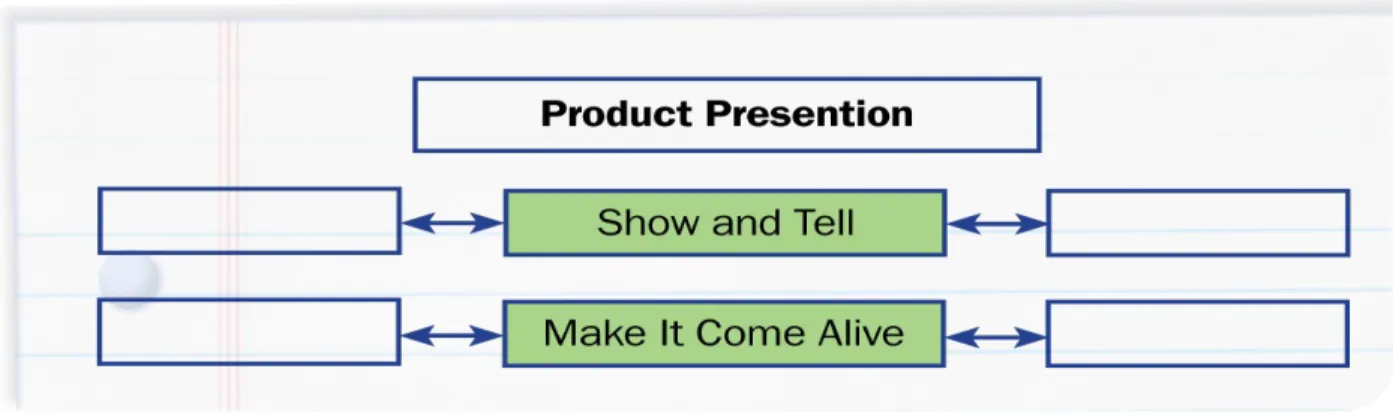
Copy this chart. Use it to take notes about how to create an effective product presentation.
Organizing the Product Presentation
When you sell, you analyze your customer’s needs and buying motives. Then you use that
information to begin framing your product presentation.
Show and Tell
Your first decision in the product presentation step is what product or products to show your
customer. Then you must think about what to say and how you are going to say it. Here, you have the opportunity to use consultative selling.
Show and Tell
After you have learned the customer’s intended use of a product, you should be able to select a
few samples that match those needs. When you do not know the customer’s price range, begin by
showing a medium-priced object.
Show and Tell
To avoid overwhelming your customer, show no more than three products at a time. Avoid unclear words such as nice, pretty, and fine.
When selling products to retail customers, you should use layman’s terms. Layman’s terms X
are words the average customer can understand.
layman’s terms Words the average customer can understand.
Make the Presentation Come Alive
There are four factors in creating an engaging product presentation:
Displaying and handling the product Demonstrating the product
Using sales aids
Involving the customer
Make the Presentation Come Alive
Creatively displaying the product is the first step in an eye-catching presentation. Handle the product with respect and use hand gestures to show the significance of certain features.
Make the Presentation Come Alive
Demonstrating the product in use helps to build customer confidence.
When it is impractical to demonstrate the actual product, you can use sales aids in your
presentation.
Make the Presentation Come Alive
Sales aids include:
• Samples and models
• Reprints of articles
• Photographs and charts
• Customer testimonials
• Warranty information
Make the Presentation Come Alive
It is best to get the customer physically involved with the product as soon as possible in the sales presentation. When you involve a customer in the sale, you help the person make intelligent buying decisions.
SECTION 14.1 REVIEW
-Objections
Objectives
Distinguish objections from excuses
Explain the five buying decisions on which common objections are based
Key Terms objections excuses objection analysis sheet paraphrase substitution method boomerang method superior-point method third-party method
Objections
Objectives
Demonstrate the general four-step method for handling customer objections
List seven specific methods of handling
objections and note when each should be used
Objections
Graphic Organizer
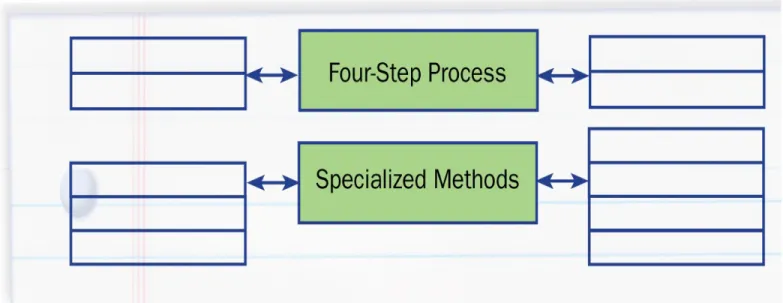
Use the chart below to take notes about ways to handle objections.
Understanding Objections
Objections X are concerns, hesitations, doubts, or
other honest reasons a customer has for not
making a purchase. Objections should be viewed as positive because they give you an opportunity to present more information to the customer.
objections
Concerns, hesitations,
doubts, or other honest reasons a customer has for not making a purchase.
Understanding Objections
Excuses X are reasons for not buying or not
seeing the salesperson. Customers often use
excuses when they are not in the mood to buy or when concealing their objections. When faced with this, be polite and courteously encourage the
customer to look around.
excuses
Reasons for not buying or not seeing the salesperson.
Plan for Objections
You can prepare yourself for most objections that might occur in a sales situation by completing an
objection analysis sheet X, a document that lists
common objections and possible responses to them.
objection
analysis sheet
A document that lists common objections and possible
responses to them.
Common Objections
Most objections are based on:
• Need
• Product
• Source
• Price
• Time
Common Objections
Marketing Essentials Chapter 14, Section 14.2
This ad anticipates and dispels customers’ common objections to the type of product being
Four-Step Process for Handling
Objections
It takes four basic steps to handle objections:
• Listen, acknowledge, restate, and answer
When listening, remember to:
Be attentive, maintain eye contact, and let the customer talk
Four-Step Process for Handling
Objections
Acknowledging objections demonstrates that you understand and care about the customer’s concerns. Some common statements used are:
• “I can see your point.”
• “Other customers have asked the same question.”
Four-Step Process for Handling
Objections
To be sure you understand the customer, you can restate his or her objection in a number of ways:
• “I can understand your concerns.
You feel.... Am I correct?”
• “In other words, you feel that....”
Four-Step Process for Handling
Objections
Paraphrase the objections. To paraphrase X is to
restate something in a different way.
Answer each objection tactfully. Never answer with an air of superiority or suggest that the person’s concern is unimportant.
paraphrase
To restate
something in a different way.
Specialized Methods of Handling
Objections
There are seven specialized methods for handling objections:
• Substitution and boomerang
• Question and superior-point
• Denial and demonstration
• Third-party
Specialized Methods of Handling
Objections
The substitution method X involves
recommending a different product that would satisfy the customer’s needs.
substitution method
A selling method that involves recommending a different product that would still satisfy the
customer’s needs.
Specialized Methods of Handling
Objections
The boomerang method X brings the objection
back to the customer as a selling point. When using this method, be careful not to sound as if you are trying to outwit the customer. Use a friendly, helpful tone.
boomerang method
A selling method that converts a customer’s
objection into a selling point.
Specialized Methods of Handling
Objections
The question method is a technique in which you question the customer to learn more about
objections. Never ask questions in an abrupt manner; this may seem rude and create a defensive atmosphere.
Specialized Methods of Handling
Objections
The superior-point method X is a technique that
permits the salesperson to acknowledge objections as valid, yet still offset them with other features and benefits. The customer must evaluate the
different features and might see additional reasons for buying. superior-point method A selling technique that permits the salesperson to acknowledge objections as valid, yet still offset them with other features and benefits.
Specialized Methods of Handling
Objections
The denial method is when the customer’s
objection is based on misinformation. You must back up the denial with proof and accurate facts.
Specialized Methods of Handling
Objections
The demonstration method involves showing the features of the product. This method can be quite convincing. Conduct only demonstrations you have tested, and make sure they work before using
them in a sales situation.
Specialized Methods of Handling
Objections
The third-party method X involves using a
previous customer or another neutral person who can give a testimonial about the product.
You will create effective combinations of these methods of handling objections that work best.
third-party method
A selling method that involves using a previous customer or
other neutral person who can give a
testimonial about the product.
SECTION 14.2 REVIEW
-Section 14.1
• The goal of a product presentation is to match a
customer’s needs and wants to a product’s features and benefits.
• When selecting products to show your customer,
consider needs and price range, and limit your selection to three items at a time.
Section 14.2
• Objections are reasons or doubts that occur during
a sales presentation.
• You should welcome objections in the sales
process because they help clarify a customer’s needs and provide an opportunity to introduce additional selling points.
Section 14.2
• The four-step method for handling objections is:
listen, acknowledge, restate, and answer.
• There are seven specific methods of handling
objections in different selling situations:
This chapter has helped prepare you to meet the following DECA performance indicators:
• Convert customer/client objections into selling
points.
• Determine customer needs.
• Recommend specific product
• Explain the selling process.