World Maritime University
The Maritime Commons: Digital Repository of the World
Maritime University
World Maritime University Dissertations
Dissertations
2000
The human relationships and safe and efficient ship
operation
Praveen Kumar
World Maritime UniversityFollow this and additional works at:
http://commons.wmu.se/all_dissertations
Part of the
Psychology Commons
This Dissertation is brought to you courtesy of Maritime Commons. Open Access items may be downloaded for non-commercial, fair use academic purposes. No items may be hosted on another server or web site without express written permission from the World Maritime University. For more information, please [email protected].
Recommended Citation
Kumar, Praveen, "The human relationships and safe and efficient ship operation" (2000).World Maritime University Dissertations. 37.
WORLD MARITIME UNIVERSITY
Malmö, Sweden
THE HUMAN RELATIONSHIPS AND SAFE
AND EFFICIENT SHIP OPERATION
By
PRAVEEN KUMAR
India
A dissertation submitted to the World Maritime University in partial fulfilment of the
requirements for award of the degree of
MASTER OF SCIENCE
in
MARITIME EDUCATION AND TRAINING
(Nautical)
2000
DECLARATION
I certify that all the material in this dissertation that is not my own work has been
identified, and that no material is included for which a degree has been previously
been conferred on me.
The contents of this dissertation reflect my own personal views, and are not
necessarily endorsed by the university.
……… (Signature)
(Date)
Supervised by:
Name: Professor Peter Muirhead
Professor of Maritime Education and Training
Office: World Maritime University, Malmö, Sweden
Internal Assessor:
Name: Captain Jan Horck
Lecturer
Office: World Maritime University Malmö, Sweden
External assessor:
Name: Professor Malek Pourzanjani
Visiting Professor
Acknowledgments
My first acknowledgement of gratitude is due to the management of The Shipping Corporation of India Ltd. My employers without their encouragement and support this endeavour would not have been possible.
The acknowledgement of gratitude is due to Shri P.K.Srivastava Chairman and Managing director of The Shipping Corporation of India Ltd., Shri B.M. Ghildiyal Director(P&A),Shri S.S.Rangnekar,Director(L&PS), Shri K.M.Joseph, Director(B&T), Capt.T.D.Hazari, GGM, Shri A.V.Chaubal, Ex.Principal(MTI), Capt.K.S.Nair, (Dean (Nautical Studies), Mr.T.Narayan (Dean Engineering Studies) for active support and encouragement and motivation to write this dissertation and the post graduation course at WMU Malmö.
My sincerest thanks go to Prof. Peter Muirhead Course professor and Prof. Malek Pourzonjani of Southampton Institute for their support and valuable advice in the critical aspects of this dissertation.
My sincerest thanks go to Mr.Karl Laubstein Rector, World Maritime University Malmö, Professor G. Zade, Shri R. Prasad, Professor Mukherjee and Professor McConnell for their insights and encouragements for writing the dissertation. My sincerest thanks and gratitude go to Ms Cecilia Denne, Ms Susan Wangeci-Eklöw, Capt.V.C.D`Piva, Mr.B.S.Chauhan, Mr.T.R.Bhatkal, and Mr. Maske for their continuous support.
Title of Dissertation: Human relationships and safe and efficient shipboard operations-an investigation
Degree: MSc
The research addresses the important objective of safe and efficient ship operations from a human relationships dimension. Examination is made of past and present endeavours in this field, noting a number of positive directions and intentions undertaken by International bodies. The study observes a surprising uniformity of approach, and sharing of visions, views and ideas that, in principle, are unprecedented when compared with the past.
However, the research shows that the gap between resolution and implementation remains in place due to socio-economic-politico issues as well as an inability to come to terms with reality. The linkages between competence and safety of ships are examined. The study finds that this has resulted in a general approach to dealing with safety, efficiency and human relationship issues, often in isolation or at the expense of each other.
In considering the inter-connected issues of manning, fatigue and service on board, it is noted that they are often de-linked from each other by industry in a fragmented way. The absence of minimum wage scales is seen as a further factor in making minimum uniform standards of training less achievable.
Investigation is undertaken of some maritime casualties and human relationship and other safety shortcomings are identified in these examples. In the aftermath of serious incidents, the tendency of political factors to create unilateral action for new legislation affecting ship design and construction is observed. The absence of similar responses by authorities to issues relating to under manning, fatigue, maintenance, human factors and non-compliance with existing legislation is similarly noticed.
The study concludes that such approaches retard the growth of a compliance and safety culture in the prevailing climate, a global quality culture will largely remain a utopian dream unless new positive endeavors prevail.
TABLE OF CONTENTS
Declaration ii
Acknowledgements iii
Abstract iv
Table of contents v
List of Tables ix
List of Figures x
List of Abbreviations xi
1. Chapter I Human Element Management
1.1 Objectives of Research 1
1.2 Research Methodology 2
1.3 General Introduction 4
1.4 Human Element-The Problem 6
1.5 Relevance of Human matters 7
1.6 Expectations and Demand 8
1.7 Changing Patterns 9
1.8 New Technology and related issues 10
1.9 Human Relationships 11
1.10 Unique features of Seafaring 12
1.11 Fatigue and Stress issues 12
1.12 Out Look of the Society Towards Marine Transport 13
1.13 Sea Worthiness and The seafarer 13
1.14 Lack of Uniformity in Training 17
1.15 Quality 18
2. Chapter II International and National Approaches to Human Element Problems
2.1 Introduction 21
2.3 STCW Revision 23
2.4 International Safety Management code 25
2.5 Safe Manning 28
2.6 Classification Societies 30
2.7 IMO 32
2.8 ILO 33
2.9 Foreign Flag Registration 34
2.10 Port State Control 37
2.11 Conclusion 37
3. Chapter III Survey of Casualties
3.1 Introduction 39
3.2 Causes of Accidents 40
3.2.1 Limitations of Collision Regulations 3.2.2 Limitations of Equipment
3.2.3 Fatigue and Manning 3.2.3.1 Look Out 3.2.3.2 Safe Speed
3.3 Summary 57
4. Chapter IV Cultural, National And Language Factors Related To Human Shortcomings
4.1 Introduction 58
4.2 Changing Cultures and Values 58
4.3 Perceptions 60
4.3.1 Value of Human Life and Safety Regulation
4.4 Impact of Changing Patterns 63
4.5 Marine Man Power Demand and Supply Sources 64
4.6 Crew Reductions 65
4.7 Main Languages Spoken in Maritime World 67
4.9 Neglected Human Welfare 68 4.10 Factors relevant to Safe & Efficient ship operations 72
4.11 Summary 74
5. Chapter V Human Factors Training (Overview Of The Lessons To Be Learnt) Future Directions
5.1 Introduction 76
5.2 Trends and Patterns 76
5.3 Performance 79
5.4 Reliability 80
5.5 Fatigue and Health Management 80
5.6 Training for Trainers 81
5.7 Cultural Management 82
5.8 Communication Skills 82
5.9 Simulator Training 83
5.10 Interpersonal Relations 83
5.11 Continuous Structured Training 83
5.12 Plans for Future 84
5.13 Conclusion 85
6. Chapter VI Conclusions and Recommendations
6.1 Conclusions 86
6.1.1 Encouraging Quality Culture 6.1.2 Safety Efficiency and Competition 6.1.3 Human Relationships
6.1.4 Overview
6.1.5 Final Comments
6.2 Recommendations 91
7. References 93
Appendix A Grounding of Joseph Banks 103
Appendix B Grounding of Jhansi Ki Rani 108
Appendix C Wage Differential by Country 120
Appendix D Industry obsessed with cost cutting 121
Appendix E USCG to cut port fee for quality ships 122
Appendix F Mars 200025 Manning and Fatigue 123
Appendix G Yet More inspections 124
LIST OF TABLES
Table No.1.1 Showing Quantity of cargoes
shipped on Global basis in Million Tons 6
Table No.2.1 Ratifications of IMO Conventions 33
Table No.2.2 DWT% World fleet by ship type 34
Table No.2.3 Percieved Effectiveness 36
of key sectors in promoting maritime safety
Table No.3.1 Showing human factors contribution to casualties 40
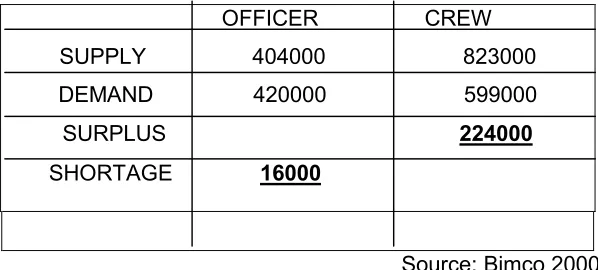
Table No.4.1 Global Shortage/Surplus of officers and crew 64
Table No.4.2 Crew changes on Broström ships 65
Table No.4.3 Japanese Experience with crew reductions 66
Table No.4.4 Costs associated with crew reductions 66
LIST OF FIGURES
Figure 1.1 Showing expected Global trends in cargo 7
Movement.
Figure 1.2 Describing Human Relationship 15
and Safe and Efficient Ship operations.
Figure 2.2 A&B Describing Reduction in National 35 Tonnages & Increase in Foreign Tonnages.
Figure 2.3 Showing Perceptive Effectiveness 36
of Key Sectors in Promoting Maritime Safety.
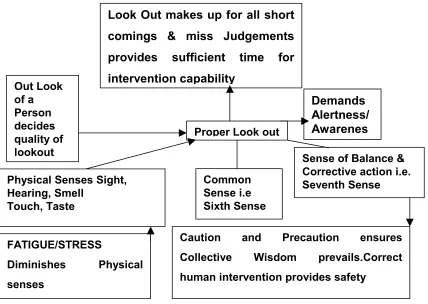
Figure 3.1 Look Out and its Linkages 49
Figures3.2 (A to D) Navigational charts & relevant 115 drawings of case study of Jhansi Ki Rani
LIST OF ABBREVIATIONS
APEC Asian Pacific Economic Co-operation
AIS Automatic Ship Identification System
BIMCO Baltic and International maritime council
C/V Clear Visibility
DC Dangerous Cargo
DGS Director General of Shipping
DPC Dual Purpose Crew
DWT Dead Weight Tonnage
ECDIS Electronic Chart Display System
EEZ Exclusive Economic Zone
FEU Forty foot Equivalent Unit
FOC Flag of Convenience
HE High Effectiveness
HS High Speed
ICS International Chamber of Shipping
IFS International Federation of Shipping
ILO International Labour Organisation
IMO International Maritime Organisation
ISM International Safety Management
ITWF International Trade Workers Federation
LO Look Out
MAIB Maritime Accident Investigation Board
ME Moderate Effectiveness
MOU Memorandum of Understanding
MTI Maritime Training Institute
N/V Nil Visibility
NE Nil Effectiveness
OECD Organisation Economic Co-operation and Development
OOW Officer of the watch
P&I Protection & Indemnity
PSC Port State Control
R/V Restricted Visibility
ROR Rules of the Road- to mean Collision
Regulations 1972
SCI Shipping Corporation of India
STCW Standards of Training Certification and
Watch keeping
TEU Twenty Foot Equivalent Unit
TSS Traffic Separation Scheme
UNCTAD United Nations Cultural Trade and
Development Organisation
USCG United States Coast Guards
VTS Vessel Traffic Scheme
WB World Bank
WTO World Trade Organization
Chapter I
Human Element Management
“We shall not cease from exploration and the end of all our exploring will be to
arrive where we started and know the place for the first time”
T.S.Elliot
1.1 Objectives of the research
Ever reducing manning scales, shortages and surplus of man-power, continuous introduction of sophisticated technologies, reduced port-stays, absence of commitment from employers and de-skill of existing skills and introduction of new skills are all having an impact on human relations on board the ships. The combined effect of these factors will be examined, in the light of ever increasing regulation of the shipping industry. Focusing on how this change is to be absorbed by adopting modern training techniques for safe and efficient operations of the ships. Current training programs are generally based on past experience and on the job training that was the watchword of the industry. This now needs to be considered also.
The objective of this dissertation is focused mainly on human factor/relations, which is a central issue in deciding the end result of ships performance. Expectation of employers, authorities, society and personal expectations of seafarers need to be understood and how the seafarer copes with such demands and resulting pressures, stresses and fatigue.
reduces the accident risk, while bringing about better performance standards/results. Acceptance and implementation will serve the purpose of this dissertation`s recommendations to the benefit of the seafaring community and shipping industry for better performance.
This dissertation attempts to assess, examine, analyze and synthesize trends in manning, multilingual, multicultural crews and officers, STCW and related conventions/resolutions pertaining to human factors and elements, and to suggest solutions. In the event no lasting solutions are forthcoming, then issues are analyzed and synthesized to arrive at what is the current status and how it is evolving to deal with inherent peculiarities for review and debate.
1.2 Research Methodology
The investigation into human relationships and safe and efficient ship operations involved examination of existing instruments, the working of organizations and factors at play having direct impact on human relationships, safety and efficiency on ship operations.
The well maintained fleets of the developed world generally operate safe ships under FOC and also second registers. However, an undue advantage is derived by unseaworthy ship operators the under FOC, who are not easy to identify because of unknown nationality or from being more than one nationality. Attempts have been made and owners ships are identified by thorough research made by the organizations to establish the actual owners.
The process of information gathering and fact finding to assess the human relational aspect was most difficult as research work in this respect has so far not been conducted on merchant ships. The human relations on shipboard operation have assumed importance due to multiplicity of crew in terms of nationality, region, religion, language and culture. It is increasingly becoming a fact that multinational crews have come to stay as the process of globalization gathers momentum. Strategies required to meet this new challenge were assessed so as to evolve new directions in training.
Regarding the safety and efficiency aspect of ship operations surveys of past accidents and incidents, reports and technical details showed that it was adequately covered, but human relational dimensions and their impact were found to be somewhat ignored. It was possible to investigate all accident reports of the past but due to paucity of time and space available for writing this dissertation the author was constrained.
To highlight this neglected area two case studies were examined as an illustration that all accident reports of the past could be reexamined from a human relational viewpoint. The ideal tool could be the simulation of past accidents on simulators now extensively used for training. Research projects on this aspect could provide insights to find solutions to deal with causes of threats to safety and environment.
Research projects conducted in Sweden, Australia, India, Japan, and USA provided important information and facts to understand the impact of various developments on seafarers. However information about relational aspect was scarce. More projects are needed to investigate and examine the human relational aspect in particular to the multinational crewed ships.The relational aspect of humans is qualitative in nature. It is the quality of relationships which is paramount. The quantification in this matter does not reflect the correct position. Therefore, quantiative approach was avoided to emphasize the qualitative approach. The minimising of mathematical and statistical data is desirable to create a backdrop on qualitaitive nature of issue under research.
Useful data from trade unions and news items on seafarer`s exploitation were also readily available, but verification, examination and investigation to establish facts were generally difficult because of the multiplicity of nationalities involved and constantly changing crew mix.
The most important observation about the new data bases in the formative stages of development was the inability to obtain and maintain the manning and certification records of persons serving onboard merchant vessels. An urgent action in this direction is proposed. The data bases have to take this factor into account as the competence of crew from an individual and relational aspect is the most important factor governing safe and efficient ship operation. The new databases like Equasis were found to be in formative stages and manning information was not one of the priority areas in comparison with technical and commercial data.
1.3 General Introduction
managed and run by global citizens. Seafarers are leading role players who undertake the work of moving commodities over the high seas.
The market mechanisms control the direction and destiny of the seafaring profession. Competition to win in any activity is a welcome and healthy input for progress and prosperity of the society. However, where it is leading to that is to be understood. The cheapest in terms of money leans to an element of unhealthy compromise. The element of mindless compromise is an issue which ignores many relevant, reasonable and rational matters of greater importance. Winning is important in a commercial pursuit but the damage it does to many, for the benefit of a few, has its own implications for the seafaring profession.
Seafarers are after all humans who stand up to face the challenge of the sea; they are the first bearers of this awesome burden and are utilised as an exploitable commodity. Relationships among seafarers have a direct connection with the market mechanism. The volatile and cyclic nature of industry reduces the commitment levels from ship owners (employers) to seafarers (employee).
The tradition-ridden maritime industry has to evolve itself to provide better commitment levels from employers and employees. Flag of Convenience (FOC) ships today are more of an order of the day than the exception. They provide, the best form of deregulation and a very large degree of flexibility to the ship owners with a minimum degree of commitment. FOC ships are a product of unrealistic laws and actions of over zealous competing social and political forces demanding impossible commitments from ship owners, which has pushed even the genuine ship owners towards FOC.
attain aims, objectives of quality can only be commenced through a commitment of all.
1.4 Human Element –The Problem
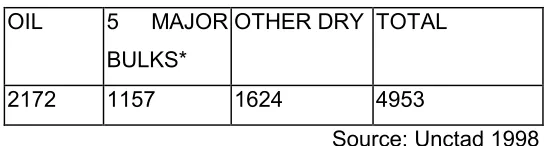
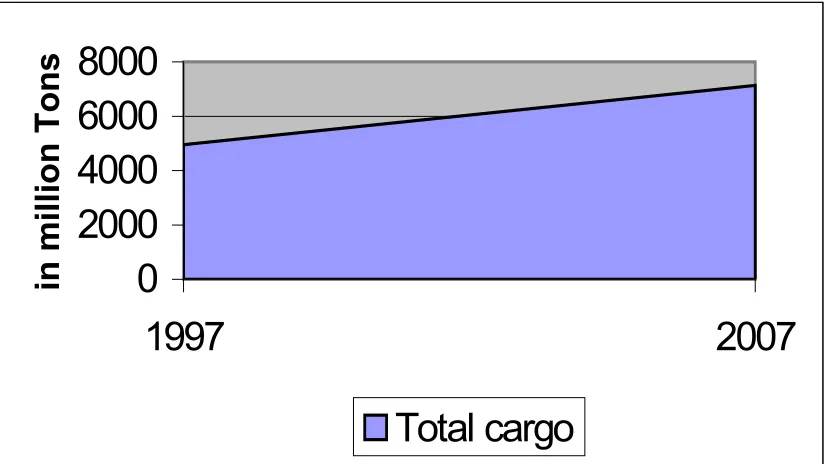
Mankind ships around 5 billion tons of merchandise on the high seas every year UNCTAD, (1998/2000). This activity is performed against the forces of nature. While undertaking this massive endeavor, many unexpected and undesirable events occur. The responsibility for the same has to be accepted by all those who are involved in this Herculean effort. This rather large movement on the high seas in itself is a burden on the environment. This activity, illustrated in the tables and graphs shown as under, is predicted to increase by 40% in the next ten years.
OIL 5 MAJOR
BULKS*
OTHER DRY TOTAL
2172 1157 1624 4953
Source: Unctad 1998
*Iron ore, Grain, Coal, Bauxite, Phosphate
Source: World Bank/OECD data Graph by Author
Figure 1.1 Showing Expected Global trends in cargo movement
1.5 Relevance of Human Matters
Human aspects, factors and elements engaged in the above endeavor, have not received sufficient professional attention, which they deserve. IMO resolutions A-680 (17), A-742 (18), A-772 (18), A-850 (20), STCW 78 Convention (Revised) and ISM code of SOLAS `74 are major start points in this direction. Earlier resolutions and instruments in this context from the IMO were appreciable, but in terms of effectiveness they remained in the cold. The sense of urgency in this matter was seen to be taking shape, in the implementation of STCW (Revised) Convention and the ISM code. Positive co-operation by a large number of maritime nations was unprecedented in accepting and implementing the above instruments concerning human aspects.
0
2000
4000
6000
8000
1997
2007
in million Tons
The encouragement and inspiration of positive developments, as stated above, have given a fresh impetus to strive for safer ships and cleaner seas. The effect of implementation is reflected in the declining accident rate and the number of lives lost at sea have shown a declining trend. At the same time deaths due to occupational health hazards are receiving attention, due to a suspected increase, Nielsen, D. (2000) reported lack of information because of under reporting/ under-stating or unwillingness to part with the information by many Administrations. Despite the recent trends of increasing world trade, world tonnage increase is not proportionate, as was in the past; apart from the size of ships having increased this can well be a pointer towards better output, with the same input because of efficient utilization of the existing resources.
Attempts are [IMO Resolutions A 884(21), A 850(20)] now being made to examine human issues more closely and investigate this matter to evolve methods to deal with this most central issue. The interface between man and machine is critical. A ship maintains its seaworthiness so long as the seafarer responds to the dynamic actions of the forces of the sea by observing and judging the impact of the forces at play. Cairns, (1967) observed the machine itself cannot perform the action.
1.6 Expectations and Demands
Shipowners and authorities demand and expect commitment, loyalty, good judgement, competence and all the virtues from the seafarer, so as to operate safe, efficient and profit making ships at all times. On the other hand, a seafarer has to contend with, not only the demands and expectations of his employers and authorities also the following mentioned issues:
• Job security/continuity
• Acquiring new skill, competence, knowledge, understanding, proficiency
• Social and emotional needs
Shipowners dilemma is well summed up by Sohmen, (1990) as under:
“As shipowners we are constantly faced with difficult decision between overall
cost cutting considerations in terms of total compliments on board ships.
There is no hiding reality that a traditionally very competitive and lately hostile
commercial environment has seen manning numbers reduced to fairly low
levels, while the general dearth of personnel led to the acceptance of
personnel with lower skills in many a shipping operation. It becomes a vicious
circle: fewer people like to go to sea, so the less capable apply and are
chosen, lowering the status of the profession in the eyes of public leading in
turn to a further unwillingness by many to seafaring as a worthwhile career
path.
When we are down to a public perception that going to sea is still always a
possibility when all else fails, we shall not get the calibre of staff we really
want and the industry needs.”
1.7 Changing Patterns
new registration authorities are generally more obliging and flexible, because each change is tailor made to suit the interest of the shipowners. This is aptly stated by Spruyt, (1994) who described these as designer flags embroidered mainly to suit owner’s requirements.
1.8 New Technology and Related Issues
The changeover phase, from existing technology to the new technology, is most crucial. New technologies are not proven, because facilities for research and viability studies are not only costly but are not so readily available. Sufficient focus and attention is not given to this aspect. Until such time as the equipment is made mandatory, the demand for the new technology remains inadequate from a business point of view of the manufacturers. This is because of the inability of manufacturers to project cost benefits in acceptable terms results in an unreasonable approach to this attendant issue as reported in Fair Play, (29october, 1998). The Sea (May/June, 2000). Reported, …The inquiry report said, “Too much for one man to do cruise ship collision blamed on overloaded watchkeeper ”. Maritime Accident Investigation Board, Press release No.248 (2000) confirmed the aforesaid. It goes on to report too much information and too much work for the officer of the watch. These are the main reasons sited for why Norwegian Dream collided with the container ship EverGreen in the English Channel in August 1999.
The transition phase from paper navigational charts to ECDIS has generated debate; combined usage of Raster navigation charts with paper chart backup is working against the introduction of new technology on a global scale. Shipowners do not want to bear extra costs due to dual requirement. The benefits of new technology of real time navigation with an ECDIS are denied to navigators. The regulators have not been able to adequately address the advances in technology. Aalst, (May/June, 2000). Examined this issue and argued:
“IMO regulations do not permit use of the world wide available raster
decide not to invest in electronic chart display system, thus avoiding extra
costs considering the benefits of real time navigation with electronic chart
display and information system, It seems that IMO is on the wrong course for
the wrong reasons”
Transition from old to new technology has its own challenges, dilemmas and paradoxes.
1.9 Human Relationships
Human factors at play on board ships result in human relationships. A group of persons performing their functions and applying competencies in unison or in tandem work towards common objectives. This entails teamwork and teaming up. The outcome of a team effort is generally not the sum total of the efforts of each member of the team. A good team effort produces results that are much above the sum total and much below the sum total, if team effort is found wanting. Human relations are integral to dealing with the stressful working environment in the marine conditions.
Adamson, (2000). Stated, bulk carriers now spend 98.5% of their time at sea and also added a word of caution… that here is a point at which technology is so sophisticated that our ability to intervene becomes compromised.
1.10 Unique Features of Seafaring
No other industry requires workers to remain in the confines of the working environment, as is the case with the seafaring profession, excepting the oil industry ashore and the army in war like situations. This unique nature of the profession can be dealt with by realistic solutions, which are not easy to find, unless, thorough examination and investigation is undertaken, or the measures adopted by the oil industry are modified and applied to the seafaring profession.
The charm of foreign lands has vanished from the seafaring profession with the onset of the information and space age, which lends global connectivity and mobility never, imagined in the past. With new challenges of the present and future, new strategies are to be evolved. Schager, (1996) stated that to attract quality people to the profession, so as to deal with new challenges of the present and future, new strategies need to be evolved in attracting the best professionals. However, the factual position generally confirms to the 1.6 the position described by Sohmen.
1.11 Fatigue and Stress Issue
As of now, symptomatic diagnosis, followed by quick fix solutions like recording hours of work and rest hours, and regulating work to deal with fatigue and stress issues in marine conditions (Chapter VIII of STCW 95 Convention and ILO conventions), belie the forthright approach needed to deal with these issues. It follows that fatigue, stress and human factors are to be investigated and researched, to equip the serving seafarers and new entrants to meet the challenges confirmed by the proceedings of the Maritime Safety Committee of IMO in its various meetings on the subject matter.
applicable for the zones. This measure enhances the safety of ships if some measures are focused in the context of manning enhancement in the seasonal /zone changing marine condition, then may produce a more realistic solution for safer ships. Such practice is presently not known to be followed. In the context seeking solutions to fatigue and stress issues, the stopgap measures above mentioned can be considered, until, results from investigation and research work are clearly understood and complied. Fatigue and stress factors due to reduced manning and new technologies are well described in the case of Hoo Robin and Arklow Marsh in river Trent, the MAIB (press release no. 248) decided that Master`s judgement had been “Probably been adversely affected by accumulating effects of fatigue”
1.12 Outlook of Society towards Marine Transport
The attitudes of the human society at large are well reflected by Grey, (March, 2000) in his view that high seas practice is worth far more worth than paper. It makes for interesting reading of the instantaneous matter of affairs, conducted by thrustful people of commercial business with microscopic outlook, having no regard for the forces of nature, and who find that everything is manageable on time regardless of inherent dangers in the marine conditions. This attitude of society has not changed from the Titanic disaster till date; it makes for a case to raise the public awareness about the stakes involved in the maritime transportation, so as to evolve more realistic attitudes and outlook. Hostile commercial environment described by Sohmen, (1990). Mainly contributes to lowering the status of the profession in the eyes of the public.
1.13 Seaworthiness and the Seafarer
activities of mankind and takes effective and adequate measures in sufficient time to ensure the ship`s safety.
The seafarer must remain properly equipped and motivated to perform this role at all times. The prescribed behavior by specifying a procedure can only be used as a guideline, but not a substitute for taking initiative for efficient performance. Excessive regulation, rules and prescription can be counter productive in the long run. Care and caution in this respect will not be out of place; each circumstance and situation is unique, in itself. Creating a procedure for each circumstance and situation is not a feasible option; however, this issue needs to be examined in right earnest. The man/machine interface has received attention; and a large mass of data is available from an engineering and technical angle, but research in navigation in marine conditions remains an area deserving more focused attention this aspect is analyzed and synthesized in Chapter III.
In an attempt to understand safe and its linkages and relationships to efficient, a look in Collins Cobuild, English dictionary provides the meaning, it is described in twenty one different ways and in all contexts it relates to human beings and their perceptions on comparative terms as no absolute definition of safe is derived. A description in Collins as a sample goes like this… “If someone or something is safe from something, they cannot be harmed or damaged by it”. It is the humans who make the difference between safe and unsafe. The competence and its application makes efficiency a reality, in efficiency the play of lesser input and greater output produces competitive levels of efficiency in performance.
The meaning of efficient is described in the above dictionary as “If something or someone is efficient, they are able to do tasks successfully without wasting time or energy. Efficient working means a performer is decisive and accurate in his judgement. The quality of being able to do a task successfully with minimum input and maximum output.”
to meet the challenge of efficient ship operation of a ship. The competence requirements of all levels for watch keeping functions are specified in detail in the STCW Convention.
The variable standards of competence and the application are attempted to be addressed by ensuring uniformity of minimum standards of training. The application of regulation I/8 of STCW Convention and requirement of demonstration of competence through simulators is a step towards achieving and maintaining uniform minimum quality standards of training.
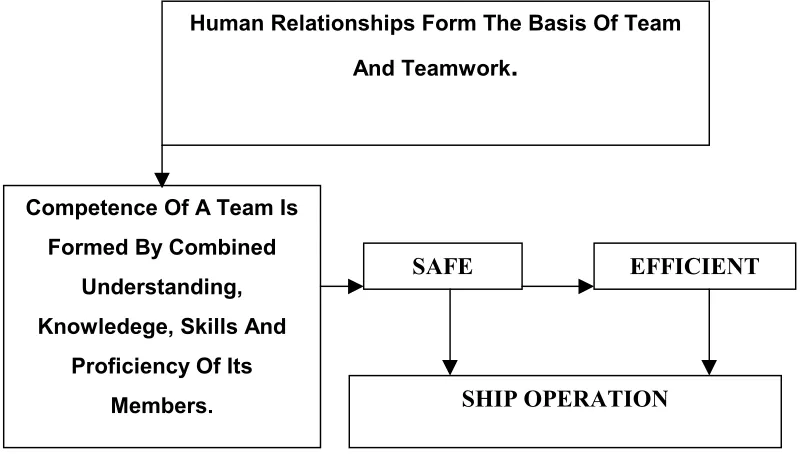
This requirement is yet to be addressed adequately under the STCW Convention, mainly because of large financial implications and the training of trainers. The human relations in team formation and teamwork facilitate application of competence to achieve safe and efficient ship operation. The following illustration describes the relationship described above:
Figure 1.2 Describing Human Relationship and Safe and Efficient Ship operation
Competence Of A Team Is Formed By Combined
Understanding, Knowledege, Skills And
Proficiency Of Its Members.
SAFE
EFFICIENT
Human Relationships Form The Basis Of Team
And Teamwork
.
The last ten years trends of U.K. P&I CLUB claims analyzed by Bond, (October,1999). point in the direction of claims arising out of commercial pressure as follows:
Three out of every five major claims are directly related to human concludes
the report. Why people go on making mistakes a question which club data
cannot adequately answer. However, the evidence is that even properly
trained personnel can become careless even reckless when responding to
commercial pressures or suffering from fatigue; discomfort, boredom or
stress. Specific risk areas appear to be:
1. Language problems in mixed nationality ships, and between ship and shore side
personnel, particularly when engaged in critical activities such as berthing and
bunkering
2. Confusion due to poor communication between pilot and master
3. Fatigue from smaller crews and shorter turn around times in port
4. Minor miscalculations leading to ship instability and consequent cargo loss
5. Pride inducing crew to carry out tasks which should be executed with assistance
6. Calculated risks by masters and officers responding to commercial pressures
A compromise on safety and efficiency has direct relationship with performance of the ship to remain a viable commercial unit. The variability in competence and its application through teamwork is a cause of serious concern.
the other inputs cannot be subjected to such measures as they are well controlled. The pressure of cost cutting measures largely impact on human beings a competitive advantage is derived out of this. However, it has a direct correlation with safety and efficiency. Safe and efficient ship operations are closely linked to humans and their relationships with each other. The maintenance and sustenance of quality systems if accepted as industry standards, leads to the reasonable conclusion that it will help reduce such attempts for competitive advantage to a reasonable level.
The hostile commercial environment in response to unlimited forces of competence takes its toll. It produces less committed, competent seafarers and reduces safety and efficiency of ships for the immediate gain of economic efficiency. The ascendancy of this approach almost rules over all other relational premises.
The inter-relatedness of safe and efficient with human relationships is a core element in the successful operation of a ship.
1.14 Lack of Uniformity in Training
Minimum training standards are specified in the STCW Convention. It is fairly well known that training standards prevailing in different countries are not uniform as confirmed by Donaldson, (1994). This variance in training is being addressed through quality systems implementation, but the approaches of administrations of different countries are not in unison. It will take some time to achieve this requirement. This is confirmed in Lloyd`s List, (May 2, 2000).
Frequently changing registries of flag of convenience ships, classification societies and changing multilingual/multicultural crews create unsafe conditions, not only for their own ships, but also for the other shipping operating in the near vicinity and the environment e.g. Erica incident. Training solutions can be worked out for many needs but not for all the issues, some of which can only be dealt with by a combination of management measures in line with training. The following quotation is relevant to above:
In conclusion, I would like to reiterate that reducing accidents due to human
error is a principal challenge before all of us. Risk is inherent part of the
maritime industry and can never be completely eliminated. However, the
application of sound quality management principles and placing emphasis on
people, both operators and managers of ships, enhancing their training and
ensuring that they are properly qualified, is the most effective way to enhance
safety and reduce risk. We have taken great efforts to develop the STCW and
ISM code. They were designed to improve the competence of our seafarers
and safety operations, and thus reduce the risk in maritime operations. Let us
implement them conscientiously and with professionalism to achieve this aim.
It is time to raise the image of seafarers.
Kong, (2000).
The level of professionalism is poised to rise and seafarers have to evolve and rise to the challenge.
1.15 Quality
…Most quality programs fail for one of the two reasons, they have system
without passion or passion without system.
Kurz, (2000) stated quality is the watchword of our modern industry; total commitment from all is the only way out for meeting the objectives of total quality management. Attracting, inducting, and training, organizing and retaining the best work force for efficient and safe operation of ships can meet this objective. Any shortfall in this respect will only show itself in under achievement of the aforesaid objective, to produce inherent risk to life, property and environment in an active, as well as, passive manner. “We must stop the havoc created by the substandard ships” opined Kurz, (2000). How remains a matter open to be addressed in future.
According to Tenner, et. al. (1992). quality is a competitive advantage in the manufacturing sector. It is a proven fact that the culture of quality has built in safety parameters as in the case of the aviation industry quality of service has features of reliability and integrity according to Weiner et. al. (1988). The variables in the maritime transportation business are not easily reconcilable, due to culture of openness and freedom, over tonnage and unhealthy competition. This makes the quality operator in shipping to be circumspect because remaining in business becomes an overriding issue. Shou Ma, (1999). depicts the options of doing anything in the maritime transport is a business where fitting quality into this scenario remains an unanswered question:
You can get in easily, You can get out quickly
You can earn money easily,You can lose it quickly
You can participate slightly, You can be involved heavily
You can look at it as a game, You can treat it as a mission
You can operate ships by direct control from a port
You can operate ships by remote control from an inland place
You can do it alone, You can do it with many others
You can be a shipping company without having ships
You can operate in the most traditional way
You can operate in a state- of –the- art manner
MARITIME TRANSPORT IS INDEED AMAZING AND STIMULATING!
Source: Ma,(2000)
The recognition of quality in service - sector can feature safety integrity and reliability. The safety management system of the International Safety Management Code (ISM), if implemented properly, can move the maritime industry in this direction. Inherent weakness of the ISM code such as lack of a common international language for procedures, redundancy and lack of legal/liability immunity for operating under ISM code, if rectified can move the maritime industry in the right direction. The quality and safety culture are synonymous, this perspective alone has to become business and a competitive advantage. Encouraging a quality culture can bring about avoidance of substandard tonnage, this approach is in its formative stages According to Julian, (2000) USA may cut port fees for owners of quality ships after January 2001. This quality initiative has been outlined; the details of the scheme are yet to be agreed. The pertinent details are attached at Appendix E. The formal safety assessment process is being developed for application in the shipping industry so as to avoid prescriptive nature of safety regulations is applied more realistically and reasonably to deal with the safety needs of a specific operation/activity. Quality of service acts as a counter balancing force in the mission to drive out substandard tonnage.
Chapter II International and National Approaches to
Human Element Problems
Every custom was once an eccentricity; Every, idea was once an absurdity.
Holbrok Jackson
2.1 Introduction
The advent of threats to unilaterally legislate in the aftermath of the EXXON VALDEZ incident and now in the case of the ERICA, this tendency poses a danger to the uniform international approach, so far adopted by the International Maritime Organization.
International approaches to the human element were a phenomenon marked in the middle seventies by the STCW Convention which was subsequently revised in the middle nineties, with accelerated pace of implementation. The Revised Version of this convention is competency based and its implementation and compliance is more emphasized by the introduction of the ISM Code and quality systems in training activities. Development of uniform standards of training is seen as a first step towards the progress for quality service free of accidents, loss of life and threats to the environment.
the tough marine conditions when it is viewed in the context of multilingual and multicultural crews and officers.
Hawkins, (1999). determined that more than sixty percent of the world tonnage is registered under non-maritime flags; the ownership of it largely belongs to developed countries. The national approaches to the maritime trade have resulted in the flight of their national tonnages to non-maritime flags e.g. maintaining twice the manning scale on payroll and rise in salary due to high living standards of developed countries.
Flagging of vessels under FOC has numerous business advantages in the increasingly hostile commercial environment these are listed as under:
1. Lower manning costs: manning requirements since registration under
open registry means unrestricted choice of crew in the international markets
not being subjected to onerous wage scales and more relaxed manning
scales.
2. Lower operating costs generate lighter maintenance programs and less
stringent enforcement of safety standards imposed by the register
3. Less regulatory control and avoidance of bureaucracy
4. Avoidance of tax
5. Anonymity
6. Easy accessibility/exit to/from the register
Source: Bergantino & Marlow (1998).
chase of remaining in business. It interferes with identification and confirming the actual nationality of shipowners.
2.2 National Approaches
The national political forces largely control the national approaches. The Political compulsions of nations may not allow rationality to prevail in national approaches to human elements. The on going process of liberalization and Globalization of world trade raises some hope towards an aim of rationality in arriving at a reasonable approach to attract and restore the tonnages to the flags to which they actually belong. The advantages of flagging the tonnages to non-maritime nations by the shipowners work against adopting a forthright approach to deal with the human element.
National approaches to the human element are generally colored by the activities of unions, political apparatus, and cultural, linguistic and regional issues. This does not provide a workable climate to conduct the shipping business on the principle of sound business practices, this is reflected in the report titled Costs: (February 1999) in The Drewry Monthly, about having different rules for British shipowners and foreign shipowners. The competing forces and conflicting interests retard the operation of maritime business and also its interference with the criminal and liability aspect of human element; this somewhat prevents deeper investigation of issues.
2.3STCW Revision
It continually strives for safer ships and cleaner oceans in a proactive manner. This was evidenced when STCW 78 was revised by STCW 95. By overcoming the ratification process delays, tacit acceptance provided for objections to be raised by the parties to the Convention, before the specified date. In the absence of any such objection of prescribed number of states and percentage of world tonnage, the revision entered into force. This action is without a parallel in the maritime field to date.
The implementation of this Convention seems to have run into rough weather as reported in Lloyd`s List, titled Crewing (2000). It has posed an unprecedented challenge to some of the major manpower supplying countries (e.g. Philippines, Indonesia) the national administrations being unable to solve their national problems, after having ratified the convention as confirmed in the article titled Leader, (May, 2,2000) in Lloyd`s List. This issue, of many nations having given full effect to the Convention, compared with others, who are training seafarers at a standard which is not uniform, is creating its own paradoxes. As the date for final implementation fast approaches, options such as denunciation may have to be exercised, which will be against the aim of uniformity in global standards of training, certification and watchkeeping; this will fragment the maritime world as was never known before. This issue currently seems to be taking Titanic proportions. The willingness of most of the maritime nations to comply with the STCW Convention in its revised form is a healthy sign in the march towards safer ships and cleaner oceans but the inability to come to terms calls for a more realistic outlook. A right step in this direction can bring the maritime world towards greater global co-operation as never known before.
After revision in 1995, STCW now consists of resolutions; regulations and codes paving the way for changeover from knowledge based to competence based training; consistency and clarity between regulations and chapters of the codes making it a formidable document.
acceptable tool for realizing uniform minimum standards of training on a global basis. The human aspect pertaining to elements, factors and relations is dealt with in the sections covering deck/engine departments, alternative certification, watchkeeping, simulator training, structured training, continuous maintenance of professional standards and quality standards including the training of maritime teachers/instructors and assessors. Part A of the code shows what is to be done and Part B of the code shows how it is to be done for achieving uniformity.
2.4 International Safety Management Code
It is contained in the form of chapter IX of SOLAS74, entered into force on 1-7-98 excepting mobile offshore drilling units and cargo vessels for which it will enter into force from 1-7-2002.This code attempts to cover the following:
1.Making safety a proactive and a dynamic matter
2.Making management of ships an accountable and transparent matter
3.Establishing linkage between ship safety and efficiency an operational
matter
The responsibility for operation and management of the ships has become a matter of serious concern, with the advent of the information age and instantaneous communications, the decision making process shifting its focus from the Master`s discretion to Management’s decisions taken ashore as observed by Anderson & Mehta, (2000). The responsibility for safe and efficient operation remains with the master but the authority and power to take decisions has shifted away from the ship. It has at times increasingly become more difficult for the master to take decisions even on matters concerning safety. In the light of this changed scenario, the ISM code attempts to make persons ashore responsible for decision making, identifiable and accountable.
synonymous with efficiency. The full impact of the code will be assessable after complete implementation by 2002. Bievre, (2000) Lloyd`s List, reports, fears of pilots and their resolve of declining to sign ISM checklist during the process of pilotage although pilots firmly declare their commitment to safety. The ISM code is being implemented with best of intentions but the pilots seem to have some reservations this could be a process to deal with new emerging challenges.
The responsibility for implementation and compliance of ISM is with administrations and port state inspections will bring out the short falls if any. The ISM code to a great extent addresses the human element and other issues but success in resolving these issues largely depends on the people on board and ashore responsible for the operation of the ships. The position prior to introduction of the ISM code concerning safety was connected with obtaining statutory safety certificates thereafter safety that was relegated to a ritual of lesser importance.
The credibility of ISM code was under test as a result of the ERICA incident during the course of writing this dissertation. The safety management system existed for this ship in theory but in practice attitudes of people and authorities remained unchanged. The obsession of ship owners remained focussed towards cost cutting. Master of the Erica was loaded with responsibility of safety of a sub-standard ship. The accountability, transparency only ended up in blaming culture and not accepting responsibility and pointing at each other rather than accepting the responsibility, also failing to view the matter from safety perspective. Each agency from classification society, Flag State, port state, coast guard, owners vested with authority and powers stoutly defended their position and some of them held Master responsible. Once again the question arises in the direction of man made problems. The Erica incident is an eye opener, exposing the limitations of safety management system in practice. The obsession of cost cutting in hostile commercial environment is detrimental to safety. The Master of Erica roundly criticized the obsession of cost cutting and crew reductions in The Sea (May/June, 2000) attached at Appendix D.
seafarers to avoidable risk and turmoil. The question remains as to the correctness of the approach towards safety, efficiency and human relationships. Safety was compromised and efficiency remained questionable. Humans who were responsible for the state of affairs directed their efforts to defend themselves against accepting responsibility. Public outrage and opinion is being satisfied through threats of unilateral legislation till the public memory recedes into background.
The vulgarized splendor of blame culture was glaringly on display in the aftermath of the ERICA incident response from blame culture were of a very wide range and interesting beginning with threat of unilateral legislation, boarding of ships before entry into EEZ, banishing single hull tankers, preponement of phasing out of single hull tankers and so on.
The core issue of human elements in the form of under manning, poor and substandard survey regime and neglect of maintenance these issue did not find enough mention in the out bursts of blame culture represented by the political system.
The effectiveness of the ISM code on operational side of shipping industry is varied, but appears to be working after two years of its introduction, it has divided the shipping industry in three segments as viewed by Sagen, (July 29,2000) in Lloyd`s List. The suggested division is into following three:
i) The top 20% of the companies demonstrate operational benefits
ii) The average 60% of the companies managed to attain their certificates and
finished the process
iii) The bottom 20%, the rule benders didn’t want it, and do not care about code or
its consequences.
The later part of maritime industry comprising of 60% and 20% range between managing to finish the process and bending the rule category. In 2.9 table no. 2.3 showing perceived effectiveness to promote maritime safety, although it would appear to have no direct relationship with the above stated view of maritime industry except the maritime safety. But the percentage of perceived effectiveness in promoting maritime safety by key sectors corresponds to 22.87%, 58.25% and 18.87% pertaining to high, moderate and nil effectiveness respectively. This pattern and its reflection on implementation of ISM code indicates that benefits of ISM code have not percolated to majority of maritime operations, however a slow beginning has been made to cultivate safety culture.
The compliance culture is yet to take shape in maritime industry as blame culture continues to rule the day.
The question begs an answer; is the mankind adequately responding to challenge created by its own making?
2.5 Safe Manning
The Manning issues are receiving concerted attention in the last ten years although most of the accidents have been attributed to human error or failure. In the aftermath of EXON VALDEZ, a solution of double hulls was implemented which did not contribute to safety of navigation in any way, which is a distinct function of manning.
Resolution A. 890(21). of IMO covers principles of safe manning noting that safe manning is a function of the number of qualified and experienced seafarers necessary for the safety of the ship, crew, passengers, cargo, property and environment:
It recognizes the importance of the pertinent importance of instruments from
other international bodies contributing to maritime safety and protection of the
to maintain observance of these requirements is dependant upon their
continued efficiency through conditions relating to training, health, hygiene,
hours of rest and work, and occupational safety. It believes that acceptance of
broad framework for determination of manning of ships would materially
enhance maritime safety and protection of marine environment.
Minimum safe manning levels are to be established by the governments based on the framework in the form of guidelines provided by the resolution. Maritime safety is a global issue as the unsafe acts of one ship jeopardizes the safety of the other ships and the marine environment, and a uniform approach to the manning issues would address the problem to maintain the safety standards. Each administration interpreting and applying these guidelines suited to their requirements does not make room for uniformity and retards the aim of achieving quality.
Minimizing of manpower by use of technologies transposed from the aviation industry, automobile and material handling industry is in vogue and pursued with great zeal. The shipping industry has benefited from this to a large extent. The concept of unmanned ships, one man bridge operation, unmanned engine rooms is popular and appealing to simple thinking minds and force full people. The main point in this context is the seafarer that, he had to endure the forces of nature, now has to contend with extinction of his profession, and the reduction of his acquired skills, which will in course of time become dormant and decay out. The transition period of transposition of technologies is a critical period deserving thorough examination for solutions.
Unfortunately sufficient databases do not exist to provide sufficient information on stress and fatigue-related incidents and accidents. The investigations conducted into accidents and incidents so far were related to technological aspect ignoring the human aspects. An attempt in the form of Resolution A 884(21). of IMO amending the code for investigation of marine casualty and incidents in this direction is made but its effectiveness is linked to the operation of National Laws, which raises a doubt in achieving the laudable aim of improving the quality and completeness of casualty investigations and reporting the connections with human factors.
The ultimate aim of increasing the awareness of all involved in the marine industry of the role human factors play in marine casualties and incidents can help in evolving a proactive approach by the maritime community, which in turn may lead to saving lives, ships, cargo and the protection of marine environment, improvement in the working conditions of marine personnel and efficient safe ship operations. The crucial linkage of operation of National Laws would decide deeper investigation of human factors. The positive outcome of implementation of this amendment to the code will be of immense interest.
2.6 Classification Societies
Traditional role of classification societies as non-profitable institutions is changing because of their supervisory function during construction and certification of quality systems. The conduct of statutory surveys on delegated authority on behalf of non-maritime flag states has some what changed the role of classification societies. It has to follow the line of accepting responsibility and liability to the direct consequences of the actions, but the classification societies are resisting accepting this responsibility, Classification Society in Leader L accident stoutly defended itself it was glaringly evident in the report by Osler, (July, 25, 2000). The owners, under writers, and P&I clubs closely interact with classification societies for certification of seaworthiness to assess the risk and liability of the ships and largely depend on the reliability of certifying authorities.
The role of classification societies can be viewed when connected with flag of convenience states by the report, Costs, (February,1999) in The Drewry Monthly it points at the linkages between unhealthy competition of FOC states for having more tonnages registered under their flag. The classification societies enter into contractual arrangements with the some FOC registries to provide technical services at the same time resist taking responsibility for their actions when confronted with liability issues. The FOC record on safety matters is reportedly on negative side e.g. reporting Port State, (April 27, 2000). St. Vincent tops Trinidad and Tobago Safety Violations List for second year. In this context classification societies have an involvement which works against adopting a forthright approach for the safe ship operation and dealing with human factors. The connection of seaworthiness and safety with human factors and safe and efficient ship operation is crucial.
classification society the classification society was changed and the new society was apparently willing to be more flexible on the issue of seaworthiness. The class hopping even within the International Association of Classification societies compromises the safety of the ships and the classification societies resist owning up these responsibilities.
2.7 International Maritime Organization
The International Maritime Organization since, its inception in 1948 has transformed from an inter governmental consultative organization engaged in the process of reduction of national legislation not in tune with the process and aim to introduce harmonization and international recognition of safety rules and regulations to an prescriptive or directive organization. This most recent trend of IMO shows movement towards an active role of supervision. The revised STCW 78 Convention calls for IMO to set up a so called `white list` of states fulfilling the minimum training requirements of STCW Convention and is a first step towards a more proactive role for IMO.
The IMO members during the 17 th Assembly had drawn the attention of the world to the fact that many flag sates are not able to maintain and secure proper control of conditions on their ships under their flag.
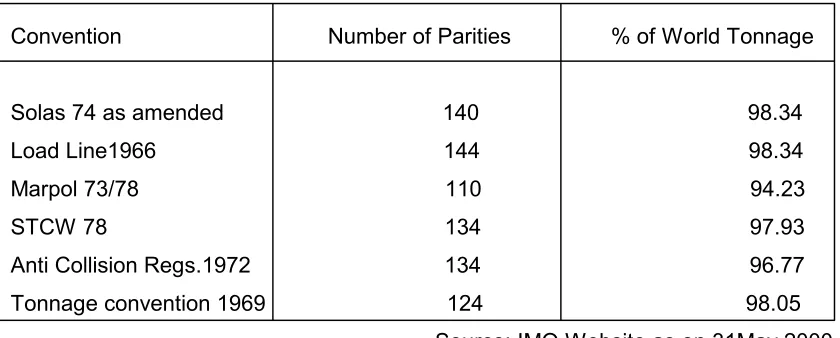
Convention Number of Parities % of World Tonnage
Solas 74 as amended 140 98.34 Load Line1966 144 98.34 Marpol 73/78 110 94.23 STCW 78 134 97.93 Anti Collision Regs.1972 134 96.77 Tonnage convention 1969 124 98.05 Source: IMO Website as on 31May 2000
Table 2.1 Ratification of IMO Conventions
The emphasis on implementation, introductions of ISM code and quality systems in training are the steps initiated by IMO in the right direction. At the same time issues of manning and occupational health, safety and uniformity of rules for design and construction of ships remain to be addressed adequately under the good direction of IMO.
2.8 The International Labor Organization
This organization was set up in 1919 under the treaty of Versailles with an aim to improve satisfactory working conditions and pay. ILO was the first specialized agency at the time of creation of UNO in 1946. The membership of ILO has since grown from 42 states to 174 till 1998. ILO maritime instruments cover a wide range of issues, such as minimum age, recruitment and placement, medical examination, article of agreement, repatriation, holiday with pay, social security, hours of work and rest periods, crew accommodation, seafarers welfare, seafarers identity documents, occupational safety and health and continuity of competency.
2.9 Foreign Flag Registration
The last two decades have seen remarkable shift in registration patterns of the world fleet. Driven by economic interests, shipowners in increasing numbers have been taking their ships out of national flags and registering them under foreign flags and registering them under foreign flags, a report by Joshi, (July, 13 2000) Lloyd`s list, Stating that Gorthon lines threatening out flagging as employee scheme fails to cut crew costs, it is an evidence establishing this fact. This activity is known as flagging out. It shows decline of national fleets and rise of foreign flag or flag of convenience. A foreign flagship is one that is not registered in the country of domicile of the owner; instead, it is registered under a foreign flag.
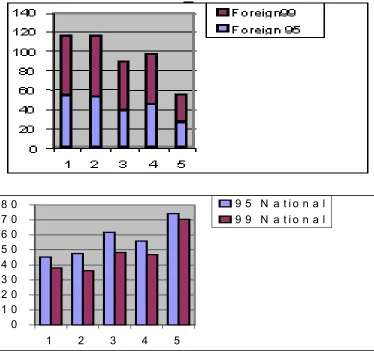
The foreign flag of convenience now make up almost 61% of world fleet compared to little over 51% in 1995 as determined by Hawkins, (1999) is shown in the following table:
Ship type National Flag Foreign Flag
1995 1999 1995 1999
1.Tankers 45.3 38.0 54.7 62.0
2.Bulk Carriers 47.6 36.1 52.4 63.9
3.Containerships 61.8 48.3 38.2 51.7
4.General cargo ships 55.9 46.8 44.1 53.2
5.Pass. /Pass. Cargo ships 74.2 70.4 25.8 29.6
Total 48.7 39.4 51.3 60.6
Source: Taken from APEC, 1999.
Legend: 1 to 5 corresponds to Ship Types Source: APEC Diagram by Author
Figure 2.2 A&B above Showing Increase in Foreign and Reduction in National tonnages in DWT% from 95 to 99
OECD report of 1996 confirmed operators of substandard ships are able to achieve competitive advantage over reputable operators who comply with international safety standards this position remains unchanged according to Hawkins, (1999). He concluded, for as long as operators of substandard ships are allowed to continue trading, they will do so at the expense of more conscientious operators. With unseaworthy vessels, they also pose a constant threat to life, property, and the environment. The existence of substandard or unseaworthy shipping is a joint responsibility of maritime world and attempt to grapple with are seen in the form of port state inspections under memorandum of understanding.
FOC are largely ship owner controlled as their craving for registration fee remains the controlling factor which is reflected in fierce competition among FOC states to
0 1 0 2 0 3 0 4 0 5 0 6 0 7 0 8 0
1 2 3 4 5
register more tonnage, a report by McLaughlin, (January, 12, 2000). Lloyd`s list, titled “Marshall Island tax lure could registries battle” confirms this. Following table depicts the perceived effectiveness of key sector in maritime world:
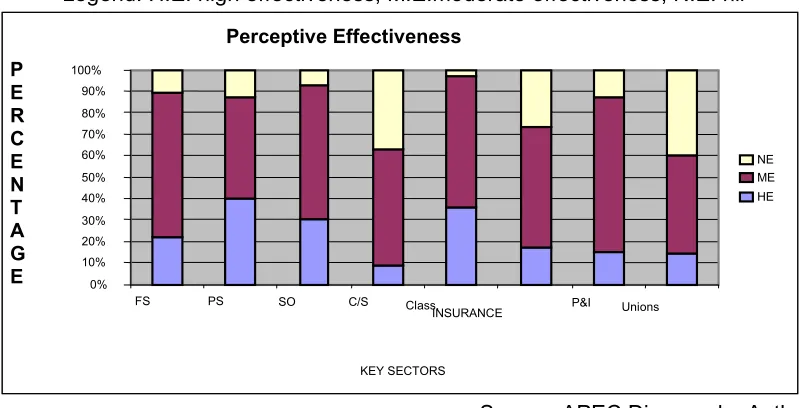
Key Sector H.E% M.E.% N.E.% Flag state 22 67 11 Port state 40 47 13 Shipowner 30 63 7 Charterer/shipper 9 54 37
Classification Soc. 36 61 3 Insurance 17 56 27 P&I 15 72 13 Unions 14 46 40
Source: APEC (1999) Legend: H.E. high effectiveness, M.E.moderate effectiveness, N.E. nil
Table 2.3 Perceived Effectiveness of Key Sectors in promoting Maritime Safety
Legend: H.E. high effectiveness, M.E.moderate effectiveness, N.E. nil effectiveness.
Source: APEC Diagram by Author
Figure 2.3 Showing Perceptive Effectiveness of Key Sectors in Promoting Maritime Safety Perceptive Effectiveness 0% 10% 20% 30% 40% 50% 60% 70% 80% 90% 100%
FS PS SO C/S Class.
INSURANCE P&I Unions
It is clear that port state and classification societies are perceived to be the key players in promotion of maritime safety. The flag states and shipowners although theoretically responsible and liable appear to be lagging behind in perceptual terms. Among support sector APEC study identified port and terminal operators followed by professional maritime associations, maritime media and environmental groups moderately to highly effective in promoting maritime safety for example bankers, financiers, salvage operators and crewing/manning agents were considered least effective in promoting maritime safety in perceptive terms. Commitment to promotion of maritime safety in tune with their commitment to the maritime world would appear to be a step in right direction.
2.10 Port State Control
This is exercised by port states on ships calling at their ports to ensure that they comply with international safety requirements. It successfully employs a `name and shame` strategy, whereby lists of ships found to be deficient or put under detention are made available on online databases to the general public. Although this mechanism is effective to a degree in discouraging substandard shipping, the degree of duplication on inspections and overlapping of inspections is illustrated in Appendix G to highlight the problems faced by compliant quality operator.
2.11 Conclusion
Chapter III Survey of Casualties
Every one in business makes mistakes; if you did not take risks you never did
get anything done. The sin would be if you made the same mistake more than
once
Michael Eisner, (1995)
3.1 Introduction
Human failure repeats to cause casualties. This sin in the maritime industry was acknowledged over thirty years ago. The investigations undertaken into the casualties revealed many lessons to be learnt, but the loss of lives lost at sea remained unchanged. The lessons learnt from casualties remained unchanged. The lessons learnt from mistakes brought messages for the designers, planners, and managers but lacked the most important messages about human aspects.
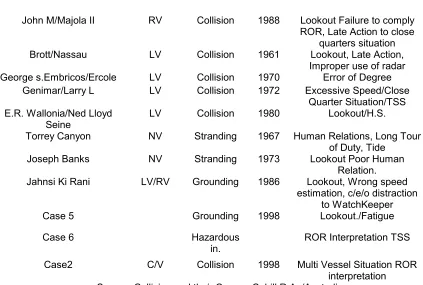
It is interesting to note how human factors contributed to the following casualties:
Ship`s Name Visibility Nature of
occurrence YOC Causes
Andrea Dorea/Stockholm RV Collision 1956 Late Action
Chitose Maru /Marie Skou RV Collision 1967 Lookout
Steel Designer /Atlantic Trader
RV Collision 1968 Lookout
C.K.Apollo/Sanshin Victory RV Collision 1978 Lookout
Yellow Stone/IBN Batouta RV Collision 1978 High Speed, failure to use
engine Agean Captain/Atlantic
Empress RV Collision 1979 High Speed, failure to useVHF
Hellenic Carrier/Lash
Atlantico RV Collision 1981 High Speed
Venpet/Venoil RV Collision 1977 Inadequate Training in
John M/Majola II RV Collision 1988 Lookout Failure to comply ROR, Late Action to close
quarters situation
Brott/Nassau LV Collision 1961 Lookout, Late Action,
Improper use of radar
George s.Embricos/Ercole LV Collision 1970 Error of Degree
Genimar/Larry L LV Collision 1972 Excessive Speed/Close
Quarter Situation/TSS E.R. Wallonia/Ned Lloyd
Seine LV Collision 1980 Lookout/H.S.
Torrey Canyon NV Stranding 1967 Human Relations, Long Tour
of Duty, Tide
Joseph Banks NV Stranding 1973 Lookout Poor Human
Relation.
Jahnsi Ki Rani LV/RV Grounding 1986 Lookout, Wrong speed
estimation, c/e/o distraction to WatchKeeper
Case 5 Grounding 1998 Lookout./Fatigue
Case 6 Hazardous
in. ROR Interpretation TSS
Case2 C/V Collision 1998 Multi Vessel Situation ROR
interpretation Source: Collision and their Causes.Cahill R.A. /Australian
Department of Transport / Maib Safety Digest.
Legend: C/V clear visibility, L/V limited visibility, N/V nil visibility, R/V restricted visibility, YOC year of casualty, VHF very high frequency, H.S. high speed, ROR rule of the road, TSS traffic separation scheme.
Table No. 3.1 Showing human factor`s contribution to casualties