STUDY DATA
TECHNICAL CONFORMANCE GUIDE
Technical Specifications Document
This Document is incorporated by reference into the following
Guidance Document(s):
Guidance for Industry Providing Regulatory Submissions in Electronic
Format – Standardized Study Data
For questions regarding this technical specifications document, contact CDER at
[email protected] or CBER at [email protected]
U.S. Department of Health and Human Services Food and Drug Administration
Center for Drug Evaluation and Research (CDER) Center for Biologics Evaluation and Research (CBER)
STUDY DATA
TECHNICAL CONFORMANCE GUIDE
Revision History
Date Version Summary of Revisions
January 2014 1.0 Initial Version
December 2014 2.0 Revisions based on the public
comment period (February 2014 – May 2014); and CDER/CBER internal review May 2014 – December 2014
March 2015 2.1 Revisions based on comments
received to version 2.0. Updates toSections 2.2 Study Data
Reviewer’s Guide (SDRG) SDRG, 2.3 Analysis Data Reviewer’s (ADRG), 3.3.1 SAS Transport Format, 3.3.2. Dataset Size and a revision of Section 4.1.4.5 Data Definition File
June 2015 2.2 Revisions based on comments
received to version 2.1.Updates on Table of Contents; Sections 4.1, 4.1.1.2, 4.1.2.3. Updates to Trial Design. Added Exposure as
Collected (EC Domain) and Death Details (DD) subsections. Updates to 4.1.2.2, 4.1.2.3, 4.1.2.4, 4.1.2.5, 4.1.2.6, 4.1.2.8, 4.1.2.9.1,
4.1.2.9.2, 4.1.4 (header and all sub-headers updated to specify which standards apply), 4.1.4.5, and 4.1.4.6. Added 5.1 subsection; 6.7, 6.7.1, 6.7.1.1. Updates on Section 7, 8.2.2 and Glossary.
i
Table of Contents
1. Introduction ... 1
1.1 Background ... 1
1.2 Purpose ... 1
1.3 Document Revision and Control ... 2
1.4 Organization and Summary of the Guide ... 2
1.5 Relationship to Other Documents ... 3
2. Planning and Providing Standardized Study Data ... 4
2.1 Study Data Standardization Plan ... 4
2.2 Study Data Reviewer’s Guide ... 4
2.3 Analysis Data Reviewer’s Guide ... 5
3. Exchange Format – Electronic Submissions ... 6
3.1 Extensible Mark-up Language ... 6
3.2 Portable Document Format ... 6
3.3 File Transport Format ... 6
3.3.1 SAS Transport Format ...6
3.3.2 Dataset Size ...7
3.3.3 Dataset Column Length ...7
3.3.4 Variable and Dataset Descriptor Length ...7
3.3.5 Special Characters: Variables and Datasets ...7
3.3.6 Variable and Dataset Names ...7
3.3.7 Variable and Dataset Labels ...8
4. Study Data Submission Format – Clinical and Nonclinical ... 8
4.1 Clinical Data Interchange Standards Consortium ... 8
4.1.1 Study Data Tabulation Model ...9
4.1.1.1 Definition ... 9
4.1.1.2 SDTM General Considerations ... 9
4.1.1.3 SDTM Domain Specifications ... 10
4.1.2 Analysis Data Model...12
4.1.2.1 Definition ... 12
ii
4.1.2.3 Key Efficacy and Safety Variables ... 12
4.1.2.4 Timing Variables ... 12
4.1.2.5 Core Variables ... 13
4.1.2.6 Dates ... 13
4.1.2.7 Labels... 13
4.1.2.8 Software Programs ... 13
4.1.2.9 ADaM Dataset Specifications ... 14
4.1.2.9.1 Subject Level Analysis Data ... 14
4.1.2.9.2 Imputed Data ... 14
4.1.3 Standard for Exchange of Nonclinical Data ...14
4.1.3.1 Definition ... 14
4.1.3.2 General Considerations ... 14
4.1.3.3 SEND Domain Specification ... 15
4.1.4 General Considerations: SDTM, SEND, and/or ADaM ...15
4.1.4.1 Variables in SDTM and SEND: Required, Expected, and Permissible ... 15
4.1.4.2 Dates in SDTM and SEND ... 16
4.1.4.3 Naming Conventions in SDTM and SEND ... 16
4.1.4.4 SDTM and SEND Versions ... 17
4.1.4.5 Data Definition Files for SDTM, SEND, and ADaM ... 17
4.1.4.6 Annotated Case Report Form (aCRF) for SDTM ... 18
5. Therapeutic Area Standards ... 18
5.1 General ... 18
6. Terminology ... 19
6.1 General ... 19
6.1.1 Controlled Terminologies ...19
6.1.2 Use of Controlled Terminologies...20
6.1.3 Maintenance of Controlled Terminologies ...20
6.2 CDISC Controlled Terminology ... 21
6.3 Adverse Events ... 21
6.3.1 MedDRA ...21
iii
6.4 Medications ... 22
6.4.1 FDA Unique Ingredient Identifier ...22
6.4.1.1 General Considerations ... 22
6.4.2 WHO Drug Dictionary ...22
6.4.2.1 General Considerations ... 22
6.5 Pharmacologic Class ... 23
6.5.1 National Drug File -- Reference Terminology ...23
6.5.1.1 General Considerations ... 23
6.6 Indication ... 23
6.6.1 SNOMED CT...23
6.6.1.1 General Considerations ... 23
6.7 Laboratory Tests ... 24
6.7.1 LOINC ...24
6.7.1.1 General Considerations ...24
7. Electronic Submission Format ... 24
8. Data Validation and Traceability ... 27
8.1 Definition of Data Validation ... 27
8.2 Study Data Validation Rules ... 27
8.2.1 Types of Data Validation Rules ...27
8.2.2 Support on Data Validation Rules ...28
8.3 Study Data Traceability ... 28
8.3.1 Overview ...28
8.3.2 Legacy Study Data Conversion to Standardized Study Data...29
8.3.2.1 Traceability Issues with Legacy Data Conversion ... 29
8.3.2.2 Legacy Data Conversion Plan and Report ... 30
Appendix: Data Standards and Interoperable Data Exchange ... 32
1
STUDY DATA
TECHNICAL CONFORMANCE GUIDE
This technical specifications document represents the Food and Drug
Administration's (FDA's) current thinking on this topic. It does not create or confer any rights for or on any person and does not operate to bind FDA or the public. You can use an alternative approach if the approach satisfies the requirements of the applicable statutes and regulations. If you want to discuss an alternative approach, contact the FDA staff responsible for implementing this guidance. If you cannot identify the appropriate FDA staff, send an email to [email protected] or [email protected].
1.
Introduction
1.1Background
This Study Data Technical Conformance Guide (Guide) provides specifications, recommendations, and general considerations on how to submit standardized study data using FDA-supported1 data standards located in the Data Standards Catalog
(Standards Catalog).2 The Guide supplements the guidance for industry Providing Regulatory Submissions in Electronic Format — Standardized Study Data (eStudy Data). The eStudy Data guidance will implement the electronic submission
requirements of section 745A(a) of the FD&C Act with respect to standardized study data contained in certain investigational new drug applications (INDs), new drug applications (NDAs); abbreviated new drug applications (ANDAs); and certain biologics license applications (BLAs) that are submitted to the Center for Drug Evaluation and Research (CDER) or the Center for Biologics Evaluation and Research (CBER).3
1.2 Purpose
This Guide provides technical recommendations to sponsors4 for the submission of animal and human study data and related information in a standardized electronic format in INDs, NDAs, ANDAs, and BLAs. The Guide is intended to complement and promote interactions between sponsors and FDA review divisions. However, it is not intended to replace the need for sponsors to communicate directly with review divisions regarding implementation approaches or issues relating to data standards. To better understand why the FDA is now emphasizing the submission of
standardized data for all studies, please refer to the Appendix.
1 For the purposes of this document, “supported” means the receiving Center has established processes and
technology to support receiving, processing, reviewing, and archiving files in the specified file format.
2 Available at http://www.fda.gov/forindustry/datastandards/studydatastandards/default.htm.
3 See Providing Regulatory Submissions in Electronic Format — Standardized Study Data (section II.A)
available at http://www.fda.gov/forindustry/datastandards/studydatastandards/default.htm.
4
For the purposes of this document, the term “sponsor” refers to both “sponsors” and “applicants” who are submitting study data to the Agency.
2
Because of the inherent variability across studies and applications, it is difficult to identify all data needed by a review division prior to a scientific regulatory review. We recommend that as early as the pre-IND meeting, sponsors should use the established regulatory process to discuss with the review division the key data necessary to support a submission, the data elements that should be included in each dataset, and the organization of the data within the datasets.
Some data standards may not require the use of all defined data elements to be collected in any given study. For example, the Study Data Tabulation Model Implementation Guide (SDTMIG)5 classifies variables as required, expected, or permissible. What data are collected and submitted is a decision that should be made based on scientific reasons, regulation requirements, and discussions with the review division. However, all study-specific data necessary to evaluate the safety and efficacy of the medical product should be submitted in conformance with the standards currently supported by FDA and listed in the Standards Catalog. If there is a question regarding a specific submission or a particular data standard implementation, the sponsor should contact the review division for specific submission questions or the appropriate contact for data standards issues ([email protected] or [email protected]).
This Guide supersedes all previous Study Data Specifications documents (Versions 1.0 - 2.0) and CDER Study Data Common Issues Documents (Versions 1.0 -1.1).
1.3 Document Revision and Control
FDA intends to post updated versions of the Guide to the Study Data Standards Resources Web page (Standards Web page)6 followed by Federal Register notices announcing updated versions. The revision history page of the Guide will contain sufficient information on the changes made by section.
1.4Organization and Summary of the Guide
This document is organized as follows:
Section 1: Introduction – provides information on regulatory policy and guidance background, purpose, and document control.
Section 2: Planning and Providing Standardized Study Data – recommends and provides details on preparing an overall study data standardization plan, a study data reviewer’s guide and an analysis data reviewer’s guide.
5 See http://www.cdisc.org.
6 The Standards Web page can be accessed at
3
Section 3: Exchange Format - Electronic Submissions – presents the
specifications, considerations, and recommendations for the file formats currently supported by FDA.
Section 4: Study Data Submission Format: Clinical and Nonclinical – presents general considerations and specifications for sponsors using, for example, the following standards for the submission of study data: Study Data Tabulation Model (SDTM), Analysis Data Model (ADaM), and Standard for Exchange of Nonclinical Data (SEND).
Section 5: Therapeutic Area Standards – presents supplemental considerations and specific recommendations when sponsors submit study data using FDA-supported therapeutic area standards (TA).
Section 6: Terminology – presents general considerations and specific
recommendations when using controlled terminologies/vocabularies for clinical trial data.
Section 7: Electronic Submission Format – provides specifications and
recommendations on submitting study data using the electronic Common Technical Document (eCTD) format.
Section 8: Data Validation and Traceability – provides general recommendations on conformance to standards, data validation rules, data traceability expectations, and legacy data conversion.
1.5Relationship to Other Documents
This Guide integrates and updates information discussed previously in the Study Data Specifications and the CDER Common Data Standards Issues documents.7 As noted above, this Guide supersedes all previous Study Data Specifications documents (Versions 1.0 - 2.0) and CDER Study Data Common Issues Documents (Versions 1.0 -1.1). The examples of issues and concerns discussed in the Guide are intended as examples only of common issues, and not an inclusive list of all possible issues. This Guide is incorporated by reference into the Guidance to Industry Providing Regulatory Submissions in Electronic Format: Standardized Study Data. In addition, sponsors should reference the following:
• FDA Study Data Standards Resources Web page (See section 1.1)
• FDA Data Standards Catalog (See section 1.1)
• FDA Portable Document Format Specifications (See section 3.2)
7 See
http://www.fda.gov/Drugs/DevelopmentApprovalProcess/FormsSubmissionRequirements/ElectronicSubmi ssions/ucm248635.htm.
4
• Guidance to Industry Providing Regulatory Submissions in Electronic Format:
Submissions Under Section 745A(a) of the Federal Food, Drug, and Cosmetic Act8
• Guidance to Industry Providing Regulatory Submissions in Electronic Format: Certain Human Pharmaceutical Product Applications and Related Submissions Using the Electronic Common Technical Document
Specifications9
2.
Planning and Providing Standardized Study Data
2.1 Study Data Standardization Plan
For clinical and nonclinical studies, sponsors should include a plan (e.g., in the IND) describing the submission of standardized study data to FDA. The Study Data Standardization Plan (StandardizationPlan) assists FDA in identifying potential data standardization issues early in the development program. Sponsors may also initiate discussions at the pre-IND stage. For INDs, the Standardization Plan should be located in the general investigational plan. The Standardization Plan should include, but is not limited to the following:
1. List of the planned studies
2. Type of studies (e.g., phase I, II or III)
3. Study designs (e.g., parallel, cross-over, open-label extension)
4. Planned data standards, formats, and terminologies and their versions or a justification of studies that may not conform to the currently supported standards
The FDA’s Study Data Standards Resources Web page provides recommendations for preparing a Study Data Standardization Plan10
The Standardization Plan should be updated in subsequent communications with FDA as the development program expands and additional studies are planned.
Updates to the Standardization Plan should not be communicated each time a study is started. The cover letter accompanying a study data submission should describe the extent to which the latest version of the Standardization Plan was executed.
2.2 Study Data Reviewer’s Guide
The preparation of a Study Data Reviewer’s Guide (SDRG)11 is recommended as an integral part of a standards-compliant study data submission. The SDRG should
8http://www.fda.gov/downloads/Drugs/Guidances/UCM384686.pdf 9
http://www.fda.gov/downloads/Drugs/GuidanceComplianceRegulatoryInformation/Guidances/UCM33396 9.pdf
10 http://www.fda.gov/forindustry/datastandards/studydatastandards/default.htm
11 A specific template for a Study Data Reviewer’s Guide is not specified. However, an example of a Study
Data Reviewer’s Guide (template, completion guidelines and examples) can be found at
5
describe any special considerations or directions that may facilitate an FDA reviewer's use of the submitted data and may help the reviewer understand the
relationships between the study report and the data.12 The SDRGshould include, but is not limited to the following:
1. Study protocol title, number, and version 2. Study design
3. Standards, formats, and terminologies and their versions 4. Description of study datasets
5. Data standards validation rules, versions, and issues
6. Description of all sponsor decisions related to data standard implementations The SDRGfor nonclinical and clinical studies should be placed with the study data in Module 4 and 5, respectively, of the Electronic Common Technical Document
(eCTD).13
2.3Analysis Data Reviewer’s Guide
The preparation of an Analysis Data Reviewer’s Guide (ADRG)14 is recommended as an important part of a standards-compliant analysis data submission. The ADRG provides FDA reviewers with context for analysis datasets and terminology, received as part of a regulatory product submission, additional to what is presented within the data definition file (i.e., define.xml). The ADRG also provides a summary of ADaM conformance findings. The ADRG purposefully duplicates limited information found in other submission documentation (e.g., the protocol, statistical analysis plan,
clinical study report, define.xml) in order to provide FDA reviewers with a single point of orientation to the analysis datasets. It should be noted that the submission of an ADRG does not eliminate the requirement to submit a complete and informative define.xml file corresponding to the analysis datasets.
The ADRGfor a clinical study should be placed with the analysis data in Module 5 of the Electronic Common Technical Document (eCTD).
12 For submissions to CBER, sponsors and applicants should continue to provide the Data Interpretation
and Validation Report (DIVR). The DIVR can be incorporated into the Study Data Reviewer’s Guide. The DIVR can be found at
http://www.fda.gov/BiologicsBloodVaccines/DevelopmentApprovalProcess/ucm209137.htm
13 The Study Data Reviewer’s Guides are separate from an overall reviewer’s guide that may be placed in
Module 1 of the eCTD.
14 A specific template for an Analysis Data Reviewer’s Guide is not specified. However, an example of an
Analysis Data Reviewer’s Guide (template, completion guidelines and examples) can be found at http://www.phusewiki.org/wiki/index.php?title=Analysis_Data_Reviewer's_Guide.
6
3.
Exchange Format – Electronic Submissions
3.1 Extensible Mark-up Language
Extensible Mark-up Language (XML), as defined by the World Wide Web
Consortium (W3C), specifies a set of rules for encoding documents in a format that is both human-readable and machine-readable.15,16 XML’s primary purpose is to facilitate the sharing of structured data across different information systems. An XML use case is CDISC’s define.xml file. All XML files should use .xml as the file extension. Although XML files can be compressed, the define.xml should not be compressed.
3.2 Portable Document Format
Portable Document Format (PDF) is an open file format used to represent documents in a manner independent of application software, hardware, and operating systems.17 A PDF use case includes, e.g., the annotated CRF (aCRF / blankcrf), and other documents that align with the International Conference on Harmonization (ICH) M2.18 FDA PDF specifications are located on FDA’s Electronic Common Technical Document (eCTD) Web site.19 The Standards Catalog lists the PDF version(s) that are supported by FDA. All PDF files should use .pdf as the file extension.
3.3File Transport Format 3.3.1 SAS Transport Format
The SAS Transport Format (XPORT) Version 5, is the file format for the submission of all electronic datasets.20 The XPORT is an open file format published by SAS Institute for the exchange of study data. Data can be translated to and from XPORT to other commonly used formats without the use of programs from SAS Institute or any specific vendor. There should be one dataset per transport file, and the dataset in the transport file should be named the same as the transport file (e.g., “ae” and ae.xpt, “suppae” and suppae.xpt).
XPORT files can be created by the COPY Procedure in SAS Version 5, Version 6 and higher of the SAS Software. SAS Transport files processed by the SAS CPORT cannot be reviewed, processed, or archived by FDA. Sponsors can find the record layout for SAS XPORT transport files through SAS technical document TS-140.21
15 See http://en.wikipedia.org/wiki/XML. 16 See http://www.w3.org/XML/.
17Adobe Systems Incorporated, PDF Reference, sixth edition, version 1, Nov. 2006, p. 33. 18
See http://www.ich.org/products/electronic-standards.html.
19Available at
http://www.fda.gov/Drugs/DevelopmentApprovalProcess/FormsSubmissionRequirements/ElectronicSubmi ssions/ucm153574.htm
20 See http://www.sas.com
7
All SAS XPORT transport files should use .xpt as the file extension. There should be one dataset per XPORT file and the files should not be compressed.
3.3.2 Dataset Size
Each dataset should be provided in a single transport file. The maximum size of an individual dataset that FDA can process depends on many factors. Datasets greater than 1 gigabyte (gb) in size should be split into smaller datasets no larger than 1 gb. Sponsors should submit these smaller datasets, in addition to the larger non-split datasets, to better support regulatory reviewers. The split datasets should be placed in a separate sub-directory labeled “split” (See section 7). Clear explanation regarding how these datasets were split needs to be presented within the relevant data
reviewer’s guide (i.e., SDRG or ADRG).
3.3.3 Dataset Column Length
The allotted length for each column containing character (text) data should be set to the maximum length of the variable used across all datasets in the study. This will significantly reduce file sizes. For example, if USUBJID has a maximum length of 18, the USUBJID’s column size should be set to 18, not 200.
3.3.4 Variable and Dataset Descriptor Length
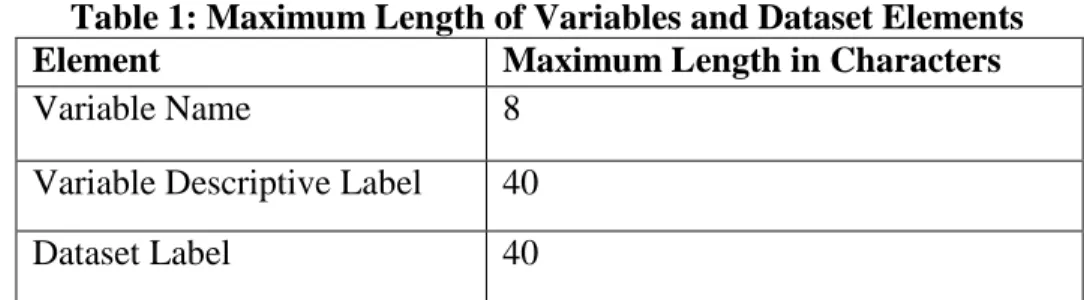
The length of variable names, descriptive labels, and dataset labels should not exceed the maximum permissible number of characters described below.
Table 1: Maximum Length of Variables and Dataset Elements
Element Maximum Length in Characters
Variable Name 8
Variable Descriptive Label 40
Dataset Label 40
3.3.5 Special Characters: Variables and Datasets
Variable names, as well as variable and dataset labels should include American Standard Code for Information Interchange (ASCII) text codes only.
3.3.6 Variable and Dataset Names
Variable and dataset names should not contain punctuation, dashes, spaces, or other non-alphanumeric symbols. In addition, the variable and dataset names should not contain special characters, including:
\ / * ,? < > | “ ‘ : % # + ( ) { } [ ]
8
3.3.7 Variable and Dataset Labels
Variable and dataset labels can include punctuation characters. However, special characters should not be provided, such as,
1. Unbalanced apostrophe, e.g., Parkinson's. 2. Unbalanced single and double quotation marks.
3. Unbalanced parentheses, braces or brackets, e.g., ‘(‘, ‘{‘and ‘[‘. 4. ‘<’ less-than sign and ‘>’ greater-than sign.
4.
Study Data Submission Format – Clinical and Nonclinical
4.1Clinical Data Interchange Standards Consortium
Clinical Data Interchange Standards Consortium (CDISC) is an open,
multidisciplinary, neutral, nonprofit standards development organization (SDO) that has been working through consensus-based collaborative teams to develop global data standards for clinical and nonclinical research.22
Data format specifications for the tabulation datasets of clinical and nonclinical toxicology studies are provided by SDTM and SEND, respectively, while data format specifications for the analysis datasets of clinical studies are provided by ADaM. It should be noted that data format specifications for the analysis datasets of nonclinical toxicology studies have not been developed yet. As noted in section 1.1, the
Standards Catalog provides a listing of the currently supported data standards with links to reference materials.
Although the SDTM and SEND formats facilitate review of the data, they do not always provide the data structured in a way that supports all analyses needed for review. Analysis files are critical for FDA to understand, on a per subject basis, how the specific analyses contained in the study report have been created. Therefore, sponsors should supplement the SDTM with ADaM analysis datasets as described below.
There may be instances in which current implementation guides (e.g., SDTMIG, SENDIG) do not provide specific instruction as to how certain study data should be represented. In these instances, sponsors should discuss their proposed solution with the review division and submit supporting documentation that describes these
decisions or solutions in the SDRG at the time of submission.
22
9
4.1.1 Study Data Tabulation Model 4.1.1.1 Definition
The Study Data Tabulation Model (SDTM) defines a standard structure for human clinical trials tabulation datasets.
4.1.1.2 SDTM General Considerations
It is recommended that sponsors implement the SDTM standard for representation of clinical trial tabulation data prior to the conduct of the study. The use of case report forms that incorporate SDTM standard data elements (e.g., Clinical Data Acquisition Standards Harmonization (CDASH)) allows for a simplified process for the creation of SDTM domains.
The SDTMIG should be followed unless otherwise indicated in this Guide or in the
Standards Catalog. The conformance criteria listed in the SDTMIG should not be interpreted as the sole determinant of the adequacy of submitted data. If there is uncertainty regarding implementation, the sponsor should discuss application-specific questions with the review division and general standards implementation questions with the specific center resources identified elsewhere in this Guide (See section 1.2). No data should be imputed in SDTM datasets. Data should only be imputed in
ADaM datasets (See section 4.1.2.9.2).
Except for variables that are defined in the SDTMIG as being coded, no numerically coded variables should typically be submitted as part of the SDTM datasets. Numeric values generated from validated scoring instruments or questionnaires do not
represent codes, and therefore have no relevance for this issue. There may be special instances when codes are preferred, hence sponsors should refer to the review
division for direction, if there are any questions. Subject Identifier (SUBJID)
The SUBJID is an ID of the entity (i.e., person) that participates in a trial. If the same subject is screened more than once in a trial, then the subject’s SUBJID should be different.
Unique Subject Identifier (USUBJID)
Each individual subject should be assigned a single unique identifier across the entire application. This is in addition to the subject ID (SUBJID) used to identify subjects in each study and its corresponding study report. An individual subject should have the exact same unique identifier across all datasets, including between SDTM and ADaM datasets. Subjects that participate in more than one study should maintain the same USUBJID across all studies. It is important to follow this convention to enable pooling of a single subject’s data across studies (e.g., a randomized control trial and an extension study).
Sponsors should not add leading or trailing spaces to the USUBJID variable in any dataset. For example, applications have been previously submitted in which the
10
USUBJID variable for each individual subject appeared to be the same across datasets; however, in certain datasets, the actual entry had leading zeros added, or zeros added elsewhere in the entry. This does not allow for machine-readable matching of individual subject data across all datasets. Improper implementation of the USUBJID variable is a common error with applications and often requires sponsors to re-submit their data.
Adjudication Data
There are no existing standards or best practices for the representation of adjudication data as part of a standard data submission. Until standards for adjudication data are developed, it is advised that sponsors discuss their proposed approach with the review division and also include details about the presence, implementation approach, and location of adjudication data in the SDRG.
4.1.1.3 SDTM Domain Specifications
SUPPQUAL (Supplemental Qualifier)
A SUPPQUAL dataset is a special SDTM dataset that contains non-standard
variables which cannot be represented in the existing SDTM domains. SUPPQUAL should be used only when key data cannot be represented in SDTM domains. In general, variables used to support key analyses should not be represented in
SUPPQUAL. Discussion with the review division should occur if the sponsor intends to include important variables (e.g., that support key analyses) in SUPPQUAL
datasets, and reflected in the SDRG. DM Domain (Demographics)
In the DM domain, each subject should have only one single record per study. Screen failures, when provided, should be included as a record in DM with the ARM field left blank. For subjects who are randomized in treatment group but not treated, the planned arm variables (ARM and ARMCD) should be populated, but actual treatment arm variables (ACTARM and ACTARMCD) should be left blank.23 DS Domain (Disposition)
When there is more than one disposition event, the EPOCH variable should be used to aid in distinguishing between them. This will allow identification of the EPOCH in which each event occurred. If a death of any type occurs, it should be the last record and should include its associated EPOCH. It is expected that EPOCH variable values will be determined based on the trial design and thus should be defined clearly and documented in the define.xml.
SE Domain (Subject Elements)
23
Although this convention is inconsistent with the SDTMIG, FDA recommends its use so that “Screen Failure” is not specified as a treatment arm.
11
The Subject Elements domain should be included to aid in the association of subject data (e.g., findings, events, and interventions) with the study element in which they occurred.
AE Domain (Adverse Events (AE))
Currently, there is no variable in the AE domain that indicates if an AE was
“treatment-emergent.” The AE domain should include all adverse events that were recorded in the subjects’ case report forms, regardless of whether the sponsor determined that particular events were or were not treatment-emergent.
The entry of a “Y” for the serious adverse event variable, AESER, should have the assessment indicated, (e.g., as a death, hospitalization, or disability/permanent damage). Frequently, sponsors omit the assessment information, even when it has been collected on the CRF. The criteria that led to the determination should be provided. This information is critical during FDA review to support the
characterization of serious AEs. Custom Domains
The SDTMIG permits the creation of custom domains if the data do not fit into an existing domain. Prior to creating a custom domain, sponsors should confirm that the data do not fit into an existing domain. If it is necessary to create custom domains, sponsors should follow the recommendations in the STDMIG. In addition, sponsors should present their implementation approach in the SDRG.
LB Domain (Laboratory)
The size of the LB domain dataset submitted by sponsors is often too large to process (See section 3.3.2). This issue can be addressed by splitting a large LB dataset into smaller datasets according to LBCAT and LBSCAT, using LBCAT for initial splitting. If the size is still too large, then use LBSCAT for further splitting. For example, use the dataset name lb1.xpt for chemistry, lb2.xpt for hematology, and lb3.xpt for urinalysis. Splitting the dataset in other ways (e.g., by subject or file size) makes the data less useable. Sponsors should submit these smaller files in addition to the larger non-split standard LB domain file. Sponsors should submit the split files in a separate sub-directory/split that is clearly documented in addition to the non-split standard LB domain file in the SDTM datasets directory (See section 7).
Trial Design
All Trial Design datasets should be included in SDTM submissions as a way to describe the planned conduct of a clinical trial..
EC Domain (Exposure as Collected)
The Exposure as Collected domain provides for protocol-specified study treatment administrations, as-collected. The EC domain may address some challenges in providing a subject’s exposure to study medication. However, testing and acceptance has not been completed on the EC and it is not supported at this time.
12 DD (Death Details)
The Death Details domain provides for supplemental data that are typically collected when a death occurs, such as the official cause of death. The DD domain may has not completed testing and acceptance and it is not supported at this time.
4.1.2 Analysis Data Model 4.1.2.1 Definition
Specifications for analysis datasets for human drug product clinical studies are provided by the Analysis Data Model (ADaM) and its implementation by the ADaMIG. Analysis datasets should be used to create and to support the results in clinical study reports, Integrated Summaries of Safety (ISS), and Integrated Summaries of Efficacy (ISE), as well as other analyses required for a thorough regulatory review. Analysis datasets can contain imputed data or data derived from SDTM datasets.
4.1.2.2 General Considerations
Generally, ADaM facilitates FDA review. However, it does not always provide data structured in a way that supports all of the analyses that should be submitted for review. For example, ADaM structures do not support simultaneous analysis of multiple dependent variables or correlation analysis across several response variables. Therefore, sponsors should, as needed, supplement their ADaM datasets after
discussions with the specific review division.
One of the expected benefits of analysis datasets that conform to ADaM is that they simplify the programming steps necessary for performing an analysis. As noted above, ADaM datasets should be derived from the data contained in the SDTM datasets. There are features built into the ADaM standard that promote traceability from analysis results to ADaM datasets and from ADaM datasets to SDTM. To ensure traceability, all SDTM variables utilized for variable derivations in ADaM should be included in the ADaM datasets when practical. Each analysis dataset that is submitted should be described accordingly with complete metadata in the
define.xml file (See section 4.1.4.5).
4.1.2.3 Key Efficacy and Safety Variables
Sponsors should submit ADaM datasets to support key efficacy and safety analyses. At least one dataset should be referenced in the define file as containing the primary efficacy variables. Further, variables pertaining to the primary and secondary
endpoints of a trial, along with their derivations (as applicable), should be provided as well as documented appropriately (i.e., variable-level metadata or parameter value-level metadata) in the define file.
4.1.2.4 Timing Variables
A variable for relative day of measurement or event, along with timing variables for visit should be included when an analysis dataset contains multiple records per subject (i.e., repeated measures data).
13
4.1.2.5 Core Variables
Core variables, which include covariates presented in the study protocol that are necessary to analyze data, should be included in each ADaM dataset, and are typically already included in the Subject Level Analysis Data (ADSL) dataset (See section 4.1.2.9.1). The core variables included in an ADaM dataset should be necessary for the analysis need in that dataset. Examples of core variables include study/protocol number, center/site number, geographic region, country, treatment assignment information, sex, age, race, analysis population flags (e.g., Intent-to-Treat (ITTFL), Full Analysis Set (FASFL), Safety (SAFFL), Per-Protocol (PPROTFL)), and other important baseline demographic variables. Note that all variables that contain coded data should be accompanied by a variable that provides the decoded information.
In addition, it is important to note that SDTM datasets do not have core variables (such as demographic and population variables) repeated across the different domains. The duplication of core variables across various domains can be fulfilled through their inclusion in the corresponding analysis datasets. For example, the SDTM adverse event dataset does not allow for the inclusion of variables such as treatment arm, sex, age, or race. These and other variables should be included in an adverse event analysis dataset.
4.1.2.6 Dates
Dates should be formatted as numeric in the analysis datasets. In addition to including dates formatted as International Standards Organization (ISO) 8601,
corresponding numeric dates should be included in the analysis datasets. The specific date of reference used to calculate numeric dates varies by software; hence this date of reference should be specified within the ADRG. In the event of partial dates, imputation should be performed only for dates required for analysis according to the statistical analysis plan, and appropriate corresponding ADaM imputation flags should be utilized.
4.1.2.7 Labels
Each dataset should be described by an internal label that is shown in the define.xml file. The label names of analysis datasets should be different from those of the
SDTM datasets. For example, the SDTM adverse event dataset (AE) and the analysis adverse event dataset (e.g., ADAE) should not share the exact same dataset label, such as “Adverse Events.”
4.1.2.8 Software Programs
Sponsors should provide the software programs used to create all ADaM datasets along with the tables and figures associated with primary and secondary efficacy analyses in order to help reviewers to better understand how the datasets, tables and figures were created. The specific software utilized should be specified in the ADRG. These software programs do not need to be executable, but they do need to
14
provide sufficient information to help understand how the work was done. Any submitted programs (scripts) generated by an analysis tool should be provided as ASCII text files or PDF files, e.g., adsl.sas should be submitted as either adsl.txt or adsl.pdf.
4.1.2.9 ADaM Dataset Specifications 4.1.2.9.1 Subject Level Analysis Data
Subject Level Analysis Data (ADSL) is the subject-level analysis dataset for ADaM. All submissions containing standard data should contain an ADSL file for each study. In addition to the variables specified for ADSL in the ADaMIG such as those
previously listed in the core variables section (See section 4.1.2.5) above, the sponsor should include multiple additional variables representing various important baseline subject characteristics / covariates presented in the study protocol. Some examples of baseline characteristics / covariates include, but are not limited to, disease severity scores such as Acute Physiology and Chronic Health Evaluation (APACHE) scores,24 baseline organ function measurements such as calculated creatinine clearance or Forced Expiratory Volume in 1 second (FEV1); range categories for continuous variables; and numeric date variables in non-ISO formats.
4.1.2.9.2 Imputed Data
When data imputation is utilized in ADaM, sponsors should submit the relevant supporting documentation (i.e., define.xml and ADRG) explaining the imputation methods.
4.1.3 Standard for Exchange of Nonclinical Data 4.1.3.1 Definition
The Standard for Exchange of Nonclinical Data (SEND) provides the organization, structure, and format of standard nonclinical (animal toxicology studies) tabulation datasets for regulatory submission. Currently, the SEND Implementation Guide (SENDIG) supports single-dose general toxicology, repeat-dose general toxicology, and carcinogenicity studies.
4.1.3.2 General Considerations
The SENDIG provides specific domain models, assumptions, conformance and business rules, and examples for preparing standard tabulation datasets that are based on the SDTM. If there is uncertainty regarding SEND implementation, the sponsor should discuss the issue with the review division.
The ideal time to implement SEND is prior to the conduct of the study as it is very important that the results presented in the accompanying study report be traceable back to the original data collected.
24
Knaus WA, Draper EA, Wagner DP, Zimmerman JE (1985). “APACHE II: a severity of disease classification system.” Critical Care Medicine, 13 (10): 818–829.29.
15
4.1.3.3 SEND Domain Specification
SUPPQUAL (Supplemental Qualifier)
A SUPPQUAL dataset is a special SEND dataset that contains non-standard variables which cannot be represented in the existing SEND domains. Discussion with the review division should occur if the sponsor intends to include important variables (i.e., that support key analyses) in SUPPQUAL datasets and this should be reflected in the SDRG.
Currently, SUPPQUAL should be used to capture some collected information (e.g., pathology modifiers) until the SEND is further refined to adequately represent such information.
Microscopic Findings (MI) Domain
Sponsors should ensure that the transformation of findings from MIORRES to MISTRESC closely adheres to the instructions in the SENDIG. Modifiers for which there are variables available (e.g. MISEV, MILAT, etc.) should be placed
appropriately. There should be no severities (e.g., minimal, mild, etc.) included in MISTRESC. Sponsors should use the VISITDY variable if postmortem findings which were intended to be analyzed together were collected across multiple study days.
Macroscopic Findings (MA) Domain
Sponsors should use the VISITDY variable if postmortem findings which were intended to be analyzed together were collected across multiple study days. Custom Domains
The SENDIG allows for the creation of custom domains if the data do not fit into an existing domain.
Tumor Dataset
Carcinogenicity studies should include an electronic dataset of tumor findings to allow for a complete review. At this time sponsors should include a tumor.xpt file while following the specification in the SENDIG for its creation regardless of whether or not the study is in SEND format (See www.cdisc.org/send).
4.1.4 General Considerations: SDTM, SEND, and/or ADaM
4.1.4.1 Variables in SDTM and SEND: Required, Expected, and Permissible
CDISC data standards categorize SDTM and SEND variables as being Required, Expected, and Permissible. In some instances, sponsors have interpreted Permissible variables as being optional and, in other cases, sponsors have excluded Expected variables. For the purposes of SDTM and SEND submissions, all Required,
16
Expected, and Permissible variables that were collected, plus any variables that are used to compute derivations, should be submitted.25
SDTM datasets should not contain imputed data. FDA recognizes that SDTM contains certain operationally derived variables that have standard derivations across all studies (e.g., --STDY, EPOCH). If the data needed to derive these variables are missing, then these variables cannot be derived and the values should be null. The following are examples of some of the Permissible and Expected variables in SDTM and SEND that should be included, if available:
1. Baseline flags (e.g., last non-missing value prior to first dose) for Laboratory results, Vital Signs, ECG, Pharmacokinetic Concentrations, and Microbiology results. Currently, for SDTM, baseline flags should be submitted if the data were collected or can be derived.
2. EPOCH designators. Please follow CDISC guidance for terminology.26 The variable EPOCH should be included for clinical subject-level observation (e.g., adverse events, laboratory, concomitant medications, exposure, vital signs). This will allow the reviewer to easily determine during which phase of the trial the observation occurred (e.g., screening, on-therapy, follow-up), as well as the actual intervention the subject experienced during that phase.
3. Whenever --DTC, --STDTC or --ENDTC, which have the role of timing variables, are included, the matching Study Day variables (DY, STDY, or --ENDY, respectively) should be included. For example, in most Findings
domains, --DTC is Expected, which means that --DY should also be included. In the Subject Visits domain, SVSTDTC is Required and SVENDTC is Expected; therefore, both SVSTDY and SVENDY should be included.
4.1.4.2 Dates in SDTM and SEND
Dates in SDTM and SEND domains should conform to the ISO 8601 format. Examples of how to implement dates are included in the SDTMIG and SENDIG.27
4.1.4.3 Naming Conventions in SDTM and SEND
Naming conventions (variable name and label) and variable formats should be followed as specified in the SDTMIG and SENDIG.
25 See CDISC SDTM Implementation Guide at www.cdisc.org for additional information on variables
referenced throughout this Guide
26See http://www.cancer.gov/cancertopics/terminologyresources/page6.
17
4.1.4.4 SDTM and SEND Versions
When submitting clinical and nonclinical data, sponsors should not mix versions within a study. As noted above, the Standards Catalog lists the versions that are supported by FDA.
Conversions to one standardized version should be described in the SDRG, including the rationale for the conversion.
4.1.4.5 Data Definition Files for SDTM, SEND, and ADaM
The data definition file, i.e., define file, describes the metadata of the submitted electronic datasets, and is considered arguably the most important part of the
electronic dataset submission for regulatory review. This data definition specification for submitted datasets defines the metadata structures that should be used to describe the datasets and variables. An insufficiently documented define file is a common deficiency that reviewers have noted. Consequently, the sponsor needs to provide complete detail in this file, especially for the specifications pertaining to derived variables. In addition, sponsors should also make certain that the code list and origin for each variable are clearly and easily accessible from the define file. The version of any external dictionary should be clearly stated both in the define file and, where possible, in the updated Trial Summary (TS) domain (SDTMIG 3.1.2 or greater; SENDIG 3.0 or greater). The internal dataset label should also clearly describe the contents of the dataset. For example, the dataset label for an efficacy dataset might be “Time to Relapse (Efficacy).”
Separate define files should be included for each type of electronic dataset
submission, i.e., a separate define file for the SDTM datasets, a separate define file for the SEND datasets, and a separate define file for the ADaM datasets. The define file should be submitted in XML format, i.e., a properly functioning define.xml28. In addition to the define.xml, a printable define.pdf should be provided if the define.xml cannot be printed29. To confirm that a define.xml is printable within the CDER IT environment, it is recommended that the sponsor submit a test version to [email protected] prior to application submission. If a define.xml version 2.0 or later version is submitted, then a define.pdf does not need to be included in the submission. The Standards Catalog lists the currently supported version(s) of define.xml. Sponsors should include a reference to the style sheet as defined in the specification and place the corresponding style sheet in the same submission folder as the define.xml file.
28 See http://www.cdisc.org/define-xml
29 Detailed FDA PDF specifications are located on FDA’s Electronic Common Technical Document
(eCTD) Web site,
http://www.fda.gov/drugs/developmentapprovalprocess/formssubmissionrequirements/electronicsubmissio ns/ucm153574.htm
18
4.1.4.6 Annotated Case Report Form (aCRF) for SDTM
An Annotated Case Report Form (aCRF) is a PDF document that maps the clinical data collection fields used to capture subject data (electronic or paper) to the corresponding variables or discrete variable values contained within the SDTM datasets. Regardless of whether the clinical database is legacy or SDTM compliant, an aCRF should be submitted. The aCRF should be provided as a PDF with the file name “acrf.pdf.”30 The SDTM Metadata Submission Guidelines should be used for additional information on annotated CRFs.31
The aCRF should include treatment assignment forms, when applicable, and should map each variable on the CRF to the corresponding variables in the datasets (or database). The aCRF should include the variable names and coding for each CRF item.
When data are recorded on the CRF but are not submitted, the CRF should be annotated with the text "NOT SUBMITTED.” There should be an explanation in the SDRG stating why data have not been submitted.
5.
Therapeutic Area Standards
5.1General
The following SDTM domains associated with the listed therapeutic area user guide have not completed testing and acceptance and are not supported at this time.
SDTM IG Domain Therapeutic Area User Guide 1. Healthcare Encounters Cardiovascular Studies, 1.0;
Polycystic Kidney Disease, 1.0; Asthma, 1.0
2. Microscopic Findings Tuberculosis, 1.0; Parkinson’s,1.0
3. Morphology Cardiovascular Studies,1.0;
Parkinson’s,1.0; Polycystic Kidney Disease,1.0; Alzheimer’s,1.0; Multiple Sclerosis,1.0
4. Procedures Cardiovascular Studies,1.0;
Polycystic Kidney Disease,1.0; Alzheimer’s,1.0
5. Reproductive System Polycystic Kidney Disease, 1.0
6. Disease Response Tuberculosis,1.0
7. Skin Response Asthma,1.0
30 Previously acrf.pdf was called blankcrf.pdf.
31 See Study Data Tabulation Model Metadata Submission Guidelines (SDTM-MSG)
19
6.
Terminology
6.1General
Common dictionaries should be used across all clinical studies and throughout the submission for each of the following: adverse events, concomitant medications, procedures, indications, study drug names, and medical history. FDA recommends that sponsors use, where appropriate, the terminologies supported and listed in the
Standards Catalog. It is important that coding standards, if they exist, be followed (e.g., ICH MedDRA Term Selection: Points-to-Consider document). Frequently, sponsors submit data that do not conform to terminology standards, for example, misspelling of MedDRA or WHO Drug terms, lack of conformance to upper / lower case, or the use of hyphens. All controlled terms submitted in datasets should conform to the exact case and spelling used by the terminology maintenance organization (e.g., MedDRA, CDISC controlled terminology). These conformance issues make it difficult to use or develop automated review and analysis tools. The use of a dictionary that is sponsor-defined or an extension of a standard dictionary should be avoided if possible, but, if essential, its use should be documented in the define.xml file and the SDRG.
6.1.1 Controlled Terminologies
Controlled terminology standards are an important component of study data
standardization and are a critical component of achieving semantically interoperable data exchange (See Appendix). Generally, controlled terminology standards specify the key concepts that are represented as definitions, preferred terms, synonyms, codes, and code system.
The analysis of study data is greatly facilitated by the use of controlled terms for clinical or scientific concepts that have standard, predefined meanings and representations. Standard terminology for adverse events perhaps represents the earliest example of using standards for study data. For example, myocardial
infarction and heart attack are synonyms, and as such should be mapped to the same term in a standard dictionary. This level of standardization facilitates an efficient analysis of events that are coded to the standard term. In electronic study data submissions, sponsors should provide the actual verbatim terms that were collected (e.g., on the case report form), as well as the coded term.
Controlled terminology is also useful when consistently applied across studies to facilitate integrated analyses (that are stratified by study) and cross-study comparative analyses (e.g., when greater statistical power is needed to detect important safety signals). Cross-study comparisons and pooled integrated analyses occasionally provide critical information for regulatory decisions, such as statistical results that
20
support effectiveness,32 as well as important information on exposure-response relationships33 and population pharmacokinetics34.
6.1.2 Use of Controlled Terminologies
FDA recognizes that studies are conducted over many years, during which time versions of a terminology may change. Generally, FDA expects sponsors to use the most current version of an FDA-supported terminology available at the time of coding. It is acceptable to have different studies use different versions of the same dictionary within the same application. There are some situations where it may be acceptable to use a single older version of a dictionary across multiple studies, even though that version may not be the most current for the later studies. The study data submission should describe the impact, if any, of the older version on the study results in the SDRG. For example, if the sponsor anticipates pooling coded data across multiple studies, then it may be desirable to use a single version across those studies to facilitate pooling. If a sponsor selects this approach, then the approach and the justification should be documented in the Standardization Plan, or in an update to the plan.
Regardless of the specific versions used for individual studies, pooled analyses of coded terms across multiple studies (e.g., for an integrated summary of safety) should be conducted using a single version of a terminology. This will ensure a consistent and coherent comparison of clinical and scientific concepts across multiple studies. Sponsors should specify the terminologies and versions used in the study in the SDRG.
6.1.3 Maintenance of Controlled Terminologies
The use of supported controlled terminologies is recommended wherever available. If a sponsor identifies a concept for which no standard term exists, FDA recommends that the sponsor submit the concept to the appropriate terminology maintenance organization as early as possible to have a new term added to the standard dictionary. FDA considers this good terminology management practice. The creation of custom terms (i.e., so-called extensible code lists) for a submission is discouraged, because this does not support semantically interoperable study data exchange. Furthermore,
32 See the guidance for industry Providing Clinical Evidence of Effectiveness for Human Drugs and
Biological Products, available at
http://www.fda.gov/downloads/Drugs/GuidanceComplianceRegulatoryInformation/Guidances/ucm072008. pdf. We update guidances periodically. To make sure you have the most recent version of a guidance, check the FDA Drugs guidance Web page at
http://www.fda.gov/Drugs/GuidanceComplianceRegulatoryInformation/Guidances/default.htm.
33 See the guidance for industry Exposure-Response Relationships — Study Design, Data Analysis, and
Regulatory Applications,
http://www.fda.gov/downloads/Drugs/GuidanceComplianceRegulatoryInformation/Guidances/ucm072109. pdf.
34 See the guidance for industry Population Pharmacokinetics, available at
http://www.fda.gov/downloads/Drugs/GuidanceComplianceRegulatoryInformation/Guidances/ucm072137. pdf.
21
the use of custom or “extensible” code lists should not be interpreted to mean that sponsors may substitute their own nonstandard terms in place of existing equivalent standardized terms. Terminology maintenance organizations generally have well-defined change control processes. Sponsors should allow sufficient time for a proposed term to be reviewed and included in the terminology, as it is desirable to have the term incorporated into the standard terminology before the data are
submitted. If custom terms cannot be avoided, the submitter should clearly identify and define them within the submission, reference them in the SDRG, and use them consistently throughout the application.
If a sponsor identifies an entire information domain35 for which FDA has not accepted a specific standard terminology, they may select a standard terminology to use, if one exists. FDA recommends that sponsors include this selection in the
Standardization Plan (See section 2.1) or in an update to the existing plan, and
reference it in the SDRG. If no controlled terminology exists, the sponsor may define custom terms. The non-FDA supported terms (whether from a non-supported
standard terminology or sponsor-defined custom terms) should then be used consistently throughout all relevant studies within the application.
6.2CDISC Controlled Terminology
Sponsors should use the terminologies and code lists in the CDISC Controlled Terminology, which can be found at the NCI (National Cancer Institute) Enterprise Vocabulary Services.36 For variables for which no standard terms exists, or if the available terminology is insufficient, the sponsor should propose its own terms. The sponsor should provide this information in the define.xml file and in the SDRG.
6.3Adverse Events 6.3.1 MedDRA
6.3.1.1 General Considerations
MedDRA should be used for coding adverse events. The spelling and capitalization of MedDRA terms should match the way the terms are presented in the MedDRA dictionary (e.g., spelling and case). Common errors that have been observed include the incorrect spelling of a System Organ Class (SOC) and other MedDRA terms. Generally, the studies included in an application are conducted over many years and may have used different MedDRA versions. To avoid potential confusion or
incorrect results, the preparation of the adverse event dataset for the ISS should include MedDRA Preferred Terms from a single version of MedDRA. The reason for an ISS based on a single version of MedDRA is that reviewers often analyze adverse events across studies, including the use of Standardized MedDRA Queries.37 In
35 By information domain, we mean a logical grouping of clinical or scientific concepts that are amenable
to standardization (e.g., adverse event data, laboratory data, histopathology data, imaging data).
36
See http://www.cancer.gov/cancertopics/terminologyresources/page6.
37
22
addition, sponsors should use the MedDRA-specified hierarchy of terms. The SDTM variables for the different hierarchy levels should represent MedDRA-specified primary SOC-coded terms.
6.4Medications
6.4.1 FDA Unique Ingredient Identifier 6.4.1.1 General Considerations
The FDA Unique Ingredient Identifier (UNII)38 should be used to identify active ingredients (specifically, active moieties) that are administered to investigational subjects in a study (either clinical or nonclinical). This information should be
provided in the SDTM Trial Summary (TS) domain. UNIIs should be included for all active moieties of investigational products (TSPARM=TRT or TRTUNII), active comparators (TSPARM=COMPTRT), and any protocol-specified background treatments (TSPARM=CURTRT).
If a medicinal product has more than one active moiety, then multiple records in TS should be provided, one for each active moiety. For example, if the investigational product is Bactrim (a combination of sulfamethoxazole and trimethoprim), then TS will contain two records for TSPARM=TRT: one for sulfamethoxazole and one for trimethoprim.
The preferred substance names and UNII codes can be found by searching FDA’s Substance Registration System, hosted by the National Library of Medicine.39 We recognize that unapproved substances may not yet have registered UNII codes. We recommend that sponsors obtain UNII codes for unapproved substances as early in drug development as possible, so that relevant information, such as study data, can be unambiguously linked to those substances.
6.4.2 WHO Drug Dictionary 6.4.2.1 General Considerations
World Health Organization (WHO) Drug Dictionary40 is a dictionary maintained and updated by Uppsala Monitoring Centre. WHO Drug Dictionary contains unique product codes for identifying drug names and evaluating medicinal product information, including active ingredients and therapeutic uses.
Typically, WHO Drug is used to code concomitant medications. --DECOD should be populated with the generic name from the WHO dictionary, and --CLAS populated with the drug class, if the utilized dictionary codes drugs to a single class. When using WHODRUG, generally, --CLAS would not be filled because a drug may have multiple classes. However, one Anatomic Therapeutic Code (ATC) level 4 code
38 See
http://www.fda.gov/ForIndustry/DataStandards/SubstanceRegistrationSystem-UniqueIngredientIdentifierUNII/
39
The Substance Registration System can be accessed at http://fdasis.nlm.nih.gov/srs
23
could be mapped to --CLAS and the remainder of the ATC codes could be placed in SUPPCM.
6.5Pharmacologic Class
6.5.1 National Drug File -- Reference Terminology 6.5.1.1 General Considerations
The Veterans Administration’s National Drug File – Reference Terminology (NDF-RT)41 should be used to identify the pharmacologic class(es) of all active
investigational substances that are used in a study (either clinical or nonclinical). This information should be provided in the SDTM Trial Summary (TS) domain. The information should be provided as one or more records in TS, where
TSPARM=PCLAS.
Pharmacologic class is a complex concept that is made up of one or more component concepts: mechanism of action (MOA), physiologic effect (PE), and chemical
structure (CS).42 The established pharmacologic class is generally the MOA, PE, or CS term that is considered the most scientifically valid and clinically meaningful. Sponsors should include in TS the established pharmacologic class of all active moieties of investigational products used in a study. FDA maintains a list of established pharmacologic classes of approved moieties.43 If the established pharmacologic class is not available for an active moiety, then the sponsor should discuss the appropriate MOA, PE, and CS terms with the review division. For unapproved investigational active moieties where the pharmacologic class is unknown, the PCLAS record may not be available.
6.6Indication
6.6.1 SNOMED CT
6.6.1.1 General Considerations
The International Health Terminology Standards Organization’s (IHTSDO)
Systematized Nomenclature of Medicine – Clinical Terms (SNOMED CT)44 should be used to identify the medical condition or problem that the investigational product in a study is intended to affect (treat, diagnose or prevent, i.e., the indication). This information should be provided in the SDTM Trial Summary (TS) domain as a record where TSPARM=INDIC and TSPARM=TDIGRP. SNOMED CT was chosen to harmonize with Indication information in Structured Product Labeling (SPL)45. A
41
See http://mor.nlm.nih.gov/download/rxnav/NdfrtAPIs.html#
42 See the guidance for industry and review staff Labeling for Human Prescription Drug and Biologic
Products —Determining Established Pharmacologic Class for Use in the Highlights of Prescribing Information, available at
http://www.fda.gov/downloads/Drugs/GuidanceComplianceRegulatoryInformation/Guidances/ucm186607. pdf.
43 Available at
http://www.fda.gov/downloads/ForIndustry/DataStandards/StructuredProductLabeling/UCM346147.zip
44http://www.ihtsdo.org/snomed-ct/.
45
24
reviewer should be able to take the indication term from product labeling and readily search for clinical or nonclinical studies of that indication without having to translate.
6.7Laboratory Tests 6.7.1 LOINC
6.7.1.1 General Considerations
The Logical Observation Identifiers Names and Codes (LOINC) is a clinical terminology housed by the Regenstrief Institute.46 LOINC codes are universal identifiers for laboratory and other clinical observations that enable semantically interoperable clinical data exchange. The laboratory portion of the LOINC database contains the categories of chemistry, hematology, serology, microbiology (including parasitology and virology), toxicology, and more.
The SDTM already supports the exchange of LOINC codes using the LBLOINC variable.
7.
Electronic Submission Format
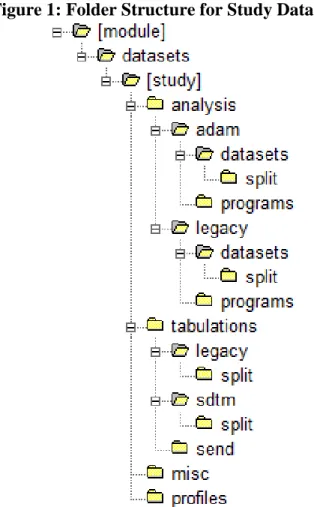
Study datasets and their supportive files should be organized into a specific file directory structure when submitted in the eCTD47 format (See Figure 1 and Table 2 below). Note that this structure is distinct from the eCTD headings and hierarchy folder structure, and does not affect it. Submission of files within the appropriate folders allows automated systems to detect and prepare datasets for review, and minimizes the need for manual processing.
The define.xml and supportive style sheet should reside in the same folder as the datasets they pertain to (e.g., for SDTM, place in “tabulations\sdtm\”). Do not submit empty file folders. Do not submit additional subfolders. If you feel that additional folders are needed, please consult with the appropriate center in advance for guidance.
If you need to split a file that exceeds file size limits (See section 3.3.2), you should submit the smaller split files in the “split” sub-folder in addition to the larger non-split file in the original data folder. There is no need for a second define.xml file to be submitted within the split subfolder.
All datasets should be referenced in the eCTD XML backbone. Datasets included within the eCTD should be accurately tagged within a study tagging file to ensure proper identification and organization.48 The file folder structure for study datasets
46 See
http://www.regenstrief.org/
47 See http://www.ich.org/products/ctd.html.
48 See “The eCTD Backbone File Specification for Study Tagging Files”
(http://www.fda.gov/downloads/Drugs/DevelopmentApprovalProcess/FormsSubmissionRequirements/Elec tronicSubmissions/UCM163560.pdf) for further details.
25
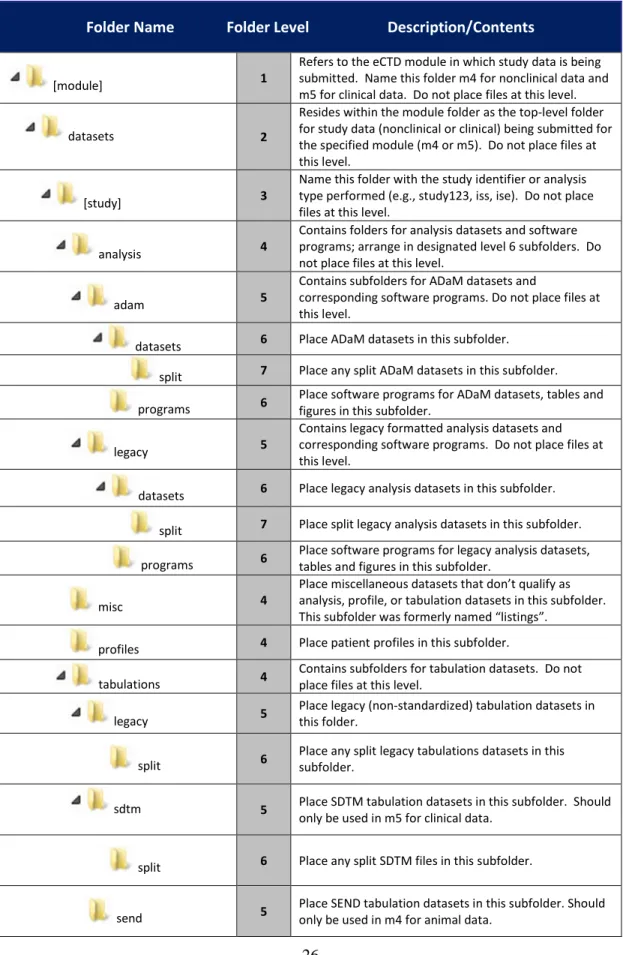
is summarized in Figure 1. Table 2 provides the study dataset and file folder structure and associated description.
26
Table 2: Study Dataset and File Folder Structure and Description Folder Name Folder Level Description/Contents
[module] 1
Refers to the eCTD module in which study data is being submitted. Name this folder m4 for nonclinical data and m5 for clinical data. Do not place files at this level.
datasets 2
Resides within the module folder as the top-level folder for study data (nonclinical or clinical) being submitted for the specified module (m4 or m5). Do not place files at this level.
[study] 3
Name this folder with the study identifier or analysis type performed (e.g., study123, iss, ise). Do not place files at this level.
analysis 4
Contains folders for analysis datasets and software programs; arrange in designated level 6 subfolders. Do not place files at this level.
adam 5
Contains subfolders for ADaM datasets and
corresponding software programs. Do not place files at this level.
datasets 6 Place ADaM datasets in this subfolder. split 7 Place any split ADaM datasets in this subfolder. programs 6 Place software programs for ADaM datasets, tables and figures in this subfolder.
legacy 5
Contains legacy formatted analysis datasets and corresponding software programs. Do not place files at this level.
datasets 6 Place legacy analysis datasets in this subfolder. split 7 Place split legacy analysis datasets in this subfolder. programs 6 Place software programs for legacy analysis datasets, tables and figures in this subfolder.
misc 4
Place miscellaneous datasets that don’t qualify as analysis, profile, or tabulation datasets in this subfolder. This subfolder was formerly named “listings”.
profiles 4 Place patient profiles in this subfolder.
tabulations 4 Contains subfolders for tabulation datasets. Do not place files at this level. legacy 5 Place legacy (non-standardized) tabulation datasets in this folder. split 6 Place any split legacy tabulations datasets in this subfolder. sdtm 5 Place SDTM tabulation datasets in this subfolder. Should only be used in m5 for clinical data.
split 6 Place any split SDTM files in this subfolder.