Moving
on up
Contents
Acknowledgements 02
Foreword 03
1. Introduction 04
1.1 An update on the evidence 04
1.2 The policy context 06
1.3 Exercise and mental health outcomes 06
2. The GP survey - Four years on 10
2.1 Significant statistics 10
2.2 Has much changed over four years? 13
2.3 Exercise: now an option? 13
2.4 Summary 13
3. Site evaluations 14
3.1 Overview 14
3.2 Key findings of the evaluation 14
3.3 Running an exercise scheme- lessons learned 16
3.4 The project sites 17
3.5 Analysis of site data 23
3.6 Exercise referral schemes: do they work? 24
3.7 Key learning points 28
4. Conclusion 30
5. Key recommendations 31
6. Appendices 33
Moving on up 02
Acknowledgements
We would like to thank all the sites who took part in this study and every participant who gave their time and thoughts. We would especially like to thank Jacqui Ryan and Matthew Saunders of Flitwick Leisure Centre; Carrie Holbrook of the Cambridge Start-Up Exercise Referral Scheme and Siobhan Rogers (and previously Carole O’Beney) of the Camden Active Health Team. We would also like to acknowledge the contribution of Changing Minds in Northampton, in particular Jayne Shears and Sonya Terry.
Dr Rowan Myron, Dr Cathy Street, Dan Robotham and Karen James prepared this report for the Mental Health Foundation.
Foreword
This extremely valuable follow up report from the Mental Health Foundation highlights an important subject; that if mental health continues to be regarded as the Cinderella service, then exercise referral schemes would be the ugly sister.
Despite a proven and increasing evidence base to support such schemes, much more needs to be done to persuade those in the health service of their benefits. Although the number of GPs who would prescribe exercise as a first line treatment for mild to moderate depression is increasing, it is disappointing that it remains at less than five percent. All healthcare professionals have a duty of care to promote exercise, therefore much more needs to be done to ensure that all who work within primary care have access to exercise referral schemes. There should be no postcode lottery. Our own experience as a developer and deliverer of exercise referral programmes is that activity, be it physical or creative, is an important tool which should be employed to help individuals suffering from mild to moderate depression.
The ultimate testament to the success of such schemes is the numbers who remain exercising and physically active since being referred. Exercise referral schemes must continue to evolve and flexibility and variety are crucial to sustaining interest from participants and providing GPs with a decent pool of schemes to recommend. Supported activity in its broadest sense is what counts, whether that is achieved within a gym environment or outdoors.
It is heartening to read many of the encouraging comments from people whose lives have been transformed by exercise. But word of mouth alone from those who have completed such schemes is not enough and we applaud and fully support campaigns such as ‘Up and Running?’ in their drive to raise awareness.
Rosi Prescott Chief Executive Central YMCA
Moving on up 04
1. Introduction
“The extent of any exercise I did before the programme was a gentle walk… now I go to the gym and I have also started to attend a local sports group…”
There is a substantial body of evidence to show that physical exercise is an effective treatment for people with mild to moderate depression. In 2005 Mental Health Foundation published
the report ‘Up and Running?’, which highlighted the need to promote exercise therapy for depression as a realistic and readily available tool for GPs and a genuine option that patients could both
understand and choose for themselves.
In 2006, Mental Health Foundation received some funding from the Department of Health to support and evaluate a small number of exercise referral schemes across the country. This report investigates the successes and barriers in place in sites currently running exercise
referral schemes and presents the key recommendations and lessons learned. The report also revisits what GPs currently think about exercise referral four years on from the first report.
1.1 An update on the evidence
Primary Care
Previous studies have indicated that physical activity is positively related to health-related quality of life and well-being among people with mild, moderate and severe mental distress1.
Although the physical health benefits of activity are well documented, evidence suggests that physical activity provides many psychological benefits as well. One study2 explored the psychological
effects of exercise on lifting mood. The investigators found that people experiencing mental distress generally had a low level of physical activity, their hierarchical analysis of two groups
(in Serbia and America) indicated that physical activity remained significantly positively associated with mood (even after accounting for individual variations in level of exercise).
A further study3 used an evidence based approach to demonstrate that exercise is not just physical
activity used for the purpose of conditioning any part of the body, but has positive effects upon wider physical health, mental health, disease prevention and productivity.
In terms of exercise referral programmes, one study4 investigated the effectiveness of a ten week
primary care exercise referral programme on the physical self-perception and self-worth of older adults. They found that even moderate levels of attendance improved self-perception and self worth. When looking specifically at exercise and depression a systematic review and meta-analysis
concluded that exercise may reduce depression symptoms short term, but much of the evidence is in need of replication and more robust research5. Another article, which overviewed the treatment
of depression , concluded that physical activity may play an important role in relieving depression6
especially when combined with other treatments.
In terms of anxiety and exercise one study7 found that physical activity was an effective treatment
Introduction
A number of different studies have demonstrated the positive mental health benefits of exercise referral whilst exploring recovery from a physical condition such as stroke or heart disease. One very recent study in 20098 found that a ten week exercise referral programme reduced
depressive symptoms in depressed chronic stroke survivors. They found both an immediate positive effect, and also a longer term effect when they followed the group up 6 months later with patients who had participated in the exercise referral programme. They noted modest improvements in health and well-being over time and they recommended that health professionals should focus on helping stroke survivor’s mental health recovery as well as their physical rehabilitation.
Secondary Care
Thus far, the research evidence has been focussed upon exercise referral in primary care for mild to moderate conditions. However, there is now an increasing evidence base
that exercise and exercise referral is appropriate and can be used successfully in secondary care settings, whether in institutionalised settings or in the community for those with severe and enduring mental health problems.
One study which took place in Australia9 noted that in the Australian health system there
is a growing recognition and understanding of the inextricable interrelationship between physical and mental health. Increasingly in mental health care settings, the physical health of service users is acknowledged as an issue requiring urgent action. This issue, they theorise, is related to negative symptoms and the lifestyle choices of people with mental illness. They also note that there is a clear link with the detrimental side effects of psychotropic medications which complicates the lack of confidence or skill in relation to physical health matters. The authors note the significant benefits of exercise on mental health and argue that mental health nurses and supporting staff must play an active role in health promotion, primary prevention and the early detection and management of physical health problems in their mentally unwell clients.
A recent study in England10 explored the use of a programme of exercise and sport as a social
support for men with serious mental illness. The study noted that social support was important in the initiation and maintenance of exercise and found that informational, tangible,
esteem and emotional support were both provided for and given by participants through exercise and noted that this element could be a significant support in an individual’s recovery journey. Exercise has also been shown to be useful within institutionalised settings. One study11 investigated
the impact of aerobic exercise on the severity of symptoms of Posttraumatic Stress Disorder (PTSD) for adolescents receiving inpatient care. They found that a fifteen session aerobic exercise programme had a positive impact upon trauma symptoms, reducing symptomology and improving wellbeing. Consequently, the research evidence base for exercise as an appropriate and effective
Moving on up 06
1.2 The policy context
“Increasing exercise is the most cost effective way of improving someone’s health. There is a sound evidence base of the benefits to cardiovascular and psychological health.” 12
Over the last decade, the benefits of regular physical activity have become widely recognised in preventing chronic disease and promoting health and well-being, including being
endorsed for a number of specific health conditions in National Institute for Health and Clinical Excellence (NIHCE) guidance13.
A report produced by the Department of Health in 200414, noted that adults who are physically
active have up to a 50% reduced risk of developing chronic diseases such as coronary heart disease, stroke, diabetes and some cancers.
The Department of Health published a report in 200515, examining the benefits of physical
activity in reducing the risks of depression, reducing anxiety and enhancing mood and self-esteem. There is now a growing evidence base that supports the use of exercise to tackle mild
to moderate depression and anxiety.
1.3 Exercise and mental health outcomes
In 2005, the Mental Health Foundation published the findings of its study of exercise as
a treatment option for depression - ‘Up and Running?’16 This was commissioned to examine available
treatments for mild and moderate depression in primary care and, in particular, to focus on antidepressant and exercise referral prescriptions, their use and availability, and how general practitioners and patients feel about them.
This report notes the following:
“The benefits to physical health… of regular exercise are well understood and accepted. But the benefits to mental health (reduced anxiety, decreased depression, enhanced mood, improved cognitive
functioning and self-worth) have been less widely reported and are less well-understood and accepted.”
It highlights the considerable costs associated with the writing of prescriptions for anti-depressants in England (£397.2 million in 2003) and identifies the following advantages:
• Exercise is cost-effective – compared to pharmacological and psychological interventions, even structured exercise programmes cost less over an equivalent time period.
• Exercise is available – all except those in very poor physical health can take some form of exercise which makes it a far more available option that many psychological treatments (highlighted by a variety of recent reports as being in short supply and subject to long waiting times on the NHS).
• There are co-incidental benefits - unlike the unpleasant side effects that can accompany some antidepressant medications, physical activity is relatively low risk. In addition, exercise can be used to treat patients with a mix of physical and mental health problems – for example, it can lead to healthier muscles, bones and joints alongside promoting a sense of achievement and increased self-esteem arising through an improvement in physical appearance. (A lack of physical fitness may in itself
be a contributing factor to a person’s mental health problems).
• Exercise is a sustainable recovery choice – exercise requires the active participation of the individual which can encourage and support people’s ability to make choices and which can be continued without ongoing professional supervision. This is in sharp contrast
to some treatments which can reinforce the sense of being a ‘passive recipient’ of care, which can reinforce one of the common characteristics of depression, that is, of feeling that one is unable, or has lost the ability to make choices.
• Exercise promotes social inclusion and is a ‘normalising’ experience – exercise is widely seen as something that is done by ‘healthy’ people and as such, carries no stigma. Medication and/or psychotherapy on the other hand, are often disliked because of the stigma attached to such treatments. The fact that exercise can easily be undertaken alongside other people, and can provide an avenue for shared common interests, provides an important social dimension to the activity, which can help to counter the feelings of isolation so often experienced by people with depression and other mental health problems.
• Exercise is popular – although only few qualitative studies have been undertaken, people with depression are reported to cite exercise as being an important
and positive part of their recovery programme. For example, in a survey of people who had experienced mental health difficulties by Mind in 2001, 50% reporting finding that exercise had helped them to recover.
Moving on up 08
The ‘Up and Running?’ report also cites a Department of Health finding that in a number of comparative studies, physical activity had been found to be as successful in treating depression as psychotherapy and that in two others, it had been found to be as successful in treating depression as medication.
Possible preventative effects have also been reported in a number of American studies which suggest that risks of developing depression are lower for those who engage in regular physical activity. Set against these generally positive findings however, the report also highlights some of the key findings from survey of two hundred GPs which goes some way to explaining why exercise is still not often thought of a ‘treatment of first choice’. These include:
• Pressure to act – to alleviate the distress a patient may be feeling, GPs can feel pressured into offering immediate relief in the form of medication (especially if this is requested by the patient).
• Time poverty – the survey results indicate that drug prescription rates increase with the numbers of patients on the GP’s list which may suggest that those GPs who are more time-pressured are also more likely to prescribe anti-depressants.
• Limited alternatives – difficulties accessing psychotherapy or counselling provision (which can also be expensive) can result in GPs opting for the immediately available option of prescribing anti-depressants.
• Limited visibility of non-pharmacological and non-psychotherapeutic alternatives – in comparison to the well-publicised trials of antidepressants, which are largely funded by the pharmaceutical industry, much lower levels of funding have been available for research into the outcomes of alternatives such as exercise; the findings of the research that has been carried out also may not reach GPs and other healthcare decision-makers.
• Expediency – findings from the ‘Up and Running?’ study suggested that doctors are aware of the strong placebo response an antidepressant may produce and that, given the
limited availability of preferred alternatives, may prescribe antidepressants as an expedient in the hope of inducing such a response.
• The dominance of pharmacology – medication has been the favoured response in primary care for some considerable period of time, a response that has been reinforced by extensive powerful marketing by the pharmaceutical industry.
Crucially, the report goes on to note that many GPs are uncomfortable with the way mild or moderate depression is managed in primary care, they would like more access to alternative treatment options and that, if they had such access, their prescribing behaviour would alter significantly.
It suggests that an important way forward may lie with exercise therapy which, through delivery in an appropriately supervised context, could make a significant difference to many people presenting in primary care with mild or moderate depression by:
• Expanding patient choice and power over their recovery – “depression is a condition that thrives on perceptions of powerlessness, and as such, an expansion of choice and power may itself have therapeutic effects.”
• Helping people to effect a sustainable lifestyle change that may continue to support their mental and physical health in the long-term.
Other advantages include empowering GPs by providing them with greater scope to offer holistic treatment plans and, ultimately, a wider use of exercise therapy could:
“reduce the cost burden on the NHS prescription budget, by giving GPs greater freedom to explore non-pharmacological approaches to treatment, and discouraging patients with mild to moderate depression from long-term dependence on medication.”
2. The GP survey – Four years on
As part of the first report the Mental Health Foundation surveyed GPs in November 2004 to explore their perceptions of exercise referral as a prescription. This survey was repeated in November 2007 to examine whether the rates and acceptance of GP referral to exercise had changed in the
intervening years. A nationally representative, quota controlled group of two hundred NHS GPs were surveyed. The majority of GPs surveyed were from England, a tenth of GPs were from Scotland and just under a tenth were from Wales, 3% were from Northern Ireland.
GPs were asked about their treatment responses for patients with mild to moderate depression. Just under half of GPs said that they prescribe antidepressant medication as their first treatment response and the majority of GPs believe this to be effective. In contrast, though over half of the GPs surveyed believed exercise to be an effective treatment, only 4% said they would refer to a supervised programme of exercise. Interestingly, when asked about their choice of treatment for themselves if they became depressed 38% of GPs would use antidepressant medication as their first choice of self-treatment and 18% would use a supervised programme of exercise. When considering talking therapy treatments, over a third of GPs would refer patients to some form of counselling or psychotherapy as their first treatment response and 10% of GPs would refer their patient to cognitive behavioural therapy.
When asked about their three most common treatment responses for patients with mild to moderate depression almost all GPs (94%) would prescribe anti-depressant medication, this is in line with the findings from the 2004 survey (92%). However, 21% of GPs said they would refer to a supervised programme of exercise and 4% would use it as their first treatment response, this is over four times more than the response in 2004 survey.
Significantly, over 40% of GPs do not have access to an exercise referral scheme.
Of these, 95% said that they would refer patients with mild to moderate depression to an exercise scheme, if they had access. Of the GPs who did have an exercise referral scheme over 80% used it as a treatment for their patients.
2.1 Statistics
• 45% of GPs most commonly prescribe antidepressants as their first treatment response to mild or moderate depression. 36% of GPs most commonly refer to some form
of counselling or psychotherapy as their first treatment response to mild or moderate depression, 10% of GPs refer to cognitive behavioural therapy as their first treatment response.
4% of GPs most commonly refer to a supervised programme of exercise as their first treatment response to mild or moderate depression (Figure 2).
• 72% of GPs believe that antidepressants are ‘quite effective’, 19% believe them to be ‘very effective’. 56% of all GPs surveyed believe that a supervised programme of exercise is ‘quite effective’ in the treatment of mild to moderate depression, 5% believe that it is ‘very effective’ (Figure 1).
Moving on up 10
Figure 1: GP perceptions of the effectiveness of exercise and antidepressants for patients with mild or moderate depression
80 70 60 50 40 30 20 10 0 Antidepressants Exercise programme Per cen
tage of GP
s r esp onding Ver y eff ec tiv e Quit e eff ec tiv e Not v er y eff ec tiv e Not at all eff ec tiv e Effectiveness
• When asked about their three most common treatment responses for mild
to moderate depression 94% of GPs prescribe antidepressant medication, 21% of GPs refer to a supervised programme of exercise (Figure 2).
Figure 2: GP preferred choices of treatment for patients with mild or moderate depression
80 70 60 50 40 30 20 10 0 Third choice Second choice First choice 90 100 Per cen
tage of GP
s pr
escribing
Treatments
Antidepr
essants
Counselling/ psychotherap
y Cog nitiv e Beha vioural Therap y Ex er cise pr og
ramme Other
12
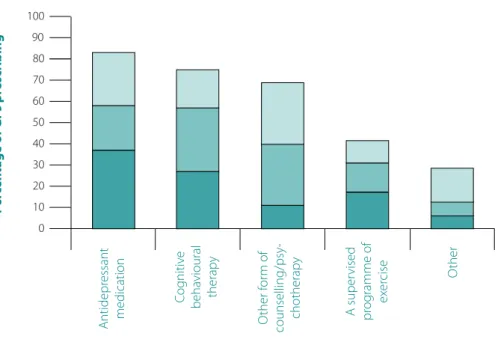
• 38% of GPs stated that if they became depressed they would use antidepressants as their first choice of treatment, 18% of GPs would use a supervised programme of exercise as their first choice of treatment. 83% of GPs said they would use antidepressant medication as one of their top three treatments for themselves, 43% of GPs said they would use exercise (Figure 3). Figure 3: The treatment strategies that GPs would use if they themselves became depressed 80 70 60 50 40 30 20 10 0 90 100 Per cen
tage of GP
s pr escribing Treatments Antidepr essant medication Cog nitiv e beha vioural therap y O ther for m of counselling/psy -chotherap y A super vised pr og ramme of ex er
cise Other
• 42% of GPs surveyed do not have access to an exercise referral scheme.
• Of the GPs who did have access to an exercise referral scheme 3% referred their patients to it ‘very frequently’, 22% ‘fairly frequently’, 61% ‘not very frequently’ and 14% did not use it at all.
• 95% of GPs who did not have access to an exercise referral scheme said that if they did they would use it as a treatment for mild to moderate depression, 15% said they would use it ‘very frequently’, 51% said they would use it ‘fairly frequently’ and 29% ‘not very frequently’.
• 70% of GPs said that they would use more social prescribing (for example;
bibliotherapy, exercise referral, self-help group referral) for common mental health problems if they had the option.
• 16% of GPs said that over the past two years they had noticed an increase in the number of patients with mild or moderate depression asking whether exercise would be a suitable treatment for their mental health problem.
The GP survey - Four years on
Third choice Second choice First choice
2.2 Has much changed over the last four years?
Antidepressant prescription is still the most favoured response by GPs with 55% choosing this method as their first response in 2004 and 45% in 2007. Some form of psychotherapy or counselling was chosen by 32% of GPs as their first response in 2004, and 36% in 2007. Less than 1% of GPs in 2004 would refer to a supervised programme of exercise as their first response, by 2007 this figure had risen to 4%. In 2004, 41% of GPs believed exercise to be ‘quite’ or ‘very’ effective as a treatment by 2007, this figure had risen to 61%.
If they became depressed themselves, more GPs now than in 2004, would try exercise
themselves. In 2004 40% would try counselling/psychotherapy first, 38% would try antidepressants first and 11% would try exercise first. In 2007, 38% would try antidepressants first, 27% would try counselling/psychotherapy first and 18% would try exercise first.
2.3 Exercise: now an option?
In terms of availability of an exercise referral scheme, the picture reported by GPs hasn’t
changed considerably. 42% of GPs reported access to a scheme in 2004, in 2007 this figure had risen to 49%, still less than half of GPs surveyed. 25% of those GPs who do have access would refer ‘fairly’ or ‘very’ frequently. This is a rise over the figure reported in 2004 of 15%.
GPs were asked if they had noticed an increase over the last two years in the number of patients asking whether exercise would be a suitable treatment for their mild to moderate depression. 16% had noticed an increase, 80% had not. When asked if they would do more social prescribing 70% of GPs said they would like to refer more often if they had the option.
2.4 Summary
The GPs surveyed seemed remarkably open to the option of exercise referral and believe in its effectiveness and use has risen over the last four years. More GPs in the current survey than in 2004 would refer to a supervised exercise referral scheme. Furthermore, many GPs would like to have the option to refer to such schemes. Similarly to the picture revealed in the past survey, GPs are still more likely to prescribe antidepressants than exercise referral or talking therapies. GPs were more likely to use exercise schemes if they themselves became ill. However, even in this case, GPs are more likely to prescribe medication as their first choice of treatment.
Moving on up 14
3. Site evaluations
“Makes me fitter, gives me my own space, feel good after it and feel like I can cope with everything…” (Interviewee, exercise scheme participant)
3.1 Overview
This section describes the findings of the evaluation of a selected number of exercise referral schemes who participated in the project supported by the Mental Health Foundation with funding from a Department of Health grant.
The central focus of this evaluation has been on developing an in-depth understanding of the experiences of individuals referred to the exercise schemes, the lasting impact of their involvement in exercise activities and their perceptions of any change in their physical and mental wellbeing as a result of taking part in an exercise programme.
Quantitative data included baseline information already routinely collected by the pilot sites and also the distribution of the Recovery Evaluation Form (see Appendix A). Qualitative information was gathered from focus groups and individual interviews with service users and staff from
2 selected leisure/exercise settings. The qualitative data from the other pilot sites is outlined alongside the collation of other relevant feedback gathered from exercise participants in these sites.
National Research Ethics Committee Approval for the study was given by the Royal Free Medical School Research Ethics Committee in April 2008 and the information gathering commenced that month and ran throughout the summer until the end of September.
3.2 Key findings of the evaluation
The findings from the evaluation highlight a range of benefits for those taking part in exercise referral schemes and also that there are a number of factors to be borne in mind in successfully developing and delivering exercise referral programmes.
With regard to the benefits for those taking part, the following were identified: Physical and psychological benefits:
Nearly all of the participants in the evaluation described feeling physically and psychologically better as a result of taking part in a programme of exercise, with many comments about increased confidence, feeling more energetic and generally fitter.
The quotes below illustrate the core theme findings:
“There have been many benefits to me in attending this programme. Over six weeks,
I have lost weight and my blood pressure is now within the ‘normal’ range… My mood has lifted… I had been feeling very low before attending this programme and using the gym has definitely had a positive effect on my mood…”
And:
“my instructor has contributed to the quality of my life greatly – from curing an aching hip to curing the blues”
Tackling isolation, promoting social inclusion and supporting peer relationships: Many of those who were interviewed lived alone and were quite isolated; several had experienced bereavement in recent years (a possible causal factor of depression).
In the focus groups and individual interviews, the social benefits (and the motivational effects) of joining an exercise programme, was a prominent theme:
“I suffer from depression and have found that the exercise classes really helped to improve my mood. My physical fitness has also improved. In the past I have belonged to gyms
but have always stopped going after a while because it was hard to motivate myself. I find going to a group activity very enjoyable. You see the same people every week and gradually get
to know one another. Knowing you are going to see friends makes exercise less of a chore and more of a pleasant social activity. Overall, the exercise classes have helped me to get fitter
and to avoid a relapse into severe depression.”
Another made the following statement:
“I am not exaggerating when I say that it transformed my life. I have taken part in activities that I had never dreamed of before the scheme and have made new friends”
Tackling anxiety and promoting confidence:
Several of the interviewees reported how attendance at an exercise class had helped them to overcome their feelings of anxiety and fear of leaving their homes to go into social
situations with other people. They described how with the encouragement of supportive exercise instructors, alongside a sense of what one described as the “physical exhilaration” after completing a class, they felt less anxious:
“I do know that if before a session I am anxious or fearful, during the work out these feelings diminish and afterwards I notice that I feel relaxed, feel I have achieved something and that my sleeping that night is better.”
Moving on up 16
Improved cognitive functioning:
A widely reported improvement was people’s ability to concentrate, to plan and to complete tasks. There were many comments about the way attending an exercise class gave structure to the day, and about looking forward to the activities and achieving the goals set by the exercise instructors:
“It has helped me to focus and to plan. I am also starting to think about new things I might try in the future.”
3.3 Running an exercise scheme – lessons learned
In terms of the development of exercise referral schemes, the evaluation revealed
that various factors are currently impacting on the successful development of the schemes including funding constraints within local government and/or primary care trusts.
In addition, the findings highlight the importance of the following:
• It appears that there is still quite limited awareness of exercise referral schemes amongst many who might refer – save for the occasional ‘champion’ GP or practice nurse
– and that ongoing and higher level activity to promote the benefits of exercise therapy are needed, including advertising through a wider range of venues such as libraries, further education colleges and job centres.
• Referrers to exercise schemes need to understand what is on offer so that they can pick the “right time and the right activity” to suggest a scheme to their patients – if exercise referral schemes are just routinely mentioned as a part of a health consultation,
various interviewees suggested that people are unlikely to have the confidence to respond.
• The referral process itself is an important avenue to clarify patients’ expectations and worries about an exercise activity, which can in turn contribute to a change in attitudes and beliefs about exercise. This is also noted in the earlier evaluation of the Camden scheme (one of the pilot sites in this study) by Middlesex University where it is concluded that:
“Providing patients with information relating to the activities on offer, the venues, and the class times, enables them to select an appropriate exercise class that suits their requirements. Giving patients the freedom of choice is likely to facilitate behaviour change…” 17
• Individualised support to engage people in the first class of an exercise programme
is essential if they are to attend past the initial session. In two of the pilot sites, quite high drop out rates of people referred for mental health reasons were reported and it was suggested that a lack of confidence and fear of new social situations were significant deterrents to their successful engagement in the programmes.
• It is important to have a menu of exercise choices available – not just gym-based programmes since for some people with mental health problems, less structured and more open-ended activities such as healthy walking schemes, may be more appropriate. If possible,
‘taster’ sessions should be offered to ease the route of access. Familiar staff members, who follow through on various different activities, can help to encourage people to try new things. In addition, providing access points into other activities, once the initial programme of exercise is complete, is key to keeping people active and supporting their recovery. Site evaluations
• Offering programmes at different times of the day, including in the early evening, is recommended to take account of the different commitments of those referred. Some people may be in, or once they start to feel better will be returning to, employment so this should be facilitated via flexible timings.
• Venues need to be accessible with high quality and well-maintained facilities. Various respondents talked of feeling put off by poorly maintained and over-crowded exercise venues.
• Respondents in the evaluation emphasised that the pace of exercise activity needs to be
tailored to meet the needs of the individuals referred, especially since many patients with mental health needs may never have taken part in a structured programme of exercise before.
• The size of the group or exercise class is important – too small and the opportunity to make new friends and form social networks is lost (or groups run the risk of being ‘cliquey’), whilst on the other hand, if the group is too large this can seem daunting and impersonal.
• Cost is a key consideration for many, with a number highlighting that
the availability of discount schemes or loyalty cards had influenced their decision to continue with an exercise activity once the initial programme was complete.
3.4 The project sites
“For people with for example mental health problems, it gives you the encouragement you need to get the trainers in the bag and go knowing that there will be someone there supporting you and others like you in the same boat. It’s been a new experience for me and a positive one…”
(Exercise scheme participant)
Five pilot sites were originally selected for inclusion in the evaluation. These were:
Bedfordshire; Camden; Northamptonshire; Cambridge and Wirral. A sixth, Redcar and Cleveland was later added to the group.
Due to the small size of some of the exercise referral schemes in these areas, and because one of the schemes was on hold with budgetary constraints, as the evaluation progressed, the decision was taken to focus on the three schemes that were fully operational and were of a sufficient size to gather quantitative data. These were Bedfordshire (Flitwick), Camden and Cambridge. Overviews of these three schemes, plus brief descriptions of the other three pilot sites follow: Bedfordshire exercise referral scheme at Flitwick Leisure Centre
Bedfordshire has been running an exercise scheme “Activities for Health” for approximately four years, with the scheme accepting patients from four local GP practices for a variety of physical health problems, notably cardiac problems and obesity. The scheme operates out of three local sites with the Flitwick base being the longest established.
Moving on up 18
Also in the county, the local Primary Care Trust (PCT) supports a variety of activity referral schemes in Bedford itself: there are various established healthy walks schemes and in Luton and Dunstable and a well-established exercise referral scheme for cardiac patients.
In March 2007, the Flitwick centre began a pilot project for exercise referral with patients experiencing common mental health disorders from one of the GP practices as part of the National Primary Care Mental Health Collaborative. The scheme, which developed in response to the evident mental health needs amongst those referred for primarily physical health reasons, is for people who
are experiencing mild to moderate depression and or anxiety. Prior to referral, patients are assessed in primary care using the Hospital Anxiety and Depression Scale (HAD) and, on induction,
a fitness test is undertaken which helps to inform the programme of exercise that is recommended. All levels of fitness are accepted at Flitwick, which offers a rolling programme of gym-based activities along with other activities such as healthy walks that are run when the weather is appropriate. Pilates, circuits and aqua aerobics are also available. PCT funding covered some training in mental health for the two lead members of the exercise staff, who, in addition to running the activities, have played a key role in disseminating information about the pilot project to local GP practices. The centre promotes social interactions between clients attending the exercise groups by providing free refreshments after the sessions and often group members will meet together for lunch or a snack in the leisure centre after their class. The cost is £2.50 per session, with a concessionary rate
of £1.25 for those that are not in employment.
During the evaluation, referrals to the exercise scheme continued to be predominantly for cardiac and weight loss reasons, with very few referrals for mental health issues. Analysis of the reasons for stopping attendance suggested that some people found the gym-based course too strenuous and two were advised by their GP to stop due to illness. In an attempt to encourage more referrals of mental health clients, plans to enlist more GP practices were agreed in 2008; however, a major issue influencing these plans, and also the current rate of referrals, was acknowledged to be uncertainty about plans to re-develop a new leisure centre on a site more in the town centre.
CASE STUDY A
James heard about his local exercise referral scheme through the library and, feeling very unhappy and isolated as a result of his weight, asked his GP for a referral. Several weeks later, he met a member of the County Council funded exercise team who planned with him a gym-based programme of classes.
James described attending a gym for the first time as very daunting since he is also prone to panic attacks in new or unfamiliar situations. However, because he was supported
throughout the programme by the exercise team member of staff who had first assessed him, and because he joined a small group of people with similar problems, he managed
to complete the first class and then started attending classes once a week.
As time passed, James noticed that he was growing in confidence to try new pieces of equipment and that his stamina was improving. He also reported more settled sleep and some weight loss. By concentrating on breaking the small records he had set for himself, he found that any anxieties he had on the way to the class did not escalate into
a panic attack and very often, just disappeared.
On completion of the eight week initial programme, James decided to join the gym on a permanent basis. He increased his attendance to twice weekly and also joined a local team sports group run by the exercise team.
Camden Exercise Referral Scheme
The Camden Exercise referral Scheme was established in 2004 and has a team of specialists – the Camden Active Health Team – for specific conditions and disorders. They deliver the
exercise to those referred into the scheme. The scheme is open to people aged eighteen and over who have one or more of the following chronic health conditions – obesity, diabetes,
osteoporosis, coronary heart disease, cardiovascular disease, and chronic obstructive pulmonary disease. People with mental illnesses (neurotic and psychotic disorders) and people aged sixty or older, who are sedentary and at risk of losing their independence, are also eligible.
The Active Health Team, whose exercise leaders are all qualified to level 3 on the Register of Exercise Professionals, accepts referrals from a range of local health professionals including GPs, practice nurses, physiotherapists, mental health nurses and occupational therapists. Once a referral has been made, the individual will have their first consultation within two weeks and, at this time, the team use the validated outcomes monitoring tools SF-12 and IPAC to look at health and the level of exercise. These scales are completed again at the end of any sessions. The team also request information about any medications a person may be on and any exercise implications arising from their condition. The exercise scheme in Camden provides activities such as green gym, sports groups, yoga and Pilates and those referred to the scheme receive an eight week programme free of charge. Those considered to be at risk of losing their independence because of a health condition that limits their ability to leave their house, are offered one-to-one sessions in their home. After the first programme, participants can then choose to continue with any classes or activities that they are doing for the cost of £1.00 a session or to join a local gym for around £16.00 a month.
Moving on up 20
All GPs are sent feedback after the eight week programme and there is follow-up at nine months. Operation of the Camden scheme during its first fourteen months was evaluated by Middlesex University, with the results showing:
• High rates of completion of the initial exercise programme.
• Many patients reporting improved mental health as a result of participation in the scheme, including increased level of positive mood.
• That whilst the referrals were limited, referrers to the scheme had received positive feedback about the scheme from their clients.
The findings also highlight the importance of using easily accessible venues, with many
of the participants experiencing negative journeys on public transport to attend the exercise classes, and further highlight the importance of having facilities that are large enough and in a good condition. Finally, the role of the exercise leader in supporting engagement is apparent:
“Patients stated that the fact that they had met the mental health co-ordinator at their initial consultation, and that this same co-ordinator would be instructing the class, made them feel more comfortable about attending. Moving into a difficult class where they did not know anybody was perceived as ‘difficult’ and ‘daunting’.” 18
CASE STUDY B
Anna was referred to her local exercise scheme following several months of treatment for depression and anxiety. She was interested in attending a group-based activity because, although she had a job, this was in a town some miles away and she felt isolated in her local area and hoped to meet some new people through the group.
Working meant that she needed to be able to attend the exercise activity in the evenings but also that she was quite tired. Having started on a gym-based course, she found this too strenuous and not an easy way to get to know other people so changed to an aqua aerobics class which she found more fun. In time, she also began to take part in some of the healthy walks which were available at the weekend.
Anna reported enjoying the activities on offer and that the main benefit to her has been having a reason to “get out and about rather than just watching the television on my own”.
She has continued to exercise having completed the initial programme she was referred to. Site evaluations
Cambridge Exercise Referral Scheme
In Cambridge, the exercise referral scheme is well established and has been running for over ten years. There are two physical activity schemes, which are run by Cambridge City Council’s sports development department that have a mental health component to their work,
Start- Up and Invigorate. Both projects offer a range of activities; however, a major difference is that Invigorate operates more at the secondary level and is focused on supporting people with established mental health problems, whereas Start-Up is aimed more at those
people with mild and emerging mental health problems. For this reason, only the Start-Up scheme was included in this evaluation.
Start-Up is a member of the County Physical Activity and Health Group which has representatives from a wide range of local organisations including the NHS Cambridgeshire
(formerly Cambridgeshire PCT) and local authorities. When the scheme originally began,
only GPs were able to refer; however, the introduction of the National Quality Assurance Framework for Exercise Referral Systems in 2001 provided guidance on allied health professionals who
could also refer and this has led to referrals being accepted from nurses, physiotherapists, occupational therapists and dieticians. The Start-Up scheme runs predominantly from two main leisure settings within the city and also several community centres.
Staffed by Level 3 Exercise Professionals, who undertake the initial assessment and planning of an individual twelve week exercise programme (including identification of the most suitable location for a person to use), the Start-Up scheme offers a variety of activities including: supervised gym, swimming, aqua mobility, specialist circuit based classes, exercise to music, Pilates and chair-based exercise. These sessions are only available to current or past exercise referral clients, and apart from those wishing to engage in a home based programme there are no free activities provided. However, via the local Leisure Card scheme and through negotiated service level agreements amongst private providers, a variety of discounts apply.
Analysis of the uptake of the Start-Up programme suggests that there are around thirty-two new referrals each month, with the three most common reasons for referral being musculoskeletal (including back pain and arthritis), obesity and diabetes. Mental health is around the 5-6th most common reason. 60% of those referred complete the initial twelve week programme,
many of those who do complete a programme then continue with their chosen activity or have revitalised confidence to engage in some other choice. One popular route for those who are referred for mental health reasons is to then join as a member of the Invigorate project. Membership is free and, although no individualised and tailored support is offered
(unlike the Start-Up scheme), Invigorate provides an array of group-based activity,
can be more flexible to the client, provides a wider choice of sports and is cheaper for clients to attend on a longer-term basis.
Common reasons given for non-completion include ‘lack of time’ and ‘not enjoying’ the activity – again emphasising the importance of offering a choice of exercise options.
Moving on up 22
CASE STUDY C
Following the death of her husband, Marion became increasingly isolated and withdrawn. She had given up her job and was spending a lot of her time asleep or watching the television. She was referred to her local exercise scheme with a diagnosis of depression and following an assessment by the exercise co-ordinator, agreed to try a yoga course.
Marion was very fearful of attending the first yoga class since it was many years since she had done any exercise of any type. However, her worries receded when she discovered that she knew several of the group members who were also involved in some other ‘low key’ exercise activities such as a dancing class. The yoga group was also very sociable,
often going for coffee together after class.
In time, Marion described feeling much more physically alert and active. By having something to look forward to which she enjoyed, she was also less preoccupied with thoughts of her husband. She began to think about returning to work and as a first step towards this, decided to volunteer in her local charity shop.
Northampton, Redcar and Cleveland and Wirral exercise referral scheme
In Northampton, the exercise referral scheme is based around a 12 week programme of gym based activities, with 24 GP practices being affiliated to the scheme. Common mental health problems are the second highest reason for referral (17% of referrals) behind referrals for obesity (25%).
The scheme operates out of a number of different sites in the county and screening/assessment at the initial consultation is kept to a minimum. After an initial two week period of activities that are free of charge, prices are charged and vary depending on the location and exercise activity selected. All those referred for exercise are also given a leisure card that entitles them to discounts on other facilities, backed by advice and information as to the range of sporting activities available. There is some flexibility in the scheme and people can sometimes be referred for a second time at the end of the first programme.
Redcar and Cleveland’s healthy walks scheme has been running for over five years and has
around one hundred people on its register and a regular weekly attendance of between thirty to forty people. Reasons for referral vary but weight problems are prominent. The scheme aims to be
as flexible as possible to keep paperwork to a minimum and, as such, only limited health information is collected when people join the scheme. Information about the programme of walks
is disseminated on a regular basis via all local GPs practices, practice nurses and local health centres.
Wirral offers a similar gym-based scheme to the Bedford programme described earlier. Referrals currently come from one GP practice.
CASE STUDY D
Sam saw his local exercise referral scheme advertised in his local health centre.
He had a history of depression arising from a traumatic work injury sustained some five years previously which had left him with constant back pain. After an initial consultation with the local sports team, Sam decided to try one of the supervised swimming exercise classes. Sam found that the class gave him something to look forward to and, by gradually swimming for longer, that his general fitness improved. Although it did not completely cure his
back pain, he reported feeling that his posture had improved. He also felt less ‘low’ and positive about his achievements in the class.
Sam emphasised the need for wider advertising of exercise referral schemes, pointing out that it was only because he was already in pain and in need of help from his doctor that he was in the health centre and that this is “missing out lots of people who might benefit but who haven’t reached the stage of having a serious medical problem.”
3.5 Analysis of site data
Profile of the respondents
A total of forty-one initial Recovery Evaluation Forms (REFs) and twelve follow-up forms were completed from Bedfordshire (Flitwick), Camden and Cambridgeshire. The sample is relatively small and a comparatively limited amount of quantitative analysis was conducted. The following provides a snapshot of the service users who completed the evaluation forms:
The average age was forty-two years old (range 20-72), and the majority of people taking part were female (71%). A range of ethnic minority groups participated including British (45%), African (17%), Caribbean (12%), and European (10%).
Regarding the working status of participants, 43% were not working but intended to in the future, 19% were not working and happy with that, 14% were working full time, 11% were students, and 6% were working part-time.
85% of the participants reported being on regular medication, these included Fluoxetine, Prozac and Clozapine. 32% reported having a physical disability. 51% were living alone, and 24% had caring responsibilities.
Moving on up 24
Impact of participating in an exercise programme
The analysis of the twelve follow up evaluation forms allowed an insight into the impact of
exercise participation. It does appear that participation in a programme does bring some statistically significant improvements (on the basis of service user self-rating) in the following areas:
• Confidence regarding making decisions.
• Recognition of early signs of being unwell.
• Awareness of what it takes to keep well and happy.
• Knowing where to get help.
• Feeling that their physical health was good.
• Feeling that they had energy and enthusiasm for their current activities.
• That they were encouraged by staff to try new things.
From the answers given, there appears to be little difference between men and women save for the following where women gave much higher initial (baseline) scores:
• Feeling that their physical health was good.
• Feeling that they had been encouraged to make decisions about exercise.
Views about the exercise scheme
The REF form allows respondents to add additional comments about the exercise scheme
and some of the points noted suggest that for most the experience of taking part had been positive, had helped people to lose weight and to improve their sense of coping.
Several also commented on looking forward to activities and that they were now able to focus and to set themselves goals for what they wanted to achieve.
3.6 Exercise referral schemes: do they work?
“The scheme has got me back into the gym… Support from others on the scheme has been a real boost to morale and an important feature that should be continued in the future…”
(Participant in Flitwick exercise programme)
The current delivery of exercise referral schemes was explored via a series of focus group meetings and individual interviews. In addition, a small number of interviews were undertaken with local stakeholders such as commissioners within the local primary care trust and county council leisure departments. These meetings gathered information about: the different types of exercise activity on offer; how information is disseminated about schemes; how those referred had heard about their local scheme; participant views regarding what they thought works well and ideas for improving the delivery of exercise referral schemes.
The activities on offer in exercise referral schemes
The range of activities that participants in the Camden focus group had been referred to ranged from gym-based classes including circuits, badminton, Pilates and yoga through to aqua
aerobics, active walks and kick boxing. Activities were mainly indoors and based on booked classes, though some drop-in types of activity were also mentioned. In Bedford, a greater focus
on gym-based activities was apparent.
In both Camden and Bedford, the importance of having approachable and empathetic, well-trained instructors was emphasised: people the participants felt they could get to know, who were good at assessing people’s capabilities and skilled in encouraging them
to work within their limits.
It was also noted that having staff on hand who “know who you are before you turn up”
makes joining an exercise referral programme less daunting and various comments were also noted regarding the importance of staff having an understanding of mental health since people can “go high or feel very down afterwards” (after an exercise class) – and staff need to be able to support people appropriately though this.
The benefits of exercise referral programmes
All of the informants to the evaluation were very positive that their participation
in a programme had a real difference to their lives. Seeing other people was a prominent theme, also that having a regular planned activity which was seen as giving a focus to the day
and a reason to go out into their local community. As one participant noted:
“The social element is such a big part of it… promising someone that you will meet up with them next week (at the next class) is a real motivator…”
A variety of physical and psychological benefits were also identified including:
• Exercise giving you a boost or what one person called a “natural high”.
• Feeling mentally and physically stronger.
• Becoming more confident (one person talked of how it had encouraged them to take up some voluntary work).
• Weight loss – and although several participants were clear that exercise doesn’t replace the need for medication, it can really help with reducing the weight gain that can result from regular medication use.
The increase in confidence and the benefits arising from this was frequently noted and is well illustrated by the following:
“…finding that I could cope – physically and mentally – along with her (the instructor’s)
encouragement – gave me confidence. So I started doing other social and physical activities too…”
Moving on up 26
The entire group thought that taking part in exercise benefited young and old and suggested that more should be done to encourage younger people to take part, especially given the concerns about obesity among young people.
In terms of whether participation in an exercise programme was likely to have a lasting impact, most thought that it would – for example, feedback questionnaires completed by all participants in the Flitwick programme indicated that they intended to continue using the gym after the end of the twelve week course and in the Camden focus group, most of the group had not done an exercise programme before joining the scheme and nearly all intended to continue attendance once their eight week programme was complete.
It was suggested that this was the typical pattern in Camden, hence the long waiting list/full classes. Again, the importance of having empathetic staff running the classes was noted, with the following illustrating the value of such input:
“His friendly, professional and good-natured approach meant that I have felt confident from the start… he has been totally non-judgemental… while also giving me positive and sustained encouragement to become more active in a way that I will be able to sustain when I am no longer part of the programme…”
External stakeholder comments supported these positive viewpoints, with the importance of having a menu of exercise options available again being noted, to ensure that
different interests, different levels of physical ability and the need for greater or less structured programmes of exercise, are addressed.
Publicising exercise referral schemes
From the information gathered, it does appear that dissemination of information about exercise referral schemes is still quite patchy and limited even in areas of the country with well-established schemes. A variety of comments were noted to the effect that it was largely by luck or “on the grapevine” that people had heard about their local scheme,
including one participant who described asking for a referral after she had heard about an exercise referral scheme in another area of the country.
Furthermore, although half the group had been referred by their GP, most felt that it had been more through their own suggestion rather than the GP being proactive and aware of what was on offer. Overall, they suggested that there was no local information and a general lack of advertising. This finding echoes some of the conclusions reached by the Camden (Middlesex University)
evaluation which notes:
“Health professionals stated that they would like more information about what patients actually get from the scheme, in terms of activities as well as health benefits.” 19
One key suggestion made for improving this situation was for GPs to be invited to visit the
participating exercise/leisure centres to see what was available. This might improve their awareness and encourage them to refer more patients who could benefit.
Suggestions for raising awareness of exercise referral schemes In addition to trying to involve GPs more, informants to the evaluation made the following suggestions:
• Distribution of information to the local day hospitals and voluntary sector projects working in the mental health field.
• Provision of information to local colleges.
• Targeting of the adult education sector.
• Regular dissemination of information about the different classes and exercise activities offered through a scheme.
Suggestions for improving the delivery of exercise referral schemes
In busy areas or those with popular exercise referral schemes, some participants had experienced a long time between being referred and being seen for an initial assessment. Whilst it was recognised that this situation reflected the high numbers of referrals, it is also important to emphasise
that this referral process is an important part of engaging people in exercise and it is important that they are not kept waiting too long otherwise the momentum and confidence to take part can be lost. Again this point was raised in the Camden evaluation which notes that a time delay between
referral and consultation can result in people attending a consultation but not starting an exercise programme due to reduced motivation.
Likewise very popular classes get full up and attendance can be restricted and/or people have to wait. This again emphasises the need to have a menu of different choices available.
The consistency of instructors was stressed. In some schemes, there are a number of different instructors, some of whom do the initial assessments and some the running of actual classes. It was suggested that in terms of making people feel supported and comfortable,
wherever possible, there should be continuity of staffing throughout the assessment session and at least the first few classes.
Some confusion was noted about complicated discount and payment arrangements – these schemes need to be clear, as simple as possible, and well publicised.
Moving on up 28
Finally there was some debate and mixed views about the use of time limited programmes (for example eight or twelve weeks) and about whether referral via a health professional is really necessary or simply serves to deter some people.
Several of the interviewees expressed the view that programmes should be more open-ended to allow more flexible attendance, although they realised that capacity could be an issue in running schemes this way. Likewise, allowing people to self-refer might encourage people to become active earlier rather than waiting for physical or psychological problems to reach the point of requiring professional identification and referral.
3.7 Key learning points from the evaluation and 2007 GP survey
regarding the development and delivery of exercise referral schemes
Information gathered through the GP survey and evaluation has highlighted both the positive outcomes for those taking part in exercise referral programmes and also some of the factors that are currently restricting their development and wider use.
With regard to what may be impeding the use of exercise referral schemes, probably the most important finding is that over 40% of GPs reported that they do not have access to a scheme in their area. Alongside this, 18% reported that over the last two years, they had noticed an increase in the number of patients with mild to moderate depression asking about exercise as a suitable treatment, which would suggest that public awareness of the benefits of exercise for this mental health difficulty has grown.
From the evaluation data, it was apparent that the barriers facing the development and use of exercise referral schemes include amongst other things:
• Inconsistent dissemination of information about schemes and limited knowledge as to what is offered amongst potential referrers.
• Financial/budgetary constraints.
• Where schemes are very popular, there can be delays in the time between referral and assessment or classes can be full (with the general pressure on budgets and premises meaning that it is difficult to run extra classes).
• Time constraints (a prominent reason given for the non-completion of exercise programmes).
In terms of the benefits to those taking part, the following points were noted:
• Involvement in an exercise referral programme does appear to bring a range of physical and psychological benefits.
• Engagement in such programmes can help to tackle the isolation and social exclusion of people with mild to moderate depression and to support the formation of new peer relationships.
• Improved self-confidence, reduced anxiety and a greater ability to focus, set goals and complete tasks were also widely reported.
Key factors in the successful delivery of exercise programmes included:
• Local referrers with understanding of what was on offer and an ability to judge the ‘right time’ in a person’s recovery to suggest a referral to an exercise programme.
• Good local information about what is available, what attendance entails and what the programmes cost, alongside various effective dissemination channels such as GP surgeries, local health centres, libraries and other community settings.
• A prompt and clear referral process with minimum delay between referral and initial assessment.
• Individualised support for the person as they initially engage with the programme
and motivational support throughout (highlighted in both Camden and Cambridge’s evaluations as a crucial factor in the completion of programmes).
• Consistency of support throughout the assessment process and at least the first few exercise classes.
• Experienced exercise leaders with the ability to empathise with people referred for mental health needs and to adjust the delivery of a programme or individual exercise class to account for variations in mood, confidence and ability to concentrate.
• Having a choice of exercise options available (not just gym-based options) that span different fitness levels, different interests and are offered at an appropriate pace to the needs of the client.
• Flexibility in the times of exercise classes and venues used; with the latter being of a high quality, with good levels of cleanliness and a good supply of equipment.
• Schemes/exercise classes of a reasonable size to promote the social aspects of engagement.
• Clear avenues into other exercise activities on completion of the exercise referral programme.
Moving on up 30
4. Conclusion
This report has demonstrated how effective exercise can be as a referral option for those with mild to moderate mental health distress. Exercise therapy is potentially both an effective treatment for depression and an effective promotion intervention for depressed people. For the individual, control in their recovery journey is left with them in an empowering way and also there are associated benefits to physical fitness and social inclusion.
Despite a growing awareness of the benefits of exercise, amongst health professionals
and the public, there are some significant barriers to overcome in terms of ensuring that all areas of the country offer exercise referral schemes; that information about what is available
is more widely disseminated, and that what is provided is of high quality, affordable and run by appropriated trained and experienced staff.
Continuity of the exercise staff within specific programmes is important for confidence building and engagement, alongside the availability of individualised support if this is needed
– however, financial and time constraints can make this difficult in some schemes.
Flexibility in the timings and variety of exercise is also needed to meet the wide ranging needs of referees but again, budget constraints may make this difficult to deliver.
On a positive note, GPs are now more aware of exercise referral as an option, with more GPs in the current survey than in 2004 reporting that they would refer to a supervised exercise referral scheme and many of those who didn’t have the option stating that they would like to have it.