Only the best
medication.
Your guide to antipsychotic and
2 3
Who we are
Millions of people are affected by mental illness,
sometimes directly, sometimes as carers,
friends, family and colleagues. We offer help and
hope through a network of services, an expert
advice and information team, and support
groups. We also campaign for more effective
policies and improved attitudes in relation
to mental illness, reflecting the views of our
growing membership.
Contents 4. Introduction
6. 6 step guide to finding the right medication for you 8. Step 1 – finding the right medication for you 9. Why are there so many drugs?
12. Controlling symptoms 15. Which treatment is best?
17. NICE and medications to treat mental illness 29. Does medication work for everyone?
30. Step 2 – what are the side effects of the medication? 43. Step 3 – get expert advice
44. Step 4 – questions to ask about your medication 46. Step 5 – getting a second opinion
51. Step 6 – why keep taking medication? 53. Glossary
“ I learnt how to cope through a
Rethink Mental Illness support
group, from other families and
from other people affected by
mental illness.”
to-date information. There should be regular reviews of your progress as well as physical health check-ups at least once a year.
We have included a glossary at the end of this booklet. If we use any terms which are not familiar to you, please look for an explanation in the glossary.
If you find it difficult to concentrate or cope with a lot of information, we hope that the diagram showing the 6 steps and the next page will provide you with the most important points. The rest of the booklet is intended for people who want to take a closer look at medication and the issues around it, and who need more detail.
The information in this booklet has been written by our Advice and Information Service. We would like to thank everyone who provided advice, support and useful suggestions for the development of this guide. We are particularly grateful to Professor David Taylor for his
invaluable input and to the late Janey Antoniou for her expert comments. The Maudsley Prescribing Guidelines is an invaluable handbook published for psychiatrists and others working in the mental health field. Although it deals with technical issues, it is written in clear language and many people would find it useful.
Further information can be obtained from our
Advice and Information Service
Phone 0300 5000 927
Monday to Friday, 10am to 1pm
Email [email protected]
Introduction.
Some people have the sort of mental health problems
which mean they need to take medication, either for
periods of time or for many years. Medication may
include antipsychotic drugs or mood stabilisers, also
known as ‘anti-manic’ medication.
During the last twenty years, more drugs of this sort have become available. If you need this type of treatment, it is important for you to find out about all your options so that you and your doctors can decide together what suits you best. This booklet has been produced to try to help you do that.
It contains
-– Our 6 step guide to finding the best medication for you.
– A list of questions for you to think about (you might decide to ask your psychiatrist some of them). – Information about antipsychotic and mood stabiliser medication and how it is meant to work. – Information about side effects and
how best to avoid them. – Advice about getting a
second opinion.
Please remember that medication works best if it is part of a care programme or plan designed to help you stay well. Talking treatments like cognitive behavioural therapy are often very effective when provided alongside medication. There are also lots of complementary therapies which may suit you, perhaps art or music therapy. Suitable housing arrangements and supportive services, like employment schemes, can also play a vital part. Support from family and friends can be very important.
If you want to find the best treatment for you, it is very important that you and your doctors are aware of how the medication you are taking works for you and any side effects it causes. So communication between you and your mental health team needs to be good. You also need
up-Step 1.
Find out all you can about the medication you are taking. Does it treat your symptoms effectively? List any side effects you are experiencing (you could ask your family or friends if they notice anything). The more you know, the more confident you will feel about being fully involved in decisions about your treatment.
Step 2.
If you have side effects you would prefer to avoid, look at the tables in this booklet. Is there another medication which might be less likely to cause the side effect(s)?
Step 3.
If you think it would help to
discuss possible options, telephone our Advice and Information
Service on 0300 5000 927, 10am to 1pm, Mondays to Fridays.
Email [email protected]
Step 4.
Make an appointment to see your psychiatrist, who may not be fully aware of how your current treatment affects you. Make a list of questions to ask or points to raise (see our list of suggestions).
If you think you might be nervous, consider taking a relative, friend or advocate with you for support. Anything which you feel embarrassed about could be described in a note sent in beforehand. You could also make a note of what the psychiatrist says to you as it’s not always easy to remember afterwards.
Step 5.
If you are not happy with the outcome of the appointment, ask for an independent second opinion. If your psychiatrist seems reluctant to arrange this, your GP may be able to help. If you are refused a second opinion, contact our Advice and Information Service (details in Step 3).
Step 6.
When you think you are getting the treatment which suits you best, make sure you get regular reviews of your dosage, any side effects and also your physical health. Keep your knowledge of the treatment options up-to-date.
Our Advice and Information Service will know of new treatments. If you are worried, go back to Step 1.
6 step guide to finding the right medication for you.
Step 6
Insist on
regular reviews
Step 1
Find out about
your treatment
Step 2
Consider
your options
Step 3
Get advice
Step 4
Talk to your
psychiatrist
Step 5
If dissatisfied
ask for a
second opinion
Why are there so many drugs?
Antipsychotic drugs have been used to treat the
symptoms of mental illness since the 1950s. Some of
the early ones, called ‘first generation’ drugs, are still
in use today, but newer drugs introduced during the
1990s and after are also available. They are sometimes
described as ‘second generation’ drugs or ‘second
generation antipsychotics’. They are also called
‘atypical antipsychotics’.
The broad difference between the first and second generation drugs is that they generally have a different range of side effects. Many people have told Rethink Mental Illness that they feel better on the newer drugs because they find the side effects easier to cope with. But others
dislike the weight gain caused by some of the newer drugs and are worried about developing diabetes. Clearly, it’s important for everyone to work with their doctors to choose the most suitable medication taking everything into account.
First generation antipsychotics Second generation antipsychotics Chlorpromazine
Fluphenazine Trifluoperazine Flupentixol Zuclopenthixol Haloperidol Sulpiride Pimozide Loxapine
Amisulpride Aripiprazole Asenapine Bifeprunox Clozapine Iloperidone Olanzapine Paliperidone Quetiapine
Risperidone Sertindole Ziprasidone Zotepine
Step 1 – Finding the right medication for you.
One of the main treatments used to reduce the
symptoms of severe mental illnesses is medication.
This booklet looks at the range of antipsychotics
and mood stabilisers which is available. They can be
provided in the form of tablets, syrups or injections.
They act on the neurotransmitter (chemical messenger) system in the brain so that thoughts and behaviour usually return to the way they were before the illness began. Some of these drugs can cause side effects which are troubling and for which additional medication may be prescribed.
People respond differently to these drugs and it may take some time to find the most suitable medication and the right dose. Your psychiatrist should carefully and regularly review the drugs being prescribed, checking whether they are controlling your symptoms and also their side effects. Your GP should also have a role in monitoring side effects. It’s important that you and your carers know as much as possible
about the medicine you are taking and possible reactions to it. If you are unhappy with the side effects, you can ask for a medication review. You could ask to be referred to the National Psychosis Unit at the Maudsley hospital in London for a second opinion, or another hospital where independent second opinions are available.
Why take medication?
Medication can help most people who have symptoms of mental illness. If you combine it with other types of support and avoid undue stress, you should find life much easier to cope with. You will probably achieve a more fulfilling life. Medication also helps to reduce the number of relapses which need help from the crisis team or readmission to hospital.It appears that antipsychotic drugs and mood stabilisers help to improve the way that messages are transported around the brain and often work to increase or decrease the effects of neurotransmitters.
Dopamine
Dopamine is a chemical messenger or neurotransmitter. The street drug amphetamine makes the brain produce more dopamine and can cause symptoms similar to those in people with psychosis. This seems to show that dopamine is somehow involved in psychosis, including schizophrenia.
Antipsychotic drugs, such as haloperidol and risperidone, act by reducing dopamine activity.
Serotonin
The serotonin level in the brain is involved in controlling mood and the sleep/wake cycle. Substances that decrease serotonin levels in the brain can bring on depression, while those that increase it lead to excitement. The street drug LSD increases serotonin activity and can cause hallucinations. This suggests that too much stimulation of the serotonin system may cause symptoms of psychosis. There is evidence that the serotonin system can interact with the dopamine system and influence the way it functions.
Inositol
Inositol is a chemical that is thought to be affected in the brain of people with bipolar disorder. Both lithium and carbamazepine act to reduce the effect of inositol in the brain.
Glutamate
Many of the drugs used to prevent seizures (fits) have been shown to be effective mood stabilisers. They work by activating the nerves using the neurotransmitter glutamate. These drugs can cause weight loss and have antidepressant effects.
Glycogen synthase kinase-3
Glycogen synthase kinase-3 (GSK-3) is a substance involved in how nerves function and grow. It is thought that both lithium and valproate have an effect on GSK-3. As research continues, more sites in the brain and more neurotransmitters are found that are involved in
the symptoms of psychosis, schizophrenia and bipolar disorder (manic depression).
What is likely to be
considered by doctors
when choosing your
medication?
– How sensitive you are to medication, how you have
responded previously and the side effects or risks associated with each drug.
– Your psychiatrist’s experience of the drug being considered. – Whether other drugs have been
tried and ruled out because they were ineffective or caused unacceptable side effects. – Cost – some drugs are cheaper
than others, but this should not influence the choice of medication. – Doctors should prescribe in
accordance with the guidance on treatment produced by NICE (the National Institute of Health and Clinical Excellence).
Why are drugs known by
more than one name?
Drugs used in the treatment of mental illness may be known by
-– The type of medicine e.g. ‘antipsychotics’.
– A trade name e.g. Largactil. – The name of the chemical
compound e.g. chlorpromazine.
– The chemical group to which the drug belongs e.g. phenothiazines.
Descriptive names
The kind of drugs used to treat psychosis, schizophrenia and bipolar disorders are referred to as
-– Antipsychotics – meaning that the drug reduces symptoms of psychosis.
– Neuroleptics – meaning
‘neurone-seizing’-because of the effect on the brain cells.
– Mood stabilisers – referring to drugs that even out excessively high and low moods.
How does medication work?
Firstly, it’s important to note that this is a very complicated subject and scientists don’t fully understand how medication works.The brain is made up of millions of nerves. These nerves communicate with each other using chemicals called neurotransmitters. One nerve with a message (perhaps about a sound being heard) sends a neurotransmitter to another nerve that receives it and so the message is passed on. But when people have a mental illness, this chemical message system does not always seem to work as it should.
Want to talk to people facing with similar problems? Join our online community www.rethinktalk.org
Of the second generation atypicals, risperidone has been available as a long acting injection in the UK since 2002. Olanzapine is also available as a depot in some countries at the time of writing. Olanzapine is widely used in the UK tablet form, but it seems that the depot version occasionally causes ‘post injection syndrome’ soon after the injection is given. This effect is similar to being overdosed with the drug. So it’s recommended that people who have received it are kept under observation by healthcare staff for about 3 hours afterwards in case they are affected and might need to be admitted to hospital.
It seems likely that depot medication will be used for those people who are required to accept treatment because they are under community treatment orders introduced in 2008 when the Mental Health Act 1983 was amended.
Shorter-acting medication is usually taken by mouth as tablets, capsules or syrup. A rapid-acting injection may also be used to get a more immediate effect.
Injections or pills?
While tablets need to be taken at least once a day, depot preparations only need to be injected every few weeks at regular intervals. This can help overcome the problem of forgetting to take pills. The depot injection is different from rapid acting injections which are
sometimes used when people are very unwell and in hospital.
The injection is usually into a large muscle in the buttock and is generally given at intervals of 1 to 4 weeks. Usually the drug is contained in an oily substance which
gradually releases the medication into the body. The injection might be given by the practice nurse at your local GP’s surgery, or by a nurse at your local resource centre or even in your home.
A small ‘test dose’ is usually given at first to see how you get on with the drug, before regular injections begin a few days later. Side effects are usually much the same as those associated with the drug when it’s taken as tablets.
Controlling symptoms.
What causes the
side effects?
The chemical messengers which seem to be involved in the symptoms of mental illness are present throughout the brain.
So drugs that are given to try to deal with an imbalance of a chemical messenger in one place may act on parts of the brain which control other functions, like movement. Researchers are trying to develop drugs which will act on specific sites in the brain without causing unwanted effects.
How soon do the
drugs work?
Some effects of medication, like tiredness, will appear soon after taking the drug but reduce as treatment progresses. But it may take weeks or even months of regular medication before the most important changes are established and you are said to be ‘stable’. It may also take a long time before a change in treatment or in the dose of medication is effective. This is why it is not a good idea to change drug or dose level too frequently.
How long does the
effect last?
How long the benefits of an
antipsychotic or mood stabiliser drug last depends on the drug itself, and on how it is given. Longer-acting antipsychotic medication is given in a special preparation by injection. This is known as a ‘depot’ because the drug is deposited in the muscle at the site of injection and is slowly absorbed into the body over a period of weeks.
Do you know we’ve written over 100 free Factsheets to help you with all aspects of your mental health?
Available now from www.rethink.org/ information
The advantages of depot
medication are
-– You don’t have to remember to take the drug every day.
– You are in regular contact with health professionals who can support you and help to sort out any problems.
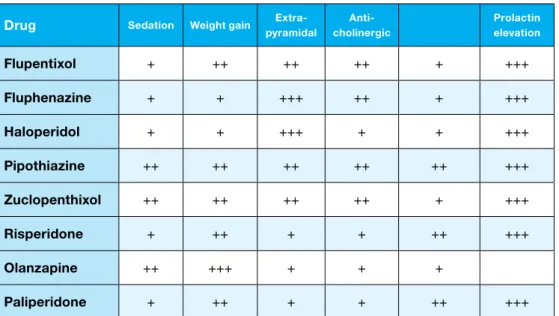
Key +++ High incidence ++ Moderate + Low
Table produced with the help of Professor David Taylor, Maudsley Chief Pharmacist.
Drug Sedation Weight gain pyramidalExtra- cholinergicAnti- Hypotension elevationProlactin
Flupentixol + ++ ++ ++ + +++
Fluphenazine + + +++ ++ + +++
Haloperidol + + +++ + + +++
Pipothiazine ++ ++ ++ ++ ++ +++
Zuclopenthixol ++ ++ ++ ++ + +++
Risperidone + ++ + + ++ +++
Olanzapine ++ +++ + + +
Paliperidone + ++ + + ++ +++
Comparative table of side effects for depot medication.
The disadvantages are
-– You might have some pain at the site of the injection for several days. – Some people feel it
is humiliating to be injected in this way. In fact some doctors dislike depot injections because they feel it damages their relationship with the patient.
– Most of the drugs available in this form are older antipsychotics and some people will need to take extra medication to reduce the side effects.
Which treatment is best?
Choosing the best medication is rarely easy because
individual reactions to drugs can be very different. So
finding the right drug for you can involve trial and error.
The choice of drug should be based upon your needs
and should be a decision taken jointly with you and
your doctor, rather than on the personal preferences of
the psychiatrist.
Whichever drug you are started on, it is important for the doctor to monitor your response carefully for the first few months until it has taken effect. Because of the potential side effects of some drugs, regular monitoring is necessary (e.g. lithium and clozapine).
It is also important for you to monitor how you feel and how your symptoms are affected by the drug. You may like to note down any changes. Are you experiencing any side effects and how do they affect your life? If you feel that the side effects are causing you a lot of trouble, you should tell your doctor.
They may change the dose and suggest you try this for a few weeks. However, if this does not work you can ask to try a different drug. Not all drugs work the same way and some may work better for you than others. Some people are inclined to vary the dose of medication they take according to how they feel on the day. Perhaps they will decide to increase the amount they take if they are feeling more anxious than usual, or vice versa. This approach can be risky and could lead to an episode of illness, especially if the dose is reduced too much. If you are considering this sort of approach, you should discuss it carefully with your psychiatrist.
Combining drugs
Many people are prescribed several different types of medication. Antidepressants may be prescribed alongside antipsychotics or mood stabilisers. Mood stabilisers are often prescribed alongside antipsychotics in order to improve mood and problems with thinking. But it rarely makes sense to prescribe several drugs of the same category, like more than one antipsychotic at the same time,
unless there are special reasons to do so. For example, clozapine may need to by ‘augmented’ with another antipsychotic. The NICE guidance on treatment discusses this issue. Drinking alcohol whilst on psychiatric medication is not advised because you could become sleepy and more likely to have an accident. Using street drugs such as cannabis and ecstasy can also cause problems and could well trigger an episode of psychosis.
NICE and medications to treat mental illness.
The National Institute of Health and Clinical Excellence
(NICE) is part of the NHS. It was set up to provide
‘clinical guidelines’ which advise the NHS on treating
and caring for people with specific conditions.
Professionals are expected to take the guidance fully
into account but they are allowed some discretion and
can still use their clinical judgement.
The first NICE guidelines on schizophrenia were published in 2002. An updated version – Clinical Guideline 82 – was issued in March 2009. The new guideline stresses that patients and their carers should be involved in choosing medication. Guidance on bipolar disorder was first published in 2006.
NICE on first contact with the
mental health services
– Your condition will usually be assessed by 1 or more healthcare professionals, including a
psychiatrist.
– You will be asked about your thoughts, feelings, behaviour and background. You may then be referred to a healthcare team who will develop a care plan with you. – This should include a plan for
dealing with a crisis. You and the person who referred you and also your carer (if you agree) should get a copy of the care plan.
– You should be offered
psychological treatments as well as medication.
– If this is your first episode of schizophrenia or psychosis, you should be referred to the local
NICE guidance on
schizophrenia
NICE produces guidance for people with schizophrenia (aged 18 and over) and their carers so that they know the care and treatment options which should be available from the NHS.All the guidance is available at www.nice.org.uk/CG82
The new guidance emphasises that
-– Healthcare professionals must take into account your personal needs and preferences.
– Keep you fully informed about schizophrenia and treatment options, including the benefits and possible risks.
– Ensure that you understand the information.
– Treat you sensitively and with respect.
• This should happen even if you are being detained under the Mental Health Act.
– Your treatment and care must take account of any physical or learning problems you may have and you should be provided with an interpreter or advocate if you need this. – Provided you agree, your
family and carers should be given information and involved in decisions about your care. – If you are unable to make a
decision because of the effects of your illness, the healthcare professionals must follow the advice on the Department of Health website at
www.dh.gov.uk/consent and the Code of Practice in the Mental Capacity Act.
Early Intervention Service. – If you ask for a second opinion
about your diagnosis or treatment, you healthcare team should support this request.
NICE on treatment in
the early stage
You should be offered antipsychotic medication with detailed information about its benefits and the possible side effects. You and your carer (if you agree) should be involved when decisions about treatment are made even if you are detained under section. It may take time to find the right medication for you.
You should not be offered more than 1 antipsychotic at a time, except if you are changing from one drug to another. Your healthcare professional should see you regularly to check on how you are responding to the treatment, on any side effects and your physical health. You should be provided with advice on using alcohol or street drugs and how these interact with medication. You should also be advised about any complementary therapies you might be considering.
NICE on acute episodes
If your symptoms get worse and you are very unwell, you may be referred to a specialist team – an early intervention, crisis resolution, home treatment or assertive outreach team. These teams can treat you in your own home. If they can’t provide the care you need there, you might be asked to go to a day hospital for help in the daytime.
Or you might be asked to stay in an inpatient unit. If your symptoms are severe and you refuse to go into hospital, you might be detained there under a section of the Mental Health Act. After you leave hospital, your care may be provided by the crisis intervention or home treatment team or perhaps the early intervention service, or you might be referred back to the local community mental health team.
Medication should be provided in line with the guidance on early stage treatment. There is also separate NICE guidance which may be needed if someone has become extremely agitated (see www.nice.org.uk/ CG025). This stresses that it’s vital to monitor a person’s condition after rapid tranquilisation has been used. There is also important NICE guidance on dealing with self-harm which may be relevant (see
www.nice.org.uk/CG16).
NICE also recommends 16 sessions of Cognitive Behavioural Therapy (CBT) should also be offered. Please see the glossary if you need information about CBT. You can also get a copy of our factsheet on Talking Treatments by contacting our Advice and Information Service or by downloading it at www.rethink.org/ information.
Ten sessions of a psychological treatment called ‘family intervention’ should be offered if you are in close contact with your family. Various ‘art therapies’ provided to groups are also recommended as well as physical activity. Courses of therapy which begin in hospital should continue even after you have left.
NICE on support after an
acute episode
Healthcare professionals should encourage you to write an account of what happened to help you understand your condition and learn to recognise what set it off. They should also encourage you to take your medication for 1 to 2 years, but if the side effects are difficult to tolerate it should be changed. If medication is stopped, it should be done gradually. The healthcare professional should continue to see you for at least 2 years afterwards.
NICE on further episodes
of illness
If you have another acute episode, your healthcare professional should treat you in line with your care plan and refer you to an appropriate service.
Your view of treatments and side effects should be considered, including psychological treatments.
NICE on staying well
You should stay in touch with the health services so that you can continue to get treatment, help and support when you need it. If you decide to move to a new area, a meeting should be held to arrange for your care to be transferred.
Your physical health should be checked at least once a year, including your weight, blood pressure, blood sugar and cholesterol levels as well as side effects. Your psychiatrist should be kept informed of the results.
NICE on people who are not
helped by treatment
If you don’t improve in spite of your treatment, your healthcare professional should check whether you are taking your medication as recommended, or whether using alcohol or street drugs are causing the problem.
If you have tried 2 different
antipsychotics, including one second generation antipsychotic drug and these have not helped, you should be offered clozapine. If this does not help, a second antipsychotic might be given in addition to the clozapine.
NICE on other support
If you want to get a job, you should be found a place on a supported employment programme or similar scheme.
NICE on your rights to care
and treatment
You should be asked whether you want your family or carers to be involved with your care and whether you would like information about your care and treatment to be shared with them. If you are detained under a section of the Mental Health Act, you have the right to appeal to the ‘First Tier Tribunal’. You can draw up an ‘advance statement’ about the care and treatment you would prefer if you have another acute episode of illness. This can also explain who should be provided with information and take care of practical matters.
– Checking your plasma levels if you are already taking lithium and increasing the dose if necessary. If this doesn’t help, then they could add an antipsychotic.
– Increasing the dose if you are already taking valproate. If there is no improvement, they could add an antipsychotic.
– If you are already on
carbamazepine, then the dose shouldn’t be routinely increased. They could add an antipsychotic. There is also separate NICE
guidance which may be needed if someone has become extremely agitated (see www.nice.org.uk/ CG025). This stresses that it’s vital to monitor a person’s condition after rapid tranquilisation has been used. There is also important NICE guidance on dealing with self-harm which may be relevant
(see www.nice.org.uk/CG16).
NICE on treatment
and management of
bipolar disorder
Healthcare professionals should fully involve you in discussions and decisions about your care and treatment. Ideally, you would see the same healthcare professionals regularly.
Specialist teams such as crisis resolution or home treatment teams may be involved if you are very unwell. They can treat you in your home.
NICE on management
of acute episodes
Your healthcare professional should work together with you to decide on your treatment plan. You should be seen regularly during an acute episode.
NICE on management of acute mixed episodes
An acute mixed episode is where there are both hypomanic (not full blown mania) or manic symptoms and depressive symptoms, or the 2 rapidly alternate. It is not the same as rapid-cycling bipolar disorder. Healthcare professionals should consider treating a mixed episode as they would for an acute manic episode, avoiding antidepressants.
The NICE guidance states that you should receive patientcentred care. This includes
-– Your individual needs
and preferences being taken into account in relation to care and treatment.
– Good communication
between healthcare professionals and yourself. This includes not using jargon.
– Carers and relatives being involved in your care and treatment, as long as you agree. They should also be provided with the information and support that they need.
NICE guideline for
bipolar disorder – the
management of bipolar
affective disorder (manic
depressive illness)
This guidance is for the management of bipolar
disorder in adults, adolescents and children. All the guidance is available at www.nice.org. uk/CG38
It was issued in July 2006. The information here relates to adults. For information about adolescents and children, please look at the guidance.
NICE on management of
acute episodes of mania
and hypomania
If you are taking antidepressant medication, your healthcare
professional may decide to stop this. If you are not taking mood stabilising medication (NICE refers to this as ‘antimanic’ medication) when you develop acute mania
-– Your healthcare professional may consider starting you on an antipsychotic medication (usually olanzapine, quetiapine or risperidone), lithium or valproate. – Lithium would usually only be
considered if symptoms aren’t severe, as it works more slowly than antipsychotics and valproate. – Valproate would normally be
avoided in women of child-bearing potential, due to the effects that it can have on the unborn child.
If you are already taking mood stabilisers when acute mania occurs, then the healthcare professional could consider
-– Checking the dose if you are already taking an antipsychotic, and increasing it if necessary. They could add lithium or
valproate if this doesn’t produce an improvement.
– He or she may consider increasing the antidepressant dose, or switching to a different antidepressant. He or she may also add olanzapine, quetiapine or lithium if you are not already taking them. Individual psychological therapy should also be
considered.
When depressive symptoms have improved or gone into remission, your healthcare professional should consider stopping any antidepressant treatment. This minimises the risk of ‘switching’ to mania. Antidepressants should be gradually reduced, while continuing any mood stabilising medication. If you have depressive symptoms, your healthcare professional should also discuss with you topics such as exercise, diet and sleep.
NICE on management of
acute depressive episodes
Antidepressant medication can increase the risk of ‘switching’ to a manic state. For this reason, antidepressant medication has a limited role in long-term treatment. If you are prescribed an antidepressant, then you should also be prescribed a mood stabiliser. If you are already taking a mood stabiliser when you have an acute depressive episode, then the dose of this should be checked and increased if necessary.If your depressive symptoms are mild, then your healthcare professional may wait to assess you again within 2 weeks, if severe depression is unlikely or if previous mild depression has not become severe. If it has, then you should be treated for moderate or severe depression.
If you have moderate or severe depression, your healthcare professional may consider
-– Prescribing an Selective Serotonin Reuptake Inhibitor (SSRI) antidepressant. SSRI
antidepressants are less likely than other types to produce ‘switching’ to a manic state. (We’ve produced a factsheet on antidepressants if you would like further information. You can get a copy by contacting our Advice and Information Service or by downloading it at
www.rethink.org/information).
– Prescribing the antipsychotic, quetiapine, if you are not
already taking any antipsychotic medication.
– If antidepressant treatment does not produce an improvement, then your healthcare professional should check that you are taking the medication as recommended, if use of alcohol or drugs are causing the problem or if there is a physical health problem.
NICE on management of
an acute episode in
rapid-cycling bipolar disorder
Rapid-cycling bipolar disorder is where you have 4 or more acute episodes a year. It is important to try and avoid ‘switching’ between mania and depression. If you have rapid-cycling bipolar disorder, you should normally be treated by specialist mental health services.Manic and depressive episodes should be treated as above, although antidepressants should be avoided. In addition to this, your healthcare professional should also
-– Review your previous treatments to see whether any should be tried again.
– Focus on long-term treatment, rather than on individual episodes. – Encourage you to keep a mood
diary to monitor symptoms and effect of treatments.
NICE on psychological
therapy after recovery from
an acute episode
A course of individual
psychological therapy, such as cognitive behavioural therapy (CBT) should be considered if you are relatively stable, but experiencing mild or moderate affective (mood) symptoms. This should be in addition to long-term medication and normally be at least 16 sessions. Healthcare professionals should also consider a family intervention if you are in regular contact with your family
Using the guidelines
Rethink Mental Illness members have reported that they have had more choice in their medication since the original NICE guidance was published (and also the first edition of this booklet). So the guidelines should help people trying to get the best treatment for themselves, or who want to make a complaint if they are being denied the treatment of their choice.
If a doctor does not seem to be providing care and treatment of the standard described in the guideline, then it could be used to support a successful complaint, perhaps disciplinary proceedings or even court action if the patient is harmed in some way.
Treatment for chronic
and recurrent depressive
symptoms
If you have long-term and recurring depressive symptoms, are not on long-term medication, and have not had a recent manic or hypomanic episode, your
healthcare professional could consider long-term treatment with an SSRI antidepressant and long-term medication as in the
previous section.
They could also consider cognitive behavioural therapy (CBT),
quetiapine or lamotrigine.
NICE on the physical care
of people with bipolar
disorder
– Your healthcare professional should discuss possible effects of medication on your physical health. You may gain weight from your treatment.
– If you do, your healthcare professional could give you
advice about your diet or exercise, and could refer you to a weight management programme within mental health services.
– You should also receive an annual physical health check. This can check your weight, blood pressure and your smoking or alcohol use. It can also test for diabetes and check cholesterol levels.
NICE on long-term
management of bipolar
disorder
Drug treatment after recovery from an acute episode
– Lithium, olanzapine or valproate should be considered for long-term treatment (but see below). If one is not effective, then your healthcare professional could try one of the others. They could also try a combination where 2 are given together. He or she should discuss this with you, including the reasons behind it, and the possible risks or benefits. – Long-term medication treatment
should continue for at least 2 years after an episode of bipolar disorder, and up to 5 years if you have risk factors for relapse (e.g. history of relapsing, stressful life events).
– If you want to stop medication early, you should discuss this with your psychiatrist. If after this, you decide to stop medication, you should still be offered regular contact with care services.
The findings of new research, called the Balance study, published late in 2009, are not in line with the NICE recommendations for long term therapy. This is because the findings were not available when the NICE guidance was published. The results of Balance show that for people who have had a manic episode and need long-term therapy, treatment with lithium plus valproate is more likely to prevent relapse than is treatment with valproate alone.1
In 2009, the National Patient Safety Agency (NPSA) published a patient information booklet, lithium alert card and record book for tracking blood tests. This is available at www.nrls.npsa.nhs.uk/ resources/?entryid45=65426
NICE on promoting a
healthy lifestyle and
preventing relapse
You should be given information on sleep and a regular lifestyle, and how to monitor your physical and mental state. You should also be given extra support after significant life-events, such as being bereaved. Healthcare professionals should also work with you to identify when an episode of illness seems to be imminent and how to avoid it if possible.
1. Geddes, J.R. et al (2010) Lithium plus valproate combination therapy versus monotherapy for relapse prevention in bipolar I disorder (BALANCE) - a randomised open-label trial. The Lancet 375 (9712) p. 385-395.
Does medication work for everyone?
Some people find that drugs do not help all of their
symptoms as much as they would like. A minority of
people do not respond well and some do not respond
at all to the range of medication. It’s important to
remember that the scientific evidence used to assess
different drugs is usually based on ‘randomised
controlled trials’.
These are usually short term trials carried out on a small number of people, often patients in hospital. So the results of these trials may not be altogether relevant when it comes to treating people in the community for long periods. What matters is how individuals respond to the medication in real life. For example, it may not matter very much if someone in hospital feels tired because the medication has this side effect, but it matters a great deal to someone who has to get up and go to work each morning.
When people with psychosis are described as having ‘refractory’ symptoms or being ‘treatment resistant’, the second generation antipsychotic drug clozapine may be effective as it has a different range of effects from the other
drugs. Those taking clozapine are required to have frequent blood tests to ensure that their white blood cell count does not drop dramatically as this would seriously reduce their resistance to infection.
With careful and regular blood monitoring, any changes can be quickly and easily detected and corrective action taken if necessary. Clozapine has been found to work well for about 2 thirds of people who do not respond to first generation drugs nor at least 2 second
generation antipsychotics. It can lead to substantial improvement.
This drug does not cause movement disorders, and is the most likely to be associated with improvement of symptoms.
Mood stabiliser medication
The range of unpleasant and sometimes severe side effects includes
-– Thyroid problems. – Kidney damage. – Excessive urination. – Feeling sick.
– Feeling thirsty. – Distorted vision. – Dry mouth. – Depression. – Headaches. – Weight gain. – Shakiness. – Diarrhoea.
– Dizziness and unsteadiness.
Step 2 – What are the side effects of the medication?
Antipsychotic medication
Most medicines have side effects. A number of side effects may be caused by antipsychotic drugs and these can be lessened by a reduction in dosage or a change in medication.
The range of unpleasant and sometimes severe side effects includes
-– Unusual body movements such as tremors similar to the symptoms of Parkinson’s disease.
– Feeling very restless (called akathisia).
– Unusual and repetitive movements of the tongue, facial and neck muscles and sometimes of the arms and legs (called tardive dyskinesia). These movements may develop gradually and may be irreversible.
– Raised levels of the hormone prolactin which can cause
-– osteoporosis
– reduced interest in sex – impotence
– missed periods
– breast enlargement and/or discharge from breasts (in both sexes)
– Feeling drowsy and sedated. – Irregular heartbeat.
– Weight gain. – Diabetes.
– Excess saliva/drooling. – Stroke.
– Reduced white blood cell count. – Blurred vision.
– Dizziness.
– Unable to be interested in anything (called dysphoria).
If you experience side effects consult your doctor. If the side effects are severe consult your doctor immediately.
How do the antipsychotic
drugs compare?
This table compares the incidence of various side effects associated with each medication. A full explanation of some of these side effects can be found later on in the booklet. Some will not be looked at in more detail. These are sedation, hypotension (which means low blood pressure), and anti-cholinergic (which can include side effects such as dry mouth and constipation).
How do the mood
stabiliser drugs compare?
Unlike the side effects forantipsychotics, it is difficult to
compare those of mood stabilisers because the individual drugs that make up this class of medication are all very different. However, each drug can be compared regarding how well it treats different aspects of bipolar disorder.
Medication and
weight gain
Issues raised in calls to our Advice and Information Service suggest that weight gain is a side effect which many people experience. This does not mean that everyone using these drugs will put on weight or that there is nothing which can be done about the problem. It may mean that the person concerned
Key good +++ some ++ limited + no evidence –
Table courtesy of Professor Nicol Ferrier, University of Newcastle
Mania Depression Maintenance
Rapid cycling /
mixed states
Suicide prevention
Lithium +++ + +++ + ++
Carbamazepine ++ + ++ + –
Valproate +++ + + ++ –
Lamotrigine – ++ ++ ++ –
Gabapentin – – – + –
Typical
antipsychotics +++ – + + –
Atypical
antipsychotics +++ ++ ++ ++ –
Drug Sedation Weight gain pyramidalExtra- cholinergicAnti- Hypotension Prolactin elevation
Amisulpride – + + – – +++
Aripiprazole – +/ – +/ – – – –
Asenapine – +/ – +/ – – – +/ –
Benperidol + + +++ + + +++
Bifeprunox – +/ – +/ – _ _ _
Chlorpromazine +++ ++ ++ ++ +++ +++
Clozapine +++ +++ – +++ +++ –
Flupentixol + ++ ++ ++ + +++
Fluphenazine + + +++ ++ + +++
Haloperidol + + +++ + + +++
Iloperidone – ++ + – + –
Loxapine ++ + +++ + ++ +++
Olanzapine ++ +++ +/ – + + +
Perphenazine + + +++ + + +++
Pimozide + + + + + +++
Pipotiazine ++ ++ ++ ++ ++ +++
Promazine +++ ++ + ++ ++ ++
Quetiapine ++ ++ – + ++ –
Risperidone + ++ + + ++ +++
Sertindole – + – – +++ +/ –
Sulpiride – + + – – +++
Trifluoperazine + + +++ +/ – + +++
Ziprasidone + +/ – +/ – – + +/ –
Zotepine +++ ++ + + ++ +++
Zuclopenthixol ++ ++ ++ ++ + +++
Antipsychotics – relative adverse effects – a rough guide
Key +++ High incidence/severity ++ Moderate + Low – Very low
Note. The table above is made up of approximate estimates of relative incidence and/or severity, based on clinical experience, manufacturers’ literature and published research. This is a rough guide – see individual sections for more precise information. Other sides-effects not mentioned in this table do occur. Table reproduced with the permission of Professor David Taylor, Maudsley Chief Pharmacist.
Diabetes and
antipsychotics
When we eat, our bodies break down carbohydrates from foods such as bread, rice, pasta, vegetables, fruit and milk products, into various forms of sugar and eventually glucose. This is the main source of energy for the body. It’s absorbed into the bloodstream after food is digested, but it can’t get into most of the body’s tissues unless insulin is also available.
Insulin is a hormone produced by the pancreas. It’s important that the right amount of insulin is available.
Risk of mood stabiliser drug-induced weight gain
Moderate/high Low Can cause weight loss
Lithium Valproate
Lamotrigine Carbamazepine
Topiramate
If someone has diabetes, they are unable to regulate the amount of glucose in the blood because of a problem with insulin. For over a hundred years it’s been recognised that people with schizophrenia are more likely to develop diabetes than those without the condition. There is another problem, called ‘insulin resistance’, where the body doesn’t respond to insulin. This may happen when the person is overweight. It now seems that some of the increased risk of diabetes for people with schizophrenia is due to antipsychotic medication. Some of the research suggests that the second generation drugs may be more likely to have this effect than the older drugs. At the moment, nobody fully understands the link between using antipsychotic medication and developing diabetes or associated problems like
hyperglycaemia (too much sugar in the blood) and insulin resistance.
Will a change of
medication help?
If weight gain is excessive, it might be sensible to switch to a different type of medication in the hope of some improvement.
loses confidence and self-esteem, a problem often ignored by doctors. Gaining excessive weight can lead to other physical health problems and this may cause someone to stop taking their medication and perhaps become ill again.
What can be done about it?
Doctors need to discuss the possibility of weight gain with you when you start to take medication and to keep an eye on any change in weight. If weight gain is a problem, advice about your diet should be offered.
What about diet and exercise?
When you eat more food than you use for energy during the day, the extra is stored as fat. Cutting down
High Moderate Low
Clozapine Olanzapine
Chlorpromazine Flupentixol Paliperidone Pipotiazine Promazine Quetiapine Risperidone Zotepine Zuclopenthixol
Amisulpiride Aripiprazole Benperidol Fluphenazine Haloperidol Loxapine Perphenazine Pimozide Sertindole Sulpiride Trifluoperazine Ziprasidone
Risk of antipsychotic drug-induced weight gain
on the amount of the fat and sugar you eat will reduce your energy intake, helping to reduce your weight and improve your general health. Whatever you do, enjoying your food is still important! Some people put on weight in hospital because they eat more out of boredom.
Reducing your intake of fat and sugar should help, as well as increasing the amount of fibre, vegetables and fruit. Daily
increased activity may help – many people find that this makes them feel good. Walking and doing housework count, although doctors may provide an ‘exercise prescription’ which will allow you to use your local sports or leisure facilities at little or no cost.
36 3737 It appears likely that weight gain is
only 1 of the factors which may be involved. Sometimes, diabetes runs in families and people from some ethnic backgrounds are more likely to develop the condition. People of South Asian origin or from an Afro Caribbean background have a higher risk. Much more research into the issue is needed to improve our understanding.
Second generation drugs
and diabetes
The Maudsley Prescribing Guidelines advise that
-– Clozapine seems to carry a higher risk of diabetes than the other second generation antipsychotics, especially in younger patients. – Some cases develop within
months of starting clozapine, while others take many years. It is vital that anyone taking clozapine is monitored in case they are developing diabetes. There are also strong links to insulin resistance and hyperglycaemia. – Olanzapine also seems to carry a
higher risk of diabetes, particularly in younger patients. It may cause insulin resistance.
– Risperidone may be less likely to cause this range of side effects than olanzapine as there have been fewer reported cases. The level of risk associated with
risperidone is probably similar to that of first generation drugs. – Quetiapine is probably less likely
to cause diabetes than clozapine or olanzapine but more likely than the first generation drugs.
– Amisulpride, aripiprazole and ziprasidone are probably the antipsychotics least likely to be linked to diabetes.
Untreated diabetes can cause serious health problems, particularly with heart function and blood
circulation. So everybody using antipsychotic medication should be tested for diabetes at least once a year. Doctors prescribing these drugs should be aware of particular risk factors to try to minimise the risk to individuals. It’s probably preferable for people who have diabetes to be treated with aripiprazole or amisulpride. Your GP receives an incentive for monitoring some aspects of your physical health if you experience schizophrenia or bipolar disorder. As part of this you may like to insist on getting a regular blood test for diabetes from your GP. Also see step 6.
Any decision to reduce the dose should be made following an open discussion between you, your relatives and your doctor, weighing up the risks and benefits. Undoubtedly in some cases, getting rid of the abnormal movements is major benefit
outweighing the risks. There is little doubt that the odd, often bizarre movements of tardive dyskinesia are a severe social handicap.
What about pregnancy
and drugs?
The unborn baby is sensitive to drugs and careful consideration must be given to the possible risks involved. Some drugs must not be taken while pregnant, such as lithium and valproate. Others can be taken at the lowest effective dose of the treatment which is known to be effective, with careful
monitoring of any side effects or re-emerging symptoms.
It is important to avoid a relapse which might require higher doses of medication. It is also important to avoid treatment which might aggravate problems like dizziness or constipation.
Sexual problems
Medication can cause a range of sexual side effects, from a reduced sex drive to problems with sexual functioning. There are 3 groups of problems that people commonly experience – problems with sexual functioning, hormonal problems (prolactin elevation) and osteoporosis in later life.
Sexual functioning
– Reduced sex drive – a lack of interest in sex.
– Difficulty with arousal – problems with getting or maintaining an erection in men, problems with lubrication in women.
Antipsychotic drugs and
‘extra pyramidal side
effects’ (EPSEs) – including
movement disorders
All antipsychotics can cause movement disorders, but some, mainly the first generation
antipsychotics, are more likely to do so than others.
Among these side effects
are abnormal movements of
various types
-– Dystonia – prolonged muscle spasms often involving the face, neck, shoulders and upper limbs. Drugs such as procyclidine and orphenadrine are given to treat dystonia.
– Akathisia – fidgety movements of the legs which may be
accompanied by a strong sense of inner restlessness and unease. This often means that a person cannot sit comfortably and may drive them to walk up and down to try and gain relief. It is best treated with clonazepam or propranolol.
– Parkinsonian movement
disorders – a condition of stiffness and shakiness, quite like Parkinson’s disease. The arms and legs move slowly and muscles of the face may be quite stiff, producing an expressionless, staring face. Shaking may occur
but is not usually very severe and is most noticeable in the hands. Procyclidine and orphenadrine, amongst other drugs, are given to treat Parkinsonian movement disorders.
Dealing with movement
disorders
These movement disturbances can be a serious problem. It seems fairly certain that antipsychotic drugs (in particular first generation ones) contribute to their development. All of the first generation antipsychotics share these effects, although
sulpiride seems to have fewer movement side effects. Switching from one drug to another does not usually help.
The movement disorders are common. Tardive dyskinesia, which can affect the mouth, face, trunk or limbs, is present in around 20 out of 100 people with schizophrenia who are receiving drugs. If the movements prove to be distressing because they are embarrassing, limit mobility or impair speech, then you may want the antipsychotic drug to be stopped altogether. This may or may not relieve the movement disorder but will almost certainly increase the risk of a further episode of illness.
Sedation
This problem is usually at its worst early in treatment. Sedation can be caused by many of the old and some of the new antipsychotic drugs, and some mood stabilisers. It may wear off a few weeks after starting a new drug. It can often be helped by reducing the dosage or by taking the medication in a single bedtime dose.
Iloperidone has been found to be effective. Movement side effects seem to be rare and prolactin levels do not seem to be affected. Insomnia has been the most commonly experienced side effect, with some weight gain. This drug can also affect heart function.
Another area of research is in antipsychotics to use in long-acting depot injections. Depot
injections of the older first generation antipsychotics can have high rates of movement side effects. They can also raise levels of the hormone prolactin (which can cause effects such as impotence, missed periods and breast enlargement).
At the moment, the only second generation antipsychotic that can be given as a long-acting injection is risperidone. Research into other second generation long-acting depot injections is being carried out. Paliperidone is an atypical antipsychotic available in oral form. It is being researched as an
alternative depot medication.
A long-acting injectable form of olanzapine appears to be effective. It has similar side effects to olanzapine taken orally. There have been some problems with the injection. If when injected, it has contact with blood or plasma, the medication may be broken down more quickly than it should. This can cause confusion, dizziness and more sedation than usual, called ‘post-injection syndrome. 70 out of 100 people with it are admitted to hospital.
Mood stabilisers
As well as the medications licensed to treat mania and the suggested combinations, other possible treatments may be tried if these are not effective. These include types of antipsychotics, anticonvulsants and medication that have an effect on serotonin.
The amount of research carried out into them varies, with some seeming more effective than others. Please contact our Advice and Information Service for further information.
2. Information is drawn from references in the Maudsley Prescribing Guidelines
– Problems with orgasm –
reaching orgasm too quickly or slowly, or difficulty in reaching orgasm.
– Pain during or after sex.
Hormonal problems
– Breast enlargement – in both men and women.
– Milk production – in both men and women.
– Menstrual changes – irregular periods or no periods in women. Different medications have different side effects. Antipsychotics are known to increase the hormone prolactin, causing breast
enlargement, milk production and stopping women’s periods.
Apart from these specific problems, general dissatisfaction with sex is one of the most commonly reported side effects of medication.
What can be done?
Sometimes it can be difficult to tell if a problem is being caused by medication or some other factor. If the problems started around the same time as a change in the medication or starting on a new medication, then the likelihood is that the problems are related to medication. If the problem started before the person took a new
medication, then it is less likely. It is important that you let your GP, psychiatrist or CPN know about any effects the medication is having and how they affect your life.
If the problems are related to medication, then improving the situation could be as simple as switching to an alternative. Changing the time when the medication
is taken is another possibility. In some situations, a person might need some form of treatment for the problem. Sometimes a talking therapy might be helpful, or sometimes a mechanical aid or drug will be more useful. There is a wide range of treatments and more treatments are being developed.
New drugs under
development
The pharmaceutical industry is researching newer and more effective drugs.
Antipsychotics
2There are a number of new
antipsychotics in the development process. Asenapine is a drug with a different structure and action to other antipsychotic medication currently available. It has been found to be effective in treating schizophrenia and also seems to have some effect on its negative symptoms.
Step 3 – Get expert advice.
Advice and Information Service
Phone 0300 5000 927
Monday to Friday, 10am to 1pm
Email [email protected]
For more information about Rethink Mental Illness visit
our website www.rethink.org or for further resources and
publications go to www.rethink.org/information
The Institute of Psychiatry also provides a useful website at –
www.mentalhealthcare.org.uk which includes an ‘ask the expert’ section where you can post questions to a pharmacist about your medication.
The Maudsley Prescribing Guidelines are available by ordering from your bookshop or online through Amazon.
What are the most common side effects of this treatment?
Would a different drug be less likely to make me tired/ cause tremors/increase my weight, etc.?
How does this drug interact with smoking/alcohol/the contraceptive pill, etc.?
In choosing this treatment, have you taken my family history into account (such as diabetes)?
How often will you measure the effects of medication on my physical health?
Will you refer me to a
psychologist/arrange a course of talking therapy, etc.?
(If appropriate) Why are you prescribing more than 1 antipsychotic for me?
(If you think that some drugs are not available in your trust) Are there any financial considerations which affect what you can prescribe?
I’m taking XXX for my physical problems, will my antipsychotics/mood stablisers cause any cross reactions?
The following list of questions about your medical
treatment might suggest 1 or 2 issues which you
could raise
-Why have you prescribed this particular medication for me?
Why have you set the dosage at this level? How often will you be reviewing my medication?
Step 4 – Questions to ask about your medication.
Many doctors, whether GPs or psychiatrists,
apparently cannot spend as much time with their
patients as we would like (in the USA, this problem led
users and carers to run a campaign called ‘6 Minutes
is not Enough!’)
This shortage of time for consultation is a particular problem in the
mental health field. The effects of medication or symptoms of mental illness may sometimes mean that patients need a bit of extra time and patience. Too little time can mean poor communication so that doctors miss vital information about the side effects of treatment or about physical health problems. Some people have found it useful to ask for a double length appointment.
So before you go and see your doctor or psychiatrist, it can be helpful to write down any problems which are troubling you. Try to ensure that you remember to mention all of them in the consultation. It might be helpful to take a carer or friend along with you.
Step 5 – Getting a second opinion about
diagnosis and / or treatment.
Why should I get a
second opinion?
Uncertainty about the
diagnosis
Mental health problems can become very serious and it is important that the most appropriate care and treatment is available as early as possible. Having a diagnosis, or name of the condition which is affecting you, will also enable you to find useful information and research, join a support group and help with applications for state benefits. But there are a number of reasons why people with mental illness and their families may not have a clear idea about the diagnosis
-– In the early stages there may be some doubt about exactly what is wrong. Using street drugs, for example, might make someone appear to be mentally ill when this is not really the case.
– Doctors are aware that if someone has a condition like schizophrenia or bipolar disorder, it may cause them problems in getting a job
or even insurance cover so sometimes they prefer to avoid giving an exact diagnosis. – Sometimes doctors hope that
their patient will recover after only 1 or 2 episodes of illness so it might be unhelpful to ‘label’ them. Sometimes several different doctors may have given different opinions about the diagnosis. This is not unusual as there is no test for conditions like schizophrenia or bipolar disorder.
– Some doctors take the view that the diagnosis should be kept very confidential and will even refuse to see carers or speak to them. This is poor practice. Rethink Mental Illness has worked with the Department of Health to produce good practice guidance on this subject.
If there is uncertainty about the diagnosis, it makes it very difficult for the people concerned to understand what is going on and also to get the information which they need to have the best possible chance of making a good recovery or helping their relative to do so.