VOLUME 21 ISSUE 41 AUGUST 2017 ISSN 1366-5278
Effects of antenatal diet and physical activity on
maternal and fetal outcomes: individual patient data
meta-analysis and health economic evaluation
Ewelina Rogozin´
ska, Nadine Marlin, Louise Jackson, Girish Rayanagoudar,
Anneloes E Ruifrok, Julie Dodds, Emma Molyneaux, Mireille NM van Poppel,
Lucilla Poston, Christina A Vinter, Fionnuala McAuliffe, Jodie M Dodd,
Julie Owens, Ruben Barakat, Maria Perales, Jose G Cecatti, Fernanda Surita,
SeonAe Yeo, Annick Bogaerts, Roland Devlieger, Helena Teede, Cheryce Harrison,
Lene Haakstad, Garry X Shen, Alexis Shub, Nermeen El Beltagy, Narges Motahari,
Janette Khoury, Serena Tonstad, Riitta Luoto, Tarja I Kinnunen, Kym Guelfi,
Fabio Facchinetti, Elisabetta Petrella, Suzanne Phelan, Tânia T Scudeller,
Kathrin Rauh, Hans Hauner, Kristina Renault, Christianne JM de Groot,
Linda R Sagedal, Ingvild Vistad, Signe Nilssen Stafne, Siv Mørkved,
activity on maternal and fetal outcomes:
individual patient data meta-analysis and
health economic evaluation
Ewelina Rogozi
n´
ska,
1,2
Nadine Marlin,
3
Louise Jackson,
4
Girish Rayanagoudar,
1
Anneloes E Ruifrok,
5,6
Julie Dodds,
1
Emma Molyneaux,
7
Mireille NM van Poppel,
8,9
Lucilla Poston,
10
Christina A Vinter,
11
Fionnuala McAuliffe,
12
Jodie M Dodd,
13,14
Julie Owens,
13
Ruben Barakat,
15
Maria Perales,
15
Jose G Cecatti,
16
Fernanda Surita,
16
SeonAe Yeo,
17
Annick Bogaerts,
18,19
Roland Devlieger,
20
Helena Teede,
21
Cheryce Harrison,
21
Lene Haakstad,
22
Garry X Shen,
23
Alexis Shub,
24
Nermeen El Beltagy,
25
Narges Motahari,
26
Janette Khoury,
27
Serena Tonstad,
27
Riitta Luoto,
28
Tarja I Kinnunen,
29
Kym Guelfi,
30
Fabio Facchinetti,
31
Elisabetta Petrella,
31
Suzanne Phelan,
32
Tânia T Scudeller,
33
Kathrin Rauh,
34,35
Hans Hauner,
34
Kristina Renault,
11,36
Christianne JM de Groot,
6
Linda R Sagedal,
37
Ingvild Vistad,
37
Signe Nilssen Stafne,
38,39
Siv Mørkved,
38,39
Kjell Å Salvesen,
40,41
Dorte M Jensen,
42
Márcia Vitolo,
43
Arne Astrup,
44
Nina RW Geiker,
45
Sally Kerry,
3
Pelham Barton,
4
Tracy Roberts,
4
Richard D Riley,
46
Arri Coomarasamy,
47
Ben Willem Mol,
48
Khalid S Khan
1,2
and Shakila Thangaratinam,
1,2
* on behalf of the
2
Multidisciplinary Evidence Synthesis Hub, Barts and The London School of
Medicine and Dentistry, Queen Mary University of London, London, UK
3
Pragmatic Clinical Trials Unit, Blizard Institute, Barts and the London School of
Medicine and Dentistry, London, UK
4
Health Economics Unit, School of Health and Population Sciences, College of
Medical and Dental Sciences, University of Birmingham, Birmingham, UK
5Department of Obstetrics and Gynecology, Academic Medical Centre,
Amsterdam, the Netherlands
6
Department of Obstetrics and Gynaecology, Faculty of Medicine, VU University
Medical Center, Amsterdam, the Netherlands
7
Section of Women
’
s Mental Health, Health Service and Population Research
Department, Institute of Psychiatry, King
’
s College London, London, UK
8Department of Public and Occupational Health, EMGO Institute for Health
and Care Research (EMGO
+
), VU University Medical Center, Amsterdam,
the Netherlands
9
Institute of Sport Science, University of Graz, Graz, Austria
10
Division of Women
’
s Health, Women
’
s Health Academic Centre, King
’
s College
London, St Thomas
’
Hospital, London, UK
11
Department of Obstetrics and Gynecology, Odense University Hospital,
University of Southern Denmark, Odense, Denmark
12
School of Medicine & Medical Science, UCD Institute of Food and Health,
Dublin, Ireland
13
The Robinson Research Institute, School of Medicine, Department of Obstetrics &
Gynaecology, University of Adelaide, SA, Australia
14
Women
’
s and Children
’
s Health Network, Women
’
s and Babies Division,
North Adelaide, SA, Australia
15
Facultad de Ciencias de la Actividad Física y del Deporte, Universidad Politecnica
de Madrid, Madrid, Spain
16
Department of Obstetrics and Gynecology, School of Medical Sciences,
University of Campinas, Campinas, Brazil
17
School of Nursing, University of North Carolina at Chapel Hill, Chapel Hill,
NC, USA
18
Research Unit Healthy Living, University Colleges Leuven-Limburg, Leuven,
Belgium
19
Centre for Research and Innovation in Care, University of Antwerp, Antwerp,
Belgium
20
Division of Mother and Child, Department of Obstetrics and Gynaecology,
University Colleges Leuven-Limburg, Hasselt and University Hospitals KU
Leuven, Leuven, Belgium
21
Monash Centre for Health Research and Implementation, School of Public
Health, Monash University, Melbourne, VIC, Australia
22
Norwegian School of Sport Sciences, Department of Sports Medicine,
Oslo, Norway
23
Department of Internal Medicine, University of Manitoba, Winnipeg,
MB, Canada
Department of Sport Physiology, Faculty of Physical Education and Sport
Sciences, Mazandaran University, Babolsar, Iran
27
Department of Obstetrics and Gynecology, Oslo University Hospital, Oslo,
Norway
28
UKK Institute for Health Promotion Research, Tampere, Finland
29School of Health Sciences, University of Tampere, Tampere, Finland
30
School of Sport Science, Exercise and Health, University of Western Australia,
Perth, WA, Australia
31
Mother-Infant Department, University of Modena and Reggio Emilia, Modena,
Italy
32
Kinesiology Department, California Polytechnic State University, San Luis
Obispo, CA, USA
33
Department of Management and Health Care, São Paulo Federal University,
Santos, Brazil
34
Else Kröner-Fresenius-Center for Nutritional Medicine, Technische Universität
München, Munich, Germany
35
Competence Centre for Nutrition, Freising, Germany
36
Departments of Obstetrics and Gynecology, Hvidovre Hospital, University of
Copenhagen, Copenhagen, Denmark
37
Department of Obstetrics and Gynecology, Sorlandet Hospital Kristiansand,
Kristiansand, Norway
38
Department of Public Health and General Practice, Faculty of Medicine,
Norwegian University of Science and Technology, Trondheim, Norway
39
Clinical Services, St Olavs Hospital, Trondheim University Hospital, Trondheim,
Norway
40
Department of Obstetrics and Gynaecology, Clinical Sciences, Lund University,
Lund, Sweden
41
Department of Laboratory Medicine Children
’
s and Women
’
s Health, Faculty of
Medicine, Norwegian University of Science and Technology, Trondheim,
Norway
42
Department of Endocrinology, Odense University Hospital, Odense, Denmark
43Department of Nutrition and the Graduate Program in Health Sciences, Federal
University of Health Sciences of Porto Alegre, Porto Alegre, Brazil
44
Department of Nutrition, Exercise and Sports, University of Copenhagen,
Copenhagen, Denmark
45
Nutritional Research Unit, Copenhagen University Hospital Herlev, Copenhagen,
Denmark
46
Research Institute for Primary Care and Health Sciences, Keele University,
Keele, UK
47
School of Clinical and Experimental Medicine, College of Medical and Dental
Sciences, University of Birmingham, Birmingham, UK
48
The South Australian Health and Medical Research Institute, Adelaide, SA,
Australia
(health insurance fund), Amway and the German Research Foundation outside the submitted work. Ben Willem Mol reports other grants from ObsEva during the conduct of the study.
Published August 2017
DOI: 10.3310/hta21410
This report should be referenced as follows:
Rogozin´ska E, Marlin N, Jackson L, Rayanagoudar G, Ruifrok AE, Dodds J,et al. Effects of antenatal diet and physical activity on maternal and fetal outcomes: individual patient data meta-analysis and health economic evaluation.Health Technol Assess2017;21(41).
Health Technology Assessmentis indexed and abstracted inIndex Medicus/MEDLINE,Excerpta
Medica/EMBASE,Science Citation Index Expanded(SciSearch®) andCurrent Contents®/
ISSN 1366-5278 (Print)
ISSN 2046-4924 (Online)
Impact factor: 4.236
Health Technology Assessmentis indexed in MEDLINE, CINAHL, EMBASE, The Cochrane Library and the Clarivate Analytics Science Citation Index.
This journal is a member of and subscribes to the principles of the Committee on Publication Ethics (COPE) (www.publicationethics.org/).
Editorial contact: [email protected]
The full HTA archive is freely available to view online at www.journalslibrary.nihr.ac.uk/hta. Print-on-demand copies can be purchased from the report pages of the NIHR Journals Library website: www.journalslibrary.nihr.ac.uk
Criteria for inclusion in theHealth Technology Assessmentjournal
Reports are published inHealth Technology Assessment(HTA) if (1) they have resulted from work for the HTA programme, and (2) they are of a sufficiently high scientific quality as assessed by the reviewers and editors.
Reviews inHealth Technology Assessmentare termed‘systematic’when the account of the search appraisal and synthesis methods (to minimise biases and random errors) would, in theory, permit the replication of the review by others.
HTA programme
The HTA programme, part of the National Institute for Health Research (NIHR), was set up in 1993. It produces high-quality research information on the effectiveness, costs and broader impact of health technologies for those who use, manage and provide care in the NHS.
‘Health technologies’are broadly defined as all interventions used to promote health, prevent and treat disease, and improve rehabilitation and long-term care.
The journal is indexed in NHS Evidence via its abstracts included in MEDLINE and its Technology Assessment Reports inform National Institute for Health and Care Excellence (NICE) guidance. HTA research is also an important source of evidence for National Screening Committee (NSC) policy decisions.
For more information about the HTA programme please visit the website: http://www.nets.nihr.ac.uk/programmes/hta
This report
The research reported in this issue of the journal was funded by the HTA programme as project number 12/01/50. The contractual start date was in February 2013. The draft report began editorial review in November 2015 and was accepted for publication in August 2016. The authors have been wholly responsible for all data collection, analysis and interpretation, and for writing up their work. The HTA editors and publisher have tried to ensure the accuracy of the authors’report and would like to thank the reviewers for their constructive comments on the draft document. However, they do not accept liability for damages or losses arising from material published in this report.
This report presents independent research funded by the National Institute for Health Research (NIHR). The views and opinions expressed by authors in this publication are those of the authors and do not necessarily reflect those of the NHS, the NIHR, NETSCC, the HTA programme or the Department of Health. If there are verbatim quotations included in this publication the views and opinions expressed by the
interviewees are those of the interviewees and do not necessarily reflect those of the authors, those of the NHS, the NIHR, NETSCC, the HTA programme or the Department of Health.
© Queen’s Printer and Controller of HMSO 2017. This work was produced by Rogozin´skaet al.under the terms of a commissioning contract issued by the Secretary of State for Health. This issue may be freely reproduced for the purposes of private research and study and extracts (or indeed, the full report) may be included in professional journals provided that suitable acknowledgement is made and the reproduction is not associated with any form of advertising. Applications for commercial reproduction should be addressed to: NIHR Journals Library, National Institute for Health Research, Evaluation, Trials and Studies Coordinating Centre, Alpha House, University of Southampton Science Park, Southampton SO16 7NS, UK.
Editor-in-Chief
NIHR Journals Library
Professor Tom Walley Director, NIHR Evaluation, Trials and Studies and Director of the EME Programme, UK
NIHR Journals Library Editors
Centre of Evidence-Based Dermatology, University of Nottingham, UK
Professor Ken Stein Chair of HTA and EME Editorial Board and Professor of Public Health, University of Exeter Medical School, UK
Professor Andrée Le May Chair of NIHR Journals Library Editorial Group (HS&DR, PGfAR, PHR journals)
Dr Martin Ashton-Key Consultant in Public Health Medicine/Consultant Advisor, NETSCC, UK
Professor Matthias Beck Chair in Public Sector Management and Subject Leader (Management Group), Queen’s University Management School, Queen’s University Belfast, UK
Dr Tessa Crilly Director, Crystal Blue Consulting Ltd, UK
Dr Eugenia Cronin Senior Scientific Advisor, Wessex Institute, UK
Ms Tara Lamont Scientific Advisor, NETSCC, UK
Dr Catriona McDaid Senior Research Fellow, York Trials Unit, Department of Health Sciences, University of York, UK
Professor William McGuire Professor of Child Health, Hull York Medical School, University of York, UK
Professor Geoffrey Meads Professor of Health Sciences Research, Health and Wellbeing Research Group, University of Winchester, UK
Professor John Norrie Chair in Medical Statistics, University of Edinburgh, UK
Professor John Powell Consultant Clinical Adviser, National Institute for Health and Care Excellence (NICE), UK
Professor James Raftery Professor of Health Technology Assessment, Wessex Institute, Faculty of Medicine, University of Southampton, UK
Dr Rob Riemsma Reviews Manager, Kleijnen Systematic Reviews Ltd, UK
Professor Helen Roberts Professor of Child Health Research, UCL Institute of Child Health, UK
Professor Jonathan Ross Professor of Sexual Health and HIV, University Hospital Birmingham, UK
Professor Helen Snooks Professor of Health Services Research, Institute of Life Science, College of Medicine, Swansea University, UK
Professor Jim Thornton Professor of Obstetrics and Gynaecology, Faculty of Medicine and Health Sciences, University of Nottingham, UK
Professor Martin Underwood Director, Warwick Clinical Trials Unit, Warwick Medical School, University of Warwick, UK
Please visit the website for a list of members of the NIHR Journals Library Board: www.journalslibrary.nihr.ac.uk/about/editors
Abstract
Effects of antenatal diet and physical activity on maternal
and fetal outcomes: individual patient data meta-analysis and
health economic evaluation
Ewelina Rogozi
n´
ska,
1,2Nadine Marlin,
3Louise Jackson,
4Girish Rayanagoudar,
1Anneloes E Ruifrok,
5,6Julie Dodds,
1Emma Molyneaux,
7Mireille NM van Poppel,
8,9Lucilla Poston,
10Christina A Vinter,
11Fionnuala McAuliffe,
12Jodie M Dodd,
13,14Julie Owens,
13Ruben Barakat,
15Maria Perales,
15Jose G Cecatti,
16Fernanda Surita,
16SeonAe Yeo,
17Annick Bogaerts,
18,19Roland Devlieger,
20Helena Teede,
21Cheryce Harrison,
21Lene Haakstad,
22Garry X Shen,
23Alexis Shub,
24Nermeen El Beltagy,
25Narges Motahari,
26Janette Khoury,
27Serena Tonstad,
27Riitta Luoto,
28Tarja I Kinnunen,
29Kym Guelfi,
30Fabio Facchinetti,
31Elisabetta Petrella,
31Suzanne Phelan,
32Tânia T Scudeller,
33Kathrin Rauh,
34,35Hans Hauner,
34Kristina Renault,
11,36Christianne JM de Groot,
6Linda R Sagedal,
37Ingvild Vistad,
37Signe Nilssen Stafne,
38,39Siv Mørkved,
38,39Kjell Å Salvesen,
40,41Dorte M Jensen,
42Márcia Vitolo,
43Arne Astrup,
44Nina RW Geiker,
45Sally Kerry,
3Pelham Barton,
4Tracy Roberts,
4Richard D Riley,
46Arri Coomarasamy,
47Ben Willem Mol,
48Khalid S Khan
1,2and Shakila Thangaratinam,
1,2* on behalf of the International Weight
Management in Pregnancy (i-WIP) Collaborative Group
1Women’s Health Research Unit, Barts and The London School of Medicine and Dentistry,
Queen Mary University of London, London, UK
2Multidisciplinary Evidence Synthesis Hub, Barts and The London School of Medicine and
Dentistry, Queen Mary University of London, London, UK
3Pragmatic Clinical Trials Unit, Blizard Institute, Barts and the London School of Medicine and
Dentistry, London, UK
4Health Economics Unit, School of Health and Population Sciences, College of Medical and
Dental Sciences, University of Birmingham, Birmingham, UK
5Department of Obstetrics and Gynecology, Academic Medical Centre, Amsterdam,
the Netherlands
6Department of Obstetrics and Gynaecology, Faculty of Medicine, VU University Medical Center,
Amsterdam, the Netherlands
7Section of Women’s Mental Health, Health Service and Population Research Department,
Institute of Psychiatry, King’s College London, London, UK
8Department of Public and Occupational Health, EMGO Institute for Health and Care Research
9Institute of Sport Science, University of Graz, Graz, Austria
10Division of Women’s Health, Women’s Health Academic Centre, King’s College London,
St Thomas’Hospital, London, UK
11Department of Obstetrics and Gynecology, Odense University Hospital, University of Southern
Denmark, Odense, Denmark
12School of Medicine & Medical Science, UCD Institute of Food and Health, Dublin, Ireland 13The Robinson Research Institute, School of Medicine, Department of Obstetrics & Gynaecology,
University of Adelaide, SA, Australia
14Women’s and Children’s Health Network, Women’s and Babies Division, North Adelaide,
SA, Australia
15Facultad de Ciencias de la Actividad Física y del Deporte, Universidad Politecnica de Madrid,
Madrid, Spain
16Department of Obstetrics and Gynecology, School of Medical Sciences, University of Campinas,
Campinas, Brazil
17School of Nursing, University of North Carolina at Chapel Hill, Chapel Hill, NC, USA 18Research Unit Healthy Living, University Colleges Leuven-Limburg, Leuven, Belgium 19Centre for Research and Innovation in Care, University of Antwerp, Antwerp, Belgium
20Division of Mother and Child, Department of Obstetrics and Gynaecology, University Colleges
Leuven-Limburg, Hasselt and University Hospitals KU Leuven, Leuven, Belgium
21Monash Centre for Health Research and Implementation, School of Public Health, Monash
University, Melbourne, VIC, Australia
22Norwegian School of Sport Sciences, Department of Sports Medicine, Oslo, Norway 23Department of Internal Medicine, University of Manitoba, Winnipeg, MB, Canada
24Department of Obstetrics and Gynaecology, University of Melbourne, Melbourne, VIC, Australia 25Department of Obstetrics and Gynecology, Alexandria University, Alexandria, Egypt
26Department of Sport Physiology, Faculty of Physical Education and Sport Sciences, Mazandaran
University, Babolsar, Iran
27Department of Obstetrics and Gynecology, Oslo University Hospital, Oslo, Norway 28UKK Institute for Health Promotion Research, Tampere, Finland
29School of Health Sciences, University of Tampere, Tampere, Finland
30School of Sport Science, Exercise and Health, University of Western Australia, Perth, WA,
Australia
31Mother-Infant Department, University of Modena and Reggio Emilia, Modena, Italy 32Kinesiology Department, California Polytechnic State University, San Luis Obispo, CA, USA 33Department of Management and Health Care, São Paulo Federal University, Santos, Brazil 34Else Kröner-Fresenius-Center for Nutritional Medicine, Technische Universität München,
Munich, Germany
35Competence Centre for Nutrition, Freising, Germany
36Departments of Obstetrics and Gynecology, Hvidovre Hospital, University of Copenhagen,
Copenhagen, Denmark
37Department of Obstetrics and Gynecology, Sorlandet Hospital Kristiansand,
Kristiansand, Norway
38Department of Public Health and General Practice, Faculty of Medicine, Norwegian University of
Science and Technology, Trondheim, Norway
39Clinical Services, St Olavs Hospital, Trondheim University Hospital, Trondheim, Norway 40Department of Obstetrics and Gynaecology, Clinical Sciences, Lund University, Lund, Sweden 41Department of Laboratory Medicine Children’s and Women’s Health, Faculty of Medicine,
Norwegian University of Science and Technology, Trondheim, Norway
42Department of Endocrinology, Odense University Hospital, Odense, Denmark
43Department of Nutrition and the Graduate Program in Health Sciences, Federal University of
Health Sciences of Porto Alegre, Porto Alegre, Brazil
46Research Institute for Primary Care and Health Sciences, Keele University, Keele, UK 47School of Clinical and Experimental Medicine, College of Medical and Dental Sciences,
University of Birmingham, Birmingham, UK
48The South Australian Health and Medical Research Institute, Adelaide, SA, Australia
*Corresponding author [email protected]
Background:Diet- and physical activity-based interventions in pregnancy have the potential to alter maternal and child outcomes.
Objectives:To assess whether or not the effects of diet and lifestyle interventions vary in subgroups of women, based on maternal body mass index (BMI), age, parity, Caucasian ethnicity and underlying medical condition(s), by undertaking an individual patient data (IPD) meta-analysis. We also evaluated the association of gestational weight gain (GWG) with adverse pregnancy outcomes and assessed the cost-effectiveness of the interventions.
Data sources:MEDLINE, EMBASE, Cochrane Central Register of Controlled Trials, Database of Abstracts of Reviews of Effects and Health Technology Assessment database were searched from October 2013 to March 2015 (to update a previous search).
Review methods:Researchers from the International Weight Management in Pregnancy Collaborative Network shared the primary data. For each intervention type and outcome, we performed a two-step IPD random-effects meta-analysis, for all women (except underweight) combined and for each subgroup of interest, to obtain summary estimates of effects and 95% confidence intervals (CIs), and synthesised the differences in effects between subgroups. In the first stage, we fitted a linear regression adjusted for baseline (for continuous outcomes) or a logistic regression model (for binary outcomes) in each study separately; estimates were combined across studies using random-effects meta-analysis models. We quantified the relationship between weight gain and complications, and undertook a decision-analytic model-based economic evaluation to assess the cost-effectiveness of the interventions.
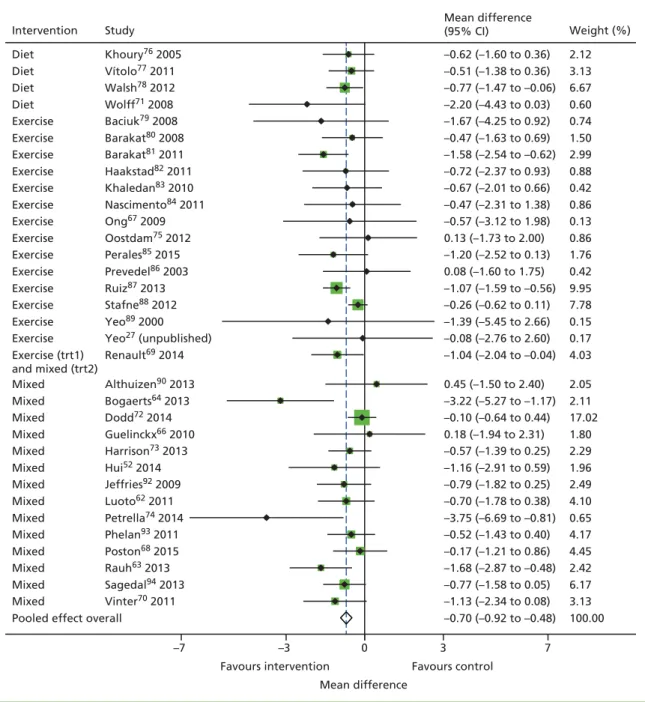
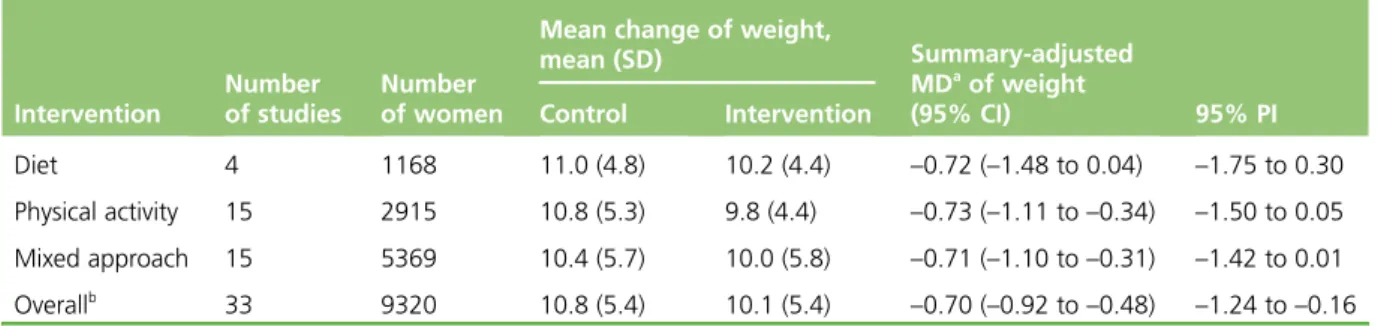
Results:Diet and lifestyle interventions reduced GWG by an average of 0.70 kg (95% CI–0.92 to–0.48 kg; 33 studies, 9320 women). The effects on composite maternal outcome [summary odds ratio (OR) 0.90, 95% CI 0.79 to 1.03; 24 studies, 8852 women] and composite fetal/neonatal outcome (summary OR 0.94, 95% CI 0.83 to 1.08; 18 studies, 7981 women) were not significant. The effect did not vary with baseline BMI, age, ethnicity, parity or underlying medical conditions for GWG, and composite maternal and fetal outcomes. Lifestyle interventions reduce Caesarean sections (OR 0.91, 95% CI 0.83 to 0.99), but not other individual maternal outcomes such as gestational diabetes mellitus (OR 0.89, 95% CI 0.72 to 1.10), pre-eclampsia or pregnancy-induced hypertension (OR 0.95, 95% CI 0.78 to 1.16) and preterm birth (OR 0.94, 95% CI 0.78 to 1.13). There was no significant effect on fetal outcomes. The interventions were not cost-effective. GWG, including adherence to the Institute of Medicine-recommended targets, was not associated with a reduction in complications. Predictors of GWG were maternal age (summary estimate–0.10 kg, 95% CI–0.14 to–0.06 kg) and multiparity (summary estimate–0.73 kg, 95% CI–1.24 to–0.23 kg).
Limitations:The findings were limited by the lack of standardisation in the components of intervention, residual heterogeneity in effects across studies for most analyses and the unavailability of IPD in
some studies.
Conclusion:Diet and lifestyle interventions in pregnancy are clinically effective in reducing GWG irrespective of risk factors, with no effects on composite maternal and fetal outcomes.
Future work:The differential effects of lifestyle interventions on individual pregnancy outcomes need evaluation.
Study registration:This study is registered as PROSPERO CRD42013003804.
Contents
List of tables xvii
List of figures xxi
List of abbreviations xxv Plain English summary xxvii Scientific summary xxix Chapter 1Background 1 Chapter 2Objectives 3
Primary 3
Secondary 3
Chapter 3Methods 5
Eligibility criteria 5
Criteria for including studies in individual participant data 5
Criteria for including participants in individual participant data 6
Literature search and study identification 6
Study and participant selection 6
Study selection 6
Data collection and storage 6
Data items 6
Definition and standardisation of variables 7
Data quality (individual participant data integrity) 8
Risk-of-bias assessment in individual studies 8
Handling of trials without individual participant data availability 8
Sample size considerations 9
Data analysis 9
Primary analyses of studies providing individual participant data 10
First stage of individual participant data meta-analysis 10
Second stage of individual participant data meta-analysis 10
Sensitivity analyses 10
Secondary analyses 11
Chapter 4Characteristics and quality of studies included in the individual
participant data meta-analysis 13
Study selection and individual participant data acquisition 13
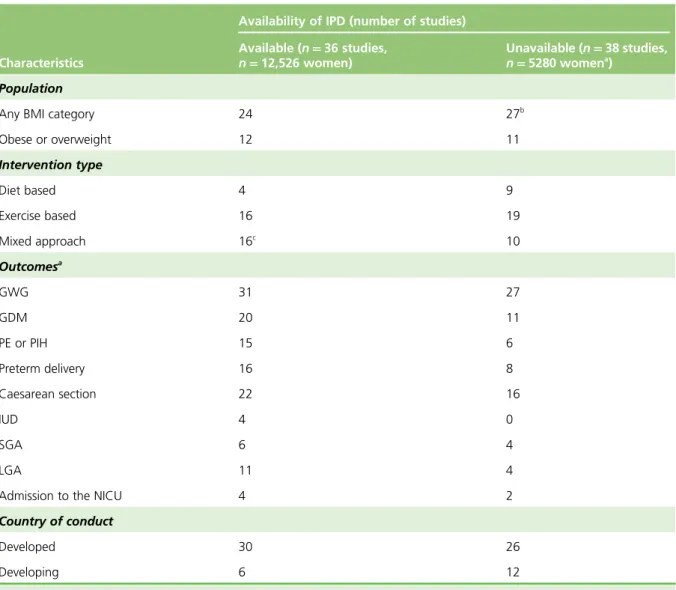
Characteristics of the studies included in the individual participant data analysis 13
Characteristics of the individual participants in the individual participant data meta-analysis 15
Risk of bias within eligible studies 17
Quality assessment of studies that contributed data to individual participant data
Chapter 5Effect of diet- and physical activity-based interventions in pregnancy
on maternal and fetal outcomes 19
Gestational weight gain 19
Overall effect 19
Differential effect of the intervention on gestational weight gain in various subgroups 20
Maternal outcomes 20
Overall effect 20
Differential effects of the intervention for composite maternal outcome in
various subgroups 23
Fetal/neonatal outcomes 24
Overall effect 24
Differential effect of the intervention for composite fetal/neonatal outcome in
various subgroups 25
Publication bias 27
Chapter 6Association of maternal weight and weight gain in pregnancy and
pregnancy complications 31
Gestational weight gain, maternal weight at booking and adverse maternal and
fetal/neonatal outcomes 31
Adherence to the Institute of Medicine’s recommendations and risk of adverse
pregnancy outcomes 31
Chapter 7Predictors of gestational weight gain 35 Chapter 8Economic evaluation and decision-analytic modelling 37
Objectives 37
Methods 37
Model structure 37
Model assumptions 40
Clinical data 42
Cost data 43
Analysis 44
Sensitivity analysis 46
Results 48
Primary analysis 48
Secondary analysis 50
Deterministic sensitivity analysis 58
Discussion 58
Principal findings 58
Strengths and limitations of the economic study 60
Comparison with other studies 61
Meaning of the study 61
Unanswered questions and future research 61
Chapter 9Discussion 63
Summary of findings 63
Strengths and limitations 63
Comparison to existing evidence 64
Relevance to clinical practice 64
Acknowledgements 67
References 69
Appendix 1Outcomes prioritised in Delphi survey 81 Appendix 2Search strategies 83 Appendix 3International Weight Management in Pregnancy individual
participant data meta-analysis project variables 85
Appendix 4Variables recoding 87 Appendix 5Details of trials with unavailable individual participant data 91 Appendix 6Clinical characteristics of the randomised controlled trials 93 Appendix 7Risk-of-bias assessment 131 Appendix 8Sensitivity analysis for the main outcomes 135 Appendix 9Results of aggregate meta-analyses 139 Appendix 10Search strategies for systematic reviews undertaken to inform
economic modelling 145
List of tables
TABLE 1 Structured question for IPD meta-analysis of diet- and physical
activity-based interventions on maternal and fetal/neonatal outcomes 5 TABLE 2 Sample size estimations for various subgroups to evaluate the effect of
interventions on weight gain and pregnancy outcomes in a single trial 9 TABLE 3 Brief characteristics of trials available and unavailable for the i-WIP IPD
meta-analysis 15
TABLE 4 Baseline characteristics of patients in studies that contributed to the IPD 16 TABLE 5 Details of outcome measures reported in all eligible studies that
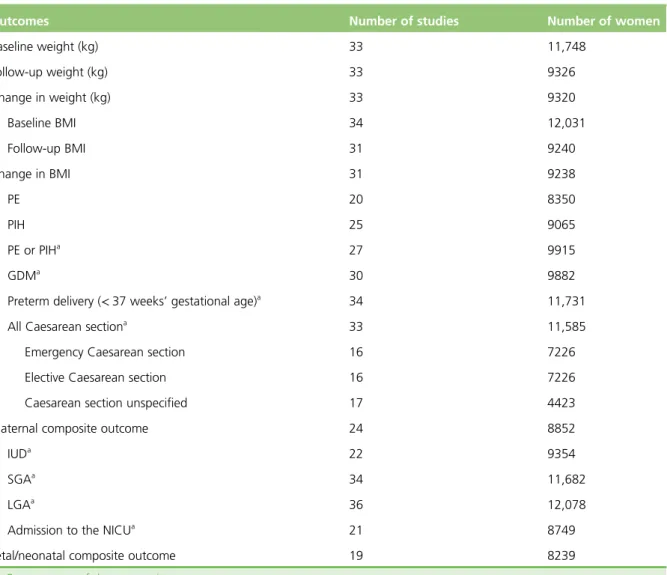
contributed to the IPD 17
TABLE 6 Risk-of-bias assessment in IPD studies compared with non-IPD 18 TABLE 7 Effects of diet- and physical activity-based interventions on GWG (kg) 20 TABLE 8 Subgroup effects and treatment–covariate interactions for GWG (kg) 21 TABLE 9 Effects of diet- and physical activity-based interventions on maternal
composite outcome 22
TABLE 10 Intervention effects on the individual components of the composite
maternal outcome: IPD meta-analysis and aggregate data meta-analysis 23 TABLE 11 Subgroup effects and treatment–covariate interaction for composite
maternal outcome 24
TABLE 12 Effects of diet- and physical activity-based interventions on composite
fetal/neonatal outcome 25
TABLE 13 Subgroup effects and treatment–covariate interaction for fetal/
neonatal composite outcome 26
TABLE 14 Intervention effects on the individual components of the composite
fetal and neonatal outcome: IPD meta-analysis and aggregate meta-analysis 27 TABLE 15 Effect of GWG on composite maternal and fetal/neonatal outcomes
accounting for the modifying effect of baseline BMI category 31 TABLE 16 Adherence to IOM’s guidelines by baseline BMI category 32 TABLE 17 Association between adherence to the IOM-recommended
weight-gain targets in pregnancy and composite adverse maternal events
within subgroups of BMI category 32
TABLE 18 Association between adherence to IOM’s guidelines and composite
TABLE 19 Univariate analysis of predictors of GWG (kg) 35 TABLE 20 Multivariable analysis of maternal characteristics and GWG (kg) 36 TABLE 21 Baseline risk and intervention effect (development of
pregnancy-related conditions) 42
TABLE 22 Timing and mode of delivery for women 43 TABLE 23 Fetal outcomes 44 TABLE 24 Cost data used in the model 45 TABLE 25 Average costs (£) for intervention group compared with care as usual 48 TABLE 26 Results for primary base-case analysis for a cohort of 10,000 women 48 TABLE 27 Results of PSA: average costs (£) for intervention group compared with
care as usual 49
TABLE 28 Results of PSA: primary analysis for a cohort of 10,000 women 49 TABLE 29 Average costs (£) for intervention group compared with care as usual:
obese women 51
TABLE 30 Results for analysis for a cohort of 10,000 obese women 51 TABLE 31 Results of PSA: average costs (£) for intervention group compared with
care as usual for obese women 52
TABLE 32 Results of PSA: analysis for a cohort of 10,000 obese women 52 TABLE 33 Average costs (£) for intervention group compared with care as usual:
overweight women 53
TABLE 34 Results for analysis for a cohort of 10,000 overweight women 54 TABLE 35 Results of PSA: average costs (£) for intervention group compared with
care as usual for overweight women 54
TABLE 36 Results of PSA: analysis for a cohort of 10,000 overweight women 55 TABLE 37 Average costs (£) for intervention group compared with care as usual:
women of normal weight 56
TABLE 38 Results of analysis for a cohort of 10,000 normal weight women 56 TABLE 39 Results of PSA: average costs (£) for intervention group compared with
care as usual for normal weight women 57
TABLE 42 List of maternal and neonatal outcomes considered to be relevant to
patient care when evaluating dietary and lifestyle interventions in pregnancy 81 TABLE 43 Maternal, and fetal and neonatal outcomes ranked by the Delphi panel 82 TABLE 44 Search strategy for MEDLINE (via Ovid) 83 TABLE 45 Search strategy for The Cochrane Library 84
TABLE 46 Variables 85
TABLE 47 Standardisation of IPD ethnicity data 87 TABLE 48 Standardisation of IPD education data 88 TABLE 49 Standardisation of IPD baseline activity data 90 TABLE 50 Eligible trials for without access to IPD 91 TABLE 51 Characteristics of studies in the repository 94 TABLE 52 Global classification of risk of bias on study level: trials contributing
IPD (n=35) 133
TABLE 53 Summary of sensitivity analyses for GWG as an outcome 135 TABLE 54 Sensitivity analyses for primary outcome composite maternal events 136 TABLE 55 Sensitivity analyses for primary outcome composite fetal events 137 TABLE 56 Example of a search strategy for the systematic review of studies
considering the costs associated with hypertensive disorders in pregnancy: MEDLINE 145 TABLE 57 Example of a search strategy for the systematic review of studies
considering the costs associated with GDM in pregnancy: MEDLINE 146 TABLE 58 Example of a search strategy for the systematic review of studies
considering the costs and benefits of interventions to manage weight gain in
List of figures
FIGURE 1 Flow diagram of standardisation of variables within the IPD sets 7 FIGURE 2 Flow diagram of studies in the IPD systematic review, showing the
studies included in the review and meta-analysis 14 FIGURE 3 Summary of the risk of bias rating for all eligible studies (n=74) 18 FIGURE 4 Effects of diet- and physical activity-based interventions on GWG (kg) 19 FIGURE 5 Effects of diet- and physical activity-based interventions on composite
maternal outcome 22
FIGURE 6 Effect of diet- and physical activity-based interventions on composite
fetal/neonatal outcome 25
FIGURE 7 Contour-enhanced funnel plot for GWG 28 FIGURE 8 Contour-enhanced funnel plot for (a) composite maternal; and
(b) fetal/neonatal outcomes 29
FIGURE 9 Scatterplot of GWG against baseline BMI for adverse (a) maternal; and
(b) fetal/neonatal composite outcomes 32
FIGURE 10 Patient pathways incorporated in the model 38 FIGURE 11 Detail for the PE pathway 39 FIGURE 12 Incremental cost-effectiveness scatterplot of intervention compared
with care as usual for pregnant women: major outcome averted 50 FIGURE 13 Incremental CEAC of intervention for pregnant women:
major outcome averted 50
FIGURE 14 Expected value of perfect information: major outcome averted 51 FIGURE 15 Incremental cost-effectiveness scatterplot of intervention compared
with care as usual for obese pregnant women: major outcome averted 53 FIGURE 16 Incremental CEAC of intervention for obese pregnant women:
major outcome averted 53
FIGURE 17 Incremental cost-effectiveness scatterplot of intervention compared
with care as usual for overweight pregnant women: major outcome averted 55 FIGURE 18 Incremental CEAC of intervention for overweight pregnant women:
major outcome averted 56
FIGURE 19 Incremental cost-effectiveness scatterplot of intervention compared
FIGURE 20 Incremental CEAC of intervention for normal weight pregnant
women: major outcome averted 58
FIGURE 21 Detailed assessment of risk of bias: all eligible trials (n=74) 131 FIGURE 22 Detailed assessment of risk of bias: all eligible trials (n=74)
(continuation) 132
FIGURE 23 Outcome: GDM 139 FIGURE 24 Outcome: PE or PIH 140 FIGURE 25 Outcome: preterm birth 141 FIGURE 26 Outcome: any Caesarean section 142 FIGURE 27 Outcome: IUD 143 FIGURE 28 Outcome: SGA infant 143 FIGURE 29 Outcome: LGA infant 144 FIGURE 30 Outcome: admissions to the NICU 144 FIGURE 31 Incremental cost-effectiveness scatterplot of the intervention
compared with care as usual for all women: cases of PE averted 149 FIGURE 32 Incremental CEAC of the intervention for all pregnant women:
cases of PE averted 149
FIGURE 33 Incremental cost-effectiveness scatterplot of the intervention
compared with care as usual for all pregnant women: cases of GDM averted 150 FIGURE 34 Incremental CEAC of the intervention for all pregnant women:
cases of GDM averted 150
FIGURE 35 Incremental cost-effectiveness scatterplot of the intervention
compared with care as usual for all pregnant women: cases of PIH averted 150 FIGURE 36 Incremental CEAC of the intervention for all pregnant women:
cases of PIH averted 151
FIGURE 37 Incremental cost-effectiveness scatterplot of the intervention
compared with care as usual for obese pregnant women: cases of PE averted 151 FIGURE 38 Incremental CEAC of the intervention for obese pregnant women:
cases of PE averted 152
FIGURE 39 Incremental cost-effectiveness scatterplot of the intervention
FIGURE 41 Incremental cost-effectiveness scatterplot of the intervention
compared with care as usual for obese women: cases of PIH averted 153 FIGURE 42 Incremental CEAC of the intervention for obese pregnant women:
cases of PIH averted 153
FIGURE 43 Incremental cost-effectiveness scatterplot of the intervention
compared with care as usual for overweight women: cases of PE averted 154 FIGURE 44 Incremental CEAC of the intervention for overweight pregnant
women: cases of PE averted 154
FIGURE 45 Incremental cost-effectiveness scatterplot of intervention compared
with care as usual for overweight women: case of GDM averted 155 FIGURE 46 Incremental CEAC of intervention for overweight pregnant women:
case of GDM averted 155
FIGURE 47 Incremental cost-effectiveness scatterplot of intervention compared
with care as usual for overweight pregnant women: case of PIH averted 155 FIGURE 48 Incremental CEAC of intervention for overweight pregnant women:
case of PIH averted 156
FIGURE 49 Incremental cost-effectiveness scatterplot of intervention compared
with care as usual for normal weight pregnant women: case of PE averted 156 FIGURE 50 Incremental CEAC of intervention for normal weight pregnant
women: case of PE averted 157
FIGURE 51 Incremental cost-effectiveness scatterplot of intervention compared
with care as usual for normal weight pregnant women: case of GDM averted 157 FIGURE 52 Incremental CEAC of intervention for normal weight pregnant
women: case of GDM averted 157
FIGURE 53 Incremental cost-effectiveness scatterplot of intervention compared
with care as usual for normal weight pregnant women: case of PIH averted 158 FIGURE 54 Incremental CEAC of intervention for normal weight pregnant
List of abbreviations
BMI body mass index
CEAC cost-effectiveness acceptability curve
CI confidence interval
DM diabetes mellitus
EVPI expected value of perfect information
GDM gestational diabetes mellitus
GWG gestational weight gain
HTA Health Technology Assessment
HYPITAT Hypertension and Pre-eclampsia Intervention Trial At near Term
i-WIP International Weight Management in Pregnancy
ICER incremental cost-effectiveness ratio
IOM Institute of Medicine
IPD individual participant data
IUD intrauterine death
LGA large for gestational age
MD mean difference
NICE National Institute for Health and Care Excellence
NICU neonatal intensive care unit
OR odds ratio
PE pre-eclampsia
PI prediction interval
PIH pregnancy-induced hypertension
PSA probabilistic sensitivity analysis
QALY quality-adjusted life-year
RCT randomised controlled trial
REML restricted maximum likelihood
SD standard deviation
Plain English summary
M
aternal obesity and excessive weight gain in pregnancy increase complications in the mother and baby. These may be reduced by diet and physical activity. It is possible that benefits are restricted to particular groups of women based on their body mass, age, number of previous children, ethnicity and underlying medical condition(s). We looked at the effects of diet and physical activity on weight gain in pregnancy and on the risk of complications in the mother and baby. We obtained anonymised data of individual participants from multiple studies, and combined them using the technique known as individual patient data meta-analysis. This was intended to allow us to identify particular groups of women who may benefit from diet and physical activity.We established the International Weight Management in Pregnancy Collaborative Network, comprising anonymised data of 12,343 women from 36 studies. We found that diet, physical activity and mixed methods, individually and when analysed together, effectively reduced weight gain in pregnancy, possibly decreased complications in the mother and had no effect on the baby. The effects were similar in all groups of women.
We did not identify any benefit to mothers or their children when they gained weight within specific targets that are currently recommended in many countries. A mother’s age and a history of previous births predicted weight gain in pregnancy.
Scientific summary
Background
Obesity and excess weight gain in pregnancy are associated with adverse maternal and fetal outcomes. Maternal age, parity, ethnicity and underlying medical conditions influence the risk of complications. Diet and physical activities have the potential to reduce weight gain and alter pregnancy outcomes. Variation in the effect of these interventions across subgroups of women may have implications for clinical management and provision of care. The association of gestational weight gain (GWG) with complications in pregnancy needs evaluation using robust data.
Objectives
Primary
1. To assess if the effects of diet- and physical activity-based interventions on (1) GWG, (2) composite maternal outcomes and (3) composite fetal/neonatal outcomes vary in subgroups of women based on body mass index (BMI) at booking, age, parity, ethnicity and underlying medical conditions.
Secondary
1. To evaluate the association of GWG and adverse pregnancy outcomes in women and their infants. 2. To assess adherence to the Institute of Medicine (IOM)-recommended weight-gain targets in normal
weight, overweight and obese pregnant women and rates of maternal and fetal complications. 3. To identify the predictors of GWG in pregnancy based on maternal characteristics such as parity,
pre-pregnancy or early pregnancy BMI, ethnicity, smoking, diet, physical activity and socioeconomic status.
4. To evaluate the cost-effectiveness of interventions.
5. To undertake network meta-analysis to determine the rank order of interventions based on effectiveness.
Methods
We undertook individual participant data (IPD) meta-analysis by using a prospective protocol in line with existing recommendations, and complied with the Preferred Reporting Items for Systematic reviews and Meta-Analysis (PRISMA) guidelines for IPD meta-analysis in reporting our work. We searched MEDLINE, EMBASE, Cochrane Central Register of Controlled Trials, Database of Abstracts of Reviews of Effects and Health Technology Assessment database, from October 2013 to March 2015, for relevant studies (to update a previous search). Randomised trials that assessed the effects of diet, physical activity or mixed-approach interventions on GWG, composite maternal and fetal/neonatal outcomes were included. The composite maternal outcome included gestational diabetes mellitus (GDM), pre-eclampsia (PE) or pregnancy-induced hypertension (PIH), preterm delivery and Caesarean section. The composite fetal outcomes included intrauterine death, small for gestational age, large for gestational age and admission to the neonatal intensive care unit (NICU). Researchers from the International Weight Management in
Pregnancy Collaborative Network shared the primary data.
subgroup of interest. We synthesised the differences in effects between subgroups in a two-step IPD random-effects meta-analysis. In the first stage, we either fitted a linear regression adjusted for baseline (for continuous outcomes) or a logistic regression model (for binary outcomes) in each study separately; in the second stage, the pertinent effect estimates were then combined across studies using a random-effects meta-analysis model estimating via restricted maximum likelihood. We quantified the relationship between weight gain and pregnancy complications. A model-based economic evaluation was undertaken to assess the cost-effectiveness of the interventions.
Results
Of the 74 eligible studies (17,727 women), 36 (12,434 women) contributed data to the IPD meta-analysis: 33 (9320 women) evaluated GWG, 24 (8852 women) reported all four components of the composite maternal outcomes and 18 (7981 women) assessed all four components of the fetal/neonatal
composite outcomes.
Effect of diet- and physical activity-based interventions on maternal and fetal outcomes
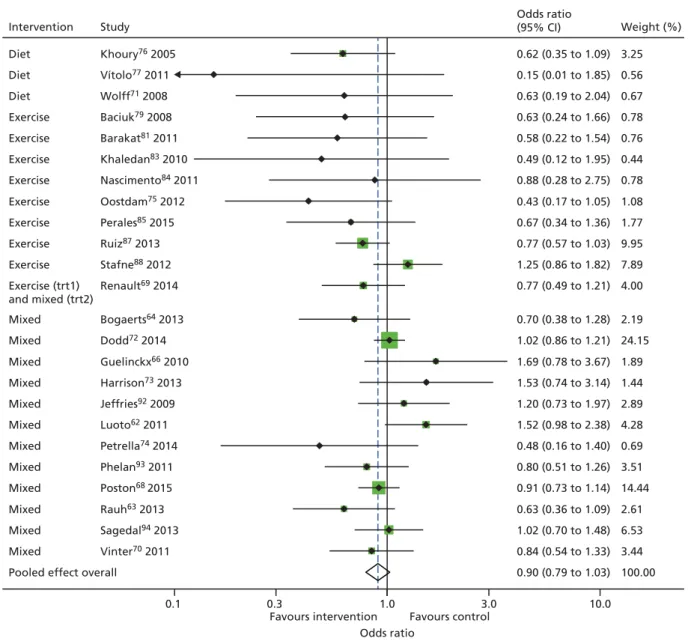
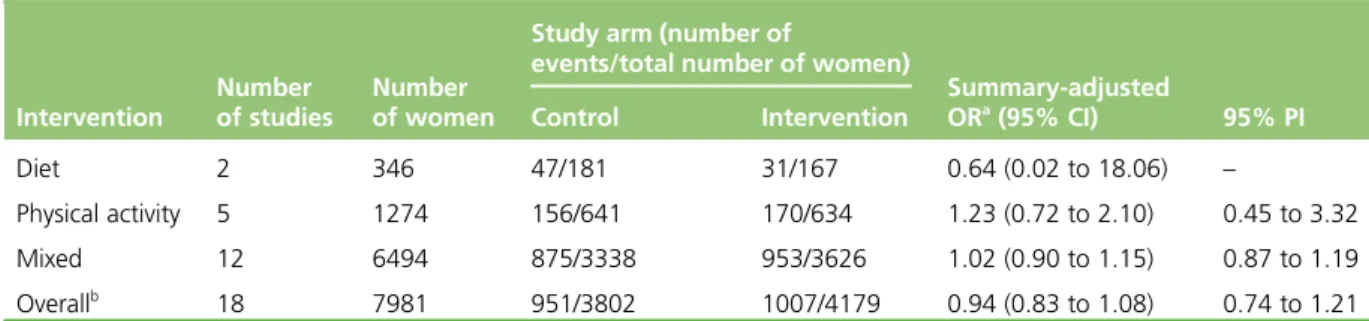
Diet- and physical activity-based interventions reduced GWG by an average of–0.70 kg [95% CI–0.92 to –0.48 kg, 95% prediction interval (PI)–1.24 to–0.16 kg; 33 studies, 9320 women] compared with the control group in the IPD meta-analysis. The odds of composite adverse maternal outcome were not significantly reduced by the interventions [summary odds ratio (OR) 0.90, 95% CI 0.79 to 1.03, 95% PI 0.68 to 1.20]. The interventions had no effect on fetal/neonatal outcomes (summary OR 0.94, 95% CI 0.83 to 1.08, 95% PI 0.74 to 1.21).
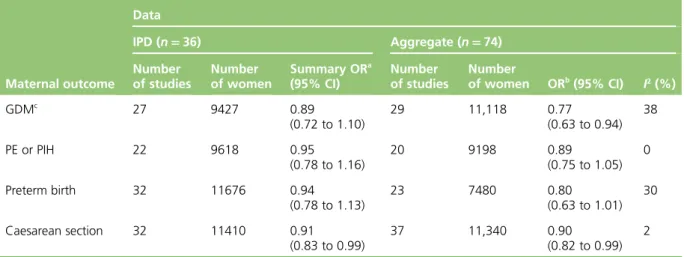
The IPD meta-analysis showed a significant reduction in rates of Caesarean section (OR 0.91, 95% CI 0.83 to 0.99; 32 studies contributing data, 11,410 women). The decreases in rates of other individual maternal outcomes [such as GDM (OR 0.89, 95% CI 0.72 to 1.10; 27 studies contributing data, 9427 women), PE or PIH (OR 0.95, 95% CI 0.78 to 1.16; 22 studies, 9618 women) and preterm birth (OR 0.94, 95% CI 0.78 to 1.13; 32 studies contributing data, 116,876 women)] were not significant.
Sensitivity analysis showed that the beneficial effect on weight gain persisted after adding non-IPD data (summary mean difference–1.13 kg, 95% CI–1.58 to–0.68 kg; 60 studies, 12,895 women). Meta-analysis of published aggregate data showed a significant reduction only in GDM (OR 0.78, 95% CI 0.64 to 0.95; 29 studies, 11,118 women) and Caesarean section (OR 0.90, 95% CI 0.82 to 0.99; 37 studies, 11,340 women) compared with the control group. There were no significant reductions in preterm birth (OR 0.80, 95% CI 0.63 to 1.01; 23 studies, 7480 women) and PE or PIH (OR 0.89, 95% CI 0.75 to 1.05; 20 studies, 9198 women). Both aggregate and IPD meta-analyses did not have an effect on fetal/neonatal outcomes.
Differential effect of interventions on gestational weight gain and pregnancy outcomes
The effect of interventions on GWG did not significantly vary with maternal BMI (–0.02 kg change in
intervention effect per 1 kg/m2increase in BMI, 95% CI–0.08 to 0.04 kg), age (–0.03 kg change in intervention effect per 1-year increase in age, 95% CI–0.08 to 0.02 kg), parity (0.10 kg change in intervention effect for multiparity vs. nulliparity, 95% CI–0.39 to 0.60 kg), ethnicity (0.05 kg change in intervention effect for non-Caucasian vs. Caucasian, 95% CI–1.27 to 1.37 kg) or underlying medical conditions (1.51 kg change in intervention effect for women with at least one condition vs. none, 95% CI–2.01 to 5.02 kg).
We did not identify any significant change in treatment effect for composite maternal outcomes in
medical conditions (44% increase in effect for women with at least one condition vs. none, OR 1.44, 95% CI 0.15 to 13.74). For composite fetal/neonatal outcome we observed a 2% lowered effect (OR 0.98, 95% CI 0.95 to 1.00) for every 1 kg/m2increase in booking BMI, which was of borderline significance. There was no significant treatment–covariate interaction for other factors and composite fetal/neonatal outcome. There was significant evidence of small-study effects for GWG (Egger’s test,p=0.038) and the composite maternal outcome (Peter’s test,p=0.036), but not for fetal/neonatal composite outcome (p=0.398).
Gestational weight gain and pregnancy outcomes
We did not identify an association between GWG, booking BMI and risk of maternal (summary OR 1.03, 95% CI 0.93 to 1.15) or fetal/neonatal complications (summary OR 1.02, 95% CI 0.91 to 1.15).
Adherence to IOM criteria for GWG did not significantly reduce GWG. Increase in maternal age (–0.1 kg, 95% CI–0.14 to–0.06 kg) and multiparity (–0.73 kg, 95% CI–1.24 to–0.23 kg) were significantly associated with GWG.
We refrained from undertaking network meta-analysis, as there were no differences in estimates of effect for GWG between diet-based, physical activity-based and mixed-approach interventions.
Cost-effectiveness of the intervention
Diet- and physical activity-based interventions in pregnancy are not cost-effective compared with usual care. Although the primary base-case analysis indicated a small reduction in pregnancy-related complications, the probabilistic sensitivity analysis showed no evidence of significant difference between the intervention and the control arms for either cost or clinical effectiveness. Similarly, the results of the secondary analysis for obese, overweight and normal weight women found no evidence that diet- and physical activity-based interventions are more cost-effective than usual care for any of the subgroups.
Conclusions
Interventions based on diet and physical activity in pregnancy reduce GWG, and the effect does not vary by maternal BMI, age, parity, ethnicity or underlying medical conditions. The interventions do not confer any additional benefit for composite maternal and fetal outcomes and are not cost-effective. There is no evidence to support routine use of IOM targets for GWG.
Recommendations for further research
The impact of lifestyle interventions in pregnancy on long-term outcomes (such as postpartum weight retention, future risk of diabetes and hypertension, subsequent pregnancy outcomes and childhood obesity) needs evaluation. Randomised trials are required to evaluate the effect of interventions to optimise the pre-pregnancy health of the mother.
Study registration
This study is registered as PROSPERO CRD42013003804.
Funding
Chapter 1
Background
U
pdated data can be found in the meta-analysis by the International Weight Management in Pregnancy (i-WIP) Collaborative Group.1Obesity is an epidemic. In the UK, every other woman of childbearing age is either overweight [body mass index (BMI) of 24.9–29.9 kg/m2] or obese (BMI of 30 kg/m2or more), and one-fifth start pregnancy as obese.2The confidential enquiry into maternal and child health identified maternal obesity as a threat to the childbearing population in the UK.3The risks for the infant include stillbirth and neonatal death, macrosomia, neonatal unit admission, preterm birth and congenital abnormalities. In the longer term, maternal obesity is associated with an increased risk of childhood obesity and associated complications.4 A significant proportion of women gain more than the recommended weight during pregnancy,5with increased risk of maternal and fetal/neonatal complications.6Women who gain excess weight in pregnancy are at increased risk of postpartum weight retention. This predisposes normal weight and overweight women in index pregnancy into entering subsequent pregnancies as overweight or obese. Effective interventions that reduce maternal obesity and excess weight gain in pregnancy could derive significant advantages for the NHS and society.
Clearly defined, effective interventions that target those women at the highest risk in pregnancy are needed. Diet- and physical activity-based interventions have been widely evaluated for their effect on gestational weight gain (GWG) and clinical outcomes. There is limited information on their effects on specific groups of pregnant women known to be at increased risk of complications.
Aggregate meta-analysis of randomised trials on diet- and physical activity-based interventions [Health Technology Assessment (HTA) programme reference number 09/27/06] showed a significant reduction in GWG, with benefit for some clinical outcomes.7However, aggregate data meta-analysis was limited because of the inability to explain heterogeneity of effects for important maternal and fetal/neonatal outcomes. This heterogeneity might be a result of variation in maternal characteristics, such as BMI, age, ethnicity and parity with varied weight gain.
Pregnancy during adolescence alters normal growth processes and increases the risk of becoming
overweight or obese.8Adolescent mothers retain more weight post partum than mature control subjects.8 Inclusion of a large number of pregnant adolescents may overestimate postpartum weight changes or the risk of becoming overweight, and thus bias estimates for adult women. Migrant groups exhibit less GWG than the local population but similar rates of complications.9These aspects need investigation.
The National Institute for Health and Care Excellence (NICE) public health guidanceWeight Management
Before, During and After Pregnancy10has prioritised the following areas for research: the clinical
effectiveness and cost-effectiveness of weight management interventions in pregnancy for specific groups, such as teenagers, with differing needs and social circumstances; ethnic minorities, such as Asians, in whom comorbidity risk at any particular BMI value is relatively higher than in other ethnic groups; women who enter pregnancy obese; and the effect of adherence to the Institute of Medicine (IOM)’s weight-gain recommendations on pregnancy outcomes.
obtained and synthesised across trials, overcomes the above limitations. Availability of the raw data substantially increases the power to detect baseline factors that truly modify intervention effect13and enables intervention effects to be quantified for clinically relevant groups.16It will also allow the magnitude of benefit, due to weight change in pregnancy, to be quantified for both the women and their infants.
Chapter 2
Objectives
Primary
1. To assess if the effects of diet- and physical activity-based interventions on (1) GWG, (2) composite maternal and (3) composite fetal/neonatal outcomes vary in subgroups of women based on BMI at booking, age, parity, ethnicity and underlying medical conditions.
Secondary
1. To quantify the relationship between the amount of weight gained in pregnancy and the risk of adverse maternal and fetal/neonatal outcomes for (1) women of normal weight, (2) overweight women and (3) obese women.
2. To assess the relationship between adherence to IOM’s guidelines and maternal and fetal complications in normal weight, overweight and obese pregnant women.
3. To identify the predictors of GWG in pregnancy based on patient characteristics such as parity, pre-pregnancy BMI, ethnicity, smoking, diet and lifestyle, and socioeconomic status.
4. To assess the cost-effectiveness of the interventions in pregnancy using model-based full economic evaluation with value of information analysis.
Chapter 3
Methods
O
ur IPD meta-analysis followed existing guidelines and used a prospective protocol registered with PROSPERO (CRD42013003804).17Our output complied with the Preferred Reporting Items for Systematic reviews and Meta-Analysis (PRISMA) reporting guidelines for IPD meta-analysis.18Eligibility criteria
Criteria for including studies in individual participant data
We included studies that addressed the components of the structured question presented inTable 1.
Randomised trials, with or without clustering, that evaluated the effects of diet- and physical activity-based interventions in pregnancy on maternal, fetal and neonatal outcomes were eligible for inclusion. We included studies on normal, overweight and obese pregnant women. Interventions that addressed mainly diet or mainly physical activity and interventions adopting a mixed approach that combined the two, with or without behavioural modification techniques, were eligible. The control arms included women without any intervention or with routine antenatal care, as defined by local health-care practices. The primary outcomes were maternal weight gain in pregnancy, and composite maternal and composite fetal/neonatal events complications. Studies should have assessed both maternal weight gain and clinical outcomes.
Maternal weight gain was defined as the difference between the weights recorded (kg or lb) at first clinic visit and last weight measured before birth. If weight at first clinic visit was not available, we used pre-pregnancy weight.
The maternal composite outcome included gestational diabetes mellitus (GDM), pre-eclampsia (PE) or pregnancy-induced hypertension (PIH), preterm delivery and Caesarean section. The fetal and neonatal composite outcome comprised intrauterine death (IUD), small for gestational age (SGA), large for gestational age (LGA) and admission to the neonatal intensive care unit (NICU). The components of the composite outcome were identified by a two-round Delphi survey. The final scores of the components are provided in
Appendix 1. The details of the development of the composite outcomes are published elsewhere.19
We excluded studies published before 1990, animal studies and those that evaluated the effects of intervention only on non-clinical outcomes (behaviour change and consumption of particular food groups) or aimed to increase weight gain in pregnancy.
TABLE 1 Structured question for IPD meta-analysis of diet- and physical activity-based interventions on maternal and fetal/neonatal outcomes
Component Description
Population Pregnant women with a BMI of≥18.5 kg/m2
Interventions Diet-based, physical activity-based and mixed-approach intervention
Comparison No intervention or routine antenatal care
Main outcomes GWG, maternal composite outcome, fetal and neonatal composite outcome
Other outcomes Maternal: gestational diabetes mellitus, pre-eclampsia or pregnancy-induced hypertension,
preterm delivery (<37 weeks), Caesarean section
Fetal/neonatal: intrauterine death, small for gestational age fetus, large for gestational age fetus, admission to the NICU
Study design Randomised controlled trial
Criteria for including participants in individual participant data
We excluded underweight women (BMI of<18.5 kg/m2) and women with multiple pregnancies.
Literature search and study identification
We updated our previous literature search (October 2013 to March 2015) to identify new trials published since the completion of our systematic review (HTA number 09/27/067) on effects of diet- and physical activity-based interventions in pregnancy. The following databases were searched from October 2013 to March 2015 to update the search: MEDLINE, EMBASE, Cochrane Database of Systematic Reviews, Cochrane Central Register of Controlled Trials, Database of Abstracts of Reviews of Effects and HTA database without any language restrictions. We used additional sources, such as the internet [general search engines such as Google (Google Inc., Mountain View, CA, USA)], and directly contacted researchers to identify relevant trials. We did not contact authors of trials that were published or identified too close to the analysis stage because of lack of sufficient time to clean and format the data before analysis. The details of the search strategy are provided inAppendix 2.
We established the International Weight Management in Pregnancy (i-WIP) IPD Collaborative Network by contacting researchers who had published trials on diet and lifestyle interventions in pregnancy.20The network is a global effort in bringing together researchers, clinicians and epidemiologists involved, supported by the World Health Organization, from 16 countries (https://kamolo.org.ar/iwipipd, accessed 1 March 2016).
Study and participant selection
Study selection
We undertook a two-stage study selection process. In the first stage, the abstracts of all citations were evaluated for their eligibility. In the second stage, we studied the identified studies in detail before their inclusion. Two independent reviewers (ER and EM) evaluated all papers. In case of disagreement, an opinion of the third reviewer (ST) was sought. We applied the eligibility criteria provided above for inclusion of studies.
Data collection and storage
We set up a bespoke database and requested authors of the i-WIP Collaborative Network to supply data in any format [Microsoft Excel®(Microsoft Corporation, Redmond, WA, USA), IBM SPSS Statistics versions 22 and 23 (IBM Corporation, Armonk, NY, USA), Stata (StataCorp LP, College Station, TX, USA) and SAS (SAS Institute Inc., Cary, NC, USA)] convenient to them. We sent, on average, three reminders when there was no response. For studies that refused to provide IPD, and for those with which contact could not be established, we extracted the published aggregate data.
We obtained and uploaded the original anonymised data sets using the secure web-based server at Centro Rosarino de Estudios Perinatales, Rosario, Argentina, a World Health Organization Collaborative Centre in Child and Maternal Health. Data manipulations were performed and documented within this environment. The final meta-data set was securely transferred to the Pragmatic Clinical Trials Unit at Queen Mary University of London for final data checks and analysis. An independent data access committee and data access process were established for use of the data in future research.
Data items
We considered all recorded variables for inclusion when appropriate, including those not reported in the published studies. Data were extracted on the study and data set levels. At the study level, we collected information regarding study settings, intervention type, components, format and provider. At the
Definition and standardisation of variables
Participant characteristics and other measurements were recorded in various different formats within the individual data sets. We chose the meta-data set format by including the variables that were most commonly reported. The standardisation process followed a predefined procedure (Figure 1).
Standardisation of baseline variables
Maternal age (years) at baseline was recorded as a continuous variable in most studies except one, in which age at baseline was calculated from the date of first visit and the date of birth. In addition to continuous data, we used the cut-off point of 20 years for age, to dichotomise participants into teenagers and those over 19 years. Race/ethnicity was recorded in a variety of ways and standardisation required a larger number of assumptions to be made. The details of ethnicity coding are available inAppendix 4. BMI was recorded both as a continuous measure and categorised into clinically relevant categories as normal weight (18.5–24.9 kg/m2), overweight (25–29.9 kg/m2) and obese (≥30 kg/m2).
We used the woman’s educational status to represent the socioeconomic status by using local standards. After feedback from the study team we defined educational status as‘low’(secondary education completed before A-levels),‘medium’(secondary education to A-level equivalent) or‘high’(any further/higher
education) (seeAppendix 4). Smoking was generally recorded as yes/no, with some studies recording previous habits. If the woman had stopped smoking because of pregnancy or for other reasons at any time point, this was combined into the variable for‘ex-smoker (yes/no)’.
We defined participants as adherent if they completed around 70–80% of the intervention protocol, if the data set provided adherence information in a yes/no format or if non-adherent women were excluded as per study protocol. Parity was defined as the number of times participants had given birth before the index pregnancy and was recorded consistently across the data set. We combined information from physical activity questionnaires, gym attendance, type of work and accelerometer data to standardise the approach
A. First quality check B. Upload onto the database C. Conversion to SAS format
DS in SAS format where the names of the variables are as in the original data set
Visualisation of the variables lists with their names and labels
DS with selected variables with the variables’ names harmonised where possible
Individual DS ready for merging
Visualisation of variables summary on the web
DS stored in the
repository Interim DS
DS stored in the repository
D. Selection of the essential variables E. First harmonisation of the variables’ names
Original DS Stage
Output Action
SAS DS Essential DS Core DS Meta DS
Final DS
F. Transformation and second harmonisation of the variables’ names G. Second quality
check H. Merging