1
African Studies Centre Leiden
African Postal Heritage
APH Paper nr 18, part 1
Ton Dietz
Uganda Protectorate,
1895-1902.
Version May 2017
Introduction
Postage stamps and related objects are miniature communication tools, and they tell a story about cultural and political identities and about artistic forms of identity expressions. They are part of the world’s material heritage, and part of history. Ever more of this postal heritage becomes available online, published by stamp collectors’ organizations, auction houses, commercial stamp shops, online catalogues, and individual collectors. Virtually collecting postage stamps and postal history has recently become a possibility. These working papers about Africa are examples of what can be done. But they are work-in-progress! Everyone who would like to contribute, by sending corrections, additions, and new area studies can do so by sending an email message to the APH editor: Ton Dietz ([email protected]). You are welcome!
African Postal Heritage; African Studies Centre Leiden; APH Paper 18, Part 1; Ton Dietz Uganda Protectorate, 1895-1902. Version May 2017
2 African Studies Centre Leiden
P.O. Box 9555 2300 RB Leiden The Netherlands
Telephone +31-71-5273372 E-mail [email protected] Website http://www.ascleiden.nl Facebook www.facebook.nl/ascleiden Twitter www.twitter.com/ascleiden
Countryportal http://countryportal.ascleiden.nl
Illustrations cover page:
ASC Leiden postage stamp Nederland (2011): ©African Studies Centre Leiden Cape of Good Hope postage stamp 1853:
http://upload.wikimedia.org/wikipedia/commons/thumb/7/7c/Cape_Triangular_Postage_Stamp.jp g/400px-Cape_Triangular_Postage_Stamp.jpg
Egypt postage stamp 1914:
3
Table of Contents
Part 1 1
Uganda Protectorate 1895-1902
Part 2 87
Uganda Postmarks
African Postal Heritage; African Studies Centre Leiden; APH Paper 18, Part 1; Ton Dietz Uganda Protectorate, 1895-1902. Version May 2017
4
Uganda British Protectorate
https://3.bp.blogspot.com/-8nDjzQJODPo/V1HEyPkn9pI/AAAAAAAAcvA/pVxZCjIKBbwJ445VgYNmWzbbGSlq8t1rQCLcB/s400/ken ya-uganda-british-east-africa-uganda-protectorate-1920.jpg : “Uganda Protectorate (green outline) circa 1920. Stamps from 1890 used in Uganda were issues of British East Africa. Then Reverend Ernest Millar at Mengo of the Church Missionary Society produced stamps on his typewriter for internal postage use in Uganda from 1895-1896. These are some of the most crude and valuable pieces of paper ever issued (51 stamps…). Typeset stamps, only slightly less crude and valuable (15 stamps…were issued in 1896. Engraved "Victoria" stamps proper for Uganda were issued by London's De La Rue from 1898-1902. And, a two stamp set for 1902 consisted of British East Africa stamps that were overprinted "Uganda". And so ends the short (but very expensive for collectors!) life of the Uganda Protectorate proper stamps.”
5
collected less frequently. Letters with European addresses were dispatched once a month, and they arrived at their destinations some three months later.
This postal service of Uganda may have been preceded by a postal service of the Kingdom of Unyoro (Bunyoro), which applied a handstamp in Arabic script.
Handstamp of Unyoro on a cover addressed to Bishop Arthur Tucker of the Church Missionary Society.
Military Forces assumed the operation of the mails in June, 1896. The Uganda Missionaries were then followed by a typeset issue from a printing press in November, 1896, after the British Foreign Office had gained control of the government. A recess printed issue from De La Rue & Co. appeared in 1898, featuring a detail from Angeli's portrait of Queen Victoria of 1885.”.
1895 Cowrie values (20 March and April) issued by Reverend E. Millar in Mengo. Ernest
Millar lived between 1867 and 1917.
(source:
https://janus.lib.cam.ac.uk/db/node.xsp?id=CV%2FPers%2FMillar%2C%20Ernest%20(1868-1917)%20missionary)
: “Revd. Ernest Millar (1868-1917) was the son of a successful timber
African Postal Heritage; African Studies Centre Leiden; APH Paper 18, Part 1; Ton Dietz Uganda Protectorate, 1895-1902. Version May 2017
6
http://www.friendsofmombasa.com/s/cc_images/cache_46152206.jpg?t=1432472528
http://i.nona.net/locmap_MENGO_32.582X0.03X32.918X0.27.png
Later picture of the Church Missionary Society Station in Mengo:
7
http://www.oldeastafricapostcards.com/wp-content/gallery/uganda-protestants-work/UR05C2.jpg
https://s-media-cache-ak0.pinimg.com/564x/72/0e/16/720e1659e98bb9dd597aebcd37f5eb54.jpg
: “Cowrie shells,
African Postal Heritage; African Studies Centre Leiden; APH Paper 18, Part 1; Ton Dietz Uganda Protectorate, 1895-1902. Version May 2017
8
http://www.rhodesia.co.za/Images/large/LUGARD.jpg
: “LUGARD. The following early
Uganda have been removed from a printed album page, endorsed at base 'Certified that the
above stamps were received direct from Uganda and are genuine (signed) F Lugard'. As such,
one can consider them a 'new issue' of the time. All are in remarkably fine condition for
these delicate primitives, having remained in an album until recently.
9
the neighbouring region, in addition to elaborating a scheme for the emancipation of the
slaves held by Arabs in the Zanzibar mainland. In 1890, Lugard was sent by the company to
Uganda, where he secured British predominance of the area and put an end to the civil
disturbances. The efforts came with severe fighting, chiefly notable for an unprovoked attack
by the French on the British faction. After the successful efforts to end disturbances, Lugard
became Military Administrator of Uganda from 26 December 1890 to May 1892. While
administering Uganda, he journeyed round Ruwenzori to Albert Edward Nyanza, mapping a
large area of the country. He also visited Albert Nyanza, and brought away some thousands
of Sudanese who had been left there by Emin Pasha and H. M. Stanley during the Emin
Pasha Relief Expedition. When Lugard returned to England in 1892, he successfully
dissuaded Prime Minister William Ewart Gladstone and his cabinet from abandoning
Uganda. In 1894, Lugard was despatched by the Royal Niger Company to Borgu, where he
secured treaties with the kings and chiefs acknowledging the sovereignty of the British
company, while distancing the other colonial powers that were there. From 1896 to 1897,
Lugard took charge of an expedition to Lake Ngami on behalf of the British West Charterland
Company. From Ngami he was recalled by the British government and sent to West Africa,
where he was commissioned to raise a native force to protect British interests in the
hinterland of the Lagos Colony and Nigeria against French aggression. In August 1897, Lugard
organized the West African Frontier Force, and commanded it until the end of December
1899, when the disputes with France were composed.”.
Postage stamps in two sizes (20-26mm = I, and 16-18mm = II; all black)
African Postal Heritage; African Studies Centre Leiden; APH Paper 18, Part 1; Ton Dietz Uganda Protectorate, 1895-1902. Version May 2017
10
https://siegelauctions.com/image_manip/image.php?src=/2013/1049/1618.jpg
http://www.matthewbennettauctions.com/lotphotos_large/335/223548.jpg
https://encrypted-tbn0.gstatic.com/images?q=tbn:ANd9GcTv3rdnftx6tLzG4PpqfESPcJxpsC6kJY3rKzxo8D6tWWun569IIA
: “UGANDA 1895 SG17 Mint”.
https://www.stanleygibbons.com/media/catalog/product/cache/1/small_image/210x/9df78eab3352 5d08d6e5fb8d27136e95/u/g/uganda-1895-sg35-used_0.jpg
10C (M2-I and II)
11
http://www.grosvenorauctions.com/dyn_pages/stamp_images/16/3276.jpg: “East Africa: Uganda: 1895 (Mar.) Wide letters, wide stamps, 20(c.) black [=10c!], cancelled by ms. cross, faults but scarce. S.G. 2”
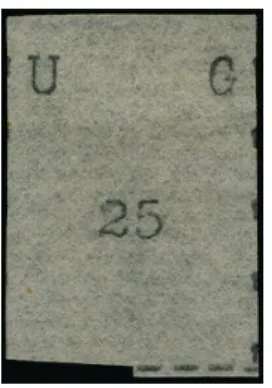
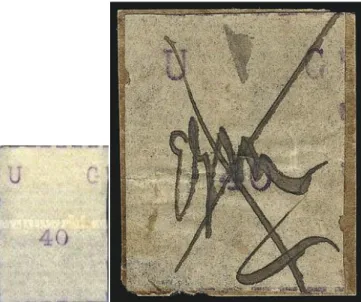
http://www.theoldie.co.uk/media/articles/036A_Oldie345.jpg : “Philatelist John Griffith-Jones explains why he loves his collection of some of the most bizarre creations in postal history. In 1895 Ernest Millar, a young Cambridge graduate, sat in a hut in the depths of the bush in Uganda, making stamps on his typewriter. Uganda had just become a British Protectorate and George Wilson, the first government official posted there, decided that this called for an issue of stamps and a postal service to use them. The Church Missionary Society was the only organisation with a network across the country, and Millar was the only missionary with a typewriter. So it fell to him to design, and make, the first stamps. The design had to be simple. Millar chose U and G as the emblem, placing one letter on either side of each stamp, at the top. In the centre, he put a figure to show how much each stamp was worth in cowrie shells (the currency at the time). Then he took the only paper he had to hand – a flimsy foolscap on which he typed his sermons – and began to type. Page after page of stamps he typed, creating grids by typing hyphens along the top and bottom and apostrophes down the sides. Of course he made mistakes. In his first issue, he struggled to make stamps the same width and often put apostrophes in the wrong place. Sometimes he typed an A instead of a G or got a number wrong. But, overall, he did an incredible job, producing around five thousand stamps over a period of eighteen months, at the same time as doing his day job. The stamps were available from the mission station and letters were carried in cleft sticks by runners wearing nothing but a loincloth. Demand soon increased and, within months, Millar was on his third issue and using a new typewriter. By 1896, it all got too much. Relief came in the form of a hand-press which was sent out from
African Postal Heritage; African Studies Centre Leiden; APH Paper 18, Part 1; Ton Dietz Uganda Protectorate, 1895-1902. Version May 2017
12
which is a sizeable proportion of the ones that survive. I have used and unused ones; perfect ones and ones where he made a mistake. I have single stamps, blocks of stamps and stamps on envelopes. I also have stamps from every issue, including one that wasn’t used. You won’t get a single stamp for less than about £150 now, and if you can find one on an envelope, you could be looking at up to fifty times that or more. There’s a lovely example: a letter from Millar to a colleague who lived about fifteen miles along Lake Victoria. He’s put three ten-cowrie stamps on it but crossed out the ten on the third and changed it, by hand, to a five. And then he’s written some extra information on the top left corner: ‘One box sent by canoe’. And there’s a letter to Bishop Alfred Tucker where the stamp is badly stained with gum. Usually that would decrease a stamp’s value but, in this case, it’s all part of the story because the stamps had no adhesive, so they had to use gum from a local tree to stick them on. What will I do with my collection? I tend to believe that one’s really just a custodian of these materials for a certain period and then it’s somebody else’s turn. Often that comes when you drop off your perch, but equally there’s no reason not to hand them on as a conscious decision when the journey has been fully covered. I’ve already exhibited them at international stamp shows in
Melbourne and New York and won gold medals for my display. I hope, one day, to write a book about them. But having recently finished a book on the postage due stamps of Zanzibar, 1875–1964, which took me ten years and ended up at 539 pages, I think first I’ll have a bit of a break. And then, who knows? John Griffth-Jones, As told to Blanche Girouard”.
13
http://www.theoldie.co.uk/media/articles/_articleCarousel/037_Oldie345.jpg: “The intrepid female missionaries who walked 800 miles from Mombasa, from left: M S Thomsett, E L Pilgrim, E M Furley, J E Chadwick and E B Browne”. FEATURES | BY BLANCHE GIROUARD | MARCH 2017
15C (M3-II)
African Postal Heritage; African Studies Centre Leiden; APH Paper 18, Part 1; Ton Dietz Uganda Protectorate, 1895-1902. Version May 2017
14
https://www.stanleygibbons.com/media/catalog/product/cache/1/image/9df78eab33525d08d6e5fb 8d27136e95/u/g/uganda-1895-sg20-used_0.jpg: “UGANDA 1895 SG20 Used. 1895 (Apr) 20(c) black typewritten, wide letters, narrow stamp (17mm), neatly cancelled by pencil cross. Slight creasing at top, causing small tear at upper left, but a very good example, with borders visible on all sides.”.
http://www.grosvenorauctions.com/dyn_pages/stamp_images/16/std_thumbmaker.php?picname= 1598.jpg: “East Africa: Uganda: 1895 (Apr.) Wide letters, Narrow stamps, 20(c.) black, with scarce ms. cancellation ''Mityana/Parcels Post/ 21/7/95/ HRS'' applied by the Rev. H.R. Sugden. S.G. 20”.
15
http://www.grosvenorauctions.com/dyn_pages/stamp_images/115/5663.jpg
https://www.cherrystoneauctions.com/auctionscans200911/4005.jpg
http://www.grosvenorauctions.com/dyn_pages/stamp_images/16/std_thumbmaker.php?picname= 1597.jpg: “East Africa: Uganda: 1895 (Mar.) Wide letters, wide stamps, 30(c.) black, cancelled by ruled blue pencil cross used only during Mar. and Apr. 1895 and thereafter rapidly degenerating to freehand cancellations, fine. S.G. 6”.
African Postal Heritage; African Studies Centre Leiden; APH Paper 18, Part 1; Ton Dietz Uganda Protectorate, 1895-1902. Version May 2017
16
https://siegelauctions.com/image_manip/image.php?src=/2013/1049/1614.jpg
https://siegelauctions.com/image_manip/image.php?src=/2013/1049/1622.jpg 50C (M8-I and II)
https://siegelauctions.com/image_manip/image.php?src=/2013/1049/1615.jpg
https://www.stanleygibbons.com/media/catalog/product/cache/1/image/9df78eab33525d08d6e5fb 8d27136e95/u/g/uganda-1895-sg5-mint_0.jpg: “UGANDA 1895 SG5 Mint. 1895 (20 Mar) 50(c) black typewritten, wide letters, stamp 24mm wide, borders on two sides, fine unused, with only minor traces of the usual creasing. Rare”.
https://www.stanleygibbons.com/media/catalog/product/cache/1/image/1800x/040ec09b1e35df13 9433887a97daa66f/u/g/uganda-1895-sg5-used_0.jpg: “UGANDA 1895 SG5 Used. 1895 (Mar)
17
https://swmedia-4cd6.kxcdn.com/media/catalogue/Uganda/Postage-stamps/A4-i.jpg
http://www.grosvenorauctions.com/dyn_pages/stamp_images/16/std_thumbmaker.php?picname= 3278.jpg : “East Africa: Uganda: 1895 (Mar.) Wide letters, Wide stamps, 50(c.) black, cancelled by ms. cross, horizontal crease but scarce. S.G. 8”.
60C (M9-I and II)
http://www.matthewbennettauctions.com/lotphotos_large/335/223547.jpg
https://www.stanleygibbons.com/media/catalog/product/cache/1/image/9df78eab33525d08d6e5fb 8d27136e95/u/g/uganda-1895-sg6-used_0.jpg: “UGANDA 1895 SG6 Used. 1895 (20 Mar) typewritten 60(c) black, wide letters, 19mm (+) wide, complete borders at top and right, partial at foot, tied to piece by superb KAMPALA cds dated '24 NO 98', cancelled by favour. Crease and slight gum staining at foot, still most attractive and rare.”.
1895 Cowrie values overprints
(May; all black)James Mackay (1970, p. 41): “During May 1895 the Rev. G. R. Baskerville ran out of certain
denominations and made good this deficiency by surcharging in black ink other values and endorsing them with his initials ‘G.R.B.’. The earliest date known for used copies of these provisionals is 7th of
May and , because they were in use for a very short time, they are extremely scarce”.
10C : 30C (M10); 10C : 50C (M11); 15C : 10C (M12); 15C : 20C (M13); 15C : 40C (M14); 15C : 50C ; M15). 25C : 50C (M16); 50C : 60C (M17)
African Postal Heritage; African Studies Centre Leiden; APH Paper 18, Part 1; Ton Dietz Uganda Protectorate, 1895-1902. Version May 2017
18
https://1.bp.blogspot.com/-4mfn1ks_bY4/WN9UzkxHLNI/AAAAAAAAvGA/JU2yX6YIjisg0k4JVmwZheRQ7M9hmRLHgCLcB/s1600/ Screenshot_29.jpg
1895 Cowrie values, changed design
(May; all black) 5C (M18)https://www.stanleygibbons.com/media/catalog/product/cache/1/image/9df78eab33525d08d6e5fb 8d27136e95/u/g/uganda-1895-sg26-mint_0.jpg: “UGANDA 1895 SG26 Mint. 1895 (May) typewritten 5(c) black, narrow letters, stamp 18mm wide, part to complete borders except at top, fresh unused. Trace of creasing, still fine and rare”.
http://www.rhodesia.co.za/Images/large/AA1864.jpg: “1895 narrow letters, narrow stamps. 5 cowries black, 'left marginal' with lines on all sides. Exceptional. SG 26 Ex. 'Lugard'.”
19
http://www.rhodesia.co.za/Images/large/AA1865.jpg: “1895 narrow letters, narrow stamps. 10 cowries black, 'left marginal' with lines on three sides. Exceptional. SG 27 Ex. 'Lugard'.”.
15C (M20)
http://3.bp.blogspot.com/-Zgjxw1frmmc/UfBcPlPq5KI/AAAAAAAAx_Q/yP16irR1VA8/s1600/bar19.jpg 20C (M21)
https://www.stanleygibbons.com/media/catalog/product/cache/1/image/9df78eab33525d08d6e5fb 8d27136e95/u/g/uganda-1895-sg29-mint_0.jpg
African Postal Heritage; African Studies Centre Leiden; APH Paper 18, Part 1; Ton Dietz Uganda Protectorate, 1895-1902. Version May 2017
20
http://www.rhodesia.co.za/Images/large/AA1867.jpg: “1895 narrow letters, narrow stamps. 20 cowries black, 'left marginal' with lines on all sides. Exceptional. SG 29 Ex. 'Lugard'.”
https://swmedia-4cd6.kxcdn.com/media/catalogue/Uganda/Postage-stamps/D3-s.jpg 25C (M22)
https://www.stanleygibbons.com/media/catalog/product/cache/1/image/9df78eab33525d08d6e5fb 8d27136e95/u/g/uganda-1895-sg30-mint_0_1.jpg: “UGANDA 1895 SG30 Mint. 1895 (May)
Typewritten 25(c) black, narrow letters, stamp 17.5mm wide, fine unused with part to complete borders on three sides. Rare, and with an impressive pedigree”.
30C (M23)
Illustration not yet found 40C (M24)
21 50C (M25)
http://www.rhodesia.co.za/Images/large/AA1871.jpg: “1895 narrow letters, narrow stamps. 5 cowries black, 'left marginal' with lines on three sides. Exceptional. SG 33 Ex. 'Lugard'.”. 60C (M26)
http://www.rhodesia.co.za/Images/large/AA1872.jpg: “1895 narrow letters, narrow stamps. 60 cowries black, 'left marginal' with lines on all sides, paper crease through centre. Exceptional. SG 34 Ex. 'Lugard'.”.
Mackay 1970, p. 41: ”A certain Dr Ansorge of the Congo Free State Company happened to be in Buganda and begged Mr Millar to print him some 35 and 45 cowree stamps. Very obligingly, if somewhat naïvely, Mr Millar printed a few of each denomination, regarding them merely as curiosities without any postal validity”.
African Postal Heritage; African Studies Centre Leiden; APH Paper 18, Part 1; Ton Dietz Uganda Protectorate, 1895-1902. Version May 2017
22
http://stampauctionnetwork.com/Y/1049/1624.jpg 10C (M28)
http://stampauctionnetwork.com/Y/1049/1625.jpg
http://www.grosvenorauctions.com/dyn_pages/stamp_images/16/std_thumbmaker.php?picname= 3275.jpg: “East Africa: Uganda: 1895 (Nov.) 10(c.) violet cancelled pencil cross on piece, rather stained, 20(c.) cancelled blue pencil cross, torn at foot. S.G. 36, 38”.
23
https://siegelauctions.com/image_manip/image.php?src=/2013/1049/1626.jpg
https://swmedia-4cd6.kxcdn.com/media/catalogue/Uganda/Postage-stamps/D11-i.jpg
https://www.stanleygibbons.com/media/catalog/product/cache/1/small_image/210x/9df78eab3352 5d08d6e5fb8d27136e95/u/g/uganda-1895-sg37-used_0.jpg: “UGANDA 1895 SG37 Used”.
20C (M30)
http://www.grosvenorauctions.com/dyn_pages/stamp_images/113/9008.jpg
African Postal Heritage; African Studies Centre Leiden; APH Paper 18, Part 1; Ton Dietz Uganda Protectorate, 1895-1902. Version May 2017
24
http://www.grosvenorauctions.com/dyn_pages/stamp_images/16/3275.jpg
25
https://3.bp.blogspot.com/-HlZBcHK6t-M/WN9UhgUo47I/AAAAAAAAvF8/1NimYsJUXS8CkfTZ7t2qhsFOB6amLbs2wCLcB/s1600/Screenshot_ 28.jpg
http://www.famousstamps.org/ugandacowries3.jpg 30C (M32)
African Postal Heritage; African Studies Centre Leiden; APH Paper 18, Part 1; Ton Dietz Uganda Protectorate, 1895-1902. Version May 2017
26
https://swmedia-4cd6.kxcdn.com/media/catalogue/Uganda/Postage-stamps/D15-i.jpg
http://stampauctionnetwork.com/Y/1049/1630.jpg 50C (M34)
https://upload.wikimedia.org/wikipedia/commons/thumb/a/a6/A_pair_of_50_cowries_showing_a_ correction.jpg/150px-A_pair_of_50_cowries_showing_a_correction.jpg: “A pair of Uganda
Missionaries showing a typed-over correction by Millar”. 60C (M35)
Illustration not yet found
27
https://siegelauctions.com/image_manip/image.php?src=/2013/1049/1633.jpg 10C (M37), AND 20C (M39)
African Postal Heritage; African Studies Centre Leiden; APH Paper 18, Part 1; Ton Dietz Uganda Protectorate, 1895-1902. Version May 2017
28
https://s-media-cache-ak0.pinimg.com/236x/e1/bb/79/e1bb799327baecae82b518a3cb556a3b.jpg 25C (M40)
29
http://www.grosvenorauctions.com/dyn_pages/stamp_images/113/9011.jpg
http://thumbs.ebaystatic.com/images/g/JOwAAOSwRgJXiyrX/s-l225.jpg 40C (M42)
https://encrypted-tbn3.gstatic.com/images?q=tbn:ANd9GcRnPWAy24-rmo2ze16g3qaiS_zUwcx5kys2_g8w-Z_7wdzyic_xqg
http://1.bp.blogspot.com/_PlhSnholNPc/THQb3T9p5AI/AAAAAAAABh0/O0PGoOUE_HE/s1600/CCF0 8242010_00000.jpg
50C (M43)
African Postal Heritage; African Studies Centre Leiden; APH Paper 18, Part 1; Ton Dietz Uganda Protectorate, 1895-1902. Version May 2017
30 60C (M44)
https://www.stanleygibbons.com/media/catalog/product/cache/1/image/9df78eab33525d08d6e5fb 8d27136e95/u/g/uganda-1896-sg52-mint_0.jpg: “UGANDA 1896 SG52 Mint. 1896 (June) 'V.96.R' 60(c) violet typewritten, fresh and fine unused with borders on three sides”.
31
https://www.sandafayre.com/philatelicarticles/articleimages/uganda.jpg: “Uganda - 1896 100 cowries violet, SG 53. In 1894 the British Protectorate of Uganda was established, and to improve the otherwise non-existent Postal system, George Wilson, a Government Official enlisted the aid of The Rev Ernest Millar of the Church Missionary Society. He was the only man in the Territory with a typewriter, to produce some stamps to pay for an internal postal system. The original "stamps" were simple rows of typed labels with U G in the top corners and the value from 10 to 50 cowries ( shells the currency of the area) in the middle. The stamps were all typed in black (the colour of the machine's only ribbon). Because of the "hand typed" nature of these issues, there are many errors including tete-beche pairs, where the sheet was put in upside down to use all available space, and nearly all are cancelled by a pen stroke. The particular stamp illustrated was produced in 1896, after the arrival in 1895 from England, of a new typewriter. This had a narrower typeface and a violet ribbon, and to mark the occasion the initials V. R. were introduced to the design at the top, and the word Uganda at the foot of each stamp. They were still produced in typewritten sheets with each different value from 5c to 100c in rows of 10.”
African Postal Heritage; African Studies Centre Leiden; APH Paper 18, Part 1; Ton Dietz Uganda Protectorate, 1895-1902. Version May 2017
32
http://www.rhodesia.co.za/Images/large/AA1853.jpg: “1896 new currency, 1a to 5r black on thick white wove or thin yellowish paper. Set of seven values, the 1a and 1r both showing 'Small 'O' in 'POSTAGE' variety, very fine and fresh mint, without gum as issued. A lovely set of these delicate stamps. SG 55a, 56-59, 60a, 61 Ex. 'Lugard'”.
1A, black on white (M46 I (thin ‘1’) and M46 II (thick ‘1’)
33
African Postal Heritage; African Studies Centre Leiden; APH Paper 18, Part 1; Ton Dietz Uganda Protectorate, 1895-1902. Version May 2017
34
35
http://www.stampsoftheworld.co.uk/w/images/0/0a/Kenya_Uganda_Tanganyika_1890_-_1964_l.jpg
African Postal Heritage; African Studies Centre Leiden; APH Paper 18, Part 1; Ton Dietz Uganda Protectorate, 1895-1902. Version May 2017
36
https://www.sandafayre.com/stockimages/52179695.jpg: “UGANDA - 1896 2a black typeset, used block of 8, one copy showing the variety "small o", SG 56, 56a, fine used few wrinkles”.
http://www.chrisrainey.com/images/5865-1.jpg : “UGANDA 1898 envelope to Holland franked 2½a adhesive tied "MOMBASSA" c.d.s. 19 JA 98”.
37
https://www.sandafayre.com/stockimages/52003543.jpg: “UGANDA - 1896 3a black, SG 57, fine unused horizontal pair (2 stamps)”.
African Postal Heritage; African Studies Centre Leiden; APH Paper 18, Part 1; Ton Dietz Uganda Protectorate, 1895-1902. Version May 2017
38
http://www.chrisrainey.com/images/5869.jpg
39
http://www.rhodesia.co.za/Images/large/AA3043.jpg: “1896 new currency, 3a on thick white wove paper. Lower right corner block of 16 superb used cancelled 'ELDOMA MR12 99', day inverted. A lovely and scarce large multiple. SG 57”.
4A, id (M49)
African Postal Heritage; African Studies Centre Leiden; APH Paper 18, Part 1; Ton Dietz Uganda Protectorate, 1895-1902. Version May 2017
40
https://www.sandafayre.com/stockimages/52180471.jpg: “UGANDA - 1896 4a black, type-set, SG 58, top left corner block of 6 used.”
41
http://www.chrisrainey.com/images/2967.jpg 8A, black on yellow (M50),
https://encrypted-tbn2.gstatic.com/images?q=tbn:ANd9GcSVpt3gvmvIw0KCN6ZXDUjhCpbmTy72V9UCbHEtllCbcEptZN d4aA
African Postal Heritage; African Studies Centre Leiden; APH Paper 18, Part 1; Ton Dietz Uganda Protectorate, 1895-1902. Version May 2017
42 1R, id (M51),
http://www.rhodesia.co.za/Images/large/AA1856.jpg: “1896 new currency, 1r on thin yellowish paper. Fine used cancelled 'KAMPALA JA 10 99'. SG 60 Ex. 'Lugard'”.
8A, black on yellow (M50), and 1R, id (M51), and 5R, id (M52)
http://www.revrevd.com/uploads/3/2/2/0/3220955/1194330.jpg?306: “c1896. Typeset postage stamps (produced by Revd F Rowling) with manuscript Consular overprint. Imperf. No watermark. C1. 8a black; C2. 1r black; C3. 5r black. All known examples of these stamps are cancelled with the Coat of Arms cancel of the British Vice Consul in the Uganda Protectorate and the adjoining
territories. There are various constate plate varieties on this issue.”.
https://www.sandafayre.com/stockimages/51161680.jpg: “UGANDA - 1896 1r + 5r New Curency stamps, SG 60/61, used together on piece tied by British Consul cancellation with m/s "Consular". Scarce usage”.
43
https://www.stanleygibbons.com/media/catalog/product/cache/1/image/1800x/040ec09b1e35df13 9433887a97daa66f/u/g/uganda-1896-sg61-mint_0.jpg: “
http://www.rhodesia.co.za/Images/large/AA1857.jpg: “1896 new currency, 5r on thin yellowish paper. Superb used cancelled 'KAMPALA JA 10 99'. SG 61 Ex. 'Lugard'”.
http://www.grosvenorauctions.com/dyn_pages/stamp_images/16/std_thumbmaker.php?picname= 3273.jpg: “East Africa: Uganda: 1896 (Nov.) 1a. (thick ''1'') to 5r. used, some faults but the 5r. fine. (7) S.G. 55-61”. Postmark Luba’s.
African Postal Heritage; African Studies Centre Leiden; APH Paper 18, Part 1; Ton Dietz Uganda Protectorate, 1895-1902. Version May 2017
44
http://www.stampsoftheworld.co.uk/w/images/thumb/9/93/Kenya_Uganda_Tanganyika_1890_-_1964_m.jpg/640px-Kenya_Uganda_Tanganyika_1890_-_1964_m.jpg ( Roger Gilbert:
45
1896 Overprinted with L for Local
(7 November)https://www.stanleygibbons.com/media/catalog/product/cache/1/image/1800x/040ec09b1e35df13 9433887a97daa66f/u/g/uganda-1896-sg70-5-mint_0.jpg
1A, black on white (M53)
African Postal Heritage; African Studies Centre Leiden; APH Paper 18, Part 1; Ton Dietz Uganda Protectorate, 1895-1902. Version May 2017
46
https://www.stanleygibbons.com/media/catalog/product/cache/1/image/1800x/040ec09b1e35df13 9433887a97daa66f/u/g/uganda-1896-sg71-a-mint_0.jpg
47
https://www.sandafayre.com/stockimages/44217741.jpg 8A, black on yellow (M57)
African Postal Heritage; African Studies Centre Leiden; APH Paper 18, Part 1; Ton Dietz Uganda Protectorate, 1895-1902. Version May 2017
48
https://www.cherrystoneauctions.com/auctionscans200911/4018.jpg 1R, id (M58)
49
https://www.cherrystoneauctions.com/auctionscans200911/4019.jpg 5R, id (M59)
Illustration not yet found Used as revenue stamps
http://www.revrevd.com/uploads/3/2/2/0/3220955/8654422.jpg?537: “1896. Typeset postage stamps (produced by Revd F Rowling). Imperf. No watermark.; S56. 2a black; S60. 1r black; Same types overprinted L (= local) S75. 1r black; The above stamps are cancelled with the Coat of Arms cancel of the British Vice Consul in the Uganda Protectorate and the adjoining territories.”.
African Postal Heritage; African Studies Centre Leiden; APH Paper 18, Part 1; Ton Dietz Uganda Protectorate, 1895-1902. Version May 2017
50
https://s-media-cache-ak0.pinimg.com/236x/59/ed/56/59ed56bc646cb6d7a0ba283eb9f1a5b8.jpg ; proof.
51
http://www.rhodesia.co.za/Images/large/AA3809.jpg: “1898 QV 1a scarlet to 8a pale olive. Set of five values fine or very fine mint. SG 84-89”.
1A scarlet red (M60a)
https://s-media-cache-ak0.pinimg.com/236x/dc/e3/74/dce3747c90bc9e59cbb254b295fc0927.jpg
African Postal Heritage; African Studies Centre Leiden; APH Paper 18, Part 1; Ton Dietz Uganda Protectorate, 1895-1902. Version May 2017
52
53
African Postal Heritage; African Studies Centre Leiden; APH Paper 18, Part 1; Ton Dietz Uganda Protectorate, 1895-1902. Version May 2017
54 1A carmine (M60b), 1902
http://www.chrisrainey.com/images/5868.jpg 2A red brown (M61)
55
http://www.chrisrainey.com/images/5867.jpg 3A grey (M62a)
3A blue grey (M62b)
African Postal Heritage; African Studies Centre Leiden; APH Paper 18, Part 1; Ton Dietz Uganda Protectorate, 1895-1902. Version May 2017
56 4A dark green (M63)
https://3.bp.blogspot.com/-FEjbFZuNPpI/V08zgAtdeMI/AAAAAAAAcuI/4q8FieRPC1A2dNPNNR_1DRYI6FvTLUYhgCLcB/s320/Ugan da73.jpg
8A olive (M64a)
https://3.bp.blogspot.com/-aX_1ITerALw/V08zz5cWuqI/AAAAAAAAcuQ/tTC0XJ2RKRsFMyx1N7W-MHzx3Kasv1s2wCLcB/s400/Uganda1898-1902.jpg
57
https://s-media-cache-ak0.pinimg.com/736x/7c/55/5f/7c555f918566bc351bb7b0d9c9847376.jpg 1R ultramarine (M65a)
African Postal Heritage; African Studies Centre Leiden; APH Paper 18, Part 1; Ton Dietz Uganda Protectorate, 1895-1902. Version May 2017
58
http://i1.ebayimg.com/thumbs/images/g/~~IAAOSwoBtW5E21/s-l225.jpg
http://www.chrisrainey.com/images/5866.jpg 5R dark brown (M66)
59
https://sites.google.com/site/firststampsafrica/_/rsrc/1467125462073/home/first-stamps-of-
uganda/117%20stamps%20first%20_1898%20Stamps%20of%20Uganda%20-%20Queen%20Victoria.jpg
African Postal Heritage; African Studies Centre Leiden; APH Paper 18, Part 1; Ton Dietz Uganda Protectorate, 1895-1902. Version May 2017
60
http://www.stampsoftheworld.co.uk/w/images/thumb/d/de/Kenya_Uganda_Tanganyika_1890_-_1964_o.jpg/640px-Kenya_Uganda_Tanganyika_1890_-_1964_o.jpg
61
http://www.revrevd.com/uploads/3/2/2/0/3220955/2103633.jpg?279: “Revenue usage of Postage stamps; 1898-1902. Queen Victoria stamps inscribed Uganda Protectorate. 25 x 30 mm. Perf 14. Wmk Crown CC.: S90. 1r dull blue; S91. 5r brown”.
http://catalogue.klaseboer.com/vol1/html/brcol3/uganrev1.jpg
African Postal Heritage; African Studies Centre Leiden; APH Paper 18, Part 1; Ton Dietz Uganda Protectorate, 1895-1902. Version May 2017
62
known with certainty. Dates of issue shown in this listing refer usually to the issue of the equivalent (unoverprinted) postage issue, though it is possible that the overprinted revenue stamps in fact appeared later. Since Uganda always overprinted stamps for general-duty revenue purposes, the fiscal use of unoverprinted dual-purpose (postage and revenue) stamps is almost unknown. c1898-1902. Queen Victoria stamps inscribed Uganda Protectorate, overprinted Inland Revenue. Perf 14.; a) Wmk Crown CA; overprinted INLAND REVENUE in capitals 1½ mm high; R1. 1a scarlet a.
Carmine-rose; R2. 2a red-brown; R3. 3a pale grey; R4. 4a deep green (red); R5. 8a pale olive”.
http://www.revrevd.com/uploads/3/2/2/0/3220955/7763911.jpg: “b) Wmk Crown CC; overprinted Inland Revenue in mixed case, 24 x 2½ mm; R6. 1r dull blue; a. Overprint at top; R7. 5r brown; a. Error Inalnd; Notes: 1. Koeppel lists the 2a with double overprint, but I have not seen this. Morley lists the 1r in two different shades - ultramarine and bright blue, though all examples I have seen are dull blue. Forbin lists the 5r with overprint variety Inaland, but this is almost certainly a
mistranscription for R7a. ; 2. An example of R1 is known on a local postal cover to Entebbe, though this is probably philatelic use.”.
1902 Uganda overprint on British East Africa
(February) ½ A yellow green (M67)63
https://s-media-cache-ak0.pinimg.com/236x/61/cd/0e/61cd0eb325050a8fae5d3cef51b0eec7.jpg
http://www.corbitts.com/auctions/stamps/153/images/1538.jpg: “1902 2a UGANDA o/p reg envelope of B.E.A, franked ½a & 2½a (SG.92, 93), six of each value, cancelled ENTEBBE with MOMBASA arrival.”.
African Postal Heritage; African Studies Centre Leiden; APH Paper 18, Part 1; Ton Dietz Uganda Protectorate, 1895-1902. Version May 2017
64
https://www.stanleygibbons.com/media/catalog/product/cache/1/image/9df78eab33525d08d6e5fb 8d27136e95/u/g/uganda-1902-sg93b-mint_0.jpg: “UGANDA 1902 SG93b Mint. 1902 2½a deep blue, type 10 opt on BEA, showing the pantograph variety 'Inverted 'S' in ANNAS' (R1/1), fresh o,.g. Minor gum bend does not detract.”.
65
http://www.stampsoftheworld.co.uk/w/images/thumb/b/b1/Kenya_Uganda_Tanganyika_1890_-_1964_ia.jpg/640px-Kenya_Uganda_Tanganyika_1890_-_1964_ia.jpg
African Postal Heritage; African Studies Centre Leiden; APH Paper 18, Part 1; Ton Dietz Uganda Protectorate, 1895-1902. Version May 2017
66
http://i.ebayimg.com/00/s/OTg2WDE2MDA=/z/EZYAAOSwSlBY4mQQ/$_57.JPG
67
http://i.ebayimg.com/00/s/NTA4WDgwNA==/z/tKAAAOSw241YbQpH/$_57.JPG
http://i.ebayimg.com/00/s/OTk0WDE2MDA=/z/-s4AAOSwEeFVK9v5/$_57.JPG
African Postal Heritage; African Studies Centre Leiden; APH Paper 18, Part 1; Ton Dietz Uganda Protectorate, 1895-1902. Version May 2017
68
https://3c1703fe8d.site.internapcdn.net/newman/gfx/news/hires/2014/2-broadbandise.jpg
69
http://i.dailymail.co.uk/i/pix/2014/05/12/article-2626051-1DC52B6800000578-180_634x421.jpg : “Dangerous: Construction began in Mombasa in 1895. Work was hampered by storms, strikes”.
http://www.friendsofmombasa.com/s/cc_images/cache_39962917.jpg
“The Uganda Railway, colloquially known as the Lunatic Express or the Lunatic Line, is a railway system and former railway company dating to the colonial period. The line links the interiors of Uganda and Kenya with the Indian Ocean at Mombasa in Kenya…. Built during the Scramble for Africa, the Uganda Railway was the one genuinely strategic railway to be constructed in tropical Africa at that time… 2,498 workers died during its construction…The Uganda Railway was named after its ultimate destination, for its entire original 660-mile length actually lay in what would become Kenya… Construction began at the port city of Mombasa in British East Africa in 1896 and finished at the line's terminus, Kisumu, on the eastern shore of Lake Victoria, in 1901… 200,000 individual 9-metre (30 ft) rail-lengths and 1.2 million sleepers, 200,000 fish-plates, 400,000 fish-bolts and 4.8 million steel keys including steel girders for viaducts and causeways had to be imported, necessitating the creation of a modern port at Kilindini Harbour in Mombasa. With their new steam-powered access to Uganda, the British could transport people and soldiers to ensure their
African Postal Heritage; African Studies Centre Leiden; APH Paper 18, Part 1; Ton Dietz Uganda Protectorate, 1895-1902. Version May 2017
70
vital for both Uganda and Kenya. It helped to suppress slavery, by removing the need for humans in the transport of goods”. https://www.revolvy.com/topic/Uganda%20Railway&item_type=topic
http://digital.library.upenn.edu/women/kirkland/highways/complete-map.png
71
http://gb-precancels.org/Telegraphs/World/images/UR-ST-1.jpg : “Image courtesy of Steve Taylor.”.
https://upload.wikimedia.org/wikipedia/commons/thumb/e/e3/1902-
African Postal Heritage; African Studies Centre Leiden; APH Paper 18, Part 1; Ton Dietz Uganda Protectorate, 1895-1902. Version May 2017
72
https://s-media-cache-ak0.pinimg.com/236x/4d/57/db/4d57db062a368cd5295fb4333afac6f9.jpg: “Uganda Telegraph stamp 2 annas 1902”.
73
http://gb-precancels.org/Telegraphs/World/images/G65-658.jpg : “H1, H2 and H3, courtesy of Grosvenor Auctions.”.
http://www.grosvenorauctions.com/dyn_pages/stamp_images/113/7345.jpg
African Postal Heritage; African Studies Centre Leiden; APH Paper 18, Part 1; Ton Dietz Uganda Protectorate, 1895-1902. Version May 2017
74
http://www.grosvenorauctions.com/dyn_pages/stamp_images/113/7344.jpg
75
http://gb-precancels.org/Telegraphs/World/images/UR-1.jpg : “H1, H2a and H3a 'CANCELLED', courtesy of Roger de Lacy-Spencer.”
African Postal Heritage; African Studies Centre Leiden; APH Paper 18, Part 1; Ton Dietz Uganda Protectorate, 1895-1902. Version May 2017
76
http://gb-precancels.org/Telegraphs/World/images/UR-3.jpg: “H6a, H7a and H8a 'CANCELLED' courtesy of Roger de Lacy-Spencer.”.
77
http://gb-precancels.org/Telegraphs/World/images/UR-4.jpg: “H9a, H11a and H12a 'CANCELLED' courtesy of Roger de Lacy-Spencer.”. and: “Roger de Lacy-Spencer has a mint set (minus the 5R) punctured with "CANCELLED. 3." (some upward, some downward). These are not listed by Hiscocks. I presume they were used as specimens.”.
http://gb-precancels.org/Telegraphs/World/images/UR-5.jpg
http://gb-precancels.org/Telegraphs/World/images/UR-6.jpg
http://gb-precancels.org/Telegraphs/World/images/UR-7.jpg
African Postal Heritage; African Studies Centre Leiden; APH Paper 18, Part 1; Ton Dietz Uganda Protectorate, 1895-1902. Version May 2017
78
have the "stop instead of comma after lower 'TELEGRAPHS' " variety, which suggests this was actually the norm.”.
http://gb-precancels.org/Telegraphs/World/images/Uganda-wiki-1.jpg: “Here are another three used in Kenya. Nick of kalombo on ebay has informed me that the website revrevd.com gives information on the Kenyan usage. All the used ones I have seen so far are cancelled with Mombasa, Nairobi, Nakuru or Port Florence.”. “Postmarked 'NAKURU' derived from Wikimedia Commons”.
http://gb-precancels.org/Telegraphs/World/images/UR-8.jpg
http://gb-precancels.org/Telegraphs/World/images/UR-9.jpg
79
http://gb-precancels.org/Telegraphs/World/images/UR-ST-1.jpg
African Postal Heritage; African Studies Centre Leiden; APH Paper 18, Part 1; Ton Dietz Uganda Protectorate, 1895-1902. Version May 2017
80 all: thanks to:
http://www.revrevd.com/uploads/3/2/2/0/3220955/4806415.jpg?600: “Telegraphs; Note: the stamps listed here should technically be regarded as Kenya Telegraphs, since they were used only in Kenya. The inscription Uganda Railway refers to the line which went through Kenya in the direction of the Ugandan border. I follow Hiscocks in listing them under Uganda for convenience.; 1902 (according to Hiscocks). Typeset. Pin perf 12. No watermark. Each stamp has identical upper and lower halves. Used examples are usually upper half only.; a) Inscribed UGANDA Railway
TELEGRAPHS; complete stamp measures 26 x 64 mm; T1. 2a black on greenish blue; T2. 4a black on buff; T3. 6a black on magenta; T4. 8a black on rose; T5. 12a black on grey; b) Inscribed
81
T11. 10r black on grey; T12. 20r black on cream; Note: Hiscocks lists several constant plate varieties on this issue. The 2013 edition of the Stanley Gibbons Part 1 Postage Stamps catalogue includes the set, listing the same values and varieties as Hiscocks. “.
http://www.revrevd.com/uploads/3/2/2/0/3220955/7491567.jpg?110: “The illustration at right (taken from eBay) seems to show an unlisted variant on T1 printed in blue rather than black, but in my view this is probably a regular example of T1 with the black ink faded to blue.”
African Postal Heritage; African Studies Centre Leiden; APH Paper 18, Part 1; Ton Dietz Uganda Protectorate, 1895-1902. Version May 2017
82
http://gb-precancels.org/Telegraphs/World/images/UR-2.jpg
83
http://gb-precancels.org/Telegraphs/World/images/UR-4.jpg
http://gb-precancels.org/Telegraphs/World/images/UR-6.jpg
http://gb-precancels.org/Telegraphs/World/images/UR-8.jpg
African Postal Heritage; African Studies Centre Leiden; APH Paper 18, Part 1; Ton Dietz Uganda Protectorate, 1895-1902. Version May 2017
84
http://gb-precancels.org/Telegraphs/World/images/UR-6.jpg
http://gb-precancels.org/Telegraphs/World/images/UR-7.jpg
85
“1902 Uganda's boundaries and subsequent changes. In 1893, the British East Africa Company transferred the Buganda Kingdom territory to the British, and then the borders were expanded in 1894. A British Protectorate was declared on August 27, 1894. The Uganda Agreement of 1900 gave the power to govern on a daily basis to the Protestant "Bakungu" chiefs, lead by Apolo Kagwa. The British administered initially with a light hand.”.
African Postal Heritage; African Studies Centre Leiden; APH Paper 18, Part 1; Ton Dietz Uganda Protectorate, 1895-1902. Version May 2017
86
https://d1k5w7mbrh6vq5.cloudfront.net/images/cache/23/38/4b/23384b69d225b9a63b657b2c41f 2e213.png