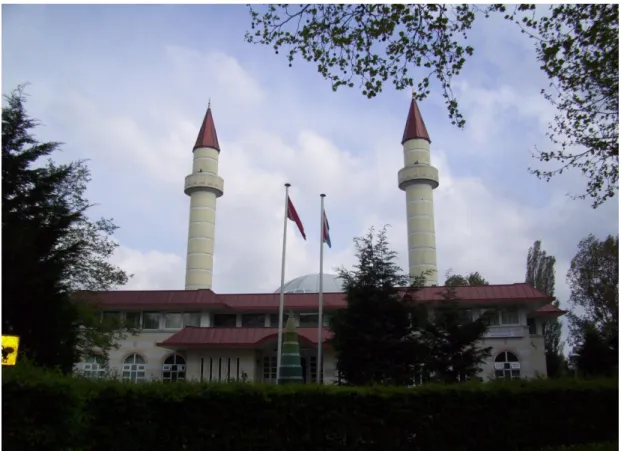
TURKISH-DUTCH MOSQUES AND THE CONSTRUCTION OF TRANSNATIONAL SPACES IN EUROPE
Murat Es
A dissertation submitted to the faculty of the University of North Carolina at Chapel Hill in partial fulfillment of the requirements for the degree of Doctor of
Philosophy in the Department of Geography.
Chapel Hill 2012
Approved by: Banu Gökarıksel John Pickles Sara Smith
ii
© 2012 Murat Es
iii
ABSTRACT
MURAT ES: Turkish-Dutch Mosques and the Construction of Transnational Spaces in Europe
(Under the direction of Banu Gökarıksel)
This dissertation examines the production of transnational Turkish-Muslim identities and ethno-religious spaces in the Netherlands by focusing on the contested construction, meanings, and operations of mosques controlled by immigrants and citizens of Turkish background. The Turkish-Dutch form the largest ‘non-native’ minority group in the Netherlands. Organized under multiple and competing organizations, Turkish Islamic communities control nearly half of the 500 mosques in the country. As elsewhere in Europe, the long existent ‘invisible’ mosques –converted from idle schools, factories, and church buildings—are being complemented by recently established mosques that are purpose-built with identifiable architectural features. At the same time, parallel to the rise of increasingly popular discourses on ‘failed multiculturalism’ across Europe, mosques have become signs of ghettoization, urban decline, and failed integration for many in the Netherlands.
iv
observation, interviews with mosque administrators, imams, and civil society
representatives, and focus group meetings with activists, youth, and women involved with mosques controlled by various organizations. My argument is that mosques play a
seminal role in the production of ethno-religious belonging and highly gendered moral citizen-subject positions through not only public rituals but also mundane, quotidian spatial practices. My research findings indicate that the morally safe experiences of socialization provided by mosques are becoming increasingly central to the operations of mosques. Mosques also gain significance as spaces of carefully orchestrated as well as chance encounters and interactions between the Turkish-Dutch, other Muslim groups, and the native-Dutch through interfaith dialogues and Open Days. These events are crucial to the (re-)drawing of boundaries between Turkishness, Dutchness, Islam, Europe,
v
ACKNOWLEDGEMENTS
This dissertation could not be completed without the encouragement, support, and generosity of many people. More than anyone else, I am grateful to my supervisor Banu Gökarıksel. Like a Zen master, Banu never preaches about, but sets a wonderful example of achieving the difficult balance between academic and social life. She has been always available for advice, (last minute) neck-saving, and a little gossip.
I was privileged to work with wonderful scholars in my committee. John Pickles have taught me so much about geography and provided valuable mentorship and support over the years. Kathy Ewing always found time to discuss my research plans and read drafts of papers despite her busy schedule. Omid Safi introduced me to the rich, critical work done in Islamic Studies. Sara Smith was always there when I needed fresh ideas. Thijl Sunier acted as my supervisor during my tenure as a visiting researcher at the Anthropology Department of the Free University Amsterdam. He has been a great source of inspiration and ideas. Thijl was involved with the dissertation project from the very beginning, gave me invaluable feedback on the drafts of my prospectus and
dissertation, and was present in my defense. It was only because of the Graduate School regulations that his name cannot appear in the final document. I am grateful to him for all he has done.
vi
related work. I was blessed with friendship of Matt Reilly, Joseph Palis, Christian Sellar, Dennis Arnold, Annelies Goger, Craig Dalton, Cecilia Durbin, Kurt Zemlicka, Freya Thimsen, Ömür Kayıkçı, Deniz Perin, Ali Neff, Bamba Niass, Nathan Swanson, Liz Mason-Deese, Liz Hennesy, Brenda Baletti, Erdağ Göknar, and Cangüzel Zülfikar. I will never forget the wonderful dinners at Sarah Shields and William Merryman’s home, they have been truly a pair of guardian angels. I wish Cemil Aydın and Juliane Hammer came to UNC earlier. Many thanks to Larry Grossberg, Sarah Sharma, Carl Ernst, and Arturo Escobar for introducing me to new ways of thinking. I also would like to thank Mona Hassan, Ahmet Yükleyen, and Cihan Tuğal for sharing their ideas and work.
In the Netherlands, my fieldwork experience was extremely positive thanks to the kindness and generosity of people, too many to mention here. I am thankful to Bülent Şenay, Cevdet Keskin, Hacı Karacaer, Üzeyir Kabaktepe, Hülya Kat, Fatma Famile Aslan, Zübeyir Güngör, Halil Pala, Mustafa Öcal, Mustafa Ayrancı, İbrahim Yerden, Ergün Erkoçu, Cihan Buğdacı, Mehmet Yaramış, Leyla Çakır, Emin Ateş, Faisal Mirza, Martijn de Rijk, Arno Duivetsen, Henk Kroon, and Goos Blok. I am especially grateful to Erol Sayar, Fatih Üçler Dağ, Ayşe Yavaş, Ahmet Demirer, and Songül Ayaz for
providing continuous help and support throughout the fieldwork.
In Turkey, I thank Ahmet Çekin, İzzet Dere, İrfan Üstündağ, Kadriye Avcı Erdemli, İbrahim Yıldırım, Ahmet Yüter, and Mehmet Kervancı for their participation in the research project. During my stay in Istanbul, Nihat Büyüktaş, Nadir Öperli, Gözde Onaran, and Hüseyin and Nurhak Doğan opened their homes. Nükhet Sirman, Berna Ekal, Hilal Alkan, and Ozan Zeybek provided intellectual companionship and valuable friendship.
vii
home to me and acted as cultural interpreters whenever the need arose. My mother Saadet and sisters Arzu and Solmaz always believed in me and sacrificed so much to support me. I am humbled by their unwavering faith in me. Rolien Hoyng deserves credit not only for her intellectual contributions to this dissertation, but also for giving me the reason to wake up every morning and face the day.
The dissertation research was generously funded by the Predissertation
viii
TABLE OF CONTENTS
LIST OF FIGURES………..………...……….……x
Chapter I: INTRODUCTION: …………...………...…....……….….1
Europe and its Muslims: in or of Europe?...4
The Netherlands: A Multicultural Haven?...7
Transnational Religious Field In/Between Turkey and the Netherlands…...…11
Mosques in Islamic History ………..…...18
Mosques Beyond the Visibility-Representation Nexus……….…...21
Methods………..………...24
Outline of Chapters………...…....34
II: SHIFTING POLITICS OF MIGRATION IN THE NETHERLANDS Toleration and Living in the Pillarized Society ... ……….……...38
Muslims in the Netherlands and Minorities Policy ……...……...….………..40
The Advent of New Realism.……….………..…….………..…...42
Have We Ever Been Multiculturalists? Shift to Assimilationism …...….45
Mosques and Governance………….………...……….…..51
Conclusion……..………..………...….…………57
III: ACTORS OF A TRANSNATIONAL RELIGIOUS FIELD Transnational Islam in the Netherlands ……….……61
The Gülen Community …………...………..………..68
Süleymancıs……….………….………....…..…...………..69
ix
Diyanet ……….………..……….……...78
. Comparing Milli Görüş and Diyanet …………..………...……….…………93
Conclusion………..………..…………...100
IV: EVERYDAY PRACTICES AND THE FORMATION OF MORAL SUBJECTS Everyday and Mosque: Extraordinary Ordinariness …………...……...….108
Home and Homeland at Mosque Space ………...…115
‘We Have Nowhere Else to Go’: Performing Masculinity …..…..……..…122
Feminizing Mosque Space? Locating Women ……..………..………126
Open Days, Interfaith Dialogue, Festivals………130
Conclusion……….……….………...……...136
V: ‘MOSQUES ARE FOR EVERYONE’: TURKISH SECULARISM The Ottoman Legacy ………..……….…141
Republic and its Islam ………… ………144
The DRA and Mosques: Bringing the Experience Back Home …….…….149
Family Guidance Offices and Women-Friendly Mosques.……….….161
Conclusion ……… ….……….……...164
VI: CONCLUSION ...…… ………...……….167
APPENDIX ……… ………...…….175
x
LIST OF FIGURES
Figure 1. Fatih Mosque, Amsterdam.
Figure 2. Election poster, Selimiye Mosque.
Figure 3. Newspaper clip depicting Necmettin Erbakan. Figure 4. Sultan Ahmet Mosque, Zaandam.
Figure 5. Children at Selimiye Mosque. Figure 6. Women’s section, Selimiye Mosque.
Figure 7. Native-Dutch visitors at Open Day, Sultan Ahmet Mosque. Figure 8. Native-Dutch visitors at Open Day, Sultan Ahmet Mosque. Figure 9. Imam’s office, Sümbül Efendi Mosque.
CHAPTER ONE
INTRODUCTION
The art installation Entropa was put on display in Brussels in January 2009. The work was commissioned by the Czech Republic to mark the inauguration of the Czech Presidency of the European Union (EU).1 The unveiling of the installation caused a minor scandal as the Czech artist David Cerny drew on national stereotypes while creating sculptures of member countries. The Entropa depicted a Netherlands swallowed by sea, leaving only the tip of minarets visible on the surface. Entropa’s Dutch section combined the two most significant ‘threats’ that this small, affluent country in North-Western Europe faces: the constant pressure of the sea—compounded by the rising sea levels due to global warming—threatening to swallow the land that was reclaimed by dykes and the threat of a ‘Muslim takeover’ through demographic and cultural means. The art piece, hence, attributed an apocalyptic quality to the Muslim presence in the Dutch context.
In recent decades, the controversies surrounding the construction and operations of mosques have moved to the forefront of public debates in many Western countries. The on-going ‘Ground Zero Mosque’ controversy in New York and the recent Swiss ban on the construction of minarets are two recent cases in point. There was a parallel rise in the number of studies on mosques. However, researchers across disciplines have
generally focused on claims to public space and negotiations over the visibility of mosques in urban landscapes. This dissertation attempts to go beyond this almost
2
exclusive focus in academic studies and popular discourses that approach mosques primarily as representational sites of Islam in public space. Instead, this study brings studies of everyday, ethnicity, and home in conversation with cultural geography and geographies of religion to explore the relationship between mosque spaces and ethno-religious subject formation. To this end, I explore mosque-centered practices of Turkish-Dutch communities in the Netherlands.
This dissertation attends to the following questions: What are the ways in which various actors with competing agendas imagine, produce, and experience mosques in the Netherlands? Through what everyday practices do various native and Turkish-Dutch communities claim, appropriate, and contest mosques? What is the role of mosques in the production of various and competing modes of belonging as well as ethnic, national, and religious subject positions in the Netherlands? How do mosques participate in the
constitution of different articulations of Turkishness, Dutchness, Muslimness, and their hyphenated combinations in the transnational social field in/between Turkey and the Netherlands?
The majority of the European Muslim population is comprised of settlers who arrived through postcolonial and labor migration in the second half of the 20th century. More recent settlers include refugees and asylum seekers. Allievi (2010, 20) notes that there are close to 11,000 places of worship for a population of almost 17 million Muslims in Europe. These include simple prayer rooms (musalla) or ‘invisible’ mosques –
converted from idle schools, factories, shops, and church buildings—as well as increasingly common purpose-built mosques and Islamic centers with identifiable architectural features. The purpose-built mosques have been instrumental in heightening the visibility of Muslim presence in cultural landscape and they often mark the
3
mosques figure prominently in debates on the ‘integration’ of Muslims and accommodation of Islam in Europe.
Popular discourses on European Islam and Muslims are often predicated on the homogenization of actually diverse groups and communities differentiated along ethnic, linguistic, regional, sectarian, political, and class lines (Zubaida 2005; Ehrkamp 2007). As I have argued elsewhere,
Islamic communal spaces such as mosques are similarly approached as the spatial expression and location of a static Muslim identity. This reductionism regarding the relationship between Muslim identity and Islamic space calls for scrutiny. Mosques in Europe, as elsewhere, are neither monolithic, nor static. They are rather heterogeneous, dynamic, and contested places where a multiplicity of Muslim and non-Muslim actors negotiate the belonging of Muslims in Europe (Es 2011, 249).
This dissertation investigates the mutual production of ethno-religious identities and Islamic spaces in an attempt to develop a novel approach for studying European mosques. To this end, I conceptualize mosques as contested ethno-religious spaces2 that play a crucial role in the construction and reproduction of overlapping and not always congruous modes of national, ethnic, and religious belonging and citizenship.
Figure 1. Fatih Mosque, converted from a church, is located at the heart of Amsterdam.
4
Europe and its Muslims: in or of Europe?
Muslims established an empire in Iberia as early as the 8th century and have been living in various parts of Europe since then. Yet the European Muslim population significantly rose only in the wake of the Word War II as a result of the postcolonial and labor related migration. The need for labor during the post-war reconstruction of North Western European economies resulted in the temporary recruitment of workers from Mediterranean countries, including Muslim-majority ones. The first immigrants, or ‘guest workers’ were recruited through labor agreements in the late 1950s and early 1960s (Abadan-Unat 2011). This phase of Muslim migration came to an end with the ending of the worker recruitment programs by the early 1970s. However, due to a host of reasons including the failure to build up capital towards return and economic and
political unrest in the countries of origin, the majority of the guest workers continuously extended their stay and they were eventually joined by their families. More recently, Muslims have been arriving as asylum seekers and refugees (Malik 2004; Akgündüz 2008). Immigrants eventually began to establish businesses, neighborhoods as well as cultural and religious infrastructure despite the persistence of a ‘myth of return’, both among the ‘guests’ and their ‘hosts’ (AlSayyad 2002). Yet the perpetual reproduction of the immigrant status to refer to Muslims has engendered a paradoxical situation in which many Muslims are formally no longer immigrants, yet they are considered ‘out of place’ in their adopted countries.
Beginning with the Rushdie Affair in 1989, and reaching its peak in the wake of the 9/11 attacks in 2001, a host of issues related to Islam and Muslims has been
progressively signified as problems in need of urgent intervention in Western public
2
5
debates. At the same time, a culturalized Islam3 as the re-energized old foe of the Western civilization has gained widespread currency in a self-fulfilling prophecy of clashing civilizations (Lewis 1990; Huntington 1993). This reified and unitary rendition of Islam provided explanations for all sorts of ‘insensible’ Muslim attitudes and
practices. As a total mechanism for explaining Muslim alterity, it threw a thick
ideological cloak over social, political, and economic processes that produce and regulate various manifestations of Muslimness. Islam, in its reified form, has increasingly become a popular means of providing easy answers to questions ranging from the ‘oppression of women in Islam’ to ‘underdevelopment of the Islamic world’.
The growth of the European Muslim population has eventually led Muslims to make claims to European public spheres/spaces to pursue equal citizenship status, calling into question the boundaries of ‘Europe/an’. Boundaries are neither stable nor fixed but arise from social and political practices (Yuval-Davis et al. 2005; Kaplan and Hakli 2002). Historically shifting and symbolically contested boundaries of Europe are no exception (Lewis and Wigen 1997). As Agnew (2002) notes, formation of, and regional integration within the European Union has sparked further struggles over defining the boundaries of Europe and Europeanness. European integration stimulates some members of the ‘European’ public to “increasingly identify with each other across regional and national distances, while for others the emergence of stronger social and cultural ties and corresponding new structures of feeling have given rise to uncertainties and concerns about national sovereignty, cultural rights and autonomy” (Pickles 2005, 356). The uncertain political atmosphere carries the potential both for embracing and violently excluding Muslims as Europeans.
3
6
Researchers have documented fallacies of the simplified representation of Islam and homogenous depiction of Muslims in the face of the empirical diversity of Muslim groups and Islamic practices (Vertovec and Peach 1997; Malik, 2004; Weedon 2004; Nökel and Tezcan 2005). Yet the debates over the viability of a distinctly European Muslim identity are informed by the discourses that position ‘Europe’ and ‘European’ in a relationship of mutual exclusion with ‘Islam’ and ‘Muslim’ (Asad 2002). In these debates Islam has a liminal status vis-a-vis a Europe’s ‘(Judeo) Christian roots’ while Muslims are imagined to be outside of the ‘modern’ Europe, both spatially and temporally (Sayyid 2003).
Anthropologists and geographers have been tirelessly pointing out the pitfalls of equating place with identity and particularity (Gupta and Ferguson 1997; Massey 1994). However, as Paasi (2005) argues, naturalized accounts of place-based identity claims still inform the negotiations of symbolic membership in national communities across Europe. Imaginary of a Europe as culturally sealed and homogenous civilization underlies what Gilroy (2005, 32) calls a “mythic version of cultural ecology” that locks Muslims into a position of perpetual outsiders, immigrants, or guests in Europe, even if they are born and raised there (Fortier 2006; Goldberg 2006). On the one hand, the countries from which Muslims settlers originate from are construed as the source of true, authentic, and authoritative Islamic knowledge and practice. There is an increasing pressure on young European Muslims to go beyond ‘reproducing’ the Islam of their parents and render their faith ‘compatible’ with European norms and values, on the other (Al-Azmeh and Fokas 2007.
7
underpinnings of Europe. This—implicitly secular— foundation provided by Judeo-Christianity is itself seldom questioned. The instabilities, heterogeneous origins and other, minor traditions informing multiple trajectories of Europe/an are silenced by the
hegemonic position of this narrative. In their eagerness to confine anything related to Islam to the realm of radical alterity, many analyses of European Islam fall short of accounting for the mutual influences between, and the dialectical evolution of,
‘homeland’ and ‘diasporic’ forms of Islamic organization and activity. In this dissertation I argue that the transnational, multiscalar networks between multiple social, cultural, and geopolitical boundaries between Europe(s) and its Islamic Other(s) are mutually
constitutive. To complicate the neat distinction and simplified relationship between a reified West and an equally reified world of Islam, I turn to the transnational Turkish Islamic field between the Netherlands and Turkey.
The Netherlands: A Multicultural Haven?
8
economic, and political relations has been the presence of a large Turkish diaspora in Western Europe constituted due to labor migration since the 1960s, constituting the largest immigrant populations in Germany and the Netherlands. Lastly, Turkey has been in negotiations to become a member of the European Union since 2004.
9
Despite the fact that the Dutch colonized Indonesia, the most populous Muslim country between the 17th and 20th centuries and the colonial subjects from Suriname and Indonesia settled in the Netherlands as early as the 1930s, the most significant growth of the Muslim population took place during the labor migration of the 1960s and the 1970s (Rath et al. 2001; Shadid and Koningsveld 1991). The majority of these ‘guest workers’ came from Turkey and Morocco. Labor migration ended by the mid-1970s following the global oil crisis but immigrant population continued to grow as workers were joined by their wives and children through family reunification and formation. Another component of the Muslim population arrived as asylum seekers and refugees from Iran, Iraq, and Pakistan since the 1980s. ‘Muslims’ currently constitute slightly more than half of the 11 percent ‘foreign-born’ population in the Netherlands. By 2009, the country was home to approximately one million Muslims originating from Turkey, the former Yugoslavia, Morocco, Suriname, and Indonesia, making up about 5 percent of the entire population.4
This dissertation is not another addition to the burgeoning literature on the public image and the architectural form mosques, roles mosques play in the formation of radical Islamic and pietist movements, or the politics of identity and/or belonging articulated by mosque administrators and imams. Instead this dissertation explores the role mosques play in the everyday lives of ordinary Muslims, both observant and non-observant. I argue that in the Dutch context mosques have evolved to function primarily as communal sites partaking in the production and reproduction of ethno-religious minority identities. Turkish-Dutch mosques I focus on are visited by diverse groups to perform religious services and attend meetings, seek financial and welfare support, socialize with peers, participate in various educational activities, and spend leisure time. Women frequent
4 http://www.cbs.nl/NR/rdonlyres/953535E3-9D25-4C28-A70D-7A4AEEA76E27/0/2008e16pub.pdf ,
10
mosques to take language classes or non-governmental organizations approach mosques to reach women. Children are sent to Koran classes and ‘native’ language courses. Men of various ages attend the teahouses at mosques to avoid morally ambivalent
environment of coffeehouses for socializing purposes. In short, Turkish- Dutch mosques function as community centers where ethnic, cultural, and religious practices intersect. Mosques have been also at the center of educating the native Dutch about Islam and Muslims through interfaith dialogue initiative and Open Days. Some mosques organize cultural activities such as cooking classes that attract the native-Dutch, as well. Attracting the native Dutch to mosques has the additional aim of countering the stigmatization of mosques as breeding ground of radicalism.
There are about 388,000 immigrants and citizens of Turkish background living in the Netherlands.5 This makes them the largest minority group in the country. By 2005, ‘Turkish’6
organizations controlled 213 out of 344 mosques in the Netherlands (Hollanda Diyanet Vakfı 2006, 8). The mosques established by Turkish immigrants in the
Netherlands are in some ways strikingly different than their counterparts in Turkey. This is largely due to the Turkish model of secularism, which is predicated on state control over the production and dissemination of religious knowledge and the active involvement of the state in the provision of religious services. The state monopoly over the Turkish religious field is exercised through the Directorate of Religious Affairs, a bureaucratic state institution that appoints religious personnel and oversees places of worship. In the absence of active state involvement with religious education, expression, and practice,
5
http://statline.cbs.nl/StatWeb/publication/?VW=T&DM=SLEN&PA=37325eng&D1=0- 2&D2=0&D3=0&D4=0&D5=0-1,3-4,139,145,210,225&D6=4,9,(l-1)-l&HD=090611-0858&LA=EN&HDR=G3,T&STB=G5,G1,G2,G4, retrieved on July 2, 2012.
6 I am aware of the simplifying and unitary effect of suggesting the existence of a single “Turkish”
11
the Netherlands proved fertile ground for the development of a dynamic Turkish-Islamic field structured along competing sectarian, ethnic, and political interests.
Transnational Religious Field In/Between Turkey and the Netherlands
Contemporary forms and processes of immigration highlight the polarizing effects of new forms of mobility under globalization. The desires and attempts to create a world in which capital, commodities, and highly skilled labor can move freely have been accompanied by the advent of complex regimes of border regulation and control in order to keep certain populations immobile. This holds especially for the movement of
unskilled labor from global south to global north. The very distinction between the forms of movement categorized as ‘migration’ and ‘travel’ point to the epistemic distinction between strictly controlled and highly securitized forms of human flows circumcised by national territories from cosmopolitan and/or business-related mobilities that easily move between and across national borders (Smith and Guarnizo 2003; Shamir 2005)
Early studies on migration focused on migrant sending and receiving countries rather than the multi-scalar networks and circular flows of human movement.
12
The contemporary forms of migration are increasingly defined by frequent and continuous movement of migrants across national borders, to the extent that some argue that all forms of migration are becoming transnational (Castles 2000). Transnationalism refers to a life taking place not only between places of origin and destination but at multiple localities across various scales (Grillo 2007; Blunt 2007). That is, increasingly transnational character of contemporary human movement shows a circular pattern instead of a unidirectional form of mobility. As a result, approaching migration as a one way movement between bounded territories has given way to studies that focus on continuous and sustained movement between multiple localities spawning numerous diaspora communities and social movements transgressing national boundaries and logics (Kokot, Tölölyan and Alfonso 2004).
Vertovec argues that as an effect of globalization, transnationalism operates on multiple and intersected scales and spaces, as it is based on “sustained linkages and ongoing exchanges among non-state actors based across national borders” (2009, 3). He goes on to define transnationalism as
…a condition in which, despite great distances and notwithstanding the presence of international borders (and all the laws, regulations and national narratives they represent), certain kinds of relationships have been globally intensified and now take place paradoxically in a planet-spanning yet common – however virtual – arena of activity (ibid.).
13
and ‘place’. Drawing from anthropology and postcolonial studies, geographers highlight the material and ideological constructions of mobility and the processual character of migration, while problematizing gendered conceptions of place (ibid.). Mitchell argues that transnationality refers to “relations between things and on movements across things” and invites geographers to reassess “formerly emphasized state-centric narratives and territorially defined national borders” (2003, 74). Indeed, geographers working on transnational studies have sought to bring the materiality of mobility, borders, and national spaces back to the discussions of globalization and transnational movement (Silvey 2003; Cravey 2003; Nagel and Staeheli 2008; King 2012). Geographers have opposed both the celebratory accounts of a flat world comprised of smooth spaces of unrestricted movement and the geopolitical discourses of declining nation-states and disappearing national boundaries (Mitchell 1997). Instead, they highlight the diversity and the multisitedness of transmigration and explore locality and translocality by embedding migrants in place and examining their grounded mobilities (Featherstone, Phillips and Waters 2007).
14
Similarly, transnational dimensions of Islam and Muslim communities have until recently received scant attention in academic studies, excepting occasional references to global umma (community of believers) as an alternative to belonging in nation states, rendering Muslim membership in national space suspect. Grillo (2004) notes that there was relatively little academic interest in the Muslimness of immigrants in Europe until the late 1980s. Grillo recalls neither approaching nor diagnosing Islam as a significant
variable in his research on immigrant communities with Muslim background in France during the 1970s. Since then the gap in research has been filled due to both global developments and growing political influence of Muslim communities in their countries of settlement. In other words, not only the institutionalization of Islam in individual countries but also regional and global developments rendered Muslim presence highly visible in public space and relevant in national politics in Europe.
Studies on the first generation of immigrants arriving from Muslim-majority countries focused mostly on labor related issues and economic deprivation, until the ‘guest workers’ have become ‘Muslims’. Parallel to this shift, concerns with the labor participation and class mobility of immigrants were gradually replaced by a
preoccupation with the cultural (in) compatibility between Muslim minority and non-Muslim majority populations (Korteweg and Yurdakul 2009).
15
Privileging belonging in umma to participate in pan-Islamic and supra-ethnic networks engenders less localized or ‘deterritorialized’ approach to Islam in transnational settings by putting transnational Muslims in touch with other Muslim communities in their specific locality or elsewhere globally (Roy 2004). To put it another way, in some
instances identification with a universally defined community of believers is more tenable than, or preferable to a diasporic configuration. This might be especially true in contexts where there is no single dominant Islamic community but a multiplicity of Islamic actors operating on a transnational field. Yet, it should not be forgotten that despite the multiple ways in which transnational Islam can be configured, it has been primarily “[t]he
imagined existence of ‘global Islam’, a monolithic community united in its opposition to the west and threatening because of its transnational appeal, has been central to the diplomatic and military agendas of the USA and many European states” (Jones and Mas 2011, 4).
Bowen (2004, 880) observes that Islam’s transnational articulation “complicates current lines of transnational analysis by emphasizing its own universal norms and its practices of deliberating about religious issues across national boundaries.” From
‘transnational Islam’ Bowen understands a “public space of reference and debate,” (ibid., 882) especially for the Muslims in the West who constantly jump scales to reach out to their co-believers by means of a global imaginary of umma. To do so, they rely on the common denominator of Arabic in debating the prospects of a distinctly European interpretation Islam. Grillo (2004) argues that the appeal of this umma-centered transnational Islam has grown thanks to global catalyzing events such as the Rushdie Affair and 9/11.
According to Mandeville, transnational Islamic actors include “various
16
associations, Sufi and pietistic networks, and a variety of diaspora and migrant
communities” (2007, 275). In analyses of transnational Islam, one needs to distinguish between Islamic organizations and movements with political objectives and individual transmigrants who only identify as Muslim. For depending on which one of the two positions is being examined one’s findings will differ. That is, the researchers need to distinguish between the actors that take Islam as their central frame of reference and those who do not. Mandeville (ibid.) notes that 9/11 attacks and the ensuing ‘War on Terror’ resulted in the very notion of ‘transnational Islam’ to be associated mainly with
radicalism and violence, even though transnational organizations such as Al-Qaeda comprise a very small part of the Muslim transnational field.
In this dissertation, I analyze the context within which Turkish-Dutch mosques are situated through a transnational religious field approach. Bourdieu (1977) uses ‘field’ to denote a specific set of social spaces that operate on the basis of their own rules and logics (see also Bourdieu and Wacquant 1992). Fields are competitively and
hierarchically structured and their fluid boundaries shift as social agents attempt to gain various kinds of capital in them (Jenkins 2006). In the following chapters, I analyze the different set of rules, strategies, hierarchical power relations, and historical patterns of practice constituting both national and transnational religious fields, with their own logics, laws, and specific configurations of power.
Glick-Schiller and Levitt (2004, 1010) argue that social agents positioned in transnational social fields “are, through their everyday activities and relationships,
influenced by multiple sets of laws and institutions. Studies on transnational migration by geographers look at the agency of migrants in relation to their mobility patterns to
17
transnational religious field I explore involves individual and collective actors that simultaneously partake in urban, regional, national, transnational and global circuits of religious activism and knowledge production. Analyzing the transnational religious field in which Turkish-Dutch mosques operate allows me to attend to multiple scales as well as different national structures of feeling and mobilization that the Turkish-Dutch communities inhabit.
The collective actors of the transnational Turkish-Dutch Islamic field are as follows: Diyanet (the Netherlands Religious Affairs Foundation) is an extension of the Directorate of Religious Affairs of Turkey and controls the greatest number of mosques. Second largest organization, Milli Görüş (National Outlook) is a political Islamic movement affiliated with the Turkish Felicity Party and the European National Outlook Organization that has its headquarters in Cologne, Germany. Süleymancıs are a Sufi community that follows the teachings of Süleyman Hilmi Tunahan (d. 1959).
Fethullahçıs, or Gülenists are the followers of Fethullah Gülen, one of the most
18
Mosques in Islamic History
Before starting my discussion of the institutionalization process of mosques in the Turkey and the Netherlands, it is necessary to provide some historical background about the emergence and evolution of mosques in Islamic history. For the narratives about the role of early mosques in social and intellectual life constantly figure in the contemporary debates about how to construct and organize mosque spaces. Moreover, the references to the early days of Islam and the examples drawn from the sayings and the deeds of the prophet (Sunna) provide justification for both reproducing and challenging dominant gender norms in place at mosques.
In the Islamic tradition, it is emphasized strongly that anywhere a believer
prostrates for prayer is a ‘mosque’. Yet the need for communal space inserted itself from the earliest days of Islam. The Arabic word masjid (mescid in Turkish) derives from verbal root of prostration and denotes any customary place where salat, or ritual prayer
(namaz in Turkish) is performed. According to the Islamic tradition, the holiest site of
Islam, Ka’ba was built in Mecca by Adam, both the first human and the prophet. Adam was the imam of this first place of worship for humanity. The first masjid Muslims established was the courtyard of the prophet’s house. This simple rectangular structure with no minarets or a dome, was not simply where believers gathered for congregational prayers. The first Muslims inhabited this masjid for military training, political meetings, and to learn about their new faith in the company of their prophet (Qureshi 1989). Later on a distinction was drawn between masjids and jami‘s (cami in Turkish). The former was dedicated to communal prayers whereas the latter additionally served the
19
operations” (Halood and Khan 1997, 59). In other words, mosques historically combined social, educational, and economic functions with the provision of religious services (Özdemir and Frank 2000).
Most of the early mosques were converted from churches, temples, and large houses in conquered lands during the first centuries of Islamic expansion. Following the rapid expansion of the Islamic Empire and the growing administrative and institutional specialization, Muslims eventually developed a distinct mosque architecture by
incorporating Persian, Roman, and Buddhist construction methods and styles (Nath 1995). Minarets and domes, although considered indispensable components of mosques by many Muslims today, were later additions and have not been adopted universally. The first minaret was built in the late 7th century and construction of minarets at the prophet’s original mosque was even opposed by many as unnecessary (Halod and Khan 1997). Emergence of numerous regional styles was accompanied by differentiated uses of mosques as Islam spread among diverse societies in various countries (Frishman and Khan 1994; Metcalf 1996; Grover 2006).
Even though there are numerous hadiths and juridical opinions stating that prayers performed with congregation yield more good deeds and are important for building up strong communal bonds between the believers, only the adult Muslim men are required to attend communal Friday prayers at mosques (Qureshi 1989; Bosnalı 2009). Mosques have played a seminal role in the social, economic, and educational life of their
communities beyond providing a space for public prayers, though. Because of their public character, mosques have been crucial sites of communal life in Muslim societies.
20
More recently, due to the strict control of other public places for collective gatherings, in some Muslim-majority countries mosques became mobilizing grounds for oppositional movements, as in the case of the Muslim Brotherhood in Egypt (Munson 2001). In other instances, activists have turned to mosques for providing social and welfare services to their communities with states’ withdrawal from welfare provision as a result of
neoliberalization (Arif 2008).
Even though they are often positioned against more ‘mystical’ Sufi sacred places such as shrines and lodges, mosques are far from merely being the bastions of Orthodox Islam. While it is essential to look into other sites of religious activity ‘beyond the officially sacred’ (Kong 2001; Gökarıksel 2009), I contend that it is also necessary to problematize the assumptions about the ‘officiality’ of the sacred status of mosques. Parkin and Headley (2000) have shown the limitations of approaching mosques as sacred sites proper, firmly grounded within the Orthodox Islam. For mosques mediate diverse and not always congruous communities as institutional sites of communal life. They play a central role in the construction of not only religious, but also ethnic and national
collectivities out of heterogeneous populations by providing the imaginary of a place ‘for us’ (Ghannam 2002). In this sense they are habitual spaces (Fortier 2000) where Muslims might feel at home. In light of these insights, I find it imperative to look into the
21
What do we gain from a geographical perspective for studying of mosques? Religion has lately come to the attention of a new generation of geographers (Brace, Bailey and Harvey 2006; Gale 2007). Geographical research on religion points out the historically specific constructions and contestations of religious, spiritual, sacred spaces, and places of worship (Holloway 2006; Ivakhiv 2006). New geographies of religion insist that sacred spaces can neither be studied in isolation from the social, economic, and political forces that shape them, nor can they be examined without attending to particular histories and experiences of the groups that construct, contest, and transform them (Kong 2001; Secor 2002; Gökarıksel 2009). Geographical research on Islamic communal places of minority Muslim communities have shown that attempts of Muslims to imprint their identities in urban spaces by building mosques are intricately linked other struggles, including claims to national belonging and citizenship (Isin and Siemiatycki 2002). Geographers time and again have shown that communal places such as mosques or churches play a central role in the construction of collective identities by constituting the locus of articulation for common interests (Nagar and Leitner 1998).
Mosques Beyond the Visibility-Representation Nexus
Challenging what I called elsewhere ‘the visibility-representation nexus’ in studies of mosques in Europe (Es 2011), this dissertation emphasizes lived and embodied materiality of mosque spaces and their importance in everyday life. I turn to cultural geography and geographies of religion to explore the relationship between mosque spaces and ethno-religious subject formation in the Netherlands.
22
together with headscarves, have become important signifiers of Muslim presence, and are at the center of many public debates in Europe. Accordingly, there has been an increase in the academic studies exploring the ‘Islamization’ of European cityscapes (Eade 1993; Cesari 2005). Even though conducted by researchers from various disciplines, these studies are generally limited negotiations over access to public space among Muslim communities, local groups, and various bureaucratic bodies such as municipalities and courts (Naylor and Rain 2002; Maussen 2004; Jonker 2005; Gale 2005). For instance, the editor of special journal issue on European mosques remarks: “The
mosque…expresses…the evolution of Islam from the private to the public sphere. Whereas in the past, Muslims in Europe were isolated within invisible and private prayer rooms, the mosque openly, publicly and visibly marks an Islamic presence” (Cesari 2005, 1018). Such exclusive focus on the issues of visibility regarding European Muslim
communities, however, reduces the significance of mosque projects to being only the spatial expression of Muslim communities in public spaces. This approach finds Muslim agency first and foremost in the attempts to gain visibility. As a result, only the acts of gaining visibility in public space are coded and approached as manifestations of Muslim agency. By seeking Muslim social and political agency exclusively in the public sphere through the lens of politics of visibility, many scholars working on mosques are blind to the importance of everyday mosque practices in analyses of European Islam (Es 2011).
23
and representative sites of Islam in Europe. Although it is useful to approach mosques as ‘spaces of representation’, there is more to mosques: as social spaces, mosques are also loci of social practices and imaginations (Lefebvre 1991). In this dissertation, I employ a ‘relational’ conceptualization of mosques in order to simultaneously examine the
symbolic, material, and cognitive production of mosque spaces as social processes, rather than attending to representation as the main level of analysis (Harvey 2006). In other words, instead of privileging the conceived mosque space of architects, planners, and political scientists that dominate the work on mosques in the Netherlands (for example, see Erkoçu and Buğdacı 2009, Roose 2009; Maussen 2009), I propose to attend to the material, lived, everyday experiences and spatial practices of users and inhabitants of mosques (Lefebvre 1991; Merrifield 2000). Deploying a conception of space that is always already in the process of becoming (Pred 1985), and as heterogonous,
indeterminate, and multiple (Natter and Jones III 1997; Massey 2005), this dissertation approaches mosques as ongoing projects that are open to constant intervention by social actors (Creswell 2004). In this study, then, mosques are reconceptualized as lived and
embodied places that are claimed and contested by a host of social actors with varying
motives and agendas. Mosques are pluriform and multipurpose centers of action and they constitute loci of various practices.
24
“site[s] for the construction of the meaning of bodies and the constitution of
subjectivities.” Appropriating mosque spaces, as Mahmood has shown in her study of the Egyptian women’s mosque movement, is one way of challenging privatization of religion and has been conducive to “the cultivation of those bodily aptitudes, virtues, habits, and desires that serve to ground Islamic principles within the practices of everyday living” (2000, 45). However, spatial registers such as ‘topography’ or ‘soundscape’ appear in many of similar studies merely as ‘metaphor-concepts’ (Sparke 2005). Scholars often fail to pay enough attention to the ways in which ‘disciplinary spaces’ such as mosques can be articulated to certain social practices (Foucault 1995; Zieleniec 2007), and undermine material enactments of embodied selves through social spaces (Pile 1996; Moss and Dyck 2003; Gökarıksel 2009).
Methods
The recent literature on migration has pointed to the fallacy of ‘methodological nationalism,’ that is focusing on the processes and outcomes of migration exclusively within the space of the nation-state which serves as a container of social relations. Instead, scholars of migration have called for multi-sited research with a focus on the movement of ‘transmigrants’ between multiple places at various scales (Glick-Schiller 1995; Levitt 2003). In the particular case of the European Muslim communities, Muslims’ movement in-between and across multiple scales as transnational migrants is compounded by their connections to a global Islamic public sphere that extends beyond the confines of nation-states (Bowen 2004). In the early 1990s, the ethnographic
25
changes in the world…[and] following the thread of cultural process itself impels the move toward multi-sited ethnography.” The continuous flows and multiple networks of ideas, people, and resources between the sending and receiving countries of migration constitute the context within which transnational spaces such as the Dutch mosques emerge and evolve (Vertovec 2001; van der Veer 2002).
The importance of a transnational and multi-sited approach becomes clear when exploring the contemporary struggles revolving around national belonging and religious practices of the Turkish-Dutch immigrants in the Netherlands. Here, the influence of Turkey is significant in providing ideas, resources, and strategies for the creation and maintenance of mosques in the Netherlands, and vice versa. The sustained ties of the Turkish-Dutch communities to Turkey and the mutual interest and involvement between various groups, situated in and between the two countries, engender a dynamic research field that cannot be captured without focusing on the transnational networks comprised of financial, ideological, and political ties between the Netherlands and Turkey. The activities of the Turkish state beyond its borders to define, control, and produce religious knowledge, sensitivity, and practices has a strong impact on the configuration of the Turkish-Dutch mosques. The connections of the Turkish-Dutch communities to Turkey not only provide an important point of reference for what a ‘proper’ mosque should look like and how mosques should be used, but they also have a strong impact on the
experience of being a ‘Turkish Muslim’ living ‘abroad’. The continuities and
discontinuities of religious patterns and modes of mobilization between the two countries are crucial in understanding how transnational communities inspire, support, and
26
membership in the European Union has accentuated the debates on the question of Islam’s compatibility with European norms and values (Savage 2004; Baban and Keyman 2008).
Transnational connections between the two countries required my research to be conducted through a combination of multi-sited ethnographic research and other
methods, including archival work, discourse analysis, in-depth and semi-structured interviews, and focus groups. The research was divided into two phases: the first phase (December 2009-June 2010) involved 10 mosques in the Dutch cities Amsterdam, Haarlem, Zaandam, and The Hague. Phase two (June 2010- September 2010) took place in the Turkish cities Ankara, Emirdağı, and Istanbul, where I visited several universities, bureaucratic institutions, and mosques. This multi-sited focus with an emphasis on transnational links allowed me to explore the continuities and differences between the two countries in terms of the composition of mosque congregations and services.
I arrived at the Netherlands in December 2009 to start my field research activities. In preparation for the field research, I took extensive Dutch classes at the Free University Amsterdam during the first two months of my stay. My field research in the Netherlands focused on the three most influential Turkish-Islamic organizations in the Netherlands. I contacted and received research permission from the headquarters of the Netherlands Islamic Foundation –known as Diyanet- in The Hague. I also contacted the administrative offices of Milli Görüş Movement’s northern and southern federations in Amsterdam and Rotterdam respectively, and received permission to conduct research in the mosques affiliated with Milli Görüş. Lastly, I visited the Süleymancı headquarters in Utrecht, yet I was not able to receive permission to conduct research at mosques Süleymancıs operated.
27
Comparisons between different urban contexts showed city specific patterns with regard to institutionalization and operations of Muslim Turkish organizations (Maussen 2009). I mainly focused on the cities of Amsterdam, Haarlem, and The Hague during my
fieldwork in the Netherlands. My choice of these three cities is based on the density of the Turkish-Dutch groups in them and the existence of diverse mosque congregations and organizations. Almost half of the populations of Amsterdam and The Hague are
composed on immigrant communities, with substantial number of Turkish-Dutch communities (Priemus 2007). Turks also constitute the largest immigrant group in Haarlem. I eventually concentrated my field research in the city of Haarlem for several reasons. First, there were already detailed academic studies on mosques and the Turkish Dutch communities in these two cities (Sunier 1995, 2005; Maussen 2004, 2009),
whereas no such research was conducted in Haarlem. Second, relatively small size of the city allowed me to conduct comprehensive field research that could cover multiple political actors, various institutions and diverse populations. Lastly, the majority of the Turkish population in Haarlem originated from the same Anatolian town, Emirdağı, and maintained active relations with it, providing an ideal research case to follow
transnational links.
28
Milli Görüş, I interviewed and spent time with administrators, imams, and congregation members. I also organized focus group meetings with youth and women branches of 3 mosque associations.
I participated in football tournaments, home lectures, and Open Days organized by these mosques, as well. Other than the Mili Görüş and Diyanet mosques, I
interviewed the administrators of a mosque exclusively visited by Kurds and contacted and interviewed the administrators of now-defunct Polder Mosque, which was
established to “transcend the ethnic mosque model in the Netherlands.” In addition, I participated in the meetings of an interreligious faith dialogue project and organized focus group meetings with participants from both the Turkish-Dutch and the native-Dutch parties in Haarlem. Conducting research in branches of the same organization in different cities enabled me to attend to the negotiations of the mosque projects and activities of immigrant organizations controlling mosques in multiple cities. This also helped me to understand the place-specific differences between the mosques operated by the same organization.
I traced the linkages of my research participants to Turkey with research in this country. During the first week of February 2010, I visited a language school in Istanbul. This school was established by Turkish-Dutch expats and offers preparation courses for integration tests given at the Royal Dutch Embassy. Since 2006 passing these tests have become obligatory for Turkish citizens applying for residence permit in the Netherlands. In order to trace the transnational links between the two countries I contacted and
29
the Directorate’s Vice President and various department managers. I contacted and interviewed two imams who served in Diyanet mosques in the Netherlands during the early 1980s as well as the founder and the first head of the Netherlands Islamic
Foundation. At the Divinity School of the Ankara University, I received information on the recently established ‘International Theology Program’, where several Turkish-Dutch students are currently enrolled. Other than interviewing several faculty members, I made a focus group meeting with 3 Turkish-Dutch students of the program.
During my visit to the headquarters of the Directorate of Religious Affairs, the manager of the Religious Guidance Services drew my attention to five ‘model’ mosques listed on the Directorate’s website. These mosques are referred to as mosques with “exemplary religious personnel.” I understand these mosques as prototypes of the mosques to be developed under the guidance of the Directorate in the future, since the Strategic Plan of the Directorate for the years of 2009-13 proposes the establishment of 200 ‘pilot’ mosques. These mosques are distinguished from ‘regular’ mosques by the wide range of social services they offer. I found out that four of the five of these mosques are located in Istanbul. Upon my return to Istanbul, I visited the Istanbul Mufti’s7
Office to receive permission for conducting research at mosques. Upon receiving the permission from the Mufti’s Office, I visited three of the ‘model’ mosques listed at the Directorate’s website. Other than interviewing the imams and associational board members of all the three, I conducted in-depth research at the Sümbül Efendi Mosque in Fatih. Here, I organized a focus group meeting with a group of elderly women who spend most of their days at the mosque’s women’s section, despite opposition from men. I also interviewed several men who regularly visit the tea house of the mosque.
7
30
Other than conducting research at the three ‘model’ mosques, I interviewed the imams of the ‘selatin’8 Fatih and Eyüp Mosques and interviewed two vice-muftis from the Mufti’s Office in Istanbul. During the second half of July, I made a research trip to the Central Anatolian town Emirdağı in Afyon. The majority of the Turkish-Dutch
community in Haarlem originates from this town and most of them visit their hometown during summer. I contacted several of my informants from the Netherlands spending their summer in Emirdağı and interviewed them. Even though I failed to receive permission from the governor’s office for interviewing the religious personnel at mosques, I had informal contact with one imam and interviewed a retired imam and the head of a mosque association. I conducted interviews and organized several focus group meetings with visiting elderly men and youth from the Netherlands and Belgium as well as organized one focus group meeting with youth permanently living in Emirdağı.
The recent work on research methods calls geographers to recognize their own embodied and situated relationship with their research environments and participants (Crang 2003). As a situated agent of knowledge production, I was acutely aware of my own multilocal, multi-ethnic, and multi-religious affiliations during my encounters throughout my field research. This helped me relate to the experiences of my research participants. I am the son of a ‘guest worker’ who actually returned to Turkey after living in Germany for about twenty years. I have uncles and aunts as well as countless cousins living in North-Western Europe. My eldest sister moved to Germany sixteen years ago and still lives there. Moreover, I could relate to the minority status of my informants as I come from a northeastern province of Turkey with the largest concentration of Kurdish Alevi population in the country. My father’s family has Turkish Sunni roots while my
8
31
mother’s side is Kurdish Alevi.9
Even though my looks mark me as a Kurd in Turkey, my native tongue is Turkish and I am not particularly religious, neither drawing on Sunni Islam, or Alevism, despite having more cultural affinity to the latter. As a result,
depending on my socio-spatial positioning, certain aspects of my multiple belongings and attachments were emphasized or undermined throughout my fieldwork. Sometimes I was an ‘Alevi’, sometimes a ‘Turk’, sometimes ‘Muslim’. At times I was called a ‘professor’ and at others ‘an American’.
Moreover, I am married to a native-Dutch woman and stayed with my in-laws in an upper-middle class neighborhood near Haarlem during my fieldwork. This added another level of complexity to my relationship with my informants. When I told them about my –back then Dutch fiancée—wife, I received questions ranging from “Is she real Dutch?” to “Is she Dutch Dutch?” from my informants. My in-laws gave me a bike as my welcome present and I happily used it as my primary means of transportation. This, together with my Dutch fiancé, often led to rather serious jokes about me ‘integrating’ to the Netherlands in one month more than what some of my informants did in 20 years. Another impact of my intimate living arrangements with a native-Dutch family was my ability to challenge certain stereotypes about the native-Dutch during my interviews and observe different domestic arrangements in comparison to Turkish families.
Ethnographic fieldwork constituted the primary method of data collection for my research. I relied on participant observation to find out the difference between ‘what people do and what they say they do’. Taking my cue from Scheper-Hughes’ (1993) active and committed approach to ethnography, I engaged my research participants as partners in dialogue and did not shy away from confrontation and conflict. I considered it my ethical duty to share my observations and criticism with my research participants
32
during the research process in an effort to construct a relationship on the basis of mutual learning from, and benefiting of one another. I did not try to block the curiosity of my informants on my ethnic and religious affiliations and commitments during our interviews, because I found it just fair that they also had a right to question me considering the fact that I asked them to share their intimate memories, thoughts, and experiences with me.
Reflecting on my own ambiguous, shifting, and often ambivalent relationship to religiosity, I have come to realize extent to which researchers might erase ambiguities and inconsistencies they encounter during data collection in order to attribute intent and coherency to the narratives and the practices of their research participants. As Wolford (2006) points out, however, contradictions, fluidity, confusion, and less than perfect information are the norm rather than the exception during fieldwork. This aspect of research should not be overlooked in the quest for locating agency only in intentionality.
Geographers increasingly concede that in the future “social science methodologies and forms of knowing will be characterized as much by openness, reflexivity and
recursivity as by categorization, conclusion and closure” (Davies and Dwyer 2007, 258). Accordingly, I tried to stay alert to the shifting and often contradictory character of perspectives as well as messiness of everyday discourses and practices, during my engagement with my research participants.
McDowell (2009) notes that with increased awareness of the position of the researcher vis-a-vis the interviewees, issues related to power and authority as well as language, gender, body language, and even clothing styles have appeared as important factors determining the success of interviewing process. I conducted semi-structured interviews where after a few standard questions, I would follow the particular trajectories
33
of a life history and primary issues of concern for my research participants. Other than interviews, I conducted focus group meetings to engage with my informants. As a cooperative and interactive research method with the advantage of representing the multiplicity of perspectives (Bosco and Herman 2009), focus groups have been successfully adopted by a growing number of geographers (Hopkins 2007; Gökarıksel and Secor 2012). I conducted focus groups for the first time during my dissertation
fieldwork. My focus group participants shared personal histories as friends, colleagues, or membership in an organization. Accordingly, this method enabled me to mobilize
relations of rapport among research participants with interlinked personal histories, where their intimacy, previous exchange of opinions, and common experiences would ensure the representation of different and often conflicting points of view. The disagreement among focus group participants were essential in revealing diversity of positions and ideas within seemingly homogenous groups, especially considering how outsiders, including
34
I have attained the necessary IRB approval for my research. I did my best to arrange interviews and focus groups at locations comfortable for my informants and sought their consent regarding the recording of the focus group meetings and interviews. The research participants were informed about their right to decline answering questions if they wished to do so and that they were told that could end the interview or leave a focus group meeting anytime.
Outline of Chapters
This dissertation consists of six chapters, including the conclusion.
Chapter 2, Shifting Politics of Migration in the Netherlands looks at the histories and politics of immigration in/to the Netherlands. I critically engage with the debates on pillarization–a corporatist regime of governance based on consensus between socially segregated communities—and the unfolding of the ‘multicultural drama’ in the wake of the arrival of the far right to the center stage of Dutch politics, a development often attributed to the failure of (Muslim) immigrants to integrate. This chapter illustrates the conceptual and perceptual shifts in terms of the categories through which Turkish-Muslim alterity has been constructed and deployed in the Netherlands.
Chapter 3, Actors of a Transnational Religious Field, looks at the emergence of first mosques and highlights the transnational dynamics of the institutionalization of Turkish Islam in the Netherlands. Of particular importance is the exploration of the decline of class-based politics in favor of ethno-religious identity politics–a very
35
transnational actors that control the majority of the Turkish-Dutch mosques: The Netherlands Islamic Foundation, or Diyanet (a semi-official organization de facto
functioning as a branch of the Turkish State’s Directorate of Religious Affairs) and Milli Görüş Netherlands (originated in Turkey during 1970s, this previously radical Islamic movement has its European headquarters located in Germany).
Chapter 4, Everyday Practices and the Formation of Moral Subjects, attends to the homely experience of mosques. It points to the relationship between mosques and other sites of socialization such as coffeehouses. Second, this chapter highlights the seminal role mosques play in the production of ethno-religious belonging and highly gendered moral citizen-subject positions through mundane, repetitive, everyday mosque-centered practices, such as ‘hanging out’ at mosques and organization of sports events and festivals. Thirdly, this chapter investigates both chance and carefully orchestrated encounters between the Turkish-Dutch and the native-Dutch that take place in mosque spaces. The representational practices of, and the interactions between the two groups through interfaith dialogues and Open Days will be analyzed to explicate how the boundaries between Turkishness, Dutchness, Islam, Europe, Christianity, and secularity are re-drawn. All the three sections of this chapter are informed by the experiences of multiple groups differentiated along age, gender, class, sectarian, ethnic, and political affiliations that make contested claims and that enjoy varying degrees of access to mosque spaces.
36
CHAPTER TWO
SHIFTING POLITICS OF MIGRATION IN THE NETHERLANDS
The Netherlands has the reputation of being one of the most liberal democracies in the world. The country is well-known for the flourishing of diverse lifestyles, free use of soft drugs, and high living standards. Its vibrant political system is characterized by the parliamentary representation of various political affiliations and the absence of a strong center. Same-sex marriage has been legalized since 2001 and access to abortion or euthanasia is not subject to debate. Another significant aspect of the Dutch political system is the provision of extensive rights to ethnic and religious minorities, such as the right to establish religious schools with state support and minority access to broadcasting on public TV. Given the image of the Netherlands as a multicultural and egalitarian haven, the recent political developments in the Netherlands have surprised both domestic and international observers. The country was shocked by the political murders of the politician Pim Fortuyn in 2002 and polemicist Theo van Gogh in 2004. One year later, the Dutch rejected the EU constitution. In recent years the Dutch policy makers have devised some of the strictest immigration and integration policies in Europe, specifically targeting Muslims.
38
an extensive multiculturalist program or a consistent multiculturalist regime to begin with (Duyvendak et al. 2010; Scholten and Holzhacker 2009). Moreover, the tendency to attribute a host of problems ranging from the crises of national cohesion to the sustainability of welfare states to the failures of multiculturalism is not limited to the Netherlands. Attacking the ghost of a putatively failed multicultural experiment has become the mobilizing ground for many across both the left and the right end of the political spectrum in Europe (Lentin and Titley 2011).
Toleration and Living in the Pillarized Society
Mijnhardt (2010) remarks that the Dutch consider tolerance and permissiveness as quintessential national values. Yet notwithstanding their prominence in social and
political life at certain historical junctures, practices of toleration have neither been seamlessly continuous nor principally articulated. Moreover, toleration did not extend to all social groups. The Dutch history of tolerance unfolded against the background of a pluralistic and multicentered power structure inside and outside the Netherlands: from the 16th century onwards, the ruling elite had to contend with a multi-confessional citizenry at home and strong monarchies in Southeast Asian colonies (Van Grossen 2007). Van Grossen points out that even though it emerged as a response to practical necessities, the idea of tolerance eventually “came to be regarded as a political virtue with clear social and, more importantly, economic benefits” (ibid., 7).
The Netherlands urbanized very rapidly and had one of the most literate societies in Europe by the 16th century. The diversity of the population was accentuated by the arrival of immigrants, many of whom were persecuted religious minorities, such as the Jews and the Huguenots. Coupled with the Protestant and Catholic divide, ensuing
39
practice dominated by compromise” (Mijnhardt 2010, 11). However, the long war of independence fought against the Catholic Spain had the implication of preventing the practices of tolerance from extending to Catholic subjects. Due to their association with Spain, the Catholics were treated as second class citizens well into the late 19th century. Accordingly, they were not allowed to build churches and could not practice their rites publicly (van Rooden 2010) .
Lijphart (1968) has argued that by the early 20th century the Dutch population was divided into four blocks, or ‘pillars’ that were organized along religious and class lines: Catholics, Calvinists, Socialists and Liberals. Despite having its roots in the later 19th century (Wintle 2000) the pillarization (verzuiling) took root only after the
‘Pacification’ of 1917.10
The above-mentioned blocks formed the basis of the system of pillarization that helped foster and manage a pluralist society in the Netherlands. The pillars were separated from one another with more or less clear boundaries. Each group constituted a subculture along their respective ideological and religious preferences and individual pillars developed relatively exclusive religious, educational and leisure institutions for their members (Entzinger 2006). Accordingly, as Lijphart argues, the pillarization of the Dutch society culminated in a “politics of accommodation,” which was “based on a high degree of self-containment and mutual isolation of the four blocks with overarching contact among the blocks limited to the elite level” (1968, 112).