USING ONLINE SOCIAL NETWORK TECHNOLOGY TO INCREASE SOCIAL SUPPORT FOR PHYSICAL ACTIVITY: THE INTERNET SUPPORT FOR HEALTHY
ASSOCIATIONS PROMOTING EXERCISE (INSHAPE) STUDY
David N. Cavallo
A dissertation submitted to the faculty of the University of North Carolina at Chapel Hill in partial fulfillment of the requirements for the degree of Doctor of Philosophy in the
Department of Nutrition.
Chapel Hill 2012
ABSTRACT
DAVID CAVALLO: Using Online Social Network Technology To Increase Social Support For Physical Activity: The Internet Support For Healthy Associations Promoting Exercise
(INSHAPE) Study
(Under the direction of Alice Ammerman)
Online social networks, such as Facebook, have extensive reach and possess technology that could foster social support, an established determinant of physical activity. The purpose of this study was to design and test the efficacy and feasibility of a physical activity social support intervention primarily delivered through Facebook.
In aim 1 of this study, formative interviews (n=15) were conducted with female undergraduates to inform the online social network intervention design and explore behavior and perceptions related to the exchange of social support for physical activity through Facebook. In aim 2, we conducted a randomized controlled intervention trial comparing two groups of female undergraduates; education controls receiving access to an exercise focused website (n=67) and intervention participants receiving access to the same website with physical activity self-monitoring and enrollment in a physical activity themed Facebook group (n=67). Physical activity, perceived social support for physical activity, and psychosocial mediators were assessed using previously validated
questionnaires. Facebook interactions were recorded during the intervention. In Aim 3, we conducted interviews (n=9) and a survey (n=120) with intervention participants to assess the acceptability of the intervention and participants’ perceptions of physical activity social support exchanged through Facebook.
of intervention participants indicated that they would recommend the program to friends. A path analysis examining the relationships between social support, psychosocial mediators, and physical activity among all participants found a significant indirect effect for companionship social support on physical activity mediated by intention (.09, p=.02). The majority of Facebook social support interactions collected during the intervention were classified as companionship. Qualitative analysis of formative and process interviews found that participants who received social support for physical activity through Facebook thought it was valuable.
ACKNOWLEDGMENTS
I would like to thank my chair, Alice Ammerman. She is a mentor and a friend. Without her never-ending patience and support, this dissertation would not exist. I am very grateful to my committee members: Jane Brown, Bob DeVellis, Deborah Tate, and Dianne Ward. They struggled through my fledgling drafts and research ideas without a word of complaint. Also thanks to Amy Ries, who made a significant contribution to the development of this study.
I would also like to thank the Center for Health Promotion and Disease Prevention, Lineberger Cancer Center, the Graduate School, and Department of Nutrition at the University of North Carolina for research and stipend support. I am also grateful for the in-kind web development provided by the CHAI core at the University of North Carolina and the assistance with research methods I received from Paul Mihas, Christopher Wiesen, and Catherine Zimmer at UNC Chapel Hill’s Odum Institute.
TABLE OF CONTENTS
LIST OF TABLES……….………..x
LIST OF FIGURES………xi
Chapter I. INTRODUCTION……….1
A. Overview………...…...1
B. Specific Aims………...2
II. CONCEPTUAL FRAMEWORK………...3
A. Introduction………..3
B. Theory of Social Networks and Social Support ………3
C. Social Networks………..3
D. Social Support……….4
E. The Theory of Planned Behavior……….5
F. Explanation of Conceptual Model………6
III. LITERATURE REVIEW………..8
A. Health Benefits of Physical Activity……….8
B. Physical Activity Prevalence………8
C. Physical Activity Interventions with College Students……….9
D. Determinants of Physical Activity………...10
E. Social Support and Physical Activity……….10
F. Social Influence and Physical Activity………...11
H. Popularity of Online Social Networks………13
I. Existing Commercial Physical Activity Programs Using Online Social Networks………14
J. Online Social Networks As Web Based Interventions………14
K. Social Support and Social Influence in Online Social Networks...15
L. Summary………...18
IV. EFFICACY OF AN ONLINE SOCIAL NETWORK BASED PHYSICAL ACTIVITY INTERVENTION: A RANDOMIZED CONTROLLED TRIAL………..19
A. Introduction………..……..19
B. Methods……….……21
C. Results………..….27
D. Discussion……….…29
V. THE ROLE OF COMPANIONSHIP, ESTEEM, AND INFORMATIONAL SUPPORT IN EXPLAINING PHYSICAL ACTIVITY AMONG YOUNG WOMEN IN AN ONLINE SOCIAL NETWORK INTERVENTION………..………43
A. Introduction………....43
B. Methods……….…46
C. Results………..….52
D. Discussion……….…………54
VI. A MIXED METHODS ANALYSIS OF SOCIAL SUPPORT FOR PHYSICAL ACTIVITY EXCHANGED IN AN ONLINE SOCIAL NETWORK ………...65
A. Introduction………65
B. Methods………...……..66
C. Results………..…….73
VII. SUMMARY AND RECOMMENDATIONS………...…..87
A. Summary of Findings………...…87
B. Recommendations………88
C. Future research……….…92
APPENDIX A: FORMATIVE INTERVIEW GUIDE………...94
APPENDIX B: PROCESS INTERVIEW GUIDE………...102
APPENDIX C: INTERVIEW QUALITATIVE CODEBOOK………..106
APPENDIX D: INSHAPE WEBSITE SCREEN SHOTS………..109
APPENDIX E: FACEBOOK INSHAPE GROUP SCREEN SHOT……….…120
APPENDIX F: FACEBOOK INTERACTION QUALITATIVE CODEBOOK………….….121
APPENDIX G: POST INTERVENTION SURVEY………123
LIST OF TABLES
Table
4.1. Participant and moderator activities for the online
social networking plus self-monitoring group……….…...34 4.2. Demographic characteristics of study sample at baseline………...…37 4.3. Means and intervention effects on perceived social
support and physical activity……….38 4.4. Perceived importance of participation in Facebook group elements…….….40 5.1. Descriptive statistics for physical activity, social support,
and TPB variables………..……59 5.2. Estimated correlations among path model variables………...….60 5.3. Factor loadings for perceived companionship, esteem,
LIST OF FIGURES
Figure
2.1: Conceptual model……….7 4.1. CONSORT diagram showing flow of participants through trial…………...…41 4.2. Frequency of participation in online activities during the intervention……....42 5.1. CONSORT diagram showing flow of participants through trial………...62 5.2. The Theory of Planned Behavior……….……63 5.3. Model of the relationship between social support and
CHAPTER I INTRODUCTION I.A. OVERVIEW
The health benefits associated with adequate physical activity include improved mental health, reductions in cardiovascular disease, and decreased risk of certain cancers (Warburton, Nicol, & Bredin, 2006). Although these benefits are well known, the majority of Americans do not meet physical activity recommendations (CDC, 2007; Eaton, et al., 2008). This pattern of inactivity is evident as well in female college students (Douglas, et al., 1997).
Given the significant size of this population, increasing their physical activity could yield important public health benefits (Davis, 2008). Despite this, few randomized intervention studies have addressed methods to increase physical activity in this
population.
Online social networks, such as Facebook, command significant time and attention from young adult females (Lenhart, 2010). As a technological platform, they include tools designed to foster interpersonal communication, the formation of social groups, and the ability to share personal goals and information. These tools lend
The purpose of this study is to assess the feasibility and efficacy of a physical activity social support intervention that uses a popular, commercially available online social network service.
I.B. Specific Aims
Aim 1: to inform the design of a physical activity social support intervention delivered primarily through an online social network by conducting structured interviews with female undergraduate students.
Aim 2: to determine whether participation in an online social network intervention plus online self-monitoring increases perceived social support for physical activity vs. an education control group by conducting a randomized controlled trial with 100 female undergraduate students.
CHAPTER II
CONCEPTUAL FRAMEWORK II.A. Introduction
This intervention is guided by social network theory and individual behavior change theory. Intervention components are designed to enhance social network characteristics (e.g., increasing the size of a participant’s network) and individual level psychosocial determinants of physical activity behavior. Online social networks were chosen as the primary delivery platform for this intervention because they possess technological features that could facilitate both network and individual level change. II.B. Theory of Social Networks and Social Support
Social networks and social support are distinct concepts that are often conflated (Smith & Christakis, 2008). Social networks can be thought of as the delivery system for a number of different psychosocial constructs that can affect health, only one of which is social support. Health behavior change targets within social network theory include both aspects of the social network itself as well as the psychosocial constructs that can be influenced through the network.
II.C. Social Networks
Social networks are defined by the characteristics of their structure and network ties. Structure characteristics most relevant to this study include “size (number of
approaches to homogeneity. Similarity in the network can foster greater emotional intimacy but dissimilar networks may increase the likelihood of finding necessary services (Wasserman & Galaskiewicz, 1994). Characteristics of a tie, which can be thought of as a relationship between two individuals, include contact frequency, the heterogeneity of different types of support exchanged in the relationship (multiplexity), and reciprocity of support in the relationship (Berkman, et al., 2000). In a health context, attributes of network ties that increase their strength generally lead to greater support, especially in the domain of emotional and appraisal support. Tie strength, however, is less important in the provision of informational support, which benefits from diversity of contact. Social networks can deliver several health promoting mechanisms including social support and social influence.
II.D. Social Support
A common conceptualization of social support in the health domain includes four types: instrumental, informational, appraisal, and emotional. Instrumental support
II.E. The Theory of Planned Behavior
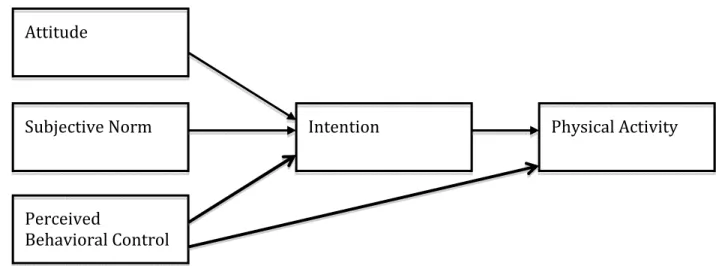
The Theory of Planned Behavior (TPB) has been widely used in studies to predict physical activity across a variety of populations (Ajzen, 1991; Blue, 1995; Downs & Hausenblas, 2005; Hagger, Chatzisarantis, & Biddle, 2002). In the TPB, behavioral intention, which is an indication of a person’s readiness to perform the behavior, is assumed to be the most important and proximal determinant of behavior. Perceived behavioral control, or one's belief in their control over performing the behavior, is
predicted to have both a direct effect on behavior that is not completely volitional and an indirect effect through intention. The other constructs in the model, attitude and
subjective norm, are thought to influence behavior only through intention. Attitude consists of the affective and instrumental beliefs individuals hold about the behavior and subjective norms are beliefs individuals have about what important others' think of their performing the behavior.
Subjective norm has exhibited a weak or non-significant relationship with
concept of subjective norm in the TPB with a more descriptive concept that captures the influence of physical activity that others are performing.(Okun, Karoly, & Lutz, 2002) II.F. Explanation of Conceptual Model
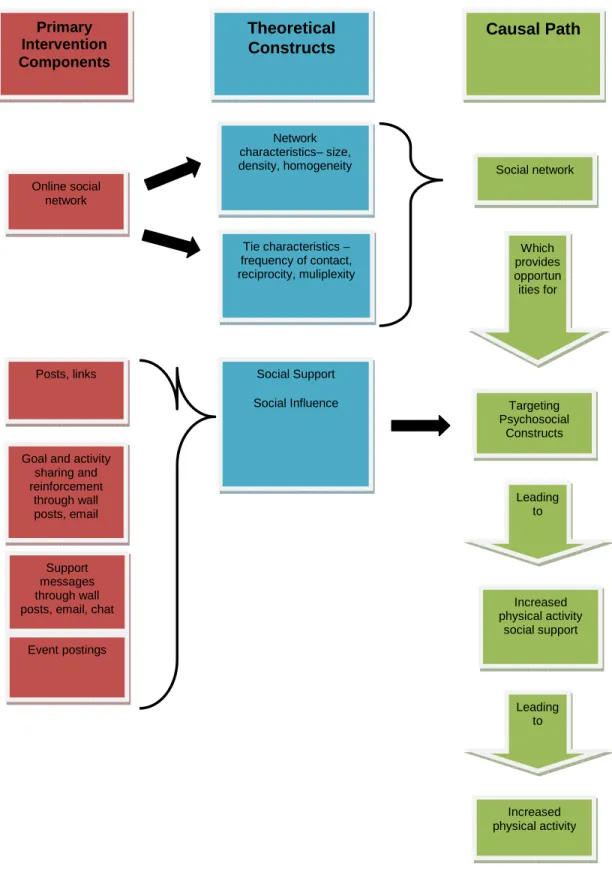
Figure 2.1 depicts the relationship between intervention components, theoretical constructs and intervention effects in the proposed study design. In this model,
Figure 2.1. Conceptual model Primary Intervention Components Online social network Support messages through wall posts, email, chat
Posts, links
Goal and activity sharing and reinforcement through wall posts, email Event postings Theoretical Constructs Network characteristics– size, density, homogeneity
CHAPTER III LITERATURE REVIEW III.A. Health Benefits of Physical Activity
Achieving recommended levels of physical activity is a public health priority (Healthy People 2010). The relationship between inadequate physical activity and all cause mortality is well established. Individuals who engage in physical activity
significantly reduce their risk of premature death and this relationship behaves in a dose responsive manner (Blair, et al., 1989). It follows that specific disease risk is also
reduced by physical activity. Risk of cardiovascular disease in particular declines as a result of physical activity, both in primary and secondary prevention (Jolliffe, et al., 2000; Myers, et al., 2004). Physical activity has also demonstrated effectiveness in the
management and prevention of Type II diabetes (Gregg, Gerzoff, Caspersen,
Williamson, & Narayan, 2003; Lynch, et al., 1996). Incidence of cancers, such as breast and colon, decrease with physical activity (Thune & Furberg, 2001). Other debilitating diseases, such as osteoporosis, can be improved or prevented by engaging in physical activity (Kemmler, et al., 2004; Warburton, Gledhill, & Quinney, 2001). Physical activity has also been examined in relation to mental health. Cross sectional and longitudinal studies have shown a beneficial relationship between levels of physical activity and depression, anxiety, and select mental disorders (Strohle, 2009).
III.B. Physical Activity Prevalence
individuals in the United States, are no exception (Davis, 2008). According to the National College Health Risk Behavior Survey, among college students 18-24 years old, only 42% participated in vigorous physical activity and 20% in moderate physical activity on three or more of the previous seven days (NHCRBS, 1995). This deficiency is more pronounced among females (35%, 21%) than males (49%, 20%) (NHCRBS, 1995). A more recent study of a large Southeastern campus population using accelerometers showed a much lower prevalence of vigorous physical activity (4.6%) and higher but inadequate levels of moderate physical activity (53%) among all students (Dinger & Behrens, 2006). Considering the stability of physical activity habits following young adulthood, increasing physical activity in the college population could lead to lifelong benefits for this group (Caspersen, Pereira, & Curran, 2000).
III.C. Physical Activity Interventions with College Students
III.D. Determinants of Physical Activity
Physical activity is a complex behavior that is affected by factors at the personal and environmental level. As demonstrated previously, demographic factors such as age, gender, education and socioeconomic status are associated with levels of physical activity. Behavioral attributes are also associated with levels of physical activity including dietary quality and smoking (Sherwood & Jeffery, 2000; Trost, Owen, Bauman, Sallis, & Brown, 2002). At the environmental level, there is growing evidence that issues of access and aspects of the built environment, such as sidewalk availability and
neighborhood safety, have significant influence on physical activity behavior (Brownson, Baker, Housemann, Brennan, & Bacak, 2001). In addition to these determinants, two factors, social support and social influence, have shown a particularly strong and consistent relationship with physical activity behavior. These determinants are addressed in greater detail in the following sections.
III.E. Social Support and Physical Activity
A 2007 review of determinants of physical activity behavior for adults identified social support as one of only two factors with convincing evidence of a positive
evidence that social support interventions for lifestyle change are more effective in women than men (Kelsey, Earp, & Kirkley, 1997; Sallis, Calfas, Alcaraz, Gehrman, & Johnson, 1999). In the domain of online social support, the overall evidence of a positive influence on health behaviors has not been established, but this is attributed largely to a lack of specificity in studies. Online support groups have mainly been grouped with other intervention components, which leaves their effectiveness ambiguous (Eysenbach, Powell, Englesakis, Rizo, & Stern, 2004). Despite this, several studies in the domain of weight loss and weight maintenance that have employed online social support
components have shown positive results (Harvey-Berino, Pintauro, Buzzell, et al., 2002; Tate, Jackvony, & Wing, 2003; Tate, Wing, & Winett, 2001). This cross sectional and experimental evidence suggests that social support interventions in an online setting could be effective in increasing physical activity.
III.F. Social Influence and Physical Activity
images (e.g., an individual smoking), have found that they influence smoking, drinking, safe sex and other risk behaviors for adolescents (Gerrard, Gibbons, Houlihan, Stock, & Pomery, 2008). In the domain of physical activity, Ouellette et al.(2005) found significant increases between baseline and follow up physical activity levels for participants who were exposed to exerciser prototypes. Social network level studies of health outcomes and peer groups are another area of research that suggests an effect of social influence on health behaviors. Several recent publications have explored this idea of “social contagion” of health behaviors. Christakas and Fowler (2007) found obesity clusters, related to individual relationships, in a large cohort of adults from the Framingham Heart Study. They also found a longitudinal relationship between the development of obesity and peer relationships, which could indicate a causal relationship. Effects were also seen for long distance relationships, which suggests that they are not fully explained by shared environmental characteristics.
III.G. Online Social Networks
online social networks allow for the development of applications, which are software tools embedded in social networking sites that integrate the functions of a software program (e.g., a physical activity tracker) with social network features such as sharing and commenting on personal information. This allows users to share individual and aggregate information that is created by the software program.
III.H. Popularity of Online Social Networks
Social networking websites command significant time and attention from college-aged individuals. In their report on the use of social networking sites, the Pew Internet and American Life Project reported that 72% of online adults, ages 18-29, use social networking sites and 45% use one on a typical day (Lenhart, 2009). Traditional
disparities between racial groups in other types of internet use are also not observed in the use of online social networks, where among internet users, African Americans have a higher prevalence of online social network use (43%) than non-Hispanic whites (31%) (Chou, 2009). Young adults use social networking websites for various social tasks including making plans with friends (57%), staying in touch with close friends (89%) and organizing with others for an event, issue, or cause (43%) (Lenhart, 2007). Data from studies on teen users of social networking websites, who are close in age to the study population, show that more than 4 in 5 have posted messages to a friend’s profile or page, 58% have sent messages, and 37% percent have joined a group (Lenhart, 2009). The popularity of online social networks indicates their potential to be readily adopted in the target population and specific patterns of use suggest they are important
III.I. Existing Commercial Physical Activity Programs Using Online Social Networks
Commercial versions of physical activity related applications are common for major social networking websites such as Facebook (e.g., MapMyRun,
http://www.facebook.com/mapmyrun). These applications combine physical activity tracking tools with the ability to identify and share information with existing members of your online social network as well as other users of the application. There are also online social networks, such as SPARKPEOPLE (http://www.sparkpeople.com/), dedicated specifically to health and fitness. Aspects of online social networks are also being used by nationally recognized health promotion agencies. The American Heart Association has developed the MyStart community (http://startwalkingnow.org/mystart_tracker.jsp), an online social network for individuals interested in increasing their physical activity. Creating an evidence base for the development of these online social networks could improve and enhance their effectiveness.
III.J. Online Social Networks As Web Based Interventions
The use of online social networks for physical activity interventions can capitalize on several characteristics of web-based interventions that have made them appealing to researchers in the area of health behavior change. Web based interventions generally have high up-front costs but are easily disseminated, making them a potentially cost effective alternative to more intensive individual level counseling (Griffiths, Lindenmeyer, Powell, Lowe, & Thorogood, 2006). Geographic and temporal constraints that are
relationship between the amount of time spent interacting with the intervention (e.g., logging onto a website or engaging in communication through email or a chat room or bulletin board) and effectiveness (McKay, King, Eakin, Seeley, & Glasgow, 2001; Tate, et al., 2001). This limitation may be mitigated by the use of online social networks as the platform for intervention delivery. Whereas traditional web based interventions have required participants to use stand-alone online tools, intervention components contained within online social networks could be included as a part of the user’s customary Internet use.
To our knowledge, only one study has examined the use of online social networks to change physical activity behavior (Napolitano, Hayes, Bennett, Ives, & Foster, 2012). This study found that an intervention combining Facebook and text messaging produced greater short-term weight loss than Facebook alone or a wait list control but did not find a difference between Facebook alone and controls. This study did not find any significant differences in physical activity between groups.
III.K. Social Support and Social Influence in Online Social Networks Creating and Managing Social Networks Online.
2001). Another study that delineated more social types of internet use similar to those contained within online social networks found that individuals who use social forms of internet media, such as chat and email, have more social ties than those who use non social forms of internet media, such as web surfing (Zhao, 2006). In addition, a study by Ellison et al. ( 2007) found that the intensity of online social network use was positively associated with the amount of three forms of social capital: 1. bridging capital, which is made up of weak ties (acquaintances), 2. bonding capital, which is made up of strong ties (intimate relationships), and 3. maintained social capital, which is the ability for individuals to maintain ties from previous relationships. In addition to enhancements to network size and density, online social networks may strengthen tie characteristics such as the frequency and reciprocity of contacts. From a functional perspective, online social networks provide the ability to easily send messages to and receive messages from individuals or groups through a variety of different channels. Intervention studies suggest that communicative tools within web-based physical activity interventions, such as email, are preferred by participants, and have a positive effect on the number of social support contacts (Glasgow, Boles, McKay, Feil, & Barrere, 2003; Harvey-Berino, Pintauro, Buzzell, et al., 2002; Harvey-Berino, Pintauro, Buzzell, & Gold, 2004; Harvey-Berino, Pintauro, & Gold, 2002). In addition, the interface characteristics of online social networks (e.g., newsfeeds and friend lists) allow users to manage their social network efficiently, potentially allowing them to identify other users in need of social support or to indicate to users in their network that they are in need.
Social Support.
rich emotional content and may in fact be superior in some situations (Hancock, Gee, Ciaccio, & Lin, 2008; Hancock, Landrigan, & Silver, 2007; Walther, 1996). It is also evident that online social network users are willing to share large amounts of personal information with other individuals in their network (Gross, Acquisti, & Heinz, 2005). Other features of online social networks, such as the ability to share personal data that is recorded by applications (e.g., physical activity logs) and public data such as web links and blog posts, could provide another rich source of information for users to share either automatically or selectively (Bennett & Glasgow, 2009; Buis, 2011). These sources of information could provide a catalyst for support from friends in the network.
Social Influence.
III.L. Summary
CHAPTER IV
EFFICACY OF AN ONLINE SOCIAL NETWORK BASED PHYSICAL ACTIVITY INTERVENTION: A RANDOMIZED CONTROLLED TRIAL
IV.A. Introduction
Successful interventions that increase physical activity could yield important public health benefits given the relationship between inadequate physical activity and increased disease risk (Gregg, et al., 2003; Jolliffe, et al., 2000; Thune & Furberg, 2001). Social support is a well-established correlate with greater physical activity and is
2010; Tate, et al., 2003; Tate, Jackvony, & Wing, 2006; Tate, et al., 2001). The overall efficacy of these strategies to increase social support is difficult to determine from these studies, however, because social support has rarely been included as a measure (Harvey-Berino, Pintauro, Buzzell, et al., 2002; Harvey-Berino, Pintauro, & Gold, 2002; Kim, et al., 2011; Kosma, et al., 2005; McKay, et al., 2002; McKay, et al., 2001; Tate, et al., 2003; Tate, et al., 2006; Tate, et al., 2001). It is also difficult to assess the direct effect of these strategies on health behavior change because these components were largely treated as adjunct to other more intensive behavior change strategies such as individual behavioral therapy.
makes online social networks a potentially effective means of delivering social support interventions.
The purpose of this study was to test an intervention that was partly administered through a popular, commercially available online social network service in which the primary mechanism for behavior change was encouraging peer-to-peer online support. The resulting Internet Support for Healthy Associations Promoting Exercise (INSHAPE) intervention combined a physical activity themed Facebook group with a dedicated INSHAPE educational and self-monitoring website. The primary hypothesis was that individuals randomized to the intervention would exhibit greater increases in perceived social support for physical activity than individuals in an education-only control group. A secondary hypothesis was that the intervention group would report greater physical activity at the end of the intervention compared with the education-only control group. IV.B. Methods
Participants.
Female undergraduate students (n=134) at a large Southeastern public university were recruited through flyers, university listserv emails, Facebook and Twitter™
accounts affiliated with the university, and advertisements in the college newspaper. Interested participants completed an online screener to determine their eligibility.
individuals who screened positive on the PARQ submitted physician clearance, so they were ineligible to participate. A full description of participant recruitment is included in Figure 4.1. All study participants provided informed consent.
Design.
Computer generated permuted-block randomization was used to randomize participants into two groups, online social network plus self-monitoring (n=67) and education only control (n=67). Perceived social support for physical activity was
assessed at baseline and ten weeks. Physical activity was assessed at baseline and 12 weeks. These measures were separated due to the need to establish an appropriate timeframe among variables for a separate mediation analysis. Participants received $30 for completing all study measures. Recruitment and data collection for this study
occurred in 2010 and 2011 and all data analysis was performed in 2011. The Institutional Review Board at the participating university approved this study. Study Procedures.
Intervention participant and moderator activities are outlined in Table 4.1. Intervention participants had access to the INSHAPE website, which included
to provide a seamless experience for users, development costs necessitated having a separate website.
Participants were invited to join a Facebook group, whose purpose was to provide participants with a mechanism to exchange social support. Facebook is a widely used social networking website service that includes the ability to: maintain a public profile that includes personal information; post comments, web links, photos and video; communicate with other members via email and chat; indicate approval of content by hitting a "like" button; and create and manage groups based on topics of interest. (www.facebook.com) In the case of the INSHAPE Facebook group, only participants in the study were allowed to join and the study moderator controlled the group. The group allowed the moderator and members to post comments to a common area (e.g., the group wall); respond to others' posts; create and post to discussion boards; and post web links, photographs, and videos. To encourage participation, participants received a maximum of one entry per week into a biweekly drawing for a $40 gift card for any number of posts made to the Facebook group in a given week. Participants were also asked upon joining the group to answer icebreaker questions on a discussion board including the types of exercise they were interested in and when and where they preferred to exercise. To allow participants to leverage their existing network of Facebook friends in addition to other study group members, participants were encouraged to post information related to their physical activity efforts to their own Facebook wall or set up a group of friends in Facebook with whom they could share their experience in the program.
encourage individual posters. Every week (n= 12), the moderator posted a physical activity related news article to the Facebook group. The moderator also calculated weekly minutes of participant physical activity stratified by college class from self-monitoring data and posted it to the Facebook group to encourage competition and provide positive modeling of physical activity behavior. In addition, the study moderator sent Facebook messages to participants over the course of the intervention reminding them to engage in Facebook activities and alerting them to items posted to the
Facebook group. Several discussion boards were created with different physical activity topics based on information provided in the icebreaker activity to facilitate members' participation with each other in physical activity. All communications within the group and discussion boards were monitored for harmful or erroneous content. No posts required removal or correction during the intervention.
Control group participants were provided access to a limited version of the INSHAPE website, which included only the educational materials described previously, such as physical activity safety and recommendations. The study moderator also sent weekly emails to participants over the 12-week period with links to the same news stories related to physical activity that were used in the Facebook group to promote discussion.
Study Measures.
Participants completed all self-report study measures by online survey using Qualtrics (Qualtrics Research Suite, version 2009).
esteem support, and companionship support, and these subscales exhibited good
internal reliability (α=.84 to .90) and test-retest reliability (r=.75 to .88) (Chogahara,
1999). In the current study, a small number of scale items from the original instrument were dropped based on changes made in a previous study that adapted the instrument for a college aged population, which reported good internal reliability (α=. 85 to .89) for these modified subscales (Okun, et al., 2003). In addition, language used to assess instances of social support was modified to explicitly include support experienced through online forms of communication. Specifically, the questionnaire asked participants how often over the past six weeks they had experienced certain social interactions with friends (e.g. made plans for exercising) including ‘friends on Facebook or other members of groups you have joined on Facebook’. Each subscale consisted of 4 items and 5 response levels ranging from ‘never’ to ‘very often’. Subscales scores were calculated by taking the mean of the individual items with higher scores indicating greater perceived social support.
Physical activity was measured using a version of the Paffenbarger activity questionnaire adapted for online use (Paffenbarger, Wing, & Hyde, 1995). This measure asks participants to report the amount of time spent in a variety of physical activities over the past week. This scale has demonstrated adequate reliability and predictive validity in previous studies (Pereira, et al., 1997).
The study administrator recorded Facebook interactions manually on a daily basis during the intervention including all comments and web links, discussion board posts, and instances where participants hit the "like" button in response to content. At enrollment, all participants were asked to "friend" a dedicated study administrator Facebook account, which was established specifically for the study. This allowed the administrator to record posts related to physical activity found on the individual
Facebook walls of both intervention and control participants. Facebook behavior in the intervention group that was not observable, such as visiting but not posting to the group, was measured by a self-report questionnaire administered at the end of the study. This questionnaire also assessed intervention participants' attitudes toward the Facebook component of the intervention and factors affecting their participation.
INSHAPE website use for both groups was tracked using participants' unique login credentials. Total logins included all instances of a participant logging in to the website. For the intervention group, data on the number of physical activity bouts logged over the course of the intervention were also collected.
Statistical Analysis.
Based on effect sizes from similar studies, it was estimated that 110 participants were necessary to give 80% power to detect a significant difference between groups in
perceived social support assuming 20% attrition and α=.05 (Collins, et al., 2010; Perry,
IV.C. Results
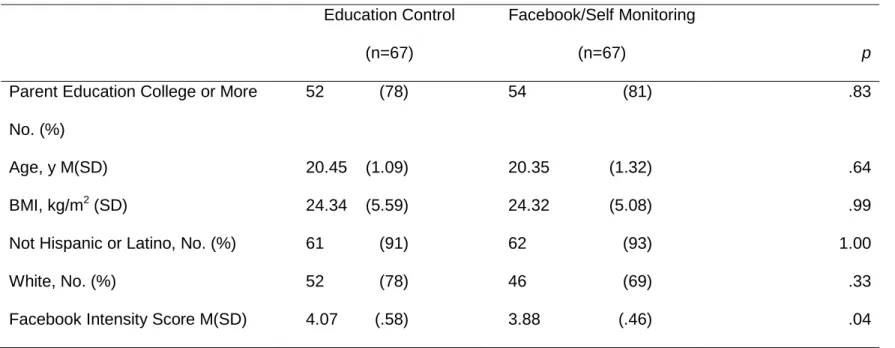
Participant characteristics at baseline are detailed in Table 4.2. No significant differences were found at baseline between groups with the exception of the Facebook Intensity Scale, t(132)=-2.03, p=.04, where those in the control group showed higher scores than the intervention group. Participants were predominately white, non-Hispanic, whose parents had attained college or higher-level education. Attrition was 13% in the intervention group and 3% in the education control group at 10 weeks. At 12 weeks, attrition was 16% (n=11) and 4% (n=3) for those groups respectively. Attrition was significantly different between groups at 10 and 12 weeks (p=.05, p=.02). There were no significant differences between the baseline characteristics of participants who
completed all study measures vs. those who did not with the exception of Facebook Intensity, with completers having a higher score than non-completers, t(132)=-2.43, p=.02.
INSHAPE Website Use.
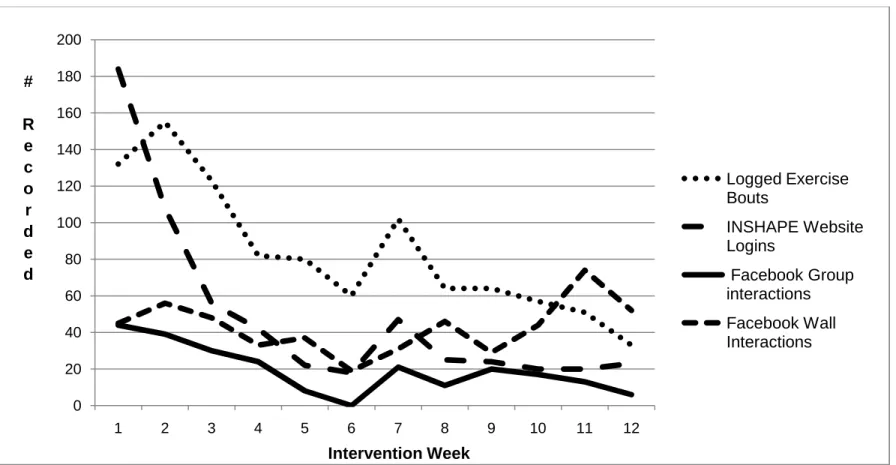
Study participants logged into the INSHAPE website 584 times over twelve weeks. Intervention participants logged in a mean of 7.0 times (SD=8.23, range 0-43) and control participants 1.7 times (SD=1.45, range 0-11). Logins to the website declined over the first six weeks but leveled out over the last six weeks (Figure 4.2). Intervention participants logged 1,016 bouts of physical activity in the self-monitoring system
(M=15.16, SD=20.65, range 0-107). Physical activity bouts logged over time trended similarly to overall logins but showed further decline toward the end of the study (Figure 4.2).
Facebook Group Use.
dichotomized into two groups, one or fewer contributions (non-contributors, n=37) and more than one contribution (contributors, n=30). There were a total of 319 interactions within the Facebook group (259 from study participants). Contributors averaged 8.0 interactions (SD=7.45) with a range of 2-38. Contributions to the group were highest in the beginning, declined to a low point at the midpoint of the intervention coinciding with Spring Break, and then recovered modestly before declining at the end of the
intervention (Figure 4.2). More than half (63%) of intervention participants who
completed the post survey (n=56) reported visiting the Facebook group at least 2-3 times per month with only one participant reporting having never visited the group. More than one-third (39%) of survey respondents reported adding other group members as Facebook friends during the study and 13% reported participating in physical activity with other group members at least 2-3 times per month. Thirteen percent of survey respondents reported setting up a group of Facebook friends to share with during the intervention. A within group analysis to explore the relationship between Facebook group contributions and study outcomes showed no significant group x time interaction
between contributors and non-contributors for social support or physical activity. Individual Facebook Use.
Perceived Social Support and Physical Activity.
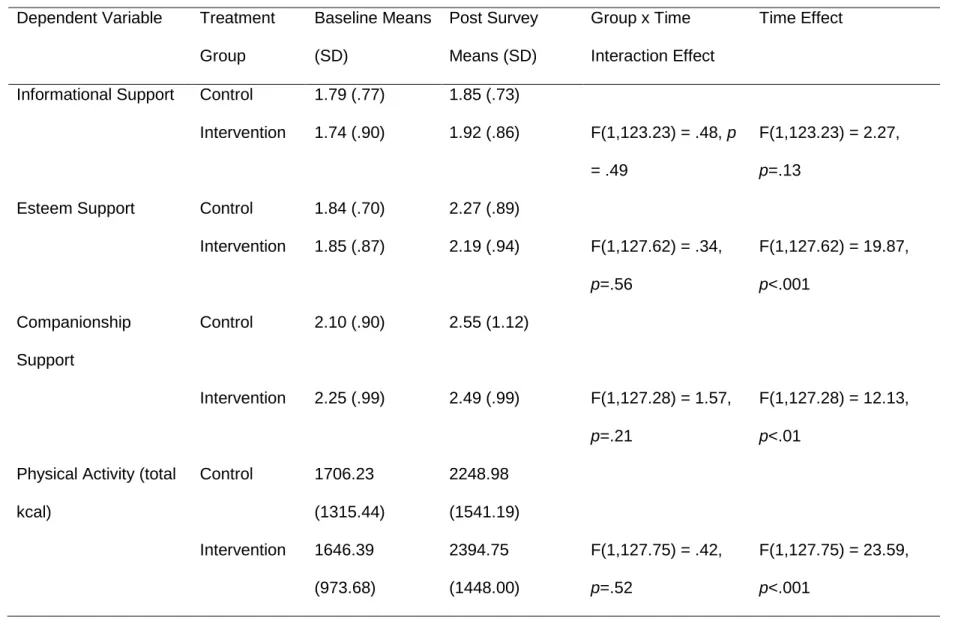
Means and tests of significance for main effects and interactions related to changes in perceived social support and physical activity are included in Table 4.3. Two cases exhibited extreme total physical activity values exceeding 12,000 kcals per week and were excluded from the analysis for all physical activity outcomes. Comparison of analyses of physical activity outcomes with and without these cases did not reveal any differences in statistical significance. There were no significant group x time interactions for perceived social support or physical activity. With the exception of informational social support, there were significant, positive main effects for time, with both groups reporting increases for physical activity and esteem and companionship social support. Additional linear mixed models were used to determine if baseline values of social support or Facebook intensity moderated intervention effects. There were no significant interactions for any of these analyses.
Participant Satisfaction With Facebook Group.
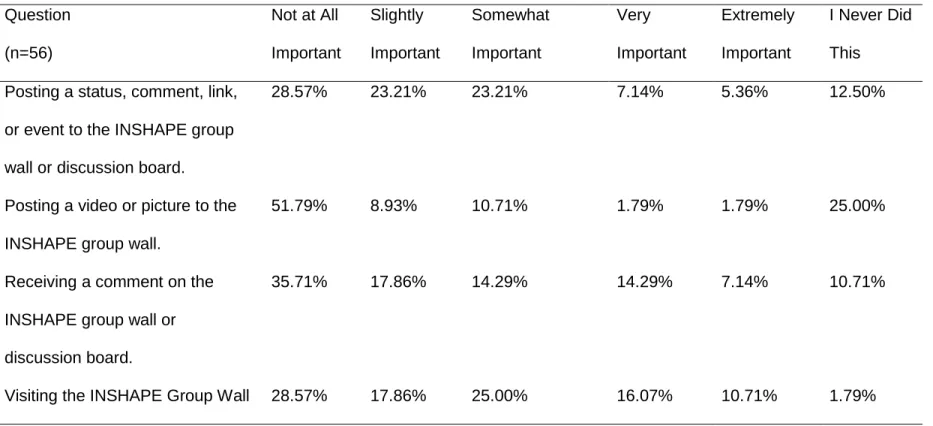
Survey respondents in the online social network plus self-monitoring group (n=56) rated visiting the group as the most important Facebook element of the
intervention followed by receiving comments and posting comments. The participants did not, however, find posting pictures or video as very important activities. (Table 4.4) When asked to report barriers to participation in the group, most respondents chose "time" (77%) and "forgetfulness" (71%) with fewer choosing "not wanting to meet up with strangers" (38%) or "not wanting to share personal information" (18%). Overall, two thirds (66%) of the online social network group participants indicated that they would recommend the program to their friends.
IV.D. Discussion
group suggest that online social networks are a feasible platform for intervention delivery. This study did not find evidence that enrollment in a Facebook group coupled with web based education and self-monitoring significantly increased levels of perceived social support for physical activity or physical activity compared to web based education controls but did find significant increases over time in perceived social support and physical activity among all participants.
It is difficult to compare the results of this study to others in the literature as most studies using online peer-to-peer support that include physical activity outcomes have not measured perceived social support or isolated these components. One exception is the Stepping Up to Health Study, which compared a walking program group with a walking program plus online community group (Richardson, et al., 2010). This study did not find differences in perceived social support, which was measured with a single item, at baseline or post intervention between groups. In contrast, other randomized studies using online peer-to-peer mechanisms such as chat rooms and bulletin boards have reported increases in diabetes management support and general social support (Barrera, Glasgow, McKay, Boles, & Feil, 2002; Glasgow, et al., 2003; Micco, et al., 2007). The current findings related to physical activity are similar to Stepping Up to Health, where both groups' physical activity increased significantly over time but there was not a significant difference between groups (Richardson, et al., 2010). This pattern has also been found in other studies comparing multicomponent interventions with internet peer-to-peer support to those with in person peer support or no peer support (Harvey-Berino, Pintauro, Buzzell, et al., 2002; McKay, et al., 2001; D. F. Tate, et al., 2001).
In the current study, it is possible that the significant main effects are the result of the demand characteristics of the measures or the effect of seasonal differences
participating in outdoor activities than post-intervention measures. In addition, the
selection of participants who were motivated to join a physical activity program may have led to participants soliciting and providing social support offline in both groups. The failure of this study to detect increases in social support above and beyond education controls may be explained by a relatively low dose of social support from online interaction relative to that which occurred offline naturally.
Levels of participation in the Facebook group during this study were higher than those documented in most previous studies employing online peer-to-peer support, which have averaged less than one to 1.1 posts per participant (Kim, et al., 2011; Kosma, et al., 2005; McKay, et al., 2001). Participation rates similar to those in the current study were reported in the Stepping Up to Health Study, where participants who posted at least once averaged 5 posts per person.(Resnick, Janney, Buis, & Richardson, 2010) Like the current study, Stepping Up to Health had a study arm specifically
designed to foster online peer-to-peer support, as opposed to most other studies that have included peer support only as part of a larger intervention. This suggests that studies with more carefully designed online peer support components with elements such as contests, incentives, and moderator provided content may be more successful in encouraging participant interaction.
Overall attrition in this study was considerably lower than average rates in other web based physical activity studies perhaps because the entire study including data collection was conducted online and was convenient for participants (Vandelanotte, et al., 2007). The significantly greater attrition in the intervention group may be the result of displeasure at the greater number of moderator messages or that intervention
participants were discouraged by the act of self-monitoring.
effectiveness.(Wing & Jeffery, 1999) Although participants were encouraged to solicit support from their existing Facebook friends, there was no difference between online social network and control group participants in the number of physical activity related posts to their own Facebook walls. Future iterations of this research might effectively employ application technology that would enroll individuals and provide them automated prompts and tools to include a subset of their existing friends as study participants. These applications could also automatically match participants on physical activity related criteria such as exercise preferences to encourage group participation. Data collected by an application could also be used to provide real time group and individual behavioral information to participants.
Study Strengths.
This is one of the first studies attempting to change health behavior using a commercially available, widely used online social networking service, which increases its potential for dissemination and implementation (Bennett & Glasgow, 2009). This study also employed a randomized design and, unlike previous online intervention studies, used a multi-item social support measure specific to physical activity.
Study Limitations.
The physical activity measure used in this study was self-report, which is subject to greater bias than more objective measures. Some measures of participation, such as Facebook messaging, could be assessed only by self-report. It was also impossible to determine the number of participants who viewed content on the Facebook group but did not post, i.e. "lurkers." It has been estimated that this type of behavior occurs in roughly half of participants in discussion lists for health topics (Nonnecke & Preece, 2000).
To more accurately assess participation in future studies using commercial online social networks, additional objective data collection measures should be pursued.
intervention participants during the intervention, contamination was another possible threat to validity in this study. The design of this study also did not allow for the isolation of effects from enrollment in the online social network versus self-monitoring.
Conclusion.
3
4
Table 4.1. Participant and moderator activities for the online social networking plus self-monitoring group
Intervention component Participant/moderator activities
INSHAPE website Participant activities
• Self-monitoring (daily)
• Review study expectations and procedures (at the beginning and as needed)
• Review physical activity related content (at the beginning and as needed)
- Exercise safety
- Exercise recommendations
- Exercise benefits
- Aerobic, strengthening, and flexibility exercises
- Exercise barriers
Email (Facebook
messaging and traditional
email)
Moderator activities
• Communicate Facebook group policies (beginning and midpoint of intervention)
3
5
• Notify participants of aggregate exercise posts (weekly)
• Announce drawing winner (bi-weekly)
• Send Facebook group activities reminder (bi-weekly)
Facebook group Participant activities:
• Post answers to icebreaker questions on the Facebook discussion board
(beginning of the intervention)
• Connect with other participants to exercise on the Facebook wall and in
Facebook discussion boards dedicated to specific exercises (ongoing)
• Share their goals, progress, and setbacks related to exercise (ongoing)
• Provide messages of support to other participants (ongoing)
• Share relevant information about exercise
• Post pictures and videos related to exercise
Moderator activities:
3
6
• Post drawing winner (bi-weekly, weeks 5-12)
• Post discussion question (weeks 3,4,5,7,8,10)
• Post exercise related articles (weekly)
• Respond to participant questions and technical issues (as needed)
Individual Facebook wall Participant activities:
3
7
Table 4.2. Demographic characteristics of study sample at baseline
Education Control
(n=67)
Facebook/Self Monitoring
(n=67) p
Parent Education College or More
No. (%)
52 (78) 54 (81) .83
Age, y M(SD) 20.45 (1.09) 20.35 (1.32) .64
BMI, kg/m2 (SD) 24.34 (5.59) 24.32 (5.08) .99
Not Hispanic or Latino, No. (%) 61 (91) 62 (93) 1.00
White, No. (%) 52 (78) 46 (69) .33
3
8
Table 4.3. Means and intervention effects on perceived social support and physical activity
Dependent Variable Treatment
Group
Baseline Means
(SD)
Post Survey
Means (SD)
Group x Time
Interaction Effect
Time Effect
Informational Support Control 1.79 (.77) 1.85 (.73)
Intervention 1.74 (.90) 1.92 (.86) F(1,123.23) = .48, p
= .49
F(1,123.23) = 2.27,
p=.13
Esteem Support Control 1.84 (.70) 2.27 (.89)
Intervention 1.85 (.87) 2.19 (.94) F(1,127.62) = .34,
p=.56
F(1,127.62) = 19.87,
p<.001
Companionship
Support
Control 2.10 (.90) 2.55 (1.12)
Intervention 2.25 (.99) 2.49 (.99) F(1,127.28) = 1.57,
p=.21
F(1,127.28) = 12.13,
p<.01
Physical Activity (total
kcal)
Control 1706.23
(1315.44)
2248.98
(1541.19)
Intervention 1646.39
(973.68)
2394.75
(1448.00)
F(1,127.75) = .42,
p=.52
F(1,127.75) = 23.59,
3
9
Physical Activity
(Vigorous kcal)
Control 155.97 (347.70) 378.23 (731.36)
Intervention 151.79 (333.57) 298.21 (575.32) F(1,129.58) = .35,
p=.55
F(1,129.58) = 9.19,
p<.01
Physical Activity
(Moderate kcal)
Control 166.69 (343.15) 272.78 (604.52)
Intervention 81.03 (215.81) 253.79 (646.08) F(1,128.75) = .26,
p=.61
F(1,128.75) = 6.80,
p=.01
Physical Activity (Light
kcal)
Control 25.89 (72.60) 61.69 (134.95)
Intervention 76.79 (177.79) 81.25 (182.55) F(1,128.84) = .69,
p=.41
F(1,128.84) = 2.54,
4
0
Table 4.4. Perceived importance of participation in Facebook group elements
Question
(n=56)
Not at All
Important
Slightly
Important
Somewhat
Important
Very
Important
Extremely
Important
I Never Did
This
Posting a status, comment, link,
or event to the INSHAPE group
wall or discussion board.
28.57% 23.21% 23.21% 7.14% 5.36% 12.50%
Posting a video or picture to the
INSHAPE group wall.
51.79% 8.93% 10.71% 1.79% 1.79% 25.00%
Receiving a comment on the
INSHAPE group wall or
discussion board.
35.71% 17.86% 14.29% 14.29% 7.14% 10.71%
Figure 4.1. CONSORT diagram showing flow of participants through trial
310 screened for eligibility
176 excluded 101 ineligible
19 answered yes to any PARQ question (0 provided Dr. clearance)
19 answered yes to 3 or more SCOFF questions 6 older than 25 years of age 6 not undergraduate
students
16 reported > 30 minutes per day of physical activity 72 reported < 30 minutes per day of Facebook use 59 did not provide online consent 16 did not complete baseline
67 allocated to online social network plus self monitoring
67 allocated to education-only control
58 completed 10 week measure 56 completed 12 week measure
65 completed 10 week measure 64 completed 12 week measure
4
2
Figure 4.2. Frequency of participation in online activities during the intervention
0 20 40 60 80 100 120 140 160 180 200
1 2 3 4 5 6 7 8 9 10 11 12
# R e c o r d e d
Intervention Week
Logged Exercise Bouts
INSHAPE Website Logins
Facebook Group interactions
CHAPTER V
THE ROLE OF COMPANIONSHIP, ESTEEM, AND INFORMATIONAL SUPPORT IN EXPLAINING PHYSICAL ACTIVITY AMONG YOUNG WOMEN IN AN ONLINE
SOCIAL NETWORK INTERVENTION V.A. Introduction
Given the benefits associated with adequate physical activity and the fact that the majority of Americans do not meet recommended national guidelines, developing
programs that increase physical activity is a public health priority (CDC, 2007; Eaton, et al., 2008; Warburton, et al., 2006). One approach to increasing physical activity that is commonly used in health interventions is increasing social support. A solid theoretical understanding of the physical activity-social support relationship could benefit the design of these interventions (Baranowski, Anderson, & Carmack, 1998). Many studies have examined the social support – physical activity relationship within established health behavior theories including the theory of planned behavior (TPB) (Ajzen, 1991). These studies have elucidated some of the mechanisms that mediate this relationship, but have largely been cross-sectional or used global measures of social support. This paper aims to extend this work by examining the relationship between multiple types of social support and physical activity in a modified TPB framework using longitudinal data collected from an online social support based physical activity intervention.
behavior that is not completely volitional and an indirect effect through intention. For example, a person’s ability to exercise might be constrained by factors that reflect actual control (e.g., a lack of access to facilities). In these cases, perceived behavioral control is theorized to have a direct effect on behavior. The other constructs in the model, attitude and subjective norm, are thought to influence behavior only through intention. Attitude consists of the affective and instrumental beliefs individuals hold about the behavior and subjective norms are beliefs individuals have about what important others think of their performing the behavior.
Results from meta-analyses and reviews have supported the TPB's overall ability to predict physical activity behavior (Blue, 1995; Downs & Hausenblas, 2005; Hagger et al., 2002). These analyses have consistently found the strongest relationships between intention and physical activity, attitude and intention, and perceived behavioral control and intention. The significance of a direct relationship between perceived behavioral control and physical activity when controlling for intention has been inconsistent in meta-analyses and the relationship has been consistently weaker than that for intention and physical activity. Because subjective norm has exhibited a weak or non-significant relationship with intention in these analyses when controlling for perceived behavioral control, some authors have suggested that this construct be dropped from the TPB in the physical activity domain (Courneya & McAuley, 1995; Courneya, et al., 2000; Rhodes & Nigg, 2011).
Saunders, et al., 2004). The relationships of specific types of social support with the TPB variables and physical activity, however, have been addressed less frequently than studies that treat social support as an overall global measure. In one study where social support types were included, differential effects on intention, perceived behavioral
control, and physical activity were found, indicating that examining distinct types of social support may provide a better understanding of its role in the TPB (Okun, et al., 2003).
The current analysis used data from the Internet Support for Healthy
Associations Promoting Exercise (INSHAPE) study -- a randomized controlled health promotion intervention trial designed to increase perceived social support for physical
activity and physical activity among female undergraduate students using Facebook, a
popular online social networking website. To better explain how social support might mediate the effects of the intervention on physical activity, TPB variables (intention, attitude, perceived behavioral control) were measured to provide a theoretical analytic framework. Analysis of the trial outcomes found significant differences in physical activity and perceived social support for participants over time but not between groups (AJPM, under review).
Although the research literature has encouraged more studies that examine how theoretically targeted intervention components mediate intervention effects, this
procedure is inappropriate for the current study and many other physical activity intervention studies because of a lack of significant changes between treatment and control groups over time on outcome variables (Baranowski, et al., 1998; Hillsdon, Foster, & Thorogood, 2005; Rhodes & Pfaeffli, 2010). In cases, however, where
previous research by exploring multiple social support types as constructs in the TPB using these data.
V.B. Methods Participants.
The study sample for the INSHAPE trial consisted of 134 female undergraduate students at a large Southeastern public university. Female undergraduates were selected for this study based on their widespread use of online social networks and previous research that supports the greater influence of social support on physical activity for women than men (Kelsey, et al., 1997; Lenhart, 2010; Molloy, Dixon, Hamer, & Sniehotta, 2010; Sallis, Calfas, Alcaraz, et al., 1999). Participants were recruited through flyers, university listserv emails, Facebook and Twitter™ accounts affiliated with the university, and advertisements in the college newspaper. Interested participants completed an online screener to determine their eligibility. Participants were deemed eligible if they were currently enrolled female undergraduates at the University under the age of 25 years, reported less than 30 minutes of daily physical activity, and more than 30 minutes of daily use of Facebook. Participants were excluded if they answered yes to two or more questions on the SCOFF disordered eating questionnaire (Perry, et al., 2002). To identify participants with contraindications to an unstructured exercise
program, they were required to submit physician approval if they answered yes to one or more questions on the Physical Activity Readiness Questionnaire (PARQ) (Thomas, et al., 1992). None of the 19 individuals who screened positive on the PARQ submitted physician clearance, so they were ineligible to participate. A full description of participant recruitment is included in Figure 5.2. All study participants provided informed consent. Design.
physical activity, perceived behavioral control, attitude, and intention were assessed at baseline (time 1) and 10 weeks (time 2). Physical activity was assessed at baseline (time 1) and 12 weeks (time 2a). These measures were staggered due to the need to establish an appropriate timeframe between prospective TPB variables and
retrospective social support measures at time 2 and the retrospective physical activity measure at time 2a. Participants received 30 dollars for completing all study measures. The Institutional Review Board at the participating university approved this study. Description of the INSHAPE Trial.
The INSHAPE trial was designed to test the efficacy of using Facebook to increase perceived social support for physical activity and physical activity. The primary hypothesis of the original trial was that participants enrolled in a physical activity themed online social network combined with web-based education and self-monitoring would exhibit greater changes in perceived social support for physical activity and physical activity than those in an online education-only control group.
from participants posted on the group wall or received through email, but did not include direct social support to individual group members. Control group participants were provided access to a limited version of the INSHAPE website, which included only the educational materials described previously. A more detailed description of the
intervention and control conditions for the trial is published elsewhere (AJPM under review).
Measures.
Perceived social support for physical activity was measured using the positive subscales from Chogahara's Social Influence on Physical Activity questionnaire, adapted for a college-aged population. In the original validation study, confirmatory factor
analysis of the scale supported three distinct positive social support dimensions;
informational support, esteem support, and companionship support. Chogahara defined informational support as "knowledge assistance that suggests "’you should know’""; companionship support as "partnership assistance that suggests, "’we participate
together’""; and esteem support as "esteem information provision that suggests "’you are
good.’"" These subscales exhibited good internal reliability (α=.84 to .90) and
test-retest reliability (r=.75 to .88) (Chogahara, 1999). A few of the original scale items were not included based on a study that adapted the instrument for a college-aged population,
which also reported good internal reliability (α=.85 to .89) for the modified subscales
(Okun, et al., 2003). The wording used to assess social support was modified to explicitly include online forms of communication. Specifically, participants were asked how often in the past six weeks they had experienced certain social interactions with friends (e.g., made plans for exercising) including “friends on Facebook or other
calculated by taking the mean of the individual items such that higher scores indicated greater perceived social support.
Several scale instruments developed and validated in previous studies examining the TPB in the physical activity domain were used to measure attitude, intention and perceived behavioral control (Rhodes & Courneya, 2005; Rhodes, Blanchard, & Matheson, 2006; Rhodes & Courneya, 2003).
A 6 item, 7-point bipolar adjective scale was used to measure exercise attitude. Adjective choices were prefaced with the statement, "For me, exercising regularly over the next 2 weeks would be…” followed by three items each for affective attitude
(enjoyable-unenjoyable, interesting-boring, relaxing-stressful) and instrumental attitude (useful-useless, wise-foolish, beneficial-harmful). These dimensions of attitude have exhibited discriminant validity in previous studies (Rhodes, et al., 2006; Rhodes & Courneya, 2003). The current study used a single summed score, however, based on a study with undergraduate students that found no difference in predictive discriminant validity when summing all items (Rhodes & Courneya, 2003).
Intention was measured with two items. Participants were presented with the statements: " I intend to exercise regularly over the next 2 weeks" and " I plan to exercise regularly over the next 2 weeks" and asked to rate them on a 7-point scale (strongly disagree-strongly agree).
Physical activity was measured using a version of the Paffenbarger activity questionnaire adapted for online use (Paffenbarger, et al., 1995). This measure asks participants to report the amount of time spent walking, climbing stairs, and recreational activities engaged in over the past week. Total kilocalories are estimated based on the intensity and amount of time spent for each activity. This scale has demonstrated adequate reliability and predictive validity in previous studies (Pereira, et al., 1997). Data Analysis.
Differences at baseline between participants who did and did not complete post intervention measures were examined using non-parametric tests and independent t-tests. The path analysis model was estimated with full information maximum likelihood procedures to account for missing data at follow up. Confirmatory factor analyses were estimated using weighted least squares with robust standard errors and means for categorical data. Mplus, version 6.11, was used for both path and confirmatory factor analyses. All other data analysis was performed using the Statistical Package for the Social Sciences (SPSS, version 19).
Model Fit.
Model fit was assessed using several fit indices including the chi-square test statistic, the comparative fit index (CFI), and the root mean squared error of
approximation (RMSEA). The chi-square test statistic was considered a reliable
Model Specification.
Assessment of the overall model exploring the relationship between social support, TPB variables, and physical activity was performed in two steps. In the first step, confirmatory factor analysis was performed on modified measures used for social support subtypes. For these models, factor loadings and model fit were estimated for each social support subtype with indicators based on their respective scales items. Each factor was scaled by setting the unstandardized regression coefficient of one indicator to 1. In the second step, path analysis was performed using the means of all scale
V.C. Results
Results include descriptive statistics for participant demographics and all study variables. The values and significance of parameter estimates and overall model fit and variance explained for path and confirmatory factor analyses are also presented. Participants.
Participants were predominately white (73%), non-Hispanic (92%), whose parents had attained college or higher-level education (79%). Participant attrition was 8% (n=11) at time 2 and 10% (n=14) at time 2a. There were no significant differences between the baseline demographic characteristics of participants who completed all study measures versus those who did not.
Descriptive Statistics.
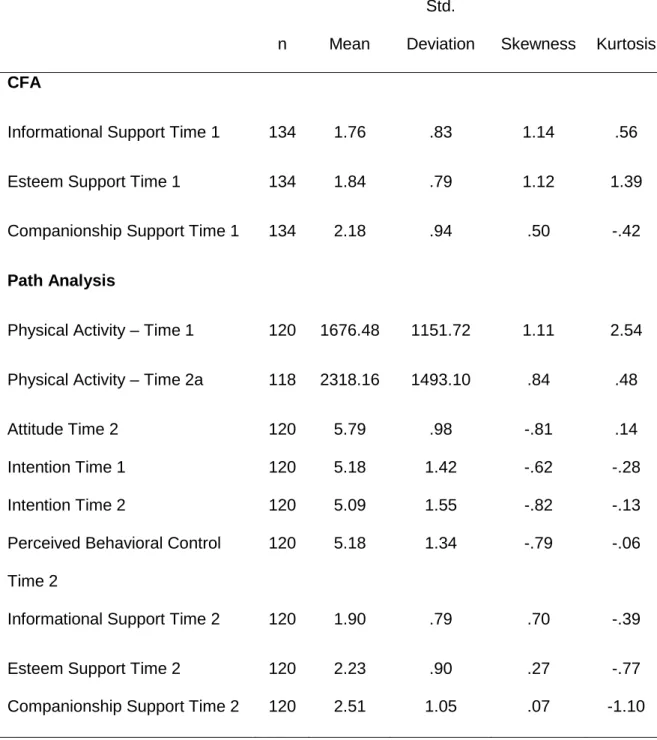
Descriptive statistics are included in Table 5.1. All scale items exhibited good
internal reliability at baseline (α = .81 - .91). Variables were screened for outliers and
cases with scores greater than three standard deviations from the mean were examined for validity. Two cases were excluded from the path analysis due to extreme total
physical activity values in excess of 12,000 kcals per week. Skewness and kurtosis values indicated that variables were sufficiently normally distributed and a linear
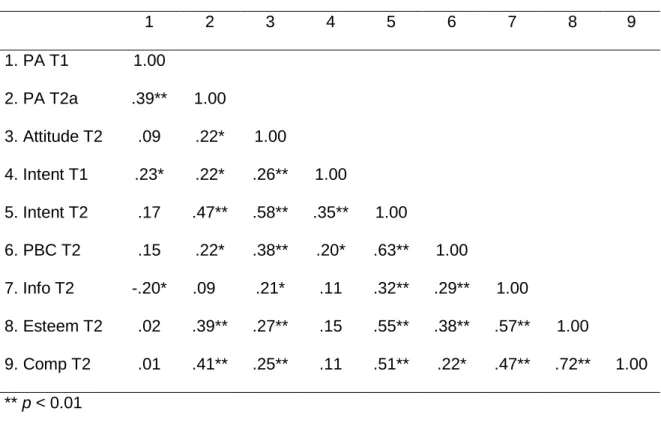
relationship between variables was found upon examination of partial plots from relevant regression equations. VIF values calculated using multiple regression procedures did not indicate extreme multi-collinearity among variables in the analysis. Table 5.2 presents inter-correlations for all variables included in the path model.
Confirmatory Factor Analysis.
companionship. [Information: χ2 (2, N=134)=1.26, p=.53, CFI = 1.00, RMSEA = .00,
Companionship: χ2 (2, N=134)=3.69, p=.16, CFI = .99, RMSEA = .08] The esteem
subscale only met the CFI criteria for good fit, χ2 (2, N=134)= 16.03, p<.01, CFI = .98,
RMSEA = .23. Based on modification indices, a second model for esteem support that
correlated the errors between two indicators yielded an improved fit. [χ2 (1, N=134)=.18,
p=.68, CFI = 1.00, RMSEA = .00] Standardized factor loadings for each subscale are included in Table 5.3. All loadings were in excess of .80 with the exception of one indicator for esteem social support.
Path Analysis.
Standardized parameter estimates for the model are included in Figure 5.3. Twelve cases from the sample were excluded from the path analysis due to missing values on predictor variables in addition to the two excluded for extreme kcal per week
values. Overall fit for the path model was good. [χ2 (3, N=120)=.47, p=.93, CFI = 1.00,
RMSEA = .00] The model explained 39% of the variance in physical activity at time 2a and 67% of the variance in intention at time 2. (R2 = .39, .67 respectively) As expected for self-report measures taken at two time points, there were significant positive
relationships between pre and post intention and physical activity measures. Significant predictors of physical activity intention at time 2 controlling for intention at time 1 included time 2 perceived behavioral control, attitude, and