TEACHING MIGRANT CHILDREN: DEBATES, POLICIES, AND PRACTICES IN WEST GERMANY AND EUROPE, 1949–1992
Brittany Rose Lehman
A dissertation submitted to the faculty at the University of North Carolina at Chapel Hill in partial fulfillment of the requirements for the degree of Doctor of Philosophy in the Department
of History.
Chapel Hill 2015
Approved by:
Karen Hagemann
Konrad Jarausch
Susan Pennybacker
Donald Reid
© 2015
ABSTRACT
Brittany Rose Lehman: Teaching Migrant Children: Debates, Policies, and Practices in West Germany and Europe, 1949–1992
“Under the direction of Karen Hagemann and Konrad Jarausch”
In theory, based on the United Nations’ adoption of the Universal Declaration of Human
Rights in 1948, all children have the right to education. Yet, what that right entails is still
contested, particularly for ostensibly temporary residents. This dissertation uses an
interdisciplinary and transnational approach combining history and education research as well as
drawing on political science to examine the debates on and policies towards the education of
migrant children in the Federal Republic of Germany between its founding in 1949 and the
signing of Treaty of Maastricht in 1992, with a focus on children with Italian, Greek, and
Turkish citizenship in the states of Baden-Württemberg, West Berlin, and North
Rhine-Westphalia. Through these case studies, the dissertation examines not only the changing debates
and policies of federal and state governments responsible for the implementation of education
policies. It also analyzes how the migrants’ countries of citizenship attempted to influence their
schooling abroad, the role the European Community played, and the influence of children’s
parents. Examining 40 years of regional, national, and transnational debates and policies within
their changing historic context, this study demonstrates how different integrative or exclusionary
school initiatives were developed and their impact on different groups of migrant children. It
argues that given incompatible state interests and the arrival of continually new waves of
migrants, there cannot be a single, perfect answer, but that even imperfect solutions are better
ACKNOWELDGEMENTS
Although individually authored, in the end, a dissertation in history involves extensive
networks of scholars as well as individual support. As such, with the completion of this
manuscript I owe a debt of thanks to the many individuals and institutions across the United
States and Europe without whom I would never have reached this moment. First and foremost, I
would like to express my appreciation for my advisors Karen Hagemann and Konrad Jarausch
for their years of invaluable mentorship, oversight, and encouragement. The other members of
my committee – Donald Reid, Susan Pennybacker and Sarah Shields – have also provided
invaluable guidance, stretching my project in ways initially unimagined. Donald Reid deserves
special thanks for shaping my early conceptualization of the project and always making the
research exciting. Cemil Aydin has also provided invaluable recommendations and guidance.
Even with their amazing support, I would never have been able to complete the project
without generous support and financing from several directions. The German Academic
Exchange Service (DAAD), Berlin Program for Advanced German and European Studies, the
Central European History Society, the University of North Carolina at Chapel Hill, and the
Georg Eckert Institute for International Textbook Research (GEI) all contributed to the extensive
research behind this project. The Berlin Program’s support warrants particular note due to the
phenomenal direction provided by Karin Goihl and Paul Nolte. The archivists and staff at the
various libraries and archives visited also have my warm appreciation, including Jocelyne
the Political Archive of the German Foreign Office, and Stephanie Zloch at the GEI, as well as
Sylvia Lopez and Karen Atkinson at the OECD Archive.
I have also benefitted tremendously from the many colleagues and friends who have
aided in no small number of ways at various points in this project’s evolution. Many graduate
students have provided both academic and social support over the years. I would especially like
to thank Ryan Peeks, Adam Domby, Jen Kosmin, Laura Brade, and Alex Ruble. Ned
Richardson-Little and Julia Sittmann also helped shaped the project. Finally, I would like to
extend my gratitude to the History Department at the UNC’s staff, including Joy Jones, Renee
McIntire, and Diana Chase. Their tireless assistance guiding graduate students through endless
bureaucratic hurdles has not gone unappreciated. My thanks to these many individuals and
TABLE OF CONTENTS
CHARTS AND TABLES ... ix!
GLOSSARY ... xi!
INTRODUCTION ... 1!
CHAPTER 1: THE RIGHT TO EDUCATION AND THE SCHOOLING OF CHILDREN OF DISPLACED PERSONS, EXILES AND
REFUGEES (1949-1959) ... 28
Establishing the Right to Education for Migrants across Europe ... 30!
West Germany and Compulsory Schooling for Displaced
Persons and Foreigners ... 39!
Degrees of Responsibility for Education in West Germany and
Europe ... 56!
CHAPTER 2: COMPULSORY SCHOOLING AND EXTRA
PROGRAMS FOR THE CHILDREN OF "GUEST WORKERS" (1960-
1966) ... 72!
International Advocacy and Italian Language Instruction in West
Germany ... 74!
Integration and Cultural Maintenance through Preparatory Classes
(Vorklassen) ... 95! Shaping Compulsory Schooling in the European Community and
West Germany ... 110!
CHAPTER 3: EDUCATION REFORM, PRIVATE SCHOOLS, AND
PLANS FOR RETURN MGRATION (1962-1969) ... 128!
A Question of Return Migration and Greek National Education in
Teaching Identity ... 131!
Considering National Private Schools within the Länder Education
Supplementary Schools and Diaspora for the Greek Government
and Parent Groups ... 158!
Turkey, Literacy, and Qualified Labor ... 168!
CHAPTER 4: RISING NUMBERS OF MIGRANT SCHOOLCHILDREN, EQUALIZING ACCESS TO EDUCATION, AND THE QUESTION OF SUCCESS (1967-1974) ... 187!
Enforcing Compulsory Schooling and Complications with Promoting Integration ... 191
Writing New Bars for Success and Encouraging Secondary Schooling ... 204!
West German Uproar over School Teachers, Textbooks, and Foreign Relations ... 213!
Citizenship Status and Equalizing Access from Primary through Secondary Schooling ... 228
CHAPTER 5: CITIZENSHIP, MINORITY RIGHTS, AND THE QUESTION OF RETURN (1973-1981) ... 242!
Greek Plans for Return Migration and new Bilingual School Programs ... 245!
The European Community and Education for Migrant Workers’ Children ... 258!
The Turkish State, National Identity, and Religious Education ... 274!
Considering Citizenship and Schooling for National Minorities in West Germany ... 286
CHAPTER 6: EQUALITY IN EDUCATION AND CONTINUING DISCRIMINATION AGAINST MINORITY CHILDREN IN THE SCHOOL (1976-1984) ... 302!
Separate but Equal? Citizenship in Scholastic Dis/advantage ... 306!
The Socio-Economic Divide in West German Scholastic Performance ... 316!
The Italian Ethnic Minority and Special Schools for the Learning Disabled ... 326!
Gender Discrimination and the Image of Turkish Girls with Headscarves ... 340
MIGRATION TO MULTICULTURALISM (1982–1990) ... 355!
Pushing West Germany’s Minority Groups to Leave ... 358!
Greek Bilingual Instruction and the Pressure for Return versus Multiculturalism ... 374!
Turkish Instruction: National Identity, Language, and Islam ... 394!
Interculturalism, a European Identity, and Italian Language Courses ... 410
CHAPTER 8: THE RIGHT TO EDUCATION FOR ETHNIC GERMANS, ASYLUM SEEKERS, AND FOREIGN NATIONALS (1987–1992) ... 428!
Returning Ethnic Germans and Reunification ... 431!
The Right to Native Language for Kurdish Ethnic Minorities ... 445!
Compulsory Schooling for the Children of Asylum Seekers ... 452!
State-Language Instruction and the Breakdown of Yugoslavia ... 468
CONCLUSION: MIGRATION AND EDUCATION ... 478!
BIBLIOGRAPHY ... 491!
Archives ... 491!
Selected Primary Literature from Libraries and Archives Organized by Relevant Institution ... 493!
CHARTS AND TABLES
Chart 1.1: ! ! !The West German Compulsory School System in the 1950s ... 46!
Table 1.1:! “Foreigners”(Ausländer) in West Germany by Country of
Citizenship, 1955 ... 60!
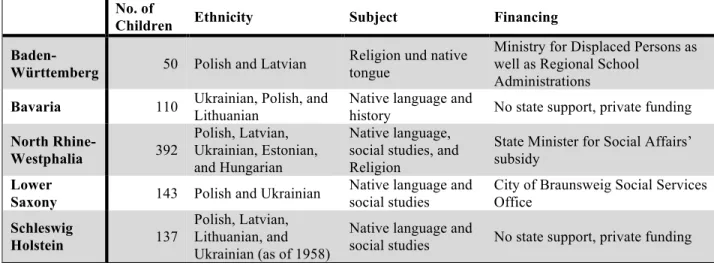
Table 1.2: ! ! !National Instruction for “Homeless Foreigners” in 1961 ... 67!
Table 2.1: ! ! !Schoolchildren in Public Schools in Baden-Württemberg by
Citizenship, 1960-1963 ... 92!
Table 3.1:! Schoolchildren with Greek Citizenship enrolled in Primary
and Lower Level Secondary Schools, 1963-1972 ... 134!
Chart 3.1: ! ! !The West German Compulsory School System in the late
1960s and 1970s ... 146!
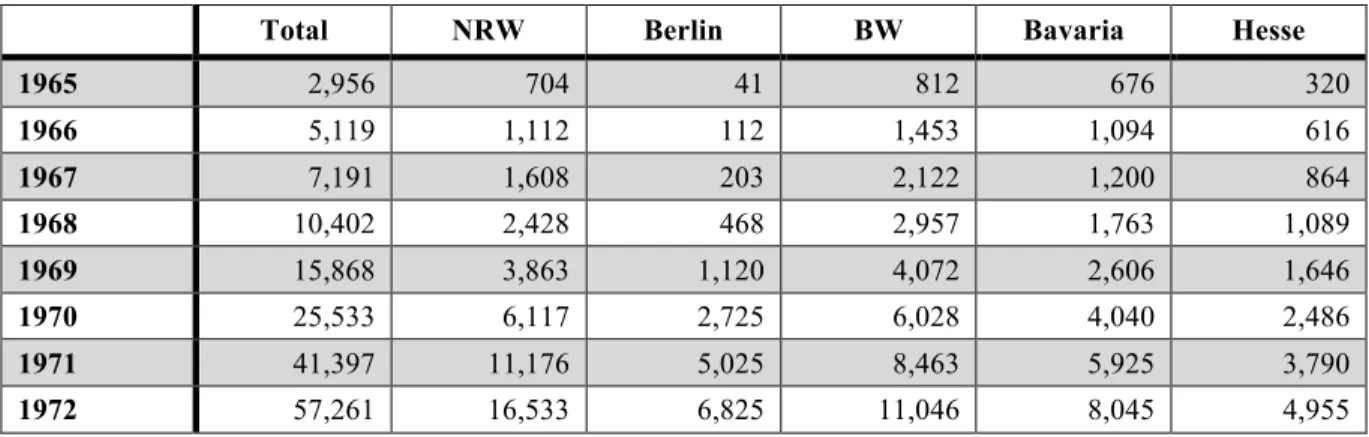
Table 3.2: ! ! !Total Schoolchildren with Foreign Citizenship in Public
Primary and Lower Secondary Education, 1965-1972 ... 155!
Table 3.3: ! ! !Schoolchildren with Turkish Citizenship enrolled in Primary
and Lower Secondary schools, 1965-1972 ... 175!
Table 4.1: ! ! !Schoolchildren (Total and “Foreign”) enrolled in General
Education in the FRG, 1969 and 1973 ... 194!
Table 5.1: ! ! Foreigners Residing in Selected European Countries by Country
of Citizenship, 1960s – 1980s (in Thousands) ... 194!
Table 5.2: ! ! Births (Total, West German and “Non-German”) in the FRG in
Thousands, 1965-1990 ... 194!
Table 5.3: ! ! Children in FRG’s Regular and Vocational Schools in
Thousands, 1965-1990 ... 194!
Table 6.2: ! ! Total Schoolchildren and Schoolchildren with Italian Citizenship in Special Schools for the Disabled in the FRG,
1976-1985 ... 330
Table 7.1: ! ! Number of Schoolchildren with Non-German Citizenship in West German Public Schools by Citizenship and Percent of
Total, 1979–1988 ... 364!
1984/85 ... 379!
Table 7.3: ! ! Instructional Hours for Primary Bilingual Instruction in Baden- Württemberg for Schoolchildren with Turkish or Greek
Citizenship, 1982 ... 386!
Table 7.4: ! ! Enrollment in General Education by School Type and Citizenship
in Thousands, 1982 and 1987 ... 390!
Table 8.1: ! ! Ethno-national German (Aussiedler) Migration to West Germany,
1968–1992 ... 434!
Table 8.2: ! ! Asylum Applicants by Region of Origin (Total and Percentage
of Total), 1980–1992 ... 456!
Table 8.3: ! ! Children in the West German Länder Schools by Citizenship,
GLOSSARY
Abitur Diploma from a higher German secondary school
qualifying for university admission or matriculation
Abschluß (also Schulabschluss) School certificate
Alternative Liste für Demokratie und Umweltschutz (AL)
Alternative List for Democracy and the Protection of the Environment
Anzeigepflicht Disclosure requirements
Arbeiterwohlfahrt (AWO) Workers’ Welfare Association (social democratic welfare association)
Arbeitsgruppe "Unterricht für ausländische
Schüler" des KMK Schulausschusses Working Group on "Instruction for Foreign Workers" of the KMK's Subcommittee on Education
Ausländergesetz Foreigner Laws
Ausländerbeauftragte Office of the Commission for Foreigners
Ausländerbehörde Immigration authority
Ausländischer Arbeitnehmer Foreign worker
Aussiedler Resettler (Returning “ethnic” Germans from Eastern Europe)
Auslandstürken Turks Abroad
Baden-Württemberg (BW) Baden-Württemberg (West German federal state)
Beamte German civil servant
Berufsschule Vocational school
Bezirk District
Bildungsberater Educational consultant
Bund-Länder-Kommission für Bildungsplanung und
Forschungsförderung (BLK)
Bundesrepublik Deutschland (BRD) Federal Republic of Germany (FRG)
Bundestag West German Parliament
Bündnis 90/Die Grünen (Grüne) Alliance ‘90/The Greens (Greens)
Caritas Catholic welfare organization
CERI Centre for Educational Research and Innovation
(OECD Center in Paris)
Christlich Demokratische Union
Deutschlands (CDU) Christian Democratic Union of Germany
Christlich-Soziale Union in Bayern (CSU) Christian Social Union of Bavaria
Denkschrift Memorandum
Deutsche Volkstum German Folkdom
Diakonisches Werk Protestant welfare organization
DP Displaced Person (DP)
Einklassige Schule One-room school including all age groups
Ergänzungsschule Supplementary school
Ergänzungsunterricht Supplementary instruction
Erlass Decree
Ersatzschule Substitute school
Erziehungsrat/rätin Educational Authority
Europarat Council of Europe (CoE) (since 1949)
Europäische Gemeinschaften (EG) European Communities (EC) (1958-1992)
Europäische Union (EU) European Union (since 1992)
Europäische Wirtschaftsgemeinschaft
Grundgesetz (EWG) European Economic Community(EEC)
Freie Demokratische Partei (FDP) Free Democratic Party
Flüchtlingslehrer/in Refugee teacher
Förderlehrgang Special support class
Fördermaßnahme Support measure
Gastarbeiter/in Guest worker
Gastschüler/in Guest schoolchild
Genehmigungspflicht Licensing requirement
Gesamtschule Comprehensive school
Gesprächskreis Conversation group
Grundgesetz Basic Law (West German constitution, introduced 1949)
Grundschule Primary school
Gymnasium Higher secondary school that leads to the Abitur
Hauptschule Lower secondary school
Heimat- und Sachkunde Local studies (History geography, and social studies)
Heimatvertriebener Expellee
Heimatunterricht Cultural instruction
Innere Mission Inner Mission,protestant Welfare organization
Jugendamt Youth Welfare Office
Jugendbericht Youth Report
Kinder heimatloser Ausländer Children of homeless foreigners
Konsularklasse Consular class ("embassy mother language and cultural course" in Great Britain)
Kultusministerkonferenz (KMK) The Standing Conference of the Ministers of Education and Cultural Affairs of the Länder in the Federal Republic of Germany
Landesamt State office
Landesarbeitsamt State Employment Center
Landtag State Bundestag
Lehrplan Curriculum
Mehrschichtigen Einschaltungsklasse Stepped preparation class
Menschenwürde Ministerpräsident
Human dignity
Minister President
Muttersprachlicher Ergänzungsunterricht Mother language and cultural instruction
Nationaldemokratische Partei Deutschlands (NPD)
National Democratic Party of Germany
Nord Rhein-Westfalen (NRW) North Rhine-Westphalia (West German federal state)
Oberschulamt Regional School Board
OECD Organisation for Economic Co-operation and
Development
Persönlichkeit Selfhood
Pflichtsprache Required language
Realschule Higher level secondary school
Regierungsbezirk Administrative District
Regierungspräsident/in District President
Reichsschulpflichtgesetz German compulsory schooling laws (during the German Empire, Weimar Republic, and Third Reich)
Schulamt School Office
Schulaufsichtsbehörde School Regulatory Authorities
Schulausschuss School Committee
Schulpflichtgesetz Compulsory schooling law
Schulträger Authorities responsible for the maintenance of the schools
Senate/Senator Senate/Senator (body of the Ministers/Minister in the city states of West Germany: Bremen,
Hamburg and West Berlin)
Silentien Homework help
Sonderklasse Special class
Sonderschule Special school for the learning disabled
Sozialdemokratische Partei Deutschlands
(SPD)
Social Democratic Party of Germany
Sprach- und Kulturgut Language and cultural assets
Ständigen Konferenz der Kultusminister der Länder in der Bundesrepublik
Deutschland (also Kultusministerkonferenz or KMK)
The Standing Conference of the Ministers of Education and Cultural Affairs of the Länder in the Federal Republic of Germany
Übergangsklasse (in NRW) Preparatory class (implies “Transition class”)
Unterrichtsverwaltung Educational Authorities
Verschleppte Person Displaced person
Volk People or nation
Volksgruppe Ethnic group
Volksschule Primary and lower secondary school (grades 1-8/9)
Vorbereitungsklasse (in BW) Preparatory class
Vorbereitungsklasse in Langform Long form preparation class
Vorklasse (in KMK Recommendations) Preparatory class
Vorschule Preschool
Westberlin (B) West Berlin (West German federal city-state with special legal status)
Westeuropäische Union (WEU) West European Union (1954-1992)
Zeugnis School transcript
Zusätzliche muttersprachliche Ergänzungsunterricht
INTRODUCTION
In February 1964, the Kölnische Rundschau, a local West German paper published in Cologne,ran an article titled “Bambini Want to Learn in German Schools.” The article described how migrant children with Italian citizenship in North Rhine-Westphalia (NRW) hoped to attend
West German schools. These little bambini planned to live in West Germany. In consequence, they needed to attend local schools and learn to participate in North Rhine-Westphalian society
and in the work force. But, the children and their families also wanted to maintain connections to
their heritage. In order to have a touch of home, the newspaper reported, the children also hoped
to take classes in Italian language and culture.1
Although the West German press would not frequently use the word “multicultural” until
the 1980s, that was what the news article was describing. German multiculturalism was,
however, distinct from the American, British, or French versions. In those states, legacies of
colonialism and specific histories of migration had led to citizenship laws permitting some
migrants or their children to naturalize. In contrast, West German citizenship law, based on jus sanguinis (right of blood), stipulated that only individuals with German ancestry could be “German.”2 As such, regardless of migrant families plans to stay or emigrate, they and their
children would remain legal foreigners. Nonetheless, active participants in society, many of these
1 “Bambini möchten in den deutschen Schulen lernen: Italiens Generalkonsul Dr. Bocchetto über seine Pläne,” Kölnische Rundschau, February 25, 1964.
2 Douglas B. Klusmeyer, “Aliens, Immigrants, and Citizens: The Politics of Inclusion in the Federal Republic of
Germany,” Daedalus 122, no. 3 (Summer 1993): 81–114; Douglas B. Klusmeyer and Demetrios G. Papademetriou,
Immigration Policy in the Federal Republic of Germany: Negotiating Membership and Remaking the Nation (New
children would grow up identifying themselves as part of both Germany and Italy. That
difference frequently encouraged the development of diasporaic communities. German society
adopted the so-called “mixed salad” multiculturalism as opposed to a “melting pot.”3
In this dissertation I trace how the Federal Republic of Germany became a multicultural
country through the development of West German public school programs for migrant children
between 1949, when the state was founded, and 1992 with the signing of the Treaty of
Maastricht and changes to Germany’s citizenship laws.4 During that period, West Germany
became home to several waves of migrants. The FRG first absorbed thousands of migrants who
had arrived in the country during the Second World War or shortly thereafter. Labor migrants
from across the Mediterranean (from countries such as Italy, Greece, and Turkey) followed, the
majority between 1962 and 1973. During that period the families of many so-called guest
workers joined them in West Germany. After 1973, migration to West Germany was
predominately family migration.5 During the 1980s, increasing numbers of asylum seekers,
3 Maria Balinska, “Melting Pot or Tossed Salad? Increasing Racial and Ethnic Diversity Fuels Debate Over
Integration in British Schools,” Christian Science Monitor, May 4, 1989.
4 This dissertation focuses on the Federal Republic through unification, but does not talk about the German
Democratic Republic (GDR) at any length. As discussed in Chapter 8, the reason behind that decision was the GDR’s relatively small population of young “foreigners.” Although the GDR did support a guest worker population and actively recruit from Vietnam and other good, communist states, the East German government also included provisions against children and pregnancy in their contracts. Furthermore, for those children who did live in the country, there were very few special programs for schools. See Jan Behrends, Fremde und Fremd-Sein in der DDR: zu historischen Ursachen der Fremdenfeindlichkeit in Ostdeutschland (Berlin: Metropol, 2003).
5 The so-called guest-worker groups included workers, and to some extent their families, from countries with which
predominately from Eastern Europe, joined other migrant groups.6 With each new group, the
West German government had to decide how much these groups should integrate.7
Analyzing the changing and contested debate on how best to educate children with
foreign citizenship and the school policies implemented in West Germany, this project explores
four main questions: First, upon arrival, what rights different migrant groups had to education
and whether their citizenship status influence the realization of their supposed rights? Second,
how did the state actors involved, from regional and national governments to supranational
institutions, debate schooling for migrant children? Third, how these different actors tried to
ensure those rights through policy and programs? Fourth, where any of those policies and school
initiatives implemented over the forty years under examination successful? These questions
emphasize which education policies were implemented in West Germany, how these policies
shifted, and which factors influenced those changes.
For the West German Federal and Länder (state) governments, schools played a central role in debates on integration and cultural maintenance.8 For many of the families and state
actors involved, schools were the space in which children learned to be good citizens as well as
to actively participate in the work force. It was in the public schools, after all, that teachers
6 Ulrich Herbert, Geschichte der Ausländerbeschäftigung in Deutschland, 1880 bis 1980: Saisonarbeiter, Zwangsarbeiter, Gastarbeiter (Berlin: J.H.W. Dietz, 1986); Rainer Münz, Wolfgang Seifert, and Ralf Ulrich,
Zuwanderung nach Deutschland: Strukturen, Wirkungen, Perspektiven, 2nd ed. (Frankfurt am Main: Campus,
1999).
7 Herbert, Geschichte der Ausländerbeschäftigung in Deutschland; Klaus J. Bade, Ausländer, Aussiedler, Asyl in der
Bundesrepublik Deutschland, 3rd ed. (Hannover: Niedersächsische Landeszentrale für Politische Bildung, 1994);
Münz, Seifert, and Ulrich, Zuwanderung nach Deutschland: Strukturen, Wirkungen, Perspektiven; Rita Chin, The
Guest Worker Question in Postwar Germany (New York: Cambridge University Press, 2007).
8 In West Germany, culture and education fell under state jurisdiction and not federal. The European Union was a
taught children what the family was supposed to look like and what voting was, alongside basic
literacy in the host country’s state language. As such, schools were central to a migrants’ ability
to fully integrate.
The 1964 Kölnische Rundschau article from the opening paragraph described early efforts to develop school programs that permitted both integration and cultural maintenance. The
article’s author informed readers about how the North Rhine-Westphalian Ministry of Education
and the Italian Consulate in Cologne were collaborating to make simultaneous cultural
maintenance and integration possible. The Consul and representatives from the NRW Ministry of
Education had already begun offering consular instruction. The Italian Consul now envisioned
the inclusion of children with Italian citizenship in the state school system. The state Ministry of
Education, the article continued, was considering that request, weighing the children’s right to
education and debating whether the Ministry should change their school laws to include all
children, or only West German citizens.9
Legally, in an age of human rights, every school age child from these groups of migrants
had the right to education.10 What form that education should take was rarely clear. The West
German Länder had to decide what, exactly, that right meant for the different groups. Yet each government in Europe, including the West German Federal and Länder governments,
differentiated between their citizens and minority or foreign children.11 After all, despite each
9 “Bambini möchten in den deutschen Schulen lernen: Italiens Generalkonsul Dr. Bocchetto über seine Pläne.”
10 According to the Universal Declaration of Human Rights, adopted by the United Nations General Assembly in
December 1948, all children have the right to education.
11 Because West German citizenship law during this period was primarily based on jus sanguinis, several groups of
non-citizens, by the 1980s, would argue with increasing voracity that they were not in fact foreign despite possessing non-German citizenship. In consequence, this study tries to acknowledge their preferred
child technically having a right to education, migrants without citizenship or foreign citizenship
had different legal rights than local citizens in most European states. In addition, many minority
groups and the governments of the countries of citizenship emphasized cultural diversity,
demanding recognition of cultural and/or religious differences. These states argued that
compulsory schooling should reflect citizenship status.12 Others claimed that the children needed
to be treated exactly the same in order to be equal. Each actor defined and challenged the
meaning of equality and how a child’s rights should be realized, disputing whatever local
practice might be.
Discussing the concept of equality, it is necessary to address issues of discrimination and
racism. Within discussions on schooling, West German Ministries of Education and society at
large were very careful to avoid the appearance of racism. Seeking to move beyond the legacy of
the Third Reich, the West German government included prohibitions against discrimination in its
new Basic Law (Grundgesetz).13 Many individuals across the political spectrum argued that they had moved beyond the Third Reich’s scientific racism. What politicians and scholars in the
Federal Republic did acknowledge was xenophobia and culturalism. The problem here is that
many individuals in Germany assumed (and continue to assume) cultural differences based on
physical attributes. Within broad definitions of the word, that is exactly what racism is. In short,
12 I use the phrase “country of citizenship” instead of “sending country” or “country of origin” because of the
different migrant and minority groups’ changing relationship to the relevant state government. Migrants moving from a country with a bilateral labor agreement could consider themselves “sent,” but a refugee flees. In turn, an individual who migrates comes from a country of origin. An individual with foreign citizenship born in the “host” country, however, originates from within that “host.” See David Bartram, Maritsa Poros, and Pierre Monforte, Key
Concepts in Migration (SAGE, 2014), 23–40.
13 A. Dirk Moses, “The Fate of Blacks and Jews: A Response to Jeffrey Herf,” Journal of Genocide Research 10,
no. 2 (June 2008): 269–87; Tina Campt, Other Germans: Black Germans and the Politics of Race, Gender, and
Memory in the Third Reich (Ann Arbor: University of Michigan, 2004). The West German Basic Law from 1949 is
although the expression of racism is different in Germany than in England or the United States, it
is still a problem that influences children’s acceptance in mainstream society and chances in the
schools.14
Depending on where a migrant children or children of migrants lived, they experienced
different levels of acceptance or discrimination had different access to schooling. Because
education policy fell under Länder jurisdiction in West Germany, each individual Länder
government had to decide how to respond to international voices even as they debated what right
migrant children had to what kind of education. In consequence, foreign governments had to
negotiate individually with the eleven Länder Education Administrations.15 Coalitions of the four (five after 1980) major parties controlled the Länder governments, influencing how regional Education Administrations approached both migration and education. Those parties included the
conservative Christian Democratic Party (CDU) and the Christian Social Union in Bavaria
(CSU), which frequently supported educational advancement based on merit and, in the late
1970s, officially pushed return migration.16 The Social Democratic Party (SPD), the Free Liberal
14 George M. Fredrickson, Racism: A Short History (Princeton: Princeton University Press, 2002); Rita C-K Chin et
al., eds., After the Nazi Racial State: Difference and Democracy in Germany and Europe (Ann Arbor: University of Michigan Press, 2009).
15 Each of the Länder and West Berlin had their own Ministries or Senate Departments for Education. These
Ministries or Senate Departments changed names frequently over the more than four decades this project covers. For example, in Baden-Württemberg, the Ministry of Education is currently the Ministerium für Kultus, Jugend und Sport Baden-Württemberg. The Ministry’s name is currently abbreviated Kultusministerium, which was the Ministry’s official name until 1978. In contrast, since 1995, North Rhine Westphalia’s Ministry of Education has been the Ministerium für Schule und Weiterbildung des Landes Nordrhein-Westfalen, but was the Kultusministerium Nordrhein-Westfalen from 1946 to 1995. Berlin’s Senate Department for Education is the Senatsverwaltung für Bildung, Jugend und Wissenschaft, but was the Senat für Bildung, Jugend und Sport from 1981-2006, the Senat für Schulwesen from 1963 to 1981, and Senator fürVolksbildung from 1949 to 1963. Because I am only discussing the portion of those Ministries and Senate Departments discussing education, I refer them as Education Administrations when referring to all or multiple of the West German Länder Ministries or Senate Departments of Education. Referring to individual departments, I use either Education Administration or Ministry of Education or Senate for Education when relevant.
16 There were multiple members of both parties that actively disagreed with that stance, including several Ministers
Party (FDP), and the Green Party (since 1980), in contrast, often advocated measures supporting
integration and equality of opportunity.17 In addition, and frequently more importantly, local
economic and social conditions as well as legal and scholastic traditions also influenced each
Länder government. In consequence, the different Länder frequently took divergent stances on how education policy for migrant and/or minority children should be shaped that changed
drastically over the years.
Acknowledging those differences, this project combines an analysis of international and
national debates on the education of migrant children with the study of regional policies and
local practices in West Germany with examples drawn from Baden-Württemberg, West Berlin,
and North Rhine-Westphalia. These three Länder Ministries of Education often led the conversation about developing school programs and, with some of the largest populations of
non-citizens, were usually early adopters. Furthermore, their internal differences highlight the
influence regional differences could have on program development and the extreme variations of
policy implementation. In Baden-Württemberg, under a Christian Democratic government, the
Ministry of Education usually argued for migrant integration, claiming that the state was
responsible for ensuring equality of opportunity for all children. Baden-Württemberg’s Ministry
of Education’s official policy stipulated that it was the countries of citizenship that were
responsible for any extra cultural initiatives for foreign citizens. In contrast, North
Rhine-Westphalia, usually controlled by a Social Democratic-Liberal (SPD-FDP) government, initially
argued for mother language and cultural programs at the expense of integration. West Berlin’s
Tietze, Einwanderung und die deutschen Parteien: Akzeptanz und Abwehr von Migranten im Widerstreit in der
Programmatik von SPD, FDP, den Grünen und CDU/CSU (Berlin: LIT, 2008).
17 It should be noted that when discussing ‘liberal’ in scholarship based on German language materials, the term
Senate for Education, governed by vacillating party coalitions, meanwhile, only became involved
in the debate in the 1970s when its own migrant population of foreign citizens took off. At that
point, the local Senate for Education built on programs for integration and cultural maintenance
already in place.
Despite differences, the Länder Ministries of Education frequently tried to coordinate their policies and collaborate on the federal level through the Standing Conference of Länder
Ministers of Education (the Kultusministerkonferenz, or KMK). Even then, however, regional interpretations shaped regional implementation of the KMK’s recommendations. Within and
among each other, the different Länder governments debated the following three points: first, whether migrant children with foreign citizenship should fall under compulsory schooling laws;
Second, if they could receive state support for their integration; and third if the children were
entitled to cultural or mother language classes within the parameters of the normal school day.18
Alongside internal politics and economic developments, the international communities
and country of citizenship governments also influenced Länder policy. Demonstrating their impact, I compare the Italian, Greek, and Turkish governments’ efforts to shape the education of
their citizens in West Germany and look at how the Council of Europe and European
Community tried to guide and standardize school development. Where the Italian Government
declared in the late 1950s that its citizens were now mostly permanent West German residents,
the Greek Government announced in the early 1960s that its citizens would all return to Greece.
In contrast, Turkey focused first on general literacy, before, as of the early-1970s, avidly
18 The Standing Conference of the Ministers of Education and Cultural Affairs of the Länder in the Federal Republic
of Germany (Ständigen Konferenz der Kultusminister der Länder in der Bundesrepublik Deutschland), commonly called the Kultusministerkonferenz or KMK, was founded in 1948. Christoph Führ, “Zur Koordination der
advocating cultural and language instruction. Added to their different assumptions regarding the
permanence of their citizens’ migration, these three states also viewed schooling differently, their
own laws demanding specific kinds of educational competencies in subjects like math and
language. Furthermore, their internal finances and relative stability influenced their advocacy
abroad. While the Italian and Greek governments were willing to pay for cultural classes, the
Turkish government did not have the financial capacity to do so until the 1970s.
Both host county and country of origin interest in the issue of education for migrant
groups meant that the issue was an international and European wide concern. To guide and
standardize programs and development, thereby promoting cultural compatibility and preserve
children’s rights, supranational organizations like the Council of Europe (founded in 1949 to
promote human rights and European cooperation) became involved in the question in the 1950s.
The Council of Europe was enormously influential as individual state governments struggled to,
at the least, not be viewed as lagging behind their fellow Member States.19 Likewise, once the
European Community became involved in education in the 1970s, its members also tried to
shape national policies and advocate specific best practices. Both supranational organizations
tried to overcome by pushing measures such as degree equivalency and foreign language
acquisition across the entire European continent.20 Each of these levels of international and
19 The Council of Europe was founded in 1949 as an early effort to develop an international organization through
which the different European states could cooperate and avoid another World War. Toward that end, the body “to protect human rights, democracy and the rule of law” (Council of Europe, “The Council of Europe in Brief - Who We Are,” Council of Europe, 2015, http://www.coe.int/en/web/about-us.). The group currently includes 47 members, 28 of which are European Union Member States. The Council of Europe is discussed in Chapter 1.
supranational efforts had a role in shaping West German education policy toward children with
foreign citizenship.21
This project argues that the multiple layers involved in addressing the question of
education for migrant school age children was part of the problem with finding a solution. Each
of the local, national, and supranational actors involved had their rights, their ideals, and their
proposed solutions. The changing meaning of citizenship, education and social equality, varying
economic resources, and the transformation of the labor market all influenced education policy.
Furthermore, while policies were frequently well-meaning, lack of financial and material
resources or personnel often prevented full implementation. Further complicating the issue was
the tension between individual rights and collective minority rights.22 Each individual migrant
wanted a different balance of integration or cultural rights. Policies addressing large groups only
benefit some individuals, usually the ethno-national majority within the migrant group or even
the West German ethno-national majority.
Migration in Post-1945 Germany
Directly influencing the development of education policy for children with non-German
citizenship in West Germany was who counted as “migrant” or “foreign.” In 1949, the newly
implemented West German Basic Law tied citizenship explicitly to German ethnicity (jus sanguinis). Most of the other European states implemented citizenship laws based on place of birth (jus soli), often because of their colonial relationships, perception of diaspora, and official histories of multi- or monoethnicism. In contrast, the Federal Republic, the founding fathers and
21 Gisella Gori, Towards an EU Right to Education (The Hague: Kluwer Law International, 2001). See also
European Commission and Luce Pépin, The History of European Cooperation in Education and Training: Europe
in the Making - an Example (Luxembourg: Office for Official Publications of the European Communities, 2006).
22 Holly Cullen, “Education Rights or Minority Rights?,” International Journal of Law, Policy and the Family 7, no.
mothers decided to maintain laws dictating that only individuals with ethnic German heritage
could claim citizenship, following the letter of the Prussian and National Socialists' laws.23
Post-war reconstruction combined with the Cold War tensions between East and West Germany
meant that it was politically expedient to tie citizenship to paternity. In consequence, through
West Germany’s first forty years of history, children part of non-German groups migrating to or
born in West Germany had few options for becoming legally German, regardless of preference.
As non-citizens, their rights, including the right to education, depended on whether they had
citizenship to another country or were stateless. If they did have citizenship, then their rights
were conditional on the various bilateral and international agreements involving the relevant
state governments.
Those citizenship laws reflected (and were part of) West German politicians and society’s
fallacious depiction of Germany as monoethnic.24 As part of the post-1945 efforts at
reconstruction and an emphasis on supposed normalization, the Federal Republic’s government
downplayed the place of minorities and immigration in German society and culture. Instead, the
first two Federal Governments, coalitions of Christian Democratic and Christian Social Unions
with the Liberal Party (CDU/CSU-FDP) under Christian Democratic Chancellors Konrad
Adenauer and then Ludwig Erhard, stressed economic reform and rehabilitation of the country’s
international reputation alongside trying to stabilize local infrastructure like the school system.
23 Klusmeyer, “Aliens, Immigrants, and Citizens.” For information on the connection in Germany between its
colonies and citizenship, see Lora Wildenthal, German Women for Empire, 1884-1945 (Durham, NC: Duke University Press, 2001), 79–130. School laws had not been unified under the Kaiserreich or under the Weimar Republic although the different territorial units within those polities would develop agreements regarding basic standardization in order to promote equivalency.
24 Social scientist Karen Schönwälder’s 2001 book showed how the self-image of the British and West German
Furthermore, the largest migrant groups who stayed in West Germany after the war were
returning ethnic Germans, whose entry fit into the political narrative of Germany as a welcoming
home for Germans.25 Connected to a history of high rates of emigration, West German
politicians viewed almost anyone not part of the loosely defined German ethnicity as foreign. 26
Nonetheless, part of the West Germany government’s efforts to rehabilitate its
international reputation in the postwar era involved trying to demonstrate its willingness to treat
non-ethnic nationals well. In light of the recent past, West Germany’s Basic Law laid out the
most liberal asylum laws of any European state. In addition, the West German government
became party to the Council of Europe’s 1950 European Convention on Human Rights. With
that Convention, Member States sought to safeguard human rights for all individuals, including
displaced persons, stateless individuals, refugees, and asylum seekers. For the West German
government, signing on was not entirely voluntary, but partially required by international
oversight. For example, in 1950, the Allied High Command dictated that the West German state
was responsible for ensuring the equal treatment – including schooling – for all displaced
persons and refugees living in West Germany.27
25 To read more on the “ethnic German” expellees, see Bade, Ausländer, Aussiedler, Asyl; Rainer Schulze, Reinhard
Rohde, and Rainer Voss, eds., Zwischen Heimat und Zuhause: Deutsche Flüchtlinge und Vertriebene in (West-)
Deutschland 1945-2000 (Osnabrück: Secolo, 2001).
26 Konrad H. Jarausch and Michael Geyer, Shattered Past: Reconstructing German Histories (Princeton, N.J:
Princeton University Press, 2003), 197–244. In addition, for a discussion of the development of German citizenship law through the Nuremberg laws, see Dieter Gosewinkel, Einbürgern und Ausschliessen: die Nationalisierung der
Staatsangehörigkeit vom Deutschen Bund bis zur Bundesrepublik Deutschland (Göttingen: Vandenhoeck &
Ruprecht, 2001).
27 Yutaka Arai and Pieter van Dijk, Theory and Practice of the European Convention on Human Rights, 4th ed.
(Antwerpen: Gaunt Inc., 2006), 2–8. Until 1955, West Germany did not obtain full sovereignty when the Americans, British, and French ended the military occupation. For information on Konrad Adenauer’s efforts to achieve
With West German statesmen and women still depicting the county as monoethnic, the
booming economy in the 1950s and 1960s led West Germany to become home to more than a
million non-German citizens at the request of the state. West Germany signed guest worker
agreements with Italy in 1955, Greece and Spain in 1960, Turkey in 1961, Morocco in 1963,
Portugal in 1964, Tunisia in 1965, and Yugoslavia in 1968. Under the guest worker programs,
West German employers “invited” migrant workers (one in three of whom were women) and
their families from these countries to live and work in West Germany.28 Wanting to break with
the memory of forced labor used during the Second World War and demonstrate a changed
attitude from the past, the West German government made sure to at least verbally acknowledge
the migrants' right to dignity. The Länder governments did so in part through offering some social care, including access to public schools.29 Yet despite the clear establishment of small
diasporic communities, the Federal Government officially claimed that these immigrant groups
were supposed to leave after only two years.
In the mid- and late 1960s claims regarding the impermanence of these minority
communities was belied by the clearly established, decade-long residence of some non-German
citizens. That obvious trend towards stability gave increased relevance to the ongoing question of
integration versus cultural maintenance and the position of these non-nationals under political
and eventually public scrutiny. Public schooling, as a site both of contact and social
28 For a discussion of these contracts and the impetus for signing them, see Ulrich Herbert and Karin Hunn, “Guest
Workers and Policy on Guest Workers in the Federal Republic: From the Beginning of Recruitment in 1955 until Its Halt in 1973,” in The Miracle Years: A Cultural History of West Germany, 1949-1968, ed. Hanna Schissler
(Princeton: Princeton University Press, 2001), 187–218; Chin, The Guest Worker Question in Postwar Germany; Johannes-Dieter Steinert, “Migration and Migration Policy: West Germany and the Recruitment of Foreign Labour, 1945–61,” Journal of Contemporary History 49, no. 1 (January 1, 2014): 9–27. For a discussion of female guest workers, see Monika Mattes, “Gastarbeiterinnen” in der Bundesrepublik: Anwerbepolitik, Migration und
Geschlecht in den 50er bis 70er Jahren (Frankfurt am Main: Campus, 2005).
indoctrination served as a central point of question on techniques for integration. The push in the
1960s to reform education across Europe in order to promote equality of opportunity lent
additional weight to the debate on schooling for non-nationals. With politicians, educators, and
parents across West Germany decrying the discriminatory nature of the tripartite public school
system (including Hauptschule, Realschule, and Gymnasium), those exploring to the question of education of migrant children asked how they were supposed to fit in.30 If the children attended
school, it was usually only at the primary and lower secondary school (Hauptschule) level, which prepared schoolchildren solely for unskilled or semi-skilled labor. Only students completing one
of the two upper level secondary certificates were likely to be allowed to train for skilled labor,
and even then the division was stark. A Realschule certificate meant eligibility for training for skilled professions while a Gymnasium certificate permitted application to university.31
As it became more and more evident during the 1960s that many labor migrants would
stay in West Germany, some of those affiliated with the Social Democratic and Federal
Democratic Parties promoted the idea of the Federal Republic as a country of immigration.
While some government bodies, including the majority of the Länder Ministries of Education, agreed with that position, the Federal Government did not change its official position even after
Willy Brandt became West Germany’s first Social Democratic Chancellor (1969-1974). In line
with that reticence, early efforts in the West German parliament to reform citizenship law to
30 The sociologist and SPD politician Ralf Dahrendorf, one of the most influential voices in this debate, elucidated
for example, that despite being supposedly merit based, the tripartite secondary school system preferred male, urban Protestants from well-to-do families. Children who were female, Catholic, rural, or from lower socio-economic backgrounds only sometimes completed secondary education at all (Ralf Dahrendorf, “The Crisis in German Education,” Journal of Contemporary History 2, no. 3 (July 1967): 139–47).
31 There were and continue to be some exceptions to this rule. For a description of the West German school system,
enable long-term foreign residents to naturalize largely failed. Foreign citizens, despite being
recognized as belonging to permanent minority communities, remained legally and socially
“foreign.”32
The discourse on migration and the related policies changed dramatically after the 1973
Oil Crisis that led to the first severe economic crisis in post-1945 Europe. No more “guest
workers” were needed leading to a recruitment stop implemented in November 1973.
Unintentionally, however, this and associated changes to residency laws prompted many foreign
citizens already in West Germany to bring in even more family members. The fresh wave of
migration, including thousands of children as well as “foreign” live births in the country,
challenged the claim that West Germany was not a country of immigration. With one in ten
schoolchildren entering the first grade legally a foreign citizen, the West German Federal
Government and the ethno-national majority increasingly viewed the groups as established
minorities and not temporary visitors. By the time Social Democrat Helmut Schmidt became
Chancellor in 1976, the West German parliament, the Bundestag, was starting to discuss West Germany’s substantial and disparate minority groups as “foreign fellow residents” instead of
solely “guest workers” and “foreigners” generally.33
The development of the European Community further influenced the understanding of
who counted as “foreign” and transformed the connections between citizenship, ethnicity, and
migration with education. In the early 1970s, European Community policy increasingly extended
to cultural and education rights as well as promoting economic opportunity. Hence, while not
32 Klusmeyer and Papademetriou, Immigration Policy in the Federal Republic of Germany. For a brief discussion of
the continued immigration of “ethnic Germans” into the FRG during the 1980s, see Klusmeyer, “Aliens, Immigrants, and Citizens,” 99.
33 Stephen Castles, Heather Booth, and Tina Wallace, Here for Good: Western Europe’s New Ethnic Minorities
citizens, European Community Member State nationals had almost identical legal rights to local
citizens anywhere within the European Community. When another economic recession hit in the
late 1970s, West Germany and other Member States used the legal divide between them and
Third County (non-EC) states to differentiate between children with varying levels of rights.34
The worldwide economic recession in the late 1970s and a second oil crisis in the late
1970s/early 1980s contributed to a rise in xenophobia and the election of a CDU/CSU-FDP
government under Chancellor Helmut Kohl, who was elected on the platform of “Germany for
the Germans.” Already under Schmidt, the Federal and Länder governments had begun to cut and consolidate state programs for things like extra education courses for migrant children in an
effort to trim state budgets. The Kohl government continued that trend, slashing funding for
social expenditures, particularly for groups like minorities or foreign nationals.35 The Federal and
the Länder governments also tried to push non-citizens to leave and attempted to discourage new migration by limiting access to work or residency permits. Attempts to further limit migration
through family reunification was, however, partly stymied by the Christian democrats’ emphasis
on family and the Supreme Court’s decision that prevention of nuclear family reunification
violated individual human rights.36
By the end of the 1980s, however, the situation had against changed. The promotion of
the upcoming expansion of the European Community and transformation into the European
Union combined with the rise of local social activists promoting multiculturalism meant that the
34 Gori, Towards an EU Right to Education; Ute Frevert, “How to Become a Good European Citizen,” in The Making of Citizens in Europe: New Perspectives on Citizenship Education, ed. Viola B. Georgi (Bonn: Bundeszentrale für Politische Bildung, 2008), 37–51.
35 Jarausch and Geyer, Shattered Past, 213–220.
36 Ute Knight and Wolfgang Kowalsky, Deutschland nur den Deutschen?: Die Ausländerfrage in Deutschland, Frankreich und den USA (Erlangen: Straube, 1991); Ulrich Herbert, Geschichte der Ausländerpolitik in
Christian Democratic-Liberal Federal Government had to change its tune. Kohl began to vocally
support multiculturalism, even as his government tried to further limit new migration. Even their
efforts there, however, floundered as first border changes in the east and then multiple
international crises led to an influx of both ethnic German foreign nationals and new asylum
seekers.37
In the context of the collapse of the communist regimes in Eastern Europe (1989-1990)
and the wars in the former Yugoslavia (1991-2001) a flood of German national migrants and
asylum seekers came to Germany even as it underwent unification. These new waves of migrants
posed a challenge for German society and its institutions including the education system.
Continued pressure from various West German political groups including the rising Green Party
led the West German Parliament to finally approve changes to citizenship laws. New rules
provided some avenues for established migrants to naturalize and also limited the connection
between German ethnicity and citizenship. While local and international stipulations meant that
the majority of West German minorities did not choose to apply for naturalization, the legal
change was indicative of changing social perceptions. In the ethno-national majority’s eyes, the
“foreigner” could now, at least partially, choose to be “German” and become part of an official
“German minority” group.38
From the founding of the Federal Republic in 1949 to the signing of the Treaty of
Maastricht in 1992, education played a central role in the discussion of immigration and
integration. Public schools were a primary site where schoolchildren learned to be good citizens
37 Herbert, Geschichte der Ausländerpolitik in Deutschland, 263–285; Nermin Abadan-Unat, Turks in Europe: From
Guest Worker to Transnational Citizen (New York: Berghahn Books, 2011), 1–37.
38 Daniel Levy and Yfaat Weiss, eds., Challenging Ethnic Citizenship: German and Israeli Perspectives on
Immigration (New York: Berghahn Books, 2002); Klusmeyer and Papademetriou, Immigration Policy in the
and a part of local society. In consequence the education system is of central political importance
as well as an ongoing concern. In the debate on the education of migrant children, language and
literacy led directly into discussions of integration versus the maintenance of cultural ties to the
home country and the question of eventual repatriation.39 Alleged support for return migration
from both the countries of citizenship and host countries meant that all governments involved
officially backed cultural and language instruction to prepare children for their return. If a child
could not read in the home country's language, how were they supposed to find a job after
repatriation? The provision of specific instructional classes then became a marker of a state’s
political intentions and lingual fluency: a symbol of belonging.
Historiography
There is a rich scholarship exploring post-1945 European migration, education, and
policy development that this project brings together and builds on. These bodies of scholarship
are usually separate, but my project draws on each of them to examine the intersection between
debates and practices. In so doing, the project connects the policies implemented with the various
state actors’ goals influencing their development, looking at the process from conceptualization
to evaluation.
Historical scholarship on West German immigration encompasses both host country and
migrant perspectives on the experience of immigration. Klaus Bade and Ulrich Herbert were
among those who began an indepth examination of post-1945 immigration, focusing primarily
on how the economic and cultural conditions of the FRG influenced migration patterns and
39 Deutscher Bundestag, “Drucksache 8/1811: Antrag Der Abg. Hasinger, et Al. Und Der Fraktion Der CDU/CSU
affected social acceptance.40 More recently, scholars have moved beyond emphasis on the host
country, looking at international influence and migrant or minority group actions. Among them,
studies by Karin Hunn and Roberto Sala have examined the role of the “sending countries” in
affecting immigration policy and the experiences of immigrants and guest workers. These
scholars have demonstrated how the countries of citizenship cultural and identity politics,
emigration policies, and citizenship laws have influenced the rights and decisions of migrant –
predominately labor – groups from specific places of origin (for Hunn and Sala, Turkey and Italy
respectively). Researchers like Rita Chin, Alexander Clarkson, and Simon Goeke have built on
that work, highlighting West German migrant and minority groups as actors through analysis of
their political and cultural decisions.41 This scholarship emphasizes the emotional and pragmatic
choices many migrant and minority individuals took based on their socio-political environment.
Their work highlights the importance of the continued identification with the country of
citizenship, but providing excellent analysis of specific cases do not demonstrate the
complications engendered by the diversity of individual national identification.42
The West German state was, however, only part of the mass migration in the post-1945
era, as scholars in history as well as the social sciences have shown. Moving away from West
Germany, scholars like Nermin Abadan-Unatcompare immigration experiences across Europe,
placing West Germany as a destination alongside other, predominately Central and Western
40 Klaus J. Bade, “From Emigration to Immigration: The German Experience in the Nineteenth and Twentieth
Centuries,” Central European History 28, no. 4 (1995): 507–35; Herbert, Geschichte der Ausländerbeschäftigung in Deutschland; Herbert, Geschichte der Ausländerpolitik in Deutschland.
41 Chin, The Guest Worker Question in Postwar Germany; Alexander Clarkson, Fragmented Fatherland:
Immigration and Cold War Conflict in the Federal Republic of Germany, 1945-1980 (New York: Berghahn Books,
2013); Simon Goeke, “The Multinational Working Class? Political Activism and Labour Migration in West Germany During the 1960s and 1970s,” Journal of Contemporary History 49, no. 1 (January 1, 2014): 160–82.
42 Karin Hunn, “Nächstes Jahr kehren wir zurück--”: Die Geschichte der türkischen “Gastarbeiter” in der Bundesrepublik (Göttingen: Wallstein, 2005); Roberto Sala, Fremde Worte: Medien für “Gastarbeiter” in der
European, states.43 Within the social sciences, there has been some consideration of international
policy on the right to education for migrant labor, such as the Commission of the European
Community’s own histories or Gisella Gori’s discussion of the European Union’s legislation, but
these do not look at local implementation.44 Through an examination of West German school
policies and practices, this project brings together two main lines of immigration historiography
by examining the school system as a site of contestation for diverse state actors as well as the
immigrant families and schoolchildren.
Whereas historians of West German immigration concentrate on national trends and labor
policy, educational researchers have explored the impact of diversity in the classroom. Cristina
Allemann-Ghionda compares the attempts to accept diversity in a variety of European school
systems.45 Looking directly at the composition of the West German schools, Leonie
Herwartz-Emden focused on the impact of heterogeneity and gender in the classroom on schoolchildren
with migrant backgrounds.46 Examining the situation with an eye toward the present and a focus
on the German schoolroom, this scholarship often overlooks special programs designed for
foreign nationals. Scholars like Ingrid Gogolin, Ursula Neumann, and Lutz Reuter have looked at
the issue as a right, but by focusing on law and high politics they have not explored the historical
43 Abadan-Unat, Turks in Europe. For a study on the Italian state’s efforts to shape its citizens identity from its
founding through the Frist World War, see Mark I. Choate, Emigrant Nation: The Making of Italy Abroad (Harvard University Press, 2008).
44 Gori, Towards an EU Right to Education; European Commission and Luce Pépin, History of European Cooperation.
45 Cristina Allemann-Ghionda, Bildung für alle, Diversität und Inklusion: Internationale Perspektiven (Paderborn:
Verlag Ferdinand Schöningh GmbH, 2013); and Cristina Allemann-Ghionda and Saskia Pfeiffer, eds.,
Bildungserfolg, Migration und Zweisprachigkeit: Perspektiven für Forschung und Entwicklung, 2nd ed. (Berlin: Frank & Timme GmbH, 2010).
46 Leonie Herwartz-Emden, Aufwachsen in heterogenen Sozialisationskontexten: Zur Bedeutung einer
development of school programs.47 In order to understand the current debates in Europe and
Germany regarding minority groups and their success in the education system, it is also
necessary to consider the development of these school programs for “foreign” children both in
regards to policy considerations and results. Multiple excellent studies on German migration in
history and social science have generally focused on the narrative of the development of federal
policies and have considered the actors influencing those policies.
Theory, Methodology, Primary Sources, and Organization
With its multi-perspective analysis this project is an interdisciplinary study that combines
migration, legal and cultural history, and the history of education with discourse and policy
analysis. Through its layered analysis, the project combines local, national, and international
histories with a focus on transnational influences. First and foremost, however, this project is a
history of migration. As Leslie Moch and Dirk Hoerder remind us, migration history is
necessarily “transdisciplinary” in order to acknowledge the multiple actors and complex issues
relating to population movements and transcultural interactions.48 It is migration history that
brings together places of origin and destination, exploring different aspects of movement from
causation to integration. This study focuses on the destination, emphasizing the multiple kinds of
groups who migrate, looking at the actors involved in shaping their experiences, and exploring
the willingness of the people in the place of residence to absorb the new arrivals.
Migration histories frequently engage with the complex issue of citizenship as a central
component of the question of belonging in the place of residence. Yet citizenship is not easy to
47 Ingrid Gogolin, Ursula Neumann, and Lutz-Rainer Reuter, eds., Schulbildung für Kinder aus Minderheiten in
Deutschland 1989-1999 (Munich: Waxmann, 2001).
48 Christiane Harzig and Dirk Hoerder, eds., What Is Migration History? (Malden, MA: Polity, 2009), 84, 134; Dirk
define. As Dieter Gosewinkel lays out, on its surface, the concept of citizenship denotes
membership to a political community and is frequently used as a legal category defining the
relationship between an individual and a state.49 Citizenship often entails an obligation to the
state, but also is supposed to guarantee an individual’s civil and political rights in exchange. The
entire concept, however, is fraught with contention as different individuals are extended or
denied different kinds of rights or even access to citizenship based on birth, gender, or heritage
as scholars like Ruth Lister and Kathleen Canning have shown.50 Furthermore, as Yasemin
Nuhoglu Soysal explains, in an age of supposedly global human rights, the meaning of
citizenship has been further diluted as those rights once associated with the citizen are extended
to humans generally (although not universally). Added to that, the development of supranational
institutions like the European Union and the spread of dual- or multiple citizenship frequently
means that an individual has membership to multiple polities, raising questions about loyalty and
the meaning of each relationship.51 That transformation, however, takes place during the forty
years of this study. Consequently, in this study, because of the peculiarities of West German
citizenship law, citizenship is viewed as an amorphous concept frequently wielded by the
ethno-national majority as a tool for inclusion and exclusion, often used explicitly to discriminate
between groups and deny or extend rights and privileges.52
49 Dieter Gosewinkel, “Historical Reflections on Citizenship in Europe,” in The Making of Citizens in Europe: New Perspectives on Citizenship Education, ed. Viola B. Georgi (Bonn: Bundeszentrale für Politische Bildung, 2008), 31.
50 Ruth Lister, Citizenship: Feminist Perspectives, 2nd ed. (New York: New York University Press, 2003), 13–42;
Kathleen Canning, “Class vs. Citizenship: Keywords in German Gender History,” Central European History 37, no. 2 (2004): 225–44.
51 Yasemin Nuhoglu Soysal, Limits of Citizenship: Migrants and Postnational Membership in Europe (Chicago:
University Of Chicago Press, 1995).