HEARING THEIR VOICES: EXAMINING TEACHER PERCEPTIONS DURING THE IMPLEMENTATION OF AN INSTRUCTIONAL POLICY
Kathryn A. Ohle
A dissertation submitted to the faculty of the University of North Carolina at Chapel Hill in partial fulfillment of the requirements for the degree of Doctor of Philosophy in the School of Education (Early Childhood, Intervention, & Literacy).
Chapel Hill 2013
Approved by:
Lynne Vernon-Feagans Marnie Ginsberg
Jocelyn Glazier
ABSTRACT
KATHRYN A. OHLE: Hearing Their Voices: Examining Teacher Perceptions During the Implementation of an Instructional Policy
(Under the direction of Dr. Lynne Vernon-Feagans)
Acknowledgements
In my study, I acknowledge there are a number of stakeholders involved and invested in the implementation of the TRI. The same holds true for this dissertation.
At the closest level are the teachers that I coached and worked with on the TRI – Maddie, Haley, Pam, Lauren, Mikayla, Katie, Nellie, Tonya, Caren, and Gloria. They shared their stories, their opinions, and their experiences with me, not only for my dissertation but so we could work hand-in-hand to help their students. It’s hard to open your classroom up to others but by starting up their computers each week, they welcomed me in and allowed me to be a part of their world. They will forever continue to inspire me to advocate for teachers.
My advisors and mentors, Lynne and Marnie, have not only devoted an incredible amount of time and energy into the TRI but into me. They have changed how I view research, literacy, and professional development. This dissertation – along with my career trajectory - would undoubtedly be very different without their help and support.
committee of five has made me a better teacher, a better researcher, a better writer, and a much more humble person.
My other “committee of five” are my parents, two brothers, and sister. I can’t imagine doing anything, let alone writing a dissertation, without their support. Not only are they all smart, outgoing, funny, generous, successful, incredibly good-looking, and fun to be with, I know they will always have my back. When in the presence of this committee of five, I won’t ever leave a room feeling like an utter failure, as I cannot fail when I have them in my corner – and I always have them in my corner.
Table of Contents
I. Introduction………... 14
Approaching the Question………... 16
Traditional Policy Analysis………..……… 18
Critical Policy Analysis………..………. 19
Study Design & Overview.……….. 21
II. Literature Review.………...…….. 22
The Context in Which the TRI Was Developed and Implemented……..……... 22
Research as a Policy Lever………..…………..……… 24
The Text of the TRI………..………... 27
Key Instructional Components…………..………...………….. 27
Professional Development………..………... 29
Teacher Change………..…………... 33
Coaching..……….…... 35
Missing Elements..………..………... 37
The Consequences………..………. 42
Policy Instruments………..………... 42
Micro-Interactions……….………. 44
Cultural Processes………..……… 45
Summary………..……… 47
III. Methods.………..………….………... 49
Design…..……….……….……….. 51
Sources of Data.……….……….………. 52
Interviews.……….……….………… 53
Focus Groups.………..……….……….………… 56
E-mail correspondences.…..………..………... 58
Teacher Questionnaires.………. 59
Field Notes/Preliminary Analyses.………..……….. 61
Participants & Setting….………..……….. 62
Setting ...………..………….. 62
Teachers.……...……..………...………..……… 63
Students ...………..……… 65
Principals.………..………. 66
Research Team.………..……… 67
Literacy Coach.………..……… 67
Positionality …...………..………... 67
Data Collection.………... 69
Data Analysis.………..………..……….. 71
Critical Reflexivity…..………..……….. 74
Summary………....……….. 76
IV. Findings………...……… 78
Perceptions of Roles.……….…………..……... 79
Real Lack of Control ………... 80
Summary………....……..………….. 95
Perceptions of Influence.……….…………..……... 96
Influence ………..……… 96
Responsibility ………..……… 103
Other Stakeholders’ Perceptions……….. 107
Summary………....……..………….. 109
Perceptions of Success.……….…………..……... 110
Student Achievement Scores ……….……….. 110
Increased Student Motivation & Confidence ………. 115
Teacher Growth & Increased Self-Awareness………... 117
Other Stakeholders’ Perceptions of Success……….. 120
Summary………....……..………….. 124
V. Discussion……….………... 125
Synthesizing the Data……….…..……….….………. 127
Answering Question #1……….……….127
Answering Question #2……….………. 130
Explaining the Differences……….………... 132
Understanding What Matters to Teacher Implementers………... 134
The Children Matter….……….………. 135
The Context Matters……….………. 136
The Quantity Matters……….……… 138
Achieving Success Matters……… 138
Working Alone……….……….………... 140
Working Together……….. 142
Considering My “Re-Framing”………... 143
The TRI as Policy….……….……… 144
The TRI as Success……….……….… 146
Recommendations………..……….. 147
For Policymakers………..……… 147
For Teacher Educators………..………. 150
For Researchers………..………...………. 153
Limitations………... 154
Extensions.………..……….……… 156
List of Tables
Table 1: Sources of Data……… 53
Table 2: Interview & Focus Group Questions………... 57
Table 3: Examples of E-mail communications……… 59
Table 4: School Climate Questions………... 60
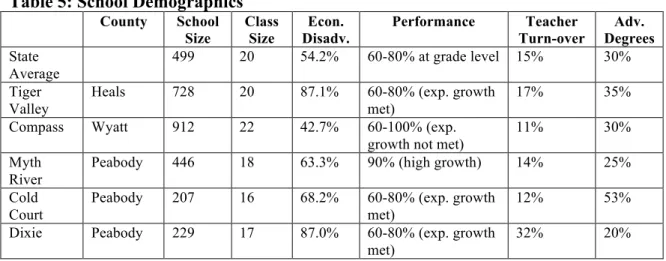
Table 5: School Demographics………..…… 63
Table 6: Teacher Demographics……… 63
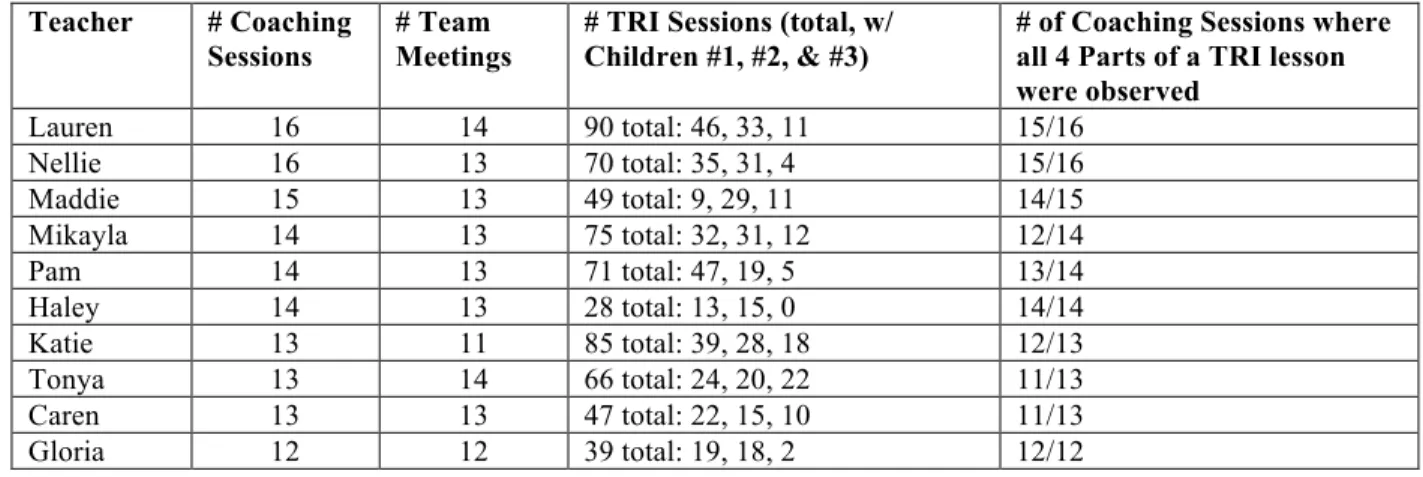
Table 7: Fidelity Data……….………... 65
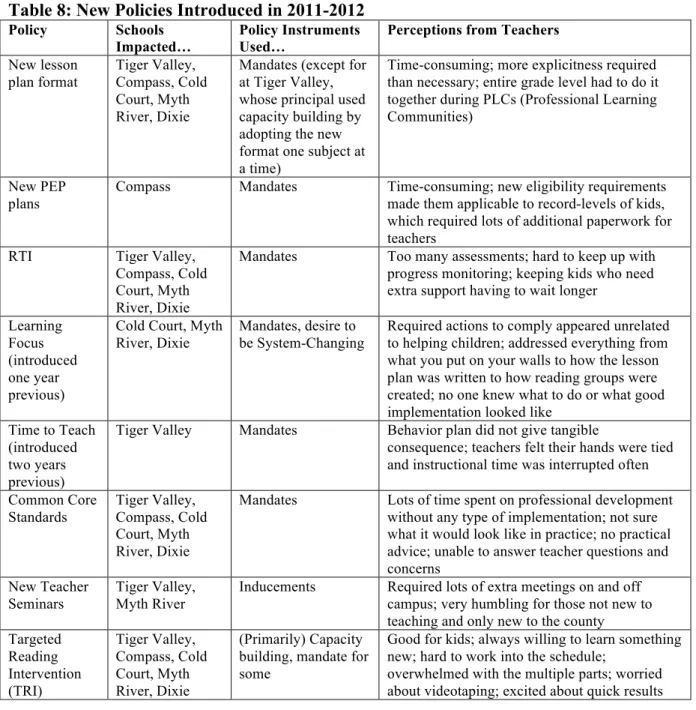
Table 8: Additional Policies Being Implemented……….. 85
Table 9: Stakeholders’ Influence on Implementation……….……... 102
Table 10: Student Achievement Scores as Determined by the Teachers…….……… 112
Table 11: Student Achievement Scores as Determined by the Woodcock-Johnson………. 121
List of Figures
List of Abbreviations
CTOPP Comprehensive Test of Phonological Processing DIBELS Dynamic Indicators of Basic Early Literacy Skills DRA2 Developmental Reading Assessment – 2nd Edition ECLS-K Early Childhood Longitudinal Study - Kindergarten
ESEA Elementary and Secondary Education Act
IEP Individualized Education Programs
IES Institute of Education Sciences NCLB No Child Left Behind
NRP National Reading Panel PD Professional Development PEP Personalized Education Plans
PPVT-III Peabody Picture Vocabulary Test – 3rd Edition RTI Response to Intervention
Chapter 1: Introduction
“What’s more important than a child learning how to read? By the end of first grade, there is no skill more essential for later school success than knowing how to read.”
- Intervention Director of the TRI
Learning to read is essential to later academic success (Whitehurst & Lonigan, 2001). Research has shown children who obtain early literacy skills have higher levels of academic achievement, reduced grade retention, higher graduation rates, and enhanced productivity in adult life (Strickland & Riley-Ayers, 2006). They acquire more content knowledge and develop a more comprehensive vocabulary (Cunningham & Stanovich, 1998, cited in Whitehurst & Lonigan, 2001). For children who do not develop early literacy skills, the consequences are severe. Nine out of ten children who are not meeting standards by the end of first grade are still struggling at the end of fourth grade (Juel, 1988). They are at higher risk of dropping behind in other academic areas (Chall, Jacobs, & Baldwin, 1990), as most learning in school depends on the ability to read and understand informational text
(Armbruster, Anderson, & Meyer, 1991) And, one in six children who are not reading well in third grade will not graduate from high school on time (Hernandez, 2011), nor will they be able to participate in a society that is technically advanced with informative text if they do not possess expository reading skills and strategies (Gambrell, 2005). It seems those who fall behind, stay behind (Snow, Burns, & Griffin, 1998).
instruction) and an additional $100 million per year for Early Reading First (pre-reading development of preschool-aged children) (Teale, Hoffman, Paciga, K., Lisy, Richardson, & Berkel, 2009). While the intentions of these two policies were to raise student achievement while imposing accountability standards, as measured through the yearly progress of school’s standardized achievement scores using disaggregated data (Edmondson, 2004), and train teachers to adopt a particular set of skills, it also reaped criticism. Amongst the complaints were that it had minimal impact on student achievement for poor and minority children (McGill-Franzen, 2010); it promoted an image of a reader as being one who could orally decode at least 120 words per minute without promoting the need for proficient readers to draw upon resources and context to understand and question what they are reading (Stevens, 2003); and it encouraged classroom teachers to use “comprehensive research-based reading programs” that essentially relied on a scripted and synthetic phonics-based approach with direct and explicit instruction that did little to encourage differentiation and/or data-based decision-making.
Compelled to create a reading program that truly helped struggling readers while also
sizes ranging from .4 to .7 on student reading gains for struggling readers, as well as reading gains for non-struggling readers with effect sizes of .3 to .4 over one year (Vernon-Feagans, L., Kainz, K., Hedrick, A., Ginsberg, M., & Amendum, S. 2012, in press). These preliminary results then led to a goal three (efficacy) grant to continue to support research, specifically looking at understanding whether or not with two years of teacher support and coaching, the TRI could improve teacher classroom practices in the teaching of reading, which would be linked to reading gains for struggling and non-struggling readers and help the struggling reader actually catch up to their non-struggling peers (Vernon-Feagans, 2010). For as Joyce and Showers (1995) assert, “The key to student growth is educator growth. They happen together; each enhances the other. Altogether, a ‘win, win’ proposition” (p.xv).
This dissertation was inspired by the most recent study of the TRI and uses elements from traditional and critical policy analysis to focus on sharing teachers’ voices as they implemented the intervention. In addition, this dissertation investigates the teachers’
perceptions of their role, influence, and understandings of success during the implementation of the instructional policy, the TRI.
Approaching the Question
To answer the question, “What perceptions do teachers have of their role in policy implementation?” the TRI was examined as an instructional policy. This was, in part, because
Thus, examining the TRI as a policy sheds light on the broader question, “What are teachers’ perceptions of their and other stakeholders’ roles and influence during the implementation of an instructional policy?” as they too, are involved in what Rosen refers to as “the myth-making process”.
While a policy is often regarded as a plan of action or something the government does (Taylor, Rizvi, Lingard, & Henry, 1997), it may also be defined and regarded as an
unofficial, nongovernmental, or informal practice that shapes behaviors and outcomes (Marshall & Gerstl-Pepin, 2005). The TRI shapes teaching behaviors and student outcomes and does so using traditional policy instruments. Mandates are put forth so that all teachers are following the same basic sequence with the same activities; inducements are used by supplying the teachers with the materials and technology they need to put the policy into action; capacity building occurs by providing professional development and showing tangible benefits quickly; and system changing occurs, as teachers are unable to produce the same desired results without engaging in the TRI practices. Hence, the TRI is a policy.
the new policy, but the frame for those changes was the pedagogy that had been pressed by the older policies” (p.334)
This dissertation is also changing the frame for research on the TRI. Since the larger TRI study is already using traditional quantitative measures to measure teacher and student growth, this study is a deliberate attempt to examine the implementation of the TRI with a different perspective, working under the auspices that “Policy is largely what practitioners perceive it to be rather than some external document or legislation” (Jennings, 1996, p.15). It will use elements of policy analysis, which will provide a better understanding of how policy works, how it leads to change, and will also bring stakeholders other than “traditional
policymakers” into the conversation. Traditional Policy Analysis
value-neutral, grounded in the essential facts provided by the most systematic observation possible” (1997, p.18), and is reflected in the questions of literacy educators when they ask “What works?” (Edmondson, 2001).
However, while a traditional perspective may provide what appears to be
straightforward and objective answers, it does not acknowledge the policy’s origins, social and historical contexts, values and ideologies, power and prestige, and its reasons to be (Edmondson, 2004). This is problematic, as it then fails to acknowledge what led to the creation of the policy, how it was created, and the reasons for why it contains certain components that at the time of creation and implementation, made it quite unique. In more simple terms, one will not be able to fully understand the policy without further explanation.
It is also problematic to rely solely on traditional policy analysis because
symbolically, it does not acknowledge or take into account the various stakeholders’ voices, leaving assumptions of power unexplored. From a pragmatic angle, not taking into account the subjective values and beliefs of those involved in the implementation ignores the process in which inputs are then transmitted into outputs - which is the crux of the TRI. The existing beliefs and capacities of its implementers shape the way they interpret, adapt, and transform reforms as they put them into place (Cohen & Ball, 1990, Tyack & Cuban, 1995). As such, “Any examination of policy implementation must include an analysis of the value system of the people entrusted with administering the implementation, because their values affect the level of resource allocation, political support, and monitoring that occurs”
To understand how the TRI works and came to be, an additional approach is needed, as the focus shifts from “What works?” to “The policy works for what or for whom?” (Edmondson, 2001, p. 620). In contrast to functionalist/traditional policy analysis, critical policy analysis observes politics in action, traces economic and social forces, and the interactions between people, events, and interests; it notices who is making the policies, whose interests are served, and how power is removed from others (Taylor et al., 1997). It also looks at “what has been, why, and what might be” (Edmondson, 2000, p.114) and is at once historical and at the same time anchored in the subjective experiences of the moment (Prunty, 1984). Given that this study will focus primarily on the perceptions of the teachers, a marginalized group whose voices have historically not been heard nor acknowledged, elements of critical policy analysis will be called upon to help explain the process in which the TRI was implemented as well.
This is not to say that critical policy analysis replaces traditional policy analysis. For this study, elements from both traditional and critical policy analyses will be used, as they allow for a more comprehensive understanding of the policy being researched. According to Michelle Young (1999),
This practice [using two approaches] may help us better understand the policy problems we study; the relationships among policy discourse, planning,
implementation, and practice; the dynamics of policy contexts; and the impact of policy and practice on individuals… using more than one frame will increase the trustworthiness of research findings because each frame serves as a check on the other. Thus, inaccurate assumptions and problematic interpretations should be more easily revealed, and tenets formerly accepted as given are more likely to be
Using both approaches will also acknowledge that stakeholders – those involved in the implementation of the TRI - may perceive and define success in terms more typical to those within a functionalist/traditional perspective or those that operate within a critical view. Study Design and Overview
This study used qualitative methods and data collected by myself, a University-based literacy coach employed by the TRI research grant, who worked with thirteen 1st grade teachers (ten of whom participated), five principals, and the TRI research team (n=5) during the 2011-2012 school year. The teachers and principals came from five schools in three counties in the southeastern United States that participated in the larger Targeted Reading Intervention, all of which were considered rural, low-wealth schools. The research team and I are located at an Institute of Child Development with strong connections to a large university in the southeastern United States. Data was collected primarily through semi-structured interviews but was also triangulated with focus groups, school climate survey responses, correspondences between myself and the teachers, and field notes/preliminary analyses. The data was then analyzed using elements from both traditional and critical perspectives to examine teachers' perceptions of their and other stakeholders' roles and influence during the implementation of an instructional policy. Particular attention was paid to what might have impacted the teachers’ perceptions, answering the research questions:
1) What perceptions do teachers have of their role in policy implementation?
a. What impacts teachers' perceptions of their role in policy implementation?
2) What influence (real and perceived) do various stakeholders (e.g. PIs, principals, coaches, teachers), have on policy implementation and on its success?
Chapter 2: Literature Review
The policy analysis framework suggested by critical policy analyst Sandra Taylor and colleagues (1997) recommended one consider 1.) the context of the policy, meaning the economic, social, and political factors leading to the release of the policy and the initiatives it was built on; 2.) the text, looking at word level, text features, and what is not included; and 3.) the consequences or the multiple interpretations or ongoing character of the policy implementation. Following Taylor’s suggestions, this literature review will address all three components, the context, text, and consequences, as they pertain to the Targeted Reading Intervention (TRI).
These components will be addressed while situating the current study amongst past policy and research efforts that address the areas of 1) quality literacy instruction, 2) early intervention, 3) professional development, 4) teacher change, 5) teacher perceptions, and 6) policy implementation. The literature will help answer the research question, “What are teachers' perceptions of their and other stakeholders' roles and influence during the implementation of an instructional policy?”
“The educational foundations of our society are presently being eroded by a rising tide of mediocrity that threatens our very future as a Nation and a people.” (Gardner, 1983, p.1)
In the early 1980s, the federal government began to look at standards and
accountability measures in education. To assist the process, President Reagan created the
National Commission on Excellence in Education, which culminated in the report, “A Nation
at Risk” (U.S. Department of Education, 1983). The report revealed a decline in achievement
scores, literacy and graduation rates in schools, and that soon, the U.S. would not have the
capacity to fulfill the competitive workforce because of the poor quality of education its
citizens were receiving. Amongst the most astonishing of statistics was the finding that some
23 million American adults were functionally illiterate and that among minority youth,
functional illiteracy ran as high as 40% (1983). To address the problematic findings, the Commission outlined recommendations for change in five areas: curriculum content, standards and expectations of students, time devoted to education, teacher quality, and educational leadership and the financial support of education (www.ed.gov).
As a result, the education system has seen a variety of maneuvers that hail back to
those recommendations, including the Improving America’s Schools Act of 1994 and the
more recent adoption of the Common Core Standards (CCSSO, 2009), which standardize
curriculum content across the country in literacy and math; the adoption of No Child Left
Behind (NCLB) (2001), a policy intent on making sure every child hits benchmarks while
holding schools accountable by making scores and approaches transparent to the public; a
range of experiments around the number of days or hours students spend in school; an
interest in tying performance quality to student achievement scores for teachers; and the Race
While a Nation At Risk heightened peoples’ awareness and “sounded the alarm,”
(Marshall & Gerstl-Pepin, 2005) change has not come about in educational outcomes. The
2011 Nation’s Report Card reported that only 34% of fourth graders scored at or above
proficiency in reading, a rate that has not changed since 2009 (Harris, 2011). This means two
thirds of students did not finish fourth grade with essential reading skills (Hernandez, 2011).
Among those reading at a basic or below basic level were children whose families have more
risk factors, which include those living below the federal poverty line (National Center for
Education Statistics, 2005). According to the U.S. Census data, this includes 16.4 million
children under the age of 18 (2010). Adding to this onslaught, the Annie E. Casey
Foundation reported that overall, 22% of children who have lived in poverty do not graduate
from high school, compared to 6% that have never been poor (Hernandez, 2011). This rate is
highest for poor Black and Hispanic students, with dropout rates nearing 31% and 33%
(2011). As the follow-up report, “A Nation Accountable, 25 Years After A Nation At Risk”
proclaimed, “If we were ‘at risk’ in 1983, we are at even greater risk now” (2008, p.1). Research as a policy lever. Despite the solemn statistics, efforts have been made to change the public education system. One important sign of progress is the assemblage of rigorous research on what practices work in the classroom (U.S. Department of Education, 2008). Since the 1960s, educational researchers have been suggesting that a lack of teachable literacy skills, not cognitive skills, are to blame for the poor literacy outcomes typically
associated with children from low-income families and that those outcomes can be changed.
biggest problem for low-income children while Moats (1998) concluded several years later
that if children receive instruction in phonological and alphabetic skills within the context of
decoding words, they are more likely to learn how to read. Whitehurst and Lonigan (1998)
suggested children who have a better grasp of the foundational skills of phonological
processing, print awareness, and oral language learn to read sooner and better than those who
do not.
Findings such as these were synthesized and released in a report by the National
Reading Panel (NRP) in 2000. The report identified five critical domains of reading
instruction and made recommendations toward implementation: teach phonemic awareness
in kindergarten and first grade, focus early on phonics, promote fluency through oral reading practices, attack vocabulary development through a variety of approaches, and teach reading
comprehension through explicit instruction (Pearson & Hiebert, 2010). These
recommendations were then promoted by Reading First, part of NCLB federal accountability
legislation that emerged with the reauthorization of the Elementary and Secondary Education
Act (ESEA) in 2001. Thus, research was turned into a policy advocacy tool.
How did this occur? The elements of quality reading instruction, as recognized by the
NRP, made their way into an instructional policy through the opening of a policy window by
Early literacy intervention efforts also made their way through this particular policy window. Some of the programmatic elements of early interventions identified during this time were research-based as well, including training in phonological awareness and the alphabetic principal (Scarborough, 2001), early, intensive, and individualized remediation through daily one-to-one tutoring (Vellutino & Scanlon, 2001), and a focus on developing teachers’ knowledge of appropriate levels of task and text difficulty (Pikulski, 1994).
Additionally, after evaluating five school-based early intervention programs designed for the early elementary years, it was recommended that students receive supplementary quality and coordinated instruction in individual or very small group settings; that students read texts selected to be simple enough so they were successful reading them and that students read the texts several times to develop fluency. It was also recommended that the new reading
programs include phonemic awareness, phonics instruction, and writing activities; that ongoing assessment monitor student progress; that the programs encourage communication between home and school; and that the reading programs provide continuous professional support to teachers (Pikulski, 1994).
schools and homes, and a scarcity of credentialed teachers (2005). The Targeted Reading Intervention (TRI) answered the call, securing funds through IES to develop a program designed to help classroom teachers in rural communities work with their struggling readers -- providing one solution for two problems by delivering specially designed instruction for struggling readers that was enhanced by giving the teachers of these students located in rural settings access to high quality professional development and sustained support as they delivered the reading intervention.
The Text of the TRI
Continuing to use the framework recommended by Taylor, this section will examine the text of the instructional policy, the TRI, paying particular attention to text features and what is not included. As such, it will examine the main parts of the TRI including the emphasis on the key components of the instruction provided to struggling readers, the professional development provided to the teachers, the theory of teacher change it was built upon, and the role coaching plays during implementation. Just as important, the missing elements of the larger TRI study also will be discussed, mainly the importance of capturing the teachers’ perceptions.
The TRI also utilizes a suggested set of evidence-based reading activities that reflect the five areas deemed critical by the NRP (Vernon-Feagans, Gallagher, & Kainz, 2010, Vernon-Feagans & Ginsberg, 2011). These activities are delivered on a daily basis in fifteen-minute one-on-one sessions performed within the classroom with the struggling reader. They include Re-Reading for Fluency, where the child re-reads a book she/he read at least once the previous day, sometimes with the teacher modeling fluent, expressive reading; Word Work, which typically includes activities that reinforce skills needed for decoding like letter-sound knowledge, segmenting and blending words, and sight word recognition, all in the context of words and text; Guided Oral Reading, where the teacher matches a text to the student based on her/his word identification, motivation, comprehension, or fluency needs and provides moment-by-moment coaching; and Extensions, which increase the child’s exposure to print through activities performed independently (Amendum, Vernon-Feagans, & Ginsberg, 2011). Furthermore, because research recommends that literacy interventions provide more
The literature base on what components lead to student achievement appear to concur with the strategies utilized by the TRI team. In the book, Visible Learning (2009), a synthesis of 800 meta-analyses of 50,000 studies related to student achievement, author and researcher John Hattie identifies these teaching approaches as being the most successful at increasing student achievement scores: paying deliberate attention to learning intentions and success criteria; setting challenging tasks; providing multiple opportunities for deliberate practice; knowing when one (teacher and student) is successful in attaining these goals; understanding the critical role of teaching appropriate learning strategies; planning and talking about
teaching; and ensuring the teacher constantly seeks feedback information as to the success of his or her teaching on the students. Given that the TRI contains many of these features -- high expectations for students, daily opportunities for practice, weekly consultations with a coach followed up with written feedback via e-mail -- the expectation is that the TRI will improve literacy growth, as measured by student achievement scores.
In addition to looking at teaching approaches, Hattie (2009) also identifies other influences on student achievement that are associated with successful gains in student learning by measuring effect sizes. He maintains that an effect size must be at least .40, as this effect size summarizes the typical effect of all possible influences in education. His analysis looks at 137 different influences, of which a number of them directly address issues the TRI has incorporated into its intervention that go beyond what the teacher does during a lesson: Teacher subject matter knowledge (.09), teacher-student relationships (.72),
number of items contained within the larger study that are associated with high effects sizes are numerous. Of particular notice are the high effect sizes for teacher clarity and feedback, which are cultivated through professional development and coaching sessions, which are also a key component of the TRI.
Professional development. The specialized knowledge development that is cultivated in teachers is a feature that sets the TRI apart from other literacy interventions. This kind of pedagogical content knowledge is developed through professional development (PD), which IES refers to as “in-service training of or tools for current instructional
personnel” (IES, 2009). “Recognizing that schools can be no better than the teachers and administrators who work within them, policymakers emphasize professional developments as a key component in nearly every education improvement plan” (Guskey & Sparks, 2004, p.12 as cited in Morewood & Bean, 2009). Professional development is administered and promoted through several different mechanisms during the implementation of the TRI. First, a three-day Summer Institute is held (previous to the start of implementation within the classroom), where the teachers learn the diagnostic strategies for working with struggling readers through videos, modeling, and role-playing. In addition, teacher guides, word work materials, leveled books, laptops, and videos are given to the teachers to use throughout the year. A two-day follow-up Summer Institute is held between the first and second years of implementation as well.
student’s most pressing need, and then make a plan for how to address that need. During this time, the literacy coach helps the teachers learn to think diagnostically so they internalize a more thorough understanding of reading development and instruction (Vernon-Feagans et al., 2009). A follow-up e-mail with specific positive feedback is also sent after the coaching sessions end. These two practices are key, for “Without companionship, help in reflecting on practice, and instruction on fresh teaching strategies, most people can make very few changes in their behavior, however well-intentioned they are” (Joyce & Showers, 1996, p.6).
Weekly team meetings, where all of the teachers at the school meet with the coach via web-cam for a 30-minute check-in, and twice a semester online workshops provide the last two forms of professional development (PD). The team meetings provide a time for the teachers to collaborate, problem-solve, and report on how the implementation of the TRI is going. In addition, the coach helps facilitate conversations that help the teachers understand how the students’ daily performances and their informal assessments drive their instruction and identify which activities might be most helpful in meeting their students’ needs.
The workshops, the last form of PD, allow for more in-depth conversations and demonstrations around needs identified by the teachers. During these workshops, the coaches might do an abbreviated version of a lesson or activity, provide clarification on how to approach or understand a frequently discussed issue or behavior encountered by the teachers during their TRI sessions with their struggling readers, or show videos of teachers
teachers to use diagnostic reading information to individualize instruction; to provide a place where teachers can learn by doing; to highlight the importance in using one-on-one teaching sessions on a daily basis to help change the teachers’ practice and knowledge; and to give teachers an extended experience over the year (Vernon-Feagans et al, 2009). The
professional development activities reflect and facilitate six characteristics of teachers’ professional lives and workplaces that Langer (2000) identified to be associated with improved student achievement in reading, writing, and English, including orchestrated, coordinated efforts to improve student achievement; teacher participation in a variety of professional communities; structured improvement opportunities that offer teachers a strong sense of agency; valued commitment to the profession of teaching; a caring attitude toward colleagues and students; and a deep respect for livelong learning (as cited in Hamann & Meltzer, 2005).
These characteristics are what the research team believe set the TRI apart from similar research-based professional development programs, including the Garet, Cronen, Eaton, Kurki, Ludwig, Jones, Uekawa, Falk, Bloom, Doolittle, Zhu, & Sztejnberg (2008)
study, The Impact of Two Professional Development Interventions on Early Reading
Instruction and Achievement. This study, which is the largest randomized control trial to date
of early reading interventions, tested the efficacy of professional development in early literacy instruction. Also funded by IES, the Garet et. al study examined the results of the implementation of two research-based professional development models. The first model used a content-focused teacher institute series that began in the summer and continued
selected in 90 high-poverty schools and six school districts. At the end of the year, positive impacts were noted in teacher’s knowledge of scientifically based reading instruction in both groups but neither intervention resulted in significantly higher student test scores at the end of the year or the year following the treatment.
A review of the research completed by Anders et al. (2000) found similar findings. While professional development affects teacher beliefs and teacher knowledge, it does not necessarily impact teacher improved instruction and student achievement scores (Morewood & Bean, 2009). This review also indicated that teacher beliefs about professional
development are impacted by the amount of choice they have in deciding what to attend and if they see a positive change in student achievement. While this may not directly lead to a change in achievement scores, it is important in creating teacher change. For, “ it is not sufficient to establish policies...unless there is a parallel and consistent effort with effective professional development designed to alter, modify, or transform the practices, attitudes, beliefs, and perceptions of teachers” (Fullan, 1982 as cited in Gatt, 2009).
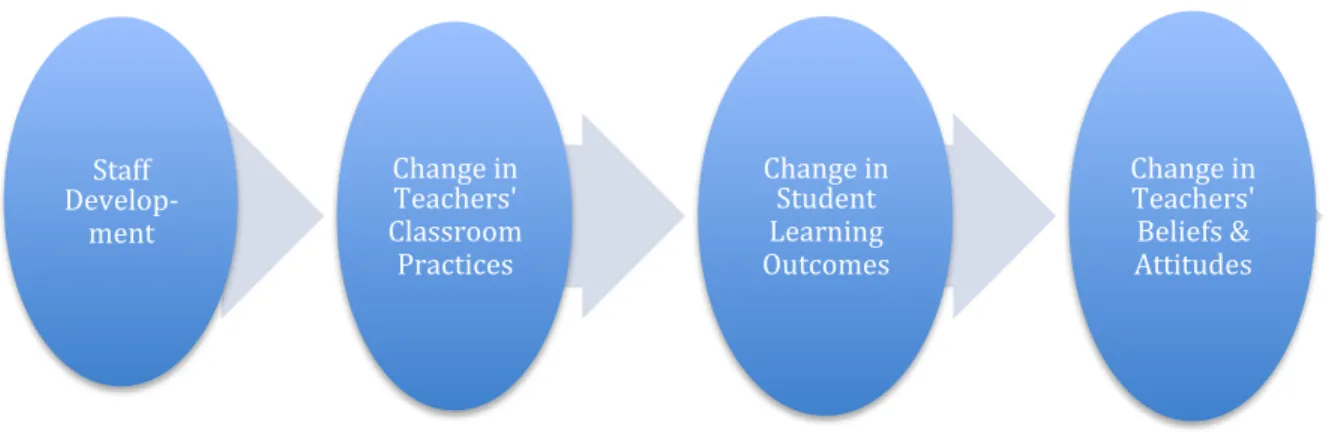
curriculum, instruction, or technology, changes supported by intensive staff development” (Joyce & Showers, 1995, xiv). Guskey (1986, 2002) recommends using professional development programs to systematically bring about change within the classroom practices of teachers, their beliefs and attitudes, and in student learning outcomes by keeping in mind what motivates teachers to engage in staff development and the process in which teacher change typically occurs.
Guskey (1986) proposes that this process of change starts with staff development, which then affects the teachers’ classroom practice. If and when the teachers’ practice changes student-learning outcomes, only then will there be a change in teachers’ beliefs and attitudes, leading to long-term teacher change.
Figure 1: Guskey's Model of the Process of Teacher Change (1986)
To help facilitate the change process in teachers, Guskey recommends accepting that change is a gradual and difficult process for teachers, that teachers need to receive regular feedback on student learning progress, and that continued support and follow-up after the initial professional development is key (1986). Keeping this in mind, the implementation plan of the TRI extends over the course of two years. Its structure provides teachers with effective strategies and the support of a coach to help them recognize what the students’ needs are so teachers choose and implement activities that satisfy those needs. The coach
Staff Develop-‐
ment
Change in Teachers' Classroom
Practices
Change in Student Learning Outcomes
also helps the teachers recognize student change as it occurs. The expectation then is that once the teachers see change, they will feel successful and motivated to continue
implementing the TRI on a regular basis, as activities that are successful are more likely to be repeated than those that are not (1986). If the teachers do not see a change, especially in student outcomes, there is less inducement for them to change their beliefs, attitudes, or teaching practices (Lamb, Cooper, & Warren, 2007).
While Guskey’s model provides a model in which to consider the process of teacher change, he also recommends looking at teacher motivation, the second of two crucial factors he suggests most instructional policies ignore to their detriment. Supporting this notion, McLaughlin (1987) surmised, “Individuals responsible for carrying out a policy act not only from institutional incentives, but also from professional and personal motivation” (p.174). Achievement Attribution Theory helps demonstrate how motivation makes an impact by examining how one reacts to a success or failure as a function of causal attributes (Weiner, Frieze, Kukla, Reed, Rest, and Rosenbaum, 1971 as cited in Frieze, Francis, & Hanusa, 1983). Causal attributes fall into two categories, performance or personal data, which take into account student success and evaluation of one’s teaching, and situational aids or constraints, like class size and goal structure (Ames, 1983). These causal attributes may act as a mediator of future performance by determining which values are most prominent, which then influence achievement-related affect, behaviors, and cognitions (Ames & Ames, 1984). “If students, teachers, or administrators believe that the results of an examination are
Coaching. While causal attributes may act as a mediator of future performance, the TRI contains another potential mediator or motivator – a literacy coach. A literacy coach is someone who focuses on providing staff development in reading and/or language arts to teachers, usually by modeling appropriate strategies, observing lessons in classrooms,
discussing various strategies with teachers, and providing additional PD (Cassidy & Cassidy, 2007). They are often charged with figuring out how to draw out the best in teachers while also helping them make changes in their thinking and teaching (Rainville & Jones, 2008). In the TRI, teachers and coaches begin working together during the Summer Institute and continue to work together for up to two years. The teacher and coach meet on a weekly basis for one-on-one coaching sessions, in which the coach observes the teacher work with her struggling student via web-cam and then debriefs the lesson with her. The teacher and coach meet during site-based team meetings as well. This relationship differs from most other reading interventions, as several other studies report that many literacy coaches are only able to spend a fraction of the time recommended actually working with teachers. Sometimes the fraction is as low as 15% of their total time, as opposed to the recommended 60-80% (Moss, Jacob, Boulay, Horst, & Poulos, 2006) because of other obligations, like spending more time in meetings with others and managing data (Deussen, Coskie, Robinson, & Autio, 2007).
For not only are they receiving professional development on a weekly basis, which allows them to reflect on practice, collaboration, and active learning (Marsh et al., 2011), they also have the opportunity to interact with their coaches in a type of collaborative consultation model, which evidence suggests can have positive effects on both teacher and student outcomes (Evans, 1991 as cited in Denton, Swanson, & Mathes, 2007). In the TRI, these interactions are built around a structure that delivers performance feedback to teachers, including praise for facilitating activities with high fidelity and “responding to the response”, information about the students’ behaviors or skills, information about their teacher behaviors, identification of implementation errors or activities that might need tweaking, and problem-solving for future lessons. This format is similar to several studies that examined the implementation of a reinforcement-based treatment by the classroom teacher where the use of process and outcome feedback from a consultant resulted in substantial increases in implementation (Noell, Witt, LaFleur, Mortenson, Ranier, & LaVelle, 2000). So, even though there is little empirical evidence on the actual student and teacher outcomes, research does support the fact that using a coach/consultant may have an impact on implementation itself.
none for implementation (Hall, 1992). The missing factors that affect implementation
include, among others, the policy context in which the TRI must be implemented, differences within individual teachers’ beliefs, attitudes, and capacities, what teachers perceive to be their role during implementation, and the teachers’ perceptions of success. This is problematic since, “Implementers at all levels of the system effectively negotiate their response, fitting their action to the multiple demands, priorities, and values operating in their environment and the effective authority of the policy itself” (McLaughlin, 1987, p.175).
The first big issue is that the current research study on the TRI does not have the resources needed to properly acknowledge the policy context in which implementation occurs, even though researchers like Marzano state that the implementation process is “a highly contextualized phenomenon” (2003, p.158). In their work looking at successful school improvement initiatives, Louis and Miles (1990) identified contextual factors that influenced the implementation of improvement initiatives. Externally, they recognized the district level context, the role of the state, and community factors; when examining the internal context factors, they described school factors such as staff cohesiveness, preexisting attitudes and beliefs, and elements of school leadership (1990). While attempts may be made to capture individuals’ attitudes and beliefs through surveys or questionnaires, those attitudes and beliefs are affected by additional interactions with the school ecology and school culture (Boyd, 1992). How can those be adequately captured in a quantitative fashion when they are constantly changing?
policies and guidelines and recommendations from professional organizations, all of which will have an effect on how the TRI is implemented (Goldstein, 2008). As educational change expert Gene Hall stated,
More and more curriculum innovations, rules, regulations, policies, and
prescriptions are being laid upon teachers, principals, and schools. At the same time, the demographic changes in the student population have increased complexity
geometrically. Multiple innovations are being adopted at the same time. There has been a complete failure of the top, middle, and bottom to accept the fact that new things, when added to an already full vessel, have little lasting effect. Until we start understanding that there is a finite amount of activity that can be accomplished at any one time, we are going to continue to have system overload. System overload brings with it a whole new round of symptoms in addition to implementation failure…(1992, p.894)
This could have particularly negative implications for the TRI, as school-based practitioners that are overwhelmed and undersupported are often resistant towards new ventures as they wonder, “What will it be this year?” (Hall, 1992, p.879).
Teachers must also negotiate the implementation of the policy around the
expectations of other stakeholders like principals and families (Goldstein, 2008). It is well documented that principal’s leadership styles affect teachers’ success in implementation; that their ongoing active support is essential; and that as leaders, the principals must have an understanding of the systemic nature of the change process (Hall, 1992). As Hargreaves stated, “Significant school wide change is impossible without effective school leadership” (2001, p.175). However, in the current study of the TRI, there is no systematic way in which the teachers’ perceptions of the principals’ influence is recognized or measured.
Beyond the contextual differences that are not accounted for, there are also
definition of the policy and its implications (Hall, 1992). The self-constructed definitions will later have an impact on how the policy is played out (Marshall & Gerstl-Pepin, 2005) for “beliefs serve as a filter for what is perceived” (Pajares, 1992 as cited in Gregoire, 2003, p. 150). In a qualitative study conducted by Fairman & Firestone (2001) on changes in teachers’ classroom practices as a result of a state-mandated math curriculum reform, results indicated that the teachers’ individualized beliefs about the subject matter and student learning had more of an effect on their choices of instructional strategies than the curriculum or lessons. The result? Variance in implementation, which is problematic given that mandates are meant to create uniformity and reduce variation (Marshall & Gerstl-Pepin, 2005).
In addition, variance within the context may lead to variance in teachers’ sense of efficacy, as research suggests efficacy is affected by the support, structure, and efficiency within their environment (Nunn & Jantz, 2009). This will also have an impact on
implementation, for as teacher efficacy increases, the perception of responsibility for and capacity to create change in outcomes also increases (Guskey & Passaro, 1994). However, if teachers fail to understand what role they might play in relation to the outcomes, a variety of issues may arise during implementation. Behavior may not be monitored effectively or efficiently (Spillane, Reiser, & Reimer, 2002); implementers may find policy signals unclear and thus not attend to them; and if participants do not understand how the policy is meant to change their behavior, there may or may not be a change in practice (2002). This is because “people generate what they interpret” and they create the environment and select the cause and symbols they interpret (Weick, 1995, p.34).
reform (Marshall & Gerstl-Pepin, 2005), the TRI is trying to change teachers’ classroom practices and knowing how the implementation is being perceived by those at the ground level is essential for “What is actually delivered or provided under the aegis of a policy depends on the individual at the end of the line” (McLaughlin, 1987, p.171) and “essentially, how a policy is viewed, understood, and experienced only becomes real when teachers attempt to implement the policy” (Smit, 2005, p.298). It is particularly problematic that this issue is currently not taken into account by the larger study when applying Guskey’s theory, which hangs on the premise that teachers’ beliefs will change when they feel their students’ outcomes have successfully been changed.
All of these problems – not having the resources to take into account the teachers’ contexts, the differences in the teachers’ beliefs and capacities, the variance in their
understandings of their role, and not knowing what the teachers’ perceptions of what success look like– demonstrate a final issue. The current research on the TRI is a highly quantitative randomized control trial that cannot explicitly take into account teachers’ voices. “When teacher perceptions of the world of schools are left unquestioned, the effects of power are left invisible” (Kincheloe, 1995, p.83). Teachers’ voices need to be heard during the
implementation and evaluation of the TRI. Not only will sharing their voices promote a sense of ownership of the TRI that will hopefully affirm their commitment to using the TRI with their struggling readers once the research study is completed (Lamb et al., 2007), but it provides validation that their voices and their influence are important. And they are important, for as Linda Darling-Hammond (1990) put it,
better information about the outcomes of policy initiatives, but it may also help improve policymaking itself, by providing us deeper insights into those aspects of teaching and schooling with which new policies must come to terms. (p.341)
When asked about the critical issues facing this nation, researchers Green and Dixon (1996) point out that as the ones implementing policies, teachers are directly responsible for shaping and responding to present and future demands. Thus their voices should be an important part of the decision making, as they are the policy-makers within their classrooms, the real central change agents with a consistent presence in the classroom environment (Han & Weiss, 2005). This is at the crux of what the creators of the TRI believe -- that the teachers have the power to make change; by giving them voice through this complementary study, hopefully the teachers will believe it as well.
The Consequences
Successful change processes occur not with the development of the policy or the creation of new curriculum, but with a strong implementation plan (Hall, 1992). Thus to examine results, effectiveness, compliance and resistance, and the outcomes or consequences of a given program or policy, studying the implementation plan works best (Marshall & Gerstl-Pepin, 2005, Hall, 1992).
Policy instruments. When using an implementation approach, there are a variety of angles one may adopt to aide in analysis. One that is particularly relevant to the TRI
addresses policy instruments. Policy instruments traditionally refer to mandates (rules governing individuals, intended to produce compliance), inducements (money goes to individuals in return for certain actions), capacity building (money for investment in
these during implementation. Because it is a randomized control trial, teachers are not given a choice if they want to do it. If teachers are chosen, they are subject to the mandate.
Inducements are provided to the teachers through cash rewards for completing various surveys and assessments. Capacity building is promoted through the coaches, who are responsible for helping the teachers learn how to use diagnostic information to make decisions so that they continue to carry out the activities once the coaches are gone. And, system building occurs as the teachers start making more of the decisions on how to address their students’ most pressing needs on an independent basis.
Stone (1997) has also created an additional list of policy instruments, including rules (impose obligations and duties), facts (information, rhetoric, or propaganda), rights (govern relationships and coordinate behaviors), and powers (which can be altered by who gets to make the decisions) (as cited in Marshall & Gerstl-Pepin, 2005). These can also be seen in the implementation of the TRI, as teachers are told what activities to do and how often to do them (rule); they hear much about the consequences that await children should they not learn how to read during the summer institutes (facts); they follow the suggestions that are
generated by assessments (rights); and once the teachers have proven they understand the activities and why they are doing them, the power is transferred to them.
federal level but also failed to take into account capacity building, for example, adding in requirements for teacher’s licenses, degrees, and competencies in certain subject areas without any type of plan or system to help teachers obtain such credentials (Welch-Ross, Moorehouse, & Rathgeb, 2006). With such a variety in approaches and instrument usage, one is reminded that not all policies are created equal.
Micro-interactions. Implementation itself can also be evaluated through the organizational/cultural processes used throughout (policy slippage, loose coupling, unintended consequences, etc.) and/or the key policy mechanisms (school finance, testing and assessment, curriculum materials, etc.). While analyzing the policy mechanisms used may help identify the values being pursued by the creators of the policy, educational researcher Milbrey McLaughlin (1990) suggests that analysis should focus on the micro-interactions at the local level amongst those implementing the policy.
The local level is where education systems’ lowerarchies and “street-level
amongst local educators in how they were implementing the new policy, which was intended to create a uniform and fair process.
However, the changes street-level bureaucrats make during implementation are not always considered to be negative. The Rand Change Agent study (1973-1978), a seminal study that considered the micro-interactions amongst stakeholders, found effective projects were characterized by mutual adaptation by the local implementers, as opposed to uniform implementation. In fact, local variability was not the exception but the rule, as it signaled that the street-level bureaucrat was integrating the policy in ways best suited to them (1990). The Change Agent study also found that implementation dominates outcome, for local choices about how to put a policy into practice had more significance than the technology, program design, funding levels, or governance requirements. In the end, the study also concluded that “change continues to be a problem of the smallest unit” (p.12) and that policy cannot mandate what matters, as the presence of the will and motivation of the stakeholders to embrace policy objectives is essential, yet also contingent on the attitudes of the leaders. While a revisit to the study would reveal later that perhaps it overemphasized the importance of initial motivation, underemphasized the role external agents can play, and was based on the assumption that teachers responded to policy objectives when they may view them as part of a broader environment, the lessons learned through the Rand Change Agent study should be kept under consideration because of the dramatic role it had in re-framing policy
areas of influence, which can be arranged in a model that visually demonstrates their hierarchical relationship, like in Marshall, Mitchell, & Wirt’s model, Hierarchies of Power and Circles of Influence (1989). For example, this model demonstrates the hierarchy in place at the time of policy development, before implementation efforts even begin (See Figure 2). At the core of this model are the insiders, the creators, the policymakers, and the ones “in charge” of the project. Next are those who work within the near circle so they have access to both the core and those in the far circle at the ground level. The far circle is often a buffer and has enormous influence on what each group can do based on their positioning. Finally there are the often forgotten and sometimes players that have no voice in how the policy is crafted but still played a critical role that needs to be recognized because they are affected by the policy.
Figure 2: Hierarchies of Power, Spheres of Influence
This model serves as a reminder that there are always multiple stakeholders involved in policy implementation, that stakeholders’ influence may shift over time, and that issues of power must always be accounted for.
implementation and how well they fit the situation; policy slippage and mutation, which look at how people resist or alter policies and programs; loose coupling, which examines how systems are and are not well connected; street-level bureaucrats and the decisions people make in regard to implementing the policy; mutual adaptation and opportunistic adoption, which demonstrates how people adopt policy given incentives; organizational processes of attention and interpretation, which focus on how policy is received and translated at the local level; the lowerarchy, who recognize the power of teachers in the implementation process; analyzing the match between goals and instruments, which raise questions about fit; and unintended consequences, which acknowledge there will be potential backlash. This
framework will be used in the discussion of this study to help put the results into context and to describe the implications.
Summary
Summer Institutes, weekly one-on-one web-based coaching sessions, site-based team meetings, and ongoing workshops. The PD sessions taught classroom teachers how to use a diagnostic reading model and a suggested set of reading activities to deliver one-on-one instruction to a struggling reader in grades K to 2nd.
While preliminary studies demonstrated effect sizes ranging from .4 to .7 on student reading gains, additional research efforts are underway to examine the effectiveness of the TRI as it relates to improving teacher instruction. Unfortunately, because of its breadth, the current study is not able to take into consideration the policy context in which the TRI must be implemented, the differences within individual teachers’ beliefs, attitudes, and capacities, the teachers’ perceptions of their roles, or their perceptions of success as it relates to the implementation of the TRI. This is particularly unfortunate given the enormous amount of impact the teachers have in implementing the TRI. To fulfill this need, I initiated a
Chapter 3: Methods
The purpose of this study was to examine teachers’ perceptions of their and other stakeholders’ roles and influence during the implementation of an instructional policy, the Targeted Reading Intervention, and if they perceived it to be successful. The rationale for looking at teacher perceptions was based on the belief that “any examination of policy implementation must include an analysis of the value system of the people entrusted with administering the implementation, because their values affect the level of resource allocation, political support, and monitoring that occurs” (Darling-Hammond, 2005, p. 46). To
accomplish this, this study focused on the perceptions of ten first grade teachers from three rural counties working with myself as their literacy coach during the first year of
implementation of the TRI from 2011 to 2012. Theoretical Frameworks
critical frames produced similar observations and findings – that little time or effort had been put into creating a cohesive parental involvement policy or program and that neither teachers nor parents had much influence. However, she found the implications were quite different. The traditional findings provided a list of tasks for the school personnel to take on while the critical frame highlighted factors that needed to be examined and addressed during that process related to power, status, participation, and institutionalization. While the topic of investigation is quite different, the study allowed for more voices to be represented and emphasized the point that there are multiple layers of understanding that must be examined to help understand the process of change. This study will try to do the same.
In relation to implementation studies, the traditional/functionalist approach examines how and why a policy worked or failed to work as it was intended (Levinson, et al., 2009). It answers the questions “Did it work?” and/or “Has the policy been effectively implemented?” (p.768). The critical approach differs, as it assumes there is no objective way in which to analyze a policy and that the discourse of power is central. This approach helps answer the questions, “Who can do policy?” and “What can policy do?” (p.769). It requires one to consider tractability, or the ease in which something can be changed or controlled (Ackerman, 2005), where the policy came from, why it is viable, and what values are
are openly political; they acknowledge a values base and expose societal inequities (Marshall & Gerstl-Pepin, 2005) while also proposing that the accumulation of knowledge has the power to promote emancipation, which encourages people to become active agents within their own destinies. Just as in critical action research, this research
demands that individuals who are studied have the right to participate in decisions that tend to produce knowledge about them. The concept of the dignity of those being researched is revered when power is shared in both the application and the
production of knowledge about them. Such power sharing allows the researchers to gain new insights into the deep social structures that shape them, thus, enhancing the possibility of self-determination. (Kincheloe, 1995, p.81)
This study searched for “new insights” to understand teachers’ voices as they related to their role and influence during the implementation of an instructional policy, the TRI. Thus, the methods used promoted what Kincheloe refers to as “power sharing” as the teachers’ perceptions were fully realized and reaffirmed through the research questions: 1) What perceptions do teachers have of their role in policy implementation?
a. What impacts teachers' perceptions of their role in policy implementation?
2) What influence (real and perceived) do various stakeholders (e.g. PIs, principals, coaches, teachers), have on policy implementation and on its success?
a. How do other stakeholders’ perceptions complement or contrast with the teachers? Design
implementation. Also, that my position as a policy analyst and as a literacy coach with access to both the research team and the teachers is one of influence and requires critical reflexivity to help me understand the data I collect, my role in the research process, my effect on the informants, and my assumptions (Young, 1999); and that my own values are communicated to stakeholders before, during, and after the implementation of the TRI. Given these
subjectivities, this study will be approached using qualitative methods, as “the qualitative epistemology holds that you come to know those realities through interactions and subjectivist explorations with participants about their perceptions” (Glesne, 2006, p.6).
During her tenure as an advisor to doctoral students, Dr. Judy Meloy, who is both a university professor and an editorial board member of the Journal of Ethnographic and Qualitative Research, reminded her students, “Because qualitative research requires personal rather than detached engagement in the context, it requires multiple, simultaneous actions and reactions from the human being who is the research instrument” (1994, p.68). Relying on just one “instrument”, however, would be imprudent. Thus, a variety of data sources were consulted, some of which were deliberately sought out for this investigation, including personal interviews and focus groups and others that were accrued as part of the larger TRI study, mainly personal e-mails, feedback e-mails after coaching sessions, field
Sources of Data
Many data sources were gathered for this study on teachers’ perceptions of policy, their role in policy, and their measures of success. Most came from or were generated from the teachers themselves. Only interviews from other stakeholders were used to assess the perceptions of these other stakeholders. This difference was due to the desire to focus
primarily on the teachers and their perceptions, as they are the stakeholders who, historically speaking, have the least amount of voice in the process but the most impact on students (Darling-Hammond & Wise, 1981).
Table 1: Sources of Data
Interviews Focus Groups
Personal E-mails
Post-Coaching Session Feedback E-mails
Field Notes & Preliminary Analyses
Teacher Questionnaire
Teachers (n=10) X X X X X X
Principals (n=2) X
Research Team (n=5) X
As observed in Table 1, observations were not conducted at the school-level or by retroactively analyzing the instructional sessions recorded between the teachers, their
students, and myself, their literacy coach. This decision was made to limit the amount of data collected, as analyzing qualitative data requires considerable time (Creswell, 2008). Making assessments about teachers’ behaviors based on observations also would create a gap
between the teachers and myself, as it could further privilege my opinions and observations over what they had chosen to share.
Showers, 1996). Interviews were chosen because they encouraged the teachers to share their own perceptions.
Such stories provide us with the understandings, values, and perceptions of what is possible and proper in policy-making. Choosing their own words, our policy elites offer open, extensive descriptions of subculture activity. The data set is replete with stories, values, assessments of personalities, groups, history, and common
understandings. (Marshall, Mitchell, & Wirt, 1989, p.33-34)
The interviews occurred on an individual basis via iChat, a platform that facilitates face-to-face communication, shortly before the second year of TRI implementation began. iChat was specifically chosen as the medium in which the interviews occurred because it was also the medium used in the larger TRI study where relationships were culminated between myself and the teachers during online weekly coaching sessions and team meetings. Interviews with principals and members of the research team were conducted by either Skype or in person to accommodate their preferences. The interviews lasted an average of 45 minutes. As I
expected, the longer interviews were with the teachers who typically had longer feedback sessions during the implementation of the TRI, while the shorter ones were more straight-to-the-point and reflected the quick and efficient nature of the post-TRI coaching conversations.
towards the findings…Empathy communicates interest in and caring about people, while neutrality means being non-judgmental about what people say and do during data collection” (p.58). Though a critical approach argues neutrality is impossible, I did try to strike a
balance during the interview so I could communicate both a deep appreciation for my interviewees’ opinions and voice while also averting judgment and being respectful of their time.
Before the interviews, I shared my definition of policy to make sure both myself and the interviewees had a shared understanding (“a policy is a plan of action or something the government does but it may also be defined and regarded as an unofficial, nongovernmental, or informal practice that shapes behaviors and outcomes”). The desire for clarity continued during the interviews, as the questions asked were clearly and explicitly tied to the research questions, promoting transparency and trust between parties (see Table 2). Because the questions were created to answer the aims of the study in a direct manner, they were largely situated within a traditional perspective, which proposes questions may be asked and
answered in a value-neutral and efficient fashion. To get at the critical side of this study, the interviewees were asked several questions related to their values and sense of agency. For example they were asked, “How much power/influence do you feel you have in making decisions about policy?” “Why were you asked to implement this policy? Do you agree or disagree with that purpose and why?” and “Do you feel like you can do something
differently? Why or why not?” These questions allowed the individuals to situate themselves apart from the instructional policy and explore issues related to power. This approach was taken because, as Patton (2002) articulated,