TCP APPLICATIONWORKLOADS
Felix Hernandez-Campos
A dissertation submitted to the faulty of the Universityof North Carolina at ChapelHill in
partialfulllmentoftherequirementsforthedegreeofDotorofPhilosophyintheDepartment
of ComputerSiene.
ChapelHill
2006
Approved by:
Advisor: Kevin Jeay
Reader: F. DonelsonSmith
Reader: KetanMayer-Patel
Reader: J. Steve Marron
Reader: Andrew Nobel
2006
Felix Hernandez-Campos
F
ELIXHERN
ANDEZ-CAMPOS: Generationand Validationof
Empirially-Derived TCPAppliationWorkloads.
(Underthediretion ofKevin Jeay)
This dissertation proposes and evaluates a new approah for generating realisti traÆ
in networking experiments. The main problem solved by our approah is generating
losed-loop traÆ onsistent with the behavior of the entire set of appliations in modern traÆ
mixes. Unlikeearlierapproahes,whihdesribedindividualappliationsintermsofthespei
semantis of eah appliation, we desribe the soure behavior driving eah onnetion in a
generi manner using the a-b-t model. This model provides an intuitive but detailedway of
desribingsourebehaviorintermsofonnetion vetorsthatapturethesizesandorderingof
appliationdataunits,thequiettimes betweenthem, andwhetherdataexhangeissequential
or onurrent. This is onsistent with the view of traÆ from TCP, whih does not onern
itself withappliationsemantis.
Thea-b-t modelalsosatisesaruialproperty: givena paketheader traeolletedfrom
an arbitrary Internetlink, we an algorithmially inferthe soure-level behavior driving eah
onnetion,andastitintothenotationofthemodel. Theresultofpaketheaderproessingis
aolletion of a-b-tonnetion vetors, whihan thenbe replayed insoftwaresimulators and
testbedexperimentstodrivenetworkstaks. SuhareplaygeneratessynthetitraÆthatfully
preserves the feedbak loop between the TCP endpointsand the state of the network, whih
is essentialin experiments where network ongestionan our. By onstrution, this type of
traÆ generationis fully reproduible,providing a solid foundation foromparative empirial
studies.
Our experimental work demonstrates the high qualityof thegenerated traÆ, by diretly
onnetion,and theirreprodutiontogether withtheorresponding sourebehavior. Ournal
ontributiononsistsoftworesamplingmethodsforintroduingontrolledvariabilityinnetwork
Firstofall,ImustthankKevinJeayandDonSmithfortheirguidaneandenouragement
throughoutmydotoralprogram. Theirpatieneand friendshiphave beeninvaluableallthese
years. Ialso thank them, togetherwith other faultyand student membersof theDistributed
and Real-Time Systems group (DiRT), for buildinga phenomenal infrastruture for Internet
measurement and experimental networking researh. DiRT students have greatly ontributed
to mydotoralexperiene,mostespeiallyJayAikat andDavid Ott.
My ommittee members and other ollaborators have ontributed tremendously to my
ef-forts. IamspeiallyindebtwithSteveMarron and AndrewNobel, whohave greatlyenrihed
the statistial sideof my work. In thisregard, being part of SAMSI's \Network Modelingfor
theInternet" program and of theinter-disiplinaryInternetstudy group at UNC gave me
su-perbopportunitiesto widen my understandingof Internetresearh. I mustalso thank UNC's
DepartmentofComputerSieneaswhole,inludingfaulty, studentsandsta,forreatingan
outstandingresearh and teahing environment. Overall, myyears at UNC were an inredible
positiveexperiene.
I thank the National SieneFoundation, IBM, Ciso,Intel, SunMirosystemsand others
forsupportingthiswork. IamspeiallygratefultotheComputerMeasurementGroup(CMG)
fortheirdotoralfellowship.
Finally, I thank my family for their support. Their onstant example of hard-work, and
theirrespetforintelletualendeavors hasmotivated meduringmyentirelife. Mywife'shelp
withthe editingof thismanusriptwasinvaluable,aswas heronstant enouragement during
mygraduatestudies. More thananybodyelse,myparentsgave memypassion forknowledge,
LIST OF TABLES x
LIST OF FIGURES xi
LIST OF ABBREVIATIONS xxiii
1 Introdution 1
1.1 Abstrat Soure-Level Modeling. . . 4
1.2 Soure-Level Trae Replay . . . 12
1.3 TraeResampling and LoadSaling . . . 15
1.4 ThesisStatement . . . 17
1.5 Contributions . . . 18
1.6 Overview . . . 20
2 Related Work 22 2.1 Paket-Level TraÆ Generation . . . 23
2.2 Soure-Level TraÆ Generation . . . 27
2.2.1 Web TraÆ Modeling . . . 31
2.2.2 Non-Web TraÆ Soure-levelModeling . . . 35
2.2.3 Beyond Single AppliationModeling . . . 38
2.3 Saling OeredLoad . . . 40
2.4 Implementing TraÆ Generation . . . 41
2.5 Summary . . . 42
3.1.2 Beyond Client/ServerAppliations . . . 57
3.2 The Conurrent a-b-t Model . . . 60
3.3 Abstrat Soure-Level Measurement . . . 63
3.3.1 FromTCP SequeneNumbers to AppliationDataUnits . . . 63
3.3.2 Logial Order ofData Segments . . . 67
3.3.3 Data Analysis Algorithm . . . 71
3.4 ValidationusingSynthetiAppliations . . . 77
3.5 Analysis Results . . . 82
3.5.1 VariabilityAross Sites . . . 86
3.5.2 Time-of-DayVariabilityand Workload Diretionality. . . 95
3.6 Summary . . . 99
4 Network-Level Parameters and Metris 104 4.1 Network-level Parameters . . . 106
4.1.1 Round-TripTime . . . 106
4.1.2 ReeiverWindowSize . . . 121
4.1.3 Loss Rate . . . 124
4.2 Network-level Metris . . . 129
4.2.1 Aggregate ThroughputTime Series. . . 130
4.2.2 ThroughputMarginals . . . 141
4.2.3 ThroughputSelf-Similarityand Long-RangeDependene . . . 149
4.2.4 Time Series ofAtive Connetions . . . 157
4.3 Summary . . . 160
5 Generating TraÆ 165 5.1 ReplayingTraes at theSoure-Level . . . 165
5.1.1 Trae Partitioning . . . 168
5.1.2 Conduting Experiments. . . 169
5.2.1 Leipzig-II . . . 174
5.2.2 UNC 1 PM . . . 182
5.2.3 Abilene-I . . . 187
5.3 Summary . . . 192
6 Reproduing TraÆ 195 6.1 Beyond Comparing ConnetionVetors . . . 196
6.2 Soure-levelReplayof Leipzig-II . . . 200
6.2.1 Time Series ofByte Throughput . . . 200
6.2.2 Time Series ofPaket Throughput . . . 203
6.2.3 Marginal Distributions . . . 206
6.2.4 Long-Range Dependene . . . 211
6.2.5 Time Series ofAtive Connetions . . . 214
6.3 Soure-levelReplayof UNC1 PM . . . 217
6.3.1 Time Series ofByte Throughput . . . 217
6.3.2 Time Series ofPaket Throughput . . . 220
6.3.3 Marginal Distributions . . . 221
6.3.4 Long-Range Dependene . . . 224
6.3.5 Time Series ofAtive Connetions . . . 229
6.4 Mid-ChapterReview . . . 229
6.4.1 Observations onByteThroughput . . . 230
6.4.2 Observations onPaket Throughput . . . 232
6.4.3 Observations onAtive Connetions . . . 233
6.5 Soure-levelReplayof UNC1 AM . . . 235
6.5.1 Time Series ofByte Throughput . . . 235
6.5.2 Time Series ofPaket Throughput . . . 235
6.5.3 Marginal Distributions . . . 237
6.6 Soure-levelReplayof UNC7:30 PM . . . 243
6.6.1 Time Series ofByte Throughput . . . 243
6.6.2 Time Series ofPaket Throughput . . . 244
6.6.3 Marginal Distributions . . . 245
6.6.4 Long-Range Dependene . . . 249
6.6.5 Time Series ofAtive Connetions . . . 251
6.7 Soure-levelReplayof Abilene-I. . . 252
6.7.1 Time Series ofByte Throughput . . . 252
6.7.2 Time Series ofPaket Throughput . . . 253
6.7.3 Marginal Distributions . . . 254
6.7.4 Long-Range Dependene . . . 256
6.7.5 Time Series ofAtive Connetions . . . 259
6.8 Summary . . . 260
7 Trae Resampling and Load Saling 261 7.1 PoissonResampling . . . 265
7.1.1 Basi PoissonResampling . . . 265
7.1.2 Byte-Driven PoissonResampling . . . 271
7.2 BlokResampling . . . 275
7.3 Summary . . . 287
8 Conlusions and Future Work 288 8.1 EmpirialModelingof TraÆ Mixes . . . 289
8.2 Reningand ExtendingourModeling . . . 291
8.3 Assessing RealisminSyntheti TraÆ . . . 294
8.4 InorporatingAdditionalNetwork-Level Parameter . . . 296
8.5 FlexibleTraÆ Generation . . . 298
3.1 Breakdownof theTCP onnetionsfoundinve traes. . . 82
4.1 EstimatedHurstparametersandtheirondeneintervalsforthepaket
through-puttimeseriesof ve traes. . . 156
4.2 EstimatedHurstparametersandtheirondeneintervalsforthebyte
through-puttimeseriesof ve traes. . . 156
6.1 EstimatedHurstparametersandtheirondeneintervalsforthebyte
through-puttimeseriesof Leipzig-IIand its fourtypesof soure-leveltrae replay. . . 212
6.2 EstimatedHurstparametersandtheirondeneintervalsforthepaket
through-puttimeseriesof Leipzig-IIand its fourtypesof soure-leveltrae replay. . . 215
6.3 EstimatedHurstparametersandtheirondeneintervalsforthebyte
through-puttimeseriesof UNC 1PM and its fourtypesof soure-leveltrae replay. . . . 225
6.4 EstimatedHurstparametersandtheirondeneintervalsforthepaket
through-puttimeseriesof UNC 1PM and its fourtypesof soure-leveltrae replay. . . . 228
6.5 EstimatedHurstparametersandtheirondeneintervalsforthebyte
through-puttimeseriesof UNC 1AM and its fourtypesof soure-leveltrae replay. . . . 240
6.6 EstimatedHurstparametersandtheirondeneintervalsforthepaket
through-puttimeseriesof UNC 1AM and its fourtypesof soure-leveltrae replay. . . . 241
6.7 EstimatedHurstparametersandtheirondeneintervalsforthebyte
through-puttimeseriesof UNC 7:30PM and its fourtypesof soure-leveltrae replay. . 248
6.8 EstimatedHurstparametersandtheirondeneintervalsforthepaket
through-puttimeseriesof UNC 7:30PM and its fourtypesof soure-leveltrae replay. . 250
6.9 EstimatedHurstparametersandtheirondeneintervalsforthebyte
through-puttimeseriesof Abilene-Iand its fourtypesofsoure-level trae replay. . . 257
6.10 EstimatedHurstparametersandtheirondeneintervalsforthepaket
through-puttimeseriesof Abilene-Iand its fourtypesofsoure-level trae replay. . . 258
7.1 Estimated Hurst parameters and their ondene intervals for the onnetion
arrivaltimeseriesofUNC 1 PMand UNC 1 AM,and theirPoissonarrivalts. . 275
7.2 EstimatedHurstparametersand theirondeneintervalsforvesubsamplings
1.1 Network traÆseen fromdierent levels. . . 4
1.2 An a-b-t diagram illustratinga persistent HTTPonnetion. . . 8
1.3 A diagram illustratingthe interationbetweentwo BitTorrent peers. . . 10
1.4 Overviewof Soure-levelTraeReplay. . . 12
3.1 An a-b-t diagram representing a typialADU exhange inHTTP version1.0. . . 48
3.2 An a-b-t diagram illustratinga persistent HTTPonnetion. . . 49
3.3 An a-b-t diagram illustratingan SMTP onnetion.. . . 53
3.4 Threea-b-t diagramsrepresenting three dierenttypesofNNTPinterations. . . 54
3.5 An a-b-t diagram illustrating a server push from a webam using a persistent HTTP onnetion. . . 57
3.6 An a-b-t diagram illustratingIeast audiostreaming inaTCP onnetion. . . . 58
3.7 Three a-b-t diagrams of onnetions taking part in the interation between an FTPlientand an FTPserver. . . 58
3.8 An a-b-t diagram illustrating an NNTP onnetion in \stream-mode", whih exhibits dataexhange onurreny. . . 60
3.9 An a-b-t diagram illustratingthe interationbetweentwo BitTorrent peers. . . . 60
3.10 A rst set of TCP segments for the onnetion vetor in Figure 3.1: lossless example. . . 64
3.11 A seond set of TCP segments for the onnetion vetor in Figure 3.1: lossy example. . . 66
3.12 DistributionsofADUsizesforthetestbedexperimentswithsynthetiappliations. 79 3.13 Distributionsofquiettime durationsforthetestbedexperimentswithsyntheti appliations.. . . 79
3.14 DistributionsofADUsizesforthetestbedexperimentswithsynthetiappliations. 81 3.15 Distributionsofquiettime durationsforthetestbedexperimentswithsyntheti appliations.. . . 81
3.18 Bodies of the A and B distributions with per-byte probabilities for Abilene-I,
Leipzig-IIand UNC 1 PM . . . 88
3.19 Bodiesof theE distributionsforAbilene-I, Leipzig-IIand UNC 1PM. . . 88
3.20 BodiesoftheE distributionswithper-byteprobabilitiesforAbilene-I,Leipzig-II
and UNC 1PM. . . 89
3.21 Tailsofthe E distributionsforAbilene-I,Leipzig-IIandUNC 1 PM. . . 89
3.22 Average sizeoftheepohsineahonnetionvetor asafuntionofthenumber
of epohsforAbilene-I, Leipzig-IIand UNC1 PM. . . 90
3.23 Average of themediansizeoftheADUs ineah onnetionvetor asa funtion
of thenumberofepohsforAbilene-I, Leipzig-IIand UNC 1 PM.. . . 90
3.24 Average of themediansizeoftheADUs ineah onnetionvetor asa funtion
of thenumberofepohs, forLeipzig-II.. . . 91
3.25 Average of themediansizeoftheADUs ineah onnetionvetor asa funtion
of thenumberofepohsforAbilene-I. . . 91
3.26 Bodiesof theTA and TB distributionsforAbilene-I, Leipzig-IIand UNC 1PM. 92
3.27 Tailsofthe TA andTB distributionsforAbilene-I,Leipzig-IIand UNC 1 PM. . 92
3.28 Distribution of the durations of the quiet times between the nal ADU and
onnetion termination. . . 93
3.29 BodiesoftheAand B distributionsfortheonurrent onnetionsinAbilene-I,
Leipzig-IIand UNC 1 PM.. . . 94
3.30 Tails of the A and B distributions forthe onurrent onnetions in Abilene-I,
Leipzig-IIand UNC 1 PM.. . . 94
3.31 BodiesoftheTAandTB distributionsfortheonurrentonnetionsin
Abilene-I, Leipzig-IIand UNC 1 PM. . . 95
3.32 TailsoftheTAandTB distributionsfortheonurrentonnetionsinAbilene-I,
Leipzig-IIand UNC 1 PM.. . . 95
3.33 Bodiesof theA distributionsforUNC 1 AM,UNC 1 PMand UNC 7:30PM. . . 96
3.34 Bodiesof theB distributionsforUNC 1 AM,UNC 1 PMand UNC 7:30PM. . . 96
3.35 Bodiesof theTB distributionsforUNC 1 AM,UNC 1PM and UNC7:30 PM. . 97
3.36 Tailsofthe TB distributionsforUNC1 AM,UNC 1 PM andUNC 7:30 PM. . . 97
4.1 AsetofTCPsegmentsillustratingRTTestimationfromonnetionestablishment.109
4.2 Two sets of TCPsegmentsillustratingRTTestimationambiguities inthe
pres-eneof lossand early retransmissioninonnetion establishment. . . 110
4.3 A setof TCPsegmentsillustratingRTT estimationusingthe sumof two OSTTs.111
4.4 A set of TCP segments illustrating the impat of delayed aknowledgments on
OSTTs. . . 113
4.5 ComparisonofRTTestimatorsforasynthetitrae: nolossandenableddelayed
aknowledgments.. . . 115
4.6 ComparisonofRTTestimatorsforasynthetitrae: nolossanddisableddelayed
aknowledgments.. . . 115
4.7 ComparisonofRTTestimatorsforasynthetitrae: xedlossrateof 1%forall
onnetions. . . 117
4.8 Comparison of RTT estimators for a syntheti trae: loss rates uniformly
dis-tributed between0%and 10%. . . 117
4.9 AsetofTCPsegmentsillustratinganinvalidOSTTsampleduetotheinteration
betweenlossand umulativeaknowledgments. . . 118
4.10 Comparison of RTT estimators for a syntheti trae: loss rates uniformly
dis-tributed between0%and 10%. . . 119
4.11 Comparison of RTT estimators for syntheti traes: xed lossrate of 1%; real
RTTsup to 4 seonds. . . 119
4.12 Bodiesof theRTTdistributionsfortheve traes. . . 120
4.13 Bodiesof theRTTdistributionswithper-byte probabilitiesfortheve traes.. . 120
4.14 Comparisonofthesum-of-minimaandsum-of-mediansRTTestimatorsforUNC
1 PM. . . 121
4.15 Comparisonofthesum-of-minimaandsum-of-mediansRTTestimatorsfor
Leipzig-II. . . 121
4.16 Bodiesof thedistributionsofmaximumreeiverwindowsizes fortheve traes. 123
4.17 Bodies of the distributions of maximum reeiver window sizes with per-byte
probabilitiesfortheve traes. . . 123
4.18 Measured loss rates from experiments with 1% loss rates applied only on one
diretionoron bothdiretions oftheTCPonnetions. . . 126
traes. . . 129
4.21 Breakdownof thebyte throughputtimeseriesforLeipzig-II inbound. . . 131
4.22 Breakdownof thepaket throughputtimeseriesforLeipzig-IIinbound. . . 131
4.23 Breakdownof thebyte throughputtimeseriesforLeipzig-II outbound. . . 133
4.24 Breakdownof thepaket throughputtimeseriesforLeipzig-IIoutbound. . . 133
4.25 Breakdownof thebyte throughputtimeseriesforLeipzig-II outbound. . . 134
4.26 Breakdownof thepaket throughputtimeseriesforLeipzig-IIoutbound. . . 134
4.27 Breakdownof thebyte throughputtimeseriesforAbilene-IIpls/Clev. . . 135
4.28 Breakdownof thepaket throughputtimeseriesforAbilene-IIpls/Clev. . . 135
4.29 Breakdownof thebyte throughputtimeseriesforAbilene-IClev/Ipls. . . 137
4.30 Breakdownof thepaket throughputtimeseriesforAbilene-IClev/Ipls. . . 137
4.31 Breakdownof thebyte throughputtimeseriesforUNC 1 PMinbound. . . 138
4.32 Breakdownof thepaket throughputtimeseriesforUNC 1 PMinbound. . . 138
4.33 Breakdownof thebyte throughputtimeseriesforUNC 1 PMoutbound. . . 138
4.34 Breakdownof thepaket throughputtimeseriesforUNC 1 PMoutbound. . . . 138
4.35 Breakdownof thebyte throughputtimeseriesforthethree UNC traes. . . 140
4.36 Breakdownof thepaket throughputtimeseriesforthethree UNC traes. . . . 140
4.37 BytethroughputmarginalsofLeipzig-IIinbound,itsnormaldistributiont,the marginaldistributionof itsPoissonarrivalt, andthenormaldistributiont of thisPoissonarrivalt. . . 141
4.38 Paket throughput marginals of Leipzig-II inbound, its normal distribution t, the marginal distribution of its Poisson arrival t, and the normal distribution t of thisPoisson arrivalt. . . 142
4.39 Bytethroughput marginalsof UNC 1PM outbound,its normaldistributiont, the marginal distribution of its Poisson arrival t, and the normal distribution t of thisPoisson arrivalt. . . 143
Leipzig-II inbound. The top four plots show byte throughput, while the four
bottom plotsshow paket throughput. . . 146
4.42 Quantile-quantileplotswithsimulationenvelopsforthemarginaldistributionof UNC 1 PMoutbound. The topfourplotsshow byte throughput,whilethefour bottom plotsshow paket throughput. . . 147
4.43 Wavelet spetra ofthepaket throughputtimeseriesforLeipzig-IIinboundand its Poissonarrivalt. . . 153
4.44 Wavelet spetra of the byte throughput time series for Leipzig-II inbound and its Poissonarrivalt. . . 153
4.45 Wavelet spetraof thepaket throughputtimeseriesforAbilene-I. . . 154
4.46 Wavelet spetraof thebyte throughputtimeseriesforAbilene-I. . . 154
4.47 Wavelet spetraof thepaket throughputtimeseriesforUNC 1 PM. . . 155
4.48 Wavelet spetraof thebyte throughputtimeseriesforUNC 1 PM. . . 155
4.49 Breakdownof theative onnetionstimeseriesforLeipzig-II. . . 157
4.50 Impat of thedenitionofativeonnetion on Leipzig-II. . . 157
4.51 Breakdownof theative onnetionstimeseriesforAbilene-I. . . 158
4.52 Impat of thedenitionofativeonnetion on Abilene-I. . . 158
4.53 BreakdownofativeonnetionstimeseriesforUNC1PMusingbothdenitions of ative onnetion. . . 159
4.54 Impatofthetime-of-dayontheativeonnetionstimeseriesforthethreeUNC traes. . . 159
5.1 Overviewof Soure-levelTraeReplay. . . 166
5.2 Diagramof thenetwork testbed wheretheexperimentsof thisdissertationwere onduted.. . . 167
5.3 End-hostarhitetureof thetraÆgenerationsystem. . . 169
5.4 Bodies and tails of the A distributions for Leipzig-II and its soure-level trae replays. . . 174
5.5 Bodies and tails of the B distributions for Leipzig-II and its soure-level trae replays. . . 175
replays. . . 177
5.8 Bodiesand tails of theTB distributionsforLeipzig-II andits soure-level trae
replays. . . 179
5.9 Bodiesoftheround-triptimeandreeiverwindowsizedistributionsforLeipzig-II
and its soure-leveltrae replays. . . 180
5.10 BodiesthelossratedistributionsforLeipzig-IIandits soure-leveltrae replays,
with probabilitiesomputed peronnetion (left)and perbyte(right). . . 181
5.11 Bodiesand tails ofthe AdistributionsforUNC 1 PM andits soure-level trae
replays. . . 183
5.12 Bodiesand tails oftheB distributionsforUNC 1PM and itssoure-level trae
replays. . . 184
5.13 Bodiesand tails oftheE distributionsforUNC 1PM and itssoure-level trae
replays. . . 184
5.14 Bodiesand tailsoftheTAdistributionsforUNC1PManditssoure-leveltrae
replays. . . 185
5.15 BodiesandtailsoftheTB distributionsforUNC1PManditssoure-leveltrae
replays. . . 185
5.16 Bodiesof theround-trip timeand reeiverwindowsizedistributionsforUNC 1
PM and itssoure-level trae replays. . . 186
5.17 Bodies of the loss rate distributions for UNC 1 PM and its soure-level trae
replays,with probabilitiesomputed peronnetion (left) andperbyte (right). . 187
5.18 Bodies and tails of the A distributions for Abilene-I and its soure-level trae
replays. . . 188
5.19 Bodies and tails of the B distributions for Abilene-I and its soure-level trae
replays. . . 188
5.20 Bodies and tails of the E distributions for Abilene-I and its soure-level trae
replays. . . 188
5.21 Bodies and tails of the TA distributionsfor Abilene-Iand its soure-level trae
replays. . . 189
5.22 Bodies and tails of theTB distributionsforAbilene-I and its soure-level trae
replays. . . 190
5.23 Bodiesoftheround-triptimeandreeiverwindowsizedistributionsforAbilene-I
plays,withprobabilitiesomputedperonnetion (left)and per byte (right). . . 191
6.1 Byte throughputtimeseriesforLeipzig-II inboundand its fourtypesof
soure-level traereplay. . . 201
6.2 BytethroughputtimeseriesforLeipzig-IIoutboundanditsfourtypesof
soure-level traereplay. . . 202
6.3 PaketthroughputtimeseriesforLeipzig-IIinboundanditsfourtypesof
soure-level traereplay. . . 203
6.4 Paket throughput time series for Leipzig-II outbound and its four types of
soure-level trae replay. . . 205
6.5 Byte throughput marginals for Leipzig-II inboundand its four types of
soure-level traereplay. . . 206
6.6 Bytethroughputmarginals forLeipzig-IIoutboundand itsfourtypesof
soure-level traereplay. . . 209
6.7 PaketthroughputmarginalsforLeipzig-IIinboundanditsfourtypesof
soure-level traereplay. . . 209
6.8 PaketthroughputmarginalsforLeipzig-IIoutboundanditsfourtypesof
soure-level traereplay. . . 210
6.9 Wavelet spetra of the byte throughput time series for Leipzig-II inbound and
its fourtypesof soure-leveltrae replay.. . . 212
6.10 Wavelet spetra ofthe byte throughput timeseriesforLeipzig-II outboundand
its fourtypesof soure-leveltrae replay.. . . 212
6.11 Wavelet spetra ofthepaket throughputtimeseriesforLeipzig-IIinboundand
its fourtypesof soure-leveltrae replay.. . . 215
6.12 Wavelet spetra of the paket throughput time series for Leipzig-II outbound
and its fourtypesof soure-leveltrae replay. . . 215
6.13 AtiveonnetiontimeseriesforLeipzig-IIanditsfourtypesofsoure-leveltrae
replay. . . 216
6.14 BytethroughputtimeseriesforUNC1PMinboundanditsfourtypesof
soure-level traereplay. . . 217
6.15 Byte throughput time series for UNC 1 PM outbound and its four types of
soure-level trae replay. . . 218
6.16 Paket throughput time series for UNC 1 PM inbound and its four types of
soure-level trae replay. . . 221
6.18 BytethroughputmarginalsforUNC1PM inboundandits fourtypesof
soure-level traereplay. . . 221
6.19 BytethroughputmarginalsforUNC1PMoutboundanditsfourtypesof
soure-level traereplay. . . 222
6.20 PaketthroughputmarginalsforUNC1PMinboundanditsfourtypesof
soure-level traereplay. . . 223
6.21 Paket throughput marginals for UNC 1 PM outbound and its four types of
soure-level trae replay. . . 224
6.22 Wavelet spetraof thebytethroughput timeseriesforUNC 1 PMinboundand
its fourtypesof soure-leveltrae replay.. . . 225
6.23 Wavelet spetraofthebytethroughputtimeseriesforUNC1PMoutboundand
its fourtypesof soure-leveltrae replay.. . . 225
6.24 Wavelet spetra of the paket throughput time series for UNC 1 PM inbound
and its fourtypesof soure-leveltrae replay. . . 228
6.25 Wavelet spetra of the paket throughput timeseries forUNC 1 PM outbound
and its fourtypesof soure-leveltrae replay. . . 228
6.26 Ative onnetion time series for UNC 1 PM and its four types of soure-level
trae replay. . . 229
6.27 BytethroughputtimeseriesforUNC1AMinboundanditsfourtypesof
soure-level traereplay. . . 234
6.28 Byte throughput time series for UNC 1 AM outbound and its four types of
soure-level trae replay. . . 234
6.29 Paket throughput time series for UNC 1 AM inbound and its four types of
soure-level trae replay. . . 236
6.30 Paket throughput time series for UNC 1 AM outbound and its four types of
soure-level trae replay. . . 236
6.31 BytethroughputmarginalsforUNC 1AMinboundandits fourtypesof
soure-level traereplay. . . 237
6.32 BytethroughputmarginalsforUNC1AMoutboundanditsfourtypesof
soure-level traereplay. . . 237
6.33 PaketthroughputmarginalsforUNC1AMinboundanditsfourtypesof
soure-level trae replay. . . 238
6.35 Wavelet spetraof thebyte throughputtimeseriesforUNC1 AMinboundand
its fourtypesof soure-leveltrae replay.. . . 240
6.36 WaveletspetraofthebytethroughputtimeseriesforUNC1AMoutboundand
its fourtypesof soure-leveltrae replay.. . . 240
6.37 Wavelet spetra of the paket throughput time series for UNC 1 AM inbound
and its fourtypesof soure-leveltrae replay. . . 241
6.38 Wavelet spetra of the paket throughput time seriesforUNC 1 AM outbound
and its fourtypesof soure-leveltrae replay. . . 241
6.39 Ative onnetion time series for UNC 1 AM and its four types of soure-level
trae replay. . . 242
6.40 Byte throughput time series for UNC 7:30 PM inbound and its four types of
soure-level trae replay. . . 243
6.41 Byte throughput time series for UNC 7:30 PM outboundand its four types of
soure-level trae replay. . . 243
6.42 Paket throughput time seriesfor UNC 7:30 PM inboundand its four types of
soure-level trae replay. . . 244
6.43 Paket throughputtimeseriesforUNC 7:30PM outboundandits fourtypesof
soure-level trae replay. . . 245
6.44 Byte throughput marginals for UNC 7:30 PM inbound and its four types of
soure-level trae replay. . . 245
6.45 Byte throughput marginals for UNC 7:30 PM outbound and its four types of
soure-level trae replay. . . 246
6.46 Paket throughput marginals for UNC 7:30 PM inbound and its four types of
soure-level trae replay. . . 246
6.47 Paket throughputmarginals for UNC 7:30 PM outbound and its fourtypes of
soure-level trae replay. . . 247
6.48 Wavelet spetra of the byte throughput time series for UNC 7:30 PM inbound
and its fourtypesof soure-leveltrae replay. . . 248
6.49 Wavelet spetraof thebytethroughput timeseriesforUNC 7:30PM outbound
and its fourtypesof soure-leveltrae replay. . . 248
6.50 Wavelet spetra ofthepaket throughputtimeseriesforUNC 7:30PMinbound
and its fourtypesof soure-leveltrae replay. . . 250
6.52 AtiveonnetiontimeseriesforUNC7:30PManditsfourtypesofsoure-level
trae replay. . . 251
6.53 BytethroughputtimeseriesforAbilene-IClev/Iplsand itsfourtypesof
soure-level traereplay. . . 252
6.54 BytethroughputtimeseriesforAbilene-IIpls/Clevand itsfourtypesof
soure-level traereplay. . . 252
6.55 PaketthroughputtimeseriesforAbilene-IClev/Iplsanditsfourtypesof
soure-level traereplay. . . 253
6.56 PaketthroughputtimeseriesforAbilene-IIpls/Clevanditsfourtypesof
soure-level traereplay. . . 254
6.57 Byte throughputmarginals forAbilene-IClev/Iplsand its fourtypesof
soure-level traereplay. . . 254
6.58 Byte throughputmarginals forAbilene-IIpls/Clevand its fourtypesof
soure-level traereplay. . . 255
6.59 PaketthroughputmarginalsforAbilene-IClev/Iplsanditsfourtypesof
soure-level traereplay. . . 255
6.60 PaketthroughputmarginalsforAbilene-IIpls/Clevanditsfourtypesof
soure-level traereplay. . . 256
6.61 Wavelet spetra of the byte throughput time seriesfor Abilene-IClev/Ipls and
its fourtypesof soure-leveltrae replay.. . . 257
6.62 Wavelet spetra of the byte throughput time seriesfor Abilene-IIpls/Clev and
its fourtypesof soure-leveltrae replay.. . . 257
6.63 Wavelet spetraofthepaket throughputtimeseriesforAbilene-IClev/Iplsand
its fourtypesof soure-leveltrae replay.. . . 258
6.64 Wavelet spetraofthepaket throughputtimeseriesforAbilene-IIpls/Clevand
its fourtypesof soure-leveltrae replay.. . . 258
6.65 AtiveonnetiontimeseriesforAbilene-Ianditsfourtypesofsoure-leveltrae
replay. . . 259
7.1 Bodiesofthedistributionsofonnetioninter-arrivalsforUNC1PMand1AM,
and theirexponentialts. . . 266
7.2 Tailsof thedistributionsof onnetion inter-arrivals forUNC 1 PM and 1AM,
II,and theirexponentialts. . . 266
7.4 Tailsofthedistributionsofonnetioninter-arrivalsforAbilene-IandLeipzig-II,
and theirexponentialts. . . 266
7.5 Average oeredloadvs. numberofonnetionsfor1,000Poissonresamplingsof
UNC 1 PM. . . 268
7.6 Histogramoftheaverage oeredloadsin1,000PoissonresamplingsofUNC1PM.268
7.7 Tailsofthe distributionsof onnetion sizesforUNC 1 PM. . . 270
7.8 Analysis of the auray of onnetion-driven Poisson Resampling from 6,000
resamplings ofUNC 1 PM(1,000 foreah target oered load). . . 270
7.9 Comparisonofaverageoeredloadvs. numberofonnetionsfor1,000
onnetion-drivenPoissonresamplingsand1,000byte-drivenPoissonresamplingsofUNC1
PM. . . 271
7.10 Histogram ofthe average oeredloadsin1,000 byte-drivenPoissonresamplings
of UNC 1PM. . . 271
7.11 Analysis of the auray of byte-driven Poisson Resampling from 4,000
resam-plings ofUNC 1 PM(1,000 foreah target oered load). . . 273
7.12 Analysis of the auray of byte-driven Poisson Resampling using soure-level
traesreplay: replaysofthreeseparateresamplingsofUNC1PMforeahtarget
oeredload,illustratingthesaling downof loadfrom theoriginal177.36 Mbps. 274
7.13 Analysis of the auray of byte-driven Poisson Resampling using testbed
ex-periments: replayof one resamplingof UNC 1 AM for eah target oered load,
illustratingthesaling upof load fromtheoriginal 91.65Mbps. . . 274
7.14 ConnetionarrivaltimeseriesforUNC1PM(dashedline)andaPoissonarrival
proess withthe same mean(solid line). . . 275
7.15 ConnetionarrivaltimeseriesforUNC1AMandaPoissonarrivalsproesswith
thesame mean. . . 275
7.16 WaveletspetraoftheonnetionarrivaltimeseriesforUNC1PMandaPoisson
arrivalproess withthesame mean. . . 276
7.17 WaveletspetraoftheonnetionarrivaltimeseriesforUNC1AMandaPoisson
arrivalproess withthesame mean. . . 276
7.18 BlokresamplingsofUNC1PM:impatofdierentbloklengthsonthewavelet
spetrum ofthe onnetionarrivaltimeseries.. . . 279
7.19 BlokresamplingsofUNC1AM:impatofdierentbloklengthsonthewavelet
vetors (left) and orresponding histograms of average oered loads (right) in
3,000 resamplings. . . 282
7.21 Wavelet spetra of several random subsamplings of the onnetion vetors in
UNC 1 PM(left) and1 AM (right) . . . 283
7.22 Analysisoftheaurayofbyte-drivenBlokResamplingusingsoure-leveltrae
replay: replaysoftwoseparateresamplingsofUNC1PMforeahtarget oered
load,illustratingthesaling downof loadfrom theoriginal177.36 Mbps. . . 285
7.23 Analysisoftheaurayofbyte-drivenBlokResamplingusingsoure-leveltrae
replay: replay of one resampling of UNC 1 AM for eah target oered load,
illustratingthesaling upof load fromtheoriginal 91.65Mbps. . . 285
7.24 Wavelet spetraof thepaket arrivaltime seriesforUNC 1 PMand the
soure-level traereplays of two blokresamplingsof thistrae. . . 286
7.25 Wavelet spetraof thepaket arrivaltime seriesforUNC 1 PMand the
ACK Positive aknowledgment TCPsegment
ADU AppliationData Unit
API AppliationProgrammingInterfae
AQM Ative QueueManagement
BGP Border Gateway Protool
BPF BerkeleyPaket Filter
C.I. Condene Interval
CCDF ComplementaryCumulativeDistributionFuntion
CDF CumulativeDistributionFuntion
DAG Data Aquisition andGeneration
FIFO First-In First-Out
FIN TCP ontrolag indiating\no more datafrom sender".
FTP File Transfer Protool
GB Gigabyte
GPS GlobalPositioning System
HTML HyperText MarkupLanguage
HTTP HyperText TransferProtool
I/O Input/Output
ICMP InternetControlMessage Protool
IP InternetProtool
IRC InternetRelayChat
ISP InternetServieProvider
K-S Kolmogorov-Smirnovtest
KB Kilobyte
Kpps Kilo paket perseond
MIME MultipurposeInternetMail Extensions
MSS MaximumSegment Size
MTU MaximumTransmissionUnit
Mbps Megabit perseond
NNTP Network NewsTransferProtool
OSTT One-SideTransitTime
PMA Passive Measurement andAnalysis
Q-Q Quantile-Quantile
RED Random Early Detetion
RFC Request ForComments
RST TCP ontrolag indiating\onnetion reset".
RTT Round-TripTime
SMTP SimpleMail TransferProtool
SSH Seure Shell
SYN SynhronizeTCP ontrolsegment
SYN-ACK Positive aknowledgement of SYNsegment
TCP TransportControlProtool
UDP User Datagram Protool
UNC Universityof North Carolinaat ChapelHill
Introdution
As far as the laws of mathematis refer to reality, they are not ertain; and as
far as they are ertain, they do notrefer to reality.
| Albert Einstein (1879{1955)
Humankind annot stand very muh reality.
| T. S. Elliot (1888{1965)
Researhinnetworkinghasto dealwith theextremeomplexityofmanylayers of
tehnol-ogy interating with eah other in frequently unexpeted ways. As a onsequene, there is a
broad onsensus among researhers that purely theoretial analysis is not enough to
demon-strate theeetivenessof network tehnologies. Moreoften thannot, areful experimentation
insimulatorsandnetwork testbedsunderontrolledonditionsisneededtovalidatenewideas.
Every researher therefore faes, at some point or another, the need to design realisti
net-working experiments,and synthetinetwork traÆisaforemost elementof theseexperiments.
SynthetinetworktraÆrepresentsnotonlytheworkload ofaomputer network,butalsothe
diret orindirettarget of anyoptimization. Forinstane, ongestionontrolresearh fouses
on preservingasmuh aspossibletheabilityof a network to transfer datain thefaeof
over-load. Therefore, evaluating a new ongestionontrol mehanism in a transport protoolsuh
astheTransport ControlProtool(TCP)[Pos81 ℄ usuallyrequiresonstruting experimentsin
whihanumberofnetworkhostsexhangedatausingthisprotoolinanenvironmentwithone
or more saturated links. The value of the new mehanism is then expressed as a funtion of
theperformaneof these dataexhanges. Forexample, thenew mehanism may be optimized
the harateristis of syntheti traÆ have a dramati impat on the outome of networking
experiments. Forexample,anewmehanismthatimprovesthethroughputofbulk,long-lasting
letransfersina ongestedenvironmentmaynotimprove and mayeven degrade theresponse
time of thesmalldata exhanges inweb traÆ. Thiswaspreiselythe ase of Random Early
Detetion(RED), an Ative QueueManagement (AQM) mehanism. The originalanalysis by
Floyd and Jaobson [FJ93a℄ learly demonstrated the benets of RED over the basi
First-In First-Out (FIFO) queuing mehanism for bulk transfers. In this study, RED queues were
exposedto asmallnumber(2{4)oflargeletransfers. However, alaterexperimentalstudyby
Christiansenetal. [CJOS00℄ showedthatthisrstAQMmehanismdegradedtheperformane
of web traÆ in highly ongested environments. In ontrast to the original evaluation, web
traÆ mostly onsists of a very large number of small data transfers, whih reate a very
dierentworkload. TheemergeneoftheweblearlyhangedthenatureofInternettraÆ,and
madeitneessarytorevisitexistingresultsobtainedunderdierentworkloads. Thesystemati
evaluationofnetworkmehanismsmustthereforeinludeexperimentsoveringthewiderangeof
traÆharateristisobservedonInternetlinks. Itisritialtoprovidetheresearhommunity
withmethodsandtoolsforgeneratingsynthetitraÆasrepresentativeaspossibleofthisrange
of harateristis.
The onept of soure-level modeling introdued by Paxson and Floyd [PF95 ℄ onstitutes
a major inuene on this dissertation. These authors advoated for building models of the
behaviorofInternetappliations(i.e., thesoures ofInternettraÆ),and generatingtraÆin
networking experiments by driving network staks with these appliation models. The main
benetofthisapproahisthattraÆisgeneratedinalosed-loopmanner,whihfullypreserves
the fundamental feedbak loop between network endpoints and network harateristis. For
example, a model of web traÆ an be usedto generatetraÆ usingTCP/IP network staks,
and the generated traÆ will properly reat to dierent levels of ongestion in networking
experiments. In ontrast, open-loop traÆ generation is assoiated to models of the paket
forexperimental studiesthat hangethese onditions.
The main motivation of our work is to address one important diÆulty with soure-level
modeling. In the past, soure-level modeling has been assoiated with haraterizing the
be-haviorofindividualappliations. Whilethisapproah anresult inhigh-qualitymodels,itisa
diÆultproess thatrequiresa largeamountof eort. Asa onsequene, onlyasmallnumber
of models is available, and they are often outdated. This is in sharp ontrast to the traÆ
observedinmostInternetlinks,whihisdrivenbyrihtraÆ mixes omposedofalarge
num-berof appliations. Soure-level modelingof individualappliationsdoes notsale to modern
traÆ mixes,making it very problemati fornetworking researhers to ondut representative
experimentswith losed-loop traÆ.
This dissertation presentsa new methodology forgeneratingnetwork traÆin testbed
ex-periments and software simulations. We make three main ontributions. First, we develop
a new soure-level model of network traÆ, the a-b-t model, for desribing in a generi and
intuitive manner the behavior of the appliations driving TCP onnetions. Given a paket
header trae olleted at an arbitrary Internet link, we use this model to desribe eah TCP
onnetion inthe trae interms of dataexhanges and quiet times,without any knowledge of
the atual semantis of the appliation. Our algorithms make it possible to eÆiently derive
empirialharaterizations of network traÆ, reduing modelingtimes from months to hours.
The same analysis an be used to inorporate network-level parameters, suh as round-trip
times, to the desription of eah onnetion, providing a solid foundation for traÆ
genera-tion. Seond, we propose a traÆ generation method, soure-level trae replay, where traÆ
is generated by replayingthe observed behavior of the appliations assoures of traÆ. This
is therefore a method forgenerating entire traÆmixes in a losed-loop manner. One ruial
benet of ourmethod is thatit an be evaluated by diretly omparingan originaltrae and
its soure-level replay. This makes it possibleto systematially studythe realism of syntheti
traÆ, in the terms of how well our desription of the onnetions in the original traÆ mix
!"
"""!#!$ %!&%&
"& '
#!$ %!
&
(!%&
))& ! %&*+,
-, ./(! 0
1.233(4 5. 633(4 633( 7. 633(
8 & "
Figure1.1: Network traÆseen from dierentlevels.
tounderstandtheimpatthatthedierentharateristisofatraÆmixhaveonspeitraes
andon InternettraÆingeneral. Third,weproposeand studytwo approahesforintroduing
variability in the generation proess and saling (up or down) the level of traÆ load in the
experiments. Theseoperationsgreatly inreasetheexibilityof ourapproah, enablingawide
range ofexperimentalinvestigations ondutedusingour traÆgenerationmethod.
1.1 Abstrat Soure-Level Modeling
This dissertation presents a methodologyfor generating syntheti network traÆ that
ad-dresses some of themain shortomingsof existingtehniques. Figure 1.1 illustratesthe levels
of detail at whih Internet traÆ an be studied, providing a good starting point for framing
our disussion. We fous on the traÆ on a single Internet link, suh as the one between the
UniversityofNorth Carolinaat ChapelHill(UNC) and theInternet. We an studythetraÆ
in this link at dierent levels of detail. The top-most time-line represents traÆ observed in
wereinterleaved reatingaomplexarrivalproessinthenetworklink. Ingeneral,TCPtraÆ
aountsforthevastmajorityofthepaketsonInternetlinks(usuallybetween90%and95%),
whihjustiesourfouson TCPinthiswork. Theseond time-linedepitsthepaket arrivals
that belonged to a single TCP onnetion. These pakets were used to send data bak and
forth between two network endpoints, one loated at UNC, and the other one somewhere on
the Internet. The soures of these data are appliationsrunningon theendpoints, whih rely
onthepaket swithingservieprovidedbytheInternetto ommuniate. Prominentexamples
of these appliations are the World Wide Web, email, le sharing, et. Hundreds of dierent
appliationsare ommonly foundon Internetlinks. The traÆobserved at an Internetlink is
therefore the result of multiplexingthe ommuniation of a large numberof endpointsdriven
byawiderangeofappliations. ThisdissertationonsiderstheproblemofgeneratingtraÆin
networking experimentsthat preservesboththeaggregate-level and theonnetion-level
prop-ertiesoftraÆobservedinarealnetworklink. Notethatwerestritourselvestothismostbasi
form of the problem where only a single link is onsidered both for observing traÆ and for
reproduingit innetworking experiments. Our ndings an ertainly be applied to a broader
ontext, e.g.,multiplelinksalong a pathfollowing the\parking lot topology" [PF95℄, linksin
an ISP, et., butwe hoose to keep to thisproblem in its mostessential form throughout this
dissertation.
Asmentionedbefore,everyonnetionontheInternetisdrivenbyanappliationexhanging
databetweentwoendpoints. It istherefore possibletoexaminetraÆ at ahigher-level, where
theommuniationisdesribedinterms ofappliation data units (ADUs)ratherthannetwork
pakets. Thisappliationlevelisillustratedinthebottomtime-lineofFigure1.1,whihreveals
thatthesoureof thepakets intheseond time-linewastheexhangeof databetweenaweb
browser and a web serverusing a TCPonnetion. The time-line shows a rst ADU of 2,500
bytes, whih arried a request foran HTML page. The way thedata is organized within this
ADUanditsmeaningisgivenbythespeiationoftheHyperTextTransferProtool(HTTP)
[FGM +
therst ADU. It arried theatual HTML soureode of the pagerequested by thebrowser.
Itssizewas4,800bytes,whihinludednotonlytheHTMLsoureodebutalsoanappropriate
HTTPheader. The time-lineshowsanotherpairofADUs thatalso orrespondedto anHTTP
request andanHTTP response, whihthistimearriedanimagele. EahADUisassoiated
to one or more pakets in the seond time-line. The amount of data in these ADUs and its
meaning was deided by the appliation, while the atual number of pakets, their sizes, the
needforretransmissions, et.,weredeidedbylower layers (transportand below).
The appliation level provides the starting point for the traÆ modeling and generation
methodology developed in this dissertation. Our approah to traÆ generation relies on the
notionof soure-level modeling, advoated byPaxson and Floyd [FP01 ℄. Rather than diretly
generatingpaketsaording tosometraeorsomepaket arrivalmodel,soure-levelmodeling
involves simulating the behavior of the appliations running on the endpoints and allowing
lowerlayers to ontrolthe atual exhange of pakets. For example, generating traÆ with a
soure-levelmodelofweb traÆmeansto simulate web browsersandwebserversaordingto
statistial models of web page sizes, the durations of user think times and other soure-level
parameters [Mah97 ,BC98 , SHCJO01℄.
ModelingtraÆat thesourelevelproduesdesriptionsoftraÆthataremostly
indepen-dent of the underlying protools and network onditions, so they an be used to drive traÆ
generation in experiments that modify these same protools and onditions. For this reason,
soure-levelmodelsarealso known asnetwork-independent model. Forexample, thesizeof an
HTML page arried in a TCP onnetion does not hange with the degree of ongestion (it
alwayshas thesamenumberof haraters). Therefore, its sizeisa network-independent
prop-erty. Lower-leveldesriptionsoftraÆ,suhasharaterizationsofpaket arrivals,arenetwork
dependent. For example, the rate at whih thepakets of a TCP onnetion arrive dereases
as thedegree of ongestion inreases, sineTCP uses a ongestionontrol algorithm that
de-reases the sendingrate asthe lossrate inreases. Also,paket losses fore TCP endpointsto
to be transferred, depending on the number of lost pakets. A soure-level model desribes
the sizes of ADUs, but not the times at whih a onnetion should lower its sending rate or
retransmit a paket. For this reason, the same model an be used to generate traÆ under
dierent network onditions, suh as low and high levels of ongestion. Endpointsgenerating
traÆ using these models are able to adapt to eah spei set of network onditions in the
experiments. Thispreservesthefundamentalfeedbakloop thatexistsbetweenendpointsand
network onditions. For this reason, this type of traÆ generation is said to be losed-loop.
Ontheontrary, traÆgenerated aordingto lowerlevel modelsisneessarilyopen-loop. For
example,tpreplay [tpb℄anbeusedtoreenatthesendingofeverypaketreordedinatrae,
whihresultsinopen-looptraÆthat isinsensitiveto theunderlyingnetwork onditions. This
traÆ is inappropriate for experiments where network onditions are important, suh as the
evaluation ofongestionontrolmehanisms.
In thepast,soure-level modelinghasbeenonsidereda synonymof appliation modeling,
so researhers have developed a number of appliation-spei models inluding models for
web traÆ, le transferring and other individual appliations. This approah is good if one
is interested in the traÆ generated bya single appliation (or by a handfulof appliations).
However, if one is interested in realistitraÆ mixes, appliation-spei traÆ modelinghas
some important shortomings. Therst problemisthatappliationspeimodelingdoesnot
salewelltothelargenumberofappliationsthatformontemporarytraÆmixes. For
exam-ple,the weekly traÆ report from Internet2 [Con04 ℄ollets separate statistis for more than
80 dierentappliationsthat make upInternet2traÆ. Usingexistingtehnology, it issimply
tootime-onsumingtodevelopandpopulateindividualmodelsforeahappliation. Moreover,
even ifwehad theresouresto examinethebehaviorofallappliations,manyappliationsuse
proprietary protools, so painstaking reverse engineering is needed to understand and model
theirbehavior. Inaddition,InternettraÆevolvesquikly,sinenewappliationsandimproved
versionsof theexistingones appearvery frequently.
!
"# $ %& $ ' ! "#$ %& $ ( )* ( )* ) ) )
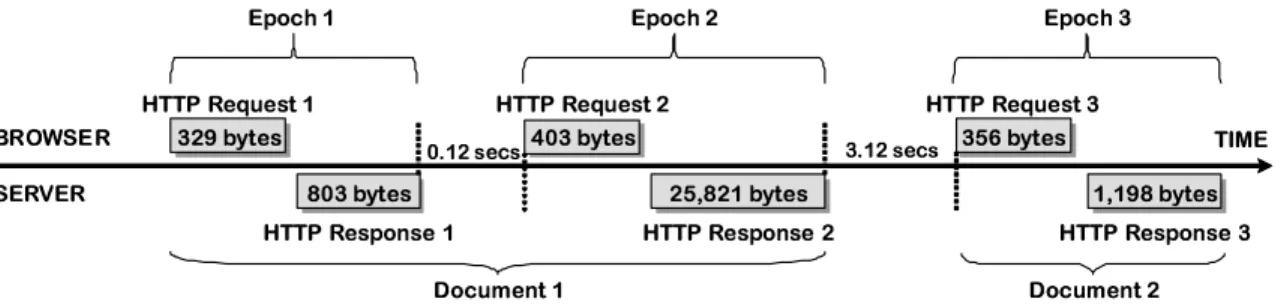
Figure1.2: An a-b-t diagramillustrating a persistentHTTP onnetion.
traÆ generation problems. We develop an abstrat model of network data exhange wherein
eah onnetion is desribed independently of the semantis of the appliation initiating the
onnetion. This idea is illustrated in thethird time-lineof Figure 1.1. Here the
ommunia-tion is desribed in generi terms, simply as a sequene of ADU exhanges between the two
endpointsof theTCPonnetion,withoutattahinganymeaningto theADUs. Othergeneri
harateristis of traÆ inlude the diretion in whih the ADUs are sent, from the
onne-tioninitiator orfromtheonnetion aeptor, andthe durationofquiettimes betweenADUs,
whih are due to user behavior and proessing times. These harateristis an generally be
usedtodesribethebehaviorofanyspeiappliation. Forexample,theADUsofwebtraÆ
are HTTPrequests and responses, whiletheinter-ADU times areuser think times and server
proessingtimes. TheruialobservationisthatthesizesofADUsandthetimesbetweenthem
an bemeasured from thepaket traes oftwo onnetionswithout knowledge ofthe behavior
of the appliation driving the onnetion. This makes it possible to onstrut a soure-level
desription of the entire set of onnetions observed in a measured link, instead of only the
onnetions driven by one or a few well-known appliations. Any trae of pakets traversing
a network link an be transformed into an abstrat soure-level trae, withoutexamining the
payloadof thepakets andwithoutinstrumentingthe endpoints.
Our approah to soure-levelmodeling resultsinan abstratrepresentationof a TCP
on-netion usinga notation that we allan a-b-t onnetion vetor. We also refer to thisidea as
at thesourelevel, ratherthaninthesenseof amathematial orstatistial model . Theterm
a-b-tisdesriptiveofthebasibuildingbloksofthismodel: a-typeADUs(a's),whiharesent
from theonnetion initiator to theonnetion aeptor, b-type ADUs (b's), whih owinthe
oppositediretion,andquiettimes(t's),duringwhihnodatasegmentsareexhanged. Wewill
make use of these terms to desribe the soure-levelbehavior of TCPonnetions throughout
thisdissertation.
Our a-b-t modelhas a sequentialversion and a onurrent version. The sequential version
applies toonnetions wheretheendpointsfollowa strit orderintheirexhangeof ADUs. In
thisversion, a TCPonnetion is desribed bya vetor of epohs(e
1 ;e
2 ;:::;e
n
). Eah epoh
has the form e
j = (a
j ;ta
j ;b
j ;tb
j
), where a
j
is the size of an ADU sent from the onnetion
initiator to the onnetion aeptor, b
j
is the size of an ADU sent in the opposite diretion,
and ta
j
and tb
j
are inter-ADU quite times (during whih the endpoints are idle). We all
this representation of soure-level behavior a sequential onnetion vetor. For example, the
onnetion illustratedinFigure 1.2is represented as
((329;0;403;0:1 2) ;(4 03 ;0 ;25 82 1;3:1 2) ;(3 56 ;0 ;11 98 ;1 5:3 ))
usingthe sequential a-b-t model. This onnetion has three epohs, eah arrying one HTTP
request/response pair. The rst epoh hasan ADU a
1
of size329 bytes, whihwassent from
theonnetioninitiator(awebbrowser)totheonnetionaeptor(awebserver),andanADU
b
1
ofsize803bytes,whihwassentintheoppositediretion. Wealsoobservesomequiettimes
betweenthe ADUs,suhtb
2
, whih had aduration of 3.12seonds. While Figure 1.2 inludes
labels forHTTPrequests, responses and douments,oura-b-t notation isompletely generi.
We onsider this TCP onnetion sequential beause only one endpoint sent data to the
otheroneat anypointinthelifetimeoftheonnetion. Itisimportantto iteratethatanADU
isnot aTCPsegment(i.e., TCPpaket), butanappliationmessagethatisindependentofits
1
Oura-b-tmodelprovideshoweveragoodfoundationfordevelopingmathematialandstatistialmodelsof
traÆatthe soure-level. Thisdissertation onsistentlyfollows anon-parametriapproahtotraÆmodeling.
Theonlyexeption isthe PoissonResampling methodpresented inChapter 7,for whihwealso oer amore
! ! " ! # ! $ ! % " # $ %
Figure1.3: Adiagram illustratingthe interation between twoBitTorrent peers.
atualnetwork representationasalink-levelpaket. Assuh,anADUanbeof arbitrarysize,
like thesmaller a
1
=329 bytesand thelarger b
2
=25;821 bytesinthepreviousexample. The
transferringof a
1
would usuallyinvolve a singleTCP segment,butit is alsopossiblethat this
segmentgetsdupliated,orlostandthenretransmitted. Inthisase,theTCPendpointsending
a
1
would result in the generation of two or more segments arrying this ADU. Our notation
would stilldesribe thispartof theTCPonnetion asa single329-byte ADU, and notasthe
sequene ofTCP segmentsused to transferthe data. Similarly,transferringb
2
=25;821 bytes
requires a minimumof 18 TCPsegments ina pathwithout lossand witha regular Maximum
Segment Size (MSS) of 1,460 bytes (the one derived from Ethernet's Maximum Transmission
Unit (MTU) of 1,500 bytes, after subtrating 20 bytesfor the IP header and 20 bytes forthe
TCPheader). Itmay requiremanymore segmentsina lossyenvironment,orina pathwitha
lowerMTU.However, thesedetailsareirrelevantattheabstratsourelevel,whereb
2
aptures
theneed ofone ofthe endpointsto send25,821 bytesof data, and thisneedis independent of
the way inwhih the data is transferred bythe network. Our modeling is therefore
network-independent,whihmakesit suitableforgeneratinglosed-loop traÆ.
While mostTCPonnetionsaredrivenbyappliationsthatfollowasequentialpatternof
ADU exhanges, we an also ndases inwhihthe two endpointssend data toeah otherat
thesametime. ThisisillustratedinFigure1.3usingaBitTorrent[Coh03℄onnetion,wherewe
anseeADUswhosetransmissionoverlapsintime(i.e.,theADUsareexhangedonurrently).
Thispatternisertainlylessommonthatthesequentialone,butitissupportedinimportant
protools like HTTP/1.1 (pipelining), NNTP(streaming mode)and BitTorrent. Our analysis
shows that whilethe fration of onnetions with onurrent dataexhanges is usuallysmall,
realistitraÆmixes.
To represent onurrent ADU exhanges, the ations of eah endpoint are onsidered to
ourindependentlyof eah other. Thuseah endpoint is a separate souregeneratingADUs
that appear as a sequene of epohs following a unidiretional ow pattern. Formally, this
meansthatwe represent eah onnetion asa pair(;) of onnetion vetorsof theform
=((a
1 ;ta
1 );(a
2 ;ta
2
);:::;(a
n
a ;ta
n
a ))
and
=((b
1 ;tb
1 );(b
2 ;tb
2
);:::;(b
n
b ;tb
n
b ));
where a
i and b
i
are sizes of ADUs sent from the initiator and from the aeptor of the TCP
onnetion respetively, and ta
i
and tb
i
arequiet timesbetweentheADUs. Weallthis
repre-sentationofsoure-levelbehavioraonurrentonnetion vetor. Unlikethesequentialversion
of the a-b-t model, thisrepresentation does notapture any ausality between thetwo
dire-tionsofaTCPonnetion. Asaonsequene, traÆgeneratedaording tothisversionofthe
model usuallyexhibitsa substantialnumberofonurrent dataexhanges.
Thea-b-tmodelprovidesasimpleyetexpressivewayofdesribingsoure-levelbehaviorina
generimannerthatisnottiedtothedetailsofanyappliation. Inaddition,thisnon-parametri
model wasdesigned to inorporatequantities(ADU sizes,ADU diretionality, and inter-ADU
quiet time duration) that an be extrated from paket header traes in a eÆient, aurate
manner. We an easily imaginemore omplex and expressive modelsof TCPonnetions for
whih noeÆient dataaquisitionalgorithmexists, ormodelsthatdeal withharateristisof
soure-levelbehaviorthatannotbeextratedpurelyfrompaket headers. Intheaseofthe
a-b-tmodel,wehavedevelopedadataaquisitionalgorithmthatreliesonTCPsequenenumbers
formeasuringADUsizes,andonthepaketarrivaltimestampsobtainedduringtraeolletion
to determineinter-ADU quitetimes. Our algorithmonstrutsa datastrutureinwhihTCP
Tmix Traffic
Generators
Tmix Traffic
Generators
Trace Partitioning
TESTBED
Original Packet
Header Trace
T
h
Original Packet
Header Trace
T
h
Original
Connection Vectors
T
c
Original
Connection Vectors
T
c
Trace Analysis
Generated Packet
Header Trace
T
h
′
Generated Packet
Header Trace
T
h
′
Replayed
Connection Vectors
T
c
′
Replayed
Connection Vectors
T
c
′
Trace Analysis
Figure 1.4: Overview of Soure-levelTrae Replay.
be delivered to the appliation layer of the reeiving endpoint. In reonstruting thislogial
order for eah onnetion, we have developed methods for dealing with network pathologies
suh as arbitrary segment reordering,dupliation and retransmission. Furthermore, when the
datasegmentsin aTCP onnetion annotbe orderedaording to thelogialdata order,we
an lassify the onnetion as onurrent with ertainty. Our data struture supports both
sequential(i.e., bidiretional)and onurrent(i.e., unidiretional)ordering,making itpossible
toextrat ADUsizesandquiettimeswithasinglepassoverthesegmentsofaTCPonnetion
foundinatrae. Theanalysisan beperformedinO(sW)time,wheresisthenumberofdata
segmentsintheonnetionand W isthemaximumsizeoftheTCPwindow(whihboundsthe
maximumamount of reordering).
1.2 Soure-Level Trae Replay
Our abstrat soure-levelmodelingofTCPonnetion provides asolid foundationfor
gen-eration traÆmixes insimulators and network testbeds. We propose to generate traÆ using
soure-level trae replay, asillustrated inFigure 1.4. Given a paket header trae T
h
olleted
from some Internet link, we rst use our data aquisition algorithm to analyze the trae and
i
orresponding to thisonnetion. The basi approah forgenerating traÆaording to T
is
to replayeveryonnetion vetor C
i
. Eah onnetionvetor C
i
isreplayed bystartingaTCP
onnetion preisely at C
i
's relative start timeT
i
, and transmitting themeasured sequene of
ADUs (a
j and b
j
) separated intime bythe inter-ADU measured quiettimes (ta
i
and tb
i ). In
thisdissertation,we evaluatea spei implementationof thisapproah forFreeBSD network
testbeds, wheretraÆis generated usinga toolwe developed alledtmix .
The goalof thediret soure-level trae replayof T
is to reprodue thesoure-level
har-ateristis of the traÆ in the original link, generating the traÆ in a losed-loop fashion.
Closed-loop traÆ generationimpliesthe need to simulate thebehavior of appliations, using
regular network staks to atuallytranslate soure-level behavior into network traÆ. In
par-tiular, our experiments use an implementation whih relies on the standard soket interfae
to reprodue the dataexhanges in eah onnetion vetor. Generating traÆin thismanner
is losed-loop in the sense that it preserves the feedbak mehanism in TCP, whih adapts
its behavior to hanges in network onditions, suh as loss and reeiver saturation. In
on-trast, paket-level traereplay,thediretreprodutionofT
h
, isanopen-looptraÆgeneration
methodinthesensethatTCPontrolalgorithmsarenotusedduringthegeneration,andhene
thetraÆdoesnotadapt to network onditions.
The evaluation of our methodology onsists of omparing the original trae T
h
and the
synthetitraeT 0
h
obtainedfromthesoure-leveltraereplay. ValidatingourtraÆgeneration
methodonsistsof transformingT 0
h
intoa setofonnetion vetorsT 0
, usingthesame method
usedto transformT
h intoT
. We thenompare theresultingsetof onnetionvetors T 0
with
theoriginal T
. In priniple,theyshouldbe idential, sineT
represents theinvariant
soure-levelharateristisofT
h
. Therearehoweversome dierenesthatareexplainedbythenature
of themodeland ourmeasurement methods.
The diret omparison of T
h
and T 0
h
also provides a way to study the auray of our
approahinterms of how welltraÆisdesribed bythea-b-t model. Thisis however asubtle
exerise. The atual replay of T
, whih reates T 0
for eah TCP onnetion in the soure-level trae replay. The exat set of generated TCP
segments and theirarrivaltimes isa diret funtionof these parameters. As aonsequene, if
weondutasoure-leveltraereplayusingarbitrarynetwork-levelparameters,weobtainaT 0
h
withlittleresemblanetotheoriginalT
h
. Thereplayeda-b-tonnetionvetorsmaybeaperfet
desriptionof the soure behavior drivingthe original onnetions, but thegenerated
paket-level trae T 0
h
would still be very dierentfrom the original T
h
. To addressthis diÆulty, our
replayinorporatesnetwork-level parameters individuallyderived from eah onnetion inT
h .
We have also inorporated methods for measuring three important network-level parameters
(round-trip time, TCP reeiver window size and loss rate) into our analysis and generation
proedure. While this set of parameters is by no means omplete, it does inlude the main
parameters that aet the average throughput of a TCP onnetion found in a trae. This
enablesusto generate traÆin alosed-loopmanner thatapproximates measured traes very
losely.
Inorporating network-level properties is important, but it is ritial to understand the
mainshortoming of thisapproah. The goal of ourwork is not to make thegenerated traÆ
T 0
h
idential to the originaltraÆ T
h
, whih ould be aomplished witha simple paket-level
replay. Asmentionedbefore,paket-levelreplaysgeneratetraÆthatdoesnotadapttohanges
innetworkonditions,resultinginopen-looptraÆ. Ourgoalistodevelopalosed-looptraÆ
generation method based on a detailed haraterization of soure behavior. TraÆ generated
in a losed-loop manner an adapt to dierent network onditions, whih are intrinsi when
evaluating dierent network mehanisms. Our omparison of T
h
and T 0
h
is only a means to
understand the quality of traÆ generationmethod, where qualityis onsidered to be higher
astheoriginal trae ismore losely approximated. If enoughparameters of theoriginaltraÆ
areaurately measured and inorporated into thetraÆgenerationexperiment, we expetto
observeagreatsimilaritybetweenT
h andT
0
h
. Ontheontrary,ifwearemissingsomeimportant
parameters,weexpetto observe substantialdierenes betweentraes.
multiplexinga largenumberofonnetionsontoa singlelink,andthese onnetionstraverse a
largenumberofdierentpathswithavarietyofnetworkonditions. Itissimplynotpossibleto
fullyharaterizethisenvironmentand reprodueitina laboratorytestbed orinasimulation.
Thisisbothbeauseof thelimitationsof passiveinferenefrom paketheaders, andbeauseof
the stohasti nature of network traÆ. Soure-leveltrae replayan never inorporate every
fatorthatshapedT
h
,andthereforedierenesbetweenT
h andT
0
h
areunavoidable. Still,nding
alose mathbetweenanoriginaltraeanditsreplay,eveniftheyarenotidential,onstitutes
strong evidene of the auray of the a-b-t model and the data aquisition and generation
methodswehave developed. Italsodemonstratesthefeasibilityofgeneratingrealistinetwork
traÆina losed-loopmannerthat resemblesa rihtraÆ mix.
1.3 Trae Resampling and Load Saling
Aslongasthenetworksetupofa simulationortestbedexperimentremainsunhanged,the
soure-level trae replay of a onnetion vetor trae T
= f(T
i ;C
i
)g always results in traÆ
thatissimilartotheoriginaltrae. EveryreplayontainsthesamenumberofTCPonnetions
behavingaordingto thesame onnetionvetor speiationandstartingat thesametimes.
Onlytinyvariationsareintroduedontheend-systemsbyhangesinloksynhronization,
op-eratingsystemshedulingandinterrupthandling,andatswithesandroutersbythestohasti
nature ofpaket multiplexing. Soure-leveltrae replayhastherefore two desirableproperties:
The qualityof thesynthetitraÆ an be evaluatedbydiretly omparing syntheti and
originaltraÆ. Thismakesitpossibleto studytheauray oftheanalysismethodsand
thegenerationsystemwithompletefreedom, usinganymetrithatan bederived from
realtraÆ. Inontrast, moreabstrat methodsbasedon parametrimodelsoftraÆare
inherentlystohastiandtherefore morediÆulttoevaluate. Forsuhmethods,itisless
obviouswhethertheobserveddierenebetweenthetraÆgeneratedusingtheparametri
olletion of network protools and mehanisms to exatly the same losed-loop traÆ,
whih provides the right foundation forfair omparative studies. Inontrast, stohasti
variationinthetraÆgeneratedusingparametrimodelsisoftendiÆultto ontrol. For
example, experimentswith models that rely on heavy-tailed distributionsonverge very
slowlyto omparableonditions,asdisussed byCrovellaand Lipsky[CL97 ℄.
While these properties are important, the pratie of experimental networking often requires
to introdue ontrolled variability in the generated traÆ for exploring a wider range of
se-narios. This motivates the development of methods that manipulate T
in order to generate
dierent traÆ that still resembles the original one. Furthermore, developing a statistially
sound way of manipulating T
is essential for generatingtraÆ with dierent levels of oered
load. Thismanipulationto mathatarget oeredloadisa veryommonneedinexperimental
networking researh. This is beause the performane of a network mehanism or protool is
oftenaetedbytheamountof traÆtowhihitis exposed. Therefore,rigorousexperimental
studies frequentlyrequireto generate aompleterange of target loads.
In this dissertation, we propose two exible methods for introduing variability in traÆ
generationexperiments. Inbothases,thesetofonnetionvetorsinT
israndomlyresampled,
resultinginanewsetT 0
thatpreservestheaggregatesoure-levelharateristisoftheoriginal
traÆ. In our rst method, Poisson Resampling, we onstrut a new onnetion vetor trae
T 0
byrandomlyresamplingonnetionsfrom T
, andassigningthem exponentiallydistributed
inter-arrival times. As a result, onnetions in T 0
arrive aording to a Poisson proess. In
theseondmethod,Blok Resampling, weresamplebloks(groups)ofonnetionsratherthan
individualonnetions. Thismethodresultsinamorerealistionnetionarrivalproess,whih
mathes the substantial burstiness observed in real traes. In more tehnial terms, Blok
Resampling preserves the moderate long-range dependene found in real onnetion arrival
proesses, while Poisson Resampling results in a short-range dependent onnetion arrivals
proess. This dierene is demonstrated in our experimental evaluation of the two methods.
trade-dependene(whihdisappearsforshortbloks). Ouranalysisdemonstratesthatblokdurations
between1 and 5minutes oer thebest ompromise.
ResearhersoftenneedtoondutasetofexperimentswitharangeofdierenttraÆloads.
Whenusingatraditionalsoure-levelmodel,e.g.,amodelofwebtraÆ,researhershavetorst
ondut apreliminaryexperimentalstudytodeterminehowtheparametersof themodel,e.g.,
the number of user equivalents, aet the generated load [CJOS00, LAJS03, KLH +
02 ℄. This
isusuallyknownasthealibration oftraÆgenerator. Our resamplingmethodseliminatethis
ommon needforalibratingtraÆ generators, sinetheresampling proess an beontrolled
to math a spei target load (i.e., generated loadis known a priori). In thease of Poisson
Resampling, this is aomplished by hanging the mean arrival rate of onnetions. In the
ase ofBlokResampling,oeredload ismanipulatedusingblokthinning(i.e., subsampling)
and blok thikening (i.e., ombining bloks). Our work reveals that load saling annot be
based simply on ontrolling the number of onnetions. Suh an approah frequently results
inoered loadsthatare farfrom thetarget, beause thenumberof onnetionsina resample
is not strongly orrelated withthe oered load representedby these onnetions. We address
thisdiÆultybydevelopingbyte-driven versionsofPoissonResamplingandBlokResampling,
whih sale load using a running ount of the total data in the resampled trae T 0
. Unlike
the number of onnetions, the total amount of data in T 0
is strongly orrelated to traÆ
load oered by T 0
. Our experiments onrm that byte-driven resampling is highly aurate,
eliminatingthe ommonneedforalibratingtraÆ generators.
1.4 Thesis Statement
This dissertationonsidersthe followingthesis:
1. An abstrat soure-level model an desribe in detail the entire set of TCP appliation
header traesinan eÆient, auratemanner.
3. TraÆ generationbasedon thisabstrat soure-levelmodelingresultsinsynthetitraÆ
thatis realistiand suitableforexperimental networking researh.
4. The abstrat soure-level model of a trae an be manipulated to introdue statistially
validvariabilityinthegeneratedtraÆandalsotoauratelymathatarget oeredload
whilepreservingappliationharateristis.
1.5 Contributions
We highlightthefollowingontributionsfrom thisdissertation:
We develop the onept of abstrat soure-level modelingand thea-b-t notation for
de-sribing the soure-level behavior of entire traÆ mixes. We identifya fundamental
di-hotomy in soure-level behavior between onnetions that exhange data sequentially
and onnetionsthat exhangedata onurrently. Our a-b-t notation inludesa
sequen-tialversionandaonurrentversionthatmakesitpossibletoappropriatelydesribethese
two typesof behaviors.
We formulate a formal test of onurreny that an be applied to the paket headers of
any TCP onnetion, and that does not suer from false positives. This enables us to
aurately lassify onnetions as sequential or onurrent. We show that only a small
frationofTCPonnetions(lessthan4%inourtraes)exhangedataonurrently, but
that these TCP onnetions aount for a substantial fration (up to 32%) of the total
traÆ.
We presentan eÆientalgorithmfortransformingapaket header traeintoa olletion
ofsequentialandonurrent a-b-tonnetionvetors. Given aTCPonnetionforwhih