CORROSION RESISTANCE OF METALS AND ALLOYS IN
ARTIFICIAL SALIVA – AN OVERVIEW
R. Saranya
[a], S. Rajendran
[b,c]*, A. Krishnaveni
[d], M. Pandiarajan
[b],
and R. Nagalakshmi
[e]Keywords: corrosion resistance, metals, alloys, artificial saliva, bio-materials.
One of the primary requisites of any metal or alloy that is to be used in the mouth is that it must not produce corrosion products that could be harmful to the body. Some metallic elements that are completely safe in the elemental state can form hazardous or even toxic ions or compounds. Besides, the degradation of the alloy should be limited in order to guarantee its service life. Several metals and alloy have been in dentistry as bracket, band, orthodontic wires it is essential to know the corrosion resistance of this materials in the presence of saliva. The corrosion resistances of these materials have been evaluated by electrochemical studies such as polarization study and AC impedance spectra. The film formed on the metal surface has been analysed by surface analysis techniques such as SEM, EDX, X-ray, and AFM.
* Corresponding Author
[a] Department of Chemistry, Jayalakshmi Institute of Technology, Thoppur- 636 352, India.
Email: senthilkumar944@ gmail.com.
[b] Corrosion Research centre, PG and Research Department of Chemistry, GTN Arts College, Dindigul- 624005, India. E-mail: [email protected].
[c] Department of Chemistry, Corrosion Research centre, RVS School of Engineering and Technology, Dindigul 624005, India. E-mail: [email protected].
[d] Department of Chemistry, Yadava College, Madurai, India. [e] Department of Chemistry, Arupadaiveedu Institute of
Technology, Chennai-603 110, India. E-mail: [email protected].
Introduction
Over the past two decades, with the accelerated development of tissue engineering, the demand for a variety of synthetic and natural biomaterials has dramatically increased. Biomaterial sales have already exceeded $240 million per year and due to the rapid development of biomaterials, the market will only increase in the years ahead for tissue engineering and artificial organ materials. Specifically, costs related to organ replacement account for 8% of all global healthcare spending and by 2040 as much as 25% of the US gross domestic product (GDP) is expected to be related to healthcare. Such demands require unique, better performing biomaterials for regenerative medicine. For example, it is necessary to develop better material mechanical properties and biocompatibility properties. Conventional biomaterials (or those materials with constituent dimensions greater than 1 µm) have not satisfactorily met clinical demands. Researchers, clinicians and other investigators are thus seeking better novel materials to serve as the next generation of tissue engineering and artificial organ materials. Artificial organs, when implanted in body undergo corrosion. Corrosion behaviour of metals and alloys in simulated body fluids has been investigated.1-75 Corrosion resistance of metals and an
researchers (Figure 1). This review article will be a boon to researchers who would like to do research on corrosion behaviour of biomaterials in synthetic body fluids especially in simulated saliva.
Figure 1. Orthodontic wires
Metals and Alloys
Corrosion behaviour of various metals and alloys have been investigated in various synthetic body fluids such as blood plasma, urine and saliva.1-75 Titanium
metal,12,28,46,52,72,73,75 Ni-Cr,10,56,57 Ti-Mo,4,37 Ni-Ti,13,64
Co-Cr,14,53,61,63 SS316, MS, MS-Zn,23,24 Ti-Ag,3,68 Ni-Ti
orthodontic wires18,27,33 have been used in dentistry.
Medium
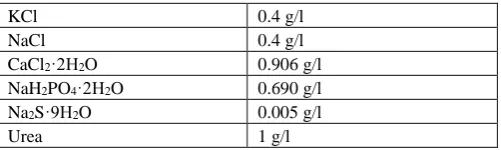
Usually corrosion behaviour metals and alloys have been studied in artificial saliva (AS) whose composition is given in Table 1.23
Table 1. Composition of artificial saliva
KCl 0.4 g/l
NaCl 0.4 g/l
CaCl2·2H2O 0.906 g/l
NaH2PO4·2H2O 0.690 g/l
In some studies aerated and deaerated saliva has been used.8,10,46,55 AS containing hydrogen peroxide,6
fluo-ride,2,4,6,22,38,43,45,60,73 spirulina,23 D-Glucose,42 electoral,24
physiological solution (ps),17,25,40 lactic acid,17,51,71 spices
extract,29 bacteria,33,53 mouthwash,34,37 NaF,36,39,67,71 citric
acid,75 Ringer brown solution,39,50 have been used.
Temperature
Usually the study is carried out at 37 ± 1ºC.
Methods
Weight loss method, polarization study, AC impedance spectra have been used to evaluate the corrosion resistance of various metals and alloys in AS.1,4,5,6,7,10,19,20,21,22,23,24,54
The protective film form in the metal surface has been analysed by various surface analysis techniques such as SEM,2,6,7,9,21,26,35,36,41,49,59,68,73,75 XRD,3,17,68,71 EDX, 9,14,34,41,59,75 F-test has also been used by some authors.11
Cyclic voltammetry,13, 25 AAS,26 and XPS3,16,17,25,58,68,71 have
also been used.
A list of various materials used in dentistry, the methods used to evaluate the corrosion resistance of different metals and alloys, various methods employed and important findings are summarized in Table 1.
Influence of Fluoride ion on corrosion resistance of
orthodontic wires
To strengthen the lifetime of teeth, fluoride is added in tooth pastes. This addition of fluoride may influence the strength of orthodontic wires. To know this influence several investigations have been undertaken. Corrosion resistance of metals and alloys in artificial saliva, in presence of fluoride has been investigated.31,38,43,45,51,71,73 It
has been found that fluoride ion reduces the corrosion resistance of Titanium and Ti6AlV alloy. This has been proved by electrochemical studies.31 Similar observation is
made with Ni-Cr-Ti alloy also.38 Surprisingly the presence
of fluoride ion increases the corrosion resistance of Ti-Cr alloy.43 Robin and Meirelis observed that presence of
fluoride in saliva enhanced porosity of the oxide film.45
Mareci et al observed that fluoride increased the corrosion rate of Ti6Al7Nb and Ti30Ta alloys.51
Influence of extracts of natural of products on
corrosion resistance of metals and alloys in
artificial saliva
Extracts of natural products are added to the tooth paste. These extracts will definitely influence the corrosion resistance of orthodontic wires. Hence the corrosion resistance of extracts of plant materials on the corrosion resistance of orthodontic wires has to be studied thoroughly. But only a few studies have been made in this regard.29,73
Presence of coriander in artificial saliva inhibited the pitting corrosion of AISI 304L orthodontic bands and stainless steel orthodontic bands.29 Eugenol has protected
Titanium from the attack of fluoride ions. Further, Eugenol has formed a protective film on titanium and prevented the dissolution of Titanium. This has been proved by electrochemical measurements and surface analysis techniques such as SEM.73
Types of corrosion undergone by orthodontic wires.
There are several types of corrosion undergone by metals and alloys in the natural environment. Depending on the environment, they undergo general corrosion, galvanic corrosion, pitting corrosion etc. Similarly orthodontic wires also undergo several types of corrosion, depending on the natural of metals and alloys and the oral environment. Ti-6Al-4V undergoes fretting corrosion in presence of fluoride ion.2 Ni-Cr and Co-Cr alloys undergo pitting corrosion in
artificial saliva due to inhibition in artificial saliva for a long time.5 Hence the orthodontic wires have to be replaced every
now and then. Vieira et al observed that Titanium undergoes fretting corrosion in artificial saliva.12 This has been proved
by electrochemical studies. Ludek Joska et al have noticed the non-uniform corrosion undergone by palladium-silver-copper alloy in model saliva.16 Orthodontic wires made of
Ni-Ti alloy undergo pitting corrosion in artificial saliva. Similarly metals and alloys undergo non-uniform corrosion58 and galvanic corrosion.62
Influence of temperature on the corrosion
resistance of orthodontic wires.
The average body temperature is 37 ºC. Hence the experiments are carried out at 37 ± 0.1 ºC. However, when hot liquids such as hot water, hot coffee or tea, orally taken, they will affect the corrosion resistance of orthodontic wires in the oral environment. Hence researchers have carried out experiments at various temperatures also.8,19,46 It is
observed8 that the corrosion rate of non precious dental
alloys increases when the temperature is increased (20, 37 and 50 ºC). At low temperature, passive films are formed. At 25 ºC a passive film is formed on pure Titanium.46
Influence of pH on the corrosion resistance of
orthodontic wires.
Influence of pH on corrosion and passivity is a well established concept. At lower pH, because of acidic environment, many metals and alloys undergo corrosion. Same thing happens to metals and alloys of orthodontic wires in the oral environment.11,26,36,38,45,52,60,72 At pH 4 and 6,
in presence of sodium fluoride, and artificial saliva, stainless steel and nickel-titanium alloy undergo pitting corrosion.36
This has been proved by SEM. At low pH value of saliva, the oxide film formed on Ti-23T alloy was found that to be porous, which may enhance corrosion than at low pH =2.5. The corrosion of Ti6AlNb and Ti30Ta alloys increased, in presence of fluoridated saliva.51 At low pH values, the
Conclusion
One of the primary requisites of any metal or alloy that is to be used in the mouth is that it must not produce corrosion products that could be harmful to the body. Some metallic elements that are completely safe in the elemental state can form hazardous or even toxic ions or compounds. Besides, the degradation of the alloy should be limited in order to guarantee its service life. Several metals and alloy have been in dentistry as bracket, band, orthodontic wires it is essential to know the corrosion resistance of this materials in the presence of saliva. The corrosion resistances of these materials have been evaluated by electrochemical studies such as polarization study and AC impedance spectra. The film formed on the metal surface has been analysed by surface analysis techniques such as SEM, EDX, X-ray and AFM.
Acknowledgement
The authors are thankful to their Managements and St. Joseph’s Research and Community Development Trust, Dindigul, India for their help and encouragement.
References
1Gustavo, S., Duffo, Silvia B. Farina, Mater. Chem. Phys.,2009, 115, 235.
2Sivakumar, B., Satendra Kumar, Sankara Narayanan, T. S. N., Wear , 2011, 270, 317.
3Zhang, B. B., Zheng Y. E., Liu, Y., Dental Mater., 2009, 25,
672.
4Satendra, K., Sankara Narayanan, T. S. N., J. Dentistry, 2008, 36, 500.
5Ameer, M. A., Khamis, E., Ai-Motlaq, M., Corros. Sci., 2004, 46, 2825.
6Ameer, M. A., Hamis, E., Ai-Motlaq, M., Electrochim. Acta, 2004, 50, 141.
7Gebert, A., Roth, S., Gopalan, R., Kundig, A, A., Schultz, L., J. Alloys Compds.,2007, 436, 309.
8Weigman, H. O., Land Ketelaar, J. A. A., J. Dent., 1987, 15,
166.
9Wilye, C. M., Shelton, R. M., Fleming, G. J. P., Davenport, A.
J., Dental Materials,2007, 23, 714.
10Meyer, J.-M., Corros. Sci., 1977, 17, 971.
11Al-Hity, R. R., Kappert, H. F., Viennot, S., Dalard, F.,
Grosgogeat, B., Dental Materials, 2007, 23, 679.
12Vieira, A. C., Ribeiro, A. R., Rocha, L. A., Celis, J. P., Wear, 2006, 261, 994.
13Cioffi, M., Gilliland, D., Ceccone, G., Chiesa, R., Cigada, A., Acta Biomater.,2005, 1, 717.
14Reclaru, L., Luthy, H., Eschler, P. Y., Blatter, A., Susz, C., Biomaterials,2005, 26, 4358.
15Joska, L., Marek, M., Leitner, J., Biomaterials, 2005, 26, 1605. 16Joska, L., Poddana, M., Leitner, J., Dental Mater., 2008, 24,
1009.
17Juzeliunas, E., Leinartas, K., Samulevicience, M., Miecinskas,
P., Juskenas, R., Sudavicius, A., Corros. Sci., 2002, 44,
1541.
18Rondelli, G., Vicentini, B., Biomater.; 1999, 20, 785.
19Li, M. G., Sun, D. Q., Qiu, X. M., Yin, S. Q., Mater. Sci. Eng., 2006, 441, 271.
20Chenglong Liu, Yueji Wang, Meng Wang, Weijiu Huang,
Paulchu K., Surf. Coatings Technol., 2011, 206, 63.
21Viennot, S., Lissac, M., Malquarti, G., Dalard, F., Grosgogeat,
B., Acta Biomater., 2006, 2, 321.
22Kocijan, A., Kek Merl, D., Jenko, M., Corros. Sci., 2011, 53,
776.
23Rajendran, S., Paulraj, J., Rengan, P., Jeyasundari, J.,
Manivannan, M., J. Dentistry Oral Hyg., 2009, 1, 1.
24 Rajendran, S., Chitra Devi, P., John, M. S., Krishnaveni, A.,
Kanchana, S., Lydia Christy, J., Nagalakshmi R., Narayanasamy, B., Zastita Mater., 2010, 51, 149 .
25Conradi, M, Schon, P. M., Kocijan, A., Jenko, M., Vancso, G.
J., Mater. Chem. Phys., 2011, 130, 708.
26Mutlu–Sagesen L., Ergun, G., Karabulut, E., Dental Mater., 2011, 30, 598.
27Liu, J. K., Lee, T. M., Liu, I. H., Am. J. Orthodont. Dent. Facial Orthoped., 2011, 140, 166.
28Koike, M., Martinez, K., Guok, L., Chahine, G., Kovacevic,
R., Okabe, T., Mater. Process. Technol.,2011, 211, 1400.
29Mahoto, N., Sharma, M. R., Chaturvedi, T. P., Singh, M. M., Mater. Lett.., 2011, 65, 2241.
30Nie, F. L., Wang, S. G., Wang, Y. B., Wei, S. C., Zheng, Y. F., Dental Mater., 2011, 27, 677.
31Anwar, E. M., Kheiralla, L. S., Tammam, R. H., Oral Implant., 2011, 37, 309.
32Kao, C. T., Guo, J. U., Huang, T. H., Orthodontics Dentofac. Orthoped.,2011, 139, 594.
33Bahije, L., Benyahia, H., El Hamzaoui, S., Ebn Touhami, M.,
Bengueddour, R., Rerhrhaye Abdallaoui, F., Zaoui, F., Int. Orthodont., 2011, 9, 110.
34Huang, T. H., Guo, J. U., Kao, C. T., Surf. Coat. Technol., 2010, 205, 1917.
35Souza, J. C. M., Nasciment, R. M., Martinelli, A. E., Surf. Coat. Technol.,2010, 205, 787.
36Kao, C. T., Huang, T. H., J. Orthodont., 2010, 32, 555. 37Mareci D, Chelariu R, GordinD M, Romas M, Sutiman D,
Gloriant T, Marterials and Corrosion., 2010, 61,829.
38Liang, B. G., Shen, X. T., Liu, L., Lu, Y. X., Yu, Z. D., Yang,
C. X., Zhang, Y. Z., Med. Sci.,2010, 39,399.
39Vasilescu, E., Drob, P., Vasilescu, C., Mareci, D., Mirza–
Rosca, T. C., Revista chim., 2010, 61,660.
40Nie, F. L., Zheng, Y. F., Cheng, Y., Wei, S. C., Valier, R. Z., Mater. Lett., 2010, 64,983.
41Ayad, M. F., Ayad, G. M., Prosthodontics, 2010, 19, 194. 42Rajendran, S., Uma, V., Krishnaveni, A., Jeyasundari, J.,
Shyamaladevi, B., Manivannan, M., Sci. Eng.,2009, 34,
147.
43Hsu, H. C., Wu, S. C., Wang, C. F., Ho, W. F., J. Alloys Compds., 2009, 487, 439
44Gatin, E., Berlic, C., Iordache, B., Prioteasa, P., Optoelectr. Adv. Mater., 2009, 11, 1870.
45Robin, A., Meirelis, J. P., Corros. Eng. Sci. Technol.,2009, 44,
352.
46Mariano, N. A., Oliveira, R. G., Revista Mater., 2009, 14,878. 47Tune, S. H., Pekmez, N. O., Keyf, F., Canli, F., Dental Mater..,
2009, 25, 1029.
49Chung, C. H., Kim, H. J., Jeong, Y. T., Son, M. K., Jeong, Y.
H., Choe, H. C., Trans. Nonferrous Metals Soc. China.,
2009, 19, 846.
50Zhang, Y. M., Chai, F., Hornez, J. C., Biomed. Mater., 2009, 4, 126.
51Mareci, D., Chelariu, R., Gordin, D. M., Gloriant, T., Carcea,
I., Metalurgia Int., 2009, 14, 10.
52Mariano, N. A., Oliveiva, R. G., Braga, E. I., Rigo, E. C. S., Key Eng. Mater., 2009, 315,396
53Zeroual, R., Adioui, S., Kaoun, K., Bellem Khannate, S.,
Dakar Med., 2008, 530, 183.
54Banu, A., Marcu, M., Radovici, O., Rev. Roum. Chim., 2008, 53, 1007.
55Wang, Q. Y., Zheng, Y. F., Dental Mater., 2008, 24, 1207. 56Nogues, L. I., Martinez Gomis, J., Molina, C., Peraire, M.,
Salsench, J., Sevilla, P., Gil, F. J., Mater. Sci. Mater. Med.,
2008, 19,3041.
57Molina C., Nogues, L. I., Martinez Gomis, J., Peraire, M.,
Salsench, J., Sevilla, P., Gil, F. J., Mater. Sci. Mater. Med., 2008, 19, 3015.
58Joska, L., Poddana, M., Leitner, J., Dental Mater., 2008, 24,
1009.
59Ayad, M. F., Vermilyea, S. G., Rosenstiel, S. F., Prosthetic Dent., 2008, 100, 34.
60Guo, L., Liu, X., He, Z., Gao, J., Yangm J., Guo, T., Mater. Lett., 2008, 62, 2204.
61Van Vuuren, L. J.. Odendaal, J. S., Pistorios, P. C., Dental Assoc. Tydskrif Suid – Afr. Tandheel Kundige Vereing., 2008, 63, 34.
62Bilhan, H.. Bilgin, T., Cakir, A. F., Yuksel, B., Von
Fraunhofer, J. A., Biomater. Appl., 2007, 22, 197.
63Zupancic, R., Legat, A., Funduk, N., Mater. Technol., 2007, 41, 295.
64Liu, C., Chu, P. K., Lin, G., Yangm D., Corros. Sci., 2007, 49,
3783.
65Ciszewski, A., Baraniak, M., Urbanek Brychczynska, M., Dental Mater., 2007, 23, 1256.
66Miura, E., Kato, H., Ogata, T., Nishiyama, N., Specht, E. D., Mater. Trans.,2007, 48, 2235.
67Her Hsiung Huang, Chia Ching Wang, Son Mou Chiu, Jen
Feng Wang, Yu Cheng Liaw, Jen Feng Wang, Yu Cheng Liaw, Tzu Hsin Lee, Fang Lung Chen, Chin Dent J., 2005,
24, 134.
68Zhang, B. B., Wang, B. L., Li, L., Zheng, Y. F., Dental Mater., 2011, 27, 214.
69Ziebwicz, A., Walk, W., Barucha Kepka, A., Kiel, M., Achiev. Mater. Manuf. Eng. 2008, 27, 151.
70Mareci, D., Sutiman, D., Cailean, A., Bolat, G., Mater. Sci., 212, 33, 491.
71Bai, Y. J., Wang, Y. B., Cheng, Y., Deng, F., Zheng, Y. F.,
Wei, S. C., Mater. Sci. Eng., 2011, 31, 702.
72Kadowaki, N. T., Martinez, G. S. S., Robin, A., Mater. Res., 2009, 12, 363.
73Kinani, L., Najih, L., Chtaini, A., LeanardoJ. Sci., 2008, 19,
243.
74Darvell, B. W., J.Oral Rehabil., 1978, 5, 41.
75Vieira, A. C., Ribeiro, A. R., Rocha, L. A., Celis, J. P., Mater. Sci., 2004, 42, 112.