Shared Solutions: An
Overview
Special Education Policy and
Programs Branch
Ministry of
Education
2
Table of Contents
1. Shared Solutions: Overview 2. Understanding Conflict
3. Preventing Conflicts
4. Video: Parent and Student Perspective 5. Building Relationships
Goals of Presentation
• To gain a better understanding of Shared Solutions, the strategies in the
guide regarding conflict prevention and resolution and how they can be used in your local school board;
• To share personal experiences and understand the uniqueness of the roles
of all involved in delivering special education programs and services; and
• To enhance knowledge of collaborative strategies for effective
4
Conflict Resolution
Background
• Special Education Transformation: The Report (2006) recommended that: – school boards develop, with input from their Special Education
Advisory Committees (SEAC), an informal dispute resolution process for issues related to programs and services for students with special education needs; and
– a mandatory dispute resolution process with access to trained and
Conflict Resolution Cont’d
• As a follow-up to this report, the Special Education Policy and Programs
Branch undertook a series of initiatives, including:
– Developing a resource guide on preventing and resolving conflicts for
parents and educators;
– Providing professional development sessions for parents and
educators on conflict prevention and resolution in the Fall 2007;
– Establishing a Provincial Advisory Committee on Dispute Resolution
Regarding Special Education Programs and Services (2007-2009);
– Piloting a formal dispute resolution process in selected school boards
6
Project Goals
• Improve outcomes for students with special education needs.
• Enhance educator and administrative capacity in building collaborative
relationships with parents.
• Support parents to be active participants in decision making processes
related to programs and services for their children with special education needs.
• Build upon the effective practices on conflict and dispute resolution
already existing in school boards.
• Work with stakeholders to develop a dispute resolution process regarding
Shared Solutions:
A Guide to Preventing and Resolving Conflicts Regarding Programs and Services for Students with Special Education Needs
• Research for the guide included a review of: – Other Jurisdictions
– Other Ontario Ministries and Agencies – Successful practices in communication
– Literature on informal and formal (Alternative Dispute Resolution) processes and
strategies.
• The consultation process on the guide has been extensive and included input from
stakeholders including students, parents, educators, members of associations and mediators:
– In January 2007 two focus groups were held to gather input into the content of the
resource guide; and
– Drafts of the resource guide were reviewed by various stakeholders and staff
within the Ministry as well as the Provincial Advisory Committee on Dispute
Resolution Regarding Special Education Programs and Services and representatives of the Minister’s Advisory Committee on Special Education.
8
Shared Solutions
Cont’d
Audience
• Students, parents and educators are the intended audience.
Key Messages
• Focus on conflict prevention strategies can be an exercise in building relationships
of mutual trust and respect.
• Strategies within the guide are intended to enhance the abilities of parents,
students and educators to work constructively together to address concerns early.
• A “culture of collaboration” and a positive school climate can help parents and
educators work constructively together to address concerns related to programs and services before they become sources of conflict.
• Achieving and maintaining a positive school climate requires teamwork on the part
SHARED SOLUTIONS
10
Purpose
The purpose of this session is to enhance your knowledge of the following:
• Common responses to conflict;
• Factors that contribute to conflict; and
Common Responses to Conflict
There are three types of responses to conflict discussed in Shared Solutions.
• Avoidance
• Confrontation
• Acquiescence
No approach is either right or wrong, and different situations may call for different responses.
12
Factors Contributing to
Conflict and Possible Solutions
Factors include:
• Insufficient, wrong, or misunderstood information
• Miscommunication
• Differing values
• Concerns about resource allocation
Possible Solutions
• Providing complete and/or accurate
information.
• Listening actively, asking questions to
identify and understand assumptions that may need to be corrected, and validating the feelings of others.
• Identifying what has been misunderstood
and providing clarification.
• Brainstorming ways of using existing
resources more creatively and/or effectively.
Factors Contributing to
Conflict and Possible Solutions (cont’d)
Factors Contributing to Conflict
• Historical factors
• Structural factors
• Personal/Emotional factors
• Interpersonal factors
Possible Solutions
• Keeping an open mind and showing
patience and willingness to listen and work to re-establish trust.
• Identifying and respecting others’ core
values while showing and seeking
flexibility in areas where compromise is possible.
• Brainstorming ways of using existing
resources more creatively and/or effectively.
• Expressing how one feels and
14
Cultural Awareness
Cultural awareness and sensitivity are important in preventing and resolving conflicts. Things to remember include:
• Some behaviours are culturally based and that this can add to
communication difficulties when a situation is emotionally charged.
• Volume, tone of voice, response time, maintaining or avoiding eye contact, increasing or decreasing the physical space between
speakers, and gesturing during oral communication may all be culturally influenced to some extent.
• Educators need to work with the communities they serve to
understand the cultural bases of behaviours that are demonstrated by students and/or parents.
Reasons for Conflict in Special Education
• Planning conflicts happen when parents and educators do not have access
to the same information about the student and/or have a different
understanding and ideas about the student’s strengths and needs and the special education programs and services that would be most appropriate for the student.
• Implementation conflicts happen when parents perceive that plans for
special education programs and services have not been adequately implemented.
• Relationship conflicts may arise as a result of cultural differences, styles of
interaction, breakdowns in communication, and/or a loss of trust between parents and educators.
16
Recognizing Warning Signs
Conflicts can develop very quickly, and it is important to be able to recognize how they develop and their warning signs.
• What are some examples of conflict that you as parents and educators have experienced?
• How did you know there was a conflict?
SHARED SOLUTIONS
18
Purpose
The purpose of this session is to enhance your knowledge of the following:
• Building and maintaining positive school climates;
• Building Relationships; and
Culture of Collaboration
• One of the key messages found throughout Shared Solutions is that of a
“culture of collaboration”.
• Many school boards across the province have been successful in creating
positive school climates. Using Shared Solutions will enhance the good work already underway and build effective lines of communication among parents, students, and educators.
20
A Positive School Climate
A positive school climate can be viewed from three perspectives:
• Students: feel good about themselves as valued learners whose
achievements are respected. This includes students with special education needs.
• Parents: feel welcomed and involved and as a result are reassured that their children are receiving a good education and are making
demonstrated progress.
• Educators: feel that their expertise is respected and as a result they can focus on what they do best, teaching students.
The Hallmarks of a Positive School Climate
• Everyone is treated with respect.• The school is a caring and responsive environment.
• Educators encourage and maintain regular interaction between schools
and families.
• The school culture develops a sense of community and caring
relationships to provide all students with greater opportunities to achieve success.
The Hallmarks of a Positive School Climate
• Everyone feels safe and secure.
• There is a strong focus on prevention and early intervention in conflicts. • Everyone is invited to contribute ideas and offer feedback.
• The successes of both students and staff are celebrated. • Cross-cultural communication is valued.
• Students are encouraged to show leadership in creating a positive school
climate.
Maintaining a Positive School Climate
• What Students Can Do: work hard, demonstrate respect for all members
of the school community, participate in school events such as peer mentorship/leadership, circle of friends, student councils, and other extracurricular activities.
• What Parents Can Do: become involved in their child’s education and the
life of the school, including volunteering, school functions and parent– teacher meetings.
• What Educators Can Do: maintain regular and positive communication
with parents, keeping the best interests of students with special education needs in mind at all times, remember that each student has different
24
Building Positive Relationships Through
Effective Communication
• Effective communication is the key to building relationships of mutual
trust and respect.
• Effective communication can help each party to understand and
Conflict Prevention Strategies
Before a meeting (examples):
• Ensure the appropriate people will be in attendance, ensuring a balanced
representation among parties.
• Necessary accommodations have been made.
• Specific concerns and questions that can be addressed prior to the
meeting have been dealt with.
• The purpose of the meeting has been established and/or an agenda has
26
Conflict Prevention Strategies (cont’d)
During a meeting (examples):
• Remember that the student’s interests come first.
• All participants are introduced and have an opportunity to state how they
see the issue.
• Listen attentively and with an open mind to others’ views.
• Invite questions and comments to clarify assumptions, perceptions, and
Conflict Prevention Strategies (cont’d)
After a meeting (examples)
• Prepare a summary of the meeting that clearly outlines the key points
discussed and any action items or decisions made and the next steps agreed upon.
• Ensure the date time, location, and purpose of any follow-up meeting
scheduled is clearly distributed.
• Ensure that copies of the summary are sent to all those who attended the
SHARED SOLUTIONS
BUILDING RELATIONSHIPS
Tell Me What is Wrong
• Pair up• One person is the “host” and the other is the unhappy “guest”
• The “guest” thinks of an unhappy or sad story (a story not related to
education)
• The “host” asks questions of the “guest” in order to discover their
unhappy story
• Note: The “host” can only ask questions to which the “guest” can provide
30
Tell Me What is Wrong #2
• Switch roles• The “guest” thinks of an unhappy or sad story (a story not related to
education)
• The “host” supportively interviews the “guest” in order to learn their
unhappy story
Table Group Debrief
• At your table, choose a facilitator, a recorder, a timekeeper and a
reporter who will report back to the large group:
• Take 10 minutes to discuss and record responses to the following
questions:
1. Was the first or second “host” the most effective listener? Why?
2. How did the “guest” feel about the way in which each “host”
listened to them?
3. What did the second “host” do that made the “guest” feel
comfortable sharing an unhappy story?
4. What are the things we can do, even in an initial contact with a person, to begin to build trust and build relationship?
32
Context
• Each student is unique with regards to his/her strengths and needs. • The delivery of special education programs and services can be highly
complex, and emotional.
• Issues may arise that involve multiple parties. To resolve these issues
student, parent, educator and community partnerships are essential.
• Students, parents, and educators, when working together, can provide
Elements of Building Relationships
• Some elements of relationship building include:– Effective communication
– Trust
– Acknowledging the perspective and contributions of other parties – In special education, one must recognize the emotional aspect of
obtaining appropriate special education programs and services for a child or youth
34
Benefits of Building Positive Relationships
• Positive relationships can lead to creative solutions.• Everyone understands they have a role to play to ensure the best interests
of the student are met.
• Willingness to consider solutions other than the way things have been
done before.
• Students can sense the quality of the relationship between parents and
Positive Learning Outcomes
• Decades of research have demonstrated that parent/family involvement
significantly contributes in a variety of ways, to improved student outcomes related to learning and school success.
• When schools, families and communities work together to support
learning, children tend to do better in school, stay in school longer, and like school more.
SHARED SOLUTIONS
CONFLICT RESOLUTION 101
Negotiation Styles
• COMPETITIVE
• COOPERATIVE
Seven Elements of Principled Negotiation
1. ALTERNATIVES
2. INTERESTS
3. OPTIONS
4. LEGITIMACY
5. COMMUNICATION
6. RELATIONSHIP
Active Listening Strategies
• Demonstrate appropriate listening behaviour
• Explore
• Restate
• Clarify
• Summarize
CONFLICT RESOLUTION DO’S AND DON’TS
Do Don’t
• Look for solutions Look for someone to blame • Focus on the problem Focus on the person
• Take a non-adversarial approach Take an adversarial approach • Use dialogue Engage in debate
• Focus on the student’s interests Focus on a predetermined
outcome
• Think that “everyone can win” Think that “someone has to
lose”
PRINCIPLES OF SUCCESSFUL CONFLICT
PREVENTION AND RESOLUTION
• Focus on the student
• Mutual respect
• Accessibility
• Respect for diversity
• Balancing power
• Fairness
COLLABORATIVE APPROACHES TO RESOLVING
CONFLICTS
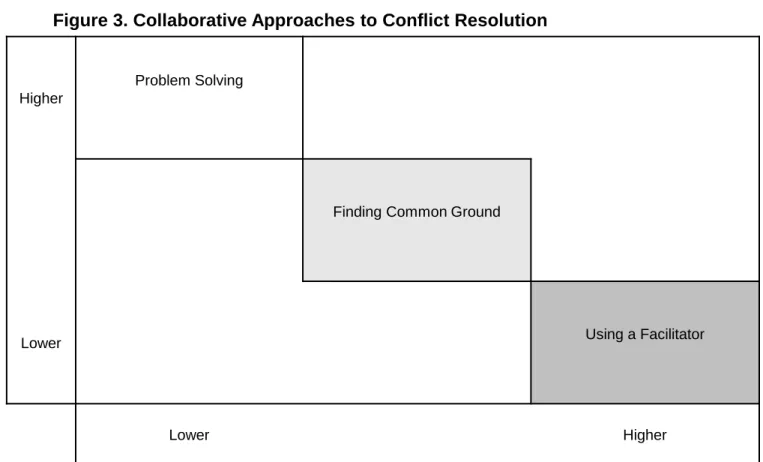
Figure 3. Collaborative Approaches to Conflict Resolution
Higher
Problem Solving
Personal Control
Finding Common Ground
Lower
Using a Facilitator
Lower Higher
For problem solving to be successful, each
person must:
agree on what the issue is;
understand the assumptions and beliefs that underlie the issue;
know what options (supports and resources) are available;
come to the process without preconceived ideas about solutions; stay focused on the benefits for the student;
be willing to share all information that relates to the issue;
be open to others’ ideas and suggestions;
use open and closed questions as a method of inquiry;
Steps in Problem Solving
• Define the issue
• Share information and ideas
• Generate and explore possible solutions
• Predict consequences
• Choose a solution and develop a plan of action, including
performance measures
Finding Common Ground
focus on the student’s strengths and needs;
discuss and explain the assumptions or beliefs that define the problem for him or her;
have a clear understanding of what the issue is; clearly articulate how he or she sees the issue; share all information that pertains to the issue;
listen actively and ask open-ended questions to elicit more information, such as “What would happen if . . .?”, “Would you be happy if . . .?;
Finding Common Ground Cont’d
be willing to brainstorm to identify possible options;
be willing to identify interests, perceptions, or needs that are common to the parties;
be willing to compromise in order to narrow the scope of the issue;
realize and accept common ground when it is discovered;
agree to a written plan to implement the agreed-upon solution;
agree to attend a follow-up meeting within a set time frame to discuss how well the solution is working.
Common Ground
Figure 4:
B’s Interests A’s Interests
A’s Position B’s Position
Previously Unrecognized Common Ground (A’s and B’s
interests that have not been expressed)
Using a Facilitator
A facilitator helps ensure that everyone stays on track by:
making sure there is an agreed-upon agenda;
keeping the discussion focused on the student’s demonstrated strengths
and needs and related program and service considerations; encouraging active participation by each party;
Using a Facilitator Cont’d
helping to clarify everyone’s position, including using inquiry to identify any unwarranted assumptions or misconceptions and bring to light all relevant information;
allowing respectful disagreements;
intervening to limit interruptions and stop abusive behaviour; and
promoting the exploration of possible shared solutions that are realistic and attainable.