Multiple Interdependencies
and
Workgroup Effectiveness
Sonja Rispens
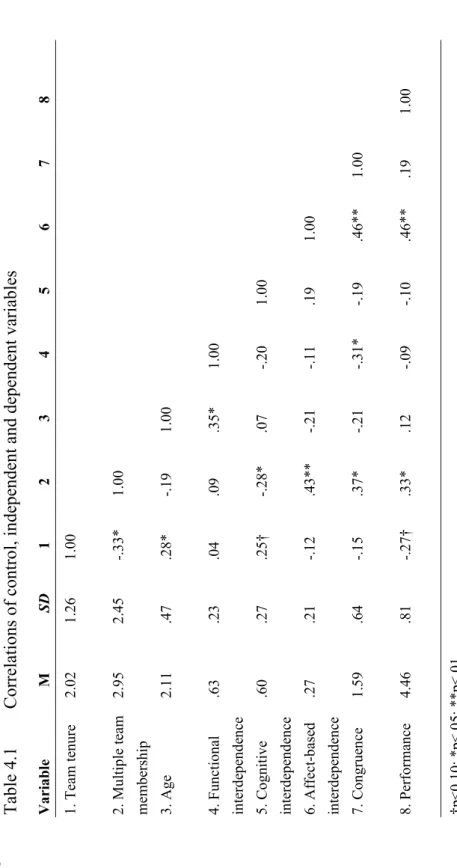
Multiple Interdependencies and Workgroup Effectiveness
PROEFSCHRIFT
ter verkrijging van
de graad van Doctor aan de Universiteit Leiden, op gezag van de Rector Magnificus Dr. D.D. Breimer,
hoogleraar in de faculteit der Wiskunde en Natuurwetenschappen en die der Geneeskunde, volgens besluit van het College voor Promoties
te verdedigen op woensdag 5 april 2006 klokke 14.15 uur
door
Sonja Rispens geboren te Leeuwarden
Promotiecommissie:
Promotor: Prof. Dr. K.A. Jehn Referent: Prof. Dr. R.P.M. Wittek
(Rijksuniversiteit Groningen)
Overige leden: Prof. Dr. H.B.M. Molleman
(Rijksuniversiteit Groningen)
Prof. Dr. E. van Dijk Prof. Dr. N. Ellemers
Print: Offsetdrukkerij Ridderprint B.V.
Contents
Acknowledgements
CHAPTER ONE
1.1 Introduction 1
1.2 Coordination and Interdependence 2
1.3 Conceptual Model and Research Questions 4
1.4 Conclusion 6
CHAPTER TWO
2.1 Introduction 9
2.2 Coordination in organizations 9 2.3 Interdependency literature 22 2.4 Bridging the gap in the literature 28
2.5 Outcomes 31
2.6 Overview of the dissertation 33
CHAPTER THREE
3.1 Introduction 35
3.2 Theoretical Background 36
3.3 Theoretical framework and hypotheses 38
3.4 Method 44
3.5 Results 48
3.6 Discussion 54
CHAPTER FOUR
4.1 Introduction 61 4.2 Theory and hypotheses 65
4.3 Method 71
4.4 Results 74
CHAPTER FIVE
5.1 Introduction 83 5.2 Theory and hypotheses 86
5.3 Method 96
5.4 Results 101
5.5 Discussion 109
CHAPTER SIX
6.1 Introduction 113
6.2 The empirical findings: Synthesis of the 3 studies 113 6.3 Contributions 118
6.4 Limitations and future research 120
6.5 A note on the implications for organizational practice 124
REFERENCES
SAMENVATTING
Acknowledgements
This thesis would have been a ‘should have been’ without the support of many people. I want you to know how grateful I am.
There are a few people I want to mention specifically. First of all, I appreciate the help and advice of Auke Schaafsma and
Chrétienne Hoek without whom it would have been so much harder (if not impossible) to collect the data at the railroad company. I also want to thank Jan Kratzer for generously sharing his data with me. The third empirical study in this thesis was made possible by Gwenny Ruël who generously offered me space in her questionnaire and shared the data with me.
I also want to thank my former colleagues who made my life fun and interesting. I especially want to thank Aleid, Erik, Gwenny, and Petra. Without your support and advice things might have taken a different course. I also want to thank Dirk Pieter van Donk and Jacob de Haan for their help; I really appreciate your endeavors.
Thanks also go to my current colleagues at S&O in Leiden, specifically the social identity group for their comments on my papers and presentations. Special thanks to Marijke and Erik for making me feel at home after I just moved to Leiden. I am also indebted to Lindy who generously offered and proofread this thesis. You are a great friend and colleague. Astrid deserves credits for reading and
commenting on the summary in Dutch. And of course, I express my
make the work environment an enjoyable one.
with the both of you as my friends! Gwenny deserves a big hug, not for just being a nice colleague, a coauthor, and a mental coach but especially for becoming a very dear friend. Gert deserves my gratitude for his strong belief in me. I want to thank Aleid for the fun during ‘borrels’ and for the many discussions about life, work, and
everything in between. I also want to thank Lut, Tim and Corrie for the shared interest in concerts, safety issues in squats, discussions about politics and its correctness; in sum, for being who they are.
I thank my brother Hans, for being my paranimf (and for being so excited when I asked him to), but also for the numerous concert and bar visits we made. You are a very fun guy to hang out with. Gelly, I hold you responsible for my tenacity and in that way also for me finishing this book. Thanks for your unconditional love and support. Michel, although relatively new in my life, you had to put up with my outbursts of stress, writing blocks, and changing energy levels during these lasts months. Thanks for your love, patience, and support. You have been simply wonderful.
CHAPTER ONE
Prologue
1.1 Introduction
This thesis focuses on the question how the alignment of interdependency leads to an effective level of performance in work groups or teams. For the continuance of every organization it is important to organize individuals so that their actions are aligned (the coordination problem) (Heath & Staudenmayer, 2000). In this thesis I claim that the relationship between coordination and effectiveness is still not clearly understood and lacks theoretical clarity and empirical evidence.
Few researchers have empirically studied the coordination-performance relationship (Birnbaum 1981; Cheng 1983), and these studies show mixed results, which will be described more thoroughly in chapter two. For now it is sufficient to say that past theory has not yet been able to explain the complex relationship between coordination and performance. The little empirical research on the coordination-performance relationship in organizations suggests that there is a limited understanding of this connection even though the literature highlights the importance of coordination. Gaining more knowledge about this complex relationship is especially interesting since organizations increasingly install teams, which is thought to be a more productive and effective way of organizing (Tjosvold, 1991; Katzenbach & Smith, 1993; Nijstad, 2000) yet which also require a high amount of coordination.
CHAPTER ONE
objective of this thesis is to gain insight in the effect of coordination on performance by investigating the process of coordinating interdependencies. I extend prior research, which examines task interdependencies almost exclusively, by focusing on other interdependencies as well that exist among work group members.
The outline of this chapter is as follows. First, I will briefly introduce the different concepts of coordination and interdependencies, and identify their interrelationship. Second, I present the research question and research problems in section 1.3. This chapter ends with an outline of the thesis.
1.2 Coordination and Interdependence
CHAPTER ONE
framework, therefore, combining static and dynamic viewpoints (Hansen, 2001). Furthermore, I focus on Malone and Crowston’s (1994) aspect of coordinating actors, which means that I concentrate on the interpersonal interdependencies. Most organizational literature on coordination focuses mostly on tasks and resources, often neglecting the actors who need to perform the tasks. Organizations are social entities; conglomerates of individuals occupying different jobs and positions (Simon, 1947/1997). Neglecting these actors, or taking them for granted, means that the informal or more social aspect of (the process of) coordination is ignored. Coordination mechanisms are in this thesis defined as instruments to manage interpersonal interdependencies in order to produce or create coordination.
CHAPTER ONE
1.3 Conceptual Model and Research Questions
The central question this dissertation addresses is how coordination of interdependencies leads to the effective performance of individuals and groups. Because coordination and interdependency are so closely intertwined, and coordination is actually about the alignment of interdependence, the question becomes how the different interdependency types might affect effectiveness.
Interdependence by nature is a relational concept. Therefore I used a relational approach in studying the different interdependencies among group and team members in organizations. Moreover, this research is based on the network approach which views organizations as consisting of multiple networks through which resources flow (Tichy, 1980). Using a network theory approach allows me to study different types of interdependency more comprehensively than prior work. The network approach is based on a few important assumptions: 1) actors and their actions are viewed as interdependent, 2) relational ties between actors are channels for transfer of resources (material and/or nonmaterial), 3) network models focusing on individuals view the network structural environment as providing opportunities for or constraints on individual action, and, 4) network models conceptualize structure as lasting patterns of relations among actors (Wasserman & Faust, 1992: p. 4).
CHAPTER ONE
Sitkin & Roth, 1993; Uzzi, 1997). Following these authors, the structure of interdependence relationships is seen as a coordination mechanism, meaning that such a network structure serves as an instrument for managing the different interdependencies. Such a structure (i.e., coordination mechanism) might be more or less efficient and effective. In other words, I do not presume that such a structure is by definition effective. So even though the alignment of the interdependency relationships might not be the most effective, the network theory approach allows application of the concept of coordination. Furthermore, this conceptualization leaves room for the often neglected informal coordination mechanisms (cf. Larsson, 1990) and offers the possibility to study the social side of coordination as well.
The main research question this study addresses is:
Main Research Question (RQ): How do multiple types of
interdependence affect both individual and group effectiveness?
The first issue that needs clarification is by what mechanisms interdependencies influence or determine the level of effectiveness. In order to investigate this, the first main issue this thesis addresses is how the different interdependencies affect effectiveness. Effectiveness is a multidimensional construct (Chang & Bordia, 2001; Hackman, 1987) and defined in this dissertation as encompassing performance (i.e., the goal attainment level), satisfaction, extra-role behavior, and learning-goal achievement.
RQ1: How do interdependencies influence effectiveness?
With respect to the research question, I also address the differences in levels of analysis. Are the effects of the different interdependencies the same for individual and group outcomes or not?
CHAPTER ONE
the effectiveness of individuals?
RQ1b: What effect do the different interdependencies have on group effectiveness?
The effect of the interdependencies on effectiveness can be investigated separately for each type. But the interdependencies coexist in organizations and are very likely to integratively influence effectiveness (Lindenberg, 1997).
RQ2: What is the integrative effect of the interdependency types on performance?
Again, both the individual as the group level will be accounted for:
RQ2a: What is the integrative effect of the interdependency types on the effectiveness of individuals?
RQ2b: What is the integrative effect of the interdependency types on group effectiveness?
In this thesis I will study how interdependency and its alignment affect individual and group outcomes in an organizational setting. Specific attention is given to the social side and the process of coordination. In the empirical chapters interdependency is studied in two departments of a railroad company, in research and development (R&D) teams, and student workgroups. The purpose of this research is to generate and test hypotheses concerning the effect of multiple interdependencies on performance. The results of this study should result in new information about the coordination-performance relationship.
1.4 Conclusion
CHAPTER ONE
CHAPTER TWO
Theoretical Background
2.1 Introduction
In chapter one, I already noted that in the organizational coordination literature the social side of coordination has not received the attention it deserves (for exceptions see Gittel, 2000, 2001, and 2002). The reasons why I formulated this critique are described in this chapter and I will position my research in the organizational literature and emphasize how the investigation of the social side of coordination might enhance our understanding of the coordination-performance relationship.
Section 2.2 presents a discussion of coordination in the organizational literature and its link with performance. The literature on interdependencies within organizations is discussed in section 2.3, considering both the organizational literature as well as the social-psychology literature. Insights from social social-psychology are beneficial for the study of interdependencies among organizational members, which the organizational literature often ignores. In section 2.4, a solution in the form of my research plan is suggested to bridge the gaps in the past research and literature. In section 2.5 of this chapter, I discuss the literature on the dependent variable of this research, which is effectiveness. This chapter ends with an overview of the thesis.
2.2 Coordination in organizations
CHAPTER TWO
communication, authority, specialization, and purpose. Simon (1947) described an administrative organization as a system of coordinated behavior. Organization members are expected to focus their behaviors on specific goals that are given as organization objectives. This leaves the problem of coordinating multiple members’ behaviors – of providing each one with knowledge of the behaviors of the others upon which s/he can base her/his own decisions and behaviors (cf. Simon, 1947). Fayol (1949) thus defined coordination as those activities that connect all individual efforts and direct them toward a common objective. A more recent yet similar definition states that coordination is the management of interdependencies among actors, activities, and goals (Malone & Crowston, 1994). The mechanisms of how to obtain coordination are documented in the organizational literature and are described in the next section.
2.2.1 Mechanisms of coordination in organizations
CHAPTER TWO
customers deposit or withdraw money.
Work processes that are arranged such that person A needs to perform her/his task because the completed task of person A is a prerequisite for person B to be able to start and perform her/his task, are typified as sequentially interdependent and should be coordinated by a plan (Thompson, 1967). A simple example of a situation in which this type of task interdependency is present is an assembly line where the end product of one worker, for example a doll, is the input for another worker’s task, to paint the face of a doll. In other words, output of one worker is the input of another.
Reciprocal interdependence means that operations of group members precede and act as prerequisites to all of the other’s. An example of a group or organization experiencing this type of interdependency is a string quartet (Murnighan & Conlon, 1991); they need each other to perform music. This type of interdependence is best coordinated by mutual adjustment and is the most demanding of communication and decision effort (Thompson, 1967).
CHAPTER TWO
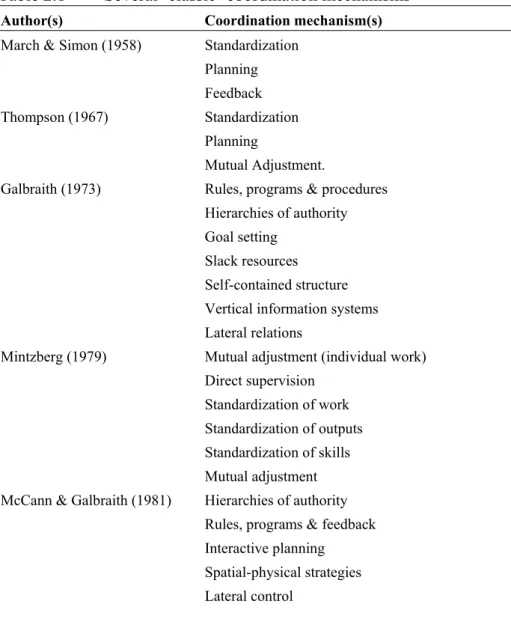
rules), personal (vertical supervision), and group (formal and informal meetings) modes. These modes, like Thompson’s (1967) classification, are appropriate in the described order for increasingly complex situations. The more tasks are interdependent, the more the use of personal, horizontal coordination modes and group coordination modes is necessary (Van de Ven et al., 1976). Although several researchers in the organizational literature have used different terms, they all seem to agree on different levels of task interdependency requiring different coordination mechanisms. In table 2.1, several examples of the various suggested coordination mechanisms are listed. The suggested coordination mechanisms in the organizational design literature are all instruments to align the interdependency that is caused by the division of labor: task (i.e., functional) interdependence. In the following sections I show that there is limited empirical evidence that the suggested coordination mechanisms do what they are supposed to do. In addition, coordinating functional interdependency while it is likely that more types of interdependence exist among organizational members is not enough to ensure effectiveness. Therefore, in this thesis I suggest two additional types of interdependence.
2.2.2 The coordination-performance relationship: empirical evidence
CHAPTER TWO
Table 2.1 Several ‘classic’ coordination mechanisms
Author(s) Coordination mechanism(s)
March & Simon (1958) Standardization Planning Feedback Thompson (1967) Standardization
Planning
Mutual Adjustment.
Galbraith (1973) Rules, programs & procedures Hierarchies of authority Goal setting
Slack resources Self-contained structure Vertical information systems Lateral relations
Mintzberg (1979) Mutual adjustment (individual work) Direct supervision
Standardization of work Standardization of outputs Standardization of skills Mutual adjustment McCann & Galbraith (1981) Hierarchies of authority
Rules, programs & feedback Interactive planning
Spatial-physical strategies Lateral control
(Larsson 1992: p. 7)
CHAPTER TWO
coordination-performance relationship within organizations and tried to establish this relationship empirically. Birnbaum (1981) investigated coordination and performance in university research groups. Birnbaum’s main hypothesis - that if university research group members agree on the importance of research outputs as organizational goals then high performance groups will be less integrated (coordinated) - is confirmed by the data. These findings seem to indicate that increasing the coordination in research teams may result in decreased research output. In other words, increasing coordination results in lower output levels. This finding seems to challenge the major assumption in organizational literature. However, Birnbaum (1981) does not consider the quality of coordination (i.e., how the interdependencies are managed), but instead only focuses on the amount of needed coordination and the accompanying costs. Birnbaum concludes that more coordination (i.e., coordination costs) is not associated with higher performance.
CHAPTER TWO
empirical study conducted by Lawrence and Lorsch (1976) supports the findings of Cheng (1983). These authors also found a positive relationship between coordination and organizational performance, although their study was conducted on a higher aggregation level, that is, on an organizational instead of work unit level. A year later, Cheng (1984) again studied the relationship between coordination and performance in high interdependence situations. This study clarified that in situations of high interdependence the relationship between coordination and output quality in groups is more positive than in situations with lower uncertainty levels. This finding seems to replicate the results of the 1983 study, albeit this time for the quality of the output instead of quantity.
The results of the Birnbaum (1981) and the Cheng (1983) study seemingly contradict each other. According to Birnbaum (1981), more coordination does not lead to an increase in performance. Cheng (1983, 1984) on the other hand, states that the more interdependence, the more coordination is needed, and hence, the more positive the impact coordination has on performance. In low task uncertainty situations, equivalent to research groups with little or no interdisciplinary characteristics – which are characterized by low levels of interdependence – the effect of coordination on performance is not that strong according to Cheng. Although the results of Birnbaum (1981) seem to imply otherwise, I have to stress the fact that Birnbaum was mainly interested in the costs of coordination - higher coordination costs did not lead to higher performance levels- whereas Cheng was interested in the amount of coordination1. It is also worth indicating that in Birnbaum’s (1981) study, goal agreement is a very important variable that already implies a certain state of coordination2. Having said this, the studies of Birnbaum (1981) and 1 Although it has been said that more coordination also entails more costs (e.g. Galbraith, 1973; Thompson, 1967) Cheng does not mention the costs at all in his study (1983).
CHAPTER TWO
Cheng (1983) might not be as different as thought at first glance. Nevertheless, as Cheng (1984) and Cheng and Miller (1985) suggested, the effect of coordination on performance is not as simple or as straightforward as many analysts have believed, but is affected by several contingencies.
What characterized these early studies on the relationship between coordination and performance (Birnbaum, 1981; Cheng, 1983, 1984; Cheng & Miller, 1985) is the static perspective of coordination. Coordination is seen as a ‘state’ rather than a process, and furthermore, it remains a question whether or not the coordination itself was appropriate or effective given the situation. Birnbaum (1981) only mentioned the costs of coordination, whereas Cheng (1983, 1984) only talks about the (super-) additive effect of coordination. There are no clues about how the task dependencies are actually coordinated, that is, there is no attention to (the effectiveness of) the coordination mechanisms.
CHAPTER TWO
scarce (Gittel, 2002). Only the studies of Lawrence and Lorsch (1976) and Khandwalla (1974) find a correlation between the degree of task interdependence and the use of these coordination mechanisms, but whether these mechanisms are more effective in high task interdependency situations was not tested (Gittel, 2002). Gittel’s (2002) own empirical study does find positive effects of all these coordination mechanisms on several performance outcomes of care provider groups. Authors have also suggested installing teams as a means of facilitating coordination in highly interdependent situations (e.g., Van de Ven et al., 1976). However, the empirical evidence of the effectiveness of using teams for the organization as a whole seems to be limited to descriptive case studies (Cohen & Ledford, 1994; Glassop, 2002; Gupta & Ash, 1994). This thesis contributes to the organizational design literature by empirically examining the effect of interdependency among group members and its alignment on individual and group outcomes.
In sum, the literature on how to obtain coordination is large but there is hardly any empirical evidence to back up the claims made by organizational theorists. Since the 1970s and 80s, little empirical research has been devoted to the coordination-performance link within organizations, exceptions being the recent work of Gittel (2000, 2002, 2004) and the studies in the area of information systems (e.g., Malone & Smith, 1988; Von Martial, 1989, Wilensky, 1983) and software development teams (e.g., Andres & Zmud, 2002; Espinosa et al., 2004). While the assumed relationship between coordination and performance perseveres and is very alluring to common sense, I believe it is understudied. This thesis therefore re-examines this relationship by taking three different interdependency types into account.
2.2.3 Criticism on coordination theory in the organizational literature
CHAPTER TWO
mechanisms of coordination. What exactly do these mechanisms entail, are there weaknesses with respect to the suggested mechanisms and organizational reality? Second, I criticize the contingency perspective taken in most of the empirical studies on the coordination-performance relationship.
The various mechanisms suggested in the ‘classical’ organizational design literature (see also table 2.1) between the late 1950s and 1980 for coordination are almost all formal mechanisms. Formal coordination mechanisms are designed in advance by others than the actors whose actions are to be coordinated (cf. Larsson, 1990). Mainly focusing on pre-planned coordination (except feedback, mutual adjustments, and direct contacts) implies that the informal, and often more social aspect of coordination, is neglected. This might be detrimental for explaining the coordination-performance relationship, since the official blueprint, plan, or organizational chart can never completely determine the social contacts between the organizational members and in every formal organization an informal organization emerges (Blau & Scott, 1963). The accomplishments of an organization can be much more attributed to unintended or unexpected occurrences than to intentional actions (Cunha & Cunha, 2002). Furthermore, even if the task interdependencies are efficiently coordinated, problems of coordination at the social level may arise (cf. Jones, 1984).
CHAPTER TWO
(1973) mention some more social, that is, interactive, coordination mechanisms such as mutual adjustment, team meetings and feedback. However, these initiatives appear to lack conceptual development compared with the formal coordination mechanisms (cf. Larsson, 1990). In other words, the missing attention to and the lack of conceptual clarity of spontaneous informal coordination are important reasons to re-investigate the coordination-performance relationship. These same reasons clearly must have inspired recent studies in which the social and informal side of coordination receive new attention (e.g., Gittel, 2000, 2002, 2004) as does the attention to the role of shared cognition in the coordination process (e.g., Levesque et al., 2000; Mohammed & Dumville, 2001; Olivera & Argote, 1999).
Gittel (2000, 2002), for example, studied the so-called relational coordination between organizational members, which refers to spontaneous coordination. Relational coordination is characterized by frequent, timely, problem solving communication, and by helping, shared goals, shared knowledge, and mutual respect (cf. Gittel, 2000: p.517). Gittel (2002) empirically established the mediating role of relational coordination between formal coordination mechanisms and several performance measures of care provider groups.
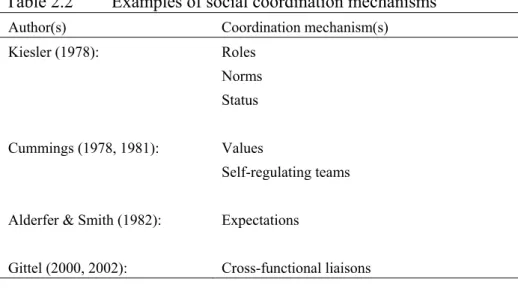
Table 2.2 Examples of social coordination mechanisms
Author(s) Coordination mechanism(s)
Kiesler (1978): Roles Norms Status
Cummings (1978, 1981): Values
Self-regulating teams
Alderfer & Smith (1982): Expectations
CHAPTER TWO
CHAPTER TWO
inherent to the task (e.g., Thompson, 1967), which I propose is critical to unravel the complex relationship between coordination and performance that previous research and theory have not yet accomplished.
Related to above reasoning, in the recent studies by Gittel (2000, 2002) the neglect of the concept of interdependence as the main component of coordination, does not add to our understanding of the relationship between coordination and performance, since Weick (1979) called interdependence the basic constitutive organizational process. The more dated studies and theories of organizational coordination discussed earlier seem to focus only on the type of interdependence that stems from the division of labor (e.g., Birnbaum, 1981; Cheng, 1983; Thompson, 1967). For a full understanding of the relationship between coordination and performance, I argue that organizational research should focus on the process of coordination among organizational members. Some authors argue that coordination resembles learning-by-doing and that organizations simply become more effective over time (Sorenson, 2003). Even then the question still remains how that process works and what factors are important. From the perspective of group theorists and social psychologists, coordination is more fundamentally an interactional process among group or organizational members (Gittel, 2002). According to Lindenberg (1997), in order to understand group processes – such as coordination - different interdependencies need to be studied as a whole. Only then researchers can investigate the optimal level and profile of interdependence between members of a group or organization and organize their coordination accordingly. In other words, managing interdependencies involving the group’s tasks and goals alone does not guarantee effective outcomes (Cohen & Cohen, 1991; Gittel, 2002; Van der Vegt, Emans & Van de Vliert, 1998; Wittek, 1999). The next section will deal with the issue of interdependence among organizational and group members in detail.
CHAPTER TWO
performance in organizations: 1) there is a lack of interest in, and theoretical clarity of, the social side of coordination, 2) there is a lack of attention towards the concept of interdependence, and to establish its amount, among organizational and group members as a direct antecedent of coordination, and 3) if there is attention for the interdependence involved, researchers primarily focus on task interdependency.
2.3 Interdependency literature
Interdependence is a key component of coordination. To be specific, interdependence, due to the division of labor, is the reason why coordination is necessary in organizations (Crowston, 1997; March & Simon, 1958). Despite its essentiality, further development and investigation of this concept has received little attention in the organizational design literature. However, researchers did establish a positive association between task interdependence and an overall use of various coordination mechanisms (Cheng, 1983; Van de Ven, et al., 1976). Coordination and interdependence are not only research topics within organization studies but are also a main focus of research in social psychology. Lindenberg (1997) offers an extensive overview of the study of groups as the study of different types of interdependencies. In his overview, Lindenberg classifies three interdependence types: functional, cognitive, and structural interdependence. Initially these interdependencies were studied together as equally interesting sides of groups and their processes. The theory however, did not develop fully into a mature state, and as a consequence, the several interdependence types were only studied separately later on (cf. Lindenberg, 1997). I will briefly introduce each of the interdependency types below.
Functional interdependence refers to interdependency
CHAPTER TWO
commonly referred to in the organizational literature (e.g., Birnbaum, 1981; Cheng, 1983, 1984; Thompson, 1967; Victor & Blackburn, 1987) because they are the basis of organizations. Although researchers have differentiated among subtypes of this interdependence (e.g., task, pooled, sequential interdependence), these types all refer to interdependencies connected to the groups’ goals and tasks (Lindenberg, 1997; Wittek, 1999).
Cognitive interdependence refers to the fact that people are
interdependent by sharing a common system of categories and stereotypes (shared frame of reference) to satisfy their need for ordered and predictable information about the world. However, individuals are also interdependent in terms of affecting each other’s categorizations in any given action situation (Lindenberg, 1997). Influential work in developing research on cognitive interdependence (cf. Lindenberg, 1997) has been the work of Sherif (1966) in which it was argued that people can act as individuals or as group members, and the way they act differs from case to case.
CHAPTER TWO
1997; Krackhardt & Stern, 1988; Sparrowe, Liden, Wayne & Kraimer, 2001 for exceptions).
2.3.1 Refining Lindenberg’s classification
In this thesis, I propose a model that incorporates different types of interdependence and their effect on performance integratively. In addition, I explicitly view interdependence as a relational feature. This means that interdependencies are comprised of interpersonal relationships. Use of a network theory approach makes it possible to study the different types of interdependency more comprehensively and integratively than prior research. Using a network theory approach, given that social network research is mainly concerned with structural interdependency, will advance prior work. The consequence of a network theory approach is that the typology of Lindenberg (1997) cannot be copied as such into this study. Network studies are mainly focused on structures of interpersonal relationships (pattern of ties) and how certain characteristics of a structure (for example the centrality or marginality of individuals) enable or impair the efforts of individuals or collectives. What type of relationship constitutes a certain structure is often neglected in network studies (Podolny & Baron, 1997) but is also not the main concern when studying those structural interdependencies. However, in this current research I argue that it is important to make a distinction between the structural features of interpersonal interdependency relationships as well as the content of those relationships (i.e., the type of interdependency). The model I propose in this dissertation advances the examination of the coordination-performance link by incorporating several interdependencies and takes a view that theoretically integrates the three types.
CHAPTER TWO
interdependency relationship, individuals are dependent upon one another for task-related resources without which it would be impossible to perform the task. The pattern or structure of these relationships can provide opportunities or constraints on the actions of the individuals. In a cognitive interdependency relationship, (social) information regarding the task or the group is the content that flows through the ties (relationships) between organizational members. Tichy, Tushman and Fombrun (1979) already noted there is also an exchange of ‘affect’ or ‘liking’ in organizations. People are also interdependent upon one another for a feeling of well being, for social acceptance (Baumeister & Leary, 1995). This interdependency type is in this current research added to Lindenberg’s functional and cognitive interdependence. Affect-based interdependencies are introduced to the past conceptualization, defined as those relationships by which people get their feeling of well being, of social acceptance. Again, structural features of this last type of interdependence are accounted for as well in using a network theory approach.
In sum, the different interdependence types are conceptualized as different relationships between organizational members. The pattern of those different relationships (i.e., networks) can be seen as coordination mechanisms, meaning that those network structures serve as an instrument for managing different interdependencies (e.g., Sitkin & Roth, 1993; Uzzi, 1997; Zucker, 1986). Such social networks can help individuals to coordinate critical interdependencies and to overcome the dilemmas of collective action (Blau 1955; Gargiulo 1993; Gulati 1995a; Kotter 1982; Pfeffer & Salancik 1978).
2.3.2 Three interdependency types: concepts and earlier research
The three interdependency types that are central in this thesis are conceptualized in this section and the empirical knowledge is reviewed below.
CHAPTER TWO
interdependence. Wageman (1995), for example, examined task and outcome interdependency and their integrative effect on group effectiveness. Wageman and Baker (1997) also investigated the effects of task- and reward interdependency on group behavior and outcomes. Van der Vegt and coauthors have studied task and outcome interdependence in groups (Van der Vegt, Emans & Van de Vliert, 1998, 1999, 2000; Van der Vegt & Janssen, 2001). Again, like the organizational design studies (e.g., Galbraith, 1973; Thompson, 1967), the interest in functional interdependence is not new. Functional interdependencies are a consequence of the division of labor, and since they are so significantly tied to the groups’ task, I conceptualize them as workflow relationships among group members. Workflow is defined by Van de Ven and Ferry (1980: p. 242) as the materials, objects or clients and customers that are transacted between units, hierarchical levels, and organizations. Brass (1981) further conceptualizes workflow in network terms. Brass defines workflow as a network that locates task positions to each other. The patterned interactions that occur between related positions as the work flows through the organizations are the basis for the relationships among different positions. Workflow transactions are the inputs to and outputs from task positions (Brass, 1981: 332). I use Brass’ definition and define in this research functional interdependence as those relationships between group members in which necessary task resources are exchanged in order to be able to perform one’s task.
CHAPTER TWO
The traditional view on cognition is individualistic; however, a number of studies have examined the impact of social factors on the content of cognition and the processes of underlying cognitive activity (cf. Levine and Moreland, 1999). The construct of cognitive interdependence that is used in this current study is closely related to what is labeled as shared cognition. Although a myriad of terms and concepts (e.g., shared cognition, shared mental model, team situation awareness, collective mind, transactive memory systems) has been used by researchers, they all refer to a socially constructed cognitive structure that represents shared knowledge or beliefs about an environment and its expected behavior (Druskat & Pescosolido, 2002). The body of evidence which suggests that shared cognition has a positive influence on group processes and outcomes (e.g., Klimoski & Mohammed, 1994; Levesque, et al., 2001) is growing, but has not been directly linked to group member interdependencies.
Regarding the question of what must be shared, Cannon-Bowers and Salas (2001) investigated the social cognition literature and identified four broad categories of which the following two are captured in the current research: (1) task-related knowledge, (2) values/beliefs about group processes. Both categories are captured in the current research and will be further discussed in the empirical chapters.
CHAPTER TWO
words, a high level of cognitive interdependence among group members resembles a situation of shared cognition.
The last category of interdependence- affect based interdependency- refers to the interdependency people experience in their quest for a feeling of social well being, of social acceptance, which according to some researchers, is one of the universal goals people strive for (Coleman, 1990; Lindenberg, 1997; Wittek, 1999). Employees, as social beings, seek belonging and acceptance (Baumeister & Leary, 1995). Affect-based interdependency in this thesis is defined as those relationships by which people get their feeling of well-being and social acceptance. These relationships are operationalized as friendship relationships among workgroup members. Research has shown that a significant part of a person’s social network consists of personal relationships with colleagues (Van der Poel, 1993). Being involved in relationships that generate feelings of social well-being and acceptance means that individuals are influenced by those relationships. After all, friendship is thought to serve several functions, such as stimulating companionship (doing enjoyable things together), help (e.g., providing guidance), and self validation (reassurance), among other things (Buhrmester, 1990; Buhrmester & Furman, 1987; Bukowski et al., 1994; Jones, 1991; Mannarino, 1976).
2.4 Bridging the gap in the literature
CHAPTER TWO
organizations, I use a relational perspective. Using a network theory approach allows me to simultaneously investigate different interdependencies, which is necessary in order to enhance our understanding of the coordination within workgroups (Lindenberg, 1997). I extend Lindenberg’s social psychology-based typology of interdependency by considering affect-based interdependence in addition to functional and cognitive interdependencies. Previous research suggests that the coordination of functional interdependencies (e.g., Thompson, 1967; Wageman, 1997), of cognitive interdependencies (e.g., Levesque, et al., 2001; Faraj & Sproull, 2000), and of affect-based interdependencies (e.g., Jehn & Shah, 1997) each separately affects performance levels. However, previous research has left us with an insufficient theoretical framework to explain the coordination-performance relationship. This thesis therefore incorporates and integrates three interdependence types and investigates their effect on effectiveness in workgroups. The model in which all interdependency types are studied integratively will be described in more detail in the following chapters.
CHAPTER TWO
criticism on organizational design theories in which he states that prior research ignored self-coordination. Even more recently, authors have noted that self-coordination is rather inadequately understood (Alsène & Pichault, 2004).
Finally, throughout the previous sections I cited works on both the organizational and group level. The starting point of this research is the organizational design literature; this thesis addresses individuals in workgroups for two main reasons. First, more and more organizations install workgroups and teams (Kozlowski & Bell, 2003) in the belief that it is the most effective way of organizing (Tjosvold, 1991). Second, for organizations to become effective, group members’ interdependencies need to be aligned (i.e., coordinated). I believe, however, that insights from this study can be valuable for organizational level issues as well. Individuals and groups are the building blocks for organizations and understanding the mechanisms at the level of individuals in groups will aid the understanding of such complex processes as coordination at organizational level.
CHAPTER TWO
that specific goal. The third dataset I used in this thesis (chapter 5) are student workgroups. These groups also have a limited life span and clear-cut goals following the definitions of a group.
2.5 Outcomes
In past research, different definitions of performance are used. In one paper, for instance, by Campion et al. (1996) performance is the effectivity of a group and of the individuals. In others, such as Gooding & Wagner (1985), performance is seen as the efficiency, and in a third paper (Gittel, 2002) performance is defined as effectiveness and efficiency. Authors have stated that performance is a multidimensional concept (e.g., Chang & Bordia, 2001). Therefore, I conceptualize performance as effectiveness and I consider in this thesis four aspects of effectiveness: the level of goal attainment (i.e., actual performance), extra-role behavior, satisfaction, and learning- goals achievement.
CHAPTER TWO
They regarded productivity as a function of the formal organization (the authority structure, role specifications, technology) and the ‘logic of facts’. Cooperation on the other hand referred to acts that served more of a maintenance purpose, to ‘maintain internal equilibrium’. Cooperation thus included the day-to-day spontaneous pro-social gestures of individual accommodation to the work needs of others, whereas productivity was determined by the formal or economic structure of the organization. Roethlisberger and Dickson viewed cooperation as a product of informal organization and, significantly, the ‘logic of sentiment’. The latter was seen as influenced both by the quality of work experience and by previous social conditioning. Thus, for a functioning group, it is not only important that people carry out their specific role requirements in a dependable fashion, but also that there must be innovative and spontaneous activity that goes beyond one’s specific task-role description (Katz, 1964). Citizenship or extra-role behaviors are important because they lubricate the social machinery of the organization. They provide the flexibility needed to work through many unforeseen contingencies; they enable participants to cope with their interdependence on each other. This type of behavior is discretionary, not directly related or explicitly recognized by the formal reward system, and in the aggregate promotes the efficient and effective functioning of the organizations (cf. Organ, 1988).
Satisfaction is an important aspect of individuals’ effectiveness (Hackman, 1987). In this study satisfaction is defined as (depending on the boundaries the different datasets have) job satisfaction (Locke, 1976) and member satisfaction – the extent to which group members’ experience with the group is satisfying- (Jehn & Chatman, 2000).
CHAPTER TWO
2.6 Overview of the dissertation
In this dissertation I focus on the question of how coordination influences both individual and group performance. This question is investigated by examining how three different interdependency types (functional, cognitive and affect-based) both separately, as well as integratively, influence performance. Furthermore, I also investigate how the alignment of these three interdependency relationships among group members affects four aspects of effectiveness (goal attainment; extra-role behavior; satisfaction, and learning-goal attainment).
For this thesis research, I tested my hypotheses using three different datasets, resulting in three empirical studies. In chapter three, the main effects of the different interdependency types on individual performance are investigated within a Dutch railroad company. The study reported in chapter three made use of data that were collected specifically with this current research in mind. The different interdependency types and their (main and integrative) effects on performance of research and development teams are studied in chapter four. This chapter focuses completely on the network theory aspect of interdependency. The data used to test the hypotheses were collected by Kratzer (2001). In chapter five the interdependency types and their relationship with performance are studied using student workgroups. These data were collected in collaboration with others at the business school of Groningen University.
Using datasets that were constructed with other research questions in mind than the current ones (chapter 4 and 5) has its positive and less positive side effects. On the positive side, these examinations can thus be considered conservative tests of the theory. In addition, they allow me the ability to triangulate constructs across multiple methods and measurement techniques (Bateman & Ferris, 1984). The minor drawback is that I am not able to test all hypotheses in each dataset.
CHAPTER TWO
CHAPTER THREE
Interdependency and Individual Effectiveness in a
Railroad Company
33.1 Introduction
Much of the organizational literature on coordination stems from researchers and scholars of organizational design. Scholars in this tradition have focused on how to coordinate interdependencies between (sub)tasks by means of several coordination mechanisms (e.g., Galbraith, 1973; Thompson, 1967; Van de Ven, Delbecq & Koenig, 1976). In the organizational literature, the generally held belief is that when organizational units or members can work independently (i.e., there are no task dependencies) then there is nothing to coordinate and, consequently, coordination will not affect performance (Espinosa, Lerch & Kraut, 2004; Malone & Crowston, 1994; Thompson, 1967; Van de Ven et al., 1976). This belief however, is something we dare to challenge. In this paper we use insights based on social psychology literature in which coordination is more fundamentally viewed as an interactive process among the involved individuals. Despite the amount of research in the organizational literature, there is still little known about the process of coordinating individuals and how it relates to performance. Following Lindenberg (1997), we think that even in situations in which task interdependencies are low or even absent, there are other, more social types of interdependence among individuals that need consideration and coordination as well in order for a team, group or even organization to perform effectively. In this paper we present our theoretical ideas about three different interdependency types (i.e.,
CHAPTER THREE
functional, cognitive, and affect-based interdependence) and their effect on individuals’ effectiveness and test these ideas on data collected in workgroups of a Dutch railroad company. Additionally, we explore in this chapter different measurements to empirically capture the different types of interdependence among group members.
3.2 Theoretical Background
More and more organizations install teams and workgroups in the belief that is the most effective way of organizing (Katzenbach and Smith, 1993; Nijstad, 2000; Tjosvold, 1991) and this way of organizing is believed to benefit the organization as a whole, although only anecdotal evidence exists of this latter conviction (cf. Delarue, Gryp & Van Hootegem, 2003; Hackman, 1998). The question that is of interest here is therefore under what conditions individuals in workgroups will be effective. The topic that is inherently related to this question is coordination. Coordination in general refers to the alignment of individuals’ actions (Heath & Staudenmayer, 2000). Coordination is necessary due to the division of labor in organizations that creates task interdependencies (Crowston, 1997; March & Simon, 1958; Thompson, 1967; Galbraith, 1973; Gittel, 2000). Already in 1938 Barnard stated that coordination is at the heart of organizations. To go even further, coordination is believed to be essential for effective performance (Gittel, 2002; Hage, 1980; Heath & Staudenmayer, 2000). Even though it still is critical to understand how coordination relates to effectiveness because misunderstanding it might endanger the very existence of organizations (Heath & Staudenmayer, 2000), there has not been a lot of attention devoted towards the relationship between coordination and effectiveness within organizations in the recent organizational literature (Gittel, 2002; Heath & Staudenmayer, 2000) and how this affects individual effectiveness.
CHAPTER THREE
1981; Cheng, 1984). Since the 1980s little empirical organizational research has been devoted to empirical examine and hence to explain the complex relationship between coordination and performance within organizations4 . The general opinion was that the coordination mechanisms developed to manage interdependencies within organizations were sufficient even though there is hardly empirical evidence supporting the effectiveness of the coordination mechanisms (Gittel, 2002).
In the ‘classic’ literature on coordination in organizations (e.g., Thompson, 1967) the division of work is seen as the most important reason why coordination is so important within organizations. Therefore a lot of attention has been paid to the coordination of work input-output flows in the organizational design literature (e.g., Galbraith 1973; Thompson 1967; Van de Ven, et al., 1976; Woodward, 1965) focusing on standardization, planning, hierarchies of authority, and direct supervision. We refer to this type of interdependence as functional interdependence (cf. Lindenberg, 1997). What is less examined in this classical literature, however, is the attention to the more social and spontaneous side of coordination (Gittel, 2002; Larsson, 1990); there is a lack of knowledge of the group processes involved in coordination. Although, for instance, Thompson (1967) mentions “mutual adjustment” and Van de Ven, et al. (1976) refer to “teamwork” to acknowledge the social side of coordination, the conceptual clarity is not as well developed as the formal coordination mechanisms (cf. Larsson, 1990). Some scholars have stressed the existence of this social side of coordination; for example Kiesler (1979), who mentioned the coordination by social roles and expectations. A more recent example is the work done by Gittel (2000, 2002; Gittel & Weiss, 2004) that focuses completely on the social side of coordination, that is, relational coordination. In sum, some organizational scholars have indeed looked at the social side of
CHAPTER THREE
coordination but either ignored the work processes or did not fully explicate the process of coordination among organizational individuals or units. In this study we are considering both the coordination of the work as well as the social side of coordination.
In social psychological research, coordination is perceived more fundamentally as an interactive process among participants (e.g., Thibaut & Kelley, 1959). It is in this literature that diverse types of interdependency among group members are distinguished that need to be aligned. Lindenberg (1997) reviewed this literature and raises the importance of studying different interdependencies within groups integratively if the desire is to understand group processes, such as coordination. We follow this call for integrative interdependence research, especially because we view organizations as conglomerates of individuals occupying different positions and jobs. When focusing only on the functional or task interdependencies, a large part of the individuals performing those tasks and their behaviors are ignored, resulting in an incomplete understanding of the coordination-performance relationship. We therefore suggest that in addition to functional (task) interdependence, cognitive (Lindenberg, 1997; Wittek, 1999), and affect-based interdependencies need to be taken into account to enable a better understanding the coordination-effectiveness relationship.
In this study we examine individual effectiveness. Effectiveness has three components: 1) the level of goal attainment or in-role behavior (e.g., Van de Ven & Ferry, 1980); 2) extra-role behavior (Katz, 1964); and 3) satisfaction (Jehn & Chatman, 2000; Hackman, 1987). All three components are considered in this chapter. In the next section we define the different interdependency types and describe their expected relationship with effectiveness.
3.3 Theoretical framework and hypotheses
CHAPTER THREE
(Crowston, 1997) and it is interdependence that makes groups interesting (Lindenberg, 1997). In this research interdependence is defined as a state of being in which a person is determined, influenced, or controlled by some other person (DeSanctis, Staudenmayer & Wong, 1999). We define coordination as the alignment of interpersonal interdependencies. In addition to functional interdependence (task interdependence) we consider cognitive and affect-based interdependence. Group members do not only experience some division of labor, but it is highly likely that group members (to a more or lesser extent) share a common perspective about the work and their group. Cognitive interdependence refers to a shared frame of reference (Wittek, 1999) and reflects that group members are interdependent upon each other for defining the situation they are in (Lindenberg, 1997). People tend to create an image of the situation they are facing and of other people involved as well. Information concerning such an image gets shared among group members (whether good or bad) and in that sense individual group members are influenced by the mental model of other group members. Cognitive interdependence is defined in this paper as the sharing of task-related knowledge (Cannon-Bowers & Salas, 2001).
Affect-based interdependence refers to the exchange of feelings of social well-being and social acceptance. Being involved in a relationship in which such feelings are exchanged, means that individuals are likely to be influenced by those, since a person’s feelings of social well-being and acceptance are (at least partly) determined, influenced or even controlled by some other party, and vice versa.
3.3.1 Interdependence and effectiveness
CHAPTER THREE
CHAPTER THREE
Hypothesis 1: Functional interdependence is positively associated
with individual effectiveness.
Regarding cognitive interdependence, the knowledge of one individual about how to perform a certain (sub) task or the best solution for a task-specific problem is likely to be transferred to other people when this person is asked for advice, or even gives advice without being asked. When such knowledge gets shared, it means that most (all) group members think about (a certain aspect of) the task in a very similar way (Cannon-Bowers, Salas & Converse, 1993). Consequentially, team members have compatible expectations for performance (Cannon-Bowers & Salas, 2001) and this gives group members the opportunity to anticipate each other’s actions and needs (Weick & Roberts, 1993). It has also been found that experiencing cognitive interdependence increases the motivation of group members by increasing the sense of responsibility for the job (Campion, Papper & Medsker, 1996; Van der Vegt, et al., 1998; Van der Vegt & Janssen, 2003), and enhancing motivation increases effectiveness (Campion & Medsker, 1992; Shea & Guzzo, 1987).
In addition, the more cognitive interdependence among group members, the more group members give each other advice or help. Being involved in advice relationships suggests good communication and cooperation within the group, and can result in extra-role behavior (Gladstein, 1984). Cognitive interdependence also motivates individuals because it increases the sense of responsibility for the job (Campion, et al., 1996). Enhancing motivation increases effectiveness in individual jobs (Campion & Medsker, 1992; Shea & Guzzo, 1987). Therefore, individuals who have cognitive interdependence relationships are likely to perform their individual tasks better than those who do not.
CHAPTER THREE
people will often perform. Therefore, we expect that individuals who have cognitive interdependence relationships are likely to have a higher level of effectiveness than those who don’t have such relationships, which is reflected in the following hypothesis:
Hypothesis 2: Cognitive interdependence is positively associated with individual effectiveness.
Feelings of social well-being refer to positive affect, which is a major topic in organizational psychology and is found to enhance performance (e.g., Isen & Baron, 1991; Staw & Barsade, 1993; Podsakoff, MacKenzie, Paine & Bachrach, 2000). For example, Isen and Baron (1991) found that (positive) affect enhances cooperation. Staw and Barsade (1993) found that positive affect facilitates decision quality and interpersonal performance. Knoke (1990, p.42) states that affective bonding to the group results in a sense of oneness between a person and the group that strengthens the member’s motives for contributing personal resources to the organization (Bennett & Kidwell, 2001).
CHAPTER THREE
Furthermore, research indicated that negative affect in the sense of hindrance relationships, is detrimental for performance (Sparrowe, Liden, Wayne & Kraimer, 2001).
Having none or a few friends among group members can be marked as a low level of affect-based interdependence, whereas being friends to most or all group members can be marked as having a high level of affect-based interdependence. Then, based on the above, it can be hypothesized that individuals experiencing high levels of affect-based interdependence will be more effective than individuals with no or low levels of affect-based interdependence.
Hypothesis 3: Affect-based interdependence is positively associated with individual effectiveness.
CHAPTER THREE
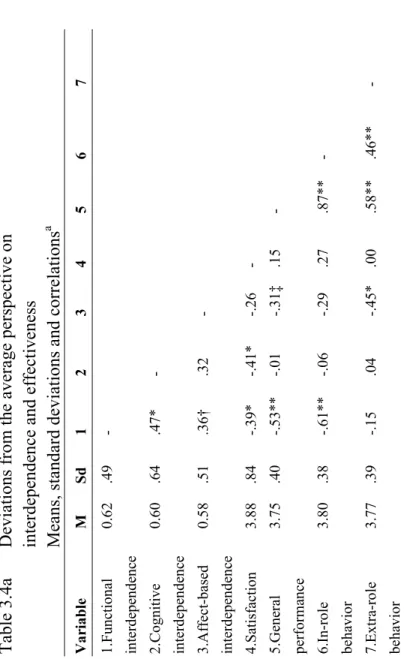
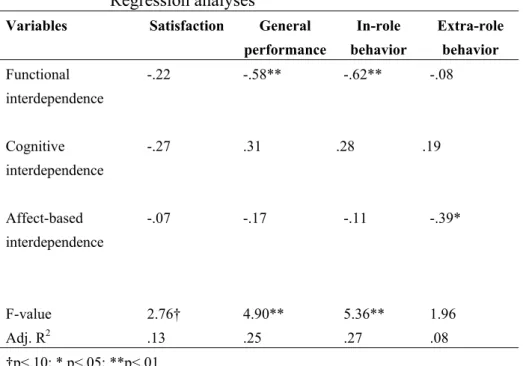
Hypothesis 4: Perceiving the group differently than other group members regarding the level of interdependency has a negative association with individual effectiveness.
We investigated our expectations on data that were collected among employees of two departments of a Dutch railroad company. In the next section we will first briefly describe that data and the measurements we used, after which we will present the results we have found.
3.4 Method
3.4.1 Data collection and participants
Data were gathered via questionnaires. These were handed out to employees and supervisors of the Dutch railroad company from the material planning departments at two different geographical locations. The planning departments studied are engaged in what is called material planning; to be more precise, these departments plan the material used for transportation (trains). The departments are located at and preoccupied with the material planning in different geographical areas. In the first department the response rate was 63.2%; whereas in the second department response was 100%.
CHAPTER THREE
Two different kinds of data were collected: attribute and relational data (Scott, 2000). Attribute data included items about the attitudes, opinions and behaviors of individuals. This type of data is collected in our survey using Likert-type questions. Relational data are the contacts, relationships, or ties that relate one individual to another. Relational data are gathered using name-roster type questions, which is also described in the measurement section. We decided to measure our independent variables in both ways –mainly to prevent common method bias- with some of our dependent variables (e.g., satisfaction).
3.4.2 Measures
CHAPTER THREE
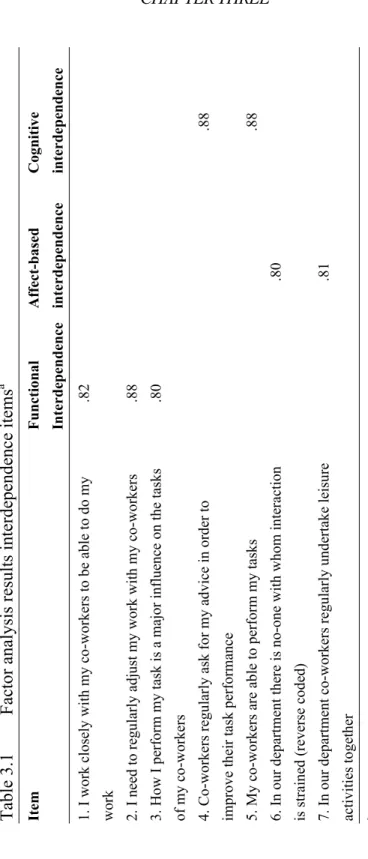
Table 3.1
Factor an
aly
sis results in
terdep enden ce items a Item Functi on al Af fect-based Cogniti ve Interde p ende nce interdepe nde nce interdepe nde nce 1. I wor k close
ly with m
y c o-w orkers t o be a ble to do m y .82 wo rk 2. I nee d to re gu larly adj ust m y wo rk wit h m y c o-w or kers .8 8 3. Ho w I pe rform my task
is a major influ
en ce on th e task s .80 of my co -w orker s 4. C o-w or ker s reg ul arl y as k f or m y a dvi ce i n or der to .8 8 improve thei r t ask performa nce 5. M y c o-w or ke rs a re a bl e t o per fo rm m y t as ks .8 8 6. In ou r depa rt ment th er e i s no -one wi th w ho m in te ract io n .8 0 is s tr ain ed (r eve rs e co de d) 7. I n ou r depa rt ment co -w or ke rs reg ul arl y unde rt ake le is ur e .8 1 activ ities to ge th er
a We
CHAPTER THREE
The relational data on the interdependency types were collected using name roster-type questions. Using self-reports by respondents is the main data collection method used in social network research (Marsden, 1990). Respondents were asked to place a check after the name of their group members if they were (during the last six months):
1) dependent upon that person for necessary information without which they could not perform their task (functional interdependence); 2) asking advice from that person in order to improve their individual task performance (cognitive interdependence);
3) friends with that person and regularly undertake leisure activities with that person (affect-based interdependence).
It is very common to use just one question to represent a variable in network studies (e.g., Borgatti & Cross, 2003; Sparrowe, et al., 2001), not in the least because asking such questions is quite an endeavor for the respondents.
Because analyzing relational data requires a (very) high response rate (Wasserman & Faust, 1994), we only used the data of department 2 in which the response rate was 100%. Because of the small sample size we use these data in a descriptive manner, in addition to the results of the attribute data. We calculated Freeman’s (1978/79) degree centrality scores for each individual at department 2, which reflects the “connectedness” of each individual relative to the others in this network. This measure tells us how many relationships each individual has related to a particular type of interdependence.
CHAPTER THREE
3.5 Results
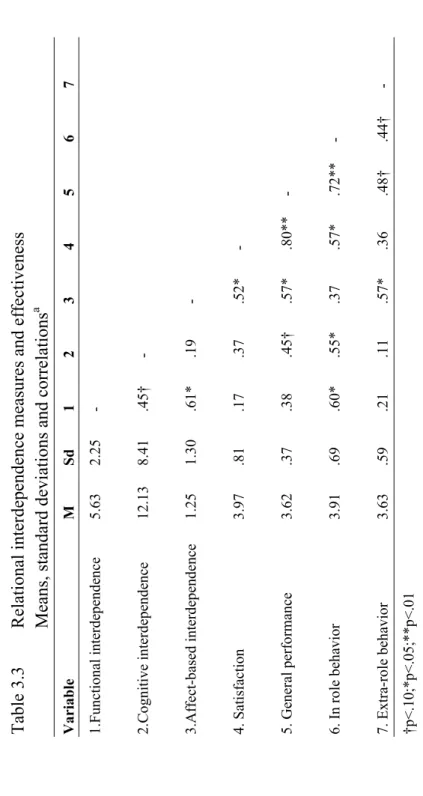
To analyze the attribute data, we combined the data of both departments, and, despite the small sample size, we performed regressions after calculating correlations to test our expectations (table 3.2a and b; table 3.4a and b). With respect to the relational data; after calculating the centrality scores of all individuals (except the supervisor) for each relationship type (functional, cognitive and affect-based interdependence) we used these scores to calculate Pearson correlation coefficients with satisfaction, and the other outcome variables rated by their supervisor (Tziner & Vardi, 1982). In table 3.3 these correlations are presented.
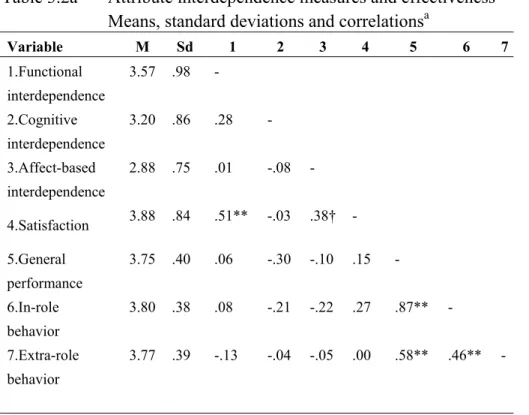
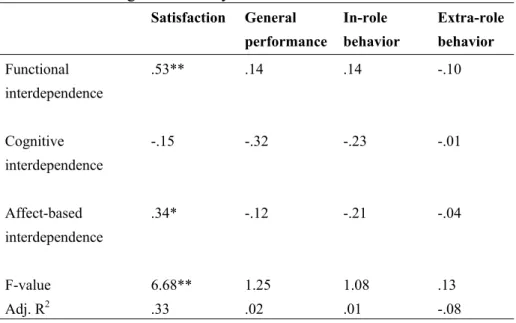
Our first hypothesis predicted a positive association between functional interdependence and individual effectiveness. As can be seen in table 3.2a, this hypothesis is partly confirmed by the attribute data. The level of functional interdependence is positively associated (r= .51; p< .01) with the level of satisfaction. We found the same effect in a regression analysis (table 3.2b); functional interdependence positively affects satisfaction (β=.53; p<.01). The results of the relational data in table 3.3 also provide empirical evidence: being highly functional interdependent is positively associated with in-role behavior (r=.60; p<.05). The higher group members are dependent upon one another their task, the higher their satisfaction and in-role behavior.
In table 3.2a, the results of the attribute data do not confirm our second hypothesis in which we expected a positive effect of cognitive interdependence on individual effectiveness. However, the analysis of the relational data shows, consistent with previous research (Sparrowe, et al., 2001), that high cognitive interdependence is beneficial for the general and the in-role performance; getting advice on how to improve one’s job enables the task execution and performance.
CHAPTER THREE
displayed in table 3.2a partly confirm this expectation. A high level of affect-based interdependence is associated with a high level of satisfaction (r= .38; p< .10). This effect is confirmed in the regression analysis (table 3.2b): β=.34; p<.05. Our hypothesis gets even more confirmation by the relational data, as can be seen in table 3.3. Being highly affect-based interdependent is not only positively associated with one’s job satisfaction, but it is also associated with high general performance and extra-role behavior.
CHAPTER THREE
analyses (β=-.39; p<.05). The more an individual differs in opinion with other group members about affect-based interdependence in the group, the less extra-role behavior this person displays.
Table 3.2a Attribute interdependence measures and effectiveness Means, standard deviations and correlationsa
Variable M Sd 1 2 3 4 5 6 7
1.Functional interdependence
3.57 .98 -
2.Cognitive interdependence
3.20 .86 .28 -
3.Affect-based interdependence
2.88 .75 .01 -.08 -
4.Satisfaction 3.88 .84 .51** -.03 .38† -
5.General performance
3.75 .40 .06 -.30 -.10 .15 -
6.In-role behavior
3.80 .38 .08 -.21 -.22 .27 .87** -
7.Extra-role behavior
3.77 .39 -.13 -.04 -.05 .00 .58** .46** -
CHAPTER THREE
Table 3.2b Attribute interdependence measures and effectiveness Regression analysesa
Satisfaction General performance
In-role behavior
Extra-role behavior Functional
interdependence
.53** .14 .14 -.10
Cognitive interdependence
-.15 -.32 -.23 -.01
Affect-based interdependence
.34* -.12 -.21 -.04
F-value 6.68** 1.25 1.08 .13
Adj. R2 .33 .02 .01 -.08
†p<.10; * p<.05; **p<.01 an=36
CHAPTER THREE
Table 3.3
Relation
al interdep
endence measures and effectiveness
Means,
standard
devi
ations and correlations
a V ari ab le M Sd
1 2 3 4 5 6 7
1.F unct ional in te rde pen de nce 5. 63 2. 25 - 2. C ogn itiv e in te rd ep en de nce 12 .13 8. 41 .45 † - 3. Af fect -b ased in te rd epe nden ce 1. 25 1. 30 .6 1* .1 9 - 4. Satisf action 3. 97
.81 .17 .37 .52
CHAPTER THREE
Table 3.4a
Deviation
s from th
e average persp
ective on
interdepend
ence and effectiv
eness
Means, stan
dard deviat
ions and correlations
a V ari ab le M Sd 1 2 3
4 5 6