Summary Report
UNC Center for Environmental Health and
Susceptibility
Capstone Team
Rachel Berthiaume
Anna Child
Shira Goldman
Emily McMahon
Michael Zelek
Community Partner
Kathleen Gray, M.S.P.H.
Neasha Graves, M.P.A.
Amy MacDonald, M.A.
Faculty Adviser
Carolyn Crump, Ph.D.
Acknowledgements
The Capstone team would like to acknowledge community and organization leaders across North
Carolina working to address environmental health concerns, particularly those working in Durham and
Lenoir Counties. We would like to offer special thanks to the Community Outreach and Education Core
(COEC) at the Center for Environmental Health and Susceptibility (CEHS): Kathleen Grey, MSPH,
Neasha Graves, MPA, and Amy McDonald, MS, and the COEC’s Board of Directors for the opportunity
to work on this project. We would also like to thank the HBHE 740 and HBHE 741 Teaching Team: Dr.
Laura Linnan, Dr. Allan Steckler, Dr. Geni Eng, Dr. Beth Moracco. We are very grateful to our faculty
advisor, Dr. Carolyn Crump, for her support and expert guidance throughout this project. Finally, we are
grateful to our Capstone instructor, Meg Ellenson Landfried, MPH, and Teaching Assistant, Lisa Parker,
MSc, who provided us with continuous support, reassurance, and feedback.
Final 4/25/12
3
Abstract
Background: Environmental exposures have been linked to increased risks of numerous health conditions, including asthma, cancer, obesity, and lead poisoning. The Community Outreach and Engagement Core (COEC) at the University of North Carolina Center for Environmental Health and Susceptibility (CEHS) received a three-year grant from the Centers for Disease Control and Prevention (CDC) to implement Healthy Homes programming across North Carolina in 2011. The Capstone team was tasked with assessing the home health-related educational needs of Durham and Lenoir County residents to help inform this programming. Methods: The Capstone team conducted demographic and epidemiological information reviews, qualitative formative research, community visits, assessments of the COEC’s existing educational materials, and examination of existing Healthy Homes policies and current literature on effective environmental health outreach interventions and strategies. The Capstone team performed 14 key informant interviews with community leaders in Durham and Lenoir Counties, as well as three focus groups with community members in Lenoir County. Results: Data showed that poverty, unemployment, and safety were over-arching issues in both counties. In Durham, the most commonly mentioned environmental health issues were indoor air quality and mold. Lead was also indicated often and has historically been a problem in the county. Lenoir County’s top environmental health issues were water quality, housing issues, outdoor air quality, and lead. Access to environmental health education and costs are frequent barriers to acting on environmental health risks. Organizations in the two areas vary in both their focus on environmental health issues and capacity to provide education and outreach.
Discussion: The Capstone team’s recommended improvements to the COEC’s Healthy Homes-focused outreach and education strategies are organized into three areas: engagement, adult learning methods, and education. The COEC’s engagement efforts could be improved by increasing their presence in Lenoir County. Healthy Homes trainings could be improved by increasing the use of participatory teaching methods. The education could be strengthened and tailored to the audience’s needs by integrating cost-saving tips and conducting more evaluation of the trainings with participants.
Major Deliverables:
Deliverable 1: Community Profile Reports for Durham and Lenoir Counties: Demographics, History, and Statistics
Deliverable 2: Annotated Bibliography on Effective Environmental Health Education Methods for Low-income Populations
Deliverable 3: Home Exposures Education Needs Assessment
Table of Contents
Introduction………
Capstone and the UNC Center for Environmental Health and Susceptibility
Healthy Homes Initiative
Goals of the Capstone Project
Overview of the Capstone Summary Report
6
Background……….
Homes Affect Health
Lead Poisoning Programming
Transition from Lead to Healthy Homes Indoor Air Quality
Home Safety
Pesticides and Pest Management
Healthy Homes as a Public Health Intervention Home-related Environmental Policy
Healthy Homes in North Carolina
9
Methods……….. Logic Model
Planning for Sustainability
Engagement & Assessment Activities Work Plan Deliverables
16
Results……… Sustainability Findings
Engagement & Assessment Findings Summary of Deliverables
25
Discussion……….. Strengths and Limitation of Engagement & Assessment Activities
Potential Impact & Benefits Lessons Learned & Challenges Considerations for Sustainability
35
Conclusion & Recommended Next Steps....………. 41
Appendix………... Final Work Plan
42
Final 4/25/12
5
List of Key Acronyms
ADHD: Attention Deficit Hyperactivity Disorder
CBPR: Community Based Participatory Research
CDC: Centers for Disease Control and Prevention
CEHS: UNC Center for Environmental Health and Susceptibility
CHW: Community Health Workers
CLPPP: Childhood Lead Poisoning Prevention Program
COEC: CEHS’s Community Outreach and Engagement Core
DHHS: Department of Health and Human Services
EBLL: Elevated Blood Lead Level
EPA: United States’ Environmental Protection Agency
HBHE: Health Behavior and Health Education
HHLPPP: Healthy Homes and Lead Poisoning Prevention Program
IPM: Integrated Pest Management
MPH: Master’s of Public Health
NCDENR: North Carolina Department of Environment and Natural Resources
NGO: Non-Governmental Organization
NIEHS: National Institute of Environmental Health Sciences
Introduction
Capstone and the UNC Center for Environmental Health and Susceptibility
Capstone is a group-based, mentored, evaluated, service-learning opportunity designed to
improve student skills while aiding the work of local partner organizations and improving public health.
This year-long project is a required part of the Health Behavior and Health Education (HBHE) Master’s
of Public Health (MPH) curriculum at The University of North Carolina at Chapel Hill Gillings School of
Global Public Health. Five MPH candidate students in this department formed the student team
responsible for this Capstone project. The Capstone community partners (i.e., supervisors and mentors)
for this project were Neasha Graves, MPA, Kathleen Gray, MSPH, and Amy MacDonald, MS, who are
staff members of the Community Outreach and Engagement Core (COEC) at the UNC Center for
Environmental Health and Susceptibility (CEHS). The CEHS’s research employs an interdisciplinary
approach aimed at reducing the burden of environmentally related diseases (CEHS, 2011). The COEC’s
work “translates Center research into knowledge that can be used to improve public health and educates
the public about how individual and group susceptibilities interact with environmental factors to cause
disease” (CEHS, 2011). The COEC implements programming in counties across North Carolina,
specifically with vulnerable populations who are particularly susceptible to environmental health hazards.
Healthy Homes Initiative
For many years, the COEC focused on the Centers for Disease Control and Prevention’s (CDC)
Childhood Lead Poisoning Prevention Program (CLPPP) to reduce elevated blood lead levels (EBLL) in
children throughout the state. As a result of state- and nation-wide declines in blood lead levels in
children, as well as other health risks becoming more salient, the COEC has expanded their work to target
housing-related health hazards. In collaboration with the North Carolina Department of Environment and
Natural Resources (NCDENR) and the North Carolina Department of Health and Human Services
Final 4/25/12
7
Healthy Homes Initiative that addresses health risks associated with unsafe housing, which includestructural issues, as well as individual behaviors related to cleaning, pest management, and home safety.
Specific aims of this grant-based initiative include: 1) Developing a state-wide Healthy Homes
Initiative strategic plan; 2) Conducting outreach and education activities pertaining to Healthy Homes; 3)
Conducting Healthy Homes assessments for 1,000 homes; and 4) Identifying and working to address
policy gaps related to the home environment. For the first aim, the COEC is working with stakeholders
and local partners, such as housing code enforcement officers, home assessors, environmental health
officials, school nurses, and members of local non-profit organizations, throughout North Carolina to
create a strategic plan. These stakeholders and local partners were chosen due to their capacity to raise
awareness of Healthy Homes issues in 13 different counties, strategically chosen to take part in the grant
in order to assess a cross-section of vulnerable populations located within North Carolina’s three
geographic regions, i.e. the coastal plain, the piedmont, and the mountains.1
With respect to the second aim, the COEC and its partners seek to increase the knowledge and
capacity of environmental, health, and housing professionals through a Healthy Homes training
curriculum. They are accomplishing this by conducting outreach and educational sessions with
professionals and community leaders in a “train the trainer” format. The ultimate intention is for the
community leaders and professionals to conduct Healthy Homes trainings in their own spheres of
influence, thereby expanding the reach of Healthy Homes education and increasing the capacity of local
partners to address local Healthy Homes concerns.
For their third aim, the COEC and its partners are performing at least 1,000 Healthy Homes
assessments during the three-year funding cycle by making home visits within targeted communities.
This activity specifically targets children who live in unsafe housing in North Carolina, as they are
disproportionately affected by health hazards in the home
(
Chaudhuri, 2004). Using a previouslydesigned geo-spatial Lead Risk Model which identifies neighborhoods that are at the greatest risk for lead
1
exposure, the project will target the poorest quality housing (housing at high risk of containing health
hazards) across 13 counties (CEHS, 2011) and will offer Healthy Homes assessments to families living in
these areas, as well as those in federally subsidized housing or with children 18 years old or younger with
asthma or EBLLs.
For the final aim, the COEC and its partners are identifying and working to address
environmental health policy gaps in order to increase compliance with Healthy Homes related policies
and to meet the state-mandated Healthy People 2020 goals (U.S. Department of Health and Human
Services, 2011).
Goals of the Capstone Project
The Capstone project was designed to contribute to the aims of the Healthy Homes Initiative,
focusing specifically within two of the selected counties: Durham and Lenoir. The activities were
intended to inform the Healthy Homes trainings used by the COEC in Durham and Lenoir Counties to
address the unique needs of these communities including environmental health policy gaps. Insights from
this project also aided the development of outreach and educational materials to be used across the state.
There were three overarching goals for the project.
Table 1: Capstone Project Goals
Goal 1:
Document the most salient and pressing environmental health hazards in the
home in Durham and Lenoir Counties within each County’s context by
researching the history, social and economic conditions, major health concerns,
and resources available in each county.
Goal 2:
Identify Healthy Homes policies at national, state, and local levels, and explore
perceptions of local policymakers in Durham and Lenoir Counties.
Goal 3:
Final 4/25/12
9
Overview of the Capstone Summary Report
This Summary Report describes and serves as a record of the UNC CEHS’s Capstone team’s
project. It includes a literature review of the available published information on various environmental
health hazards in the home, the populations who are most vulnerable to such hazards in Durham and
Lenoir Counties in North Carolina, and the methods used to gather this information. The report also
includes a logic model that illustrates the resources and activities associated with the Capstone project, as
well as the intended outcomes and impacts of the project. Embedded in the Methods, Results, and
Discussion sections is information on program sustainability and community engagement and assessment,
as these topics are essential to the processes of planning, implementation, and evaluation of effective
public health programs. Thus, reflections on program sustainability and community engagement and
assessment are included throughout the report to highlight the relevance of the Capstone activities for the
communities involved in this project. Acknowledging the effects of research and interventions on a
community is in line with the principles of Community Based Participatory Research (CBPR), a research
framework in which researchers and community members work in partnership to learn about and find
solutions to local, salient health issues (Ross, Loup, Nelson, Botkin, Kost, Smith Jr., & Gehlert, 2010).
Background
Homes Affect Health
Environmental exposures have been linked to increased risks of a range of health conditions
including asthma (Leaderer, 2002), breast cancer (Perera, 1997), skin cancer (Gloster & Brodland, 1996),
obesity (Reidpath, Burns, Garrard, Mahoney, & Townsend, 2001), and lead poisoning (Landrigan,
Schechter, Lipton, Fahs, & Schwartz, 2002). Environmental exposures specific to the home are of
particular concern, as research indicates that one’s home has a great effect on a person’s health (Istre,
McCoy, Osborn, Barnard, & Bolton, 2001; Akinbami & Schoendorf, 2002; CDC, 2005; Ahrens, 2007;
many health hazards, including lead contamination, poor indoor air quality, unintentional injury risks, and
asthma and allergy triggers (Khan, 2011).
Lead Poisoning Programming
The negative health effects of lead exposure are well-established. Immediate outcomes from
exposure to lead include abdominal pain, headaches, renal failure, and, at extremely high levels of
exposure, death (Koller, Brown, Spurgeon, & Levy, 2004). Over the long-term, lead exposure has been
linked to higher rates of inattention and impulsively (Braun, Kahn, Froehlich, Auinger, & Lanphear,
2006), slowed cognitive development, and impaired physical growth (Jacobs, Clickner, Zhou, Viet,
Marker, Rogers, & Friedman, 2002). Living in dilapidated or old housing greatly increases the likelihood
of lead exposure (Staudinger & Roth, 1998; Jacobs et al., 2002; Selevan et al., 2003; Wu, Buck, &
Mendow, 2003; CDC, 2005; Onuegbu, Olisekodiaka, Nwaba, Adeyeye, & Akinola, 2011). In 2002, an
estimated 38 million housing units in the U.S. had interior lead-based paint, a sharp decline from the 64
million estimated in 1990. Of these, 63% (24 million units) were found to have significant lead-based
paint hazards (Jacobs et al., 2002).
Those most at risk of suffering from the ill effects of lead exposure include young children and
pregnant women and their fetuses. Children under five are especially susceptible to lead toxicity, as they
are at a particularly vulnerable phase of physiological development and are more likely than older
individuals to ingest lead particles by eating lead paint chips or from household dust. Nationally,
approximately 250,000 children aged 1-5 years have blood lead levels greater than 10 micrograms of lead
per deciliter (µg/dL) of blood, the level at which CDC recommends public health actions be initiated
(CDC, 2011). Although this is the CDC’s “action level,” studies have found that there is no safe blood
lead level in children, as detrimental health effects have been documented at levels lower than 10 µg/dL
Final 4/25/12
11
Transition from Lead to Healthy Homes
Since 1991, the CDC has made it a top national priority to address lead exposure in the home. A
key national program to combat lead exposure was CDC’s CLPPP, which utilized education, testing, and
policy-focused approaches to reduce the number of households in the U.S. containing lead risks by 50%
(CDC, 2009). However, recent research has shown that, in addition to lead, numerous aspects of the
home environment can adversely affect health, such as poor indoor air quality, hazards that can cause
unintentional injury, and asthma and allergy triggers (Khan, 2011). Thus, the CDC incorporated CLPPP
into a broader initiative on health in the home environment in 2009, now titled the Healthy Homes and
Lead Poisoning Prevention Program (HHLPPP) (Jacobs et al., 2002; CDC, 2009).
The program addresses various hazards within the home that can lead to injury, illness, or death
and emphasizes the Healthy People 2020 goals of environmental health, public health infrastructure, and
education and community-based programs (U.S. Department of Health and Human Services, 2011). This
comprehensive initiative is a move away from the fragmented, categorical methods of addressing specific
home-based health and safety risks from the past (Khan, 2011). The Healthy Homes Initiative
encompasses various intervention approaches, such as capacity-building among environmental, public
health, and housing professionals to coordinate Healthy Homes programming, improve Healthy
Homes-related data collection and monitoring, develop federal, state, and local Healthy Homes guidelines to
identify and alleviate health and safety risks, and enact resource- and setting-appropriate methods to
reduce home-based risks (CDC, 2010).
The U.S. Department of Health and Human Services defines a Healthy Home as one that “is
sited, designed, built, renovated, and maintained in ways that support the health of residents” (U.S.
DHHS, 2009). This broad definition of Healthy Homes is fitting, as people spend approximately 90% of
their lives indoors and, thus, are exposed to an array of indoor environmental elements (Jie, Ismail, Jie, &
Isa, 2011). Public health officials assert that this holistic assessment can prevent illnesses and injuries
Because previous home-based environmental health programs focused solely on lead, the transition to
Healthy Homes programming required a retooling of program implementation. Recent studies have
detailed the most effective ways for a program to transition from a focus on lead to general home health,
citing useful changes to programs, policies, and partnerships (Maring, Singer, & Shenassa, 2010).
Examples of program changes include: streamlined training opportunities for staff; restructuring of home
visits to include a broad array of educational materials; and establishment of key partnerships such as with
the fire department, the housing department, and child protection services (Maring et al., 2010).
In determining whether a home is healthy, a variety of factors, including lead exposure, indoor air
quality, unintentional injury threats, and poisonous materials, are considered (Mainzer & Moffett, 2011).
Unfortunately, comprehensive scientific evaluations on interventions designed to affect all of these
factors within the home environment are scant in the literature, though they have been investigated
extensively as separate factors (Jacobs, Kelly, & Sobolewski, 2007). The next section is a review of the
literature on indoor air quality, home safety, and pesticides and integrated pest management, which are
key components of Healthy Homes programming.
Indoor Air Quality
Many pollutants, including radon, tobacco smoke, carbon monoxide, and household dust, can
affect indoor air quality as they combine to form indoor air pollution and subsequently aggravate allergy
sensitivities and respiratory function (Francisco, 2011). Environmental tobacco exposure has been linked
to a two- to four-fold increase in risk of attention deficit hyperactivity disorder (ADHD) (Braun et al.,
2006). Unintentional exposure to carbon monoxide, from sources such as furnaces, gas stoves, and
kerosene heaters, has led to approximately 20,000 emergency department visits and 450 deaths annually
in the U.S. (King & Damon, 2011). Carbon monoxide is especially harmful to pregnant women and
fetuses (CDC, 2009). Household dust, which can contain a mixture of mold spores, mite corpses and
feces, animal dander, and toxic particles, can cause asthma, allergies, and other respiratory illnesses, with
Final 4/25/12
13
Mold growth can have a great impact on indoor air quality and particularly affects individualswho suffer from asthma or other respiratory illnesses. Certain conditions within the home can be
conducive to mold growth, as it thrives in warm, moist environments and in the presence of dust and
building materials that are found in houses (Brandt et al., 2006). Of the 21.8 million people with asthma
in the U.S., approximately 4.6 million cases are attributable to mold exposure in the home, with an
economic impact of approximately $3.5 billion annually (Mudarri & Fisk, 2007).
Home Safety
Unintentional injuries in the home, a focus area of Healthy Homes, are widespread and costly
(Anonymous, 2005; DiGuiseppi, Jacobs, Phelan, Mickalide, & Ormandy, 2010). They include falls,
fire-related injuries, scald-fire-related injuries, and drowning. Those most at risk for becoming injured at home
include the youngest and oldest age groups. For adults aged 65 and older, injuries in the home result in
7,000 deaths and 1.7 million emergency room visits per year (DiGuiseppi et al., 2010). Injuries in the
home result in more than 4 million emergency room visits and 74,000 hospitalizations each year for
children younger than 19 (DiGuiseppi et al., 2010). Researchers have found that for children under the
age of five, the majority of unintentional injuries occur in the home (Smithson, Garside, & Pearson,
2011). House fires are also a considerable cause of death and injury in the U.S., leading to more than
3,000 deaths and 17,000 injuries each year (Istre et al., 2001). Furthermore, household cleaners can be
dangerous if not stored away from children, with the American Association of Poison Control Centers
asserting that approximately 1.2 million young children ingested poison in the U.S. in 2001 (Bull et al.,
2003).
Pesticides and Integrated Pest Management
According to the U.S. Environmental Protection Agency (EPA), pests include insects, rodents,
weeds, fungi, and microorganisms such as viruses and bacteria. In addition to the nuisance of home pest
spread of pests inside of the home, homeowners can utilize integrated pest management (IPM), defined as
an approach entailing an assessment of the pest situation, weighing the different options for addressing it,
and implementing actions to manage it (EPA, 2012). IPM discourages the sole use of common household
products containing pesticides, such as sprays, repellants, and poisons, when seeking to address
infestations (EPA, 2011), because pesticides are associated with detrimental effects to one’s nervous
system and can accumulate in the body over time (Chanda & Pope, 1996; Rice & Barone, 2000; Whyatt
et al., 2002; Bradman et al., 2005; Eskenazi et al., 2007, Eskenazi et al., 2008). In 2000, 80% of exposure
to pesticides occurred indoors (Kiely, Donaldson, & Grube, 2004). For these reasons, IPM practices seek
to increase the use of other tactics when dealing with infestations in the home (EPA, 2011).
Home-related Environmental
Policy
Federal, state and local policies pertaining to indoor environmental health have the potential to
make great impacts on health. However, when necessary policies are lacking or not enforced, the public
can face health risks. Indoor air policies are one realm that suffers from such gaps. The Clean Air Act of
1970 authorized regulatory standards and systems in regards to outdoor air quality, but did not stipulate
directives or give clear authority with respect to indoor air quality. Although laws have been established
regarding toxins in the home, surveillance and regulation of indoor air quality are often limited to
voluntary public programs because of the ambiguous nature of ownership and responsibility (Jacobs et al.,
2007).
While national health-focused agencies have transitioned from lead and asthma programming to a
more comprehensive Healthy Homes approach, scientific research and policy are lagging behind (Jacobs
et al., 2007). Many federal and state legislative policies cover lead and asthma risks without addressing
other household environmental health risks. Furthermore, they do not specify authority or responsibility
over indoor environments. Hesitancy in taking a more holistic policy approach may stem from political
Final 4/25/12
15
Healthy Homes as a Public Health Intervention
Among the general U.S. population, there is a lack of concern or understanding of the health risks
associated with indoor environments, particularly with respect to indoor air quality (Rosenthal, 2011).
Public health officials and community health workers (CHWs) are increasingly turning to home-based
interventions and trainings to combat these knowledge gaps and misconceptions regarding environmental
health risks in the home (Parker, Israel, Robins, Mentz, Lin, Brakefield-Cladwell, & Ramirez, 2008).
Through these awareness-raising activities, public health professionals strive to increase individuals’
ability to reduce those risks and improve health, as predicted by many well-established behavior models,
such as the Theory of Planned Behavior, that link knowledge and behavioral intentions. These models
illustrate that increasing knowledge is an essential component of risk avoidance behavior in individuals
(Rosenthal, 2011).
The Healthy Homes Initiative is an example of a comprehensive home-based education program
that has demonstrated positive impacts on residents (Polivka, Chaudry, Crawford, Bouton, & Sweet,
2011). In one Healthy Homes program located in Columbus, Ohio, Polivka et al. (2011) conducted a
community intervention on home-based asthma triggers that included participant education, personalized
action plans to reduce exposures in the home, and demonstrations of trigger-reduction techniques. They
found that knowledge of, self-efficacy to avoid, and skills to manage asthma triggers all improved after
this Healthy Homes intervention. In another study in Seattle, Washington, Krieger, Takaro, Song, and
Weaver (2005) implemented a high intensity intervention, consisting of multiple home visits by CHWs,
personalized Healthy Homes action plans, participant education on home health risks and reduction
methods, strengthening of social support to improve home environments, and the distribution of resources
to reduce exposure risk. Post intervention, they reported that quality of life for asthma caregivers
improved and urgent care visits decreased (Krieger et al., 2005).
These studies provide evidence that integrating education into a comprehensive home-based
Healthy Homes initiative on other health outcomes beyond asthma has yet to be evaluated, current
research substantiates the CDC Healthy Homes Initiative as an appropriate method of building public
awareness and education of household health risks, and, in turn, reducing their negative health impacts
(Rosenthal, 2011).
Healthy Homes in North Carolina
Many home environmental risks are prevalent in North Carolina, where housing stock is
frequently inadequate and aging. Nineteen percent of North Carolina’s housing stock was built before
1950, 45% was built before 1979, and mobile homes make up 17% of all North Carolina housing (U.S.
Census Bureau, 2011). The North Carolina Housing Coalition reports that 31% of North Carolina’s
households suffer from at least one housing problem, such as issues with continuity of electricity, heating
and plumbing services (North Carolina Housing Coalition, 2012). Thus, there is a demonstrated need to
address home environmental risk factors among North Carolina’s population.
Since 1997, the number of children in North Carolina who have been tested for lead exposure has
steadily increased, while the percentage of confirmed cases of EBLLs of 10ug/dl or more has drastically
decreased, from 1.3% in 1997 to 0.3% in 2007 (CDC, 2010). Though these data are encouraging, several
counties in the state still have disproportionately high rates, including Durham, where 0.42% of children
tested had EBLLs, and Lenoir, where 0.80% of children tested had EBLLs (CDC, 2010). Furthermore,
other housing-related hazards, such as indoor air quality, injuries, and pest management, remain largely
unaddressed. Implementing a Healthy Homes program in North Carolina is an effective way to address
the documented risks to health from living in inadequate housing.
Methods
The evidence supporting Healthy Homes initiatives gives credence to the three goals of the
Capstone team to effectively position the COEC to tailor successful educational outreach on
Final 4/25/12
17
details of all Capstone activities completed in fulfillment of these goals are discussed in the followingsection.
Logic Model
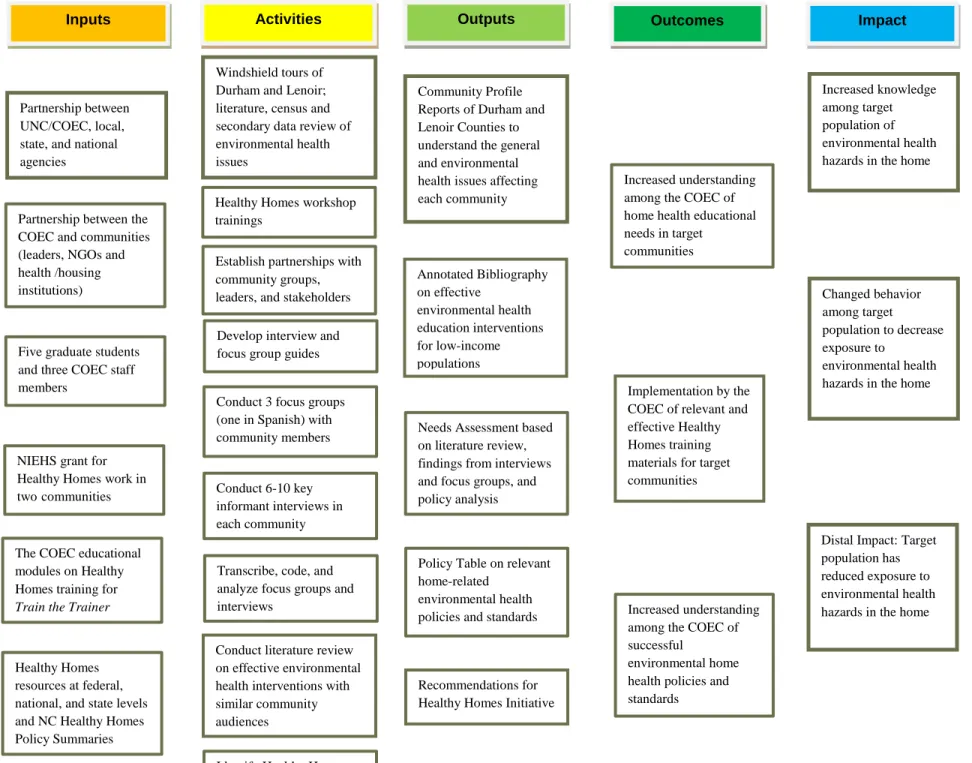
Figure One shows the logic model that informed the Capstone project design and implementation,
leading to the intended outcomes and impacts. A logic model is a graphic representation of the
relationships between the resources, activities, and intended results of an intervention. If the intervention
is implemented as planned, then the listed outcomes and impacts should ensue. A logic model
theoretically details the change that is predicted to result from an intervention’s implementation and its
key elements. Additionally, it offers a basis for both process and outcome evaluation measures for the
program (W.K. Kellogg Foundation, 2004). This logic model outlines the inputs, activities, outputs, and
expected short- and long-term outcomes, called outcomes and impact respectfully, of this Capstone
project.
The inputs in the logic model represent relationships between the COEC and organizations that
work with the target populations and leaders within Durham and Lenoir Counties, as well as previously
developed resources, such as educational modules. Inputs also include the Capstone team’s time,
knowledge, and expertise devoted to the project and the resources associated with the Healthy Homes
Initiative. The activities undertaken were primarily qualitative, encompassing the conducting and
analyzing of focus groups and interviews, along with completing semi-structured observations that
occurred during community visits (windshield tours). Additional activities included relationship building
within the target communities, participating in the COEC workshops and meetings, and conducting
secondary research on relevant policy and educational topics. These activities informed the following
outputs: reports on the primary environmental health needs residents of Durham and Lenoir Counties face
in their homes, relevant policy approaches to address these issues, and recommended suggestions for the
Four of the outputs in the logic model are also the Capstone project’s main deliverables. These
reports and recommendations are intended to increase the COEC’s understanding of specific home
environmental health education needs in these communities, with the goal that the COEC will implement
relevant and effective educational modules for community members. Additionally, the Policy Table will
assist the COEC in becoming aware of policy gaps related to Healthy Homes, and the variance between
policies at the county, state, and national levels. The intended impacts of these tailored modules and the
COEC’s enhanced understanding are increased knowledge and behavior change that will decrease the
Figure 1: Healthy Homes Capstone Project Logic Model
Partnership between UNC/COEC, local, state, and national agencies
Windshield tours of Durham and Lenoir; literature, census and secondary data review of environmental health issues
Conduct 3 focus groups (one in Spanish) with community members
Community Profile Reports of Durham and Lenoir Counties to understand the general and environmental health issues affecting each community
Establish partnerships with community groups, leaders, and stakeholders
Needs Assessment based on literature review, findings from interviews and focus groups, and policy analysis
Increased understanding among the COEC of home health educational needs in target
communities
Inputs Activities Outcomes
Conduct 6-10 key informant interviews in each community
Transcribe, code, and analyze focus groups and interviews
Implementation by the COEC of relevant and effective Healthy Homes training materials for target communities
Increased knowledge among target population of environmental health hazards in the home
Five graduate students and three COEC staff members
NIEHS grant for Healthy Homes work in twocommunities
The COEC educational modules on Healthy Homes training for
Train the Trainer
Develop interview and focus group guides Partnership between the
COEC and communities (leaders, NGOs and health /housing institutions)
Recommendations for Healthy Homes Initiative Conduct literature review
on effective environmental health interventions with similar community audiences
Changed behavior among target
population to decrease exposure to
environmental health hazards in the home
Outputs Impact
Healthy Homes resources at federal, national, and state levels and NC Healthy Homes Policy Summaries
Distal Impact: Target population has reduced exposure to environmental health hazards in the home Policy Table on relevant
home-related environmental health policies and standards Healthy Homes workshop
trainings
Increased understanding among the COEC of successful
environmental home health policies and standards
Planning for Sustainability
Before working on the activities and outputs, it was important to evaluate the sustainability of the
Capstone project. Sustainability was a major focus throughout the planning and implementation phases
of the project. The definition of sustainability most befitting of this Capstone project and its goals is:
“The capacity of a project to continue to deliver its intended benefits over a long period of time
(Bamberger et al., 1990).” As Shediac-Rizkallah and Bone (1998) point out, consideration of program
sustainability is critical for three main reasons. First, terminating a program is counterproductive if the
problem the intervention was created to address is ongoing. Second, failure to sustain a program may
keep it from achieving its full potential or impact, despite large investment into the program and
significant start-up costs. Finally, a program that is not sustained may have negative repercussions for
future programs. Community members may expect new projects will also end prematurely and therefore
not buy into them (Shediac-Rizkallah and Bone, 1998). In evaluating the project’s plan for sustainability,
the Capstone team considered three categories of factors: project design and implementation factors,
factors within the organizational setting, and factors within the community environment
(Shediac-Rizkallah, 1998). These factors are discussed in greater detail in the Results section.
The Capstone project aimed to position the COEC to tailor their outreach methods to more
effectively train community leaders and professionals in Durham and Lenoir Counties on environmental
health threats in the home, ultimately build community capacity to identify and address these threats. The
Capstone project deliverables intended to help tailor and sustain the educational and outreach activities of
the COEC by documenting the evidence base for effective programming and providing a relevant context
for the target populations and settings. Outcomes of the Capstone project support the COEC’s mission to
build capacity in communities in North Carolina around environment health issues. By supporting its
mission, this Capstone project strengthened the sustainability of the COEC’s activities to ultimately
improve the lives of individuals in North Carolina who are affected by environmental health hazards,
Final 4/25/12
21
Engagement and Assessment Activities
In addition to sustainability, the engagement of the target communities in Durham and Lenoir
Counties was purposefully considered in the project design. When conducting a public health
intervention, it is essential to engage with the community that is the intended beneficiary of the project.
The published peer-reviewed literature increasingly recognizes that involvement and engagement with the
community in all parts of program planning, implementation, and evaluation leads to more successful and
appropriate interventions (Ahmed & Palermo, 2010). Community engagement is defined by the CDC as
“the process of working collaboratively with and through groups of people affiliated by geographic
proximity, special interest, or similar situations to address issues affecting the well-being of those people”
(CDC, 1997). Researchers assert that involving the affected individuals of a health program in the
decision-making process can increase the likelihood that the program impacts community-level social
norms, thus making widespread behavioral change more likely to occur (Jewkes & Murcott, 1998;
Shediac-Rizkallah & Bone, 1998). Furthermore, engagement increases a community’s capacity to
address its health issues, as well as deepens researchers’ understanding of community priorities (Ahmed
& Palermo, 2010).
Community members can become engaged with public health programs in many ways, such as
participating in formative research, serving on an advisory board, or being involved with focus groups to
pilot test program materials (Ahmed & Palermo, 2010). Assessment activities focus on gaining a better
understanding of the issues faced by the target communities. Since there is significant overlap between
the Capstone team’s engagement and assessment activities, they are described together.
The intended beneficiaries of the project include local community leaders who are involved, in
some way, with environmental and healthy homes issues, as well as community members who are
affected by these issues. The first phase of the Capstone team’s engagement with and assessment of the
intended beneficiaries began in the fall semester of 2011with three main activities: community visits,
statistical information of Durham and Lenoir Counties, and attending the North Carolina Environmental
Justice Summit.
Community visits to both Durham and Lenoir Counties occurred in fall of 2011, with all members
of the Capstone team participating. In Lenoir County, three members of the team attended the “Living
the Good Life Expo and Food Tasting,” centered around local healthy food options and physical activity
resources in Kinston, NC on September 27, 2011. The event was marketed as a way for the public to
learn about local services and restaurants. During the event, local non-profit organizations and
businesses, chefs, and the Chamber of Commerce’s Young Professionals set up booths advertising their
organizations’ programs and services, as well as providing healthy food samples. During the event, team
members spoke with residents, as well as observed who attended and what activities occurred. A driving
tour of Kinston for the Capstone team members was guided by a native of the town. In Durham County,
team members attended the “Bull City Open Streets” event that took place on Sunday October 9, 2011 in
the City of Durham. The event’s goal was to promote physical activity and cohesiveness among
neighbors by closing some streets to traffic and encouraging people to participate in physical activities,
like hula hooping and bike riding. After the event, team members conducted a driving tour in
under-resourced neighborhoods located in the City of Durham’s southeast corner, as well as visiting a local flea
market located in the same area.
Researching and writing the Community Profile Reports for Durham and Lenoir Counties
involved accessing multiple online resources and data sets on health, housing, and the environment, as
well as contacting community leaders in both areas involved in health and housing issues. Some of the
sources included local news media outlets, peer-reviewed literature databases, U.S. Census data, and the
North Carolina State Center for Health Statistics. This information was synthesized and organized into
two separate reports, one for each county, according to environmental health risks.
At the North Carolina Environmental Justice Summit, a two-day event in October 2011 organized
by the North Carolina Environmental Justice Network, the Capstone team attended presentations and
Final 4/25/12
23
concentrated animal feeding operations’ waste, and energy production injustices, all of which arepertinent environmental health issues in North Carolina. The Capstone team also assisted the COEC’s
Neasha Graves with educational programming for children attending the Summit by helping guide 25
grade school children through activities about nutritious food and physical activity.
The second phase of the Capstone team’s engagement with and assessment of the community
occurred in the spring of 2012 and included conducting interviews, building relationships, and recruiting
for and conducting focus group discussions. These activities employed CBPR principles of respectfully
entering and engaging with a community, as well as qualitative research methods such as collecting,
analyzing, and presenting data. The Capstone team interviewed six community leaders (key informants)
in Durham County and eight in Lenoir County who were identified by the COEC, with questions focusing
on three main areas of environmental health: key issues within the target communities, accessing and
sharing environmental health information, and perceptions of local, state, and federal policies and
policymakers. The interviews typically lasted fifty to seventy minutes, and took place over the phone and
in-person. The interviews were recorded, transcribed, and analyzed using Atlas.ti software.
The COEC staff introduced the Capstone team to most of the community leaders who were
interviewed, as they had working relationships with several organizations in both communities prior to
the Capstone project’s commencement. Three of the Lenoir County interviewees were identified by the
COEC as being able to assist in the recruitment and hosting of focus group discussions. For that reason,
contact was maintained for several weeks with these interviewees following the original interview to gain
assistance with focus group planning and recruitment.
Recruitment for focus group discussions occurred through these community leaders and the
placement of flyers in public places. Community leaders publicized focus group days and times in their
networks and acted as liaisons between the Capstone team and Lenoir County residents. In keeping with
the principles of CBPR, the team sought an equal partnership with the recipient communities and to
develop strong working relationships with community leaders and members. In addition one Capstone
majority of the participants for the English speaking focus group discussion. Following recruitment, the
Capstone team conducted three focus groups in Lenoir County in February 2012, two in English with
African-American residents and one in Spanish with Latino residents. The focus group discussions lasted
approximately an hour and a half each, and were recorded, transcribed, and analyzed by reviewing the
transcripts.
The purpose of these interviews and focus group discussions was to learn about community needs
directly from local professionals and residents. During the interviews and focus groups, the Capstone
team members used openly framed questions to solicit a range of community leader and member
feedback, reducing the likelihood that the outputs were the result of researcher bias, and, thus capturing
the real Healthy Homes education needs of Lenoir and Durham Counties. Prior to their use, all interview
and focus group guides were reviewed and edited by a qualitative research expert at the Odum Institute at
UNC-CH. In addition to the formative research described above, Capstone team members attended two
Healthy Homes trainings put on by the COEC staff for community members to better understand the
COEC’s Healthy Homes education program and materials.
Work Plan Deliverables
The collective purpose of the work plan deliverables was to reach the three primary outcomes of
the Capstone project: 1) Increased understanding among the COEC of home health educational needs in
target communities; 2) Implementation by the COEC of relevant and effective Healthy Homes training
materials for target communities; and 3) Increased understanding among the COEC of successful
environmental home health policies and standards. These short-term outcomes will have a compound
effect and eventually change the knowledge and behavior of residents in Lenoir and Durham counties
Final 4/25/12
25
Results
Sustainability Findings
There were many implications from the Capstone project’s plans for sustainability, the conduct of
community engagement and assessment activities, and completion of four main deliverables. In regards
to evaluating the project’s sustainability, the Capstone team concluded that the interplay of various factors
influenced its overall sustainability. These factors can be divided into three primary categories: project
design and implementation factors, factors within the organizational setting, and factors within the
community (Shediac-Rizkallah, 1998).
Project Design and Implementation Factors
Though the COEC staff had several key professional contacts within both Durham and Lenoir
Counties at the onset of the Capstone project, many of the relationships were newly initiated as part of the
project design and implementation. This was beneficial to the long-term sustainability of the project as it
helped to increase awareness of the COEC’s work and developed entrée for the COEC into Lenoir
County.
The ultimate sustainability of the Capstone project is best measured through the operational lens
of building capacity within the intended communities. Currently, capacity building in the intended
communities occurs through educating community leaders and future trainers on Healthy Homes topics
through the COEC’s existing training modules and materials. The Capstone project’s activities and
research informed the COEC’s trainings to ensure that they were relevant and engaging for the intended
audiences, as well as effectively building their capacity to address environmental health hazards in the
home within Durham and Lenoir Counties.
Additional design and implementation factors that impacted the sustainability of the project
included the focus on the COEC’s existing Healthy Home trainings, insufficient direct contact with
community members and limited the COEC staff time. Overall, the Capstone project was designed to
leaders who then train others within their communities. However, it was unclear to the Capstone team
how much control these community trainers possess over the program’s dissemination in their
communities and to what extent ownership of the program activities is transferred to local community
members over the long-term.
In terms of contact with community members, the Capstone team felt they did not engage with
residents in either Durham or Lenoir Counties sufficiently, which may have led to reduced participation
by community members in the project, affecting its long-term sustainability. Additional engagement
activities could have improved the Capstone team’s entrée into the communities and increased buy-in of
the Capstone project’s activities.
Factors within the Organizational Setting
Factors within the COEC’s organizational setting helped to contribute to the long-term
sustainability of the Capstone project. The COEC is the outreach arm of the CEHS and has been in
existence for ten years. As a result of this affiliation with UNC and its ongoing work in North Carolina’s
communities, the COEC’s work is highly valued by other organizations, community members, and UNC,
which helps facilitate increased sustainability of its programs. The COEC’s presence in the CEHS is a
requirement of the National Institute of Environmental Health Sciences (NIEHS), the CEHS’s main
funder. Thus, the COEC’s existence is guaranteed as long as the CEHS continues to receive NIEHS
funding. The COEC, now in its third grant cycle, has been working on lead research and outreach for six
years and began focusing on Healthy Homes in 2009 after acquiring new funding from the CDC. The
grant-funded Healthy Homes Initiative that occurs in the state will run for the next three years, and the
COEC intends to continue this work over the long-term.
The COEC’s pre-existing relationships with community leaders have also played a strong role in
the project’s sustainability. A year ago, the COEC began working in Lenoir County on Healthy Homes
projects and trainings. Though they forged strong relationships with the Kinston Community Health
Final 4/25/12
27
expanding into this new setting has presented some challenges as they have found it difficult to makeconnections within the faith community. While Healthy Homes work in Durham County is newer, the
COEC has strong, pre-existing relationships in this community, including with the local health
department, NGOs, and the faith community. Many relationships in Durham were initiated four years
ago, thus there is strong stability in these partnerships.
The amount of staff time devoted exclusively for the COEC’s Healthy Homes Initiative is
limited, as the COEC’s three part-time staff members' combined effort for all of the Core’s activities
equals that of approximately one full-time employee. Each staff member is involved in other projects at
the CEHS that are outside of the COEC’s focus, and therefore their time is not solely devoted to the
Healthy Homes Initiative. Despite these time limitations, the staff members of the COEC who served as
the Capstone project’s community partners provided constant feedback based on their extensive
experience with environmental health issues, which helped to guide the main deliverables towards
achieving long-term results.
Factors within the Broader Community Environment
In Durham and Lenoir Counties, many factors within the broader community affected the
sustainability of the Capstone project’s activities, including the socioeconomic and political environments
in each locale. Social divisions are present within the communities along both economic and racial lines.
Neighborhoods most affected by environmental health hazards and Healthy Homes issues in the two
counties are primarily comprised of individuals who are from minority groups and those of low
socioeconomic status. Additionally, these communities face a multitude of other challenges that affect
the general health and well-being of residents. In 2010, Durham County’s violent crime rate was 639.4
and Lenoir County’s was 623.1 per 100,000 people, as compared to the statewide rate of 374.4 (North
Carolina Department of Justice State Bureau of Investigation, 2011). Similarly, unemployment is an
issue in both counties, at 8.4% in Durham and 10.9% in Lenoir, compared to the statewide rate of 10.4%
may act as barriers to carrying out Healthy Homes-related activities if involvement from the COEC were
to cease, as crime and unemployment may be higher priorities for community members than creating and
maintaining a healthy home. However, with the support of key stakeholders and local leaders,
community buy-in to support and continue the Initiative can be achieved, which in turn may increase the
likelihood of its sustainability.
Engagement and Assessment Findings
The Capstone project’s community engagement and assessment activities yielded important
background knowledge that was incorporated throughout the Capstone activities and deliverables. The
insight gained from conducting windshield tours of Durham and Lenoir Counties was a crucial first step
in the process of community engagement, particularly for Lenoir County as no Capstone team member
had spent time in the community prior to this project. Driving through various parts of Durham and
Lenoir Counties as part of the windshield tours allowed Capstone team members to see the social and
economic landscapes of the counties and the deep economic divisions that exist in different parts of the
counties’ largest cities. In Lenoir County, a woman from Kinston guided the driving tour, and her
commentary on recent violent crimes, drug activity, and food access issues helped to contextualize many
of the significant issues community members face.
In the same way that the windshield tours provided this vital context, attending the North
Carolina Environmental Justice Summit early in the Capstone project gave team members background
information on environmental justice issues and the history of environmental health concerns in the state.
This event also helped Capstone team members hear from and network with a variety of environmental
justice champions across the southeast region of the U.S. Furthermore, the windshield tours and
additional community visits helped in planning the interviews and focus group discussions, particularly in
determining which sub-populations to target for focus group recruitment and what issues were most likely
Final 4/25/12
29
community activities like the Zumba fitness class also significantly helped the Capstone team inrecruiting participants for the three focus groups discussions.
To complete the Community Profile Reports, several key contacts in both communities were
approached for information, and were subsequently considered as potential interviewees. These reports
also provided the COEC and the Capstone team with background information on each community, from
relevant history and demographics to salient environmental health threats. The research demonstrated
that the history of environmental health issues in both counties is lengthy, specifically regarding lead
contamination and extensive home damage from natural disasters, showing that these issues have been
present in both communities for decades. Not only did the Community Profile Reports highlight many of
the structural challenges both counties face in terms of poverty, job loss and crime, but also provided an
overview of the strong community capacity that exists in both counties regarding work being done by
community groups, local non-profits and governmental organizations. Observing the Healthy Homes
trainings twice during the project allowed the Capstone team to understand more details about the
educational activities currently offered by the COEC. Additionally, it helped to contribute to the
Capstone team’s recommendations for the COEC’s current work.
By conducting interviews and focus groups, the Capstone team attempted to move from engaging
generally with community members during the community visits to engaging specifically with the
intended beneficiaries, as well as key stakeholders and leaders in the community who work on
environmental health issues. From this qualitative research, the Capstone team gained knowledge on the
most pressing home-related health hazards for low-income families, the extent to which these families are
or are not accessing available resources, and how much control they feel over changing their home
environment.
All engagement and assessment activities, including conducting windshield tours and community
visits, participating in the North Carolina Environmental Justice Summit, observing the COEC-led
trainings, and conducting interviews and focus group discussions with key informants and community
issues affecting Durham and Lenoir Counties (Deliverable 3). These activities also directly contributed to
the Capstone team’s Recommendations (Deliverable 4) for future outreach strategy development and
policy initiatives that could help remediate the most pressing home-related health issues.
Overall, engaging with key stakeholders and beneficiaries provided the Capstone team with
information on the strengths of these communities, including the resources available, community
members’ perceptions of local policies and policymakers and the ability of the key stakeholders and
intended beneficiaries to organize and advocate for change around Healthy Homes issues. In conjunction,
the Capstone team learned about limitations to achieving optimal environmental health outcomes in the
communities, including lack of resources and interest or ability to advocate for Healthy Homes policy
changes.
Summary of Deliverables
This section outlines the Capstone project’s deliverables and provides details on each
Final 4/25/12
31
Table 2: Capstone Project Deliverable 1 DescriptionDeliverable 1: Community Profile Reports for Durham and Lenoir Counties:
Demographics, History, and Statistics
Purpose: The Community Profile Reports of Durham and Lenoir Counties are intended to provide the COEC with background information on each county, including demographics, history, and environmental health statistics, and inform subsequent Capstone team research activities.
Timeline: September 2011 – January 2012
Methods Key Findings
Review of scientific literature via PubMed and Google Scholar
Online searches of city and county governmental reports, U.S. Census data, HBHE student-conducted AOCD reports, Durham’s The Herald Sun and Independent Weekly archives, and
electronic databases
Durham County has higher per capita incomes than Lenoir County, though both counties have more people living in poverty than the state average. Lenoir County is ranked as the 83rd “healthiest” county out of 100 counties in the state (meaning only 17 counties are more unhealthy than Lenoir), while Durham is 9th. There are high rates of hospitalization for asthma in Lenoir County. Mold is considered to be an issue in both counties. Water quality is a critical issue in Lenoir County and carbon monoxide emissions is a major issue in Durham County.
The Community Profile Reports met the needs of both the community partner and the Capstone
team in providing a comprehensive overview of the counties, as the research and documentation helped to
orient the team to both regions. A firm background of this information helped the team better understand
the communities’ circumstances and priorities and, thus, make appropriate recommendations for the
COEC’s environmental health education and outreach activities. The COEC benefited from the reports
by having an informative resource to distribute to local partners in both counties and by gaining access to
Table 3: Capstone Project Deliverable 2 Description
Deliverable 2: Annotated Bibliography on Effective Environmental Health Education
Interventions for Low-income Populations
Purpose: The Annotated Bibliography listed effective educational interventions on environmental health and housing for low-income populations from peer-reviewed scientific literature.
Timeline: January – February 2012
Methods Key Findings
Literature review of current research
Database and online searches for existing education strategies on specific Healthy Homes topics
Effective home-based asthma interventions: target more than one trigger, employ multiple approaches, conduct multiple home visits, and use CBPR methods and CHWs. Combining home safety education with distribution of equipment is more effective than education alone. Actively engaging target community members increases efficacy of home lead interventions. Integrated Pest Management (IPM) is the most effective and safest way to control pests in the home. Adults learn best through dialogue and
experiential education methods.
The Annotated Bibliography provided the COEC with recent notable peer-reviewed published
literature regarding Healthy Homes-based education and outreach efforts across the country. It addressed
the research question: What are the most effective educational interventions on environmental health and
housing for low-income populations? The structure of this document followed the COEC’s five main
Healthy Homes Initiative outreach areas: Lead, Indoor Air Quality and Mold, Safety, and Pest
Management/Pesticides. It also included effective teaching methods and innovative curricula and
Final 4/25/12
33
Table 4: Capstone Project Deliverable 3 DescriptionDeliverable 3: Home Exposures Education Needs Assessment
Purpose: The Needs Assessment compiled findings from key informant interviews and focus groups with Lenoir County community members to present the COEC with a comprehensive summary of target community environmental health needs and perceptions of local policymakers.
Timeline: January 2012 – April 2012
Methods Key Findings
Key informant interviews in Durham and Lenoir Counties Focus groups (Spanish and
English) in Lenoir County
Interviews in Durham County revealed the following: many of those working on issues of health and housing were interested in
networking with each other to share information through forums such as the newly formed Healthy Homes Coalition; and low-income tenants in rental units, landlords and people making renovations to older homes should be targeted with information on home-related health risks. In Lenoir County, there was a need for environmental health education on a variety of topics. Key informants discussed significant structural challenges, including high poverty, low education, and lack of jobs. Both communities were interested in low-cost or free solutions to reduce home health hazards.
The Needs Assessment informed the COEC on the pertinent environmental health and Healthy
Homes related issues and policies in the two counties. It addressed Goal One (Table 1) of the Capstone
project. Qualitative data gathered through the key informant interviews and focus groups was analyzed
in-depth and the findings reported in the Needs Assessment. This information fed directly into the
Recommendations of the COEC’s continued outreach and networking activities as part of the Healthy
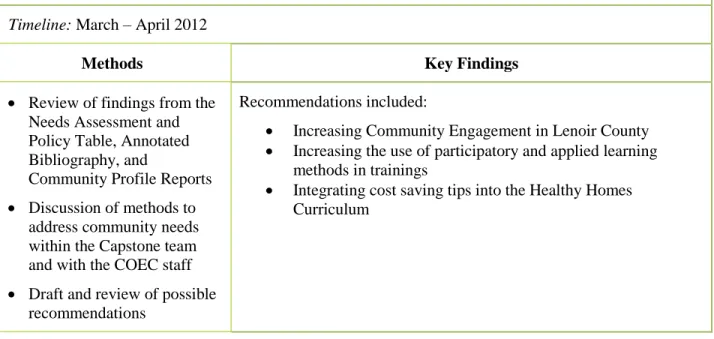
Table 5: Capstone Project Deliverable 4 Description
Deliverable 4: Environmental Health Education and Outreach Recommendations
Purpose: Informed from the previous deliverables, the Capstone team offered recommendations, and resources to assist the COEC’s work in Durham and Lenoir Counties in the following areas
:
engagement, adult learning methods, and education.
Timeline: March – April 2012
Methods Key Findings
Review of findings from the Needs Assessment and Policy Table, Annotated Bibliography, and
Community Profile Reports Discussion of methods to
address community needs within the Capstone team and with the COEC staff Draft and review of possible
recommendations
Recommendations included:
Increasing Community Engagement in Lenoir County Increasing the use of participatory and applied learning
methods in trainings
Integrating cost saving tips into the Healthy Homes Curriculum
The Recommendations were a culmination of all of the Capstone team’s activities. Given the
information that was compiled in the Community Profile Reports, the concerns and needs revealed
through the qualitative research conducted in each county, and the effective educational strategies
identified in the literature, the Capstone team provided a list of recommended activities and methods that
the COEC can consider for its Healthy Homes education and outreach efforts. The report included
targeted recommendations for each of the following three main areas: engagement, adult learning
methods, and education. The Recommendations enabled the Capstone team to fulfill Goal Three (Table
1) to position the COEC to tailor effective educational outreach on environmental health hazards in the
home with residents of Durham and Lenoir Counties.
Finally, as a part of the CDC grant requirements, the COEC was charged with understanding the
current condition of home exposure-related environmental health policies in the state. One of the
Final 4/25/12
35
that was completed as a part of the Capstone project. In the format of an Excel table, the Capstone teampresented information about existing federal, state, and local policies and standards in a structured and
user-friendly way. The Policy Table summarized current home exposure-related policies and standards
and highlighted progressive and comprehensive versions in place across the state and country. It also
detailed possible policy areas where the COEC could build capacity among community members to
advocate for better protection, and addressed Goal 2 of the Capstone project (Table 1).
Discussion
Strengths and Limitations of Engagement and Assessment Activities
As previously described, the Capstone team was purposeful in applying sound community
engagement and assessment methods in all activities conducted during the project. As the COEC had
limited networks in Lenoir County, the team worked to develop new relationships there by meeting with
community leaders who could provide entrée into the Latino and faith-based communities, both of which
containing members’ of the project’s target audience. Additionally, Capstone team members worked
closely with the COEC to obtain feedback and guidance on all deliverables in order to ensure the project’s
relevancy and long-term use. Despite these strengths, there were ways in which the Capstone team could
have done more to achieve greater community engagement. Additionally, some circumstances were
beyond the control of the Capstone team that limited the extent to which such methods could be used in
all aspects of the project.
The Capstone team attempted to engage with the communities from the onset of the project by
participating in local events and conducing windshield tours of the counties in September and October
2011. However, the Capstone team did not engage with each community in an equal partnership due to
limited interaction with the intended beneficiaries. This was primarily due to the fact that Capstone team
visited the communities only one time prior to interview and focus group recruitment in January 2012.