Meetings, Minneapolis, Minnesota, August 7–11, 2005.
Realized Variance and Market
Microstructure Noise
Peter R. H
ANSENDepartment of Economics, Stanford University, 579 Serra Mall, Stanford, CA 94305-6072 ([email protected])
Asger L
UNDEDepartment of Marketing and Statistics, Aarhus School of Business, Fuglesangs Alle 4, 8210 Aarhus V, Denmark
We study market microstructure noise in high-frequency data and analyze its implications for the real-ized variance (RV) under a general specification for the noise. We show that kernel-based estimators can unearth important characteristics of market microstructure noise and that a simple kernel-based estimator dominates the RV for the estimation of integrated variance (IV). An empirical analysis of the Dow Jones Industrial Average stocks reveals that market microstructure noise is time-dependent and correlated with increments in the efficient price. This has important implications for volatility estimation based on high-frequency data. Finally, we apply cointegration techniques to decompose transaction prices and bid–ask quotes into an estimate of the efficient price and noise. This framework enables us to study the dynamic effects on transaction prices and quotes caused by changes in the efficient price.
KEY WORDS: Bias correction; High-frequency data; Integrated variance; Market microstructure noise; Realized variance; Realized volatility; Sampling schemes.
The great tragedy of Science—the slaying of a beautiful hypothesis by an ugly fact (Thomas H. Huxley, 1825–1895).
1. INTRODUCTION
The presence of market microstructure noise in high-frequen-cy financial data complicates the estimation of financial volatil-ity and makes standard estimators, such as the realized variance(RV), unreliable. Thus, from the perspective of volatil-ity estimation, market microstructure noise is an “ugly fact” that challenges the validity of theoretical results that rely on the ab-sence of noise. Volatility estimation in the preab-sence of market microstructure noise is currently a very active area of research. Interestingly, this literature was initiated by an article by Zhou (1996) that was published in this journal a decade ago and was in many ways 10 years ahead of its time.
The best remedy for market microstructure noise depends on the properties of the noise, and the main purpose of this arti-cle is to unearth the empirical properties of market microstruc-ture noise. We use a number of kernel-based estimators that are well suited for this problem, and our empirical analysis of high-frequency stock returns reveals the following ugly facts about market microstructure noise:
1. The noise is correlated with the efficient price. 2. The noise is time-dependent.
3. The noise is quite small in the Dow Jones Industrial Av-erage (DJIA) stocks.
4. The properties of the noise have changed substantially over time.
These four empirical “facts” are related to one another and have important implications for volatility estimation. The time dependence in the noise and the correlation between noise and efficient price arise naturally in some models on market
mi-crostructure effects, including (a generalized version of ) the bid–ask model by Roll (1984) (see Hasbrouck 2004 for a dis-cussion) and models where agents have asymmetric informa-tion, such as those by Glosten and Milgrom (1985) and Easley and O’Hara (1987, 1992). Market microstructure noise has many sources, including the discreteness of the data (see Harris 1990, 1991) and properties of the trading mechanism (see, e.g., Black 1976; Amihud and Mendelson 1987). (For additional ref-erences to this literature, see, e.g., O’Hara 1995; Hasbrouck 2004.)
The main contributions of this article are as follows: First, we characterize how the RV is affected by market microstruc-ture noise under a general specification for the noise that allows for various forms of stochastic dependencies. Second, we show that market microstructure noise is time-dependent and corre-lated with efficient returns. Third, we consider some existing theoretical results based on assumptions about the noise that are too simplistic, and discuss when such results provide reason-able approximations. For example, our empirical analysis of the 30 DJIA stocks shows that the noise may be ignored when in-traday returns are sampled at relatively low frequencies, such as 20-minute sampling. Assuming the noise is of an independent type seems to be reasonable when intraday returns are sampled every 15 ticks or so. Fourth, we apply cointegration methods to decompose transaction prices and bid/ask quotations into es-timates of the efficient price and market microstructure noise. The correlations between these estimated series are consistent with the volatility signature plots. The cointegration analysis enables us to study how a change in the efficient price dynami-cally affects bid, ask, and transaction prices.
© 2006 American Statistical Association Journal of Business & Economic Statistics April 2006, Vol. 24, No. 2 DOI 10.1198/073500106000000071
The interest for empirical quantities based on high-frequency data has surged in recent years (see Barndorff-Nielsen and Shephard 2007 for a recent survey). The RV is a well-known quantity that goes back to Merton (1980). Other empirical quantities include bipower variation and multipower varia-tion, which are particularly useful for detecting jumps (see Barndorff-Nielsen and Shephard 2003, 2004, 2006a,b; Ander-sen, Bollerslev, and Diebold 2003; Bollerslev, Kretschmer, Pig-orsch, and Tauchen 2005; Huang and Tauchen 2005; Tauchen and Zhou 2004), and intraday range-based estimators (see Christensen and Podolskij 2005). High-frequency–based quan-tities have proven useful for a number of problems. For ex-ample, several authors have applied filtering and smoothing techniques to time series of the RV to obtain time series for daily volatility (see, e.g., Maheu and McCurdy 2002; Barndorff-Nielsen, Nielsen, Shephard, and Ysusi 1996; Engle and Sun 2005; Frijns and Lehnert 2004; Koopman, Jungbacker, and Hol 2005; Hansen and Lunde 2005b; Owens and Steiger-wald 2005). High-frequency–based quantities are also use-ful in the context of forecasting (see Andersen, Bollerslev, and Meddahi 2004; Ghysels, Santa-Clara, and Valkanov 2006) and the evaluation and comparison of volatility models (see Andersen and Bollerslev 1998; Hansen, Lunde, and Nason 2003; Hansen and Lunde 2005a, 2006; Patton 2005).
The RV, which is a sum of squared intraday returns, yields a perfect estimate of volatility in the ideal situation where prices are observed continuously and without measurement error (see, e.g., Merton 1980). This result suggests that the RV should be based on intraday returns sampled at the highest possible fre-quency (tick-by-tick data). Unfortunately, the RV suffers from a well-known bias problem that tends to get worse as the sam-pling frequency of intraday returns increases (see, e.g., Fang 1996; Andreou and Ghysels 2002; Oomen 2002; Bai, Russell, and Tiao 2004). The source of this bias problem is known as market microstructure noise, and the bias is particularly ev-ident in volatility signature plots (see Andersen, Bollerslev, Diebold, and Labys 2000b). Thus there is a trade-off between bias and variance when choosing the sampling frequency, as discussed by Bandi and Russell (2005) and Zhang, Mykland, and Aït-Sahalia (2005). This trade-off is the reason that the RV is often computed from intraday returns sampled at a mod-erate frequency, such as 5-minute or 20-minute sampling.
A key insight into the problem of estimating the volatil-ity from high-frequency data comes from its similarvolatil-ity to the problem of estimating the long-run variance of a stationary time series. In this literature it is well known that autocorre-lation necessitates modifications of the usual sum-of-squared estimator. Those modifications of Newey and West (1987) and Andrews (1991) provided such estimators that are robust to au-tocorrelation. Market microstructure noise induces autocorre-lation in the intraday returns, and this autocorreautocorre-lation is the source of the RV’s bias problem. Given this connection to long-run variance estimation, it is not surprising that “prewhiten-ing” of intraday returns and kernel-based estimators (including the closely related subsample-based estimators) are found to be useful in the present context. Zhou (1996) introduced the use of kernel-based estimators and the subsampling idea to deal with market microstructure noise in high-frequency data. Filtering techniques have been used by Ebens (1999), Ander-sen, Bollerslev, Diebold, and Ebens (2001), and Maheu and
McCurdy (2002) (moving average filter) and Bollen and In-der (2002) (autoregressive filter). Kernel-based estimators were explored by Zhou (1996), Hansen and Lunde (2003), and Barndorff-Nielsen, Hansen, Lunde, and Shephard (2004) and the closely related subsample-based estimators were used in an unpublished paper by Müller (1993) and also by Zhou (1996), Zhang et al. (2005), and Zhang (2004).
The rest of the article is organized as follows. In Section 2 we describe our theoretical framework and discuss sampling schemes in calendar time and tick time. We also characterize the bias of the RV under a general specification for the noise. In Section 3 we consider the case with independent market mi-crostructure noise, which has been used by various authors, in-cluding Corsi, Zumbach, Müller, and Dacorogna (2001), Curci and Corsi (2004), Bandi and Russell (2005), and Zhang et al. (2005). We consider a simple kernel-based estimator of Zhou (1996) that we denote by RVAC1 because it uses the first-order
autocorrelation to bias-correct the RV. We benchmark RVAC1
2. THE THEORETICAL FRAMEWORK
We let{p∗(t)}denote a latent log-price process in continuous time and use{p(t)}to denote the observable log-price process. Thus the noise process is given by
u(t)≡p(t)−p∗(t).
The noise process, u, may be due to market microstructure ef-fects, such as bid–ask bounces, but the discrepancy between p and p∗ can also be induced by the technique used to con-struct p(t). For example, p is often concon-structed artificially from observed transactions or quotes using the previous tick method or the linear interpolation method, which we define and discuss later in this section.
We work under the following specification for the efficient price process, p∗.
Assumption 1. The efficient price process satisfies dp∗(t)= σ (t)dw(t), where w(t) is a standard Brownian motion, σ is a random function that is independent of w, and σ2(t) is Lipschitz (almost surely).
In our analysis we condition on the volatility path,{σ2(t)}, because our analysis focuses on estimators of the integrated variance (IV),
IV≡
b
a
σ2(t)dt.
Thus we can treat {σ2(t)} as deterministic even though we view the volatility path as random. The Lipschitz condition is a smoothness condition that requires|σ2(t)−σ2(t+δ)|< δ for some and all t andδ (with probability 1). The assump-tion that w andσ are independent is not essential. The connec-tion between kernel-based and subsample-based estimators (see Barndorff-Nielsen et al. 2004), shows that weaker assumptions, used by Zhang et al. (2005) and Zhang (2004), are sufficient in this framework.
We partition the interval [a,b] into m subintervals, and m plays a central role in our analysis. For example, we derive asymptotic distributions of quantities as m→ ∞.This type of infill asymptotics is commonly used in spatial data analysis and goes back to Stein (1987). Related to the present context is the use of infill asymptotics for estimation of diffusions (see Bandi and Phillips 2004). For a fixed m, the ith subinterval is given by[ti−1,m,ti,m], where a=t0,m<t1,m<· · ·<tm,m=b. The length of the ith subinterval is given byδi,m≡ti,m−ti−1,m, and
we assume that supi=1,...,mδi,m=O(m1), such that the length of each subinterval shrinks to 0 as m increases. The intraday returns are now defined by
y∗i,m≡p∗(ti,m)−p∗(ti−1,m), i=1, . . . ,m, and the increments in p and u are defined similarly and denoted by
yi,m≡p(ti,m)−p(ti−1,m), i=1, . . . ,m,
and
ei,m≡u(ti,m)−u(ti−1,m), i=1, . . . ,m.
Note that the observed intraday returns decompose into yi,m= y∗i,m+ei,m. The IV over each of the subintervals is defined
by
σi2,m≡
ti,m
ti−1,m
σ2(s)ds, i=1, . . . ,m,
and we note that var(y∗i,m)=E(yi∗,2m)=σi2,m under Assump-tion 1.
The RV of p∗is defined by
RV(∗m)≡ m
i=1
y∗i,2m,
and RV(∗m)is consistent for the IV as m→ ∞(see, e.g., Protter 2005). A feasible asymptotic distribution theory of RV (in rela-tion to IV) was established by Barndorff-Nielsen and Shephard (2002) (see also Meddahi 2002; Mykland and Zhang 2006; Gonçalves and Meddahi 2005). Whereas RV(∗m) is an ideal es-timator, it is not a feasible estimator because p∗is latent. The realized variance of p, given by
RV(m)≡ m
i=1
y2i,m,
is observable but suffers from a well-known bias problem and is generally inconsistent for the IV (see, e.g., Bandi and Russell 2005; Zhang et al. 2005).
2.1 Sampling Schemes
Intraday returns can be constructed using different types of sampling schemes. The special case where ti,m, i=1, . . . ,m,
are equidistant in calendar time [i.e.,δi,m=(b−a)/m for all i] is referred to as calendar time sampling (CTS). The widely used exchange rates data from Olsen and associates (see Müller et al. 1990) are equidistant in time, and 5-minute sampling(δi,m= 5 min)is often used in practice.
CTS requires the construction of artificial prices from the raw (irregularly spaced) price data (transaction prices or quo-tations). Given observed prices at the times t0<· · ·<tN, one
can construct a price at timeτ ∈ [tj,tj+1), using
p(τ )≡ptj
or
˜
p(τ )≡ptj+
τ−tj tj+1−tj
ptj+1−ptj
.
The former is known as the previous tick method (Wasserfallen and Zimmermann 1985), and the latter is the linear interpola-tion method (see Andersen and Bollerslev 1997). Both methods have been discussed by Dacorogna, Gencay, Müller, Olsen, and Pictet (2001, sec. 3.2.1). When sampling at ultra-high frequen-cies, the linear interpolation method has the following unfortu-nate property, where “→p ” denotes convergence in probability.
The result of Lemma 1 essentially boils down to the fact that the quadratic variation of a straight line is zero. Although this is a limit result (as m→ ∞), the lemma does suggest that the linear interpolation method is not suitable for the construction of intraday returns at high frequencies, where sampling may oc-cur multiple times between two neighboring price observations. That the result of Lemma 1 is more than a theoretical artifact is evident from the volatility signature plots of Hansen and Lunde (2003). Given the result of Lemma 1, we avoid the use of the linear interpolation and use the previous tick method to con-struct CTS intraday returns.
The case where ti,mdenotes the time of a transaction/quota-tion is referred to as tick time sampling (TTS). An example of TTS is when ti,m, i=1, . . . ,m, are chosen to be the time of
every fifth transaction, say.
The case where the sampling times, t0,m, . . . ,tm,m, are such
that σi2,m =IV/m for all i=1, . . . ,m is known as business time sampling (BTS) (see Oomen 2006). Zhou (1998) referred to BTS intraday returns as de-volatized returns and discussed distributional advantages of BTS returns. Whereas ti,m, i=
0, . . . ,m, are observable under CTS and TTS, they are latent under BTS, because the sampling times are defined from the unobserved volatility path. Empirical results of Andersen and Bollerslev (1997) and Curci and Corsi (2004) suggest that BTS can be approximated by TTS. This feature is nicely captured in the framework of Oomen (2006), where the (random) tick times are generated with an intensity directly related to a quan-tity corresponding toσ2(t)in the present context. Under CTS, we sometimes write RV(x sec), where x seconds is the period in time spanned by each of the intraday returns (i.e.,δi,m=x seconds). Similarly, we write RV(y tick) under TTS when each intraday return spans y ticks (transactions or quotations).
2.2 Characterizing the Bias of the Realized Variance Under General Noise
Initially, we make the following assumptions about the noise process, u.
Assumption 2. The noise process, u, is covariance stationary with mean 0, such that its autocovariance function is defined by π(s)≡E[u(t)u(t+s)].
The covariance function, π, plays a key role because the bias of RV(m) is tied to the properties ofπ(s)in the neighbor-hood of 0. Simple examples of noise processes that satisfy As-sumption 2 include the independent noise process, which has π(s)=0 for all s=0, and the Ornstein–Uhlenbeck process. The latter was used by Aït-Sahalia, Mykland, and Zhang (2005a) to study estimation in a parametric diffusion model that is robust to market microstructure noise.
An important aspect of our analysis is that our assumptions allow for a dependence between u and p∗. This is a generaliza-tion of the assumpgeneraliza-tions made in the existing literature, and our empirical analysis shows that this generalization is needed, in particularly when prices are sampled from quotations.
Next, we characterize the RV bias under these general as-sumptions for the market microstructure noise, u.
Theorem 1. Given Assumptions 1 and 2, the bias of the real-ized variance under CTS is given by
ERV(m)−IV=2ρm+2m
π(0)−π
b−a
m , (1) whereρm≡E(
m
i=1y∗i,mei,m).
The result of Theorem 1 is based on the following decompo-sition of the observed RV:
RV(m)= m
i=1
y∗i,2m+2 m
i=1
ei,my∗i,m+ m
i=1
e2i,m,
wheremi=1e2i,mis the “realized variance” of the noise process u responsible for the last bias term in (1). The dependence be-tween u and p∗that is relevant for our analysis is given in the form of the correlation between the efficient intraday returns, y∗i,m, and the return noise, ei,m. By the Cauchy–Schwarz
in-equality, π(0)≥π(s) for all s, such that the bias is always positive when the return noise process, ei,m, is uncorrelated
with the efficient intraday returns y∗i,m(because this implies that ρm=0). Interestingly, the total bias can be negative. This oc-curs whenρm<−m[π(0)−π(m)], which is the case where the downward bias (caused by a negative correlation between ei,m and y∗i,m)exceeds the upward bias caused by the “realized variance” of u. This appears to be the case for the RVs that are based on quoted prices, as shown in Figure 1.
The last term of the bias expression in Theorem 1 shows that the bias is tied to the properties ofπ(s) in the neighborhood of 0, and, as m→ ∞(henceδm→0), we obtain the following result.
Corollary 1. Suppose that the assumptions of Theorem 1 hold and thatπ(s)is differentiable at 0. Then the asymptotic bias is given by
lim m→∞E
RV(m)−IV=2ρ−2(b−a)π(0), provided thatρ≡limm→∞E(mi=1y∗i,mei,m)is well defined.
Under the independent noise assumption, we can define π(0)= −∞,which is the situation that we analyze in detail in Section 3. A related asymptotic result is obtained whenever the quadratic variation of the bivariate process,(p∗,u), is well defined, such that [p,p] = [p∗,p∗] +2[p∗,u] + [u,u], where
[X,Y]denotes the quadratic covariation. In this setting we have IV= [p∗,p∗]such that
RV(m)−IV→p 2[p∗,u] + [u,u] (as m→ ∞), whereρ= [p∗,u]and−2(b−a)π(0)= [u,u](almost surely under additional assumptions).
A volatility signature plot provides an easy way to visually inspect the potential bias problems of RV-type estimators. Such plots first appeared in an unpublished thesis by Fang (1996) and were named and made popular by Andersen et al. (2000b). Let RV(tm)denote the RV based on m intraday returns on day t. A volatility signature plot displays the sample average,
RV(m)≡n−1 n
t=1
Figure 1. Volatility Signature Plots for RVt Based on Ask Quotes ( ), Bid Quotes ( ), Mid-Quotes ( ), and Transaction Prices ( ). The left column is for AA and the right column is for MSFT. The two top rows are based on calendar time sampling, in contrast to the bottom rows that are based on tick time sampling. The results for 2000 are the panels in rows 1 and 3, and those for 2004 are in rows 2 and 4. The horizontal line represents an estimate of the average IV,σ¯2≡RV(1 tick)ACNW
30, that is defined in Section 4.2. The shaded area aboutσ¯
2represents
as a function of the sampling frequencies m, where the average is taken over multiple periods (typically trading days).
Figure 1 presents volatility signature plots for AA (left) and MSFT (right) using both CTS (rows 1 and 2) and TTS (rows 3 and 4) and based on both transaction data and quotation data. The signature plots are based on daily RVs from the years 2000 (rows 1 and 3) and 2004 (rows 2 and 4), where RV(tm) is calculated from intraday returns spanning the period 9:30AMto 16:00PM(the hours that the exchanges are open). The horizontal line represents an estimate of the average IV,
¯
σ2≡RV(1 tick)ACNW
30, defined in Section 4.2. The shaded area about
¯
σ2represents an approximate 95% confidence interval for the average volatility. These confidence intervals are computed us-ing a method described in Appendix B.
From Figure 1, we see that the RVs based on low and mod-erate frequencies appear to be approximately unbiased. How-ever, at higher frequencies, the RV becomes unreliable, and the market microstructure effects are pronounced at the ultra-high frequencies, particularly for transaction prices. For example,
RV(1 sec) is about 47 for MSFT in 2000, whereas RV(1 min) is
much smaller (about 6.0).
A very important result of Figure 1 is that the volatility sig-nature plots for mid-quotes drop (rather than increases) as the sampling frequency increases (asδi,m→0). This holds for both CTS and TTS. Thus these volatility signature plots provide the first piece of evidence for the ugly facts about market mi-crostructure noise.
Fact I. The noise is negatively correlated with the efficient returns.
Our theoretical results show thatρmmust be responsible for the negative bias of RV(m). The other bias term, 2m[π(0)− π(b−ma)],is always nonnegative, such that time dependence in the noise process cannot (by itself ) explain the negative bias seen in the volatility signature plots for mid-quotes. So Fig-ure 1 strongly suggests that the innovations in the noise process, ei,m, are negatively correlated with the efficient returns, y∗i,m. Although this phenomenon is most evident for mid-quotes, it is quite plausible that the efficient return is also correlated with each of the noise processes embedded in the three other price series: bid, ask, and transaction prices. At this point it is worth recalling Colin Sautar’s words: “Just because you’re not para-noid doesn’t mean they’re not out to get you.” Similarly, just because we cannot see a negative bias does not mean that ρm is 0. In fact, ifρm>0, then it would not be exposed in a simple manner in a volatility signature plot. From
cov(y∗i,m,emidi,m)=1 2cov(y
∗
i,m,e
ask
i,m)+ 1 2cov(y
∗
i,m,e
bid
i,m), we see that the noise in bid and/or ask quotes must be correlated with the efficient prices if the noise in mid-quotes is found to be correlated with the efficient price. In Section 6 we present additional evidence of this correlation, which is also found for transaction data.
Nonsynchronous revisions of bid and ask quotes when the efficient price changes is a possible explanation for the nega-tive correlation between noise and efficient returns. An upward movement in prices often causes the ask price to increase before the bid does, whereby the bid–ask spread is temporary widened.
A similar widening of the spread occurs when prices go down. This has implications for the quadratic variation of mid-quotes, because a one-tick price increment is divided into two half-tick increments, resulting in quadratic terms that add up to only half that of the bid or ask price [(12)2+(1
2)2versus 12]. Such
dis-crete revisions of the observed price toward the effective price has been used in a very interesting framework by Large (2005), who showed that this may result in a negative bias.
Figure 2 presents typical trading scenarios for AA dur-ing three 20-minute periods on April 24, 2004. The prevail-ing bid and ask prices are given by the edges of the shaded area, and the dots represents actual transaction prices. That the spread tends to get wider when prices move up or down is seen in many places, such as the minutes after 10:00AM and around 12:15PM.
3. THE CASE WITH INDEPENDENT NOISE In this section we analyze the special case where the noise process is assumed to be of an independent type. Our assump-tions, which we make precise in Assumption 3, essentially amount to assuming thatπ(s)=0 for all s=0 and p∗⊥⊥u, where we use “⊥⊥” to denote stochastic independence. Most of the existing literature has established results assuming this kind of noise, and in this section we shall draw on several im-portant results from Zhou (1996), Bandi and Russell (2005), and Zhang et al. (2005). Although we have already dismissed this form of noise as an accurate description of the noise in our data, there are several good arguments for analyzing the properties of the RV and related quantities under this assump-tion. The independent noise assumption makes the analysis tractable and provides valuable insight into the issues related to market microstructure noise. Furthermore, although the inde-pendent noise assumption is inaccurate at ultra-high sampling frequencies, the implications of this assumptions may be valid at lower sampling frequencies. For example, it may be reason-able to assume that the noise is independent when prices are sampled every minute. On the other hand, for some purposes the independent noise assumption can be quite misleading, as we discuss in Section 5.
We focus on a kernel estimator originally proposed by Zhou (1996) that incorporates the first-order autocovariance. A sim-ilar estimator was applied to daily return series by French, Schwert, and Stambaugh (1987). Our use of this estimator has three purposes. First, we compare this simple bias-corrected version of the realized variance to the standard measure of the realized variance, and find that these results are gener-ally quite favorable to the bias-corrected estimator. Second, our analysis makes it possible to quantify the accuracy of re-sults based on no-noise assumptions, such as the asymptotic results by Jacod (1994), Jacod and Protter (1998), Barndorff-Nielsen and Shephard (2002), and Mykland and Zhang (2006) and to evaluate whether the bias-corrected estimator is less sen-sitive to market microstructure noise. Finally, we use the bias-corrected estimator to analyze the validity of the independent noise assumption.
Assumption 3. The noise process satisfies the following:
Figure 2. Bid and Ask Quotes (defined by the shaded area) and Actual Transaction Prices ( ) Over Three 20-Minute Subperiods on April 24, 2004 for AA.
(b) ω2≡E|u(t)|2<∞for all t (c) µ4≡E|u(t)|4<∞for all t.
The independent noise, u, induces an MA(1) structure on the return noise, ei,m, which is why this type of noise is sometimes
Some of the results that we formulate in this section only rely on Assumption 3(a), so we require only (b) and (c) to hold when necessary. Note that ω2, which is defined in (b), corre-sponds toπ(0)in our previous notation. To simplify some of our subsequent expressions, we define the “excess kurtosis ra-tio”, κ ≡µ4/(3ω4), and note that Assumption 3 is satisfied
if u is a Gaussian “white noise” process, u(t)∼N(0, ω2), in which caseκ=1.
The existence of a noise process, u, that satisfies Assump-tion 3, follows directly from Kolmogorov’s existence theo-rem (see Billingsley 1995, chap. 7). It is worthwhile to note that “white noise processes in continuous time” are very er-ratic processes. In fact, the quader-ratic variation of a white noise process is unbounded (as is the r-tic variation for any other in-teger). Thus the “realized variance” of a white noise process diverges to infinity in probability as the sampling frequency, m, is increased. This is in stark contrast to the situation for Brownian-type processes that have finite r-tic variation for r≥2 (see Barndorff-Nielsen and Shephard 2003).
Lemma 2. Given Assumptions 1 and 3(a) and (b), we have that E(RV(m))=IV +2mω2; if Assumption 3(c) also holds, then
varRV(m)=κ12ω4m+8ω2 m
i=1
σi2,m
−(6κ−2)ω4+2 m
i=1
σi4,m (2)
and
RV(m)−2mω2
√
κ12ω4m =
m 3κ
RV(m) 2mω2 −1
d
→N(0,1),
as m→ ∞. Here we “→d” to denote convergence in distribution. Thus unlike the situation in Corollary 1, where the noise is time-dependent and the asymptotic bias is finite [whenever π(0) is finite], this situation with independent market microstructure noise leads to a bias that diverges to infinity. This result was first derived in an unpublished thesis by Fang (1996). The expres-sion for the variance [see (2)] is due to Bandi and Russell (2005) and Zhang et al. (2005); the former expressed (2) in terms of the moments of the return noise, ei,m.
In the absence of market microstructure noise and under CTS [ω2=0 andδi,m=(b−a)/m], we recognize a result of Barndorff-Nielsen and Shephard (2002) that
varRV(m)=2 m
i=1
σi4,m=2b−a m
b
a
σ4(s)ds+o
1 m , whereabσ4(s)ds is known as the integrated quarticity, intro-duced by Barndorff-Nielsen and Shephard (2002).
Next, we consider the estimator of Zhou (1996) given by
RV(ACm)
1≡
m
i=1
y2i,m+ m
i=1
yi,myi−1,m+ m
i=1
yi,myi+1,m. (3)
This estimator incorporates the empirical first-order autoco-variance, which amounts to a bias correction that “works” in
much the same way that robust covariance estimators, such as that of Newey and West (1987), achieve their consistency. Note that (3) involves y0,m and ym+1,m, which are intraday
returns outside the interval [a,b]. If these two intraday re-turns are unavailable, then one could simply use the estimator
m−1
i=2 y2i,m+
m
i=2yi,myi−1,m+
m−1
i=1 yi,myi+1,mthat estimates
b−δm,m
a+δ1,m σ
2(s)ds=IV +O(1
m). Here we follow Zhou (1996) and use the formulation in (3) because it simplifies the analysis and several expressions. Our empirical implementation is based on a version that does not rely on intraday returns outside the
[a,b]interval. We describe the exact implementation in Sec-tion 5.
Next, we formulate results for RV(ACm)
1 that are similar to those
for RV(m)in Lemma 2.
Lemma 3. Given Assumptions 1 and 3(a), we have that E(RV(ACm)
1)=IV. If Assumption 3(b) also holds, then
varRV(ACm)
1
=8ω4m+8ω2 m
i=1
σi2,m
−6ω4+6 m
i=1
σi4,m+O(m−2)
under CTS and BTS, and RV(ACm)
1−IV
√
8ω4m
d
→N(0,1), as m→ ∞.
An important result of Lemma 3 is that RV(ACm)
1is unbiased for
the IV at any sampling frequency, m. Also note that Lemma 3 requires slightly weaker assumptions than those needed for RV(m) in Lemma 2. The first result relies on only Assump-tion 3(a); (c) is not needed for the variance expression. This is achieved because the expression for RV(ACm)
1 can be
rewrit-ten in a way that does not involve squared noise terms, u2i,m, i=1, . . . ,m, as does the expression for RV(m), where ui,m≡ u(ti,m). A somewhat remarkable result of Lemma 3 is that the bias-corrected estimator, RV(ACm)
1, has a smaller asymptotic
vari-ance (as m→ ∞)than the unadjusted estimator, RV(m)(8mω4 vs. 12κmω4). Usually, bias correction is accompanied by a larger asymptotic variance. Also note that the asymptotic re-sults of Lemma 3 are somewhat more useful than those of Lemma 2 (in terms of estimating IV), because the results of Lemma 2 do not involve the object of interest, IV, but shed light only on aspects of the noise process. This property was used by Bandi and Russell (2005) and Zhang et al. (2005) to estimate ω2; we discuss this aspect in more detail in our empirical analysis in Section 5. It is important to note that the asymptotic results of Lemma 3 do not suggest that RV(ACm)
1
should be based on intraday returns sampled at the highest pos-sible frequency, because the asymptotic variance is increasing in m!Thus we could drop IV from the quantity that converges in distribution to N(0,1)and simply write RV(ACm)
1/
√
8ω4m→d
N(0,1). In other words, whereas RV(ACm)
1 is “centered” about
In the absence of market microstructure noise(ω2=0), we note that
varRV(ACm)
1
≈6
m
i=1
σi4,m,
which shows that the variance of RV(ACm)
1 is about three times
larger than that of RV(m)whenω2=0. Thus, in the absence of
noise, we see an increase in the asymptotic variance as a result of the bias correction. Interestingly, this increase in the variance is identical to that of the maximum likelihood estimator in a Gaussian specification, whereσ2(s)is constant andω2=0 (see Aït-Sahalia et al. 2005a).
It is easy to show that τi∗=c/m, i=1, . . . ,m, solves the following constrained minimization problem:
min
τ1,...,τm
m
i=1
τi2 subject to m
i=1
τi=c.
Thus, if we setτi=σi2,mand c=IV, then we see thatmi=1σi4,m (for fixed m)is minimized under BTS. This highlights one of the advantages of BTS over CTS. This result was shown to hold in a related (pure jump) framework by Oomen (2005). In the present context, we have that, under BTSmi=1σi4,m=IV2/m,
and specifically it holds that IV2
m ≤
b
a
σ4(s)dsb−a m .
The variance expression under CTS [δi,m=(b−a)/m] is ap-proximately given by
varRV(ACm)
1
≈8ω4m+8ω2
b
a
σ2(s)ds
−6ω4+6b−a m
b
a
σ4(s)ds. Next, we compare RV(ACm)
1 and RV
(m)in terms of their MSEs
and their respective optimal sampling frequencies for a special case that reveals key features of the two estimators.
Corollary 2. Defineλ≡ω2/IV, suppose thatκ=1, and let t0,m, . . . ,tm,m be such thatσi2,m=IV/m (BTS). The MSEs are given by
MSERV(m)=IV2
4λ2m2+12λ2m+8λ−4λ2+21 m
(4)
and
MSERV(ACm)
1
=IV2
8λ2m+8λ−6λ2+61 m−2
1 m2
. (5) The optimal sampling frequencies for RV(m) and RV(ACm)
1 are
given implicitly as the real (positive) solutions to 4λ2m3+ 6λ2m2−1=0 and 4λ2m3−3m+2=0.
We denote the optimal sampling frequencies for RV(m) and RV(ACm)
1 by m
∗
0and m∗1. These are approximately given by
m∗0≈(2λ)−2/3 and m∗1≈√3(2λ)−1.
The expression for m∗0was derived in Bandi and Russell (2005) and Zhang et al. (2005) under more general conditions than
those used in Corollary 2, whereas the expression for m∗1 was derived earlier by Zhou (1996).
In our empirical analysis, we often find thatλ≤10−3, such that
m∗1/m∗0≈31/22−1/3(λ−1)1/3≥10,
which shows that m∗1is several times larger than m∗0 when the noise-to-signal is as small as we find it to be in practice. In other words, RV(ACm)
1 permits more frequent sampling than does
the “optimal” RV. This is quite intuitive, because RV(ACm)
1 can
use more information in the data without being affected by a severe bias. Naturally, when TTS is used, the number of in-traday returns, m, cannot exceed the total number of trans-actions/quotations, so in practice it might not be possible to sample as frequently as prescribed by m∗1. Furthermore, these results rely on the independent noise assumption, which may not hold at the highest sampling frequencies.
Corollary 2 captures the salient features of this problem and characterizes the MSE properties of RV(m)and RV(ACm)
1 in terms
of a single parameter,λ(noise-to-signal). Thus the simplifying assumptions of Corollary 2 yield an attractive framework for comparing RV(m) and RV(ACm)
1 and for analyzing their (lack of )
robustness to market microstructure noise.
From Corollary 2, we note that the RMSEs of RV(m) and RV(ACm)
1 are proportional to the IV and given by r0(λ,m)IV and
r1(λ,m)IV, where
r0(λ,m)≡
4λ2m2+12λ2m+8λ−4λ2+ 2
m and
r1(λ,m)≡
8λ2m+8λ−6λ2+ 6
m− 2 m2.
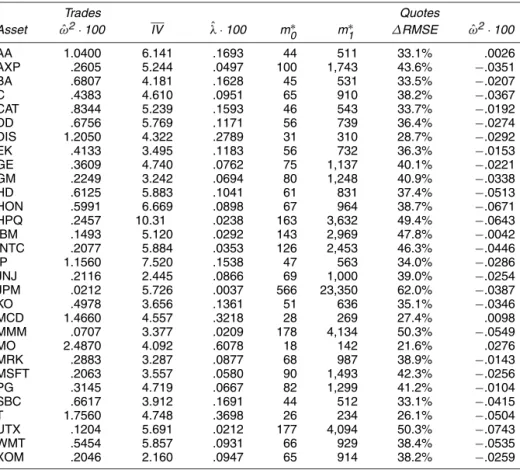
Figure 3 plots r0(λ,m)and r1(λ,m)using empirical estimates
ofλ.The estimates are based on high-frequency stock returns of Alcoa (left panels) and Microsoft (right panels) in year the 2000. The details about the estimation ofλare deferred to Sec-tion 5. The upper panels present r0(λ,ˆ m)and r1(λ,ˆ m), where
the x-axis isδi,m=(b−a)/m in units of seconds. For both eq-uities, we note that the RV(ACm)
1 dominates the RV
(m) except at
the very lowest frequencies. The minimums of r0(λ,ˆ m) and
r1(λ,ˆ m) identify their respective optimal sampling
frequen-cies, m∗0 and m∗1. For the AA returns, we find that the opti-mal sampling frequencies are m∗0,AA=44 and m∗1,AA=511 (corresponding to intraday returns spanning 9 minutes and 46 seconds) and that the theoretical reduction of the RMSE is 33.1%. The curvatures of r0(λ,ˆ m)and r1(λ,ˆ m)in the
neigh-borhood of m∗0 and m∗1 show that RV(ACm)
1 is less sensitive than
RV(m)to the choice of m.
The middle panels of Figure 3 display the relative RMSE of RV(ACm)
1to that of (the optimal) RV
(m∗0)and the relative RMSE of
RV(m) to that of (the optimal) RV(m∗1)
AC1. These panels show that
the RV(ACm)
1 continues to dominate the “optimal” RV
(m∗0) for a
wide ranges of frequencies, not just in a small neighborhood of the optimal value, m∗1. This robustness of RVAC1 is quite
Figure 3. RMSE Properties of RV and RVAC
1Under Independent Market Microstructure Noise Using Empirical Estimates ofλfor 2000. The
up-per panels display the RMSEs for RV and RVAC
1using estimates ofλ, r0(λˆ, m) and r1(λˆ, m), and the corresponding RMSEs in the absence of noise,
r0(0, m) and r1(0, m). The middle panels are the relative RMSEs of RV(m)and RV(m)
AC1to RV
(m∗0)and RV(m∗ 1)
AC1, as defined by r0(λˆ, m)/r1(λˆ, m
∗
1) and
r1(λˆ, m)/r0(λˆ, m∗0). The lower panels show the percentage increase in the RMSE for different sampling frequencies caused by market microstructure noise. The x -axis gives the sampling frequency of intraday returns as defined byδi,m=(b−a)/m in units of seconds, where b−a=6.5 hours
ofλ(and hence m∗1)will lead to a RVAC1 that dominates RV.
This result is not surprising, because recent developments in this literature have shown that it is possible to construct kernel-based estimators that are even more accurate than RVAC1 (see
Barndorff-Nielsen et al. 2004; Zhang 2004).
A second, very interesting aspect that can be analyzed based on the results of Corollary 2 is the accuracy of theoretical re-sults derived under the assumption thatλ=0 (no market mi-crostructure noise). For example, the accuracy of a confidence interval for IV, which is based on asymptotic results that ignore the presence of noise, will depend on λ and m. The expres-sions of Corollary 2 provide a simple way to quantify the the-oretical accuracy of such confidence intervals, including those of Barndorff-Nielsen and Shephard (2002). Figure 3 provides valuable information on this question. The upper panels of Fig-ure 3 present the RMSEs of RV(m) and RV(ACm)
1, using both
ˆ
λ >0 (the case with noise) andλ=0 (the case without noise). For small values of m, we see that r0(λ,ˆ m)≈r0(0,m) and
r1(λ,ˆ m)≈r1(0,m), whereas the effects of market
microstruc-ture noise are pronounced at the higher sampling frequencies. The lower panels of Figure 3 quantify the discrepancy between the two “types” of RMSEs as a function of the sampling fre-quency. These plots present 100[r0(λ,ˆ m)−r0(0,m)]/r0(0,m)
and 100[r1(λ,ˆ m)−r1(0,m)]/r1(0,m)as a function of m. Thus
the former reveals the percentage increase of the RV’s RMSE due to market microstructure noise, and the second line simi-larly shows the increase of the RVAC1’s RMSE due to noise.
The increase in the RMSE may be translated into a widening of a confidence intervals for IV (about RV(m)or RV(ACm)
1). The
ver-tical lines in the right panels mark the sampling frequency cor-responding to 5-minute sampling under CTS and show that the “actual” confidence interval (based on RV(m)) is 105.94% larger than the “no-noise” confidence interval for AA, whereas the en-largement is 22.37% for MSFT. At 20-minute sampling, the dis-crepancy is less than a couple of percent, so in this case the size distortion from being oblivious to market microstructure noise is quite small. The corresponding increases in the RMSE of RV(ACm)
1 are 9.41% and 3.07%. Thus a “no-noise” confidence
interval about RV(ACm)
1 is more reliable than that about RV
(m) at
moderate sampling frequencies. Here we have used an estima-tor ofλbased on data from the year 2000, before the tick size was reduced to 1 cent. In our empirical analysis we find the noise to be much smaller in recent years, such that “no-noise approximations” are likely to be more accurate after decimal-ization of the tick size.
Figure 4 presents the volatility signature plots for RV(ACm)
1,
where we have used the same scale as in Figure 1. When sam-pling in calender time (the four upper panels), we see a pro-nounced bias in RV(ACm)
1when intraday returns are sampled more
frequently than every 30 seconds. The main explanation for this is that CTS will sample the same price multiple times when m is large, which induces (artificial) autocorrelation in intraday re-turns. Thus, when intraday returns are based on CTS, it is nec-essary to incorporate higher-order autocovariances of yi,mwhen m becomes large. The plots in rows 3 and 4 are signature plots when intraday returns are sampled in tick time. These also re-veal a bias in RV(ACx tick)
1 at the highest frequencies, which shows
that the noise is time dependent in tick time. For example, the
MSFT 2000 plot suggests that the time dependence lasts for 30 ticks, perhaps longer.
Fact II. The noise is autocorrelated.
We provide additional evidence of this fact, based on other empirical quantities, in the following sections.
4. THE CASE WITH DEPENDENT NOISE In this section we consider the case where the noise is time-dependent and possibly correlated with the efficient re-turns, y∗i,m. Following earlier versions of the present article, issues related to time dependence and noise–price correlation have been addressed by others, including Aït-Sahalia et al. (2005b), Frijns and Lehnert (2004), and Zhang (2004). The time scale of the dependence in the noise plays a role in the asymp-totic analysis. Although the “clock” at which the memory in the noise decays can follow any time scale, it seems reasonable for it to be tied to calendar time, tick time, or a combination of the two. We first consider a situation where the time dependence is specific to calendar time, then consider the case with time dependence in tick time.
4.1 Dependence in Calender Time
To bias-correct the RV under the general time-dependent type of noise, we make the following assumption about the time dependence in the noise process.
Assumption 4. The noise process has finite dependence in the sense thatπ(s)=0 for all s> θ0for some finiteθ0≥0, and
E[u(t)|p∗(s)] =0 for all|t−s|> θ0.
The assumption is trivially satisfied under the independent noise assumption used in Section 3. A more interesting class of noise processes with finite dependence are those of the mov-ing average type, u(t)=tt−θ
0ψ (t−s)dB(s), where B(s)
rep-resents a standard Brownian motion and ψ (s) is a bounded (nonrandom) function on [0, θ0]. The autocorrelation function for a process of this kind is given byπ(s)=θ0
s ψ (t)ψ (t−s)dt, for s∈ [0, θ0].
Theorem 2. Suppose that Assumptions 1, 2, and 4 hold and let qmbe such that qm/m> θ0. Then (under CTS),
ERV(ACm)
qm −IV
=0,
where
RV(ACm)
qm≡
m
i=1
y2i,m+ qm
h=1
m
i=1
(yi−h,myi,m+yi,myi+h,m).
A drawback of RV(ACm)
qm is that it may produce a negative
unbi-Figure 4. Volatility Signature Plots for RVAC
1 Based on Ask Quotes ( ), Bid Quotes ( ), Mid-Quotes ( ), and Transaction
Prices ( ). The left column is for AA and the right column is for MSFT. The two top rows are based on calendar time sampling; the bot-tom rows are based on tick time sampling. The results for 2000 are the panels in rows 1 and 3, and those for 2004 are in rows 2 and 4. The horizontal line represents an estimate of the average IV,σ¯2≡RV(1 tick)ACNW
30, that is defined in Section 4.2. The shaded area aboutσ¯
2represents an
ased, it may result is a smaller MSE than that of RVAC.
Inter-estingly, Barndorff-Nielsen et al. (2004) have shown that the subsample estimator of Zhang et al. (2005) is almost identical to the Bartlett kernel estimator.
In the time series literature, the lag length, qm, is typically chosen such that qm/m→0 as m→ ∞, for example, qm =
4(m/100)2/9,wherexdenotes the smallest integer that is greater than or equal to x. But if the noise were dependent in calendar time, then this would be inappropriate, because it would lead to qm=3 when a typical trading day (390 minutes) were divided into 78 intraday returns (5-minute returns) and to qm =6 if the day were divided into 780 intraday returns (30-second returns). So the former q would cover 15 minutes, whereas the latter would cover 3 minutes (6×30 seconds), and in fact the period would shrink to 0 as m→ ∞. Under As-sumptions 2 and 4, the autocorrelation in intraday returns is specific to a period in calendar time, which does not depend on m; thus it is more appropriate to keep the width of the “au-tocorrelation window,” qm/m, constant. This also makes RV(ACm) more comparable across different frequencies, m. Thus we set qm= (b−wa)/m,where w is the desired width of the lag win-dow and b−a is the length of the sampling period (both in units of time), such that(b−a)/m is the period covered by each intraday return. In this case we write RV(ACm)
w in place of
RV(ACm)
qm. Therefore, if we were to sample in calendar time and
set w=15 min and b−a=390 min, then we would include qm= m/26autocovariance terms.
When qm is such that qm/m> θ0≥ 0, this implies that
RV(ACm)
qm cannot be consistent for IV. This property is common
for estimators of the long-run variance in the time series liter-ature whenever qm/m does not converge to 0 sufficiently fast (see, e.g., Kiefer, Vogelsang, and Bunzel 2000; and Jansson 2004). The lack of consistency in the present context can be un-derstood without consideration of market microstructure noise. In the absence of noise, we have that var(y2i,m)=2σi4,m and var(yi,myi+h,m)=σi2,mσi2+h,m≈σ
4
i,m, such that varRV(ACm)
qm
≈2
m
i=1
σi4,m+ qm
h=1
(2)2 m
i=1
σi4,m
=2(1+2qm) m
i=1
σi4,m, which approximately equals
2(1+2qm)b−a m
1
0
σ4(s)ds
under CTS. This shows that the variance does not vanish when qmis such that qm/m> θ0>0.
The upper four panels of Figure 5 represent a new type of signature plots for RV(1 sec)AC
q . Here we sample intraday returns
every second using the previous-tick method and now plot q along the x-axis. Thus these signature plots provide informa-tion on time dependence in the noise process. The fact that the
RV(1 sec)AC
q of the four price series differ and have not leveled off
is evidence of time dependence. Thus in the upper four panels, where we sample in calendar time, it appears that the depen-dence lasts for as long as 2 minutes (AA, year 2000) or as short
as 15 seconds (MSFT, year 2004). We comment on the lower four panels in the next section, where we discuss intraday re-turns sampled in tick time.
4.2 Time Dependence in Tick Time
When sampling at ultra-high frequencies, we find it more nat-ural to sample in tick time, such that the same observation is not sampled multiple times. Furthermore, the time dependence in the noise process may be in tick time rather than calender time. Several results of Bandi and Russell (2005) allow for time de-pendence in tick time (while the price–noise correlation is as-sumed away).
The following example gives a situation with market mi-crostructure noise that is time-dependent in tick time and corre-lated with efficient returns.
Example 1. Let t0<t1<· · ·<tm be the times at which
prices are observed, and consider the case where we sample in-traday returns at the highest possible frequency in tick time. We suppress the subscript m to simplify the notation. Suppose that the noise is given by ui=αy∗i +εi, whereεiis a sequence of iid random variables with mean 0 and variance var(εi)=ω2. Thus α=0 corresponds to the case with independent noise assump-tion, andα=ω2=0 corresponds to the case without noise. It now follows that
ei=α(y∗i −y∗i−1)+εi−εi−1,
such that
E(e2i)=α2(σi2+σi2−1)+2ω 2
and
E(eiy∗i)=ασi2, wheremi=1σi2=IV. Thus
ERV(1 tick)=IV+2α(1+α)IV+2mω2,
with a bias given by 2α(1+α)IV+2mω2. This bias may be
negative ifα <0 (the case where uiand y∗i are negatively cor-related). Now, we also have
E(eiei−1)= −α2σi2−1−ω2
and
E(eiy∗i−1)= −ασi2−1, such that
m
i=1
E[yiyi+1] = −α2IV−2mω2−αIV,
which shows that RV(1 tick)AC
1 is almost unbiased for the IV.
In this simple example, uiis only contemporaneously corre-lated with y∗i. In practice, it is plausible that ui could also be correlated with lagged values of y∗i, which would yield a more complicated time dependence in tick time. In this situation we could use RV(1 tick)AC
q , with a q sufficiently large to capture the
time dependence.
Figure 5. Volatility Signature Plots of RV(1 sec)
ACq (four upper panels) and RV
(1 tick)
ACq (four lower panels) for Each of the Price Series: Ask
Quotes ( ), Bid Quotes ( ), Mid-Quotes ( ), and Transaction Prices ( ). The x -axis is the number of autocovariance terms, q, included in RV(1 sec)
ACq . The left column is for AA, and the right column is for MSFT. The results for 2000 are the panels in rows 1 and 3, and those
for 2004 are in rows 2 and 4. The horizontal line represents an estimate of the average IV,σ¯2≡RV(1 tick)
ACNW30, that is defined in Section 4.2. The
signature plots for RV(1 tick)AC
q , where q is the number of
auto-covariances used to bias correct the standard RV. From these plots, we see that a correction for the first couple of autoco-variances has a substantial impact on the estimator, but higher-order autocovariances are also important, because the volatility signature plots do not stabilize until q≥30 in some cases (e.g., MSFT in 2000). This time dependence was longer than we had anticipated; thus we examined whether a few “unusual” days were responsible for this result. However, the upward-sloping volatility signature (until q is about 30) is actually found in most daily plots of RV(1 tick)AC
q against q for MSFT in the year 2000.
In Section 3 we analyzed the simple kernel estimator that incorporates only the first-order autocovariance of intraday re-turns, which we now generalize by including higher-order auto-covariances. We did this to make the estimator, RV(1 tick)AC
q , robust
to both time dependence in the noise and correlation between noise and efficient returns. Interestingly, Zhou (1996) also pro-posed a subsample version of this estimator, although he did not refer to it as a subsample estimator. As is the case for RV(1 tick)ACq , this estimator is robust to time dependence that is finite in tick time. Next, we describe the subsample-based version of Zhou’s estimator.
Let t0<t1<· · ·<tN be the times at which prices are
ob-served in the interval [a,b], where a=t0 and b=tN. Here
m need not be equal to N (unlike the situation in the previous ex-ample), because we use intraday returns that span several price observations. We use the following notation for such (skip-k) intraday returns:
yti,ti+k≡pti+k−pti.
Thus yti,ti+kis the intraday return over the time interval[ti,ti+k].
This leads to the identity RV(ACk tick)
1
=
i∈{0,k,2k,...,N−k}
y2ti,ti+k+yti−k,tiyti,ti+k+yti,ti+kyti+k,ti+2k
(assuming that N/k is an integer), which is a sum involving m=N/k terms. The subsample version RV(ACm)
1, proposed by
Zhou (1996), can be expressed as
1 k
N−1
i=0
y2ti,ti+k+yti−k,tiyti,ti+k+yti,ti+kyti+k,ti+2k
. (6)
Thus, for k=2, we have 1
2 N
i=1
(yi+yi+1)2+(yi−1+yi−2)(yi+yi+1)
+(yi+yi+1)(yi+2+yi+3),
where yi≡yti−1,ti. Rearranging the terms, we see that this sum
is approximately given by
1 2
N
i=1
2y2i +4yiyi+1+4yiyi+2+2yiyi+3
= ˆγ0+(γˆ−1+ ˆγ1)+(γˆ−2+ ˆγ2)+
1
2(γˆ−3+ ˆγ3),
where γˆj≡
N
i=1yiyi+j. For the general case, k≥2, we can
show that this subsample estimator is approximately given by
RV(1 tick)ACNW
k≡ ˆγ0+
k
j=1
(γˆ−j+ ˆγj)+ k
j=1
k−j
k (γˆ−j−k+ ˆγj+k). Thus this estimator equals the RV(1 tick)AC
k plus an additional term,
a Bartlett-type weighted sum of higher-order covariances. In-terestingly, Zhou (1996) showed that the subsample version of his estimator [see (6)] has a variance that is (at most) of order O(Nk)+O(1k)+O(kN2)(assuming constant volatility). This term
is of order O(N−1/3)if k is chosen to be proportional to N2/3, as was done by Zhang et al. (2005). It appears that Zhou may have considered k as fixed in his asymptotic analysis, because he referred to this estimator as being inconsistent (see Zhou 1998, p. 114). Therefore, the great virtues of subsample-based estimators in this context were first recognized by Zhang et al. (2005).
5. EMPIRICAL ANALYSIS
We now analyze stock returns for the 30 equities of the DJIA. The sample period spans 5 years, from January 3, 2000 to De-cember 31, 2004. We report results for each of the years indi-vidually, but give some of the more detailed results only for the years 2000 and 2004 to conserve space. The tick size was re-duced from 1/16 of 1 dollar to 1 cent on January 29, 2001, and to avoid mixing mix days with different tick sizes, we drop most of the days during January 2001 from our sample. The data are transaction prices and quotations from NYSE and NASDAQ, and all data were extracted from the Trade and Quote (TAQ) database.
We filtered the raw data for outliers, and discarded transac-tions outside the period 9:30 AM–4:00 PM and removed days with less than 5 hours of trading from the sample. This reduced the sample to the number of days reported in the last column of Table 1. The filtering procedure removed obvious data errors, such as zero prices. We also removed transaction prices that were more than one spread away from the bid and ask quotes. (Details of the filtering procedure are described in a techni-cal appendix available at our website.) The average number of transactions/quotations per day are given for each year in our sample; these reveal a steady increase in the number of trans-actions and quotations over the 5-year period. The numbers in parentheses are the percentages of transaction prices that dif-fer from the proceeding transaction price and similarly for the quoted prices. The same price is often observed in several con-secutive transactions/quotations, because a large trade may be divided into smaller transactions, and a “new” quote may sim-ply reflect a revision of the “depth” while the bid and ask prices remain unchanged. We use all price observations in our analy-sis. Censoring all of the zero intraday returns does not affect the RV, but has an impact on the autocorrelation of intraday returns.
results for two equities, Alcoa (AA) and Microsoft (MSFT), which represent DJIA equities with low and high trading activ-ities. The corresponding figures for the other 28 DJIA equities are available on request.
5.1 Empirical Implementation of Estimators
In practice, we do not rely on the intraday returns outside the
[a,b]interval. Thus in our empirical analysis we substitute (for h>0)
˜
γh≡ m m−h
m−h i=1
yi,myi+h,m for the theoretical quantity
ˆ
γh≡ m
i=1
yi,myi+h,m,
because the latter relies on ym+1,m, . . . ,ym+h,m. (For h<0, we
defineγh˜ ≡ ˜γ|h|.) In the expression for γh˜ we use an upward scaling, m/(m−h), of the “autocovariances” to compensate for the “missing” autocovariance terms. Thus our empirical implementation of the simplest kernel estimator is given by RV(ACm)
1=
m
i=1y2i,m+2mm−1
m−1
i=1 yi,myi+1,m.
5.2 Estimation of Market Microstructure Noise Parameters
Under the independent noise assumption used in Section 3, we have, from Lemma 2, that
˜
ω2≡RV
(m)
2m p
→ω2 as m→ ∞.
This estimator was proposed by Bandi and Russell (2005) and Zhang et al. (2005) for different purposes. Bandi and Russell (2005) usedω˜2t to determine the optimal sampling fre-quency m∗0,whereas Zhang et al. (2005) used it to select the number of subsamples and to serve as a bias-correction device of their “second-best” one-scale subsample estimator.
Under the independent noise assumption, we have, from Lemma 2, that E(RV(m))=IV +2mω2. Whereas ω˜2 is as-ymptotically justified, our empirical results reveal that ω2 is very small in practice, so small that 2mω2is small relative to the IV, with the exception of the most liquid assets, such as INTC and MSFT. Whenever the IV/2m is nonnegligible, ω˜2 will overestimateω2. Thus, better estimators are given by
ˇ
ω2≡RV
(m)−RV(13)
2(m−13) and
ˆ
ω2≡RV
(m)−IV
2m ,
where RV(13) is based on intraday returns that span about 30 minutes each andIV is some unbiased estimator of IV. From Lemmas 2 and 3, it follows thatω˜2,ωˇ2, andωˆ2are asymptoti-cally equivalent in the sense that they have the same probability limit as m→ ∞.Butωˇ2andωˆ2 are unbiased forω2 for any finite m, and we show thatω˜2 is quite biased in many cases. Another problem is that the independent noise assumption need
not hold at ultra-high frequencies, in which case the asymptotic bias is not given by 2mω2. Clearly, this is problematic for all three estimators.
Table 2 presents annual sample averages ofω˜2,ωˇ2, andωˆ2 for the 5 years of our sample. Here we use RV(1 tick)AC
1 as our
choice for IV, which is unbiased under the independent noise assumption. The first estimator,ω˜2, assumes that IV/2m is neg-ligible, in which case all three estimators should be similar. Be-causeωˇ2andωˆ2generally agree, whereasω˜2is typically much larger, it is evident thatω˜2overestimatesω2. A related obser-vation was made by Engle and Sun (2005).
Fact III. The noise is smaller than one might think.
Here, by small we mean that the bias of the RV due to noise is small. This is particularly so in the more recent years (see, e.g., the 2004 volatility signature plot for AA in Fig. 1). By small, we do not mean that the noise is unimportant, but rather that it has a less dramatic impact than suggested by the independent noise assumption.
The fact that the noise in each of the intraday returns is rela-tively small (even when sampling occurs at the highest possible frequency) will likely affect the properties of the suggested im-plementation of the two-scale estimator by Zhang et al. (2005). In fact, the one-scale estimator proposed by Zhang et al. (2005) may be more accurate when the noise is small, as Table 2 sug-gests. Similarly, when determining the optimal sampling fre-quency for RV (as in Bandi and Russell 2005), one should be careful not to overestimate ω2, which would lead to a lower-than-optimal sampling frequency. The important message is that one should incorporate RVAC1, or some other unbiased
es-timator of IV, when estimatingω2from RV.
Another observation from Table 2 is that the noise has changed. For example, our 2001 estimates of ω2 (using ωˆ2) are on average <20% of those of 2000, and are even smaller in subsequent years. A large portion of this reduction is due to decimalization. We discuss the changed empirical properties of the noise in more detail in our discussion of the results in Fig-ures 6 and 7.
Now, if we were to believe the independent noise assumption (which is less of a stretch in 2000 than in subsequent years), then we could construct the following estimate ofλ:
ˆ
λ≡ ¯ω2/IV, where ω¯2≡n−1n
t=1ωˆ2t and IV ≡n−1
n
t=1RV (1 tick) AC1,t . The
latter is an estimate of the average daily IV over the sample t=1, . . . ,n, because RVAC1 is unbiased for IV under the
inde-pendent noise assumption. Similarly,ω¯2 is an estimate of the average daily noise. If bothω2and IV are constant across days, such thatλis the same for all days, thenλˆ is consistent forλ whenever a law of large numbers applies toωˆt2and RV(1 tick)AC
1,t ,
t=1, . . . ,n. In practice, bothω2and IV are likely to vary across days, soλˆ should be viewed only as a proxy for the noise-to-signal ratio.