The Los Angeles County Consolidated Transportation Services Agency
FINAL
Action Plan:
A Locally Developed, Coordinated
Public Transit-Human Services Transportation Plan
For Los Angeles County
Prepared for:
Access Services, Inc. 707 Wilshire Blvd., 9th Floor
Los Angeles, CA. 90017 (213) 270-6000
On Behalf of:
The Southern California Association of Governments (SCAG) and
The Los Angeles Metropolitan Transportation Authority (METRO)
FINAL
ii
SEPTEMBER 2007 The Los Angeles County Consolidated Transportation Services AgencyACTION PLAN: A LOCALLY DEVELOPED, COORDINATED PUBLIC
TRANSIT-HUMAN SERVICES TRANSPORTATION PLAN
FOR LOS ANGELES COUNTY
Table of Contents
Page
EXECUTIVE SUMMARY vi
CHAPTER 1 – THE COORDINATION ACTION PLAN 1
1.1 Federal Transit Administration Program Guidance 1
1.2 Los Angeles County Action Plan 2
CHAPTER 2 – APPROACH TO A PLAN FOR LOS ANGELES COUNTY 4
2.1 The Setting 4
2.2 Work Plan, Approach and Project Timing 4
CHAPTER 3 – RESOURCE AND NEEDS ASSESSMENT: QUANTITATIVE ANALYSES
8
3.1 Demand Estimation Findings 8
3.2 2006 Stakeholder Inventory Approach 10
3.3 2006 Stakeholder Inventory Responses and Findings 12
CHAPTER 4 – NEEDS ASSESSMENT: STAKEHOLDER INVOLVEMENT 34
4.1 Introduction 34
4.2 Stakeholder Involvement Objectives and Methodology 34
4.3 Stakeholder Involvement Process 37
4.4 Key Findings of the Stakeholder Interview Process 39
4.5 Other Stakeholder Involvement Activities 41
CHAPTER 5 – FINDINGS OF THE NEEDS ASSESSMENT 44
5.1 Federal Transit Administration (FTA) Program Guidance 44
FINAL
iii
SEPTEMBER 2007 Table of Contents, continuedCHAPTER 5 -- FINDINGS OF THE NEEDS ASSESSSEMENT, continued
5.3 Assessment of Needs of Target Population 47
5.4 Gaps in Services Provided 52
CHAPTER 6 – EXISTING TRANSPORTATION ENVIRONMENT 56
6.1 Organizational Structure of Public Transportation 56
6.2 CTSA Role in Los Angeles County 59
CHAPTER 7 – TRANSPORTATION FUNDING 64
7.1 Federal Funding Context for Coordination Planning 64
7.2 State Level Coordination Initiatives 67
7.3 Local Funding Picture 68
7.4 Meeting Funding Requirements 73
CHAPTER 8 – RECOMMENDATIONS 74
8.1 Translating Needs Into Projects 74
8.2 Priorities for Project Selection 79
8.3 Framework for Coordination 80
8.4 Plan Visions and Goals 84
8.5 Plan Recommendations 84
8.6 Sequencing and Prioritization of Recommendations 95
APPENDICES
Appendix A Demand Estimation for Specialized Transportation for Los Angeles County
A1 Target Populations for JARC, New Freedoms, and Section 5310 Programs A2 Population Projections for Los Angeles County
A3 Target Population Trip Rates
A4 Public Transit and Specialized Transit Trips Provided Appendix B Cover Letter and Stakeholder Survey
Appendix C1 Survey Respondents List by Agency Type C2 Survey Results by Agency Type
FINAL
iv
SEPTEMBER 2007 Table of Contents, continuedC3 Provider by General Public and Human Service, No Commercial Agencies C4 Results by General Public and Human Service, No Commercial Agencies C5 Survey Results General Public and Human Service – Providers Only C6 Survey Results by Sector
C7 Commercial Agencies C8 Active Client Roster
C9 Primary Client Population C10 Transportation Provider Details
C11 Difficulties with Transportation Coordination C12 Transportation Services Rider Details C13 Vehicle Availability and Usage
C14 Transportation Service Area C15 Service Hours Table
C16 Passenger Fares
C17 Cooperative Agreements
C18 Transportation Needs That Need To Be Addressed C19 Transportation Budget Details
Appendix D1 Outreach Meeting/Interview Summaries D2 Summary of Public Outreach Matrix
Appendix E CTSA 2007 Training and Technical Assistance Schedule Appendix F CalAct Conference – Coordination Town Meeting Proceedings Appendix G Volunteer Driver Turn Key Kit (Beverly Foundation)
Appendix H Coordination Project Possibilities – SAFETEA-LU §5310, §5316, and §5317
LIST OF FIGURES
Figure 2-1 Los Angeles County and Vicinity 5
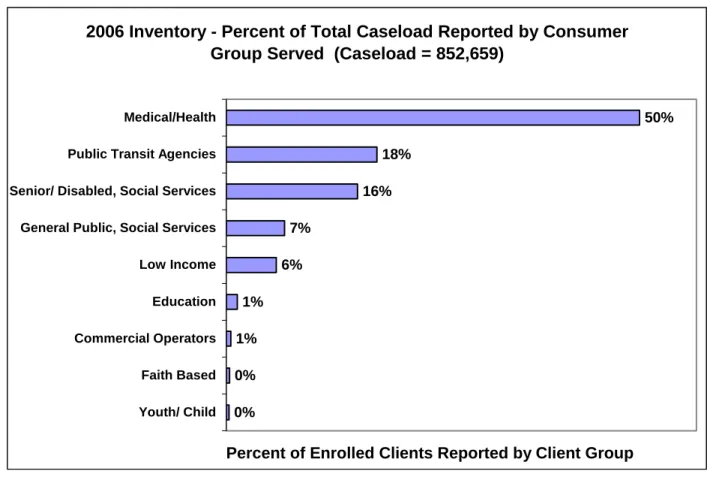
Figure 3-1 2006 Inventory , Responding Agencies by Legal Type 14 Figure 3-2 2006 Inventory, Responding Agencies by Metro Sectors 15 Figure 3-3 2006 Inventory , Percent of Total Caseload Reported by Consumer
Group Served
18
Figure 3-4 2006 Inventory, Transportation Services Provided 19 Figure 3-5 2006 Inventory, Transportation Services Agency Authorization 21
FINAL
v
SEPTEMBER 2007 Figure 3-6 2006 Inventory, All Reporting - Client Trip Needs Poorly Served 24 Figure 3-7 2006 Inventory, By Agency Type Client Trip Needs Poorly Served 25 Figure 3-8 2006 Inventory, All Reporting – Coordination Areas of Interest 27 Figure 3-9 2006 Inventory, Agencies by Type – Coordination Areas of Interest 28Figure 4-1 Summary of Public Involvement Efforts 36
Figure 4-2 Stakeholder Interview Guide 43
Figure 6-1 RIDEINFO – Access Services Web Information About Transportation 62 Figure 8-1 Regional Mobility Manager Roles and Functions 82
Figure 8-2 Coordinated Transportation Environment 83
LIST OF TABLES
Table 2-1 Coordination Action Plan – Strategic Planning Committee Invites 7 Table 3-1 Target Populations for JARC, New Freedoms, and Section 5310
Programs
9
Table 3-2 2006 Inventory, Data Sources and Counts 11
Table 3-3 2006 Inventory, Reported Caseload and Daily Ridership 14 Table 3-4 2006 Inventory, Client Groups Served by Agency Legal Type 17 Table 3-5 2006 Inventory, Transportation Services Offered by Agency Legal
Type
20
Table 3-6 2006 Inventory, Categories of Clients Receiving Transportation by Agency Type.
21
Table 3-7 2006 Inventory, Number of Vehicles Reported for Transportation Services
22
Table 3-8 2006 Inventory, Vehicle Trips and Annual Miles Reported 23
Table 3-9 Service Days of Operation 23
Table 3-10 2006 Inventory, Transportation Budgets Reported for Paratransit and Specialized Transit
31
Table 3-11 2006 Inventory, Reported Funding Sources 32
Table 7-1 Summary of Goals of SAFETEA-LU 66
Table 7-2 Olmstead Advisory Committee 67
Table 8-1 Consumer Transportation Needs, Resources and Possible Responses 75
Table 8-2 Project Goals Objectives and Strategies 89
Table 8-3 Sample Funding-Specific Guidance to Prospective Applicants 99
ACTION PLAN: A Locally Developed, Coordinated
Public Transit-Human Services Transportation Plan
FINAL
vi
SEPTEMBER 2007for Los Angeles County
Executive Summary
This Action Plan establishes the construct for a unified comprehensive strategy for transportation service delivery in Los Angeles County that is focused on unmet transportation needs of elderly individuals, persons with disabilities and individuals of low income.
T
HEC
OORDINATEDA
CTIONP
LAN:
F
EDERALG
UIDANCER
EQUIRING THISP
LANThis plan is prepared in response to the coordinated planning requirements of SAFETEA-LU (Safe, Accountable, Flexible, Efficient Transportation Act – A Legacy for Users, P.L. 190-059), set forth in three sections of the Act: Section 5316-Job Access and Reverse Commute, Section 5317-New Freedom Program and Section 5310-Elderly Individuals and Individuals with Disabilities Program. The Los Angeles County Metropolitan Transportation Authority (Metro) is the designated recipient for Sections 5316 and 5317 funds and will be responsible for programming such funds in accordance to federal guidelines.
The coordinated plan establishes a construct for a unified comprehensive strategy for transportation service delivery in Los Angeles County focused on unmet transportation needs of elderly individuals, persons with disabilities and individuals of low income. The coordinated plan must contain the following four (4) required elements:
An assessment of available services identifying current providers (public and private);
An assessment of transportation needs for individuals with disabilities, older adults, and people with low incomes –- this assessment can be based on the experiences and perceptions of the planning partners or on data collection efforts and gaps in service;
Strategies and/or activities and/or projects to address the identified gaps between current services and needs, as well as opportunities to improve efficiencies in service delivery; Priorities for implementation based on resources (from multiple program sources), time, and
feasibility for implementing specific strategies and/or activities identified.
Access Services Inc. initiated development of this coordinated transportation plan as Los Angeles County’s designated consolidated transportation services agency (CTSA). The Los Angeles County Metropolitan Transportation Authority (Metro) is the designated recipient for the funds discussed in this plan and will be responsible for its implementation. It was logical that Access Services be responsible for the plan preparation given its ongoing responsibility for related plans of the Social Services Transportation Improvement Act of 1979, consistent with California Code Sections 15975 and 15951-15952 which require that transportation planning agencies and county transportation commissions to prepare and adopt a coordination action plan.
A
PPROACH TO THEP
LANIn anticipating the plan’s development three goals were articulated. The plan must: 1) Serve as a comprehensive, unified plan that promotes community mobility for seniors, persons with disabilities and persons of low income. 2) Establish priorities to incrementally improve mobility for the target populations; and 3) Develop a process to identify partners interested, willing and
FINAL
vii
SEPTEMBER 2007 able to promote community mobility for the target populations. From the plan development process, another goal emerged: 4) Important to promote and encourage planning partners who may be interested, willing and able to develop projects that will address needs the plan identifies.The planning process involved quantitative analyses, including a demand estimation to gauge need and an inventory survey of countywide stakeholders to identify resources, needs and potential partners. Qualitative activities included public meetings and interviews with major agencies and organizations funding human services, with a representative group of direct service providers, and with representatives of the target group constituencies.
A critical element of the plan development approach was the Strategic Planning Committee. This group was formed from an invitee list of almost fifty organizations, including transit operators, elected officials, Federal Transit Administration officials, neighboring county representatives, and human services organizations serving Los Angeles County constituencies.
D
EMANDE
STIMATIONF
INDINGSA census-based estimate of demand was undertaken to identify the Los Angeles County target population and their potential trip demand. A range of 1.06 million to 1.77 million persons was estimated for the target population. These individuals are adults between the ages 16 to 64 who are low income or disabled and seniors age 65 and older. They represent between 11 percent and 19 percent of Los Angeles County’s 2000 population of 9.5 million residents.
This proportion of the population was projected using general population estimates developed by the Southern California Association of Governments (SCAG) with other assumptions about changes in the senior population and the base adult population. These projections suggest that increasing proportions of Los Angeles County residents will be within the target populations, as follows:
by 2010, up to 2.1 million persons or 20 percent of the population; by 2020, up to 2.4 million or 21 percent of the population; and by 2030, up to 2.7 million persons or 22 percent of the population.
Trip demand was estimated for the target population. Average trips per day were estimated, as well as, the proportion of public transit trips. Potentially a range of 58 to 97 million trips were projected to be needed by adults who are low income or disabled and seniors. In addition, those trips requiring special assistance were estimated at 10 percent of the total trips, reflecting of range of 5.8 to 9.7 million trips which are not now provided or not adequately provided.
This contrasts favorably with the 6.5 million documented trips provided by the public paratransit providers in Los Angeles County, suggesting that the levels of unmet need are not impossible to meet and are within the range of what is now provided. This plan examines the characteristics and nature of those specialized transit trips that are needed and not currently available.
S
TAKEHOLDERI
NVENTORYF
INDINGSA total of 208 inventory surveys were returned from an extensive, countywide stakeholder listing, reflecting a 5.4 percent response rate. Although below a typical response rate of 7 to 15 percent for such surveys, respondents were nonetheless representative of the type and breadth of agencies and organizations in Los Angeles County involved with transportation to the target populations.
Inventory respondents were reasonably distributed among the five Metro sectors with the greatest number (31 percent) from the Westside/Central areas and the fewest from the South Bay (13 percent) and Gateway Cities (13 percent) respectively. Respondents’ legal characteristics included:
FINAL
viii
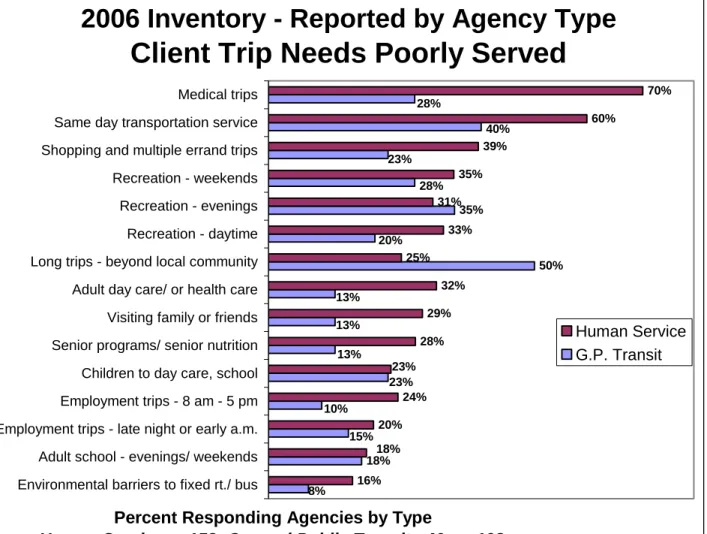
SEPTEMBER 2007 48 percent private, non-profit agencies; 33 percent public agencies, 15 percent private for-profit agencies and four percent faith-based organizations. Key findings from the stakeholder survey included:Medical trips ranked as the number one trip need by the human services organizations and long-trips, beyond the local community, ranked as the number one trip need by the public transit agencies. These are often the same type of trip, as medical trips generally require medium to longer distance travel, with medical destinations frequently outside jurisdictional boundaries and not served by locally oriented transportation providers.
The most frequently noted barrier to coordination was the “mixing” of clients and consumers on transportation services. This issue is reported by agencies and organizations in other settings and presents challenges, especially in operating environments where vehicle resources are limited and where the profile of the client/customer base is varied, such as dialysis patients, adult day health care consumers and low income children attending daycare. Another common barrier was uncertainty about with whom to coordinate where agencies indicated potential willingness to coordinate but no clarity as to with whom to do so.
Significant numbers of agencies indicated interest in coordination, while slightly over one-third of respondents indicated they were “not interested in coordination.” Among the coordination topics with the largest supporting groups were:
Coordinated trip scheduling and dispatch – 22 percent Contracting with other agencies to provide trips – 15 percent Coordinated vehicle/ capital purchases – 15 percent
Pooling or sharing of vehicles – 13 percent
Joint purchase of equipment, supplies, insurance – 13 percent Shared fueling, maintenance, storage facilities – 12 percent
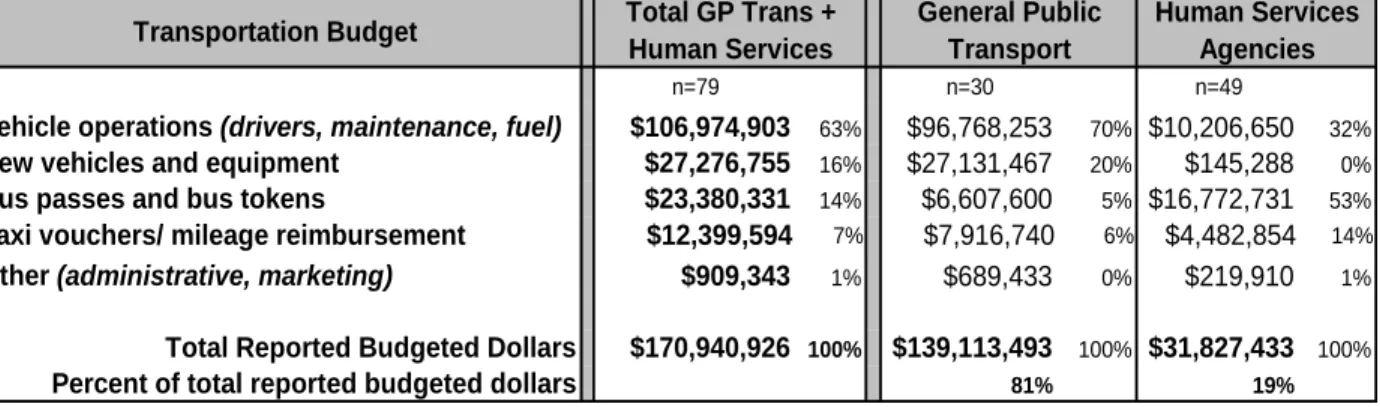
Public transit operators, for the most part, have predictable and stable funding sources which include Federal, State and local sources. Human services organizations report high levels of dependency upon donations and fees, with limited on-going funding. Surveyed human services agencies reported that more than half of their transportation funding (53 percent) goes to bus pass and token purchases.
S
TAKEHOLDERI
NVOLVEMENTP
ROCESSR
ESULTSThe stakeholder involvement effort included meetings and interviews with stakeholders, termed “appropriate planning partners” by the FTA. This included management and staff representatives of human services agencies and organizations, clients and consumers, public transit staff, and other governmental personnel. Key findings were characterized in terms of: 1) transportation needs; 2) barriers to coordination; and 3) suggestions for potential coordination projects. This process enabled considerable participation by stakeholders in the coordination “dialogue” and incorporation of significant stakeholder input into the plan.
N
EEDSA
SSESSMENT,
R
ESOURCES ANDG
APSThe unique and individualized needs reported and expressed through the inventory and stakeholder involvement processes were significant. These were discussed in two dimensions. First, in relation to consumer-oriented characteristics of need, including those of frail and able-bodied seniors,
FINAL
ix
SEPTEMBER 2007 persons with a variety of disability-types, and low income individuals, including families and homeless persons. Secondly, organizationally-oriented characteristics of need include the trip types needed, the importance of on-time performance, transit pass and bus token issues, expanded hours and days of service, information needs, and bus facility requirements of safe transfer locations and bus shelter amenities, including bathrooms. Gaps in service were characterized as follows:Institutional Communication Gaps exist, contributing to the difficulties of working between two very distinct service systems. For public transit, operating transportation services are its core business, around which significant infrastructure has been built. For human services agencies, transportation is a support service and often viewed as a distraction from agencies’ primary purposes.
Service Capacity is an issue where certain trip needs of the target populations are not being met, despite a significant Los Angeles County network of public transportation.
Meeting Individualized Needs remains a critical characteristic of the unmet specialized transportation need of this region. Providing service to those difficult-to-serve groups or difficult-to-meet trips are the challenges of this planning effort.
Improving Performance of Demand Response Services is critical to consumers and their agency and organization representatives, issues related to service quality. These include addressing on-time performance, late pick-ups, late arrivals, too-long travel times and no-show vehicles. Reliability of paratransit services is an important issue where problems can translate into critical situations for frail, vulnerable and dependent populations.
Improving Communication between Drivers, Dispatchers and Passengers is critical to improving the capability of services to address consumers’ mobility needs. This includes expanding transit’s ability to meet the diverse language needs of Los Angeles’ populations, evident particularly among frail elderly persons who are mono-lingual, non-English speaking. Non-emergency Medical Trips and Inter-Community Medical Trips surfaced as the
consistently difficult-to-meet trip type needed across all groups. This is exacerbated in California by state-level policy related to MediCal reimbursement and in Los Angeles particularly where medically-oriented trips are typically long trips to distant regional facilities.
M
EETINGC
OORDINATIONR
EQUIREMENTS ANDT
RANSLATINGN
EEDSI
NTOP
ROJECTSCoordination “friendly” policies must be developed by regional public transit agencies and organizations to ensure that projects seeking funding can be incorporated into the regional Program of Projects (POP). Implementation of the recommendations outlined in this report will assist SCAG, Metro and Access Services in establishing a “culture of coordination” throughout the county.
The myriad of individualized needs emerging through discussions with agency representatives and with consumers begin to suggest project responses. Projects are discussed in relation to the type of consumer whose needs present, as with senior transportation, or the types of trips needed, as with non-emergency medical transportation, or the types of improvements to transportation necessary to serve members of the target populations. Exhibit E-1 following suggests the potential projects heard from stakeholders and illustrates the connection between consumer needs and potential project responses.
Exhibit E-1, Consumer Transportation Needs, Resources and Possible Projects
Target Population
Special Transportation Needs and Concerns
Type of Transportation
Modes
FINAL
x
SEPTEMBER 2007P
RIORITIES FORP
ROJECTS
ELECTION Seniors,Able-Bodied
- Lack of knowledge about resources.
- Concern about safety and security - Awareness of time when driving
might be limited. - Fixed- route transit - Point deviation and deviated FR - Senior DAR - Special purpose shuttles: recreation, nutrition, shopping
- Educational initiatives, including experience with bus riding BEFORE it is needed. - Buddy programs and assistance in “trying”
transit
- Transit fairs, transit seniors-ride-free days
Seniors, Frail and Persons Chronically Ill
- Assistance to and through the door.
- On-time performance and reliability critical to frail users. - Assistance in trip planning
needed. - Need for shelters
- Need for “hand-off” for terribly frail
- ADA Paratransit - Emergency and non-emergency medical transportation - Escort/ Companion Volunteer driven services - Special purpose shuttles
- Escorted transportation options
- Door-through-door assistance; outside-the-vehicle assistance.
- Increased role for volunteers.
- Technology that provides feedback both to consumer and to dispatch; procedures to identify frailest users when traveling.
- Individualized trip planning and trip scheduling assistance.
- Mileage reimbursement programs. - Appropriately placed bus shelters.
Persons with Disabilities
- Service quality and reliability - Driver sensitivity and appropriate
passenger handling procedure - Concerns about wheelchair
pass-bys
- Need for shelters
- Sometimes door to and through door or issues of “hand-off”
- ADA Paratransit - Emergency and non-emergency medical transportation - Special purpose shuttles - Escort/ Companion Volunteer driven
- Continuing attention to service performance; importance of time sensitive service applications
- Driver education and attention to procedures about stranded or pass-by passengers with disabilities.
- Aggressive program of bus shelters - Information as universal design solution
Persons of Low Income and Homeless Persons
- Easy access to trip planning information
- Fare subsides (bus tokens or passes) that can be provided in a medium that is not cash
- Availability of tokens or passes - Breaking down the culture of
poverty that uses transportation as the difficulty for not moving about the community.
- Difficulties of mothers with multiple children
- Need to bring along shopping carts
- Fixed-route transit - Point deviation and deviated FR - Special purpose shuttles (work, training, Sp Ed.)
- Train the trainers, staff who can train consumers to access public transit.
- Creative fare options available to human services agencies.
- Increased quantity of bus tokens available. - Bus passes available to those searching for
jobs or in job training programs; cost-effective.
- Special shuttles oriented to this population’s predictable travel patterns.
- Education extensive about transit; continued work to improve transit service levels (coverage, frequency, span of hours)
Persons with Sensory Impairments
- Difficulty in accessing visual or auditory information.
- Possible door-to-door for visually impaired
Same as for frail seniors
- Information in accessible formats
- Guides (personal assistance) through information
- Driver training critical to respond to needs.
Persons with Behavioral Disabilities
- Medications make individuals sun-sensitive and waiting in the sun is not an option.
- Medications make for thirstiness; long hour waits in the heat can lead to dehydration.
- Mental illnesses can make it frightening to be in the public spaces such as public bus stops. - Impaired judgment and memory
makes for poor decision-making.
- ADA Paratransit - Emergency and non-emergency medical transportation - Special purpose shuttles - Escort/ Companion Volunteer driven
- Possibly special shuttles oriented to these known predictable travel needs.
- Aggressive program of bus shelters
- “Hand-off” can be critical to pass rider to a responsible party.
- Important that driver understand riders’ conditions.
FINAL
xi
SEPTEMBER 2007 Meeting the specialized transportation needs of the three diverse and often overlapping segments of the population, seniors, persons with disabilities and low-income individuals is challenging. Actions and strategies developed will be incrementally effective in improving services, by providing a wider array of travel options to the target populations based upon their individual needs, and informing them about those options. This can be accomplished by gradually building the capacity of public transit and human service agencies/organizations to develop and implement coordinated projects, plans and programs. Both public transit and human service agencies/organizations must be active partners in this capacity building process.The actions necessary to increase the capacity of public transit to offer improved access and availability of transportation options for the target populations will differ from those actions and strategies needed to build capacity for human services transportation. Moreover, the need to build the capacity and reliability of human service transportation providers to complement public transportation services is critical, since the overall mission of these agencies/organizations is to serve individualized need, including operating services that public transportation cannot (e.g., non-emergency medical, door-through-door and escorted trips). For these reasons, project opportunities designed to strengthen the ability of human service agencies to continue to provide the hard-to-serve trip needs of seniors, persons with disabilities and low-income individuals should be encouraged.
Priorities relative to the development and funding of coordinated transportation projects identified through the locally developed comprehensive unified plan should:
1. Adequately address the unmet/underserved and individualizes transportation needs of the targeted populations;
2. Maintain consistency with current Federal and State funding regulations and requirements;
3. Be financially sustainable;
4. Include measurable goals and objectives, largely developed by the applicants; 5. Build and/or increase overall system capacity and service quality; and
6. Leverage and maximize existing transportation funding and capital resources, including human services funding.
F
RAMEWORK FORC
OORDINATIONCurrent FTA guidance suggests that specific project recommendations relative to a Program of Projects (POP) do not need to be included in coordinated plans at this juncture. Rather plans should provide the framework for decision-making around the subsequent POP process, establishing a roadmap. In addition, we believe that viable coordination projects can only be developed by those with significant understanding of the details of the transportation environment. Therefore, recommendations are focused upon building the coordinated framework and strengthening ties between public transit and human service agencies and organizations. The stakeholder involvement process, through interviews and surveying, points to an array of actions, strategies and project recommendations that represent the next logical steps toward coordination.
One direct service recommendation is presented, the construct of a Regional Mobility Manager capability, as well as a framework for a series of developmental recommendations that will grow and mature with time. Functions and responsibilities of the Regional Mobility Manager are described, depicted graphically in Exhibit E-2.
FINAL
xii
SEPTEMBER 2007Figure E-2, Regional Mobility Manger for Los Angeles County
The Mobility Manager concept as described in FTA implementing circulars [C9070.1F, C9050.1, C9045.1] is not new to California as FTA’s guidance includes many of the elements of the original AB 120 and SB 826 Social Service Transportation Improvement Act. The current guidance relative to the mobility manager roles and responsibilities now encourage coordination between public transit and human services transportation agencies.
The Mobility Manager construct for Los Angeles County will to a large degree assume the persona of the responsible lead agency. Organizationally mobility management can be accomplished in any number of ways which include, but are not limited to:
1) Integration of a new functional unit or section within an existing agency/organization; or 2) Creation of a new and separate organization established for mobility management
FINAL
xiii
SEPTEMBER 2007P
LANV
ISION,
G
OALS ANDR
ECOMMENDATIONSA vision is proposed for Los Angeles County’s locally developed coordination action plan:
IMPROVED COMMUNITY MOBILITY FOR LOS ANGELES COUNTY SENIORS, PERSONS
WITH DISABILITIES AND PERSONS OF LOW INCOME
To this end, the project team has developed four (4) goals, supported by sixteen (16) implementing objectives to accomplish coordination in the county. In addition, a total of forty-two (42) implementing actions, strategies or projects are recommended. The goals, objectives, implementing actions or strategies and recommended projects are presented below and outlined in Chapter 8 of the full plan document, specifically in Table 8-2. The goals are responsive to the Federal guidance for the locally developed plan and establish the roadmap by which mobility needs of the Los Angeles County target populations can be addressed. The implementing strategies are the methods by which gaps in services and opportunities for improved efficiencies may be effectuated, through various coordinated initiatives. The four goals and the potential projects suggested follow.
GOAL 1-COORDINATION INFRASTRUCTURE
Given the level and diversity of needs in the county, a regional approach to facilitating coordination is needed, as no one agency or organization has the resources to effectuate the necessary cultural, institutional and operational changes needed to accomplish coordination goals. Coordination in Los Angeles County cannot be accomplished without dedicated staff and financial resources. Projects funded under this goal should establish and/or further the development of the mobility manager concept, to be implemented at a regional level, sub-regionally and at agency levels. This includes:
FUNDING CATEGORY: COORDINATION INFRASTRUCTURE
Projects submitted under this category should generally:
1. Establish a Regional Mobility Manager capability to provide leadership on coordination of specialized transportation within Los Angeles County.
2. Promote sub-regional Mobility Manager capabilities through the Call for Projects and through outreach by the Regional Mobility Manager.
3. Conceptualize tools to support voluntary, agency-level mobility manager capabilities and recruit human services and public transit agency participation.
4. Develop visibility around specialized transportation issues and needs, encouraging high level political and agency leadership.
Eligible Projects may include:
Identification of a lead agency for the regional mobility manager. Defined roles and responsibilities of the regional mobility manager Establish a high level advisory body, strategic oversight committee.
Create regional mechanisms to promote coordination including the annual inventory updating and regularly scheduled workshops for expanded training.
Mechanisms to identify stakeholder partners as “member” agencies and creating strategies to improve communication among these organizations around coordinated transportation issues.
FINAL
xiv
SEPTEMBER 2007 FUNDING CATEGORY: COORDINATION INFRASTRUCTURE, cont’d.Eligible Projects, cont’d:
Conduct of an annual Mobility Summit structured to involve highest level leadership.
Develop sub-regional mobility manager capabilities through pilot efforts to test inter-systems coordination.
Create mechanisms by which the Regional Mobility Manager and sub-regional mobility managers can work together to promote the Coordination Plan vision and goals.
Develop joint training opportunities to bring together human services and public transit personnel, including driver, maintenance and information specialist training.
GOAL 2–BUILDING CAPACITY
Acknowledging that more transportation capacity is needed to meet the needs of a growing population within Los Angeles County, this goal proposes more trip options for the target populations. This goal inherently requires a strengthening of the ability of human service agencies to provide trips that public transit cannot, thereby increasing not only capacity but access to services. The notions of reliability, quality of service and service monitoring are reflected under this goal, important for both public transit and human service agency transportation providers. Projects and activities under this category could involve the following:
FUNDING CATEGORY: BUILDING CAPACITY
Projects submitted under this category should generally:
1. Promote policies to increase the quantity of public transit and specialized transportation provided. 2. Improve the quality of public and specialized transportation, with attention to meeting individualized
needs.
3. Improve transportation solutions between cities and between counties.
4. Make capital improvements to support safe, comfortable, efficient rides for the target populations. 5. Establish mechanisms to support transportation services provided by human services agencies. 6. Establishing procedures to measure the quantities of trips provided, existing and new.
Eligible Projects may include:
Expand availability of specialized transportation into evenings, on Saturdays and on Sundays.
Promote vehicle maintenance, vehicle loaner and vehicle back-up programs for human services agencies.
Establish basic reporting tools, including driver logs, dispatch logs and standardized definitions of terms that can be easily adopted by human services agencies and utilized in reporting on transportation services provided.
Research liability insurance options for human service organizations, including general liability for vehicle operations and for volunteer-based programs; distribute widely information about these findings and resources.
FINAL
xv
SEPTEMBER 2007GOAL 3–INFORMATION PORTALS
The need to broaden the reach of information related to transit and specialized transportation services for clients/consumers, as well as stakeholder agencies and organizations is critical. Los Angeles County has a wealth of transportation service resources. Points of access to transportation information must be expanded to make it easier for everyone to understand and use the transportation network. Activities proposed under this goal include:
FUNDING CATEGORY: INFORMATION PORTALS
Projects submitted under this category should generally:
1. Integration and promotion of existing information strategies, including 211, web-based tools and Access Services RideInfo to help get public transit and specialized transportation information to consumers.
2. Development of information portal tools for wide distribution of existing information.
3. Promoting opportunities to disseminate transportation information for human services agency line staff and workers.
Eligible Projects may include:
Establish a working group, with proper authority, to integrate the multiplicity of information resources available related to public and specialized transportation.
Develop regional, systems-level and agency-level pilot projects to test information applications that effectively promote existing transit to the target groups.
Create simple flyers and/or other media that direct agency staff of human services organizations to the wide array of resources that can help them access transportation on behalf of their consumers.
Work with METRO subcommittees and ASI subcommittees to identify additional methods of information dissemination.
Maintain and update developed portal access tools.
Ensure that Regional Mobility Manager tools, such as RideInfo, are maintained, kept current and information about them widely distributed.
Develop transit information modules geared towards agency staff and provide these at various locations around Los Angeles County to help maintain current information among human services personnel.
Create information tools that address connections with neighboring counties.
Develop bi-lingual and multi-lingual information strategies, including at transit customer services centers.
GOAL 4–COORDINATION POLICIES
There is a need to effectuate changes to governmental policies and practice that may discourage coordination – at local, regional, state and federal levels for the purpose of realizing coordination goals between the two systems. For example, there is a continuing effort to challenge and potentially change Medi-Cal reimbursement policies at the state level. Other policies will need to be identified and addressed over time, in part through measurement of the success, failure and impacts of implemented projects.
FINAL
xvi
SEPTEMBER 2007 Activities developed under this goal may include:FUNDING CATEGORY: COORDINATION POLICIES
Projects submitted under this category should generally:
1. Work to establish non-emergency medical transportation policies to more cost-effectively meet medically-related trip needs.
2. Establish a Call for Projects process sufficiently flexible for applicants to construct projects responsive to identified needs in a broad range of ways.
3. Establish processes by which implemented projects are evaluated against goals set by applicant agencies.
4. Report on project successes and impacts at direct service levels, sub-regional levels and countywide levels and promote project success at state and federal levels.
5. Review policies related to transportation of target population members between counties where the policies are a deterrent to transporting individuals to medical facilities within a reasonable distance of county boarders.
Eligible Projects may include:
Participate in activities that promote policy changes to California’s NEMT reimbursement procedures to support need-based and not simply functionally-based tests, including inviting public transit providers into the Medi-Cal provider role.
Establish technical assistance roles, related to the Call for Projects, building upon the Section 5310 approach to prospective applicants.
Measurable goals set forth by applicant organizations that identify the means by which they wish their projects’ success/ failure to be assessed.
Collect and tabulate data on implemented coordination projects, assessing implementation against goals agencies themselves have established.
Identify successes, as well as poor performance, and report on specialized transportation projects and solutions that are effective.
Document successes on a range of measures that may include cost-effectiveness, responsiveness to consumer needs, consumer satisfaction levels, responsiveness to agency personnel requirements and measure of coordination that may be identified. Create mechanisms, including state and multi-county conferences, where lessons learned
can be shared and experiences of other regions sought.
SEQUENCING AND PRIORITIZATION OF RECOMMENDATIONS
Public transit and human service agency/organization transportation in Los Angeles County are documented in this plan as extensive and substantially funded. This plan proposes the enhancement and improvement of the existing network of services through coordination -- specifically for seniors, persons with disabilities and persons of low income. A coordination vision is proposed of improved mobility for the target populations.
FINAL
xvii
SEPTEMBER 2007 To accomplish this vision, several dozen implementing actions and strategies have been detailed in the body of the report with the expectation that there will be incremental implementation and refinement of actions and strategies over the next few years. The strategies outlined should be viewed as guidance for public transit and human service agencies, as actual projects developed by stakeholders will be based upon their specific needs, resources and ability and willingness to work to establish coordination relationships with others.Activities for an initial phase are recommended as follows.
PHASE I–ESTABLISHING COORDINATION INFRASTRUCTURE (GOAL 1)
Los Angeles County Regional Mobility Manager
The establishment and implementation of the regional mobility manager (RMM) function and gradual development of sub-regional mobility managers in at least 5 subregions in the county are the fundamental recommendations of the action plan. It is recommended that a regional mobility manager, including the governance body or technical advisory body discussed in the detail in Chapter 8, be put into place within one to two years.
As discussed previously, RMM roles and responsibilities can either be designated to an existing agency/organization, or a newly created entity can be formed. The RMM should further the goals outlined in the plan, and continue efforts to establish relationships between public transit and human service agencies, including technical assistance and cooperation with subregional mobility managers to develop coordinated transportation plans, programs and projects.
Subregional Mobility Managers
It has been demonstrated that although regional responses to planning can be effective in establishing the infrastructure needed to effectuate coordinated actions, knowledge of the transportation needs at the subregional level is important to support the regional goals and more adequately address individual needs.
Conceivably, a subregional mobility manager could be a public transit agency or organization, a human service agency/organization or a representative partnership of both agency/organization types within the same subregion. A total of five subregional mobility managers are envisioned consistent with the Metro service sector boundaries. There will likely be a developmental process to gradually increase the scope of these subregional entities to build and maintain viable partnerships. These entities would work cooperatively with and support the RMM in the development of plans and projects within their subregion, as well as, participate as members of the RMM advisory body.
Priority Phase 1 Strategies and Concepts
There are a few “basic” strategies and project concepts that if developed early, will work to support and promote the framework of a coordinated transportation environment as it matures. These can be funded in the near-term (i.e. 1-2 years). The project team recommends that the RMM and/or other public transit and human services agencies/organizations explore the feasibility of implementing these strategies/project concepts at the regional and subregional levels. Strategies and project concepts to be immediately implemented can include:
¾ IMPLEMENTATION OF A TRAVEL TRAINING PROGRAM FOR AGENCIES/ORGANIZATION STAFF AND THEIR CLIENTS. A county-wide Travel Training program can become a focus of information exchange between agencies. A county-wide program will encourage greater utilization of transit for those in the targeted populations who can and would use public transportation.
FINAL
xviii
SEPTEMBER 2007 Agency staff desiring to arrange transportation or refer their clients to transit, as well as, new and prospective clients and customers needing to travel to their various destinations would be candidates for training, participating in group training for both fixed-route and paratransit.¾ PUBLIC TRANSIT SHOULD DEVELOP A DATA COLLECTION PROCESS DESIGNED TO ASSIST HUMAN SERVICE AGENCIES AND ORGANIZATIONS. Human service agencies operating transportation and their contractors must establish reliable trip counting procedures to ensure accuracy and consistency in accounting for senior, persons with disabilities and low-income persons’ trips provided in the county. At a minimum human service agencies should be collecting data in the following categories:
• One-way passenger boardings
• Passenger pick-up and drop-off points by zip code
• Passenger pick-up and drop-off points by street address
• Passenger trip purpose
• Time of day
The design of data collection methodologies should reflect an understanding of the issues of collecting and reporting certain categories of client information relative to the Health Insurance Portability and Accountability Act (HIPAA) and the Lanterman Developmental Disabilities Act as these relate to client confidentiality.
Improved trip counting and reporting will provide information on the level of services operated in the county, and help to identify patterns of travel. This will also encourage participation of human service agencies as partners with public transit in the planning and development of coordinated services. Moreover, data collection efforts should also be used to gain the necessary financial support and resources from Federal and State agencies and as a means to more clearly identify client and consumer needs in the county.
¾ PROMOTE COORDINATED SERVICE DELIVERY MODELS THAT EMPLOY THE USE OF VOLUNTEER LABOR. Focused in structured, defined geographic settings, the use of volunteers has been demonstrated to be highly successful in helping to meet the individualized mobility needs this plan identifies.
¾ CONDUCT AN ANNUAL INVENTORY PROCESS TO CONTINUE TO BUILD AND NURTURE THE COORDINATION ENVIRONMENT. This activity will serve to ensure that the data and information on transportation services, resources and needs is updated, which will provide a relatively sound basis for ongoing, coordinated planning activities.
¾ DEVELOP ADDITIONAL PROCESSES TO FACILITATE BUS PASS PURCHASE PROGRAMS ON BEHALF OF CONSUMERS. Many human services dollars go to purchase of bus passes and tokens but numerous problems exist around procuring these for agencies and their consumers.
Plan Approval and Adoption Process
The processes for approval and adoption of this plan include the final plan presentation to Access Services Board of Directors. Following adoption by Access Services, it is anticipated that Metro, as the Regional Transportation Planning Agency, will adopt an action plan consistent with federal and state requirements
FINAL
1
SEPTEMBER 2007ACTION PLAN:
A LOCALLY DEVELOPED, COORDINATED
PUBLIC TRANSIT-HUMAN SERVICES TRANSPORTATION
PLAN FOR LOS ANGELES COUNTY
This plan is prepared in response to the coordinated planning requirements set forth in SAFETEA-LU (Safe, Accountable, Flexible, Efficient Transportation Act – A Legacy for Users, P.L. 190-059) in three sections of the Act: Section 5316-Job Access and Reverse Commute, Section 5317-New Freedom Program and Section 5310-Elderly Individuals and Individuals with Disabilities Program.
The coordinated plan establishes the construct for a unified comprehensive strategy for transportation service delivery in Los Angeles County that is focused on unmet transportation needs of elderly individuals, persons with disabilities and individuals of low income. Its principal outcome will be to identify potential strategies and projects which are responsive to serving the identified needs and which can be eligible for funding under the various FTA programs.
C
HAPTER1:
T
HEC
OORDINATIONA
CTIONP
LAN1.1
F
EDERALT
RANSITA
DMINISTRATIONP
ROGRAMG
UIDANCEFederal Transit Administration (FTA) guidelines require that the coordinated plan must contain the following four (4) required elements consistent with the available resources of each individual agency/organization:
An assessment of available services that identifies current providers (public, private and non-profit);
An assessment of transportation needs for individuals with disabilities, older adults, and people with low incomes –this assessment can be based on the experiences and perceptions of the planning partners or on data collection efforts and gaps in service;
Strategies and/or activities and/or projects to address the identified gaps between current services and needs as well as opportunities to improve efficiencies in service delivery;
Priorities for implementation based on resources (from multiple program sources), time, and feasibility for implementing specific strategies and/or activities identified.
As the first plan of this type for Los Angeles County, though building upon related efforts in the past, this document provides initial guidance for selecting and implementing coordination projects and represents a starting point for future planning efforts.
FINAL
2
SEPTEMBER 2007 Access Services Inc. initiated development of this coordinated transportation plan given its designation as the consolidated transportation services agency (CTSA) for Los Angeles County. CTSAs were created in 1979, with the passage by the State legislature of the Social Services Transportation Improvement Act for purposes of promoting the benefits of coordinated transportation among specialized transportation providers.Access Services was designated as the CTSA for Los Angeles County by the Los Angeles County Metropolitan Transportation Agency in 1994, in compliance with California Code Sections 15975 and 15951-15952, authorized by the Social Services Transportation Improvement Act. The Act required conduct of an inventory and preparation of an Action Plan at least every four years to guide coordination activities. As amended in 2002, AB 2654 eliminated the requirement to submit Action Plans to the State Legislature, adding the new requirement that county transportation commissions and regional planning agencies prepare and adopt Action Plans. These Action Plans are to “designate …single agency or multiple agencies as consolidated transportation services agencies.” [Section 15975 (a)] The Action Plan is to specify the most feasible approaches to the consolidation or coordination of services for purposes of improving service efficiency or effectiveness. Access Services as Los Angeles County’s designated CSTA , has continued to be responsible for undertaking an inventory and preparing an Action Plan around social services transportation coordination needs and opportunities.
The most recent Los Angeles County Action Plan and Inventory was undertaken in 2002 by Multi-Systems and Nelson Nygaard & Associates on behalf of Access Services. The 2002 Action Plan articulated five goals and six key strategies as “most promising for the county”:
• Increase the availability of information to the public about all transit and paratransit options in the County.
• Provide travel training to those paratransit passengers who would be able to use fixed route service independently and safely with this type of assistance.
• Facilitate transfers between services (both fixed route and paratransit) by means of a universal fare system.
• Expand the sub-regional paratransit systems to include contiguous communities and/or nearby human service agencies or non-profit organizations.
• Add technical assistance programs.
Six strategies to realize these goals were set forth in the 2002 Action Plan:
1. Create a Structure for Regional Coordination Planning and Implementation 2. Enhance Public Information Efforts
3. Implement a Travel Training Program. 4. Implement a Universal Fare System (UFS). 5. Expand Sub-regional Paratransit Systems 6. Pilot Local Coordination Projects.
As described in Chapter 6 of this document, Access Services continues implementation efforts on aspects of the 2002 Action Plan, largely those related to public information, travel training and technical assistance to human service transportation providers. A formalized structure for regional coordination planning and implementation was not implemented, lacking the funding and authority by which to establish a Regional Coordination Council. Access Services works informally to support other coordination-friendly strategies through METRO advisory committees and its own technical and citizen advisory committees.
FINAL
3
SEPTEMBER 2007 Access Services sought to anticipate the need for a regional coordinated plan responsive to Federal SAFETEA-LU guidance and chose to link this planning effort with the Action Plan process of the Social Services Transportation Improvement Act. Early in 2006, Access Services announced a competitive procurement for an updated inventory of Los Angeles County specialized transportation resources, anticipating the not-yet-known Federal coordination planning requirements of SAFETEA-LU. Access Services selected the transit planning team of, A-M-M-A with Judith Norman-Transportation Consultant to conduct its 2007 Inventory and prepare a new Action Plan in anticipation of new Federal coordination requirements.FINAL
4
SEPTEMBER 2007C
HAPTER2:
A
PPROACHT
OA
P
LANF
ORL
OSA
NGELESC
OUNTYThis chapter establishes the general direction for development of a locally developed coordinated public transit-human services transportation plan for Los Angeles County.
2.1
T
HES
ETTINGLos Angeles County is part of a complex, metropolitan region that is home to over 10 million persons. The county’s 2200 square miles area sits in a basin that borders Orange County on the south, Riverside and San Bernardino Counties to the east and Ventura County on the northwest (Figure 2.1). Los Angeles County has ocean coastline, desert regions and 88 incorporated cities, plus pockets and areas of unincorporated County. There are also several far-flung areas, including City of Avalon (Santa Catalina Island) about 40 miles out into the Pacific Ocean, and the Antelope Valley area whose residents face long-distance commutes into downtown Los Angeles (Figure 2-1).
Los Angeles County, incorporated cities and unincorporated areas include many diverse neighborhoods, communities and sub-regions. It has some of the country’s largest immigrant populations, a broad-based economy and a wide-range of employment, education and training opportunities. It is also the site of many internationally known medical facilities, with individuals traveling here from other areas of the country and elsewhere to avail themselves of Los Angeles County’s health care services.
2.2
W
ORKP
LAN,
A
PPROACH ANDP
ROJECTT
IMINGWork activities were undertaken in three phases. Phase one was the development of the inventory, constructing the database and establishing a strong foundation from which to conduct the inventory survey. Phase two was the development of the Action Plan consistent with the historical processes of AB 120 Action Plans, developed every four years. The third and final phase was the public review process around the draft plan, to ensure that there was sufficient comment opportunity around the direction proposed. The project was planned as a twelve month effort.
Drawing upon Federal and State directives, but also in light of related coordination experience over the past two decades, three working plan goals were proposed:
The coordination action plan must serve as a comprehensive, unified plan that promotes community mobility for seniors, persons with disabilities and persons of low income.
The coordination action plan shall establish priorities to incrementally improve mobility for the target populations.
The coordination action plan shall develop a process to identify partners interested, willing and able to promote community mobility for seniors, persons with disabilities and persons of low income.
It was also understood that the plan would address the requirements of the Consolidated Transportation Services Agency (CTSA) program which shares the goals outlined above.
FINAL 6 SEPTEMBER 2007 Phasing of Action Plan Activities
Phase I, the construction of the database as the backbone of the coordination effort, took longer than anticipated given a breadth and quantity of contact sources. The inventory methodology in Chapter 3 describes the 26 different sources that were integrated and cross-checked, as well as web-based searches and collection of updated agency address and contact information. These processes took through the summer and early fall originating from a listing of over 7,000 agencies, and the mailing of just over 4,100, and subsequent reduction of the list to about 3,700 unduplicated agencies. The inventory survey was distributed to stakeholders countywide in November 2006.
In December 2006, the Los Angeles County Metropolitan Transportation Authority (Metro – MTA), as the designated recipient of Section 5316 and 5317 funds, began its processes for announcement of funding availability. Metro and Access Services staff met with the consultants and staff from the Federal Transit Administration (FTA) - Los Angeles Metropolitan office to discuss the inter-relationship of the locally developed plan, under Access Services direction, and Metro’s funding allocation processes related to the distribution of funds.
Strategic Planning Committee
In an effort to ensure stakeholder participation in development of the plan and oversight of the plan and to enrich and strengthen both the planning effort and the end product, a Strategic Planning Committee was established.
Representatives from the major public transportation agencies, as well as, cities and human service agencies/organizations, the County Board of Supervisors, adjacent county representatives, and others in the county were invited to participate as members of the committee. The list of invitees is shown below in Table 2-1.
Although participation on the committee was encouraged, it was strictly voluntary. Ultimately, the composition of the committee of about 12 to 15 persons over the course of three project meetings included representatives from the following agencies and organizations, as well as Access Services staff:
¾ Department of Public Social Services ¾ East Los Angeles Regional Center ¾ Developmental Disabilities Area Board X ¾ Los Angeles Homeless Services Authority ¾ Los Angeles City Commission on Disability ¾ Pomona Valley Transportation Authority
¾ Los Angeles County Metropolitan Transportation Authority (MTA) ¾ Southern California Association of Governments
¾ ITNSantaMonica
FINAL 7 SEPTEMBER 2007
Stakeholder Agencies and Organizations
City of Avalon Ms. Audra McDonald Administrative Analyst Avalon County Community and Senior Services Dept. Ms. Cynthia Banks Director Los Angeles Developmental Disabilities Area Board X Ms. Melody Goodman Systems Advocate Glendale DPSS GAIN Program Division Mr. George Paccerelli Program Manager City of Industry DPSS GAIN Program Division - PPS I Mr. Ruben Almendral HAS I City of Industry DPSS Bureau of Program and Policy Mr. Philip Ansell Assistant Director City of Industry Eastern Los Angeles Regional Center Ms. Frances Jacob Community Services Dept. Mgr. Alhambra Eastern Los Angeles Regional Center Ms. Gloria Wong Director Alhambra GAIN Program Ms. Leticia Colchado Human Services Administrator City of Industry Healthy Life Adult Day Healthcare Mr. Steve Gratwick Coordinator Los Angeles Immediate Needs Transportation Program Ms. Eva Woodward Project Manager Los Angeles Institute of Urban Research and Development Mr. Joe Colletti Executive Director Los Angeles ITSNSanta Monica Ms. Ellen Blackman Program Manager Culver City L.A. City Commission on Disabilities Mr. Luis Mata Chairperson Los Angeles LA Care Health Plan Ms. Lily Quiette Manager Los Angeles L.A. Coalition to End Homeless and Hunger Mr. Bob Erlenbusch Executive Director Los Angeles Los Angeles Homeless Services Authority Ms. Natalie Profant-Kamoru Dir. of Policy/ Legislative Affairs Los Angeles National Mental Health Association Ms. Judy Cooperberg Director Lancaster North Los Angeles County Regional Center Ms. Cristina Vahid Transportation Coordinator Van Nuys R&D Transportation Services Ms. Veronica Martinez Transportation West Covina Salvation Army Mr. Philip Swyers Commissioner Long Beach Sheltered Partnership of Los Angeles Ms. Ruth Schwartz Executive Director Los Angeles TELACU - East Los Angeles Community Union Mr. David Lizarraga Chairman Los Angeles United Cerebral Palsy Ms. Terri Lantz Client Rights Advocate Woodland Hills Westside Regional Center Mr. Mike Danneker Director Culver City Other Public Agencies
CalACT Ms. Jacklyn Montgomery Executive Director Sacramento
California Department of Transportation Mr. Horacio Paras 5310 Coordinator Sacramento California Department of Transportation Mr. Peter Steinert Caltrans BRT Task Team Chair Sacramento Infoline Ms. Maribel Marin Executive Director San Gabriel Los Angeles County Transportation Authority Mr. Larry Torres Metro Project Manager Los Angeles Los Angeles County Transportation Authority Ms. Elizabeth Carter ADA Paratransit Prgrm. Admin. Los Angeles Office of Federal Transit Grants Ms. Kimberly Gayle Chief Sacramento Southern California Association of Governments Mr. Andre Darmanin Asst. Regional Transit Planner Los Angeles Adjacent County Transportation Agencies
Antelope Valley Transportation Authority Mr. Randy Floyd Executive Director Lancaster North County Transit District (San Diego) Ms. Alane Haynes ADA Coordinator Oceanside North County Transit District (San Diego) Ms. Karen King Executive Director Oceanside Pomona Valley Transportation Authority Mr. George Sparks Secretary Administrator La Verne Riverside County Transportation Committee Ms. Tanya Love Transit Program Manager Riverside SANBAG-San Bernardino Ass. Governments Mr. Mike Bair Dir. Transit and Rail Programs San Bernardino Ventura County Transportation Commission Ms. Ginger Gherardi Director Ventura Federal Transit Administration
Federal Transit Administration Ms. Bryna Helfer
Program Manager Human
Services Washington DC
Federal Transit Administration Mr. Paul Page Community Planner San Francisco Federal Transit Administration Mr. Leslie Rogers Regional Administrator San Francisco Federal Transit Administration Mr. Doug Birnie Acting Director Washington DC Federal Transit Administration Mr. Ray Tellis Project Manager Los Angeles Elected Officials
Hall of Administration - 383 Kenneth Hahn Hall Ms. Janet Neal Chairperson Los Angeles Hall of Administration - 821 Kenneth Hahn Hall Hon. Zev Yaroslavsky Supervisor District 3 Los Angeles Hall of Administration - 822 Kenneth Hahn Hall Hon. Don Knabe Supervisor District 4 Los Angeles Hall of Administration - 856 Kenneth Hahn Hall Hon. Gloria Molina Supervisor District 1 Los Angeles Hall of Administration - 869 Kenneth Hahn Hall Hon. Michael Antonovich Supervisor District 5 Los Angeles Hall of Administration - 866 Kenneth Hahn Hall Hon. Yvonne B. Burke Supervisor District 2 Los Angeles
FINAL 8 SEPTEMBER 2007
CHAPTER 3 – RESOURCE AND NEEDS ASSESSMENT:
QUANTITATIVE ANALYSES
To understand specialized transportation needs and resources within Los Angeles County, two quantitative analyses are presented. A demand estimation is described to suggest the scale of need for specialized transportation. Access Services’ stakeholder inventory process, last undertaken in 2002, was conducted in the winter 2006/2007 and is reported here.
3.1
D
EMANDE
STIMATIONF
INDINGSA census-based estimate of demand was undertaken to identify the Los Angeles target populations and project their potentially needed trips. Details of this demand estimation process are included as Appendix A.
A range of 1.06 million to 1.77 million persons was estimated for the target population. These individuals are adults between ages 16 to 64 who are low income or disabled and seniors age 65 and older. They represent between 11 percent and up to 19 percent of Los Angeles County’s 2000 population of 9.5 million residents.
This proportion of the population was projected using general population estimates developed by the Southern California Association of Governments (SCAG) and other assumptions about changes in the senior population and the base adult population were made. These projections suggest that increasing proportions of Los Angeles County residents will be within the target populations, as follows:
by 2010, up to 2.1 million persons or 20 percent of the population; by 2020, up to 2.4 million or 21 percent of the population; and by 2030, up to 2.7 million persons or 22 percent of the population.
Trip demand was estimated for the target population. Average trips per day were estimated, as well as the proportion of public transit trips. Potentially a range of 58 to 97 million trips were projected to be needed adults who are low income or disabled and seniors. In addition, those trips requiring special assistance were estimated at 10 percent of the total trips, reflecting a range of 5.8 to 9.7 million trips.
This contrasts favorably with the 6.5 million documented trips provided by the public paratransit providers in Los Angeles County, suggesting that the levels of unmet need are not impossible to meet and are within the range of what is now provided. This plan examines the characteristics and nature of those specialized transit trips that are not available to, not provided for or not made by the target populations.
Table 3-1 following presents the number and basic characteristics of Los Angeles County target populations of interest to this plan, based upon the 2000 Census. Various subgroups of the total population are presented for seniors and for adults ages 16 to 64. Children are not considered in this demand estimation as they usually travel with an accompanying adult, potentially with that adult’s income level or disability including them among the target populations.