An Agent Oriented Markov Model
Framework for Service Composition
N. Arunachalam
1, S. Sakthivel
2, T. Sasindran
2, S. Santhosh Kumar
21
Asst Professor, IT Department, Sri Manakula Vinayagar Engineering College
[email protected]
2
Students, IT Department, Sri Manakula Vinayagar Engineering College
[email protected]
[email protected]
[email protected]
Abstract
Service Composition Framework is becoming more and more important within the area of service management. Web service composition is to arrange multiple services into workflows supplying complex user needs. IT services and the related information from different sources are characterized as diverse, incomplete, heterogeneous, and geographically distributed. It is hard to consume these complicated services without knowledge assistant. Bayesian network is a graphical model that encodes probabilistic relationships among variables of interest, used to learn causal relationships, and hence can be used to gain understanding about a problem domain and to predict the consequences of intervention. By using Bayesian network, the composition methods require more time to integrate the services in a complex service directory. To address this problem, a systematic way is proposed to handle the challenges of acquisition, structuring, and refinement of structured services, so an optimistic method like Markov Model is preferred along with an Agent to overcome this problem, and to ensure efficiency in service composition by providing accurate services in a less amount of time than the previous framework
Keywords— Service composition; Markov model; knowledge engineering; problem determination; structured services
1. Introduction
Agent oriented service composition is becoming more and more important within the area of it management, and application service provisioning has brought a new challenge of how to manage these services so that high availability is guaranteed [1], [2]. How to efficiently manage and organize services in complicated it service environments with frequent changes is a challenging issue. Moreover, services and the related information coming from different sources are characterized as diverse, incomplete, heterogeneous, and geographically distributed. It is hard to consume these complicated data without a knowledge assistant. Knowledge engineering is regarded as a promising way in support of service management regarding the situation above. However, how to properly model, manage, and utilize this complicated and uncertain information is a big challenge. To address the problem described above, a method for knowledge engineering in service composition is needed. It should have a powerful representation ability to describe the whole service system, be easily used to model real application systems with varies of heterogeneous information resources, and provide a visualized environment to perform variety kinds of tasks of service composition.
a systematic way to tackle the challenges of acquisition, structuring, and refinement of structured knowledge regarding existing different unstructured information resources for service composition, and the MM serves as the knowledge model. From this view point, we believe that our work is important and innovative, which addresses the problem of mapping unstructured and complicated information into a structured knowledge in service composition environments.
2. Literature Review
The survey for service composition using Bayesian Networks for an heterogeneous environment is done and some of the examples are given as follows; Wei Wang; Hao Wang Bo Yang; Liang Liu; Peini Liu; Guosun Zeng proposed an architecture using Bayesian network [2013]. This paper proposed an framework for service composition using Bayesian Networks [1].
S. Katker and M. Paterok proposed Fault Isolation and Event Correlation [1997]. This paper describes real-time problem diagnosis in large distributed computer systems and networks are a challenging task that requires fast and accurate inferences from potentially huge data volumes [2].
B. Gruschke proposed an Integrated Event Management [1998]. This paper describes fault management requires a sophisticated event management to condense events to meaningful fault reports and severe practical need is addressed, which is an area of intense research in the scientific community and the industry [3]
A. Keller developed an Managing Application Services over Service Provider Networks: Architecture and Dependency Analysis [2000]. It describes how one can extend the existing network and systems management paradigms to address problems in the management of application services hosted by network service providers (NSP) [4].
K.B. Laskey and S.M. Mahoney Network Engineering for Agile Belief Network Models [2000]. A belief network engineering process based on the spiral system lifecycle model. The problem of specifying numerical probability distributions for random variables in a belief network is best treated not in isolation, but within the broader context of the system development effort as a whole [5].
V.M.H. Coupe, L.C. van der Gaag developed a Properties of Sensitivity Analysis of Bayesian Belief Networks [2002]. The assessments for the various conditional probabilities of a Bayesian belief network inevitably are inaccurate, influencing the reliability of its output. By subjecting the network to a sensitivity analysiswith respect to its conditional probabilities, the reliability of its output can be investigated [6].
O. Woodberry et al introduced a Parameterising Bayesian Networks [2004]. Most documented Bayesian Network applications have been built through knowledge elicitation from domain experts (DE’s). The difficulties involved led to growing interest in machine learning of BNs from data. A detailed methodology for combination, specifically from the parameters of BN is proposed for service management [7].
I. Rish et al., “Adaptive Diagnosis in Distributed Systems [2005]. Active probing uses probabilistic reasoning techniques combined with information-theoretic approach, and allows a fast online inference about the We also provide some theoretical results on the complexity of probe selection, and the effect of “noisy” probes on the accuracy of diagnosis
A.B. Brown and A. Keller, Best Practice Approach for Automating IT Management Processes [2006]. This paper describes an effort to bring more structure to the task of automating systems management; and introduced an approach for incrementally introducing best-practice-based automation into IT service delivery and management [8].
about the state of the system. At each step the most informative next probe is computed and sent [9].
B. Yang et al describes about Research and Implementation of Knowledge-Enhanced Information Services [2007]. Information isolation has been identified as a big challenge in IT Service Management (ITSM). Existing ITSM practices mostly rely on configuration information and are geared towards individual applications and processes [10].
W. Wei et al proposed a Bayesian Knowledge Engineering Framework for Service Management [2008]. Service and the related information from different sources are characterized as diverse, incomplete, heterogeneous, and geographically distributed. It is hard to consume these complicated data without knowledge assistant [11].
3. Existing System
Figure 1: Bayesian Network framework for Service Composition
But it is very hard to carry out a method for the knowledge engineering. As there are various kinds of information which can be utilized in the entire distributed environment, such as domain experts’ (usually domain experts are IT service managers or information system engineers in ITSM) knowledge, CMDB, system manuals about a specified service, system log files, and so on. Knowledge in this way can be regarded as information and awareness acquired through these persons.
4. Proposed Framework
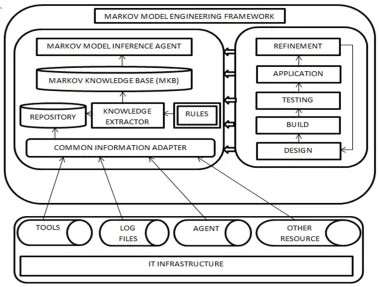
Figure 2: Architecture of the Proposed Framework
Knowledge engineering is the acquisition, structuring and refinement of knowledge, including knowledge analysis, knowledge formalization, and knowledge reasoning. It can combine uncertain and incomplete information from either domain experts or existing data, and its reasoning mechanism can be utilized as a decision support tool to perform many kinds of tasks in service management. Using Markov Model’s for knowledge engineering is very promising in complicated IT service environment, and MMs can be used to manage various types of knowledge in a systematic engineering way Other usages including decision making, control, explanation, sensitivity analysis, and informational value, and all of them are very valuable to be performed in IT service environment. We refer to [14] for more details of these usages.
Knowledge Engineering Workbench provides a set of useful tools and a visualization environment in support of the whole framework. It can 1) define varies kinds of rules, which are designed by domain experts and can be utilized to extract usable BNs; 2) provides a visualization environment which supports to either load existing BNs generated by the rules, or edit existing networks by experts; and 3) also provides a set of learning algorithms utilized by rules to learn parameters of the network from historical records, and validate tools to check and test the existing networks.
4.1 Dependency Models
A dependency graph models one aspect of the managed system: Its nodes (objects) reflect the managed objects of the system, and its edges reflect the functional dependencies between managed objects. “An object A depends on an object B” means that a failure in B can cause a failure in A. There has been significant interest in the literature in using dependency models for problem diagnosis and root cause analysis. In these systems, incoming alarms or events are first mapped onto corresponding nodes of the dependency graph, and then the dependencies from those nodes are examined to identify the set of nodes upon which the most alarm/event nodes depend. These nodes are likely to be the root causes of the observed alarms or events. The other main technique for using dependency models in root-cause analysis is to use the model graph as map for performing a systematic examination of the system in search of the root cause of a problem, as described by in the context of network fault management.
4.2 Markov Model with Engineering Framework
In recent years, diagnostic assistants built around MMs became especially popular [14]. The information necessary to create the models can be acquired from experts on system diagnostics and design, as well as system technical documentations. Models can be developed entirely from repair records, or one can simply combine expert knowledge and data in the model development. The current literature on the use of MM models for diagnostics is very broad. The incremental change dP0 in probability of State 0 at any given time, so we have
the fundamental relation
Dividing both sides by dt, we have the simple differential equation
This signifies that a transition path from a given state to any other state reduces the probability of the source state at a rate equal to the transition rate parameter l multiplied by the current probability of the state.
Some of the work [9], [10] utilized MMs for fault localization in network management environment, but most focus their work on efficient algorithm for accurate probabilistic fault localization and belief-updating algorithms for specify structure of MMs, such as polytree. They assume that these MMs are available. In fact, as shown in this paper, this task is somewhat difficult, especially in large-scale service management environment. But with the support of our knowledge engineering framework, method for obtaining a reasonable MM is available. We believe that our work can make a good direction of knowledge engineering in problem determination research field.
4.3 Change Impact Analysis
5. Conclusion and Future Work
In this paper, a more promising method is proposed by using a methodology for combining expert elicitation and data for parameterization of Markov Model. The parameterization is used to integrate the services and to prioritize it with the help of an agent. By using the Agent based framework, the reliability rate of listed services is high, when compared to the previous framework results. In the previous models, the time complexity for service composition is too high and also the reliability rate is very low. Markov Model is more efficient when compared to BNs (I-BKEP) model.
References
[1] S. Katker and M. Paterok, “Fault Isolation and Event Correlation for Integrated Fault Management,” Proc. IFIP/IEEE Fifth Int’l Symp. Integrated Network Management, 583-596, 1997.
[2] B. Gruschke, “Integrated Event Management: Event Correlation Using Dependency Graphs,” Proc. IFIP/IEEE Ninth Int’l Workshop Distributed Systems: Operations and Management (DSOM ’98), Oct. 1998.
[3] A. Keller, “Managing Application Services over Service Provider Networks: Architecture and Dependency Analysis,” Proc. IEEE/ IFIP Network Operations and Management Symp. (NOMS ’00), 2000.
[4] K.B. Laskey and S.M. Mahoney, “Network Engineering for Agile Belief Network Models,” IEEE Trans. Knowledge and Data Eng., vol. 12, no. 4, pp. 487-498, July/Aug. 2000.
[5] V.M.H. Coupe, L.C. van der Gaag, “Properties of Sensitivity Analysis of Bayesian Belief Networks,” Annals of Math. and Artificial Intelligence, vol. 36, pp. 323-356, 2002.
[6] O. Woodberry et al., “Parameterising Bayesian Networks,” Proc. 17th Australian Joint Conf. Artificial Intelligence, 2004.
[7] I. Rish et al., “Real-Time Problem Determination in Distributed Systems Using Active Probing,” Proc. IEEE/IFIP Network Opera-tions and Management Symp. (NOMS ’04), 2004s.
[8] I. Rish et al., “Adaptive Diagnosis in Distributed Systems,” IEEE Trans. Neural Networks, vol. 16, no. 5, pp. 1088-1109, Sept. 2005.
[9] A.B. Brown and A. Keller, “A Best Practice Approach for Automating IT Management Processes,” Proc. IEEE/IFIP 10th Network Operations and Management Symp. (NOMS ’06), 2006.
[10]B. Yang et al., “Research and Implementation of Knowledge-Enhanced Information Services,” Proc. Int’l Conf. Service Oriented Computing (ICSOC ’07), 2007.
[11] W. Wei et al., “A Bayesian Knowledge Engineering Framework for Service Management,” Proc. Network Operations and Manage-ment Symp. (NOMS ’08), pp. 771-774, Apr., 2008.
Authors’ Biography
N.Arunachalam received the B.Tech degree in Computer Science & Engineering from Sri Manakula Vinayagar Engineering College in 2006 and M.Tech degree in DCS in the department of Computer Science & Engineering from Pondicherry Engineering College in 2009. Currently he is working as an Assistant Professor in the department of Information Technology in Sri Manakula Vinayagar Engineering College for the past four years since June 2009. He published various Research papers in International Journals and Conferences (National & International). He is working on recent trends like Service Discovery as his research activity.
S.Sakthivel currently pursuing final year B.Tech Degree in the stream of Information Technology from Sri Manakula Vinayagar Engineering College of Pondicherry University [2010 - 2014]. He secured prize in National level programming contest conducted by Infosys. His interested domains are Web services and Artificial Intelligence
T.Sasindran currently pursuing final year B.Tech Degree in the stream of Information Technology from Sri Manakula Vinayagar Engineering College of Pondicherry University [2010 - 2014]. His interested domains are Web services and Image Processing