VOLUME 41, ARTICLE 48, PAGES 1347
-
1372
PUBLISHED 3 DECEMBER 2019
https://www.demographic-research.org/Volumes/Vol41/48/ DOI: 10.4054/DemRes.2019.41.48
Research Article
Intergenerational coresidence and the subjective
well-being of older adults in China:
The moderating effect of living arrangement
preference and intergenerational contact
Qi Xu
Jinshui Wang
Jingjing Qi
© 2019 Qi Xu, Jinshui Wang & Jingjing Qi.
This open-access work is published under the terms of the Creative Commons Attribution 3.0 Germany (CC BY 3.0 DE), which permits use, reproduction, and distribution in any medium, provided the original author(s) and source are given credit.
1 Introduction 1348
2 The relationship between intergenerational coresidence and older adults’ well-being
1349
3 Research design and hypothesis 1351
3.1 Changing living arrangement preferences 1351
3.2 Transfers between parents and noncoresidential children 1352
4 Data 1353
5 Measurements 1355
6 Analytical strategy 1357
7 Results 1359
8 Discussion 1363
References 1367
Intergenerational coresidence and the subjective well-being of older
adults in China: The moderating effect of living arrangement
preference and intergenerational contact
Qi Xu1
Jinshui Wang2
Jingjing Qi3
Abstract
OBJECTIVES
Intergenerational coresidence is usually assumed to be beneficial to the subjective well-being of the Chinese elderly, but this proposition is not well supported in empirical studies. This study addresses this puzzle by incorporating older adults’ living arrangement preference and their contact with noncoresidential children into the investigation.
METHODS
We used data from four waves of the CLHLS in 2005–2014 and applied fixed-effects models to examine the effect of intergenerational coresidence on Chinese elderly’s subjective well-being and how this effect was moderated by their living arrangement preference and contact with noncoresidential children.
RESULTS
Intergenerational coresidence declined steadily in 2005–2014, but the concordance between individual’s actual and preferred living arrangement remained very high, and most older adults living independently maintained frequent contact with their children. Intergenerational coresidence had no effect on older adults’ subjective well-being. However, the match between an individual’s actual and preferred living arrangements and the frequent contact between parents and their noncoresidential children were important to the subjective well-being of Chinese elderly.
CONCLUSIONS
Because the actual living arrangement of most of the Chinese elderly accorded with their preferred living arrangement and most older adults living independently maintained
1 Nanjing University, China. Email:[email protected]. 2 Nanjing University, China.
frequent contact with their children, problems resulting from the decline of intergenerational coresidence were limited.
CONTRIBUTION
This study provides a convincing explanation for the unexpected but repeatedly verified insignificant effect of intergenerational coresidence on Chinese elderly’s subjective well-being by incorporating two understudied factors into the analysis: older adults’ living arrangement preference and their contact with noncoresidential children.
1. Introduction
The link between intergenerational coresidence and older adults’ well-being has been studied extensively in the social science literature (Hays 2002). Although relations between parents and coresidential children can produce tension and thus damage individual well-being, researchers have assumed that living with children is beneficial to older adults, as it facilitates economic, instrumental, and emotional support and promotes social integration and solidarity (Chen and Short 2008; Ren and Treiman 2015). China has long upheld a tradition of filial piety. Intergenerational support has been the norm, just as cohabitation with adult children has often been regarded as the most desirable living arrangement in later life (Sereny and Gu 2011). In the traditional Chinese family, older parents coresided with at least one of their married children, usually a son (Chu, Xie, and Yu 2011). The coresidential son and his wife were responsible for the economic security, daily care, and emotional well-being of his elderly parents (Zimmer 2005).
However, this arrangement is no longer typical. Due to the rapid economic growth of recent decades, the massive wave of urbanization and population migration, an unprecedented process of modernization, and the diffusion of Western values, this model for elderly Chinese people has undergone fundamental changes (Zeng and Wang 2003). Using census data from 1982, 1990, 2000, and 2010, Wang (2014) reports that the proportion of elderly Chinese aged 65 and older living with adult children declined steadily from 69.4% in 1982 to 51.7% in 2010, and there is no indication that this trend will abate.
indicators of older adults who live with adult children and older adults who live independently (Chen and Short 2008; Li and Zhang 2009; Ren and Treiman 2015; Wang, Chen, and Han 2014). Although many cross-sectional studies and a few studies using longitudinal data have repeatedly verified this result, there is still a lack of convincing explanations for it.
This study addresses this puzzle by incorporating two under-studied factors into the investigation. One factor is the individual’s increasing preference for an independent living arrangement; the other factor is frequent transfers and contacts between parents and noncoresidential children. Using data from four waves of the Chinese Longitudinal Healthy Longevity Survey (CLHLS) in 2005–2014, we examined the change in older adults’ actual living arrangement, preferred living arrangement, and contact with noncoresidential children. In addition, we used a series of fixed-effect models to investigate how older adults’ living arrangement preference and contact with noncoresidential children moderated the relationship between intergenerational coresidence and older adults’ subjective well-being.
2. The relationship between intergenerational coresidence and older
adults’ well-being
The nature of the relationship between intergenerational coresidence and older adults’ well-being remains unclear because living with adult children has both advantages and disadvantages for parents (Ren and Treiman 2015). The family support theory posits that living with adult children is beneficial to parents as it facilitates material, emotional, and instrumental support and consolidates familial relationships and social integration (Hughes and Waite 2002). Contrarily, the family conflict theory posits that it is difficult for parents to get along with adult children living under one roof because the two generations may have very different ideas about daily life (e.g., when to sleep, what to buy, how to educate children, etc.), and the irritation of family life may undercut any advantages of intergenerational support and impair parents’ well-being (Rook 1984).
patrilineal living arrangements, so many scholars have posited that living with adult children has been beneficial for Chinese elderly’s well-being (Chen and Silverstein 2000; Silverstein, Cong and Li 2006).
However, the results of empirical studies in the Chinese context have been inconsistent with scholarly expectations. Although living alone is consistently found to be detrimental to older adults’ well-being (Chen and Short 2008; Gu, Feng, and Yeung 2018), a growing body of studies has found that, among people who live with family members, whether or not they live with their children is insignificant. For example, using data from the first wave of the CLHLS conducted in 1998, Chen and Short (2008) focus on two composite measures of older adults’ subjective well-being and find no significant differences in either measure between those living with their spouse but not with a child, and those living with both a child and a spouse. Wang, Chen, and Han (2014) use data from a more recent wave of the CLHLS conducted in 2008 and also find that married couples living with children and married couples living independently do not differ significantly with respect to life satisfaction and emotional well-being. A more recent study by Ren and Treiman (2015), using data from the China Family Panel Study conducted in 2010, finds that older adults living with grown children are less happy, have less life satisfaction, and are more depressed than people living independently with a spouse, especially when there are no grandchildren in the household.
These are all cross-sectional studies and thus are all subject to the methodological problem of endogeneity. For example, in a cross-sectional study, uncontrolled covariates may confound the observed relationship between intergenerational coresidence and older adults’ well-being. Although most of the studies cited here incorporate a variety of control variables when analyzing data, the possibility of omitted-variable bias cannot be completely ruled out. Reverse causation is another problem. As some scholars have suggested, in a cross-sectional study, older adults’ well-being could be understood not only as a consequence of living arrangement but also as a cause (Gu, Feng, and Yeung 2018), because in China the poor health status and well-being of older adults are primary causes of intergenerational coresidence (Zimmer 2005).
have a higher risk of ADL disability compared to those living alone and those living with a spouse.
To sum up, the results of most empirical studies to date are inconsistent with the theoretical expectation that coresidence with adult children is beneficial to the well-being of the Chinese elderly. However, there are still no persuasive explanations for this inconsistency, and thus the empirical findings are still controversial. The following section addresses this puzzle by developing two theoretical explanations.
3. Research design and hypothesis
As mentioned previously, the expected protective effect of coresidence with adult children stems from the Chinese family tradition that favors intergenerational coresidence and support. More specifically, it assumes that:
1. Most Chinese elderly prefer to live with adult children, so if they live independently it is because they are forced to.
2. Living independently means low levels of intergenerational support and hence low levels of well-being.
However, considering the historic socioeconomic and demographic changes that have taken place in China in the last few decades, both of these theoretical premises are problematic. In our opinion, these radical changes are the primary reason for the observed insignificant effect of intergenerational coresidence on the well-being of the Chinese elderly.
3.1 Changing living arrangement preferences
With few exceptions, most studies of the relationship between coresidence with adult children and older adults’ well-being in the Chinese context have focused on older adults’ actual living arrangements and have paid little attention to their living arrangement preferences. In general, scholars have emphasized the observed decline of intergenerational coresidence (Zeng and Wang 2003) but have assumed that an individual’s preference to live with children has been stable and unchanging over time. However, it makes no sense to assume that the preferred living arrangement of the Chinese elderly today is the same as it was a couple of decades ago.
individuals’ values and change their preference from traditional intergenerational coresidence to independent living (Goode 1963; Thornton and Fricke 1987). Cognitive dissonance theory (Festinger 1957) would suggest that when an individual’s actual living arrangement has changed, in order to avoid cognitive dissonance their living arrangement preference is likely to change also. A few studies have in fact observed this change. For example, using survey data gathered from parents aged 60 and older in nine Chinese cities, Logan and Bian (1999) report that 44% of older parents prefer to live independently. Using a sample of older persons in Shanghai, Treas and Wang (1993) find that the proportion favoring independent living is even higher (79% of men, 65% of women) than that reported by Logan and Bian. These two studies look at urban environments; however, even in the countryside, where values are believed to be traditional, studies have found that older adults’ living arrangement preferences have changed dramatically (Yan 1997).
Thus, during the last few decades both the actual living arrangement and the preferred living arrangement of the Chinese elderly have changed to independent living. In a few studies focusing on living arrangement concordance in China, scholars have found that the match between individuals’ actual and preferred living arrangements was important to their well-being, whether or not the actual living arrangement is intergenerational coresidence (Sereny 2011; Sereny and Gu 2011). Based on these findings, we propose the first research hypothesis:
Hypothesis 1: The decline in intergenerational coresidence accords with the change in individuals’ living arrangement preference, and if individuals prefer to live independently and actually do so it will not harm their well-being.
3.2 Transfers between parents and noncoresidential children
For example, using data from the 2011 Chinese Health and Retirement Longitudinal Survey, Lei et al. (2015) provide a detailed description of the living arrangement patterns of the Chinese elderly. A significant finding is that around 90% of older adults who do not live with their adult children have one or more children living nearby (in the same county), indicating that noncoresidence is not a major barrier to intergenerational transfers between parents and children. Using the same data, Gruijters (2017) further examines intergenerational contact and finds that noncoresidential children have an annual average of 74 instances of face-to-face contact and 68 instances of other contact with their parents. In other words, most Chinese elderly have contact with their noncoresidential children at least once a week, frequent enough to maintain intensive interactions between the two generations. In fact, frequent transfers and contact between older parents and noncoresidential children has been documented in local surveys and field studies conducted as early as the 1980s. For example, Unger (1993) depicts a family form known as ‘networked families,’ which is characterized by living apart but having strong intergenerational linkages. This family form is assumed to have the advantages of traditional coresidence in that it maintains high levels of intergenerational support, combined with the advantages of modern living arrangements in that it provides more freedom and privacy. Hence, the ‘networked families’ arrangement is regarded as beneficial to older adults’ well-being.
To sum up, previous studies have found that most older adults in China living by themselves maintain close relationships with their noncoresidential children. Like the intergenerational transfers within a household, transfers between parents and noncoresidential children can likely compensate for living separately and can promote older adults’ well-being. Based on the above arguments, we propose the second research hypothesis:
Hypothesis 2: Most Chinese elderly who do not live with adult children maintain a close relationship with their noncoresidential children, and if older adults receive sufficient support from children, noncoresidence will not harm their well-being.
4. Data
arrangement preferences, a key variable for the present study. In the 2005 survey, the starting point of this study, 15,638 respondents aged 65 and older were randomly drawn from 631 counties and cities in 22 provinces in China, covering about 85% of the Chinese population (Wang, Chen and Han 2014). In the subsequent waves, all previously interviewed respondents were traced and missing respondents were replenished with new respondents (Gu, Feng, and Yeung 2018). To avoid the problem of small sub-sample sizes at the more advanced ages, the CLHLS did not follow the procedure of Probability Proportional to Size (PPS) sampling, but instead interviewed nearly all centenarians and over-sampled the oldest-old of more advanced ages, especially among males. A detailed description of the sampling design and data quality assessments for the earlier waves of the CLHLS can be found in Zeng et al. (2008).
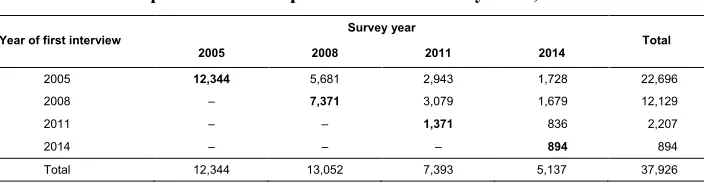
In this study we confined the data to a sample of 21,980 older adults who had at least one adult child alive at first interview. In the sample, 12,344 were first interviewed in 2005, 7,371 in 2008, 1,371 in 2011, and 894 in 2014. These figures are shown on the main diagonal in Table 1. Because the CLHLS is a longitudinal survey, some of the older adults who were first interviewed in 2005, 2008, and 2011 were interviewed in later years. Table 1 shows the number of older adults who were traced in later waves. For example, the second row of Table 1 shows that among the 12,344 older adults who were first interviewed in 2005, 5,681 had a second interview in 2008, 2,943 had a third interview in 2011, and 1,728 had a fourth interview in 2014. The figures in other rows can be understood in the same way. The column total of Table 1 shows the sample size in each survey year. For example, it shows that the sample size of the 2008 survey was 13,052, of which 7,371 were first interviewed in 2008, and 5,681 were first interviewed in 2005 and had their second interview in 2008.
Table 1: Sample size and composition in each survey wave, CLHLS
Year of first interview Survey year Total
2005 2008 2011 2014
2005 12,344 5,681 2,943 1,728 22,696
2008 – 7,371 3,079 1,679 12,129
2011 – – 1,371 836 2,207
2014 – – – 894 894
Total 12,344 13,052 7,393 5,137 37,926
Note: The sum of the main diagonal is 21,980, which is the number of older adults who had at least one interview.
least two interviews. In the descriptive analysis of the change in Chinese elderly’s actual living arrangement, preferred living arrangement, and contact with noncoresidential children, we used the whole sample of 21,980 older adults.
5. Measurements
Dependent variable. In studies of the relationship between coresidence with adult children and older adults’ well-being, researchers have considered a range of well-being indicators, such as subjective well-being, self-rated health, depression, disability, and mortality (Chen and Silverstein 2000; Chen and Short 2008; Li and Zhang 2009; Ren and Treiman 2015; Silverstein, Cong, and Li 2006; Wang, Chen, and Han 2014). In this study we focused on subjective well-being for two reasons. First, subjective well-being features in most previous studies and is well measured in the CLHLS. Second, focusing on subjective well-being should reduce the methodological problem of endogeneity. As Chen and Short (2008) suggest, unlike physical health and disability, which probably lead to different living arrangements, subjective well-being is more plausibly a consequence of living arrangement rather than a cause, although the possibility of reverse causation cannot be ruled out completely.
The CLHLS included a series of questions on older adults’ subjective well-being. The specific questions are as follows:
1. How do you rate your life at present?
2. Do you always look on the bright side of things? 3. Are you as happy now as when you were younger? 4. Do you often feel fearful or anxious?
5. Do you often feel lonely and isolated?
6. Do you feel the older you get the more useless you are?
The responses range from 1 (the weakest feeling) to 5 (the strongest feeling). The first three items correlate with older adults’ positive feelings and the last three items correlate with older adults’ negative feelings. Following Chen and Short (2008), we added items 1–3 to create an index of positive feelings (Cronbach's alpha = 0.50) ranging from 3 to 15, with higher numbers indicating better well-being. Likewise, the index of negative feelings was an aggregation of items 4–6, with values ranging from 3 to 15 (Cronbach’s alpha = 0.64) and higher values indicating worse well-being.
intergenerational coresidence (1 = live with children, 0 = do not live with children). Living arrangement preference was drawn directly from the question “Which living arrangement do you prefer?” If the respondent answered “coresidence with children,” we coded as “prefer to live with children”; otherwise we coded as “do not prefer to live with children” (including “prefer to live independently,” “live in an institution,” and “do not know”). Following Sereny and Gu (2011), we also created a variable to measure the match between actual and preferred living arrangement. It had four categories: 1 = live with children and prefer to; 2 = live with children but prefer not to; 3 = live independently and prefer to; 4 = live independently but prefer not to.
Intergenerational contact was measured by a three-category variable (1 = live with children; 2 = live independently but have frequent contact with children; 3 = live independently and do not have frequent contact with children). It was plausible to assume that parents had frequent contact with children when they coresided with them. If parents did not coreside with children but responded “yes” to the question “Does the child pay frequent visits to you?” or to the question “Does the child contact you very often by other means?” we coded “live independently but has frequent contact with children”; otherwise, we coded as “live independently and does not have frequent contact with children.”
Control variables. In addition to the independent variables mentioned above, three sets of control variables were included in the analysis. The first set that related to household context and the availability of children comprised coresidence with a spouse (1 = yes, 0 = no), coresidence with grandchildren (1 = yes, 0 = no), coresidence with others (1 = yes, 0 = no), number of daughters alive, and number of sons alive.
The third set of covariates was other variables that might correlate with both subjective well-being and intergenerational coresidence, including family income (in logarithmic form), leisure activity involvement, place of residence (1 = city, 2 = town, 3 = countryside), and survey year (1 = 2005, 2 = 2008, 3 = 2011, 4 = 2014). Leisure activity involvement was measured by the frequency of eight types of activity: (a) doing housework, (b) engaging in personal outdoor activities, (c) gardening, (d) reading books or newspapers, (e) raising pets or domestic poultry, (f) playing cards or mahjong, (g) watching TV or listening to the radio, and (h) engaging in social activities. Each item had a score from 1 (no participation) to 5 (almost daily participation). We added the eight items to get a composite measure, with higher scores indicating higher involvement in leisure activities.
A final note about control variables: Respondent’s characteristics that did not change with survey year (e.g., gender, birth year, ethnicity, years of education, occupation, etc.) were not included because they were innately controlled by the fixed-effects models, introduced in the next section. Nonetheless, basic descriptive statistics of these variables are reported (Appendix Table A-1).
6. Analytical strategy
Data analysis was divided into two. In the first part we described the change in Chinese elderly’s actual and preferred living arrangements and in their contact with noncoresidential children. In the second part we used a series of fixed-effects models to examine the effect of intergenerational coresidence on older adults’ positive feelings and negative feelings, and whether the effects were moderated by living arrangement preference and contact between parents and noncoresidential children.
Fixed-effects models use the within-individual information to arrive at the effects of independent variables on dependent variables. In other words, they use the change in independent variables to predict the change in dependent variables. Therefore, all variables must be measured at multiple time points and all variables must change over time. In our study, both the dependent variables (positive feelings and negative feelings) and independent variables (actual living arrangement, preferred living arrangement, and intergenerational contact) are time-varying variables and hence meet the requirement of the fixed-effects model.
include gender, birth year (age), ethnicity, years of education, occupation, etc., which in previous studies are usually controlled explicitly. In addition, the time-constant covariates include health in early and middle age, living arrangement, intergenerational relations in early and middle age, etc., which are seldom controlled for in previous studies and are not measured by the CLHLS. Without such controls, the effect of intergenerational coresidence may be seriously biased. However, by using fixed-effects models, all time-constant covariates are controlled implicitly, although the estimates may still be biased due to the exclusion of important time-varying control variables (Rabe-Hesketh and Skrondal 2012); for example, unobserved heath status, unmeasured socioeconomic status, etc. Due to data limitation we cannot rule out all confounding factors. However, using fixed-effects models is an improvement on previous studies.
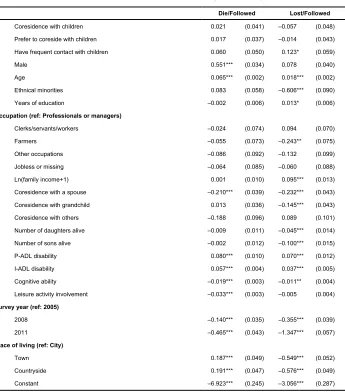
Before moving to the results section, two notes about statistical analysis are worthy of mention. First, sample attrition is a threat to longitudinal modeling if the attrition is nonrandom. In other words, if individuals with specific characteristics are more likely than their counterparts to quit the survey, this will introduce bias when using the remaining sample to construct statistical models. In order to evaluate the influence of sample attrition in this study, we use a multinomial logit model to explore the sample attrition pattern (see the Appendix Table A-2). It shows that many variables at Time 1 have a significant influence on the likelihood of dying or being lost at Time 2. Therefore, the sample attrition is nonrandom. However, after controlling for other variables, older adults’ actual living arrangement, preferred living arrangement, and intergenerational contact had no significant effect on the likelihood of dying. For the likelihood of being lost, the effects of actual living arrangement and preferred living arrangement are statistically insignificant; only the effect of intergenerational contact is significant. The results indicate that sample attrition is generally conditional independent of the key independent variables in our study. Therefore, after appropriate statistical control the influence of sample attrition on this study is small.
of living arrangement on Chinese elderly’s subjective well-being did not systematically change by respondent’s gender and age (see Table 3). Accordingly, we think that the findings of unweighted fixed-effects models are still reliable and acceptable.
7. Results
Table 2 presents the change in Chinese elderly’s actual living arrangement, preferred living arrangement, and contact with noncoresidential children by survey year. In 2005, 59.0% of the respondents lived with adult children, but that number dropped to 48.9% in 2014. Older adults’ preference to live with adult children dropped at the same pace (from 57.5% in 2005 to 48.7% in 2014). The actual living arrangement of most older adults was in accordance with their preferred living arrangement, although those whose actual and preferred living arrangements were both living with adult children dropped (from 48.5% in 2005 to 38.0% in 2014), while those whose actual and preferred living arrangements were both independent living increased (from 32.0% in 2005 to 42.4% in 2014). About 10% of the respondents lived independently but preferred to live with children. This percentage increased only a little (1.7%) between 2005 and 2014. On the other hand, in each survey year about 10% of the respondents lived with children but preferred to live independently.
Table 2: Older adults’ actual living arrangement, preferred living
arrangement, and contact with noncoresidential children, by survey year, CLHLS
Variable 2005 2008 2011 2014
Live with children (%) 59.0 55.5 52.6 48.9
Prefer to live with children (%) 57.5 55.5 51.8 48.7
Actual living arrangement by preferred living arrangement (%)
Live with children and prefer to 48.5 45.5 41.2 38.0
Live with children but prefer not to 10.5 10.0 11.5 10.9
Live independently and prefer to 32.0 34.5 36.7 40.4
Live independently but prefer not to 9.0 10.0 10.6 10.7
Actual living arrangement by intergenerational contact (%)
Live with children 59.0 55.5 52.6 48.9
Live independently but have frequent contact with children 35.7 41.4 44.0 48.4
Live independently and do not have frequent contact with children 5.3 3.1 3.3 2.7
Although intergenerational coresidence declined over time, a growing number of Chinese elderly who lived independently maintained frequent contact with their noncoresidential children (from 35.7% in 2005 to 48.4% in 2014). Older adults who lived independently and did not have frequent contact with children accounted for only a small fraction of the sample (5% or less in each survey year).
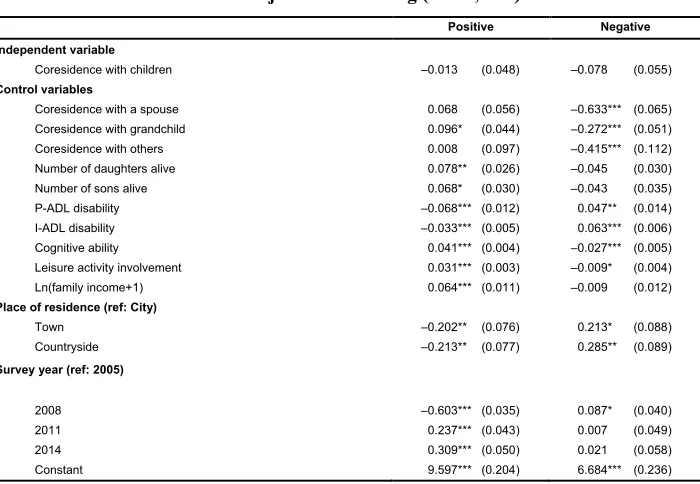
Table 3 presents the effect of intergenerational coresidence on respondents’ subjective well-being using fixed-effects models. With many time-varying variables controlled in the model explicitly and all time-constant variables controlled implicitly, it shows that coresidence with adult children has no effect on older adults’ positive and negative feelings. Therefore, our study – like many previous studies – found that living with adult children was not a significant determinant of Chinese elderly’s subjective well-being.
Table 3: Fixed-effects models examining the effect of intergenerational coresidence on subjective well-being (N = 9, 596)
Positive Negative Independent variable
Coresidence with children –0.013 (0.048) –0.078 (0.055)
Control variables
Coresidence with a spouse 0.068 (0.056) –0.633*** (0.065) Coresidence with grandchild 0.096* (0.044) –0.272*** (0.051)
Coresidence with others 0.008 (0.097) –0.415*** (0.112)
Number of daughters alive 0.078** (0.026) –0.045 (0.030)
Number of sons alive 0.068* (0.030) –0.043 (0.035)
P-ADL disability –0.068*** (0.012) 0.047** (0.014)
I-ADL disability –0.033*** (0.005) 0.063*** (0.006)
Cognitive ability 0.041*** (0.004) –0.027*** (0.005)
Leisure activity involvement 0.031*** (0.003) –0.009* (0.004)
Ln(family income+1) 0.064*** (0.011) –0.009 (0.012)
Place of residence (ref: City)
Town –0.202** (0.076) 0.213* (0.088)
Countryside –0.213** (0.077) 0.285** (0.089)
Survey year (ref: 2005)
2008 –0.603*** (0.035) 0.087* (0.040)
2011 0.237*** (0.043) 0.007 (0.049)
2014 0.309*** (0.050) 0.021 (0.058)
Constant 9.597*** (0.204) 6.684*** (0.236)
Note: Standard errors in parentheses; *** p<0.001, ** p<0.01, * p<0.05.
coresidence with grandchildren, and coresidence with others significantly reduced older adults’ negative feelings by 0.633, 0.272, and 0.415 points respectively, and coresidence with grandchildren also improved older adults’ positive feelings by 0.096 points. In addition, having a daughter significantly promoted older adults’ positive feelings by 0.078 points, while the coefficient for son was 0.068. Fixed-effects models also showed that older adults’ subjective well-being was highly correlated with their health status and involvement in leisure activities. Further, a 1% increase in family income significantly improved older adults’ positive feelings by 6.4%, although the effect on negative feelings was not significant. Lastly, older adults’ subjective well-being varied significantly across survey year and place of residence. Those living in towns and the countryside had lower subjective well-being than people living in cities. People’s subjective well-being was lower in 2008 than in 2005, but higher in 2011 and 2014.
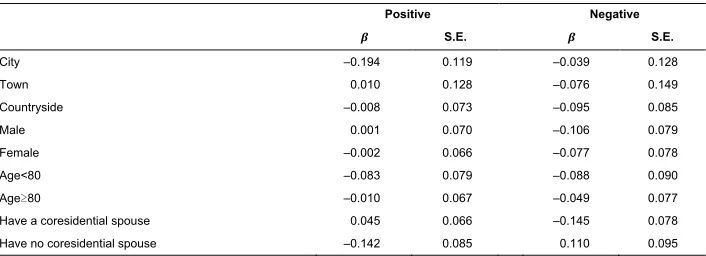
Although Table 3 shows no effect of intergenerational coresidence on Chinese elderly’s subjective well-being, the effect may have been heterogeneous and contingent on older adults’ characteristics. By saying effects are heterogeneous in fixed-effects models we mean that the effect, although fixed, may vary across different subpopulations. People living in the countryside, females, the oldest old, and the widowed are usually believed to benefit more from living with children, either because of their traditional values or because of their urgent need for children’s support (Wang, Chen and Han 2014). We performed fixed-effects models for different subpopulations separately. However, the results in Table 4 show that the coefficients of intergenerational coresidence in all subpopulations are statistically insignificant, even for people living in the countryside, females, the oldest old, and the widowed.
Table 4: Fixed-effects models examining heterogeneous effects of
intergenerational coresidence on subjective well-being (N = 9, 596) Positive Negative
S.E. S.E.
City –0.194 0.119 –0.039 0.128
Town 0.010 0.128 –0.076 0.149
Countryside –0.008 0.073 –0.095 0.085
Male 0.001 0.070 –0.106 0.079
Female –0.002 0.066 –0.077 0.078
Age<80 –0.083 0.079 –0.088 0.090
Age≥80 –0.010 0.067 –0.049 0.077
Have a coresidential spouse 0.045 0.066 –0.145 0.078
Have no coresidential spouse –0.142 0.085 0.110 0.095
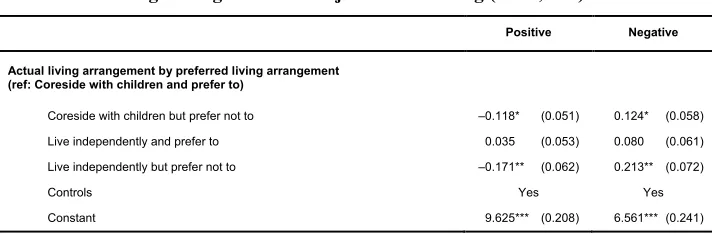
Table 5 incorporates older adults’ living arrangement preference into the model. It shows that a mismatch between individuals’ preferred and actual living arrangement is detrimental to their subjective well-being, whether they coreside with adult children or not. More specifically, compared with older adults who both lived with and preferred to live with children, those who lived with children but preferred to live independently and those who lived independently but preferred to live with children had significantly lower positive feelings (the coefficients were –0.118 and –0.171, respectively) and higher negative feelings (the coefficients were 0.124 and 0.213, respectively). However, those who lived independently and preferred to live independently and those who lived with children and preferred to live with children had nearly the same subjective well-being.
Table 5: Fixed-effects models examining the effects of actual and preferred living arrangement on subjective well-being (n = 9, 596)
Positive Negative
Actual living arrangement by preferred living arrangement (ref: Coreside with children and prefer to)
Coreside with children but prefer not to –0.118* (0.051) 0.124* (0.058)
Live independently and prefer to 0.035 (0.053) 0.080 (0.061)
Live independently but prefer not to –0.171** (0.062) 0.213** (0.072)
Controls Yes Yes
Constant 9.625*** (0.208) 6.561*** (0.241)
Note: All time-varying covariates are controlled; the coefficients are not shown. Standard errors in parentheses; *** p<0.001, ** p<0.01, * p<0.05.
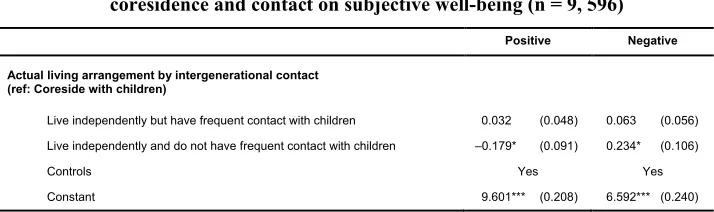
Table 6: Fixed-effects models examining the effects of intergenerational coresidence and contact on subjective well-being (n = 9, 596)
Positive Negative
Actual living arrangement by intergenerational contact (ref: Coreside with children)
Live independently but have frequent contact with children 0.032 (0.048) 0.063 (0.056)
Live independently and do not have frequent contact with children –0.179* (0.091) 0.234* (0.106)
Controls Yes Yes
Constant 9.601*** (0.208) 6.592*** (0.240)
Note: All time-varying covariates are controlled; the coefficients are not shown. Standard errors in parentheses; *** p<0.001, ** p<0.01, * p<0.05.
8. Discussion
Intergenerational coresidence is usually assumed to be beneficial to Chinese elderly’s subjective well-being, but this theoretical proposition is not well supported in empirical studies. The present study addressed this puzzle by incorporating older adults’ living arrangement preferences and contact with noncoresidential children. Using four waves of nationally representative longitudinal data from the CLHLS for 2005–2011, we described the change in older adults’ living arrangement together with the change in their preference to live with their children and contacts with their children. We then used a series of fixed-effects models to examine the effect of intergenerational coresidence on Chinese elderly’s subjective well-being and how this effect was moderated by their living arrangement preference and contacts with noncoresidential children.
In addition, the descriptive analysis found a persistently strong relationship between Chinese elderly and their noncoresidential children, despite the continuing decline of intergenerational coresidence. As shown in our study and some others (Bian, Logan and Bian 1998; Gruijters 2017; Lei et al. 2015), noncoresidence with children does not necessarily mean no intergenerational transfers or contact. In fact, the majority of Chinese elderly living independently had frequent contact with and received regular support from their noncoresidential children. This finding is in line with Unger’s (1993) description of modern Chinese families as ‘networked,’ characterized by living separately but with strong intergenerational linkages. However, it contradicts the theoretical premise that independent living undermines the foundation of the intergenerational support system in China, and hence casts doubt on the theoretical expectation that living without children is detrimental to Chinese elderly’s subjective well-being.
With regard to the relationship between intergenerational coresidence and older adults’ subjective well-being, our finding aligns with many previous studies that find that coresidence with adult children had little impact on Chinese elderly’s subjective well-being (Chen and Short 2008; Li and Zhang 2009; Ren and Treiman 2015; Wang, Chen, and Han 2014). The effect was small and statistically insignificant even for people living in the countryside, females, the oldest old, and the widowed, who are usually regarded as beneficiaries of intergenerational coresidence. The insignificant effect of intergenerational coresidence was somewhat unexpected because it is inconsistent with the Chinese tradition that values intergenerational coresidence and filial support for parents. However, it is not a big surprise considering Chinese elderly’s increasing preference for living independently and their frequent contact with noncoresidential children.
Moreover, the effect of coresidence with children interplayed with intergenerational contact. Compared to people who lived with adult children, the subjective well-being of people who lived independently but kept in frequent contact with children was unimpaired. However, the subjective well-being of those who lived by themselves and did not have frequent contact with any child was significantly lower. This finding supports our hypothesis that frequent contact and exchanges between parents and noncoresidential children can compensate for not living together and can promote older adults’ subjective well-being. According to this study, the majority of older adults in China living independently had frequent contact and maintained close relations with their children. Thus, we conclude that the problems resulting from independent living are confined to a small fraction of Chinese elderly.
The results of this study have significant implications for the theoretical understanding of changing living arrangements and their consequences for older adults in China and beyond. In China and many other societies where rapid economic development and social change have resulted in fundamental changes to families and older adults in the family, some longstanding family and cultural arrangements persist and largely protect the elderly from untoward consequences (Hermalin and Yang 2004; Logan and Bian 1998). This study shows that both the actual living arrangement and the preferred living arrangement of the Chinese elderly have changed dramatically as a result of the rapid socioeconomic changes, but living arrangement concordance and intergenerational transfers have remained at a high level and have to a large extent helped older adults maintain a generally satisfactory level of subjective well-being. Although how older adults adopt what kinds of coping strategy to achieve subjective well-being remains unclear and needs further study, our study demonstrates the importance of having a more comprehensive and multifaceted view of family change and its consequences for older adults.
Our study also makes significant methodological contributions to the previous literature. By using four waves of longitudinal data from the CLHLS to determine the causal effect of intergenerational coresidence, this study has an innate advantage over many previous studies that use cross-sectional data. In addition, by employing fixed-effects models in this study, all possible individual-level time-constant covariates were implicitly controlled for, and hence the estimates were subject to less omitted-variable bias than in previous studies.
is usually found to be beneficial to older adults not only in China but also in many western countries (Chen and Silverstein 2000; Gruijters 2017). Therefore, in this study we focused on intergenerational contact. However, in future studies other types of intergenerational support should also be examined.
Second, this study is concerned with the unexpected but repeatedly verified insignificant effect of intergenerational coresidence on Chinese elderly’s subjective well-being, and aims to find a convincing explanation for it. In order to simplify the analysis we did not distinguish between living with a son and living with a daughter, although some studies have found that living with a daughter is more beneficial than the traditional patrilocal living arrangement (Chen and Short 2008). In addition, as we do not know whether Chinese elderly prefer to live with a son or live with a daughter, we cannot match their preferred living arrangement with actual living arrangement by children’s gender. Future studies should pay more attention to the gender aspect of Chinese elderly’s living arrangement and analyze this issue more comprehensively.
References
Bian, F., Logan, J.R., and Bian, Y. (1998). Intergenerational relations in urban China: Proximity, contact, and help to parents.Demography 35(1): 115–124.doi:10.230 7/3004031.
Chambers, R.L. and Skinner, C.J. (2003). Analysis of survey data. Chichester: John Wiley and Sons Ltd.doi:10.1002/0470867205.
Chen, F. and Short, S.E. (2008). Household context and subjective well-being among the oldest old in China.Journal of Family Issues 29(10): 1379–1403.doi:10.1177/01 92513X07313602.
Chen, X. and Silverstein, M. (2000). Intergenerational social support and the psychological well-being of older parents in China.Research on Aging 22(1): 43– 65.doi:10.1177/0164027500221003.
Chu, C.Y.C., Xie, Y., and Yu, R.R. (2011). Coresidence with elderly parents: A comparative study of southeast China and Taiwan. Journal of Marriage and Family 73(1): 120–135.doi:10.1111/j.1741-3737.2010.00793.x.
Festinger, L. (1957).A theory of cognitive dissonance. Evanston: Row, Peterson. Goode, W.J. (1963).World revolution and family patterns. New York: Free Press. Gruijters, R.J. (2017). Intergenerational contact in Chinese families: Structural and
Cultural Explanations.Journal of Marriage and Family 79(3): 758–768.doi:10.1 111/jomf.12390.
Gu, D., Feng, Q., and Yeung, W.J. (2018). Reciprocal dynamics of solo-living and health among older adults in contemporary China.The Journals of Gerontology, Series B: Psychological Sciences and Social Sciences. 74(8): 1441–1452.
doi:10.1093/ge ronb/gby140.
Hays, J.C. (2002). Living arrangements and health status in later life: A review of recent literature.Public Health Nursing 19(2): 136–151.doi:10.1046/j.1525-1446.2002. 00209.x.
Hermalin, A.I. and Yang, L.S. (2004). Levels of support from children in Taiwan: Expectations versus reality, 1965–1999. Population and Development Review
Hughes, M.E. and Waite, L.J. (2002). Health in household context: Living arrangements and health in late middle age.Journal of Health and Social Behavior 43(1): 1–21.
doi:10.2307/3090242.
Lei, X., Strauss, J., Tian, M., and Zhao, Y. (2015). Living arrangements of the elderly in China: Evidence from the CHARLS national baseline.China Economic Journal
8(3): 191–214.doi:10.1080/17538963.2015.1102473.
Li, L. and Zhang, J.J. (2009). Health among the oldest-old in China: Which living arrangements make a difference?Social Science and Medicine 68(2): 220–227.
doi:10.1016/j.socscimed.2008.10.013.
Logan, J.R. and Bian, F. (1999). Family values and coresidence with married children in urban China.Social Forces 77(4): 1253–1282.doi:10.2307/3005876.
Logan, J.R. and Bian, B.Y. (1998). Tradition and change in the urban Chinese family: The case of living arrangements.Social Forces 76(3): 851–882.doi:10.2307/300 5696.
Rabe-Hesketh, S. and Skrondal, A. (2012).Multilevel and longitudinal modeling using Stata. College Station: Stata Press.
Ren, Q. and Treiman, D.J. (2015). Living arrangements of the elderly in China and consequences for their emotional well-being.Chinese Sociological Review 47(3): 255–286.doi:10.1080/21620555.2015.1032162.
Rook, K.S. (1984). The negative side of social interaction: Impact on psychological well-being.Journal of Personality and Social Psychology 46(5): 1097–1108.doi: 10.1037/0022-3514.46.5.1097.
Sereny, M. (2011). Living arrangements of older adults in China: The interplay among preferences, realities, and health.Research on Aging 33(2): 172–204.doi:10.1177 /0164027510392387.
Sereny, M. and Gu, D. (2011). Living arrangement concordance and its association with self-rated health among institutionalized and community-residing older adults in China.Journal of Cross-Cultural Gerontology 26(3): 239–259.doi:10.1007/s108 23-011-9145-y.
Silverstein, M. and Bengtson, V.L. (1994). Does intergenerational social support influence the psychological well-being of older parents? The contingencies of declining health and widowhood.Social Science and Medicine 38(7): 943–957.
Silverstein, M., Cong, Z., and Li, S. (2006). Intergenerational transfers and living arrangements of older people in rural China: Consequences for psychological well-being.Journals of Gerontology 61(5): 256–266.doi:10.1093/geronb/61.5.S 256.
Thornton, A. and Fricke, T.E. (1987). Social change and the family: Comparative perspectives from the West, China, and South Asia.Sociological Forum 2(4): 746–779.doi:10.1007/BF01124383.
Treas, J. and Wang, W. (1993). Of deeds and contracts: Filial piety perceived in contemporary Shanghai. In: V.L. Bengtson and W.A. Achenbaum (eds.). The changing contract across generations. Hawthorne: Aldine Gruyter: 87–98. Unger, J. (1993). Urban families in the eighties: An analysis of Chinese surveys. In:
Davis, D. and Harrell, S. (eds.).Chinese families in the Post-Mao era. Berkeley: University of California Press: 25–49.doi:10.1525/california/9780520077973.00 3.0002.
Waite, L.J. and Hughes, M.E. (1999). At risk on the cusp of old age: Living arrangements and functional status among Black, White and Hispanic adults. Journal of Gerontology 54(3): 134–S144.doi:10.1093/geronb/54B.3.S136.
Wang, Y. (2014). A study on the types of family with elderly in urban and rural China based on the sixth census data.Chinese Journal of Population Sciences 1: 20–32. [in Chinese]
Wang, J., Chen, T., and Han, B. (2014). Does co-residence with adult children associate with better psychological well-being among the oldest old in China?Ageing and Mental Health18(2): 232–239.doi:10.1080/13607863.2013.837143.
Wang, J.J., Snyder, M., and Kaas, M. (2001). Stress, loneliness, and depression in Taiwanese rural community-dwelling elders.International Journal of Nursing Studies 38(3): 339–347.doi:10.1016/S0020-7489(00)00072-9.
Wooldridge, J.M. 2010.Econometric analysis of cross section and panel data. 2nd ed.
Cambridge: MIT Press.
Yan, Y. (1997). The triumph of conjugality: Structural transformation of family relations in a Chinese village.Ethnology36(3): 191–212.doi:10.2307/3773985.
Zeng, Y. and Wang, Z. (2003). Dynamics of family and elderly living arrangements in China: New lessons learned from the 2000 Census.China Review 3(2): 95–119.
doi:10.1007/s42379-018-0010-3.
Zimmer, Z. (2005). Health and living arrangement transitions among China’s oldest-old.
Appendix
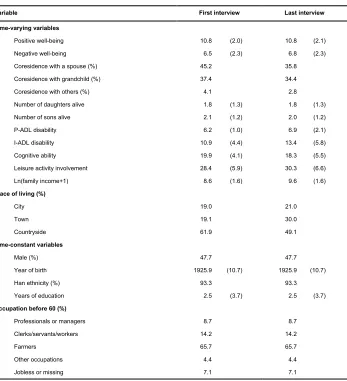
Table A-1: Sample distribution of time-varying and time-constant variables in first interview and last interview, CLHLS (n = 9,596)
Variable First interview Last interview
Time-varying variables
Positive well-being 10.8 (2.0) 10.8 (2.1)
Negative well-being 6.5 (2.3) 6.8 (2.3)
Coresidence with a spouse (%) 45.2 35.8
Coresidence with grandchild (%) 37.4 34.4
Coresidence with others (%) 4.1 2.8
Number of daughters alive 1.8 (1.3) 1.8 (1.3)
Number of sons alive 2.1 (1.2) 2.0 (1.2)
P-ADL disability 6.2 (1.0) 6.9 (2.1)
I-ADL disability 10.9 (4.4) 13.4 (5.8)
Cognitive ability 19.9 (4.1) 18.3 (5.5)
Leisure activity involvement 28.4 (5.9) 30.3 (6.6)
Ln(family income+1) 8.6 (1.6) 9.6 (1.6)
Place of living (%)
City 19.0 21.0
Town 19.1 30.0
Countryside 61.9 49.1
Time-constant variables
Male (%) 47.7 47.7
Year of birth 1925.9 (10.7) 1925.9 (10.7)
Han ethnicity (%) 93.3 93.3
Years of education 2.5 (3.7) 2.5 (3.7)
Occupation before 60 (%)
Professionals or managers 8.7 8.7
Clerks/servants/workers 14.2 14.2
Farmers 65.7 65.7
Other occupations 4.4 4.4
Jobless or missing 7.1 7.1
Table A-2: The results of multinomial logit model to explore the influence of variables at time 1 on status at time 2 (n = 32,649)
Die/Followed Lost/Followed
Coresidence with children 0.021 (0.041) –0.057 (0.048)
Prefer to coreside with children 0.017 (0.037) –0.014 (0.043)
Have frequent contact with children 0.060 (0.050) 0.123* (0.059)
Male 0.551*** (0.034) 0.078 (0.040)
Age 0.065*** (0.002) 0.018*** (0.002)
Ethnical minorities 0.083 (0.058) –0.606*** (0.090)
Years of education –0.002 (0.006) 0.013* (0.006)
Occupation (ref: Professionals or managers)
Clerks/servants/workers –0.024 (0.074) 0.094 (0.070)
Farmers –0.055 (0.073) –0.243** (0.075)
Other occupations –0.086 (0.092) –0.132 (0.099)
Jobless or missing –0.064 (0.085) –0.060 (0.088)
Ln(family income+1) 0.001 (0.010) 0.095*** (0.013)
Coresidence with a spouse –0.210*** (0.039) –0.232*** (0.043)
Coresidence with grandchild 0.013 (0.036) –0.145*** (0.043)
Coresidence with others –0.188 (0.096) 0.089 (0.101)
Number of daughters alive –0.009 (0.011) –0.045*** (0.014)
Number of sons alive –0.002 (0.012) –0.100*** (0.015)
P-ADL disability 0.080*** (0.010) 0.070*** (0.012)
I-ADL disability 0.057*** (0.004) 0.037*** (0.005)
Cognitive ability –0.019*** (0.003) –0.011** (0.004)
Leisure activity involvement –0.033*** (0.003) –0.005 (0.004)
Survey year (ref: 2005)
2008 –0.140*** (0.035) –0.355*** (0.039)
2011 –0.465*** (0.043) –1.347*** (0.057)
Place of living (ref: City)
Town 0.187*** (0.049) –0.549*** (0.052)
Countryside 0.191*** (0.047) –0.576*** (0.049)
Constant –6.923*** (0.245) –3.056*** (0.287)