Amanuel Abajobir, Rosa Alati, Steve Kisely, Jake Najman. Ethiop Med J, 2017, Vol. 55, No. 4 SYSTEMATIC REVIEW
ANTECEDENTS AND MATERNAL HEALTH OUTCOMES OF UNINTENDED
PREGNANCY: A SYSTEMATIC REVIEW
Amanuel Abajobir1, *, Rosa Alati2, Steve Kisely3, Jake Najman4
ABSTRACT
Background: While concerns about adverse health outcomes of unintended pregnancies for the mother have been expressed, there has only been limited research on the outcomes of unintended pregnancies. This review provides an overview of antecedents and maternal health outcomes of unintended pregnancies (UIPs) carried to term live birth.
Methods: The authors extracted published and unpublished data on current evidence of UIP using the search en-gines MEDLINE, PubMed and EMBASE and presented the findings in accordance with the Preferred Reporting Items for Systematic Reviews and Meta-Analyses (PRISMA) guidelines.
Results: The systematic review included 64 studies with a mean quality score of 4.94 (SD ± 0.72). It involved 671,046 reproductive age women who had given birth to a single child. Socio-demographic and reproductive char-acteristics were antecedents for and/or consequences of UIPs. Unintended pregnancies were associated with re-duced use of prenatal healthcare services, illicit drug use, intimate partner violence, and adverse maternal mental and physical health.
Conclusions: Antecedents of an UIP may include socio-demographic and reproductive characteristics of women, as well as family and socio-cultural characteristics of a society. Findings on adverse outcomes of UIPs were mixed, but are generally suggestive of negative outcomes. Longitudinal multi-wave studies with appropriate com-parison groups are needed to fill the gaps and identify research and policy alternatives.
Key words: antecedents, maternal health outcomes, unintended pregnancy, systematic review
INTRODUCTION
Globally, over 40% of all pregnancies are unintended, of which 38% are carried to term (1). Unintended and/or unplanned pregnancies are common in both developed and developing economies. For instance, consistently over 50% of pregnancies are unintended in the USA (2-5), 26%-42.8% in Europe (6,7), 46.7% and 5%-60% in Australia and developing regions, respectively (8, 9).
Despite possible adverse consequences, UIP has received less attention than other public health problems (10) and there has only been limited research on its antecedents and maternal health outcomes. The reliability and validity of available evidence is limited by methodological weaknesses. A better understanding of potential risk factors and long-term adverse health outcomes (11-13) has been suggested. However, there is a consistent lack of evidence on antecedents and adverse health outcomes beyond the postpartum period. Even findings with robust study designs are inconsistent and tend to lack appropriate comparison groups limiting the evidence base. This review aims to synthesise the overall contexts of UIP carried to live birth with a particular emphasis on antecedents and maternal health outcomes.
Definition, classification and measurement of unintended pregnancy:
To have a better understanding of UIP, the authors briefly reviewed the concept, underlying definition, taxonomy and measurement.
Definition and classification:
An UIP can have varying meanings and evolutions, and is a general term for mistimed, unwanted (14) and/or unde-cided pregnancy (15, 16). This classification does not reflect all aspects of UIP (17-20) and studies often measure the degree of pregnancy intention as intended versus unintended (3, 21-27). However, this classification has been criticised since health outcomes may vary with sub-classes (i.e., mistimed vs. unwanted) (28). Furthermore, there are pregnancies which are ambivalent with regard to intentionality. In the latter instances, there is a degree of un-certainty regarding the intention of conception of the pregnancy (14). Pregnancy intention is a complex phenome-non (28-30) with some at extreme ends of a continuum (29, 31-34)and others ambivalent (35). In some instances, the concept of an UIP is attitudinal (36, 37) involving affective, cognitive, psychological, socio-cultural and con-ceptual contexts (15, 30) and reproductive norms (38).
Furthermore, the recurrence of varying levels of intention (39), ambivalence (40) and two party involvement in decision-making may affect the designation of pregnancy intention (30, 33). Pregnancies that occur despite contra-ceptive use are classified as unwanted (i.e., not wanted at all) (15) though the use of less effective contraception may reflect some ambivalence (30, 41). However, not all contraceptive failure may result in an UIP (35, 36).
Measurement:
To date, there is no standardized measurement of UIP(14). Different international and national studies have used different survey tools with varying categories. The National Survey for Family Growth (NSFG) (42) and Preg-nancy Risk Assessment Monitoring System (PRAMS) (24, 43) are the two predominant survey instruments used to assess UIP in the USA. The NSFG incorporates measures of contraceptive use and the extent of timing (44)and the health outcomes may vary based on the timing of UIP (45). Although retrospective survey methods at a population -level may involve recall bias (38), they are widely used in many settings (46) to assess UIP. For instance, conven-tional questions about pregnancy intention and timing (i.e., Demographic Health Survey (DHS)) (16, 23) are widely used in developing countries.
The actual assessment of pregnancy intention may be compromised by measurement errors, contraceptive failure, sub-fecundity and change of intention over time (38). The reliability of measurements also vary over time (14, 38, 47), across social groups (14) and study designs. For example, prospectively determined unwanted pregnancy may become a wanted or mistimed pregnancy retrospectively due to subsequent acceptance, rationalization (46), chang-ing circumstances (48) and live child (15) with better than anticipated outcomes (49). The issue of termination of a pregnancy is another example. Available measurements tend to assume most pregnancy terminations result from UIPs (15) though women choosing to terminate a pregnancy may have different life circumstances (50) than those choosing to continue to term. All terminated pregnancies (31, 51, 52) were excluded from the following analyses presuming that they were unwanted pregnancies (15, 53-55) and may have also underestimated the true rate of unwanted pregnancies.
METHODS
The term ‘unplanned pregnancy’ has been used interchangeably with ‘unintended pregnancy’ to maintain consis-tency throughout the document. Given the scarcity of literature, the review includes studies from both developed and developing countries. For this review, both published and grey literature available in English on maternal health effects of UIP since January 1981 through January 2015 using electronic search engines such as MEDLINE, PubMed and EMBASE as primary databases and Google Scholar have been used. Two selected sub-themes of search terms of the review include: (1) antecedents or risk factors; and (2) maternal health outcomes of UIP. Search strategies included “antecedents OR risk factors of unplanned pregnancy OR unintended pregnancy OR mistimed pregnancy OR unwanted pregnancy; unplanned pregnancy OR unintended pregnancy OR mistimed preg-nancy OR unwanted pregpreg-nancy AND maternal health; unplanned pregpreg-nancy OR unintended pregpreg-nancy OR mis-timed pregnancy OR unwanted pregnancy AND outcomes; and pregnancy intention AND health maternal conse-quences”.
The author (AAA) reviewed abstracts and full-texts of all included studies and examined them for further synthe-sis. This author then screened articles from primary reviews, extracted and synthesised data on study designs, par-ticipant characteristics, exposure and outcome measurement, key findings, adjustment factors (including those which were statistically significant), appraisals of strengths and limitations. Quality assessment was based on an 8-point checklist (56) to evaluate quality of each included study for method validity, outcome(s) measurement and sub-group-analysis. Three co-authors (RA, SK and JMN) cross-checked the reliability and assessed overall synthe-sis process. Quality scores were for this review purpose and did not necessarily represent the original thread of each included research article. Using numerator and denominator data, the authors calculated samples with and without outcome(s) of interest and respective chi-square estimates, as well as estimated odds ratios (OR) with 95% confidence interval (95%CI) using Campbell Collaboration Effect Size Calculator (57). The authors used a statisti-cally significant predictor with the largest effect-size from primary analysis (i.e., original research article) to esti-mate effect-sizes for prevalence studies examining multiple concurrent factors. The review involved both qualita-tive (Table 1) and quantitaqualita-tive (Table 2) syntheses. The authors narraqualita-tively and/or qualitaqualita-tively synthesised and summarised data on definitions, classifications, measurements, epidemiology and antecedents whilst quantitative synthesis focused on maternal lifestyle, prenatal healthcare service utilization and health outcomes. The authors used the Preferred Reporting Items for Systematic Reviews and Meta-Analyses (PRISMA) checklist (58) to screen and select eligible studies, and to summarize the systematic review.
RESULTS
Description of studies:
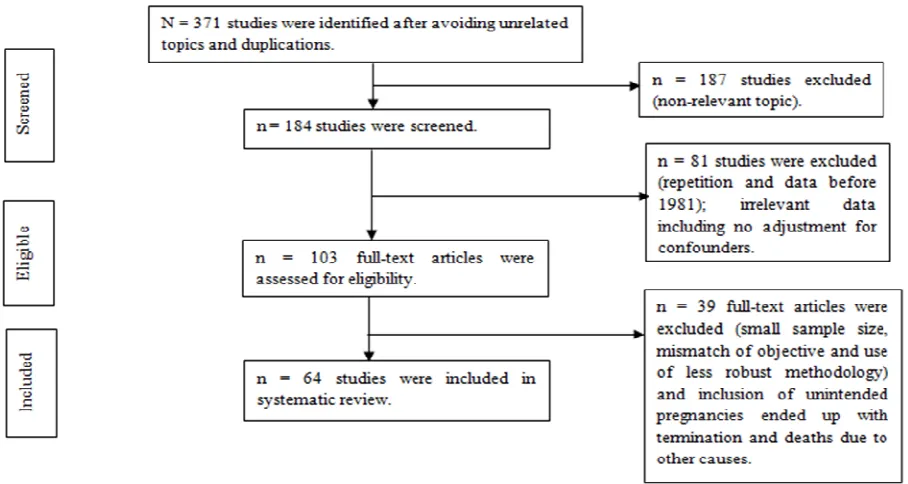
The review identified a total of 371 studies, 255 of which were full-text published articles, 6 were categorised as grey literature and there were 3 dissertations. Some 64 (25.1%) full-text studies fulfilled the inclusion criteria and 188 (74.1%) including dissertations were excluded for the reasons outlined in the PRISMA flow diagram (Figure1). The majority of studies, 42 (65.6%), were cross-sectional followed by15 (23.4%) longitudinal, 5 (7.8%) case-control and 2 (3.2%) randomized clinical trial designs. In randomised studies, the participants were primarily randomised for other study purposes rather than to assess pregnancy intention status (22, 59). Most of the included studies, 27 (41%), were from the USA. A total of 671,046 reproductive age women ranging from 119 (6) to 143,303 (60) who had given birth to a singleton child were included in this review. Quality scores ranged from 3 to 7 (mean = 4.94; SD ± 0.72) and higher quality studies relatively had greater effect-sizes. Tables 1 and 2 present the summary reports of pertinent study characteristics. Unless otherwise stated, all quantitatively synthesised results were from adjusted findings for selected confounders.
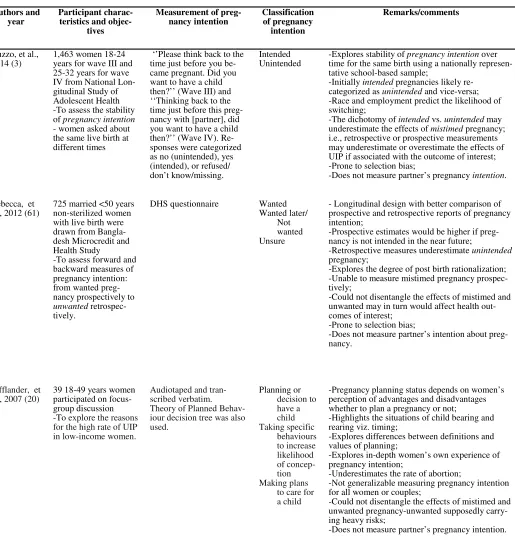
Table 1: Summary of measurement and classification of pregnancy intention\ To be continued ...
Authors and
year Participant charac-teristics and objec-tives
Measurement of
preg-nancy intention Classification of pregnancy intention
Remarks/comments
Guzzo, et al.,
2014 (3) 1,463 women 18-24 years for wave III and 25-32 years for wave IV from National Lon-gitudinal Study of Adolescent Health -To assess the stability of pregnancy intention
- women asked about the same live birth at different times
‘’Please think back to the time just before you be-came pregnant. Did you want to have a child then?’’ (Wave III) and ‘‘Thinking back to the time just before this preg-nancy with [partner], did you want to have a child then?’’ (Wave IV). Re-sponses were categorized as no (unintended), yes (intended), or refused/ don’t know/missing.
Intended
Unintended -Explores stability of time for the same birth using a nationally represen-pregnancy intention over tative school-based sample;
-Initially intended pregnancies likely re-categorized as unintended and vice-versa; -Race and employment predict the likelihood of switching;
-The dichotomy of intended vs. unintended may underestimate the effects of mistimed pregnancy; i.e., retrospective or prospective measurements may underestimate or overestimate the effects of UIP if associated with the outcome of interest; -Prone to selection bias;
-Does not measure partner’s pregnancy intention.
Rebecca, et
al., 2012 (61) 725 married <50 years non-sterilized women with live birth were drawn from Bangla-desh Microcredit and Health Study
-To assess forward and backward measures of pregnancy intention: from wanted preg-nancy prospectively to
unwanted retrospec-tively.
DHS questionnaire
Wanted Wanted later/
Not wanted Unsure
- Longitudinal design with better comparison of prospective and retrospective reports of pregnancy intention;
-Prospective estimates would be higher if preg-nancy is not intended in the near future;
-Retrospective measures underestimate unintended
pregnancy;
-Explores the degree of post birth rationalization; -Unable to measure mistimed pregnancy prospec-tively;
-Could not disentangle the effects of mistimed and unwanted may in turn would affect health out-comes of interest;
-Prone to selection bias;
-Does not measure partner’s intention about preg-nancy.
Lifflander, et
al., 2007 (20) 39 18-49 years women participated on focus-group discussion -To explore the reasons for the high rate of UIP in low-income women.
Audiotaped and tran-scribed verbatim. Theory of Planned Behav-iour decision tree was also used.
Planning or decision to have a child Taking specific
behaviours to increase likelihood of concep-tion Making plans
to care for a child
-Pregnancy planning status depends on women’s perception of advantages and disadvantages whether to plan a pregnancy or not;
-Highlights the situations of child bearing and rearing viz. timing;
-Explores differences between definitions and values of planning;
-Explores in-depth women’s own experience of pregnancy intention;
-Underestimates the rate of abortion;
-Not generalizable measuring pregnancy intention for all women or couples;
-Could not disentangle the effects of mistimed and unwanted pregnancy-unwanted supposedly carry-ing heavy risks;
To be continued ... Koenig, et
al., 2006 (46)
2,387 non-pregnant women with two most recent live births -To determine differ-ences in proportion of retrospectively and prospectively reported pregnancy intention and correlates of switching
Retrospective: standard DHS retrospective ques-tionnaire on preg-nancy intention
Unwanted pregnancy Mistimed pregnancy Wanted-timing unsure
(for 1st subsequent
pregnancy)
-Maternal age at birth and number of children at baseline affect the shift of pregnancy intention between retrospective and prospective measure-ments;
-Provides longitudinal data for better estimates; -Underestimates the actual level of undesired child bearing;
-Susceptible for recall and selection bias; -Does not measure partner’s pregnancy intention.
Barrett, et al., 2004 (18)
47 women for qualita-tive study (to delineate pregnancy construct); 390 and 651 women for field-tests
(psychometric test for means of measurement) those who were with continuing pregnancy and opting for abortion, abortion and post-natal care.
Six items with excellent reliabil-ity (α > .80) and high face, content and construct va-lidity (α = 0.92) were used.
Expressed intentions Desire for motherhood Contraceptive use Pre-conceptual
prepara-tions
Personal circumstances/ timing and Partner influences
-Develops a valid, reliable and appropriate measure of pregnancy intention in context of contemporary demographic trends and social mores;
-Establishes population estimates of unplanned pregnancy based on lay views;
-Considers context, instance and behaviour of the women/couples;
-Has a high internal consistency, high stability (standard and longer term) and excellent face, con-tent and construct validity;
-Suitable for use with any pregnancy regardless of outcome;
-Provides a complex and realistic portrayal of hu-man fertility behaviour;
-Does not provide any information for pregnancies ending in abortion;
-Could not disentangle the effects of mistimed and unwanted pregnancy-unwanted pregnancies carry heavy risks;
-Does not measure partner’s pregnancy intention.
Earle, 2004
(29) -19 primigravidae women aged 16-30 years interviewed with qualitative in-depth interview and then fol-lowed at 3 specific stages of pregnancy and after birth.
-To classify and under-stand conception by deconstructing planned vs. unplanned dichot-omy of pregnancy in-tention
Audio tape-recorded in depth interview to gener-ate women’s ex-periences of con-ception and ana-lysed by open coding.
Planned: planned or try-ing to have a baby; Laissez-faire: stopped
contraception but with a relaxed ap-proach to pregnancy planning (i.e., con-fused);
Recalcitrant: want to be pregnant but sought planning pregnancy would not be accept-able socially; Accidental: pregnancies
that could be unex-pected and due to contraceptive failure.
-Used prospective design with possibility of under-standing the dynamics of intention during and after pregnancy;
-Displayed unusual classifications with difficulty of comparison;
-Could not be handled by rigorous quantitative approaches as its focus is on subjective experiences of women towards their pregnancy;
-Would be theoretically rigorous but not statisti-cally generalizable;
-Would be used solely for subjective understanding of conception;
-Sole inclusion of primigravidae might hide the experiences of multigravidae would not reflect feelings across all reproductive age women; -Would not work similarly for male partners as male partners influence is crucial in how women define their pregnancy;
-Could not disentangle the effects of mistimed and unwanted pregnancy-unwanted pregnancies carry heavy risks;
DHS-Demographic and Health Survey; PRAMS-Pregnancy Risk Assessment Monitoring System; NSFG-National Survey of Family Growth; UIP-unintended pregnancy.
D’An-gelo, et al., 2004 (28)
25,027 women with recent live birth from PRAMS dataset - To analyse demo-graphic and behavioural risk factors attributable for mistimed and un-wanted pregnancies.
PRAMS questionnaire. -It measured intention before pregnancy but interview was retro-spective for recent live birth.
Intended Mistimed Unwanted
-Three groups of pregnancy intention differed on each variable;
-Such a clear classification provides a clue for severity of outcomes and target groups to tailor interventions (facilitates sub-group analysis); -More likely to report as unwanted rather than mistimed if behavioural risk factors co-exist with an UIP;
-Underrepresentation of pregnancy outcomes other than live births such as pregnancies end-ing in abortion;
-Could not explore complex emotional and psychological dynamics underlying attitudes related to pregnancy;
-Prone to recall and selection bias;
-Does not measure partner’s pregnancy inten-tion.
Pulley, et al., 2002 (45)
Number (in ‘000) from NSFG
-To explore outcomes of pregnancy unintend-edness based on extent of mistiming.
NSFG questionnaire Intended pregnancy Moderately mistimed (24 or fewer months) preg-nancy
Seriously mistimed (mistimed more than 24 months) pregnancy Unwanted pregnancy
-Explores extent of variation in mistiming based on SES, race, stage of life;
-Explores severity of outcome based on the extent of mistiming;
-Assesses feelings at the time of conception but not at the time of birth (but feelings can change over time);
-Included dimensions of contraception use and timing;
-It does not measure partner’s pregnancy inten-tion.
Marjori e, et al., 2000 (37)
311 women aged ≥18
years seeking a preg-nancy test with possible UIP
-To examines the rela-tionship among preg-nancy intention and attitudes, inconsistent contraceptive use and plans for potential preg-nancy
Pregnancy intention was measured using traditional classifica-tions of mistimed and unwanted pregnancies. - Attitudes toward a pregnancy: ‘‘If you are pregnant now, how would you feel about it?” (5-point Likert-type scale: ‘‘very happy to be pregnant’’ to ‘‘rarely,’’ or ‘‘never.’’
Mistimed and happy Mistimed and neutral Mistimed and unhappy Unwanted and happy Unwanted and neutral Unwanted and unhappy
-Mistimed and pregnancies for which women are unhappy are potential candidates for adop-tion and aboradop-tion;
-Future fates of mistimed and unhappy preg-nancies are unpredictable by mothers;
-Intention and happiness could be combined for better outcomes of family planning ser-vices;
-Does not risk for recall bias;
-Uncertain about the actual status of the possi-ble pregnancy unless confirmed pregnancy test;
-Could not represent women who undertake pregnancy test in other places rather than health facilities, e.g., home pregnancy test. Bankole
, et al., 1998 (38)
1664 married women -To look at the consis-tency and validity of reproductive intention and planning status
DHS questionnaire
1. Want more 2. Uncertain 3. No more
-Consistently measures pregnancy intention; -Reliability is affected —unwanted reclassified as wanted over time;
-Subject to measurement errors;
-Postfactum rationalization (i.e., ex post ration-alization) through time;
-Underestimates levels of UIP;
-Could not disentangle the effects of mistimed and unwanted pregnancy
Main results:
Part I: Antecedents of unintended pregnancy:
Given varying contexts of women’s personal and cultural situations (or realities), antecedents were grouped into socio-demographics, relationship dynamics, knowledge for and use of family planning methods and reproductive characteristics.
Socio-demographic characteristics :
Women’s age was found to be the key factor in the epidemiology of UIPs (27, 43, 62-64), with teenagers having had substantially higher rates of UIPs (4, 24, 27, 51, 65-76). Age-specific patterns were also observed in different types of UIP-mistimed being common in younger age groups (4, 28, 45), whilst unwanted pregnancies were more common in older women (28, 31, 38). Younger age at first birth (62), having a first sexual experience before the age of 16 years(77), an increase in age (78) and similarity (27) or difference in age profiles (64) between partners were associated with increased likelihood of UIPs (27).
The literacy level of women was found to be associated with pregnancy intention (63, 72, 79, 80). More educated women were more likely to have a wanted pregnancy (21, 23, 24, 27, 65, 77, 78, 81, 82). Mistimed pregnancies were higher while women were undergoing education/training (31).In contrast, data from one study reported higher rates of unwanted pregnancy in highly educated women (53). This may be explained by women with a higher aca-demic profile tending to postpone child bearing, resulting in an increased age at first pregnancy and/or unwanted pregnancy.
Low income (43, 53, 63, 76, 78, 81, 83) and those women who were on public assistance (23, 24) experienced strikingly higher rates of UIP. Conversely, earning high income and having private insurance for antenatal care was found to be protective (21). Nonetheless, the findings that high-income women had a higher rate of UIP (22, 23, 84) may be attributable to some specific personal and social factors (38, 48). Marital status (31, 45, 53, 67, 69, 78-80), duration of marriage (38), teenage marriage (64, 81, 85) and different modes of cohabitation (24, 62, 72, 81, 84) have also been associated with UIP.
Social discrimination (86) and disparities in race/ethnicity have also been associated with higher rates of UIP (66, 69) with black or non-white women consistently reported as being at greater risk than their white counterparts (23, 24, 45, 72). This finding was, however, not consistent with results from a multicentre randomized controlled trial where racial status (being black) was not associated with UIP (22). This may be due to differences in methodology. Women with traditional or unspecified beliefs may be less likely to experience mistimed pregnancies (43, 62) and Muslim women reported lower levels of unwanted pregnancy (67) than those with other religion affiliations.
Family relationship dynamics:
Familial insecurity coupled with underlying factors which may be proxies for low socio-economic status may has-ten the incidence and negative effects of experiencing UIP. For example, family structure and living arrangements (80) such as growing up in a single-family (23, 69, 79), not living with partner (87) and insecure relationship (53) were found to be factors associated with UIP. Differences in fertility preference and family size (43, 88, 89), fam-ily dissolution (90) and lower level of parental involvement in contraception decision-making significantly in-creased the rates of UIP (73, 87) whereas relationship security (53), partner support and awareness of ongoing pregnancy may reduce the rates of UIP (73).
Family planning knowledge and use:
Despite advances in reproductive technology, most UIPs may happen because of insufficient knowledge (91) and limited access to effective contraception (91, 92) which leads to subsequent higher rates of contraceptive failure (17). The risk is lower where family planning knowledge and use is sufficient (23, 64, 93, 94). For instance, aware-ness of traditional methods of family planning prevented UIP (67). However, contraceptive types may determine effectiveness; e.g., hormonal contraceptives are characterised by higher failure rates (22, 94). The lack of contra-ceptive education (66) in socio-economically disadvantaged women (14), child sex preference (24), time con-straint, perceived difficulty and embarrassment (27) were found to increase vulnerability to UIPs. These findings may provide some insight into the joint effect of education and life skills training to promote effective and efficient contraceptive use.
Reproductive health behaviours and outcomes:
(62) may increase susceptibility to UIP (95). Early debut for sex (25, 62, 79, 85), non-consensual first intercourse, having multiple sexual partners (25, 62), occasional/non-use of contraceptives (82) were associated with increased rates of UIPs. Not surprisingly, those women who did not use contraceptive consistently experienced higher rates of unwanted or mistimed pregnancies (53, 63, 96, 97) whereas partner’s willingness to use contraceptive was less likely to be associated with UIP (22). This finding has some preventive implications such as health education on consistent use and partner involvement in family planning. However, one randomized prospective study revealed no association of UIP with contraceptive utilization (59).
Parity status has consistently been reported to affect both the magnitude and frequency of UIPs. Having higher birth orders (23, 24, 63, 67, 72-75, 78, 88, 90, 93, 98) appeared to increase the risk of unwanted (28, 38, 53, 87) rather than mistimed (4, 28) pregnancy. This may suggest that reproductive history could play a role when coupled with such background characteristics. Moreover, prior exposure for adverse pregnancy outcomes including previ-ous UIP (22, 78, 99), abortion (22, 94), child loss (42) and pregnancy scare were found to be associated with UIPs. However, an unwanted pregnancy may occur regardless of prior history of adverse outcomes (62, 81).
Overall, women from disadvantaged socio-economic backgrounds are highly vulnerable to experience an UIP and its subsequent consequences (100, 144). Relationship patterns, reproductive characteristics, knowledge and use of family planning can play an important role in mediating a shift in reproductive intention (61) from unintended to intended pregnancy and vice-versa.
Part II: Maternal outcomes:
Maternal healthcare services utilization:
Pregnant women are usually encouraged to adopt a set of healthy behaviours to use prenatal and perinatal health-care services. These services have had proven effects for better maternal and child health outcomes. However, pregnancy intention may relate to sub-optimal use of these services. This section focuses on antenatal care, vitamin intake and breastfeeding in regard to UIP.
Antenatal care and skilled birth:
Women’s use of antenatal services may prevent UIP, identify and manage pregnancy-related complications, im-prove maternal wellbeing and reduce maternal mortality (97). However, 19 cross-sectional studies showed late (42, 60, 101), delayed initiation (7, 43, 102-108) and inadequate number of obstetrical visits (21, 83, 104, 109-112)as common characteristics of women with UIP. Nine of these studies aggregated healthcare services utilization by types of pregnancy intention, with unwanted pregnancy associated with delayed (28, 42, 43, 102) and non-skilled birth attendance (12, 110)rather than mistimed or unsure pregnancies (79). Unintended pregnancy was associated with late recognition of being pregnant (42, 60, 79, 103), less prenatal care (42) and inadequate frequency of atten-dance to prenatal care services (103). Nonetheless, a non-significant association was observed between mistimed and prenatal (83, 103) and late initiation of care (21). One case-control study reported the association of inaquate prenatal care and UIP (81).Similarly, a longitudinal study (105) and a systematic review (104) showed de-layed initiation of prenatal health services for women with UIP. Unintended pregnancy was often found to be asso-ciated with reduced uptake of antenatal care.
Vitamin intake during pregnancy:
Vitamin supplements during pregnancy may enhance normal foetal development and the wellbeing of women (113). Five cross-sectional and one case-control study documented the influence of pregnancy intention on multi-vitamin use. One of the five cross-sectional studies (114)reported that pre-pregnancy intention was associated with an increased likelihood of multivitamins use. As expected, unintended (43, 81, 83, 115) and mistimed (43) preg-nancies were associated with inadequate intake and a less likely reduction in the consumption of intra-partum caf-feinated beverages (115).Surprisingly, one cross-sectional study reported less adherence of women who had a wanted pregnancy with a proper vitamin intake (101).A case-control study reported a positive association between UIP and vitamin intake (81). These inconsistent findings may reflect differences in study samples and/or study designs.
Breastfeeding:
Consistently, 8 of the 9 cross-sectional studies reported a tendency for mothers with intended pregnancies to exclu-sively breastfeed and initiate breastfeeding in the postpartum period(118). Unintended pregnancy (46) was associ-ated with late initiation (119), shorter duration (9, 42, 119-121) and reduced breastfeeding (28, 42, 119). In con-trast, data from 18 multi-country (9) and 2 cross-sectional studies (28) suggested a non-significant association be-tween pregnancy intention and breastfeeding (43).
Maternal lifestyle Cigarette smoking:
Smoking before, during and after pregnancy may lead to adverse pregnancy outcomes(122). Nine cross-sectional studies showed mixed outcomes, however. Unintended pregnancy was associated with increased (81, 115) pre-pregnancy and pre-pregnancy smoking (28, 76, 116), and exposure to a secondary smoker (43, 115). Two of these studies (28, 79) reported more exposure of women with UIP to smoking than their intended pregnancy counterparts (28, 79). Interestingly, pre-pregnancy smokers with an intended pregnancy were more likely to quit smoking at intra-partum (21, 101). Nonetheless, a large population-based longitudinal study reported a minimal rate of quitting for women having an unwanted pregnancy (123) and another with a one-year follow-up reported no association between preconception smoking and pregnancy intention (114). Studies on maternal smoking are inconsistent and inconclusive as to whether pre-pregnancy smoking leads to UIP or vice-versa. Further research may be needed to determine the causal direction of the association between smoking and UIP.
Alcohol use:
Alcohol use in pregnancy may be more prevalent amongst women with UIP (72,76). Interestingly, 6 cross-sectional studies suggest consistent findings-pregnancies for which women showed intent were less likely associ-ated with the use of alcohol in pregnancy (21, 101). Preconception binge drinking (72) and intra-partum alcohol consumption (79) were related to UIPs (72,76). However, a one-year longitudinal study showed no difference in pregnancy intention and preconception heavy drinking (114) and a multi-centre randomized trial study reported a negative association (22). This could be explained by differences in study participants’ characteristics including homogeneity with similar lifestyles.
Illicit drug use:
Two cross-sectional (76, 124) and a case-control (81) studies reported the associations between UIP and illicit drug use. A longitudinal study suggested a positive link between UIP and drug use particularly in those with disadvan-taged backgrounds and prior history of adverse birth outcomes (125). A prospective longitudinal (126) and ran-domized trial (22) study determined that women with substance use disorders were less likely to experience UIPs. This suggests there are multiple determinants of UIP other than drug use. However, these studies were less likely to have controlled for pre-pregnancy lifestyles including alcohol and drug use disorders leading to UIP, or to test whether drug use was an outcome of UIP. Thus, further multilevel prospective studies controlling for pre-pregnancy lifestyles are needed.
Intimate partner violence:
The quality of inter-partner relationship may influence the use of contraceptives and hence pregnancy intention. Fourteen cross-sectional studies and one randomized trial documented mixed outcomes, however. Unintended pregnancy had an effect on intimate partner violence (84). This may partially reflect inter-partner power disparities affecting negotiation (127) and contraceptive sabotage (13, 28, 128). Reciprocally, intimate partner violence (129-132) including physical violence (14, 89, 131, 133-135) has been consistently associated with UIP (136), although the causal direction of this association is unclear. However, data from one randomized trial (22) showed a negative association of UIP with physical abuse. Longitudinal studies are required to examine the directionality of the asso-ciation between pregnancy intention and intimate partner violence.
Mental health outcomes:
In longitudinal studies, reciprocal effects of depression on UIP were observed (86, 126, 143). Data from a random-ized clinical trial also reported increased depression following an UIP (153). However, 4 prospective studies docu-mented statistically non-significant association between pregnancy intention and depression (62, 140, 144, 145).
Stress was suggested to increase the risk (62) of UIP by reducing coping skills (22). However, a finding from a randomized clinical trial revealed a non-significant association between pregnancy intention and stress (22). Men-tal health problems are suggested as causes or consequences of UIP. Available data has shown inconsistent results on this latter issue.
Physical health outcomes
Unintended pregnancy is suggested to have an association with some medical problems. Six cross-sectional studies have pointed to the associations between UIP and poor physical health outcomes (146) including weight gain (101) and obesity (147, 148). However, non-significant associations were documented for diabetes mellitus (149) and hypertensive disorders of pregnancy (78). Inconsistent evidence from a handful of studies suggests more studies that disentangle the link between UIP and maternal physical health consequences are needed.
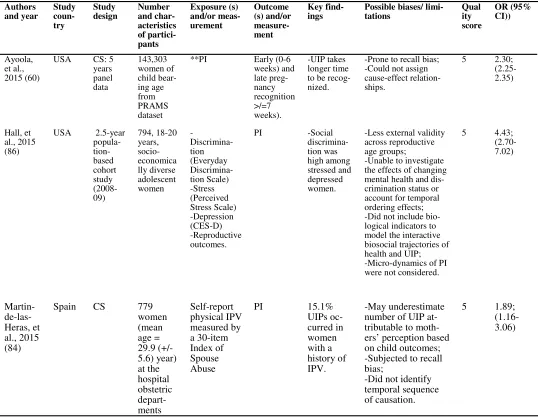
Table 2: Summary of characteristics of 64 full-text articles with critical appraisal, quality scores and effect-size odds ratios with 95% confidence intervals (ES-OR (95%CI))
To be continued ... Authors
and year Study coun-try
Study
design Number and char-acteristics of partici-pants Exposure (s) and/or meas-urement Outcome (s) and/or measure-ment Key
find-ings Possible biases/ limi-tations Quality score OR (95% CI)) Ayoola, et al., 2015 (60)
USA CS: 5 years panel data 143,303 women of child bear-ing age from PRAMS dataset **PI
Early (0-6 weeks) and late preg-nancy recognition >/=7 weeks). -UIP takes longer time to be recog-nized.
-Prone to recall bias; -Could not assign cause-effect relation-ships.
5 2.30; (2.25-2.35)
Hall, et al., 2015 (86)
USA 2.5-year popula- tion-based cohort study (2008-09) 794, 18-20 years, socio-economica lly diverse adolescent women - Discrimina-tion (Everyday Discrimina-tion Scale) -Stress (Perceived Stress Scale) -Depression (CES-D) -Reproductive outcomes.
PI -Social
discrimina-tion was high among stressed and depressed women.
-Less external validity across reproductive age groups;
-Unable to investigate the effects of changing mental health and dis-crimination status or account for temporal ordering effects; -Did not include bio-logical indicators to model the interactive biosocial trajectories of health and UIP; -Micro-dynamics of PI were not considered.
5 4.43; (2.70-7.02) Martin- de-las-Heras, et al., 2015 (84)
Spain CS 779
women (mean age = 29.9 (+/-5.6) year) at the hospital obstetric depart-ments Self-report physical IPV measured by a 30-item Index of Spouse Abuse
PI 15.1%
UIPs oc-curred in women with a history of IPV. -May underestimate number of UIP at-tributable to moth-ers’ perception based on child outcomes; -Subjected to recall bias;
-Did not identify temporal sequence of causation.
To be continued ... Beguy, et
al., 2014 (80)
Kenya 3-year prospec-tive study 849, 15-22 years young women from Tran-sitions to Adulthood Project
Pregnancy UIP 41% UIPs
(26% mis-timed and 15% un-wanted) had oc-curred. -Not representative across reproductive age groups; -Subjected to recall bias or ‘‘ex post-facto rationalization’’.
5
1.28; (0.81-2.02)
Exavery, et al., 2014 (87)
Tanza-nia CS 2199, gravid 15-49 years women
Pregnancy
PI 32.5% and 13.4%
pregnancies were mis-timed and
unwanted,
respec-tively.
-Subjected to recall bias;
-Unable to establish causation.
6 -
Gatny, et al., 2014 (26)
USA 2.5-year prospec-tive study 901 young adolescent women aged 18-19 years Pregnancy
scare PI 40% UIPs occurred following pregnancy scare.
-Non-generalizability (less external valid-ity);
-Did not fully capture emotions surrounding pregnancy;
-Use of a broad classi-fication, unintended pregnancy, might hide the actual association.
5 5.96; (4.78-7.43)
Sebastian, et al., 2014 (67)
Ghana CS 1914 preg-nant women
Pregnancy
PI 70% of the pregnancies were unin-tended.
-Subjected to recall bias;
-No evidence of cau-sality.
6 4.92; (3.97-6.08)
Palamuleni, et al., 2014 (88)
Malawi CS 2144, 15-49 years pregnant women
Pregnancy
*Perceived desire of cur-rent pregnancy (wanted, mis-timed and not wanted) 43% women reported unintended pregnancy.
-Subjected to recall bias;
-Could not establish cause-effect relation-ship.
5 3.17; (2.83-3.55)
Sriprasert, et al., 2014 (27)
Thai-land CS 250, 15-24 years at prenatal clinic
Pregnancy PI 65.2%
pregnancies were unin-tended.
-Underestimated women seeking abor-tion for unintended
pregnancy (underestimate); -Could not differenti-ate the extent of an UIP.
4 2.91; (1.62-5.04)
Laurie, et al., 2014 (143)
USA Longitu-dinal survey 3,939 aged 18-24 years from Na-tional Lon-gitudinal Study of Adolescent Health CES-D de-pression-
PI 13.5%
pregnancies were unin-tended.
-Subjected to recall bias;
-Could not establish temporality.
Tebekaw, et al., 2014 (94)
Ethio-pia *CS 7759 women of reproduc-tive age (15 -49 years)
Pregnancy PI 32% preg-nancies were
unintended: 11% un-wanted and 21% mis-timed.
-Subjected to recall bias; -Could not establish cause-effect relationship.
5
1.54; (1.40-1.71)
Teshome, et al., 2014 (89)
Ethio-pia CS 616 women aged 15-49 years
Pregnancy
PI—unintended, unwanted and mis-timed.
The preva-lence of unintended pregnancy was 36.5%.
-Pocket study with less repre-sentation;
-Could not establish causality; -Subjected to recall and possi-ble residual biases.
4 1.36; (0.97-1.91)
Azevêdo, et al., 2013 (137)
Brazil CS 1,054 women 18-49 years
IPV PI -Association
between IPV and UIP diminished by contra-ception use
-Prone to recall bias and ex
post rationalization 5 5.13; (3.92-6.71)
Habte, et al., 2013 (93)
Ethio-pia CS 1267, 15-49 years pregnant women
Pregnancy *PI (intended and un-wanted)
-Unintended pregnancy was 24%.
-Prone for recall bias;
-Aon-comparable classification of UIP restricting replication; -Could not identify cause-effect relationship.
4 2.72; (1.86-3.97)
Ikamari, et al., 2013 (69)
Kenya CS 1272 aged 15-49 from slum and non-slum areas
Pregnancy PI -24%
women ex-perienced
unintended
pregnancy.
-Could not establish causal link;
-Not generalizable for general community.
5 6.57; (4.93-8.75)
Nelson, et al., 2013 (150)
USA CS 1494 14-40
years preg-nant women presenting to urban emergency department
IPV
PI -High stress and depres-sive symp-toms were associated with UIP.
-Could not capture some di-mensions of PI;
-Restrictive definition might underestimate outcome; -Subject to selection and recall bias.
4 1.14; (0.92-1.41)
Dixit, et al., 2012 (24)
India Matched case- control
4187 women with UWP and 3711 women controls from NFHS
Pregnancy **PI (wanted and unwanted )
About 22% women re-ported unin-tended preg-nancy.
-Prone for selection and infor-mation bias;
-Could not identify cause-effect relationship.
To be continued ... Pallitto, et al.,
2012 (130) Multi- coun-try study (10 coun-tries)
CS 17,518
ever-partnered women from WHO multi-country study on women’s Health and Do-mestic Violence
Physical violence
PI History of IPV was associated with unintended
pregnancy and abortion
-Underreport IPV and UIP;
-Could not establish causality.
5 -
Raihana, et al., 2012 (129)
Bang-ladesh CS 4925, 10-49 years ever mar-ried women
IPV
*PI -Exposure to any form of IPV in-creases the risk of UIP by 34.5%.
-Did not consider the different forms of an UIPs;
-Prone to recall bias; -Could not identify cause-effect relation-ship.
4 1.81; (1.60-2.06)
Adhikari, et
al., 2009 (23) Nepal CS 713 15-49 years, married pregnant women
Pregnancy *PI 41% pregnancies
were unintended. -Used non-comparable classification of UIP; -Could not establish causal link.
4 1.89; (1.39-2.56)
Stephenson, et al., 2009 (13)
India CS 3734
women aged 15-49 years
Physical violence
*PI -Prospectively measured un-wanted preg-nancy identified a higher prevalence of unwanted than do retrospective measures.
-Might underestimate domestic violence due to its sensitive nature; -Did not address other forms of domestic violence with high tendency of co-occurrence and signifi-cant reproductive con-sequences.
5 3.79; (3.40-4.23)
Tenkku, et al., 2009 (126)
USA Pro-spectiv e co-hort study
737 15-44 years pregnant women from Women Infants and Chil-dren (WIC) study partici-pants
Psychiatric disorder measured by Diag-nostic Inter-view Schedule, Version IV
**PI 30.9% reported at least one psychi-atric disorder of whom 67.3% were with an UIP.
-Prone for recall bias; -Could not establish temporal sequences.
Ku-roki, et al., 2008 (22)
USA Multicen-ter ran-domized Clinical Trial to encourage use of dual contracep-tive method for STIs and UIP pre-vention.
542 women 13-35 years desiring to avoid preg-nancy and experi-enced STIs within 24 months. Women enrolled for Project PRO-TECT: from pri-mary care, gynaecol-ogy, and family planning Clinics (1999-2003).
History of unplanned pregnancy
Subsequent unplanned pregnancy incident and predictors
22.5% of the enrolled women were exposed for prior unin-tended preg-nancy re-sulted in subsequent
unintended
pregnancy.
-Exclusion of non-English-speaking women may limit external validity;
-Information on depression or number of previous UIP may be constrained by secondary analysis;
-Underpowered to detect asso-ciations between reproductive history and UIP due to small sample size;
-Did not classify UIP into
mistimed and unwanted.
5 4.53; (3.37-6.09)
Ma, et al., 2008 (25)
China CS 848
sexu-ally active female students from sex-ual behav-iour survey
Pregnancy
PI (Yes/No) 11.6% fe-male univer-sity students had UIP.
-Subjected to reporting bias (information on sexual behav-iour was excluded for sexually active students who did not respond to the question about a history of pregnancy); -Could not establish cause– effect relationship;
-Non-representative to other segment of the population with differing sexual behaviour orientation.
4 1.13; (0.60-2.13)
Chuan g, et al., et al., 2011 (114)
USA CS 35,351
18-44 years non-pregnant women
PI
Preconcep-tion behav- iours-smoking, drinking and FA; future PI
Women intending pregnancy within 12 months were more likely to use FA, but PI was not associ-ated with preconcep-tion smok-ing or heavy drinking.
-Unable to evaluate how preg-nancy intention changed over time and whether preconcep-tion behaviours change ac-cordingly;
-Social desirability; -Could not establish causal link.
To be continued ... Orr, et
al., 2008 (79)
USA Prospec-tive (panel) study
913, >18 year preg-nant women at 1st
prena-tal clinic visit
Cigarette smoking, alcohol and illicit drug use, and 3rd TM
prenatal care initia-tion
**/***PI 34% and 11% preg-nancies un-wanted and
mistimed, respectively. UIPs were at risk of alco-hol, illicit drug use and late initiation of ANC.
-Non-generalizable for early adolescent females; -Prone to recall bias.
5 2.93; (2.19-3.91)
Wanzh en, et al., 2008 (133)
New Zea-land
CS 1088
moth-ers cohabit-ing in mar-riage or de-facto part-nerships
Physical IPV
PI (yes or no).
58.3% preg-nancies were unplanned. Victims of physical IPV more likely report an unplanned pregnancy.
-Misclassification of IPV and pregnancy intention could not be ruled out due to recall bias -Could not ascertain causality; -Findings might not be reliable.
5 1.14; (0.91-1.42)
Mazha-rul, et al., 2004 (63)
Bang lades h
*CS,
DHS 6926 women 10-49 years
Pregnancy *PI (planned, mistimed and un-wanted)
19 and 13% pregnancies were mis-timed and
unwanted, respectively.
-Prone to recall bias;
-Could not establish causal link. 6 1.22 (1.01-1.49)
Crosby , et al., 2003 (73)
USA CS 170, 14-20 years preg-nant unmar-ried adoles-cent at their first ANC visit
Pregnancy
PI 51.2% ado-lescent preg-nancies were
unplanned
and un-wanted.
-Reliance on retrospective re-ports of pregnancy intent and
wantedness; -Non-generalizable.
4
-Parvin, et al., 2013 (98)
Iran
Case-control 181 married women with unin-tended pregnancy and 391 married women with planned pregnancy
PI Predictors
of UIP Among the cases, 55.8 and 30.4% were mis-timed and
unwanted
pregnancies respectively.
-Used non-representative sam-ples;
-Prone for selection and infor-mation bias (case-control study).
To be continued ... Hall, et
al., 2013 (62)
USA Longitu-dinal (panel) study 940, 18-20 years women with a strong desire to avoid a pregnancy. CES-D depres-sion symp-toms; Perceived Stress Scale (PSS-4) Contracep-tive use and PI change over one year time.
10% not intend-ing pregnancy initially become pregnant. Stress, co-occurring stress and depression symptoms were associated with UIP.
-Non-representation of across reproductive age groups; -Unable to determine prior mental health symptoms; -Unable to assess potential time-varying effects of both predictors and outcomes.
5 1.75; (0.95-3.21)
Singh, et al., 2013 (105)
India Prospec-tive Survey 2108 women with live births for which pregnancy intention assessed prospec-tively PI— wanted, mistimed, unwanted and wanted-timing unsure WHO rec-ommended prenatal care utili-zation (WHO, 2006) Mothers report-ing unwanted births received inadequate prenatal care (20.6% mis-timed vs. 5.9% unwanted)
-Brief period of follow-up might hinder establishing causality;
-Prenatal care visits were prone to recall bias.
7 4.60; (2.82-7.48) Hoh- mann-Marriott, et al., 2009 (112)
USA CS 5,788
fa-ther and mother from Early Childhood Longitudi-nal Study– –Birth Cohort (ECLS-B) inter-viewed when chil-dren were 9 months
PI Mother’s
self-report of receiv-ing prena-tal care in the 1st TM.
Pregnancy in-tention by fa-ther only, nei-ther and non-marital concep-tion was associ-ated with de-layed prenatal care.
-Liable to recall and selection bias.
5 -
Marston, et al., 2003 (109) Bolivia, Egypt, Kenya, Peru, and the Philip-pines
CS 45,121
women of reproduc-tive age participat-ing in major DHS.
*PI Predictors
of UIP -ANC reception was low and unattended pregnancy was greater for un-wanted preg-nancy; -There was inter-country difference.
-Difficulty of disentangling effects of birth order from those of pregnancy intention; --Subjected to recall bias; -Could not identify cause-effect relationship.
To be continued ... Egglesto
n, 2000 (103)
Ecua-dor CS 3988, 15-49 years women
*PI Use of
prenatal care
Women with unintended pregnancy de-layed initiation of prenatal care in 1st TM and
reception of inadequate number of pre-natal care.
-Liable to recall bias; -Could not identify cause-effect relationship.
6 Delayed ANC (1.22; (1.05-1.42)); inadequate care (1.25; (1.06-1.49))
Magadi, et al., 2000 (110)
Kenya CS 5104 live births for whom mothers received prenatal care in 1993
*PI
Frequency and timing of antena-tal visits
Use of prenatal care is infre-quent for un-wanted and
mistimed preg-nancies
-Prone for recall bias; -Could not identify causal link.
5
Altfeld, et al., 1997 (21)
USA CS 378
post-partum women from Beautiful Babies project in 1990
PI: wanted and other
Prenatal visit in 1st
TM, self-reported cigarette smoking (Yes/No) and alcohol use (Yes/ No)
-Women who wanted their pregnancies were less likely to have smoked cigarettes or drink alcohol during preg-nancy, but were not more likely to have initiated prenatal care in the 1st TM.
-Prone for recall and resid-ual bias;
-Could not establish causal link;
5
Delgado Rodrı´gu ez, et al., 1997 (7)
Spain CS 409
women delivering in hospital setting
Pregnancy planning (planned vs. un-planned).
Frequency and timing of prenatal care (Kessner index)
-Unplanned pregnancy was a risk factor for inadequate use of prenatal care and a delayed first prenatal care visit (and reduced number of visits.
-Liable to selection bias; -Subjected to detection bias (planned pregnancies might be detected earlier than unplanned);
-Could not establish causal-ity.
To be continued ... Sable, et al.,
1990(111) USA CC 1484 low-income women
PI
Inadequate prenatal care
Not knowing pregnancy status in the first 4 months of preg-nancy predicted inadequate pre-natal care (10%) in women.
-Recall bias with possible misclassification of the outcomes;
-Could not establish causal-ity.
4 3.58; (2.33-5.51)
Singh, et al.,
2012 (12) India CS 51, 855 women aged 15-49 years
*PI
Skilled birth atten-dant
Mistimed preg-nancies were delivered with-out a skilled attendant at birth.
-Subjected to recall bias or ex post revision;
-Could not establish causal relationship between preg-nancy intention and the covariates.
5 1.13; (1.10-1.17)
Joyce, et al.,
2000 (16) USA Prospec-tive 240 women ***Pregn ancy intention and sta-bility Prenatal care initia-tion, ciga-rette smoking during pregnancy and breast-feeding
-Effects of UIP on the timing of initiation of prenatal care, smoking during pregnancy and breastfeeding after delivery were less than during preg-nancy.
-Had limited power to test the differences in terms of timing;
-Less external validity.
5 -
Hellerstedt, et al., 1998 (115)
USA CS 7174
preg-nant women PI-intended, mistimed and un-wanted. Self-reported health behav-iours, in-take of vitamins and caf-feinated drinks -women with UIPs were at risk of smoking and less likely use of vitamins and decrease in use of caffeinated beverages.
-Could not establish causal-ity;
-Subjected to ex post ration-alization.
4
Cheng, et al., 2000 (43)
USA **CS 9048
women with live born in-fants
**PI
Use of multi-vitamin, 3rd TM and post-partum smoking, alcohol use at 3rd TM, time of initia-tion and duration of BF, and PP contra-ceptive use. -Women with UIPs smoke prenatally and postpartum, suffer from PPD and less likely consume preconception FA, initiate ANC in 1st TM and BF for 8 weeks. Inade-quate FA con-sumption, de-layed prenatal care and PPD higher for an unwanted than mistimed.
-Not assessed whether mother/father was pleased with the preg-nancy nor did ambivalent feelings about the preg-nancy;
-Subjected to recall (retrospective report) and social desirability (sensitive behaviours) biases;
-Could not establish cause-effect relationship.
To be continued ...
Chine-buah, 2001 (120)
Ghana CS 1101
primipa-rous women
*PI
Prolonged BF considered as breastfed 13-36 months. -Women with planned preg-nancy had greater me-dian duration of breastfeed-ing; no differ-ence in breast-feeding dura-tion among multiparous women.
-Did not represent multiparous women;
-Liable to recall bias; -Could not establish causal link.
5 -
Dye, et al., 1997 (152)
USA
Case-control 33,735 PP women **PI (wanted , mis-timed and un-wanted) . Breastfeeding: exclusive, planned both breast and bottle feeding, or planned on breastfeeding of any kind. Women with UIP less likely breast-feed (for any BF and 66.3% EBF).
-Actual breastfeeding behav-iour might vary after discharge from the hospital;
-Could not establish causality. 5 Hromi-Fiedler, et al., 2006 (9) Multi- coun-try (18 coun-tries) study
CS 41,353
women between 13 and 36 months PP *PI (planne d, mis-timed or un-wanted Breastfeeding for 13-36 months of child age
-Significant association existed be-tween UIP and less likeli-hood of pro-longed breast-feeding.
-Subjected to recall bias; -Could not establish causal link.
5 1.08; (0.98-1.20)
Dott, et al., 2009 (81)
USA
Case-control 4094 women PI Maternal be-haviours (exposure to smoke at home, smok-ing, occupa-tional expo-sure, hot tub/ sauna, illicit drugs, >300mg caf-feine/day, inadequate prenatal care and no folic acid or multi-vitamin 1 month before conception) -Maternal smoking, exposure to smoking at home, illicit drugs, inade-quate prena-tal care and no FA be-fore 1 month before con-ception in ambivalent, mistimed and UIP are common in respective orders.
-Missed some variables per-taining to unintendedness as data were collected for an-other purpose;
-Possibility of misclassifica-tion of the exposure due to longer time between expo-sure and interview; -Social desirability bias; -Residual confounding might exist due to multiple variables included in the analyses.
To be continued ...
Chi-solm, et al., 2014 (123)
USA CS 49,510
females **PI Perinatal cigarette smoking
Women with unwanted preg-nancy less likely to quit smoking.
-Merging of mistimed and intended pregnancy might hide outcomes in light of specific catego-ries;
-Subjected to recall bias;
5 1.06; (1.02-1.11)
Blake, et al., 2007 (124)
Colum-bia CS 1044 black women enrolled at prenatal clinic 2001 -03.
**/***PI
Psychoso-cial and behav-ioural risk factors: cigarette smoking, depress (Hopkins Symptom Checklist– Depres-sion Scale), IPV (CTS), smoking or expo-sure to environ-mental smoke (SFFQ) and alco-hol or illicit drug use.
Women with UIP had higher odds of smok-ing (15 and 28%), alcohol use (23 and 23%), illicit drugs (12 and 14%), depres-sion (47 and 46%) and IPV (32 and 35%).
-Subjected to recall bias and ex post rationaliza-tion;
-Might not indicate causality.
5 Smoking (1.23; (0.78-1.94)); illicit drugs (1.28; (0.75-2.20); depression (1.12; (0.87-1.43)); IPV (1.13; (0.86-1.50)).
Timot hy,20 03 (71)
USA
Case-control 72,907 women **PI- unin-tended vs. in-tended
Peri- preg-nancy binge drinking
- Preconcep-tion binge drinking was associated with UIP.
-Liable for recall
bias; 5 1.03; (0.97-1.08)
Good win, et al., 2000 (135)
USA CS 34,835
women **PI
Physical abuse during 12 months before preg-nancy
Women who had mistimed or unwanted pregnancies reported sig-nificantly higher levels of physical abuse (8.8%).
-Prone to recall bias; -Could not establish causal association.
6 3.57; (3.25-3.93)
Gazm araria n, et al., 1994 (142)
USA CS 12,612
mothers (3-6 months postpar-tum)
**PI Physical
violence -Women with unwanted or mistimed pregnancies had high odds of experienc-ing physical violence.
-Liable to recall bias; - No evidence of cau-sality.
To be continued ... Lau, et al, 2007 (141) Chin
a CS 2178 preg-nant women visiting 5 hospitals
PI
Antenatal depres-sion— Edinburgh Postnatal Depression Scale 25.9% pregnancies were unintended, of which 40.7% mothers had severe depression.
-Liable to recall bias; -Could not establish temporal relationship.
6 1.12 (0.92-1.36) Fellenzer, et al., 2014 (137) US
A CS 18,059 women **PI Self-reported prenatal depression symptoms
-Mistimed pregnancy is a risk for moderate to severe prenatal depression. Moderate to severe prenatal depression was asso-ciated with UIP.
-Recall bias for prenatal de-pression during and after delivery/ birth outcomes may matter;
-Prone to social desirability bias;
-Inability to distinguish chronic depressive symptoms and those originating in the prenatal period;
-Measurement of predictive factors and prenatal depres-sion symptoms may have precluded assessment of the temporal sequence.
5 -
Mercier, et al., 2013 (145)
US
A Multi-phase prospec-tive co-hort study
688 women at 3 months and 550 women at 12 months evaluated for postpar-tum depres-sion. **PI Postpartum depression at 3 and 12 months-Edinburgh Postpartum Depression Scale
-No statistically sig-nificant association was found between pregnancy intention and postpartum de-pression.
-Lacked control of pre-pregnancy depression; -Subjected to recall and so-cial desirability bias.
5 2.11; (0.76-5.89) McCrory, et al., 2013 (139)
Ire-land CS 10,567 mothers of children at 9 months PI (intended vs. unin-tended). PP depres-sion— CES -D
-Risk of maternal depression was high among women with UIP.
-Short time (9 months) hori-zon to look at the effects; -Ex post rationalization; -Subjected to selection bias.
5 2.22; (1.94-2.53) Yanik-kerem, et al., 2013 (142)
Tur-key CS 550 preg-nant women attending prenatal care PI Beck De-pression Inventory
27.1% were
un-planned pregnancies. -Could not establish tempo-rality. 5 1.18 (0.76-1.84) Christen-sen, et al., 2011 (152) US A RCT- secon-dary analyses from Mood and Health Project 215 low-income women PI-intended, mistimed, and un-wanted. Depressive symptoms by Beck Depression Inventory-II (BDI-II)
-UIP was associated with a marginally significant nearly fourfold increase in risk of the
“Postpartum High” pattern in depressive symptoms.
-External validity may be affected due to inclusion of specific group of women with relatively small sample size.
Grussu, et al., ( 2005) (6)
Italy
Prospec-tive 119 primi-parous women Un-planned pregnancy Profile of Mood States (POMS) and Paren-tal Attitude Research Instrument (PARI). -UIP moder-ately affects mood distur-bances.
-Could not rule out pre-existing mood disorders and maternal attitudes;
-Brief period of follow-up may limit the strength of causation.
4 1.57; (1.11-2.23)
Lynne, et al., 2005 (140)
USA
Prospec-tive 1908 women aged >16 year at 24-29 weeks of GA to delivery
PI
Maternal mental health: 20-item CES-D. Not intending pregnancy was associ-ated with stress and depression.
-Prone to selection bias; -May not be representative.
5 1.31; (0.93-1.83)
Iranfar, et al., 2005 (138)
Iran
Prospec-tive 163 preg-nant women (58 with unintended pregnancy and 105 intended) PI
PPD meas-ured using Beck De-pression Inventory
-The relative risk of de-pression was high in UIP at 37 weeks of GA and 10 days postpar-tum.
-Brief period of follow-up and small sample size might affect validity and reliability.
4 2.75; (1.45-5.20)
Najman, et al., 1991 (144)
Australia Prospec-tive pre-birth cohort 277 post-partum women Pregnancy planning (wanted and un-wanted Delusion- States-Symptoms Inventory (DSSI) anxiety and depression scale -Women with unwanted children had slightly higher rates of anxiety and depres-sion.
-Could not rule out prior mental health problems; -Used very restrictive defini-tion which might underesti-mate the true magnitude of
unintended pregnancy.
5 Anxiety (1.04; (0.43-2.49)); depres-sion (1.07; (0.22-5.14)) Inas Mo-hamed Abdallah, et al., 2011 (78)
Egypt
Prospec-tive 253 preg-nant women recruited during 3rd. TM
PI
GDM, HDP and hospitali-zation
-UIPs were reported and found to in-crease the risk of GDM, HDP and hospitaliza-tion during pregnancy.
-Reliability and validity were limited by small sample size and non-standardised meas-urement tools;
-Could not establish causation due to a brief period of follow -up.
3
2.51; (0.44-14.22)
Garbers, et al., 2013 (96)
USA CS 4161
15-44 years women with recent live birth
PI
BMI as indexed by National Heart, Lung, and Blood Institute -Women with unwanted pregnancies had nearly three times higher odds of class-III obesity.
-Prone to recall bias; -Could not establish temporal sequence.
ANC—antenatal care; BMI—body mass index; CES-D—Centre for Epidemiological Studies Depression Scale; CI—confidence interval; CTS—Conflict Tactics Scale; CS—cross-sectional; DHS—Demographic and Health Sur-vey; FA—folic acid; FP—family planning; GA—gestation age; GDM—gestational diabetes mellitus; ICU— intensive care unit; IPV—intimate partner violence; HDP—hypertensive disorders of pregnancy; NSFG—National Survey of Family Growth; OR—effect size odds ratio; PPD—postpartum depression; PI—pregnancy intention; PRAMS—Pregnancy Risk Assessment Monitoring System; RH—reproductive health; SES—socio-economic status; SFFQ—Smoke Free Families Questionnaire; STI—sexually transmitted; TM—trimester; UIP—unintended pregnancy.
*DHS and equivalent studies. **PRAMS studies.
***NSFG studies.
DISCUSSION
The aim of this review was to document the antecedents and maternal health outcomes of UIP carried to term (live birth child), as well as to identify gaps in available evidence. This review presents a comprehensive and contempo-rary evidence of antecedents and adverse maternal health outcomes of an UIP by extracting data from a variety of settings for over three decades. Though slight variations exist in methods of classification and operationalization of pregnancy intention, most studies share common survey questionnaires; namely, DHS, NSFG and PRAMS.
Unintended pregnancy has received a high level of scrutiny in recent decades (14). Despite our burgeoning knowl-edge on socio-demographic and reproductive characteristics as antecedents of UIP, studies have poorly addressed the causal pathways and temporal sequences of UIP and subsequent health outcomes (11, 13, 153). An ecological model may best depict the overall factors that influence UIP from micro-to-macro perspectives (90) and provide some insights for biological, social and policy level determinants. The best available evidence has been from two broad cross-sectional studies in the US-NSFG and PRAMS. The PRAMS explores maternal characteristics using mixed-mode data collection techniques before, during and after pregnancy (154). The DHS remains the main source of data in developing countries. All three surveys use retrospective assessment of UIP. Most studies so far were cross-sectional and could not establish temporal sequence of causation. Although a handful of prospective studies exist, findings were limited by the inability to disentangle pre-existing health problems (62, 144), restrictive definition (144), less reliability and validity (16, 26, 62, 86) from limited sample size (78, 138) and brief period of follow-ups (6, 78, 79, 105, 138, 140) making it difficult to disentangle the antecedents of UIPs from potential out-comes (4). Most of these studies were also limited by narrow scopes covering only one or some aspects of predic-tors and health consequences. Methodologies used to examine UIP and subsequent adverse consequences have frequently been criticised for inconsistencies in measurement, recall, selection and social desirability bias (3, 37, 46, 60, 61, 139). Despite these limitations, findings from a number of robust studies provide some clues about ma-ternal health outcomes of UIP.
Generally, little is known about long-term maternal health outcomes of UIP. Women may not be prepared psycho-logically to cope with stresses associated with UIP. Adverse maternal health effects (42)may be coupled with pre-existing socio-demographic, economic and lifestyle contexts. Stress induced by unexpected pregnancy may com-pound with underlying problems. The dilemma of whether to continue or terminate, or future parenting issues may trigger disturbances in normal functioning. Mothers with prior poor health may have UIP, as well as engage in unhealthy behaviours which may all contribute to increased rates of adverse outcomes. Moreover, family violence (129-132) may further contribute to both adverse outcomes (127) and decision about the use of contraceptive meth-ods. These may be coupled with pre-existing and/or co-occurring factors that would hinder adherence to proper recommendations. This process may turn into a cycle and continue throughout pregnancy and postpartum, with detrimental behaviours that perhaps affect health long-term with cumulative effect. Ascertaining directions of cau-sality requires repeated measurements of both pregnancy intention and maternal health outcomes. Prospective lon-gitudinal studies that measure intention close to pregnancy commencement and examine and measure outcomes by sub-population characteristics could reduce recall bias and may determine causal direction to future adverse mental and physical health outcomes.