IIIInternational
nternational
nternational
nternational JJJJournal of
ournal of
ournal of
ournal of
Agriculture and Biosciences
Agriculture and Biosciences
Agriculture and Biosciences
Agriculture and Biosciences
www.ijagbio.com; [email protected]
Research Article
Effect of Frozen Storage on Changes in Lipids and Fatty Acids in Fish
Mahdiye Fadaii Rayeni
Higher Educational Complex of Saravan
*Corresponding author: [email protected]
Article History: Received: February 25, 2016 Revised: May 28, 2016 Accepted: June 26, 2016
A B S T R A C T
Freezing preservation of fish has been used for thousands of years because of high product quality. The concept of frozen storage relies on the lowering of the products temperature to slow down spoilage so that the thawed fish can retain the freshness. The freezing point is often referred to as ‘the equilibrium freezing point’, and can be defined as the temperature at which a minute ice crystal is about to dissolve in melting. Due to lipid hydrolysis, FFA accumulates in the tissue during frozen storage, especially at high temperatures around -10 to -20 °C Slow freezing rates or fluctuating s temperatures may result in the lysis of lysosomes and thereby increased activity of some endogenous lipases resulting in increased rates of FFA accumulation. Accumulation of FFA does not in itself affect quality attributes of the product but have been shown to interrelate with lipid oxidation and have been proposed to have a pro-oxidant effect on lipids.
Key words: Oil, Modified atmosphere, Fatty acids
INTRODUCTION
Ice crystal nucleation and formation
The formation of ice crystals is proceeded by nucleation, which can be homo- or heterogeneous. Supercooling is the driving force for ice nucleation and is defined as the mdifference between the actual temperature and that of the solid-liquid equilibrium. In a supercooled liquid, homogenous nucleation only occurs if the diffusing molecules spontaneously form a nucleus with a similar structure as ice and with a critical size making it energetically favourable for other water molecules to join. In foods, heterogeneous nucleation is most likely to occur, as a nucleus can form around suspended particles or a cell wall during supercooling. The number of nuclei formed in homo- as well as heterogeneous nucleation increases with increasing degree of supercooling and is crucial for the number and size of ice crystals formed. Apart from the degree of supercooling, the probability of nucleation also depends on the size or volume of the samples because of the statistical nature of the process (Love, 1970; Martino
et al., 1998; Wolfe and Bryant, 2001).
Freezing preservation
Freezing preservation of fish has been used for thousands of years because of high product quality Persson and Londahl (1993). The concept of frozen
storage relies on the lowering of the products temperature to slow down spoilage so that the thawed fish can retain the freshness (Kolbe et al., 2004).
The role of fish oil in human health
The role of fish oil in human health promotion and disease risk reduction with respect to the vascular system has been well studied (Shahidi and Alasalvar, 2011). Omega-3 fatty acids are not synthesized in the human body, thus the inclusion of fish oil rich in those fatty acids in food products is essential (Jabeen and Chaudhry, 2011). Due to the decline of wild fish stocks as a result of over-fishing and habitat alternations, the consumption of cultured fish could provide or even more omega-3 essential fatty acids such as EPA and DHA than wild fish for the human body (Cahu et al., 2004).
Freezing point depression
The freezing point of food is a critical factor for the determination of many physical properties such as freezing time (Planck’s equation), water activity, water distribution, amount of frozen water and thawing time (Rahman and Driscoll, 1994). In fish muscle the freezing point is depressed below that of pure water because of small solutes present in the muscle water. The extent of this depression is approximately proportional to the osmotic pressure of the solution and results in a freezing
point depression of about one degree Celsius in bulk muscle water (Ross, 1978; Roos, 1986; Wolfe et al., 2002). The freezing point is often referred to as ‘the equilibrium freezing point’, and can be defined as the temperature at which a minute ice crystal is about to dissolve in melting (Sei and Gonda, 2006). Others use the term 'initial freezing point (James et al., 2005), which is the temperature at which ice crystallisation begins. The ice crystallisation temperature is always below the equilibrium freezing point because supercooling is the driving force for nucleation and ice crystallisation. As described in 4.5 ice crystallisation is followed by the release of latent heat resulting in a rise in temperature to the equilibrium freezing point (Rahman and Driscoll, 1994; Fernandez et al., 2008). The equilibrium freezing point is often estimated from DSC thermograms using either the inflexion point at the left part of the endothermic melting peak (Sablani et al., 2007) or the so-called ‘onset temperature’ which is the intercept between the tangent at this inflexion point and the baseline. The cooling/freezing curve method is also used to determine the equilibrium freezing point (Rahman, 1995; Kasapis et al., 2000; Sablani et al., 2004). Reported equilibrium freezing points of fish muscle and seafood are: -0.68°C for king fish (Sablani et al., 2007), -1.4°C for tuna (Rahman et al., 2003), -0.9°C for abalone (Sablani et. al., 2004) values between -0.5 and -2.1 °C for squid, calamari, scallop, cuttle, mussel, octopus, and king prawn (Rahman and Driscoll, 1994), -0.83, -0.91, -0.83°C for haddock, cod and sea perch respectively (Fikiin, 1998) and -5°C for tuna (Agustini et al., 2001).
Storage time
However, fish and fishery products can undergo undesirable changes during storage and deterioration may limit the storage time. These undesirable changes result from protein denaturation (Fijuwara et al., 1998; Benjakul
et al., 2005) and lipid oxidation (Sarma et al., 2000;
Richards, 2002). The muscle proteins undergo a number of changes (causing insolubility and formation of aggregates) which modify their structural and functional properties Badii and Howell (2002).
Changes in lipids and fatty acids
Changes in lipids during frozen storage of fish can, directly or indirectly, lead to quality deterioration. Fish and other seafood have a high content of PUFA, which are very susceptible to oxidation during frozen storage, and lipid oxidation is the main reason for quality deterioration in frozen stored fatty fish. Furthermore whole lipids, free fatty acids (FFA) and oxidised lipids or their products can interact with proteins, in some cases resulting in quality deterioration of especially lean species (Shenouda, 1980; Hultin, 1992; Mackie, 1993). Due to lipid hydrolysis, FFA accumulate in the tissue during frozen storage, especially at high temperatures around -10 to -20°C (Aubourg, 1999; Aubourg et al., 2004; Rodriguez et al., 2007). Slow freezing rates or fluctuating storage temperatures may result in the lysis of lysosomes and thereby increased activity of some endogenous lipases resulting in increased rates of FFA accumulation (Geromel and Montgomery, 1980). Accumulation of FFA does not in itself affect quality attributes of the product but have been shown to
interrelate with lipid oxidation and have been proposed to have a pro-oxidant effect on lipids (Miyashita and Takagi, 1986; Han and Liston, 1987; Yoshida et al., 1992; Aubourg and Medina, 1997; Rodriguez et al., 2007). Furthermore accumulation of FFA may lead to reactions between FFA and proteins resulting in decreased protein extractability. The exact mechanism of this interaction has not been shown, but is likely to be through electrostatic, Van der Waals, hydrogen or hydrophobic forces rather than covalent binding (Mackie, 1993). The role of whole lipids on the stability of proteins is unclear as they have been suggested to have a protective as well as a detrimental effect (Mackie, 1993). Oxidation of unsaturated fatty acids or triglycerides in fish results in the formation of free radicals produced through decomposition of lipid hydroperoxides via a free-radical mechanism. Free radicals can react with other molecules to form secondary products such as aldehydes, ketones, alcohols, short-chain fatty acids and hydrocarbons. Volatile carbonyl compounds are thought to be responsible for off-flavours and odours in oxidised seafood (Khayat and Schwall, 1983; Sikorski, 1994). Phospholipids undergo faster hydrolysis and oxidation than neutral lipids and though lean species only contain up to 2% lipids, most of these are phospholipids, making them prone to oxidation despite the low lipid content (Han and Liston, 1987). Free radicals can also contribute to protein denaturation and aggregation. Radicals may extract hydrogen from protein side chains such as SH groups resulting in protein radicals, which can react with other proteins or lipids to form aggregates. Malonaldehyde, propanal, and hexanal, which are the end products of lipid oxidation, may also react covalently with side chain groups of proteins (Mackie, 1993). Whether lipid and protein oxidation are concomitant processes or if one precedes the other is still unclear, though (Baron et al., 2007).
Lipid oxidation
Degradation of PUFA by lipid oxidation during storage leads to formation of volatiles associated with rancidity (Pazos et al., 2005). The high degree of unsaturated lipids makes fish tissues highly susceptible to peroxidation and rapid deterioration. Oxidative changes are mainly related to taste and texture of the fish. In later stages of lipid peroxidation, changes in color and nutritional value are observed Dragoev et al. (1998). Fish transportation
foreign markets as lower costs, increased stability of the cold chain, environmentally-friendly packaging and shipping methods are among the main driving forces for improvement in the field of logistics. It is also anticipated that these changes may lead to decreased losses of fresh food products.
Modified atmosphere (MA)
The use of modified atmosphere (MA) to affect the shelf life of fresh fish is well documented (Tiffney & Mills, 1982; Farber, 1991, Lampila, 1991; Reddy et al., 1992; Davis, 1993). Most of the research has focused on MAP of fish products for the retail market. Considerable research has also been carried out on MA storage of whole white fish (Stansby & Griffiths, 1935; Villemure et al., 1986; Einarsson & Valdimarsson, 1990) and salmon (Veranth & Robe, 1979; Barnett et al., 1982; Trondsen, 1989; Sörensen et al., 1990; Bergslien & Meling, 1991). Retail and bulk packaging ("bag in box" system) of fish fillets in modified atmosphere was the subject of several trials at the Icelandic Fisheries Laboratories (IFL) and Matís since 1980.
MATERIALS AND METHODS
This article is review and the aims of Influence of frozen storage of fish on changes in lipids and fatty acids. The experiment 1 was conducted by Karami et al. (2013). Eighty Red tilapia (700 and 800 g in weight), which used in this study, was supplied by saline water fish research center of Yazd in May of 2011.The fish were gutted, beheaded and washed. The prepared samples were then covered with ice in the CSW boxes and transferred to the laboratory of the National Fish Processing Research Center in Anzali city (Karami et al., 2013). Skin-off and deboned fillets were produced by the worker. The fillets were washed by tape water and packed by Polyamide pouches and stored at -18°C for 150 days. Air-blast freezing was carried out at -18°C using an air speed of 3 m/s. Fatty acids composition, chemical quality indices and sensory evaluation were determined on the fresh and frozen fillets monthly (Karami et al., 2013).All the analyses were performed in triplicate. The fatty acids methyl esters were analyzed by gas chromatography using a GC Hewlett Packard, Agilent 6890 with 120 m long × 0.25 mm internal diameter silica capillary column (BPX – 70 SGE, HP, USA) that equipped with a flame ionization detector and split injector (Karami et al., 2013).. Nitrogen was used as the carrier gas at 20 cm3 /min, the temperature program was: an initial column temperature of 140°C held for 5 min, then increased at 4°C / min until it reached 170 and held for 3 min and then increased again at 2°C/min until 200°C and maintained at 250°C. Fatty acid peaks in the samples were identified by comparing the retention times of the samples with that of the standard mixture of FAME (Supleco TM, 37 component FAME MIX) which contained from C4:0 to C22:6n-3. Peroxide value (PV) expressed as milliequivalents of oxygen/kilogram of lipid were determined according to American Oil Chemist Society (Karami et al., 2013).. Thiobarbituric acid value (TBA, mg malondialdehyde/Kg) was determined according to the method proposed by Kirk, 1991. Total
Volatile basic Nitrogen (TVB-N) value was estimated by the micro-diffusion method Eight trained persons conducted sensory evaluation of the cooked Red Tilapia fillets. Panelists scored the fillets for color, odor, flavor, texture and general acceptability using a nine-point hedonic scale (1, dislike extremely to 9, like extremely) (Karami et al., 2013).
The experiment 2 was conducted by Pirestani et al
(2010). The fish species were studied Caspian kutum
(Rutilus frisii kutum), golden grey mullet (Liza aurata),
common carp (Caprinus carpio), pike perch (Sander
lucioperca) and common kilka (Clupeonella cultiventris
caspia). These species (in the same genus, weight and
size; November2006; 25-30 specimens) were purchased from three different harbors (Anzalii, Babolsar and Torkaman located in the Northern parts of Iran, representing the West, South and East of South Caspian sea,respectively) (Pirestani et al 2010). The weights and lengths of these species were 60±5 g and 10±2 cm, 840±10 g and 62±3 cm, 760±10 g and 48±2cm, 830±15 g and 40±3 cm, and 430±15 gand 30±2 cm, respectively (Pirestani et al 2010). Fish specimens were then transported on ice to thelaboratory (Department of Food Technology, College of Agriculture, Tarbiat Modares University) during the first 5 hour after having been caught. Upon arrival in thelaboratory, the fish specimens were neitherheaded nor gutted, rather, they were cut into pieces and the edible sections of each and any species from each harbor mixed. The specimens were, then, packaged inindividually celled polyethylene bags interm to be frozen at -30ºC (Pirestani et al., 2010). The specimens were stored under a freezing temperature of -24±2ºC. The Analysis of the frozen fish specimens was carried out after a lapse of 1,2, 3, 4, 5 and 6 months of the storage. The lipids were saponified and esterifiedfor the fatty acid analysis (Pirestani et al. 2010). The fatty acid methyl esters (FAMEs) were analyzed on a Unicom model 4600 gas chromatograph (GC) with a flame ionizationdetector (FID). The esters were separated ona 30 m×0.22 mm i.d. wall-coated opentubular fused-silica capillary column (30 m×0.25 mm×0.22 µm film thickness, BPX70; SGE, Melbourne, Australia) at isothermal temperature of 190°C with helium as the carrier gas (50 psi) is usedto separate the fatty acids. A splitlessinjector (1.2 µL injection) was also used at240°C and a FID at 250°C during the separation process. The peaks wereidentified based on their retention timesusing fatty acid methyl ester standards and all samples run in triplicate. An internal standard method (C15:0) was employed to calculate the fatty acid composition (Pirestani et al., 2010).
RESULTS AND DISCUSSION
significant (P<0.05) decrease of PUFA was observed during the frozen storage, but the SFA and MUFA of the samples were found to increase. In the fresh samples, the highest amount of the SFA, MUFA and PUFA were C16:0 (16.87%), C18:1c (29.75%) and C18:2 n-6(18.15%), respectively. The C22:6 n-3 and C20:5 n-3 fatty acids which are the most important of the fish lipid in nutrition. These two fatty acids decreased dramatically after 150 days of frozen storage. The total amount of n-3 (12.40%) fatty acids of the fresh fillets was less than the n-6 (20.83%) fatty acids. The ratio of n-3/n-6 was 0.59 of the fresh samples and this ratio decreased to 0.49 after 150 days of frozen storage.
The changes of chemical quality indices (PV, TBA, TVB-N and pH) of samples during frozen storage are
shown in Table 1. As indicated in Table 1, PV showed significantly (P<0.05) differences after 150 days of storage at -18°C. The highest value of PV was observed in 150th day (0.93 meq/kg). Secondary lipid oxidation was studied by thiobarbituric acid (TBA) value. TBA records revealed an increased rate of lipid oxidation during frozen storage of the samples. A significant (P<0.05) increase in TBA (from 0.03 in fresh samples to 1.26) was observed at the end of the storage. TVB-N is a commonly used chemical method to determine spoilage of fish. The initial TVB-N content of the samples, used in this study was 12.63 mg/100g flesh. During the storage time, TVB-N was increased to 21.93 mg/100g of flesh. An increase of pH value was also found in fresh samples as compared to the frozen once.
Table 1: Changes in TBA, PV, TVB-N and pH values of samples during frozen storage at -18c0 (Karami et al., 2013).
Freezing time (Days) TBA PV TVB-N pH
Fresh (control) 0.03±0.04a 0.02±0.01a 12.63±0.05a 6.26±0.05a
2 0.03±0.01a 0.05±0.01a 12.66±0.11a 6.36±0.05a
30 0.08±0.11a 0.15±0.12b 18.36±0.15b 6.52±0.05b
60 0.16±0.08b 0.26±0.11c 19.86±0.21c 6.63±0.05b
90 0.59±0.05c 0.53±0.11d 20.73±0.06d 6.66±0.05b
120 0.83±0.10d 0.76±0.05e 21.60±0.12e 6.70±0.00b
150 1.26±0.10e 0.93±0.11f 21.93±0.22e 6.88±0.05c
a,b,c,d,e Means in the same column followed by different superscripts are significantly different (P<0.05).
Table 2: Sensory evaluation scores of samples during frozen storage at -18c0 (Karami et al., 2013).
Freezing time (Days) Color Odor Taste Texture General acceptability
Fresh 9.00±0.00a 9.00±0.00a 8.75±0.46a 8.75±0.46a 8.75±0.35a
2 8.66±0.51a 8.62±0.51ab 8.62±0.51a 8.37±0.51ab 8.62±0.51ab
30 8.16±0.75ab 8.12±0.64bc 8.25±0.42ab 8.00±0.53ab 8.00±0.53bc
60 7.33±0.81bc 7.50±0.53c 7.62±0.30b 7.62±0.74b 7.57±0.53c
90 6.83±0.75c 6.37±0.51d 6.37±0.21c 6.25±0.70c 6.42±0.56d
120 5.50±0.54d 5.62±0.51de 5.25±0.30d 5.37±0.51cd 5.42±0.78e
150 5.16±0.40d 5.12±0.64e 4.50±0.53d 4.62±0.74d 4.57±0.50e
a,b,c,d,e Means in the same column followed by different superscripts are significantly different (P<0.05).
Table 3: Lipid content of five fish species from South Caspian Sea during frozen storage (-24°C) a, b.
Month of storage Caspian kutum Golden grey mullet Common carp Pike perch Common kilka
0 0 6.71±0.01a 4.93±0.03a 3.61±0.03a 1.97±0.05a 10.23±0.09a
1 1 6.39±0.07b 3.66±0.09b 3.27±0.08b 1.24±0.03c 10.46±0.08a
2 2 4.78±0.07c 3.74±0.08b 3.26±0.07b 1.36±0.03b 9.17±0.18bc
3 3 4.81±0.04c 3.34±0.17c 2.92±0.06c 1.13±0.02d 9.42±0.09b
4 4 3.81±0.10d 2.68±0.06d 3.08±0.18bc 1.13±0.02d 8.97±0.21c
5 5 3.74±0.08d 2.45±0.08d 2.49±0.03d 1.17±0.17cd 8.57±0.24d
6 6 2.96±0.01e 2.19±0.14e 1.73±0.05e 1.15±0.04cd 7.25±0.03e
aData is expressed as Mean±SD (n= 3).
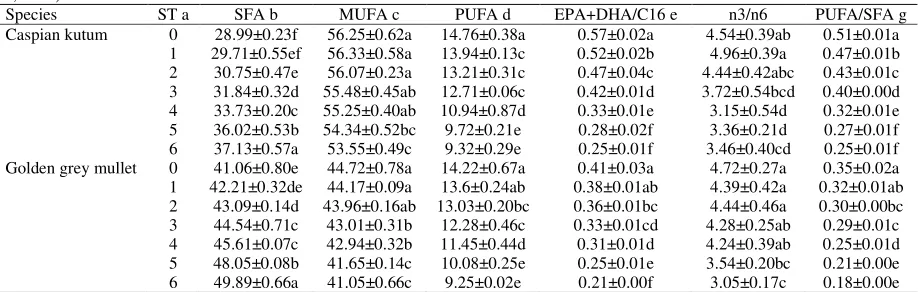
Table 4: Changes in fatty acids contenta of five fish species from South Caspian Sea during frozen storage (-24°C) h, i. (Pirestani et al., 2010).
Species ST a SFA b MUFA c PUFA d EPA+DHA/C16 e n3/n6 PUFA/SFA g
Caspian kutum 0 28.99±0.23f 56.25±0.62a 14.76±0.38a 0.57±0.02a 4.54±0.39ab 0.51±0.01a
1 29.71±0.55ef 56.33±0.58a 13.94±0.13c 0.52±0.02b 4.96±0.39a 0.47±0.01b
2 30.75±0.47e 56.07±0.23a 13.21±0.31c 0.47±0.04c 4.44±0.42abc 0.43±0.01c
3 31.84±0.32d 55.48±0.45ab 12.71±0.06c 0.42±0.01d 3.72±0.54bcd 0.40±0.00d
4 33.73±0.20c 55.25±0.40ab 10.94±0.87d 0.33±0.01e 3.15±0.54d 0.32±0.01e
5 36.02±0.53b 54.34±0.52bc 9.72±0.21e 0.28±0.02f 3.36±0.21d 0.27±0.01f
6 37.13±0.57a 53.55±0.49c 9.32±0.29e 0.25±0.01f 3.46±0.40cd 0.25±0.01f
Golden grey mullet 0 41.06±0.80e 44.72±0.78a 14.22±0.67a 0.41±0.03a 4.72±0.27a 0.35±0.02a
1 42.21±0.32de 44.17±0.09a 13.6±0.24ab 0.38±0.01ab 4.39±0.42a 0.32±0.01ab
2 43.09±0.14d 43.96±0.16ab 13.03±0.20bc 0.36±0.01bc 4.44±0.46a 0.30±0.00bc
3 44.54±0.71c 43.01±0.31b 12.28±0.46c 0.33±0.01cd 4.28±0.25ab 0.29±0.01c
4 45.61±0.07c 42.94±0.32b 11.45±0.44d 0.31±0.01d 4.24±0.39ab 0.25±0.01d
5 48.05±0.08b 41.65±0.14c 10.08±0.25e 0.25±0.01e 3.54±0.20bc 0.21±0.00e
6 49.89±0.66a 41.05±0.66c 9.25±0.02e 0.21±0.00f 3.05±0.17c 0.18±0.00e
The sensory qualities of the samples were evaluated in terms of color, odor, taste, texture and general acceptability (Table 2). The sensory scores decreased progressively with the storage time in the fillets (P<0.05).
In the experiment 2 was conducted by Pirestani et al
(2010). Table 3 shows the lipid content of the fish species which ranged from 1.97% for pike perch to 10.23% for common kilka, also classified as lean or high fat fish (< 2% lean, 2-4% medium, 4-8% fat and >10% high-fat) Pirestani et al. (2010). Based on the lipid content, golden grey mullet, common carp and pike perch were categorized as lean and medium fat fish with lipid content less than 5%SFAs, MUFAs, PUFAs, EPA+DHA/C16 (polyene index) and n3/n6 changes during the frozen storage are summarized in Tabl 4. In all the fish species, the distribution of fatty acids was as SFAs> MUFAs> PUFAs Pirestani et al. (2010).
Furthermore, PUFAs were more than SFAs (SFAs< PUFAs+ MUFAs), while during frozen storage polyunsaturated fatty acids decreased as compared with the saturated fatty acids. Among SFAs, those occurring in the highest proportions during the storage period were palmitic (C16:0) and stearic (C18:0) acids. However, a significant difference was observed among the SFAs content during frozen storage except in the case of the first month of storing. As for carp this exception lasted for two months Pirestani et al. (2010). Oleic acid (C18:1n9) was the main fatty acid among the MUFAs in all the fish species. Except for months 5 and 6 in kutum and kilka, and months 3, 4, 5 and 6 in mullet, there was no significant difference among the MUFAs content during the storage priod (Pirestani et al., 2010). In addition, no significant difference could be observed among the MUFAs content in carp and pike perch. It seems that the MUFAs content in all the species are approximately fixed. The flesh of the five fish species contained high concentrations of n3 PUFAs including ecosapentaenoic acid (EPA, C20:5n3), docosahexaenoic acid (DHA, C22:6n3) as the major components (Pirestani et al., 2010).
EPA is the most important essential fatty acid of the
n3 series in human diet because it is the precursor to the 3-series eicosanoids (Pirestani et al., 2010). The highest EPA was found in mullet, accounting for 7.53% of its total fatty acids. pike perch (11.36% of the total fatty acids); whereas mullet showed lower DHA content among the studied fish species. The DHA/EPA (C22:6n3/ C20:5n3) ratio of studied species were 1.4, 0.53, 1.18, 3.28 and 1.71 in Caspian kutum, golden grey mullet, common carp, pike perch and common kilka, respectively. C20:5n3 has been recognized as beneficial for fir human health by reducing the risk of cardiovascular disease Table 3 shows the lipid content of the fis species which ranged from 1.97% for pike perch to 10.23% for common kilka, also classified as lean or high fat fish (< 2% lean, 2-4% medium, 4-8% fat and >10% high-fat) (Pirestani et al., 2010). Based on the lipid content, golden grey mullet, common carp and pike perch were categorized as lean and medium fat fish with lipid content less than 5% (Bennion, 1997) while Caspian kutum and common kilka were classified as fat and high-fat fish. According to Feeley et al. (1972) low-fat fish species have higher water content and, as a result, their flesh is broghter in color. Lipid deterioration is the main cause of low shelf life of fatty
fish due to progressive oxidation and enzymatic hydrolysis of unsaturated fatty acids in them (Sarma et al.,
2000). PUFAs in pike perch were the highest among the fish species with a significant decrease in the amount of these fatty acids during the frozen storage priod (37, 35, 28, 33 and 29% in kutum, mullet, carp, pike perch and kilka, respectively (Pirestani et al., 2010). The oxidative changes in the frozen fish lipids may be caused by the occurrence of radical indicators of the process. These types of radicals are easily formed in pike perch, because of its lipid content of a higher PUFA (Pirestani et al., 2010).
REFERENCES
Aubourg SP and I Medina, 1999. Influence of storage time and temperature on lipid deterioration during cod (Gadus morhua) and haddock (Melanogrammus aeglefinus) frozen storage. J Sci Food Agric, 79: 1943-1948.
Barnett HJ, FE Stone, GC Robert, PJ Hunter, RW Nelson and JA Kwok, 1982. A study in the use of high concentration of CO2 in a modified atmosphere to preserve fresh salmon. Marine Fish Rev, 42: 7. Benjakul S, W Viessanguan, C Thongkaew and M
Tanaka, 2005. Effect of frozen storage on chemical and gel-forming properties of fish commonly used for surimi production in Thailand. Food hydrocolloids, 19: 197-207.
Bennion M, 1997. Influence of combinations of Lactobacillus lacti s and potassium sorbate on growth of psychrotrophs in raw milk. J Dairy Sci, 66: 974.
Cahu C, Salen P and de Lorgeril M, 2004. Farmed and wild fish in the prevention of cardiovascular diseases: assessing possible differences in lipid nutritional values. Nutritional, Metabolic and Cardiovascular Disease. Food Hydrocolloids. 14: 34–41.
Dragoev SG, DD Kiosev, SA Danchev, NI Ioncheva and NS Genov, 1998. Study on the oxidative processes in frozen fish. J Agric Sci, 4: 55-65.
Einarsson H and HL Lauzon, 1996. Fatty acid composition in some selected marine fish species living in Turkish water. J Sci Food Agric, 86: 163-168. Ercan E, 2011. A glance on sturgeon farming potential of
Turkey. Inter Aquatic Res, 3: 117–124.
Feeley RM, Criner DEC and Watt BK, 1972. Effect of frozen storage on chemical and gel-forming properties of fish commonly used for surimi production in Thailand. Food hydrocolloids, 19: 197-207.
Fernandez PP, L Otero, MM Martino, AD Molina-Garcia and PD Sanz, 2008. Inhibition of psychrotrophic bacteria, Jactobacilli, and pediococci in nonfermented refrigerated foods. Euro Food Res Technol, 227: 1367-1377.
Fijuwara K, T Oosawa and H Saeki, 1988. Improved thermal stability and emulsifying proper-Ties of carp myofibrillar proteins by conjunction with dextran. J Agric Food Chem, 46: 1257-1261.
Ghomi MR, R Shahriari, H Faghani Langroudi, M Nikoo and von E Elert, 2012. Effects of exogenous dietary enzyme on growth, body composition, and fatty acid profiles of cultured great sturgeon Huso huso, fingerlings. Aquaculture International 20: 249-54. Henderson RJ and DR Tocher, 1987. The lipid
composition and biochemistry of freshwater fish. Progress Lipid Res, 26: 281-347.
Hultin HO, 1992. Improved thermal stability and emulsifying proper-Ties of carp myofibrillar proteins by conjunction with dextran. Journal of Agricultural and Food Chemistery, 46: 1257-1261.
Jabeen F and AS Chaudhry, 2011. Chemical compositions and fatty acid profiles of three freshwater fish species. Food Chem, 125: 991-996.
James C, I Lejay, N Tortosa, X Aizpurua and SJ James, 2005. Inter J Refrigeration, 28: 933-939.
Karami B, Y Moradi, AA Motallebi, E Hosseini and M Soltani, 2013. Effects of frozen storage on fatty acids profile, chemical quality indices and sensory properties of red tilapia (Oreochromis niloticus × Tilapia mosambicus) fillets. Iran J Fisheries Sci, 12: 378-388.
Kasapis S, MS Rahman, N Guizani, and M Al-Aamri, 2000. State diagram of temperature vs date solids obtained from the mature fruit. J Agric Food Chem, 48: 3779-3784.
Khayat A and D Schwall, 1983. Lactic acid dipping for inhibiting microbial spoilage of refrigerated catfish fillet pieces. Food Technol, 37: 130-140.
Kolbe E, C Craven, G Sylvia and M Morrissey, 2004. A simple method for the isolation and purification of total lipids from animal tissue. J Biolog Chem, 226: 497-509.
Lampila LE, 1991. Modified atmosphere packaging. In: DR Ward and CR Hackney (Eds.), Microbiology of Marine Food Products. J Agric Food Chem, 12: 373-393.
Lauzon HL, 1997. Quality evaluation of tray-packed tilapia fillets stored at 0 ºC based on sensory, microbiological, biochemical and physical attributes. Afric J Biotechnol, 9: 692-701.
Love RM, 1970. Iced storage characteristics of Northern squawfish (Ptychocheilus oregonensis), J Aquatic Food Prod Technol, 3: 25-43.
Love RM and SB Haraldsson, 1961.. Effect of handling and packaging on the quality of frozen whitefish. J Sci Food Agric, 9: 575-610.
Martino MN, L Otero, PD Sanz and NE Zaritzky, 1998. The lipid composition and biochemistry of freshwater fish. Progress in lipid research, 26: 281-347.
Martinsdóttir E, 2008. N-3 fatty acids in freshwater fish from south Brazil. J Amer Oil Chem Soc, 72: 1207-1210.
Masoudifard M, AR Vajhi, M Moghim, RM Nazari, AR Naghavi and M Sohrabnejad, 2011. High validity sex determination of three years old cultured beluga sturgeon (Huso huso) using ultrasonography. J Appl Ichthyol, 27: 643–647.
Miyashita K and T Takagi, 1986. Bifidobacteria and their potential for use in American dairy products. J Amer Oil Chem Soc, 63: 1380-1384.
Pazos M, Gallardo JM, Torres JL and Medina I, 2005. Activity of grape polyphenols as inhibitors of the oxidation of fish lipids and frozen fish muscle. Food Chem, 92: 547-557.
Persson PO and G Londahl, 1993. Freezing technology. In C. P. mallet (Ed.), Frozen food technology. Glasgow, UK. Blackie Academic & Professional,16: 313-319. Pirestani S, MA Sahari and M Barzegar, 2010. Fatty
Acids Changes during Frozen Storage in Several Fish Species from South Caspian Sea. J Agr Sci Tech, 12: 321-329.
Pourshamsian K, MR Ghomi and M Nikoo, 2012. Fatty acid and proximate composition of farmed great sturgeon (Huso huso) affected by thawing methods, frying oils and chill storage. Adv Studies Biol, 4: 67-76.
Rahman MS and RH Driscoll, 1994. Freezing Points of Selected Seafoods (Invertebrates). Int J Food Sci Technol, 29: 51-61.
Rahman MS, 1995. Contributions of blood and blood components to lipid oxidation in fish Muscle, Journal Agriculture Food Chemistry, 50: 555-564.
Reddy NR, DJ Armstrong, EJ Rhodehamel, DA Kautter, 1992. Shelf-life extension and safety concerns about fresh fishery products packaged under modified atmospheres: a review. J Food Safety, 12: 87-118. Roos YH, 1986. Gram negative bacteria inhibition by
lactic acid culture and food preservatives on catfish fillets during refrigerated storage. J Food Sci, 51: 684-686.
Ruban GI and RP Khodorevskaya, 2011. Caspian Sea sturgeon fishery: a historic overview. J Appl Ichthyol, 27: 199–208.
Sablani SS, S Kasapis, MS Rahman, A Jabri and N Al-Habsi, 2004. Antagonistic activities of lactic acid bacteria in food and feed fermentations. Food Res Inter, 37: 915-924.
Sablani SS, MS Rahman, S Busaidi, N Guizani, N Al-Habsi, R Al-Belushi and B Soussi, 2007. Influence of season on the lipid content and fatty acid profiles of three tilapia species from Madagascar, Food Chemistry, 91: 683-694.
Sarma J, GVS Reddy and LN Srikar, 2000. Effect of frozen storage on lipids and functional properties of proteins of dressed Indian oil sardine (Sardinella longiceps). Food Res Inter, 33: 815-820.
Sarma J, Vidya G Sagar Reddy and LN Srikar, 2000. Effects of potassium sorbate, sodium acetate, phosphates and sodium chloride alone or in combination on shelf life of vacuum-packaged pork chops.J Food Sci, 54: 302.
Sei T and T Gonda, 2006. Using ice cream as a mechanism to incorporate bifidobacteria and fructooligosaccharides into the human diet Cult. J Crystal Growth, 293: 110-112.
Shahidi F and C Alasalvar, 2011. Sensory analysis to assess the freshness of Mediterranean anchovies (Engraulis encrasicholus) Stored in ice. Food Control, 17: 564-569.
Sikorski Z, 1994. Activity of grape polyphenols as inhibitors of the oxidation of fish lipids and frozen fish muscle. Food Chem, 92: 547-557.
Sörensen NK, T Solber, GT Hansen, 1990. Storage of wet, iced, salmon under modified atmosphere. I.I.F./I.I.R., Fisher Sci, 135-138.
Stansby ME, and FP Griffiths, 1935. Carbon dioxide in handling fresh fish - haddock. Ind Eng Chem, 27: 1452-1458.
Tiffney P, and A Mills, 1982. Effect of frozen storage on lipids and functional properties of proteins of dressed Indian oil sardine (Sardinella longiceps). Food Research Inter, 33: 815-820.
Trondsen T, 1989. Fatty acid and biochemical changes in Mackerel (Scomberomorus commerson) and Shark
(Carcharinus dussumieri) fillets during frozen storage. Amer-Eur J Sustain Agric, 3: 519-527. Wang MY, and WD Brown, 1983. Effects of elevated
CO2 atmosphere on storage of freshwater crayfish (Pacifastacus leniusculus). J Food Sci, 48: 158-162. Wolfe J and G Bryant, 2001. Potential application of
microbial antagonism to extended storage stability of a flesh type food. Inter J Refriger, 24: 438-450. Wolfe J, G Bryant and KL Koster, 2002. The influence of
lactic cultures on ground beef quality. Cryoletters, 23: 157-166.