Available Online At www.ijpret.com
INTERNATIONAL JOURNAL OF PURE AND
APPLIED RESEARCH IN ENGINEERING AND
TECHNOLOGY
A PATH FOR HORIZING YOUR INNOVATIVE WORKROBUST FACE DETECTION USING COLOR SEGMENTATION & ENERGY
THRESHOLDING
S.P.WANKHADE1, PROF.C.N.DESHMUKH1
1. PG Students of P.R.M.I.T. & R, Bandera.
2. Faculty in P.R.M.I.T. & R, Badnera.
Accepted Date:
27/02/2013
Publish Date:
01/04/2013
Keywords
Algorithm
Thresholding
Face detection
Corresponding Author Ms.S.P.Wankhade
Abstract
There are many algorithms to solve face detection problems. Each
algorithm has its own advantages and disadvantages in terms of
accuracy, complexity, speed and etc. In this, we explore a simple and
effective method to detect faces in such a situation that the images to
be tested are very similar to the images in a training set, by using
color-based segmentation. Color segmentation is an effective process
to separate skin from its background. The color segmentation process
will be followed by energy threse holding. Generally speaking, face
detection is to isolate human faces from their background and exactly
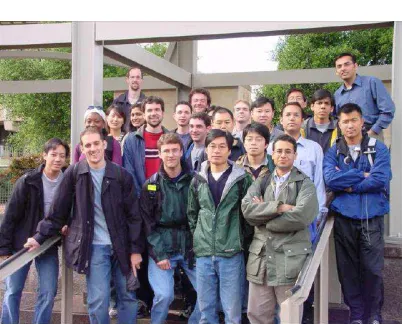
locate their positions in an image. Figure-1shows an example of face
Available Online At www.ijpret.com INTRODUCTION.
The purpose of this project has been to try to replicate on a computer that which human beings are able to do effortlessly every moment of their lives, detect the
Available Online At www.ijpret.com
Assuming that a person framed in any random photograph is not an attendee at the gathering or get-together, it can be assumed that the face is not white, green, red, or any unnatural color of that nature. While different ethnic groups have different levels of melanin and pigmentation, the range of colors that human facial skin takes on is clearly a subspace of the total color space. With the assumption of a typical photographic scenario, it would be clearly wise to take advantage of face-color correlations to limit our face search to areas of an input image that have at least the correct color components. The color segmentation process will be followed by energy thresholding. Thresholding is the operation of converting a grayscale image into a binary image. Thresholding is a widely applied preprocessing step for image segmentation. Often the burden of segmentation is on the threshold operation, so that a properly threshold image leads to better segmentation. There are mainly two types of thresholding techniques available: global and local. In the global thresholding technique a grayscale image is converted into a binary image based on an image
intensity value called global threshold. All pixels having values greater than the global threshold values are marked as 1 and the remaining pixels are marked as 0. In local thresholding technique, typically a threshold surface is constructed that is a function on the image domain.
We propose to develop a model for face detection based on color segmentation. The color segmentation process will be followed by energy thresholding. The model tries to take advantage of face color correlation. The model will take three different color spaces into consideration namely HSV,RGB and YCbCr”
1. HSV Color Space
Available Online At www.ijpret.com lightness, and is often also called HLS. HSV
stands for hue, saturation, and value, and is also often called HSB (B for brightness). The HSV colour space, however, is much more intuitive and provides colour information in a manner more in line how humans think of colours and how artists typically mix colours.”Hue” describes the basic pure colour of the image, ”saturation” gives the manner by which this pure colour (hue) is diluted by white light, and ”Value” provides an achromatic notion of the intensity of the colour. It is the first two, H and S that will provide us with useful discriminating information regarding skin.
Using the reference images (truth images) provided by the teaching staff shown in fig.2, we plot the H,S, and V values for face and non-face pixels and try to detect any useful trends. From those results it is seen that the H values tend to occupy very narrow ranges towards both the bottom and top of its possible values. This is the most noticeable trend and was used by us to derive the following rule used in our face skin detection block: 19< H <240 -Not Skin;
and otherwise we assume that it is skin. By applying a mask based on this rule to our
sample image we obtain the remaining pixels.
2. YCbCr Colour Space
Similarly, we analyzed the YCbCr colour space for any trends that we could take advantage of to remove areas that are likely to not be skin. YCBCR or Y′CBCR, is a family of
color spaces used as a part of the color image pipeline in video and digital photography systems. Y′ is the luma component and CB and CR are the
blue-difference and red-difference chroma components. Y′ (with prime) is distinguished from Y which is luminance, meaning that light intensity is non-linearly encoded using gamma correction. Y′CbCr is not an absolute color space; rather, it is a way of encoding
Available Online At www.ijpret.com
Figure 2 that it is NOT skin and may be removed from further consideration.
3. RGB Color Space
An RGB color space is any additive color space based on the RGB color model .A particular RGB color space is defined by the three chromatics of the red, green, and blue additive primaries, and can produce any chromaticity that is the triangle defined by those primary colors. The complete specification of an RGB color space also requires a white point chromaticity and a gamma correctioncurve. From studying and experimenting with various thresholds in RGB space, we found that the following rule worked well in removing some unnecessary pixels: 0:836G - 14 < B <0:836G + 44 –Skin and 0:79G - 67 < B <0:78G + 42 -Skin;with other pixels being labelled as non-face and removed.
4. MORPHOLOGICAL PROCESSING
At this stage we have successfully removed the vast majority of the original pixels from consideration, but we still see little specs throughout the
Masked image. Because we will subsequently send the image through a matched filter and the specs will be averaged out of consideration and hence could be left in and just ignored, it is preferable to remove them now in order to speed future processing (i.e. the matched filter needn’t perform any wasteful Calculations at these pixels). Hence the open (erode dilate) operation was performed using a 3x3 window of all 1s.
5. Conclusion
Available Online At www.ijpret.com REFERENCES
1. R. Gonzalez and R. Woods, Digital Image Processing - Second Edition, Prentice Hall, 2002.
2. M. Eladetal., Rejection based classifier for face detection, Pattern Recognition Letters, 23, 2002.
3. M. Yang, D. Kriegman, and N. Ahuja, “Detecting faces in images: a survey,” IEEE Trans. on PAMI, vol. 24, no. 1, pp. 34-58, Jan. 2002.
4. J. Yang and A. Waibel, “A real-time face tracker,” in Proc. IEEE Workshop App. of Computer Vision, pp. 142-147, Dec. 1996.
5. C. Kotropoulos and I. Pitas, “Rule-based face detection in frontal views,” in Proc. IEEE ICASSP, vol. 4, pp. 2537-2540, Apr. 1997.
6. K. Yow and R. Cipolla, “Feature-based human face detection,” Image and Vision Computing, vol. 15, no. 9, pp. 713-735, Sep. 1997.
7. P. Viola, and M. Jones, “Rapid object detection using a boosted cascade of simple features,” IEEE Computer Society
Conference on Computer Vision and Pattern Recognition, vol. 1, pp. 511-518, Dec. 2001.
8. S.Z.Li and Z.Zhang, “Float boost learning and statistical face detection,” IEEET Trans. Pattern Anal. Mach. Intell., vol.26, no.9, pp.1112–1123, Sep.2004.