Cite as
Pilarczyk R, Strózik M, Hirnle L. Diagnostic equivalency of mobile CTG devices and remote analysis to conventional on-site nonstress test. Adv Clin Exp Med. 2020;29(1):33–44. doi:10.17219/acem/111812
DOI
10.17219/acem/111812
Copyright
© 2020 by Wroclaw Medical University This is an article distributed under the terms of the Creative Commons Attribution 3.0 Unported (CC BY 3.0) (https://creativecommons.org/licenses/by/3.0/)
Address for correspondence
Mateusz Strózik E-mail: [email protected]
Funding sources
None declared
Conflict of interest
None declared
Received on February 28, 2019 Reviewed on June 15, 2019 Accepted on August 18, 2019
Published online on January 21, 2020
Abstract
Background. Remote pregnancy monitoring is one of the most promising applications of telemedicine; however, the diagnostic value of self-examination using mobile cardiotocography (CTG) devices and remote analysis of the subsequent results has never been properly studied.
Objectives. The study aimed to compare the diagnostic usefulness of CTG self-examination using a mo-bile device to examination performed by a medical professional using a stationary device; and to evaluate the quality of CTG analysis performed remotely.
Material and methods. Eighty-two pairs of CTG recordings were collected; each pair consisted of a single recording from an examination performed by a midwife using a stationary device, and another recording from an unassisted patient self-examination using a mobile device. Recordings were performed with a maximum time interval of 30 min. Each recording was analyzed twice. Primary analysis included a comparison of the as-sisted examination evaluated on-site vs the self-examination evaluated remotely in pairs. Secondary analysis was conducted by an independent expert who evaluated the unpaired recordings. Baseline fetal heart rate (BFHR) values were compared independently.
Results. We found that patients were more likely to perform inconclusive recordings than experienced midwives; however, the self-examination feasibility was satisfactory. The primary analysis showed 88.4% agreement of the recorded pairs; 11.6% of inconsistent pairs were due to inter-observer variability or medical reasons. The independent expert’s analysis showed 97.1% agreement between the assisted and unassisted examinations. Paired t-test for BFHR values showed a statistically significant but clinically negligible mean difference between the 2 devices at 1.75 bpm.
Conclusions. The CTG examinations performed using mobile devices present satisfactory feasibility and equivalent diagnostic value compared to conventional devices, while the remote evaluation of recordings is as reliable as on-site analysis. Remote pregnancy surveillance is safe, effective and may be implemented into everyday obstetric care.
Key words: teleCTG, mobile CTG, telemedicine, eHealth, remote pregnancy monitoring
Diagnostic equivalency of mobile CTG devices
and remote analysis to conventional on-site nonstress test
Renata Pilarczyk
1,A–D, Mateusz Strózik
2,1,A–D, Lidia Hirnle
1,E,F1 1st Department and Clinic of Gynecology and Obstetrics, Wroclaw Medical University, Poland
2 Division of Histology and Embryology, Department of Human Morphology and Embryology, Wroclaw Medical University, Poland
A – research concept and design; B – collection and/or assembly of data; C – data analysis and interpretation; D – writing the article; E – critical revision of the article; F – final approval of the article
Background
Healthcare is facing new challenges with regard to the growing number of chronic diseases, resulting in in-creasing direct and indirect costs, an insufficient number of medical professionals in relation to patient needs, and the growing expectations to provide quality care. One of the single most effective approaches to dealing with such challenges is to improve patient engagement by en-abling individuals to manage their own health. Concomi-tantly, we are witnessing the emergence of new systems and services using electronic communication, referred to as eHealth or telemedicine, including web-based or mo-bile informative and decision-making applications, tele-consultations and remote monitoring.1 These technologies enable a shift from hospital-centered to patient-centered care. Telemedicine can also be used to improve access to medical services, which makes it applicable for rural areas and underdeveloped countries,2,3 where the concen-tration of health centers is low.
Telemedicine is increasingly used in obstetrics, as young women in their reproductive years are frequent users of the Internet, social media and smartphone applica-tions.4 At the same time, the demand for fetal monitor-ing and constant reassurance is high amongst pregnant women.5 Telemedicine applications in obstetrics can be categorized depending on the form of service provided (educational, teleconsultations, remote monitoring) or depending on the problem addressed (lifestyle issues, gestational diabetes, mental health, etc.). Many of the ap-plications have been tested in the past few years and posi-tive effects have been shown (reviewed by van den Heuvel et al.6); however, most of the studies lack an endpoint related to its clinical impact, which still remains to be determined.
Remote pregnancy monitoring is perceived to be one of the most promising telemedical applications. Antepar-tum fetal assessment is used in pregnancies with a high risk of perinatal morbidity and mortality owing to pre-existing maternal conditions, pregnancy-related conditions,7 in-trauterine fetal death in the past, or in the case of over-due pregnancy. Testing options include the nonstress test (NST) based on a fetal heart rate (FHR) recording, which has been in clinical use for over 4 decades. The NST is based on the premise that the FHR, which is not acidotic or neurologically depressed, will temporarily accelerate with fetal movement. Heart rate reactivity is thought to be a good indicator of normal fetal autonomic function8 and a normal NST result is, in most cases, highly reassuring, as indicated by the high negative predictive value.9,10 Loss of reactivity is most commonly associated with fetal sleep cycles but may result from any cause of central nervous system depression, including fetal hypoxia and academia.8 The primary objective of perinatal patient management is to discover signs and symptoms of early stage hypoxia. This has implications not only in acute care, but may also
affect the quality of an entire future life burdened with the consequences of hypoxia.11
The method routinely used for antenatal monitoring is cardiotocography (CTG), which allows for simultaneous detection of FHR (C – cardio) with an ultrasound trans-ducer, and uterine contractions with a tocodynamometer (T – toco), and a graphic (G) presentation of their values as a function of time.12 Contemporary CTG devices are also able to detect maternal heart rate (MHR) and fetal movements, or allow the mother to manually mark fetal movements. The CTG examination is easy to perform, safe and completely non-invasive, which makes it a viable tool for patient self-monitoring. Even more importantly, CTG-based NST are considered safe for remote monitoring due to its low false-negative rate.7
Hod and Kerner7 identified the usefulness criteria for remote monitoring: 1) feasibility in patient’s self-use and diagnostic similarity to traditional methods; 2) improve-ment of access to healthcare; 3) similarity in maternal and neonatal outcomes, compared to traditional methods; 4) patient and clinician satisfaction; and 5) cost-effectiveness. Even though it has been 16 years since the publication, none of these areas have been sufficiently examined and all still need more research, especially clinical outcomes, fea-sibility and diagnostic equivalence, as technology is con-stantly changing.
Maternal and neonatal outcomes
Kitagawa et al.13 found that home monitoring was equally as effective as ambulatory hospital management in preventing adverse events in high-risk women. Another study compared modes of delivery and complications post-partum between home-monitored high-risk patients and patients admitted to the hospital.14 There were no statisti-cally significant differences between the 2 groups. Moore and Sill15 showed that the number and duration of hospital admissions for fetal surveillance were reduced in a home-monitored, high-risk patient group, without an increase in C-section and forceps delivery rates. Di Lieto et al.16,17 described the clinical results of the first 5 working years of a telemedicine project based on computerized telecar-diotocography. The project embraced 1,873 low- and high-risk patients who delivered 5,830 CTG tracings. The au-thors found good neonatal outcomes, no false-negative results and no increase in C-section rate.
Feasibility and diagnostic equivalence
A prerequisite for positive clinical outcomes from remote monitoring is the ability for a pregnant patient to properly perform an examination herself. It was shown that patients were equally as able as midwives to perform accurate CTG fetal monitoring15,21; however, the quality of the recorded data can be correlated with maternal body mass index (BMI).21 Reece et al.22 performed a controlled clinical trial on 60 patients who performed home based non-stress tests, followed by NCT performed by a midwife at the hospi-tal within 60 min. The pairs of tests were independently reviewed by 2 investigators and all were judged satisfac-tory for interpretation. Remote maternal-fetal monitor-ing is also feasible in resource-constrained environments, as was shown on a group of 153 high-risk pregnant indig-enous Mayan women receiving either remote monitoring (n = 74) or standard of care (n = 79). Health outcomes were not statistically different between the 2 groups, while remote monitoring resulted in a markedly increased adher-ence (94.3% vs 45.1%).23
Altogether, the data so far shows that home FHR moni-toring is safe and feasible even in high-risk patients, as it can be easily and reliably performed without wors-ening medical outcomes, while patient satisfaction and overall acceptance remains promising.21
As more than 10 years have passed since the publication of most of the cited papers, during which the technology has evolved, and since diagnostic equivalence of remote versus conventional CTG monitoring was never properly studied, we aimed 1) to compare the diagnostic useful-ness between an examination performed by a patient with a mobile CTG device and an examination performed by a medical professional with a stationary CTG device; and 2) to evaluate the quality of CTG analysis performed remotely.
Material and methods
The study was conducted at the 1st Department and Clin-ic of Gynecology and ObstetrClin-ics at Wroclaw MedClin-ical Uni-versity, Poland. The protocol was approved by the Bioethics Committee at the university (approval No. KB-370/2018). Participants were recruited from patients admitted to the Gynecology and Obstetrics unit based on the fol-lowing inclusion criteria: gestational age between 27 and 42 weeks, singleton pregnancy, and BMI before pregnancy 18.50–29.99 kg/m2. Patients were excluded from the study in the case of: multiple pregnancy, active medical implants, lethal fetal defects, chronic or acute skin lesions, or allergy to any of the substances found in the device probes, belts or ultrasound gel. Twenty-seven patients were enrolled after providing informed consent, of which 18 provided CTG recordings for analysis. The remaining 9 patients were excluded from the study as they were unable to deliver
results that met the protocol criteria (i.e., the interval be-tween examinations was exceeded or no recording from the mobile device was delivered). A total of 164 record-ings were collected, including 82 from a stationary de-vice (Corometrics model 172; GE Healthcare, Chicago, USA) and 82 from a mobile device (Pregnabit; Nestmedic, Wrocław, Poland).
Study group
The CTG examinations included in the analysis were performed on 18 women, 27–37 years old (mean age: 32.2 years). Body mass index before pregnancy ranged from 17.8 kg/m2 to 29.0 kg/m2 (mean: 21.5 kg/m2), while gestational age at the moment of inclusion was between 32 weeks and 40 weeks (mean: 35.4 weeks). All participants had an indication for increased CTG supervision, with 8 patients having a history of miscarriage or fetal death.
Study design
The patients included in the study were trained in oper-ating the mobile device. The CTG examinations with a sta-tionary device were carried out by midwives in accordance with standard of care, twice daily for at least 30 min per ex-amination. Within 30 min of completing the conventional recording, the patient carried out the examination using the mobile device on her own, without any assistance from a medical professional. The 2nd examination took another 30 min. Afterwards, the patients were asked to complete the questionnaire.
A single result meant a pair of CTG recordings, one using the stationary device and the second recorded from the mobile device, obtained from the same patient, at an interval of no more than 30 min. The recording was considered technically incorrect when there was less than 20 min of FHR signal recorded or if there was no TOCO signal. Results where one of the recordings was technically incorrect were excluded from further analysis.
Primary analysis (on-site vs remote)
Tracings from the stationary device were analyzed vi-sually on-site by the investigators (physicians); reactivity, presence of accelerations and decelerations, variability, number of fetal movements, and uterine contraction ac-tivity were assessed. Baseline fetal heart rate (BFHR) was calculated using Monako software (Institute of Medi-cal Technology and Equipment, Zabrze, Poland). Based on the above factors, the following status’ were assigned to the recordings: normal, suspicious, pathological, or technically incorrect.
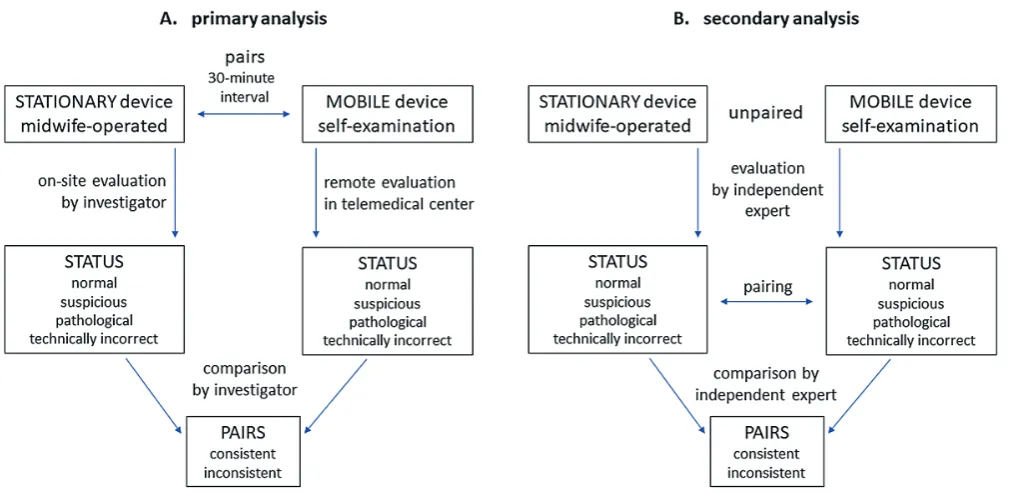
by the MTC staff according to UK National Institute for Health and Care Excellence (NICE) 2001 guidelines. Re-activity, the presence of accelerations and decelerations, variability, number of fetal movements, and uterine con-traction activity were assessed. Baseline fetal heart rate was calculated using the Pregnabit telemedical platform. Based on the above factors, the recordings were assigned the status normal, suspicious, pathological, or technically incorrect. Descriptions were available via the Pregna-bit platform to the investigators, who further compared the recording statuses and marked the results as consis-tent or inconsisas consis-tent. The primary analysis scheme is pre-sented in Fig. 1A.
Secondary analysis (independent expert)
After all 82 results (pairs of tracings) were collected, and the results were coded, unpaired and delivered to an in-dependent expert (obstetrician) who assessed them indi-vidually. All recordings were assigned a status as above (normal, suspicious, pathological, or technically incorrect) and then were paired again. The degree of agreement be-tween the recordings in a pair was measured as consistent or inconsistent. The secondary analysis scheme is pre-sented in Fig. 1B.
Statistical analysis
The frequency of a particular status in groups was assessed using the McNemar’s χ2 test with continuity correction. The inter-rater agreement was tested using the prevalence-adjusted bias-adjusted kappa (PABAK) coefficient for qualitative variables. Normality of BFHR
measurements was assessed using the Shapiro–Wilk test. The BFHR measurements were compared with a paired t-test and Cohen’s d coefficient. The agreement between BFHR measurements was analyzed using Bland–Altman methodology. The relationship between the patient’s status and BMI or gestational age was examined using analysis of variance (ANOVA). Analyses were performed in R for Windows statistical software v. 3.5.2 (Microsoft Corp., Redmond, USA).24
Results
Feasibility
Eighty-two pairs of CTG tracings were collected (164 in total). Each pair consisted of a single tracing from the stationary device registered by a midwife and a single tracing from the mobile device registered by the patient herself, taken with an interval time no longer than 30 min.
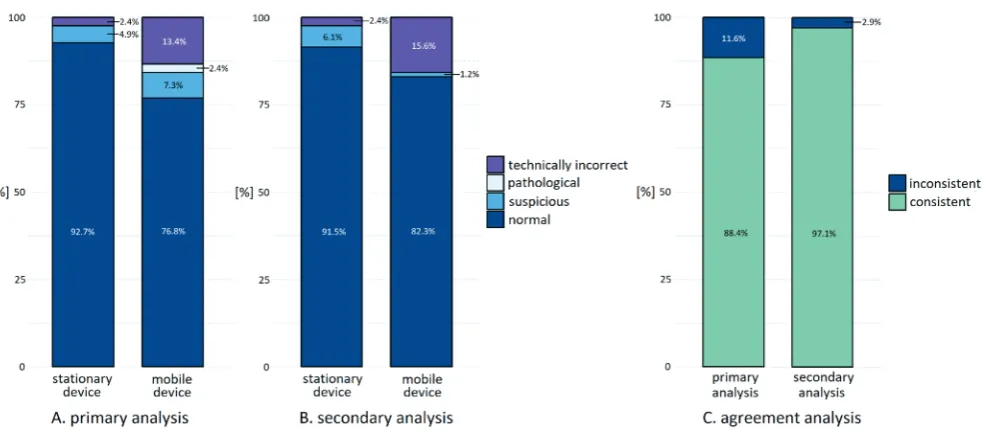
Among the 82 recordings from the stationary device, we found 2 results (2.4%) that were inappropriate for anal-ysis (technically incorrect) because of a recording time that was too short (less than 20 min). Among the record-ings from the mobile device, 13 recordthe record-ings (15.9%) were technically incorrect, 8 due to interruptions in the FHR signal longer than 10 min and 5 due to a lack of TOCO signal. Two of the recordings with no TOCO signal were marked by the telemedical center as normal due to the cor-rect recording of FHR; however, there were annotations in the descriptions with recommendations for the follow-ing examination, to correct the positionthe follow-ing of the TOCO probe and to restart it after positioning.
McNemar’s χ2 test showed that the difference in fre-quency of the technically incorrect recordings was sta-tistically significant (p = 0.027). Six out of 13 technically incorrect recordings using the mobile device came from only 2 patients, who we consider uncooperative (case 1: 3/6 technically incorrect recordings; case 2: 3/4 technically incorrect recordings). The poor cooperation was likely due to the fact that the patients were monitored either way and felt safe, so they did not feel the need to control the placement of the probes. Differences between the fre-quency of the other statuses were not statistically signifi-cant. We were unable to show that technically incorrect results occur significantly more often among patients with a higher BMI or lower gestational age.
In summary, patients were more likely to perform in-conclusive recordings than experienced midwives; how-ever, the feasibility of self-examination was satisfactory (84.1% of conclusive recordings). After removal of the 2 uncooperative patients, the percentage of conclusive ex-aminations rose to 90.1%. Each time, in the case of a tech-nically incorrect recording, the telemedical center gave the recommendation to ‘repeat the examination’ along with directions on how to place the probes correctly over the abdomen.
Diagnostic comparability
Pairs in which one of the recordings was technically incorrect were removed from further analysis; in pairs categorized as technically incorrect only due to a lack of TOCO signal, BFHR value was included into BFHR agree-ment analysis.
The primary analysis was performed by comparing the recording status in pairs – the status for the sta-tionary recording was given by the investigator on-site, while the status for the mobile recording was provided
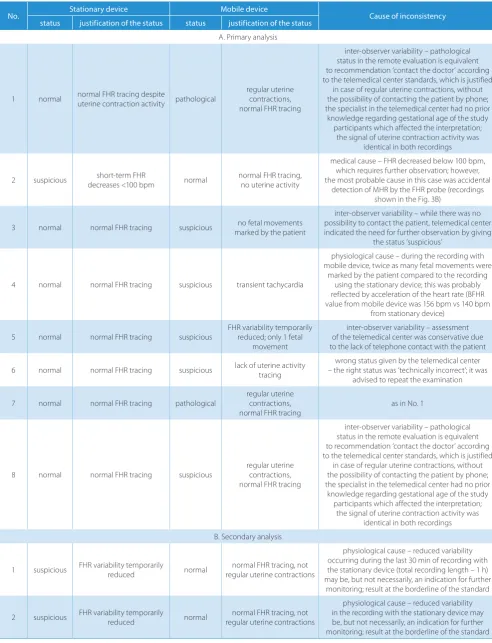
remotely by the telemedical center. Both statuses were compared by the investigator. Sixty-nine pairs were in-cluded; agreement was found in 61 pairs (88.4%), while inconsistency was in 8 pairs (11.6%). The PABAK coeffi-cient for the conformity of the quality variables was 0.77 (95% CI = 0.57–0.90) and indicated substantial agreement in the primary analysis. The results of the primary analysis are summarized in Fig. 2A. Inconsistent pairs were ana-lyzed once again by direct comparison of the recordings to identify the causes of the inconsistency; the findings are listed in Table 1A.
There was no disagreement identified that could be at-tributed to the differences between the 2 devices. Two cases of disagreement occurred because of physiological or medical reasons due to the time shift between the 2 consecutive recordings. This is a consequence of the study design, as it is practically impossible to place 4 probes on the patient’s abdomen simultaneously. Additionally, there is only 1 optimal location for FHR detection, thus, in the case of simultaneous recordings, one of the de-vices would necessarily be condemned to a worse posi-tion, which could lead to even more technically incorrect results. Five cases of disagreement resulted from inter-observer variability; this was an effect of the cautious ap-proach of specialists in the telemonitoring center, who assessed the recordings remotely with no contact with the patients and no prior knowledge about their gestational age, which normally affects the diagnosis. One mistake was identified in the status given by the telemedical cen-ter; however, it did not change the final recommendation, which would be to ‘repeat the examination’ either way, for both ‘suspicious’ or ‘technically incorrect’ results.
Table 1. Results of direct comparison of tracings from pairs assigned as inconsistent during primary (A) and secondary (B) analysis
No. Stationary device Mobile device Cause of inconsistency
status justification of the status status justification of the status
A. Primary analysis
1 normal normal FHR tracing despite uterine contraction activity pathological
regular uterine contractions, normal FHR tracing
inter-observer variability – pathological status in the remote evaluation is equivalent to recommendation ‘contact the doctor’ according to the telemedical center standards, which is justified
in case of regular uterine contractions, without the possibility of contacting the patient by phone; the specialist in the telemedical center had no prior
knowledge regarding gestational age of the study participants which affected the interpretation;
the signal of uterine contraction activity was identical in both recordings
2 suspicious decreases <100 bpmshort-term FHR normal normal FHR tracing, no uterine activity
medical cause – FHR decreased below 100 bpm, which requires further observation; however, the most probable cause in this case was accidental
detection of MHR by the FHR probe (recordings shown in the Fig. 3B)
3 normal normal FHR tracing suspicious marked by the patientno fetal movements
inter-observer variability – while there was no possibility to contact the patient, telemedical center indicated the need for further observation by giving
the status ‘suspicious’
4 normal normal FHR tracing suspicious transient tachycardia
physiological cause – during the recording with mobile device, twice as many fetal movements were
marked by the patient compared to the recording using the stationary device; this was probably reflected by acceleration of the heart rate (BFHR value from mobile device was 156 bpm vs 140 bpm
from stationary device)
5 normal normal FHR tracing suspicious FHR variability temporarily reduced; only 1 fetal movement
inter-observer variability – assessment of the telemedical center was conservative due to the lack of telephone contact with the patient
6 normal normal FHR tracing suspicious lack of uterine activity tracing – the right status was ‘technically incorrect’; it was wrong status given by the telemedical center advised to repeat the examination
7 normal normal FHR tracing pathological regular uterine contractions,
normal FHR tracing as in No. 1
8 normal normal FHR tracing suspicious regular uterine contractions, normal FHR tracing
inter-observer variability – pathological status in the remote evaluation is equivalent to recommendation ‘contact the doctor’ according to the telemedical center standards, which is justified
in case of regular uterine contractions, without the possibility of contacting the patient by phone; the specialist in the telemedical center had no prior
knowledge regarding gestational age of the study participants which affected the interpretation;
the signal of uterine contraction activity was identical in both recordings B. Secondary analysis
1 suspicious FHR variability temporarily reduced normal regular uterine contractionsnormal FHR tracing, not
physiological cause – reduced variability occurring during the last 30 min of recording with the stationary device (total recording length – 1 h) may be, but not necessarily, an indication for further
monitoring; result at the borderline of the standard
2 suspicious FHR variability temporarily reduced normal regular uterine contractionsnormal FHR tracing, not
physiological cause – reduced variability in the recording with the stationary device may be, but not necessarily, an indication for further monitoring; result at the borderline of the standard
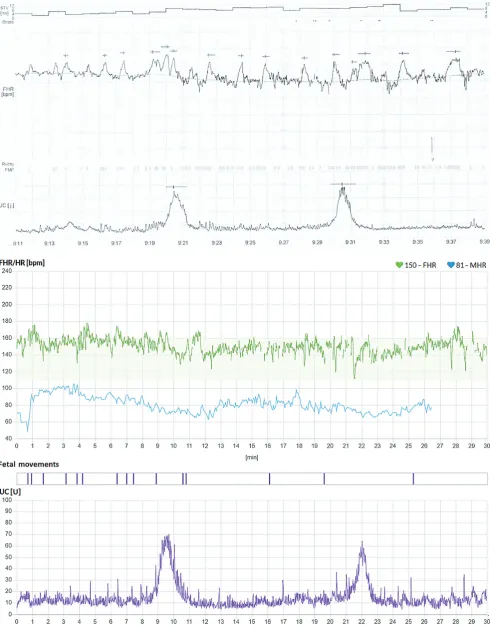
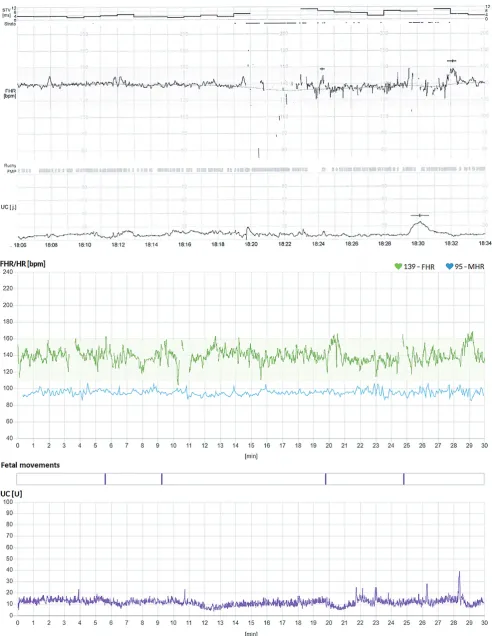
Fifteen recordings were assigned as ‘technically incorrect’ – 13 from the mobile device and 2 from the stationary de-vice. After assessment, the recordings were paired again; pairs with technically incorrect recordings (14; 17.1%) were excluded from further analysis. The remaining 68 pairs were analyzed for agreement based on the status given. Sixty-six pairs (97.1%) were found consistent, while 2 pairs (2.9%) were found to be inconsistent. The PABAK coefficient for the secondary analysis was 0.94 (95% CI = 0.80–0.99), indicating an excellent agreement. The results from the secondary analysis are summarized in Fig. 2B and 2C. Inconsistent pairs were analyzed as previously by direct comparison of the tracings to identify the causes of incon-sistency; the findings are listed in Table 1B. An example of consistent tracings is shown in Fig. 3A, while an example of inconsistent recordings is shown in Fig. 3B (case 2 from Table 1A – inconsistency due to medical reason).
As before, there was no inconsistency that resulted from the differences between devices. Both pairs assigned as ‘in-consistent’ were due to physiological variability of FHR and referred to results at the borderline of the standard. It must be noted that neither of the 2 inconsistent pairs from the secondary analysis overlaps with any inconsistent pair from the primary analysis. This confirms that CTG is largely affected by inter-observer variability on one hand, and on the other, that the pairs identified as inconsistent were in fact technically consistent.
In order to assess the quality of remote analysis, we com-pared statuses given to the same recordings from the mo-bile device by the telemedical center and the independent expert. We found 8 disagreements amongst the assessed recordings, of which 7 coincided with inconsistencies from the primary analysis. Identified differences were attributed to the excessively conservative assessment by the telemedi-cal center (6 cases) and to erroneous evaluation of the re-cordings that should not be analyzed (technically incorrect – 2 cases).
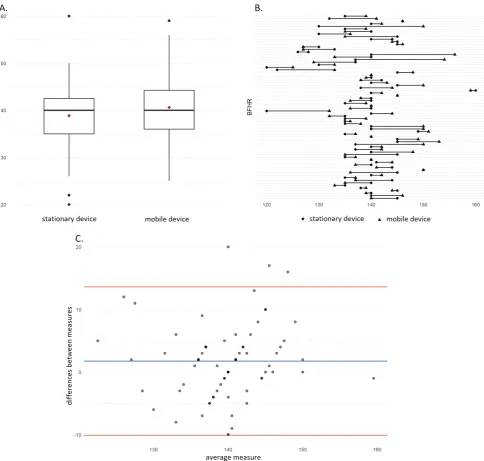
Next, the calculated BFHR values were compared. Paired t-test showed that the mean difference between 2 devices was 1.75 bpm (p = 0.017; 95% CI = 0.33–3.17), which we consider very low and clinically irrelevant. Co-hen’s d coefficient, which evaluates the strength of the re-lationship between the device used and the BFHR mea-surement, was 0.29 (95% CI = 0.04–0.62) and showed little effect of the device type on the BFHR value. The Bland– Altman plot suggests an acceptable range of difference between BFHR measurements of −10.1–13.6. According to the Gaussian distribution in the population, approx. 95% of observations should be contained in less than 2 standard deviations (SD). In our study, 3 observa-tions (4.2%) go beyond the range, which is less than 5% of the permissible error. The results of the BFHR analysis are shown in Fig. 4.
Altogether, the data presented indicates that there is an excellent technical diagnostic comparability between conventional and mobile CTG devices. Remote evaluation
by the telemedical center is reliable – however, sometimes too conservative and cautious, but in a way that does not adversely affect the final recommendations.
Adverse events
During the course of the study, 1 adverse event was noted. A single patient reported mild and transient skin irritation, with redness in the area where the ultrasound gel was applied while using the mobile device. The redness resolved itself within ½ h.
Patient survey
Eighteen completed questionnaires were collected. Most patients reported that CTG self-examination us-ing the mobile device was easy (28%) or rather easy (61%), even if localization of the FHR signal was sometimes difficult (difficult – 28%; rather difficult – 50%). Eighty-nine percent of the patients declared that the possibility to perform the examination at home would increase their sense of security. The most frequently listed situations in which patients would likely use remote fetal monitoring included: 1) days off when access to the physician is limited (72%); 2) when there are identified factors that threaten the child or there is an increased risk of premature birth, but to an extent that does not require hospitalization (72%); 3) overdue pregnancy (56%).
Discussion
In a situation in which an indication for intensified CTG surveillance occurs, a physician faces the decision whether to admit the patient to the ward or recommend that she visit the clinic several times a week. Both options are in-convenient for the patient since, instead of being at home, she must stay at the hospital or in the best-case scenario travel there a few times a week. This situation also results in an overcapacity in hospital wards, extended queues at the clinic and medical personnel overwork, as well as an increase in the cost of prenatal care.
Another option that has emerged in recent years is re-mote fetal surveillance with the use of mobile CTG de-vices; however, this is still rarely used due to limited trust in telemedical solutions. The lack of trust results partly from poor experiences and lack of knowledge of these solu-tions, and partly from limited scientific data that confirms its clinical effectiveness and safety.
Fig. 3. A – pair of consistent recordings: upper – stationary device, lower – mobile device: upper – stationary device (suspicious), lower – mobile device (normal). Identified reasons of evaluation disagreement were FHR decreases <100 bpm during the 1st recording, which most likely resulted from accidental
Fig. 3. B – pair of inconsistent recordings: upper – stationary device (suspicious), lower – mobile device (normal). Identified reasons of evaluation disagreement were FHR decreases <100 bpm during the 1st recording, which most likely resulted from accidental detection of maternal heart rate
measurement at 1.75 bpm (less than the permitted mea-surement error of FHR probes, which is 2 bpm), com-parison of CTG tracing assessments (97.1% of consistent diagnoses in the independent expert analysis) and direct comparison of the recording graphs – even if the assess-ment of the recorded pairs was inconsistent, we were not able to identify any technical differences. Discrepancies resulted either from inter-observer variability or the study design, in which the time shift between the 2 examinations led to a physiological change of the fetus’s state, which was reflected in the FHR recording.
Inter-observer variability is a known characteristic of CTG,25,26 as the diagnosis is mostly based on the sub-jective assessment of the graphical record and can be related to the professional experience of the interpreter.
the FHR signal was physiological. It may seem exaggerated, however. If it concerned a patient under 36 weeks of preg-nancy, regular contractions could be a sign of preterm delivery, which would definitely be a reason to contact the doctor (‘pathological’ status in the center’s opera-tion is equal to the recommendaopera-tion to contact a doctor) or at least for further intensified surveillance. Such doubts do not apply to investigators on-site who had constant supervision over the patient.
One can conclude that excessively cautious assessments can lead to unnecessary visits to the clinic or unneces-sary medical interventions; however, the literature does not confirm that remote fetal monitoring leads to either of them. On the contrary, the number of unnecessary visits decreases, while the number of C-sections remains at a comparable level. The experience of an American ob-stetrics team running a remote prenatal care program, called ANGEL shows that based on a single telephone contact with the midwife, 676 emergency visits were avoid-ed in 2016.27 This number could possibly be even greater with access to remote NST. This is why we consider direct contact with the patient crucial in remote monitoring. In a study where women undergoing labor induction with slow-releasing dinoprostone at home with constant remote monitoring of the fetus, it was shown on the basis of wom-en’s declarations, that contact with a medical professional is a prerequisite for feeling safe and secure. Women who had problems with reaching the hospital by phone experi-enced increased anxiety.28 The C-section rate for patients with diabetes managed by the ANGEL program was 26%, compared to the 34% US national rate.27
Based on our study results, we assess the feasibility of CTG self-examination as satisfactory. After exclusion of the results of 2 poorly cooperating patients, the per-centage of recordings appropriate for analysis was 90.1%. Eighty-nine percent of patients who performed unassisted CTG examinations judged it as easy or rather easy to per-form. Also 89% of the study participants declared that the possibility of performing NST at home would increase their sense of security. This often-neglected aspect is, how-ever, worth considering in obstetric practice, especially when taking care of high-risk patients or patients with a history of intrauterine fetal death. Pregnancy with such a history is an emotionally challenging life event for women and adequate support during pregnancy should be consid-ered as an essential component of quality maternal care.29 The academic community needs to develop evidence that will constitute the basis for the development of new care delivery models, including remote monitoring, as well as methods for providing the best patient-centered care. It is important that the future of medicine be determined by solid research and education.30 Our study provided the evidence that mobile CTG devices present an equiva-lent diagnostic value to conventional devices, and that re-mote recording evaluation is as reliable as on-site analysis and thus can be implemented in perinatal care.
ORCID iDs
Renata Pilarczyk https://orcid.org/0000-0002-2818-6789 Mateusz Strózik https://orcid.org/0000-0002-5533-3086 Lidia Hirnle https://orcid.org/0000-0001-9789-5370
References
1. WHO Global Observatory for eHealth. mHealth: New horizons for health through mobile technologies: Second global survey on eHealth. Geneva, Switzerland: World Health Organization; 2011. https://www.who.int/goe/publications/goe_mhealth_web.pdf. Accessed February 19, 2019.
2. Lee SH, Nurmatov UB, Nwaru BI, Mukherjee M, Grant L, Pagliari C. Effectiveness of mHealth interventions for maternal, newborn and child health in low- and middle-income countries: Systematic review and meta-analysis. J Glob Health. 2016;6(1):010401. doi:10.7189/jogh. 06.010401
3. Sondaal SF, Browne JL, Amoakoh-Coleman M, et al. Assessing the effect of mhealth interventions in improving maternal and neona-tal care in low- and middle-income countries: A systematic review.
PLoS One. 2016;11(5):e0154664. doi:10.1371/journal.pone.0154664 4. Wallwiener S, Müller M, Doster A, et al. Pregnancy eHealth and
mHealth: User proportions and characteristics of pregnant women using web-based information sources: A cross-sectional study. Arch Gynecol Obstet. 2016;294(5):937–944.
5. Grassl N, Nees J, Schramm K, et al. A Web-based survey assessing the attitudes of health care professionals in Germany toward the use of telemedicine in pregnancy monitoring: Cross-sectional study. JMIR Mhealth Uhealth. 2018;6(8):e10063. doi:10.2196/10063
6. van den Heuvel JF, Groenhof TK, Veerbeek JH, et al. eHealth as the next-generation perinatal care: An overview of the literature. J Med Internet Res. 2018;20(6):e202. doi:10.2196/jmir.9262
7. Hod M, Kerner R. Telemedicine for antenatal surveillance of high-risk pregnancies with ambulatory and home fetal heart rate mon-itoring: An update. J Perinat Med. 2003;31(3):195–200. doi:10.1515/ JPM.2003.026
8. Antepartum fetal surveillance. Practice Bulletin No. 145. American College of Obstetricians and Gynecologists. Obstet Gynecol. 2014;124: 182–192. doi:10.1097/01.AOG.0000451759.90082.7b
9. Lenstrup C, Haase N. Predictive value of antepartum fetal heart rate non-stress test in high-risk pregnancy. Acta Obstet Gynecol Scand. 1985;64(2):133–138. doi.org/10.3109/00016348509154706
10. Olofsson P, Sjöberg NO, Solum T. Fetal surveillance in diabetic preg-nancy. I. Predictive value of the nonstress test. Acta Obstet Gynecol Scand. 1986;65(3):241–246. doi.org/10.3109/00016348609155178 11. Hoyer D, Żebrowski J, Cysarz D, et al. Monitoring fetal maturation:
Objectives, techniques and indices of autonomic function. Physiol Meas. 2017;38(5):R61–R88. doi:10.1088/1361-6579/aa5fca
12. Grivell RM, Alfirevic Z, Gyte GML, Devane D. Antenatal cardiotocog-raphy for fetal assessment (review). Cochrane Database Syst Rev. 2015; (9):CD007863. doi:10.1002/14651858.CD007863.pub4
13. Kitagawa M, Akiyama Y, Omi H, Sago H, Natori M. Development and clinical application of a telemedicine support system in the field of perinatal patient management. J Obstet Gynaecol Res. 2000;26(6): 427–434. doi.org/10.1111/j.1447-0756.2000.tb01353.x
14. Monincx WM, Birnie E, Zondervan HA, Bleker OP, Bonsel GJ. Maternal health, antenatal and at 8 weeks after delivery, home versus in-hospital fetal monitoring in high-risk pregnancies. Eur J Obstet Gyne-col Reprod Biol. 2001;94(2):197–204. doi.org/10.1016/S0301-2115(00) 00351-1
15. Moore KH, Sill R. Domiciliary fetal monitoring in a district maternity unit. Aust N Z J Obstet Gynaecol. 1990;30(1):36–40. doi.org/10.1111/ j.1479-828X.1990.tb03193.x
16. Di Lieto A, Giani U, Campanile M, De Falco M, Scaramellino M, Papa R. Prenatal telemedicine: Clinical experience with conven-tional and computerised antepartum telecardiotocography. Eur J Obstet Gynecol Reprod Biol. 2002;103(2):114–118. doi.org/10.1016/ S0301-2115(02)00035-0
18. Wapner RJ, Cotton DB, Artal R, Librizzi RJ, Ross MG. A randomized multicenter trial assessing a home uterine activity monitoring device used in the absence of daily nursing contact. Am J Obstet Gynecol. 1995;172(3):1026–1034. doi.org/10.1016/0002-9378(95)90038-1 19. Corwin MJ, Mou SM, Sunderji SG, et al. Multicenter randomized
clini-cal trial of home uterine activity monitoring: Pregnancy outcomes for all women randomized. Am J Obstet Gynecol. 1996;175(5):1281–1285. doi.org/10.1016/S0002-9378(96)70041-8
20. Morrison J, Bergauer NK, Jacques D, Coleman SK, Stanziano GJ. Tele-medicine: Cost-effective management of high-risk pregnancy. Manag Care. 2001;10(11):42–46,48–49.
21. Kerner R, Yogev Y, Belkin A, Ben-Haroush A, Zeevi B, Hod M. Maternal self-administered fetal heart rate monitoring and transmission from home in high-risk pregnancies. Int J Gynaecol Obstet. 2004;84(1):33–39. doi.org/10.1016/S0020-7292(03)00331-X
22. Reece EA, Hagay Z, Garofalo J, Hobbins JC. A controlled trial of self-nonstress test versus assisted of self-nonstress test in the evaluation of fetal well-being. Am J Obstet Gynecol. 1992;166(2):489–492. doi.org/ 10.1016/0002-9378(92)91654-S
23. Tapia-Conyer R, Lyford S, Saucedo R, et al. Improving perinatal care in the rural regions worldwide by wireless enabled antepartum fetal monitoring: A demonstration project. Int J Telemed Appl. 2015:794180. doi:10.1155/2015/794180
24. R Core Team. R: A language and environment for statistical comput-ing. Vienna, Austria: R Foundation for Statistical Computing; 2018. https://www.R-project.org/. Accessed February 19, 2019.
25. Spilka J, Chudáček V, Janků P, et al. Analysis of obstetricians’ decision making on CTG recordings. J Biomed Inform. 2014;51:72–79. doi:10. 1016/j.jbi.2014.04.010
26. Rei M, Tavares S, Pinto P, et al. Interobserver agreement in CTG inter-pretation using the 2015 FIGO guidelines for intrapartum fetal moni-toring. Eur J Obstet Gynecol Reprod Biol. 2016;205:27–31. doi:10.1016/j. ejogrb.2016.08.017
27. ANGELS 2016 Annual Report. University of Arkansas for Medical Sciences. Little Rock, AR: University of Arkansas for Medical Scienc-es. https://angels.uams.edu/wp-content/uploads/sites/81/2010/12/ 2016-Angels-annual-report-2-revised.pdf. Accessed February 19, 2019.
28. Rauf Z, O’Brien E, Stampalija T, Ilioniu FP, Lavender T, Alfirevic Z. Home labour induction with retrievable prostaglandin pessary and continuous telemetric trans-abdominal fetal ECG monitoring. PLoS One. 2011;6(11):e28129. doi:10.1371/journal.pone.0028129
29. Mills TA, Ricklesford C, Heazell AE, Cooke A, Lavender T. Marvelous to mediocre: Findings of national survey of UK practice and provi-sion of care in pregnancies after stillbirth or neonatal death. BMC Pregnancy Childbirth. 2016;16:101. doi:10.1186/s12884-016-0891-2 30. Hollander JE, Davis TM, Doarn C, et al. Recommendations from the