Challenges and Issues facing Ethnic Minority Small Business Owners: The Scottish experience Md Zillur Rahman University of the West of Scotland (UWS), UK UWS School of Business and Enterprise, University of the West of Scotland (UWS), Paisley Campus, Paisley PA1 2BE, UK. Email: [email protected] Farid Ullah University of Chester, UK Piers Thompson Nottingham Trent University, UK Abstract Studies investigating the challenges and barriers faced by ethnic minority entrepreneurs have often concentrated on areas where there is a large supportive ethnic minority community. Less work has
been conducted on the experience of those entrepreneurs operating in cities where such ethnic
resources may be less widely available. Considered from the perspective of mixed embeddedness
framework, this study uses face to face interviews with 25 ethnic minority entrepreneurs to gain a greater understanding of the constraints experienced by those starting and running businesses in one such location, the Scottish city of Aberdeen in the UK. Although, issues found by previous studies such as access to funding remain an issue, the entrepreneurs indicated problems with access to labour as
United Kingdom Border Agency (UKBA) immigration rules and tightening of the Post Study Work (PSW)
visa have had a profound effect on these entrepreneurs. The results imply that the weakening of the
ethnic resource microsphere has not opened up opportunities which are exploited by the
entrepreneurs, but they have still been exposed to external forces from the regulatory macrosphere.
Both entrepreneurs and policymakers need to think carefully about the retention, training and
recruitment of staff. In particular, the wider ramifications of immigration rule changes need to be
considered, but also whether entrepreneurs need to be more open to the potential of recruiting non‐ ethnic employees and if so what support is required to achieve this. Key words: Ethnic minority entrepreneurs, Entrepreneurship, Business Start‐up, Immigration rules Paper Type: Research paper Please cite this article as follows: Rahman, M. Z. Ullah, F. and Thompson, P. (2018) ‘Challenges and Issues facing Ethnic Minority Small Business Owners: The Scottish experience’, International Journal of Entrepreneurship and Innovation, doi: 10.1177/1465750317753932
This is an Accepted Manuscript of an article published by Sage Journals in the International Journal of Entrepreneurship and Innovation on 23rd January 2018, available online:
http://journals.sagepub.com/doi/full/10.1177/1465750317753932
Challenges
and
Issues
facing
Ethnic
Minority
Small
Business
Owners:
The
Scottish
experience
Abstract
Studies investigating the challenges and barriers faced by ethnic minority entrepreneurs have often concentrated on areas where there is a large supportive ethnic minority community. Less work has
been conducted on the experience of those entrepreneurs operating in cities where such ethnic
resources may be less widely available. Considered from the perspective of mixed embeddedness
framework, this study uses face to face interviews with 25 ethnic minority entrepreneurs to gain a greater understanding of the constraints experienced by those starting and running businesses in one such location, the Scottish city of Aberdeen in the UK. Although, issues found by previous studies such as access to funding remain an issue, the entrepreneurs indicated problems with access to labour as
United Kingdom Border Agency (UKBA) immigration rules and tightening of the Post Study Work (PSW)
visa have had a profound effect on these entrepreneurs. The results imply that the weakening of the
ethnic resource microsphere has not opened up opportunities which are exploited by the
entrepreneurs, but they have still been exposed to external forces from the regulatory macrosphere.
Both entrepreneurs and policymakers need to think carefully about the retention, training and
recruitment of staff. In particular, the wider ramifications of immigration rule changes need to be
considered, but also whether entrepreneurs need to be more open to the potential of recruiting non‐ ethnic employees and if so what support is required to achieve this.
Key words: Ethnic minority entrepreneurs, Entrepreneurship, Business Start‐up, Immigration rules Paper Type: Research paper
1. Introduction
Over the years, a considerable literature on ethnic minority business ownership has developed
relating to both the UK (Ram and Jones, 2008a; Jones and Ram, 2012) and other countries (Ma et al.,
2013). Particular ethnic minority groups, such as those individuals with Indian or Pakistani
backgrounds have been found to be more likely to be entrepreneurially active (Thompson, Jones‐
Evans, and Kwong, 2010; Haq, 2015). In part this may reflect entrepreneurs from ethnic minority
backgrounds having advantages in terms of the resources that they can access (Ram et al., 2000;
Levent et al., 2003; Wilson and Portes, 1980). At the same time studies of ethnic minority
entrepreneurs in a variety of countries have found that entrepreneurs are also constrained by a number of barriers (Sepulveda et al., 2008; Bruder et al., 2011; Bates and Robb, 2014; Freeland and
Keister, 2014). However, a vast majority of these studies have concentrated on entrepreneurs
is known about the challenges faced by ethnic minority entrepreneurs operating in cities or towns with a smaller co‐ethnic community to draw upon. Studies such as Deakins et al. (2005), which have
covered Scottish localities with lower concentrations including Aberdeen, have shown that small
business ownership remains important for ethnic minority groups, accounting for a relatively high
share of employment. However, often more detailed analysis such as that by Deakins et al. (2007) have not always disaggregated these results from those of larger cities with more substantial ethnic
minority populations. These combined results indicate a continued importance for ethnic minority
entrepreneurs of close ties with those within their own communities, although not always in a positive
manner for the businesses.
This paper looks to explore this gap in knowledge and focuses on the issues and challenges
faced by ethnic minority entrepreneurs starting and running small and medium sized enterprises
(SMEs) in the Scottish city of Aberdeen in the UK. Aberdeen is situated in the North East of Scotland and has enjoyed relative prosperity over the past three decades as the centre of the British North Sea oil industry. However, it has a relatively small ethnic minority population compared to other large and mid‐sized cities in the UK, particularly those explored in a majority of studies. It also faces a period of adjustment with the decline of North Sea oil output (Chapman et al., 2004). Every city is different in terms of its physical, economic, social, cultural, environmental, political assets and structures. It would be imprudent to assume that London, Manchester, Bradford, Glasgow, Edinburgh and Aberdeen are
cities with homogenous characteristics. This presents entrepreneurs with a different context, and
business creation and survival must be studied in this context. A key framework which has
incorporated the contextual factors influencing ethnic entrepreneurs at multiple levels (community,
broader market, and national regulatory) is mixed embeddedness framework (Kloosterman et al.,
1999). It is from this perspective that the study considers in what regards ethnic entrepreneurs in
Aberdeen differ to those examined in previous studies. This is in terms of both the challenges and
opportunities that they face. This will help inform policymakers in cities such as Aberdeen in terms of the support that can be provided to maximise these entrepreneurs’ potential. This may be particularly important at a time when cities are currently facing multiple challenges from processes such as globalisation, and events such as oil supply gluts and the UK’s decision to leave the European Union (EU). To gain a deeper understanding of the issues faced by ethnic minorities and how this relates to the environment within which they operate the study adopts a qualitative approach using face to face interviews. Almost all 25 businesses are owned or managed by ethnic entrepreneurs from the Indian sub‐continent (Bangladesh, India, Pakistan and Sri‐Lanka). Consistent with the distribution of many businesses owned by these ethnic groups they are mainly in sectors such as restaurants, convenience shopping and groceries.
The remainder of the paper is structured as follows. Section 2 outlines the literature that has
examined the challenges faced by ethnic minority entrepreneurs operating in the UK and other
countries, and using the framework of mixed embeddedness considers how its findings may apply to
cities such as Aberdeen with smaller ethnic minority populations. The methodological approach
adopted in the study is outlined in Section 3. The results of the interviews are outlined in Section 4 and also provides a wider discussion of the findings in relation to the literature and background material provided in the earlier sections. Section 5 highlights the policy and management implications that can be drawn from the study.
2. Challenges facing ethnic entrepreneurs
Aberdeen and Mixed Embeddedness
Ethnic minority enterprises are seen as being held back by limited resources and other factors which hinder both entry and growth, described as the 3Ms consisting of money, markets and management skills (Bates et al., 2007). However, prior studies investigating the barriers faced by ethnic minority entrepreneurs often focus on UK cities with larger ethnic minority populations (Oc and Tiesdell, 1999; Smallbone et al., 2003; Ram et al., 2008). Oc and Tiesdell (1999), for example, analysed areas receiving City Challenge business support with high minority populations representing at least one fifth of the
population at the time (Bethnal Green 72 per cent; Blackburn 62 per cent; Harlesden 56 per cent;
Wolverhampton 48 per cent; Batley 26 per cent; Nottingham 20 per cent). Table 1 below shows that
Scottish cities such as Aberdeen, Edinburgh and even Glasgow have smaller ethnic minority
populations compared to large cities in England and Wales, so that four fifths of the population are classed as White British. Aberdeen and Edinburgh with their large oil and financial sectors do have relatively large populations of ‘Other Whites’, but as these elements of the population are likely to be attracted by specific employment opportunities it is likely that there will be considerable differences in entrepreneurial activities compared to large ethnic minority groups in other large UK cities. PLEASE INSERT TABLE 1 ABOUT HERE Considering potential differences in barriers faced by entrepreneurs in different areas relates to the work on the mixed embeddedness of ethnic minority entrepreneurs (Kloosterman et al., 1999; Barrett
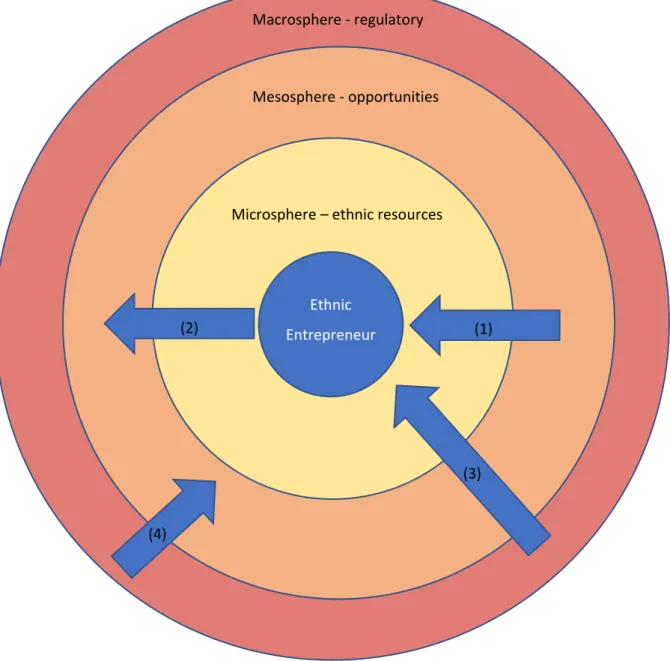
et al., 2001). Here it is assumed that the firm is embedded within three spheres of influence: the
microsphere which includes the ethnic resources available through social networks within coethinic populations (Jones et al., 2014); the mesosphere which accounts for opportunity structure beyond the coethnic population generally required to ensure survival (Aldrich et al., 1981); and the macrosphere
distinction between the microsphere and mesosphere is the importance of relationships based on kinship and coethnic identify rather than formal impersonal arrangements (Patel, 1991; Jones et al., 2014). This is a reflection of the limited access to traditional financial and other resources experienced by these entrepreneurs that forces them to rely upon the social networks within their communities both for markets to serve and inputs into production (Kloosterman et al., 1999). Although, research has often emphasised the importance of community links for ethnic minority entrepreneurs and the resources that these allow access to (Ram et al., 2000; Levent et al., 2003; Wilson and Portes, 1980), these entrepreneurs are also embedded in the wider economic and institutional environment within which they operate. Illustrating this De Vries (2012) shows how immigrant entrepreneurs with Indian ethnic backgrounds operating in India share some common characteristics with those operating in
other countries, but they also operate their businesses with a market orientation to suit the New
Zealand context. Barrett et al. (2001) show how policy changes at the national or international level
can have just as great an impact on ethnic minority entrepreneurs as their own communities. The
repeal of the Shops Act that limited opening hours, especially for larger retailers, in the UK in 1994
increased the competition faced by ethnic minority retailers who had traditionally benefited from
serving customers outside these hours. At an international level the opening of markets through the World Trade Organisation (WTO) led to UK based South Asian textile manufacturers, relying on labour which was cheap by UK standards, being exposed to competition from producers using even lower
cost labour. For ethnic minority entrepreneurs operating in Aberdeen such perspectives are highly
relevant. Although, they may draw upon co‐ethnic resources, these will be much more limited in their scale than for ethnic minority entrepreneurs operating in the UK’s other large cities, so there may be a weakened microsphere of influence. This could have wider social issues as entrepreneurship may play an important role in social adaption and integration for new migrants (Jones et al., 2012). At the mesosphere these entrepreneurs are embedded in a local economy that is relatively prosperous, but with North Sea oil production falling, not necessarily as resilient as many may have predicted in the past (Cumbers, 2000). In other words, there is a need to not only view businesses as ethnically owned, but also belonging to particular sectors and serving particular customer groups who in turn are affected by economic and social conditions present in the city (Kloosterman, 2010; Vershinina et al., 2011). However, as Jones et al. (2014) highlight even recent immigrants from the European accession countries, Africa and the Middle East, who it has been argued reflect a new super diversity (Sepulveda et al., 2011), are largely restricted to the same low value sectors as more established ethnic groups (Kloosterman, 2010). Similarly, better educated and more integrated second generation immigrants in the Netherlands largely are constrained in the same sectors as their parents (Beckers and Blumberg,
2013). It is suggested that whilst opportunities may be present racism faced by all immigrants may prevent them from accessing them (Jones et al., 2014).
What may be key is that without the microsphere to protect these marginal businesses they will be
more vulnerable to changes at the meso and macrosphere, such as policy changes in terms of
immigration rules, or factors affecting the dominant UK oil industry. Examples of the latter include
price volatility and tax increases as with the 2011 supplementary rate rising from 20 to 32 percent of oil producers’ profits which was partially reversed in 2015 when the rate was reduced to 30 percent (Miller and Pope, 2015). Furthermore because of the international nature of the oil industry Aberdeen relies upon policy decisions at a global level, such as OPEC production decisions and the increased use of non‐traditional oil production techniques particularly in North America (Baffes et al., 2015). This is all set against a long term gradual decline in production, which has required local enterprise to diversify rather than relying on the oil sector (Chapman et al., 2004). This means in Aberdeen ethnic minority entrepreneurs and the city as a whole may be facing a crisis point. Having enjoyed high levels of prosperity in the past from its key position within the North Sea oil industry, Aberdeen is at a point where the economy needs broader enterprise to take up the slack. However, the ethnic entrepreneurs
in Aberdeen have a much different balance of micro, meso, and macro influences. Particular,
challenges identified in prior studies are discussed below. These are examined in terms of the mixed embeddedness perspective to gain an insight into the theoretical differences which can be expected between the results of previous studies and the situation experience by ethnic entrepreneurs in a city such as Aberdeen with a low density of ethnic minority members.
Challenges faced by ethnic minority entrepreneurs – access to finance
Studies across cities and countries often highlight similar issues for ethnic entrepreneurs with the most
commonly recognised challenges are those relating to: access to finance; communication skills;
statutory requirements and regulations; and shortages of co‐ethnic staff (Oc and Tiesdell, 1999;
Masurel, Nijkamp and Vindigni, 2004; Deakins et al., 2005). Whilst some of these factors are common
to SMEs regardless of the ethnic background of the entrepreneur, they may be amplified (Fairlie,
2013). The most commonly noted challenge faced by ethnic minority entrepreneurs is related to access to finance (CEEDR, 2000; Oc and Tiesdell, 1999; Masurel et al., 2004; Smallbone et al., 2005; Deakins et al., 2005; Ram et al., 2008). Although access to SME finance is identified as limiting growth and success of SMEs in general (Macartney, 2014), ‘discouraged borrowers’ who do not apply for finance fearing rejection or the conditions that will be attached may be an even greater issue (Freel et al., 2012). For a variety of reasons including those associated with sectoral choice (Smallbone et al., 2003), limited
credit history and collateral (Heelsum, 2010; Levie and Hart, 2011) and actual or perceived discrimination (Cavalluszzo et al., 2002) some ethnic minority groups are particularly constrained in this manner.
Overall, the literature is unclear as to whether discrimination is present in the formal banking system, as more statistical and objective approaches are used to consider loan applications. However, these
can still indirectly disadvantage ethnic groups as they do not favour certain less prosperous areas
(Fraser, 2009) or sectors (Ram and Jones, 2008b) in which ethnic groups are over‐represented. Carter et al. (2015) indicate that the use of such techniques if more widely publicised may help overcome the fears of discouraged borrowers who are concerned with direct discrimination. As discussed in more detail below poor language skills leading to a lack of confidence or simply fear of debt can also play a role in dissuading ethnic minority and particularly immigrant entrepreneurs from trying to access the formal banking system (Sepulveda et al., 2008; Bruder et al., 2011; Levie and Hart,
2011). This pushes them towards their own communities for informal solutions. For example, the
findings of Deakins et al. (2005) indicate that ethnic minority entrepreneurs depend on personal and community sources for finance. In localities, such as Aberdeen where ethnic communities are smaller, and the resources available in the microsphere restricted, this may increase the issues around access to finance. In the US at least, negative impacts associated with actual or perceived discrimination were
found to lessen where greater competition between lenders was present (Cavalluzzo et al., 2002).
Reforms in the UK to increase the level of competition within the small business banking market could
bring benefits (Department for Business, Innovation and Skills, 2012; Jones‐Evans, 2015), but only
where this extends to serving the ethnic business owners. Studies show that integration by second
generation immigrants can vary greatly by ethnic group (Beckers and Blumberg, 2013). If limited
integration is present even for long term or later generation immigrants any resources or support
available in the meso‐ or macro‐ spheres may be avoided.
Challenges faced by ethnic entrepreneurs ‐ communication skills and the labour market
Communication skills (language skills and shared cultural understanding) are a second challenge
identified in studies (Sepulveda et al., 2008; Smallbone et al., 2005; Edwards et al., 2016). For newly
arrived immigrant’s communication issues can be one of the key reasons for entering
entrepreneurship, allowing them to serve their own communities where no language or
communication issues exist (Barrett et al., 1996; Virdee, 2006). Where the existing ethnic community is smaller, and the microsphere thinner, Jones et al. (2014) indicate that new entrepreneurs also shorn
of community support have greater fears about their lack of familiarity with the UK business
entrepreneurs needs to be retained, particularly in localities such as Aberdeen where the microsphere
is relatively thin. However, Wang and Altinay (2012) find that co‐ethnic advice had little impact on
entrepreneurial orientation and employment growth.
This is associated with the division of ethnic entrepreneurial activities into those described as
middleman activities where the minority entrepreneurs supply the majority population with goods
they cannot credibly provide themselves (Warde, 2000; Jones‐Evans et al., 2011), and those
undertaking enclave entrepreneurial activities, serving their own communities with speciality goods
and services (Wilson and Portes, 1980). Although, the latter can provide high returns (McEvoy and
Hafeez, 2007; Jones‐Evans et al., 2011), more often the market for such goods may be limited (Wilson
and Portes, 1980; Sonfield, 2014), particularly where such areas suffer from higher levels of
deprivation (Clark and Drinkwater, 2000). Achidi Ndofor and Priem (2011) suggest that either strategy can be successful as long as the complementary human and social capital are in place along with an
appropriate social identification with their own ethnic community. However, supporting enclave
enterprises can be problematic with mainstream business support agencies often lacking the capacity to engage with these entrepreneurs (Ram et al., 2012). In cities, such as Aberdeen the smaller ethnic minority populations may lead to such enclave businesses being marginal. As well as the microsphere providing custom it also has the potential to provide cheap labour. However, US evidence suggests that where ethnic enterprises employ more diverse workforces they are more likely to be successful (Bates, 2011). Arrighetti et al. (2014) supports this and suggests there could be advantages to be
drawn from inter‐ethnic links from multicultural hybridism in firms. Thus, it might be felt that the
market opportunities within the mesosphere, do not just relate to markets for products, but in
encompassing the labour market, opportunities to access skills and knowledge should also be
considered. Evidence from Italy suggests that as discussed above language skills are a key factor in the use of labour from a variety of cultures along with management experience (Arrighetti et al., 2014). Similarly, Kloosterman (2010) highlights the accumulation and use of human capital as being used by ethnic minority entrepreneurs to break out of highly competitive sectors with low barriers to entry. Parzer (2016) investigating Turkish food retailing in Vienna finds expectations of both the ethnic
minority entrepreneur’s community and the wider population are important, taking the choice to
break‐out out of the control of individual entrepreneurs. A similar perceptual problem is noted by Ojo (2018) in trying to expand the market for African cuisine in Britain. One approach that potentially overcomes this is a diversification process which Lassalle and Scott (2017) identify as being used by
some Polish entrepreneurs in Scotland to effectively extend the ethnic enclave by serving their
community with non‐ethnic goods. This is not to say that there is a ‘curse on all ethnic resources’ as access to co‐ethnic suppliers is positively associated with entrepreneurial orientation and growth
(Wang and Altinay, 2012). However, it is unclear whether ethnic entrepreneurs are willing, or in the case of outside perceptions, able (Ojo, 2018; Parzer, 2016), to break beyond the microsphere. That is are ethnic entrepreneurs able and willing to reduce their reliance on the resources and social capital that are provided through relationships based on coethnicity and kinship (Patel, 1991; Kloosterman et al., 1999; Jones et al. 2014), or will there be an ongoing reliance on the markets and production inputs
that these provide? Studies of more recent migrants suggest that shared experiences rather than
ethnicity are the key link providing access to economic resources, however, there is still limited evidence of breaking‐out of traditional sectors, but where this occurs it is a strategic choice (Edwards et al., 2016).
Based on the literature above it seems that there is a strong need to understand the
microsphere as potentially having both a promoting and restraining effect on enterprise. It could be positively argued that a thinner microsphere promotes ethnic entrepreneurs’ competitiveness having
been exposed to greater forces of competition (Aldrich et al., 1981; Beckers and Blumberg, 2013).
However, given the low value sectors into which ethnic entrepreneurs are over‐represented the
limited microsphere may also mean that ethnic entrepreneurs in Aberdeen are even more vulnerable and marginal.
Challenges faced by ethnic entrepreneurs – regulations and management skills
In common with other entrepreneurs, tax laws, rules and regulations, are felt to impose a large cost on ethnic entrepreneurs (Oc and Tiesdell, 1999; Heelsum, 2010; Rath, 2011). To circumnavigate such
regulations a greater number of entrepreneurs may choose to operate in the informal economy
(Williams and Nadin, 2010). Although this is not a challenge that is limited to ethnic entrepreneurs it may be compounded by the communication problems outlined above and for more recent immigrants less familiarity with UK laws (Heelsum, 2010). It should be made clear that ethnic entrepreneurs are not generally low skilled, with many having high levels of qualifications (Ram and Jones, 2008b).
However, these skills may not necessarily be pertinent to the self‐employment ethnic minority
entrepreneurs are engaged with (Aldrich et al., 1981; Ram et al., 2002). It is also possible that ethnic minority and immigrant entrepreneurs struggle to gain management experience working for others
due to discrimination in the mainstream workforce (Iskander and Lowe, 2010; Jones et al., 2014).
Many of those already entrepreneurially active are located in low value added sectors that do not
involve the development of strategic skills and capabilities (Carter et al., 2015). This may mean that educational qualifications will have less effect when not combined with practical experience (Fraser, 2009). Consistent with this, Beckers and Blumberg (2013) find second generation immigrants in the
Netherlands whilst being more highly educated and socially integrated fail to display improved
To overcome such problems, the government has promoted business support services in their various guises over the years (Mole et al., 2011; Ram et al., 2012). However, mainstream support services are not always found to be appropriate for the needs of ethnic minority businesses (Ram et al., 2006), and/or are not trusted (Ram et al., 2012). More recently it has been suggested by support agencies that support needs are similar for all businesses and additional barriers faced by ethnic minority firms are more likely to reflect sectoral or locational issues (Ram et al., 2012; Sonfield, 2014). In fact, there may be a distrust of support services with a particular focus on a particular ethnic group (Ram et al., 2012).
Opportunities and Challenges
The response of some ethnic minorities to the challenges laid out above is to utilise the ethnic resources that are available to them (Ram and Jones, 2008a; Jones and Ram, 2012). The resources
available and how they are accessed are found to vary between ethnic groups such as
African/Caribbean and South Asians in the UK (Smallbone et al., 2003), and Indians and Chinese in the
US (Chand and Ghorbani, 2011). Chang and Ghorbani (2011) suggest that national cultures have a
prominent role to play in determining the different methods of utilising networks to start and run
businesses and different motivations for business ownership. Ethnic resources can include informal sources of finance (Levent et al., 2003), access to ethnic goods (Wilson and Portes, 1980) and importantly cheap co‐ethnic labour (Ram et al., 2000). In the case of the latter this is not always available, with a number of studies highlighting shortages of skilled ethnic staff (Oc and Tiesdell, 1999; Levent et al., 2003; Smallbone et al., 2005; Ram et al., 2008). The impact of these shortages in a city or locality will vary depending on the ethnic makeup of the population and the extent that community
networks are drawn upon as part of the entrepreneurial process. Such issues are likely to be even
more prevalent problems in cities such as Aberdeen where there are smaller established ethnic
minority communities.
As discussed above there is a growing recognition that these traditional positive views of co‐ethnic resources is being challenged (Carter et al., 2015). Ethnic entrepreneurs may gain access to the
resources as highlighted above, but at the same time the microsphere could constrain ethnic
entrepreneurs, restricting them to low value added sectors (Kloosterman, 2010), hindering their
development of skills (Carter et al., 2015), reducing competitiveness (Aldrich et al., 1981; Beckers and
Blumberg, 2013), and limiting access to the knowledge contained in the wider workforce (Bates, 2011).
It is unclear therefore whether the thinner microsphere allows ethnic entrepreneurs to seek
opportunities in the mesosphere provided by the relatively prosperous Aberdeen local economy, or whether it further exacerbates the under‐resourced nature of ethnic enterprises. It may also expose ethnic entrepreneurs to the macrosphere to a greater extent.
In summary, we suggest that Aberdeen provides a different context to many localities studies in relation to ethnic and immigrant entrepreneurship in that it has:
i. A relatively thin microsphere with limited co‐ethnic resources to draw upon, which has an
ambiguous effect overall as greater exposure to the mesosphere opportunities and
competitive forces may encourage and aid development.
ii. A mesosphere associated with a high degree of prosperity although with a weakened
future outlook. This should generally strengthen ethnic enterprises if they possess the
resources to take advantage.
iii. A macrosphere with greater potential fluctuations due to national and international
influences on the dominant oil sector.
Whilst being unusual compared to many UK based ethnic entrepreneurship studies, the characteristics
are not necessarily unique within the UK. Other towns and cities have not necessarily acquired large ethnic populations and have enjoyed prosperity associated with large employers in specialist sectors, such as Cumbria in the North West of England and its reliance on the defence sector. As discussed above the three spheres examined in mixed embeddedness and summarised above in the particular
case of Aberdeen, are not independent. The relationships between these spheres were discussed
above, and are summarised in Figure 1 below.
PLEASE INSERT FIGURE 1 ABOUT HERE
To gain a deep understanding of the spheres of influence in Aberdeen and their interaction to generate
barriers to ethnic entrepreneurship requires a more qualitative in‐depth approach. The
methodological approach adapted for this study is outlined in the next section. 3. Methodology The purpose of this study is to gain a clear understanding of the challenges faced by ethnic minority entrepreneurs starting and expanding their businesses within a city with a limited ethnic population. The study seeks to determine how changes at both at a city and national level have influenced the barriers faced. With the analysis needing to acknowledge the context within which the entrepreneurs are embedded, a qualitative research approach capturing primary data is more appropriate allowing the exploration and discovery of embedded and uncovered facts of an area (Bryman and Bell, 2011; Bryman, 2012; Mack et al., 2005). To our knowledge, such a qualitative research approach has not been used in Aberdeen before to study ethnic minority business challenges.
The choice of conducting face‐to‐face interviews allows the researcher to further explore the
experiences and behavioural attitudes of the respondents (DiCicco‐Bloom and Crabtree, 2006). Face‐ to‐face interviews encourage respondents through the development of a rapport to share personal
experiences in a rich and detailed manner (DiCicco‐Bloom and Crabtree, 2006), allowing events and attitudes to be firmly understood within the context that they occurred. The participants were not targeted on the basis of educational level, age, and gender or business type. The targeted samples were restaurant, convenience and grocery business owners as these are sectors where ethnic entrepreneurs are over‐represented (Fife Council Development Services, 2004). These sectors are those identified by previous studies as low cost of entry low value sectors to which ethnic entrepreneurs are frequently confined (Kloosterman, 2010). This means that even though it might be argued that the thinner microsphere may expose ethnic entrepreneurs to greater competition and encourage them to take advantages in the relatively prosperous mesosphere of Aberdeen as in other countries they have not done so (Beckers and Blumberg, 2013). This focus on the service sector may influence some of the results generated, as they will to some extent reflect the sector of activity not just the experience of being an ethnic minority entrepreneur. However, the concentration of ethnic
minority entrepreneurs in these sectors makes it important to study these sectors to capture the
typical experience of ethnic minority entrepreneurs. However, future studies may look at the minority that have ‘broken out’ of such sectors. The participants’ ethnic origins are African (Tunisian, Algerian
and Moroccan) and Asian (Indian, Pakistani, Bangladeshi and Sri Lankan). The profile of these
respondents is shown in table 2 below.
PLEASE INSERT TABLE 2 ABOUT HERE
A combination of snowball sampling and theoretical sampling procedures were implied for the
qualitative research approach (Mack et al., 2005). Glaser and Strauss (1967) describe theoretical
sampling as an iterative sampling process that is based on emerging theoretical concepts. This
sampling approach has the goal of developing a rich understanding of the dimensions of a concept across a range of settings and conditions. From the first point of initial contact with respondents, the researcher gained further information and links to other respondents and so on to meet the target sample size of 25 participants. Additionally, the objective was also to further construct and develop
concepts from the data being collected and comparing the two, to ultimately develop a model.
However, the procedure was continued to confirm literary factors and findings emerging from the
data collection until the point of theoretical saturation was reached i.e. the point where no new or additional information is gained and generated from the data (Mack et al., 2005; Glaser and Strauss, 1967). Although, there is diversity in the ethnic backgrounds of the entrepreneurs, the common city environment within which they operate and focus on the service sector means that there is likely to be a relatively high degree of homogeneity in their experiences and barriers faced. In fact, the relatively small ethnic populations of Aberdeen mean that the city has for a long time had a degree of super diversity associated with new waves of migrants (Sepulveda et al., 2011). Indeed, theoretical
saturation can be used as a very useful guide for such diversity research, by which the appropriate size can be determined (Guest, Bunce and Jahnson, 2006). This means that the sample size of 25 in depth face‐to‐face interviews should be sufficient to capture the experiences, perceptions and attitudes of the entrepreneurs regarding business development and growth and a larger sample is likely to lead to informational redundancy (Guest et al., 2006).
The interview guide was initially developed from the literature review surrounding key issues and
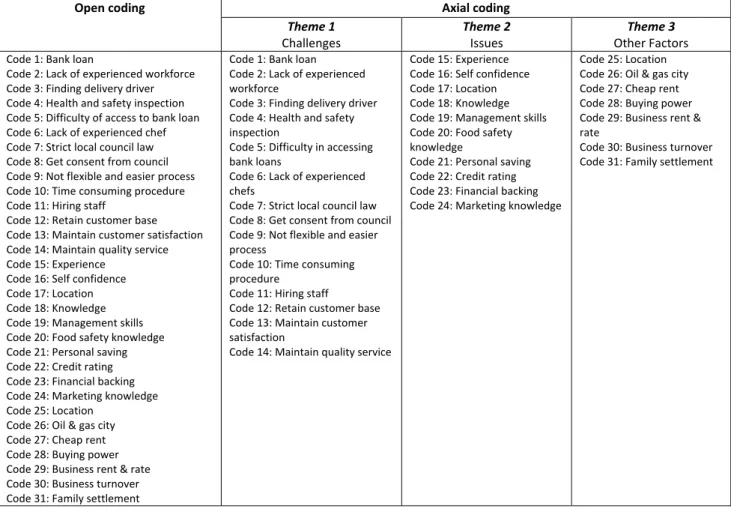
topics identified by the previous researchers. Prior to the main interview process five pilot interviews were conducted to gain an insight before making full‐fledged contact with respondents (Kim, 2010). We carried out five pilot interviews because it was intended to help modify the interview guide and we addressed some issues and topics based on the pilot interviews experience. The topics outlined in the interview guide will ensure that discussion is directed towards the areas previously found to be of relevance, but will not restrict the specific issues that arise as being important from the discussion with the respondents. Based on the pilot interviews several corrections to the researcher’s approach, interview guide, communication style and probing were also made. In part these changes were made to reflect the poor English language skills of some of the respondents. In particular, care was taken to ensure that technical jargon was excluded from the discussion and respondents were given time to clarify the meaning of questions and their own responses to limit any potential misunderstanding. The analysis of the interview transcripts will be undertaken in three steps consisting of open coding, axial coding and selective coding. After all the 25 interviews were conducted and fully transcribed, each interview was taken one at a time and from the data, open coding was used to identify and record
codes that emerged. The open codes were recorded in a chronological order as it enabled the
researcher to conduct a preliminary analysis of the first interview by viewing and examining fewer
rather than many fragments of data. From this point the other 24 interviews were also analysed in turn and codes identified from these were further added to the list of open coding. The open coding in the first step is expected to generate codes that lead to different concepts and categories emerging from the data. This allows links and relationships between the codes to be sought from which categories were developed through axial coding (Saunders et al., 2012). Dey (1998) states that axial coding puts back all the concepts and categories together in new ways by making explicit
connections between a category and its subcategories to understand the research issue/s. These
categories signify ‘themes’ that are an overall reflection of the data collected that help increase the focus of the qualitative data. Once this is accomplished it is possible to judge as to under which theme the data should be segregated and categorised.
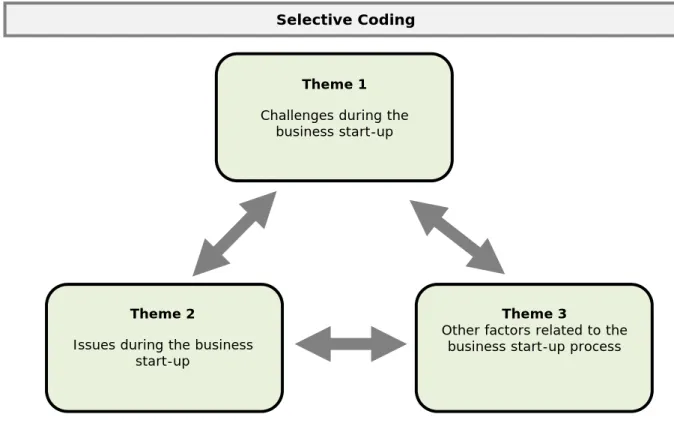
The final step after open and axial coding is ‘selective coding’. Where initially developed themes and
(Saunders et al., 2012; Altinay and Paraskevas, 2008). This is referred to here as ‘lacing’ referring to consideration of those principal themes that bind the component themes and subthemes together. The codes and categories are revisited to ensure all inter‐relationships are fully understood.
4. Findings
The open and axial coding process generated three themes as shown in Table 3 below. These three
themes are: the challenges during the start‐up process; issues arising; and other factors. The links
between these themes are explored by the selective coding (Figure 2). Initially, we consider to what extent findings from prior studies also apply to Aberdeen with its relatively smaller ethnic population, before moving on to those themes which emerge.
PLEASE INSERT TABLE 3 ABOUT HERE PLEASE INSERT FIGURE 2 ABOUT HERE 4.1. Mesosphere factors inhibiting ethnic businesses
Different published studies reveal that lack of business start‐up finance and business support are the
two main challenges faced by ethnic entrepreneurs (Rath 2011; Levie 2011; Ram et al., 2002).
However, the findings of the qualitative data analysis disclosed that strict local Council Law relating to the macrosphere, and hiring staff, traditionally supported by ethnic resources in the microsphere, are the two main challenges faced by ethnic entrepreneurs during their business creation in Aberdeen.
Below we consider whether these differences reflect the social and cultural context within which these
businesses are operating. All respondents acknowledged that access to finance from local banks during the initial business start‐ up process is very difficult due to lack of collateral and business track record. This leads to a reliance on personal savings rather than co‐ethnic members of the population due to the thin microsphere, contrary to previous results for UK cities with larger ethnic minority populations (Levent et al., 2003). Only one respondent claims that he obtained financial support in his initial business start‐up capital from a local bank claiming:
‘…mainly from the bank, at that time it was very easy to get financial help from
bank…nowadays it is not very easy to get some loan from the bank for migrant people. Unless
if you have a house in your name…’ (R‐01: PD‐Res)
It can be argued that respondent 01 (PD‐Res) accessed bank finance because he started his business almost 16 years ago but access may be more limited currently due to mesosphere and macrosphere pressures. As respondent 03 (Ib‐Res) claims:
‘…the bank because of the crisis, the cash is low and so it is really difficult to get access to the
money from the beginning…’
However, after the start up process, if ethnic entrepreneurs run their business properly and maintain good accounts with the local bank, there is a suggestion that opportunities beyond the microsphere can be exploited and it is possible to access bank finance. Respondent 06 claims that if you do well in your first business, then you will have the financial support from the local bank to grow your business or you can open another business. Respondent 06 (OF‐Cas.C) states:
‘Initially, no I didn’t receive a single penny from bank, but when my business was running very
well, my account was great, they started offering money to improve my shop’ i.e. proven
business track record which comes with experience.
On the other hand, regulatory factors from the localised macrosphere in the form of strict local Council
Law, particularly that relating to restaurants, is one of the main challenges for ethnic entrepreneurs during the business start–up process in Aberdeen. As respondent 16 (Khn‐Con.S) claims:
‘Like I have said before. It is the red tape (excessive regulations and legal frameworks). All the
procedures to follow and the regulations are far too slow in Aberdeen’
Respondent 03 (Ib‐Res) adds:
‘Aberdeen city council is very strict with giving permission to operate in hot food. I mean they
are very strict to give licence to cook hot food…You need to place an application, make an
appointment. Then they look at it and process, it takes far too long. They should make this
process lot more flexible and easier. Even people do not mind paying money for speedy
procedure who wants to start business’
He also claims:
‘The other difficulty is to get hot food consent from the council. If you want to change little bit,
they are so rigid’ (R‐03: Ib‐Res)
Although strict local council law is identified as one of the most difficult challenges, some respondents believe that these are the laws set by the local council and everybody must follow them; there is a reason for that. The limited opportunity to serve a co‐ethnic client base may limit the opportunities
for taking the informal entrepreneurship route observed elsewhere (Williams and Nadin, 2010).
Respondent 05 (Mo‐Res) believes:
‘Rules and regulations, obviously these are the law, whoever want to do business must follow
It is suggested that Aberdeen City Council (ACC) might introduce premium services for the application
to be processed more quickly. For example, to get a late hours catering business licence,
entrepreneurs have to pay £214 (Aberdeen City Council, 2014). We suggest that ACC can increase the application fees up to £428 (double the fees) but the application should be processed within 30 days.
The fieldwork investigation revealed that ethnic entrepreneurs do not mind paying for premium
services as respondent 03 (Ib‐Res) further mentioned that:
‘I am not saying short cuts, they (Aberdeen City Council) should do thing right away but if
people are willing to wait that is fine. However, if people do not want to wait, want to pay for
premium service for the application… I would suggest speeding up the procedure’
Next, hiring staff is very challenging for ethnic entrepreneurs as they can only afford to offer moderate
or minimum wages to the employees. This is likely to become increasingly problematic for many
business owners with the introduction of the National Living Wage. A notable finding for Aberdeen with its small ethnic minority population from the qualitative data is that ethnic entrepreneurs mostly depend on co‐ethnic part‐time student employees limited to working 20 hours per week. Because of the recent immigration laws, fewer students are coming from Asia especially from Bangladesh, India, Pakistan and Sri Lanka. Respondent 10 (Dh‐Con.S) claims:
‘I could not find experienced people willing to work for the wage that I can afford. People were
either too expensive or inexperienced. It was really hard to find some guys who have moderate
knowledge and less wage demand’
Respondent 21 (Syed‐Res) believes that hiring appropriate staff and keeping them is one of the biggest challenges and this is the main reason for his success in opening three businesses since 2010:
‘To get staff is very hard. People of Asian origin who are student had reduced a lot because I
think now post study visa is not there anymore so hardly any students are there. Once you get
staff also, you have to train them which is a big problem because you have to deal with
customer and training at the same time’
This challenge of hiring co‐ethnic staff is interesting as unlike prior studies such as Virdee (2006),
communication skills were not a major challenge identified by the entrepreneurs in Aberdeen.
Potentially, cost is the main reason for still focusing on co‐ethnic labour (Ram et al., 2000), but could
mean that the desire for co‐ethnic labour is sometimes overplayed (Wang and Altinay, 2012).
Ultimately the thin microsphere has exposed the entrepreneurs to macrosphere changes in the form
of immigration laws. At the same time even with no communication issues identified the
entrepreneurs appear to be held back by the microsphere that remains with limited desire to dip into the city’s wider labour pool.
4.2. Macrosphere factors causing shortage of suitable employees
As outlined above, not only hiring but retention of staff is problematic due to the low wages entrepreneurs can offer. Asian students especially those from India, Bangladesh, Pakistan and Sri Lanka filled this gap, but the United Kingdom Border Agency’s (UKBA) tightening of rules have had an adverse impact. Respondent 04 (KA‐Con.S) claims:
‘I told you before, I am struggling finding part time staff for my shop…2‐3 years back it was
ok…there was lot of Asian students who would like to do this kind of job. Now because of
closing Post Study Work Visa, less students are coming...that’s why I am facing this kind of
problem’
Respondent 06 (OF‐Cas.C) further illustrates:
‘I mentioned earlier I had great problem with finding butcher for my shop but now I am facing
problem with my regular staffs as well. I think after the closing down of the Post Study Work
Visa, fewer students from Bangladesh, Sri Lanka, and India are coming to Aberdeen for
studying. To be honest with you I only can offer minimum wages for my employees…I think this
kind of job is good for the student’
Hence, from the macrosphere immigration rules have emerged as a new challenge for ethnic
entrepreneurs, with the UK Border Agency stopping the Tier 1 Post Study Work (PSW) visa from April
2012 (UKBA, 2014). This PSW scheme allowed foreign students who graduated from the UK, the option
of applying for a two year full time work permit. This appears to be of particular relevance to cities such as Aberdeen with a smaller existing co‐ethnic population to draw upon. However, at the same time it should be examined from the argument that remaining within the microsphere in this respect may insulate businesses from the competitive pressures of recruiting in the wider labour market, but may also hinder performance (Bates, 2011), as it also insulates the ethnic entrepreneurs from news ideas and knowledge. The fieldwork investigation revealed that the presence of the thin microsphere makes hiring part‐time staff one of the major challenges for ethnic minority entrepreneurs. In recent years both the Scottish Parliament and UK Government have sought to increase the funding support for vocational training
and qualifications such as apprenticeships (Audit Scotland, 2014; Delebarre, 2015). Linking work
permits to such apprenticeships could help to ensure that resources are focused on developing those skills where a shortage is present.
In the context of Aberdeen, it can also be argued that training might be provided to entrepreneurs and prospective employees of different backgrounds to encourage wider cultural engagement to form
stronger links and understandings of not just the majority ethnic group, but also other ethnic minority
groups. Although studies have suggested that ethnic minority entrepreneurs benefit from the
presence of ethnic resources (Ram et al., 2000; Levent et al., 2003; Wilson and Portes, 1980), even when operating outside traditional ethnic enclaves (Zontas, 2012), Wang and Altinay (2012) suggest that it is access to co‐ethnic suppliers and projects, which lead to greater entrepreneurial orientation. Thus, a perspective may be that opportunities in the mesosphere don’t just relate to customers, but also in acquiring labour with diverse skills (Bates, 2011; Arrighetti et al., 2014). Since it is very difficult for ethnic minorities to get access to finance from the local bank during the business start‐up process, a good credit score can help entrepreneurs to get some money from the local banks. Respondent 01 (PD‐Res) claim:
‘Now‐a‐days it is not very easy to get loan from the bank for migrant people. Unless if you have
a house in your name or good credit rating then you can get access to some money from bank’
In this regard, it can be argued that credit rating can be identified as a new issue for ethnic
entrepreneurs. A good credit rating enables ethnic minorities to get financial access from the local
bank. For example, a good credit rating helps to get an overdraft, personal loan or credit card. As
respondent 04 (KA‐Con.S) claims:
‘you know what I feel, I applied for bank loan but I didn’t get it…they said my credit rating is
poor, I do not know how to increase my credit rating…I felt if I have good credit rating I would
have got some personal loan’ Respondent 07 (Ja‐Res) claims:
‘Yes I was lucky, I had a good credit rating, I had credit card and I had some bank overdraft
that was very helpful during the first few months’
This is a problem that has become increasingly acute with centralised credit scoring becoming more and more prominent in contrast to relationship banking in determining whether bank loans are made available (Jones‐Evans, 2015). Again, to obtain a better credit rating it is important for ethnic
entrepreneurs to avoid relying on the resources of extended family and community and to take
opportunities from beyond the microsphere. Respondent 17 (Brah‐Res) claims financial backing is of critical importance:
‘Financial backing is then the most important. It is the basic element required. And if you do
not have that then do not bother about setting up a business. If you cannot survive for a year
be able to survive. Enough money should be there for the rent of the place, staff salaries, tax
and miscellaneous expenses.’
There is an acknowledgement that entrepreneurs should have sufficient financial backing for at least six months if they are not doing well during the initial stage of the business start‐up. As respondent 04 (KA‐Con.S) states:
‘Even after starting your business, you need some financial backing for at least six months…in
case you are not doing well, you have to pay to employees, supplier’
It has been identified that limited access to bank finance may be costly with the failure to use the
talents of ethnic minorities estimated to cost more than £8 billion per year (Department for
Communities and Local Government, 2013). In addition, it is also proven that ethnic minority
businesses contribute more than £25 billion to the UK economy and these businesses are highly
successful (Department for Communities and Local Government, 2013).
However, studies suggest that many SMEs are unaware of what government finance is already
available. It is notable that even with a thin microsphere the opportunities in and provided by the
mesosphere and macrosphere appear to take considerable time to recognise for the ethnic
entrepreneurs of Aberdeen.
In addition, Aberdeen City Council may encourage local banks to support ethnic businesses. This might be in a similar fashion to the not entirely successful ‘Project Merlin’ agreement between banks and
the UK Government covering their relationship including levels of SME lending (Edmunds, 2013). Given
these past experiences it is possible that a more hands on role may be required from the public sector.
Those seeking finance may submit a business plan that is examined by an independent qualified
business expert, with the evaluation passed on to a local bank or potentially ACC for funding if sufficiently strong. Indeed, this process could ensure that an ethnic entrepreneur can also access formal sources of advice and, consistent with Ram et al. (2012) and Sonfield (2014), the tailored advice might be drawn upon based on the sector of engagement rather than ethnic background. From the entrepreneurs’ side the access to finance could be made conditional on continuing engagement with their business mentor. This access to formal sources of finance is more relevant due to the apparent
lesser availability of alternative informal sources in cities such as Aberdeen with more restricted ethnic
minority social and business communities.
Not all influences from the macrosphere have been negative. It was outlined by several researchers (e.g. Oc and Tiesdell, 1999; Ram et al., 2002; Rath, 2011; Ram et al., 2012) that there is a lack of business start‐up support for the ethnic minority entrepreneurs but the current situation has been changed in the context of Aberdeen. No respondent claimed that there is a lack of business start‐up
support; instead they praised the local authority body and business support groups. For example,
respondent 06 claimed that Business Gateway Aberdeen provides free advice and support for the
ethnic businesses. Indeed, Business Gateway Aberdeen not only provides free advice and support for ethnic businesses but also for every other business.
5.
Conclusions
and
Contributions
This study has found that when it comes to barriers relating to start‐up and business growth,
entrepreneurs operating in a city with a relatively small ethnic minority population suffer from many of the same issues found in previous national or city studies where larger ethnic communities reside. However, Aberdeen offers a different context with some varying intensities of these challenges and problems. These barriers include: access to finance from local banks, regulatory complexity, fear of debt, lack of business support, loss of security, access to the customers, hiring staff and lack of business start‐up finance (Levie, 2011; Levie & Hart, 2011; Rath, 2011; Ram et al., 2002). Many of these challenges are faced by entrepreneurs in general rather than purely being the preserve of those from ethnic minorities, but as outlined in Section 2 these problems are often increased due to factors specific to ethnic minority entrepreneurs, such as a reliance on coethnic labour and markets (Barrett et al., 1996; Virdee, 2006) and perceived bias in the finance sector (Carter et al., 2015). However, it was also found that those ethnic entrepreneurs operating in Aberdeen suffer from some local issues and problems specific to their limited co‐ethnic community.
With regards to the regulation complexity issue, we divided this issue into four categories. These are: strict local council laws; getting consent from local council; basic health and safety laws; and
immigration laws. Previous studies identified a lack of business start‐up support for the ethnic minority
entrepreneurs but the current study’s respondents praised the local regularity body and business
support groups.
The fieldwork identified three emerging factors, the recent change of immigration laws, financial
backing and credit ratings. The results of qualitative data analysis reveal that only one respondent
obtained access to finance from a local bank during the business start‐up phase. However, after starting the business, if good relations are maintained it is possible to obtain access to finance at a later stage. On the other hand, a good credit rating is important for ethnic entrepreneurs as this helps
them to get some finance from a local bank. Third, hiring staff was very challenging due to recent
changes to immigration laws, limiting access to potential co‐ethnic employees.
The study has outlined a number of potential solutions to these issues including the provision of work permits to created skilled employment. To ensure these are successful these should be linked to
(Chapman et al., 2004), means that resources contributed to mentoring and assessment of business plans are likely to be largely self‐funding through reduced welfare payments in the medium term.
The study has found that where the microsphere is thin ethnic entrepreneurs appear doubly
disadvantaged. They are unable to access resources, support (practical and moral) and advice that
traditionally allow marginal enterprises to survive. However, the microsphere which is present still
insulates the entrepreneurs from the opportunities available, whilst not protecting them from the
negatives of the mesosphere and macrosphere. Policies can help bolster the microsphere, which may be effective if linked to training and upskilling. However, providing a route to access mesosphere opportunities and resources may be most efficient in the long‐run. The policy implications are likely to be similar for other cities with relatively small ethnic populations, however, the dependence on the declining North Sea oil industry may make Aberdeen a special case. Further studies of cities with similar populations would allow policy to be further developed with an understanding of the common and distinct contextual factors. It would also be of value to conduct longitudinal analysis to understand how perceptions, values, challenges and barriers change as firms
develop without the potential issues of hindsight bias affecting the results as might be the case of
studies such as this where respondents are asked to consider issues that occurred a long time
previously.
This study has shown that cities and regions such as Aberdeen with smaller ethnic minority
populations can see a vibrant contribution from ethnic entrepreneurs. However, currently they are limited in their access to many types of opportunity and resources. In particular, issues of staff
recruitment and retention require policies responses to provide access to staff either through ensuring
greater availability of co‐ethnic workers or training to provide staff and employers with the necessary
skills regardless of background. For Aberdeen the decline of its major employer means it needs
enterprise to step in and provide new sources of value and ethnic entrepreneurs could be a major