Turkish Journal of Fisheries and Aquatic Sciences 18: 717-727 (2018)
www.trjfas.org ISSN 1303-2712 DOI: 10.4194/1303-2712-v18_5_07
RESEARCH PAPER
© Published by Central Fisheries Research Institute (CFRI) Trabzon, Turkey in cooperation w ith Japan International Cooperation Agency (JICA), Japan
Effects of Supplementing Low-Molecular-Weight Fish Hydrolysate in High
Soybean Meal Diets on Growth, Antioxidant Activity and Non-Specific
Immune Response of Pacific White Shrimp (
Litopenaeus vannamei
)
Introduction
Fish mea l is one of the prima ry protein sources in trad itional and commerc ial shrimp feed formulat ions (Hernandez, Sa rmiento-Pardo, & Abdo, 2004). However, high de mand and limited supply have led to high prices for fish mea l during the last few years (Kader & Koshio, 2012). There fore, replacing fish mea l with cost-effective alternative protein sources has become a focus. The use of plant proteins as alternative protein sources to replace fish mea l in shrimp feed has been studied worldwide (Gatlin et al., 2007). However, negative effects on growth performance, feed intake, antio xidant activity, intestinal health and immune response have been reported in shrimp species such as Marsupenaeus japonicus, Litopenaeus vannamei and Penaeus chinensis fed high plant protein diets (Lim & Do miny, 1990; Bulbu l et al., 2015a; Xie, Liu, Zeng, Niu, & Tian, 2016). These results may be due to secondary dietary amino acid co mposition, lower palatability, and presence of anti-nutritional co mponents in plant protein diets (Paripatananont, Boonyaratpalin,
Pengseng, & Chotipuntu, 2001; A maya, Davis, & Rouse, 2007; Rah man et al., 2010; Yue et al., 2012b; Bulbul, Koshio, Ishika wa, Yo koyama , & Kader, 2015b; Ch iu et al., 2015). Meanwh ile , research efforts are underway to identify an appropriate blend o f p lant products and other alternative feed ingredients to prevent nutritional deficiencies and ensure a proper supply of essential nutrients. This may further increase the replacement level of fish meal with plant proteins without detrimental effects on animals’ performance by restoring a proper balance of a mino acids and increasing the palatability of the d iet (Kader
et al., 2012a; Kader et al., 2012b).
Fish hydrolysate is a pro mising core material fo r high plant protein diets, as it may imp rove growth, feed utilizat ion and survival rate of marine anima ls (Aksnes, Hope, Jonsson, Bjornsson, & Albrektsen, 2006a; Aksnes, Hope, Hostmark, & Albre ktsen, 2006b; Khosravi et al., 2015). Dietary inc lusion of protein hydrolysates can improve innate immunity, change intestinal morphology and enhance the intestinal immune response (Duarte, Vinderola, Rit z, Perdigón, & Matar, 2006; Khosravi et al., 2015).
Xiaoli Li
1, Ling Wang
1, Chunxiao Zhang
1,*, Samad Rahimnejad
1, Kai Song
1, Xiangli Yuan
11
Jimei University, Xiamen Key Laboratory for Feed Quality Testing and Safety Evaluation, Fisheries College, Xiamen 361021, China.
2Address.
* Corresponding Author: Tel.: +86 592 6181054; Fax: +86 592 6181054; E-mail: [email protected].
Received 25 May 2017 Accepted 18 September 2017
Abstract
Supplemental effects of low-molecular-weight fish hydrolysate (LWFH) was investigated in high soybean meal (HSM ) diets fed to Litopenaeus vannamei (0.44 ± 0.03 g) for 48 days. The HSM diet, containing 15% fish meal and 47% soybean meal, was supplemented with 0, 5, 10, 15 or 20 g kg-1 LWFH (HSM 0, HSM 5, HSM 10, HSM 15 and HSM 20). LWFH
significantly (P < 0.05) improved growth and the highest growth was found in HSM 15. Feed intake significantly increased at ≥ 10 g kg-1
LWFH, and the lowest feed conversion ratio was observed in H SM 10 group. Shrimp survival significantly increased at ≥ 15 g kg-1 LWFH compared to HSM 0 group. Significantly higher serum peroxidase, acid phosphatase and
alkaline phosphatase activities were observed in HSM20 group and total antioxidant capacity increased at ≥ 15 g kg-1 LWFH.
HSM 10 group exhibited significantly higher phenoloxidase activity than HSM 0, and superoxide dismutase activity enhanced in HSM 5 and HSM 10. Intestinal inflammatory genes expression assay showed the significant decrease of activating transcription factor 4 expression in HSM 15 group compared to HSM 0 group, and macrophage migration inhibitory factor expression decreased significantly at 5-15 g kg-1 LWFH. To conclude, 10-15 g kg-1 LWFH in HSM diet improves growth,
antioxidant activity and innate immunity.
718 X. Li et al. / Turk. J. Fish. Aquat. Sci. 18: 717-727 (2018)
However, fish hydrolysates contain differently sized mo lecular weight co mpounds which may affect absorption capacity and the rate of passage of food through the gastrointestinal tract (Espe & Lied, 1999). Low-mo lecular-we ight peptides are the main components of fish hydrolysates and play an important role in pro moting growth performance in cultured marine species. So me researchers have demonstrated the functional and bioactive properties of these peptides (low mo lecular weight, easily absorbed, stimu late feeding, antio xidant, antihypertensive, antimic robial, and immuno modulatory) (Byun, Lee , Park, Jeon, & Kim, 2009; Na zee r, Ku mar, & Ganesh, 2012). Dietary composition affects intestinal health; thus, it can affect the e xp ression of infla mmatory factors in the intestinal mucosa, such as lipopolysaccharide-induced tumor necrosis factor-α (LITA F), macrophage migrat ion inhib itory factor (MIF), act ivating transcription factor 4 (ATF4) and Ras -associated protein 6A (RAB6A). Ho wever, litt le is known about how dietary protein sources or fish hydrolysates affect the expression of these genes in shrimp.
The aim of this study was to evaluate the effects of supplementing low-mo lecular-we ight fish hydrolysate (LW FH) in h igh soybean mea l diets on growth, antio xidant activity, non-specific immune response and e xpression of pro-infla mmatory genes in the digestive tract of Pac ific wh ite shrimp
Litopenaeus vannamei.
Materials and Methods
Prepar ation of Low-Molec ular-Weight Fish Hydrolysate
The LWFH was produced from whole sardine (Sardina melanostictus) bodies using enzymes. First, minced sardine was homogenized in a four-fold volume of distilled water and was en zy matically hydrolyzed with Ne matolyt and Trypsase (3:1; Jiangsu Nanjing Pangbo Biologica l Engineering Co.
Ltd., Nanjing Jiangsu, China). The enzy mes were added at 0.4% of surimi weight, and hydrolysis was carried out at 55 °C for 8 h in a water bath (pH = 7.5). After the enzy matic treat ment, the hydrolysate was ma intained at 95 °C for 15 min to inactivate the enzy mes. After chilling, the hydrolysate was centrifuged at 5,000 rp m and 4 °C for 40 min. The micro -molecu lar fish hydrolysate was obtained by filtering through a 1,000 Da StarMe m-001A me mb rane separator (Fu mei Science and Tech Co. Ltd., Xia men, Fu jian, Ch ina), followed by a 200 Da filter. The retentate was freeze-dried and used in the e xperimental d iets. The peptide profile of the protein hydrolysate is provided in Fig. 1. The hydrolysate was free ze-dried for the peptide profile analysis. The peptide profile of the hydrolysate was determined using size e xclusion chro matography and a high -performance liquid chro matography system (Aglient1200; Agilent Technologies, Pa lo A lto, CA, USA) equipped with TSK G2000 SW XL 300 mm × 7.8 mm chro matography column (Tosoh Bioscience LLC., King of Prussia, PA, USA) at a detection wavelength of 220 n m (Zheng, Liang, Yao, Wang, & Chang, 2013). The sa mples we re solubilized in water containing 0.3% sodium dodecyl sulphate, centrifuged for 10 min at 10,000 rp m, decanted and filtered before applied to the column. In addition, we selected Cytochrome C (MW12500), Aprotinin (MW6533), Oxidized glutathione (MW613), a mino acetic acid -amino acetic acid-a mino acetic ac id (MW189), and glycine (MW75) as a s tandard substance to make the standard curve using GPC software . The instrument condition was as follo ws: the flow rate o f mov ing phase was 0.5 ml min-1, p illar te mperature was 30 °C, detection wavelength was 214 n m, and the sa mple size was 20 μl.
Experimental Diets
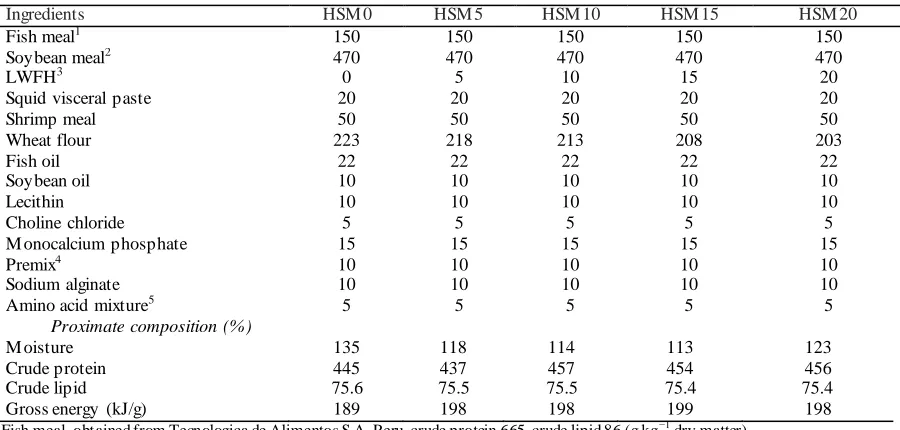
Formulat ion and proximate composition of the e xperimental diets are shown in Table 1. A basal diet containing 15% fish mea l and 47% soybean meal was
719
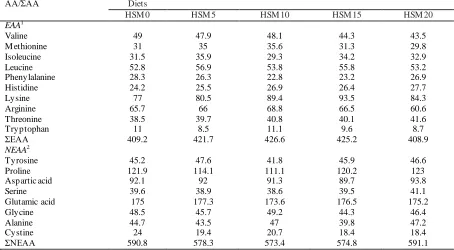
prepared and used as a high soybean mea l (HSM) diet. Then, the basal diet was supplemented with 0, 5, 10, 15 or 20 g kg-1 LWFH to make five e xperimental diets designated as HSM0, HSM 5, HSM 10, HSM 15, and HSM 20. The dry ingredients were ground using a hammer mill and then passed through a 180 μm mesh. The filtered ingredients were thoroughly mixed with lip ids before water was added to produce a mash. The dough was pelleted through a 1.5-mm dia meter twin-screw granulator (CLFM4×1TS; SCUT, Guangdong, China). The diets were air-dried at roo m te mperature for 24 h, packed in double plastic bags, and stored at −20 °C until use. The amino acid composition of the e xperimental diets is shown in Table 2. A mino acid composition of the e xperimental diets was an alyzed according to the method of GB/T18246-2000 detected by Pony Testing Co. Ltd (Beijing, China).
Experimental Shrimp and Feeding Trial
L. vannamei were supplied by a hatchery at Pokphand Group Co. Ltd. in Zhangzhou (Fujian, China). Prior to starting the experiment, a ll shrimp were kept in indoor tanks and fed a co mme rcia l diet in a te mporary rearing tank for 2 wee ks to acclimate them to the e xpe rimental condit ions. At the end of the acclimat ion period, 30 shrimp of simila r size (mean weight, 0.44 ± 0.03 g) were d istributed randomly into each of 20 fiberg lass cylindrica l tanks (150 L). Each diet was assigned randomly to quadruplicate tanks. These tanks were part of a rec irculat ing water system that included a settling tank, an a ir pu mp, and a water pump. The shrimp were hand fed to apparent satiation
three times daily (08:00, 14:00, and 19:00) for 48 days. Each aquariu m had a water flo w velocity of 5 L/ min. During the rearing period, water te mperature fluctuated fro m 28 to 31 °C, p H was 7.8 ± 0.3, salinity was 20–23‰, and the dissolved oxygen concentration was 7.0 ± 0.2 mg l-1
. Photoperiod was ma intained on a 12:12 light:dark schedule. All rearing tanks were provided with continuous aeration.
Sample Collection
At the end of the feeding tria l, shrimp we re fasted for 24 h before harvest. All the shrimps fro m each tank were we ighed indiv idually on a microbalance, and the final nu mber of shrimp in each tank was recorded to determine growth para meters and survival (Gao et al., 2017). He mo ly mph of 15 shrimp fro m each aquariu m was withdra wn fro m the pericardia l cavity using a 1 mL syringe and then kept at 4 °C overnight. Seru m was obtained by centrifugation at 4000 rp m and 4 °C for 10 min and stored at −80 °C for the antio xidant enzy mes activity analyses. The intestinal tract was re moved fro m the same 6 shrimp, frozen immediate ly in liquid nit rogen, and stored at −80 °C for inflammatory genes e xpression assay (Huang, Wang, Zhang, & Song, 2017).
Analytical Methods
Proximate Analysis of the Experimental Diets
Pro ximate co mposition of experimental d iets Table 1 Formulation and proximate composition of the experimental diets (g kg-1)
Ingredients HSM 0 HSM 5 HSM 10 HSM 15 HSM 20
Fish meal1 150 150 150 150 150
Soybean meal2 470 470 470 470 470
LWFH3 0 5 10 15 20
Squid visceral paste 20 20 20 20 20
Shrimp meal 50 50 50 50 50
Wheat flour 223 218 213 208 203
Fish oil 22 22 22 22 22
Soybean oil 10 10 10 10 10
Lecithin 10 10 10 10 10
Choline chloride 5 5 5 5 5
M onocalcium phosphate 15 15 15 15 15
Premix4 10 10 10 10 10
Sodium alginate 10 10 10 10 10
Amino acid mixture5 5 5 5 5 5
Proximate composition (%)
M oisture 135 118 114 113 123
Crude protein 445 437 457 454 456
Crude lipid 75.6 75.5 75.5 75.4 75.4
Gross energy (kJ/g) 189 198 198 199 198
1Fish meal, obtained from Tecnologica de Alimentos S.A, Peru, crude protein 665, crude lipid 86 (g kg−1 dry matter). 2
Soybean obtained from Tecnologica de Alimentos S.A, Peru, crude protein 489, crude lipid 10 (g kg−1 dry matter).
3Low-molecular-weight fish hydrolysate 4
Mineral premix (5 g kg-1), Vitamin premix (2 g kg-1), Mold inhibitor (1.5 g kg-1) and Ethoxyquin (0.5 g kg-1); Mineral premix and Vitamin premix was prepared according to Ye et al. (2012).
720 X. Li et al. / Turk. J. Fish. Aquat. Sci. 18: 717-727 (2018)
was analyzed in triplicates according to the standard methods of the Association of Offic ial Che mists (AOAC, 1995). The diet samp les we re oven dried at 105 °C to constant weight to determine moisture content. Crude protein content was determined by the Kjeldahl method (N × 6.25) using an Auto Kjeldahl System (FOSS Kje ltec 8400, Swit zerland). Lipid content was analyzed according to the So xhlet diethyl ether extract ion method. Gross energy was determined by an adiabatic bo mb ca lorimeter (Parr 6300, USA).
Serum Antioxi dant and Non -Specific Immune Indices
Seru m enzy mes activity was measured with comme rcia l assay kits (Nan jing Jiancheng Institute, Nanjing, China) according to the manufacturer’s instructions. Pero xidase (POD) act ivity was measured following the reduction of hydrogen peroxide at 420 nm, and determined according to the change in absorbance. Phenoloxidase (PO) act ivity was determined using a biotin double-antibody sandwich enzy me-lin ked immunosorbent assay kit following the manufacturer’s instructions. Total antio xidant capacity (T-AOC) was the amount of activity in 1 ml min-1 serum for the absorbance value to increase 0.01 units at 37 °C. Briefly, total supero xide dis mutase (T-SOD) activ ity was measured by the ability of the sample to inhib it superoxide anions generated by xanthine and the xanthine o xidase reaction system. One activity unit was defined as the amount of
enzy me necessary to inhibit 50% of the color formation measured at 550 n m. T -SOD activity was e xpressed as unit per milligra m hepatic protein. Acid phosphatase (ACP) and a lkaline phosphatase (AKP) activities we re measured follo wing d isodium phenyl phosphate decomposition. One unit was defined as the amount of en zy me in 1 g of tissue that produced 1 mg phenol every 15 min at 37 °C (Zheng et al., 2013).
RNA Extrac tion and Real-Ti me Quantitati ve Polymerase Chain Reaction (qPCR) Analysis
An approximately 80 mg intestinal tract samp le was used to extract total RNA with Trizol Reagent (Invitrogen, Ca rlsbad, CA, USA). The tissue was homogenized in Trizol Reagent using a fully automatic g rinding mill (Tissuelyser-24; Shanghai Jing xing Science and Technology Co., Ltd., Shanghai, China). The mixtu re was prec ipitated with isopropanol, washed twice with 75% ethanol, and the RNA pellet was dissolved in bacteria-free water. RNA purity and concentration were measured using an ND-2000 spectrophotometer (NanoDrop 2000; NanoDrop Technologies, Wilmington, DE, USA ). RNA integrity was confirmed by 1.5% agarose gel electrophoresis of 1 μg RNA stained with ethidium bromide in 1× TA E buffer. The gels were then subjected to ultraviolet light and photographed in a GS-800 Ultrav iolet Transillu minator (UVP, Upland, CA, USA). A 2-μg RNA sample was synthesized to cDNA using the Thermo Scientific RevertAid First-Strand Synthesis System for RT-PCR (Invit rogen) Table 2 Amino acid composition of the experimental diets (g kg-1 dry matter)
AA/ΣAA Diets
HSM 0 HSM 5 HSM 10 HSM 15 HSM 20
EAA1
Valine 49 47.9 48.1 44.3 43.5
M ethionine 31 35 35.6 31.3 29.8
Isoleucine 31.5 35.9 29.3 34.2 32.9
Leucine 52.8 56.9 53.8 55.8 53.2
Phenylalanine 28.3 26.3 22.8 23.2 26.9
Histidine 24.2 25.5 26.9 26.4 27.7
Lysine 77 80.5 89.4 93.5 84.3
Arginine 65.7 66 68.8 66.5 60.6
Threonine 38.5 39.7 40.8 40.1 41.6
Tryptophan 11 8.5 11.1 9.6 8.7
ΣEAA 409.2 421.7 426.6 425.2 408.9
NEAA2
Tyrosine 45.2 47.6 41.8 45.9 46.6
Proline 121.9 114.1 111.1 120.2 123
Aspartic acid 92.1 92 91.3 89.7 93.8
Serine 39.6 38.9 38.6 39.5 41.1
Glutamic acid 175 177.3 173.6 176.5 175.2
Glycine 48.5 45.7 49.2 44.3 46.4
Alanine 44.7 43.5 47 39.8 47.2
Cystine 24 19.4 20.7 18.4 18.4
ΣNEAA 590.8 578.3 573.4 574.8 591.1
1 EAA: essential amino acids. 2
721
with Oligo (dT)18 primers according to the manufacturer’s protocol. The reaction was incubated using a Pelt ier Therma l Cyc ler 200 (MJ Research, Watertown, MA, USA). cDNA integrity was confirmed by 1.5% agarose gel e lectrophoresis of 1 μg cDNA stained with ethid iu m bro mide in 1× TA E buffer. The gels were then subjected to ultraviolet light and photographed in a GS-800 Ult raviolet Transilluminator.
The PCR reactions were performed in a total volume of 20 μl, containing 1 μl of each primer (10 μM), 9 μl of the diluted first-strand cDNA product, and 10 μl AceQ® qPCR SYBR® Master Mix (Nanjing Jiancheng Institute). The primer sequences for the reference gene (β-actin), LITAF, ATF4, MIF, and RAB6A genes were designed based on published
L.vannamei cDNA sequences on Gen Bank and are listed in Table 3. The real-time PCR progra m was 95 °C for 10 min, fo llo wed by 40 cycles at 95 °C for 15 s, annealing for 15 s at 60 °C, then 60 °C for 60 s. A me lting curve analysis was performed to confirm that only one PCR product was present in each react ion (Gao et al., 2016).
Statistical Analysis
All data we re analy zed by one-way analysis of variance (A NOVA) using SPSS ver. 17.0 software (SPSS Inc., Chicago, IL, USA). When ANOVA detected a difference among groups, Duncan’s mu ltip le range test was used to identify the differen ce in the means. A P-value < 0.05 was considered significant. Data are presented as mean ± standard error.
Results
Growth Performance
Shrimp growth performance and feed utilization fed the e xperimental diets are shown in Table 4. FBW and WG were significantly (P<0.05) increased by the incre ment of LWFH level up to 15 g kg-1, and thereafter decreased significantly. The survival rate of shrimp fed the e xpe rimental diets was 65.52–80.06% and the highest survival rate was observed in the group fed the HSM 15 diet, which was significantly higher than that of shrimps fed HSM0, HSM5 and HSM 10 diets (P<0.05). Significantly h igher feed intake was observed in groups fed ≥ 10 g kg-1
LWFH compared to HSM 0 group. Feed conversion ratio was significantly decreased in HSM 10 group in comparison to the group fed the basal diet.
Serum Antioxi dant Ac ti vity and Non-S pecific Immune Indices
The serum antio xidant enzy mes activity and innate immune para meters are shown in Table 5. The results showed significant enhancement of POD activity in HSM20 group compared to HSM 0 and HSM 5 groups (P<0.05). T-A OC activ ity increased in response to increasing dietary LWFH level and significantly higher activity was detected in HSM15 and HSM20 groups compared to the other groups (P<0.05). Also, significantly h igher PO activity was observed in the group fed HSM 10 group, while increasing supplementation level of LW FH to 20 g kg-1 resulted in a significant decrease of PO activity. The groups fed 5 and 10 g kg-1 LWFH revealed
Table 3 Sequence of the primers used for q-PCR in this study
T arget gene No.sequence Forward primer (5'-3') Reverse primer (5'-3') Annealing temperature (°C)
LIT AF1 JN180640.1 GCAGT CAACGCACAT GAT CT T T GTATTTGCCCAGGAAAGC 60
AT F42 JX908828.1 AGAACCT GCT T CCCCT GT T T T AGCAT CTGCTGGT GACAGG 60
MIF3 KC513658.1 T GGCAAGT T AGGGGT T GAAG T CCCAAT ATCTGGT GGAAGG 60
RAB6A4 JX073679.1 CT CCAGCT CT GGGAT ACT GC T GCT TTTCGTTCACCT T CCT 60
β-actin AF300705.2 GCT AACCGCGAGAAGAT GAC CAGGGCAT AT CCCT CGT AGA 60
1LITAF: Lipopolysaccharide-induced tumor necrosis factor-α 2ATF4: Activating transcription factor 4
3MIF: Macrophage migration inhibitory factor 4RAB6A: Ras associated protein 6A
Table 4 Growth performance and feed utilization of Pacific white shrimp (0.44 ± 0.03 g) fed the experimental diets for 48 days
HSM0 HSM5 HSM10 HSM15 HSM20
FBW1 4.53±0.2c 5.08±0.1b 5.46±0.1ab 5.83±0.2a 5.26±0.2b
WG2 934±40.5c 1063±40.6b 1152±27.8ab 1236±44.0a 1101±43.6b
FI3 0.97±0.03b 1.02±0.04ab 1.08±0.02a 1.08±0.02a 1.11±0.02a
FCR4 1.23±0.03a 1.20±0.05ab 1.07±0.05b 1.17±0.06ab 1.15±0.03ab
Survival rate (%) 65.5±2.1c 67.0±3.2c 71.5±3.1bc 80.1±1.7a 75.0±1.0ab
Values are mean of quadruplicate groups and presented as mean ± SE. Values in the same row having different superscript letters are significantly different (P < 0.05). The lack of superscript letter indicates no significant differences among treatments.
1Final body weight (g) = total shrimp weight (g) / the number of shrimp at the end of experiment. 2Weight gain (%) = [(final body weight − initial body weight) / initial body weight × 100]. 3Feed intake (% days−1) = W / [(N
0 + Nt) / 2], W is the total feed weight (dry weight, g) shrimp ingested during the experimental period. 4
722 X. Li et al. / Turk. J. Fish. Aquat. Sci. 18: 717-727 (2018)
significantly h igher T-SOD act ivity than those fed the basal diet. Significantly higher ACP and AKP activities were detected in the group received HSM20 diet compared to those fed HSM0 and HSM5 diets.
LITAF, ATF4, MIF, and RAB6A mRNA
Expression Levels
LITAF, ATF4, M IF, and RAB6A mRNA e xpression levels are shown in Table 6. The highest e xpression level of LITA F was detected in HSM20 group which significantly differed fro m that of the groups fed HSM10 and HSM15 diets. ATF4 mRNA e xpression was significantly lower in the HSM15 group than that in the HSM0 group. MIF mRNA e xpression was significantly decreased in groups fed 5-15 g kg-1 dietary LWFH in co mparison to those fed HSM 0 and HSM 20 diets. No significant differences were observed in RA B6A e xpression among dietary treatments (P>0.05); however, it see med to be upregulated as LWFH supple mentation level was increased.
Discussions
Previous research on the biologica l functions of dietary fish hydrolysates focusing on cultured fish
species revealed their pro mot ing effects on growth and feed utilization (Cahu, Infante, Qua zuguel, & Gall, 1999; Aksnes et al., 2006a; Aksnes et al., 2006b; Zheng, Liang, Yao, Wang, & Chang, 2012; Zheng et al., 2013; Ca i et al., 2015; Khosravi et al., 2015). Niu et al. (2014) reported that adding fish protein hydrolysate increases growth rate and feed efficiency of L. vannamei. Similar results were a lso observed in ra inbow trout (Aksnes et al., 2006a ). Results of the present study confirmed the previous findings suggesting that a certain a mount of dietary LWFH pro motes growth performance and feed efficiency in L. vannamei. Protein hydrolysates may improve animal growth and feed utilizat ion because free a mino acids and low mo lecular we ight compounds released during hydrolysis may act as feed attractants, promoting FI and W G (Berge & Storebakken, 1996; Ca rvalho, Sá, Oliva-Te les, & Bergot, 2004; Grey, Fo rster, Do miny, A ko, & Giesen, 2009; Chotikachinda, Tantikitti, Benja kul, Rustad, & Ku marnsit, 2013; Ho, Li-Chan, Skura , Higgs, & Dosanjh, 2014). A feed-pro moting effect was also observed in the present study, as FI was increased when the LWFH level was increased in the e xperimental diets. Another reason may be that the e xperimental fish hydrolysates produced in the present study mainly contained low mo lecular we ight
Table 5 Serum non-specific immune responses and antioxidant enzymes activity of Pacific white shrimp fed the experimental diets for 48 days
HSM 0 HSM 5 HSM 10 HSM 15 HSM 20
POD1 35.3±0.4b 35.4±0.3b 36.8±0.7ab 36.8±0.4ab 38.1±0.9a
PO2 5.18±0.12b 5.07±0.02b 5.42±0.07a 5.28±0.05ab 4.77±0.08c T-AOC3 5.49±0.4b 6.25±0.2b 6.25±0.2b 7.52±0.4a 7.89±0.4a T-SOD4 333.7±8.6c 350.7±2.8ab 356.9±4.8a 348.9±5.4abc 336.0±2.2bc AKP5 6.09±0.6b 6.37±0.9b 8.72±1.6ab 8.24±0.4ab 9.49±0.5a
ACP6 15.95±2.1b 18.66±1.8b 20.675±2.3ab 20.57±0.5ab 22.84±1.7a
Values are mean of quadruplicate groups and presented as mean ± SE. Values in the same row having different superscript letters are significantly different (P < 0.05). The lack of superscript letter indicates no significant differences among treatments.
1
Peroxidase activity (U ml-1)
2
Phenol Oxidase activity(U L-1)
3
T otal Antioxidant Capacity (U ml-1)
4T otal Superoxide Dismutase activity (U mg prot-1) 5
Alkaline Phosphatase activity (U gprot-1)
6Acid Phosphatase activity (U gprot-1)
Table 6 Relative expression level of LITAF, ATF4, M IF and RAB6A genes in Pacific white shrimp fed the experimental diets for 48 days
Index HSM 0 HSM 5 HSM 10 HSM 15 HSM 20
LITAF1 1.00±0.25ab 0.98±0.19ab 0.55±0.14b 0.85±0.03b 1.46±0.04a
ATF42 1.00±0.08a 0.90±0.10ab 0.59±0.21ab 0.43±0.03b 0.71±0.26ab
M IF3 1.00±0.05a 0.52±0.14b 0.38±0.10b 0.46±0.10b 1.05±0.11a RAB6A4 1.00±0.15 0.93±0.11 1.06±0.18 1.10±0.22 1.13±0.21
Mean values and standard error (± SE) are present for each parameter. The values of the expression of the target genes are presented as relative to control (set to 1). Data were normalized by β-actin.
Values are mean of quadruplicate groups and presented as mean ± SE. Values in the same row having different superscript letters are significantly different (P < 0.05). The lack of superscript letter indicates no significant differences among treatments.
1
Lipopolysaccharide-induced tumor necrosis factor-α
2
Activating transcription factor 4
3Macrophage migration inhibitory factor 4
723
compounds (essential amino acids, such as lysine and methionine; nucleotides, anserine and taurine) that stimulate production of insulin-like gro wth factors I and II and growth hormone, which enhance growth performance (Hevrøy et al., 2007; Espe, Hevrøy, Liaset, Le mme, & El-Mowa fi, 2008; Ma rtínez-Alvarez, Cha morro, & Brenes, 2015). In this study further incre ment of LWFH level fro m 15 to 20 g kg-1 resulted in significant decrease of growth performance suggesting that dietary LWFH level should be controlled strictly and that an excessive dietary LWFH level is detrimental to shrimp . Th is may be because high quantities of free amino acids in feed can change absorption rates in the gastrointestinal tract, which induce premature absorption of particular free essential amino acids in relation to absorption of amino acids presented in polypeptide chains (Martínez-A lvare z et al., 2015). Notably, high free a mino acid and di- and tri-peptide concentrations in feed may be rap idly absorbed by enterocytes and metabolized rather than being used for protein synthesis and growth, which could saturate intestinal transporters, resulting in imba lanced a mino acid absorption and reduced retention of dietary protein (Cahu, Infante, Qua zuguel, & Gall, 1999; Aragao et al., 2004; Niu et al., 2014).
In the present study, the survival rate of shrimp was increased with increasing dietary LWFH supplementation level up to 15 g kg-1, and slightly decreased thereafter. A previous study on Japanese flounder (Paralichthys olivaceus) also showed that increasing the leve l of size-fract ionated fish hydrolysate in h igh plant protein diet leads to higher survival rate (Zheng et al., 2012). However, overall the survival rate of shrimp (65.52–80.06%) in the present study was relatively low in co mparison to the previous studies (75.0%–98.9%) (Rahman et al., 2010; Yue et al., 2012b). This may be due to diffe rences in dietary composition. In the present study, a very high level of soybean meal (47%) was used as dietary protein source which may negatively affect shrimp health and survival rate resulting fro m imbalanced a mino acids, lower pa latability and presence of anti-nutritional and toxic factors, and indigestible carbohydrates (Bulbul et al., 2015a ). The improve ment of shrimp survival rate by adding LWFH to the soybean meal based diets can be due to the improved nutritional quality.
En zy matic hydrolysis of proteins can produce biologically act ive peptides with immunostimulat ing and antibacterial propert ies (Kot za manis, Gisbert, Gatesoupe, Infante, & Cahu, 2007; Kim & Wijesekara, 2010). The proPO system is acknowledged to be the most important immune system in crustaceans (Iwanaga & Lee, 2005). The terminal en zy me of the proPO system, PO act ivity is involved in cruc ial immune responses of invertebrate animals (Soderhall & Cerenius , 1998). T-SOD is one of the main antio xidant enzymes which can detoxify fro m superoxide rad ical by d ismutation and H2O2
formation, while POD is one enzy me involved in the cellu lar detoxificat ion of H2O2 (Dorr, Pacin i, Abete, Prearo, & Elia, 2008; Regalado & García-Almendarez, 2004). T-AOC is a co mprehensive inde x that is used to measure the function status of the organic antioxidant system, which represents and reflects the organic antio xidant enzy me system and non-enzymatic system to externa l stimulation of compensatory ability and the state of the metabolis m of free radicals (Tan, Dian-Yi, Yan, & Liang, 2005). In our study, serum POD activ ity and T-AOC were enhanced by increasing LWFH level and the highest activities we re found at 20 g kg-1 LWFH. Also, the shrimp fed HSM10 diet e xh ib ited the highest PO and T-SOD activ ities. There fore, inc luding a moderate level of LWFH in the diet is necessary to enhance the non-specific immune response and antioxidant activity in shrimp. Severa l researchers have reported improved immune response of fish following protein hydrolysates administration. Including appro ximately 50 g kg-1 krill hydrolysate, shrimp hydrolysate or tilapia hydrolysate in d iets for red seabream (Pagrus major) imp roved innate immunity and disease resistance (Bui, Khosravi, Fournier, Herault, & Lee, 2014). Liang, Wang, Chang, & Ma i (2005) found that addition of 150 g kg-1 fish protein hydrolysate (hydrolyzing pollock, Theragra chaloogramma with formic ac id and protease) stimulates the non -specific immune response in sea bass (Lateolabrax japonicus). Tang, Wu, Zhao, & Pan (2008) also certified that with dietary supplementation of 100 g kg-1 FPH (hydrolyzing pollock, Theragra chalcogramma with Flavourzy me and Alca lase), immun ity of large yellow croaker (Lari michthys crocear) can be upregulated. The immune enhancement e ffect of fish protein hydrolysates may be re lated to the sma ll and mediu m-sized peptides (500–3,000 Da) (Gildberg, Johansen, & Bøgwald , 1995). Bøgwald, Dalmo, Leifson, Stenberg, & Gildberg (1996) and Gildberg et al. (1995) demonstrated that the non-specific defense system of fish can be stimu lated by sma ll and mediu m-sized peptides fro m fish protein hydrolysate. AKP and ACP are ma rke r en zy mes of lysosome macrophages in the immune system of shrimp and are important indices of immune function and health. In the present study, supplementing 20 g LWFH/kg diet significantly enhanced AKP and ACP activ ities indicat ing enhanced immune response. However, Zheng et al. (2013) reported no significant changes in AKP and ACP activ ities of turbot (Scophthalmus maximus L.) following FPH administration.
724 X. Li et al. / Turk. J. Fish. Aquat. Sci. 18: 717-727 (2018)
with infla mmatory bowe l d isease compared with those in norma l tissues, strongly supporting the participation of LITAF in intestinal infla mmation. ATF4 is a potent stress -responsive gene thought to play a protective ro le by regulating cellula r adaptation to the integrated stress response. Overexpression of ATF4 is frequent in a wide variety of tu mors to protect tumor cells against mult iple stressors (Zhu et al., 2012). MIF is an infla mmatory mult ifunctional cytokine in vertebrates and plays a significant ro le as a regulator of innate and adaptive immunity (Baugh & Richard, 2002; Ca landra & Roger, 2003). Inada et al. (2013) suggested that MIF is important in innate immun ity of Kuru ma shrimp , which was the first report on the homology of a shrimp cytokine gene to vertebrate MIF. Severa l studies have indicated that me mbe rs of the RA B fa mily of s mall GTPases participate in the regulation of nume rous signal transduction pathways that strongly affect cell proliferation, cell nutrit ion, innate immune response and compart mental frag mentation during mitosis and apoptosis through their effectors (Bucci & Chia riello, 2006). Yue et al. (2012a) cloned the L. vannamei
RAB6A gene and predicted that it may take part in cell endocytosis and the antiviral immune reaction. LITAF, MIF, ATF4, and RAB6A are L. vannamei
infla mmatory factors and their e xpression is affected by the healthy, nutritional conditions. Our results showed that dietary inclusion of 10 – 15 g kg-1 LWFH significantly decreased LITAF, MIF, and ATF4 e xpression levels co mpared with those of shrimp fed the HSM0 d iet, while further incre ment of LW FH up to 20 g kg-1 increased e xpression of these factors. This may have occurred because soybean mea l contains various compounds such as lectins, saponins, and alle rgens that can cause histological changes in the fish intestine (Buttle et al., 2001; Ba kke -McKe llep et al., 2007; Knudsen, Jutfelt, Sundell, Koppe, & Frokiaer, 2008). These results suggest that including a moderate a mount of LWFH in high soybean meal diets regulates the exp ression of particular infla mmatory factors to strengthen innate immunity and maintain homeostasis in shrimp. The s mall peptides in LWFH play a key role in immune regulation, including antio xidant capacity, anti-microbia l activ ity, and antianti-microbia l and tumor cell inhibitory activit ies (Luna-Vita l, Mojica, Me jía, Mendoza, & Loarca-Piña., 2015). Oxidoreductases inhibit the enzy matic activ ity of MIF (Yin, Shen, Hu, & Wu, 2012). Therefore , the changes in MIF gene e xpression caused by dietary peptides may be due to changes in o xidoreductase activities, such as PO and T-SOD. No significant diffe rences were observed in RAB6A gene e xpression levels a mong the dietary treatments at the end of our e xperiment. A similar result was observed in healthy Prawns (Yue et al., 2012a). Our results indicate that the relative levels of LITAF, MIF and ATF4 e xpression can be used as indices to evaluate the intestinal immune response in shrimp fed high plant protein diets.
In conclusion, the present results indicated that supplementation of LW FH in high soybean meal diets can improve growth, feed utilization, antio xidant activity and innate immunity and that the optimu m inclusion level seems to be 10-15 g kg-1 of diet.
Acknowledgments
This work was funded by Special Fund for Agro-scientific Research in the Public Interest (Grant No. 201303053) and National Natural Science Foundation of China (Grant No. 31572625).
References
Amaya, E.A., Davis, D.A., & Rouse, D.B. (2007). Replacement of fish meal in practical diets for the pacific white shrimp (Litopenaeus vannamei) reared under pond conditions, Aquaculture, 262(2-4), 393-401.
https://doi.org/10.1016/j.aquaculture.2006.11.015 Aksnes, A., Hope, B., Jonsson, E., Bjornsson, B.T., &
Albrektsen, S. (2006a). Size-fractionated fish hydrolysate as feed ingredient for rainbow trout (Oncorhynchus mykiss) fed high plant protein diets. I: growth, growth regulation and feed utilization. Aquaculture, 261(1), 305-317. https://doi.org/10.1016/j.aquaculture.2006.07.025 Aksnes, A., Hope, B., Hostmark, O., & Albrektsen, S.
(2006b). Inclusion of size fractionated fish hydrolysate in high plant protein diets for Atlantic cod (Gadus morhua). Aquaculture, 261(3), 1102-1110. https://doi.org/10.1016/j.aquaculture.2006.07.038 Aragao, C., Lec, C., M artins, D., Ronnestad, I., Gomes, E.,
& Dinis, M . T. (2004). A balanced dietary amino acid profile improves amino acid retention in post -larval Senegalese sole (Solea senegalensis). Aquaculture, 233(1-4), 293-304. https://doi.org/10.1016/j.aquaculture.2003.08.007 Bakke-M ckellep, A. M ., Penn, M. H., Salas, P. M ., Refstie,
S., Sperstad, S., Landsverk, T., Ringø, E., & Krogdahl, A. (2007). Effects of dietary soyabean meal, inulin and oxytetracycline on intestinal microbiota and epithelial cell stress, apoptosis and proliferation in the teleost atlantic salmon (Salmo salar L.). British Journal of Nutrition, 97(4), 699-713. https://doi.org/10.1017/S0007114507381397
Baugh, J.A., & Richard, B. (2002). M acrophage migration inhibitory factor. Critical Care Medicine, 30(1), 27-35. https://doi.org/10.1073/pnas.012511599
Berge, G.M ., & Storebakken, T. (1996). Fish protein hydrolyzate in starter diets for Atlantic salmon (Salmo salar) fry. Aquaculture, 145(1-4), 205-212. https://doi.org/10.1016/S0044-8486(96)01355-5 Bøgwald, J., Dalmo, R., Leifson, R.M., Stenberg, E., &
Gildberg, A. (1996). The stimulatory effect of a muscle protein hydrolysate from Atlantic cod (Gadus morhua L.) on Atlantic salmon (Salmosalar L.) head kidney leucocytes. Fish & Shellfish Immunology, 6(1), 3-16. https://doi.org/10.1006/fsim.1996.0002
Bucci, C., & Chiariello, M . (2006). Signal transduction grabs attention. Cellular Signalling, 18(1), 1-8. https://doi.org/10.1016/j.cellsig.2005.07.001
725
innate immunity, digestibility and disease resistance of juvenile red seabream (Pagrus major) fed diets supplemented with protein hydrolysates. Aquaculture, s418-419(1), 11-16. https://doi.org/10.1016/j.aquaculture.2013.09.046 Bulbul, M ., Kader, M .A., Asaduzzaman, M ., Ambak, M .A.,
Chowdhury, A.J.K., Hossain, M .S., Ishikawa, M ., & Koshio, S. (2015a). Can canola meal and soybean meal be used as major dietary protein sources for kuruma shrimp (Marsupenaeus japonicus)? Aquaculture, 452, 194-199. https://doi.org/10.1016/j.aquaculture.2015.10.036 Bulbul, M ., Koshio, S., Ishikawa, M ., Yokoyama, S., &
Kader, M .A. (2015b). Growth performance of juvenile kuruma shrimp Marsupenaeus japonicus (bate) fed diets replacing fishmeal with soybean meal. Aquaculture Research, 46(3), 572-580. https://doi.org/10.1111/are.12201
Bushell, K.N., Leeman, S.E., Gillespie, E., Gower, A.C., Reed, K.L., Stucchi, A.F., Becker, M .B., & Amar, S. (2011). LITAF M ediation of Increased TNF-α Secretion from Inflamed Colonic Lamina Propria M acrophages. Plos One, 6(9), e25849. http://dx.doi.org/10.1371%2Fjournal.pone.0025849 Buttle, L. G., Burrells, A. C., Good, J. E., Williams, P. D.,
Southgate, P. J., & Burrells, C. (2001). The binding of soybean agglutinin ( SBA) to the intestinal epithelium of Atlantic salmon, Salmo salar, and rainbow trout, Oncorhynchus mykiss, fed high levels of soybean meal. Veterinary Immunology & Immunopathology, 80(3-4), 237-244. https://doi.org/10.1016/S0165-2427(01)00269-0 Byun, H.G., Lee, J.K., Park, H.G., Jeon, J.K., & Kim, S.K.
(2009). Antioxidant peptides isolated from the marine rotifer, Brachionus rotundiformis. Process Biochemistry, 44(8), 842-846. https://doi.org/10.1016/j.procbio.2009.04.003 Cai, Z.N., Li, W.J., M ai, K.S., Xu, W., Zhang,Y.J., &
Ai,Q.H. (2015). Effects of dietary size-fractionated fish hydrolysates on growth, activities of digestive enzymes and aminotransferases and expression of some protein metabolism related genes in large yellow croaker (Larimichthys crocea) larvae. Aquaculture, 440, 40-47. https://doi.org/10.1016/j.aquaculture.2015.01.026 Cahu, C.L., Infante, J.L.Z., Quazuguel, P., & Gall, M .M .L.
(1999). Protein hydrolysate vs. fish meal in compound diets for 10-day old sea bass Dicentrarchus labrax, larvae. Aquaculture, 171(1-2), 109-119. https://doi.org/10.1016/S0044-8486(98)00428-1 Calandra, T., & Roger, T. (2003). M acrophage migration
inhibitory factor: a regulator of innate immunity. Nature Reviews Immunology, 3(10), 791. https://doi.org/10.1038/nri1200
Carvalho, A.P., Sá, R., Oliva-Teles, A., & Bergot, P. (2004). Solubility and peptide profile affect the utilization of dietary protein by common carp (Cyprinus carpio) during early larval stages. Aquaculture, 234(1), 319-333. https://doi.org/10.1016/j.aquaculture.2004.01.007 Chiu, S.T., Wong, S. L., Shiu, Y.L., Chiu, C.H., Guei,
W.C., & Liu, C.H. (2015). Using a fermented mixture of soybean meal and earthworm meal to replace fish meal in the diet of white shrimp, Penaeus vannamei (boone). Aquaculture Research, 47(11), 3489-3500. https://doi.org/10.1111/are.12799
Chotikachinda, R., Tantikitti, C., Benjakul, S., Rustad, T., &
Kumarnsit, E. (2013). Production of protein hydrolysates from skipjack tuna (Katsuwonus pelamis ) viscera as feeding attractants for asian seabass (Lates calcarifer). Aquaculture Nutrition, 19(5), 773– 784. https://doi.org/10.1111/anu.12024
Dorr, A. J. M ., Pacini, N., Abete, M . C., Prearo, M ., & Elia, A. C. (2008). Effects of a selenium-enriched diet on antioxidant response in adult crayfish (Procambarus clarkii). Chemosphere, 73(7), 1090-1095. https://doi.org/10.1016/j.chemosphere.2008.07.054 Duarte, J., Vinderola, G., Ritz, B., Perdigón, G., & M atar,
C. (2006). Immunomodulating capacity of commercial fish protein hydrolysate for diet supplementation. Immunobiology, 211(5), 341-350. https://doi.org/10.1016/j.imbio.2005.12.002
Espe, M., Hevrøy, E. M., Liaset, B., Lemme, A., & El-M owafi, A. (2008). El-M ethionine intake affect hepatic sulphur metabolism in Atlantic salmon Salmo salar. Aquaculture, 274(1), 132-141. https://doi.org/10.1016/j.aquaculture.2007.10.051 Espe, M ., & Lied, E. (1999). Fish silage prepared from
different cooked and uncooked raw materials: chemical changes during storage at different temperatures. Journal of the Science of Food &
Agriculture,79(2), 327-332.
https://doi.org/10.1002/(SICI)1097-0010(199902)79:2<327::AID-JSFA207>3.0.CO;2-T Gatlin III, D.M ., Barrows, E.T., Brown, P., Dabrowski, K.,
Gaylord, T.G., Hardy, R.W., Herman, E., Hu, G., Krogdahl, A., Nelson, R., Overturf, K., Rust, M ., Sealey, W., Skonberg, D., & Souza, E.J. (2007). Expanding the utilization of sustainable plant products in aquafeeds: a review. Aquaculture Research, 38(6), 551–579. https://doi.org/10.1111/j.1365-2109.2007.01704.x
Gao, Y., He, Z., Vector, H., Zhao, B., Li, Z., He, J., Lee, J.Y., & Chu, Z. (2017). Effect of stocking density on growth, oxidative stress and hsp 70 of Pacific white shrimp Litopenaeus vannamei. Turkish Journal of Fisheries and Aquatic Sciences, 17, 877-884. DOI: 10.4194/1303-2712-v17_5_04.
Gao, W., Tian, L., Huang, T., Yao, M ., Xu, Q., & Guo, T. L. (2016). M olecular cloning and expression of the calreticulin gene of the pacific white shrimp, litopenaeus vannamei, in response to acute hypo-osmotic stress. Aquaculture, 454, 265-271. https://doi.org/10.1016/j.aquaculture.2016.01.005 Gildberg, A., Johansen, A., & Bøgwald, J. (1995). Growth
and survival of Atlantic salmon (Salmo salar) fry given diets supplemented with fish protein hydrolysate and lactic acid bacteria during a challenge
trial with Aeromonas
salmonicida. Aquaculture, 138(s1-4), 23-34. https://doi.org/10.1016/0044-8486(95)01144-7 Grey, M., Forster, I., Dominy, W., Ako, H., & Giesen, A.F.
(2009). Validation of a feeding stimulant bioassay using fish hydrolysates for the pacific white shrimp, Litopenaeus vannamei. Journal of the World Aquaculture Society, 40(4), 547–555. https://doi.org/10.1111/j.1749-7345.2009.00264.x Hernandez, C., Sarmiento-Pardo, J., & Abdo, P.D.L.I.
726 X. Li et al. / Turk. J. Fish. Aquat. Sci. 18: 717-727 (2018)
Norberg, B., & Espe, M . (2007). Lysine intake affects gene expression of anabolic hormones in Atlantic salmon, Salmo salar. General & Comparative Endocrinology, 152(1), 39-46. https://doi.org/10.1016/j.ygcen.2007.02.015
Ho, T.C.W., Li-Chan, E.C.Y., Skura, B.J., Higgs, D.A., & Dosanjh, B. (2014). Pacific hake (Merluccius productus, ayres, 1855) hydrolysates as feed attractants for juvenile chinook salmon (Oncorhynchus tshawytscha, walbaum, 1792). Aquaculture Research, 45(7), 1140-1152. https://doi.org/10.1111/are.12056
Huang, F., Wang, L., Zhang, C.X., & Song, K. (2017). Replacement of fishmeal with soybean meal and mineral supplements in diets of Litopenaeus vannamei, reared in low-salinity water. Aquaculture, 473, 172-180. https://doi.org/10.1016/j.aquaculture.2017.02.011 Inada, M ., Yui, T., Kono, T., Yoshida, T., Sakai, M ., &
Itami, T. (2013). Novel cytokine genes from kuruma shrimp Marsupenaeus japonicus: M IF and VEGF are important in the innate immunity. Fish & Shellfish Immunology, 34(6), 1656-1657. https://doi.org/10.1016/j.fsi.2013.03.070
Iwanaga, S., & Lee, B.L. (2005). Recent advances in the innate immunity of invertebrate animals. Journal of Biochemistry & Molecular Biology, 38(2), 128-50. https://doi.org/10.5483/BM BRep.2005.38.2.128 Jin, P., Hu, J., Qian, J.J., Chen, L.M ., Xu, X.F., & M a, F.
(2012). Identification and characterization of a putative lipopolysaccharide-induced TNF-α factor (LITAF) gene from Amphioxus (Branchiostoma belcheri): An insight into the innate immunity of Amphioxus and the evolution of LITAF. Fish & Shellfish Immunology, 32(6), 1223-1228. https://doi.org/10.1016/j.fsi.2012.03.030
Kader, M .A., & Koshio, S. (2012). Effect of composite mixture of seafood by -products and soybean proteins in replacement of fishmeal on the performance of red sea bream, Pagrus major. Aquaculture, 368–369(6), 95-102.
https://doi.org/10.1016/j.aquaculture.2012.09.014 Kader, M .A., Bulbul, M ., Koshio, S., Ishikawa, M .,
Yokoyama, S., N guyen, B. T., & Komilus, C. F. (2012a). Effect of complete replacement of fishmeal by dehulled soybean meal with crude attractants supplementation in diets for red sea bream, Pagrus major. Aquaculture, 350-353(2), 109-116. https://doi.org/10.1016/j.aquaculture.2012.04.009 Kader, M . A., Koshio, S., Ishikawa, M ., Yokoyama, S.,
Bulbul, M ., Nguyen, B. T., Gao, J., & Laining, A. (2012b). Can fermented soybean meal and squid by -product blend be used as fishmeal replacements for Japanese flounder (Paralichthys olivaceus)? Aquaculture Research, 43(10), 1427-1438. https://doi.org/10.1111/j.1365-2109.2011.02945.x
Hoebe, K., Janssen, E., & Beutler, B. (2004). The interface between innate and adaptive immunity. Nature
Immunology, 5(10), 971-974.
https://doi.org/10.1038/ni1004-971
Khosravi, S., Rahimnejad, S., Herault, M ., Fournier, V., Lee, C.R., Bui, H.T.D., & Lee, K.J. (2015). Effects of protein hydrolysates supplementation in low fish meal diets on growth performance, innate immunity and disease resistance of red sea bream Pagrus major. Fish & Shellfish Immunology, 45(2), 858-868.
https://doi.org/10.1016/j.fsi.2015.05.039
Kim, S.K., & Wijesekara, I. (2010). Development and biological activities of marine-derived bioactive peptides: a review. Journal of Functional Foods, 2(1), 1-9. https://doi.org/10.1016/j.jff.2010.01.003
Knudsen, D., Jutfelt, F. H., Sundell, K., Koppe, W., & Frokiaer, H. (2008). Dietary soya saponins increase gut permeability and play a key role in the onset of soyabean-induced enteritis in Atlantic salmon (Salmo salar L.). British Journal of Nutrition, 100(1), 120-129. https://doi.org/10.1017/S0007114507886338 Kotzamanis, Y.P., Gisbert, E., Gatesoupe, F.J., Infante, J.Z.,
& Cahu, C. (2007). Effects of different dietary levels of fish protein hydrolysates on growth, digestive enzymes, gut microbiota, and resistance to vibrio anguillarum, in european sea bass (Dicentrarchus labrax) larvae. Comparative Biochemistry & Physiology Part A Molecular & Integrative Physiology, 147(1), 205-214. https://doi.org/10.1016/j.cbpa.2006.12.037
Liang, M .Q., Wang, J.L., Chang, Q., & M ai, K.S. (2005). Effects of different levels of fish protein hydrolysate in the diet on the nonspecific immunity of Japanese sea bass, Lateolabrax japonicus, (Cuvieret valenciennes, 1828). Aquaculture Research, 37(1), 102–106. https://doi.org/10.1111/j.1365-2109.2005.01392.x
Lim, C., & Dominy, W. (1990). Evaluation of soybean meal as a replacement for marine animal protein in diets for shrimp (Penaeus vannamei). Aquaculture, 87(1), 53-63. https://doi.org/10.1016/0044-8486(90)90210-E Luna-Vital, D.A., M ojica, L., M ejía, E.G.D., M endoza, S.,
& Loarca-Piña., G. (2015). Biological potential of protein hydrolysates and peptides from common bean (Phaseolus vulgaris L.): a review. Food Research
International, 76, 39-50.
https://doi.org/10.1016/j.foodres.2014.11.024
Martínez-Alvarez, O., Chamorro, S., & Brenes, A. (2015). Protein hydrolysates from animal processing by -products as a source of bioactive molecules with interest in animal feeding: A review. Food Research
International, 73, 204-212.
https://doi.org/10.1016/j.foodres.2015.04.005
Nazeer, R.A., Kumar, N.S.S., & Ganesh, R.J. (2012). In vitro, and in vivo, studies on the antioxidant activity of fish peptide isolated from the croaker (Otolithes ruber) muscle protein hydrolysate. Peptides, 35(2), 261-268.
https://doi.org/10.1016/j.peptides.2012.03.028 Niu J., Zhang Y.Q., Liu Y.J., Tian L.X., Lin H.Z., Chen X.,
Yang H.J., & Liang G.Y. (2014). Effects of graded replacement of fish meal by fish protein hydrolysate on growth performance of early post-larval Pacific white shrimp (Litopenaeus vannamei, Boone). Journal of Applied Animal Research, 42(1), 6-15. http://dx.doi.org/10.1080/09712119.2013.795897 Paripatananont, T., Boonyaratpalin, M ., Pengseng, P., &
Chotipuntu, P. (2001). Substitution of soy protein concentrate for fishmeal in diets of tiger shrimp Penaeus monodon. Aquaculture Research, 32(s1), 369-374. http://dx.doi.org/10.1046/j.1355-557x.2001.00045.x
727
Aquaculture Research, 41(9), e299-e306. http://dx.doi.org/10.1111/j.1365-2109.2010.02530.x Regalado, C., & García-Almendárez, B.E. (2004).
Biotechnological applications of peroxidases. Phytochemistry Reviews, 3(1), 243-256. http://dx.doi.org/10.1023/B:PHYT.0000047797.81958 .69
Soderhall, K., & Cerenius, L. (1998). Role of the prophenoloxidase-activating system in invertebrate immunity. Current Opinion in Immunology, 10(1), 23-28. https://doi.org/10.1016/S0952-7915(98)80026-5 Tan, S. H., Dian-Yi, H. E., Yan, F., & Liang, F. (2005).
Effects of nano-2 on malondialdehyde content and total antioxidative capacity in the liver of Carassius auratus. Journal of Agro-environmental
Science, 24(1), 21-24.
http://en.cnki.com.cn/Article_en/CJFDTotal-NHBH2005S1005.htm
Tang, H.G., Wu, T.X., Zhao, Z.Y., & Pan, X.D. (2008). Effects of fish protein hydrolysate on growth performance and humoral immune response in large yellow croaker (Pseudosciaena crocea R.). Journal of Zhejiang University science B, 9(9), 684-690. https://doi.org/10.1631/jzus.B0820088
Xie, S.W., Liu, Y.J., Zeng, S., Niu, J., & Tian, L.X. (2016). Partial replacement of fish-meal by soy protein concentrate and soybean meal based protein blend for juvenile pacific white shrimp, Litopenaeus vannamei. Aquaculture, 464, 296-302. https://doi.org/10.1016/j.aquaculture.2016.07.002 Yin, Z.S., Shen, L.J., Hu, W.J., & Wu, Y. (2012). The
reasearch progress of macrophage migration inhibitory factor (M IF). Chinese Journal of Cellular and M olecular Immunology , 28(5), 549-550.
https://doi.org/10.13423/j.cnki.cjcmi.006420
Yue, L.L., Shao, P.W., Zong, Z.J., Zhao, Y.Z., Chen, X.H., Zheng, X.B., & Chen, X.L. (2012a). Cloning and Expression of Rab6A Gene From Litopenaeus vannamei. Progress in Veterinary Medicine, 33(8), 22-26. http://en.cnki.com.cn/Article_en/CJFDTotal-DYJZ201208006.htm
Yue, Y.R., Liu, Y.J., Tian, L.X., Gan, L., Yang, H.J., & Liang, G.Y. (2012b). Effects of replacing fish meal with soybean meal and peanut meal on growth, feed utilization and haemolymph indexes for juvenile white shrimp Litopenaeus vannamei, Boone. Aquaculture Research, 43(43), 1687-1696. https://doi.org/10.1111/j.1365-2109.2011.02976.x Zheng, K.K., Liang, M .Q., Yao, H.B., Wang, J.L., &
Chang, Q. (2012). Effect of dietary fish protein hydrolysate on growth, feed utilization and IGF-I levels of Japanese flounder (Paralichthys olivaceus). Aquaculture Nutrition,18(3), 297–303. https://doi.org/10.1111/j.1365-2095.2011.00896.x Zheng, K., Liang, M .Q., Yao, H.B., Wang, J.L., & Chang,
Q. (2013). Effect of size-fractionated fish protein hydrolysate on growth and feed utilization of turbot (Scophthalmus maximus L.). Aquaculture
Research, 44(6), 895–902.
https://doi.org/10.1111/j.1365-2109.2012.03094.x Zhu, H.W., Xia, L.M ., Zhang, Y.G., Wang, H.H., Xu, W.J.,
Hu, H., Wang, J., Xin, J., Gang, Y., Sha, S.M ., Xu, B., Fan, D.M ., Nie, Y.Z., & Wu, K.C. (2012). Activating transcription factor 4 confers a multidrug resistance phenotype to gastric cancer cells through transactivation of SIRT1 expression. Plos One, 7(2), 786-786.