Instruction, Corrective Feedback, and Pushed Output
in an Input-Output Mapping Practice
1Gholamali Kalanzadeh2, Manoochehr Jafarigohar3, Behzad Ghonsooly4, & Hassan Soleimani5
Received: 28/10/2016 Accepted: 30/03/2017
Abstract
This investigation examined the mixed effects of visual input enhancement, explicit instruction, pushed output, and corrective feedback on noticing and intake of English conjunctive adverbs. Participants included 83 intermediate EFL students enrolled in a grammar and writing course. They were assigned to a control group (n
= 22), explicit instruction + pushed output + explicit corrective feedback group (n = 25), visual input enhancement + pushed output + implicit corrective feedback group (n = 17), and visual input enhancement + enriched input group (n = 19). Design was a pretest, immediate posttest, and delayed posttest type. To assess the participants’ intake of the targeted structures, 3 tests were developed. One-way ANOVA and a series of post-hoc Scheffe tests were performed on the results. Taken together, the results indicated that all the combined procedures had both positive and lasting effects on the noticing and subsequent intake of the discourse markers (conjunctive adverbs) at issue. Results, further, revealed that the effects of the mixed procedures on the rate and durability of intake of the targeted forms was differential.
1Please cite this paper as follows:
Kalanzadeh G., Jafarigohar, M., Ghonsooly, B., & Soleimani, H. (2018). Mixed effects of input enhancement, explicit instruction, corrective feedback, and pushed output in an input-output mapping Practice. Journal of Research in Applied Linguistics, 9(1), 57-82.
2Corresponding author, Department of TEFL and English Literature, Payame Noor
University, Iran; [email protected]
3 Department of TEFL and English Literature, Payame Noor University, Iran;
4Department of Applied Linguistics, Ferdowsi University of Mashhad, Mashhad, Iran;
5Department of TEFL and English Literature, Payame Noor University, Iran;
Keywords: Form-Focused Instruction (FFI); Explicit Instruction (EI); Visual Input Enhancement (VIE); Pushed Output (PO); Explicit Corrective Feedback (ECF); Implicit Corrective Feedback (ICF)
1. Introduction
In the last two decades or so, there has been an increasing focus on the idea that in order for L2 learning to occur, drawing learners’ attention to linguistic features is essential. The general term used for this recent idea in SLA is form-focused instruction (FFI). Theoretically, the present study is deeply rooted in this very well-researched but still controversial area of foreign language learning known as FFI. Ellis (2012) defines FFI as, “instruction which refers to any planned or incidental instructional activity that is intended to induce learners to pay attention to linguistic form” (p. 271). Many scholars have used FFI as an umbrella term for a variety of other terms that figure in the current literature—“analytic teaching” (Stern, 1990), “focus on form” and “focus on forms” (Long, 1991), “input enhancement” (Schmidt, 1995; Sharwood Schmidt, 1993). The definition above attests to the wide scope of FFI research in SLA. According to Ellis (2012), results of the studies on FFI are quite mixed, which is not surprising given that FFI has been operationalized in different ways. Shegar, Zhang, and Low (2013) put it that whereas the general agreement is that L2 learners seem to acquire target structures within the contexts of activities focused on meaning more effectively than in traditional grammar teaching with focus on forms, no conclusive evidence has emerged with regard to which combination or single option is the most effective in bringing about/and/or facilitating L2 acquisition. For example, Jourdenais, Stauffer, Boyson, and Doughty (1995) state that enhanced input (as one way to realize FFI), involving highlighting of targeted features has been effective in promoting noticing and language acquisition. In opposition to this, Reinders and Ellis (2009) argue that enhanced input involving noticing instruction may not help to enhance learning if the target feature is complex. In the same line of inquiry, Williams and Evans (1998) and Hernandez (2011) point that sometimes combining input-based and explicit instruction result in better learning than input-based instruction alone but sometimes they do not. Accordingly, there are still many unanswered questions in this highly controversial area of SLA. Therefore, the need for doing more research with different designs on different linguistic features and learners at various levels of language is sensed. Thus, the present paper was an attempt to contribute to input-output based instruction by examining the impacts of mixed procedures of VIE, EI, ECF, and ICF in an input-output mapping practice on Iranian EFL university students’ intake of a class of English discourse marker known as conjunctive adverbs. Although this study was conducted in a foreign language context, the terms
regardless of the role that language plays in the community. To be consistent, in our study, the term SLA is used to mean both.
2. Literature Review
There seems to be general consensus that in order for SLA to take place, some attention must be paid to forms during grammar instruction. According to Larsen-Freeman and Long (1991), research considers input as being necessary but insufficient condition for SLA. Reinders (2012), argues that not all of the input that learners are exposed to is utilized as intake for learning. Therefore, recent research in SLA has examined the role of attention in mediating input and learning. Generally, the results of such a kind of research displays that attention to language forms is necessary for learning to take place (Erturk, 2013). Schmidt (1995, 2001) is of the idea that the more attention given to linguistic features, the greater the intake and learning. In order to highlight the importance of noticing, Schmidt (1990) suggests that intake is that part of the input the learners notice. He, further, goes on arguing that SLA is mainly the result of what learners pay attention to in the target language input they are exposed to. Taking the crucial role of noticing and attention in learning, current SLA investigation has begun to investigate how L2 learners’ attention processes may be affected for their more facilitative impact on L2 learners’ interlanguage development. One way to this end has been input enhancement.
The term input enhancement in that parts of the written input are deliberately modified to draw learners’ attention to formal features of language to help the development of interlanguage knowledge of learners was first used by Sharwood Smith (1993). Written input enhancement is termed textual or visual input enhancement. Hereafter, we refer to it as VIE. For Sharwood Smith (1993), this implicit attention drawing technique can be internally and externally driven. Externally driven enhancement occurs when a teacher, through a variety of means, draws the learners’ attention to a particular area of the target language (e.g., through a structured task, overt explanation, bolding, italicizing, coloring, or underlining). For Sharwood Smith (1993), internally driven enhancement comes about through learners’ own devices when they attend to something themselves (e.g., due to salience or frequency as in the case of enriched input).
Other researchers (Erturk, 2013; Jafarigohar & Jalali, 2014, among others), however, have not found positive effects for VIE on noticing, intake, and acquisition of targeted linguistic features in their experiments. Jafarigohar and Jalali (2014) did a study to examine the effects of processing instruction (PI), consciousness-raising (CR) and textual input enhancement (TIE) on the intake and acquisition of the English causative structures. Participants of the study were randomly assigned to four different conditions: PI, TIE, CR, and control. To assess the amount of intake, a grammaticality judgment test was performed. The results evinced that the students in the PI group significantly outperformed those in other groups in both immediate and delayed production posttests. Their findings also showed that the CR group could not retain the significant impact of the instruction on the delayed production posttest, and the TIE tasks were not effective in improving the learners’ production of the targeted structures.
Critically reviewing the related literature on VIE, Nahavandi and Mukundan (2013) demonstrated that the existing literature on VIE has shown a small-sized positive effect. The same authors point out that different investigators come to different results on the efficiency of such implicit kind of focus on form instructional technique. Nahavandi and Mukundan (2013), further, argue that due to the wide discrepancies in methodological features, reliable comparison between studies has been an extremely difficult task. Nahavandi and Mukundan (2013), hypothesized that lots of other factors might constrain or qualify the effects of VIE on L2 grammar learning. These factors, they claim, involve learner related variables like proficiency level, prior knowledge of target forms, the developmental stage and the degree of readiness of the learner. Therefore, they suggest that due to the contradictory results, more research in this area especially in EFL contexts seems mandatory.
Although previous investigations accord with a significant facilitative role for EI in L2 learning, research evidence also exists to suggest that EI is not positively effective in promoting acquisition of some target items (Benati, 2004; Farley, 2004; Hernandez, 2011; Sanzand & Morgan-Short, 2004; Wong, 2004). Sanzand and Morgan-Short (2004) examined the impact of computer-delivered, explicit rules presented before and during practice on acquisition of Spanish object pronouns. Participants were 69 adult L2 learners of Spanish. They were assigned to one of four conditions: [+EI, +Feedback], [+EI, -Feedback], and [-EI, +Feedback]. The findings indicated that all the groups performed well on the interpretation and production tests, with no significant differences among them. Consistent with this, Rosa and O’ Neill (1999) argue that EI does not facilitate acquisition when learners are exposed to rich input combined with meaningful task-essential practice.
A way to rectify learners’ errors and draw their attention to target forms is CF. According to van Patten and Williams (2007), there are two broad types of feedback: explicit and implicit. Explicit feedback includes corrections and metalinguistic explanations. Implicit feedback is operationalized in a variety of ways including, clarification checks, clarification requests, comprehension checks, reformulation, and recast.
CF provided by instructors or other learners has attracted considerable attention from many scholars in instructed SLA. Ellis (2005) believes that the theoretical motivation for this interest lies in the claim that L2 learning (unlike L1 learning) requires negative evidence as well as positive evidence (i.e., learners need to be shown what is not correct as well as provided with examples of what is correct). Ellis (2005) points out that CF may help learners notice linguistic forms that they might otherwise ignore and to identify how their deviant utterances differ from the linguistic norms of the target language system. Based on Ellis (2005), the bulk of studies on CF, however, has been descriptive, that is, they have not attempted to show that correcting learners’ errors would result in acquisition.
abandon it and search for a better hypothesis. Negative feedback (in the form of reformulation), she believes, might push learners away from their hypothesis.
To summarize the overview of the related literature so far, concerning the effects of each components of the mixed procedures tested in the current paper, results are conflicting with some studies finding these components beneficial in increasing intake and fostering learning of targeted linguistic forms and some studies in that the application of these techniques did not lead to providing supporting evidence as to the positive effects of them in grammar pedagogy. Therefore, the present paper attempted to answer the following research questions.
3. Research Questions
The research questions addressed in this study were:
1. Do the three mixed procedures of EI + PO + ECF, VIE + PO + ICF, and VIE + Enriched input have any differential effects on intake of targeted forms?
2. If the effects are different, which mixed procedure is more beneficial in promoting intake of targeted features?
3. Will the possible effects of these three different mixed procedures on retaining the forms at issue by the learners be durable over time?
4. Methodology
4.1. Design
4.2. Participants
Four intact university EFL classes of grammar and writing course in one of the universities in Iran were selected for this study. There were a total of 83 students (i.e., 52 females and 31 males), with an age range of 18 to 33. Their L1 was Persian and as part of the general curriculum in Iranian education they had studied English for 7 years in junior and secondary high schools. The participants were randomly assigned to one of three treatment groups and one control group (n = 22). The three experimental groups were assigned to the following experimental conditions: (a) IE + PO + ICF group (n = 17), (b) EI + PO + ECF group (n = 25), and (c) VIE + Enriched input group (n = 19). To ascertain that regarding their English grammar knowledge the groups were homogeneous, a standard Oxford Placement Test (OPT) was exploited.
4.3.Materials
A variety of instructional and testing materials were utilized for the study (see the appendixes). A description of each of these materials is provided in order:
4.3.1. Treatment materials
A set of reading passages were used to expose the participants to the target items. The texts were adapted from Complete IELTS, band 4-5 (Guy & Jakeman, 2013). In order to assure that the texts were of appropriate level of difficulty for the participants, they were piloted on an intermediate group of learners with the same features as those of the target groups. In so doing, the texts were given to an intermediate level class with 28 students. In addition to asking the learners orally about the difficulty level of the texts, 10 to 12 comprehension questions followed each text. Not only did the learners’ oral reports confirm the suitability of the texts for their levels, but also the participants could answer the comprehension questions 79% correctly. Using KR-21formula, the reliability of the texts was calculated, which turned out to be 0.81.
4.3.2. Testing materials
measure intake in grammar instruction, three parallel tests (A, B, and C) containing GJ, CT, SR, and JS were developed. To account for the validity of the tests, all the test items were selected from Communicate What You Mean (Pollock & Eckstut, 2008). This course book in grammar and writing is a worldwide used text exploited by instructors and English language learners around the world.
After piloting the tests on a group of 25 students with a similar level of English knowledge to that of the participants in the current inquiry and calculating the item facility, some items which were either very easy or very difficult were modified or replaced by more appropriate ones. Each test consisted of 40 items, including 10 GJ, 10 CT, 10 SR, and 10 JS. One point was dedicated for each correct response (with a maximum score of 40). The participants were required to answer the test in a time limitation of 40 min (1 min dedicated to answer each item).
4.4. Target Structures
The focused forms were a class of English discourse markers known as conjunctive adverbs. These markers are defined as linguistic expressions that indicate a relationship between some aspect of a current discourse segment and the prior discourse segment (Fraser, 1999). For Ellis (2008), the key criterion in selecting linguistic target is problematicity (i.e., the feature chosen should constitute a learning problem). He points out that problematicity can be determined in different ways. In some studies, the choice of target features is based on previous empirical findings that have demonstrated the features are problematic to learners. For example, de la Fuenet (2009) claims that discourse markers are problematic for L2 learners for a number of reasons and instructional materials are deficient in approaches that would draw learner attention to them. van Patten (1985) states that, due to their low communicative value, discourse makers (i.e., conjunctive adverbs) lack salience for language learners.
To our best knowledge, despite their vital importance in both oral and written discourse, English conjunctive adverbs as a major class of discourse markers have not yet been the target elements in any research project to the exclusion of a study by Hernandez (2011).
4.5. Data Collection and Analysis
eventually, which technique best promotes retaining of the focused forms according to the results of delayed posttest.
4.6. Procedure
The participant students were randomly assigned to four conditions. The control group was simply exposed to some neutral or baseline reading passages in which the target discourse markers were embedded without being highlighted and the treatment groups were assigned to the following experimental conditions:
Experimental group 1 (E1): VIE + PO + ICF
Experimental group 2 (E2): EI + PO + ECF
Experimental group 3 (E3): VIE + enriched input
Bold-facing print was exploited to emphasize the target forms. As Lee and Hung (2008) remark, one major factor leading to the conflicting outcomes of the studies on VIE may be that learners do not attend to the targeted form(s) if they are not told to do so. To cater for this, the participants in E1 and E3 were told to pay attention to the forms given in bold face in the reading passage they received. Izumi (2002) claims that PO is mandatory to enhance deeper levels of processing needed for input to be changed into intake. Accordingly, to make the learners pay more attention to the target elements for the sake of deeper levels of processing, the second phase of the treatment for E1 was dedicated to PO practice in that the students were asked to write sentences of their own using the conjunctive adverbs they just noticed in the reading passage. The teacher provided ICF on any errant use of the target features. ICF was operationalized in the form of recast and reformulation. van Patten and Williams (2007) define recast as “rephrasing of an incorrect utterance using a correct form while maintaining the original meaning” (p. 143). For Levenson (1978), reformulation refers to a native or more proficient speaker’s rewriting of an L2 learner’s composition or written output such that the content the learner provides in the original draft is maintained, but the awkwardness, rhetorical inadequacy, logical confusion, style, as well as lexical inadequacy and grammatical errors are tidied up As Ellis (2012) believes, learners could make cognitive comparisons between their interlanguage system and what the norm in the target language is.
to the first experimental group, E2 received ECF on their miss use of targeted connectors. The feedback was realized through explicit metalinguistic explanations where ever the learners’ sentences were subject to any erroneous use of the forms at issue.
For E3, the FFI was performed as follows: In the first phase of the instruction, identical typographically enhanced texts to which learners in E2 were exposed and in that the target discourse markers were in bold print were exploited. In the second section of the treatment, learners were exposed to texts enriched with the targeted forms. As it has been claimed by some experts (e.g., Lee & Haung, 2008), to ensure that learners would pay attention to the visually enhanced forms in written input, it seems necessary to tell learners to notice these features. As for enriched input to be effective, a similar observation had been made by Doughty and Williams (1998) in that the researchers report that “input flooding (enriched input) and input enhancement may sometimes be too implicit to be efficient in language acquisition” (p. 238). To resolve this problem, Doughty and Williams (1998) suggest that in order to increase the perceptual salience of targeted features enhanced input and input flooding should be accompanied by explicitly telling learners to pay attention to the enhanced form(s). Drawing on these recommendations, to make sure that learners would pay attention to the targeted connectors, in both visually enhanced and enriched texts, the learners were explicitly told to do so.
5. Results
To analyze the relevant data in this investigation, SPSS (version 18) was utilized. The level of significance was set at 0.05 (see Table 1):
Table 1. Results of Descriptive Statistics on Pretest Scores
Groups N Mean SD
CO 22 8.5789 2.14258
E1 17 8.8235 2.32474
E2 25 8.7143 2.02837
E3 19 8.6667 1.85293
Total 83 8.6923 2.04055
Table 2. Results of One-Way ANOVA on Pretest Scores
Sum of
Squares df Mean Square F Sig.
Between Groups .561 3 .187 .043 .988
Within Groups 320.055 74 4.325
Total 320.615 77
To determine any possible between- and within-group variations regarding the performance of the participants before they received any instruction, a one-way ANOVA was conducted on the scores of the pretest. Table 2 presents the results in that it turned out that there were neither between groups nor within group differences among the three experimental groups and the control group (p > 0.05, p= .988).
Table 3. Results of Post-Hoc Scheffe Test on Pretest Scores
Groups Mean Difference Sig.
CO
E1 -.24458 .989
E2 -.13534 .998
E3 -.08772 .999
E1 E2 .10924 .999
E3 .15686 .997
E2 E3 .04762 1.000
The logic to run the Scheffe post-hoc analyses was to precisely explain the observed contrast among the mean scores of the groups. Results of the Scheffe test are given in Table 3. Again it turned out that the groups were homogeneous concerning their knowledge of the target forms prior to the instruction they received. That is, the observed differences among the mean scores of the groups were not statistically significant (p > .05).
Being assigned to three experimental and one control conditions, each group received a different type of instruction as explicated in the procedure section of the study. In order to account for any differential effect that the various types of instruction might have had on performance of the learners, an immediate posttest was run.
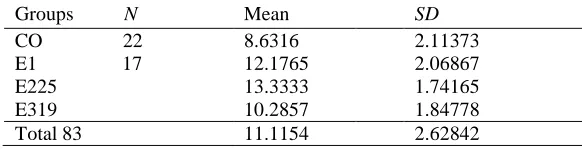
Table 4. Results of Descriptive Statistics on Immediate Posttest Scores
Groups N Mean SD
CO 22 8.6316 2.11373
E1 17 12.1765 2.06867
E225 13.3333 1.74165
E319 10.2857 1.84778
Table 4 illustrates results of descriptive statistics on the scores of the immediate posttest. The observed mean scores of the control and the treatment groups were 8.63, 12.17, 13.33, and 10.28 with the total mean score of all groups which turned out to be 11.11. As the observed means indicated, there was an increase in the mean value of all experimental groups.
Table 5. Results of ANOVA Analysis on Immediate Posttest Scores Sum of
Squares df
Mean
Square F Sig.
Between
Groups 254.118 3 84.706 22.560 .000
Within Groups 277.844 74 3.755
Total 531.962 77
Table 5 displays the outcomes of one-way ANOVA on the immediate posttest. The table clearly indicates that with an F value of 22.56 and df = 3 (p < 0.05, p = .000) there were both between and within groups variations regarding the performances of the groups on the immediate posttest.
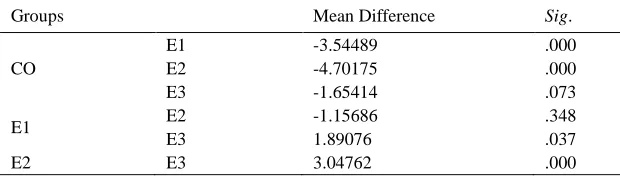
Table 6. Results of Pot-Hoc Scheffe Test on Immediate Posttest Scores
Groups Mean Difference Sig.
CO
E1 -3.54489 .000
E2 -4.70175 .000
E3 -1.65414 .073
E1 E2 -1.15686 .348
E3 1.89076 .037
E2 E3 3.04762 .000
The results of the Scheffe test revealed that the mean difference among the experimental groups was significant. The results displayed in Table 6 demonstrate that regarding their performance on the immediate posttest, the experimental group assigned to EI + PO + ECF procedure (E2) out shined the other two experimental groups (E1 and E3). The same table illustrates that the second more efficient mixed procedure on noticing and subsequent intake of the target elements proved to be VIE + PO + ICF. Although the performance of E3 was much better than that of the control group, it turned out that compared with the other two procedures the effect of VIE + enriched input to which E3 was assigned was less beneficial on promoting the participants’ interlanguage knowledge.
Table 7. Results of Descriptive Statistics on Delayed Posttest Scores
Groups N Mean
SD
CO 22 8.1579 1.89336
E1 17 11.4706 1.32842
E2 25 11.5714 1.71963
E3 19 9.6190 1.35927
Total 83 10.1923 2.10786
Table 7 presents the results of descriptive statistics performed on the scores gained from the delayed posttest. The mean scores of the control and the treatment groups turned out to be 8.15, 11.47, 1157, and 9.61, with a total mean score of 10.19. The least value of the mean score was for the control group and the most for the experimental group assigned to EI + PO + ECF condition.
Table 8. Results of ANOVA Analysis on Delayed Posttest Scores Sum of
Squares df
Mean
Square F Sig. Between
Groups (Combined) 153.259 3 51.086 20.017 .000
Linear Term
Unweighted 19.936 1 19.936 7.811 .007 Weighted 19.113 1 19.113 7.489 .008 Deviation 134.146 2 67.073 26.281 .000 Within
Groups 188.857 74 2.552
Total 342.115 77
The ANOVA analyses displayed that the mean score for the control group turned out to be 8.15 which was not significantly different from that of the same group on the pretest and immediate posttest. In addition, the results in Table 8 demonstrate a minor decline of mean scores which was the case for all the experimental groups. However, the loss was not significant (df = 3, p < 0.05, p = .000). This leads the researcher to accept the hypothesis that all mixed attention drawing procedures exploited to attract the learners’ attention to the target conjunctive adverbs had lasting effects on retention of the targeted elements although the rate of the durable effect was not the same for all groups (EI + PO + ECF > EI + VIE + PO + ICF > VIE + Enriched input).
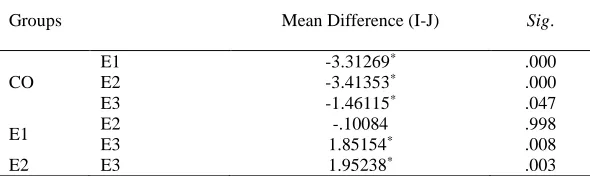
Table 9. Results of Post-Hoc Scheffe Test for Delayed Posttest Scores
Groups Mean Difference (I-J) Sig.
CO
E1 -3.31269* .000
E2 -3.41353* .000
E3 -1.46115* .047
E1 E2 -.10084 .998
E3 1.85154* .008
The results of the Scheffe test presented in Table 9 indicated that the three treatment groups outperformed the control group. Moreover, the results of the Scheffe test revealed that the mean difference between E1 and E2 was not statistically significant (p > 0.05, p = .998). However, the results of the same test showed a statistically significant difference among the mean scores of E1, E2 and E3. That is, with p > 0.05 (p = .008 and .003), the observed mean scores of E1 and E2 on the delayed posttest turned out to be significantly different from that of E3.
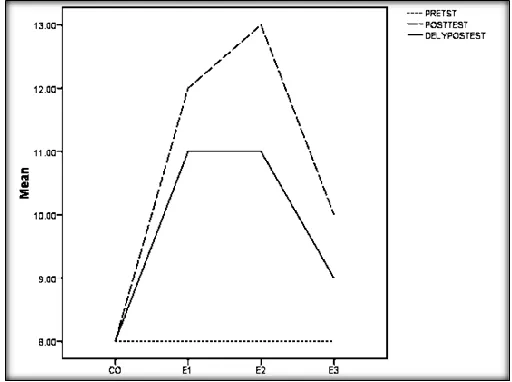
Figure 1. Visual representation of the results of pretest, immediate posttest, and delayed posttest.
Figure 1 illustrates a visual representation of the data obtained from the tests utilized in the study to make the comparison of the performance of the participant learners in all groups both before and after the treatment. It is clear from Figure 1 that there was no change in the mean score of the control group from the pretest to the immediate posttest suggesting that regarding intake of the target forms participant students in this group experienced no gain. As for the experimental groups, however, there was an increase of the mean scores from pretest to immediate posttest. In addition, Figure 1 demonstrates that all the treatment groups were subject to a relative loss of mean scores from the immediate to the delayed posttest, with E3 losing the most, meaning that part of the gained interlanguage knowledge of the forms at issue by the groups was subject to forgetting over the one-month time period.
6. Discussion
input. The results suggest that all the combinations had positive effects on the students’ noticing and intake of the target discourse markers. To be more precise, in terms of the differential effects of three mixed procedures, regarding their performance on the immediate posttest, the group assigned to the EI + PO + ECF condition outscored all the other groups. The second positively effective procedure was VIE + PO + ICF and the third was IE + Enriched input combination. Put simply, the results of immediate posttest indicated that whereas the mean score of all the experimental groups improved from the pretest to the immediate posttest that of the control group did not. This shows that mere implicit instruction condition to which the control group in the present study was assigned was not effective in inducing noticing and intake of targeted linguistic forms. The results, further, demonstrated that although all the instructional groups experienced knowledge gain on the immediate posttest, the amount of this knowledge was not equal (EI + PO + ECF > VIE + PO + ICF > VIE + Enriched input).
One possible explanation for the better performance of the group assigned to the mixed procedure of EI + PO + ECF is that the metalinguistic explanation of the target forms and the explicit feedback provided prior and after the students' involvement in the PO practice as a component of this procedure might have made the targeted discourse markers more salient and the learners more sensitive to their errors before and after their attempts to produce output using the suggested conjunctive adverbs. This is in line with the idea that although opinions vary as how providing learners with metalinguistic explanation of the targeted elements contribute to L2 learning; there is a general consensus that (1) metalinguistic explanation helps learners pay selective attention to linguistic forms in input, (2) metalinguistic explanation makes learners establish clear relationship between form, meaning and function, (3) metalinguistic explanation has the potential of accelerating the development of learners' interlanguage knowledge, and (4) metalinguistic explanation makes learners more sensitive to their grammatical errors (Doughty & Williams, 1998; Ellis, 1997; Norris & Ortega, 2000).
the rules regulating problematic linguistic features such as English discourse markers, in general, and English connectors, as a major class of these markers, in particular. In more implicit forms of instruction like VIE and enriched input, learners themselves should discover the rules, whereas according to Anderson (1983), most L2 grammar is initially learned through conscious study and application of explicit rules. The same idea is echoed by Ellis (1997) who argues that, when compared to EI, in order to be effective implicit instruction is often slow and difficult and needs longer time.
Another plausible reason for the better performance of the learners in E1and E2 might have been due to their being involved in PO activities. This way, the learners were given opportunities to notice the target forms while they were attempting to use them in their written products. Thus, the results of the current investigation accord with those of other studies in that the role of PO has proved to be positively effective in inducing noticing, intake and acquisition of linguistic forms. Regarding the impact of output in L2 learning, what English language learners need, Swain (2000) comments, is not only comprehensible input but also comprehensible output to promote fluency and accuracy in the learners’ interlanguage. Swain (1995) claims that “output may provoke language learners to depart from the semantic, open-ended nondeterministic, strategic processing prevalent in comprehension to the complete grammatical processing required for accurate production” (p. 128). Therefore, output seems to have a potentially significant role in development of syntax and morphology.
Other components of the first two mixed procedures were explicit and implicit CF for E1 and E2, respectively. According to van Patten and Williams (2007), feedback may help make problematic aspects of learners’ interlanguage salient and give them further chances to focus on their production or comprehension, thus promoting L2 development. The two components of the combined procedures of EI + PO + ECF and EI + PO + ICF, explicit and implicit corrective feedback given on what the learners produced in the PO stage of these procedures might have been effective in drawing the participants’ attention to their miss use of the forms at issue. In other words, as the second stage of these mixed procedures was PO where the learners were required to structure their output, we assume that the feedback stage might have provided them with an opportunity to restructure their errant use of the target forms and rectify any miss used target forms in their subsequent output.
the results of our study indicate that the answer to the second research question is YES, meaning that all types of mixed instructional procedures exploited had lasting effects on intake of the conjunctive adverbs. Of course, the positive effects of instructional packages on noticing and intake of the focused forms reduced slightly from the first to the second posttest, but the loss was not statistically significant and this seems to be normal as a proportion of what the learners learned might have been subject to forgetting.
To sum up, our results and a close scrutiny of the current relevant literature demonstrate that there seems to be a correlation between the degree of explicitness of instruction and the level of noticing and subsequent intake. That is to say, according to Jafarigohar and Jalali (2014), the pitfalls of VIE in developing acquisition of the target structure supports the significant effect of explicit metalinguistic explanations on system learning or, as Cruttenden (1981) discusses, internalization of a group of abstract and interrelated linguistic rules, which are fully organized into a system.
7. Conclusion and Recommendations
Adding to the body of related research, this study gives signs of further evidence for using EI, PO, and CF in a mixed fashion to facilitate intake and subsequent acquisition of the target linguistic forms. The findings imply that to promote noticing and intake, EI mixed with PO and CF of both explicit and implicit type would be more effective than using pure input alone. Contrary to the outcomes of other investigations (Jourdenais, 1998; Leow, 2001; Wong, 2003) in that the researchers found no positive effects for VIE, it can be suggested that if VIE is preceded or followed by EI or enriched input, written enhanced input would be beneficial in inducing noticing and intake of the target linguistic forms as this combined procedures are likely to increase the saliency of the target features and to boost the relationship between the level of awareness and language learning. That is, according to Ellis (2005), explicit knowledge of a grammatical structure makes it more likely that learners will attend to that respective structure in the input and carry out cognitive comparison between what they observe in input and their own output.
For Norris and Ortega (2000), explicit type of instruction often involves a variety of teaching strategies including rule presentation and review, focused practice, and negative feedback, whereas implicit treatment consists of one type of exposure. Regarding this, Norris and Ortega propose that this may have affected results demonstrating that explicit treatments are more effective than implicit ones. The results of the current experiment reveal that a combination of VIE, enriched input, EI in the form of rule presentation and metalinguistic treatment, PO, and CF might have contributed to noticing and subsequent intake of the targeted connectors. Whereas we cannot come to a firm conclusion that it was either one of the components of the mixed techniques or the array of procedures, used by the researchers during the instruction time, that were responsible for the promotion of the participants’ interlanguage knowledge of focused discourse markers, our results are consistent with those of previous research (Balcom & Bouffard, 2015; Norris & Ortega, 2000) in that the researchers recommend that such kinds of mixed procedures used as pedagogical interventions have proved beneficial in input-poor language learning environments where learners have little or no exposure to the targeted language beyond the classroom context.
To conclude, in our study, the FFI was operationalized in three different ways in that the procedures exploited included a combination of techniques. All the combined procedures proved to be effective in inducing noticing, intake, and learning of the focused grammatical forms, although the effects of these procedures were not similar. Regarding the effect of using a number of pedagogical techniques in FFI, Corbeil (2005) and Balcom and Lee (2009) demonstrate that a variety of FFI strategies can have a facilitative impact on L2 learners’ learning. Balcom and Lee (2009) report that whereas utilizing a variety of instructional procedures means it is, most of the time, not easy for the research to show which technique(s) led to the desired outcome, it does mean that the findings can be more easily exploited in L2 classrooms, in which teachers typically use different kinds of strategies to meet the individual needs of the students.
Pedagogically put, our findings are significant for language teachers teaching in input poor conditions. EFL teachers can exploit mixed procedures which consist of EI, PO, and ECF while teaching grammatical forms. In addition to instructors, syllabus designers and curriculum developers can benefit from the findings of this research to design and develop appropriate materials enriched with target forms and to prepare guidelines in their texts to help teachers of EFL grammar courses to use suitable mixed methodological procedures to teach grammatical items.
array of techniques, including rule presentation, error treatment (ECF, ICF), VIE, PO, and enriched input each of which can be taken as an independent variable influencing the noticing and intake of the targeted linguistic features. Therefore, there might be variability in outcomes of such studies due to a still absent systematic procedure to select the most reliable combination(s) of techniques in teaching grammatical forms. Simard (2009) asserts that the selection of typographical cues to be used in pedagogical materials is usually based on a personal preference or the means available to the teacher. However, she believes this selection should not be randomly done. Regarding this fact, Ellis (2012) believes that result of the studies done concerning FFI are quite mixed, which is not surprising given that FFI has been put into practice in different ways. As for the current investigation, because, in the three mixed procedures of EI + PO + ECF, EI + PO + ICF, and VIE + Enriched input, the participants received instruction that included a combination of activities, our data do not allow us to make claims about which particular aspect(s) of these mixed instructional interventions led to the gains. Therefore, future research is required to shed light on this still blur phase of our research.
References
Anderson, J. (1983). The architecture of cognition. Cambridge, MA: Harvard University Press.
Balcom, P., & Bouffard, P. (2015). The effect of input flooding and explicit instruction on learning adverb placement in L3 French. The Canadian Journal of Applied Linguistics, 2(18), 1-27.
Balcom, P., & Lee. S. H. (2009). The effect of extensive instruction on learning the passive voice in intermediate SLA. International Journal of Applied Linguistics, 157, 45-74.
Benati, A. (2004). The effects of structured input activities and explicit information on the acquisition of Italian tense. In B. van Patten (Ed.), Processing instruction: Theory, research, and commentary (pp. 207-225). Mahwah, NJ: Lawrence Erlbaum.
Carrol, S., Swain, M., & Rodger, Y. (1992). The role of feedback in adult second language acquisition: Error correction and morphological generalizations.
Applied Psycholinguistics, 13, 173-198.
Carrol, S., & Swain, M. (1993). Explicit and implicit negative feedback: An empirical study of the learning of linguistic generalizations. Studies in Second Language Acquisition, 15, 357-366.
Cruttenden, A. (1981). Item-learning and system-learning. Journal of Psycholinguistic Research, 10(1), 79-88.
De la Fuente, M. (2009). The role of pedagogical tasks and focus on form in acquisition of discourse markers by advanced learners. Little words: Their history, phonology, syntax, semantics, pragmatics, and acquisition. Washington, DC: Georgetown University Press.
Doughty, C., & Varela, E. (1998). Communicative focus on form.In C. Doughty & J. Williams (Eds.), Focus on form in classroom second language acquisition
(pp.114-138). Cambridge: Cambridge University Press.
Doughty, C., & Williams, J. (1998). Pedagogical choices in focus on form. In C. Doughty & J. Williams (Eds.), Focus on form in classroom second language acquisition (pp.114-138). Cambridge: Cambridge University Press.
Ellis, R. (1997). SLA research and language teaching. Oxford: Oxford University Press.
Ellis, R. (2005). Instructed second language acquisition: A literature review. Auckland: Auckland University Press.
Ellis, R. (2012). Language teaching research and language pedagogy. Malden, MA: Wily-Blackwell.
Hernandez, T. A. (2008). The effect of explicit instruction and input flood on students’ use of discourse markers on a simulated oral proficiency interview.
Hispania,91, 11-20.
Hernandez, T. A. (2011). Re-examining the role of explicit instruction and input flood on the acquisition of Spanish discourse markers. Language Teaching Research, 15(2), 159-182.
Izumi, S. (2002). Output, input enhancement, and the noticing hypothesis: An experimental study on ESL relativization. Studies in Second Language Acquisition, 24(4), 541-77.
Izumi, S. (2003). Visual input enhancement as focus on form. Sophia Linguistica,
51, 1-30.
Jafarigohar, M., & Jalali, L. (2014). The effects of processing instruction, consciousness-raising tasks, and textual input enhancement on intake and acquisition of the English causative structures. Iranian Journal of Applied Linguistics, 17(1), 93-118.
Jourdenais, R. O. M., Stauffer, S., Boyson, B., & Doughty, C. (1995). Does textual enhancement promote noticing? A think-aloud protocol analysis. In R. Schmidt (Ed.), Attention and awareness in foreign language learning (pp. 183-216). Manoa: Second Language Teaching Curriculum Center, University of Hawaii.
Krashen, S. (1982). Principles and practice in second language acquisition. Oxford: Pergamon.
Krashen, S. (1985). The input hypothesis: Issues and implications. London: Longman Press.
Larsen-Freeman, D., & Long, M. (1991). An introduction to second language research. London: Longman Press.
Lee, S. k. (2007). Effects of textual enhancement and topic familiarity on Korean EFL students reading comprehension and learning of passive voice. Language Learning, 57(1), 87-118.
Lee, S. K., & Huang, H.T. (2008). Visual input enhancement and grammar learning: A meta-analytic review. Studies in Second Language Acquisition, 30, 307-331. Leow, R. (2001). Do learners notice enhanced forms while interacting with the L2?
An online and offline study of the role of written input enhancement in L2 reading. Hispania, 84, 496-509.
Leow, R. (2007). Input in the L2 classroom: An attentional perspective on receptive practice. In R. DeKeyser (Ed.), Practice in a second language: Perspectives from applied linguistics and cognitive psychology (pp. 21-50) Cambridge: Cambridge University Press.
Levenson, E. (1979). Second language lexical acquisition: Issues and problems.
Interlanguage Studies Bulletin, 4, 147-60.
Long, M. (1991). Focus on form: A design feature in language teaching methodology. In K. de Bot Ginsberg & C. Kramsch (Eds.), Foreign language research in cross-cultural perspective (pp. 39-52). Amsterdam: John Benjamins.
Nahavandi, N., & Mukundan, J. (2013). The impact of textual input enhancement and explicit rule presentation on Iranian EFL learners' intake of simple past tense. English Language Teaching, 6(1), 92-102.
Norris, J. M., & Ortega, L. (2000). Effectiveness of L2 instruction: A research synthesis and quantitative meta‐analysis. Language Learning, 50(3), 417-528. Norris, J., & Ortega, L. (2001). Effectiveness of L2 instruction: A research synthesis
Reinders, H. (2012). Towards a definition of intake in second language acquisition.
Applied Research in English, 1(2), 15-36.
Reinders, H., & R. Ellis. (2009). Effects of two types of positive enhanced input on intake and L2 acquisition. In T. Ellis, R. S. Loewen, R. Erlm, J. Philp, C. Elder, & H. Reinders (Eds.), Intake in second language acquisition (pp. 27-41). Clevedon: Multilingual Matters.
Rosa, E. E., & O'Neil, M. (1999). Explicitness, intake, and the issue of awareness: Another piece to the puzzle. Studies in Second Language Acquisition, 21, 511-566.
Sanz, C., & Morgan-Short, K. (2004). Positive evidence vs. explicit rule presentation and explicit negative feedback: A computer-assisted study.
Language Learning, 54, 35-78.
Sarkhosh, M., Taghipour, B., & Sarkhosh, H. (2013). Differential effect of different textual enhancement formats on intake. Proceedia: Social and Behavioral Sciences, 70, 544-559.
Schmidt, R. (1993). Consciousness, learning, and interlanguage pragmatics.
Interlanguage Pragmatics, 21, 42- 53.
Schmidt, R. (1994). Deconstructing consciousness in search of useful definitions for applied linguistics. ALLA Review,11, 11-26.
Schmidt, R. (1995). Consciousness and foreign language learning. Honolulu: University of Hawaii.
Schmidt, R. (2001). Attention. In P. Robinson (Ed.), Cognition and second language instruction. Cambridge: Cambridge University press.
Sharwood Smith, M. (1993). Input enhancement in instructed SLA. Theoretical bases. Studies in Second Language Acquisition, 15, 165-179.
Shegar, C., Zhang, J. L., & Ling Low, E. (2013). Effects of an input-output mapping practice task on EFL learners’ acquisition of two grammatical structures.
System,17, 1-19.
Shook, D. J. (1994). FL/L2 reading, grammatical information, and the input to intake phenomenon. Applied Language Learning, 5, 57-93.
Simard, D. (2009). Differential effects of textual enhancement formats on intake.
System, 37, 124-135.
Spada, N., & Lightbown, P. (2008). Form-focused instruction: Isolated or integrated? TESOL Quarterly, 42, 181-247.
Stern, H. (1990). Analysis and experience as a variable in second language pedagogy. Cambridge: Cambridge University Press.
Swain, M. (1985). Communicative competence: Some roles of comprehensible input and comprehensible output in its development. In S. Gass & C. Madden (Eds.),
Input in second language acquisition (pp. 90-118). Rowley, MA: Newbury House.
Swain, M. (1993). The output hypothesis: Just speaking and writing are not enough.
Canadian Modern Language Review, 50, 158-164.
Swain, M. (1995). Three functions of output in second language learning. In G. Cook & B. Seildhofer (Eds.), Principles and practice in the study of language
(pp. 125-1440). Oxford: Oxford University Press.
Swain, M. (1998). Focus on form through conscious reflection. In C. Doughty & J. Williams (Eds.), Focus on form in classroom second language acquisition (pp. 64-81). New York: Cambridge University Press.
Swain, M. (2000). The output hypothesis and beyond: Mediating acquisition through collaborative dialogue. In J. Lantolf (Ed), Sociocultural theory and second language learning. Oxford: Oxford University Press.
Swain, M. (2005). The output hypothesis: Theory and research. Handbook of Research in Second Language Teaching and Learning, 1, 471-483.
van Patten, B. (2004). Processing instruction. Mahwah, NJ: Lawrence Erlbaum Associate.
Williams, J., & Evans, J. (1998). What kind of focus and on which forms? In C. Doughty & J. Williams (Eds.), Focus on form in classroom second language acquisition (pp. 139-55). Cambridge: Cambridge University Press.
Williams, J. (2005). Form-focused instruction. In E. Hinkel (Ed.), Handbook of research in second language teaching (pp. 671-691). Mahwah, NJ: Lawrence Erlbaum Associate.
Wong, W. (2003). Textual enhancement and simplified input: Effects on L2 comprehension and acquisition of nonmeaningful grammatical form. Applied Language Learning, 13, 17-45.
Wong, W. (2005). Input enhancement: From theory and research to the classroom. NY: McGraw Hill.
Yoshimi, D. R. (2001). Explicit instruction and EFL learners' use of interactional discourse markers. In K. Rose & G. Kasper (Eds.), Pragmatics in language teaching (pp. 223-244). Cambridge: Cambridge University Press.
Appendix A
Sample of Multiple-Choice Items
Directions: Complete each sentence using the correct conjunctive adverb from the parenthesis.
1. Living alone can be difficult; …………, many people choose to do so.
a) therefore b) moreover c) yet d) as a result
2. We can't afford to buy a car; ………, my wife wants to continue to look for one.
a) besides b) thus c) nevertheless d) moreover
3. Air fares are going down; ………, more and more people are able to afford air travel.
a) otherwise b) while c) since d) therefore
4. Men smoke less than in the past; ...…... the number of women who smoke is increasing.
a) in addition b) however c) in spite of d) as though
5. Scuba diving isn't cheap; …………, it can be expensive.
a) moreover b) so that c) on the contrary d) still 6. Amniocentesis can be used not only to diagnose fetal disorders ………… to determine the sex of the unborn child with 95% accuracy.
a) and b) but also c) so as d) so that
7. He borrowed the money; ………….. , he could finish his education.
a) so as b) therefore c) so that d) such that
8. It is usually ………… lava but gas that kill people during volcanic eruption.
a) not only b) not c) neither d) no
9. Both viruses …………. genes are made from nucleoproteins, the essential chemicals with which living matter duplicates itself.
a) also b) neither c) and d) in addition
10. We must find solution to the problems of pollution; ………., we may all be wearing gas masks one day.
a) otherwise b) so that c) on the contrary d) therefore
Appendix B
Sample Grammaticality Judgment Items
1. Don’t be absent from class; otherwise, you will miss the review.
2. Living alone isn’t easy; therefore, it is popular in some parts of the world. 3. Program provides only not theoretical classes but also practical training. 4. To reach your goals you must both plan work as well as dream.
5. Besides copper, gold, silver, lead, zinc, iron, and uranium are mined in Utah. 6. Despite of some opposition, many city authorities still fluoridate water to prevent
tooth decay.
7. We can use the bike both to ride to school also go to the grocery store. 8. Our last exam wasn't difficult; in addition, it was easy.
9. I enjoyed the trip very much; still, my friend did not.
10. At first, I was going to join the demonstration; and I changed my mind.
Appendix C Sample Cloze Passages
Directions: Complete the paragraph, using the words listed. Use each word only once.
As a result – consequently – however – nevertheless – then – besides – furthermore – moreover – still - therefore
At the beginning of the quarter the students in the section 3 nine o'clock grammar class were miserable. They could not enjoy a cup of coffee during the break; ……….., they asked the instructor if she would think of a way to solve the problem. She told them she would buy a large coffee pot if everyone gave her two dollars; she told them she would buy coffee, sugar, and cream if everyone gave her seventy-five cents a week. The instructor; ……….., didn't collect the money for many days; ………….., the students became more miserable; ………, they couldn't stay awake during the second hour of her class. One student from Saudi Arabia was especially thirsty for a good cup of coffee; ………, every day for the next two weeks he reminded the teacher to get the money from the students. Finally, he decided to collect the money himself. He collected two dollars and seventy-five cents from everyone in the class; ………, he gave the money to the teacher. Now everyone is happy. The teacher; ………, is worried about the mess in her office every day after the students get their coffee; ………., she is happy, too because the students are satisfied; ……….., they will be awake for her class.
Appendix D Sample Jumbled Sentences
Directions: The following sentences from a passage are jumbled. Put them in the correct order to rebuild the original text.
2. In conclusion, I believe that generally people live healthier now.
3. Moreover, new technologies have led to better medicine, and as a result people live longer.
4. However, people have also put on weight because they eat more food than in the past, therefore, we should not blame modern inventions for everything.
5. This is one of the things which have made more people overweight, and this affects their health when they are older.
6. People spend many hours watching television and playing with their computers,
so they do not do so much physical exercise.
7. There is no doubt that modern electric inventions have transformed people's jobs
and their leisure time, so that many people spend less time taking exercise. 8. As far as work is concerned, office employees have always worked sitting down,
and computers have not changed that. Computers have not affected physical job such as farming or building either, and people still do physical work like they did in the past.
9. In fact, other machines such as washing machines and tractors, not computers, have reduced the amount of physical work people do.