doi:10.3926/jiem.2009.v2n1.p1-9 ©© JIEM, 2009 – 2(1): 1-9 – ISSN: 2013-0953
First year reflections: Basic guidelines and future directions
Pep Simo, Mihaela Enache, Jose M. Sallan, Vicenc Fernandez
Universitat Politècnica de Catalunya (Spain)
[email protected]; [email protected]; [email protected]; [email protected]
Abstract:
This issue opens the second volume of the Journal of Industrial Engineering
and Management, and with this issue begins our second year of publication. The aim of
this editorial is to evaluate the 2008 activities, by presenting the members of the Editorial
Board and the reviewers of the journal, as well as by reflecting results of quality, prestige
and visibility of the journal, which are derived from the perception of the authors, who
have sent us their work. Finally, the main conclusions are drawn and future lines of
research for the second volume are presented.
Keywords:
JIEM, editorial, future directions, authors’ satisfaction
1 Introduction
One year after publishing the first editorial (Fernandez et al., 2008), we started the second volume presenting to all the stakeholders of the journal our particular vision regarding the journal’s evolution during the first year. In addition, guidelines and goals for this new volume are provided, with the aim of emphasizing the social responsibility of this open-access scientific publication, like other journals (e.g., Simo & Sallan, 2008) of maximum transparency to the professional and academic community.
doi:10.3926/jiem.2009.v2n1.p1-9 ©© JIEM, 2009 – 2(1): 1-9 – ISSN: 2013-0953
In order to assess some of the above mentioned aspects, we have relied on the journal’s own data (i.e., review times, number of manuscripts received, number of accepted manuscripts), the composition of the editorial board, the board of reviewers, and a satisfaction survey conducted with the authors who have submitted an article for review during 2008.
2 Initial balance
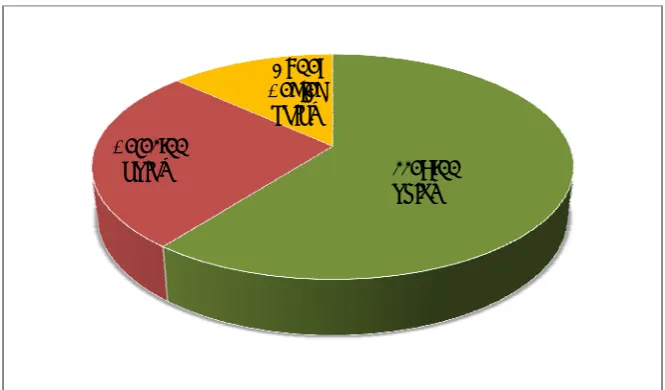
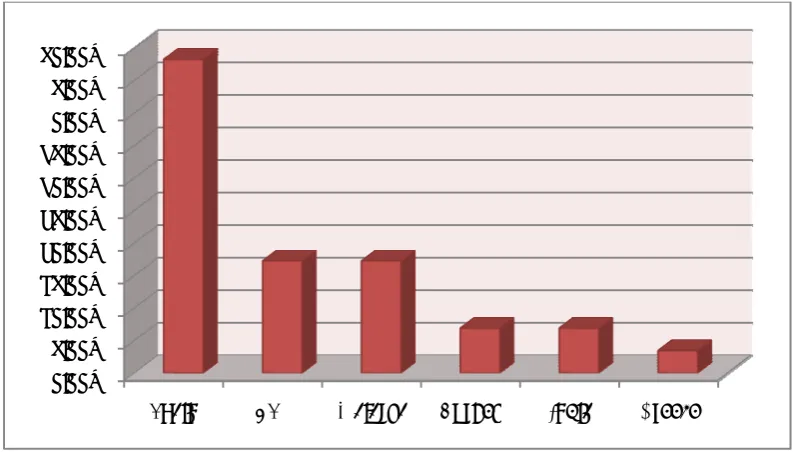
The first volume of the journal included two issues with total of twelve articles and an editorial. Given that the first issue simply opened the journal with a call for papers, we consider that balance of the first year is satisfactory, compared with other similar open access journals. After the call for papers, during 2008 we received 38 manuscripts, out of which 23 were accepted (60.5%), 10 (26.3%) rejected and five remain still under review (13.2%). Out of these 23 papers accepted, 13 (56.5%) were published in 2008 and the rest will be published during 2009. Thus, the average review time is 50 days and the average publishing time 86 days, respectively. However, these figures may slightly vary depending on the last remaining papers received in 2008. The data are available in real time by accessing the following link: http://jiem.org/index.php/jiem/about/statistics?statisticsYear=2008. A total of 29 authors from six different countries have published in JIEM during 2008 and 189 users (among which readers, authors and reviewers) registered with the journal.
Accepted 60,5% Rejected
26,3%
doi:10.3926/jiem.2009.v2n1.p1-9 ©© JIEM, 2009 – 2(1): 1-9 – ISSN: 2013-0953
Figure 2. “Nationalities of the authors who published in JIEM during 2008”
In order assess the satisfaction of the authors who have submitted a paper to JIEM during 2008, a questionnaire, which examines different dimensions that will be explained in the next sections, was designed. The survey, which was totally voluntary and anonymous, was sent to the 101 authors of the 38 articles received in 2008. The response rate was of 26.7%. 88.4% of the authors who completed the survey had the paper accepted for publication. The average age of respondents was 39.02 years (SD = 9.96) and the 23.07% of them were women. With regard to their educational background, 61.53% held a PhD and the rest of them were PhD students. The respondents represented a diverse set of countries: Spain (46.15%), Malaysia (15.38%), USA (11.54%), India (11.54%), Iran (3.85%), Turkey (3.85%), Taiwan (3.85%) and Canada (3.85%). 92.30% of them worked in a Public University, and the rest of them, in other institutions. The questionnaire was conducted using a Likert scale of five points.
3 Quality
Without forgetting the responsibility of the editors, we would like thank to thank the Editorial Board and the team of reviewers, who have voluntarily contributed to the quality of the journal. Despite of being made public (http://www.jiem.org/index.php/jiem/about/editorialTeam), the Editorial Board might have
0,00% 5,00% 10,00% 15,00% 20,00% 25,00% 30,00% 35,00% 40,00% 45,00% 50,00%
doi:10.3926/jiem.2009.v2n1.p1-9 ©© JIEM, 2009 – 2(1): 1-9 – ISSN: 2013-0953
modified throughout the year, and hence, we believe it is important to reflect all its members
Name Afiliation Country
Production, Logistics, Quality, and Operational Research
Ramon Companys UniversitatPolitècnica de Catalunya Spain Albert CorominasSubias UniversitatPolitècnica de Catalunya Spain EulaliaGrifulPonsati UniversitatPolitècnica de Catalunya Spain
Ki-Young Jeong University of Houston-Clear Lake USA
Luis López INCAE Costa Rica
AmaiaLusa UniversitatPolitècnica de Catalunya Spain
Cecilio Mar Molinero University of Kent - Kent Business
School United Kingdom
MonserratPepióViñals UniversitatPolitècnica de Catalunya Spain Information Systems, Technology and Communication
JosepCollBertran UniversitatPolitècnica de Catalunya Spain
Janni Nielsen Copenhagen Business School Denmark
Joan RodónMòdol ESADE Spain
Jose L. Salmerón University Pablo de Olavide Spain
Industrial Economics and Regional Development Manuel Antonio
EspitiaEscuer Universidad de Zaragoza Spain
Henry Etzkowitz Newcastle University United Kingdom
Carlos Rodriguez Monroy Madrid Technological University (UPM) Spain FrancescSoléParellada UniversitatPolitècnica de Catalunya Spain Management, Organizational Behaviour and Human Resources
Marc Bonnet ISEOR - University Jean Moulin Lyon 3 France
Constantin Bratianu Academy of Economic Studies Romania
Francisco Javier Carrillo Tecnológico de Monterrey Mexico Ramon Cladellas Universitat Autònoma de Barcelona Spain Ercilia Garcia-Alvarez Universitat Rovira i Virgili Spain Pablo Martin de Holan Instituto de Empresa (IE) Spain Joan Mundet Hiern Universitat Politècnica de Catalunya
(UPC) Spain
Nelson Phillips Imperial College London United Kingdom
Lidia Puigvert Universitat de Barcelona Spain
Henri Savall ISEOR - Université Jean Moulin Lyon 3 France Ramon Valle Cabrera Universidad Pablo de Olavide Spain Véronique Zardet SEOR - Université Jean Moulin Lyon 3 France Finance, Accounting and Marketing in Industrial Sectors
Jose Antonio Almaça Universidade Autónoma de Lisboa Portugal Valentín Azofra Palenzuela Universidad de Valladolid Spain David Castillo Universitat Oberta de Catalunya
(UOC)
Spain
Francisco Martin Peña Universitat de Barcelona Spain
Carme Martinez Universitat Politècnica de Catalunya
(UPC) Spain
Lourdes Perez EADA International Management Spain
doi:10.3926/jiem.2009.v2n1.p1-9 ©© JIEM, 2009 – 2(1): 1-9 – ISSN: 2013-0953
Education, Training and Professional Skills
Francisco Aliaga Abad Universidad de Valencia Spain
Juan A. Marin-Garcia Universidad Politécnica de Valencia Spain Rafael Pindado Rico Universitat Politècnica de Catalunya
(UPC) Spain
Cristina Poyatos Matas Griffith University Australia
Table 1. “Members of the editorial board during 2008”
Name Afiliation Country
Valentín Azofra Palenzuela Universidad de Valladolid Spain
Marc Bonnet ISEOR - University Jean Moulin (Lyon
3)
France
Ramon Cladellas Universitat Autònoma de Barcelona Spain
Ramon Companys Universitat Politècnica de Catalunya Spain Albert Corominas Subias Universitat Politècnica de Catalunya Spain
Gholam Reza Esmaeilian Universiti Putra Malaysia
Marta Fernández-Olmos University of Zaragoza Spain
SorabhGupta Haryana College of Technology and
Management
India
Frederic GarrigaGarzón Universitat Politècnica de Catalunya Spain
Azman Ismail Universiti Malaysia Sarawak Malaysia
Ki-Young Jeong University of Houston-Clear Lake USA
Anastasia A. Katou University of Macedonia Greece
Rajiv khanduja S.k.i.e.t. Kurukshetra University India
Carl Joachim Kock Instituto de Empresa Spain
L. Siva Rama Krishna Osmania University India
Carmen Llinares Universidad Politécnica de Valencia Spain
Luis López INCAE Costa Rica
Juan A. Marin-Garcia Universidad Politécnica de Valencia Spain
Pablo Martin de Holan Instituto de Empresa (IE) Spain
Francisco Martin Peña Universitat de Barcelona Spain
Carme Martinez Universitat Politècnica de Catalunya Spain Lukasz Maciej Mazur North Carolina State University USA Herwig Mittermayer Universidad Politécnica de Madrid Spain Josefina Lucia Murillo-Luna University of Zaragoza Spain
Lourdes Perez EADA International Management Spain
Rafael Pindado Rico Universitat Politècnica de Catalunya Spain
Cristina Poyatos Matas Griffith University Australia
Juan Carlos Ramón-Solans University of Zaragoza Spain
Joan Rodón Mòdol ESADE Spain
Carlos Rodriguez Monroy Madrid Technological University (UPM) Spain Imma Ribas Vila Universitat Politècnica de Catalunya Spain Albert Suñé Torrents UniversitatPolitènica de Catalunya Spain Joan TarradellasiEspuny EADA Business School / UPC Spain
Ramon Valle Cabrera Universidad Pablo de Olavide Spain
José Ramón Vilana Bystronic Spain
doi:10.3926/jiem.2009.v2n1.p1-9 ©© JIEM, 2009 – 2(1): 1-9 – ISSN: 2013-0953
With respect to the authors’ perception of the different quality dimensions of the journal, the next table shows very satisfactory results, taking into account that the object of the survey was a journal in its first year of publication:
ITEM M SD
The reviewers’ feedback was adequate 4.16 0.89
The editor’s feedback was adequate 4.39 0.82
Overall, the comments and the responses received from the
journal were adequate 4.19 0.86
The information offered to the authors (e.g., editorial policy,
standards of publication, indexing) is clear and concise 4.20 0.79
The journal has a fair and transparent editorial policy 4.16 0.78
Table 3. “Perception of the authors who have submitted an article in 2008 in relation to quality”
4 Prestige
The prestige of the scientific publications is closely linked to the quality of the papers it publishes and it is the scientific community itself that judges it (Simo & Sallan, 2008). On the other hand, as far as we are concerned, as editors, we must work so that the journals’ prestige will be recognized and valued internationally. The main tool for achieving this aim is the journal indexation in different databases of scientific prestige. During this first year, the journal has been indexed/abstracted in seven databases, including Dialnet and DOAJ. Obviously, this is a continuous process, as most indexes require a minimum level of impact of the papers and a minimum of two years of existence of the journal.
doi:10.3926/jiem.2009.v2n1.p1-9 ©© JIEM, 2009 – 2(1): 1-9 – ISSN: 2013-0953
ITEM M SD
The editors of this journal are widely renowned in their academic field 3.75 0.65
The Editorial Board members are recognized experts 3.79 0.62
The entity that publishes the journal is widely renowned 3.61 0.69
The papers published in this journal have high visibility in the scientific
community of the area(s) it specializes in 3.15 1.15
Publications in this journal are recognized by the scientific community
related to the subject area 3.35 0.83
Publications in this journal are recognized by the organization for which I
work 3.37 1.08
This journal is included in relevant scientific databases and/or recognized
by those professionals, who are important to me 2.97 1.28
The papers published in this journal have is a high visibility beyond the
scientific community 3.12 0.94
Table 4. “Perception of the authors who have submitted an article in 2008 in relation to the prestige of the journal”
5 International outreach
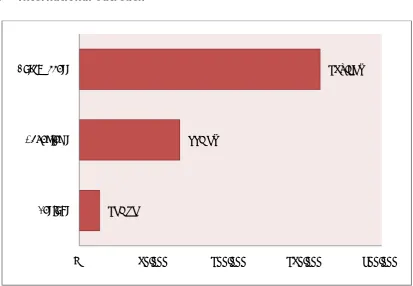
Figure 3. “Visibility of the journal in 2008”
13.473
66.438
159.238
‐ 50.000 100.000 150.000 200.000
doi:10.3926/jiem.2009.v2n1.p1-9 ©© JIEM, 2009 – 2(1): 1-9 – ISSN: 2013-0953
The social responsibility of a journal concerns, among other aspects, the entirely free and open dissemination of its contents, trying to cover the greatest diversity of academic and professional potential. In this regard, since its inception, we have worked to improve the web positioning of the journal and of its papers, reaching a
Google PageRank of 6/10 and very acceptable levels of visibility, with a total of
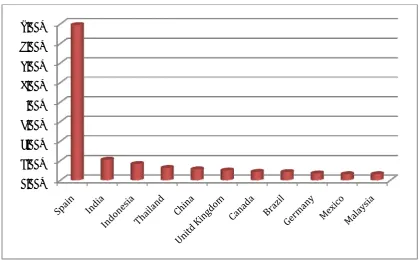
1.37 GB transferred in 2008. This represents a daily average of 36.81 sessions, 181.52 pages seen and 435.08 pages accessed, in more than 90 countries.
Figure 4. “Main countries of access to the journal in 2008”
6 Conclusions and future directions
The readers and the authors are the ones who should evaluate the first year of the journal, based on the papers published and the results presented in this editorial. We believe that we must continue working primarily for enhancing the prestige of the JIEM. As shown by the results of the survey above mentioned, further work is essential to include the journal into databases of scientific credibility and relevance for the various institutions where the authors work. Nevertheless, it is worth noting that this is a relatively slow and steady process in which targets must be set in the medium term. Apart from that, we expect for the next volume to significantly increase the number of databases in which the JIEM is indexed.
doi:10.3926/jiem.2009.v2n1.p1-9 ©© JIEM, 2009 – 2(1): 1-9 – ISSN: 2013-0953
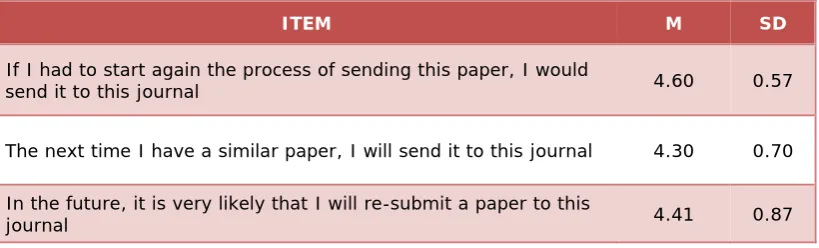
ITEM M SD
If I had to start again the process of sending this paper, I would
send it to this journal 4.60 0.57
The next time I have a similar paper, I will send it to this journal 4.30 0.70
In the future, it is very likely that I will re-submit a paper to this
journal 4.41 0.87
Table 5. “Intention to re-submit a paper to JIEM”
In a similar direction, during the early months of 2009, we have begun to gradually increase the Editorial Board of the journal, trying to make it as international as possible. We are also determined to increase the number of women who form Editorial Board, so that it would be comparable with the number of men, in each area. As a final note, it should be emphasized that the authors’ satisfaction survey reveals that their intention to re-submit is very high, thus we can consider that we are walking in a good direction. That is, despite of being a young journal, we should not forget to genuinely thank the authors the trust they placed in the JIEM.
References
Fernandez, V., Simo, P., Sallan, J. M., & Enache, M. (2008). JIEM: A new exciting journey into the research of industrial engineering and management. Journal of
Industrial Engineering and Management, 1(1), 1-3.
Simo, P., Garcia-Parra, M., Sunyer, S.; Trullas, G., & Jorda, J. M. (2006). From the Editors: An assessment of open access journals: quality, prestige and social responsibility. Intangible Capital, 2(1), 1-20.
Simo, P., & Sallan, J. M. (2008). Intangible Capital: Four years of growth as an open-access scientific publication. Intangible Capital, 4(1), 1-7.
©© Journal of Industrial Engineering and Management, 2009 (www.jiem.org)
Article's contents are provided on a Attribution-Non Commercial 3.0 Creative commons license. Readers are allowed to copy, distribute and communicate article's contents, provided the author's and Journal of Industrial Engineering and Management's names are included. It must not be used for commercial purposes. To see the complete