Journal of Applied Linguistics and Language Research Volume 3, Issue 7, 2016, pp. 240-250
Available online at www.jallr.com ISSN: 2376-760X
* Correspondence: Samira Rahnama, Email: rahnama1192 yahoo.com © 2016 Journal of Applied Linguistics and Language Research
The Effect of Reflective Teaching Practice on Iranian EFL
Learners’ Complexity, Accuracy and Fluency of Oral Speech
Samira Rahnama *
Islamic Azad University, Sepidan branch, Iran
Parisa Abdolrezapour
Salman Farsi University of Kazerun, Iran
Mohammad Ali Ayatollahi
Islamic Azad University, Sepidan branch, Iran
Abstract
Reflection is a professional development strategy that equips language teachers with opportunities to explore, articulate and represent their own teaching practices. This research was conducted to evaluate the impact of English teachers’ reflection on EFL learners’ speaking proficiency as measured in terms of accuracy, fluency and complexity. Employing a quasi-experimental design, the researchers collected the required quantitative data through the audio recording of interviews conducted with the participants in the study and through a measure of teacher reflection. Sixty students (30 males and 30 females) and thirty instructors (15 males and 15 females) were randomly selected from English institutes in Bandar Abbas as the sample of the study. The results revealed that teachers’ reflectivity significantly affects Iranian EFL learners’ oral performance in terms of fluency and learners’ syntactic complexity of oral speech but it was found that those instructed by the high reflective teacher did not show any progress in accuracy of oral speech.
Keywords: reflective teaching, EFL Learners, complexity, accuracy, fluency
INTRODUCTION
LITERATURE REVIEW
Recently, there has been a surge of interest in studying the notion of reflection and in expanding reflective practice. Reflective teaching was first raised by Dewey (1933), who believed that “teachers are not just passive curriculum implementers, but they can also play an active role in curriculum design and educational reform” (p. 49). He suggested that teaching needs to be a process comprising the following components: hypothesizing, investigation, reasoning, testing and evaluation. Reflective action is in effect “the dynamic, continuous and in-depth consideration of any belief or any form of expertise and knowledge by drawing on the grounds that reinforce it" (Dewey, 1933, p. 9). These components will lead to adaptations and modification, if needed, leading to a teaching method which will take account of the class dynamics. This is what today has come to be named "reflective teaching”.
Schon, (1983) describes reflection as a form of mental processing used to fulfill a purpose or to achieve some anticipated outcome. It is applied to gain a better understanding of relatively complicated or unstructured ideas and is largely based on reprocessing knowledge, understanding and possibly, emotions that teachers already possess (Schon, 2009). According to Thomas and Dykes (2011), reflective practicing includes requirements for teachers to not only regularly monitor progress but also to analyze progress monitoring data, reflect on each student’s progress and modify teaching practices based on each student’s response to instruction. Also, Bruder (2010) discusses that the use of reflective teaching influences accountability of learners. Teachers' feelings and self-reflection is regarded as a tool to motivate learners in reflective processes.
Hung (2008) describes reflection as a professional development strategy through which professionals are equipped with opportunities to explore, articulate and represent their own ideas and knowledge. Boud, Keogh and Walker (1985, p. 19) view reflection as “intellectual and affective abilities in which individuals engage to explore their experiences in order to achieve new understandings and appreciations”.
One of the articles conducted on reflective practice and speaking ability was the one carried out by Frolikova (2014) which aimed to describe a methodology that has been created to improve students’ ability to reflect that results in their speaking skills development. It resulted that integrating reflective practice into the course of study for intending teachers has made the learning process more efficient because it facilitated and developed students’ reflection and enabled them to make informed decisions concerning their learning strategies and acquired skills.
Skehan (2009) introduced Complexity, accuracy, and fluency as useful measures of second language performance. He found that performance in CAF “complexity, accuracy, and fluency” requires attention and working memory involvement. Committing attention resources to one may have a negative impact on others. According to Ellis (1987), depending on the situation, an L2 learner’s attention might be focused on one of the three aspects of performance while jeopardizing the other two. For example, L2 learners who are more concerned with the correctness of what is said might not pay much attention to how something is said or vice versa. Ortega (1999) found that L2 learners, especially those at lower levels of proficiency, find it difficult to attend to meaning and form at the same time. L2 learners’ problems in production may be lessened if they are given time to plan before they produce an L2 utterance more accurate and fluent. According to Levelt (1989), to communicate orally learners have some challenges with some cognitive processes while conveying messages according to situation and purpose, choosing correct rules and appropriate words, evaluating mechanical articulation as phonetic and intonation, and monitoring for accuracy and fluency or self-correcting if necessary.
significantly greater learners’ accuracy and fluency. The greater the quality of the interaction, the greater there is found a trend to accuracy. Therefore, tasks can lead to a greater degree of focus on CAF. The present study attempts to investigate the role of reflective practice and training strategy in development of intermediate Iranian EFL learners overall teaching skills specially their speaking performance, as well as to investigate the effect of this strategy on learners’ mastery in speech performance. It also aims to find whether the teacher’s reflection and his/her feelings as a tool can help learners become more motivated on accountability and to have fluent, accurate communicative speech in and out of the classroom, and this research is going to have a different and innovative view to the subject.
RESEARCH QUESTION
Does Iranian EFL teacher’s reflection significantly affect learners’ speaking as measured in terms of complexity, accuracy, and fluency? Based on the theoretical and empirical evidence which supported the effect of applying different types of tasks (Ellis, 2009; Kormos, 2014) on improving learners’ oral speech and following Frolikova (2014) who pointed to the effect of reflective practice on speaking performance, the following hypotheses were made:
H1: Reflective teaching practice significantly affects Iranian EFL learners' speaking performance in terms of accuracy.
H2: Reflective teaching practice significantly affects Iranian EFL learners' speaking performance in terms of fluency.
H3: Reflective teaching practice significantly affects Iranian EFL learners' speaking performance in terms of complexity.
METHODOLOGY
Participants
For the purpose of this research, the researcher selected thirty English teachers (15 males and 15 females) among the fifty teachers who were in the age range of 25 to 45 years old (Mean 32), with 1 to more than 15 years teaching experience. In addition, sixty intermediate English learners (30 males, 30 females) with 3 to 4 year experience of learning English were selected by simple random sampling to participate in the study. The participants were divided in to two groups equally. They were selected through a test to ensure their homogeneity in their English level. The participants varied in age from 15 to 17 (Mean 16). All participants (teachers and learners) agreed to be videotaped and audiotaped. The researcher obtained the required demographic information (participants’ age, gender, graduation degree and teaching experience) through the data gathered by the questionnaire.
Instruments
pretest and posttest, for gathering data to find firstly, the students’ level prior to the study, second, teachers’ awareness of their teaching style, as following:
Oxford Placement Test (OPT)
Oxford Placement Test (2001) was used to determine learners’ L2 proficiency level, and to ensure the homogeneity of learners at the onset of the study, The Oxford Placement Test is a valid and reliable test and a highly effective instrument in grouping students into appropriate levels. This test consisted of grammar (20 items), vocabulary (20 items), and reading comprehension (20 items). Participants’ responses were scored on a scale of 60 points. Conventionally those who could attain 39 and above (out of 60) are considered as intermediate learners. Results revealed that participants had a range of scores between 42 and 49.
Teacher’s Reflection Inventory
The teacher reflectivity questionnaire used in this study was designed by Akbari, Behzadpour and Dadvand (2010). The questionnaire included 29 items on a 5-point Likert scale ranging from 1=never to 5=always. The questionnaire measures five dimensions of reflectivity, namely, affective, cognitive, metacognitive, practical and critical.
Data Collection procedure
Audio recording procedure was used to investigate learners’ proficiency on their speaking and measure fluency, accuracy and complexity of learners’ speech. Audio recording enables researchers to document the learners’ proficiency on their foreign language speaking, and gives learners an opportunity to speak on a general topic during the recording step, an opportunity to notice a difference between the language produced and their explicit knowledge of the target language. This stage of the study was conducted in a language institute through interviews. All interviews produced at both stages (pre-test and post-test) were audio-recorded, and then transcribed by the researcher. The transcribed interviews were then segmented, coded and scored based on the measures chosen for assessing complexity, accuracy and fluency. All intermediate EFL learners and their teachers signed the informed consent forms for participating in this study. To measure the students’ CAF, the researchers used Ahmadian's (2012) formula as follows:
The Complexity measuring phase consists of two different parts.
a) Syntactic complexity: The amount of subordination -the ratio of clauses to AS units (the Analysis of Speech Unit) - in the participants’ production. In this formula, the mistakes are not considered.
The Accuracy measuring phase also consists of
a) Error-free clauses: In this phase, accuracy is measured according to the number of error-free clauses, the percentage of clauses that were not erroneous. All syntactic, morphological and lexical errors were taken into account.
b) Correct verb forms: Here the percentage of all verbs that were used correctly in terms of tense, aspect, modality and subject–verb agreement were considered. To measure Fluency two different rates are applied.
a) Rate A: This part was done according to the number of syllables produced per minute of speech - the number of syllables within each narrative, divided by the number of seconds used to complete the task and multiplied by 60.
b) Rate B: The procedure for Rate A was followed again, but all syllables, words and phrases that were repeated, reformulated or replaced were excluded.
DATA ANALYSIS
In order to assess the research hypotheses, first the relevant and vital information was gathered out of the pre- and post-study interviews conducted with each participant including teachers and learners and the questionnaire taken throughout the study. Then statistical methods including descriptive and inferential analysis were run by SPSS software. Cronbach’s Alpha was used to compute a reliability scores for teachers’ reflection Inventory. Data normality in pretest and posttest was checked by kolmogrof-Smirnof normality test. Paired sample t-test was employed to analyze the hypotheses which investigated the effect of teachers’ reflection on EFL learners speaking proficiency. By comparing the means in this statistical method, the researchers evaluated the differences between high and low reflective teachers’ performance in improving Iranian EFL learners’ measures of speaking proficiency which consists of accuracy, fluency and complexity.
RESULTS
Table 1.Paired Samples T –Test for the first accuracy measure of the low reflective Group
Paired Differences
t df Sig.
(2-tailed) Mean
Std. Deviatio
n
Std. Error Mean
95% Confidence Interval of the
Difference
Lower Upper
Pair 1
LR error free clause pre –
LR error free clause post
.02933 .15349 .02802
-.08665 .02798
-1.047 29 .304*
LR correct verb form pre –
LR correct verb form post
.09233 .12993 .02372
-.14085 -.04382
-3.892 29 .001*
Table 1 shows that while the low reflective group's progress in correct verb was significant (t = 3.892, p = 0.001, df = 29, CL=95%), its progress in error free clause was not significant (t = 1.047, p = 0.304, df = 29, CL=95%). Table 2 reports on the high reflective group's progress.
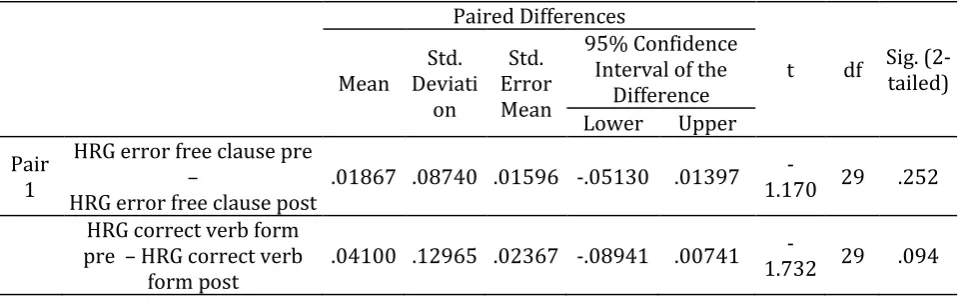
Table 2. Paired Samples T –Test for Accuracy Measures of the High Reflective Group
Paired Differences
t df Sig.
(2-tailed) Mean
Std. Deviati
on
Std. Error Mean
95% Confidence Interval of the
Difference
Lower Upper
Pair 1
HRG error free clause pre –
HRG error free clause post
.01867 .08740 .01596 -.05130 .01397 1.170 - 29 .252
HRG correct verb form pre – HRG correct verb
form post
.04100 .12965 .02367 -.08941 .00741 1.732 - 29 .094
Table 3. Paired Samples T –Test for Fluency Measures of the Low reflective Group Paired Differences
t df Sig. (2-tailed)
Mean Std.
Deviation Std. Error Mean
95% Confidence Interval of the
Difference
Lower Upper
Pair 1
LRG rate A pre LR rate A post
.02933 .15349 .02802 -.08665 .02798 -1.047 29 .304
LRG rate B pre LR rate B post
.09233 .12993 .02372 -.14085 -.04382 -3.892 29 .061
Table 3 shows reports on levels of English fluency in producing numbers of syllables per minute of speech at the beginning and end of the course of instruction. The participants in the low reflective group were found to be at similar levels of fluency in producing numbers of syllables per minute of speech at the beginning and end of the course of instruction as shown by rate A (t =-1.047, df = 29, CL=95%), indicating no progress. Similarly, their progress was insignificant when it was measured by rate B measure of fluency (t =-3.892, df = 29, CL=95%). Table 4 reports on the high reflective group's progress.
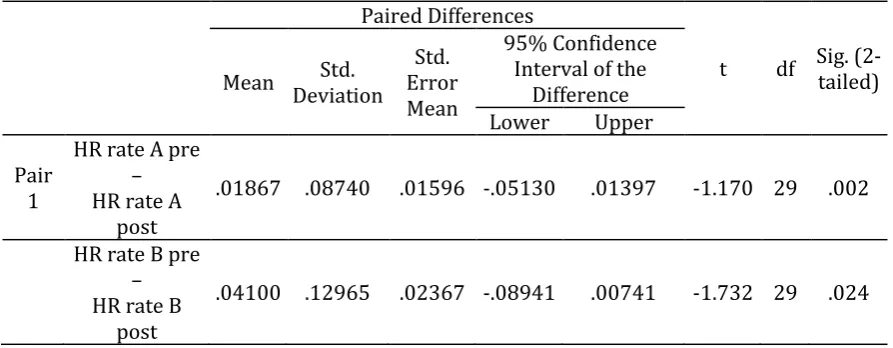
Table 4. Paired Samples T –Test for Fluency Measures of the high reflective Group Paired Differences
t df Sig.
(2-tailed)
Mean Std.
Deviation Std. Error Mean
95% Confidence Interval of the
Difference
Lower Upper
Pair 1
HR rate A pre – HR rate A
post
.01867 .08740 .01596 -.05130 .01397 -1.170 29 .002
HR rate B pre – HR rate B
post
.04100 .12965 .02367 -.08941 .00741 -1.732 29 .024
Table 4 shows that participants instructed by high reflective teachers were found to progress significantly in producing numbers of syllables per minute of speech before and after the course of instruction as measured by rate A (t =-1.170, df = 29, CL=95%) and rate B (t =-1.732, df = 29, CL=95%). In sum, the results support the second hypothesis that teacher’s reflection significantly affect learner’s fluency.
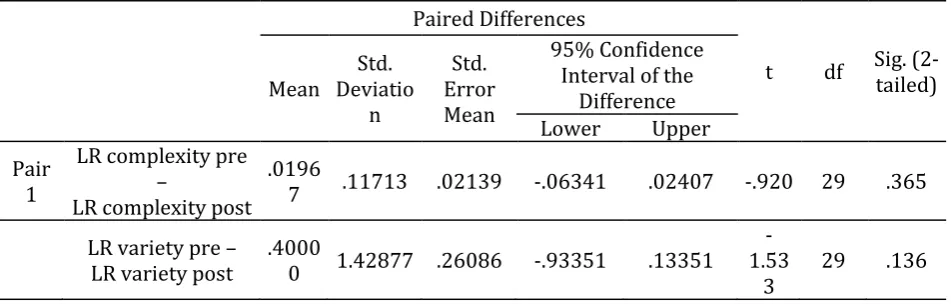
Table 5. Paired Samples T –Test for complexity measures of the low reflective Group Paired Differences
t df Sig.
(2-tailed) Mean Std. Deviatio n Std. Error Mean 95% Confidence Interval of the
Difference
Lower Upper
Pair 1
LR complexity pre –
LR complexity post .0196
7 .11713 .02139 -.06341 .02407 -.920 29 .365
LR variety pre – LR variety post
.4000
0 1.42877 .26086 -.93351 .13351
-1.53
3
29 .136
Table 5 indicates that participants instructed by low reflective teachers were found to be at similar levels of English complexity in producing syntactic complexity before and after the course of instruction (t =0.920, p = 0.136, df=29 CL=95%). It also indicates that participants instructed by low reflective teachers were found to be at similar levels of complexity in producing syntactic variety at the beginning and end of the course of instruction (t =0.13351, p = 0.136, df=29 CL=95%), indicating no progress. Table 6 reports on the high reflective group's progress.
Table 6. Paired Samples T –Test for complexity measures of the high reflective Group Paired Differences
t df
Sig. (2-tailed) Mean Std. Deviatio n Std. Error Mean 95% Confidence Interval of the
Difference
Lower Upper
Pair 1 HR complexity pre HR complexity post
-.04400 .07243 .01322 -.07104 -.01696
-3.328 29 .002*
HR variety pre HR variety post
-.50000 1.81469 .33132 -1.17762 .17762
-1.509 29 .142
Table 6 indicates that the difference observed in the scores obtained for the first measure of complexity (i.e. syntactic complexity) of the students instructed by high reflective teachers was significant from pre-test to post-test (t =3.328, p = .002, df=29, CL=95%), However, the difference for the second measure (i.e. syntactic variety) was not significant (t = 1.509, p = 0.142, df=29 CL=95%). Thus, teacher’s reflectivity affects the learner’s syntactic complexity of oral speech but not the syntactic variety.
DISCUSSION
measures of fluency has been confirmed and participants instructed by high reflective teachers showed improvement in producing numbers of syllables per minute of speech prior and after the treatment. In addition, the results gained confirmed the effect of instruction by high reflective teacher and learners’ syntactic complexity of oral speech, in reverse they rejected the relation between high reflection and syntactic variety. Thus, with regard to fluency, it was revealed that the high reflective group progressed in both rate A and B measures and the results of Thai and Boers (2015) were in accordance with our findings in that they revealed that task repetition leads to performance improvement in learners and fluency was enhanced in the shrinking-time condition with no significant changes in learners’ complexity or accuracy in that condition. De Jong and Perfetti’s (2011) findings were also in line with this research’s findings.
No piece of research could be deemed as perfect and complete. Due to time limitation, only 50 participants (equal males and females groups of students) and 30 teachers (equal males and females groups of teachers)) were included in this research and all teachers were from English language institutes in Bandar Abbas (Iran). Had the researcher had more time, teachers from other cities or from other academic levels (i.e. university level) could have been added to the research and the results could have more generalizability.
REFERENCES
Ahmadian, M. J. (2012). The effects of guided careful online planning on complexity, accuracy, and fluency in intermediate EFL learners’ oral production: the case of English articles. Language Teaching Research,16 (1), 129–49.
Ahmadian, M.J., & Tavakoli, M. (2011). The effects of simultaneous use of careful online planning and task repetition on accuracy, fluency, and complexity of EFL learners’ oral production. Language Teaching Research, 15 (1), 35–59.
Boud, D., Keogh, R., & Walker, D. (1985). Reflection: Turning experience into learning. London, England: Kogan Page.
Bruder, M. B. (2010). Early childhood intervention: A promise to children and families for their future. Exceptional Children, 76 (3), 339-355
Burton, J. (2009). Reflective practice. In Burns, A. & Richards. J. C. (Eds.). The Cambridge guide to second language teacher education (pp. 298-307). New York: Cambridge University Press.
De Jong, N., & Perfetti, C. (2011). Fluency training in the ESL classroom: An experimental study of fluency development and proceduralization. Language Learning, 61(2), 533–568.
Dewey, J. (1933). How we think: A restatement of the relation of reflective thinking to the educative process. Boston, MA: Houghton Mifflin Company.
Ellis, R., & Yuan, F. (2003). The effects of planning on fluency, complexity, and accuracy in second language narrative writing. Studies in Second Language Acquisition, 26, 59–84.
Frolikova, E. (2014). Reflection-Based Methodology of Developing Speaking Skills. Journal of the European Teacher Education Network, 9, 102-112.
Hung, H. (2008). Teacher learning: Reflective practice as a site of engagement for professional identity construction. US- China Education Review, 5 (5), 39-49.
Lambert, C., & Kormos, J. (2014). Complexity, Accuracy, and Fluency in Task- based L2 Research: Toward More Developmentally Based Measures of Second Language Acquisition. Applied Linguistics, 1-9.
Levelt, W. (1989). Speaking: From Intention to Articulation. The MIT Press.
Ortega, L. (1999). Planning and focus on form in L2 oral performance. Studies in Second Language Acquisition, 21, 109–48.
Schon, D.A. (1983). The Reflective Practitioner: How Professionals Think in Action. Temple Smith. NewYork: Basic Books.
Schon, D. A. (1987). Teaching Artistry through Reflection-in-action. In Educating the reflective practitioner: Towards a new design for teaching and learning in the profession (pp.22-40). SanFrancisco, CA: Jossey-Bass Publishers.
Schon, D. A. (2009). The reflective practitioner : how professionals think in action. Aldershot: Ashgate.
Skehan, P. (2009). Modeling second language performance: integrating complexity, accuracy, fluency, and lexis. Applied Linguistic, 30 (4), 510–32.
Thai, C., & Boers, F. (2015). Repeating a Monologue under Increasing Time Pressure: Effects on Fluency, Complexity, and Accuracy. TESOL International Association. DOI: 10.1002/tesq.232
Thomas, S. B., & Dykes, F. (2011). Promoting successful transitions: What can we learn from Reflective Teaching Instruction (RTI) to enhance outcomes for all students? Preventing School Failure, 55, 1-9.
Vercellotti, M. L. (2012). Complexity, Accuracy, and Fluency as Properties of Language Performance: The Development of the Multiple Subsystems over Time and in Relation to Each Other. (Unpublished Ph. D. dissertation). University of Pittsburgh, USA. Wach, A. (2015). Action Research Promoting Pre- Service Teachers’ Reflections through
a Cross-Cultural Keypal Project. Language Learning & Technology, 19 (1), 34–45. Yang, S. H. (2009). Using blogs to enhance critical reflection and community of practice.