ABSTRACT
DOTGER, SHARON RUTH. Cognitive and Developmental Components of Understanding the Nature of Science. (Under the direction of M. Gail Jones).
The purpose of this study is to determine the degree to which years of education, college major, or reflective judgment stage influences individual’s understandings of the nature of science. Using a cross-sectional design influenced by the literature describing the development of reflective judgment and nature of science understandings, this study encompasses the viewpoints of 323 individuals from ninth grade through graduate study. This research involves the careful selection of instruments for assessing these two complex constructs, and the processes used to select and rate participants responses is described in detail. Multinomial ordinal regression was used to determine the significance of educational level, major, and reflective judgment on nature of science views. Results indicate that high school students as a whole are least likely to respond appropriately to questions about the nature of science. However, the performance of college students is inconsistent with
COGNITIVE AND DEVELOPMENTAL COMPONENTS OF UNDERSTANDING THE NATURE OF SCIENCE
by
SHARON DOTGER
A dissertation submitted to the Graduate Faculty of North Carolina State University
in partial fulfillment of the requirements for the Degree of
Doctor of Philosophy
SCIENCE EDUCATION
Raleigh 2006
APPROVED BY:
ii DEDICATION
To my great-grandmother, Mary Gazda Kaszyca, whose unique approaches to life and education have inspired me throughout the years.
To my grandparents, Kenneth & JoAnne Vadasy and Swann & Ruth Crutchfield, thank you for always demonstrating your love and support.
To my brother, Chris Crutchfield, thank you for always being there to listen. To my sister, Cathy Crutchfield, your passion always helps propel me forward.
To my parents, Steve & Cheryl Crutchfield, you’ve always been behind me. I’d need another dissertation to describe all that you mean to me. On a side note, as far as being a student, I’m done.
To the girls, Kerri Barnhart, Sharon Cobb, Amanda Johnson, Bethany Smith, and Leslie Snow. I never knew that friendship could be like this.
To the Mahr family, you help Ben and I keep it all in perspective.
BIOGRAPHY
Sharon Ruth Crutchfield was born in Huntsville, Alabama in August of 1976. Her early years were punctuated by five moves that finally settled the family in Concord, North Carolina in the fall of 1990. After high school, she earned a Biology degree in 1998 from the University of North Carolina, Chapel Hill and graduated with the honor of Morehead
Scholar.
Sharon immediately began her teaching career in Concord, attending courses for teaching certification at night at the University of North Carolina, Charlotte. In December of 1999, she married Benjamin Dotger. In 2001, she began her studies for her Master’s degree at Montana State University. One week after completing the Master’s and after five years of public school teaching, she and Ben moved to Raleigh to attend North Carolina State
University.
iv ACKNOWLEDEMENTS
No dissertation is solely the work of one individual. There are many who have supported my efforts to complete this research and I am grateful to each of them.
Dr. M. Gail Jones, my advisor and chairperson, was supportive of this research from the first car ride in which we talked about it. Her energy and fervor for the research process have been instrumental in moving this project from an idea to a reality.
My committee members, Dr. Glenda Carter, Dr. Len Annetta, and Dr. Dave
DeMaster offered much advice and guidance throughout. Their careful reading, listening, and commentary have been much appreciated.
Dr. Alan Reiman, a teacher and mentor, helped me refine my conceptions of
reflective judgment and has always made himself available for questions. I am consistently impressed by his commitment to living and demonstrating the principles he teaches others.
Dr. Bonnie Fusarelli encouraged me through the process of graduate school. Her mentorship, on both a professional and personal level, has given me the confidence to continue the journey into the academy.
Ben Dotger, my husband and colleague, who defends his dissertation the same day as I do, has listened to multiple ideas, read drafts of my work, soothed and supported me
TABLE OF CONTENTS
LIST OF TABLES ...vii
LIST OF FIGURES... viii
INTRODUCTION ...1
THE INFLUENCE OF THE NATURE OF SCIENCE ON SCIENCE EDUCATION: A REVIEW OF THE LITERATURE...1
Method...5
Historical Challenges for Defining NOS...5
Including NOS in the K-12 Science Curriculum ...10
Educating Teachers about Nature of Science ...14
Preservice Teacher Education...15
Measuring NOS Understandings ...15
Conceptions of NOS...21
Students’ Conceptions ...25
Teachers’ Conceptions...25
Developing NOS Understandings ...26
Student Development ...26
Teacher Development...28
Discussion...30
Bibliography ...34
USING THE VIEWS-ON-SCIENCE-TECHNOLOGY-SOCIETY INSTRUMENT TO COMPARE NATURE OF SCIENCE VIEWS BETWEEN GROUPS ...44
Defining the Nature of Science...45
Developing NOS understandings...48
Challenges in Assessing Students’ Knowledge of NOS ...50
Goal of the Study ...53
Methodology ...53
Selection of VOSTS questions...53
Rationale of rankings...56
Participants...65
Recruitment...65
Demographics ...66
Analysis ...67
Effect of Educational Level on VOSTS response...67
Effect of College Major on VOSTS response...70
Limitations...72
Discussion...72
Bibliography ...76
EXPLORING DIFFERENCES IN VIEWS OF NATURE OF SCIENCE AS A FUNCTION OF THE DEVELOPMENT OF REFLECTIVE THINKING ...86
Reflective Judgment...90
Nature of Science ...94
Study Description...95
Instrumentation ...95
vi
Analysis ...98
Scoring the Reasoning About Complex Issues (RCI) Test ...98
Scoring VOSTS responses...99
VOSTS response by reflective judgment ...99
Limitations...102
Discussion...102
Bibliography ...105
APPENDIX...110
A...111
LIST OF TABLES
Table 1: Assessments of NOS………………...16
Table 2: Teachers, Students, & Scientists Conceptions of NOS...22
Table 3: Components of the nature of science...47
Table 4: Alignment of VOSTS questions to NOS characteristics...54
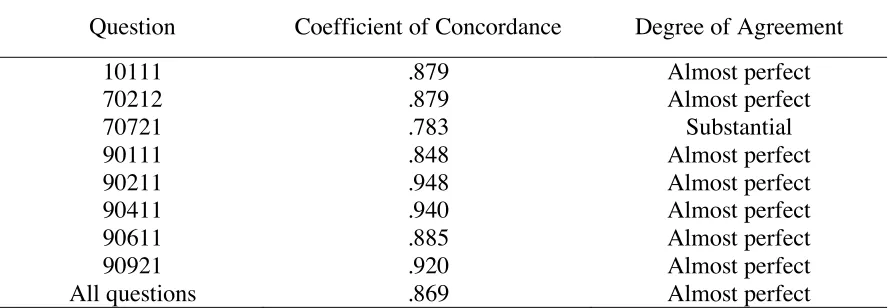
Table 5: Kendall’s W coefficients of concordance...55
Table 6: VOSTS Question 10111, with rankings...56
Table 7: VOSTS Question 70212, with rankings...58
Table 8: VOSTS Question 70721, with rankings...59
Table 9: VOSTS Question 90111, with rankings...60
Table 10: VOSTS Question 90211, with rankings...61
Table 11: VOSTS Question 90411, with rankings...62
Table 12: VOSTS Question 90611, with rankings...63
Table 13: VOSTS Question 90921, with rankings...64
Table 14: High school student demographics (percentages)...65
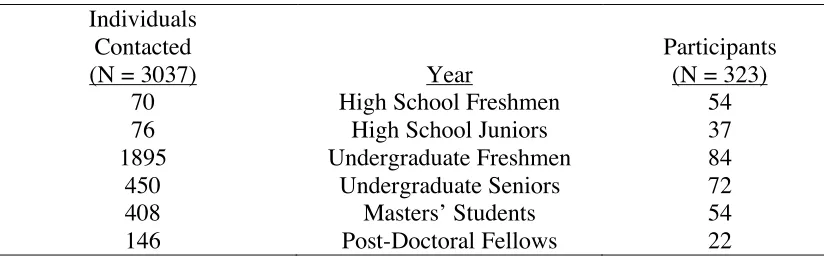
Table 15: Study participants, by year of education...66
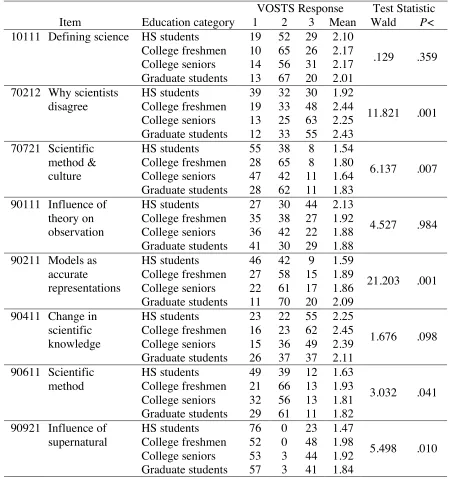
Table 16: Ordinal regression results for the effect of Education on VOSTS response...69
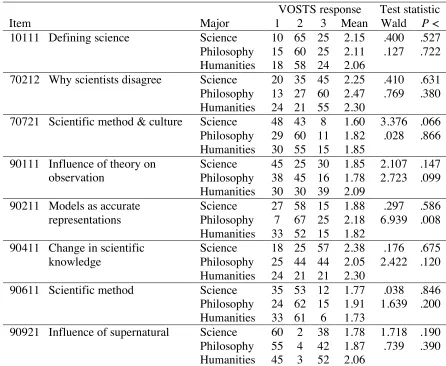
Table 17: Ordinal regression results for the effect of Major on VOSTS response...71
viii
LIST OF FIGURES
INTRODUCTION
This dissertation is organized into three articles, each of which describes a component of the overall dissertation study. The first article describes the current research on the nature of science including a discussion of how nature of science is defined from multiple
perspectives. Furthermore, the first article analyzes prior research on the assessment of students’ understandings of the nature of science. The second article discusses the use of the Views-on-Science-Technology-Society assessment to measure 323 students’ understandings of nature of science. The third article describes a student of 323 individuals’ concepts of nature of science as well as these individuals’ levels of reflective judgment. A discussion of nature of science in relationship to cognitive development is included. In the paragraphs that follow, each article is identified by its title and a brief abstract.
THE INFLUENCE OF THE NATURE OF SCIENCE ON SCIENCE EDUCATION This study analyzed prior research on the articulation, design, and assessment of nature of science objectives for K-12 science education. It documents the emerging
consensus regarding the definition of nature of science and the importance of addressing this topic through explicit and reflective practice. Furthermore, this review describes the
difficulty in developing understandings of the nature of science for both students and
2 USING THE VIEWS-ON-SCIENCE-TECHNOLOGY-SOCIETY INSTRUMENT TO COMPARE NATURE OF SCIENCE VIEWS BETWEEN GROUPS
This study examined the the Views-on-Science-Technology-Society (VOSTS) (Ryan & Aikenhead, 1992) assessment as a tool to measure students knowledge nature of science. Ninth grade through graduate school students’ views were measured using a subset of questions from the VOSTS. Statistical comparisons of students’ views were made across the educational levels represented. Comparisons were made among college students according to their majors. The VOSTS questions and the subsequent analysis of ratings of answer choices are presented. Analysis was conducted using multinomial ordinal regression, resulting in a Wald chi-square test statistic. Each question was analyzed separately. Results indicated that high school students responded to VOSTS questions significantly differently from college students for five of the eight questions. College major had minimal effect on the responses of college students.
EXPLORING DIFFERENCES IN VIEWS OF NATURE OF SCIENCE AS A FUNCTION OF THE DEVELOPMENT OF REFLECTIVE THINKING
The science education community has worked for years to develop nature of science understandings among students and teachers. Theses efforts have yielded mixed results. Reflective judgment, which describes an individual’s cognitive processes as he/she makes decisions about complex, ill-structured problems, is related to the types of thinking
THE INFLUENCE OF THE NATURE OF SCIENCE ON SCIENCE EDUCATION: A REVIEW OF THE LITERATURE
Citizens in Western societies are confronted daily with the need to understand science-related social issues like genetically modified foods, stem cell research, products including nanotechnology, and vaccinations. The complexity of these issues raises questions about how to best prepare citizens to make decisions related to science and technology in their lives. What should be the goals for the science taught in schools? Is the goal to prepare future scientists or, alternatively, to prepare laypeople to become consumers of science? Are these two ideas mutually exclusive, or can school science serve them simultaneously? Is an understanding of science, its process, and its products necessary in order to sustain
democracy? These issues are at the heart of the debate to reform science education. As demonstrated by DeBoer (1996), scientists often push for the preparation of future scientists, while K-12 teachers, by necessity, focus on broadly preparing students who will go out into a variety of occupations. Can we educate all citizens about the nature of scientific inquiry, including the fundamental premises that drive scientific research, while also providing students with a solid foundation of essential scientific concepts and processes?
4 many countries such as the United States, a single curriculum tries to address the needs of the future scientists as well as the future consumers of science. One perspective is that science curricula ought to be based on ideas that are most likely to enter the public discourse or influence personal actions (Millar, 1996) and these ideas should be evaluated based on their utility for most students (Osborne, et al., 2003). Thus, this perspective concludes that the aim of public schooling in science is to produce more effective citizens, rather than future
scientists (Smith & Scharmann, 1999).
Questions regarding the purpose of science teaching have driven science educators to include the nature of science (NOS) as a major component of standards, goals, and curricula in an effort to serve all students. The potential success of these efforts has been questioned, with resolution of the challenge recommended by including the entire educational
Method
This literature review evaluates the progression of the effort to include NOS in K-12 instruction and pre-service teacher preparation since the late 1960’s. The literature describes methods for evaluating individuals’ understandings of NOS, the results of these evaluations with students, teachers, and scientists, as well as suggestions for the inclusion of NOS in curriculum and instruction. These articles were collected from ERIC, the Web of Science, and PsychInfo databases using search terms like nature of science, scientific literacy, epistemology of science in education and philosophy of science. Additional articles were found by scanning the reference list of recently published articles about NOS.
These articles were then grouped based on the type of participant included in the study, whether student, teacher, or scientist. Some articles report the development or
evaluation of an instrument and others include participants’ perceptions of NOS as reflected in the instruments. Many articles discuss the reasons NOS should be addressed for science students in K-12 and undergraduate education. Historically, it has been difficult to articulate what is meant by NOS and to write educational objectives for NOS instruction. Articles that address this issue are discussed. Most articles include one or more of above the tenets and are organized accordingly.
Historical Challenges for Defining NOS
6 Over time, tenets were developed to describe NOS in a more definitive way. The specification of the attributes of NOS was driven by a need to delineate NOS objectives for K-16 education that were separate from the philosophy of science and a need to measure growth within teachers’ and students’ views of NOS in the K-16 educational setting. A common set of tenets has emerged that is widely used in science education research. These tenets are:
(1) scientific knowledge is: i. tentative
ii. empirical iii. theory-laden
iv. partly the product of human inference, imagination, and creativity
v. socially and culturally embedded
(2) there is a distiction between observation and inference (3) there is not a universal recipelike method for doing science (4) understanding the functions of and the relationships between
scientific theories and laws (Lederman, et al., 2002).
These essential tenets form the foundation for a larger dialogue about the nature of science, a dialogue that is not trivial or inconsequential. For scientists seeking funding from
governmental agencies, to those who communicate findings to the policy makers who then design legislation for scientific developments, this issue of defining and educating others about what science is, how science is conducted and how to make sense of scientific findings is of critical importance. The aspects of science identified by the tenets are described in detail in the sections that follow.
of research programs. Changes may also be due to the emergence of new theory
accompanied by a reinterpretation of old evidence. The lack of certainty is not only a product of interpretation or the quality of technology; it is also a fundamental component of scientific reasoning. Since hypotheses can never be proven, only refuted, there exists a possibility that theories and laws might one day be changed because they do not adequately explain all observed phenomena (Lederman, 1998; Lederman, et al., 2002; Khifse & Abd-El-Khalick, 2002; McComas, 2004). These tentative characteristics of science emerge from the complex interaction between scientists’ beliefs, methods of inquiry, use of theories, as well as the human limitations of scientists themselves (Botton & Brown, 1998).
The empirical aspect of NOS describes the effort of science to interpret nature (Carey & Stauss, 1968) by making observations of it (Lederman, et al., 2002). It is important to keep in mind that not all scientific observations are made through the five senses alone. Often, scientists use tools and instruments to gather data and the assumptions scientists make about the workings of these instruments impact the resulting observations. These scientific
observations, alone, do not generate scientific knowledge. Scientists use these observations, along with their imagination and creativity, to propose explanations, hypotheses, and theories (Akerson, et al., 2000; Lederman, 1998; Lederman, et al., 2002).
Theories influence scientists’ work, along with their own belief structures,
8 observations, and the generation of new theories (Brickhouse, 1991; Lederman, 1998; Lederman, et al., 2002).
The description of science’s social and cultural embeddedness means that science is affected by the political structure of the society in which it is conducted. It is also impacted by the socioeconomic factors and power relationships of the larger society (Lederman, et al., 2002; McComas, 2004). The cultural conditions a scientist works within “shape what topics are pursued, what questions are asked, what observations are noticed, how evidence is interpreted, and theoretical virtues are preferred” (Allchin, 2004, p. 938). This was seen in the church’s influence on the work of Galileo, when under their influence he retracted some of his explanations for the movement of the planets and stars (DeWitt, 2001). Philosophy and religion influence scientists, and thus impact the type of science that they conduct (Abd-El-Khalick, et al., 1998; Lederman, 1998).
Additional aspects of NOS include understanding the differences in observations and inferences. Observations are made directly from nature, either with the senses alone or aided by tools, whereas inferences cannot be measured directly, but are used to explain
observations. For example, when gravity is used to explain why an object falls, the falling object is the observation and gravity is the inference (Akerson, et al., 2000; Chiapetta & Kobala, 2004; Lederman, 1998; Lederman, et al., 2002;).
might lead one to think that if a series of steps were followed, a correct answer would always be found (Abd-El-Khalick & Boujaoude, 1997; Lederman, 1998; Lederman, et al., 2002).
While these detailed descriptions of the tenets are helpful in understanding NOS, they are not exhaustive. One of the difficulties in defining NOS is the absence of a single, agreed upon philosophical stance that supports NOS for K-12 science education. Agreement or disagreement with tenets is strongly related to the philosophical position of the evaluator (Alters, 1997). Given the multidimensional nature of the scientific enterprise, the problem of singly defining NOS is understandable (Lederman, et al., 2002; Moss, et al., 2001).
Nonetheless, there is sufficient practical agreement about the components of NOS for the purposes of K-12 instruction (McComas, Almazroa, & Clough, 1998; Smith, et al., 1997). Although the existence of standards (AAAS, 1993; NRC 1996) would seem to make this debate obsolete, the problem continues because these documents are typically the result of committee compromises, rather than a representation of agreements reached among science educators (Osborne, et al., 2003). As noted by Good & Shamansky (2001), these standards documents present statements that support multiple philosophical perspectives.
10 indicating that while the experts may agree that these should be taught explicitly, they could not be effectively taught in isolation from one another (Osborne, et al., 2003).
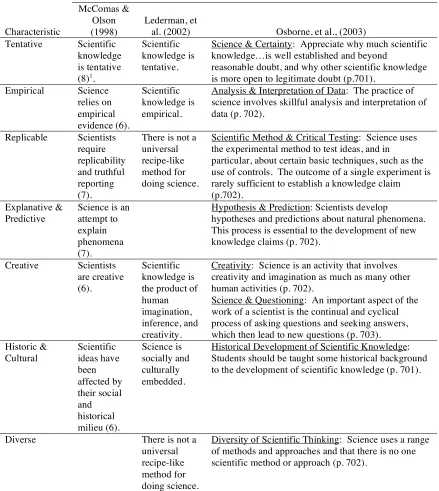
This Delphi study provided support for the claim that there was a consensus regarding which aspects of NOS should be taught to K-12 students. As noted by Osborne, et al. (2003), the emerging themes in the Delphi study matched common principles previously identified by McComas & Olson (1998) in a study of international standards documents. Additionally, qualitative interviews with experienced scientists from multiple disciplines further revealed that scientists are generally able to consistently describe the characteristics of NOS (Schwartz & Lederman, 2005). The differences in the language used to describe the characteristics of NOS make it difficult to accurately compare the tenets used in Lederman’s (2002) work to those identified by Osborne (2003). However, there are similarities. Both value the teaching of scientific processes, while stressing that a single scientific approach does not exist. Both are interested in teaching students the role of creativity in science, as well as science being grounded in the collection and interpretation of data. Each addresses the role of change in the development and interpretation of scientific facts. Across studies, a common view of the nature of science for science education has emerged.
Including NOS in the K-12 Science Curriculum
Olson, 1998). However, even with this goal to teach students about NOS, teachers continue to adhere to teaching science as a body of facts (McComas, Almazroa, & Clough, 1998).
Arguments have been made that an ideally constructed science education curriculum would help students understand more than science content; it would help them understand how science is related to larger cultures (Matthews, 2001). Clough (2000) maintains that science teaching is effective when it reveals to students the fundamental assumptions
operative in the building of scientific knowledge so that students may cross into the scientific culture whenever they feel the need. Science is becoming an ever-increasing part of the daily lives of all people and an understanding of NOS is essential for engaging more fully with the issues science presents (Osborne, et al., 2003). Consequently, there is an emerging consensus that NOS is “…an essential and central element to the school science curriculum”
(Bartholomew, Osborne, & Ratcliffe, 2004, p. 655).
A frequently repeated justification for teaching NOS to students is that NOS understanding is strongly related to the development of responsible decision-making and positive citizenship (Meichtry, 1992; Smith & Scharmann, 1999). These understandings of NOS have the potential to help students become intelligent consumers of scientific
12 understand the ways scientists’ work is impacted by their morals and ethics (Zeidler, et al., 2002).
Arguments for the inclusion of NOS objectives in the science curriculum began as early as 1961, when Behnke developed a questionnaire to survey high school teachers and scientists about public beliefs about science. This population was chosen for the survey because of the researcher’s belief that the opinions of science teachers about science and its influence on American life impacted the quality of their teaching. The teachers were selected from the National Science Teachers Association and the scientists were chosen from the American Association for the Advancement of Science (Behnke, 1961). Over half of the teachers and 20 percent of scientists in this study felt that scientific results were not tentative. Additionally, half the teachers felt the substantive content of science was fixed and
unchangeable; although there was no identification of what teachers thought constituted substantive content. Half of the teachers and a majority of scientists felt that a high level of intelligence were necessary in order to become a scientist. Both groups were almost in complete agreement that scientists ought to help the public better understand their work and scientists should be involved in the development of public policy. Notably, there was greater homogeneity in the teachers’ responses across the disciplines than there was among the scientists (Behnke, 1961).
Results of exploratory studies like Behnke’s (1961) helped to spur discussion about what ought to be included in the science curriculum with regard to NOS. Calls for a greater inclusion of NOS in the curriculum continued, corresponding with a view in the science education community that students had not demonstrated sufficient concepts of NOS
both science process and method, rather than only as content (Rutherford, 1964; Welch & Pella, 1967-1968). However, even as the call for inclusion of NOS objectives in instruction increased, there was a concurrent lack of NOS instruction showing up in classroom practice. Calls for including NOS in the curriculum were initially tied to teaching science using an inquiry process (Abd-El-Khalick, et al., 2004; Rutherford, 1964), as this helped to link the knowledge of science with the methods that produced that knowledge. The argument was made that teachers should be taught more about how inquiry was really conducted in the laboratory so that they could represent science more authentically to their students (Rutherford, 1964).
During the 1960’s, science curricula were influenced by learning theories and the philosophy of science (Carey & Stauss, 1968). At that time, the importance of laboratory work in students’ learning was emerging in science education along with a commitment to teaching through inquiry methods. NOS was seen as an integral part of this effort because it described how science progressed (Carey & Stauss, 1968). Other researchers thought
addressing science literacy in the curriculum would improve science teaching (Manual, 1981) and would help dispel large-scale misconceptions (Rubba, Horner, & Smith, 1981).
14 Educating Teachers about Nature of Science
It has been argued that teachers ought to understand NOS so they can convey this understanding to their students (Andersen, Harty & Samuel, 1986; Bentley & Garrison, 1991). It is assumed that teachers’ views of NOS impact their classroom behavior and their pedagogy (Herron, 1969; Robinson, 1969). Haukoos & Penick (1983) maintained that teachers who establish a classroom climate committed to discovery are more likely to develop understandings of the processes of science with their students. This view of science as a process of construction and reconstruction may further translate into instruction that helps students build and rebuild meaning from their experiences (McComas, Almazoa, & Clough, 1998).
NOS advocates argue that when teachers understand NOS, they can better represent the differences between theories and laws, the roles of observation and experimention, and the differences between school science and laboratory science (Manual, 1981). The argument suggests that teachers can more accurately represent scientific theories to their students (Farber, 2003). As elementary teachers are exposed to more science instruction, they are better prepared to scaffold students’ learning during science lessons (Haigh, 2005). Loving (1991) noted that as changes in curricular emphasis occur, teachers need a deeper conceptual understanding of what science is and what makes it unique from other disciplines. Teachers should also be given the opportunity to learn how the many disciplines of science are similar to and different from one another and what theories and methods unite these domains
Preservice Teacher Education
Preservice teachers’ views of NOS lie on a continuum between traditional and contemporary (Palmquist & Finley, 1997). Researchers cite teachers’ responsibility to disseminate knowledge that appears fixed in textbooks, suggesting that it is not surprising that teachers do not have sophisticated conceptions of NOS (Behnke, 1961) and that school cultures that emphasize control over creativity are likely to influence teachers’ philosophies of science (Brickhouse, 1991). Historically, it was assumed that teachers’ conceptions of NOS were related to their students’ conceptions and were likely to translate into classroom practice (Abd-El-Khalick, Bell, & Lederman, 1998; Bentley & Garrison, 1991) as their selection of content portrays NOS in a certain way (Palmquist & Finley, 1997). Thus, if teachers have a poor understanding of NOS, their students will as well (Lederman, 1986).
Measuring NOS Understandings
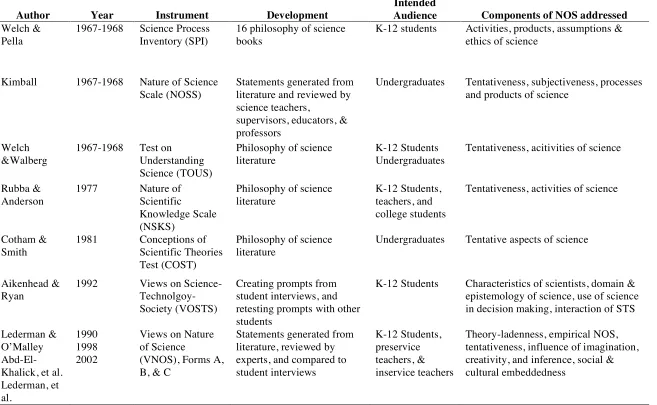
16 Table 1: Comparison of Instruments used to assess NOS
Author Year Instrument Development
Intended
Audience Components of NOS addressed Welch &
Pella
1967-1968 Science Process Inventory (SPI)
16 philosophy of science books
K-12 students Activities, products, assumptions & ethics of science
Kimball 1967-1968 Nature of Science Scale (NOSS)
Statements generated from literature and reviewed by science teachers,
supervisors, educators, & professors
Undergraduates Tentativeness, subjectiveness, processes and products of science
Welch &Walberg
1967-1968 Test on Understanding Science (TOUS)
Philosophy of science literature
K-12 Students Undergraduates
Tentativeness, acitivities of science
Rubba & Anderson
1977 Nature of Scientific
Knowledge Scale (NSKS)
Philosophy of science literature
K-12 Students, teachers, and college students
Tentativeness, activities of science
Cotham & Smith
1981 Conceptions of Scientific Theories Test (COST)
Philosophy of science literature
Undergraduates Tentative aspects of science
Aikenhead & Ryan
1992 Views on Science- Technolgoy-Society (VOSTS)
Creating prompts from student interviews, and retesting prompts with other students
K-12 Students Characteristics of scientists, domain & epistemology of science, use of science in decision making, interaction of STS
Lederman & O’Malley Abd-El-Khalick, et al. Lederman, et al.
1990 1998 2002
Views on Nature of Science
(VNOS), Forms A, B, & C
Statements generated from literature, reviewed by experts, and compared to student interviews
K-12 Students, preservice teachers, & inservice teachers
One of the earliest assessments was the Science Process Inventory (SPI) developed by
Welch & Pella (1967-1968), which contains 150 statements about the activities, products,
assumptions, and ethics of science. These statements emerged from an examination of
different texts that described the scientific process. If the concept was addressed in three out
of the sixteen books referenced, it was included in the inventory. Fourteen research scientists
reviewed the statements taken from the literature to address the content validity of the
assessment (Welch & Pella, 1967-1968).
Working to get a sense for how science teachers’ views of NOS were different from
those of scientists, Kimball (1967-1968) developed the Nature of Science Scale (NOSS). The
instrument was also designed to evaluate the way scientists’, teachers’, and philosophers’
views may change following their undergraduate education. The instrument was developed
with an initial group of 200 statements which were analyzed by science teachers, science
supervisors from schools, science professors, and professors of science education. After
multiple stages of revision, the final assessment included 31 items that had a split-half
reliability of 0.72 and effectively discriminated between experts and novices (Kimball,
1967-1968).
The Test on Understanding Science (TOUS), developed by Welch & Walberg
1967-1968), contains 60 questions with four multiple-choice responses per question. The reliability
of the total score on the instrument was shown to be 0.76 (Meichtry, 1993). Rubba (1977)
developed the Nature of Scientific Knowledge Scale (NSKS) to assess students’, teachers’,
and undergraduates’ views of NOS. The scale includes 48-items with Likert-scale answer
18 In an attempt to improve on previous instruments, the Conceptions of Scientific
Theories Test (COST) was developed by Cotham & Smith (1981) with the intention of
offering answer choices that were more sensitive to multiple positions regarding the
philosophy of science and allowed for the expression of alternative conceptions.
Additionally, the authors of the instrument reportedly focused on those aspects of the
philosophy of science that were most relevant to science teachers. This instrument assessed
the tentative aspects of science and features specific examples, such as Bohr’s model of the
atom and Darwin’s theory of evolution, in the questions. The primary source for the
questions was the philosophy of science literature. The original 80 items were tested with 56
college physical science students and 40 questions were selected after a Pearson correlation
was calculated between pairs of items. In order to assess the construct validity, the questions
were given to elementary education majors, philosophy majors, and chemistry majors to see
if the questions could discriminate between these groups. The analysis of the responses
revealed that elementary education majors were more likely than philosophy majors to
adhere to conclusive conceptions of theory testing, inductive conceptions of the generation of
theories, and objective conceptions of theory choice. Elementary education majors were not
significantly different from chemistry majors in their views, as measured by the COST
(Cotham & Smith, 1981).
Prior to the creation of the Views on Science-Technology-Society (VOSTS)
instrument developed by Aikenhead and Ryan (1992), written assessments of NOS
understandings assumed that the assessment author and the student interpreted the items in
the same way (Aikenhead, 1988). Due to its unique method of development, the VOSTS
involved five steps which included (1) the identification of content from science standards
and research in science education, writing prompts, and asking high school students to
respond to the prompts; (2) summarizing and analyzing student answers; (3) rewriting these
summaries as answer choices to the prompts, and retesting with another group of students;
(4) and finally testing with a large sample of students and eliminating answer choices that
were seldom chosen (Aikenhead & Ryan, 1992). The authors of the instrument reported that
this naturalistic approach valued and preserved the students’ perspectives, rather than those
of philosophers and science educators, and as such should be considered a valid measure of
student points of view. The VOSTS, though grounded in student views, is limited in that it
does not result in a total score. The multitude of answer choices allows many views to be
represented, but limits statistical analysis of responses.
Other researchers have sought to establish the validity of VOSTS questions in a more
statistically rigorous, less subjective manner (Botton & Brown, 1998). To do this, questions
focusing on the definition and the epistemology of science were taken from the VOSTS and
given to university students. Each of the students held an undergraduate degree in science. In
this study, a test, re-test method was employed in an effort to evaluate the validity of the
questions. Cluster analysis, cross-tabulation, and chi-square statistics were used to test for
item independence, homogeneity of student groups, and consistency. The data analysis
indicated VOSTS reliability and the items included in this study that refer to the definition
and epistemology of science are reasonable assessments for educational purposes (Botton &
Brown, 1998).
The VOSTS assessment was followed by the development of the Views on the Nature
20 validity concerns about the previous paper and pencil assessments and how students
interpreted the questions. The VNOS, unlike previous assessments, used interviews in
addition to open-ended written responses to evaluate student understandings. The first
version of the VNOS questionnaire contained seven questions. Analysis of the
semi-structured interviews with the students revealed that the researchers’ interpretations of the
meaning of students’ written responses were inaccurate in three of the seven cases. This
finding led to a revision of the original VNOS and provided additional evidence for
questioning the validity of earlier assessments (Lederman & O’Malley, 1990).
Following the first revision of the VNOS (VNOS-A), a second form was developed
(VNOS-B) to assess the views held by preservice teachers. Like form A, form B utilized
written items followed by individual interviews. As before, participants were asked to clarify
their written responses and explain their understandings of key terms in the questions. These
interviews were also designed to clarify obscure answers and apparent conflicts in
participants’ views. After repeated testing with the instrument, researchers found that
sufficient understandings of students’ and teachers’ views could be obtained with interviews
from 15%-20% of the participants (Abd-El-Khalick, et al., 1998). Further modifications were
made to the VNOS. Five of the items were adapted and five more were added to the ones
included in form B. Thus, VNOS-C produced similar findings to the earlier versions
(Lederman, et al., 2002).
In summary, for nearly 50 years researchers have worked to assess changes in
students’ and teachers’ conceptions of the nature of scientific inquiry. Paper and pencil
assessments have suffered from a lack of consistent interpretations by students, as well as
assessments with interviews are difficult and very expensive to administer, making it difficult
for classroom teachers to evaluate the views of their students and for researchers to assess
NOS views in studies with large sample sizes. Future work in NOS may result in an
assessment tool that is scorable, reliable, and employable with a large number of subjects.
Conceptions of NOS
Studies across groups have shown that teachers, students, scientists and philosophers
of science differ in their conceptions of NOS (Abd-El-Khalick, Bell, & Lederman, 1998;
Palmquist & Finely, 1997; Scharmann & Harris, 1992; Schmidt, 1967). Regardless of the
instrument used, multiple studies have found that teachers do not have understandings of
NOS that are consistent with those articulated by the stated goals of science education
(Akerson, Abd-El-Khalick, & Lederman, 2000). Furthermore, efforts within science
education have not been broadly successful in improving students’ and teachers’ NOS
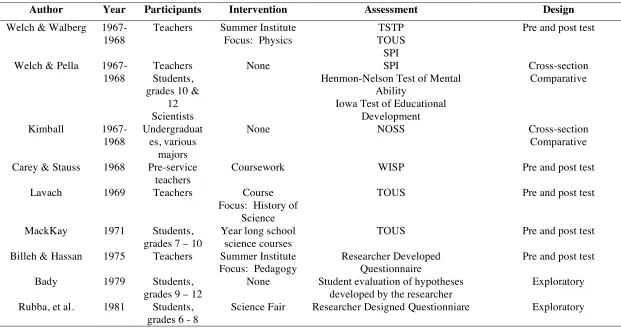
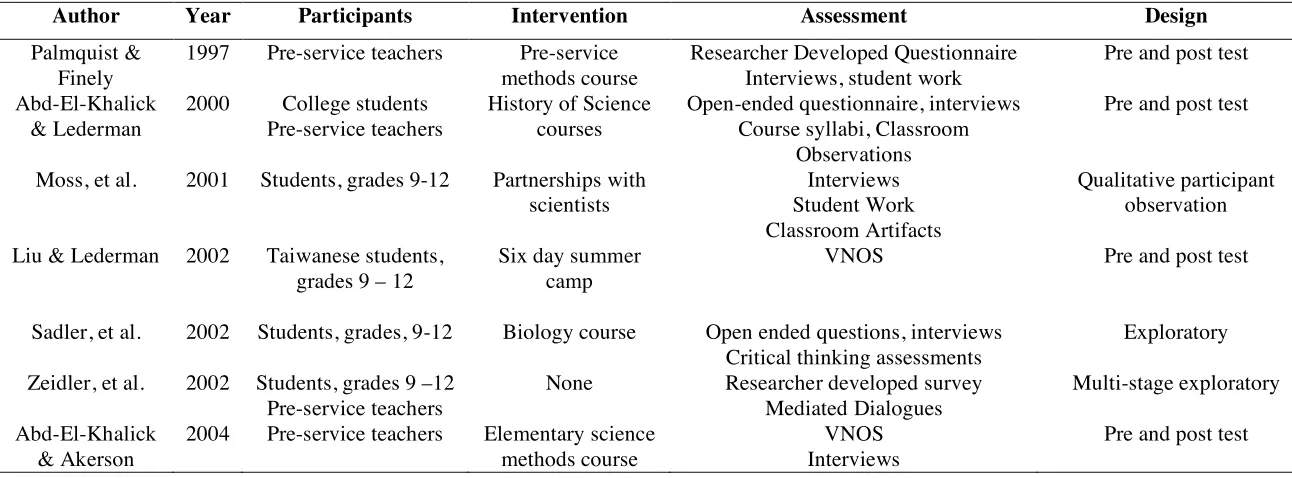
conceptions. Table 2 summarizes teachers’, students’, and scientists’ conceptions of NOS.
These studies have been conducted in a wide variety of contexts, with multiple assessments
22 Table 2: Teachers, Students, & Scientists Conceptions of NOS
Author Year Participants Intervention Assessment Design
Welch & Walberg 1967-1968
Teachers Summer Institute Focus: Physics
TSTP TOUS
SPI
Pre and post test
Welch & Pella 1967-1968
Teachers Students, grades 10 &
12 Scientists
None SPI
Henmon-Nelson Test of Mental Ability
Iowa Test of Educational Development
Cross-section Comparative
Kimball 1967-1968
Undergraduat es, various
majors
None NOSS Cross-section
Comparative
Carey & Stauss 1968 Pre-service teachers
Coursework WISP Pre and post test
Lavach 1969 Teachers Course
Focus: History of Science
TOUS Pre and post test
MackKay 1971 Students, grades 7 – 10
Year long school science courses
TOUS Pre and post test
Billeh & Hassan 1975 Teachers Summer Institute Focus: Pedagogy
Researcher Developed Questionnaire
Pre and post test
Bady 1979 Students,
grades 9 – 12
None Student evaluation of hypotheses developed by the researcher
Exploratory
Rubba, et al. 1981 Students, grades 6 - 8
Table 2: Teachers, Students, & Scientists Conceptions of NOS, continued
Author Year Participants Intervention Assessment Design
Zeidler & Lederman 1985 Teachers Students, grade 10 High school biology course NSKS Classroom Observations
Pre and post test
Lederman 1986 Teachers
Students, grade 10
High school biology course
NSKS Pre and post test
Zeidler & Lederman 1989 Teachers Students, grades 9 – 12
Biology Course NSKS
Classroom Observations
Pre and post test
Brickhouse 1991 Pre-service Teachers
Preservice coursework
Interviews, observations, textbook evaluation
Qualitative participant observation Ryan & Aikenhead 1992 Students,
grades 11 & 12
None VOSTS Exploratory
Scharmann & Harris 1992 Teachers Summer Instiitute
NOSS Pre and post test
Meichtry 1992 Students, grades 6 –9
Traditional v. Alternative textbooks NSKS Classroom observations Interviews
Pre and post test
Griffiths & Barman 1995 International Students, grades 9 – 12
None Research Developed Questionnaire Exploratory
Rubba, et al. 1996 Undergraduates enrolled in physis & STS
courses
Physics v. STS course
VOSTS Pre and post test
Leach, et al 1997 Students, age 9 – 16
24 Table 2: Teachers, Students, & Scientists Conceptions of NOS, continued
Author Year Participants Intervention Assessment Design
Palmquist & Finely
1997 Pre-service teachers Pre-service methods course
Researcher Developed Questionnaire Interviews, student work
Pre and post test
Abd-El-Khalick & Lederman
2000 College students Pre-service teachers
History of Science courses
Open-ended questionnaire, interviews Course syllabi, Classroom
Observations
Pre and post test
Moss, et al. 2001 Students, grades 9-12 Partnerships with scientists Interviews Student Work Classroom Artifacts Qualitative participant observation
Liu & Lederman 2002 Taiwanese students, grades 9 – 12
Six day summer camp
VNOS Pre and post test
Sadler, et al. 2002 Students, grades, 9-12 Biology course Open ended questions, interviews Critical thinking assessments
Exploratory
Zeidler, et al. 2002 Students, grades 9 –12 Pre-service teachers
None Researcher developed survey Mediated Dialogues
Multi-stage exploratory
Abd-El-Khalick & Akerson
2004 Pre-service teachers Elementary science methods course
VNOS Interviews
Students’ Conceptions
Multiple studies have focused on the views of students in K-12 schools. Students
often confuse science with technology, many are open to the idea that science can build upon
the notion of an interfering higher power, and they believe that scientists are capable of being
completely objective (Ryan & Aikenhead, 1992). Most students are not able to separate
theories from evidence or describe the relationship between the two (Leach, et al, 1997;
Rubba, et al., 1981). Generally, they do not understand that hypotheses can only by tested
through falsification processes (Bady, 1979). K-12 students, especially those in North
America, thought that scientists use a step-wise scientific method in their research (Griffiths
& Barman, 1995; Ryan & Aikenhead, 1992), as have pre-service teachers who have been
exposed to NOS instruction (Palmquist & Finley, 1997). Students are also unlikely to
understand the tentative aspects of NOS (Griffiths & Barman, 1995; Rubba, et al., 1981).
Studies that focused on the effects of curricula on individuals’ understandings of NOS
have yielded mixed results. The Biological Sciences Curriculum Study (BSCS) curriculum
reported to address NOS more effectively than traditional textbook curricula. However,
middle school students taught by teachers using the BSCS did not answer NSKS questions
better than those students taught by traditional methods (Meichtry, 1992). College students,
however, enrolled in an undergraduate course that focused on STS issues showed more
improvement in NOS views than students enrolled in a traditional physics course (Rubba, et
al., 1996).
Teachers’ Conceptions
In studies where teachers’ and students’ conceptions of NOS have been compared,
26 1985). Teachers with acceptable views of NOS, however, were unable to improve their
students’ views of NOS any more than teachers with less acceptable views (Lederman &
Druger, 1985). This might be due to teachers’ use of language, as this has been documented
as making a difference in the development of students’ NOS views (Zeidler & Lederman,
1989).
Coursework in the history of science, thought to be useful in the development of
preservice teachers views of NOS, has been shown to be ineffective, especially if it does not
include explicit NOS instruction (Abd-El-Khalick & Lederman, 2000). Earlier work with
teachers suggested that instruction in the history of science developed teachers’
understandings of NOS (Lavach, 1969). Explicit instruction in NOS is now thought to be a
key aspect in developing individuals’ views (Abd-El-Khalick & Akerson, 2004).
Developing NOS Understandings
As a result of the many studies of teacher and student NOS understandings, numerous
suggestions have been made regarding the development of NOS understandings in teachers
and students.
Student Development
NOS advocates have argued for exposing students to the history of science during
science instruction to help them better appreciate the role of adapting to unexpected
circumstances that arise during scientific investigations (Moss, et al., 2001). In other cases,
researchers argue that students may also benefit from NOS instruction that is designed to
address specific aspects of NOS while also teaching content. For example, McKinney &
Michalovic (2004) designed science instruction that included the historical influences that
components of the development of a model of DNA (Clough & Olson, 2004) and evolution
instruction (Farber, 2003; Narguizian, 2004). Laboratory activities that explicitly address
NOS have been developed for chromatography, mystery powders (Colburn, 2004) and
mitosis (Lederman & Lederman, 2004). Others have worked to develop case studies that
teachers can use to develop students’ understandings of the limits of scientific knowledge
(Clough, 2005; Guinta, 2001) and the role of error in science (Allchin, 2001). In another
study, Biology professors assigned students the task of critically analyzing advertisements as
a way to reinforce NOS concepts (Rutledge, 2005).
Researchers have also suggested that students’ views of NOS will improve when
students are given an opportunity to participate in authentic science experiences. Bell, et al.
(2003) conducted a study to evaluate the hypothesis that participation in science research
projects improves students’ scientific literacy. This study involved 10 high school students
participating in an 8-week science and engineering summer apprenticeship. Each student was
given the opportunity to design research questions, collect, and analyze data. Prior to and
immediately following the apprenticeship, students were given a modified version of the
VNOS-B (Abd-El-Khalick, et al., 1998). Prior to the summer experience, the students’
conceptions of NOS were inconsistent with the desired understandings. There was little
evidence of change during the course of the 8-week apprenticeship. All of the students cited
scientists’ personal bias as the reason for scientists arriving at different conclusions for the
same phenomena. The experience reinforced prior misconceptions about NOS, such as a
belief that scientists follow a single scientific method. Researchers felt that if students had
28 way scientists generate knowledge, a greater improvement in their NOS understandings
might have been found (Bell, et al., 2003).
A long-standing assumption in science education is that students who participate in
science activities will learn the desired aspects of NOS, even if the development of NOS
understandings is not an explicit goal of instruction (Abd-El-Khalick, Bell, & Lederman,
1998). One of the problems with this implicit approach is that it fails to address the reflective
thinking required to develop understandings of NOS (Bartholomew, Osborne & Ratcliffe,
2004). Researchers have noted that when students are left on their own to draw the
connections between what they are learning to its implications for NOS, they cannot do so
without explicit help from the teacher (Meichtry, 1992). Furthermore, studies have noted that
the mere participation in research studies as part of a project-based class is not enough to
develop full understandings of NOS (c.f. Moss, et al., 2001).
Teacher Development
Throughout the science education literature, the inclusion of history and philosophy
of science in preservice teacher education coursework has been recommended (Abimbola,
1983; Andersen, Harty & Samuel, 1986; Behnke, 1961; Robinson, 1969; Wandersee, 1985)
or as a part of a graduate program (Eichinger, et al., 1997). One proposal argues that teacher
education could expose teachers to NOS through the use of typical classroom incidents, such
as unexpected laboratory results or discussions of the moral and ethical conduct of scientists
(Nott & Wellington, 1995). According to Coll, et al., (2005) teachers who have a strong
understanding of NOS and its implications for pedagogy are more aware of the variety of
suggested that with a better background in the philosophy of science, teachers may be less
likely to split science into process and product.
Loving (1991) surveyed 17 institutions with undergraduate science teacher
preparation programs in an effort to understand the emphasized philosophical positions.
Results showed general lack of attention given to the philosophy of science. Furthermore,
Loving (1991) found that only one of the ten texts used in methods courses contained a
“balanced portrayal of science (p. 828).” The suggestions to include courses in the history
and philosophy of science rest on an assumption that all teachers have the ability to pay
attention to these ideas and reflect on their relationships to society (Manual, 1981).
Researchers have also suggested that teachers need to be better trained in methods to
engage their students in meaningful dialogue that supports students’ epistemic reasoning
(Bartholomew, Osborne & Ratcliffe, 2004). If teachers are given opportunities to create their
own conceptual model for NOS in preservice education, then they may be more willing to
incorporate NOS in their science teaching (Moss, et al., 2001). Additionally, it has been
suggested that if NOS objectives were embedded within science courses (Brickhouse, 1991;
Carey & Stauss, 1968; Lederman & Latz, 1995), courses of learning theory, and clinical
practice (Brickhouse, 1991), then teachers’ views of NOS may develop more toward the
desired understandings. It has long been recognized that traditional methods of training
teachers do not provide them with adequate exposure to the philosophy of science and that
without these understandings, teachers may not fully understand what is meant by phrases
such as ‘scientific inquiry’ (Herron, 1969).
In a study designed to assess the effectiveness of explicit NOS education on
30 undergraduate and 25 graduate students enrolled in science methods courses. NOS
instructional activities were designed to explore the relationship between theories and laws,
the differences between observation and inference, the empirical, creative, tentative, and
imaginative NOS, theory-ladenness, and social and cultural embeddedness in NOS. An
open-ended questionnaire, similar to the VNOS (Abd-El-Khalick, et al., 1998; Lederman &
O’Malley, 1990; Lederman, et al., 2002), was given to the participants at the beginning and
end of the course. This questionnaire was followed up with interviews. Both undergraduate
and graduate students demonstrated improvement in their NOS views, although the
researchers felt that more improvement was possible (Akerson, et al., 2000).
Discussion
The studies examined in this review of NOS literature demonstrate that the
development of understandings of NOS has been a topic of extensive focus within the
science education literature for the past 45 years. Although standards documents such as the
Benchmarks for Science Literacy (AAAS, 1993) and the National Science Education
Standards (NAS, 1996) have been published and widely referenced, the impact these
standards have had on actual classroom practice remains elusive. In fact, science pedagogy
remains very similar to the teaching methods used when these calls for the development of
scientific literacy were initially made. This reason for this mismatch between reform goals
and pedagogical strategies is a pertinent question for further research.
The multitude of assessments designed to measure NOS understandings has also
complicated the NOS debate. The assessments were written to evaluate the views of students,
teachers, and/or scientists without a clear definition of the expectation of what their views
recognized that the philosophers of science would describe the most complete conceptions of
NOS, these understandings have been shown to be too complex for inclusion in K-12 science
education. Nevertheless, the philosophical perspectives were the basis for the early NOS
instruments and items written from the philosophy of science literature were later judged as
inadequate for measuring student understandings.
The mismatch between assessment and learning was partly attributed to the
differences between the meaning the researchers ascribed to the assessments items and their
interpretations by students and teachers. While assessments like the VNOS (Abd-El-Khalick,
1998; Lederman & O’Malley, 1990; Lederman, et al., 2002) attempt to address this problem
with open-ended questions and interviews of subsamples of students, it is still possible that
the researchers may misinterpret the written answers of the larger majority of respondents not
interviewed. Furthermore, the open-ended question/interview design makes the assessment
too cumbersome for use in studies with large numbers of participants. The VOSTS
(Aikenhead & Ryan, 1992), the only instrument that included interviews with thousands of
students, is built on students’ views of NOS, and whose multiple-choice design is well suited
for use with large research studies.
Perhaps one of the difficulties facing the NOS movement is that its concepts are
confounded with other goals in science education. NOS has been associated with the
development of scientific literacy, inquiry-style instruction, and STS curricula. NOS is such a
fundamental part of science that it may seem a burden for teachers to explicitly address its
applications during instruction. Yet, as many of these articles have explained, NOS is the
32 high teacher accountability, the addition of such a big, overarching idea may seem like an
add-on to an already full and hurried curriculum.
Additionally, NOS’ foundation in the philosophy of science requires a great deal of
reading and study for full understanding. It is possible that the debates within the philosophy
of science community are typically ill-suited to the cognitive development of high school
students or to the science teacher education curriculum. Nevertheless, deeper understanding
of the tenets of NOS and their significance to modern science are made clearer through the
reading and discussion of philosophy of science. There is strong evidence, however, that
philosophy and history of science coursework is not a significant part of most teachers’
professional preparation. Although there have been suggestions for the explicit teaching of
NOS objectives in methods courses, there has not been a discussion of the requisite level of
understanding necessary for teachers. Clarity has been developed regarding the necessary
outcomes for students, but no conclusions have been drawn about the degree to which
teachers need a complex understanding of NOS. Although NOS is mentioned as part of
NSTA’s Standards for Science Teacher Preparation (2003), the standards fail to recommend
a course of study, instead they offer only books that students’ should consider reading and
assignments professors’ could provide their students.
Now that the definition of NOS for K-12 education has been established in the
literature (Lederman, et al., 2002; McComas & Olson, 1998; Osborne, et al., 2003), future
research can explore potential reasons for difficulties in developing these understandings in
students and teachers. Studies can be conducted to further explain the differences in the
educational needs of future scientists and consumers of science and the role that NOS
needed to examine the teachers’ views of the standards documents and how these goals are
used as resources for planning science instruction. It remains unclear why researchers have
had difficulty measuring changes in NOS following instruction. Are there underlying
cognitive skills needed to fully understand the nature of scientific inquiry? At what ages and
grade levels are students developmentally ready to learn NOS? To what degree does the
general public need to understand the unique characteristics of NOS? Would educating the
public about NOS improve their abilities to make decisions about science-related issues that
arise in everyday life? From a curriculum standpoint, would it be useful for students to
examine ways of knowing across different content domains? If science as a way of knowing
were juxtaposed to writing as a way of knowing, could we enhance students’ abilities to
understand the limits of scientific inquiry? While NOS has been a frequent topic of
discussion and research in the science education community, there are plenty of questions
34 Bibliography
Abd-El-Khalick, F., Bell, R., & Lederman, N.G. (1998). The nature of science and
instructional practice: Making the unnatural natural. Science Education, 82, p.
417-436.
Abd-El-Khalick, F., & BouJaoude, S. (1997). An exploratory study of the knowledge
base for science teaching. Journal of Research in Science Teaching, 34, 673.
Abd-El-Khalick, F., BouJaoude, S., Duschl, R., Lederman, N.G., Mamlok-Naaman, R.,
Hofstein, A., Niaz, M., Treagust, D., Tuan, H. (2004). Inquiry in science
education: International Perspectives. Science Education, 88, 397-419.
Abimbola, I.O. (1983). The relevance of the “new” philosophy of science for the science
curriculum. School Science and Mathematics, 83, 181-193.
Aikenhead, G. (1988). An analysis of four ways of assessing student beliefs about STS
topics. Journal of Research in Science Teaching, 25, 607-629.
Aikenhead, G. & Ryan, A.G. (1992). The development of a new instrument: “Views on
Science-Technology-Society (VOSTS)”. Science Education, 76, 477-491.
Akerson, V.L., Abd-El-Khalick, F., & Lederman, N.G. (2000). Influence of a reflective
explicit activity-based approach on elementary teachers’ conceptions of nature of
science. Journal of Research in Science Teaching, 37, 295-317.
Allchin, D. (2001). Role of errors. Perspectives on Science, 9, 38-59.
Allchin, D. (2004). Should the sociology of science be rated X? Science Education, 88,
934- 946.
Alters, B.J. (1997). Whose nature of science? Journal of Research in Science Teaching,
American Association for the Advancement of Science (1993). Benchmarks for Science
Literacy. AAAS Press, Washington, DC.
Andersen, H.O., Harty, H., & Samuel, K.V. (1986). Nature of science, 1969 and 1984:
Perspectives of preservice secondary science teachers. School Science and
Mathematics, 86, 43-50.
Bady, R.J. (1979). Students’ understanding of the logic of hypothesis testing. Journal of
Research in Science Teaching, 16, 61-65.
Bartholomew, H., Osborne, J., & Ratcliffe, M. (2004). Teaching students “Ideas-About-
Science”: Five dimensions of effective practice. Science Education, 88, 655-682.
Behnke, F.L. (1961). Reactions of scientists and science teachers to statements bearing
on certain aspects of science and science teaching. School Science and
Mathematics, 61, 193-207.
Bell, R., Blair, L.M., Crawford, B.A., & Lederman, N.G. (2003). Just do it? Impact of a
science apprenticeship program on high school students’ understandings of the
nature of science and scientific inquiry. Journal of Research in Science Teaching,
40, 487-509.
Bell, R. & Lederman, N.G. (2003). Understandings of the nature of science and decision-
making on science and technology based issues. Science Education, 87, 352-377.
Bentley, M.L., & Garrison, J.W. (1991). The role of philosophy of science in science
teacher education. Journal of Science Teacher Education, 2, 67-71.
Billeh, V.Y., & Hasan, O.E. (1975). The teaching of the philosophy of science in science
teacher education. Journal of Research in Science Teaching, 12, 209-219.
36 preservice secondary science teachers in England. Journal of Research in Science
Teaching, 35, 53-71.
Brickhouse, N. (1991). Teachers’ beliefs about the nature of science and their
relationship to classroom practice. Journal of Teacher Education, 41, 53-62.
Carey, L.R., & Stauss, A.N. (1968). An analysis of the understanding of the nature of
science by secondary school science teachers. Science Education, 58, 358-363.
Chiapetta, E.L. & Kobala, T.R. (2004). Quizzing students on the myths of science. The
Science Teacher, 71, 58-61.
Clough, M.P. (2000). The nature of science: Understanding how the game of science is
played. Clearing House, 74, 13-17.
Clough, M.P. & Olsen, J. (2004). The nature of science: always a part of the story.
Science Teacher, 71, 28-31.
Clough, M.P. (2005). Research efforts in NOS teaching. Paper presented at the Eighth
International History, Philosophy, and Science Teaching Conference, Leeds,
England. July 15-July 18.
Colburn, A. (2004). Focusing labs on the nature of science. Science Teacher, 71, 32-35.
Coll, R.K., France, B., & Taylor, I. (2005). The role of models/and analogies in science
education: implications from research. International Journal of Science
Education, 27, 183-198.
Cotham, J.C., & Smith, E. (1981). Development and validation of the conceptions of
scientific theories test. Journal of Research in Science Teaching, 18, 387-396.
Crawford, B.A., Zembal-Saul, C., Munford, D. & Friedrichsen, P. (2005). Confronting
and inquiry-based tasks. Journal of Research in Science Teaching, 42, 613-637.
DeBoer, G. (1991). History of Ideas in Science Education: Implications for Practice.
NY: Teachers College Press.
DeWitt, R. (2004). Worldviews: An Introduction to the History and Philosophy of
Science. MA: Blackwell Publishing Ltd.
Duschl, R.A. (1985). Science education and philosophy of science twenty-five years of
mutually exclusive development. School Science and Mathematics, 85, 541-555.
Eichinger, D.D., Abell, S.K., & Dagher, Z.R. (1997). Developing a graduate level
science education course on the nature of science. Science and Education, 6, 417-
429.
Farber, P. (2003). Teaching evolution and the nature of science. American Biology
Teacher, 65, 347-354.
Good, R. & Shymansky, J. (2001). Nature of science literacy in benchmarks and
standards: post-modern/relativist or modern/realist? Science Education, 10, 173-
185.
Griffiths, A.K., & Barman, C.R. (1995). High school students’ views about the nature of
science: Results from three countries. School Science and Mathematics, 95,
248-255.
Guinta, C.J. (2001). Using history to teach the scientific method: The role of errors.
Journal of Chemical Education, 78, 623-627.
Haigh, M., France, B., & Forret, M. (2005). Is ‘doing science’ in New Zealand
classrooms an expression of scientific literacy? International Journal of Science
38 Haukoos, G., & Penick, J.E. (1983). The influence of classroom climate on science
process and context achievement of community college students. Journal of
Research in Science Teaching, 20, 629-637.
Herron, M.D. (1969). Nature of science: Panacea or Pandora’s box. Journal of
Research in Science Teaching, 6, 105-107.
Hipkins, R., Barker, M., Bolstad, R. (2005). Teaching the ‘nature of science’: modest
adaptations or radical reconceptions? International Journal of Science Education,
27, 243-254.
Ivany, J.W.G. (1969). Philosophy of science: Implications for curriculum, a reaction.
Journal of Research in Science Teaching, 6, 114-115.
Kimball, M.E. (1967-1968). Understanding the nature of science: A comparison of
scientists and science teachers. Journal of Research in Science Teaching, 5, 110-
120.
Khishfe, R., & Abd-El-Khalick, F. (2002). Influence of explicit and reflective versus
implicit inquiry-oriented instruction on sixth graders’ views of nature of science.
Journal of Research in Science Teaching, 39, 551-578.
Klopfer, L.E. (1969). The teaching of science and the history of science. Journal of
Research in Science Teaching, 6, 87-95.
Lavach, J.F. (1969). Organization and evaluation of an in-service program in the history
of science. Journal of Research in Science Teaching, 6, 166-170.
Leach, J., Driver, R., Millar, R., & Scott, P. (1997). A study of progression in learning
about ‘the nature of science’: Issues of conceptualism and methodology.
Lederman, N.G. (1998). The state of science education: Subject matter without context.
Electronic Journal of Science Education, 3.
Lederman, N. G., Abd-El-Khalick, F., Bell, R. L., & Schwartz, R. S. (2002). Views of
nature of science questionnaire: Toward valid and meaningful assessment of
learners' conceptions of nature of science. Journal of Research in Science
Teaching, 39, 497-521.
Lederman, N.G. & Lederman, J.S. (2004). Revising instruction to teach the nature of
science. Science Teacher, 71, 36-39,
Lederman, N.G., & O’Malley, M. (1990). Students’ perceptions of tentativeness in
science: Development, use, and sources of change. Science Education, 74, 225-
239.
Liu, S.-Y., & Lederman, N. G. (2002). Taiwanese Gifted Students' Views of Nature of
Science. School Science and Mathematics, 102, 114-123.
Loving, C. C. (1991). The scientific theory profile: A philosophy of science model for
science teachers'. Journal of Research in Science Teaching, 28, 823-828.
Mackay, L. D. (1971). Development of understanding about the nature of science.
Journal of Research in Science Teaching, 8, 57-66.
Manuel, D. E. (1981). Reflections on the role of history and philosophy of science in
school science education. School Science Review, 62, 769-771.
Matthews, M. R. (2001). How pendulum studies can promote knowledge of the nature of
science. Journal of Science Education and Technology, 10, 359-368.
McComas, W.F., Almazroa, H., & Clough, M.P. (1998). The nature of science in science