ISSN 2348 – 7968
Performance analysis of Hierarchical Multilayered Link Weight Based
Enable Protocol
Preksha.KDepartment of Electronics and Communication, CMRIT, Bangalore, India
Abstract - The technology of WSN is moving towards to the development of balanced and stabilized network topology and enhanced scalability while improving its lifetime. The objective of this work is to create a multilevel hierarchical based clustered architecture. The improved version of link weight based enable protocol has been proposed in this work. This protocol considers degree of the node i.e. (node connectivity), residual energy after transmission and the Euclidean distance between the base station and the node. Aim of this work is to bring about balance in the cluster distribution by increasing the number of layers. This work has the combination of both movable and immovable transmission nodes in a homogeneous WSN. This work uses a random probabilistic approach of creating nodes and sensing node data unlike the traditional rotational approach so that optimum data aggregation is achieved.
Keywords - WSN, Sink, Nodes, Cluster heads, Hierarchy, Protocol
I. Introduction
Wireless sensor networks have become one of important technologies in this century and used in almost every communication field.WSN consists of many sensor nodes distributed in a geographical area with a defined topology. Sensors in such a network are equipped with sensing, radio transmission and data processing, units, while the power is highly limited. There is demand for these sensors to be low power battery operated sensing, computation and communication resources [1]. Low power battery operated sensors result in low cost of the equipment and have longer lifetime. This helps in development of efficient software and hardware solutions. The architecture of sensors should be designed very carefully to make efficient use of limited available resources. Sensors collect the data from its surroundings and transfer the collected data to base station. Here we see that much of the energy is consumed in transmission and reception of data rather than in the computation.
Flooding and spinning are the basic methods to transform data from a sensor node to base station [2]. There are many
clustering methods in WSN networks. Hierarchical clustering is one of the connectivity model used in building up a WSN. It forms cluster of nodes depending on the distance between each other and also its distance from base station. This mechanism is effective in increasing network scalability and reducing data latency
Figure1. Wireless sensor network architecture
Figure 2. Sensor Node
II. Related work
ISSN 2348 – 7968
receiving data from all member nodes the CH performs signal processing functions on the data (e.g., data aggregation), and then transmit data to the remote BS. For a node to be called as CH node requires to be much more energy intensive than being a member node. The main objective of leach is, it elects the sensor nodes as cluster heads in rotation. Hence there is even distribution of energy load in cluster head among the nodes. The operation of LEACH is subdivided into rounds and each round has set-up phase followed by steady state phase. In the set-up phase organization of clusters takes place and in the steady-state phase sensed data is delivered to the BS. Initially CH is selected, based on the signal energy of nodes. The nodes with higher energy are selected as CH. Each of ‘n’ sensor nodes generates a random number between 0 and 1 and compares it to a pre-defined threshold T (n). If random < T (n), the sensor node becomes CH of that round, otherwise it is member node.
Where ‘P’ isthe desired percentage of CHs, ‘r’ is the current round, and ‘G’ is the set of nodes that have not been elected as CHs in the last 1/P rounds.
LEACH is a completely distributed approach and requires no global information of network. LEACH guarantees each node to have equal probability of becoming, and also bring about relative balanced energy consumption of the network nodes.
Disadvantages of LEACH are as follows: It assumes a homogenous distribution of sensor nodes which is not a reality. Some clusters will include more number of nodes; which results in CH nodes run out of energy very quickly. Cluster Heads would consume too much energy due to extra burden of performing long range transmission to a distant BS.
HEED (Hybrid Energy Efficient Distributed) protocol, introduced by Fahmy and Younis, is a multi-hop clustering algorithm which overcomes the disadvantages of unevenly distributed CH as seen in the LEACH algorithm. It uses primary parameters such as residual energy and network topology features (e.g. distances to neighbors, node degree) are only used as secondary parameters to avoid clash between candidate cluster heads for selection cluster to achieve load balancing [4]. All nodes are assumed to be homogenous i.e. all sensor nodes are assumed to have same initial energy. In HEED, selected CHs have relatively high average residual energy compared to member nodes.In initialization phase, nodes send the messages to compete with the initialized
probability of CHprob. When the selection of cluster head is
completed, other nodes join that cluster by means of the information gathered in competing phase. Here, CHprob is
described as ,
,
Where Cprob and pmin are the whole network parameters
affecting the convergence speed of the algorithm, Eresident /Emax
is the ratio of the node residual energy and initial energy. In HEED, Cluster haeds send the aggregated data to the Base Station in a multi-hop fashion rather than single-hop fashion of LEACH. This promotes more energy conservation and scalability in contrast with the single-hop fashion in the LEACH protocol.
Some disadvantages of HEED are as follows: 1) The competition of cluster head may exclude some nodes from joining into any clusters. 2) HEED needs several iterations to form clusters which include a lot of packet broadcast. 3) Due to the relaying network traffic near the BS, CHs closer to the BS consume much more energy. Hence the CH nodes closer to the BS may quickly exhaust battery.
In EECS (Energy Efficient Clustering Scheme), the CH candidates compete with each other to become Cluster head for a given round [4]. This competition starts with the broadcasting of residual energy to their neighboring candidates. If a given node does not find its neighboring node with higher residual energy, it becomes a CH. The cluster formation in EECS is different from that of LEACH. In LEACH formation of cluster is based on the minimum distance from nodes to their corresponding CH, but in EECS dynamic sizing of clusters takes place based on the distance from BS. Clustering performed in this way solves the problem that clusters with a larger distance to the BS require more energy for transmission than those with a shorter distance. This result in low message overheads and uniform distribution of CHs compared to LEACH.
ISSN 2348 – 7968
the task of global data aggregation adds overheads to all sensor nodes.
LWBE (Link Weight Based Enable) Protocol is a layered wsn architecture where layers are divided on the basis of area covered by the nodes and density of nodes deployed in the network [5]. LWBE protocol works as follows: First a cluster Head is selected then followed by linking of this cluster head with the forward cluster head. Data from the cluster head in one layer is forwarded to the cluster head of adjacent layer and then this data is forwarded to its next adjacent layer cluster head and so on till it reaches the Base station. Cluster is selected based on three parameters: Residual energy, degree of the node and connectivity of nodes.
Disadvantages of LWBE are: It is has fixed number of levels i.e. 3 which make it further unscalable w.r.t data aggregation. This protocol accounts for only static (fixed) position of nodes. Due to fixed number of levels it fails to operate efficiently if area is densely covered with nodes and has no chance of expansion which overburdens the operation of Cluster Head in a specific layer.
Figure 3. Link Weight Based Enable WSN architecture
III. Proposed work
We have proposed a modified version of LWBE algorithm to check the performance in terms of average energy/network lifetime for different levels of hierarchy. We have used multi-dimensional indexing structures for simulation of our protocol. Here unlike static nodes in previous work we have considered dynamic or mobile nodes i.e. these nodes change
their locations in each and every round of transmission. Only randomly selected nodes are made movable. Some of these nodes have probability of dislocation from one layer to another layer. These dislocated nodes are disconnected from its previous cluster head and configure themselves to surrender to the cluster head of that layer.
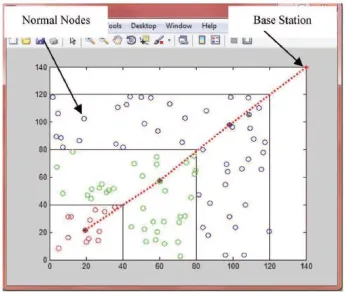
Figure 4. Proposed multilayered WSN architecture
The working of algorithm remains same as in LWBE. Here we use multi-dimensional indexing structures for simulation of our protocol. It works in following steps:
STEP 1: The nodes are randomly deployed in a given area
and boundary of each layer is marked.
STEP 2: Degree of connectivity of each node is calculated using Euclidean distance formula in a 2D plane given the two coordinates (x, y) and (a, b) i.e. node position by:
, , √
If this distance calculated for each node is within its transmission range then the node can become the neighbor of another node
STEP 3: Find the distance between each node and base
station using the same above formula with the coordinates of nodes and base station.
STEP 4: Assign a rank to each node with reference to its
distance from base station. Nearer the nde is to the base station, higher is the rank.
ISSN 2348 – 7968
Where i = 1 to n; n is total number of nodes.
STEP 6: The node having maximum weight in a layer is
selected as cluster head of that layer.
STEP 7: Now the normal nodes will start transmitting the
data to its cluster head, here data aggregation is done and is further passed onto next cluster head and then to the cluster head of its upper layer and so on till it reaches base station.
IV. Simulation and results
We have simulated the WSN network with random deployment of nodes in each round of transmission. Several simulations are conducted with different number of layers to verify the efficiency of the multi layered architecture. Each node is equipped with initial energy of 0.5 joule. The parameters used in simulation are shown in the table below:
Table1. Parameters used during simulations
Parameters Value
Initial energy 0.5 joule
Sink 140m*140m Area 120m*120m
Range 10m
Message size 400
No. of nodes 120
Number of layers deployed 3 to 7
Energy consumed by an amplifier to transmit at a longer
distance
0.0013 pJ/bit/m4
Energy consumed by an amplifier to transmit at a shorter
distance
10 pJ/bit/m2
For a fixed bandwidth (message size) and fixed number of transmission rounds with area of 120m*120m and number of nodes deployed is 120 and sink (base station) placed at (140,140). Simulations are carried out for variable number of layers from 3 to 7. Figure below shows the simulation result of proposed work.
Case study 1: Residual energy vs number of rounds
Figure 5. Analysis of average residual energy
It is observed that the total average residual energy of the system after all transmission rounds are carried out increases as the number of levels increases in comparison with previous single layered Link Weight Based Enable protocol.
Case study 2: No. of dead nodes vs number of Levels
Figure 6. Analysis of number of Dead nodes as number of levels increase
If we analyze the total number of dead nodes for same number of transmission rounds with different number of hierarchical levels varying from 3 to 7, it is observed that the number of dead nodes decreases with increase in number of levels in a wsn network.
V. Conclusions
ISSN 2348 – 7968
enhanced. In addition the number of dead nodes in a wsn after several rounds of data transmission has decreased with increase in number of hierarchical levels. Simulation results shows enhanced and more scalable version of traditional LWBE protocol.
References
[1] D. J. Dechene, A. El Jardali, M. Luccini, A. Sauer, “A survey of clustering algorithms for Wireless Sensor Networks”.
[2] Dervis Karaboga, Selcuk Okdem, Celal Osterk, “Cluster based wireless sensor routings using artificial Bee Colony algorithm”, International conference, IEEE 2010 [3] B. G.Obula Reddy1, Dr. Maligela Ussenaiah,
“Literature Survey On Clustering Techniques”, 2ISSN: 2278-0661 Volume 3,Issue 1 -Aug. 2012.
[4] Harneet Kour and Ajay. K. Sharma, “Hybrid Energy Distributed Protocol for Heterogeneous Wireless Sensor Networks” International Journal of Computer Applications (0975-8887), Volume 4 - No.6, July 2010. [5] Pramod Kumar, Ashwini Chaturvedi, “Analysis of Energy efficient clustering algorithm for Wireless Sensor Networks”.
[6] Ankita , Gunjan , Brijesh Kumar , “Link weight based
enable protocol in wireless sensor network”, IEEE Transaction ,2014.
[7] A. K. Mann and N. Kaur, “ Survey paper on clustering techniques” International journal of Science, Vol.2, 2013.
[8] “Various Clustering Techniques in Wireless Sensor Network” International Journal of Computer Applications Technology and Research Volume 3– Issue 6, 381 - 384, 2014.
[9] I.F Akyilidz , Y. Sankarasubramaniyam and E. Cayirci, “A survey on sensor networks”, IEEE communication magazine,Vol.40, 2002.
[10] W. Heinzelman, A. Chandrakasan and H.Balakrisnhnan, “An application Specific Protocol architecture for wireless microsensor network” IEEE transaction, 2004. [11] I. Akyildiz et al. 2002. “A Survey on Sensor Networks IEEE Communication”, Mag., vol. 40, no. 8, pp. 102- 14.