1
Synergy in Knowledge-Based Innovation Systems at National and Regional Levels:
The Triple Helix Model and the Fourth Industrial Revolution
Loet Leydesdorff *1
Abstract
Different from national systems of innovation, a knowledge-based economy is grounded in the volatility of discursive knowledge enabling us to specify expectations. Expectations can be improved by testing against observations. Furthermore, expectations can differently be codified; for example, in terms of market perspectives and technological opportunities. The Triple Helix of university-industry-government relations provides first a (neo-)institutional model. However, three functions are recombined at the systems level in each instantiation: wealth generation (by industry), novelty production (academia), and legislation and regulation (government). The Triple-Helix synergy indicator enables us to use the institutional arrangements as instantiations of the knowledge-dynamics and thus to assess the generation of options and reduction of uncertainty in information-theoretical terms. The Fourth Industrial Revolution entails the transition to the reflexive entertaining of expectations in terms of models as increasingly the sources of innovations.
Keywords: triple helix, innovation systems, reflexive turn, expectation, synergy
1 * corresponding author; Amsterdam School of Communication Research (ASCoR), University of Amsterdam
PO Box 15793, 1001 NG Amsterdam, The Netherlands; [email protected]
2 Introduction
The Fourth Industrial Revolution (Schwab, 2015) provides a new metaphor replacing older models such as “National Systems of Innovation” (NSI), the “Knowledge-Based Economy” (KBE) and the “Triple Helix of University-Industry-Government Relations” (TH), but hitherto without further theoretical elaboration. The metaphor of NSI emerged in the 1980s; KBE
elaborates on NSI from an evolutionary perspective (David & Foray, 2002), whereas the TH can be considered as an institutional elaboration (Etzkowitz & Leydesdorff, 2000). In this study, I propose to further develop the TH into an evolutionary model.
The thesis of NSI combines the claims that innovation is systemic (Lundvall, 1988), that innovation systems are evolving (Nelson, 1993), and that they are organized institutionally, and therefore influenced by and susceptible to government policies at national or regional levels (Freeman, 1987 and 1988; Freeman & Perez, 1988). NSI thus seeks to combine the perspectives of policy analysis, institutional analysis, and (neo-)evolutionary theorizing. However, the
metaphor is delusive: innovation is not taking place within administratively bordered nations and innovation is not necessarily systemic.
Sahal (1985, at p. 64), for example, distinguished among (i) material innovations “that are necessitated in an attempt to meet the requisite changes in the criteria of technological
3
or more symbiotic technologies.” As an example of a systemic innovation, the author points to the integration of office automation with computing during the 1950s and 1960s; with a leading role of IBM. More formally, one can distinguish innovations which deconstruct and reconstruct specific relations within a system from changes among clusters of relations at the systems level. The latter can change technological regimes, while specific relations are reconstructed along technological trajectories.
The assumption of NSI that innovation systems would be “national” originated from Freeman’s (1987) report entitled “Technology and Economic Performance: Lessons from Japan” (see also: Yamauchi, 1986) about his visit to Japan. NSI and was embraced notably by scholars with a Scandinavian background who feared that specific qualities of their respective national innovation systems might suffer from integration in a larger European framework (Lundvall, 1988). However, the terminology of “national systems” generated resistance among scholars with a background in regions such as Catalonia and Wales claiming regional innovation systems (e.g., Braczyk, Cooke, & Heidenreich, 1998; Cooke, 2002), and at the supra-national level of the European Union where one favors terminology such as the “knowledge-based economy” (Foray & Lundvall, 1996; OECD, 1996).
4
dimension of the economy emerged gradually during the late 19th and most of the 20th century.
Marx ([1857] 1973, at p. 706) had hesitated whether science-based technological evolution might be an independent source of social wealth more than labor. Sahal (1985, p. 61) cites the young Marx’ (1847) Poverty of Philosophy where he formulated as follows:
The landmill gives you society with the feudal lord; the steam mill, society with the industrial
capitalist (Marx, 1935, at p. 6).
After extensive study including calculations, however, the older Marx of Capital I (1867) concluded that the main contradiction at the time remained the one between capital and labour. In the footnotes as a subtext (e.g., p. 393, note 89), however, Marx repeated that “the technology shows us the active relation of the human kind to nature, the immediate production process of our lives …” If technology could enable us to free man from work sufficiently, the nature of capitalism would change, since “the basis of this mode of production falls away” (p. 709; italics in the original). In other words, Marx envisaged a regime change that would be different from and an alternative for the communist revolution.
5
The scientific-technical revolution … cannot be understood in terms of specific innovations—as is
the case of the Industrial Revolution, which may be adequately characterized by a handful of key
inventions—but must be understood rather in its totality as a mode of production into which science
and exhaustive engineering investigations have been integrated as part of ordinary functioning. The
key innovation is not to be found in chemistry, electronics, automatic machinery, aeronautics,
atomic physics, or any of the products of these science-technologies, but rather in the
transformation of science itself into capital. (pp. 166f.)
But the transition is gradual. While WW I has also been characterized as the war of chemistry and WW II as the war of physics, the return to a liberal democracy under peacetime conditions (Bush, 1945) led to a focus on economic models where science and technology were considered first as exogeneous factors of an economy which was conceptualized in terms of the dynamics of production factors such as labor, capital, and land. The component of growth due to
technological progress was long held to be a residual factor which could not easily be explained (e.g., Abramowitz, 1956; OECD, 1964; Solow, 1957).
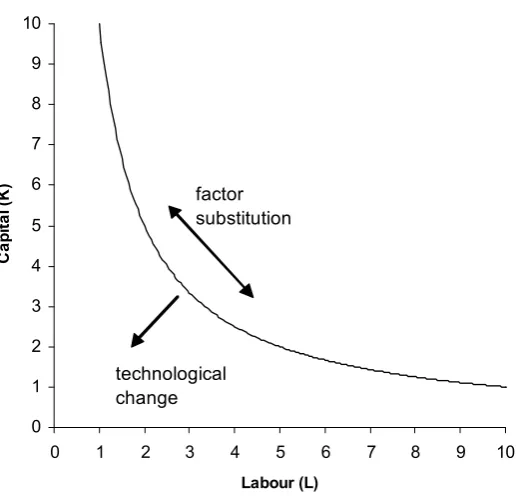
Theorizing about the role of technological knowledge (David & Foray, 1995; Foray, 2004) was elaborated in evolutionary economics by a school of scholars who have been characterized from the perspective of hindsight as “the neo-Schumpeterians” (Andersen, 1994; Freeman & Soete, 1997; Lee, 2013). Schumpeter ([1939], 1964) provided a model of technological change in which he distinguished between innovations as changes in the shape of the production function reflecting the possibility to generate more output from less input, and changes along the
6
mechanisms stand orthogonally in terms of shifts along or perpendicular to the production function (Figure 1).
Figure 1: Schumpeter’s model of technological change as a shift of the production function
towards the origin unlike factor substitution as a shift along the production function.
In Nelson & Winter’s evolutionary model (1977 and 1982), two other mechanisms were analytically distinguished: variation along trajectories versus selection mechanisms. These authors (1977, at p. 49) formulated their program of studies as follows:
We are attempting to build conformable sub-theories of the processes that lead up to a new
technology ready for trial use, and of what we call the selection environment that takes the flow
of innovations as given. (Of course, there are important feedbacks.)
0 1 2 3 4 5 6 7 8 9 10
0 1 2 3 4 5 6 7 8 9 10 Labour (L)
C
a
p
ita
l (K
)
factor substitution
7
Freeman & Perez’ (1988), furthermore, elaborated a model of structural adjustments at the institutional level versus long waves in the technological evolution. This dialectic is reminiscent of Marx’s distinction between production forces and production relations.
These various models have in common that two dynamics are postulated: adjustment with reference to an equilibrium, and the generation of innovation continuously upsetting the
movement towards equilibrium. In processes of “mutual shaping” (McLuhan, 1964) between the two mechanisms, niches can be constructed as temporary and local suboptima. Note that the local suboptima in evolutionary economics are different from the global equilibria assumed in neo-classical economics.
From a dialectics to a trialectic
In the Epilogue to Evolutionary Economics and Chaos Theory: New directions in technology studies (London: Pinter, 1994), I argued in favor of introducing organized knowledge production
as a third dynamic into the model in addition to and in interaction with market coordination and institutional control (Leydesdorff & Van den Besselaar, 1994, pp. 186f.). The third dynamic makes the model so “complex” and non-linear that trajectories and regimes, self-organization, emergence, lock-in, etc., can more clearly be defined (e.g., Leydesdorff & Van den Besselaar, 1998; Leydesdorff, 2006).
139-8
151). In this chapter, Etzkowitz described the development of MIT into an entrepreneurial university since the 1930s. In the summer of 1994, Henry and I met again at a workshop in Abisko (Sweden) and discussed a follow-up project which should combine his interest in university-industry relations and my interest in the dynamics of science and technology. In the email conversations following up on our exchanges, we developed the Triple Helix (TH) model of university-industry-government relations (Etzkowitz & Leydesdorff, 1995). This TH model was firmly anchored in both Etzkowitz’s interest in institutional dynamics, on the one side, and elaborated on my interest in the operationalization of an evolutionary model of the knowledge-based economy in terms of three (or more) dynamics as different from two, on the other.
Whereas a co-evolution in a double helix can stabilize because of “mutual shaping” between the two selection environments, a third dynamic can be expected to upset continuously this tendency toward equilibrium to the extent that such a system becomes unstable. From this perspective, equilibrium needs to be explained.
In an evolutionary theory of innovation, genotypes have to be distinguished from phenotypes (Hodgson & Knudsen, 2011). The genotypes operate as selection mechanisms on the observable (that is, phenotypical) variation. In the (neo-)institutional TH model, the institutional
arrangements provide the variation, whereas selection mechanisms are genotypical and deterministic. The genotypes of non-biological systems, however, are not given as DNA—the observable code of biological evolution—but must first be specified (Langton, 1989).
9
Phillips, Park, & Lee, 2016). The criteria for selection are based on (potentially different) codes constructed in the communication and developing in functionally different domains (Luhmann, 1995). Using another semantics, one can consider the selection mechanisms also as social coordination mechanisms. In the TH model, we focus on three of them: markets, sciences, and politics.
Nelson & Winter’s (1978, 1982) distinction between market and non-market selection mechanisms can thus be generalized to selections in various dimensions. Since the selection mechanisms are not given but constructed, they can be expected to (co-)evolve by adapting to the complexity in the phenotypical variation (Ashby, 1958). With a reference to Hayami & Ruttan (1970), Nelson & Winter (1978, at p. 57) were also aware that selections can operate upon selections and thus drive hyper-selection (cf. Dosi, 1982): the trajectory of a technology provides a historical selection mechanism (stabilization) while developing along a life-cycle; the regime adds evolutionary selection (globalization). One needs a next-order systems perspective to “see” regime changes.
Thus, one obtains a system which is both vertically and horizontally differentiated: vertically, in terms of selections operating upon selections and thereby generating stabilizations and
globalizations; horizontally, in terms of different functionalities (academia, industry, and
10
(Latour, 1988) in different directions. Instead of a system, one can thus expect a “fractal manifold” (Ivanova & Leydesdorff, 2015) composed of interacting triple helices. (All higher-order helices can be decomposed in terms of triangles; (Batagelj, Doreian, Ferligoj, & Kejzar, 2014; Freeman, 1992). Such a construct does not “exist” as hardware—in the sense of the Latin esse—but we construct it as a model of latent genotypes using the phenotypes that we observe as
basis and testing ground for making these inferences.
For example, Freeman & Perez’ (1988) above-noted model of structural crises and adjustment mechanisms in the institutional dimension versus technological paradigms generating long-term cycles is based on the premise of rapidly falling prices in specific production factors. Each new regime is based on a crucial factor such as oil or, more recently, micro-electronics. In my opinion, it is not the observable micro-electronics as hardware or as a commodity which drives the cycle(s), but the possibility to absorb knowledge in the production system in terms of
computer routines and computer power, facilitated and mediated by the use of micro-electronics. The material component of “micro-electronics” opens a window on the knowledge dynamics which itself remains ideational. The surplus of possibilities generated in the knowledge-dynamics can thus be appreciated and exploited.
When the knowledge dynamics is involved as a supra-individual coordination mechanism, “all that is solid, melts into air” (Berman, 1982; Marx, [1848], 1967). But the 19th century “air” is
structured during the 20th century as the “hot air” of scholarly discourses de-coding and
11
communication. The codes provide the selection criteria; selection environments drive one another: horizontally as triple-helices and vertically because some selections are selected for stabilization, and some stabilizations are selected for globalization.
First, the information in the communications is provided with meaning and thus codified
(Leydesdorff, Johnson, & Ivanova, 2018). The codes of the communication can symbolically be generalized. The cybernetic principle holds that the construction is bottom up (genesis) in history, but once constructed control (validation) tends to be evolutionary and top-down (Simon, 1973). For example, the market is not steered by individual transactions, but by more abstract market forces. The transactions provide the variation. Analogously, the sciences are not developing in terms of individual knowledge claims in manuscripts; the latter have to be
validated in the light of theories. Social coordination mechanisms operating above the individual level contain the genotypes of society as the codes of the communications which they both select and enable to be specifically reproduced and proliferated (Giddens, 1984).
Symbolically generalized codes of communications can be considered as the eigenvectors of the communication matrix (Luhmann, 1974; Parsons, 1968). These eigenvectors can be spanned orthogonally shaping a vector-space of possibilities. Although this vector space is generated in terms of relations—action providing variation—the latent dimensions are not relational but based on correlations between distributions of relations. The next-order level can function as the
12
the fractal manifold of a pluriform society, however, this hierarchical tendency—
monopolization—is continuously “broken” by network interactions (Williamson, 1975).
The generation of redundancy op top of the information flow
The TH was first defined in terms of links among universities, industries, and government(s) as institutional relations. However, an essential element of the TH thesis is that the relations among institutions have become knowledge-based and therefore grown into a network. In this
constellation, institutions can substitute for each other’s functionality to a certain extent. Universities, for example, can take entrepreneurial roles—for example, by creating incubators and science parks—industry can organize academic education and research, and public-private relations between industry and government can be redefined in the light of new technological options. The resulting overlay of relations and communications can develop a dynamic of itself (Etzkowitz & Leydesdorff, 1998). The evolution of these relations, however, is not yet
endogenized in the institutionally specified TH model. Under which conditions does the TH dynamic generate a surplus? Note that a TH overlay also generates overhead. Each configuration could have been different and is by definition sub-optimal so that it can almost always be
improved.
13
devices discussed above. The windows on the knowledge-based dynamics open a perspective in the one direction and allow for the import of knowledge at the same time in the opposite
direction. Can questions for further research be formulated? Synergy among improving wealth generation in industry, novelty production in academia, and regulation and control by
governmental authority may enable the networks (the nations, the regions) to construct competitive advantages by recombining differently coded communications (Cooke &
Leydesdorff, 2006). In my opinion, the complexity in the relations among the codes is evolving in the model generating new possibilities of expectations (Andersen, 1994).
14
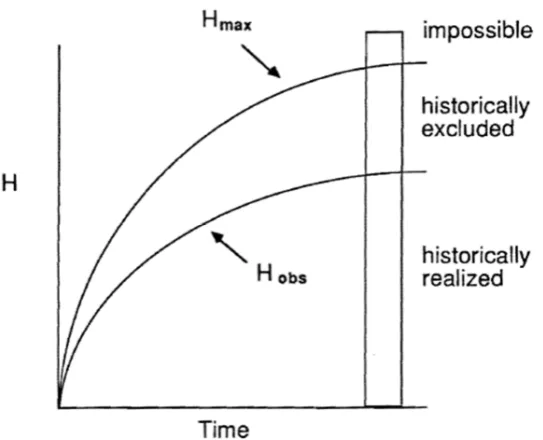
Figure 2: the development of information capacity, information content, and redundancy over time. Source: Brooks & Wiley, 1986, p. 43.
Redundancy is generated in triple-helix relations because of partial overlaps in providing different meanings to the events from political, managerial, and technological perspectives. Patents, for example, are inputs in the economy, but patenting is output from the academic perspective. Thirdly, patents warrant intellectual property against litigation in the court. The patent thus has a different meaning in these various contexts. Following a hypothesis of Herbert Simon (1973), one can assume that there is an alphabet of codes operating. However,
knowledge-based innovations emerge from (re-)combinations of technological opportunities, market perspectives, and geographic endowments and constraints (e.g., Arthur, 2009; Mowery & Rosenberg, 1979). The differently coded communications are interacting among institutional carriers. Thus, a second-order dynamic of attributes to (first-order) communications is operating on top of the first-order dynamics of historical developments. The knowledge-based
15
along the arrow of time. Porter (1997, at pp. 29) assumed that an enormous leap in reflexivity has induced meta-capacities that can evolve faster than realizations at the institutional level.
Redundancy and the further perspective
In Shannon’s (1948) Mathematical Theory of Communication, information is defined as probabilistic entropy (or uncertainty) and necessarily positive given the coupling to the Second Law of thermodynamics (Krippendorff, 1989). Whereas the Second Law states that uncertainty increases at the global level, pockets of negative entropy can occur locally when distributions resonate. These negative entropies can be considered as redundancies generated on top of the entropy flow as not yet realized options.
16
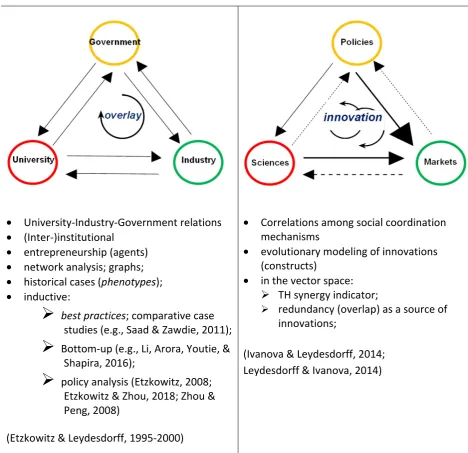
• University-Industry-Government relations
• (Inter-)institutional
• entrepreneurship (agents)
• network analysis; graphs;
• historical cases (phenotypes);
• inductive:
best practices; comparative case studies (e.g., Saad & Zawdie, 2011);
Bottom-up (e.g., Li, Arora, Youtie, & Shapira, 2016);
policy analysis (Etzkowitz, 2008; Etzkowitz & Zhou, 2018; Zhou & Peng, 2008)(Etzkowitz & Leydesdorff, 1995-2000)
• Correlations among social coordination
mechanisms
• evolutionary modeling of innovations
(constructs)
• in the vector space:
TH synergy indicator;
redundancy (overlap) as a source of
innovations;
(Ivanova & Leydesdorff, 2014;
Leydesdorff & Ivanova, 2014)
Table 1: Summary of the differences between the institutional and evolutionary TH models. Source: (Leydesdorff, Ivanova, & Meyer, 2018)(Leydesdorff, Ivanova, & Meyer, 2018)
17
with theorizing about the university as a pseudo-firm potentially operating as entrepreneur on relevant (e.g., high-tech) markets (Etzkowitz, 2002).
Innovations are the units of analysis in the evolutionary model on the right side of Table 1. One can expect the relations among the agents to be reconstructed by innovations. Because of these rewrites of the relations, positions based on correlations of distributions of relations are affected. The historical case is one among possible ones; the historical trajectory, one among possible reconstructions. (Yet, these are the ones to which we have access in empirical research.) The range of possibilities has to be hypothesized and this specification is knowledge-based; it can only be improved by developing discursive knowledge. The hypotheses can be tested against observations: Are the cases that happened also significant? The quality of the models thus becomes distinctive for the further development of the economy and therewith for society at large.
18
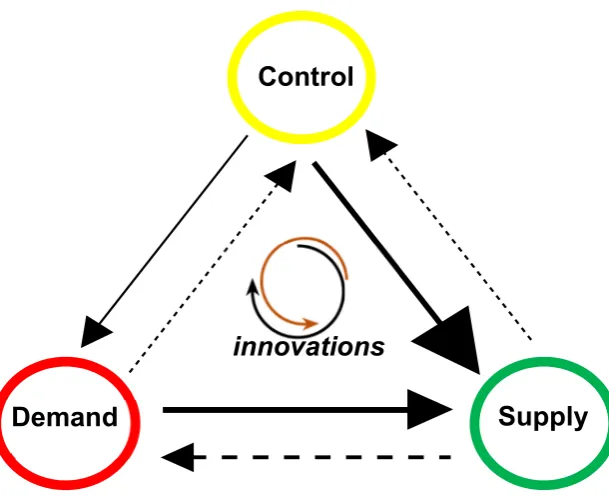
Figure 3: The generalized Triple-Helix model of innovations. Source: derived from Petersen et al. (2016, Figure 1, p. 667)
While each forward arrow in Figure 3 models variation, a reverse arrow represents selective feedback. The process is complex because qualitatively different sources of variation are interacting, and so are the selection mechanisms: cycles can be interrupted, broken, and
recombined. Combining a technological opportunity with a market perspective, for instance, may generate an invention, but the market must operate as a selection environment before the
invention is turned into an innovation.
When three or more feedbacks interact, loops are generated because of the possible transitivity of relations (Bianconi, Darst, Iacovacci, & Fortunato, 2014; cf. (Simmel, 1902a, 1902b)Simmel, 1902a and b). Triads can be either transitive or cyclic (Batagelj et al., 2014, pp. 53f.). Whereas transitivity is a relational operation which can thus induce organization and relational hierarchy, the self-organization of markets, technologies and control is based on cycles (Storper, 1997, p.
Demand
Supply
Control
19
49). The cycles and the open triangles can develop in parallel (Kontoupolos, 2006). The result is a complex system that is differentiated both horizontally and vertically; both hierarchical and heterarchical (Simon, 1972). The loops may feed forward bringing the system into fruition—that is, structurally providing room for variation—or feed back, leading to lock-in and historical stagnation (Ivanova & Leydesdorff, 2014; Ulanowicz, 2009).
The clockwise and counter-clockwise rotations (depicted in the center of Figure 3) precondition each other, since networks instantiated at the organizational level provide the retention
mechanism for the self-organizing dynamics of the codes. Each variant may trigger an avalanche of restructuring. The codes can be expected to adapt to the opportunities provided in the
historical layer. As noted, the codes can remain flexible and evolving, since they are not given and directly observable—as in the case of biological DNA—but have the status of hypotheses (Cooke & Leydesdorff, 2006; Distin, 2010). Consequently, one needs a measurement theory for testing assumptions about their interactions and evolution against appropriate data.
The TH indicator of synergy
Entropy statistics (Shannon, 1948; Theil, 1972) enables us to model the trade-offs between variation and selection in the case of three or more analytically different dimensions. Mutual information in three (or more) dimensions can be positive or negative (McGill, 1954; Yeung, 2008; cf. Krippendorff, 2009): when positive, this value suggests that the generation of
20
uncertainty is reduced. Uncertainty can be reduced to the extent that negative entropy is generated.
One can use the generation of negative entropy—that is, redundancy—as an indicator of synergy and emerging systemness. We applied this information-theoretic approach to studying the knowledge base in a number of country studies (listed in Appendix I and discussed in Leydesdorff & Ivanova [2016]). In these studies, we use firms as the units of analysis and specify three codes as most relevant in innovation systems: (1) firm addresses (ZIP or postal codes) in the geographical dimension, (2) NACE codes developed by the OECD as indicators of the technological capabilities of firms, and (3) size-classes as proxies for organizational formats such as small- and medium-sized firms versus large corporations. ZIP codes, for example, vary over geographical regions; however, in reference to the other two dimensions, the distribution of ZIP codes indicates local constraints operating as a (non-market) selection environment.
A locus of negative information can also be considered as a niche in the entropy flow: more options are available than the realized ones. However, positive values of this indicator (mutual information in three or more dimensions may indicate strength and adaptiveness in terms of past performance, since available options have historically been realized. In such a more mature stage of a cycle, the dynamics of innovation are very different from a configuration where not-yet-realized options prevail (Schumpeter, 1943). Following the distinction between Schumpeter Mark 1 and Mark 2, (Soete & ter Weel, 1999)Soete & ter Weel (1999), for example,
21 Further perspectives
Contrary to the metaphor of Big Data, we argue that the knowledge is not in the data, but in the quality of our handling of the data using models. Using the metaphors of KBE and TH, the data is not “given” in nature (or by God), but previously constructed. For example, the garden of my house in Amsterdam is a current state where previously were meadows and before that only sea. Our knowledge-based capacity to change the “natural” environment is the source of innovations (Von Hippel, 1988). This capacity is stored in books and archives as footprints of codifications of communication. The Fourth Industrial Revolution is not a natural event, but one which has been constructed by preceding Industrial Revolutions. The results challenge us to consider the givens as instantiations of the knowledge dynamics. There is no way back otherwise than by constructing one—and then this road leads also forward.
22 Acknowledgment
This paper was presented as a keynote speech at SOItmC 2018. The publishing fee was supported by DGIST (DGIST-IT-18-01). I am grateful to Han Woo Park for comments on a previous draft.
References
Abernathy, W. J., & Clark, K. B. (1985). Innovation: mapping the winds of creative destruction. Research Policy, 14(1), 3-22.
Abramowitz, M. (1956). Resource and Output Trends in the United States since 1870. American Economic Review 46, 5-23.
Andersen, E. S. (1994). Evolutionary Economics: Post-Schumpeterian Contributions. London: Pinter.
Arthur, W. B. (2009). The Nature of Technology. New York, NY: Free Press.
Ashby, W. R. (1958). Requisite variety and its implications for the control of complex systems. Cybernetica, 1(2), 1-17.
Batagelj, V., Doreian, P., Ferligoj, A., & Kejzar, N. (2014). Understanding large temporal networks and spatial networks: Exploration, pattern searching, visualization and network evolution. Chichester: John Wiley & Sons.
Berman, M. (1982). All That is Solid Melts into Air: The Experience of Modernity. New York: Simon and Schuster.
Bianconi, G., Darst, R. K., Iacovacci, J., & Fortunato, S. (2014). Triadic closure as a basic generating mechanism of communities in complex networks. Physical Review E, 90(4), 042806.
Braczyk, H.-J., Cooke, P., & Heidenreich, M. (Eds.). (1998). Regional Innovation Systems. London/ Bristol PA: University College London Press.
Braverman, H. (1974). Labor and Monopoly Capital. The Degradation of Work in the Twentieth Century. New York/London: Monthly Review Press.
Brooks, D. R., & Wiley, E. O. (1986). Evolution as Entropy. Chicago/London: University of Chicago Press.
Bush, V. (1945). The Endless Frontier: A Report to the President. Reprinted, New York: Arno Press, 1980.
Casson, M. (1997). Information and Organization: A New Perspective on the Theory of the Firm. Oxford: Clarendon Press.
Committee of the European Union. (2000). Towards a European research area. Brussels, 18 January 2000:
http://eur-lex.europa.eu/LexUriServ/LexUriServ.do?uri=COM:2000:0006:FIN:en:PDF. Cooke, P. (2002). Knowledge Economies. London: Routledge.
23
David, P. A., & Foray, D. (2002). An introduction to the economy of the knowledge society. International Social Science Journal, 54(171), 9-23.
David, P., & Foray, D. (1995). Assessing and Expanding the Science and Technology Knowledge Base. STI Review, 16, 13-68.
Distin, K. (2010). Cultural Evolution. New York, NY: Cambridge University Press. Dosi, G. (1982). Technological Paradigms and Technological Trajectories: A Suggested
Interpretation of the Determinants and Directions of Technical Change. Research Policy, 11(3), 147-162.
Etzkowitz, H. (1994). Academic-Industry Relations: A Sociological Paradigm for Economic Development. In L. Leydesdorff & P. van den Besselaar (Eds.), Evolutionary Economics and Chaos Theory: New Directions in Technology Studies (pp. 139-151). London, etc.: Pinter.
Etzkowitz, H. (2002). MIT and the Rise of Entrepreneurial Science. London: Routledge. Etzkowitz, H., & Leydesdorff, L. (1995). The Triple Helix---University-Industry-Government
Relations: A Laboratory for Knowledge-Based Economic Development. EASST Review 14(1), 14-19.
Etzkowitz, H., & Leydesdorff, L. (1998). The Endless Transition: A "Triple Helix" of
University-Industry-Government Relations, Introduction to a Theme Issue. Minerva, 36, 203-208.
Etzkowitz, H., & Leydesdorff, L. (2000). The Dynamics of Innovation: From National Systems and 'Mode 2' to a Triple Helix of University-Industry-Government Relations. Research Policy, 29(2), 109-123.
Foray, D. (2004). The Economics of Knowledge. Cambridge, MA/London: MIT Press.
Foray, D., & Lundvall, B.-A. (1996). The Knowledge-Based Economy: From the Economics of Knowledge to the Learning Economy Employment and Growth in the Knowledge-Based Economy (pp. 11-32). Paris: OECD.
Freeman, C. (1987). Technology and Economic Performance: Lessons from Japan. London: Pinter.
Freeman, C. (1988). Japan, a New System of Innovation. In G. Dosi, C. Freeman, R. R. Nelson, G. Silverberg & L. Soete (Eds.), Technical Change and Economic Theory (pp. 330-348). London: Pinter.
Freeman, C., & Perez, C. (1988). Structural crises of adjustment, business cycles and investment behaviour. In G. Dosi, C. Freeman, R. Nelson, G. Silverberg & L. Soete (Eds.), Technical Change and Economic Theory (pp. 38-66). London: Pinter.
Freeman, C., & Soete, L. (1997). The Economics of Industrial Innovation (Third Edition). London: Pinter.
Freeman, L. C. (1992). The sociological concept of "group": An empirical test of two models. American Journal of Sociology, 152-166.
Geels, F. W. (2002). Technological transitions as evolutionary reconfiguration processes: a multi-level perspective and a case-study. Research Policy, 31(8-9), 1257-1274. Giddens, A. (1984). The Constitution of Society. Cambridge: Polity Press.
Hayami, Y., & Ruttan, V. W. (1970). Agricultural Productivity Differences among Countries. The American Economic Review, 60(5), 895-911.
24
Husserl, E. (1929). Cartesianische Meditationen und Pariser Vorträge [Cartesian Meditations and the Paris Lectures, translated by Dorion Cairns] (Vol. at
http://ia600601.us.archive.org/10/items/CartesiamMeditations/12813080-husserl-cartesian-meditations.pdf ). The Hague: Martinus Nijhoff, 1960.
Ivanova, I. A., & Leydesdorff, L. (2014). Rotational Symmetry and the Transformation of Innovation Systems in a Triple Helix of University-Industry-Government Relations. Technological Forecasting and Social Change, 86, 143-156.
Ivanova, I. A., & Leydesdorff, L. (2015). Knowledge-generating efficiency in innovation
systems: The acceleration of technological paradigm changes with increasing complexity. Technological Forecasting and Social Change, 96, 254-265. doi:
10.1016/j.techfore.2015.04.001
Kline, S., & Rosenberg, N. (1986). An overview of innovation. In R. Landau & N. Rosenberg (Eds.), The Positive Sum Strategy: Harnessing Technology for Economic Growth (pp. 275-306). Washington, DC: National Academy Press.
Kontopoulos, K. M. (2006). The logics of social structure (Vol. 6). New York, NY/Cambridge, UK: Cambridge University Press.
Krippendorff, K. (2009). Information of Interactions in Complex Systems. International Journal of General Systems, 38(6), 669-680.
Langton, C. G. (1989). Artificial Life. In C. G. Langton (Ed.), Artificial Life (Vol. VI, pp. 1-47). Redwood, etc.: Addison-Wesley.
Latour, B. (1988). The Politics of Explanation: An Alternative. In S. Woolgar & M. Ashmore (Eds.), Knowledge and Reflexivity: New Frontiers in the Sociology of Knowledge (pp. 155-177.). London: Sage.
Lee, K. (2013). Schumpeterian analysis of economic catch-up: Knowledge, path-creation, and the middle-income trap: Cambridge University Press.
Leydesdorff, L. (1994). Epilogue. In L. Leydesdorff & P. v. d. Besselaar (Eds.), Evolutionary Economics and Chaos Theory: New directions for technology studies (pp. 180-192). London/New York: Pinter.
Leydesdorff, L. (2006). The Knowledge-Based Economy: Modeled, Measured, Simulated. Boca Raton, FL: Universal Publishers.
Leydesdorff, L., & Ivanova, I. A. (2016). 'Open Innovation' and 'Triple Helix' Models of Innovation: Can Synergy in Innovation Systems Be Measured? Journal of Open
Innovations: Technology, Market and Complexity, 2(1), 1-12. doi: 10.1186/s40852-016-0039-7
Leydesdorff, L., & Van den Besselaar, P. (1998). Technological developments and factor substitution in a complex and dynamic system. Journal of Social and Evolutionary Systems, 21(2), 173-192.
Leydesdorff, L., & Van den Besselaar, P. (Eds.). (1994). Evolutionary Economics and Chaos Theory: New Directions in Technology Studies. London and New York: Pinter.
Leydesdorff, L., Ivanova, I., & Meyer, M. (2018). The Measurement of Synergy in Innovation Systems: Redundancy Generation in a Triple Helix of University-Industry-Government Relations. In W. Glänzel, H. Moed, U. Schmoch & M. Thelwall (Eds.), Springer Handbook of Science and Technology Indicators. Heidelberg, etc. : Springer. Leydesdorff, L., Johnson, M., & Ivanova, I. (2018). Toward a Calculus of Redundancy:
25
Association for Information Science and Technology,
https://papers.ssrn.com/sol3/papers.cfm?abstract_id=3030525.
Luhmann, N. (1974). Einführende Bemerkungen zu einer Theorie symbolisch generalisierter Kommunikationsmedien. Zeitschrift für Soziologie, 3(3), 236-255.
Luhmann, N. (1995). Social Systems. Stanford, CA: Stanford University Press.
Lundvall, B.-Å. (1988). Innovation as an interactive process: from user-producer interaction to the national system of innovation. In G. Dosi, C. Freeman, R. Nelson, G. Silverberg & L. Soete (Eds.), Technical Change and Economic Theory (pp. 349-369). London: Pinter. Marx, K. ([1848], 1967). The Communist Manifesto translated by Samuel Moore in 1888.
Harmondsworth: Penguin.
Marx, K. ([1857] 1973). Grundrisse: Foundations of the Critique of Political Economy (Rough Draft). Harmondsworth: Penguin.
Marx, K. (1867). Das Kapital I. Berlin: Dietz, 1971.
McGill, W. J. (1954). Multivariate information transmission. Psychometrika, 19(2), 97-116. McLuhan, M. (1964). Understanding Media: the Extension of Man. New York: McGraw-Hill. Mowery, D. C., & Rosenberg, N. (1979). The influence of market demand upon innovation: a
critical review of some empirical studies. Research Policy, 8, 102-153.
Nelson, R. R. (Ed.). (1993). National Innovation Systems: A comparative analysis. New York: Oxford University Press.
Nelson, R. R., & Winter, S. G. (1977). In Search of Useful Theory of Innovation. Research Policy, 6, 35-76.
Nelson, R. R., & Winter, S. G. (1982). An Evolutionary Theory of Economic Change. Cambridge, MA: Belknap Press of Harvard University Press.
Noble, D. (1977). America by Design. New York: Knopf.
OECD. (1964). The Residual Factor and Economic Growth. Paris: OECD.
OECD. (1996). New Indicators for the Knowledge-Based Economy: Proposals for Future Work. DSTI/STP/NESTI?GSS/TIP (96) 6.
Oh, D.-S., Phillips, F., Park, S., & Lee, E. (2016). Innovation ecosystems: A critical examination. Technovation, 54, 1-6.
Parsons, T. (1968). Interaction: I. Social Interaction. In D. L. Sills (Ed.), The International Encyclopedia of the Social Sciences (Vol. 7, pp. 429-441). New York: McGraw-Hill. Phillips, F. Y. (2016). The Circle of Innovation. Journal of Innovation Management, 4(3), 12-31. Porter, M. E. (1990). The Competitive Advantage of Nations. London: Macmillan.
Rosenberg, N. (1982). How exogenous is science? Inside the Black Box: Technology and Economics. Cambridge: Cambridge University Press.
Sahal, D. (1985). Technological guideposts and innovation avenues. Research Policy, 14, 61-82. Schumpeter, J. ([1939], 1964). Business Cycles: A Theoretical, Historical and Statistical
Analysis of Capitalist Process. New York: McGraw-Hill.
Schumpeter, J. (1943). Socialism, Capitalism and Democracy. London: Allen & Unwin. Schwab, K. (2015). The fourth industrial revolution: what it means, how to respond? Foreign
Affairs(December 12).
Shannon, C. E. (1948). A Mathematical Theory of Communication. Bell System Technical Journal, 27 (July and October), 379-423 and 623-656.
26
Simmel, G. (1902b). The number of members as determining the sociological form of the group. II. American Journal of Sociology, 8(2), 158-196.
Simon, H. A. (1973). The Organization of Complex Systems. In H. H. Pattee (Ed.), Hierarchy Theory: The Challenge of Complex Systems (pp. 1-27). New York: George Braziller Inc. Soete, L., & ter Weel, B. (1999). Schumpeter and the knowledge-based economy: On technology
and competition policy. Research Memoranda 004. MERIT, Maastricht Economic Research Institute on Innovation and Technology.
Solow, R. M. (1957). Technical progress and the aggregate production function. Review of Economics and Statistics, 39, 312-320.
Storper, M. (1997). The Regional World – Territorial Development in a Global Economy. New York: Guilford Press.
Suarez, F. F., & Utterback, J. M. (1995). Dominant designs and the survival of firms. Strategic Management Journal, 16(6), 415-430.
Theil, H. (1972). Statistical Decomposition Analysis. Amsterdam/ London: North-Holland. Ulanowicz, R. E. (2009). The dual nature of ecosystem dynamics. Ecological modelling,
220(16), 1886-1892.
Von Hippel, E. (1988). The Sources of Innovation. New York/Oxford: Oxford University Press. Whitley, R. D. (1984). The Intellectual and Social Organization of the Sciences. Oxford: Oxford
University Press.
Whitley, R. D. (2001). National Innovation Systems. In N. J. Smelser & P. B. Baltes (Eds.), International Encyclopedia of the Social and Behavioral Sciences (pp. 10303-10309). Williamson, O. E. (1975). Markets and Hierarchies: Analysis and Antitrust Implications. A study
in the Economics of Internal Organization. New York: Free Press.
Yamauchi, I. (1986). Long Range Strategic Planning in Japanese R&D. In C. Freeman (Ed.), Design, Innovation and Long Cycles in Economic Development (pp. 169-185). London: Pinter.
27 Appendix I
Lengyel, B., & Leydesdorff, L. (2011). Regional innovation systems in Hungary: The failing synergy at the national level. Regional Studies, 45(5), 677-693. doi: DOI:
10.1080/00343401003614274
Leydesdorff, L., Dolfsma, W., & Van der Panne, G. (2010). Measuring the knowledge base of an economy in terms of triple- helix relations The Capitalization of Knowledge: A Triple Helix of University-Industry-Government (pp. 291-311).
Leydesdorff, L., & Fritsch, M. (2006). Measuring the Knowledge Base of Regional Innovation Systems in Germany in terms of a Triple Helix Dynamics. Research Policy, 35(10), 1538-1553.
Leydesdorff, L., Perevodchikov, E., & Uvarov, A. (2015). Measuring triple-helix synergy in the Russian innovation systems at regional, provincial, and national levels. Journal of the Association for Information Science and Technology, 66(6), 1229-1238.
Leydesdorff, L., & Porto-Gomez, I. (2018). Measuring the Expected Synergy in Spanish Regional and National Systems of Innovation. Journal of Technology Transfer. doi: 10.1007/s10961-017-9618-4
Leydesdorff, L., & Strand, Ø. (2013). The Swedish System of Innovation: Regional Synergies in a Knowledge-Based Economy. Journal of the American Society for Information Science and Technology, 64(9), 1890-1902; doi: 1810.1002/asi.22895.
Leydesdorff, L., Wagner, C. S., Porto-Gomez, I., Comins, J. A., & Phillips, F. (2018, in preparation). Synergy in the Knowledge Base of U.S. Innovation Systems at National, State, and Regional Levels: The Contributions of High-Tech Manufacturing and Knowledge-Intensive Services.
Leydesdorff, L., & Zhou, P. (2014). Measuring the Knowledge-Based Economy of China in terms of Synergy among Technological, Organizational, and Geographic Attributes of Firms. Scientometrics, 98(3), 1703-1719. doi: 10.1007/s11192-013-1179-1
Strand, Ø., Ivanova, I., & Leydesdorff, L. (2017). Decomposing the Triple-Helix synergy into the regional innovation systems of Norway: firm data and patent networks. Quality & Quantity, 51(3), 963-988.